Tag: family travel

  • Affordable Kids Suitcases for Boys Every Parent Will Love

    Affordable Kids Suitcases for Boys Every Parent Will Love

    A suitcase of their own changes how a child experiences a trip. Rolling it through the terminal, choosing what goes in it and being responsible for it at the hotel makes a boy feel like a real traveler instead of cargo, and it takes a little weight off the adults at the same time. The catch is that most children’s luggage is sold on looks: a favorite color, a truck, a rocket, a cartoon. Looks matter to a six-year-old, but the things that decide whether a kids’ suitcase actually works are size, weight, wheels, handle height and how it fits the airline’s rules. This guide explains what to look for at each age, how carry-on allowances work for children, hardside versus softside, spinner versus two-wheel, ride-on cases and backpacks, a few affordable sets worth considering, and how to get your son packing and pulling his own bag without a meltdown at the gate.

    The short answer

    For most boys between about four and ten, the right choice is a light carry-on size case, roughly 16 to 18 inches tall, with smooth wheels and a telescoping handle that adjusts low enough for his height, in a design he picked himself. Toddlers do better with a small backpack or a ride-on case that a parent can tow. Pre-teens can usually handle a standard adult carry-on. Keep the empty weight low, since your child can only pull what he can lift, and check your airline’s carry-on and personal-item rules before you buy, because a child with his own seat usually gets the same allowance as an adult. Affordable sets from brands like Rosamo, GYMAX and Travelers Club bundle a small spinner with matching bags, which is good value if you want a backpack and case together.

    Why a child’s own suitcase is worth it

    • Responsibility. A child who packs and pulls his own bag learns to keep track of his things, and he is more likely to notice when something is missing.
    • Excitement. A suitcase he chose turns the trip into something he owns. Many parents find that the bag comes out of the closet days before departure and gets packed and unpacked several times.
    • Fewer hands full. Families already juggle car seats, strollers, documents and snacks. One less bag for an adult to carry matters.
    • Organization. Each child’s clothes in their own case means less digging through a shared bag at the hotel, and a clear answer to “where are my pajamas?”

    It is also one of the small decisions that make a family trip smoother, which is the point of our broader guide on why a family vacation matters for work-life balance.

    Sizing by age

    Children grow fast, and the suitcase that is perfect at five will look tiny at nine. The table below is a practical starting point. Heights are the overall height of the case including wheels, which is how most retailers list them.

    AgeBest optionTypical sizeWhy
    2 to 3Small backpack or ride-on caseBackpack or about 18 in ride-onToddlers cannot steer a case for long; a parent tows the ride-on when they tire
    4 to 6Small spinner or two-wheel caseAbout 14 to 16 inLight enough to pull, low handle, fits under a seat on many aircraft
    7 to 10Kids’ carry-onAbout 16 to 18 inHolds a week of kids’ clothes; still manageable through a terminal
    11 and upStandard adult carry-onWithin the airline’s carry-on limitWill not be outgrown; handle height suits taller kids

    Two things matter more than the headline size. First, handle height: many small cases have a telescoping handle that is too long even at its lowest setting, which forces a small child to pull at an awkward angle. If you can, have your son try the handle before you buy. Second, empty weight: a heavy case filled with clothes becomes a bag the parent carries. Look for the lightest case in the size you need.

    How airline rules apply to children

    Airline baggage rules are the same for children as for adults in most cases, which surprises many parents. The principles:

    • A child with a paid seat usually gets the full cabin allowance of their fare: typically one carry-on for the overhead bin and one personal item under the seat. Basic economy fares on some airlines restrict the full-size carry-on, so check the fare rules.
    • Lap infants (usually under two, sitting on a parent’s lap) generally do not get their own carry-on, though many airlines allow a diaper bag and let you check or gate-check a stroller and car seat. Policies vary.
    • Size limits apply to the child’s bag too. A kids’ case that is within the airline’s carry-on dimensions can go in the overhead bin; a very small one may fit under the seat in front as the personal item, which keeps it within reach for snacks and toys.
    • Measure with the wheels and handle. Airline limits include wheels and handles, and a case that is fine on paper can be too deep once the pockets are full.

    Rules change and differ between airlines, so check the official pages before you fly: Air Canada, WestJet, Delta and American Airlines all publish their current limits. Air Canada also has a page on travelling with children that covers infant allowances. Our guide to Delta carry-on sizes goes into one airline in detail.

    Hardside or softside?

    Both work for children. The choice comes down to how the bag will be used.

    Hardside

    Hardside cases, made from ABS or polycarbonate plastics, protect contents from crushing, wipe clean easily and usually carry the bold printed designs that kids love. Most kids’ spinner sets are hardside. The downsides are that the shell scuffs, a cheap shell can crack if it is dropped hard or overpacked, and there is no give when you are trying to squeeze one more sweater in. Hardside cases also typically open like a clamshell into two halves, which needs floor space in a small hotel room.

    Softside

    Fabric cases are lighter for their size in many cases, have outside pockets for a book or a jacket, and flex to fit a tight overhead bin. They hide scuffs and are less likely to crack. They are harder to clean after a spilled juice box, and the designs tend to be less flashy, which matters to some children more than others.

    For a young child who will drag the case along the ground, bump it down stairs and sit on it at the gate, a sturdy hardside shell or a well-made softside case both last. Avoid the thinnest, cheapest shells if your son is rough on his things.

    Spinner wheels or two wheels?

    Most kids’ suitcases now come with four spinner wheels, and in a smooth airport terminal that is easiest for a child: the case glides beside him and he can push or pull it in any direction. Spinners are less happy on cobblestones, cracked sidewalks, carpet and gravel, where small wheels catch and the case tips. Two-wheel, or inline, cases are pulled behind at an angle; they roll better on rough surfaces and are less likely to roll away on a sloping floor or a moving train, but they take a little more coordination.

    For trips that are mostly airport, hotel and car, spinners are fine. For cities with old streets or a lot of walking between transit and the hotel, a two-wheel case, or a backpack, is often less frustrating. Whichever you choose, check that the wheels turn freely and quietly, and that the handle locks firmly at each height without wobbling.
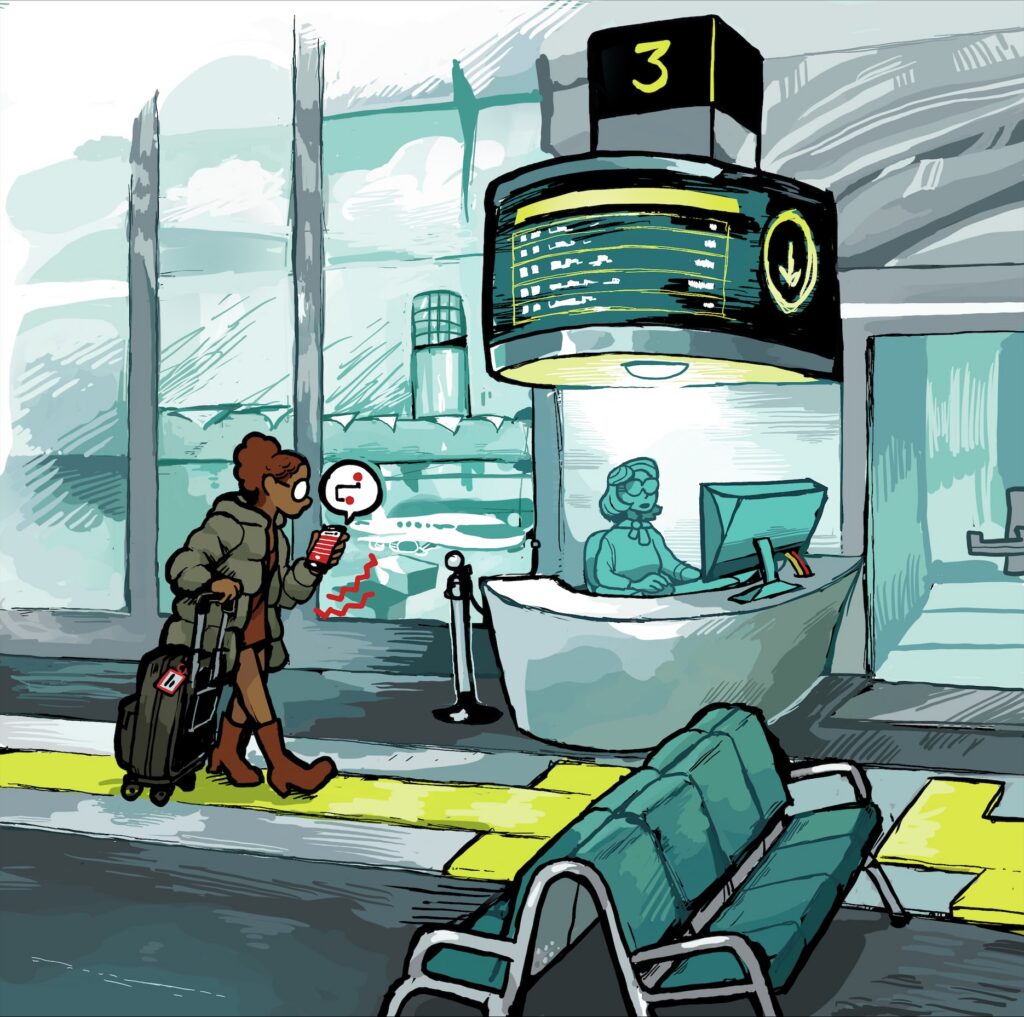
    A traveler pulling a small rolling suitcase through an airport terminal
    Smooth terminal floors are where spinner wheels shine; cobblestones and gravel are another story (Photo: Sherm for Disabled And Here via Wikimedia Commons, CC BY 4.0)

    Ride-on suitcases

    Ride-on cases, which a small child can sit on while a parent tows them by a strap, are a popular answer to the tired-toddler problem. Trunki is the best-known brand. They are fun, they give a three-year-old a place to sit at the gate, and they solve the problem of little legs that give out halfway down a long concourse. The trade-offs: capacity is small, the shape does not pack efficiently, and they are awkward for an adult to carry once the child outgrows riding. Use common sense on where to ride: never on escalators or moving walkways, and not in crowded security lines. They suit children roughly from two to five; beyond that, a normal small case is more practical.

    Backpacks as an alternative (or addition)

    Many families find that a good kids’ backpack is the most useful single bag for a young child. It keeps hands free for holding a parent’s hand, it goes up stairs and onto trains easily, and it can be the personal item under the seat with snacks, a book and headphones. For short trips, a backpack alone may be enough. For longer trips, a small case for clothes plus a backpack for the flight is the ideal combination, which is why so many kids’ luggage sets include one.

    Keep a child’s backpack light: a few kilograms at most for a young child, and adjust the straps so it sits high and close to the back.

    Affordable sets worth considering

    Kids’ luggage sets offer good value if you want coordinated pieces. The sets below are affordable options that suit boys who want a fun design without paying adult-luggage prices. Specifications, colors and designs change often, so check the current listing for dimensions and weight before you buy.

    Rosamo 16-inch Kid’s Luggage Set (6 pieces)

    Rosamo sells a 16-inch hardside spinner case bundled with several smaller matching pieces, such as a backpack and accessory bags, in a range of kid-friendly designs. It suits families who want everything in one purchase: the case for clothes, a backpack for the flight and extras for toiletries or toys. Check that the 16-inch case suits your son’s height and that the backpack is sized for his back.

    GYMAX Kids Carry-On Luggage Set (12-inch and 16-inch)

    This set pairs a 12-inch and a 16-inch rolling case. That makes it flexible: a younger sibling can take the small one while an older child takes the larger, or the same child can use the 12-inch for weekends and the 16-inch for longer trips. It is a practical buy for families with two young children close in age.

    Travelers Club 5-Piece Kids’ Luggage Set (First Responders theme)

    Travelers Club makes kids’ sets with themed graphics, including a first responders design with fire trucks, police cars and ambulances that appeals to many young boys. The multi-piece set gives a child a matching collection, and a theme he loves is a strong motivation to pack and pull his own bag.

    A plain case he will not outgrow

    For boys around ten and up, consider skipping kids’ designs altogether and buying a lightweight adult carry-on in a color he likes. It costs a little more, but it will last into the teenage years. Our guide to top travel luggage covers what to look for in an adult case.

    Design, themes and letting him choose

    A suitcase that a child loves is a suitcase he will actually pull. Let him choose the design from a shortlist you have already checked for size and weight. Dinosaurs, space, vehicles, sports and superheroes are perennially popular, but plenty of boys prefer a plain bold color, and interests change fast; a strong color or a simple pattern may last longer than a character he will be embarrassed by in two years. Bright or distinctive cases have a practical upside too: they are easy to spot on a baggage carousel and harder for another family to grab by mistake.

    Teaching kids to pack their own bag

    Packing is a skill, and a trip is a good time to teach it. For children around five and up:

    • Give a picture or written list. Number of shirts, shorts or pants, underwear and socks, pajamas, a sweater, a swimsuit, toothbrush. Younger children do well with pictures.
    • Lay it out first. Have your son put everything on the bed, then check it together before it goes in the case.
    • Roll clothes. Rolled clothes take less space and are easier for small hands to fit in.
    • One comfort item, chosen by him. A stuffed animal or small blanket goes in the backpack, not the checked bag.
    • Limit the toys. Two or three small toys and a couple of books are plenty. Our list of the best traveling books for kids has ideas that pack flat.
    • Leave room for souvenirs. A case packed to bursting on the way out has no room for the trip home.
    • The parent does the final check. Chargers, medications and anything that cannot be replaced should be packed or checked by an adult.

    Getting through security with a child’s suitcase

    A child’s carry-on goes through the X-ray just like an adult’s, and the same liquid limits apply to anything inside it. Toy guns, realistic replica weapons and some toys with sharp parts can be refused, and water bottles need to be empty at the checkpoint. Snacks are generally fine. Formula, breast milk and baby food are treated differently from other liquids; our travel bottle warmer guide explains those rules for families with babies.

    In the United States, the TSA’s traveling with children page explains screening for children, strollers and car seats, and the TSA “What Can I Bring?” list covers specific items. In Canada, Transport Canada publishes what not to bring on a plane. Pack the child’s bag so that anything the officers may want to check, like a tablet or a snack pouch, is easy to reach, and allow extra time at the airport when traveling as a family; our guide to airport arrival times has the details.
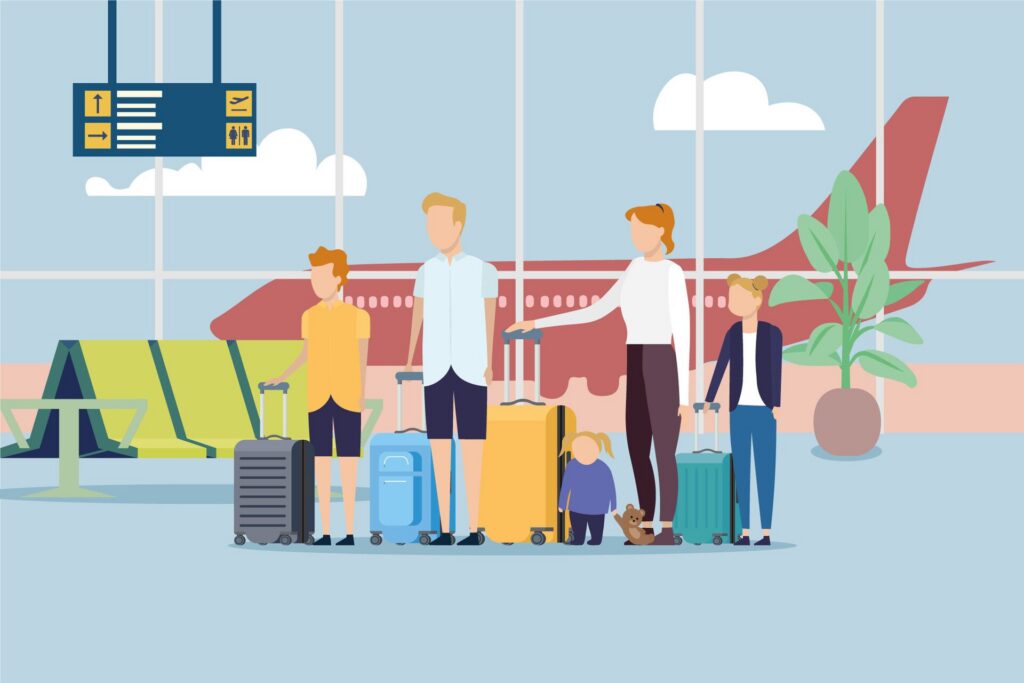
    Illustration of a family with rolling suitcases waiting at an airport gate
    A case for each child who can manage one, and a backpack each for the flight (Photo: Familydestinationsguide.com Images via Wikimedia Commons, CC BY 2.0)

    Siblings, longer trips and checked bags

    With two or three children, the question is whether everyone gets a case or whether the family shares. A workable pattern for many families: every child carries a backpack with their own flight essentials, children old enough to manage it pull a small case, and one larger checked bag holds the bulky items, such as jackets, extra shoes and beach gear, for everyone. That keeps each child’s load light while avoiding a line of five overhead-bin cases that all need lifting at boarding.

    For trips of more than a week, or trips that need winter clothes, a small child’s case will not hold everything, and that is fine. Pack the child’s case with the clothes he will need for the first couple of days plus his favorite things, and put the rest in the shared checked bag. If the checked bag is delayed, he still has what matters to him. On road trips, soft bags squash into a car trunk more easily than several hardside cases; our family car rental guide covers choosing a vehicle with enough room.

    An empty baggage claim carousel in an airport arrivals hall
    A bright, distinctive case is easier to spot on the carousel and harder for another family to take by mistake (Photo: Jo-Jo Eumerus via Wikimedia Commons, CC BY-SA 4.0)

    Labels, tracking and not losing it

    • Label inside and out. A luggage tag with a parent’s phone number outside, and a card with the same details inside, in case the tag is torn off. Do not put the child’s name on the outside.
    • Add a small tracker if you like. A Bluetooth tracker tucked in a pocket can help locate a case left at a gate or delayed by the airline.
    • Photograph it. A quick photo of the case, and of what is inside, makes a lost-baggage claim much easier.
    • Do a count. At every transition, gate, taxi, hotel lobby, count the bags. Give each child the job of counting his own.

    Making it last

    Children are hard on luggage. A few habits help a case survive several trips:

    • Push the handle all the way down before lifting the case by the side or top handle.
    • Do not let children stand on the case or sit on a spinner, which is not built for it. Ride-on cases are the exception.
    • Wipe hardside shells after the trip, and empty and air softside cases before storing them.
    • Check the wheels and zippers before each trip, not the night before departure.
    • Store the case somewhere dry; a damp garage is hard on zippers and fabric.

    Common mistakes

    • Buying too big. A case sized “to grow into” is too heavy and awkward for the child now, so an adult ends up carrying it.
    • Ignoring handle height. A handle that is too tall is the most common reason kids give up pulling their bag.
    • Assuming any kids’ case fits under the seat. Under-seat space varies by aircraft and seat. Measure against the airline’s personal-item limit if that is the plan.
    • Checking the child’s only bag. Keep a change of clothes and the comfort item in the cabin in case checked bags are delayed.
    • Buying on design alone. A great print on a flimsy shell with sticky wheels will not last one trip.

    Frequently asked questions

    What size suitcase does a child need?

    For about four to six, a case around 14 to 16 inches; for about seven to ten, 16 to 18 inches; from around eleven, a standard adult carry-on within the airline’s limit. Handle height and weight matter as much as size.

    Do kids get a free carry-on on flights?

    A child with their own paid seat usually gets the same cabin allowance as an adult on that fare. Lap infants usually do not get a separate carry-on, though many airlines allow a diaper bag. Check your airline’s rules.

    Are kids’ suitcases allowed as carry-on?

    Yes, as long as they are within the airline’s carry-on or personal-item dimensions, including wheels and handles. Many kids’ cases are well inside the limits, but measure before you fly.

    Is a hardside or softside suitcase better for kids?

    Both work. Hardside protects contents and wipes clean; softside is lighter, flexible and has outside pockets. Choose on weight, wheels and handle before material.

    What age can a child pull their own suitcase?

    Many children can manage a small, light case from about four, with help on stairs and escalators. Younger children do better with a backpack or a ride-on case a parent can tow.

    Are ride-on suitcases worth it?

    For children roughly two to five on trips with long walks through airports, many parents find them very useful. They hold less and are outgrown quickly, so older children are better served by a normal case.

    Should my child’s suitcase be a set with a backpack?

    If you do not already have a kids’ backpack, a set is good value: the case holds clothes and the backpack holds the flight essentials under the seat.

    With the bags sorted, the rest is the trip itself. Compare family fares across flexible dates on our flight search, find a room with space for everyone on our hotel search, and if you are driving from the airport, add a car with room for the luggage on our car rental search. Our guide to booking hotels for family vacations covers timing and room types, and a first family trip to Orlando or San Diego is a great first outing for a new suitcase.

  • Top Travel Bottle Warmer Options for Flights and Road Trips

    Top Travel Bottle Warmer Options for Flights and Road Trips

    Feeding a baby at home is a routine. Feeding a baby at 30,000 feet, in the back seat on a highway, or in a hotel room with no kitchen is a puzzle, and the piece that most often goes missing is warm milk. A travel bottle warmer solves that puzzle for many families: a portable, usually rechargeable device that brings breast milk, formula or water to a comfortable temperature wherever you are. But not every baby needs warm milk, not every warmer suits every trip, and there are real rules about carrying milk, formula and batteries on a plane. This guide explains whether you need a travel warmer at all, the different types and how to choose, what to know about flying and driving with one, safe preparation and cleaning on the road, and a packing checklist that makes feeding on the go feel routine again.

    The short answer

    If your baby will take room-temperature or cool milk, you may not need a warmer at all; the CDC notes that breast milk does not need to be warmed. If your baby insists on warm feeds, a rechargeable portable warmer is the most flexible choice for flights and road trips, a car-powered warmer suits long drives, and an insulated flask of hot water is the simple, no-battery backup. Look for temperature control, enough capacity for your bottles, a leak-proof lid, easy cleaning and a battery you can carry in the cabin. Never use a microwave to warm milk or formula, and always test the temperature before feeding.

    A baby drinking milk from a bottle held by a parent
    Some babies take milk cool or at room temperature; test at home before you buy a warmer (Photo: Vyacheslav Argenberg via Wikimedia Commons, CC BY 4.0)

    Do you actually need a travel bottle warmer?

    Start with your baby. Some babies drink milk cold from the fridge or at room temperature without complaint, and for those families a warmer is optional. Others refuse anything but body-warm milk, and a hungry, crying baby on a plane is exactly the situation a warmer is designed for. The best way to find out is to experiment at home a few weeks before the trip: offer a room-temperature bottle and see what happens. If your baby accepts it, travel just got simpler.

    Think too about the trip itself. A short flight between feeds needs less equipment than a long-haul flight. A road trip with frequent stops at places with hot water may need nothing more than a flask. A week in a hotel room with a kettle is different from a week in a rental with a full kitchen. Match the gear to the trip, and remember that everything you bring has to be carried, charged and cleaned.

    Types of travel bottle warmers

    TypeHow it worksBest forWatch out for
    Rechargeable portable warmerBattery-powered cup or bottle that heats water or milk to a set temperatureFlights, day trips, anywhere without powerBattery life, charging before travel, lithium battery rules
    Car-powered warmerPlugs into a car’s USB port or 12-volt outlet; some wrap around the bottleLong road tripsSlow on weak ports; useless away from the car
    Insulated flask with water bathHot water from a flask poured into a cup or container; the sealed bottle stands in itBackup for any trip; no power neededWater cools over hours; spill risk
    Plug-in electric warmerA compact version of a home warmer that runs on wall powerHotel stays and rentalsVoltage and plug type abroad; needs an outlet

    Rechargeable portable warmers

    These are the most popular travel choice and what most people mean by a “travel bottle warmer.” Most look like an insulated bottle or cup with a heating element and battery in the base and a simple control on the side. Some heat water that you then mix with premeasured formula powder; others are designed to warm milk directly or to hold a bottle in a warm water bath. Many offer several temperature settings and a keep-warm function. They are ideal on planes and in places without an outlet, but they depend on the battery, so charging becomes part of your routine.

    Car-powered warmers

    For long drives, a warmer that runs from the car’s power removes the battery worry. Some are wrap-around sleeves that heat a bottle directly, others are cups that sit in a cup holder. They tend to be slower than battery units on a weak USB port, and they only work in the car, so they are best paired with another option for the hotel.

    The flask method

    The simplest travel warmer is a good insulated flask of hot water. At feeding time, pour hot water into a cup or a small container, stand the sealed bottle or milk bag in it for a few minutes, and test the temperature. This is similar to the CDC’s own advice for warming breast milk, which is to place the sealed container in warm water or hold it under warm running water. A flask needs no charging and has nothing to break, which makes it a good backup even if you bring an electric warmer.

    Plug-in warmers for the hotel

    If you are staying put for a week, a compact plug-in warmer, or even your home warmer if it is small, may be simpler than a battery unit. Check the voltage and plug type if you are traveling abroad, since many home appliances do not work on a different voltage without a converter.

    What to look for

    • Power source and battery. For flights, a built-in rechargeable battery is the main need. Check how many warms a full charge gives you and how the unit charges; a common charging cable you already carry for your phone means one less cable to pack.
    • Heating time. Faster is better when a baby is hungry, but manufacturers’ claims vary with the starting temperature and amount. Test it at home so you know how long it really takes.
    • Temperature control. Adjustable settings, including one around body temperature, let you warm milk gently rather than making it hot. A display that shows the temperature is helpful.
    • Capacity and bottle fit. Make sure the warmer holds enough for a full feed and, if it holds a bottle, that your brand of bottle fits. Wide-neck and narrow-neck bottles fit differently.
    • Leak-proof design. A warmer that leaks in the diaper bag is worse than no warmer. Look for a secure, sealed lid.
    • Easy cleaning. Wide openings and few crevices matter when you are washing it in a hotel bathroom sink.
    • Size and weight. It needs to fit in the diaper bag and, ideally, a car cup holder.
    • Safety features. Automatic shutoff and overheat protection are worth having.

    Popular portable options

    Portable bottle warmers are sold by many brands, and models change often. A few names that parents frequently come across are below. Check the current product listing for capacity, settings, charging and battery details before you buy, and choose on the features above rather than the brand.

    Papablic Portable Bottle Warmer

    Papablic makes portable, rechargeable warmers designed for travel and home, with multiple temperature settings and a design intended to fit in a car cup holder. The brand also sells a Pro version marketed as heating faster with more temperature settings. They suit parents who want one warmer for the car, the hotel and the flight.

    BOLOLO Portable Bottle Warmer

    BOLOLO sells a compact rechargeable warmer for breast milk, formula and water, aimed at parents who want something small and light for short flights and day trips.

    Large-capacity rechargeable cups

    Several brands sell larger insulated warmers that hold enough water for more than one feed, useful for long travel days or twins. The trade-off is size and weight in the bag.

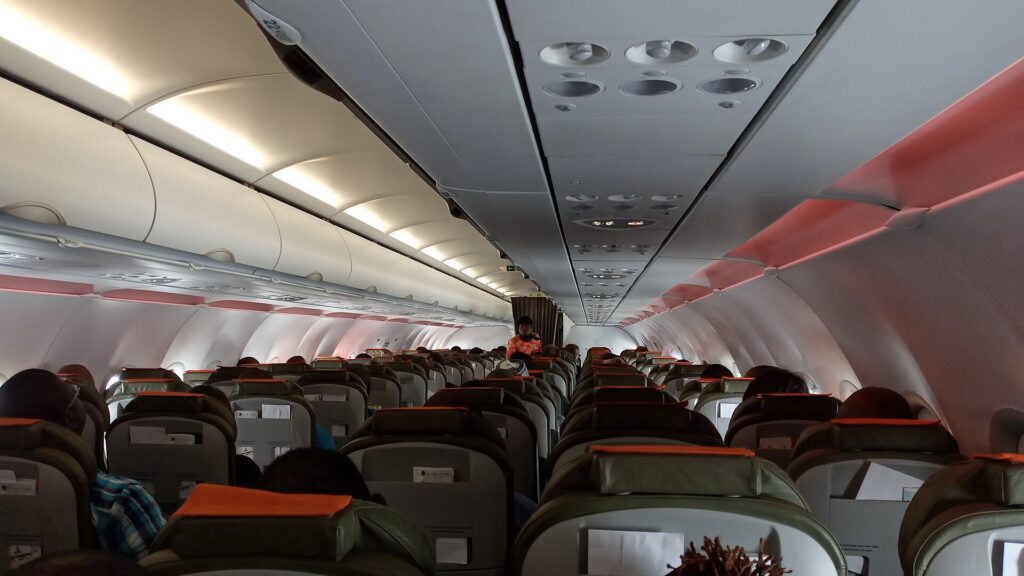
    Passengers seated in the economy cabin of an airliner
    Keep the warmer and bottle in the bag under the seat, ready for takeoff and landing (Photo: Minette Lontsie via Wikimedia Commons, CC BY-SA 4.0)

    Flying with a bottle warmer, milk and formula

    Security screening

    Baby feeding supplies are treated differently from other liquids at airport security. In the United States, the TSA allows formula, breast milk, toddler drinks and baby food in quantities greater than 3.4 ounces (100 milliliters) in carry-on bags, and they do not have to fit in the quart-sized bag. Tell the officer at the start of screening that you have them, and take them out to be screened separately; they may be tested. Ice packs and gel packs used to keep milk cold are allowed too. The TSA’s traveling with children page covers strollers, car seats and screening. In Canada, CATSA’s guidance on baby food and milk sets out the rules. Other countries have similar exemptions but the details vary, so check before you fly, especially on the return trip.

    An empty bottle warmer goes through the X-ray like any other electronic device. If it is full of water at the checkpoint, you may be asked to empty it, so fill it airside, after security.

    Batteries

    Most portable warmers have a built-in lithium battery. In general, devices with lithium batteries are best kept in carry-on bags, and spare lithium batteries and power banks must be in carry-on, not checked bags, according to the FAA’s PackSafe guidance. Airlines can have their own rules, so check with yours, and switch the warmer off or lock it so it cannot turn on in the bag.

    Using a warmer on board

    Airlines vary on whether they allow heating devices to be used in the cabin, and flight attendants may also be able to provide hot water to stand a bottle in. Ask your airline before you fly, and ask the crew when you board. Air Canada, for example, publishes a page on travelling with children that covers infant travel. Plan as if you cannot rely on either: a warmer charged and ready and a flask of hot water from an airport café make a good combination.

    Timing feeds

    Many parents like to offer a bottle during takeoff and landing, because sucking and swallowing can help with ear pressure. That means having milk ready as boarding finishes and again when the descent begins, often about half an hour before landing. Keep the warmer and bottle in the bag under the seat in front, not the overhead bin, since you cannot stand up during takeoff and landing. Leave plenty of time at the airport so you are not rushing; our guide to airport arrival times helps.

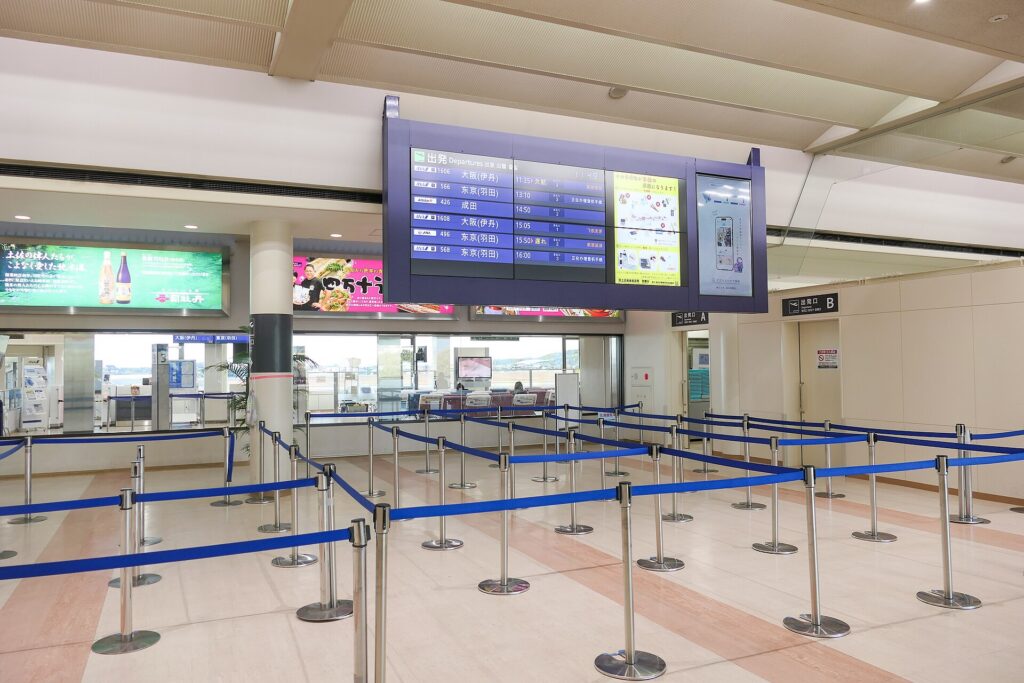
    An airport security checkpoint with queue barriers and screening lanes
    Declare breast milk, formula and baby food at the start of screening; they are screened separately (Photo: MaedaAkihiko via Wikimedia Commons, CC0)

    Road trips

    • Stop to feed. Never take a baby out of the car seat while the car is moving. Plan stops every couple of hours; it is better for everyone anyway.
    • Keep milk cold, then warm it. Carry expressed milk in an insulated cooler with ice packs and warm only what you need for each feed.
    • Do not store formula in a hot car. The CDC advises storing unopened formula in a cool, dry, indoor place rather than in vehicles; on a road trip, keep it in the cabin with you, out of direct sun.
    • Use car power for warming. A car-powered warmer, or charging your battery warmer as you drive, means it is ready at the next stop.
    • Plan for traffic. A delay can push a feed into the middle of a highway with nowhere to stop. Having a warm bottle ready before you set off on the next leg helps.

    If you are renting a car for the trip, reserve an infant seat or bring your own, and check that the vehicle has a working USB port or 12-volt outlet. Our guide to family car rentals covers seats and vehicle choice.

    Preparing feeds safely on the road

    Breast milk

    Follow the CDC’s breast milk storage and preparation guidance. Key points: breast milk can be served cold, at room temperature or warm; to warm it, keep the container sealed and place it in warm (not hot) water; once warmed, use it within two hours; and never thaw or heat breast milk in a microwave, which can create hot spots. Thawed milk should not be refrozen.

    Formula

    The CDC’s infant formula preparation guidance covers the essentials: wash your hands, use clean bottles, measure water before adding powder according to the container’s instructions, use prepared formula within two hours of preparation and within an hour of starting a feed, and discard leftovers. It also notes extra precautions for babies younger than two months, premature babies and those with weakened immune systems. Premeasured powder in a divided dispenser, plus warm water from the warmer or flask, is the easiest approach on the go. Ready-to-feed formula needs no mixing and is convenient for travel days.

    Water

    Where tap water is not safe to drink, use bottled or boiled water for mixing formula and cleaning bottles, and follow local health advice and your pediatrician’s guidance.

    Always test the temperature

    Before feeding, shake or swirl the bottle and test a few drops on the inside of your wrist. It should feel warm, not hot. Portable warmers can vary, and a setting that is perfect at home may behave differently when the device is cold or the battery is low.

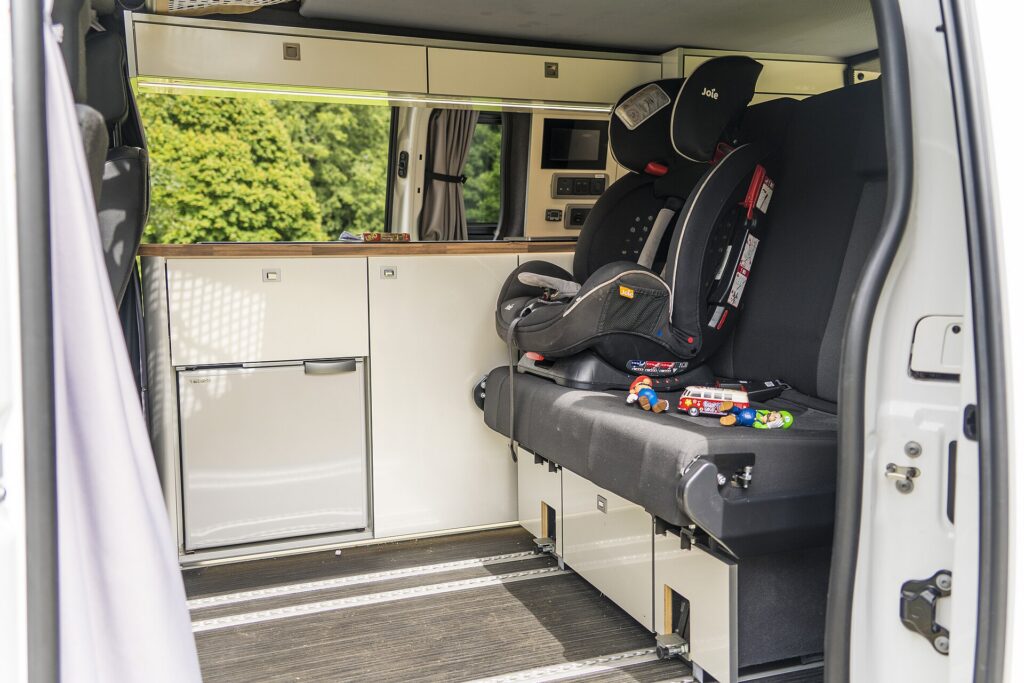
    A child's car seat installed in the back of a camper van
    On road trips, stop to feed: never take a baby out of the car seat while the vehicle is moving (Photo: CruiseAmerica via Wikimedia Commons, CC BY-SA 4.0)

    Cleaning on the road

    Cleaning is the part of travel feeding that people forget to plan. Pack a small bottle brush, a travel-size bottle of dish soap and a clean towel or drying rack. Rinse bottles and the warmer as soon as possible after each feed, since dried milk is harder to clean, then wash properly at the hotel. Many hotels will provide a mini-fridge on request, which is useful for storing milk, and a kettle for boiling water; clean the kettle before use if you are using it for baby feeds. Our guide on the best time to book hotels for family vacations covers the room features that make travel with a baby easier, like a fridge, a kitchenette or a separate sleeping area.

    Traveling abroad with a warmer

    International trips add a few wrinkles. Wall voltage and plug shapes differ between countries, and a plug-in warmer designed for North American outlets may need a converter, not just an adapter, to work safely elsewhere; check the label on the charger or device, which usually lists the input voltage range. Battery warmers that charge from a standard phone charger are the easiest option, since most modern phone chargers accept a wide voltage range. Formula brands differ between countries too, so bring enough of your baby’s usual formula for the whole trip rather than hoping to find it on arrival, and keep it in your carry-on in case a checked bag is delayed. On long-haul flights across time zones, feed on your baby’s schedule rather than the clock, and adjust gradually once you arrive. Finally, check the security rules for your return flight as well as the outbound one, since the exemptions for milk and formula are similar in many countries but not identical.

    A feeding packing checklist

    • Bottle warmer, fully charged, and its charging cable
    • Insulated flask for hot water as a backup
    • Enough bottles and nipples for the travel day, plus spares
    • Formula (premeasured in a dispenser) or ready-to-feed cartons
    • Expressed breast milk in an insulated cooler with ice packs
    • Bottle brush, small dish soap and a towel
    • Bibs, burp cloths and a change of clothes for baby and a parent
    • A basic travel first aid kit; our travel first aid kit guide covers what to include
    • Plug adapter or voltage converter for international trips

    Pack all of it in the bag under the seat or within reach in the car. Once your baby becomes a toddler, the bag gets a little lighter, and the challenge shifts to entertainment; our guides to travel books for kids and kids’ suitcases cover the next stage.

    Common mistakes

    • Not testing the warmer at home. Learn how long it takes and which setting your baby likes before the trip.
    • Forgetting to charge it. A dead warmer at the gate is worse than none. Charge it the night before and top it up during layovers.
    • Packing it in checked luggage. Keep it, and any lithium battery, in the cabin with you.
    • Overheating milk. Warm, not hot. Test every time.
    • Using the microwave. Hot spots can burn a baby’s mouth. The CDC advises against it for both breast milk and formula.
    • Keeping leftovers. Once a baby has fed from a bottle of formula, discard what is left after the feed.
    • Relying on the airline. Hot water on board is not guaranteed. Bring your own solution.

    Frequently asked questions

    Can I bring a bottle warmer on a plane?

    Generally yes, in your carry-on. Devices with lithium batteries belong in the cabin, and spare batteries must be carried on. Whether you may use a heating device during the flight depends on the airline, so ask before you fly.

    Can I bring breast milk and formula through security?

    Yes. In the United States, breast milk, formula and baby food in quantities over 3.4 ounces are allowed in carry-on bags; declare them at the start of screening. Canada has similar rules. Check the rules for every country on your itinerary.

    Does breast milk need to be warmed?

    No. The CDC notes that breast milk can be served cold, at room temperature or warm. Warming is a matter of what your baby prefers.

    How do I warm a bottle without a warmer?

    Stand the sealed bottle or milk bag in a cup or container of warm water for a few minutes, using hot water from a flask, a café or the crew, then test the temperature on your wrist. Never use a microwave.

    How long does warmed milk last?

    Per CDC guidance, use warmed breast milk within two hours. Use prepared formula within two hours of preparation and within one hour after the feed begins, then discard leftovers.

    Will a travel bottle warmer work in the car?

    Battery warmers work anywhere, and car-powered models run from the USB port or 12-volt outlet. Always stop the car to feed rather than taking the baby out of the car seat while driving.

    Should I buy a warmer that heats water or one that heats milk?

    Water-heating models suit formula, where you mix powder with warm water. Models that hold a bottle in a warm water bath or warm milk directly suit breast milk. Some do both; choose based on how you feed.

    Once feeding is sorted, the trip is much easier to plan. Compare fares on flexible dates on our flight search, where a nonstop is often worth a little extra with a baby, find a room with a fridge and space for a crib on our hotel search, and if you are driving, price a car with room for the stroller on our car rental search. For the bigger picture, read our guide on why a family vacation is worth making time for.

  • Best Time to Book Hotels for Family Vacations

    Best Time to Book Hotels for Family Vacations

    Booking a hotel for a family trip is a different problem from booking one for yourself. You need a room that legally and comfortably holds everyone, in a location that keeps the daily logistics short, at a price that still makes sense once parking, breakfast and the resort fee are added. And you usually need it during the exact weeks every other family wants it, because school calendars decide when you can travel. That is why timing matters more for families than for almost anyone else. Book a family room at the right moment and you get the layout you want at a fair rate; leave it too late in a busy week and you are choosing between two rooms, a sofa bed, or a hotel forty minutes from where you want to be. This guide explains when to book for each kind of family trip, why those windows work, how to protect yourself if prices drop after you book, what to look for in the room itself, and the mistakes that cost families the most.

    The short answer

    For most family trips, book the hotel as soon as your dates are fixed, on a refundable rate, and then keep watching the price. As a rule of thumb: one to three months ahead for a domestic trip outside the school holidays, three to six months ahead for an international trip, and four to eight months ahead for school holidays such as Christmas, March Break or spring break, and the peak of summer, especially if you need a suite, connecting rooms or a specific resort. Those ranges are not magic numbers; they are the point at which, in most destinations, the supply of family-sized rooms starts to run out faster than the price rises. Family rooms are the scarce part of any hotel’s inventory, and scarcity, more than the calendar, is what you are racing. Start comparing on our hotel search, and read our pillar guide to hotel booking tips for the fundamentals that apply to every stay.

    Why timing matters more for families

    Hotel pricing responds to demand. When a hotel expects to fill, its rates rise and its cheaper room types sell out first; when it expects empty rooms, it discounts. For a family, the bigger risk is that the room types that fit you disappear.

    • Family inventory is small. A typical city hotel might have hundreds of rooms with one king or two queens, and only a handful of suites, family rooms or connecting pairs. Those go first in any busy week.
    • Occupancy limits are real. Most standard rooms are rated for a maximum number of guests, often four, set by fire codes and the hotel’s own policy. A family of five cannot simply squeeze into a double queen at many hotels, and you may be refused a rollaway bed or a crib if the room is already at its limit.
    • Your dates are not flexible. Families travel when school is out, which means everyone travels at once. The best tool most travelers have for saving money, shifting the dates, is the one you have least of.
    • Location matters more. A cheap hotel far from the attractions costs a single traveler a longer ride. It costs a family a daily car, parking, extra meals out, and tired children at the end of every day.

    The practical consequence is that the family traveler’s goal is to lock in the right room early, at a price you can cancel, rather than to gamble on a last-minute bargain. Our guide to last-minute hotel booking explains when waiting can work; it rarely works for a family of five in July.

    When to book, by type of family trip

    Domestic trips outside school holidays

    A long weekend in a nearby city, a trip to visit relatives in October, a few days at a lake in late spring: for these, one to three months ahead is usually plenty. Demand is moderate, hotels have family rooms to spare, and prices tend to be stable. The exception is any weekend with a big local event, such as a marathon, a major concert, a hockey playoff run or a university graduation, which can fill a mid-size city’s hotels months ahead. Before you settle on dates, check the destination’s event calendar; our Toronto events page and the other city event listings show what is on sale.

    International trips

    For an overseas trip, book the hotel three to six months ahead, and at the same time as, or shortly after, the flights. International family trips have more moving parts: flights that set your arrival and departure days, passports and entry documents, and hotels in cities where family rooms are genuinely rare. In much of Europe, for example, older hotels have small rooms and few that sleep more than three, so a family of four or five may need connecting rooms, an apartment-hotel or two separate rooms, all of which are limited. Our guide to booking international flights covers the flight side of the plan.

    School holidays and peak weeks

    Christmas and New Year, March Break in Canada, spring break in the United States, the Easter weekend, the long summer holiday, and US Thanksgiving are the weeks when family demand concentrates. For these, four to eight months ahead is the safer window, and further ahead still if you need something specific: a two-bedroom suite at a beach resort, a family room at a hotel inside a theme park, a ski-in lodge at Christmas, or a cabin-style hotel in a national park. These are the stays where the right room, not the price, is the real constraint.

    Theme parks, beaches and national parks

    Destinations built around families behave differently from ordinary cities. In Orlando, hotels near the parks and along International Drive price around school calendars on both sides of the border, so the weeks when Canadian and American breaks overlap are the busiest of all. Beach resorts in places like the Cancun Hotel Zone peak from Christmas to Easter, when northern families escape the winter. National park lodges, including those in and around Banff, Jasper and the big American parks, have limited rooms and a short summer season, and the best-located ones can sell out close to a year ahead. For any of these, book as early as your plans allow.

    A hotel room with two beds, the standard family layout
    Two beds in one room: fine for four, but check the maximum occupancy before booking for five (Photo: Kurt Kaiser via Wikimedia Commons, CC0)

    Booking-window cheat sheet

    Trip typeBook the hotelWhy
    Domestic city trip, off-peak1 to 3 months aheadPlenty of family rooms; prices usually stable
    Domestic trip on a big-event weekendAs soon as dates are setConcerts, marathons and playoff games fill hotels early
    International trip3 to 6 months aheadFamily rooms are scarcer abroad; flights set the dates
    Christmas, March Break, spring break, summer peak4 to 8 months aheadEvery family travels at once; suites and connecting rooms go first
    Theme-park or beach resort in peak season6 to 10 months aheadFamily-oriented inventory sells out around school calendars
    National park lodge in summerAs early as bookings openFew rooms, short season, high demand
    Shoulder season, flexible dates2 to 6 weeks ahead can workLower demand leaves room to wait, if you have a backup

    The strategy that beats timing: book refundable, then watch

    No one can reliably predict the lowest price for a given hotel on a given night. What you can do is take the price risk off the table. The approach that works best for families is simple:

    • Book early on a refundable rate. As soon as your dates are firm, reserve the room type you actually need on a rate with free cancellation. You have now secured the inventory, which is the scarce thing.
    • Note the cancellation deadline. Free cancellation usually ends a set number of days or hours before arrival. Put that date in your calendar, along with the time zone of the hotel.
    • Keep checking the price. Every couple of weeks, and more often in the last month, search the same dates, same room type and same terms. If the rate drops meaningfully, book the cheaper rate first, confirm it, and then cancel the original.
    • Consider switching to prepaid only close to the trip. Non-refundable rates are cheaper for a reason. They make sense once your plans are truly fixed, such as a week or two out, if the saving is worth the risk. For a family, where a sick child can cancel a trip overnight, the flexibility is often worth the premium all the way to arrival.

    This approach turns timing into a one-way bet: if prices rise, you are protected; if they fall, you rebook. The only way to lose is to miss the cancellation deadline. Our guide to finding the best hotel deals online goes deeper on comparing rates and reading rate conditions.

    Choosing the right room for your family

    Price is only half the booking. The other half is making sure the room works for your family on the third night, when everyone is tired.

    Room types, from smallest to largest

    • Two queens or two doubles. The standard family room in North America. Fine for two adults and two young children. Check the maximum occupancy before booking for a family of five.
    • King with a sofa bed. Common in newer hotels. Works for one child, less well for two, and sofa beds vary enormously in comfort.
    • Family room or quad. Some hotels, especially in Europe and at resorts, offer rooms with a double plus bunks or singles. Search specifically for them.
    • Connecting rooms. Two rooms with an internal door between them. Connecting rooms share a door; adjoining rooms may only mean next to each other, so use the word “connecting” when you ask. Most hotels treat connecting rooms as a request rather than a guarantee unless you book a specific connecting-room product, so call the hotel after booking.
    • Suites. A separate bedroom, often with a sofa bed in the living area and a door that lets parents stay up after the children are asleep. Worth paying for on longer stays.
    • Apartment-hotels and extended-stay hotels. Rooms with a kitchen or kitchenette, often a separate bedroom and sometimes laundry. For a week or more, being able to make breakfast and pack lunches can offset a higher nightly rate.

    Questions to answer before you book

    • What is the maximum occupancy, and do children count? Policies differ; some count infants, some do not.
    • Do kids stay free? Many chains let children under a certain age share their parents’ room at no extra charge, but the age cut-off varies by brand and hotel, and it may not include breakfast.
    • Is a crib or rollaway available, and is there a charge? Request it at booking and confirm it a few days before arrival; hotels have a limited number.
    • Is breakfast included? For a family of four eating out every morning, an included breakfast can be worth far more than a small difference in the nightly rate.
    • Is there a pool, and when is it open? Indoor pools matter in winter; outdoor pools may close for the season or have limited hours. Some pools close for maintenance, so check recent guest reviews.
    • Is parking included, and is it on site? Downtown hotels often charge a nightly parking fee, sometimes valet-only, that can change the total significantly.
    An indoor hotel swimming pool
    An indoor pool is worth filtering for on winter trips with children (Photo: Kgbo via Wikimedia Commons, CC BY-SA 4.0)

    Where to stay: location beats a lower rate

    Families feel distance more than anyone. A hotel a short walk from the aquarium, the beach or the park entrance means naps can happen in the room, forgotten items can be retrieved, and a tired four-year-old is ten minutes from bed, not forty. When you compare hotels, compare the whole cost of the location, not just the nightly rate:

    • Transport. A cheaper hotel that requires a rental car, parking at the attractions and fuel every day may cost more overall. If you do need a car, our family car rental guide covers car seats and vehicle size, and our car rental search compares pickup locations.
    • Time. An extra hour of driving each day is an hour less at the destination, and families have fewer productive hours to begin with.
    • Food. A hotel near supermarkets and family restaurants, or with a kitchenette, saves money over a week. A resort with only on-site restaurants can be convenient but expensive.

    Traveling within Canada? Our guide to hotel booking in Canada covers provincial taxes, seasons and city-by-city advice. Use the map view when you search and plot the three or four places you will visit most. The best-value hotel is often the one in the middle of them, not the cheapest one on the list. Our city guides, such as things to do in Toronto, explain which neighborhoods suit families.

    A themed family suite with beds for children
    Family suites and connecting rooms are the scarcest rooms in any hotel (Photo: Caseyrtjh via Wikimedia Commons, CC BY-SA 4.0)

    The real cost: fees, taxes and extras

    The advertised nightly rate is rarely what a family pays. Before you compare two hotels, bring both to the same basis: the total for your dates, for your number of guests, including everything that is mandatory.

    • Taxes. Accommodation taxes vary by country, province, state and city, and some are added only at checkout. The total at the final booking step is the figure to compare.
    • Resort and destination fees. Common in resort areas, Las Vegas, Orlando and many beach destinations. They are charged per room, per night, and may cover things like pool access, Wi-Fi or a shuttle whether you use them or not. Regulators in both the United States and Canada have moved against hiding mandatory fees from the advertised price, so the total should be shown before you pay; if it is not, treat that as a warning sign.
    • Parking. Nightly parking at a downtown hotel can be a meaningful share of the room rate.
    • Extra-person charges. Some hotels charge per additional adult, and some count teenagers as adults.
    • Breakfast. If it is not included, price four breakfasts a day into the comparison.
    • Deposits and holds. Hotels usually place a hold on a card for incidentals at check-in. It is released after checkout, but it reduces your available credit during the trip.

    Travel off-peak when you can

    The single biggest saving available to families is traveling just outside the peak. Hotels in family destinations price their busiest weeks at a premium and discount the weeks on either side. If your children’s schools and your work allow any flexibility at all, these are the windows to look at:

    • The first week or two after school ends, or the last week of August, rather than the middle of summer, in many destinations.
    • The week after a major holiday. Early January after New Year is traditionally quiet in cities and at many resorts.
    • Shoulder seasons. Late spring and early fall are often the sweet spot for weather and prices in North America and Europe.
    • Sunday to Thursday in leisure destinations. Beach towns, theme-park areas and lake resorts are busiest on weekends.
    • Weekends in business districts. Downtown hotels that fill with business travelers during the week often drop their rates on Friday and Saturday nights, which suits a family city break; our business travel hotels guide explains why.

    Your destination’s school calendar matters as well as your own. March Break in Ontario, spring break in the US states, and school holidays in Europe fall on different dates, and a destination is at its busiest when several of them overlap. For flights, our guide to the best time to book cheap flights and hotels covers fare timing, and city guides like the best time to fly to Toronto explain each destination’s seasons.

    A young child in a sun hat standing beside a resort swimming pool
    Resort pools and family rooms sell out first in school-holiday weeks (Photo: Shixart1985 via Wikimedia Commons, CC BY 2.0)

    Plan the whole trip together

    A family hotel booking does not exist on its own. The flight sets the arrival and departure days, the arrival time decides whether you need an early check-in or a late checkout, and your transport plan decides whether you need hotel parking. Book in this order:

    • Fix the dates around school calendars, work and any event you are traveling for.
    • Price the flights for those dates and a day or two either side; a cheaper flight a day earlier may be worth an extra hotel night. Search on our flight search.
    • Reserve the hotel on a refundable rate for the dates the flights support.
    • Decide on ground transport. If you need a car, compare it on our car rental search and make sure the hotel’s parking works. If not, check the hotel’s distance from transit and the airport.
    • Book the tickets for anything that sells out, such as theme parks, timed-entry attractions and shows.
    • Revisit the hotel price periodically until the cancellation deadline.

    Standard check-in is usually mid-afternoon, so a family landing on a morning flight faces hours in a lobby. Ask about early check-in when you book, or, after an overnight flight, book the previous night so the room is ready when you arrive.

    Documents and practical details for traveling with children

    Hotels do not usually ask about the relationship between adults and children, but borders and airlines can. If one parent is traveling alone with a child, or grandparents are traveling with grandchildren, carry a consent letter from the absent parent or parents; the Government of Canada provides a recommended consent letter for children traveling abroad and general guidance on traveling with children. Every child needs their own passport for international travel. Visitors flying to Canada from visa-exempt countries other than the United States generally need an Electronic Travel Authorization, and Americans traveling abroad should check the State Department’s travel pages. Entry rules change, so confirm the current requirements for every traveler before you book non-refundable elements.

    Common mistakes families make

    Booking a room that does not fit

    Booking a standard room for five and hoping the hotel will add a bed is a gamble; many will refuse. Check the maximum occupancy and book the room type that officially fits everyone.

    Waiting for a last-minute deal in peak season

    Last-minute discounts exist when hotels have empty rooms. In a school-holiday week, family rooms rarely go empty. The wait is more likely to cost you the room than save you money.

    Locking into a non-refundable rate too early

    A non-refundable rate booked eight months out removes your ability to rebook if the price falls and leaves you exposed if plans change. For families, flexibility is usually worth paying for until close to the trip.

    Comparing nightly rates instead of totals

    A hotel with a lower headline rate and a nightly resort fee, parking charge and no breakfast can easily cost more than a slightly higher rate with those things included.

    Not confirming requests

    Cribs, connecting rooms, early check-in and accessible rooms are requests until the hotel confirms them. Call or message the hotel directly a few days before arrival.

    Frequently asked questions

    How far in advance should I book a hotel for a family vacation?

    As a rule of thumb, one to three months ahead for a domestic off-peak trip, three to six months for an international trip, and four to eight months for school holidays and peak summer. Book as soon as your dates are firm if you need a suite, connecting rooms or a specific resort.

    Is it cheaper to book a hotel early or at the last minute?

    It depends on demand. Last-minute rates can be lower when a hotel has empty rooms, but in the weeks families travel, family rooms rarely go unsold. Booking early on a refundable rate and rebooking if the price drops gives you most of the upside with little risk.

    Can five people stay in one hotel room?

    Sometimes. Many standard rooms are limited to four guests, and some hotels count infants. Look for family rooms, suites or apartment-style hotels, or book connecting rooms.

    How do I make sure we get connecting rooms?

    Book both rooms in one reservation if the hotel allows it, choose a connecting-room product where offered, and call the hotel after booking to confirm. Otherwise, treat connecting rooms as a request rather than a guarantee.

    Should I book a refundable or non-refundable rate?

    For most families, refundable until close to the trip. Children get sick and plans change, and a refundable rate also lets you rebook if the price falls.

    Are suites worth it for families?

    On stays of three nights or more, often yes. A separate bedroom lets parents stay up after children sleep, and many suites include a sofa bed, a fridge and more space for luggage.

    Ready to plan? Compare family-friendly stays on our hotel search, check fares for your school-holiday dates on our flight search, and if you need wheels, price them on our car rental search. For a family favorite, start with hotels in Orlando or hotels in Toronto.

  • The Complete Guide to Rental Car Booking Tips for Every Traveler

    The Complete Guide to Rental Car Booking Tips for Every Traveler

    A rental car can be the best money you spend on a trip or the most frustrating line item on your credit card statement, and the difference is rarely luck. It comes down to a handful of decisions made before you ever reach the counter: whether you need a car at all, which class to book, when and where to pick it up, how the insurance and fuel rules work, and what you agree to when you sign. This guide walks through every one of those decisions in the order you will face them, explains what the jargon on the rental agreement actually means, and flags the mistakes that cost travelers the most. It is written for North American travelers renting at home or abroad, whether you are picking up a compact for a weekend in Chicago, a minivan in Orlando or a manual hatchback in Rome.

    If you already know you need a car, you can compare rates from the major companies side by side on our car rental search. If you are still deciding, start with the first section.

    The short version

    If you read nothing else, these are the habits that save the most money and trouble:

    • Decide whether you need a car for the whole trip. Many city trips need a car for one or two days, not seven.
    • Book early on a free-cancellation rate, then keep checking. If the price drops, rebook and cancel the original.
    • Compare the total price, not the daily rate. Taxes, airport fees and add-ons can change the ranking completely.
    • Know your insurance before you arrive. Call your auto insurer and your card issuer, and write down exactly what each covers.
    • Choose full-to-full fuel and refill close to the return location.
    • Photograph and video the car at pickup and at return, including the fuel gauge and odometer.
    • Return on time. Rental days are usually counted in 24-hour blocks from pickup, and a short delay can cost a full day.

    Step 1: Decide whether you need a car, and for how long

    The cheapest rental is the one you do not take. In dense cities with good transit, such as New York, London, Paris, Toronto or Montreal, a car is often a liability: parking is scarce and expensive, hotels charge nightly for it, and traffic eats the time you saved. In spread-out places such as Los Angeles, Phoenix, Orlando, Dallas or Calgary, or anywhere your plans include national parks, small towns or a coastline, a car is often the only practical way to get around.

    The smartest answer is frequently a split: go without a car for the city days, then rent for the day trips or the road-trip leg. Neighborhood branches often open later and close earlier than airport counters, but their rates can be lower and they save you paying for a car that sits in a hotel garage. Our guide to renting a car versus public transport versus taxis works through the decision in detail, and our city guides answer it for specific places, for example New York, Los Angeles and Las Vegas.

    Step 2: Choose the right car class

    Rental companies sell car classes, not specific models. The listing will show one model with the words “or similar”, and you are guaranteed the class, not the car in the picture. Book the smallest class that genuinely fits your people and your luggage; bigger cars cost more per day, burn more fuel and are harder to park in old city centers. But do not squeeze four adults and four suitcases into a compact to save a little, because you will pay for it in comfort on every drive.

    ClassRealistic fitBest forWatch out for
    Economy / compactTwo adults, two carry-ons and one checked bagCity driving, tight parking, short tripsSmall trunk; can feel underpowered on mountain roads or highways
    Intermediate / standard sedanTwo to four adults, two large bagsMost couples and small familiesRear seats get tight for three adults on long drives
    Full-size sedanFour adults, three or four bagsLong highway drives, business travelParking in older European and downtown garages
    Compact or midsize SUVFour people, luggage plus a strollerFamilies, winter trips, gravel roadsHigher fuel use; “SUV” does not always mean all-wheel drive
    Full-size or three-row SUVFive to seven people with limited luggage when all rows are upLarger families, ski tripsLuggage space disappears with the third row in use
    MinivanSeven or eight people, or five with plenty of luggageFamilies with car seats, groupsLimited supply at peak times; book early
    Premium / luxuryAs a sedan, with more comfort and featuresBusiness travel, special occasionsOften excluded from credit card rental coverage

    Two class details trip travelers up regularly. First, if you need all-wheel or four-wheel drive, for a ski trip or a mountain road in winter, check whether the class guarantees it; many listings do not. Second, if you are renting in Europe, Latin America or much of Asia, the default is often a manual transmission. If you cannot drive stick confidently, filter for automatic and book early, because automatics are the smaller part of many fleets outside North America.

    A car rental counter in the arrivals area at Vancouver International Airport
    Airport rental counters are the most convenient place to pick up, and usually the most expensive (Photo: GoToVan from Vancouver, Canada via Wikimedia Commons, CC BY 2.0)

    Step 3: When to book

    Car rental prices move with supply and demand, and unlike airline seats, the fleet at a given location is fixed in the short term. When every car on the lot is spoken for, prices climb sharply and the minivans and SUVs go first. The periods that reliably tighten supply are summer, the Christmas and New Year weeks, spring break and school holidays, long weekends, and big local events such as a major conference, a championship game or a festival.

    The practical strategy is simple:

    1. Book as soon as your dates are firm, on a “pay later” or free-cancellation rate. For peak periods and larger vehicles, that means weeks or months ahead.
    2. Check the price again a few weeks out and a few days out. Rental rates do fall as well as rise, especially when a location has more cars than expected.
    3. If it drops, book the cheaper rate first, then cancel the original. Never cancel first; the lower price may disappear.

    Prepaid rates can be cheaper, but they usually carry cancellation fees or no refund at all, and some companies do not refund unused days if you return early. Use them only when your plans cannot change. It also pays to test slightly different pickup and return times: because rentals are priced in 24-hour periods, and weekly rates sometimes undercut five or six daily rates, a small shift can change the price noticeably.

    Step 4: Airport or neighborhood pickup?

    Airport locations are the most convenient and usually the most expensive. Many airports allow rental companies to pass on concession fees and facility charges, which appear on your bill as separate line items, and some add a customer facility charge that pays for a consolidated rental car center. Off-airport and neighborhood branches avoid some of those charges, but they add a shuttle ride or a taxi, and their opening hours are shorter; an office that closes at 6 pm on Saturday and reopens Monday is not much use for a Sunday afternoon return.

    A few rules of thumb:

    • Arriving late at night, with kids or with lots of luggage: pay for the airport location.
    • Spending the first days in a transit-friendly city: take the train or a taxi to your hotel and rent from a neighborhood branch on the day you leave town.
    • Flying in with a flight that might be delayed: add your flight number to the reservation, so the counter knows to hold the car rather than marking you a no-show.

    Our airport guides, such as Toronto Pearson, LAX and Denver International, explain where the rental counters are and how to reach them.

    The entrance to the consolidated Rental Car Center at Miami International Airport
    Many large airports group every company in one rental car center, often paid for through a facility charge on your bill (Photo: Xnatedawgx via Wikimedia Commons, CC BY-SA 4.0)

    Step 5: Read the whole price

    The daily rate in large type is the start of the price, not the end. Before you compare two offers, open the full breakdown and look for:

    • Taxes and airport fees, which vary widely by city and state or province.
    • Young driver surcharges, typically for drivers under 25.
    • Additional driver fees, charged per day at many companies.
    • One-way or drop fees if you return to a different location.
    • Equipment: child seats, GPS, ski racks, snow chains, each usually charged per day, often with a cap per rental.
    • Mileage limits, rare on North American leisure rentals but common on some specialty vehicles and international rentals.
    • Toll programs and their daily service fees.
    • Coverage products you may or may not need, covered in the next step.

    A rate that looks cheaper per day can end up costing more once these are added. Compare like for like: the same class, the same pickup and return times, the same drivers, the same coverage.

    Step 6: Understand rental car insurance

    Insurance is where most counter arguments happen and where most travelers either overpay or leave themselves exposed. There are four products you are likely to be offered, under slightly different names depending on the company and country.

    Collision damage waiver (CDW) or loss damage waiver (LDW)

    Strictly speaking, not insurance but a waiver: if you buy it, the company agrees not to charge you for damage to, or theft of, its car, subject to exclusions. Without it, you are responsible for the car’s damage, and sometimes also for “loss of use” while it is being repaired and for administrative fees. In Europe and many other regions a basic waiver is often included in the price but comes with a high deductible (called an “excess”), and the counter will offer a second product to reduce that deductible.

    Liability coverage

    Liability covers damage you cause to other people and their property. Rules differ sharply by country, state and province: some rentals include a legal minimum, some include very little, and in some countries, Mexico being the best-known example for North Americans, locally issued liability insurance is mandatory and your home policy is not accepted. Rental companies sell supplemental liability to top up the minimum.

    Personal accident and personal effects coverage

    These cover medical costs for you and your passengers and theft of belongings from the car. Many travelers already have this through health insurance, travel insurance or a home or renter’s policy.

    Where you may already be covered

    • Your own auto policy. In the US and Canada, many personal policies extend some coverage to rental cars for personal use, but often only within your home country, and not always collision.
    • Your credit card. Many cards include a rental collision benefit if you pay for the whole rental with that card and decline the company’s waiver. Some are primary, some are secondary to your own policy, and most have exclusions: certain countries, luxury and exotic cars, large vans and trucks, and rentals longer than a set number of days. Liability is almost never included.
    • Travel insurance. Some policies include rental car damage coverage as an option.

    Do this before the trip, not at the counter: call your insurer and your card issuer, ask exactly what is covered, in which countries, for which vehicle types and for how long, and ask them to send the benefit terms in writing. Then decide which of the counter products you actually need. Declining coverage you do not have is the expensive mistake; buying coverage you already have is the common one.

    Step 7: Drivers, age, license and payment

    • Minimum age. At most major companies in the US and Canada, the minimum is 21 (sometimes 20), with a daily surcharge for drivers under 25 and restrictions on premium classes. A few US states require companies to rent to younger drivers, with fees. Outside North America the rules vary, and some countries also have upper age limits or extra requirements for older drivers.
    • Additional drivers. Anyone who will drive must be on the agreement, present at pickup with a valid license. Some companies, and some jurisdictions, waive the fee for a spouse or domestic partner; ask. An unlisted driver in an accident can void your coverage.
    • Credit versus debit. Nearly every company prefers a credit card in the main driver’s name and places a hold for the estimated total plus a deposit. Debit cards are accepted at some locations with extra conditions, such as proof of a return flight or a credit check, and the hold ties up real money in your account for days after the return.
    • Your license. Bring the physical card. A digital license is not accepted everywhere, and an expired or temporary paper license can be refused.
    • International Driving Permit. An IDP is a translation of your license recognized under international conventions. Some countries require it, others recommend it, and rental companies sometimes ask for it even where the law does not. Canadians get one from CAA, as explained on the Government of Canada’s IDP page; Americans get one from the issuers listed by the US State Department. Get it before you leave; it cannot be issued abroad.

    Step 8: Fuel policies and electric cars

    PolicyHow it worksWhen it makes sense
    Full-to-fullPick up full, return full; you pay only for fuel you use, at pump pricesAlmost always the best value
    Prepaid fuel (full-to-empty)Pay for a full tank at pickup, return at any level, no refund for fuel leftOnly if you will genuinely return near empty and have no time to refuel
    Refuel on returnReturn below full and the company refills it at its own per-unit rate plus a service feeRarely; this is usually the most expensive way to buy fuel
    Same-to-sameReturn at the level you received itFine, but photograph the gauge at pickup

    Fill up within a few miles of the return location and keep the receipt; some companies ask for it if the gauge reads just below full. If you rent an electric vehicle, ask about the return charge requirement (many companies set a minimum percentage), where the nearest fast chargers are, which charging networks work with the car, and whether charging cables are included. EVs are excellent in cities with good charging and less relaxing on long rural drives where chargers are sparse. The US Department of Energy’s Alternative Fuels Data Center has a station locator that is useful for planning.

    A car dashboard fuel gauge showing a full tank
    On a full-to-full rental, photograph the gauge at pickup and bring the car back showing the same (Photo: Tony Webster via Wikimedia Commons, CC BY 2.0)

    Step 9: Mileage, one-way trips and borders

    Most leisure rentals in the US and Canada include unlimited mileage, but check, especially for specialty vehicles, local-renter rates and some international rentals. If you plan to drop the car somewhere else, price the one-way fee early; it can be large, but some popular routes are cheap in one direction when companies need to rebalance fleets. Our drive guides, such as Toronto to Montreal and Los Angeles to Las Vegas, are a good place to compare.

    Crossing a border needs to be declared at booking. Driving between the US and Canada is routine with the major companies, though some restrict certain vehicle classes; taking a US rental into Mexico, or driving between some European countries, can be restricted or require extra coverage and fees. Ask at booking and make sure the permission is written on the agreement.

    Step 10: Tolls

    Toll roads have increasingly gone cashless, charging by transponder or by photographing the license plate. Rental companies handle this through their own toll programs, which typically add a daily service fee on top of the tolls, sometimes for every day of the rental rather than only the days you use a toll road. Your options are to accept the program, use your own transponder where it is compatible and allowed, pay the toll operator directly online where that is possible, or plan routes that avoid tolls. Highway 407 ETR north of Toronto, for example, is fully electronic, and its operator’s site explains how unregistered vehicles are billed. Ask at the counter how tolls will be charged and read the program terms before you drive off.

    At the counter: handling the upsell

    Counter staff are often paid partly on what they sell, so expect offers of an upgrade, prepaid fuel, coverage and a toll package. None of that is a scam; some of it is useful. But decide in advance. A calm “no thank you, I have coverage through my card and my policy” is enough. Before you sign, check that the agreement matches your reservation: the class, the total estimate, the return date and time, the fuel policy, the drivers, and that nothing you declined has been added. If the class you booked is not available, the usual practice is a free upgrade to a larger class, not a paid one; ask for it.

    Loyalty programs are free to join at most companies and are worth it even if you rent once a year: members at many large airports skip the counter and go straight to the car, which saves time and removes the sales pitch entirely.

    Inspect the car before you leave the lot

    1. Walk around the car with your phone recording video. Get every panel, the bumpers, the wheels and the windshield, then close-ups of anything scratched, dented or chipped.
    2. Photograph the dashboard showing the fuel level, the odometer and any warning lights.
    3. Check the interior for stains, burns, damage and smells, and confirm the spare tire or inflation kit is present.
    4. Test the basics: lights, wipers, air conditioning, mirrors, seat adjustment and any child seat you rented.
    5. Get damage noted. Make sure anything you find is recorded on the checkout sheet or in the app, and ask an agent to initial it if possible.

    It is also worth entering the license plate or VIN into the recall lookup on the NHTSA recalls page if you are renting in the US; it takes a minute.

    While you have the car

    • Breakdowns: the roadside assistance number is usually on the key tag, the windshield sticker or the agreement. Call it before you call a tow truck yourself, or you may not be reimbursed.
    • Accidents: make sure everyone is safe, call the police if required locally, photograph everything, exchange details, and notify the rental company as soon as you can. Do not sign anything admitting fault.
    • Parking tickets and traffic cameras: fines follow the car. The company pays the authority, bills your card and usually adds an administrative fee, sometimes months later.
    • Changing plans: if you need the car longer, call and extend before your return time rather than just keeping it; the rate can be very different.
    Rows of rental cars parked in an airport rental lot
    Before you drive off, record a video walkaround of the car and photograph the dashboard (Photo: User:Mattes via Wikimedia Commons, Public domain)

    Returning the car

    Return timing matters more than most travelers expect. Rental days are usually counted in 24-hour blocks from pickup, grace periods are short, and being a few hours late can add a full day at a higher rate. Returning early is not always cheaper either, because rates may be recalculated. Allow extra time at airports, where the return garage can be a shuttle ride from the terminal, refill nearby, and do another video walkaround and dashboard photo. If you drop after hours, you normally remain responsible for the car until staff check it in, so your photos matter even more. Our guide to car rental return timing covers grace periods, late fees, early returns and after-hours drop-offs in detail. Check your final receipt before you leave and your card statement for the following weeks.

    Renting with kids

    Families have extra choices to make: vehicle size once car seats go in, whether to rent seats or bring your own, and which companies make pickup easiest with tired children. Child seats rented at the counter are charged per day, availability is not guaranteed unless reserved, and staff are generally not permitted to install them for you. Car seat laws vary by state, province and country; Transport Canada’s child car seat safety page is a good starting point for the principles. Our guide to the best car rental services for family vacations covers all of this, including seat math for three-across rows.

    Renting abroad

    • Check the license rules for each country, including whether you need an IDP.
    • Learn the road basics: which side of the road, how roundabouts work, speed units, and local rules such as low-emission zones and restricted historic centers, which are enforced by camera in many European cities and generate fines that reach you long after the trip.
    • Confirm what “included” means. Quoted rates abroad may or may not include basic collision cover, theft protection and liability, and deductibles can be large.
    • Expect smaller cars and manual gearboxes, and narrow streets and parking spaces to match.
    • Keep your passport with your license; many counters ask for both.

    Our city guides for Rome, London, Paris and Cancun go into local specifics.

    The mistakes that cost the most

    • Booking late for peak dates and paying whatever is left, often for a car that is too big or too small.
    • Comparing daily rates instead of totals, then discovering the fees at the counter.
    • Assuming a credit card covers everything, including liability, luxury cars or a country it excludes.
    • Letting an unlisted friend drive.
    • Skipping the pickup video, then having no proof about a scratch that was already there.
    • Accepting prepaid fuel and returning with half a tank.
    • Keeping the car an extra few hours without calling, and paying for an extra day at a walk-up rate.
    • Renting for the entire trip when you only needed a car for two days of it.

    Book the trip, not just the car

    A rental works best when it fits the rest of the itinerary. Match pickup to your flight’s arrival time, leaving a buffer for delays; choose a hotel with parking if you will keep the car overnight, and factor the parking fee into the room rate; and time the return so you are not racing for a flight. Our guide to the best time to book flights and hotels covers timing for the other two pieces, and our hotel booking tips explain how to read the fees on a room rate the same way you now read a rental agreement.

    Frequently asked questions

    How far in advance should I book a rental car?

    As soon as your dates are firm, on a free-cancellation rate. For summer, holidays, spring break and large vehicles, that means weeks to months ahead. Then keep checking and rebook if the price drops.

    Is it cheaper to rent a car at the airport or in town?

    Often in town, because airport locations pass on concession and facility fees. But neighborhood branches have shorter hours and require getting there, so the saving is only worth it when the timing works.

    Do I need the rental company’s insurance?

    It depends on what you already have. Check your own auto policy and your credit card’s rental benefit before the trip, get the terms in writing, and buy only what fills a real gap, especially liability and any coverage abroad.

    Can I rent a car with a debit card?

    At some locations, with conditions such as proof of travel or a credit check, and a hold on your funds. A credit card in the main driver’s name is far simpler.

    What happens if I return the car late?

    After a short grace period, most companies charge hourly and then a full extra day once you pass a threshold of a few hours. Call before your return time if you know you will be late.

    Which fuel option is best?

    Full-to-full in almost every case. Prepaid fuel only makes sense if you will return nearly empty.

    Do I need an International Driving Permit?

    For some countries, yes, and rental counters may ask for one even where it is only recommended. Check the official government guidance for your destination and get the permit before you leave home.

    Can I add a second driver?

    Yes, at pickup, with their license present. There is often a daily fee, sometimes waived for a spouse or partner. Never let an unlisted person drive.

    Ready to price it out? Compare rates from the major companies on our car rental search, or go straight to a destination such as Orlando, Calgary or Phoenix, and line up the rest of the trip with cheap flights and hotels.

  • Best Car Rental Services for Family Vacations

    Best Car Rental Services for Family Vacations

    On a family vacation, the rental car is more than transport. It is where the car seats live, where the snacks and the spare clothes ride, where toddlers nap between stops and where everyone starts and ends each day. Get it right and the trip flows; get it wrong and you spend the week wrestling luggage into a trunk that was never big enough, arguing with a counter about a car seat that is not there, or paying for extras you did not know you had agreed to. This guide covers what actually matters when renting for a family: which vehicle fits your family and your gear, the car seat decision, how the major rental companies differ in ways that matter to parents, how to keep the cost down, and how to make the pickup, the drives and the return easier with children in tow.

    When you are ready to compare, our car rental search shows minivans, SUVs and sedans from the major companies side by side for your dates.

    The short version

    • Size the car for the car seats and the luggage, not just the number of people.
    • Book early, especially minivans and three-row SUVs for school holidays and summer, and use a free-cancellation rate.
    • Decide on car seats before the trip: bring your own if you can, reserve if you must rent, and plan to install them yourself.
    • Join the company’s free loyalty program so you can skip the counter where that is offered.
    • Pick up at the airport unless you have a strong reason not to; the saving from an off-airport branch rarely survives a shuttle ride with tired children.
    • Compare total prices, including add-ons such as seats, extra drivers and coverage, before choosing a company.

    Is a rental car the right call for your family?

    For most family trips, yes, but not all. In spread-out destinations, such as Orlando, Southern California, Phoenix, the Rockies or any national park, a car is close to essential, and one vehicle for the whole family is usually cheaper than taxis or tours. In the densest cities, such as New York, London or Paris, a car with children can be more trouble than it is worth: parking is scarce, hotel garages charge nightly, and the subway with a stroller, while not effortless, is often faster. Many families split the difference, going car-free for the city days and renting for the day trips or the road-trip part of the holiday. Our guide to renting a car versus public transport versus taxis works through that decision.

    Choosing the right vehicle

    Rental companies sell classes, not models, and the car you get will be the one pictured “or similar”. What you can control is the class. For families, the class decision is mostly about three things: seats, car seat fit and luggage.

    Vehicle classWorks well forCar seat fitLuggage reality
    Midsize or full-size sedanTwo adults, one or two childrenTwo seats fit comfortably; three across is rarely possibleTwo large suitcases plus carry-ons; a stroller may not fit with them
    Compact or midsize SUVTwo adults, two children, moderate luggageTwo seats comfortably, sometimes a booster between themBetter height for strollers; check the cargo cover and floor depth
    Standard or full-size SUV (two rows)Two adults, two or three childrenWider rear bench; three across may be possible with narrow seatsGenerous, and good for winter trips with bulky gear
    Three-row SUVFamilies of five to sevenMore positions, but third-row access can be awkward with seats installedVery little luggage space with the third row up
    MinivanFamilies of four to seven, especially with young childrenThe easiest vehicle for multiple car seats, with sliding doors and walk-through accessDeep well behind the third row; the best all-rounder for gear
    Large passenger vanGroups and multigenerational trips of eight or moreMany positionsPlenty of space, but harder to drive and park, and often excluded from credit card coverage

    A few rules of thumb from experience:

    • Count car seats as passengers and a half. A rear-facing infant seat takes a lot of front-to-back space and can push the front passenger seat forward.
    • Three seats across a single row is difficult in most sedans and many SUVs. With three children in seats, a minivan or three-row vehicle is usually the answer.
    • With a third row in use, luggage space collapses in most SUVs. If you need all seven seats and have suitcases, a minivan is usually the better choice.
    • Strollers are the forgotten bag. A full-size stroller can take as much space as a large suitcase. A compact travel stroller saves room.
    • If you need all-wheel drive for a winter trip to the mountains, check whether the class guarantees it; many do not.
    • If you are renting in Europe, vehicles run smaller, manual gearboxes are common and minivans are harder to find. Filter for automatic and book early.
    A Chrysler Pacifica minivan, a common family rental in North America
    For families with car seats and luggage, a minivan is usually the easiest vehicle to rent (Photo: CZmarlin — Christopher Ziemnowicz — photo credit is required if this image is used anywhere other than Wikipedia. via Wikimedia Commons, CC BY-SA 4.0)

    The car seat decision

    This is the part of a family rental that causes the most stress, and it is worth deciding well before the trip.

    Renting seats from the rental company

    All the major companies offer child seats and boosters as an optional extra, usually for a daily fee, often capped per rental. The drawbacks are real: availability is not guaranteed unless you reserve, and even then a busy location can run out; you cannot choose the model; you may not know the seat’s history; and counter staff are generally not permitted to install seats for you, so you will be doing it yourself in a parking garage, possibly without the manual. If you rent, reserve the specific type you need (rear-facing infant, convertible, forward-facing or booster), check the seat when you collect the car for its expiration date, labels, harness and cleanliness, and ask for another if anything looks wrong.

    Bringing your own

    Many parents prefer to bring their own seat: you know its history, you know how to install it, and your child is used to it. Most major airlines in the US and Canada let you check a car seat free of charge, and often a stroller too, but confirm with your airline, because policies differ. Consider a padded travel bag to protect the seat in the hold. If you buy a seat on the plane for your child, you can use an approved car seat on board; the FAA explains which seats qualify and how to use them on its flying with children page. Booster seats are not approved for use during flight, but they are light and easy to carry on or check.

    Installing seats in a rental

    Most modern vehicles have lower anchors and top tethers, called LATCH in the US, UAS in Canada and ISOFIX in Europe, as well as seat belts you can use to install a seat. Practice installing your seat at home, bring the manual or download it to your phone, and give yourself time at pickup. The NHTSA car seat guidance and Transport Canada’s child car seat safety page explain how to choose and install the right seat for a child’s age and size.

    Rules on the road

    Car seat laws are set by each state, province and country, and they differ in the age, weight and height thresholds for each stage. The safe approach is to follow the stricter of your home rules and the local rules. Two principles are universal: never place a rear-facing seat in front of an active airbag, and keep children in the back seat whenever possible; safety agencies in both the US and Canada recommend the back seat for children under 13. In Europe, car seats must carry the local approval label, and a seat approved in North America may not meet that requirement, so check before relying on your own seat abroad.

    The major rental companies, from a family’s point of view

    The big brands are more similar than their marketing suggests. They have broadly similar fleets, all offer child seats as extras, and all have loyalty programs. Several also share owners: Enterprise, National and Alamo belong to the same group, as do Avis and Budget, while Hertz owns Dollar and Thrifty. What differs is their location networks, how they handle pickup and which travelers they target. Prices vary constantly by city, date and vehicle, so no brand is always cheapest; compare totals for your trip.

    Enterprise

    Enterprise is known for its large network of neighborhood branches as well as airport locations, which is useful if you want to rent for only part of the trip, start from near your hotel or swap cars mid-vacation. Its airport locations carry the usual range of SUVs and minivans. Its loyalty program is Enterprise Plus.

    National

    National is popular with frequent travelers because members of its Emerald Club can, at many airport locations, skip the counter and choose a car from a designated aisle. For a family, that means you can look at the actual cars and pick one whose trunk and rear seats suit your gear, rather than taking whatever is assigned.

    Alamo

    Alamo focuses on leisure travelers and is a common choice at vacation airports such as Orlando. At many locations you can check in online to skip the counter, and at many you can choose your own car from the available vehicles in your class, which, as with National, helps families find the right trunk and seat layout.

    Hertz

    Hertz has one of the widest airport networks and a broad fleet. Members of its free Gold Plus Rewards program can skip the counter at many airports and go straight to their car, which is a real advantage when you land with tired children.

    Avis

    Avis is another major airport brand with a wide network. Its Avis Preferred program lets members bypass the counter at many locations, and its app can manage parts of the rental.

    Budget

    Budget, Avis’s sister brand, is generally positioned as the value option and often shares facilities with Avis at airports. It is worth including in any comparison, particularly when you can apply a membership or employer discount.

    Sixt

    Sixt is headquartered in Germany, has a strong presence across Europe and a growing network at North American airports, and its fleet often includes European makes. For families renting in Europe it is one of the natural companies to compare, and in North America it is worth checking alongside the domestic brands.

    National and Alamo car rental counters at an airport
    Several big brands share owners and facilities; loyalty programs can let you skip the counter entirely (Photo: AutoRentals via Wikimedia Commons, CC BY-SA 4.0)

    How to choose between them

    What matters to youWhat to look for
    Avoiding a counter queue with kidsA free loyalty program with counter bypass at your airport (Emerald Club, Gold Plus Rewards, Avis Preferred, Alamo online check-in)
    Choosing a car that fits your gearLocations where you can pick from an aisle or lot (National, and Alamo at many locations)
    Renting for only part of the tripA strong neighborhood network near your hotel (Enterprise is known for this)
    The lowest total priceA side-by-side comparison of totals, including seats, drivers and coverage, for your exact dates
    Renting in EuropeAutomatic transmission availability, larger vehicle classes, and car seats that meet local rules

    Big families, grandparents and groups

    For multigenerational trips and groups of eight or more, you have two realistic choices: one large passenger van, or two ordinary cars. A large van keeps everyone together, but it is harder to drive and park, supply is limited, some companies restrict who may rent one, and many credit card rental benefits exclude it. Two minivans or SUVs cost more in fuel and parking but are easier to drive, give you the freedom to split up for different activities, and are usually covered by the same insurance as any other car. Whichever you choose, list every adult who might drive on the agreement. If a family member has limited mobility, ask about vehicles with easier step-in height, and if a driver needs hand controls, many major companies can fit them with advance notice; call the company’s accessibility line well before the trip rather than relying on the counter.

    Keeping the cost down

    • Book early on a free-cancellation rate and check again before the trip. Minivans and large SUVs are limited, and they go first in school holidays. If the price drops, book the new rate and then cancel the old one.
    • Compare totals, not daily rates. A company with a slightly higher rate can come out cheaper once you add car seats, an extra driver and coverage.
    • Bring your own car seats if you can. Daily seat fees across two or three seats add up over a week.
    • Check the additional-driver fee. Many companies charge per day for a second driver; some waive it for a spouse or domestic partner, and some loyalty programs or memberships include it. Ask.
    • Use discounts you already have: auto club, warehouse club, employer or credit card programs often have codes with the major brands.
    • Know your insurance before you reach the counter. Check what your own auto policy and your credit card cover, in which countries and for which vehicle types; large vans and some SUVs can be excluded. Our rental car booking tips explain the coverage products in plain terms.
    • Choose full-to-full fuel and refill near the return location.
    • Test the length of the rental. A weekly rate can make seven days cost little more than five.
    • Price parking into the hotel. A hotel or vacation rental with free parking can be worth more than a slightly lower room rate; our guide to the best time to book hotels for family vacations covers the rest of the accommodation side.

    Pickup day with children

    1. Put your flight number on the reservation so the car is held if you are delayed.
    2. Split up if you can. One adult collects the car while the other waits with the children and luggage at the curb or in a quiet corner of arrivals.
    3. Use the counter bypass if your loyalty program offers it at your airport.
    4. Check the car before loading it: walk around it recording a video, photograph the dashboard, and make sure the rear doors have child locks and the seat anchors are accessible.
    5. Install the car seats before anything else, then load the luggage, then the children.
    6. Set up the car: connect your phone, set the navigation for the hotel and adjust the mirrors while still parked.
    A child car seat installed in the back seat of a car
    Decide before the trip whether to bring your own car seat or reserve one, and plan to install it yourself (Photo: Shixart1985 via Wikimedia Commons, CC BY 2.0)

    On the road with kids

    • Plan shorter driving days than you would as adults, and build in stops every couple of hours for restrooms, food and running around.
    • Download offline maps and entertainment before you leave the hotel Wi-Fi.
    • Pack a car bag within reach: snacks, water, wipes, a change of clothes, a small first-aid kit, sick bags and chargers. Our guide to the best travel first-aid kits covers what to carry.
    • Use window shades for sun on long drives, and never leave a child alone in a parked car, even briefly; cars heat up dangerously fast.
    • Keep valuables out of sight when you park at attractions, and take them with you where you can.
    • Let the drivers rest. If there are two adults, both should be on the agreement so you can swap.

    Returning the car

    Leave more time than you think for the return. Refueling, finding the return entrance, unloading car seats and luggage, and catching the shuttle to the terminal all take longer with children. Rental periods are usually counted in 24-hour blocks, so a late return can add a full day, including a day of seat rental and coverage. Our guide to car rental return timing explains grace periods, late charges and how much time to allow before a flight. Check under every seat and in every seatback pocket before you hand over the keys; small toys and pacifiers are the most common casualties.

    Family road-trip destinations where a rental shines

    The Icefields Parkway winding through the Canadian Rockies seen from Parker Ridge
    Family road trips such as the Icefields Parkway between Banff and Jasper are where a rental car shines (Photo: Ethan Sahagun via Wikimedia Commons, CC BY-SA 4.0)

    Common mistakes families make

    • Booking a car that fits the people but not the luggage.
    • Assuming a rented car seat will be waiting, without reserving, or assuming staff will install it.
    • Booking late for school holidays, and finding minivans sold out.
    • Letting a partner drive without adding them to the agreement.
    • Renting off-airport to save a little, then spending an hour on a shuttle with overtired children.
    • Underestimating the return, and running for the flight.

    Frequently asked questions

    What is the best rental car for a family of five?

    A minivan in most cases, especially with young children in car seats, because it combines easy access, space for three seats and room for luggage. A three-row SUV works if you pack light.

    Do rental car companies provide car seats?

    Yes, all the major companies offer them for a fee, usually per day with a cap. Reserve in advance, inspect the seat at pickup, and expect to install it yourself.

    Is it better to bring my own car seat?

    Often, yes. You know its history and how to install it, and most major airlines check car seats free of charge. Check your airline’s policy before you fly.

    Which rental company is best for families?

    There is no single best. Look for a company with a counter bypass or car choice at your airport, the vehicle class you need, and the lowest total price for your dates once seats, drivers and coverage are included.

    Do I need to pay extra for my spouse to drive?

    Sometimes. Many companies charge an additional-driver fee, but some waive it for a spouse or domestic partner, and some jurisdictions require them to. Ask at booking.

    How far ahead should I book a minivan?

    As early as your dates are firm, especially for summer, spring break and holiday weeks, on a free-cancellation rate so you can rebook if the price falls.

    Can I use a US car seat in a rental car in Europe?

    Possibly not legally. European rules require seats with local approval labels, which most North American seats do not carry. Check the rules for your destination or rent a compliant seat.

    Ready to plan? Compare minivans and SUVs on our car rental search, find family-friendly flight times, and choose a hotel with parking through our hotel search. For more on why the trip is worth the effort, read our piece on family vacations and work-life balance.

  • Travel Smarter: 10 Best Traveling Books for Kids

    Travel Smarter: 10 Best Traveling Books for Kids

    Every parent who has spent three hours in a car or a plane seat with a restless child knows how quickly the good mood runs out. Tablets help, until the battery dies or the downloads fail. Books are the quiet workhorse of family travel: no charging, no Wi-Fi, no volume to argue about, and the right one can hold a child’s attention for far longer than you would expect. The trick is choosing books that suit travel specifically, which is not the same as choosing good books. A beautiful hardcover with delicate pages, a stack of heavy picture books, or a sticker book that sheds pieces into the seat gap will make the trip harder, not easier. This guide covers what makes a book travel well, the best types by age, specific titles that are long-standing favorites, books that connect to where you are going, audiobooks, how to pack and ration them, and the mistakes that turn a reading plan into a mess.

    The short answer

    Pack light, durable books that reward repeat looking, and mix types. For toddlers, sturdy board books and lift-the-flap books about planes, trains and vehicles. For ages three to seven, search-and-find books like I Spy and Where’s Waldo?, picture books about airports and travel, and sticker and activity books. For confident readers, a chapter-book series they already love, plus an atlas or fact book about the world. Add a book about your destination, load a few library audiobooks for the car, and hold one new book back as a surprise for the hardest stretch of the trip.

    A boy lying down and reading a chapter book
    A chapter-book series a child already loves is the safest bet for a long flight (Photo: Wilfredor via Wikimedia Commons, CC0)

    What makes a book good for travel

    A good travel book passes a few practical tests on top of being a good read.

    • Durability. Board books, thick pages and wipe-clean covers survive juice, crumbs and being dropped in an airport. Save the heirloom hardcover for home.
    • Weight and size. Every book goes in someone’s bag. Paperbacks, slim activity books and compact formats win. A large-format atlas may be worth it for an older child on a long flight, but one is enough.
    • Replay value. Books children can look at again and again, like search-and-find books, detailed illustrated books and fact books, last far longer than a short story read once.
    • Few loose parts. Stickers and flaps are great; pop-up pieces, loose cards and books that come with small toys are easy to lose under a seat.
    • Low mess. Crayons roll, markers stain upholstery, and glitter is forever. Choose stickers, pencils or water-reveal pads for activity books.
    • Right level of independence. On a plane, a book the child can enjoy alone gives parents a break; a book that needs reading aloud is better for the car, where everyone can listen.

    Best types of travel books by age

    AgeBest typesWhy they travel well
    1 to 2Board books, touch-and-feel, lift-the-flapIndestructible, short, and good for pointing and naming
    3 to 5Picture books about travel and vehicles, search-and-find, sticker booksRepeatable, independent looking, and they explain what is happening at the airport
    5 to 7Activity books, early readers, flap books with factsMix of doing and reading; builds confidence on a long trip
    7 to 10Chapter-book series, puzzle books, illustrated atlasesLong enough to fill a flight; series mean the next book is always wanted
    10 to 12Longer novels, fact books, destination guides for kidsIndependent reading for hours; a way to prepare for the destination

    Toddlers: board books and flap books

    For children under three, the best travel books are sturdy, simple and about the things they will see. Board books about planes, trains, cars and trucks give a toddler words for the noisy, confusing world of an airport, and naming things on the page is an activity in itself.

    • My Big Train Book, a sturdy board book with big, bright photographs of trains, is ideal for pointing and naming and is durable enough for a bumpy ride.
    • Byron Barton’s Airport walks through a trip from arrival at the terminal to takeoff in bold, simple pictures, which can make a first flight feel less strange.
    • Lift-the-flap and touch-and-feel books keep small hands busy. Choose board-book flaps over paper ones, which tear.

    At this age, familiar favorites from home often work better than new books, because a toddler in an unfamiliar place finds comfort in the known. Bring one or two of those, plus one new travel-themed book.

    Ages three to seven: picture books, search-and-find, stickers

    This is the age where books do the most work on a trip, because children can look independently for long stretches but still love being read to.

    Picture books about travel

    • Usborne Look Inside an Airport is a flap book that shows what happens behind the scenes: check-in, baggage, security, the control tower and the plane. It answers a lot of questions before they are asked, and the flaps keep children busy at the gate.
    • Richard Scarry’s Cars and Trucks and Things That Go is a classic for road trips. The pages are packed with detail and running jokes, and children can pore over it for a long time, hunting for Goldbug on every spread.
    • National Geographic Little Kids First Big Book of the World introduces continents, animals, landmarks and people with big photographs and short, readable facts, roughly suited to ages four to eight. It is a good way to spark curiosity about where you are going. National Geographic Kids has more from the same family of books and games.

    Search-and-find books

    Search-and-find books may be the single best category for travel, because each page can take many minutes and children happily revisit them.

    • The I Spy books by Jean Marzollo and Walter Wick, with their photographed scenes and rhyming riddles, work for a wide age range, and siblings can compete to find objects first.
    • Where’s Waldo? by Martin Handford (published as Where’s Wally? in some countries) needs no reading at all, which makes it perfect for mixed ages.

    Sticker and activity books

    Sticker books are mess-free and absorbing. The Usborne Sticker Dolly Dressing series, with its many themed titles, is a long-running favorite, and there are sticker books on vehicles, dinosaurs, space and maps for every taste. Maze books, dot-to-dot books and simple puzzle books sized for travel are good for children around five to ten. Reusable water-reveal pads, where a water-filled pen reveals colors that fade as they dry, are a clever option for younger children, with nothing to spill beyond a few drops.

    Rows of economy seats in the cabin of an Air Canada Boeing 777
    On a plane, compact books a child can enjoy alone, kept in the bag under the seat, work best (Photo: jo3hug via Wikimedia Commons, CC BY 2.0)

    Ages seven to twelve: series, puzzles and atlases

    Older children who read independently are the easiest to entertain with books, as long as the book is one they actually want to read.

    Chapter-book series

    A series they already love is the safest bet: they know the characters, and finishing one book on the flight makes them want the next. Travel-themed series add to the excitement.

    • Mary Pope Osborne’s Magic Tree House series sends two siblings to a different place and time in each book, from ancient Rome to the rainforest. The books are short enough to finish on a flight, and there are many of them. The official Magic Tree House site lists the titles.
    • Jeff Brown’s Flat Stanley, about a boy flattened by a bulletin board who travels by mail, has inspired school projects around the world and is a natural travel read for early chapter-book readers.

    Atlases and fact books

    • Atlas of Adventures, illustrated by Lucy Letherland, is a large, beautifully illustrated atlas full of activities and adventures around the world, best for roughly seven to twelve. It is heavy, so bring it for a long flight rather than a day trip.
    • Maps by Aleksandra Mizielińska and Daniel Mizieliński is an oversized illustrated atlas of countries, packed with drawings of food, people, animals and landmarks. It is a book to linger over, ideal for a long-haul flight or a rainy afternoon at the hotel.
    • Fact books in the “weird but true” style from National Geographic Kids offer short, surprising facts that children love to read aloud to the rest of the car.

    Puzzle books

    Word searches, crosswords, logic puzzles and travel activity books with games and quizzes are ideal for children who find reading for long stretches tiring. Pack a pencil with a cap; pens leak in the cabin.

    Books about where you are going

    One of the most rewarding things you can pack is a book set in your destination. Reading about a place before and during the trip gives children something to look for, and seeing the real thing is thrilling.

    • Paris: Ludwig Bemelmans’s Madeline, about the little girl in the old house covered with vines, shows off Paris landmarks on every page. Planning the trip? Start with flights to Paris and our Paris guide.
    • London: Michael Bond’s A Bear Called Paddington begins at Paddington Station, which you can visit. See flights to London.
    • New York: Kay Thompson’s Eloise, the girl who lives at the Plaza Hotel, is a perfect before-the-trip read. See flights to New York and our New York guide.
    • Boston: Robert McCloskey’s Make Way for Ducklings is set in the Public Garden, where bronze statues of the duck family stand today. See flights to Boston.
    • Many cities: Miroslav Sasek’s classic This Is series, with titles including This Is Paris, This Is London, This Is New York and This Is Rome, offers illustrated tours of the great cities that older children and adults both enjoy.

    Your local librarian can suggest books for almost any destination, including picture books set in national parks and nonfiction about the history and animals of the place you are visiting.

    Books for first-time or nervous flyers

    For a child who has never flown, or one who is anxious about it, the unknown is often the hardest part. Books that walk through the whole journey, from packing and arriving at the airport to security, boarding, takeoff and landing, turn the unknown into a sequence they can picture. Read one several times in the week before the trip, and talk through each step: “This is where we give them our bags.” “This is the part where the plane goes fast and then lifts up.” On travel day, point out the things you saw in the book as you pass them. Many children find it reassuring to recognize the check-in desk, the X-ray belt and the jet bridge from the pages.

    It helps to be honest about the less pleasant parts, like waiting in lines, ears popping and the seat belt sign, so nothing comes as a shock. Pair the book with a plan for those moments: a snack or a drink during takeoff and landing, a favorite book for the wait at the gate, and a small reward when you land. Our guide on how early to get to the airport helps you build in enough time that travel day does not feel rushed, which keeps everyone calmer.

    Matching books to the kind of travel

    On a plane

    Planes suit independent reading and quiet activities: search-and-find books, sticker books, puzzle books and chapter books. Keep the books in the bag under the seat, not in the overhead bin, so you can reach them during taxi and turbulence when you cannot stand up. Choose compact formats that fit on a tray table.

    In a car

    Reading in a moving car makes many children feel sick. Children between about two and twelve are especially prone to motion sickness, according to the CDC’s guidance on motion sickness, which recommends looking at the horizon. If your child gets carsick, save books for stops and use audiobooks while driving, or choose picture books that need only a glance rather than long reading. Read-aloud from the front seat, where a parent reads to the whole car, works well for families who do not get sick.

    On a train

    Trains are the best of both: a table, space to spread out, and a smooth ride. Bring the big atlas, the activity book and the chapter book for a train journey.

    At the hotel

    A bedtime book from home helps children settle in an unfamiliar room. It is a small ritual that tells them the day is over, wherever you are. Our guide to booking hotels for family vacations covers choosing rooms where children can sleep while adults stay up.

    The interior of an Amtrak passenger car with rows of seats
    Trains are the best of both worlds for reading: space, a smooth ride and a view (Photo: CZmarlin — Christopher Ziemnowicz — photo credit is required if this image is used anywhere other than Wikipedia. via Wikimedia Commons, CC BY-SA 4.0)

    Audiobooks and e-readers

    Audiobooks are the best answer to the reading-in-the-car problem and a great way for a whole family to share a story. Many public libraries lend audiobooks and e-books free through apps like Libby and Hoopla; all you need is a library card. Borrow and download titles before you leave, because loans expire and you may not have a good signal on the road. A long series read aloud by a good narrator can carry a family across hundreds of miles.

    For older children, an e-reader holds dozens of books in the space of one paperback, with a long battery life. It is a good investment for a child who reads fast. For younger children, physical books are usually more engaging and easier to manage.

    How to pack and ration books

    • Give each child a pouch. A zippered pouch or small bag of their own books and activities keeps things organized and easy to grab.
    • Keep a surprise in reserve. One new book, wrapped or hidden, brought out at the hardest point of the journey, often at the end of a long flight, buys an hour of calm.
    • Rotate. Do not hand over everything at once. Offer one book, then an activity, then a snack, then a different book.
    • Mix ages for siblings. A book the younger child can look at while the older one reads it aloud keeps two children busy at once.
    • Weigh the bag. Books are heavy. Limit the number per child, and choose paperbacks and slim activity books.
    • Plan for the return. Pack one or two books that have not been seen yet for the trip home, when everyone is tired.

    Books go in the child’s own backpack or case; our guide to kids’ suitcases covers bags that children can manage themselves.

    Shelves of children's books in the children's section of a public library
    Your public library is the best place to stock up on travel and destination books before a trip (Photo: Micheal Kaluba via Wikimedia Commons, CC BY-SA 4.0)

    Making reading part of the trip

    • Ask questions as you read. “What would you pack if you went there?” “Which of these animals do you think we will see?” Books become a way to talk about the trip.
    • Start a travel journal. A small notebook where children draw what they saw, stick a ticket stub and write a sentence or two turns the trip into their own book to reread later.
    • Visit a bookstore or library on the trip. Choosing a book in a new city is a souvenir that lasts, and many city libraries have wonderful children’s rooms.
    • Use small rewards if they help. A sticker after a chapter, or choosing the next snack, can keep reluctant readers going. Keep it light.
    • Read yourself. Children notice when parents put down their phones and pick up a book.

    Where to find good books before you go

    You do not need to buy everything. Your public library is the best starting point, with children’s librarians who can recommend books for every age and destination. The Association for Library Service to Children publishes an annual list of notable children’s books, a reliable source of well-reviewed titles. Borrowing a stack of travel and destination books a couple of weeks before the trip builds anticipation, and the ones that are a hit can be bought for the journey itself.

    Common mistakes

    • Packing too many. Five books per child is plenty for most trips; the rest is weight.
    • Bringing only new books. Familiar favorites are comforting, especially for young children in an unfamiliar place.
    • Loose-piece books on planes. Pop-ups, puzzle pieces and card sets end up under the seats.
    • Markers and glitter. Crayons and markers stain upholstery and tray tables. Stick to stickers and pencils.
    • Forcing reading in the car. If a child feels sick, stop. Switch to an audiobook and look out of the window.
    • Not downloading audiobooks ahead. No signal in the mountains means no audiobook, unless you downloaded it at home.

    Frequently asked questions

    What are the best books for kids to take traveling?

    Durable, light books with high replay value: board books for toddlers, search-and-find and sticker books for preschoolers, activity books and a favorite chapter-book series for older children, and one atlas or fact book about the world.

    At what age should I start bringing books on trips?

    From the very first trip. Babies enjoy simple board books with high-contrast pictures, and a familiar book from home is a comfort at any age. The type of book changes as children grow.

    Are books better than tablets for long journeys?

    They complement each other. Books need no battery or signal, encourage imagination and give eyes a break from screens. Many families use both: books and activities first, a screen as a reward or for the final stretch.

    How do I choose the right travel book for a plane or train?

    Choose compact books a child can enjoy alone, like search-and-find, sticker and puzzle books, for planes. On a train, with more space and a smooth ride, larger books like atlases work well.

    How can kids read in the car without getting sick?

    Many cannot, and that is normal. Encourage looking at the horizon, try picture books that need only brief glances, and use audiobooks for long stretches. Stop if a child feels unwell.

    How many books should I pack for a child?

    Three to five for most trips: a favorite, a new travel-themed book, an activity or sticker book, and a surprise for the hardest part of the journey. Add a library audiobook or two.

    Can travel books also be educational?

    Yes. Atlases, fact books and books set in your destination teach geography, history and culture, and a book about airports helps children understand what is happening on travel day.

    With the reading sorted, the rest is the trip. Compare fares on flexible dates on our flight search, choose a family-friendly base on our hotel search, and if there is a road trip in the plan, price a car with room for everyone on our car rental search. For the bigger picture, read our guide on why a family vacation is worth the time off, and if you are traveling with a baby, our travel bottle warmer guide and family car rental guide cover the essentials.

  • Why You Need to Take Time Out from Work and Book a Vacation with Family

    Why You Need to Take Time Out from Work and Book a Vacation with Family

    Most working parents know the feeling. The calendar fills with meetings, school runs, practices and deadlines, the weekends disappear into errands, and months go by in which the family is in the same house but rarely in the same moment. A family vacation is one of the few things that reliably breaks that pattern. It is not a reward you earn after the work is done, because the work is never done. It is a deliberate decision to step out of the routine, spend unhurried time with the people you are working for in the first place, and come back with a clearer head. This guide makes the case for taking that time, and then gets practical: how to actually get the days off, how to plan a trip that fits your children’s ages and your budget, how to book flights, hotels and cars without the stress eating the benefit, and how to return to work without undoing it all in the first week.

    The short answer

    A family vacation matters for work-life balance because it gives you something ordinary weeks cannot: long stretches of shared, unscheduled time, a real break from work, and new experiences your children will remember. To get the benefit, plan it early so the time off is protected, choose a trip that suits the youngest traveler rather than the most ambitious one, keep the pace slow, and genuinely disconnect from work for most of it. Book the flight first with flexible dates, then a hotel or rental with space for everyone, and a car only if the destination needs one. Start with a date-flexible search on our flight search, and use the rest of this guide to shape the trip around it.

    Why family time away is different from family time at home

    You can love your family and still spend very little real time with them. At home, time together tends to be fragmented: dinner between activities, a movie while someone answers email, a weekend morning that turns into chores. A vacation removes the obligations that crowd out attention. Nobody has to leave for work, there is no homework to supervise, and the day’s only agenda is the one you set together.

    That shift changes how families talk. Children and teenagers often open up in the in-between moments: a long drive, a walk back from the beach, waiting for a table. Those moments are rare in a scheduled week and common on a trip. Parents notice things about their children they had missed, siblings who bicker at home find themselves teaming up to explore a new place, and shared experiences become family stories that get retold for years. “Remember the time we got lost looking for that waterfall” is worth more than another quiet weekend at home.

    Rest that actually restores

    Many people find that a change of scenery helps them rest in a way a weekend at home does not. At home, the laptop is on the kitchen table and the to-do list is on the fridge. Away, the reminders are gone. A few days of sleeping in, walking more, eating at a slower pace and not thinking about work lets most people come back feeling noticeably better. You do not need a scientific study to recognize that; you need to notice how you feel on the last day of a good trip compared with the Friday before it.

    Learning your children cannot get in a classroom

    Travel teaches children in ways that stick. Seeing a place they read about, hearing a different language at a market, tasting food they would never have ordered at home, working out a subway map, or counting coins in a foreign currency builds curiosity and confidence. It does not have to be international: a national park, a big city, a historic town or a coastline a few hours away offers plenty of new things. What matters is that children see the world is bigger and more varied than their daily routine.

    Better work, not just less work

    Taking time off is sometimes framed as a cost to your career. In practice, many people return from a real break more focused, more patient and better at the parts of their job that need judgment and creativity. Stepping back also shows you which of your tasks were truly urgent and which only felt that way. And modeling healthy boundaries matters: children who watch a parent protect family time learn that work is important but not everything.

    How to actually get the time off

    The biggest obstacle to a family vacation is rarely money. It is the feeling that there is never a good time to leave work. There will not be one, so you have to make one.

    • Know your entitlement. Vacation rules vary widely. In the United States, federal law does not require employers to provide paid vacation; as the U.S. Department of Labor explains, it is a matter of agreement between employer and employee, so your company’s policy is what counts. In Canada, provinces and territories set minimum vacation entitlements for most workers, and federally regulated employers follow the federal labor code. Read your policy, check how much time you have, and find out whether unused days carry over or expire.
    • Pick the dates early and put them in writing. Request time off months ahead, before other people claim the popular weeks, and put it on the shared calendar as soon as it is approved. A trip booked in advance is much harder to cancel for a meeting.
    • Plan around school calendars. School breaks are when most families can travel and when prices are highest. If your children are young enough that a few missed days will not matter, or your school allows it, traveling just before or after a holiday week can save a lot of money and crowds.
    • Hand off, do not just leave. Two weeks before you go, list your open projects, decide who covers each, and brief them. Set an out-of-office message that names a contact for urgent issues. The better the handoff, the less likely you are to be pulled back in.
    • Decide your disconnection rules before you leave. Some people need total silence; others feel calmer with a fifteen-minute email check every other morning. Pick a rule, tell your manager and your family, and stick to it. Remove work apps from your phone for the week if you cannot trust yourself.
    • Protect the day after you return. If you can, come home on a Friday or Saturday and keep the first workday light. Landing on a Sunday night and walking into a full Monday is how a vacation gets erased in one day.

    Choosing the right kind of trip for your family

    The best family vacation is the one that works for everyone, which usually means the one that works for the youngest and least patient traveler. A trip that is wonderful for adults and exhausting for a toddler is not restful for anyone.

    Children’s agesWhat tends to workWhat to watch
    Babies (under 1)One base, short flights or drives, a room or rental with a separate sleeping spaceNap and feeding schedules; bring or rent the gear you need
    Toddlers (1 to 3)Beaches, lakes, gentle nature, a pool, a place with easy foodLong travel days and crowded sightseeing; build in downtime every afternoon
    Young children (4 to 7)Theme parks, zoos, aquariums, easy hikes, beach resortsOvertired afternoons; one big activity a day is plenty
    Older children (8 to 12)City trips, national parks, road trips, first international tripsLet them help plan; they engage more when they chose part of it
    TeenagersAdventure trips, big cities, cultural trips, active holidaysGive them some independence and a say; allow some Wi-Fi time

    Beach and resort trips

    For pure rest, it is hard to beat a beach. Children dig and swim for hours, parents actually sit down, and there is little to organize. Places like the Bahamas and Hawaii are classic choices for exactly this reason; the official Bahamas tourism site is a good starting point for comparing islands. Closer to home for many North American families, Cancun offers direct flights from many cities and a long strip of beach hotels in the Hotel Zone, and San Diego combines beaches with a famous zoo, a big city park in Balboa Park and mild weather much of the year. If rest is the whole point, our guide to relaxing vacations for doing absolutely nothing has more ideas.

    Theme parks

    Theme parks are a rite of passage for many families, and Orlando is the obvious name. They are also the trips most likely to become exhausting. Plan fewer park days than you think you want, schedule a pool day between them, go early in the morning when lines are short and the heat is lower, and base yourself somewhere with easy access, such as International Drive. Compare flights to Orlando across a whole month, since school-holiday weeks price very differently from the weeks around them.

    Adventure and nature trips

    For active families with school-age children and teenagers, adventure trips create the strongest memories. Costa Rica, with rainforests, volcanoes, wildlife and zip lines, is a favorite; Visit Costa Rica lists regions and activities. New Zealand is a longer and more expensive trip but offers hiking, glaciers and beaches in a compact country. Closer to home, national and state parks offer the same sense of adventure for far less money; our guide to America’s most unique state parks is a good place to look, and Calgary is the gateway to Banff and the Rockies.

    City and cultural trips

    Cities work well once children are old enough to walk all day and curious enough to care. Rome and Tokyo blend ancient history with modern life and are both extraordinary with older children; Italy’s official tourism site and the Japan National Tourism Organization are the places to start. In North America, Washington, DC has free museums that children love, Quebec City feels European without the long flight, and New York is endlessly interesting to a ten-year-old. The trick with city trips is pacing: alternate a museum morning with a park afternoon.

    Budgeting without stress

    Money worries can undo the benefits of a vacation before it starts. A clear budget turns a vague anxiety into a plan.

    • Start early. Booking ahead gives you more choice of flights and rooms, and for peak family weeks, the best-value options disappear first. Our guide to the best time to book flights and hotels goes into timing in detail.
    • Set a total, then split it. Decide what the whole trip can cost, then allocate it: flights, lodging, car or transfers, food, activities, and a buffer of ten to fifteen percent for the things you forgot. Families usually underestimate food and activities.
    • Compare prices across dates, not just sites. Moving a trip by a few days, or flying on a Tuesday instead of a Saturday, often matters more than which site you book on. A fare calendar shows this at a glance.
    • Price the whole trip, not the headline. A cheaper flight with a long layover and bag fees for four can cost more than a direct fare. A hotel that includes breakfast and parking can beat a cheaper one that charges for both.
    • Save on purpose. A dedicated savings account with an automatic transfer each payday turns the trip into a goal the whole family can watch grow. Our guide on how to save money for a trip has a step-by-step plan.
    • Consider the shoulder season. The weeks just before and after the peak often have good weather, lower prices and far fewer crowds. Our list of budget travel destinations is organized with this in mind.

    Booking the trip, step by step

    1. Flights first

    For most trips, the flight is the biggest single cost and the least flexible piece, so settle it first. Search with flexible dates, compare nonstop and one-stop options, and weigh the real cost of connections with small children; a nonstop that costs a little more is often worth it. Check each airline’s rules on seat selection, because families are not always seated together on the cheapest fares, and pay to choose seats if needed. Our guide to reading flight details explains what to check before you pay.

    2. A place with room for everyone

    Space is the difference between a restful trip and a cramped one. Look at family rooms, suites with a separate bedroom, or apartment-style hotels with a kitchenette so the children can sleep while the adults stay up. A pool, free breakfast and a location near the things you plan to do are all worth paying for with children. Family weeks book up early; our guide on the best time to book hotels for family vacations covers timing and room types, and you can compare options on our hotel search.

    3. A car only if you need one

    In walkable cities with good transit, a car is often a burden. For beach towns, theme parks, national parks and road trips, it is usually essential. If you rent, reserve child seats ahead or bring your own, choose a vehicle with room for luggage as well as people, and read the insurance terms before you reach the counter. Our guide to the best car rental options for family vacations covers vehicle choice and seats, and our rental car booking tips cover the fine print. Compare rates on our car rental search.

    4. Documents and rules

    Children need their own passports for international flights. In the United States, applications for children under 16 are made in person, generally with both parents or guardians present, as the State Department’s child passport page explains. In Canada, the Government of Canada’s travelling with children page covers passports and custody documents, and it strongly recommends a consent letter when a child travels abroad with only one parent or with another adult. Processing times change, so apply well before you book nonrefundable travel and confirm current requirements before you fly.

    A WestJet Boeing 737 parked at a gate at Calgary International Airport
    Travel day: settle the flight first, with flexible dates, then build the rest of the trip around it (Photo: Milan Suvajac via Wikimedia Commons, CC BY-SA 4.0)

    Packing for children without overpacking

    Families tend to pack for every possible scenario and then haul it all through the airport. Pack for the trip you are taking, and remember that most destinations have stores.

    • Give each child their own small bag. A child who rolls their own suitcase is more invested in the trip and less likely to leave things behind. Our guide to kids’ suitcases covers sizes, wheels and airline rules.
    • Pack the flight bag separately. Snacks, a change of clothes, wipes, medications, chargers and entertainment belong in the bag at your feet, not in the overhead bin.
    • Bring screen-free entertainment. Books, sticker books and activity books fill hours without battery anxiety. Our list of the best traveling books for kids is sorted by age.
    • Plan feeding for babies. Formula, breast milk and baby food are allowed through security in larger quantities than other liquids, and a portable warmer makes feeds on the go far easier; our travel bottle warmer guide covers the options and the safety rules.
    • Know the security rules. The TSA’s traveling with children page explains strollers, car seats and screening for children in the United States; rules change, so check before you go.
    • Consider a car seat on the plane. The FAA does not require child restraints on commercial flights but strongly recommends an approved seat or device for young children, which requires buying the child a seat.

    Keeping the pace slow once you arrive

    The most common family-vacation mistake is trying to see everything. Children do not need an itinerary packed from breakfast to bedtime, and neither do you. A simple rule works for most families: one main activity a day, a long lunch, downtime in the afternoon, and something easy in the evening.

    • Keep sleep roughly on schedule. A tired child makes for a hard day for everyone. Adjust to a new time zone gradually and protect naps for little ones.
    • Stay in one place longer. Moving hotels every two nights eats hours in packing and checking in. Two bases on a week-long trip is plenty; one is often better.
    • Let everyone choose something. Give each family member one pick for the trip. It spreads ownership and cuts down on complaints.
    • Build in unplanned time. Some of the best vacation memories come from the afternoon with nothing scheduled.
    • Put the phones away at meals. Including yours. The point was to be together.

    Mistakes that undo the benefit

    • Working through it. Checking email “just for a minute” several times a day keeps your mind at the office. Set rules and keep them.
    • Overscheduling. A trip that feels like a series of appointments is not a break.
    • Choosing a trip for the adults. Long drives between sights and hours in museums are hard on young children, and that makes them hard on you.
    • Booking too late for peak weeks. Family rooms, nonstop flights and minivans run out first during school holidays.
    • Skipping the buffer. A tight connection, a late check-out fee or a surprise resort charge is far less stressful when the budget has room for it.
    • Going straight back to work. A day at home to unpack, do laundry and reset makes the return much easier.
    A mother and two young children playing at the water's edge on a beach in Punta Cana
    The small moments at the water's edge are often what children remember most (Photo: Ed Yourdon via Wikimedia Commons, CC BY-SA 2.0)

    Smaller breaks count too

    Not every year allows a week away, and work-life balance is not only about the big trip. A long weekend at a lake, a city two hours’ drive away, or a night in a hotel with a pool can give a family a real reset. Short trips are easier to plan, cheaper, and less disruptive at work, and many families find that two or three small breaks spread across the year do as much for their well-being as one large one. The same rules apply: protect the time, disconnect from work, and keep the plans simple. Our Toronto guide and Chicago guide are good starting points for a city weekend.

    Coming home well

    The last part of a vacation is the return. Try to land with a buffer day before work, and do a short “re-entry” the evening before your first day back: skim your inbox for anything urgent, write a list of priorities for the week, and resist answering everything at once. At home, keep one small habit from the trip alive, whether it is a family walk after dinner, a weekly game night, or phones off at the table. And while the memories are fresh, talk about where you might go next. Having the next trip on the horizon is one of the easiest ways to keep the benefit going.

    Frequently asked questions

    How long should a family vacation be?

    Long enough to actually relax. For many families that is five to seven nights, because the first day or two are spent unwinding and the last is spent thinking about home. That said, a well-planned long weekend is far better than no break at all.

    What is the best age to start traveling with children?

    There is no wrong age. Babies are surprisingly portable, and the planning gets easier as children grow. What changes is the kind of trip that works; the age table above is a guide.

    How can I afford a family vacation on a tight budget?

    Travel in the shoulder season, drive rather than fly for closer destinations, choose lodging with a kitchen, set a firm budget with a buffer, and save for it automatically each month. Flexible dates are the single biggest lever on flight prices.

    How do I stop thinking about work on vacation?

    Hand off properly before you go, set a clear out-of-office message, agree on a limited check-in rule if you need one, and remove work apps from your phone for the week. The first two days are the hardest; it gets easier.

    Is it okay to take children out of school for a vacation?

    Policies vary by school and district, and some schools discourage it. Talk to the teacher in advance, ask about work to take along, and weigh the savings against what they will miss.

    Should we rent a car on a family vacation?

    Rent for beach towns, theme parks, national parks and road trips. Skip it for walkable cities with good public transit, where parking is expensive and a car mostly sits in a garage.

    What documents do children need to fly?

    For international trips, every child needs a passport. For domestic flights, rules for minors differ by country and airline. A consent letter is recommended when a child travels abroad without both parents. Confirm current requirements with the official government pages before you fly.

    The time will never feel perfect, so choose it. Compare dates across the month on our flight search, find a room with space for everyone on our hotel search, and if the trip needs wheels, price a family-sized vehicle on our car rental search. Then put it on the calendar and protect it.