Category: Hotel Booking

  • Hotel Booking Tips For Saving Money On Your Next Trip

    Hotel Booking Tips For Saving Money On Your Next Trip

    For most trips, the hotel is the biggest single cost after the flight, and on a longer stay it is often bigger. It is also the part of a trip where small decisions compound: a room that looks cheap but sits forty minutes from everything you came to see, a nonrefundable rate booked before your dates were firm, a parking charge nobody mentioned, a resort fee that shows up at checkout. Saving money on a hotel is rarely about finding a secret discount. It is about knowing what a room will really cost you, choosing the right location and the right rate for your situation, and booking at a sensible moment. This guide walks through the whole process in order, from deciding what you need to what to check at the front desk, and links to the more detailed guides in this series for deal hunting, last-minute stays, family trips, business travel and hotels in Canada.

    The short answer

    If you only remember a handful of things, make it these. Choose the neighborhood before the hotel, because location drives both your daily costs and how much you enjoy the trip. Compare the total price, including taxes, mandatory fees, parking and breakfast, not the nightly rate on the search results. Match the rate to your certainty: pay the premium for free cancellation when your plans might move, and take the cheaper prepaid rate only when they will not. Book early for peak dates and big events, and stay flexible for quiet periods, when waiting can pay. Read recent reviews for patterns, not for the single angry post. And once you have found a property you like, check the hotel’s own site before you pay, since the same room sometimes comes with better terms there. You can start comparing properties and prices across your dates on our hotel search.

    A spacious hotel lobby with couches, rugs and a chandelier
    A great lobby is nice; the total price, the location and the cancellation terms matter more (Photo: Basile Morin via Wikimedia Commons, CC BY-SA 4.0)

    Step 1: Decide what you actually need

    The fastest way to overspend is to start scrolling before you know what you are looking for. Every filter you set in advance removes rooms you would never have booked.

    Who is traveling, and why

    A couple on a city break, a family of five, a solo business traveler and a group of friends going to a concert need different things. Families usually care about room size, bed configuration, a pool and breakfast; our guide to the best time to book hotels for family vacations covers timing around school holidays in detail. Business travelers care about location relative to meetings, a reliable desk and Wi-Fi, early breakfast and a smooth late check-in, which is the focus of the business travel hotels guide.

    Your must-haves and your nice-to-haves

    Write down the three or four things you will not compromise on, then everything else. Typical must-haves are a maximum total budget, a specific area, two beds or a separate sleeping space for children, parking if you are driving, an accessible room, or a quiet room if you are a light sleeper. Nice-to-haves are the gym, the rooftop bar and the view. Nice-to-haves break ties; they should never push you over budget.

    Your real budget

    Set the budget as a total for the stay, including taxes and fees, not as a nightly rate. A single figure for the whole trip forces you to account for costs that do not appear on the first page of results.

    Step 2: Pick the neighborhood before the hotel

    Location is the decision that most affects both cost and experience, and it is the one people rush. A cheaper hotel on the edge of the city is only a deal if the savings survive the taxis, transit fares, parking and time it costs you to get to the places you came for. A slightly more expensive room near a subway stop, in a walkable district, or next to the conference center can be the cheaper option once the whole trip is counted.

    A practical way to choose:

    • List the three or four places you will go most. Attractions, a conference venue, a relative’s house, a stadium.
    • Look at them on a map together. The area in the middle, or along a direct transit line between them, is usually where to stay.
    • Check the walk to the nearest station, not just the distance to downtown. A hotel described as “near the center” might be close in a straight line and awkward in practice.
    • Look at the street, not just the building. Street View and reviews that mention the area show whether it is lively, quiet or empty at night.
    • Price in parking if you are driving. Downtown hotels in large cities often charge a daily parking fee, sometimes steep, while suburban and airport properties frequently include it.

    Each city has a handful of areas that suit most visitors. Our neighborhood pages show hotels in the districts people ask about most, such as the Entertainment District in Toronto, Old Montreal, Times Square in New York and the Las Vegas Strip. If you are weighing whether you will need a car at all, our comparison of renting a car, public transit and taxis helps you decide how central you need to be.

    Step 3: Choose your dates with demand in mind

    Hotel prices follow demand closely, and demand follows a few predictable patterns. Understanding them lets you shift a trip by a day or two and pay noticeably less for the same room.

    Weekdays versus weekends

    In business-heavy downtowns, rooms are often busiest from Monday to Thursday and quieter on Friday and Saturday nights, when those hotels chase leisure guests. In resort towns, beach areas and weekend-getaway destinations it tends to work the other way around. Run the same search across a few arrival days and compare the totals.

    Seasons, holidays and school breaks

    Every destination has a high season, a low season and the shoulder months in between. Summer and the December holidays are peak almost everywhere in North America, ski areas peak in winter, and shoulder months often combine decent weather with much better availability. Our guide to the best time to book cheap flights and hotels goes through the seasonal patterns and booking windows in more depth.

    Events and conventions

    The biggest price swings come from events: a major concert, a playoff game, a marathon, a trade show, a festival. Before you book, check event listings for your dates; if something big is on, book early or shift your trip. Our Toronto events and Las Vegas events pages are good examples of the calendars worth checking.
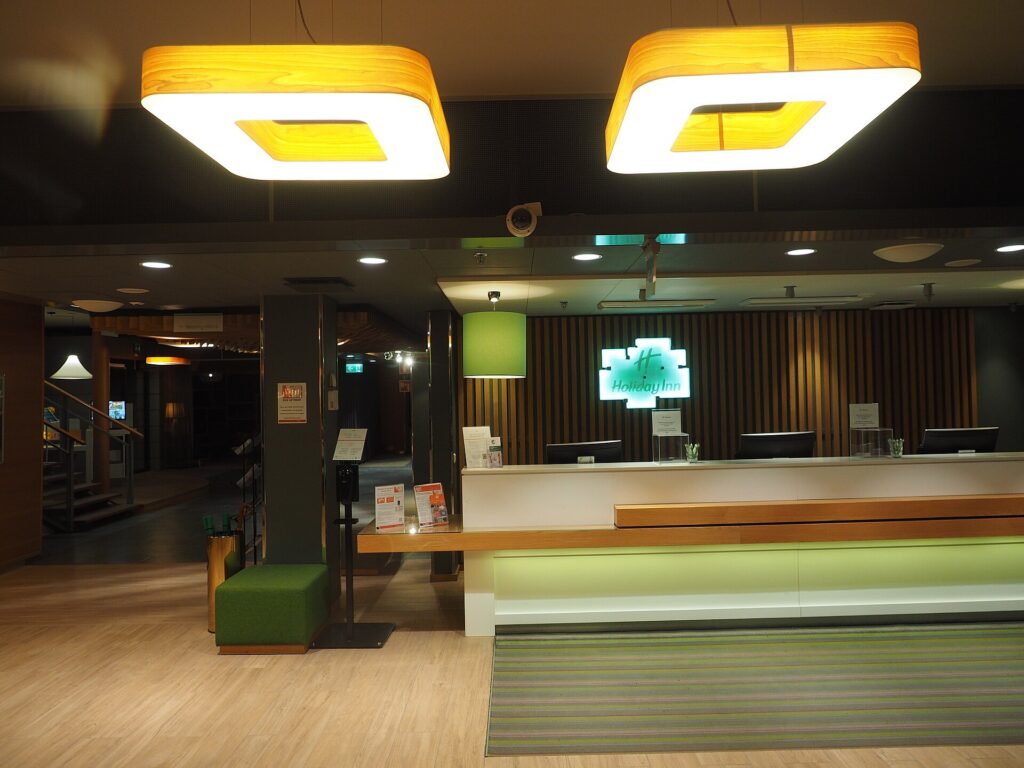
    The reception desk in a city-center hotel lobby
    Check-in is the moment to confirm your rate, what is included and the room you want (Photo: JIP via Wikimedia Commons, CC BY-SA 4.0)

    Step 4: Compare the total price, not the nightly rate

    This is the single most important habit. Two hotels showing the same nightly rate can end up far apart once taxes, fees and extras are added.

    The rules on how prices must be displayed have tightened. In the United States, the Federal Trade Commission has adopted a rule requiring hotels and booking sites to show the total price, including mandatory fees, up front. In Canada, the Competition Bureau treats advertising a price that cannot be attained because of added mandatory fees as drip pricing, a deceptive marketing practice. These rules cover mandatory charges; optional ones like parking and breakfast are still yours to add, so check the rate details before you compare.

    Charges to look for before you book

    ChargeWhat it isHow to handle it
    TaxesSales, lodging and tourism taxes, which vary by city and province or stateCompare totals after tax; some sites show pre-tax prices by default
    Resort or destination feeA mandatory daily charge for amenities such as Wi-Fi, pool or gym accessCheck the rate details; it must be in the total where display rules apply
    ParkingDaily self-parking or valet charge, often high downtownAdd it for every night you will have a car; compare with nearby public lots
    BreakfastIncluded in some rates, a separate charge in othersValue it at what you would otherwise spend; families save the most
    Extra guestsA charge for additional adults, or for children above a certain ageEnter every traveler correctly so the price you see is the price you pay
    Early check-in or late checkoutGuaranteed early arrival or late departure, sometimes chargedAsk at booking; often free on request if the hotel is not full
    Pet feePer-night or per-stay charge, sometimes a cleaning depositConfirm the policy and any size limits before booking
    Deposit or incidentals holdA temporary hold on your card at check-inNot a charge, but it reduces available credit; see the payment section below

    Build a quick total for your two or three finalists that includes every night, taxes, fees, parking and breakfast if it matters to you. The ranking often changes.

    Step 5: Choose the right rate type

    The same room is usually sold at several prices with different conditions attached. Picking the right one is about matching flexibility to how certain your plans are.

    Rate typeTypical conditionsBest for
    Flexible, pay at the hotelFree cancellation until a deadline, often a day or two before arrival; card held as a guaranteePlans that might change; trips booked well in advance
    Advance purchase, nonrefundableLower price, paid in full at booking, no refund if you cancelFixed dates, such as a wedding or a conference you are sure to attend
    Member rateA discount for signing in to the hotel’s free loyalty programAlmost everyone who books directly; joining is usually free
    Package (flight plus hotel)Bundled price; changes and cancellations follow the package’s own termsResort and beach trips where the bundle genuinely beats separate prices
    Discount rates (auto club, senior, government, corporate)Eligibility required; ID or proof is often checked at check-inTravelers who genuinely qualify

    The flexible rate is effectively insurance. If the nonrefundable rate is only slightly cheaper, the flexibility is almost always worth paying for. If the gap is large and your dates are fixed, take the savings. Read the cancellation deadline carefully: “free cancellation” sometimes ends several days before arrival, not the evening before.

    A flexible booking also lets you take advantage of price drops. If you book a refundable rate early and prices fall closer to your dates, you can book the cheaper rate and cancel the first one, as long as you are still inside the free cancellation window. Always make the new reservation before canceling the old one.

    Step 6: Read reviews like an investigator

    Reviews are the best free information you have, but they reward a careful reading. Star ratings tell you the category of a hotel; recent reviews tell you what it is actually like to stay there now.

    • Sort by most recent. Hotels renovate, change management and sometimes decline. Reviews from the last few months matter far more than a high average built years ago.
    • Look for patterns. One complaint about noise is a light sleeper; ten complaints about noise from the bar downstairs is a fact about the building.
    • Search reviews for your must-haves. “Parking”, “crib”, “elevator”, “air conditioning”, “walls” or “Wi-Fi”, whatever matters to you.
    • Compare guest photos with the hotel’s photos. Professional photos use wide lenses and good light; guest photos show the real room.
    • Read how management responds. A thoughtful reply to a complaint is a good sign about how they will treat you if something goes wrong.

    Step 7: Compare where you book

    The smart approach is usually to use a comparison search to find the property and the price, then check the terms on the hotel’s own site before paying.

    ChannelStrengthsWatch for
    Comparison searchShows many properties and sites side by side; quick to see price ranges across dates and areasThe final price and conditions are set by the site you book with; check them there
    Online travel agencyWide choice, one account for many bookings, sometimes package or member discountsChanges and problems may need to go through the agency rather than the hotel; loyalty points may not apply
    Hotel directlyLoyalty points and elite benefits, member rates, easier special requests and changesNot always the lowest price; compare like for like, including cancellation terms

    When you compare, make sure you are comparing the same thing: the same room type, the same bed configuration, the same cancellation policy, and the same inclusions such as breakfast. The companion guide to finding the best hotel deals online goes deeper into comparison tactics, member pricing, bundles and how to avoid fake booking sites.

    A double bed with bedside lamps in a hotel room
    Room names vary by brand; check the bed configuration and room size, not just the label (Photo: JIP via Wikimedia Commons, CC BY-SA 4.0)

    Loyalty programs, briefly

    Every major hotel group runs a free loyalty program, and joining the one for the hotel you are booking is nearly always worthwhile, even for a single stay. Members typically get a lower rate when booking directly, free Wi-Fi at many brands, and the chance of perks such as late checkout.

    Loyalty becomes genuinely valuable when you travel often enough to concentrate your stays with one or two groups, which is where elite status, upgrades and breakfast benefits begin. If you travel once or twice a year, take the best total price and collect points where it costs nothing. Note that stays booked through third-party sites often do not earn points or recognize status, so check the program’s terms if that matters to you.

    Room types, beds and alternatives to hotels

    Room names vary wildly between brands, so read what is actually included. A “double” in one country is a single double bed; in another it means two beds. “Queen”, “king”, “two queens” and “double-double” are clearer. If you need two beds, choose a room type that guarantees them, because a “bed type requested” note is a request, not a promise. The listed room size tells you more than the name.

    For families and longer stays, consider suites and apartment-style hotels, which often include a kitchenette and a separate sleeping area. Solo travelers on a budget can look at hostels with private rooms. Vacation rentals can suit groups, but compare the full price including cleaning and service fees, and remember you give up a front desk.

    If you need an accessible room, book a room type that is specifically designated as accessible rather than adding a note, and call the hotel to confirm the features you need, such as a roll-in shower or visual alarms. In the United States, hotels are covered by the Americans with Disabilities Act, which includes requirements for how accessible rooms are described and reserved.

    When to book: a practical timeline

    • Peak dates and events: book as soon as your plans are firm, on a refundable rate. The best-located rooms go first.
    • Normal dates in a big city: booking a few weeks ahead is usually comfortable. Use a refundable rate and keep an eye on the price.
    • Quiet periods and low season: waiting can work, because hotels with empty rooms may lower rates close to the date. This is where last-minute booking shines, as explained in our last-minute hotel booking guide.
    • Small towns, national parks and island destinations: book early regardless of season, since there are only a few properties and they fill.

    The best strategy for most trips is to reserve a refundable room early, then check again a week or two before arrival. If the price has fallen, rebook. If it has risen, you are already protected.

    Paying: deposits, holds and currency

    Most hotels place a temporary hold on your card at check-in to cover incidentals, and sometimes the room total as well. The hold is released after checkout, but it can take several business days to disappear, and it reduces your available credit in the meantime. If you use a debit card, the hold may tie up money in your bank account, which is one reason many travelers prefer a credit card for hotels.

    When paying abroad, you may be offered the choice of paying in your home currency rather than the local one. This convenience usually comes with a less favorable exchange rate than your card would apply, so choosing the local currency is typically the cheaper option. If you are traveling internationally, also check your government’s advice for your destination before you book, such as Canada’s travel advice and advisories, for entry rules and local safety information.

    After you book, and at check-in

    Save your confirmation and check the dates, names, room type and number of guests. If you booked through a third party, contact the hotel a few days before arrival to confirm they have your reservation, and tell them if you will arrive late or have a special request such as a crib or a quiet room. Put your cancellation deadline in your calendar so you can recheck prices before it passes.

    At the desk, confirm the rate, the total and what is included, and ask politely about the room if anything matters to you; staff can often move you away from the elevator or to a higher floor when the hotel is not full. If something is wrong with the room, report it the first evening, when it is easiest to fix, and check the final bill before you leave.

    Common mistakes that cost money

    • Comparing nightly rates instead of totals. Taxes, mandatory fees and parking change the ranking.
    • Booking a nonrefundable rate for uncertain plans. The savings disappear the moment you need to change.
    • Choosing the cheapest area without costing the commute. Transit, taxis and lost time add up quickly.
    • Ignoring event calendars. A concert or convention can double the price of a normal weekend.
    • Booking through an unfamiliar site that looks like the hotel’s. Use known sites or the hotel’s official website, and be careful with phone numbers found in search ads; the FTC’s travel advice covers common booking scams.
    • Forgetting to recheck prices on a refundable booking. A quick search before your deadline can save real money.
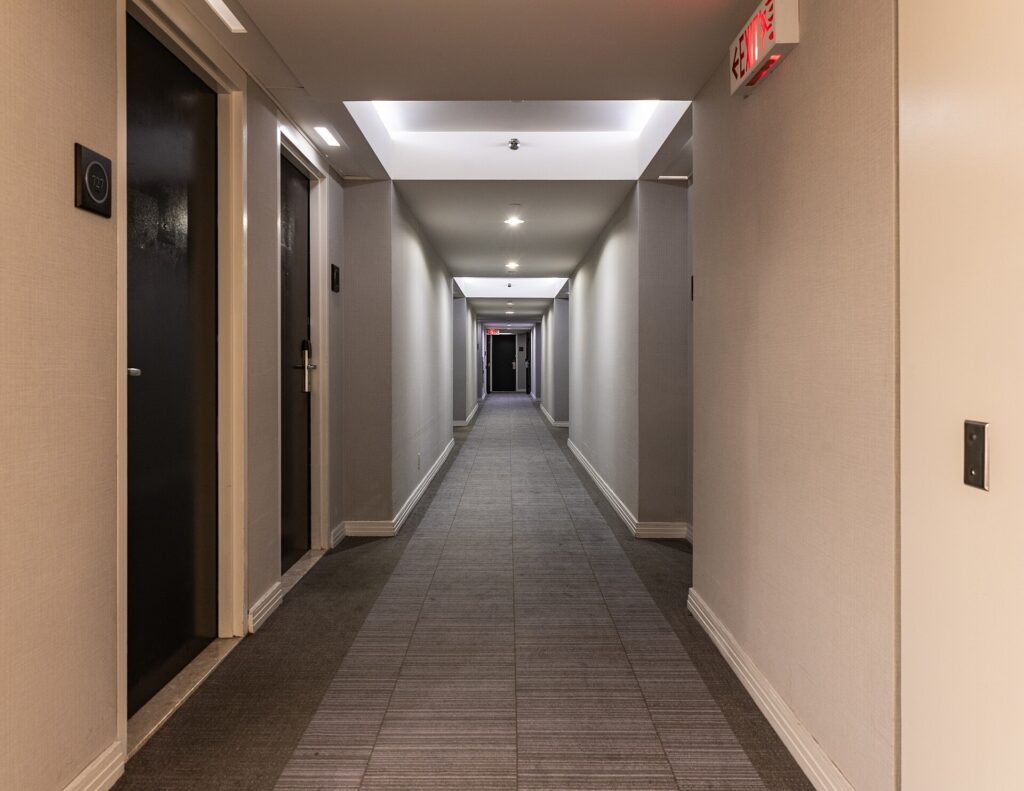
    A carpeted guest-room corridor in a downtown Toronto hotel
    Ask for a room away from the elevators and ice machine if you are a light sleeper (Photo: Chris Woodrich via Wikimedia Commons, CC BY-SA 4.0)

    Tips for specific situations

    Family trips

    Prioritize space and sleep, check that the rate covers every child, and book early for school holidays. The family vacation hotel booking guide covers timing, room choices and what to check with children in tow.

    Business travel

    Proximity to meetings is worth paying for. Check your employer’s policy and negotiated rates first, and confirm the hotel issues an itemized invoice. Our business travel hotels guide covers what to look for and how to handle expenses.

    Spontaneous trips

    If you are booking days or hours ahead, flexibility on area and room type is your biggest advantage, and checking whether there is an event in town is essential. The last-minute hotel booking guide explains when waiting pays and when it backfires.

    Traveling in Canada

    Big Canadian cities are busiest in summer and during major events, and national-park towns fill early. Our guide to hotel booking in Canada covers taxes, seasons and where to stay in the main cities, and you can browse options in Toronto, Vancouver, Montreal and Calgary.

    Combining hotel, flight and car

    If you are also flying, book the flight first when fares are the more volatile part of the trip, then fit the hotel around it, using a refundable rate so a schedule change does not strand you with a room for the wrong nights. If you are renting a car, factor hotel parking into your choice of property; our rental car booking tips cover the other half of that decision. You can compare flights and rental cars for the same dates on TicketScanner.

    Frequently asked questions

    Is it cheaper to book a hotel directly or through a booking site?

    It depends on the hotel and the date. Booking sites are best for finding and comparing options; the hotel’s own site often matches the price and may add a member discount, loyalty points or better cancellation terms. Check both for the same room and conditions before you pay.

    How far in advance should I book a hotel?

    For peak seasons, holidays and major events, as soon as your plans are firm. For ordinary dates in a large city, a few weeks ahead is usually fine. For quiet periods, waiting can sometimes pay. Reserving a refundable rate early and rechecking later gives you the best of both.

    What day of the week is cheapest for a hotel stay?

    In business districts, Friday and Saturday nights are often cheaper; in resort and leisure destinations, weeknights usually are. Search a few arrival days to see the pattern.

    Are resort fees mandatory?

    Where a hotel charges one, it is typically mandatory for every night of the stay. In the United States, federal rules now require the total price including mandatory fees to be shown up front, and in Canada, advertising prices that leave out mandatory fees is treated as drip pricing.

    Should I pay for a refundable rate?

    If there is any real chance your plans will change, yes, especially when the price difference is small. A refundable rate also lets you rebook if prices fall before your cancellation deadline.

    Why did my card get charged more than the room price at check-in?

    Most likely it is a temporary hold for incidentals, not a charge. It is released after checkout, though it can take several business days to clear. Ask the front desk how much it will be.

    Ready to put this into practice? Start with the neighborhood and your dates, then compare properties, prices and totals side by side on our hotel search. If you still need to get there, check cheap flights for the same dates, and read the guide to the best hotel deals online before you book.

  • Last Minute Hotel Booking Guide for Travelers and Weekend Getaways

    Last Minute Hotel Booking Guide for Travelers and Weekend Getaways

    Booking a hotel at the last minute has a reputation for being either a panic purchase or a secret bargain. In reality it is both, depending on where and when you are going. On a quiet Sunday night in a city full of hotels, waiting until the day of arrival can get you a better room for less than people who booked months ago. On the night of a sold-out concert, a holiday weekend or a big convention, the same approach leaves you paying top price for whatever is left, or driving to the next town. The skill is knowing which situation you are in and having a fast, reliable process for either. This guide explains why last-minute rates move the way they do, when waiting pays, when it backfires, a step-by-step routine for booking a room in the next few days or the next few hours, and what to do if you are stranded by a cancelled flight. For the full picture of how to book any hotel well, see our pillar guide to hotel booking tips.

    The short answer

    Last-minute booking works best when there are many hotels, demand is low (weekends in business districts, weeknights in leisure areas, off-season), and you are flexible about the exact area and room type. It works worst around events, holidays, conventions and peak season, and in small destinations with only a few properties. Before you rely on it, spend two minutes checking what is happening in town on your dates. When you book, filter for your must-haves, use the map, compare the total price including taxes and fees, read a few recent reviews, and tell the hotel if you will arrive late. If you are booking tonight, a phone call to the front desk after you have compared online prices can sometimes help. You can compare what is still available for tonight or this weekend on our hotel search.

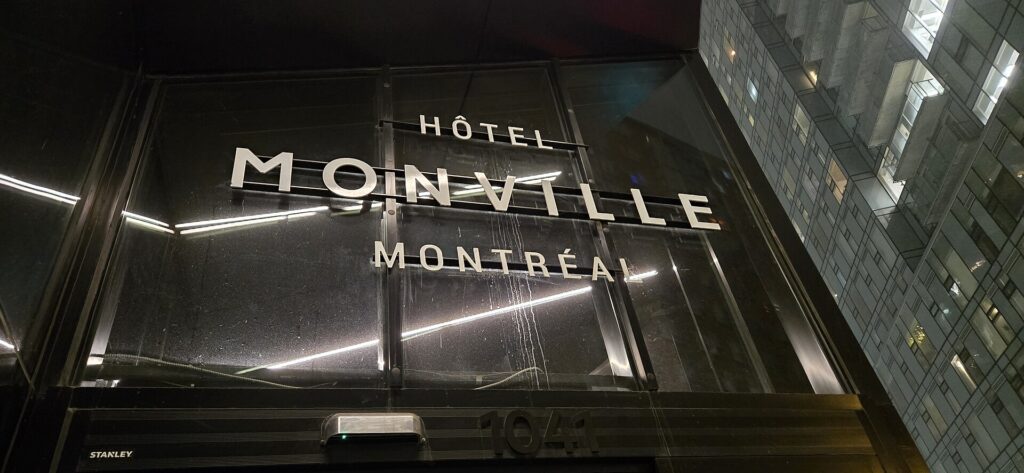
    An illuminated hotel sign on a building facade in Montreal at night
    On a quiet night, a hotel with empty rooms has every reason to lower its price (Photo: BrokenSegue via Wikimedia Commons, CC BY-SA 4.0)

    Why last-minute hotel prices behave the way they do

    A hotel room is perishable. If it is empty tonight, the revenue from tonight is gone forever. That is the core reason last-minute deals exist: as the date approaches, a hotel with unsold rooms has an incentive to lower its price or release rooms through discount channels rather than leave them empty. At the same time, hotels price dynamically based on how many rooms they have left and what their competitors charge. When a hotel is nearly full, the few remaining rooms tend to be priced high, because someone who needs a bed tonight will often pay it.

    So the price you see close to the date depends mainly on one question: how full is the city on that night? If there is plenty of spare capacity, prices tend to soften, and you have leverage. If there is not, prices climb, and you have none. Everything else in this guide is about working out which of those you face and acting accordingly.

    This is different from how many travelers think about flights, where fares often rise as departure approaches. Hotels can move in either direction, which is why a blanket rule (“always book early” or “always wait”) is wrong for hotels.

    When last-minute booking works in your favor

    • Business districts on weekends. Downtown hotels that fill with corporate travelers from Monday to Thursday often have spare rooms on Friday and Saturday nights and price them to attract leisure guests.
    • Leisure areas on weeknights. Beach towns, resort areas and weekend-getaway destinations are often quiet from Sunday to Thursday outside peak season.
    • Low and shoulder seasons. Outside the busy months, cities and resorts have more rooms than guests, and last-minute rates reflect it.
    • Big cities with lots of hotels. The more properties competing for the same guests, the more likely someone is discounting tonight.
    • Sunday nights. In many cities, Sunday is one of the quietest nights of the week: the weekend visitors have gone and the business travelers have not yet arrived.
    • When you are flexible. If you will take any well-reviewed room in a broad area, you can pick whichever hotel happens to be discounting.

    When waiting backfires

    • Events. A stadium concert, a playoff game, a marathon, a festival or a major conference can fill a city. Last-minute rooms, if any exist, are expensive and often far out.
    • Holidays and long weekends. Demand is high everywhere at once, and families book well ahead.
    • Peak season in popular destinations. Summer in national-park towns, ski weeks in the mountains, and winter in warm-weather resorts.
    • Small towns, islands and park gateways. A handful of properties can sell out completely; there is nowhere else to go.
    • Specific needs. If you need an accessible room, two beds, a family suite, a pet-friendly room or parking for a large vehicle, the choice is narrower and disappears first.
    • Weather disruptions. When storms cancel flights, airport hotels can fill within an hour as stranded passengers all search at once.

    If your trip falls into any of these, book early on a refundable rate. You can still take advantage of a price drop by rebooking before your cancellation deadline, and you are protected if prices rise.

    Hotels lining the Las Vegas Strip
    In event-driven cities like Las Vegas, one big weekend can erase every last-minute deal (Photo: Dietmar Rabich via Wikimedia Commons, CC BY-SA 4.0)

    How to check demand in two minutes

    Before you decide to wait, look for signs that the city is busy on your dates.

    • Check the event calendar. The city’s official tourism site usually lists major events and conventions; sites such as Visit Las Vegas and Destination Toronto are good examples. Our event pages for cities like Las Vegas and Toronto show concerts, games and shows on sale.
    • Run a quick search for your dates. If many well-rated hotels show availability at normal prices, you have room to wait. If results are thin, prices look unusually high, or many properties show as sold out, book now.
    • Compare with the following week. Search the same nights a week later. If the difference is large, something is happening on your dates.
    • Look at the calendar view. A flexible-date view shows which nights are expensive at a glance.

    Step by step: booking a room in the next few days

    1. Decide your must-haves quickly

    You do not have time to browse everything, so decide the few things that matter: the area, your maximum total budget, number of beds, parking if you are driving, and a minimum review score. Everything else is negotiable. Being flexible on room type (a king instead of two queens, a city view instead of a courtyard view) and on the exact neighborhood is your biggest advantage.

    2. Search and filter

    Enter the exact dates and the right number of guests, then filter for your must-haves and turn on “free cancellation” if your plans are still moving. Sort by a mix of price and rating rather than price alone; the cheapest last-minute rooms are sometimes cheap for good reason.

    3. Use the map

    Look at where the available rooms are in relation to where you need to be. Last-minute value often sits a few stops along a transit line from the center, or in a neighboring district that is less famous but just as practical. For Las Vegas, for example, compare the Strip with Downtown and Fremont Street on our Las Vegas hotel page.

    4. Compare the total, not the headline

    Last-minute prices can look attractive until taxes, resort fees and parking are added. Open the rate details and note the total. In the United States, a Federal Trade Commission rule requires hotels and booking sites to include mandatory fees in the total they show you, but optional costs like parking are still yours to add.

    5. Skim recent reviews

    You do not need to read fifty. Sort by most recent and read five or six, looking for patterns about cleanliness, noise, safety and whether the property matches its photos. A pattern of complaints is a reason to skip a hotel, however good the rate.

    6. Check the hotel’s own site

    If you have found a hotel you like, check its website with a free loyalty login. Member rates sometimes beat public prices, and booking directly makes last-minute requests (late arrival, early check-in) easier to handle.

    7. Book and confirm

    Book, save the confirmation, and if you booked through a third party close to arrival, it can be worth calling the hotel to check it has your reservation. Hotels usually receive third-party bookings quickly, but a same-day booking made late at night is exactly when a gap can cause trouble.

    Booking tonight: the same-day routine

    Same-day booking is where last-minute stays are won or lost, and it rewards a slightly different approach.

    • Search on your phone as early in the day as you can. Availability generally shrinks as the evening goes on, especially in busy areas.
    • Check same-day offers. Some booking sites and hotel apps highlight tonight’s deals when hotels want to fill rooms. Treat them like any other offer: check the total, the location and the reviews.
    • Consider calling the front desk. After you have compared prices online, a polite call to an independent or smaller hotel can occasionally get you a better rate or a small extra such as breakfast or parking, particularly on a quiet night. At large chains, the published rate is often all the desk can offer, but asking costs nothing.
    • Walk-in rates are rarely the best. Walking up to the desk without a reservation usually gets you the standard rate, and on busy nights nothing at all. Book on your phone from the lobby if you must, after comparing.
    • Tell the hotel your arrival time. If you will arrive late, say so in the booking notes or by phone. A guaranteed reservation should be held, but on a sold-out night a hotel is more likely to keep your room if it knows you are coming.
    • Have your card and ID ready. Hotels usually require a photo ID and a credit card for a hold at check-in; some do not accept debit cards for the hold, or hold more on them. Check if you are relying on debit.
    The front desk of a hotel lobby
    Walk-in rates are rarely the best; compare on your phone first, then book or ask (Photo: Unknown Photorapher via Wikimedia Commons, Public domain)

    What to do when everything nearby is sold out

    • Widen the radius along transit lines. A hotel near a train or subway station further out can be quicker to reach than one closer by road.
    • Try airport hotels. Outside flight-disruption nights, airport properties often have spare rooms, include parking, and run shuttles. Our airport guides, such as Toronto Pearson and Harry Reid in Las Vegas, explain how airports connect to the city.
    • Look at the next town. In park gateways and small destinations, the next community along the highway often has rooms when the famous one is full.
    • Change the room type. A suite, a room with one bed instead of two, or a more expensive category can still be available when standard rooms are gone. Compare the total with your other options.
    • Consider other accommodation. Hostels with private rooms, apartment-style hotels and inns sometimes have last-minute space. Check cancellation terms and check-in arrangements, which can be less flexible late at night.
    • Check again later. Cancellations happen, especially the day before and the morning of, as travelers with flexible bookings change plans. A property shown as sold out in the morning may have a room by afternoon.

    Stranded by a flight delay or cancellation

    One of the most stressful last-minute bookings is the one you did not plan: a delayed or cancelled flight that leaves you overnight in a city you only meant to pass through. Before you book and pay for a room yourself, find out what the airline owes you.

    In Canada, the Air Passenger Protection Regulations set out airlines’ obligations for delays and cancellations. When the disruption is within the airline’s control, and you are kept waiting overnight, airlines are required to provide hotel accommodation and transport to it; the rules differ depending on the cause, so check the details for your situation. In the United States there is no general federal requirement for airlines to provide hotels, but the Department of Transportation’s airline customer service dashboard shows what each major U.S. airline has committed to provide when a delay or cancellation is within its control, which often includes a hotel.

    In practice:

    • Ask the airline first, at the counter, in the app or by phone, whether it will provide a hotel voucher or reimburse you.
    • If you book yourself, book quickly. On a night of mass cancellations, airport hotels fill fast. A refundable rate protects you if the airline then offers a room.
    • Keep every receipt for the room, meals and transport, and note the reason the airline gave for the disruption.
    • Look beyond the airport. If the airport hotels are full, properties along a train line into the city may have rooms and be cheaper.

    Last-minute scenarios at a glance

    SituationChance of a good last-minute rateWhat to do
    Big city, business district, weekendGoodWait if you like; compare several downtown hotels a few days out
    Beach or resort town, midweek, off-seasonGoodSame-day offers can be strong; check what is open out of season
    Big city, ordinary weeknightFairSearch a few days ahead; use the map to find value a few stops out
    Any city during a major eventPoorBook as early as possible on a refundable rate
    Holiday or long weekendPoorBook early; if late, widen the area and try airport hotels
    National-park gateway in summerVery poorBook months ahead; if late, look at the next town along the highway
    Stranded by a cancelled flightDepends on the nightAsk the airline first; book a refundable airport-area room fast if needed
    A hotel beside an airport terminal
    Airport hotels are a good fallback on normal nights and fill fast when storms cancel flights (Photo: Chris j wood via Wikimedia Commons, CC BY-SA 4.0)

    Staying safe when you book in a hurry

    Speed makes it easier to overlook things that matter. A few quick checks keep a spontaneous booking from becoming a bad night.

    • Book through known sites or the hotel’s official website. Be wary of unfamiliar sites and of phone numbers from search ads, which can lead to resellers rather than the hotel. The FTC’s travel advice covers common booking scams.
    • Read reviews about the area, not just the room. Guests often mention whether a neighborhood feels safe at night and how easy it is to reach.
    • Check the check-in arrangements if you will arrive late, especially at small properties without a 24-hour front desk. Some use key boxes or door codes, which you need in advance.
    • Pay by credit card where you can, and keep your confirmation handy.
    • Share your location with someone if you are traveling alone and arriving late somewhere new.

    Last-minute tips for specific trips

    Weekend getaways

    Look at cities where the hotel market is driven by business travel; weekends there can be excellent value. Leave on Friday afternoon, check a few days ahead for the best choice, and look for rates that include parking if you are driving. Pair the stay with a rental car on our car rental search if the destination is a drive away.

    Families

    Family rooms, suites and connecting rooms are the first to go, so last-minute family trips need more flexibility or a fallback such as an apartment-style hotel. For planned family travel, our guide to the best time to book hotels for family vacations explains how far ahead to book around school holidays.

    Business trips booked at short notice

    Check your company’s travel policy and negotiated rates first; many corporate rates stay available close to the date. Prioritize location near your meeting and a reliable late check-in. Our business travel hotels guide covers what matters most on a work trip.

    Canada in summer

    Major Canadian cities have busy summers and big-event weekends, and park towns fill well ahead. Last-minute value is easier to find in the shoulder seasons. Our guide to hotel booking in Canada covers seasons and neighborhoods, and you can check availability in Toronto, Montreal or Vancouver.

    Common last-minute mistakes

    • Waiting without checking the event calendar. One concert can erase every deal in town.
    • Booking the cheapest room without looking at the map. A long commute costs time and money.
    • Ignoring fees. Resort fees and parking can turn a bargain into an ordinary rate.
    • Skipping the reviews. A pattern of complaints is a warning, whatever the price.
    • Not telling the hotel you will arrive late. On a full night, it helps to make sure your room is held.
    • Paying for a room the airline should have provided. Ask first, keep receipts.

    Frequently asked questions

    Are last-minute hotel bookings cheaper?

    Sometimes. When a city has plenty of empty rooms, hotels often lower rates close to the date. When it is busy, prices usually rise. Check demand for your dates before deciding to wait.

    What is the best time of day to book a hotel for tonight?

    As early in the day as you can. Availability tends to shrink through the evening, particularly in busy areas, even if an occasional late discount appears.

    Is it cheaper to walk in without a reservation?

    Rarely. Walk-in guests usually get the standard rate, and on busy nights there may be nothing available. Compare prices on your phone first, then book or ask the desk to match what you see.

    Can I book a hotel for the same day and check in immediately?

    Usually, yes, from the hotel’s standard check-in time. Early check-in depends on whether a room is ready; ask when you book or call ahead.

    What happens if I arrive very late?

    A guaranteed reservation should be held for your arrival, but tell the hotel your expected time. Small properties without a 24-hour desk may need to send you entry instructions in advance.

    Does the airline have to pay for my hotel if my flight is cancelled?

    It depends on where you are flying and why the flight was cancelled. In Canada, the Air Passenger Protection Regulations require hotel accommodation in certain situations within the airline’s control. In the United States, check the Department of Transportation dashboard for your airline’s commitments.

    Which days are best for last-minute deals?

    In business-oriented cities, Friday, Saturday and especially Sunday nights. In leisure destinations, weeknights outside peak season.

    Last-minute booking rewards preparation more than luck: know whether the city is busy, stay flexible on area and room type, compare the total price, and book quickly once you find a good option. See what is still available for your dates on our hotel search, check last-minute flights if you still need to get there, and read our guide to finding the best hotel deals online for more ways to save.

  • The Ultimate Guide to Business Travel Hotels in 2026

    The Ultimate Guide to Business Travel Hotels in 2026

    On a work trip, the hotel is your office, your bedroom and your base of operations, and it is chosen under constraints a leisure traveler never faces: a meeting at a fixed address, a travel policy with a nightly cap, a flight home that leaves before breakfast, and a need to be sharp on camera or in a boardroom the next morning. The right business hotel is not necessarily the most expensive one or the one with the grandest lobby. It is the one that removes friction: a short, predictable commute, a quiet room, reliable Wi-Fi, a desk you can actually work at, breakfast that opens early enough, and a receipt your finance team will accept without questions. This guide explains how to choose one, which amenities really matter and which are marketing, how to handle conference room blocks, airport stays and extended trips, how loyalty programs and corporate rates work, and the mistakes that cost business travelers the most time and money.

    The short answer

    Choose on location first: the shortest reliable door-to-door time to where you need to be, at the time you need to be there. Then check the work essentials: recent reviews that mention the Wi-Fi, a real desk, a quiet room and breakfast hours that suit your schedule. Book a flexible rate, because business plans change, and book through a channel that produces an itemized folio in your or your company’s name. Join the chain’s loyalty program even if you only travel a few times a year. For conferences, book inside the official room block through the organizer’s link. For early flights, stay at the airport. Compare options on our hotel search, and see our pillar guide to hotel booking tips for the fundamentals.

    What makes a hotel good for business travel

    Hotels market themselves to business travelers with business centers, meeting rooms and executive lounges. Some of that matters; much of it does not, because most professionals now travel with a laptop and a phone and never touch a business center. What actually decides whether a work trip goes smoothly is more basic.

    • Commute time. The hours you spend getting between the hotel and your meetings are the single largest variable in a business trip. Fifteen minutes on foot beats forty in a taxi at rush hour, every day.
    • Sleep. A quiet, dark room with a good bed and working climate control is the amenity that most affects your performance. It rarely appears in the marketing.
    • Connectivity. Wi-Fi that handles video calls from the room, not just email in the lobby.
    • A place to work. A desk at the right height, a chair you can sit in for an hour, and power outlets where you need them.
    • Timing. Breakfast that opens before your first meeting, a gym that opens before breakfast, a front desk that can store luggage after checkout, and late checkout when your flight is in the evening.
    • Clean billing. An accurate, itemized receipt with the right name and company on it.

    Everything else, from the lobby design to the rooftop bar, is secondary. When you compare two hotels, compare them on those six things.

    Location: how to choose it properly

    “Near the meeting” is not the same as “a short commute”. A hotel two kilometers away across a river with one congested bridge can take longer to reach than one five kilometers away on a direct subway line. Before booking, check the route at the actual time you will travel, on the actual day of the week, using a map app’s departure-time setting. Consider:

    • Walkability. If you can walk to your meetings, you remove traffic, taxi queues and ride-hail surge pricing from the equation, and you arrive with a clear head.
    • Transit. In cities with good rail systems, a hotel on the same line as your office, the airport train or the convention center is often better than one closer by distance. Our city transport guides, such as Toronto: car rental or public transit, explain how each system works.
    • Multiple meeting locations. If you are visiting several clients across a city, stay near the best transit hub or the center of gravity of your appointments, not next to any single one.
    • Evening plans. A hotel in an empty office district may be ideal at 8 a.m. and bleak at 8 p.m. If you are entertaining clients, a location near restaurants matters.
    • Parking and driving. If you are driving or renting, factor in hotel parking, which in downtown cores can be a significant nightly charge, often valet-only. Our car rental search compares airport and downtown pickups.

    A slightly more expensive hotel with a ten-minute walk frequently costs less in total than a cheaper one that requires two taxis a day, and it gives you back the time. Most travel policies care about total trip cost, and a short explanation of the saving will usually justify a higher room rate.

    A hotel lobby with a small business center
    Most business travelers now work from the room, not the business center (Photo: Opera Cadet from PARIS, FRANCE via Wikimedia Commons, CC BY-SA 2.0)

    The work essentials, and how to check them before you book

    Wi-Fi

    Almost every hotel advertises free Wi-Fi. What varies is whether it can handle a video call from your room at 9 a.m. when half the building is doing the same. The listing will not tell you; recent guest reviews will. Search the reviews for “Wi-Fi”, “internet” and “video call”, and weight comments from the last few months most heavily. Some hotels offer a faster paid tier or a faster tier for loyalty members. If a call or presentation matters, bring a backup: your phone’s hotspot, a travel eSIM with data, or a portable router. Public Wi-Fi, including hotel networks, should be treated as untrusted; use your company’s VPN, keep devices updated, and follow the guidance from the Canadian Centre for Cyber Security on connecting safely away from the office.

    The desk and the chair

    Room photos show whether there is a desk. They do not show whether it is a proper work surface or a narrow shelf beside the television. Look for photos taken by guests, and for rooms described as having a work desk or an ergonomic chair. Some newer select-service hotels have replaced desks with lounge seating and communal work areas; that suits some people and not others. If you need to take calls privately, check that the room, not only the lobby, is a usable work space.

    A quiet room

    Request a room away from the elevators, ice machines, the street side and any rooftop bar or event space, and on a higher floor. You can add this as a request at booking and repeat it at check-in. Loyalty members are more likely to have requests honored. If the room is noisy, ask to move on the first night rather than enduring it; it is much easier for the front desk to reassign a room before the hotel fills.

    Breakfast, gym and hours

    Check when breakfast opens. A hotel restaurant that starts serving at 7 a.m. is no use for a 7:30 meeting across town. Many select-service hotels offer a grab-and-go option from early morning. If you exercise, check the gym’s hours and equipment in recent photos. A 24-hour gym with two treadmills is different from a proper fitness center.

    Check-in and checkout

    Mobile check-in and digital room keys, now offered by the major chains through their apps, let you go straight to your room after a late arrival. Late checkout is often available on request, especially for elite members, and is invaluable when your flight is in the evening. If you cannot get it, ask the front desk to store your bags and find out whether the gym or lounge has showers you can use before the flight.

    A neatly made hotel room with a king bed and bedside lamps
    A quiet, dark room with a good bed matters more on a work trip than any lobby (Photo: PattayaPatrol via Wikimedia Commons, CC BY-SA 4.0)

    Types of business hotel, and when each makes sense

    Hotel typeBest forWatch for
    Downtown full-service hotelClient meetings, entertaining, trips with evening eventsHigher rates on weekdays, paid parking, paid breakfast
    Select-service hotelSolo trips with a tight budget cap; practical rooms and included breakfast at many brandsLimited dining, smaller desks at some brands, no room service
    Airport hotelEarly departures, late arrivals, meetings held at the airportIsolation from the city; shuttle schedules; noise on some sides
    Convention or attached hotelMulti-day conferences and trade showsRates rise sharply outside the official block; lines at peak times
    Extended-stay or apartment-hotelProjects of a week or more; relocations; training coursesFewer staff and services; housekeeping may be weekly
    Boutique or independent hotelCharacter, neighborhood locations, shorter tripsVariable Wi-Fi and desks; may not earn chain points or accept corporate rates

    Airport hotels: when they are the right call

    For a 6 a.m. departure, an airport hotel can be the difference between a normal night’s sleep and a 3:30 alarm and a taxi in the dark. They also work for late arrivals, for one-day trips where the meeting is near the airport, and as a fallback when a flight is cancelled. Several major Canadian airports have hotels connected to the terminal: at Toronto Pearson the Sheraton Gateway is linked to Terminal 3, Vancouver International has the Fairmont Vancouver Airport inside the terminal, Montreal-Trudeau has an in-terminal Marriott, and Calgary International has one as well. Elsewhere, airport hotels are usually a short shuttle ride away; check the shuttle’s hours, because some stop overnight or start after the first flights leave.

    Before booking, compare the total trip. An airport hotel plus a quick walk to security may cost less than a downtown hotel plus a pre-dawn taxi, and it buys you sleep. Our airport arrival time guide explains how early you need to be at the airport for different kinds of flight.

    Conferences, trade shows and room blocks

    Large events negotiate a block of rooms at one or more hotels near the venue, at an agreed group rate, and publish a booking link or housing service to attendees. Book inside that block when you can:

    • The block rate is often lower than what the same hotel charges the public during a big event, and it sometimes includes Wi-Fi or other extras.
    • The block has a cut-off date, usually weeks before the event, after which unsold rooms return to general inventory at regular prices. Book early.
    • Organizers rely on the block. Events often commit to filling a certain number of rooms, and attendees booking inside the block help keep registration prices and future venues viable.
    • Beware of unofficial housing offers. Exhibitors and attendees at large events are sometimes contacted by companies claiming to be the official housing provider. Book only through the link on the event’s own website or in the organizer’s official communications, and be suspicious of anyone who calls or emails you offering rooms.

    If the block is full, look at hotels one transit stop away rather than paying peak rates next door, and remember that during a citywide convention, rates across the whole city rise. Canada’s major convention centers, including the Metro Toronto Convention Centre, the Vancouver Convention Centre, the Palais des congrès de Montréal and the Shaw Centre in Ottawa, all have hotels within walking distance; our neighborhood pages for the Toronto Entertainment District, Old Montreal and the ByWard Market show nearby options.

    The Fairmont Vancouver Airport hotel inside the YVR terminal
    The Fairmont Vancouver Airport sits inside the terminal at YVR, ideal before an early flight (Photo: BriYYZ from Toronto, Canada via Wikimedia Commons, CC BY-SA 2.0)

    Rates, policies and paying for the room

    Corporate and negotiated rates

    Many companies negotiate rates with specific hotels or chains in the cities their staff visit most, often through a travel management company. If your employer has negotiated rates, use them: they are usually flexible, sometimes include breakfast or Wi-Fi, and keep you inside policy. Some chains also offer a general corporate rate to anyone traveling for business; it is not always cheaper than the best public rate, so compare. Government employees and contractors have their own rate programs.

    Per diems and policy caps

    If your employer sets a nightly cap, check it against the destination before you book; a cap that works in a mid-size city may not cover a downtown hotel in a major city during a busy week. Government per diem tables are a useful public benchmark for what lodging reasonably costs in a given place: the US General Services Administration publishes per diem rates by city, and the Government of Canada’s National Joint Council publishes its Travel Directive for public servants. If you have to exceed your policy, document why, such as a citywide event, before you book.

    Flexible rates

    Business plans change: meetings move, projects slip, a client cancels. For most work trips, a flexible rate with free cancellation until a day or two before arrival is worth the small premium over a prepaid rate. Note the deadline and time zone. If your trip is truly fixed and your company accepts the risk, prepaid rates can save money, but a no-show on a non-refundable rate is a cost nobody wants to explain.

    Fees, deposits and receipts

    Compare totals, not nightly rates: taxes, destination or resort fees, parking and paid Wi-Fi can change the ranking. At check-in, hotels usually place a hold on a card for incidentals. If you use a corporate card, make sure it is the card on file for the room and incidentals, and ask the front desk to email you an itemized folio at checkout. Expense teams generally need the folio, not just a credit card slip or a booking confirmation, and in Canada, a business registered for GST/HST may be able to recover the tax paid on accommodation; ask your finance team what documentation they need.

    Loyalty programs: worth it even for occasional travelers

    Joining a hotel chain’s loyalty program is free and pays off even at a few stays a year. Members typically get the best available rates on the chain’s own site, free or faster Wi-Fi at many brands, mobile check-in and digital keys, and a better chance of having room requests honored. Frequent travelers who reach elite status add late checkout, upgrades, lounge access and breakfast at some brands, depending on the program and tier. The largest programs include Marriott Bonvoy, Hilton Honors, World of Hyatt and IHG One Rewards; check each program’s current terms, because benefits change.

    Two practical points. First, if you want points and elite credit, book in a way that the program recognizes: usually directly with the hotel or through your company’s approved channel. Stays booked through some third parties may not earn. Second, do not let points override judgment. A hotel of your preferred chain that adds thirty minutes of commuting each way is not a good trade for the points it earns.

    Extended stays and project work

    For a week or more in one place, the math changes. An extended-stay hotel or apartment-hotel with a kitchen, a proper table and in-room laundry can cost less per night than a standard hotel and makes long trips far more livable. Ask about weekly or monthly rates, which are often not shown in standard searches, and about how often housekeeping comes. For very long stays, check whether your company has a preferred provider, and whether there are tax implications for stays beyond a certain length in the destination.

    Extending a work trip into the weekend

    Downtown hotels that are full of business travelers from Monday to Thursday often drop their rates on Friday and Saturday nights, when the business crowd leaves. That makes adding a weekend to a work trip, with a partner or family joining you, better value than it looks. Check your company’s policy on mixing personal and business travel: usually the employer pays for the business nights and you pay for the rest, and the flight change must not cost the company more. If your family is joining, our guide to booking hotels for family vacations covers room sizes and occupancy.

    Crossing the Canada-US border for work

    Business travel between Canada and the United States is routine, but the entry requirements are not the hotel’s problem, they are yours. Frequent cross-border travelers should look at NEXUS, the joint trusted-traveler program, and US citizens who travel internationally should consider Global Entry. Visa-exempt visitors flying to Canada from countries other than the US generally need an Electronic Travel Authorization. Rules about what counts as permitted business activity differ by country and change over time, so confirm on the official pages before you travel. For hotel advice specific to Canada, see our guide to hotel booking in Canada.

    The Metro Toronto Convention Centre in downtown Toronto
    The Metro Toronto Convention Centre: book inside the official room block before the cut-off (Photo: Raysonho @ Open Grid Scheduler / Grid Engine via Wikimedia Commons, Public domain)

    Safety and security on the road

    • Protect your room number. A good front desk writes it down rather than announcing it. If yours says it aloud in a busy lobby, ask for a different room.
    • Use the door’s secondary lock and check that connecting doors are locked.
    • Use the room safe or keep your laptop with you; do not leave devices unlocked.
    • Treat unexpected calls to your room with caution, especially ones asking you to confirm card details. Go to the front desk in person instead.
    • Know your exits. Take thirty seconds on arrival to find the nearest stairwell.
    • Share your itinerary with your company’s travel team if it has one; many employers have a duty-of-care process that relies on knowing where staff are staying.

    Common mistakes business travelers make

    Booking on price alone

    The cheapest hotel that meets policy can cost more once taxis, parking and lost time are counted. Compare the whole trip.

    Trusting “free Wi-Fi” without checking

    Free and usable are different things. Read recent reviews and bring a backup connection for anything important.

    Missing the conference block

    Booking after the cut-off, or outside the official link, often means paying more for a worse location.

    Forgetting the folio

    Ask for an itemized receipt at checkout, check it for errors before you leave, and file it with your expenses right away.

    A pre-trip checklist

    • Map the commute from each shortlisted hotel at the time you will travel.
    • Read recent reviews for Wi-Fi, noise and the desk.
    • Check breakfast and gym hours against your schedule.
    • Book a flexible rate within policy, under your loyalty number, with the right name and company.
    • For a conference, book through the organizer’s official link before the cut-off date.
    • Add requests: quiet room, high floor, late checkout if needed.
    • Book the flight on our flight search and, if needed, a car on our car rental search.
    • Save the hotel’s direct phone number and the cancellation deadline.

    Frequently asked questions

    What should I look for in a business travel hotel?

    A short, reliable commute to your meetings, a quiet room, Wi-Fi that handles video calls, a real desk, breakfast that opens early enough, flexible cancellation and an itemized receipt.

    Is it better to stay near the airport or downtown for a business trip?

    Downtown if your meetings are there and you have daytime flights. At the airport if you have a very early departure or a late arrival, or if your meeting is near the airport.

    How far ahead should I book a hotel for a work trip?

    As soon as the trip is confirmed, on a flexible rate. For conferences, book inside the official block well before its cut-off date. During citywide events, book as early as you can.

    Are hotel loyalty programs worth joining for occasional business travel?

    Yes. They are free, member rates are often the best available on the chain’s site, and members typically get better Wi-Fi and are more likely to have requests honored.

    Should I book the conference hotel or somewhere nearby?

    The official block is usually the best value and the most convenient. If it is full or over budget, look one transit stop away rather than paying peak public rates next to the venue.

    What receipt do I need for expenses?

    Usually the hotel’s itemized folio showing each night, taxes and any extras, in your name. Ask for it at checkout and check it before you leave.

    Why are downtown hotels cheaper on weekends?

    Because their weekday guests are business travelers who go home on Friday. With fewer guests on Friday and Saturday nights, many downtown hotels lower their rates.

    Ready to book your next work trip? Compare downtown, airport and convention-area options on our hotel search, find the right flight on our flight search, and price a rental on our car rental search. Headed to Canada’s biggest business city? Start with hotels in Toronto, and see our tips on finding the best hotel deals online and last-minute hotel booking for trips that come up at short notice.

  • Best Time to Book Hotels for Family Vacations

    Best Time to Book Hotels for Family Vacations

    Booking a hotel for a family trip is a different problem from booking one for yourself. You need a room that legally and comfortably holds everyone, in a location that keeps the daily logistics short, at a price that still makes sense once parking, breakfast and the resort fee are added. And you usually need it during the exact weeks every other family wants it, because school calendars decide when you can travel. That is why timing matters more for families than for almost anyone else. Book a family room at the right moment and you get the layout you want at a fair rate; leave it too late in a busy week and you are choosing between two rooms, a sofa bed, or a hotel forty minutes from where you want to be. This guide explains when to book for each kind of family trip, why those windows work, how to protect yourself if prices drop after you book, what to look for in the room itself, and the mistakes that cost families the most.

    The short answer

    For most family trips, book the hotel as soon as your dates are fixed, on a refundable rate, and then keep watching the price. As a rule of thumb: one to three months ahead for a domestic trip outside the school holidays, three to six months ahead for an international trip, and four to eight months ahead for school holidays such as Christmas, March Break or spring break, and the peak of summer, especially if you need a suite, connecting rooms or a specific resort. Those ranges are not magic numbers; they are the point at which, in most destinations, the supply of family-sized rooms starts to run out faster than the price rises. Family rooms are the scarce part of any hotel’s inventory, and scarcity, more than the calendar, is what you are racing. Start comparing on our hotel search, and read our pillar guide to hotel booking tips for the fundamentals that apply to every stay.

    Why timing matters more for families

    Hotel pricing responds to demand. When a hotel expects to fill, its rates rise and its cheaper room types sell out first; when it expects empty rooms, it discounts. For a family, the bigger risk is that the room types that fit you disappear.

    • Family inventory is small. A typical city hotel might have hundreds of rooms with one king or two queens, and only a handful of suites, family rooms or connecting pairs. Those go first in any busy week.
    • Occupancy limits are real. Most standard rooms are rated for a maximum number of guests, often four, set by fire codes and the hotel’s own policy. A family of five cannot simply squeeze into a double queen at many hotels, and you may be refused a rollaway bed or a crib if the room is already at its limit.
    • Your dates are not flexible. Families travel when school is out, which means everyone travels at once. The best tool most travelers have for saving money, shifting the dates, is the one you have least of.
    • Location matters more. A cheap hotel far from the attractions costs a single traveler a longer ride. It costs a family a daily car, parking, extra meals out, and tired children at the end of every day.

    The practical consequence is that the family traveler’s goal is to lock in the right room early, at a price you can cancel, rather than to gamble on a last-minute bargain. Our guide to last-minute hotel booking explains when waiting can work; it rarely works for a family of five in July.

    When to book, by type of family trip

    Domestic trips outside school holidays

    A long weekend in a nearby city, a trip to visit relatives in October, a few days at a lake in late spring: for these, one to three months ahead is usually plenty. Demand is moderate, hotels have family rooms to spare, and prices tend to be stable. The exception is any weekend with a big local event, such as a marathon, a major concert, a hockey playoff run or a university graduation, which can fill a mid-size city’s hotels months ahead. Before you settle on dates, check the destination’s event calendar; our Toronto events page and the other city event listings show what is on sale.

    International trips

    For an overseas trip, book the hotel three to six months ahead, and at the same time as, or shortly after, the flights. International family trips have more moving parts: flights that set your arrival and departure days, passports and entry documents, and hotels in cities where family rooms are genuinely rare. In much of Europe, for example, older hotels have small rooms and few that sleep more than three, so a family of four or five may need connecting rooms, an apartment-hotel or two separate rooms, all of which are limited. Our guide to booking international flights covers the flight side of the plan.

    School holidays and peak weeks

    Christmas and New Year, March Break in Canada, spring break in the United States, the Easter weekend, the long summer holiday, and US Thanksgiving are the weeks when family demand concentrates. For these, four to eight months ahead is the safer window, and further ahead still if you need something specific: a two-bedroom suite at a beach resort, a family room at a hotel inside a theme park, a ski-in lodge at Christmas, or a cabin-style hotel in a national park. These are the stays where the right room, not the price, is the real constraint.

    Theme parks, beaches and national parks

    Destinations built around families behave differently from ordinary cities. In Orlando, hotels near the parks and along International Drive price around school calendars on both sides of the border, so the weeks when Canadian and American breaks overlap are the busiest of all. Beach resorts in places like the Cancun Hotel Zone peak from Christmas to Easter, when northern families escape the winter. National park lodges, including those in and around Banff, Jasper and the big American parks, have limited rooms and a short summer season, and the best-located ones can sell out close to a year ahead. For any of these, book as early as your plans allow.

    A hotel room with two beds, the standard family layout
    Two beds in one room: fine for four, but check the maximum occupancy before booking for five (Photo: Kurt Kaiser via Wikimedia Commons, CC0)

    Booking-window cheat sheet

    Trip typeBook the hotelWhy
    Domestic city trip, off-peak1 to 3 months aheadPlenty of family rooms; prices usually stable
    Domestic trip on a big-event weekendAs soon as dates are setConcerts, marathons and playoff games fill hotels early
    International trip3 to 6 months aheadFamily rooms are scarcer abroad; flights set the dates
    Christmas, March Break, spring break, summer peak4 to 8 months aheadEvery family travels at once; suites and connecting rooms go first
    Theme-park or beach resort in peak season6 to 10 months aheadFamily-oriented inventory sells out around school calendars
    National park lodge in summerAs early as bookings openFew rooms, short season, high demand
    Shoulder season, flexible dates2 to 6 weeks ahead can workLower demand leaves room to wait, if you have a backup

    The strategy that beats timing: book refundable, then watch

    No one can reliably predict the lowest price for a given hotel on a given night. What you can do is take the price risk off the table. The approach that works best for families is simple:

    • Book early on a refundable rate. As soon as your dates are firm, reserve the room type you actually need on a rate with free cancellation. You have now secured the inventory, which is the scarce thing.
    • Note the cancellation deadline. Free cancellation usually ends a set number of days or hours before arrival. Put that date in your calendar, along with the time zone of the hotel.
    • Keep checking the price. Every couple of weeks, and more often in the last month, search the same dates, same room type and same terms. If the rate drops meaningfully, book the cheaper rate first, confirm it, and then cancel the original.
    • Consider switching to prepaid only close to the trip. Non-refundable rates are cheaper for a reason. They make sense once your plans are truly fixed, such as a week or two out, if the saving is worth the risk. For a family, where a sick child can cancel a trip overnight, the flexibility is often worth the premium all the way to arrival.

    This approach turns timing into a one-way bet: if prices rise, you are protected; if they fall, you rebook. The only way to lose is to miss the cancellation deadline. Our guide to finding the best hotel deals online goes deeper on comparing rates and reading rate conditions.

    Choosing the right room for your family

    Price is only half the booking. The other half is making sure the room works for your family on the third night, when everyone is tired.

    Room types, from smallest to largest

    • Two queens or two doubles. The standard family room in North America. Fine for two adults and two young children. Check the maximum occupancy before booking for a family of five.
    • King with a sofa bed. Common in newer hotels. Works for one child, less well for two, and sofa beds vary enormously in comfort.
    • Family room or quad. Some hotels, especially in Europe and at resorts, offer rooms with a double plus bunks or singles. Search specifically for them.
    • Connecting rooms. Two rooms with an internal door between them. Connecting rooms share a door; adjoining rooms may only mean next to each other, so use the word “connecting” when you ask. Most hotels treat connecting rooms as a request rather than a guarantee unless you book a specific connecting-room product, so call the hotel after booking.
    • Suites. A separate bedroom, often with a sofa bed in the living area and a door that lets parents stay up after the children are asleep. Worth paying for on longer stays.
    • Apartment-hotels and extended-stay hotels. Rooms with a kitchen or kitchenette, often a separate bedroom and sometimes laundry. For a week or more, being able to make breakfast and pack lunches can offset a higher nightly rate.

    Questions to answer before you book

    • What is the maximum occupancy, and do children count? Policies differ; some count infants, some do not.
    • Do kids stay free? Many chains let children under a certain age share their parents’ room at no extra charge, but the age cut-off varies by brand and hotel, and it may not include breakfast.
    • Is a crib or rollaway available, and is there a charge? Request it at booking and confirm it a few days before arrival; hotels have a limited number.
    • Is breakfast included? For a family of four eating out every morning, an included breakfast can be worth far more than a small difference in the nightly rate.
    • Is there a pool, and when is it open? Indoor pools matter in winter; outdoor pools may close for the season or have limited hours. Some pools close for maintenance, so check recent guest reviews.
    • Is parking included, and is it on site? Downtown hotels often charge a nightly parking fee, sometimes valet-only, that can change the total significantly.
    An indoor hotel swimming pool
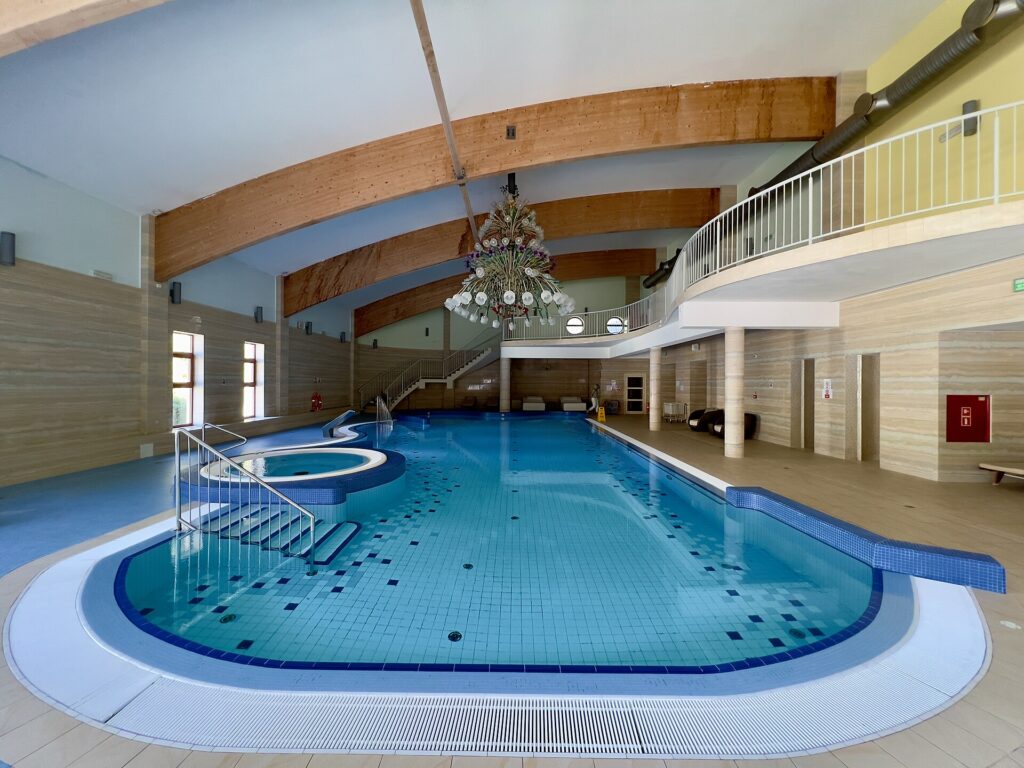
    An indoor pool is worth filtering for on winter trips with children (Photo: Kgbo via Wikimedia Commons, CC BY-SA 4.0)

    Where to stay: location beats a lower rate

    Families feel distance more than anyone. A hotel a short walk from the aquarium, the beach or the park entrance means naps can happen in the room, forgotten items can be retrieved, and a tired four-year-old is ten minutes from bed, not forty. When you compare hotels, compare the whole cost of the location, not just the nightly rate:

    • Transport. A cheaper hotel that requires a rental car, parking at the attractions and fuel every day may cost more overall. If you do need a car, our family car rental guide covers car seats and vehicle size, and our car rental search compares pickup locations.
    • Time. An extra hour of driving each day is an hour less at the destination, and families have fewer productive hours to begin with.
    • Food. A hotel near supermarkets and family restaurants, or with a kitchenette, saves money over a week. A resort with only on-site restaurants can be convenient but expensive.

    Traveling within Canada? Our guide to hotel booking in Canada covers provincial taxes, seasons and city-by-city advice. Use the map view when you search and plot the three or four places you will visit most. The best-value hotel is often the one in the middle of them, not the cheapest one on the list. Our city guides, such as things to do in Toronto, explain which neighborhoods suit families.

    A themed family suite with beds for children
    Family suites and connecting rooms are the scarcest rooms in any hotel (Photo: Caseyrtjh via Wikimedia Commons, CC BY-SA 4.0)

    The real cost: fees, taxes and extras

    The advertised nightly rate is rarely what a family pays. Before you compare two hotels, bring both to the same basis: the total for your dates, for your number of guests, including everything that is mandatory.

    • Taxes. Accommodation taxes vary by country, province, state and city, and some are added only at checkout. The total at the final booking step is the figure to compare.
    • Resort and destination fees. Common in resort areas, Las Vegas, Orlando and many beach destinations. They are charged per room, per night, and may cover things like pool access, Wi-Fi or a shuttle whether you use them or not. Regulators in both the United States and Canada have moved against hiding mandatory fees from the advertised price, so the total should be shown before you pay; if it is not, treat that as a warning sign.
    • Parking. Nightly parking at a downtown hotel can be a meaningful share of the room rate.
    • Extra-person charges. Some hotels charge per additional adult, and some count teenagers as adults.
    • Breakfast. If it is not included, price four breakfasts a day into the comparison.
    • Deposits and holds. Hotels usually place a hold on a card for incidentals at check-in. It is released after checkout, but it reduces your available credit during the trip.

    Travel off-peak when you can

    The single biggest saving available to families is traveling just outside the peak. Hotels in family destinations price their busiest weeks at a premium and discount the weeks on either side. If your children’s schools and your work allow any flexibility at all, these are the windows to look at:

    • The first week or two after school ends, or the last week of August, rather than the middle of summer, in many destinations.
    • The week after a major holiday. Early January after New Year is traditionally quiet in cities and at many resorts.
    • Shoulder seasons. Late spring and early fall are often the sweet spot for weather and prices in North America and Europe.
    • Sunday to Thursday in leisure destinations. Beach towns, theme-park areas and lake resorts are busiest on weekends.
    • Weekends in business districts. Downtown hotels that fill with business travelers during the week often drop their rates on Friday and Saturday nights, which suits a family city break; our business travel hotels guide explains why.

    Your destination’s school calendar matters as well as your own. March Break in Ontario, spring break in the US states, and school holidays in Europe fall on different dates, and a destination is at its busiest when several of them overlap. For flights, our guide to the best time to book cheap flights and hotels covers fare timing, and city guides like the best time to fly to Toronto explain each destination’s seasons.

    A young child in a sun hat standing beside a resort swimming pool
    Resort pools and family rooms sell out first in school-holiday weeks (Photo: Shixart1985 via Wikimedia Commons, CC BY 2.0)

    Plan the whole trip together

    A family hotel booking does not exist on its own. The flight sets the arrival and departure days, the arrival time decides whether you need an early check-in or a late checkout, and your transport plan decides whether you need hotel parking. Book in this order:

    • Fix the dates around school calendars, work and any event you are traveling for.
    • Price the flights for those dates and a day or two either side; a cheaper flight a day earlier may be worth an extra hotel night. Search on our flight search.
    • Reserve the hotel on a refundable rate for the dates the flights support.
    • Decide on ground transport. If you need a car, compare it on our car rental search and make sure the hotel’s parking works. If not, check the hotel’s distance from transit and the airport.
    • Book the tickets for anything that sells out, such as theme parks, timed-entry attractions and shows.
    • Revisit the hotel price periodically until the cancellation deadline.

    Standard check-in is usually mid-afternoon, so a family landing on a morning flight faces hours in a lobby. Ask about early check-in when you book, or, after an overnight flight, book the previous night so the room is ready when you arrive.

    Documents and practical details for traveling with children

    Hotels do not usually ask about the relationship between adults and children, but borders and airlines can. If one parent is traveling alone with a child, or grandparents are traveling with grandchildren, carry a consent letter from the absent parent or parents; the Government of Canada provides a recommended consent letter for children traveling abroad and general guidance on traveling with children. Every child needs their own passport for international travel. Visitors flying to Canada from visa-exempt countries other than the United States generally need an Electronic Travel Authorization, and Americans traveling abroad should check the State Department’s travel pages. Entry rules change, so confirm the current requirements for every traveler before you book non-refundable elements.

    Common mistakes families make

    Booking a room that does not fit

    Booking a standard room for five and hoping the hotel will add a bed is a gamble; many will refuse. Check the maximum occupancy and book the room type that officially fits everyone.

    Waiting for a last-minute deal in peak season

    Last-minute discounts exist when hotels have empty rooms. In a school-holiday week, family rooms rarely go empty. The wait is more likely to cost you the room than save you money.

    Locking into a non-refundable rate too early

    A non-refundable rate booked eight months out removes your ability to rebook if the price falls and leaves you exposed if plans change. For families, flexibility is usually worth paying for until close to the trip.

    Comparing nightly rates instead of totals

    A hotel with a lower headline rate and a nightly resort fee, parking charge and no breakfast can easily cost more than a slightly higher rate with those things included.

    Not confirming requests

    Cribs, connecting rooms, early check-in and accessible rooms are requests until the hotel confirms them. Call or message the hotel directly a few days before arrival.

    Frequently asked questions

    How far in advance should I book a hotel for a family vacation?

    As a rule of thumb, one to three months ahead for a domestic off-peak trip, three to six months for an international trip, and four to eight months for school holidays and peak summer. Book as soon as your dates are firm if you need a suite, connecting rooms or a specific resort.

    Is it cheaper to book a hotel early or at the last minute?

    It depends on demand. Last-minute rates can be lower when a hotel has empty rooms, but in the weeks families travel, family rooms rarely go unsold. Booking early on a refundable rate and rebooking if the price drops gives you most of the upside with little risk.

    Can five people stay in one hotel room?

    Sometimes. Many standard rooms are limited to four guests, and some hotels count infants. Look for family rooms, suites or apartment-style hotels, or book connecting rooms.

    How do I make sure we get connecting rooms?

    Book both rooms in one reservation if the hotel allows it, choose a connecting-room product where offered, and call the hotel after booking to confirm. Otherwise, treat connecting rooms as a request rather than a guarantee.

    Should I book a refundable or non-refundable rate?

    For most families, refundable until close to the trip. Children get sick and plans change, and a refundable rate also lets you rebook if the price falls.

    Are suites worth it for families?

    On stays of three nights or more, often yes. A separate bedroom lets parents stay up after children sleep, and many suites include a sofa bed, a fridge and more space for luggage.

    Ready to plan? Compare family-friendly stays on our hotel search, check fares for your school-holiday dates on our flight search, and if you need wheels, price them on our car rental search. For a family favorite, start with hotels in Orlando or hotels in Toronto.

  • Hotel Booking Tips to Find the Best Deals Online

    Hotel Booking Tips to Find the Best Deals Online

    Online, the same hotel room can be listed at several different prices on the same afternoon. The differences come from the site you look at, the rate conditions attached, whether you are signed in to a loyalty program, whether the room is bundled with a flight, and which taxes and fees are included in the number you see. None of that is a trick you need insider knowledge to beat. It is a set of rules you can learn in an hour. This guide explains how online hotel pricing works, how to compare offers properly, where the genuine discounts are (member rates, memberships, bundles, flexible dates and neighborhoods), which popular “hacks” are overstated, and how to book safely so the deal you found is the deal you get. For the full booking process from choosing a neighborhood to checkout, start with our pillar guide to hotel booking tips.

    The short answer

    Use a comparison search to see the market for your dates, shortlist two or three properties, and compare them on the total price for the whole stay, including taxes and fees, with the same room type and cancellation terms. Then open each hotel’s own website, sign in to its free loyalty program, and see whether the member rate or the terms are better. Check whether you qualify for a membership rate such as an auto club discount. If you are also flying, price a flight-and-hotel bundle against booking separately. Book a refundable rate if there is any doubt, and check again before your cancellation deadline in case the price drops. You can run the first step on our hotel comparison search.

    Hands typing on a laptop keyboard while comparing options online
    Use comparison tools to find the hotel, then compare the total price and terms for that exact room (Photo: Simon Hattinga Verschure webmarbles via Wikimedia Commons, CC0)

    How online hotel prices work

    Hotels price rooms dynamically. The rate for a given night moves with demand: how many rooms are already sold, what competing hotels are charging, whether there is an event in town, and how close the date is. That is why the same room can cost very different amounts on a Tuesday in February and a Saturday in July, and why the price you saw yesterday may have changed today.

    The same room is also sold through several channels at once. The hotel sells it on its own website and through its phone reservations team. Online travel agencies sell it, sometimes under their own terms. Comparison sites and metasearch engines do not usually sell rooms themselves; they collect prices from many sellers and show them side by side, then send you to the seller to book. Most of the time, the prices across channels are similar, because hotels generally try to keep their public rates consistent. The differences tend to show up in the details: member-only prices, package rates, different cancellation terms, or whether breakfast is included.

    Understanding this changes how you shop. Instead of hunting for one site that is always cheapest, which does not exist, you use comparison tools to find the right hotel at the right price range, and then look for the best combination of price and conditions for that specific room.

    Step by step: comparing offers properly

    1. Search with your real details

    Enter your exact dates, the correct number of adults and children, and the number of rooms. Prices change with occupancy, and a price for two adults may not cover a third guest or an older child. If your dates are flexible, check a flexible-date or calendar view first to see which nights are cheaper before you commit.

    2. Filter hard before you browse

    Set your must-haves as filters: price range, neighborhood or distance, guest rating, free cancellation, parking, breakfast, pool, accessibility features. Sorting by “lowest price” without filters tends to surface properties that are cheap for a reason, in the wrong place, or with conditions you will not want.

    3. Use the map

    The map view is the most underused tool on any hotel search. It shows at a glance which areas are expensive and which are cheaper but still close to transit or the places you want to be. Often the best value is a few blocks outside the most famous district, or one or two stops along a subway line. In Paris, for example, you can compare hotels in Le Marais with the rest of the city on our Paris hotel page, and weigh them against the sights you plan to see in our guide to things to do in Paris.

    4. Compare totals, not headline rates

    Open the rate details for each finalist and note the total for the stay, including taxes and any mandatory fees. The rules are on your side here: in the United States, a Federal Trade Commission rule requires hotels and booking sites to show the total price, including mandatory fees such as resort fees, up front; in Canada, the Competition Bureau treats advertising a price that leaves out unavoidable fees as drip pricing. Optional costs are still yours to add, so include parking if you are driving and breakfast if you would otherwise buy it.

    5. Compare like with like

    A price is only cheaper if it buys the same thing. Check that you are comparing the same room category and bed configuration, the same cancellation policy, and the same inclusions. A nonrefundable room with no breakfast at a slightly lower price is not a better deal than a flexible rate with breakfast, unless you are certain of your dates and do not eat breakfast.

    6. Check the hotel’s own site

    Once you have a favorite, open the hotel’s official website, sign in or join its loyalty program, and search the same dates. You may find a member rate below the public price, an added perk, or more generous cancellation terms. You may also find it is the same or higher, in which case book wherever the total and terms are best.

    7. Book, then keep watching

    If you booked a refundable rate, check the price again a week or two before arrival. If it has fallen, make a new reservation at the lower price and then cancel the original, while you are still inside the free cancellation window. Some sites offer price alerts that do this watching for you.

    Where the genuine discounts are

    Loyalty program member rates

    This is the most reliable discount in hotels, and it is free. Every major hotel group, such as Marriott Bonvoy and Wyndham Rewards, runs a loyalty program you can join online in a couple of minutes, and members usually see a lower rate when booking directly than the general public does. Members may also get free Wi-Fi at some brands, points toward future free nights, and, with status, perks like late checkout or upgrades. Joining the program for the hotel you are booking is worth it even for a single stay. Note that bookings made through third-party sites often do not earn points or recognize status.

    Membership and affiliation rates

    Many hotels offer discounted rates for members of certain organizations. Auto club members through CAA in Canada or AAA in the United States often qualify for discounts at participating hotels, and seniors, military members, government employees and some students can find specific rates too. The catch is eligibility: hotels may ask to see a membership card or ID at check-in, and if you cannot show it, the rate can be changed. Book these rates only if you genuinely qualify.

    App-only and mobile rates

    Some hotel chains and booking sites offer lower prices or extra points for booking in their app. It is worth checking when you already have the app, but compare the total and the cancellation terms as you would anywhere else. A mobile rate that is nonrefundable is not automatically a deal.

    Newsletters and promotions

    Hotel groups run seasonal promotions for their members, such as bonus points, a free night after a certain number of stays, or discounted weekend rates. Signing up for the emails of the one or two groups you use most keeps you aware of them without much effort. Combining a promotion with points you have already earned can make a stay much cheaper.

    Advance-purchase rates

    If your dates are completely fixed, a prepaid, nonrefundable rate is often noticeably cheaper than the flexible one. It is a genuine saving, but the trade-off is real: if you cannot travel, you usually lose the money. Use it for trips you are certain about, such as a wedding or a conference you have already registered for.

    A hand holding a smartphone
    App-only rates can be worth a look, but compare the total and the cancellation terms like any other offer (Photo: Dennis Cortés cortes via Wikimedia Commons, CC0)

    Bundles: flight plus hotel

    Many booking sites sell flight-and-hotel packages, and bundled prices can be lower than buying the same flight and hotel separately, because hotels and airlines sometimes offer discounted rates that are only available when the price of the individual components is hidden inside a package. Bundles are most often worth checking for resort and beach destinations and for city breaks where you would book a standard room anyway.

    They are not automatically cheaper, though, and they come with trade-offs:

    • Compare against the separate prices. Price the same flight and the same hotel on their own. Sometimes the bundle wins clearly; sometimes it does not.
    • Read the change and cancellation terms. A package is often governed by one set of rules, and changing one part can affect the other. Refund terms can be stricter than those of a flexible hotel rate booked on its own.
    • Check the flight details. Make sure the times, number of stops and baggage allowance are what you would choose if you were booking the flight alone.
    • Know who to call. With a package, changes usually go through the site that sold it, not the hotel or airline directly.

    If you prefer to book separately, pick the flight first when fares are the more volatile part of the trip, then fit a refundable hotel around it. You can compare fares on our flight search, including flights to Paris if that is where you are headed.

    Flexibility: the discount anyone can use

    Flexible dates

    Moving your stay by a day or two can change the price considerably, especially if you move away from a weekend, a holiday or an event. In business-heavy downtowns, weekend nights are often cheaper because the weekday corporate travelers have left; in leisure and resort areas, weeknights usually are. A calendar view shows the pattern for your destination in seconds.

    Flexible seasons

    Peak season (summer, the December holidays, school breaks, ski season in the mountains) is when rates are highest and the best rooms go first. If you must travel then, book early on a refundable rate. Shoulder seasons, the months either side of peak, often combine decent weather with much better prices and availability, and the low season can be very cheap in exchange for less reliable weather or shorter opening hours. Our guide to the best time to book cheap flights and hotels explains the booking windows in more detail, and our budget travel destinations guide suggests places where your money goes further.

    Flexible neighborhoods

    Being open to a neighborhood just outside the most famous area is one of the most effective ways to save. The key is transit: a hotel two subway stops from the center can be just as convenient as one in the middle, while a hotel that needs a taxi every day will eat its own savings. Check the walk to the nearest station and the journey time to the places you will visit most.

    Flexible timing: last-minute deals

    Unlike flights, hotel rooms sometimes get cheaper close to the date, because a hotel with empty rooms tonight would rather sell them at a discount than not at all. That can work well in quiet periods and in places with lots of hotels. It works badly around events, holidays and in small destinations where there are few rooms. Our last-minute hotel booking guide explains when waiting pays and when it backfires.

    Hacks that are overstated

    Travel advice is full of tricks that sound clever. A few deserve a more measured look.

    • “Always clear your cookies or use incognito mode.” It is often claimed that sites raise prices when they see you searching repeatedly. There is little solid evidence that this is common for hotels, and prices move for plenty of other reasons, such as rooms selling out. Browsing privately does no harm and can stop you from seeing results tailored to past searches, but it is not a reliable way to get a lower rate. Comparing carefully and signing in for member rates will save you far more.
    • “Booking direct is always cheapest.” Sometimes it is, especially with a member rate; sometimes a booking site or package is lower. Check both.
    • “Booking sites are always cheapest.” The same logic applies in reverse. The lowest headline price may come with stricter terms.
    • “Call the hotel and they will beat the online price.” Occasionally, especially at independent hotels on quiet nights, a polite request helps. At large chains, reservation agents often have little room to change rates. It is worth a try, but do not count on it.
    • “There is one best day of the week to book.” Prices depend on demand for the nights you are staying, not the day you happen to search. Focus on your stay dates and booking early for peak periods.

    Best-rate guarantees and price matching

    Many hotel groups offer a best-rate guarantee on their own websites: if you book directly and then find a lower publicly available price for the same room and conditions elsewhere, they will match it and sometimes add a further discount or bonus. These programs can be useful, but the terms are specific. They usually require the same hotel, room type, dates, number of guests and cancellation conditions, a claim within a short window after booking, and a price that anyone can book (not a member-only rate or a package price elsewhere). Read the program’s terms on the hotel group’s own site before relying on it.

    The Château Frontenac hotel lit up at dusk in Quebec City
    Big-name hotels often reserve their best member rates for guests who book directly and sign in (Photo: Wilfredor via Wikimedia Commons, CC0)

    Choosing where to book: a comparison

    Where you bookUsually good forWatch for
    Comparison searchSeeing many hotels and sellers side by side; spotting cheaper dates and areasFinal price and terms are set by the seller you click through to
    Online travel agencyWide choice; one account for many trips; package pricesChanges may go through the agency; loyalty points often not earned
    Hotel website, signed inMember rates, points, status benefits, easier special requestsNot always the lowest price; compare like for like
    Hotel appOccasional app-only rates or bonus points; mobile check-in at some brandsSame caution on nonrefundable rates
    Flight-and-hotel packageResort and city breaks where the bundle beats separate pricesCombined terms; changes can affect both parts
    Phone or walk-inSpecial needs, accessible rooms, independent hotels, same-day requestsRarely the lowest published rate at big chains

    Reading reviews and policies before you pay

    A low price is not a deal if the room is noisy, dirty or far from what the photos suggested. Before booking, read a handful of recent reviews, looking for patterns rather than single complaints. If several guests mention thin walls, slow elevators, weak Wi-Fi or unexpected charges, believe them. Check guest photos against the hotel’s own, and read how management responds to criticism.

    Then read the policies, which is where a lot of disappointment starts:

    • Cancellation deadline: “free cancellation” may end days before arrival, not the evening before.
    • Payment timing: “pay now” means the money leaves your account at booking; “pay at the property” means a card guarantee now and payment later.
    • Deposits and holds: most hotels place a temporary hold on your card at check-in for incidentals, which can take several days to be released.
    • Occupancy rules: check the maximum number of guests and whether children stay free and up to what age.
    • Check-in and checkout times: and whether early check-in or late checkout carries a fee.
    • Parking, pets and resort fees: confirm the amounts and whether they are per night or per stay.
    A resort hotel swimming pool surrounded by loungers and palm trees
    Resort amenities are often paid for through a mandatory daily fee; compare totals, not nightly rates (Photo: This Photo was taken by Timothy A. Gonsalves. Feel free to use my photos, but please mention me as the author. I would much appreciate if you send me an email tagooty@yahoo.com or write on my talk page, for my information. Please contact me before commercial use.

    Please do not upload an edited image here without consulting me. I would like to make corrections only at my own source to ensure that the changes improve the image and are preserved.Otherwise you may upload an edited image with a new name. Please use one of the templates derivative or extract. via Wikimedia Commons, CC BY-SA 4.0)

    Booking safely online

    A good deal is worthless if the booking does not exist. A few habits protect you.

    • Book through sites you know or the hotel’s official website. Some scam sites imitate hotel websites closely; check the web address carefully before entering card details.
    • Be careful with phone numbers from search ads. Some lead to third-party resellers or scammers rather than the hotel. Take the number from the hotel’s official site or your confirmation.
    • Pay by credit card where you can. Credit cards generally offer stronger protection if something goes wrong than debit cards or bank transfers. Never pay a hotel booking by wire transfer, gift card or cryptocurrency at someone’s request.
    • Get a confirmation number and, for bookings made through a third party, consider contacting the hotel a few days ahead to confirm it has your reservation.
    • Pay in the local currency when offered a choice abroad; converting at the point of sale often comes with a worse exchange rate than your card applies.

    The Federal Trade Commission’s consumer travel advice covers common travel scams and how to report them.

    Deal-hunting by trip type

    Family vacations

    For families, the best deal is often a room with more space rather than the lowest rate: suites, connecting rooms and apartment-style hotels with a kitchenette, plus included breakfast. School holidays push prices up early, so book as soon as dates are set. Our guide to the best time to book hotels for family vacations covers timing in detail.

    Business trips

    Check your employer’s negotiated rates first; they often include perks like free Wi-Fi or breakfast and flexible cancellation. Location near meetings is usually worth more than a small saving. Our business travel hotels guide covers what matters on a work trip.

    Canada trips

    Canadian city hotels are busiest in summer and around major events, and national-park towns fill early. Taxes vary by province and city and may be shown separately from the room rate, so compare totals. Our guide to hotel booking in Canada goes city by city.

    Tight budgets

    Combine the tactics: shoulder season, weeknights (or weekends in business districts), a well-connected neighborhood just outside the center, a member rate, and breakfast included. Our guide on how to save money for a trip covers the rest of the budget.

    Common mistakes when booking online

    • Comparing nightly rates instead of totals with taxes and fees.
    • Comparing a nonrefundable offer with a flexible one as if they were the same product.
    • Entering fewer guests than are traveling, then paying extra at check-in.
    • Booking a membership rate without being eligible, then losing it at the desk.
    • Forgetting to sign in to the loyalty program before booking directly.
    • Assuming a bundle is cheaper without pricing the parts.
    • Missing the cancellation deadline on a refundable booking that could have been rebooked cheaper.

    Frequently asked questions

    What is the best website to find cheap hotels?

    No single site is always cheapest. Use a comparison search to see many sellers at once, then check the hotel’s own site with a member login. Book where the total price and the conditions are best for you.

    Do hotel prices go up if I search repeatedly?

    There is little solid evidence that this is common for hotels. Prices change mostly because of demand and rooms selling out. Private browsing does no harm, but careful comparison and member rates save more.

    Are flight and hotel bundles really cheaper?

    Sometimes, especially for resort and city-break trips. Price the same flight and hotel separately to check, and read the package’s change and cancellation terms before booking.

    Is it worth joining a hotel loyalty program for one stay?

    Usually yes. Joining is free, and members often get a lower rate when booking directly, plus small perks such as free Wi-Fi at some brands.

    Can I get a refund if the price drops after I book?

    If you booked a refundable rate, you can often book the lower price and cancel the original before your deadline. Some hotel groups also have best-rate guarantees with specific terms.

    Why is the price higher at checkout than in search results?

    Usually taxes, optional extras you selected, or a different room or rate. Mandatory fees should be included in the total where current display rules apply; if the final price is higher than advertised, check the breakdown before paying.

    Is it safe to book hotels through third-party sites?

    Well-known sites are generally safe. Check the web address, pay by credit card, keep your confirmation, and contact the hotel before arrival if you want to be sure your reservation is in its system.

    The best online hotel deal is the right room in the right place at the lowest total price with terms that fit your plans. Start by comparing properties and totals for your dates on our hotel search, add a flight on our flight search, and read the full hotel booking tips guide for everything from choosing a neighborhood to what to check at the front desk.