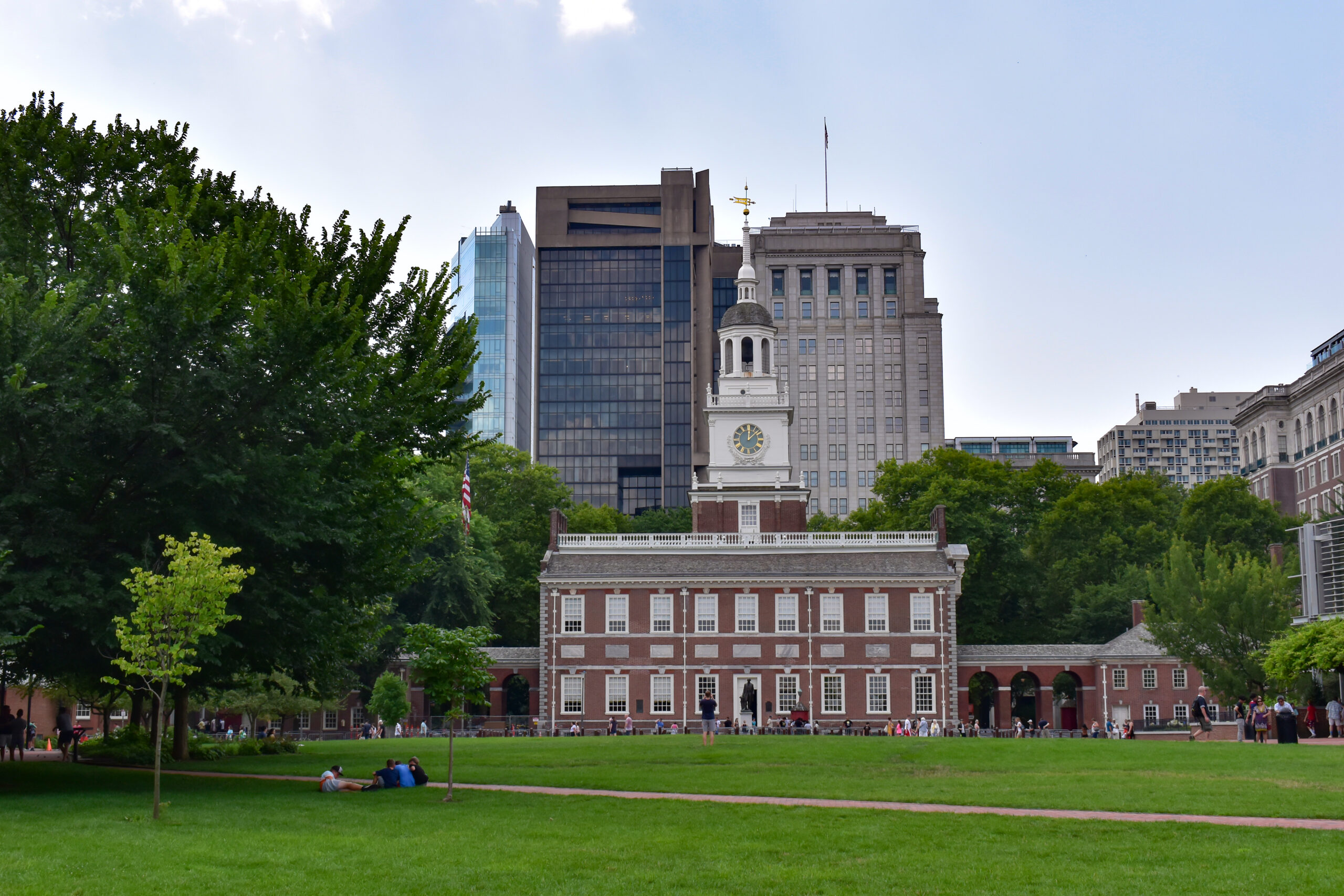
Philadelphia is a city that punishes cars and rewards feet. William Penn laid out Center City in 1682 as a tight grid of narrow streets between two rivers, long before anyone imagined parking, and the historic core around Independence Hall still has brick sidewalks, cobbled lanes and streets barely wide enough for a delivery truck. Almost everything a first-time visitor wants to see, from the Liberty Bell to Reading Terminal Market, the art museum and the restaurants of Rittenhouse Square, fits inside an area you can walk across in under an hour, and SEPTA’s subway, trolleys, buses and regional trains cover the rest, including a direct train from the airport. Driving, by contrast, means some of the most congested expressways on the East Coast, a parking authority whose enforcement is part of local folklore, and hotel parking fees that add up quickly. But the car still has a job here. Valley Forge, Longwood Gardens, Lancaster County’s Amish country, Bucks County and the Jersey Shore are all classic day trips, and most of them are hard or impossible without one. This guide explains how the city is laid out, how SEPTA and the other rail systems work, what driving is really like, and gives you a straightforward way to decide.
The short answer
Skip the car for a city visit, which is what most first trips to Philadelphia are: SEPTA, your feet, Indego bike share and the occasional taxi will cover the historic district, Center City, the Parkway museums, South Philadelphia, Fishtown and University City, and you will save the parking and the stress. Rent a car only for the days you leave the city, for Valley Forge, Longwood Gardens and the Brandywine Valley, Lancaster County, New Hope and Bucks County, Gettysburg or the Shore, or if you are visiting family in the suburbs, traveling with small children and a lot of gear, or making Philadelphia one stop on an East Coast road trip. For most visitors, the right answer is a car-free city stay plus a one- or two-day rental. Compare rental rates for those days on our Philadelphia car rental page.
How Philadelphia is laid out
Center City is the rectangle between the Delaware River on the east and the Schuylkill River on the west, roughly two miles across and a mile deep, with City Hall at the center where Broad Street and Market Street cross. North-south streets are numbered, starting from Front Street at the Delaware and rising to the twenties by the Schuylkill, and east-west streets carry names, many of them trees, such as Chestnut, Walnut, Locust, Spruce and Pine. Old City and Society Hill, with Independence Hall and the oldest houses, fill the eastern end near the Delaware; Rittenhouse Square anchors the western half; the Benjamin Franklin Parkway runs diagonally northwest from City Hall to the art museum. South Philadelphia, with the Italian Market, East Passyunk and the stadiums, stretches below South Street; Northern Liberties and Fishtown lie north along the Delaware; University City is across the Schuylkill to the west. Most streets in the grid are one-way, which is logical once you know the pattern and baffling until you do. Beyond Center City the city runs far to the northeast and northwest, and the suburbs, the Main Line, Montgomery County, Delaware County, Bucks County and South Jersey across the river, are where public transit starts to thin out.
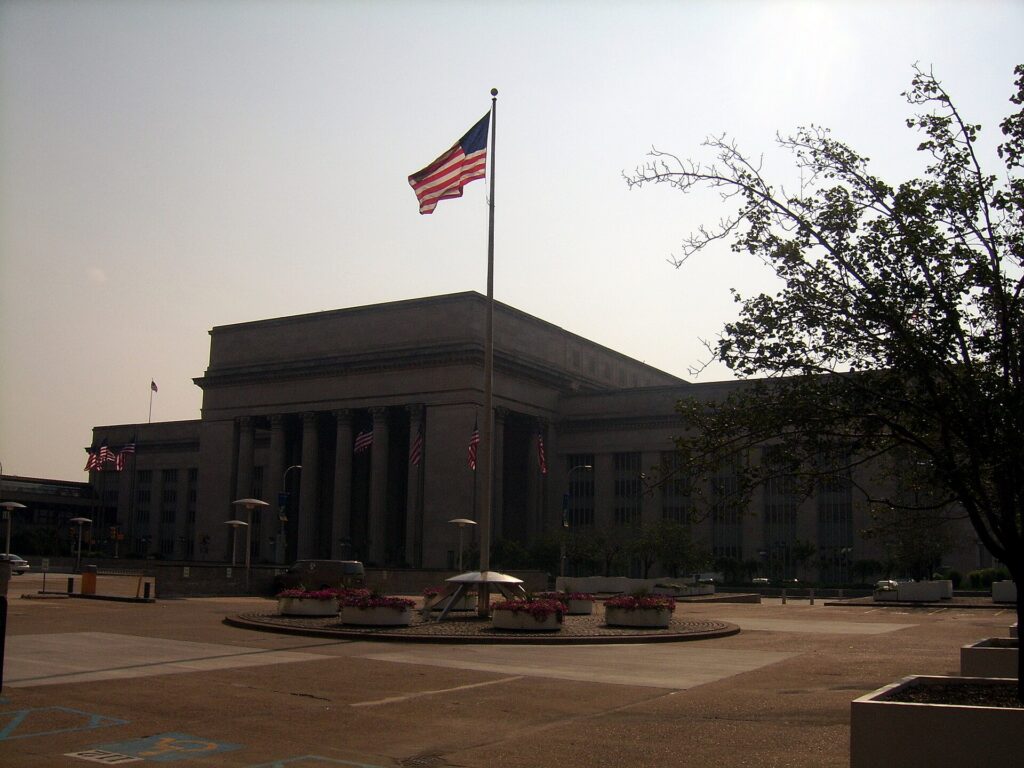
Hotels cluster around City Hall and the Convention Center, around Rittenhouse Square, in Old City near the historic sites, in University City near 30th Street Station, and in a large group near the airport. Our Philadelphia hotel search lets you compare them.
Getting in from the airport
Philadelphia International (PHL) is in the southwest corner of the city, about 13 km (8 miles) from Center City, and it has one of the simplest airport connections in the country. The SEPTA Airport Line, a Regional Rail service, stops at every terminal and runs to University City, 30th Street Station, Suburban Station and Jefferson Station in around 25 minutes, typically every half hour from early morning until late evening; SEPTA’s site lists the current ticket options for the line. Taxis charge a flat fare between the airport and Center City, which takes the guesswork out of the trip, and ride-hail pickups are in marked zones outside baggage claim. The drive takes about 20 minutes in light traffic on I-95 and much longer at rush hour. The rental car companies are off-airport and run shuttles from the terminals to their lots. Unless you are heading straight out of the city, there is no reason to pick up a car on arrival. The airport’s site covers current ground transport, and our PHL airport guide covers the layout.
Philadelphia’s transit, explained
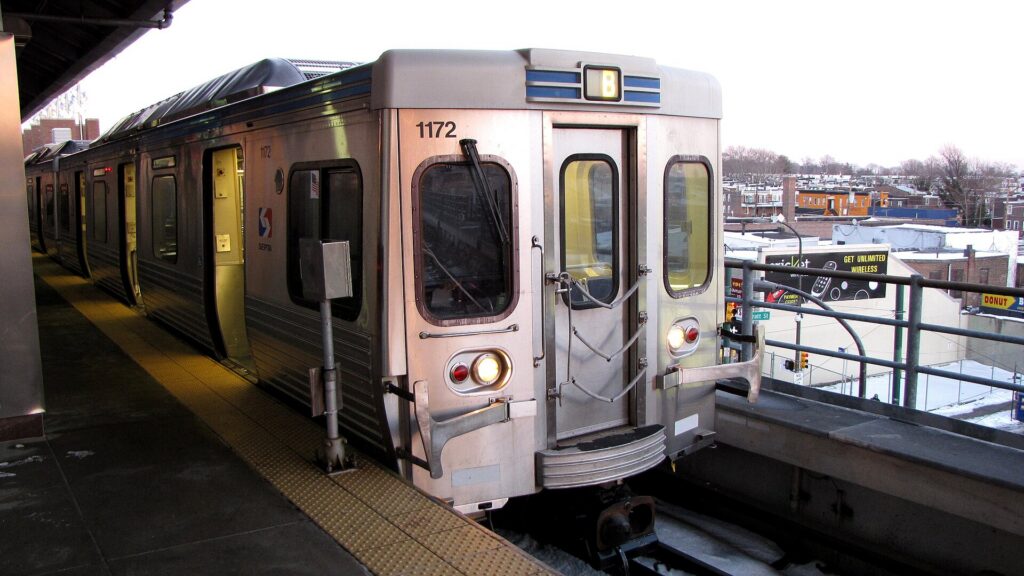
SEPTA, the Southeastern Pennsylvania Transportation Authority, runs almost everything: two subway lines, a network of trolleys, the buses, and a large Regional Rail system that reaches the suburbs, the airport and Trenton in New Jersey. It is one of the few American transit systems that uses every mode, and for a visitor based in Center City it covers nearly everything worth seeing. It has also faced serious funding shortfalls in recent years that have brought threatened and sometimes actual service cuts, so check current schedules on SEPTA’s site before relying on a route, especially in the evenings.
The subway and trolleys
Two lines form a cross through the city. The Market-Frankford Line runs east-west under Market Street through Center City, with stops for Old City, Independence Mall, City Hall and 30th Street Station, then rises onto an elevated track to University City in the west and to Fishtown and the Northeast in the other direction. The Broad Street Line runs north-south under Broad Street, meeting the Market-Frankford Line at City Hall, and is the way to the stadiums at the southern end and to Temple University in the north. SEPTA has been renaming its rail transit lines under a SEPTA Metro brand, so on newer maps and signs the Market-Frankford Line appears as the L and the Broad Street Line as the B. The subway-surface trolleys run underground beneath Market Street in Center City and surface in West Philadelphia, which makes them useful for University City, and a separate trolley line runs along Girard Avenue past the zoo and through Fishtown.
Buses
Buses fill in the rest of the city, including the routes along South Street, Chestnut and Walnut, up to the art museum area, and out to Manayunk. Frequencies are good on the main corridors and much thinner late at night and on the outer routes. Check real-time arrivals in the SEPTA app rather than trusting a printed schedule.
Regional Rail
More than a dozen Regional Rail lines fan out from the Center City tunnel, which links Jefferson Station, Suburban Station and 30th Street Station. For visitors, the most useful are the Airport Line, the Manayunk/Norristown Line, the Chestnut Hill lines for the northwest neighborhoods, and the Trenton Line, which connects with New Jersey Transit trains to New York for travelers who want the cheaper, slower alternative to Amtrak. Service on most lines is roughly hourly outside the rush.
Fares and tickets
The simplest way to pay on the subway, trolleys and buses is to tap a contactless bank card or phone at the reader, or to load a reusable SEPTA Key card at station kiosks; paying with a Key card or contactless costs less than paying cash on a bus, and transfers are handled automatically within a set time. Regional Rail fares depend on the zone and whether you travel at peak times, and the Airport Line has its own fare. Day and weekly passes are available and worth it on a heavy sightseeing day. Young children ride free with a fare-paying adult; check SEPTA for the current age limit and fares before you go.
Accessibility
Every SEPTA bus is accessible, and a growing number of subway and Regional Rail stations have elevators, but some older subway stations and trolley stops still do not. SEPTA’s site lists accessible stations and elevator outages, and it is worth checking before you plan a route with luggage or a stroller.
Beyond SEPTA
- Walking. Center City is flat and compact, and you can walk from Independence Hall to Rittenhouse Square in about 25 minutes and to the art museum in about 40. On a pleasant day, walking is faster than waiting for a bus for most trips inside the grid.
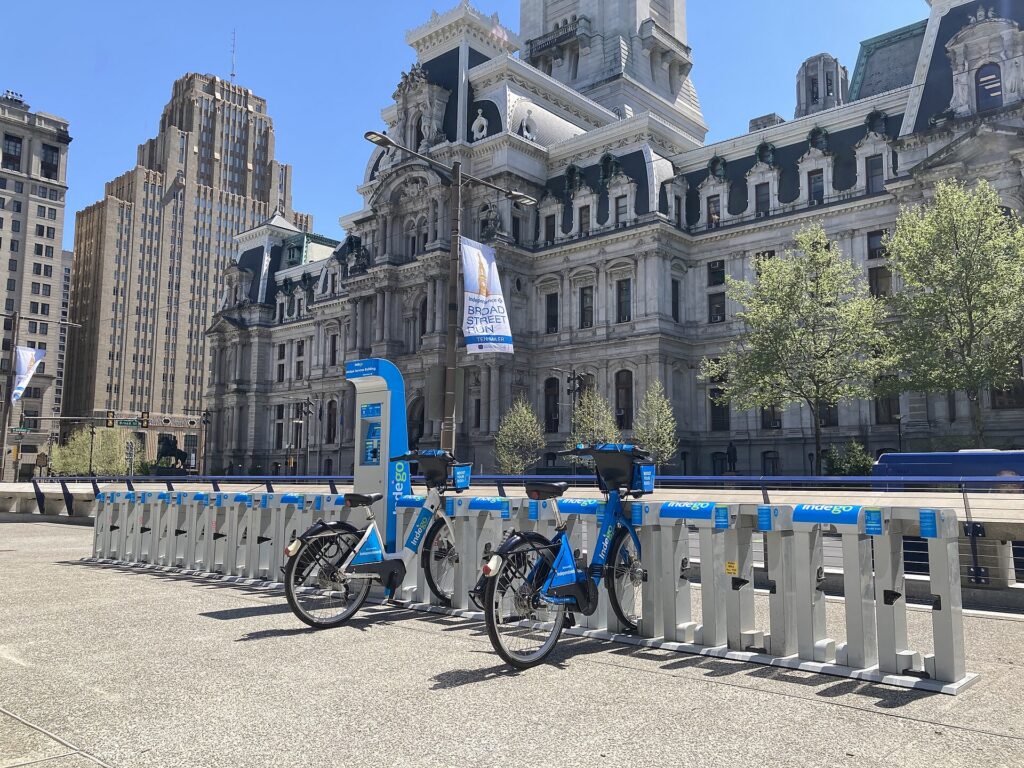
- Indego bike share. Indego has hundreds of stations across Center City and the neighborhoods around it, including electric bikes, and the Schuylkill River Trail from Center City past Boathouse Row is the best ride in the city.
- PATCO. The PATCO Speedline runs from Center City across the Benjamin Franklin Bridge to Camden and the South Jersey suburbs, and it is the way to the Adventure Aquarium and the Battleship New Jersey.
- Amtrak and New Jersey Transit. Amtrak connects 30th Street Station with New York, Washington and Boston on the Northeast Corridor, and with Harrisburg via Lancaster on the Keystone line, which makes Amish country a feasible car-free day trip. New Jersey Transit runs trains to Atlantic City and the River Line from Camden to Trenton.
- Taxis and ride-hail. Uber, Lyft and licensed taxis operate across the city; for a group of three or four, a short ride is competitive with transit fares and far quicker for late-night returns.
- Seasonal ferry. In the warmer months, a passenger ferry has typically crossed the Delaware between Penn’s Landing and the Camden waterfront; check before you go.
Driving in Philadelphia: what it is really like
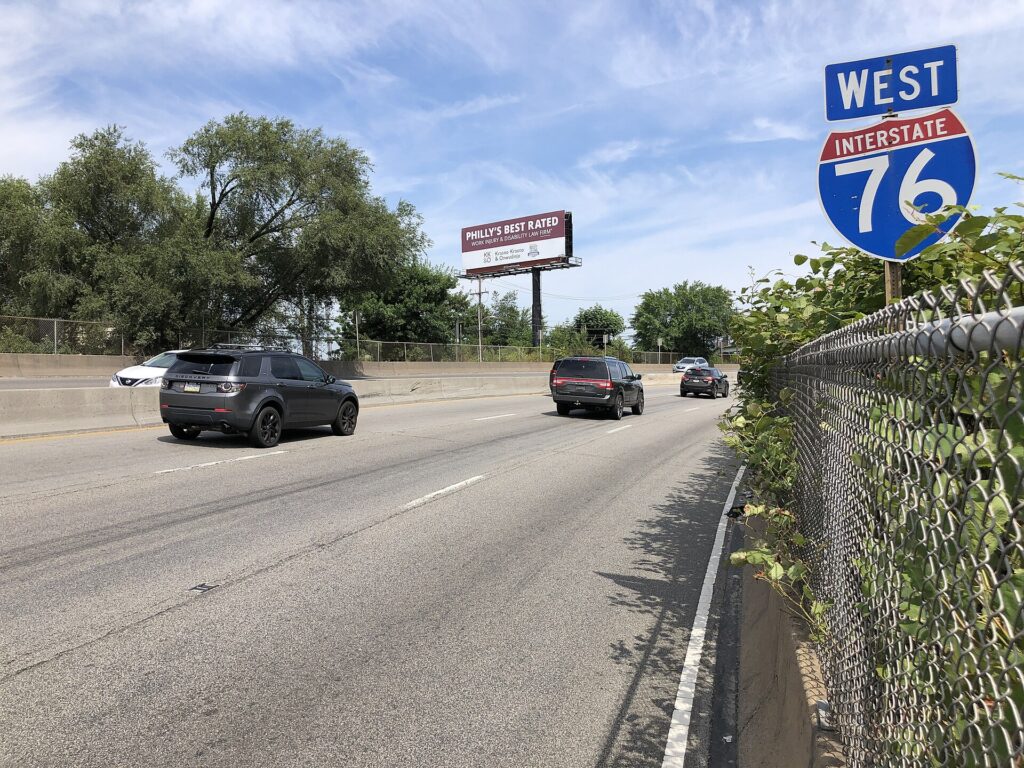
Philadelphia is not the hardest city in the country to drive in, but it is harder than its size suggests. The Schuylkill Expressway (I-76), the main route from the western suburbs, Valley Forge and the Pennsylvania Turnpike into Center City, is a narrow, winding road squeezed between the river and the hills, and it jams every weekday morning and evening and often on weekends; locals have called it the “Sure-Kill” for decades. I-95 along the Delaware, the route from the airport and to New York, has its own rush-hour crawl and a long-running program of construction. The Vine Street Expressway (I-676) across the north of Center City links the two and backs up at both ends. Roosevelt Boulevard in the Northeast, a twelve-lane road with a grim safety record, now has automated speed cameras. Inside Center City, the grid of narrow one-way streets, double-parked delivery trucks, cyclists, pedestrians who cross against the light, and the cobblestones and tight corners of Old City and Society Hill make driving slow and stressful for anyone who does not know the pattern.
Parking
This is where most visitors decide the car is not worth it. On-street parking in Center City is scarce, metered and time-limited, and residential blocks in the surrounding neighborhoods are restricted to permit holders for all but a short period. The Philadelphia Parking Authority enforces the rules with an efficiency that has been the subject of its own reality television show, and a ticket or a tow is an expensive souvenir. Garages and lots are plentiful around City Hall, the Convention Center and Old City, and many offer early-bird and evening rates, but daily rates are high, and hotels charge a substantial nightly fee, often for valet only. Outside Center City, parking at the stadiums, the zoo, Valley Forge, Longwood Gardens and most suburban sights is simple, and the historic sites in Old City have a garage under the Independence Visitor Center. Pay street meters at the kiosk or with the parking authority’s app, read every sign on the block, and never park in a bus zone, a loading zone or a crosswalk.
Rules and conditions worth knowing
- Tolls. The Pennsylvania Turnpike, the New Jersey Turnpike and the bridges across the Delaware are tolled, most of them electronically. Many Pennsylvania Turnpike plazas no longer take cash, and the bill follows the plate; ask the rental company how its toll program works and what it charges.
- Cameras. Red-light cameras operate at many intersections, and speed cameras on Roosevelt Boulevard and in school zones; fines follow the car, and the rental company will bill you with a fee on top.
- Wipers on, lights on. Pennsylvania law requires headlights whenever your wipers are in use because of the weather.
- Right turns on red are permitted after a full stop unless signed otherwise, which in Center City they often are. Left turns on red from one one-way street onto another are also legal after a stop.
- Snow. A few storms a year bring snow emergency routes, where parked cars must be moved or towed; if you have a rental in the city during a storm, check where it is parked.
- Game days. Eagles, Phillies, Flyers and 76ers games back up I-95, I-76 and Broad Street around the stadium complex in South Philadelphia. Take the Broad Street Line instead.
When renting a car makes sense
- Valley Forge and the Main Line. Valley Forge National Historical Park is about 40 minutes northwest, and the park itself, with its driving tour past the encampment sites, is best seen by car.
- Longwood Gardens and the Brandywine Valley. About an hour southwest, with Winterthur and the Brandywine museum nearby; public transport barely reaches them.
- Lancaster County. The train reaches Lancaster city, but the farms, covered bridges and back roads of Amish country need a car.
- Bucks County and New Hope. An hour north along the Delaware, with Washington Crossing Historic Park on the way.
- The Jersey Shore. Cape May, Ocean City and the smaller shore towns are far easier by car; Atlantic City is the exception, with bus and train service.
- East Coast road trips. Philadelphia sits between Washington and New York on I-95; our route guides for Washington, DC to Philadelphia and Philadelphia to Boston cover the drives, and our guides to Washington, DC and Boston cover what to do when you arrive.
If any of those apply, our rental car booking tips cover insurance, deposits and the questions to ask at the counter, and our family car rental guide looks at vehicle choice.
When it does not
- You are staying in Center City, Old City or University City and your plans are the historic district, the museums, the markets and the neighborhoods.
- You are in town for a convention, a game, a graduation or the Fourth of July, when parking is at its worst and SEPTA goes where you are going.
- You are arriving or leaving by Amtrak, or combining Philadelphia with New York or Washington by train.
- You are traveling solo or as a couple, and the rental, insurance, tolls and hotel parking add up to more than a week of transit and taxis.
The hybrid plan for a city-plus-countryside trip
Go car-free for the city days and rent for the countryside days, and think carefully about where you pick up. Renting at the airport makes sense only if you are heading straight out of the city on arrival, toward Longwood Gardens and the Brandywine Valley, for example, which are closer to PHL than to Center City. Renting from a downtown or 30th Street Station location makes sense if you are spending the first nights in the city, because you avoid the airport’s concession fees and the nightly hotel parking on the days you are not using the car. A common pattern that works well: the Airport Line into the city, two or three car-free days, pick up a rental in Center City in the morning, drive out for Valley Forge or Lancaster County, and return it that evening or on the way back to the airport. Leave early to beat the Schuylkill Expressway, and plan the return for after the evening rush. Compare the day rates on our Philadelphia car rental page against a full-trip rental and the difference is usually obvious.
A worked cost comparison
Numbers change with the season and the booking window, so treat this as a method rather than a quote, and check current rates before deciding. For a four-night city break in Center City for two people, the car-free version costs two return Airport Line fares, transit rides or a couple of day passes, an Indego ride or two along the river, and perhaps two or three short taxi trips at night; the rental version adds four days of a compact car, four nights of hotel parking at Center City rates, fuel and the airport concession fees, and buys you very little you could not walk or ride to. The transit option wins easily. For the same four nights with a day at Longwood Gardens and a day in Lancaster County, the car-free version would need an Amtrak return to Lancaster and taxis once you arrive, and would struggle to reach Longwood at all; the hybrid version adds a two-day rental picked up downtown, fuel, a toll or two and one or two nights of parking. The hybrid wins on both cost and time for almost everyone. For a family of four visiting the suburbs for a week, a rental for the whole stay is the practical answer, and the airport pickup is worth its fee. Run the rental rates for your dates on our Philadelphia car rental page and put them beside the transit costs before you choose.
Driving out of Philadelphia in each season
The day trips from Philadelphia are easy drives in any season, but the traffic changes with the calendar. In summer, the problem is the Shore: the Atlantic City Expressway and the roads to Cape May and Ocean City fill on Friday afternoons and Sunday evenings from Memorial Day to Labor Day, so go mid-week or leave very early. Summer thunderstorms can also flood low roads, including sections of the Schuylkill Expressway, for an hour or two. In fall, the roads to Bucks County, Lancaster County and the Brandywine Valley fill on foliage weekends in October, and Eagles Sundays make I-95 around the stadiums slow; weekday trips are calmer. In winter, snow is occasional rather than constant, and the main highways are plowed quickly, but a nor’easter can make the suburbs slow for a day or two, and the Christmas displays at Longwood Gardens draw heavy evening traffic through December. Rental cars come on all-season tires, which are fine for most winter days. In spring, the Schuylkill Expressway is at its worst on weekday rush hours as always, but the drive to Valley Forge and Longwood during the April blossoms and the May garden season is one of the best reasons to have a car. In every season, the rule is the same: leave Center City before the morning rush or after it, and come back after the evening one.
Decision table
| Your trip | Recommendation | Why |
|---|---|---|
| City break in Center City, couple or solo | No car | Walking, SEPTA and Indego cover it; parking is expensive and strictly enforced |
| Fourth of July, a convention or a game | No car | Streets close, parking vanishes, and SEPTA goes to the Parkway and the stadiums |
| City plus Valley Forge or Longwood Gardens | Hybrid: rent downtown for one or two days | Car-free city days, car only when you leave |
| Lancaster County and Amish country | Rent for the day, or Amtrak plus a local tour | The train reaches Lancaster, but the farms and back roads need a car |
| Philadelphia with New York or Washington | No car; take the train | Amtrak between city centers is faster than driving and parking |
| Family visit to the suburbs | Rent for the whole stay | Suburban transit is thin and distances are long |
| Jersey Shore beach days | Rent, and go mid-week | Most shore towns are hard to reach without a car |
| East Coast road trip | Rent (consider one-way) | Philadelphia is a stop on I-95, not the destination |
Money-saving tips for both options
- On transit: tap a contactless card or use a SEPTA Key card rather than paying cash; buy a day pass for a heavy sightseeing day; walk inside Center City whenever the weather allows.
- On a rental: compare airport and downtown pickup, rent only for the days you leave the city, check the toll program before you drive, decline extras you already have through a credit card or home policy (check first), and fill the tank away from the airport.
- On the hotel: if you are renting, price the parking fee into the room rate, and look at garages with evening or weekend rates near your hotel, which are often cheaper than hotel valet.
- On timing: avoid the Schuylkill Expressway and I-95 in the weekday peaks and on game days, and the Shore roads on summer weekends; the best time to fly to Philadelphia guide lists the busiest weekends in the city.
- On intercity trips: for New York, the SEPTA Trenton Line plus New Jersey Transit is slower than Amtrak but usually much cheaper; for Washington and Boston, compare Amtrak with a one-way rental for a group.
Frequently asked questions
Is it worth renting a car in Philadelphia?
For a city visit, no; walking and SEPTA cover the sights, and parking is expensive and strictly enforced. For Valley Forge, Longwood Gardens, Lancaster County, Bucks County or the Shore, yes, for those days only.
Is SEPTA good for tourists?
Good within the city: the two subway lines, the trolleys and the buses reach nearly every sight, and the Airport Line connects every terminal to Center City. Check current schedules, as service levels have been affected by funding problems.
How do I get from Philadelphia airport to Center City?
The SEPTA Airport Line train in around 25 minutes, typically every half hour, or a flat-fare taxi or ride-hail in 20 to 40 minutes depending on traffic.
How do I pay for SEPTA?
Tap a contactless bank card or phone at the reader, or buy and load a SEPTA Key card at a station kiosk. Paying cash on a bus costs more and does not include a transfer.
Can I get to Valley Forge without a car?
It is possible by SEPTA bus from the Norristown area, but it is slow, and the park is spread out. A car, a bike or a tour is far easier.
Is parking expensive in Philadelphia?
In Center City, yes: street spaces are scarce and time-limited, garage day rates are high, and hotels charge a substantial nightly fee. Outside the center, parking is easy.
Is it hard to drive in Philadelphia?
The expressways are congested and the Center City grid is narrow, one-way and busy with pedestrians and cyclists. It is manageable with patience and a navigation app, but most visitors are happier without a car in the city.
Whichever way you go, start with the flight. Compare cheap flights to Philadelphia, choose a neighborhood with our Philadelphia hotel search, and if the countryside is on the list, price the rental for those days on our Philadelphia car rental page. For what to see once you are here, start with our first-timer’s guide to Philadelphia.
Keep planning with TicketScanner
- Philadelphia car rentals — compare airport and downtown pickup
- Cheap flights to Philadelphia
- Philadelphia hotels — factor parking into the rate
- Things to do in Philadelphia: a first-timer's guide
- Best time to fly to Philadelphia: month by month
- Philadelphia International (PHL) airport guide
- Driving Washington, DC to Philadelphia
- Driving Philadelphia to Boston
- Rental car booking tips
- Car, transit or taxi in a new city?
Leave a Reply