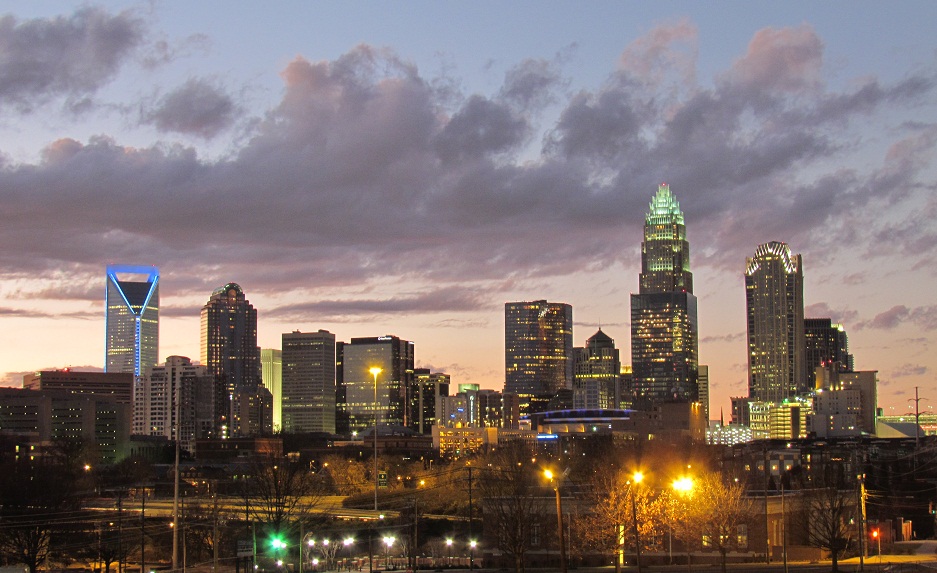
Charlotte sits in the middle of the car question. It grew up around the automobile, with a ring of interstates, suburbs spilling into two states and an airport with no rail link, yet its center has changed faster than almost any in the South. A light-rail line now runs from the southern suburbs through South End and Uptown to NoDa and the university, a streetcar crosses Uptown, and the neighborhoods most visitors want are packed along those two lines. If your trip is Uptown, the museums, the NASCAR Hall of Fame, South End breweries and a game, you can do it without a car and save the hotel parking. If it includes the Speedway, Lake Norman, the Whitewater Center or the Blue Ridge Mountains, you will want one for part of the stay. This guide explains how the city is laid out, how the transit system works, what driving here is really like, and gives you a straightforward way to decide.
The short answer
Skip the car if you are staying in Uptown or South End for a city break, a conference or a game, and your plans are the central sights, the Rail Trail, NoDa and Plaza Midwood; the LYNX Blue Line, the Gold Line streetcar, your feet and the occasional ride-hail will cover that, and you will not pay nightly parking. Rent a car if you are going to a race at Charlotte Motor Speedway, spending time at Lake Norman or the Whitewater Center, heading to Asheville and the mountains, staying with family in the suburbs, or using Charlotte as the start of a Carolinas road trip. Go hybrid, and this is what most visitors should do, if your trip mixes the two: stay car-free for the city days and rent only for the days that leave it. Compare rates for any of these plans on our Charlotte car rental page.
How Charlotte is laid out
Charlotte is a hub-and-spoke city. At the center is Uptown, the compact business district built around the crossroads of Trade and Tryon Streets and wrapped in a tight inner freeway loop, I-277. From there the old trading roads radiate outward as the main avenues: South Boulevard to the south, Central Avenue and Independence Boulevard to the east, North Davidson to the northeast, Wilkinson Boulevard west toward the airport. I-77 crosses the city north to Lake Norman and south to Carowinds, I-85 runs northeast to Concord and southwest toward Atlanta, and I-485, a beltway of roughly 110 kilometers (67 miles), marks the practical edge of the metro. Outside Uptown the streets follow no grid, so a navigation app is essential.
For a visitor, the geography is simpler. South End, Dilworth, Uptown, NoDa and Plaza Midwood sit within about five kilometers (three miles) of the Square, and three of them are on the Blue Line. The Speedway, the Whitewater Center, Lake Norman and the mountains are 20 minutes to two hours out by road. Hotels cluster in Uptown, South End, near the airport, in University City and around Concord Mills near the Speedway; our Charlotte hotel search compares them.
Getting in from the airport
Charlotte Douglas International (CLT) is about 11 kilometers (7 miles) west of Uptown, and it is not on the rail network. A taxi or ride-hail is the quickest way into the center, 15 to 20 minutes in normal traffic and considerably longer at the weekday rush, with pickups from the designated zones outside baggage claim. The CATS Route 5 bus runs between the terminal and the Charlotte Transportation Center in Uptown, beside the Spectrum Center, for a standard local fare; it takes roughly half an hour and connects there with the Blue Line and the Gold Line. The rental car counters are in the hourly parking deck opposite the terminal, a short walk from baggage claim, and you are on Billy Graham Parkway or I-85 within minutes. A rail line to the airport has been discussed and planned for years, but it is not something to count on for your trip. Our CLT airport guide covers the terminal layout.
Charlotte’s transit, explained
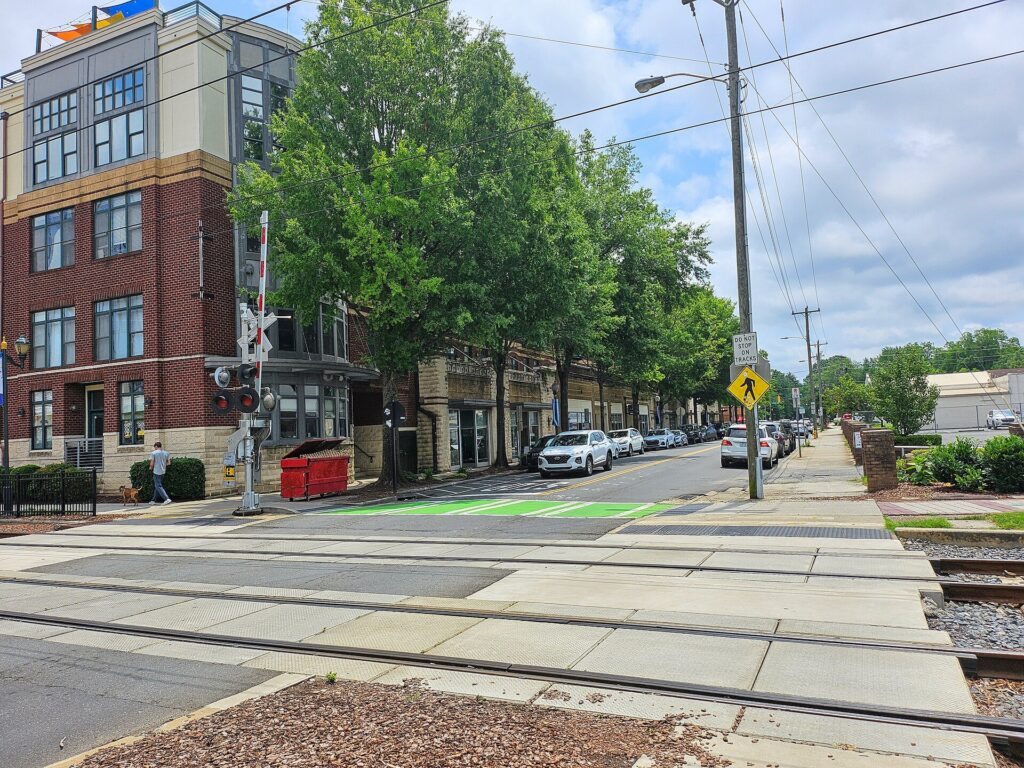
The Charlotte Area Transit System, known as CATS, runs the light rail, the streetcar and the buses. For a visitor based in the center it is clean, easy and more than adequate. Its limitation is coverage: there is one rail line, and beyond its corridor the buses rarely beat a car or a ride-hail for time.
The LYNX Blue Line
The Blue Line is the backbone, and it runs through almost everything a visitor needs. From I-485 in the south it heads north into South End, where the New Bern, East/West Boulevard, Bland Street and Carson stations sit along the Rail Trail, then through Uptown with stops at Stonewall (for Bank of America Stadium), 3rd Street/Convention Center, the Charlotte Transportation Center (for the Spectrum Center and the Gold Line) and 7th Street. North of Uptown it reaches 36th Street in NoDa, then runs out through University City to the UNC Charlotte main campus, about 30 kilometers (19 miles) from the southern end. Trains run from early morning until after midnight, frequently at peak times and less often late and on Sundays, with extra service on event days. Suburban stations have park-and-ride lots.
The CityLYNX Gold Line
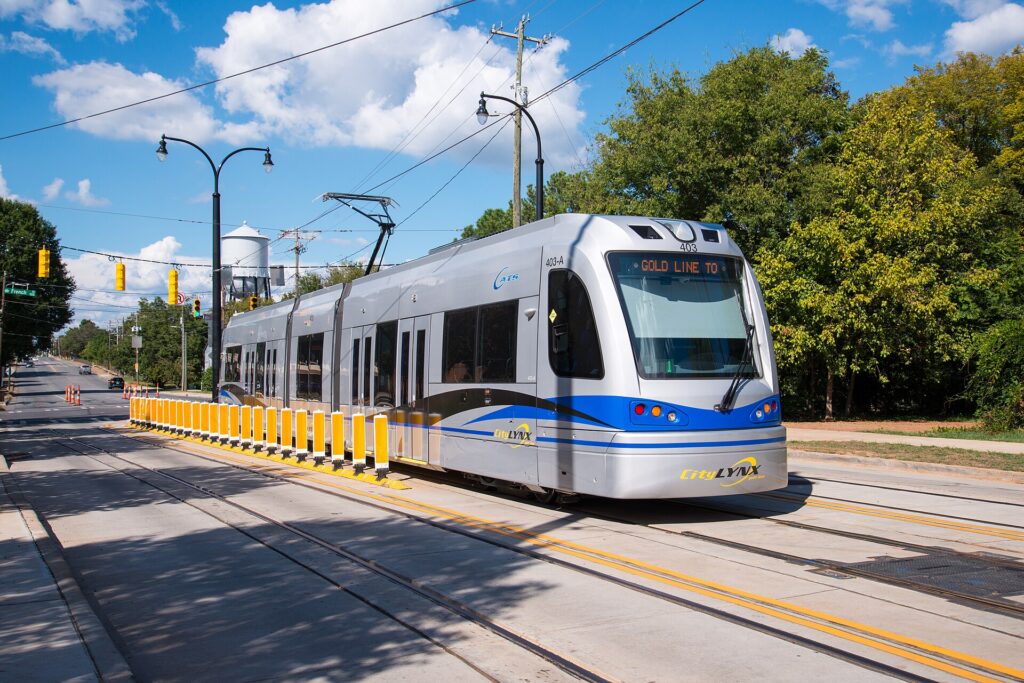
The Gold Line is a modern streetcar that crosses Uptown east to west along Trade Street and Elizabeth Avenue, from the historically Black Johnson C. Smith University area on the west side through the Square and the Charlotte Transportation Center to the hospitals and restaurants of Elizabeth and the edge of Plaza Midwood on the east. It is short, about six kilometers (four miles), and slower than walking at busy times, but it is handy for hopping across Uptown in the heat, and it has been fare-free in recent years; check CATS for the current policy.
Buses
Buses fill in the rest, including the Route 5 airport bus, Central Avenue to Plaza Midwood, and routes to Freedom Park and SouthPark. Service thins out in the evenings and on weekends, so check return times. There is no practical transit to the Whitewater Center, the Speedway, Carowinds or Lake Norman.
Fares and tickets
Buy single rides or a day pass from the machines on every Blue Line platform, or use the CATS Pass app. The light rail works on proof of payment with no gates, so buy before you board and keep your ticket handy for inspectors, who do check. A single ride includes a transfer window to local buses; express buses cost more, and day passes are good value for several rides. Fares are low by big-city standards; check CATS’s site for current prices and payment options.
Accessibility
Every Blue Line station has level boarding and ramps or elevators, the streetcars are low-floor, and every bus has a ramp or lift and priority seating. CATS also runs a paratransit service for eligible riders, which visitors with a disability can arrange in advance.
Beyond CATS
- Walking and the Rail Trail. Uptown is compact and easy on foot, and the Rail Trail runs alongside the Blue Line through South End, so you can walk between stations and ride back. In summer, walk in the morning or evening; Charlotte’s humidity makes a midday mile feel much longer.
- Greenways and scooters. The Little Sugar Creek Greenway runs from Uptown south past Freedom Park, and shared e-scooters and e-bikes in parts of the center are a quick way to reach Dilworth or Plaza Midwood from a Blue Line stop.
- Taxis and ride-hail. Uber and Lyft operate across the metro, and for two or more people a short ride to Plaza Midwood, Myers Park or Optimist Hall is competitive with transit and much quicker. Expect surge pricing and long waits after Panthers games, big concerts and on race nights.
- Intercity trains and buses. Amtrak’s Piedmont trains link Charlotte with Raleigh several times a day, and the Carolinian and the Crescent continue north toward Washington and New York, with the Crescent also heading south to Atlanta and New Orleans. Amtrak’s site has the schedules. Intercity buses serve Atlanta, Raleigh and the coast.
Driving in Charlotte and beyond: what it is really like
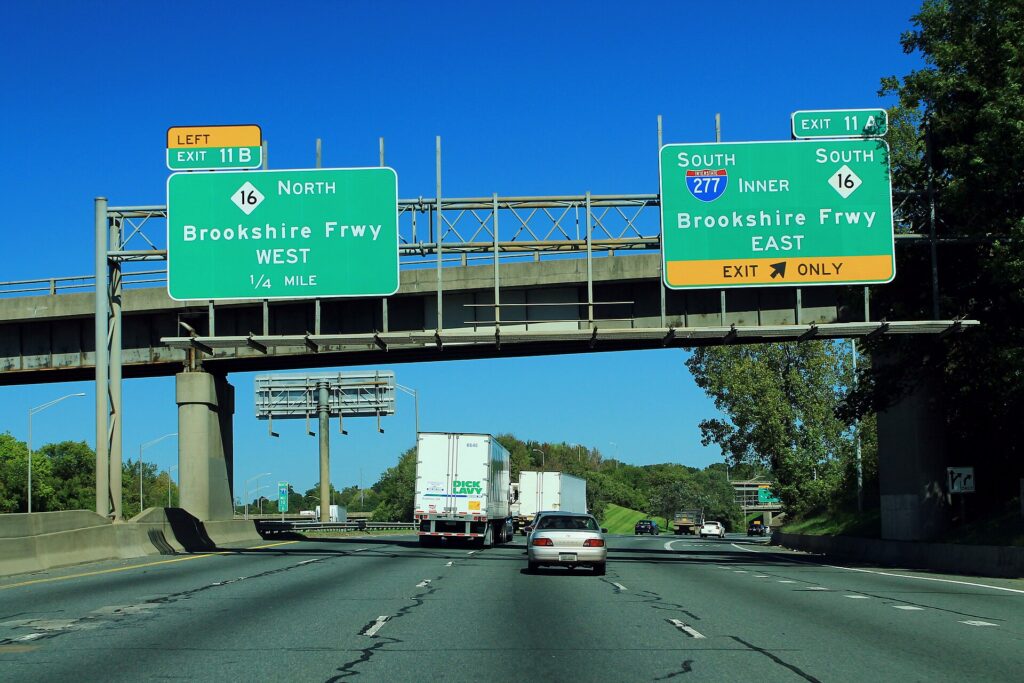
Charlotte is an easier city to drive in than Atlanta, and outside the rush hours most visitors find it straightforward: wide roads, plentiful parking beyond Uptown, and interstates to every corner of the metro. The frustrations are predictable. I-77 between Uptown and Lake Norman is the most congested corridor, which is why it has express toll lanes. I-85 toward Concord backs up every weekday and stops dead on race days. I-485 jams at the I-77 interchange in the south, and I-277 slows at every peak and every stadium event. Rush hours run from about 7 to 9 in the morning and 4 to 6:30 in the evening, and Friday afternoons are the worst as the city heads for the lakes and the mountains. Construction is constant in one of the fastest-growing cities in the country.
Parking
Parking shows Charlotte’s two personalities. Uptown hotels typically charge a substantial nightly fee, often valet only, and garages near the stadium and the Spectrum Center switch to event pricing on game days; street meters are paid by machine or app and enforced. South End is tighter than it looks, and a paid lot is usually the answer. Everywhere else, parking is easy and mostly free: the malls, Freedom Park, NoDa’s side streets, the park-and-ride lots. The Whitewater Center charges for parking but not for entry to the grounds, and at the Speedway on race days arriving early is the only strategy that works.
Rules and conditions worth knowing
- Tolls. The I-77 express lanes north of Uptown and the Monroe Expressway to the southeast are electronic only, with no cash booths. North Carolina’s NC Quick Pass transponder works on them, and without one the toll is billed by plate, which rental companies pass on with an administration fee. Ask about the rental’s toll program at the counter, or simply stay in the free lanes.
- Headlights with wipers. North Carolina law requires headlights whenever your windshield wipers are on, which, in a summer thunderstorm, is often.
- Summer storms can flood underpasses and cut visibility on the interstates in minutes. Slow down, and never drive through water across a road.
- Ice is rare but paralyzing, because the region has little equipment to treat roads. If it is forecast, stay put.
- Texting while driving is illegal in North Carolina, and seatbelts are required for every occupant, front and back.
- Right turns on red are permitted after a full stop unless signed otherwise, and the Move Over law requires you to change lanes or slow down for stopped emergency and service vehicles.
- South Carolina starts 20 minutes south of Uptown at Carowinds and Fort Mill; you will cross the line without noticing.
NCDOT, the state transportation department, publishes road conditions, closures and construction alerts.

When renting a car makes sense
- Race weekends and the NASCAR trail. Charlotte Motor Speedway in Concord has no transit link, and the team showrooms are spread out.
- Lake Norman. Marinas, lakeside restaurants and boat rentals in Cornelius, Davidson and Mooresville are 30 to 45 minutes up I-77 and are effectively car-only.
- The Whitewater Center. Fifteen minutes west of Uptown by car, and a pricey ride-hail round trip otherwise.
- The mountains. Asheville, the Biltmore Estate and the Blue Ridge Parkway are about two hours west, and Crowders Mountain State Park is 45 minutes. There is no practical public transport to any of them.
- Family in the suburbs. Ballantyne, Matthews, Huntersville and the South Carolina side are built for cars.
- Carolinas road trips. Charleston, Myrtle Beach and the Outer Banks are all drives from Charlotte, and Atlanta is about four hours down I-85; our Atlanta to Charlotte route guide covers that drive, and our Atlanta car-or-transit guide covers the city at the other end.
If any of those apply, our rental car booking tips cover insurance, deposits and the questions to ask at the counter, and our family car rental guide looks at vehicle choice.
When it does not
- You are staying in Uptown or South End and your plans are the museums, the Hall of Fame, the breweries and the neighborhoods on the Blue Line.
- You are in town for a conference at the Convention Center, a Hornets game or a Panthers or Charlotte FC match, when the Blue Line stops beside every venue and event parking is at its most expensive.
- You are on a short stopover of a day or two, which is how many people first see Charlotte; a ride-hail from the airport and the light rail are all you need.
- You are traveling solo, and the rental plus Uptown parking would cost more than a handful of ride-hail trips.
The hybrid plan for a city-plus-region trip
Go car-free for the city days and rent for the days that leave it, and think carefully about where you pick up. Renting at the airport is the most convenient, with the largest choice of cars and the longest opening hours, and it makes sense if you are heading straight to the mountains, the Speedway or Lake Norman on arrival, because the airport sits by I-85 and you never touch Uptown traffic. Renting from a neighborhood or Uptown office makes sense if you are spending the first nights in the city, because you avoid the airport concession fees and several nights of hotel parking. A pattern that works well for a four- or five-day trip: ride-hail or the Route 5 bus into Uptown, two or three car-free days on the Blue Line, then collect a car for a day at the Whitewater Center and a day in the mountains or at Lake Norman, and return it at the airport on the way to your flight. Book early for Memorial Day weekend, when rental demand spikes along with hotel rates, and for the summer holidays. Compare the day rates on our Charlotte car rental page against a full-trip rental and the difference is usually obvious.
A worked cost comparison
Numbers change with the season and the booking window, so treat this as a method rather than a quote. For a three-night city break in Uptown for two, the car-free version costs a ride-hail each way to the airport, a few Blue Line day passes and three or four short rides to Plaza Midwood or Optimist Hall. The rental version adds three days of a compact car, three nights of Uptown hotel parking, fuel and airport concession fees, and buys almost nothing you could not reach by train. Car-free wins easily. For the same three nights plus a day at the Whitewater Center and a day in Asheville, the car-free version needs a ride-hail round trip to the Whitewater Center, which is manageable, and a day tour or private transfer to the mountains, which is not. The hybrid adds a two-day rental collected in the city, fuel for about 400 kilometers (250 miles) and the Whitewater Center’s parking fee, and wins clearly, more so with every extra passenger. For a race weekend, a car from the airport is the practical answer. Put the rates for your dates from our Charlotte car rental page beside the ride-hail estimates before you choose.
Driving from Charlotte to the mountains in each season
The drive west to Asheville and the Blue Ridge is the one most visitors with a car end up making, and it is easy: interstates and four-lane highways the whole way, with the mountains appearing on the horizon about an hour and a half out. What changes is the traffic and what you find at the top. In spring, the valleys green up weeks before the high ridges, and higher sections of the Blue Ridge Parkway can stay closed into April, so check the park’s road status. In summer, the mountains are much cooler than Charlotte, so the westbound roads are busy on Friday evenings and eastbound on Sunday afternoons, and afternoon storms roll across the ridges. In fall, color reaches the high ridges in early October and the valleys by month’s end, and leaf-season weekends bring heavy traffic; go on a weekday and book mountain hotels early. In winter, the interstates are generally open but the Parkway closes in sections whenever there is ice or snow. Hurricane Helene badly damaged western North Carolina in 2024, and some roads, trails and Parkway sections have been slow to reopen; check the Parkway’s site and NCDOT before you set off.
Decision table
| Your trip | Recommendation | Why |
|---|---|---|
| City break in Uptown or South End | No car | The Blue Line, the Gold Line and your feet cover it; Uptown parking is expensive |
| Convention, Panthers, Hornets or Charlotte FC | No car | The Blue Line stops beside every venue; event parking is at its priciest |
| Short stopover of a day or two | No car | Ride-hail from CLT and the light rail are all you need |
| City plus Whitewater Center or Lake Norman | Hybrid: rent in the city for those days | Car-free city days, car for the places transit does not reach |
| Race weekend at the Speedway | Rent at the airport and book early | No transit to Concord; allow hours for race-day traffic |
| Asheville and the Blue Ridge | Rent | No practical public transport to the mountains |
| Family visit to the suburbs | Rent for the whole stay | Suburban distances make the car worthwhile daily |
| Carolinas or Southeast road trip | Rent (consider one-way to Atlanta) | Charlotte is the start, not the destination |
Money-saving tips for both options
- On transit: buy a day pass for a heavy sightseeing day, use the Gold Line across Uptown while it stays fare-free, and use the park-and-ride lots if you have a car and want a day in the center.
- On a rental: compare airport and neighborhood pickup, book early for Memorial Day weekend and summer, decline extras you already have through a credit card or home policy (check first), and avoid the toll lanes unless you understand how the rental company bills them.
- On the hotel: if you are renting, price the parking fee into the room rate; a hotel in South End or near a Blue Line park-and-ride can be cheaper overall than Uptown once parking is added.
- On timing: avoid I-77 and I-85 at the weekday peaks, the westbound roads on Friday evening and the Concord area on any race weekend; the best time to fly to Charlotte guide lists the busiest weekends.
- On game days: ride the Blue Line to Stonewall for the stadium or the Transportation Center for the Spectrum Center, and skip event parking and the post-game surge.
Frequently asked questions
Is it worth renting a car in Charlotte?
For the Speedway, Lake Norman, the Whitewater Center, the mountains or the suburbs, yes. For a city break based in Uptown or South End, a conference or a game, no; the light rail, the streetcar and ride-hail are enough.
Is Charlotte public transit good for tourists?
Good along the Blue Line corridor, which happens to link most of the neighborhoods visitors want: South End, Uptown and NoDa. Beyond it, buses are slower and less frequent, and transit does not reach the airport by rail.
How do I get from Charlotte airport to Uptown?
A taxi or ride-hail in 15 to 20 minutes outside rush hour, or the CATS Route 5 bus to the Charlotte Transportation Center in about half an hour for a standard fare.
Can I get to Charlotte Motor Speedway without a car?
Not by public transit. A ride-hail works, but expect heavy surge pricing and long waits after a race. Most fans drive and arrive early.
Is parking expensive in Uptown Charlotte?
At hotels and on event nights, yes, and hotel parking is often valet only. Outside Uptown and South End, parking is easy and usually free.
Are there toll roads in Charlotte?
A few: the I-77 express lanes north of Uptown and the Monroe Expressway to the southeast, both electronic only. Every destination in this guide is reachable on free roads.
Where does the light rail go in Charlotte?
The LYNX Blue Line runs from I-485 in the south through South End and Uptown to NoDa, University City and UNC Charlotte in the northeast. It does not go to the airport, the Speedway or the Whitewater Center.
Whichever way you go, start with the flight. Compare cheap flights to Charlotte, choose a neighborhood with our Charlotte hotel search, plan the sights with our first-timer’s guide to Charlotte, and if the Speedway, the lakes or the mountains are on the list, price the rental for those dates on our Charlotte car rental page.
Keep planning with TicketScanner
- Charlotte car rentals — compare airport and neighborhood pickup
- Cheap flights to Charlotte
- Charlotte hotels — factor parking into the rate
- Things to do in Charlotte: a first-timer's guide
- Best time to fly to Charlotte: month by month
- Charlotte Douglas (CLT) airport guide
- Driving Atlanta to Charlotte
- Atlanta: rent a car or use transit?
- Rental car booking tips
- Car, transit or taxi in a new city?
Leave a Reply