Tag: Charlotte

  • Best Time to Fly to Charlotte: Seasons, Weather & Prices

    Best Time to Fly to Charlotte: Seasons, Weather & Prices

    Charlotte’s airfares follow a different logic from most American cities. Charlotte Douglas is one of American Airlines’ biggest hubs, and most of the people on the planes are connecting to somewhere else, which means the price of a ticket to Charlotte itself depends as much on the airline’s network as on the city’s own calendar. That calendar matters too: a long, humid summer, a spring and fall that are among the most pleasant in the country, a NASCAR race on Memorial Day weekend that draws one of the biggest crowds in American sport, NFL and college football from September to January, and a convention and banking calendar that fills Uptown hotels on weeknights. This guide walks through the weather month by month, the fare seasons, the events that move prices, and how to handle one of the busiest connecting airports in the world.

    The short answer

    For weather and value together, the best windows are mid-April to mid-May, avoiding Memorial Day weekend, and late September to early November, when the heat has broken, the skies are dry and the Blue Ridge Mountains two hours west are turning color. The cheapest fares usually come in January and February, after the New Year return, and in the first half of December. The most expensive stretches are Memorial Day weekend, when the Coca-Cola 600 fills hotels from Concord to Uptown, the summer school holidays from mid-June to mid-August, Thanksgiving and the Christmas and New Year weeks, and any weekend with a Panthers home game, the ACC Championship or a big stadium concert. Whatever you choose, run a flexible-date search on our Charlotte flights page; shifting a trip by a few days around a race or a holiday weekend can change the fare band entirely.
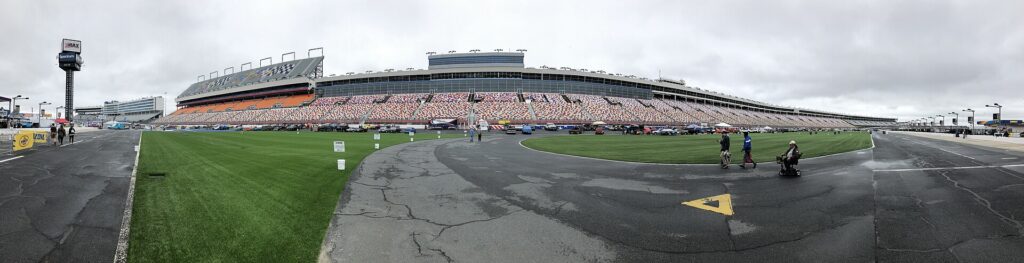
    Charlotte Motor Speedway in Concord on a race weekend in May
    Charlotte Motor Speedway, where the Coca-Cola 600 on Memorial Day weekend makes it the priciest hotel weekend of the year (Photo: Ken Lund from Reno, Nevada, USA via Wikimedia Commons, CC BY-SA 2.0)

    Charlotte’s weather, season by season

    Charlotte sits in the Piedmont of North Carolina at an elevation of about 230 meters (750 feet), between the Blue Ridge to the west and the coastal plain to the east. It has a humid subtropical climate: long, hot and humid summers with afternoon thunderstorms, short winters that are mostly mild but can bring a hard freeze or an ice storm, and a spring and fall that stretch for months. The figures below are approximate seasonal patterns based on the long-term climate normals for Charlotte Douglas from NOAA’s National Weather Service; check the current forecast before you pack, because spring and fall can swing ten degrees from one day to the next.

    MonthTypical daytime highTypical overnight lowWhat it feels likeFare pressure
    Januaryaround 11 °C (52 °F)around 0 °C (32 °F)Cool and often gray; an ice or snow event can shut the city for a day or twoLow, after the New Year return
    Februaryaround 13 °C (56 °F)around 2 °C (35 °F)Changeable; warm spells alternate with cold snapsLow; rises for Presidents’ Day weekend
    Marcharound 18 °C (64 °F)around 5 °C (41 °F)Spring arrives early; the first blossoms by mid-monthModerate; spring break spike
    Aprilaround 23 °C (73 °F)around 9 °C (49 °F)Dogwoods, azaleas and heavy pine pollen; near-perfect temperaturesModerate to high
    Mayaround 27 °C (80 °F)around 14 °C (58 °F)Warm and green; humidity building by the end of the monthModerate, with a Memorial Day race spike
    Junearound 31 °C (87 °F)around 19 °C (66 °F)Hot and humid; afternoon thunderstorms beginHigh from mid-month
    Julyaround 32 °C (90 °F)around 21 °C (70 °F)The hottest month; muggy nights and pop-up stormsHigh, especially around the Fourth
    Augustaround 31 °C (88 °F)around 21 °C (69 °F)Still hot and humid; the heat eases a little late in the monthHigh, softening after schools return
    Septemberaround 28 °C (82 °F)around 17 °C (63 °F)Warm; drier by the end of the month; tropical-storm remnants possibleModerate, falling after Labor Day
    Octoberaround 22 °C (72 °F)around 11 °C (51 °F)Often the best month: dry, sunny and mildModerate; football and race weekends spike
    Novemberaround 17 °C (62 °F)around 5 °C (41 °F)Crisp and clear; fall color lingers in the cityLow to moderate, peak at Thanksgiving
    Decemberaround 12 °C (54 °F)around 2 °C (35 °F)Cool and mostly dry; festive lights across the regionLow until mid-month, then peak

    Three things the table cannot show. First, the humidity: from June to early September, the air in Charlotte feels hotter than the numbers suggest, and a 32 °C (90 °F) afternoon with a thunderstorm building is normal. Second, the pollen: for a few weeks in late March and April, pine pollen turns cars, patios and anything left outside yellow, and allergy sufferers should plan accordingly. Third, winter weather: Charlotte sees measurable snow in some winters and none in others, but a quarter-inch of ice is enough to close schools, snarl the interstates and delay flights, because the region has little equipment to deal with it.

    How Charlotte’s fare seasons work

    Three forces drive prices into Charlotte. The first is the hub: American Airlines carries the large majority of passengers at Charlotte Douglas and runs a huge connecting operation, which gives the city a remarkable number of nonstop routes but also means less fare competition on many of them than at airports with several big carriers. The second is business travel: the banks, the energy and technology companies and the Charlotte Convention Center keep weekday flights and Uptown hotels busy year-round, especially Monday to Thursday. The third is the leisure calendar: summer holidays, the Memorial Day race, football season, and the regional pull of the mountains and the lakes. The result is a relatively flat fare curve with sharp spikes around specific weekends, and hotel prices that often move more than airfares do.

    Peak season

    Mid-June to mid-August, plus Memorial Day weekend, Thanksgiving week and roughly December 20 to January 2. Summer is driven by families, with Charlotte both a destination and a gateway to the beaches and the mountains. Memorial Day weekend is in a class of its own for hotels: the Coca-Cola 600 fills Concord, University City and much of Uptown, and weekend rates climb steeply. If you must travel in peak, book early, fly mid-week, and consider staying on the Blue Line away from the race-weekend hotspots.

    Shoulder season

    March to May and September to November. April and October are the two best months for weather, and both have busy weekends: spring break and college graduations in the spring, and football, the fall NASCAR weekend and homecoming weekends in the fall. Weekdays are usually good value in both seasons, and early May and early November are often the sweet spots.

    Low season

    January and February outside the holiday weekends, and the first half of December. Fares and hotel rates are at their lowest, the weather is cool but mostly manageable, and the Hornets are in season. The exceptions are Martin Luther King Jr. weekend, Presidents’ Day weekend and any big convention. Build a buffer into connections in case of an ice storm.

    As elsewhere, mid-week departures and early or late flights usually price below Friday and Sunday afternoons on the same route, and a search across a whole month reveals cheaper pairs of dates close to your first choice. Our guide to the best times to book explains how to read those patterns.

    Charlotte month by month

    January

    Cool, often gray and, after the first week, one of the two cheapest months to fly in. Highs are usually in the low teens Celsius (mid-50s Fahrenheit), with occasional cold snaps and the small but real chance of an ice storm that stops the city. The museums, the NASCAR Hall of Fame and the Hornets at the Spectrum Center are the main draws, and a Panthers playoff game, when there is one, fills Uptown for a weekend. Martin Luther King Jr. weekend brings a small bump.

    February

    Similar weather with more warm days and low fares outside Presidents’ Day weekend. Charlotte FC usually opens its MLS season late in the month or in early March. A strong value month for a city break focused on museums, food and breweries.

    March

    Spring comes early to the Piedmont. The first blossoms appear by mid-month, patios reopen, and the St. Patrick’s Day parade fills Uptown. Spring break from mid-March into April raises fares from the Northeast and Midwest, and when Charlotte hosts the ACC men’s basketball tournament, as it does in some years, Uptown hotels fill for that week.

    April

    Arguably the prettiest month, with dogwoods and azaleas in bloom across Myers Park and Dilworth, near-perfect temperatures and the Knights opening their baseball season at Truist Field. The catch is pine pollen, heaviest in early-to-mid April. Easter weekend and college events raise prices a little; weekdays remain good value.

    May

    Warm, green and busy. Quail Hollow Club hosts a PGA Tour event in most years, college graduations fill hotels on a couple of weekends, and Memorial Day weekend brings the Coca-Cola 600 at Charlotte Motor Speedway, the longest race on the NASCAR calendar. Book race weekend months ahead; the rest of May is fine value.

    June

    Summer arrives with heat, humidity and afternoon thunderstorms. The Whitewater Center, Lake Norman and the ballpark come into their own, and Juneteenth celebrations fill the city. Fares climb from mid-month as schools finish across the country. Early June is the value play.

    July

    The hottest month and part of the summer peak. The Fourth of July fireworks over Uptown are the big event, the Knights play most nights, and the mountains, two hours west and noticeably cooler, are at their busiest. Plan outdoor sightseeing for the morning and leave the afternoon for the museums.

    August

    Still hot and humid, with Charlotte Pride filling Uptown on a weekend in August and the Panthers’ preseason starting. Many schools in the South return in the first half of the month, and North Carolina’s public schools by the last week, so late August is usually softer on prices than July.

    September

    Warm and gradually drier, with prices falling after Labor Day. Football season begins, and Panthers home Sundays and big college games raise weekend hotel rates. The Festival in the Park fills Freedom Park, and this is the peak of hurricane season, when the remnants of a tropical storm occasionally bring a day or two of heavy rain.

    October

    Often the best month of the year: dry, sunny and mild, with the fall color reaching the Blue Ridge Mountains in the middle of the month. The fall NASCAR weekend at the Speedway, Panthers games, college homecomings and conventions make some weekends expensive; weekdays are excellent value.

    November

    Crisp, clear and quieter, with fall color lingering in the city’s oaks and maples until mid-month. Fares are low to moderate until Thanksgiving, when the Uptown parade and holiday travel create one of the busiest weeks of the year at the airport. The holiday lights at the Speedway switch on in mid-to-late November.

    December

    Two months in one. The first weekend often brings the ACC Championship Game to Bank of America Stadium, which fills Uptown hotels. The first half is otherwise cheap, with holiday lights at the Speedway and in McAdenville, Christmas Town USA. From about December 20, fares jump for the holidays, and a college bowl game around New Year adds another spike.
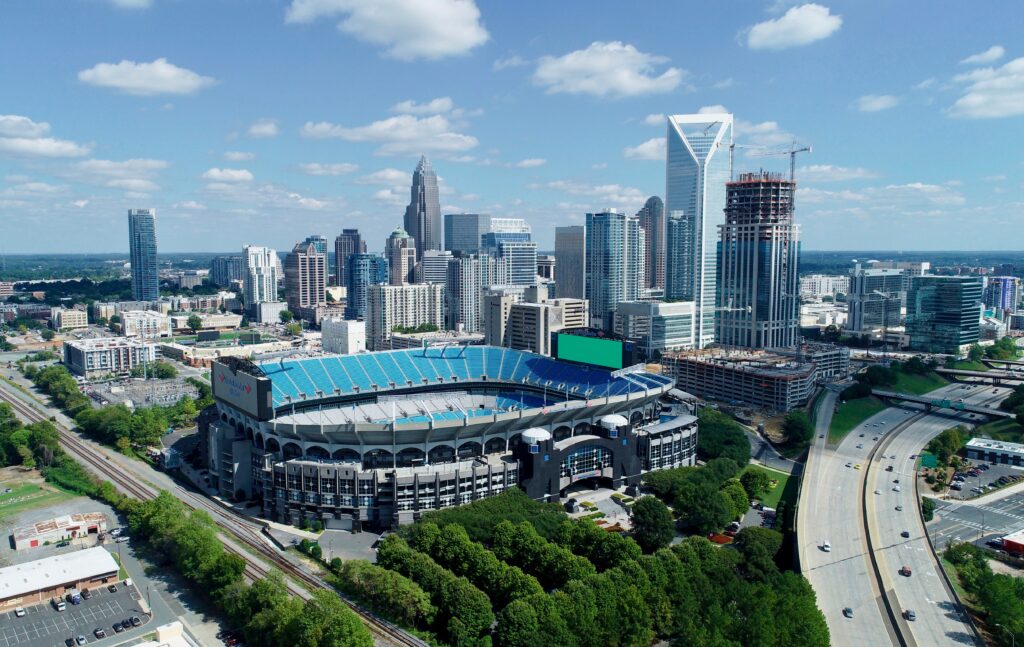
    An aerial view of the Uptown Charlotte skyline
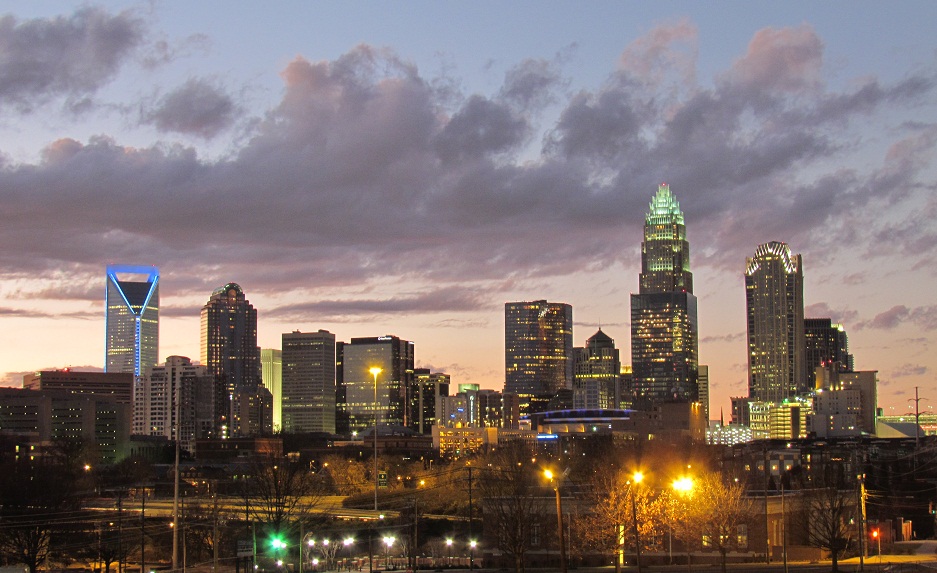
    Uptown Charlotte from the air (Photo: Precisionviews via Wikimedia Commons, CC BY-SA 4.0)

    Events that move Charlotte flight and hotel prices

    Cross-check these against your dates before you book. Exact dates shift each year; Charlotte’s Got A Lot, the city’s official visitor site, keeps the current calendar.

    • Martin Luther King Jr. weekend and Presidents’ Day weekend in January and February.
    • Spring break (mid-March to mid-April), and the ACC men’s basketball tournament in the years Charlotte hosts it.
    • College graduations in May, when families fill hotels near the universities and Uptown.
    • The PGA Tour event at Quail Hollow in most Mays.
    • Memorial Day weekend and the Coca-Cola 600: the single biggest hotel spike of the year in Concord and University City, felt in Uptown too.
    • The Fourth of July and Labor Day weekends.
    • Carolina Panthers home games (September to January), the Speedway’s fall NASCAR weekend, and college football weekends.
    • Thanksgiving, the ACC Championship Game in early December, and Christmas to New Year with its bowl game.
    • Conventions and stadium concerts, which can fill Uptown hotels mid-week without warning. Our Charlotte events page shows what is on sale for your dates.

    Getting in from the airport

    Charlotte Douglas International (CLT) is about 11 kilometers (7 miles) west of Uptown and one of the busiest airports in the world by flight operations, most of them American Airlines and American Eagle flights feeding its hub. That hub gives Charlotte nonstops to most large U.S. cities, Canada, Mexico, the Caribbean and several European gateways, and a handful of other U.S. carriers, including low-cost airlines, also serve the airport. The terminal is a single building with several concourses fanning out from a central atrium, famous for its white rocking chairs, and it has been in the middle of a long expansion program, so allow extra time at the curb and in security at peak hours. Getting to Uptown: a taxi or ride-hail takes 15 to 20 minutes in normal traffic; the CATS Route 5 bus runs between the terminal and the Charlotte Transportation Center in Uptown for a standard local fare; and the rental car counters are a short walk from baggage claim. There is no rail link to the airport yet. Our Charlotte car-versus-transit guide works through whether to rent, and our CLT airport guide covers the layout.
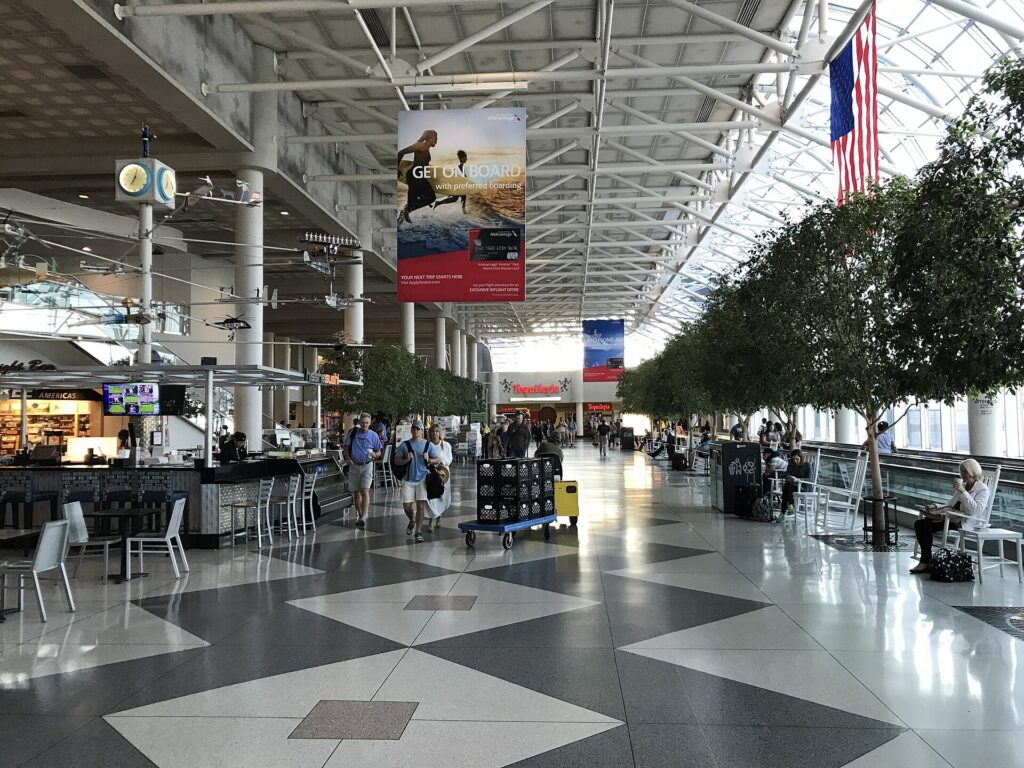
    The central atrium of the terminal at Charlotte Douglas International Airport (CLT)
    Charlotte Douglas (CLT), one of American Airlines' largest hubs and one of the busiest airports in the world by flights (Photo: SunDawn via Wikimedia Commons, CC BY-SA 4.0)

    Timing tricks that work for Charlotte

    • Search the whole month. Race weekends, football Sundays and holidays create sharp edges in the calendar. A flexible search on TicketScanner shows them instantly.
    • Book the hotel first on big weekends. A cheap fare into Memorial Day weekend or an ACC Championship weekend is not cheap once the room is added. Run a Charlotte hotel search for the same dates before you commit.
    • Fly mid-week. Charlotte’s business traffic makes Monday morning and Thursday and Friday afternoon the priciest flights on many routes; Tuesday and Wednesday are usually the value.
    • Compare nearby airports. Because one airline dominates CLT, it is worth checking Greenville-Spartanburg, about an hour and a half southwest, and Raleigh-Durham, about two and a half hours northeast, especially from cities with low-cost service to them. Add the cost of the drive before you decide.
    • Consider Atlanta for a road trip. Atlanta is about four hours down I-85, and a one-way trip between the two cities works well; see our best time to fly to Atlanta guide and our Atlanta to Charlotte route guide.
    • Build a buffer for storms. Summer thunderstorms and the occasional winter ice storm cause ground stops at CLT that ripple across American’s network; avoid the tightest connections. Our guide to how early to arrive covers what to allow.
    • Flying out of Charlotte instead? The hub gives you a huge choice of nonstops; see cheap flights from Charlotte.
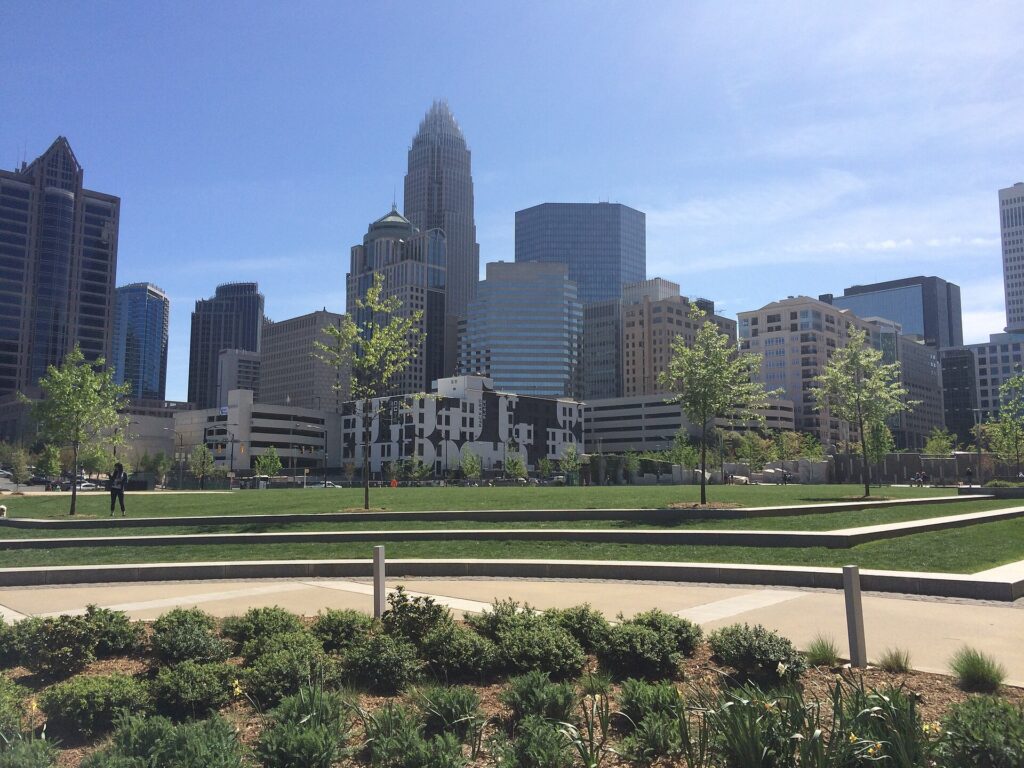
    Romare Bearden Park with the Uptown Charlotte skyline behind
    Romare Bearden Park in Uptown: spring and fall are the seasons to be outdoors in Charlotte (Photo: Fortibus via Wikimedia Commons, CC BY-SA 4.0)

    What to pack, by season

    Spring (March to May): layers for mornings and evenings, a light rain jacket, and antihistamines if pollen bothers you. Summer (June to August): the lightest, most breathable clothing you own, sunscreen, a hat, a water bottle, a compact umbrella for the afternoon storms, and a light layer for the heavily air-conditioned museums and restaurants. Fall (September to November): summer clothes into early October, then layers and a light jacket for the evenings. Winter (December to February): a warm coat, layers and shoes that can handle rain; the occasional ice storm is a reason to stay put rather than a reason to pack snow boots. If you are adding a mountain day, bring a warmer layer than the city needs in any season.

    The best time to fly to Charlotte for…

    The best weather

    Mid-April to mid-May, and late September to early November, with October the pick of the year.

    Racing

    Memorial Day weekend for the Coca-Cola 600, booked months ahead with the hotel first, or the Speedway’s fall race weekend. For the NASCAR Hall of Fame and a Speedway tour without the crowds, any weekday outside race weeks.

    Football and other sports

    September to early January for the Panthers and the college games, including the ACC Championship in early December; October to April for the Hornets; April to September for the Knights and summer evenings at Truist Field.

    The lowest fares

    January and February outside the holiday weekends, and early December before the holidays.

    Families

    Spring break or early June, when the Whitewater Center and Lake Norman are open and the heat has not yet peaked, or late August, once schools across the South have returned and prices soften.

    International visitors

    Visitors from Visa Waiver Program countries need an approved ESTA before boarding; most others need a visa. The State Department’s travel site explains what applies to you, and the TSA lists what you can carry through security. Most international travelers connect through CLT, and immigration and customs take place at your first U.S. airport, so allow a generous connection if Charlotte is your port of entry.

    Frequently asked questions

    What is the cheapest month to fly to Charlotte?

    January and February are usually the lowest outside the holiday weekends, followed by early December and weekdays in November before Thanksgiving.

    What is the best month to visit Charlotte for weather?

    October, with April and early May close behind. July and August are hot and humid; January can be cold and gray.

    How expensive is Charlotte on Memorial Day weekend?

    Very, for hotels: the Coca-Cola 600 makes it the priciest weekend of the year in Concord and University City and one of the priciest in Uptown. Flights rise too, though less sharply. The weeks either side are much cheaper.

    Why are flights to Charlotte sometimes expensive?

    Charlotte is a fortress hub for American Airlines, so on many routes there is little nonstop competition. Flexible dates, mid-week travel and a comparison with Greenville-Spartanburg or Raleigh-Durham usually find a better fare.

    How early should I get to the Charlotte airport?

    Two hours for domestic flights is sensible at busy times, and more at peak holiday periods or while construction affects the terminal; allow three for international departures.

    How far ahead should I book?

    Earlier for Memorial Day weekend, summer, Thanksgiving, Christmas and big football weekends, when fares tend only to rise; for January, February and weekday shoulder trips, fares are stable enough that finding the right dates matters more.

    Does it snow in Charlotte?

    Occasionally. Some winters bring a snowfall or two and others none, and ice storms are the bigger risk; when they happen, the city largely shuts down for a day or two.

    Ready to pick your dates? Compare fares across the whole month on our Charlotte flights page, then find a room with our Charlotte hotel search. For what to do when you land, start with our first-timer’s guide to Charlotte.

  • Charlotte: Should You Rent a Car or Rely on Public Transit?

    Charlotte: Should You Rent a Car or Rely on Public Transit?

    Charlotte sits in the middle of the car question. It grew up around the automobile, with a ring of interstates, suburbs spilling into two states and an airport with no rail link, yet its center has changed faster than almost any in the South. A light-rail line now runs from the southern suburbs through South End and Uptown to NoDa and the university, a streetcar crosses Uptown, and the neighborhoods most visitors want are packed along those two lines. If your trip is Uptown, the museums, the NASCAR Hall of Fame, South End breweries and a game, you can do it without a car and save the hotel parking. If it includes the Speedway, Lake Norman, the Whitewater Center or the Blue Ridge Mountains, you will want one for part of the stay. This guide explains how the city is laid out, how the transit system works, what driving here is really like, and gives you a straightforward way to decide.

    The short answer

    Skip the car if you are staying in Uptown or South End for a city break, a conference or a game, and your plans are the central sights, the Rail Trail, NoDa and Plaza Midwood; the LYNX Blue Line, the Gold Line streetcar, your feet and the occasional ride-hail will cover that, and you will not pay nightly parking. Rent a car if you are going to a race at Charlotte Motor Speedway, spending time at Lake Norman or the Whitewater Center, heading to Asheville and the mountains, staying with family in the suburbs, or using Charlotte as the start of a Carolinas road trip. Go hybrid, and this is what most visitors should do, if your trip mixes the two: stay car-free for the city days and rent only for the days that leave it. Compare rates for any of these plans on our Charlotte car rental page.

    How Charlotte is laid out

    Charlotte is a hub-and-spoke city. At the center is Uptown, the compact business district built around the crossroads of Trade and Tryon Streets and wrapped in a tight inner freeway loop, I-277. From there the old trading roads radiate outward as the main avenues: South Boulevard to the south, Central Avenue and Independence Boulevard to the east, North Davidson to the northeast, Wilkinson Boulevard west toward the airport. I-77 crosses the city north to Lake Norman and south to Carowinds, I-85 runs northeast to Concord and southwest toward Atlanta, and I-485, a beltway of roughly 110 kilometers (67 miles), marks the practical edge of the metro. Outside Uptown the streets follow no grid, so a navigation app is essential.

    For a visitor, the geography is simpler. South End, Dilworth, Uptown, NoDa and Plaza Midwood sit within about five kilometers (three miles) of the Square, and three of them are on the Blue Line. The Speedway, the Whitewater Center, Lake Norman and the mountains are 20 minutes to two hours out by road. Hotels cluster in Uptown, South End, near the airport, in University City and around Concord Mills near the Speedway; our Charlotte hotel search compares them.

    Getting in from the airport

    Charlotte Douglas International (CLT) is about 11 kilometers (7 miles) west of Uptown, and it is not on the rail network. A taxi or ride-hail is the quickest way into the center, 15 to 20 minutes in normal traffic and considerably longer at the weekday rush, with pickups from the designated zones outside baggage claim. The CATS Route 5 bus runs between the terminal and the Charlotte Transportation Center in Uptown, beside the Spectrum Center, for a standard local fare; it takes roughly half an hour and connects there with the Blue Line and the Gold Line. The rental car counters are in the hourly parking deck opposite the terminal, a short walk from baggage claim, and you are on Billy Graham Parkway or I-85 within minutes. A rail line to the airport has been discussed and planned for years, but it is not something to count on for your trip. Our CLT airport guide covers the terminal layout.

    The LYNX Blue Line tracks and Rail Trail at East Park Avenue in South End, Charlotte
    The Blue Line through South End, where the Rail Trail runs beside the tracks (Photo: City Dweller 2 via Wikimedia Commons, CC BY-SA 4.0)

    Charlotte’s transit, explained

    The Charlotte Area Transit System, known as CATS, runs the light rail, the streetcar and the buses. For a visitor based in the center it is clean, easy and more than adequate. Its limitation is coverage: there is one rail line, and beyond its corridor the buses rarely beat a car or a ride-hail for time.

    The LYNX Blue Line

    The Blue Line is the backbone, and it runs through almost everything a visitor needs. From I-485 in the south it heads north into South End, where the New Bern, East/West Boulevard, Bland Street and Carson stations sit along the Rail Trail, then through Uptown with stops at Stonewall (for Bank of America Stadium), 3rd Street/Convention Center, the Charlotte Transportation Center (for the Spectrum Center and the Gold Line) and 7th Street. North of Uptown it reaches 36th Street in NoDa, then runs out through University City to the UNC Charlotte main campus, about 30 kilometers (19 miles) from the southern end. Trains run from early morning until after midnight, frequently at peak times and less often late and on Sundays, with extra service on event days. Suburban stations have park-and-ride lots.

    The CityLYNX Gold Line

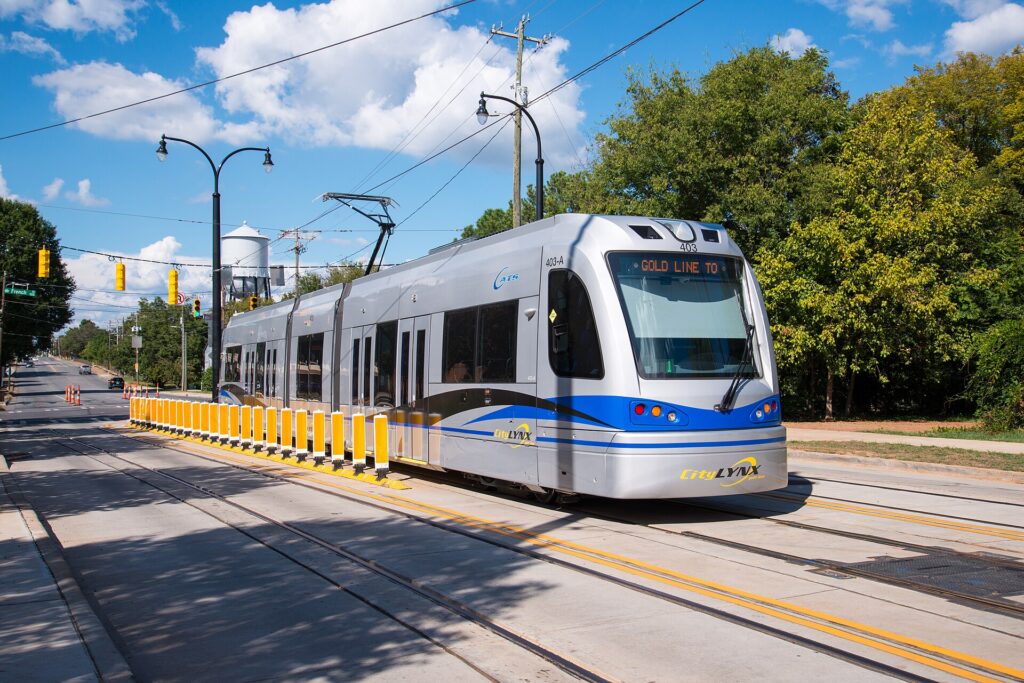
    The Gold Line is a modern streetcar that crosses Uptown east to west along Trade Street and Elizabeth Avenue, from the historically Black Johnson C. Smith University area on the west side through the Square and the Charlotte Transportation Center to the hospitals and restaurants of Elizabeth and the edge of Plaza Midwood on the east. It is short, about six kilometers (four miles), and slower than walking at busy times, but it is handy for hopping across Uptown in the heat, and it has been fare-free in recent years; check CATS for the current policy.

    Buses

    Buses fill in the rest, including the Route 5 airport bus, Central Avenue to Plaza Midwood, and routes to Freedom Park and SouthPark. Service thins out in the evenings and on weekends, so check return times. There is no practical transit to the Whitewater Center, the Speedway, Carowinds or Lake Norman.

    Fares and tickets

    Buy single rides or a day pass from the machines on every Blue Line platform, or use the CATS Pass app. The light rail works on proof of payment with no gates, so buy before you board and keep your ticket handy for inspectors, who do check. A single ride includes a transfer window to local buses; express buses cost more, and day passes are good value for several rides. Fares are low by big-city standards; check CATS’s site for current prices and payment options.

    Accessibility

    Every Blue Line station has level boarding and ramps or elevators, the streetcars are low-floor, and every bus has a ramp or lift and priority seating. CATS also runs a paratransit service for eligible riders, which visitors with a disability can arrange in advance.

    Beyond CATS

    • Walking and the Rail Trail. Uptown is compact and easy on foot, and the Rail Trail runs alongside the Blue Line through South End, so you can walk between stations and ride back. In summer, walk in the morning or evening; Charlotte’s humidity makes a midday mile feel much longer.
    • Greenways and scooters. The Little Sugar Creek Greenway runs from Uptown south past Freedom Park, and shared e-scooters and e-bikes in parts of the center are a quick way to reach Dilworth or Plaza Midwood from a Blue Line stop.
    • Taxis and ride-hail. Uber and Lyft operate across the metro, and for two or more people a short ride to Plaza Midwood, Myers Park or Optimist Hall is competitive with transit and much quicker. Expect surge pricing and long waits after Panthers games, big concerts and on race nights.
    • Intercity trains and buses. Amtrak’s Piedmont trains link Charlotte with Raleigh several times a day, and the Carolinian and the Crescent continue north toward Washington and New York, with the Crescent also heading south to Atlanta and New Orleans. Amtrak’s site has the schedules. Intercity buses serve Atlanta, Raleigh and the coast.
    A CityLYNX Gold Line streetcar at the French Street stop in Charlotte
    The CityLYNX Gold Line streetcar, crossing Uptown along Trade Street and Elizabeth Avenue (Photo: Mark Clifton via Wikimedia Commons, CC BY-SA 2.0)

    Driving in Charlotte and beyond: what it is really like

    Charlotte is an easier city to drive in than Atlanta, and outside the rush hours most visitors find it straightforward: wide roads, plentiful parking beyond Uptown, and interstates to every corner of the metro. The frustrations are predictable. I-77 between Uptown and Lake Norman is the most congested corridor, which is why it has express toll lanes. I-85 toward Concord backs up every weekday and stops dead on race days. I-485 jams at the I-77 interchange in the south, and I-277 slows at every peak and every stadium event. Rush hours run from about 7 to 9 in the morning and 4 to 6:30 in the evening, and Friday afternoons are the worst as the city heads for the lakes and the mountains. Construction is constant in one of the fastest-growing cities in the country.

    Interstate 77 northbound approaching the I-277 inner loop in Charlotte
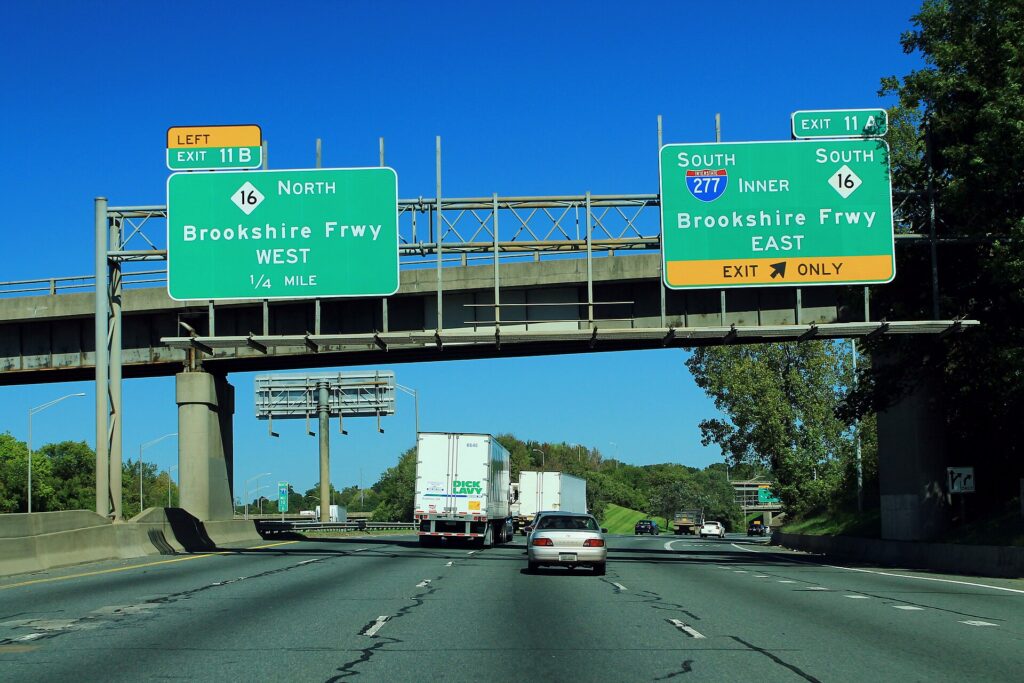
    I-77 at the I-277 loop around Uptown, where every rush hour and stadium event backs up (Photo: formulanone from Huntsville, United States via Wikimedia Commons, CC BY-SA 2.0)

    Parking

    Parking shows Charlotte’s two personalities. Uptown hotels typically charge a substantial nightly fee, often valet only, and garages near the stadium and the Spectrum Center switch to event pricing on game days; street meters are paid by machine or app and enforced. South End is tighter than it looks, and a paid lot is usually the answer. Everywhere else, parking is easy and mostly free: the malls, Freedom Park, NoDa’s side streets, the park-and-ride lots. The Whitewater Center charges for parking but not for entry to the grounds, and at the Speedway on race days arriving early is the only strategy that works.

    Rules and conditions worth knowing

    • Tolls. The I-77 express lanes north of Uptown and the Monroe Expressway to the southeast are electronic only, with no cash booths. North Carolina’s NC Quick Pass transponder works on them, and without one the toll is billed by plate, which rental companies pass on with an administration fee. Ask about the rental’s toll program at the counter, or simply stay in the free lanes.
    • Headlights with wipers. North Carolina law requires headlights whenever your windshield wipers are on, which, in a summer thunderstorm, is often.
    • Summer storms can flood underpasses and cut visibility on the interstates in minutes. Slow down, and never drive through water across a road.
    • Ice is rare but paralyzing, because the region has little equipment to treat roads. If it is forecast, stay put.
    • Texting while driving is illegal in North Carolina, and seatbelts are required for every occupant, front and back.
    • Right turns on red are permitted after a full stop unless signed otherwise, and the Move Over law requires you to change lanes or slow down for stopped emergency and service vehicles.
    • South Carolina starts 20 minutes south of Uptown at Carowinds and Fort Mill; you will cross the line without noticing.

    NCDOT, the state transportation department, publishes road conditions, closures and construction alerts.

    Lake Norman, north of Charlotte
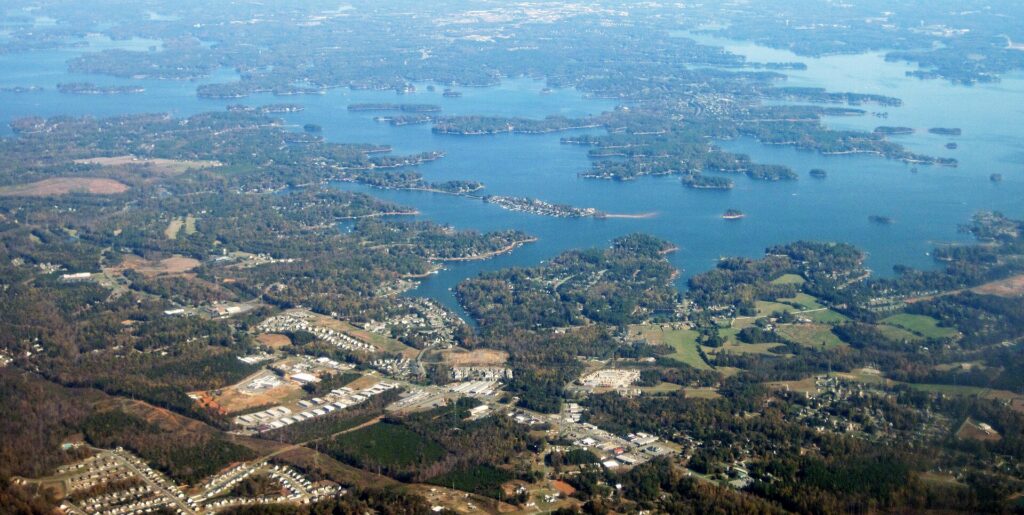
    Lake Norman, 30 to 45 minutes up I-77 and one of the day trips that needs a car (Photo: James St. John via Wikimedia Commons, CC BY 2.0)

    When renting a car makes sense

    • Race weekends and the NASCAR trail. Charlotte Motor Speedway in Concord has no transit link, and the team showrooms are spread out.
    • Lake Norman. Marinas, lakeside restaurants and boat rentals in Cornelius, Davidson and Mooresville are 30 to 45 minutes up I-77 and are effectively car-only.
    • The Whitewater Center. Fifteen minutes west of Uptown by car, and a pricey ride-hail round trip otherwise.
    • The mountains. Asheville, the Biltmore Estate and the Blue Ridge Parkway are about two hours west, and Crowders Mountain State Park is 45 minutes. There is no practical public transport to any of them.
    • Family in the suburbs. Ballantyne, Matthews, Huntersville and the South Carolina side are built for cars.
    • Carolinas road trips. Charleston, Myrtle Beach and the Outer Banks are all drives from Charlotte, and Atlanta is about four hours down I-85; our Atlanta to Charlotte route guide covers that drive, and our Atlanta car-or-transit guide covers the city at the other end.

    If any of those apply, our rental car booking tips cover insurance, deposits and the questions to ask at the counter, and our family car rental guide looks at vehicle choice.

    When it does not

    • You are staying in Uptown or South End and your plans are the museums, the Hall of Fame, the breweries and the neighborhoods on the Blue Line.
    • You are in town for a conference at the Convention Center, a Hornets game or a Panthers or Charlotte FC match, when the Blue Line stops beside every venue and event parking is at its most expensive.
    • You are on a short stopover of a day or two, which is how many people first see Charlotte; a ride-hail from the airport and the light rail are all you need.
    • You are traveling solo, and the rental plus Uptown parking would cost more than a handful of ride-hail trips.

    The hybrid plan for a city-plus-region trip

    Go car-free for the city days and rent for the days that leave it, and think carefully about where you pick up. Renting at the airport is the most convenient, with the largest choice of cars and the longest opening hours, and it makes sense if you are heading straight to the mountains, the Speedway or Lake Norman on arrival, because the airport sits by I-85 and you never touch Uptown traffic. Renting from a neighborhood or Uptown office makes sense if you are spending the first nights in the city, because you avoid the airport concession fees and several nights of hotel parking. A pattern that works well for a four- or five-day trip: ride-hail or the Route 5 bus into Uptown, two or three car-free days on the Blue Line, then collect a car for a day at the Whitewater Center and a day in the mountains or at Lake Norman, and return it at the airport on the way to your flight. Book early for Memorial Day weekend, when rental demand spikes along with hotel rates, and for the summer holidays. Compare the day rates on our Charlotte car rental page against a full-trip rental and the difference is usually obvious.

    A worked cost comparison

    Numbers change with the season and the booking window, so treat this as a method rather than a quote. For a three-night city break in Uptown for two, the car-free version costs a ride-hail each way to the airport, a few Blue Line day passes and three or four short rides to Plaza Midwood or Optimist Hall. The rental version adds three days of a compact car, three nights of Uptown hotel parking, fuel and airport concession fees, and buys almost nothing you could not reach by train. Car-free wins easily. For the same three nights plus a day at the Whitewater Center and a day in Asheville, the car-free version needs a ride-hail round trip to the Whitewater Center, which is manageable, and a day tour or private transfer to the mountains, which is not. The hybrid adds a two-day rental collected in the city, fuel for about 400 kilometers (250 miles) and the Whitewater Center’s parking fee, and wins clearly, more so with every extra passenger. For a race weekend, a car from the airport is the practical answer. Put the rates for your dates from our Charlotte car rental page beside the ride-hail estimates before you choose.

    Driving from Charlotte to the mountains in each season

    The drive west to Asheville and the Blue Ridge is the one most visitors with a car end up making, and it is easy: interstates and four-lane highways the whole way, with the mountains appearing on the horizon about an hour and a half out. What changes is the traffic and what you find at the top. In spring, the valleys green up weeks before the high ridges, and higher sections of the Blue Ridge Parkway can stay closed into April, so check the park’s road status. In summer, the mountains are much cooler than Charlotte, so the westbound roads are busy on Friday evenings and eastbound on Sunday afternoons, and afternoon storms roll across the ridges. In fall, color reaches the high ridges in early October and the valleys by month’s end, and leaf-season weekends bring heavy traffic; go on a weekday and book mountain hotels early. In winter, the interstates are generally open but the Parkway closes in sections whenever there is ice or snow. Hurricane Helene badly damaged western North Carolina in 2024, and some roads, trails and Parkway sections have been slow to reopen; check the Parkway’s site and NCDOT before you set off.

    Decision table

    Your tripRecommendationWhy
    City break in Uptown or South EndNo carThe Blue Line, the Gold Line and your feet cover it; Uptown parking is expensive
    Convention, Panthers, Hornets or Charlotte FCNo carThe Blue Line stops beside every venue; event parking is at its priciest
    Short stopover of a day or twoNo carRide-hail from CLT and the light rail are all you need
    City plus Whitewater Center or Lake NormanHybrid: rent in the city for those daysCar-free city days, car for the places transit does not reach
    Race weekend at the SpeedwayRent at the airport and book earlyNo transit to Concord; allow hours for race-day traffic
    Asheville and the Blue RidgeRentNo practical public transport to the mountains
    Family visit to the suburbsRent for the whole staySuburban distances make the car worthwhile daily
    Carolinas or Southeast road tripRent (consider one-way to Atlanta)Charlotte is the start, not the destination

    Money-saving tips for both options

    • On transit: buy a day pass for a heavy sightseeing day, use the Gold Line across Uptown while it stays fare-free, and use the park-and-ride lots if you have a car and want a day in the center.
    • On a rental: compare airport and neighborhood pickup, book early for Memorial Day weekend and summer, decline extras you already have through a credit card or home policy (check first), and avoid the toll lanes unless you understand how the rental company bills them.
    • On the hotel: if you are renting, price the parking fee into the room rate; a hotel in South End or near a Blue Line park-and-ride can be cheaper overall than Uptown once parking is added.
    • On timing: avoid I-77 and I-85 at the weekday peaks, the westbound roads on Friday evening and the Concord area on any race weekend; the best time to fly to Charlotte guide lists the busiest weekends.
    • On game days: ride the Blue Line to Stonewall for the stadium or the Transportation Center for the Spectrum Center, and skip event parking and the post-game surge.

    Frequently asked questions

    Is it worth renting a car in Charlotte?

    For the Speedway, Lake Norman, the Whitewater Center, the mountains or the suburbs, yes. For a city break based in Uptown or South End, a conference or a game, no; the light rail, the streetcar and ride-hail are enough.

    Is Charlotte public transit good for tourists?

    Good along the Blue Line corridor, which happens to link most of the neighborhoods visitors want: South End, Uptown and NoDa. Beyond it, buses are slower and less frequent, and transit does not reach the airport by rail.

    How do I get from Charlotte airport to Uptown?

    A taxi or ride-hail in 15 to 20 minutes outside rush hour, or the CATS Route 5 bus to the Charlotte Transportation Center in about half an hour for a standard fare.

    Can I get to Charlotte Motor Speedway without a car?

    Not by public transit. A ride-hail works, but expect heavy surge pricing and long waits after a race. Most fans drive and arrive early.

    Is parking expensive in Uptown Charlotte?

    At hotels and on event nights, yes, and hotel parking is often valet only. Outside Uptown and South End, parking is easy and usually free.

    Are there toll roads in Charlotte?

    A few: the I-77 express lanes north of Uptown and the Monroe Expressway to the southeast, both electronic only. Every destination in this guide is reachable on free roads.

    Where does the light rail go in Charlotte?

    The LYNX Blue Line runs from I-485 in the south through South End and Uptown to NoDa, University City and UNC Charlotte in the northeast. It does not go to the airport, the Speedway or the Whitewater Center.

    Whichever way you go, start with the flight. Compare cheap flights to Charlotte, choose a neighborhood with our Charlotte hotel search, plan the sights with our first-timer’s guide to Charlotte, and if the Speedway, the lakes or the mountains are on the list, price the rental for those dates on our Charlotte car rental page.

  • Things to Do in Charlotte: A First-Timer’s Guide

    Things to Do in Charlotte: A First-Timer’s Guide

    Charlotte is the biggest city in the Carolinas, and most people who pass through it never leave the airport. Charlotte Douglas is one of American Airlines’ largest hubs, so millions of travelers change planes under the white rocking chairs in the terminal atrium every year and fly on. That is their loss. The city outside has grown into one of the most pleasant urban centers in the South: a compact downtown, which locals call Uptown, built around a crossroads that has been the heart of the city since colonial times; modern art museums and the NASCAR Hall of Fame within a few blocks of each other; a light-rail line lined with breweries, food halls and converted textile mills; leafy streetcar suburbs; one of the largest man-made whitewater rivers in the world fifteen minutes from the skyline; and the Blue Ridge Mountains, the lakes and the racing towns of the Piedmont within a couple of hours. This guide covers the sights, the neighborhoods, the food, the racing and sports, the day trips and the practical details that turn a layover city into a real trip.

    If you are still comparing cheap flights to Charlotte, read this alongside our guides to the best time to fly to Charlotte and whether you need a car. Between the three you can plan the whole trip.

    Aerial view of the Uptown Charlotte skyline
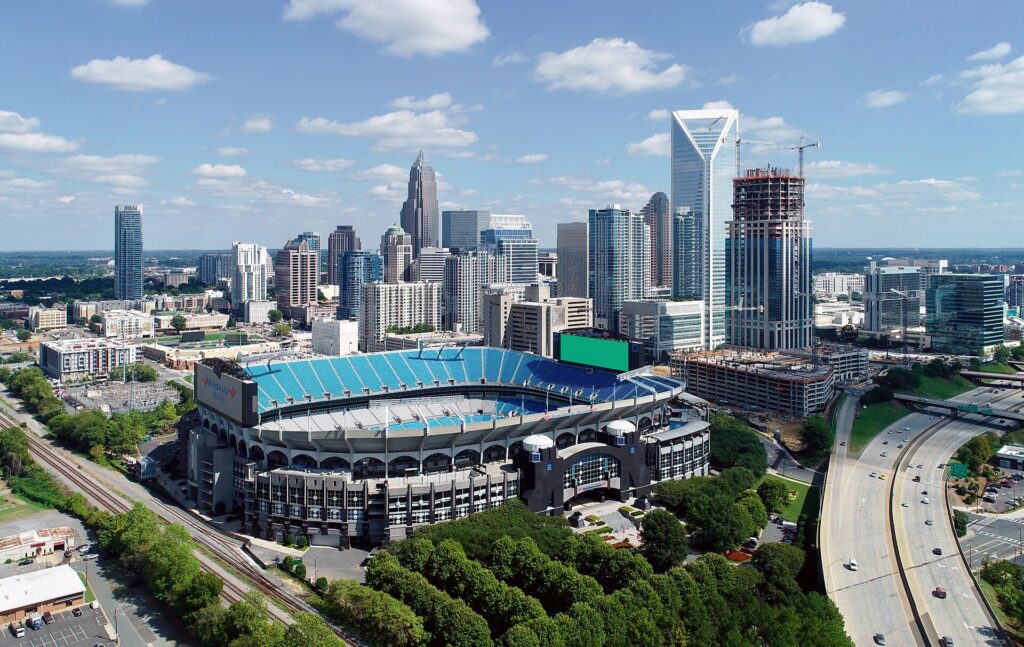
    Uptown Charlotte, where the Bank of America Corporate Center tops the tallest skyline in the Carolinas (Photo: Precisionviews; edits (perspective correction and colour correction) made by Cmao20 (talk). Derivative file of File:Uptown Charlotte 2018 taking by DJI Phantom 4 pro.jpg via Wikimedia Commons, CC BY-SA 4.0)

    Charlotte at a glance for first-timers

    • Airport: Charlotte Douglas International (CLT), about 11 km (7 miles) west of Uptown; a taxi or ride-hail takes 15 to 20 minutes, and the CATS Route 5 bus runs to the Charlotte Transportation Center downtown. See our CLT airport guide.
    • Getting around: the LYNX Blue Line light rail links South End, Uptown, NoDa and the university, and the CityLYNX Gold Line streetcar crosses Uptown east to west. Uptown and South End are walkable. For the Speedway, the lakes, the Whitewater Center and the mountains, you will want a car.
    • Money: U.S. dollars. State and county sales tax is added at the till, and hotel rooms carry extra occupancy taxes. Tipping 18 to 20 percent in sit-down restaurants is customary.
    • Weather: hot, humid summers with afternoon thunderstorms, short and mostly mild winters with the occasional ice storm, and a long spring and fall that are the best times to visit. Our month-by-month guide has the detail.
    • Where to stay: Uptown for the museums, the arenas, the stadium and the light rail; South End for breweries, restaurants and the Rail Trail; Dilworth or Myers Park for a quieter, leafy stay; Concord or University City for race weekends. Our Charlotte hotel search covers them all.

    Uptown: the Square, the wards and the parks

    Charlotte grew up where two old trading paths crossed, and that intersection, Trade and Tryon Streets, is still the center of the city. Locals call it the Square, and each corner holds a bronze statue by Raymond Kaskey representing the forces that built Charlotte: a gold miner for commerce, a mill worker for industry, a railroad builder for transportation, and a mother and child for the future. Above them rises the Bank of America Corporate Center, 60 stories and the tallest building in the Carolinas, a reminder that Charlotte is the second-largest banking center in the country after New York. Uptown is divided into four historic wards. Fourth Ward, to the northwest, is the prettiest, with restored Victorian houses on quiet streets and the Settlers’ Cemetery, which has graves from the Revolutionary era. Third Ward holds Romare Bearden Park, named for the celebrated collagist born in Charlotte, facing Truist Field, where the Charlotte Knights play Triple-A baseball with the skyline as a backdrop; it is one of the best places in the city to spend a summer evening. First Ward, to the east, has First Ward Park and the start of the Little Sugar Creek Greenway.

    Levine Center for the Arts and the NASCAR Hall of Fame

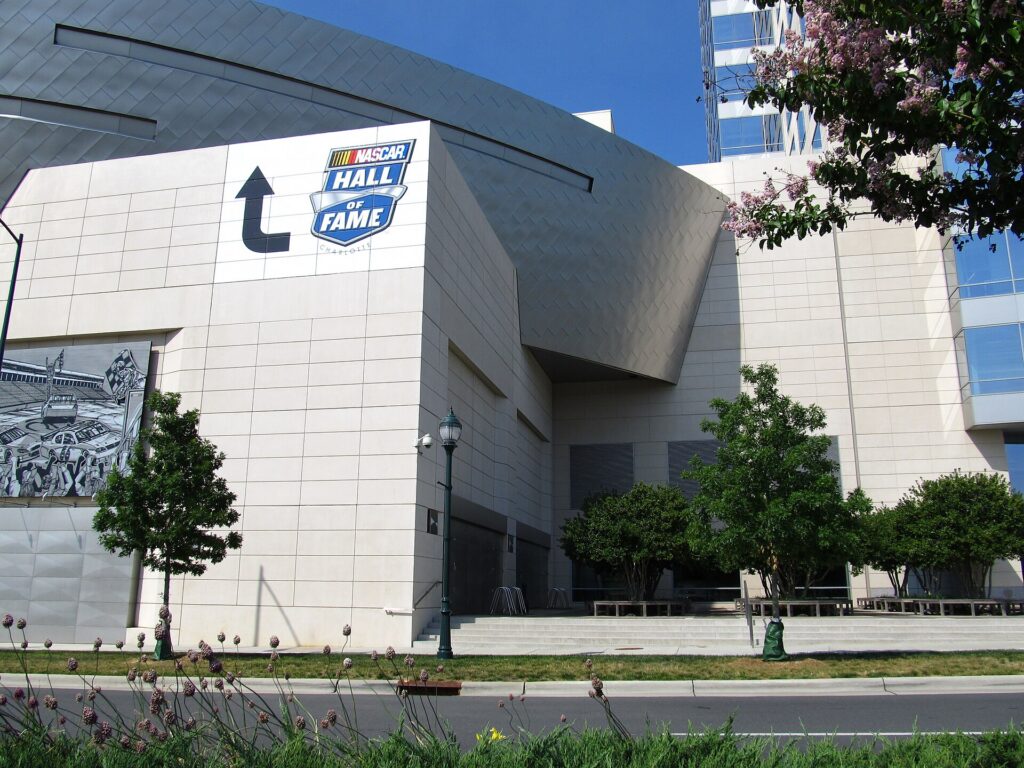
    A few blocks south of the Square on South Tryon, the Levine Center for the Arts gathers several institutions around a single plaza. The Mint Museum Uptown has a strong American collection and an outstanding craft and design gallery of glass, ceramics, furniture and fashion. The Bechtler Museum of Modern Art, in a terracotta building by the Swiss architect Mario Botta, shows mid-century modernism, and Niki de Saint Phalle’s glittering mosaic Firebird on the sidewalk out front is the most photographed sculpture in the city. The Harvey B. Gantt Center for African-American Arts + Culture, named for Charlotte’s first Black mayor, occupies a striking building inspired by the Myers Street School, the city’s first school for Black children. The Mint’s original home, the Mint Museum Randolph in Eastover, is the relocated building of the branch U.S. Mint that opened here in the 1830s to coin gold from the Carolina gold rush, and it became the first art museum in North Carolina in 1936. One block west of the Levine Center, the NASCAR Hall of Fame is the attraction that surprises visitors most. Even people with no interest in racing enjoy it: a banked ramp lined with historic cars shows how steep the tracks really are, the pit-stop challenge lets you change a tire against the clock, and the racing simulators are as close as most of us will get to 190 miles an hour. Allow at least two hours.

    The NASCAR Hall of Fame in Uptown Charlotte
    The NASCAR Hall of Fame, a block from the Levine Center for the Arts and fun even for non-fans (Photo: Ken Lund from Reno, Nevada, USA via Wikimedia Commons, CC BY-SA 2.0)

    South End and the Rail Trail

    Just south of Uptown, along the LYNX Blue Line, South End has turned from a district of rail yards and warehouses into the liveliest neighborhood in the city. The Rail Trail, a walking and cycling path beside the light-rail tracks, ties it together, with public art, pocket parks and a steady stream of people heading between patios. Along and just off it are restaurants, coffee shops, design stores and taprooms, and Atherton Mill, a restored textile mill beside the tracks, has shops and places to eat. Because the Blue Line stops every few blocks, it is easy to ride down from Uptown, walk the Rail Trail south for an hour with stops, and ride back. Farther south on the same line, the Olde Mecklenburg Brewery, known for German-style lagers and a big beer garden, is the city’s most famous brewery.

    Neighborhoods worth a half-day

    NoDa

    North Davidson, universally called NoDa, is Charlotte’s arts district, a former mill village northeast of Uptown with murals on every other wall, small galleries, independent music venues, bars and restaurants along North Davidson and 36th Street. The Blue Line’s 36th Street station puts it ten minutes from the center, and NoDa Brewing is one of the city’s pioneering craft breweries.

    Plaza Midwood

    East of Uptown along Central Avenue, Plaza Midwood is the city’s most eclectic neighborhood: dive bars and cocktail lounges, vintage and record shops, barbecue and taco joints. Continue out Central Avenue and you reach the international corridor, with Vietnamese, Mexican, Salvadoran, Ethiopian and many other restaurants in modest strip malls.

    Dilworth and Myers Park

    Dilworth, laid out in 1891 as Charlotte’s first streetcar suburb, has bungalows, Latta Park and a strip of restaurants along East Boulevard. Myers Park, next door, was planned in the 1910s around Queens Road, whose canopy of huge willow oaks is one of the loveliest streets in the South. Freedom Park, at its edge, is the city’s favorite green space, with a lake and the Festival in the Park each September.

    Camp North End and Optimist Hall

    Just north of Uptown, Camp North End occupies a sprawling 1920s Ford Model T assembly plant later used by the Army, now a creative campus with food stalls, bars, studios, murals and outdoor events. A short ride away, Optimist Hall is a food hall in a restored 1890s textile mill. Together they are the best introduction to how Charlotte has reused its industrial past.

    Museums, culture and family attractions

    Discovery Place Science, on North Tryon in Uptown, is the city’s hands-on science museum, with an IMAX dome theater and galleries that fill a rainy day; its smaller sister, Discovery Place Nature, sits beside Freedom Park. The Charlotte Museum of History, in the east of the city, preserves the Hezekiah Alexander House, a 1774 stone house that is the oldest surviving home in Mecklenburg County, and tells the story of the region’s Revolutionary past, including the Mecklenburg Declaration of Independence, whose claimed date of May 20, 1775 still appears on the North Carolina flag. It is also where you learn why Charlotte is the Queen City, after Queen Charlotte, wife of George III, and why its NBA team is the Hornets: a British general in 1780 is said to have called the town a hornet’s nest of rebellion. The Billy Graham Library, near the airport, is a free museum telling the evangelist’s life story; Graham was born on a dairy farm in Charlotte. For live performance, Blumenthal Arts runs the Belk Theater, which hosts touring Broadway shows, and the Charlotte Symphony performs downtown. For what is on during your dates, our Charlotte events page lists concerts, shows and games.

    The Whitewater Center, the greenways and the lakes

    The U.S. National Whitewater Center, about fifteen minutes west of Uptown on the Catawba River, is the city’s great outdoor playground. At its heart is a man-made whitewater river with rapids big enough for serious rafting and kayaking, surrounded by more than a thousand acres of forest with miles of hiking and mountain-biking trails, zip lines, climbing walls, flatwater paddling on the Catawba, and a riverside bar with live music on summer evenings. Entry to the grounds and trails is free; you pay for parking and activity passes, and it is worth booking rafting ahead on summer weekends. Back in the city, the Little Sugar Creek Greenway runs from the edge of Uptown south past Freedom Park and is part of the longer Cross Charlotte Trail, the best way to see the neighborhoods at walking pace. North of the city, Lake Norman, the largest man-made lake in North Carolina, is where Charlotte goes boating in summer, with marinas and lakeside restaurants in Cornelius and Mooresville.

    The man-made whitewater channels of the U.S. National Whitewater Center in Charlotte
    The U.S. National Whitewater Center, fifteen minutes from Uptown on the Catawba River (Photo: Cpl. Ed Galo via Wikimedia Commons, Public domain)

    Racing: the Speedway and NASCAR country

    Charlotte is the center of American stock-car racing, and most NASCAR teams are based within an hour of Uptown. Charlotte Motor Speedway, about half an hour northeast in Concord, is one of the sport’s great tracks. Its biggest event is the Coca-Cola 600 on the Sunday of Memorial Day weekend, the longest race on the NASCAR calendar, run from late afternoon into the night before one of the largest crowds of any American sporting event; the track’s fall race weekend has in recent years used the Roval, which combines the oval with an infield road course. On race weekends hotels from Concord to Uptown fill and prices climb, and traffic on I-85 is severe, so plan early. Outside race weekends, the Speedway runs track tours, and in the holiday season it becomes a drive-through light show. Several race teams have showrooms open to visitors in Concord and in Mooresville, which calls itself Race City USA; check hours before you go.

    Sports

    Charlotte’s other teams play in or near Uptown. Bank of America Stadium, at the southwest edge of Uptown, is home to the Carolina Panthers of the NFL and Charlotte FC, the MLS club that drew one of the largest crowds in league history to its first home match; it also hosts the ACC Championship Game in December, a college bowl game around New Year and big stadium concerts. The Charlotte Hornets play NBA basketball at the Spectrum Center, beside the light-rail and streetcar stops, from October to April. The Charlotte Knights play at Truist Field from April to September, and the Charlotte Checkers play minor-league hockey at the domed Bojangles Coliseum. Quail Hollow Club, in the south of the city, hosts a PGA Tour event most springs. Check what is on sale in Charlotte before you book flights, because a Panthers game, a race weekend or a big concert can fill every hotel in the center.

    What to eat, and where

    Start with barbecue: North Carolina’s two great styles meet here, the pork shoulder with a tangy, lightly tomatoed vinegar dip of the Piedmont, whose capital, Lexington, is an hour northeast, and the whole-hog, vinegar-and-pepper style of the east. Order it chopped with slaw and hush puppies. Southern cooking fills the rest of the plate: fried chicken, biscuits, shrimp and grits, pimento cheese, collards, banana pudding and sweet tea. Bojangles, the chicken-and-biscuit chain now found across the South, opened its first restaurant in Charlotte in 1977, and Cheerwine, the cherry soda on every menu, comes from Salisbury, forty minutes up I-85. The international corridor along Central Avenue and parts of South Boulevard has some of the best Vietnamese, Mexican and Latin American food in the Carolinas at modest prices. The food halls at Optimist Hall and Camp North End are the easiest way to sample the newer scene, and South End, Plaza Midwood, Dilworth and NoDa are where most of the city’s best chefs cook. Charlotte also has one of the fastest-growing brewery scenes in the South, with dozens of taprooms across South End, NoDa and the old industrial districts.

    Charlotte through the seasons

    Spring (March to May) is the showpiece: dogwoods and azaleas bloom across Myers Park and Dilworth in late March and April, patios reopen in South End, the Knights and Charlotte FC start their seasons, and the Coca-Cola 600 on Memorial Day weekend brings the whole region to Concord. The drawback is the pine pollen, which coats every car in yellow dust for a few weeks in April. Summer (June to August) is hot and humid, with afternoon thunderstorms, so do the Whitewater Center in the morning, the museums in the afternoon, and finish at a ballgame or on a brewery patio; the Fourth of July fireworks over Uptown and Charlotte Pride in August are the big events. Fall (September to November) is the local favorite, warm and dry into October, with Panthers and college football on every screen, the Festival in the Park, the Speedway’s fall race weekend, and color arriving in the Blue Ridge in mid-to-late October. Winter (December to February) is short, mostly mild and the quietest time to visit, with the holiday lights at the Speedway and in McAdenville, the Thanksgiving parade in Uptown, and the Hornets in season. Our month-by-month guide has the fare patterns that go with each season.

    Charlotte with kids

    Charlotte is an easy city with children. Discovery Place Science is the obvious rainy-day morning, with Discovery Place Nature, beside the Freedom Park playground and lake, for younger children. The NASCAR Hall of Fame’s simulators and pit-stop challenge are a hit with anyone over about eight, and the Whitewater Center has kid-friendly zip lines, climbing and flatwater paddling. In summer the splash pads at Romare Bearden Park and First Ward Park are free, and a Knights game at Truist Field, with fireworks nights and a skyline view, is a cheap and cheerful evening. Carowinds, the amusement park that straddles the state line about twenty minutes south of Uptown, has a water park and some of the tallest roller coasters in the country. For families driving to the mountains, the lakes or the coast, our family car rental guide covers the vehicle question.

    Charlotte on a budget

    Much of the best of Charlotte is free: the Square and the Fourth Ward, Romare Bearden Park, the Rail Trail and the greenways, Freedom Park, the grounds and trails of the Whitewater Center (you pay only for parking), the murals of NoDa and Plaza Midwood, the Billy Graham Library, and the Gold Line streetcar across Uptown, which has run fare-free in recent years. Eat well for less along Central Avenue and at the food halls. Hotel rates outside race weekends, big games and conventions are generally lower than in Atlanta or Washington, DC, and a stay in South End or near a Blue Line station can save money without costing convenience. Compare rates by neighborhood on our Charlotte hotel search.

    Day trips from Charlotte

    The Blue Ridge Mountains are the classic escape. Asheville, about two hours west, is a mountain city of breweries, galleries and art deco architecture, and just outside it the Biltmore Estate, the Vanderbilt family’s French Renaissance chateau, is the largest privately owned house in the country. The Blue Ridge Parkway runs past both, with overlooks, waterfalls and trails; parts of the region, including sections of the Parkway, were badly damaged by Hurricane Helene in 2024, so check the park’s site for closures before you plan a route. Closer in, Crowders Mountain State Park, about 45 minutes west, has a steep summit hike with views back to the Charlotte skyline, and Kings Mountain National Military Park, just over the South Carolina line, preserves the site of a 1780 battle that turned the Revolutionary War in the South. Reed Gold Mine, about 40 minutes east, is the site of the first documented gold discovery in the United States, in 1799, with underground tours and gold panning. Charleston and Myrtle Beach are about three and a half hours away and better as overnights, and Atlanta is about four hours down I-85; our Atlanta to Charlotte route guide covers that drive, and our Atlanta guide covers the city at the other end. All of these are car trips; see our Charlotte car rental page.

    Mountain ridges seen from the Blue Ridge Parkway in North Carolina
    The Blue Ridge Parkway, about two hours west of Charlotte and the classic mountain day trip (Photo: James St. John via Wikimedia Commons, CC BY 2.0)

    Two sample itineraries

    Two days, no car

    Day one: the Square and a walk through the Fourth Ward in the morning, the Mint Museum Uptown or the Bechtler after lunch, the NASCAR Hall of Fame in the late afternoon, and dinner on Tryon Street or a Hornets game at night. Day two: the Blue Line to South End for brunch and a long walk along the Rail Trail, then the Blue Line north to NoDa for murals, a brewery and live music, and a late dinner in Plaza Midwood or at Optimist Hall.

    Four days, with the region

    Add a day at the Whitewater Center, rafting in the morning and hiking the trails in the afternoon. Then pick up a car and spend one day on the racing trail, with a Speedway tour in Concord and a team showroom in Mooresville followed by an evening at Lake Norman, and one day in the mountains, at Crowders Mountain or, with an early start, Asheville. Return the car at the airport on the way home.

    Practical details

    • Transit: buy tickets from the machines on Blue Line platforms or use the CATS Pass app; the light rail works on proof of payment, so keep your ticket for inspectors. Charlotte Area Transit System (CATS) has maps and service alerts; our transit-versus-car guide goes into detail.
    • From CLT: a taxi or ride-hail to Uptown in 15 to 20 minutes, the CATS Route 5 bus to the Charlotte Transportation Center, or a rental from the airport. The airport’s site covers ground transport.
    • Weather: light clothing, sunscreen and water in summer; layers in spring and fall; a warm coat for winter cold snaps. The National Weather Service’s Greenville-Spartanburg office, which covers Charlotte, has the forecast and the severe thunderstorm warnings common in spring and summer.
    • Time zone: Eastern, the same as New York and Atlanta.
    • Safety: the usual big-city awareness applies, especially in Uptown late at night and around transit stations; do not leave anything visible in a parked car.
    • Entry requirements: visitors from Visa Waiver Program countries need an approved ESTA before boarding; most others need a visa. The State Department’s travel site is the authoritative source. Charlotte’s Got A Lot, the city’s official visitor site, has current event listings.

    Frequently asked questions

    How many days do you need in Charlotte?

    Two full days covers Uptown, the museums, the NASCAR Hall of Fame, South End and NoDa; add one for the Whitewater Center and one or two for the Speedway, Lake Norman or the mountains.

    What is the number one thing to do in Charlotte?

    For most visitors, the NASCAR Hall of Fame, which is fun even for non-fans. For a second choice, walk the Rail Trail through South End on a sunny afternoon, or spend a day rafting at the Whitewater Center.

    Is Charlotte walkable?

    Uptown, South End, NoDa, Plaza Midwood and Dilworth are pleasant on foot, and the Blue Line links the first three. Beyond them, the city assumes a car or a ride-hail.

    Do I need a car in Charlotte?

    Not if you stay in Uptown or South End and stick to the central sights. For the Speedway, the lakes, the Whitewater Center and day trips, yes; rent only for those days.

    Is Charlotte expensive?

    Generally less than Atlanta or Washington, DC, and hotel rates are reasonable outside race weekends, Panthers games and big conventions, when they climb sharply.

    What is Charlotte known for?

    Banking, NASCAR, the Panthers and the Hornets, one of the country’s busiest airport hubs, barbecue and a booming brewery scene, and a Revolutionary history that gave it the nicknames the Queen City and the Hornet’s Nest.

    Ready to go? Compare flights to Charlotte, find a place to stay with our Charlotte hotel search, and if the Speedway, the lakes or the mountains are on the list, price a rental car for those days.