
Atlanta has the busiest airport in the world, and that fact shapes everything about the cost of getting here. Hartsfield-Jackson is Delta’s largest hub and a major base for several low-cost carriers, and the competition keeps fares into Atlanta lower than into many smaller cities. The price that swings is the hotel. Atlanta is one of the biggest convention cities in the country, it hosts a full calendar of college football, professional sports and stadium concerts, and a handful of weekends, from Dragon Con to the SEC Championship, fill every room downtown. Add a climate with a glorious spring, a long, sticky summer, a golden fall and a mild but occasionally icy winter, and the “best time” depends as much on the event calendar as on the weather. This guide walks through the weather, the fare and hotel seasons, the events that move prices, and the airport.
The short answer
For the best combination of weather and value, aim for late April to mid-May, after the spring-break and pollen peak and before the summer heat, and mid-October to mid-November, when the air is dry, the leaves turn and the city is at its most comfortable. The cheapest fares and hotel rates usually come in January and February, outside the big trade shows and holiday weekends, and in the second half of August, when Georgia’s schools are already back in session and the heat keeps leisure visitors away. The most expensive stretches are spring break in March and early April, Thanksgiving and the Christmas and New Year holidays, and specific event weekends, above all Labor Day weekend for Dragon Con and college football and the first weekend of December for the SEC Championship. Whatever you choose, run a flexible-date search on our Atlanta flights page; a shift of a few days can change the total cost entirely.
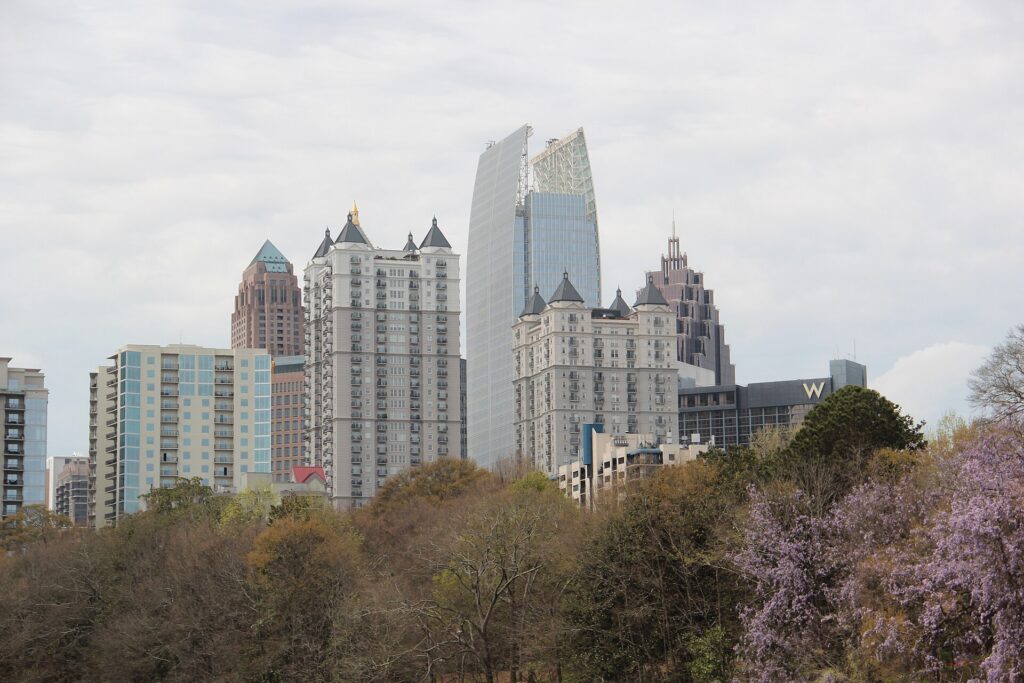
Atlanta’s weather, season by season
Atlanta sits in the foothills of the Appalachians at an elevation of about 300 meters (1,000 feet), which takes a little of the edge off the Southern heat. It still has a humid subtropical climate: long, hot and humid summers with afternoon thunderstorms, short and mild winters with the occasional hard freeze, and springs and falls that are the reason people move here. The figures below are approximate seasonal patterns based on the long-term climate normals for Hartsfield-Jackson from NOAA’s National Weather Service; check the current forecast before you pack, because spring and fall can swing ten degrees from one day to the next.
| Month | Typical daytime high | Typical overnight low | What it feels like | Fare pressure |
|---|---|---|---|---|
| January | around 12 °C (53 °F) | around 1 °C (34 °F) | Cool and often gray; a rare ice or snow event can close the city | Low, except MLK weekend and trade-show weeks |
| February | around 14 °C (57 °F) | around 3 °C (37 °F) | Mild spells and cold snaps; the first blossoms by month’s end | Low; rises for Presidents’ Day weekend |
| March | around 18 °C (65 °F) | around 7 °C (44 °F) | Spring arrives; dogwoods and azaleas, pollen and storms | High for spring break |
| April | around 23 °C (73 °F) | around 11 °C (51 °F) | The loveliest month; festivals every weekend | High early in the month, easing later |
| May | around 27 °C (80 °F) | around 16 °C (60 °F) | Warm and green; humidity starts to build | Moderate; graduations fill some weekends |
| June | around 31 °C (87 °F) | around 19 °C (67 °F) | Hot and humid; afternoon thunderstorms begin | Moderate to high with summer travel |
| July | around 32 °C (90 °F) | around 22 °C (71 °F) | The hottest month; heat index often far above the air temperature | Moderate; July Fourth weekend is busy |
| August | around 31 °C (88 °F) | around 21 °C (70 °F) | Still hot and sticky; storms most afternoons | Low to moderate once schools are back |
| September | around 28 °C (83 °F) | around 18 °C (64 °F) | Summer lingers; the humidity finally breaks late in the month | Peak on Labor Day weekend, then moderate |
| October | around 23 °C (74 °F) | around 12 °C (53 °F) | Dry, sunny and comfortable; often the best weather of the year | Moderate to high with conventions and football |
| November | around 17 °C (63 °F) | around 6 °C (42 °F) | Crisp and bright; peak fall color in the city early in the month | Moderate, then peak for Thanksgiving |
| December | around 13 °C (55 °F) | around 2 °C (36 °F) | Cool and damp; festive lights; the odd frost | Low until mid-month, then peak |
Three things the table cannot show. First, the humidity: a July afternoon at 32 °C in Atlanta regularly feels closer to 38 °C (100 °F), and the heat builds through the day until a thunderstorm breaks it. Plan the BeltLine and the outdoor sights for the morning and the evening, and the aquarium and the museums for the middle of the day. Second, the storms: spring brings severe thunderstorms and, some years, tornado warnings, and summer afternoons bring short, violent downpours that can halt operations at the airport for an hour. Because so many connections pass through Atlanta, a ground stop here ripples across the network. Third, winter ice: Atlanta sees little snow in a normal year, but a light glaze of freezing rain on untreated roads can bring the metro area to a standstill for a day, and flights cancel when it does.
How Atlanta’s fare seasons work
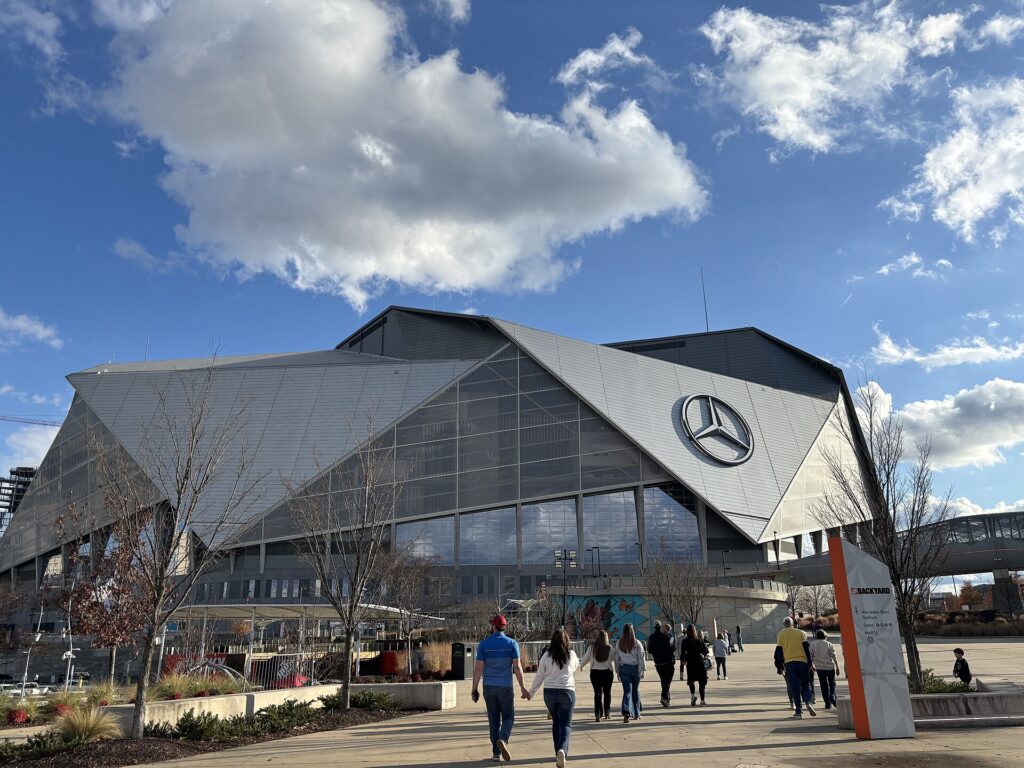
Three forces drive the cost of a trip to Atlanta. The first is the airport itself: because Hartsfield-Jackson is the country’s biggest connecting hub, there is enormous capacity into the city from almost everywhere, and airfares tend to follow national travel patterns (spring break, summer, the holidays) rather than local ones. The second is the convention and event calendar: the Georgia World Congress Center downtown is one of the largest convention centers in the country, AmericasMart holds huge trade markets, and Mercedes-Benz Stadium and State Farm Arena host major games and concerts almost every week, so downtown hotel rates can jump on a Tuesday for a trade show nobody outside the industry has heard of. The third is the weather, which pushes leisure visitors into spring and fall and away from the peak of summer.
Peak season
Mid-March to mid-April, Thanksgiving week, and roughly December 20 to January 2, plus specific event weekends at any time of year. Spring break sends families through Atlanta in both directions, many of them connecting to Florida, which fills flights even when Atlanta’s hotels are not. The Thanksgiving and Christmas periods bring some of the heaviest days of the year at the airport, with security lines to match. The event weekends, Dragon Con and college football over Labor Day, the SEC Championship in early December, and big concerts and conventions, spike hotel rates without necessarily moving airfares. If you must travel in peak, book early, fly mid-week, and compare hotels in Midtown and Buckhead, which are on MARTA and often cheaper than downtown during big events.
Shoulder season
Late April to May and late September to mid-November. This is when Atlanta is at its best: warm, dry days, festivals in Piedmont Park, patios open all day, and fall color in the city in early November. Both have busy weekends, but mid-week travel is consistently good value. Watch Memorial Day weekend and the convention calendar.
Low season
January and February outside the holiday weekends and the biggest trade shows, early December before the holidays, and the second half of August. In winter, fares and hotel rates are at their annual lows, the city is quiet, and the weather is cool but rarely harsh. In late August, Georgia’s schools have gone back, family travel stops, and the heat keeps leisure visitors away, so hotel rates soften everywhere except around conventions.
As elsewhere, mid-week departures and early or late flights usually price below Friday and Sunday afternoons on the same route, and a search across a whole month reveals cheaper pairs of dates close to your first choice. Our guide to the best times to book explains how to read those patterns.
Atlanta month by month
January
Cool, quiet and one of the two cheapest months to visit, once the New Year holiday rush has cleared. Martin Luther King Jr. Day, on the third Monday of the month, brings commemorations at Ebenezer Baptist Church and the King Center and a parade on Auburn Avenue, Watch for the January market at AmericasMart and the big trade shows at the Georgia World Congress Center, which fill downtown hotels for several days at a time. An ice storm is rare but possible.
February
Mild spells alternate with cold snaps, and the first blossoms appear by the end of the month. Fares are low outside Presidents’ Day weekend, and Black History Month brings programming across the city’s museums. The Hawks and college basketball are in season. This is a strong value month for a museum-and-food trip.
March
Spring arrives early here. The Bradford pears, then the dogwoods and azaleas bloom across the city, the patios fill, and the Braves open their season at the end of the month or in early April. It is also spring break season, which pushes fares through Atlanta up for most of the month, and the start of pollen season, when pine pollen turns cars and sidewalks yellow for several weeks; allergy sufferers should pack medication. Severe thunderstorms are possible.
April
The month many Atlantans would pick: warm, green and blooming, with a festival every weekend, including the Atlanta Dogwood Festival in Piedmont Park and the Inman Park Festival at the end of the month. The first half of April is still busy with spring break, and Masters week in Augusta, about two and a half hours east, sends thousands of golf fans through Atlanta’s airport and its rental counters. The second half of the month is one of the best windows of the year.
May
Warm and green, with humidity starting to build by the end of the month. College and high school graduations fill hotels on some weekends, and the free Atlanta Jazz Festival takes over Piedmont Park on Memorial Day weekend. Fares are moderate, and the first three weeks of May, mid-week, are excellent value.
June
Summer proper: hot, humid, with thunderstorms building most afternoons. National summer travel lifts fares from other U.S. cities, although Atlanta’s hotels are generally less pressured than in spring, apart from convention weeks.
July
The hottest month. The Peachtree Road Race, the largest 10K in the world, runs from Buckhead to Piedmont Park on the morning of July Fourth, followed by fireworks across the city, and it makes the holiday weekend busy. The July market at AmericasMart fills downtown hotels for a week. Otherwise, rates are moderate.
August
Still hot and sticky, with storms most afternoons, but a quiet month for visitors. Metro Atlanta’s schools go back in early August, much earlier than in the Northeast, so family travel drops off sharply, and the second half of the month is one of the best-value periods of the year for hotels. College football returns at the very end of the month.
September
Starts with the busiest weekend of the year for downtown hotels. Labor Day weekend brings Dragon Con, the huge fan convention that takes over the downtown hotels and fills Peachtree Street with costumed attendees for its Saturday parade, often alongside a season-opening college football game at Mercedes-Benz Stadium. After that, rates settle, the heat lingers through most of the month, and the humidity finally breaks toward the end. The remnants of an Atlantic or Gulf tropical storm occasionally bring a day or two of heavy rain.
October
Dry, sunny and comfortable, and often the best weather of the year. It is also a busy month, with conventions downtown, college football every Saturday, homecoming weekends at the Atlanta University Center colleges, and Atlanta Pride. Fares are moderate to high; mid-week stays and Midtown hotels are the value play. In the North Georgia mountains, the fall color arrives in the last two weeks of the month.
November
Crisp and bright, with peak fall color in the city early in the month, and one of the best months to walk the BeltLine and Piedmont Park. The Botanical Garden’s holiday lights open in mid-November. The week of Thanksgiving is one of the heaviest of the year at the airport, with high fares and long security lines; the weeks either side are good value.
December
Two months in one. The first half is quiet and reasonably priced, apart from the SEC Championship Game weekend at the start of the month, which fills hotels across downtown and Midtown. From around December 20, fares climb for the Christmas and New Year holidays, and the Peach Bowl, a College Football Playoff game at Mercedes-Benz Stadium around New Year, adds pressure on hotels.
Events that move Atlanta flight and hotel prices
Cross-check these against your dates before you book. Exact dates shift each year; Discover Atlanta keeps the current calendar.
- Martin Luther King Jr. Day weekend (third Monday of January) and the January market at AmericasMart.
- Spring break (mid-March to mid-April, varying by school district), when Atlanta’s connecting flights fill with families heading to Florida.
- Masters week in Augusta (early April), which tightens rental cars at the airport.
- Festival weekends in Piedmont Park: the Dogwood Festival in April and the Jazz Festival on Memorial Day weekend.
- The Peachtree Road Race (July Fourth), run by the Atlanta Track Club, and the July market at AmericasMart.
- Labor Day weekend: Dragon Con and a season-opening college football game, the single biggest hotel spike downtown.
- October: college homecomings, Atlanta Pride and a heavy convention calendar.
- Thanksgiving week and the Christmas to New Year holidays, including the Peach Bowl.
- The SEC Championship Game (first Saturday of December), Falcons and Atlanta United home games, and stadium concerts. Our Atlanta events page shows what is on sale for your dates.
- Trade shows and conventions at the Georgia World Congress Center, which can fill downtown hotels mid-week without warning; if your dates look strangely expensive, that is usually why.
Getting in from the airport
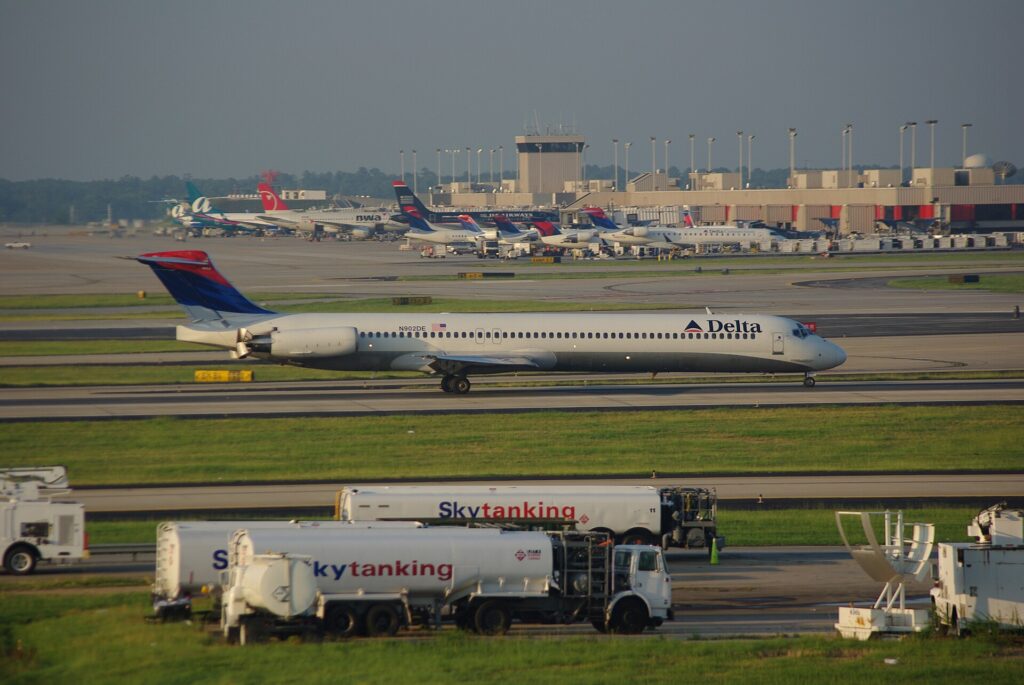
Hartsfield-Jackson Atlanta International Airport (ATL) is about 16 kilometers (10 miles) south of downtown and is the only major commercial airport serving the city. It has two terminals: the Domestic Terminal, with its North and South sides, and the Maynard H. Jackson Jr. International Terminal on the east side of the airfield. Seven concourses, T and A through F, are linked by an underground train, the Plane Train, and a walkway lined with art. Delta, which is headquartered next door, runs its largest hub here, and Southwest and several low-cost airlines also have big operations, with nonstops across the U.S. and to Europe, Latin America, Africa and Asia. Getting into the city is easy: the MARTA Red and Gold Lines start at the Airport station, at the west end of the Domestic Terminal beside baggage claim, and reach Five Points downtown in about 20 minutes and Midtown in under half an hour for a flat fare. Taxis charge flat rates to downtown, Midtown and Buckhead, ride-hail pickups are signposted from baggage claim, and the rental companies are all at the Rental Car Center, reached by the ATL SkyTrain from the Domestic Terminal. Our Atlanta car-versus-transit guide works through whether you need a car at all, and our ATL airport guide covers the layout in detail.
Timing tricks that work for Atlanta
- Search the whole month. Conventions and big games create sharp edges in the hotel calendar, and holiday weekends do the same for fares. A calendar search on TicketScanner shows them instantly.
- Price the hotel before the flight. A cheap fare into Dragon Con weekend or a trade-show week is not cheap once the room is added. Run an Atlanta hotel search for the same dates before you commit to either, and compare downtown with Midtown.
- Stay downtown on weekends. Downtown’s convention hotels are priced for weekday business travel and often drop sharply on Friday and Saturday nights when there is no big event.
- Fly mid-week, and early. Tuesday to Thursday departures are usually cheaper, and morning flights are the least likely to be caught in summer’s afternoon thunderstorms and the ground stops that follow.
- Use the hub to your advantage. Because so many airlines fly nonstop to Atlanta, it is often cheaper to fly here and drive onward to Chattanooga, Athens or even Charlotte than to fly to a smaller airport; our Atlanta to Charlotte route guide covers one of those drives.
- Allow real time at security. ATL’s checkpoints handle enormous volumes, and lines can be long at peak times and on holiday weekends. Check the airport’s site for wait times, and see our guide to how early to arrive.
- Flying out of Atlanta instead? Its huge route network makes it one of the best departure cities in the country; see cheap flights from Atlanta.
What to pack, by season
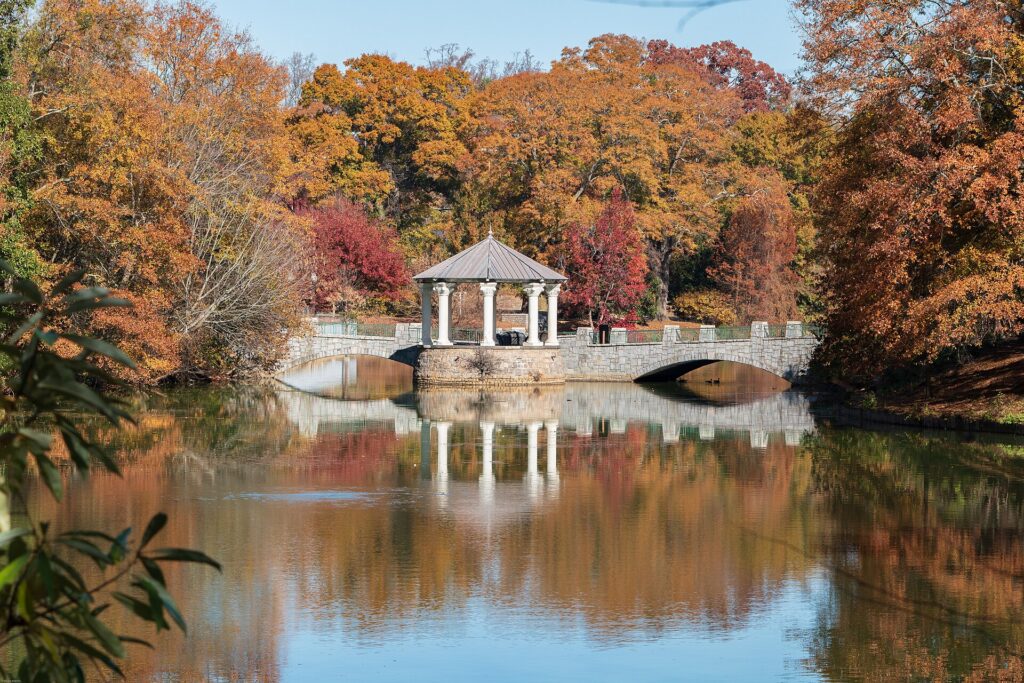
Winter (December to February): a warm jacket, layers and waterproof shoes; most days are mild, but a cold, damp wind can make a day near freezing feel raw. Spring (March to May): layers, a light rain jacket and an umbrella for the storms, sunglasses, and allergy medication if pollen affects you. Summer (June to August): the lightest, most breathable clothing you own, a hat, sunscreen, a refillable water bottle, and a sweater for the powerful air-conditioning indoors. Fall (September to November): summer clothing into late September, then layers and a light jacket by November. In every season, bring comfortable walking shoes.
The best time to fly to Atlanta for…
The best weather
The second half of April and the first half of May, or mid-October to early November. Both offer warm, dry days and comfortable evenings.
Festivals and the city in bloom
April, for the dogwoods, the Dogwood Festival and the Inman Park Festival, accepting higher prices in the first half of the month. Bring allergy medication.
Sports
September to December for college football, the Falcons and the SEC Championship; April to September for the Braves; October to April for the Hawks. Book hotels early for the biggest games.
The lowest prices
January and February outside the holiday weekends and trade shows, early December, and the second half of August. Stay downtown on a weekend for the best hotel rates.
Families
Late May and early June, before the worst of the heat, or early December for the holiday lights without the holiday prices.
International visitors
Visitors from Visa Waiver Program countries need an approved ESTA before boarding; most others need a visa. The State Department’s travel site explains what applies to you, and the TSA lists what you can carry through security. If you are connecting to a domestic flight after clearing immigration at ATL, you will collect and recheck your bags, so leave a generous connection time.
Frequently asked questions
What is the cheapest month to fly to Atlanta?
January and February are usually the cheapest overall, followed by late August and early December. Always check for trade shows and big games, which can push hotel rates up in any month.
What is the best month to visit Atlanta for weather?
October, with late April and May close behind. Summer is hot and humid; winter is mild but gray.
Why are Atlanta hotels so expensive on some weeknights?
Conventions and trade shows. Atlanta is one of the biggest convention cities in the country, and a large show at the Georgia World Congress Center or AmericasMart can fill downtown mid-week. Midtown and Buckhead, both on MARTA, are the alternatives.
Is Atlanta too hot to visit in summer?
It is hot and humid, but very manageable if you plan outdoor sightseeing for the morning and evening and spend the afternoons in the aquarium, the museums and the food halls. The late-August hotel rates are a real reward.
How early should I get to the Atlanta airport?
For a domestic flight, two hours is sensible, more on holiday weekends and at spring break; for international departures, three hours. The terminal is vast, and walking or riding the Plane Train to the farther concourses takes time.
How far ahead should I book?
Earlier for spring break, Thanksgiving, the Christmas holidays and the big event weekends, when prices tend only to rise; for January, February and late August, fares are stable enough that choosing the right dates matters more.
Does it snow in Atlanta?
Rarely, and usually only a dusting. The bigger risk is freezing rain, which can glaze the roads and shut the city for a day or two, so build some flexibility into a January or February trip.
Ready to pick your dates? Compare fares across the whole month on our Atlanta flights page, then find a room with our Atlanta hotel search. For what to do when you land, start with our first-timer’s guide to Atlanta.
Keep planning with TicketScanner
- Cheap flights to Atlanta — compare fares across the whole month
- Atlanta hotels — check the convention calendar first
- Atlanta car rentals — for day trips and the mountains
- Events in Atlanta — Braves, Falcons, Hawks, Atlanta United, concerts and shows on sale
- Things to do in Atlanta: a first-timer's guide
- Atlanta: rent a car or ride MARTA?
- Hartsfield-Jackson Atlanta (ATL) airport guide
- Where to stay: Midtown
- Cheap flights from Atlanta
- Best times to book flights and hotels
Leave a Reply