Ottawa has a reputation to overcome. It is the capital, which means visitors expect a government town of grey buildings and early nights, and what they find instead is a compact, green, bilingual city on two rivers and a canal, with a concentration of national museums that no other Canadian city can match, a market district that has been feeding people since 1826, a wilderness park fifteen minutes from Parliament, and a calendar of festivals, tulips in May, Canada Day in July, the Skateway in February, that gives every season its own reason to come. It is also cheaper than Toronto and Montreal, easier to get around than either, and small enough that a first visit covers most of it on foot. This guide walks through the sights that earn a day, the neighbourhoods worth a half-day, the museums, Gatineau across the river, the food, the festivals, the day trips, and the practical details.
If you are still comparing cheap flights to Ottawa, read this alongside our guides to the best time to fly to Ottawa and whether you need a car. Between the three you can plan the whole trip.
Ottawa at a glance for first-timers
- Airport: Ottawa Macdonald-Cartier International (YOW), about 10 km south of downtown; the O-Train’s Line 2 and Line 4 now connect the terminal to the city, and a taxi takes 20 to 30 minutes. See our YOW airport guide.
- Getting around: the O-Train light rail runs east-west through downtown and now south to the airport; the core, from Parliament to the ByWard Market to the Glebe, is walkable; the pathways along the canal and the rivers are made for bikes. A car is only for Gatineau Park and day trips.
- Money: Canadian dollars; Ontario’s 13 percent HST is added at the till. Tipping 15 to 20 percent in restaurants is customary.
- Language: English and French, with Gatineau across the river mostly French-speaking. Everyone in the tourist trade speaks English.
- Weather: a genuine four-season city, with hot, humid summers, a glorious brief fall, cold snowy winters that the city embraces, and a spring that arrives all at once in May. Our month-by-month guide has the detail.
- Where to stay: downtown for Parliament and the museums; the ByWard Market for food and nightlife; the Glebe or Westboro for a residential feel. Our Ottawa hotel search covers them all.
Parliament Hill and the Peace Tower
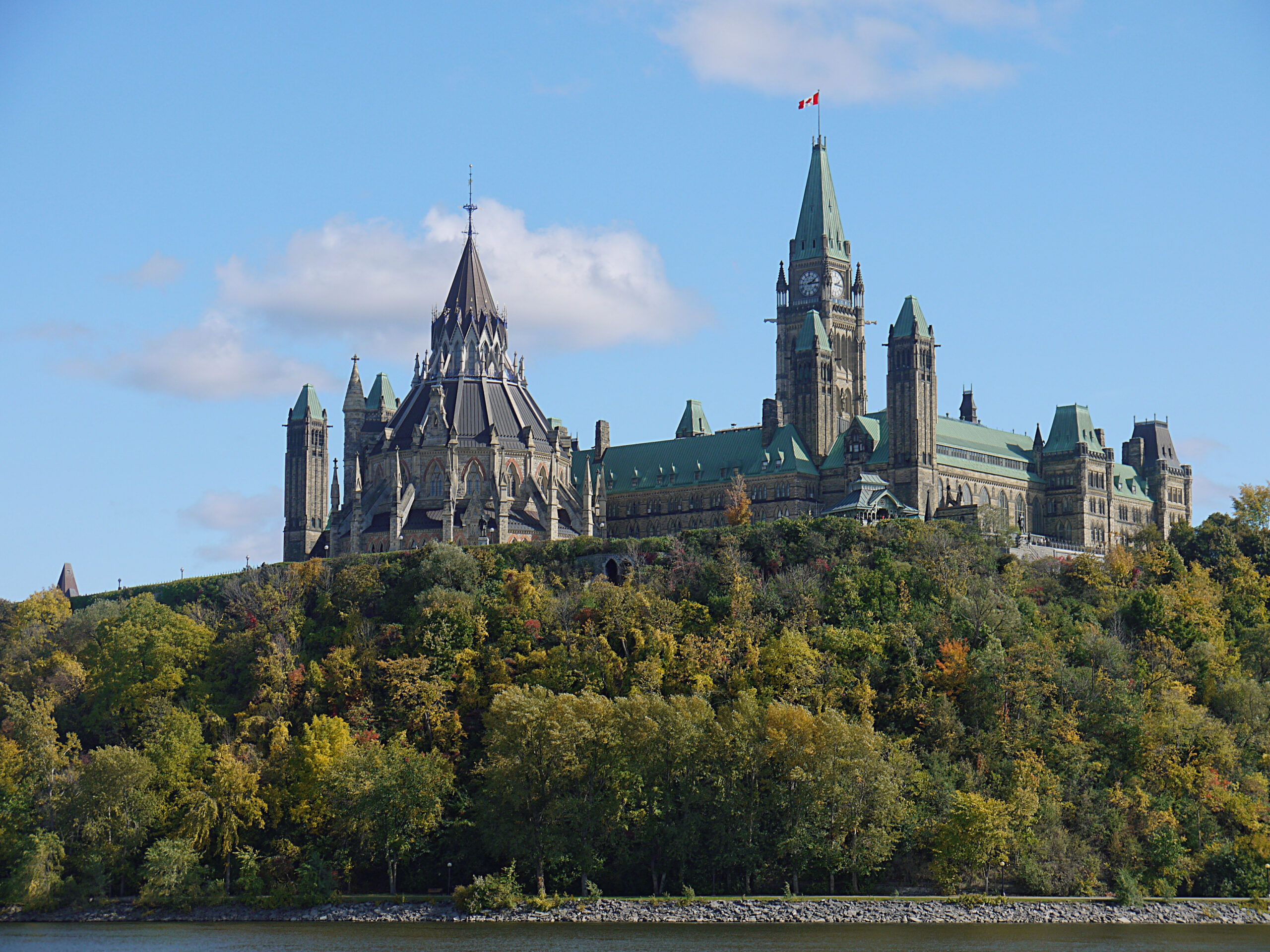
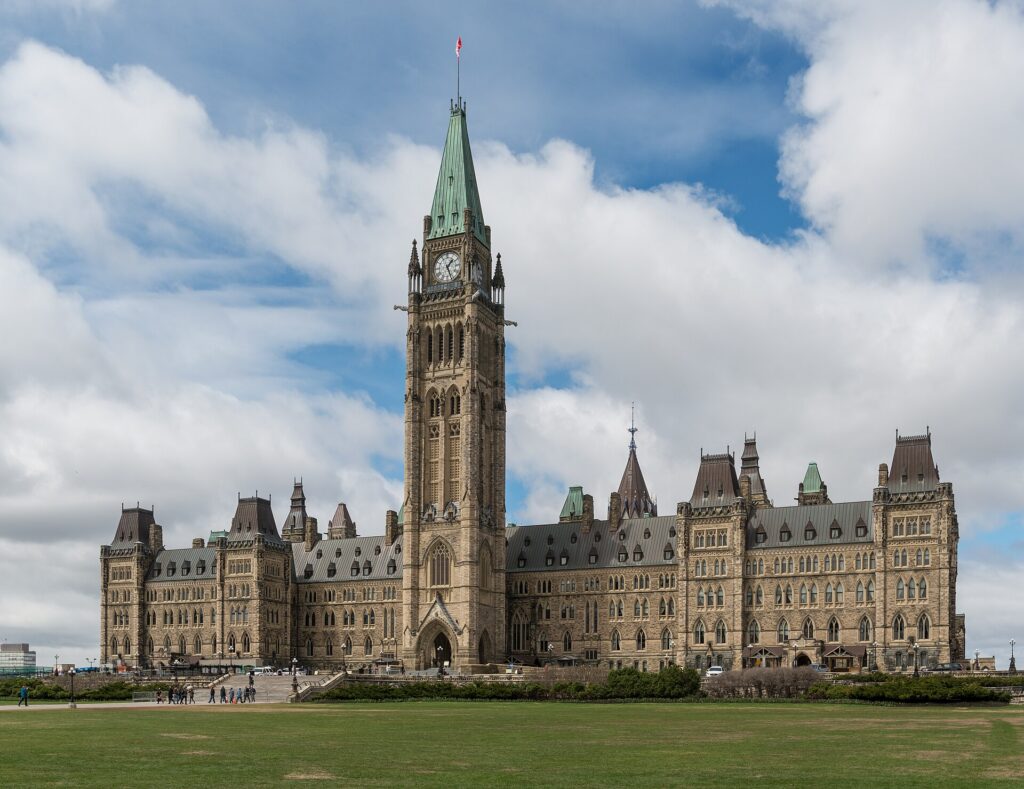
Start where the city does. Parliament Hill, on a limestone bluff above the Ottawa River, is the set piece: the Gothic Revival Centre Block with the Peace Tower, flanked by the East and West Blocks and, behind it, the round Library of Parliament, the only part of the original building to survive the 1916 fire. Centre Block is closed for a restoration that will run for years, so the House of Commons sits temporarily in a glass-roofed courtyard in West Block and the Senate in the old railway station across Wellington Street, and both offer free guided tours when Parliament is not sitting; book through the Parliament of Canada’s visitor site well ahead in summer. In summer, the Changing of the Guard takes place on the lawn every morning and a sound-and-light show plays on the Centre Block facade after dark; on Canada Day, the Hill is the centre of the national celebration. The grounds, the Centennial Flame and the statues are open all year, and the walk behind the buildings along the cliff edge, with the river and Gatineau below, is the best free view in the city. Across Wellington, the Supreme Court and the Bank of Canada Museum, which is small, free and better than it sounds, complete the precinct.
The Rideau Canal, in every season
The Rideau Canal was built in the 1820s as a military route between Ottawa and Kingston, and its 202 kilometres of locks, lakes and cut channels are a UNESCO World Heritage Site. In Ottawa it runs from the Ottawa River, where eight stepped locks climb the hill beside the Château Laurier, south through the middle of the city to Dows Lake, and it is the city’s spine. In summer, walk or cycle the paths on either side, rent a kayak or paddleboard at Dows Lake, and watch the locks being cranked by hand at the bottom of the flight. In winter, from January into March in a good year, it freezes into the Rideau Canal Skateway, 7.8 kilometres of maintained ice through the centre of the city, with skate rentals at the access points, warming huts, and BeaverTails pastries sold on the ice. It is one of the great winter experiences in the country, and it is free. The season depends entirely on the weather; check the National Capital Commission’s site for current ice conditions.
The ByWard Market
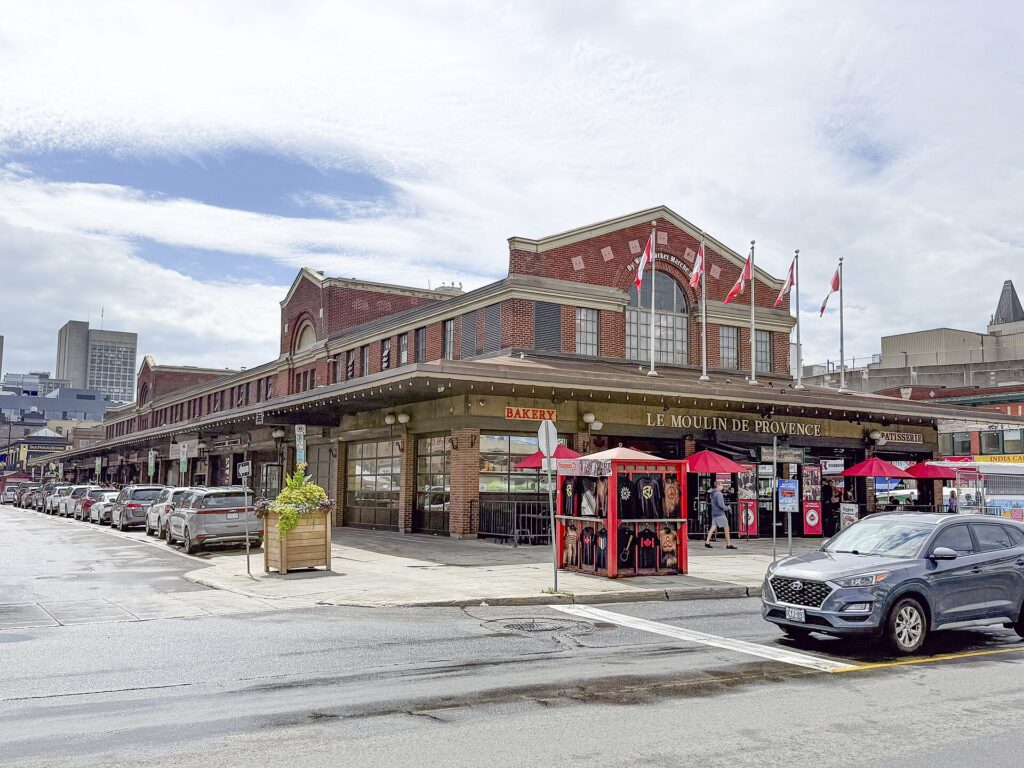
East of the canal, the ByWard Market is the oldest part of the city and its liveliest. The market building itself, with its food stalls and artisans, and the outdoor produce and flower stands around it are the daytime draw; the surrounding blocks hold the densest concentration of restaurants, bars, cafés and pubs in Ottawa, which makes it the evening one. It is also where you find the BeaverTail stand that started the chain, the Ottawa Art Gallery, a free contemporary gallery, and, a block north, the Notre-Dame Cathedral Basilica, whose twin spires face the National Gallery. On weekend nights the Market is the city’s nightlife district and can be rowdy; on a weekday morning it is the best place in the city for breakfast and a wander.
The national museums
Ottawa’s museums are its strongest hand, and the good ones are genuinely among the best in the country. The National Gallery of Canada, a glass-and-granite building by Moshe Safdie beside the ByWard Market, holds the definitive collection of Canadian art, from the Group of Seven to contemporary Indigenous work, plus a reconstructed convent chapel and Louise Bourgeois’s giant spider, Maman, on the plaza outside. The Canadian Museum of History, across the river in Gatineau with the best view of Parliament from its lawn, is the country’s most visited museum: the Grand Hall of Pacific coast totem poles, the Canadian History Hall, a children’s museum and an IMAX theatre. The Canadian War Museum, west of downtown on the river, is a serious, moving building with a collection that ranges from the War of 1812 to Afghanistan. The Canadian Museum of Nature, in a castle-like Victorian building south of downtown, has the dinosaurs and a blue whale skeleton and is the children’s favourite. The Canada Aviation and Space Museum, out at Rockcliffe, has one of the finest aircraft collections in the world; the Canada Science and Technology Museum and the Canada Agriculture and Food Museum, a working farm in the middle of the city, round out the family options. Most are free on Thursday evenings; a museums passport, sold at the participating institutions, covers several for one price if you plan to see three or more.
Neighbourhoods worth a half-day
Centretown and Elgin Street
The blocks south of Parliament are the working downtown, and Elgin Street, running south from Confederation Square, is its restaurant and bar row, with Ottawa’s city hall and the Museum of Nature at its southern end. Sparks Street, a block from Parliament, is the pedestrian mall, quiet in the evenings and better for lunch.
The Glebe and Lansdowne
South along the canal, the Glebe is a leafy neighbourhood of Edwardian houses, independent shops and cafés along Bank Street, and at its foot is Lansdowne Park, with the football stadium, the Aberdeen Pavilion farmers’ market, the Great Lawn and a strip of restaurants. It is where Ottawa spends a Saturday.
Westboro and Wellington West
West of downtown, Wellington Street West and Richmond Road run through two neighbourhoods that have become the city’s best stretch of independent restaurants, bakeries, bookshops and outdoor-gear stores, ending at Westboro Beach on the river. The Parkdale Market is the smaller, friendlier cousin of the ByWard.
Little Italy and Chinatown
Preston Street, Little Italy, and Somerset Street West, Chinatown, meet near Dows Lake and share the city’s best cheap, good food; Italian Week in June closes Preston to traffic.
Hintonburg
Between Little Italy and Westboro, the former working-class neighbourhood is now the city’s most interesting for breweries, galleries and small restaurants, and it borders the City Centre complex of makers and bakers.
New Edinburgh and Rockcliffe
East of the Market along Sussex Drive, past the Royal Canadian Mint, where you can tour the production of collector coins, and the prime minister’s residence, are the embassies, Rideau Hall, the governor general’s residence with free tours and grounds open all year, and the grand houses of Rockcliffe Park.
Gatineau, across the river
Ottawa’s twin city sits on the Quebec side of the river, and a visit is not complete without crossing. The Museum of History is the first reason. Gatineau Park is the second: 361 square kilometres of Canadian Shield hills, lakes and forest beginning fifteen minutes from Parliament, with the Mackenzie King Estate, the lookouts along the Champlain Parkway, swimming at Meech Lake, hundreds of kilometres of hiking and mountain-bike trails, and, in winter, the best cross-country skiing network in the country. The fall colours in the first two weeks of October are the park’s most famous fortnight. The Nordik Spa in Chelsea, the largest outdoor spa in North America, is the third reason, and the fourth is the casino and the old Hull neighbourhood’s restaurants and terrasses. The park and Chelsea need a car or a bike; the museum and Hull are a walk across the Alexandra or Portage bridge.
Festivals and events
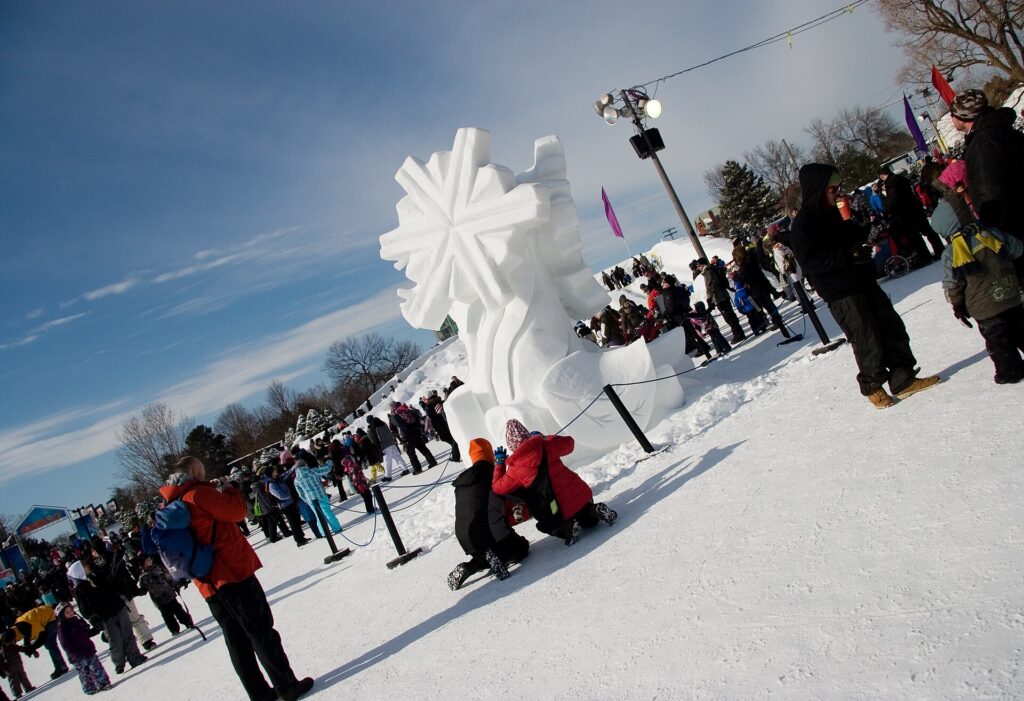
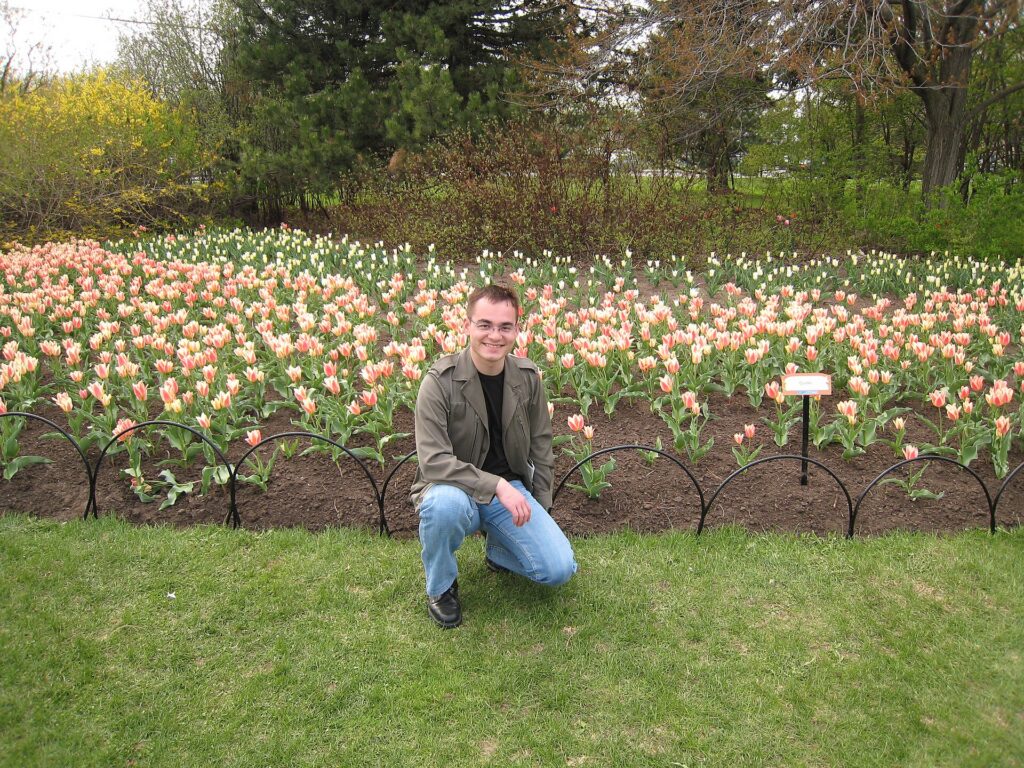
Ottawa’s calendar is one of its main attractions, and several of these are worth planning a trip around. The Canadian Tulip Festival, in the second half of May, fills Commissioners Park beside Dows Lake and the Parliament grounds with a million tulips, a gift from the Netherlands that dates from the Second World War. Canada Day, July 1, is the biggest national celebration in the country, with concerts on the Hill and LeBreton Flats and fireworks over the river. Bluesfest, in early-to-mid July at LeBreton Flats, is one of the largest outdoor music festivals in Canada and books headliners far beyond blues. The Ottawa Jazz Festival in late June, Chamberfest in late July, the Ottawa International Animation Festival in September and the Ottawa Race Weekend in late May fill in the summer. In winter, Winterlude, over three weekends in February, brings ice sculptures to Confederation Park, a snow playground in Gatineau and the Skateway at its busiest. Check Ottawa Tourism for dates, and our Ottawa events page for what is on sale during your visit.
Sports
The Ottawa Senators play at the Canadian Tire Centre in Kanata, on the western edge of the city, until their planned move to a new arena at LeBreton Flats; a game night is a bus or a drive. The Ottawa Redblacks play Canadian football at TD Place at Lansdowne from June to November, a far easier evening from downtown, and Atlético Ottawa plays professional soccer in the same stadium. The Ottawa Charge play in the Professional Women’s Hockey League, and the 67’s are the junior hockey team, both at TD Place’s arena. See what is on sale in Ottawa for your dates.
What to eat, and where
Ottawa’s food scene has grown up in the last fifteen years, and the pattern is easy to follow: the ByWard Market for breakfast, lunch and late nights, Elgin Street and Centretown for dinner, and the western neighbourhoods, Hintonburg, Wellington West and Westboro, for the independent restaurants that locals argue about. Three things are specifically Ottawan. The BeaverTail, a flat fried pastry with cinnamon sugar or worse, was invented here and is best eaten on the canal ice. The shawarma is the city’s late-night food, with a Lebanese community that has made Ottawa the shawarma capital of Canada; there is one on nearly every downtown block. And the Ottawa Valley supplies the farmers’ markets, the ByWard, Lansdowne and Parkdale, with the maple syrup, cheese and produce that the better restaurants build on. Across the river, Gatineau and Chelsea have the French-Canadian bistros, and a poutine or a tourtière on the Quebec side is worth the bridge. Coffee is taken seriously, especially in Hintonburg and the Glebe.
Ottawa through the seasons
Spring (April to May) is the Tulip Festival, the canal filling with water again, and the Race Weekend; April is grey and wet, May is the reward. Summer (June to August) is Canada Day, Bluesfest, the Changing of the Guard, the sound-and-light show, swimming at Meech Lake, the patios in the Market and on Elgin, and hot, humid days that suit the river beaches. Fall (September to October) is the local favourite: warm days, cool nights, the Gatineau hills in colour, the Animation Festival and the Fall Rhapsody in the park. Winter (December to March) is the Skateway, Winterlude, cross-country skiing in Gatineau Park, the Christmas lights on the Hill, and a city that has decided to enjoy the cold. Our month-by-month guide matches each season to fares.
Ottawa with kids
Few Canadian cities are easier with children. The Museum of Nature’s dinosaurs, the Museum of History’s children’s museum, the aviation museum’s hangars and the working farm at the Agriculture Museum, where you can watch the cows being milked, fill four days on their own. Skating on the canal in winter, and the Snowflake Kingdom during Winterlude, are the winter draws; the beaches at Meech Lake, Britannia and Westboro, the splash pads in the parks, and the paddle boats at Dows Lake are the summer ones. The Changing of the Guard on the Hill and the Mint tour appeal to older children. Calypso, the large waterpark east of the city, is a car trip.
Ottawa on a budget
Much of the best of the city is free: Parliament Hill and its tours, the Changing of the Guard and the sound-and-light show, the Rideau Canal in any season, Rideau Hall’s grounds, the Ottawa Art Gallery, the Bank of Canada Museum, the ByWard Market itself, the river and canal pathways, and Gatineau Park’s trails. The national museums charge admission, but most are free on Thursday evenings, and the museums passport reduces the cost of several. Shawarma and the Market’s food stalls are the cheap meals; the farmers’ markets are the cheap picnics. Hotels are consistently cheaper than Toronto’s or Montreal’s outside Canada Day, the Tulip Festival and Winterlude; compare by neighbourhood on our Ottawa hotel search.
Day trips from Ottawa
Gatineau Park is the obvious one. Montreal is two hours by train or car, and many visitors do both cities on one trip; our Montreal guide covers it. Kingston, two hours south, is the other end of the Rideau Canal, with Fort Henry and the Thousand Islands cruises. Merrickville, an hour along the canal, is the prettiest of the canal villages, and Wakefield, in the Gatineau hills, has a covered bridge, a steam-train heritage and the best cafés outside the city. Upper Canada Village, a living-history settlement on the St. Lawrence, is ninety minutes south. Whitewater rafting on the Ottawa River, ninety minutes west, is among the best in North America from May to September. Most of these need a car; see our Ottawa car rental page, and, if you are arriving from Toronto by road, our Toronto to Ottawa route guide.
Two sample itineraries
Two days, no car
Day one: Parliament Hill in the morning, with a tour booked in advance, then the National Gallery, a late lunch in the ByWard Market, the Notre-Dame Basilica, a walk down the canal locks and along the water to the Château Laurier, and dinner and the evening in the Market. Day two: cross the river to the Museum of History for the morning, walk back along the Ottawa River pathway past the War Museum, lunch on Elgin Street, the Museum of Nature or a canal walk to the Glebe and Lansdowne in the afternoon, and dinner in Hintonburg or Wellington West.
Four days, with a car
Add a day in Gatineau Park with the Mackenzie King Estate, the lookouts, a swim or a hike, and the Nordik Spa or Wakefield on the way back, and a day for Merrickville and the canal villages, or, in winter, the Skateway in the morning and cross-country skiing in the park in the afternoon.
Practical details
- Transit: OC Transpo’s O-Train and buses; buy a Presto card or tap a credit card on the readers. See our transit-versus-car guide for detail.
- From YOW: the O-Train from the terminal, a taxi or ride-hail in 20 to 30 minutes, or a rental from the terminal. The airport’s site covers ground transport.
- Weather: Environment Canada’s forecast is the one to check; pack for real cold in winter and real heat in summer.
- Time zone: Eastern, the same as Toronto, Montreal and New York.
- Entry requirements: U.S. citizens need a valid passport; most other visa-exempt visitors arriving by air need an Electronic Travel Authorization. The Government of Canada’s visitor page is the authoritative source.
- Safety: a safe city; the Market late on weekend nights is the only place that needs ordinary caution.
Frequently asked questions
How many days do you need in Ottawa?
Two full days covers Parliament, the canal, the Market and two or three museums; three lets you cross to Gatineau properly; four adds the park and a day trip.
What is Ottawa best known for?
Parliament Hill, the Rideau Canal and its winter Skateway, the national museums, the Tulip Festival and Canada Day.
Is Ottawa worth visiting?
Yes, and more so than its reputation suggests: it has the best museums in Canada, a walkable core, a wilderness park on its doorstep and lower prices than Toronto or Montreal.
Is Ottawa walkable?
Very. Parliament, the Market, the canal, Elgin Street and the National Gallery are all within twenty minutes of each other on foot, and the O-Train covers the rest.
Do I need a car in Ottawa?
Not for the city. For Gatineau Park, the canal villages and the rafting rivers, yes; rent for those days only.
When does the Rideau Canal Skateway open?
It depends on the cold. In a good winter it opens in January and runs into early March; in a mild one it may open late or for only a few weeks. Check the National Capital Commission’s site for conditions.
Is Ottawa expensive?
Less than Toronto, Vancouver or Montreal for hotels and dining, with the exception of Canada Day, the Tulip Festival and Winterlude weekends.
Ready to go? Compare flights to Ottawa, find a place to stay with our Ottawa hotel search, and if Gatineau Park or the valley is on the list, price a rental car for those days.
Keep planning with TicketScanner
- Cheap flights to Ottawa
- Ottawa hotels — by neighbourhood
- Ottawa car rentals — for Gatineau Park and the valley
- Events in Ottawa — Senators, Redblacks, concerts and shows on sale
- Best time to fly to Ottawa: month by month
- Ottawa: rent a car or use transit?
- Ottawa International (YOW) airport guide
- Where to stay: the ByWard Market
- Driving Toronto to Ottawa
- Things to do in Montreal
Leave a Reply