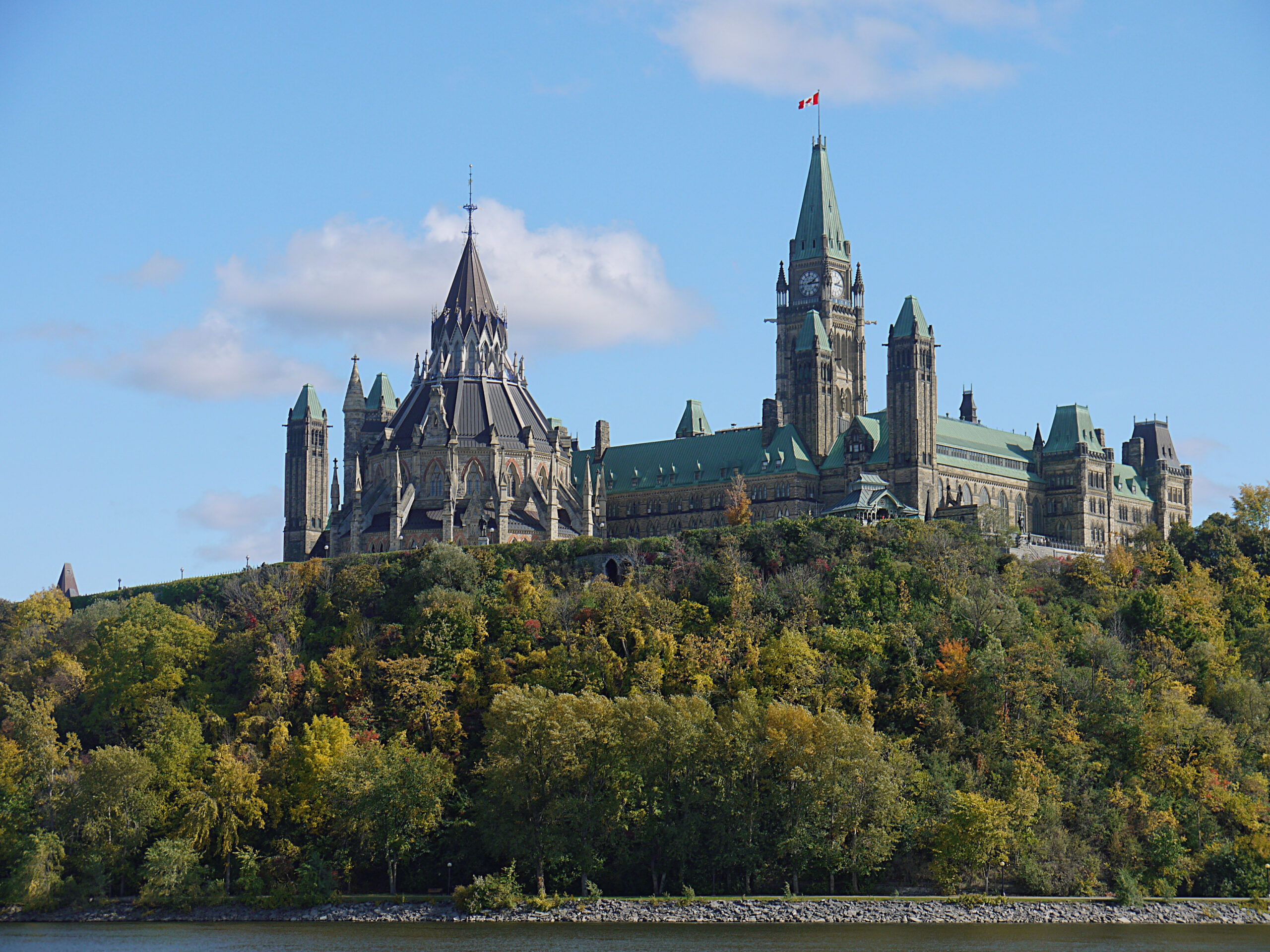
Ottawa is one of the easiest Canadian cities to visit without a car, and one of the few where the question is genuinely close for a lot of visitors. The core is compact: Parliament Hill, the ByWard Market, the National Gallery, the canal, Elgin Street and the Glebe are all within a half-hour walk of each other, the O-Train now runs from the airport through downtown, and the city has more kilometres of paved recreational pathway than almost anywhere in North America. But Ottawa’s second great attraction is Gatineau Park, a wilderness of hills and lakes fifteen minutes from Parliament that has no useful transit at all, and its third is the countryside of canal villages, rafting rivers and sugar shacks around it. So the answer depends on which Ottawa you are visiting. This guide explains how the city is laid out, how transit and fares work, what driving and parking are really like, when a car is worth it, and gives you a straightforward way to decide.
The short answer
Skip the car if you are staying downtown, in the ByWard Market or in the Glebe, and your plans are Parliament, the museums, the canal and the neighbourhoods; the O-Train, your feet and a bike will cover everything, and you will not pay downtown parking. Rent a car if Gatineau Park, the Nordik Spa, Wakefield, Merrickville, the rafting rivers or a road trip on to Montreal or Kingston is on the itinerary, if you are staying in the suburbs or Kanata, or if you are visiting in winter with young children. And for most first-time visitors who want both, the hybrid answer is the right one: car-free in the city, a one- or two-day rental picked up downtown for the park and the day trips. Compare rental rates for any of these plans on our Ottawa car rental page.
How Ottawa is laid out
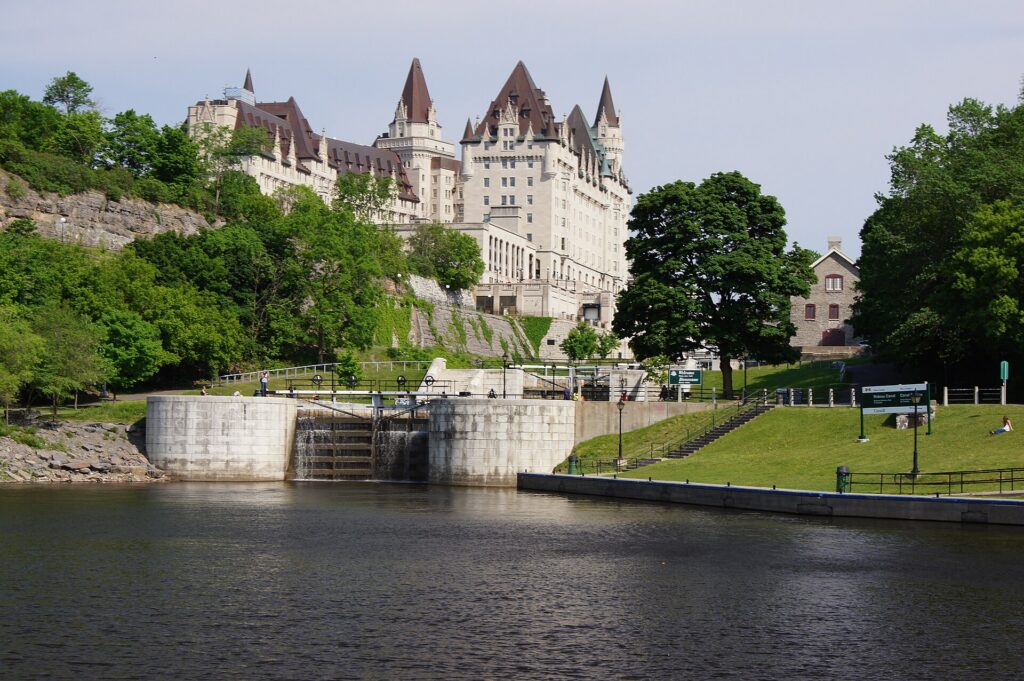
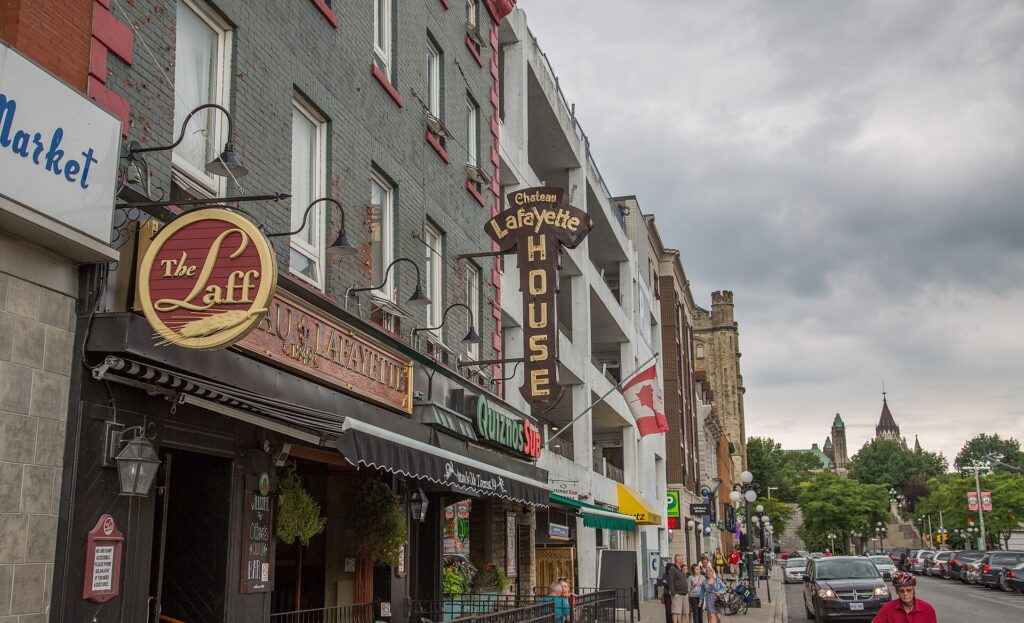
Ottawa sits on the south bank of the Ottawa River, with Gatineau, Quebec, on the north bank and five bridges between them. The Rideau Canal runs south from the river through the middle of the city and splits the centre in two: west of it, Parliament Hill, the Sparks Street mall, Centretown and Elgin Street; east of it, the Château Laurier, the Rideau Centre, the ByWard Market, the National Gallery and Lowertown. The Glebe and Lansdowne are south along the canal; Little Italy, Chinatown and Dows Lake are to the southwest; Hintonburg, Wellington West and Westboro run west along the river; New Edinburgh, Rockcliffe and the aviation museum are east along Sussex Drive. Beyond that, the city is a wide ring of suburbs, with Kanata and the Senators’ arena far to the west, Orleans to the east, and Barrhaven and the airport to the south. The inner ring is walkable and cyclable; the suburbs assume a car.
Hotels cluster around Parliament and the Rideau Centre, in the ByWard Market, along the O-Train corridor to the west, and near the airport and in Kanata for business travellers. Our Ottawa hotel search lets you compare them.
Getting in from the airport
Ottawa Macdonald-Cartier International (YOW) is about 10 kilometres south of downtown, and the arrival options have improved sharply. The O-Train‘s Line 4 runs from a station at the terminal to South Keys, where you change to Line 2 north to Bayview and then Line 1 east into downtown; it is a two-change journey but a cheap and reliable one. Taxis and ride-hail pick up outside arrivals and reach the centre in 20 to 30 minutes on the Airport Parkway. Every major rental company has counters in the terminal. Check the airport’s site and OC Transpo for current service; our YOW airport guide covers the layout.
Ottawa’s transit, explained
OC Transpo runs the O-Train light rail and the bus network on the Ontario side; the STO runs the buses in Gatineau, and the two systems accept each other’s fares on cross-river routes. The O-Train has had a difficult first few years, with reliability problems on Line 1 that made local headlines, so check for service notices on the day; when it is running, it is the fastest way across the city.
The O-Train
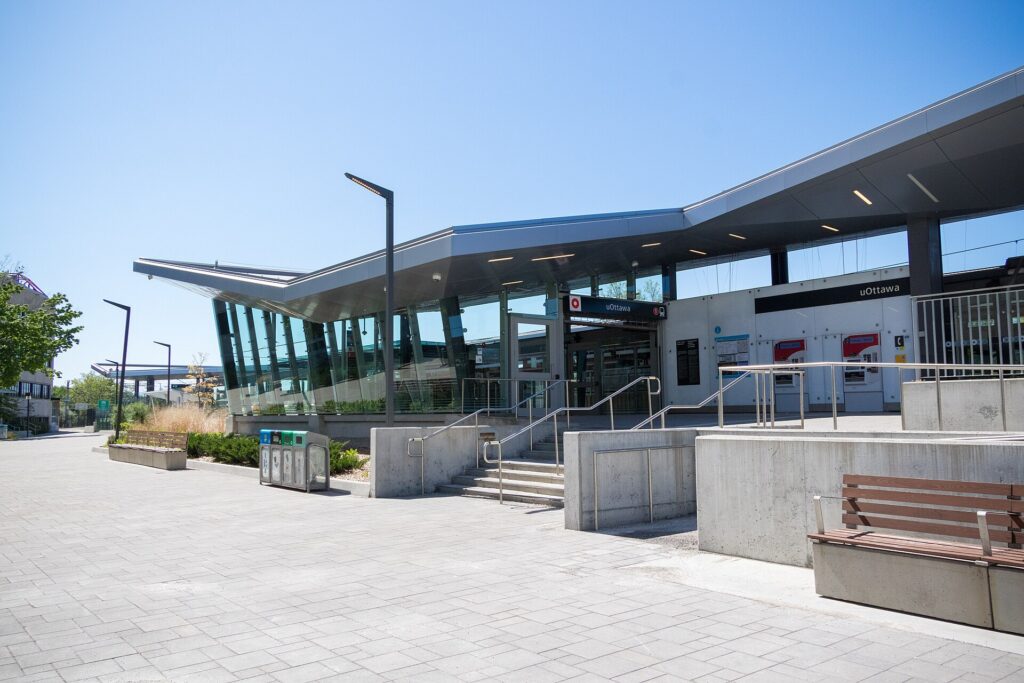
Line 1, the Confederation Line, runs east-west through downtown in a tunnel, with stations at Parliament, Rideau (for the Market and the Rideau Centre), uOttawa and Lyon, and continues west to Tunney’s Pasture and beyond, and east to Blair and, as the extensions open, toward Orleans. Line 2, the Trillium Line, runs north-south from Bayview, where it meets Line 1, past Carleton University and south to Limebank, and Line 4 branches off it to the airport at South Keys. For a visitor, Line 1 is the one you will use daily: Parliament station is a block from the Hill, Rideau is under the Market, and the ride between them is two minutes.
Buses
Buses feed the rail lines and cover the neighbourhoods off them, including Elgin Street, the Glebe and Lansdowne, Westboro and Wellington West, the Museum of Nature, the aviation museum at Rockcliffe, and, on game nights, the Senators’ arena in Kanata. Frequencies are good on the main routes during the day and thin out in the evenings; check times before relying on a bus for a late return.
Fares and tickets
Tap a contactless credit or debit card, or a phone wallet, on the readers at O-Train fare gates and bus doors, or buy a Presto card, the same card used in Toronto, and load it; single-ride paper tickets are also sold at station machines. A fare gives you 90 minutes of transfers across trains and buses, and day passes are available. Children twelve and under ride free with a fare-paying adult. Fares to and from the airport station are the standard fare. Check OC Transpo’s site for current prices and any special-event fares.
Accessibility
Every O-Train station is step-free, and every bus is low-floor and accessible.
Beyond OC Transpo
- Walking. Parliament to the Market is ten minutes; the Market to the Glebe is thirty along the canal. Most of a first visit is on foot.
- Bikes and the pathways. The National Capital Commission’s pathway network runs for hundreds of kilometres along the canal, both rivers and out into Gatineau; bike-share e-bikes and scooters operate from spring to fall, and rental shops near the Market and at Dows Lake hire by the day. On Sunday mornings in summer, the parkways along the river and in Gatineau Park close to cars for cyclists. For a warm-weather visit, a bike is the best transit in the city.
- Taxis and ride-hail. Uber, Lyft and licensed taxis cover the city; for a group, a short ride is competitive with transit fares and far quicker to Westboro or the aviation museum.
- Crossing to Gatineau. The Museum of History and old Hull are a walk over the Alexandra or Portage bridge; STO buses cross from downtown; a bike is the best way to the Gatineau side’s paths.
- Intercity. VIA Rail runs from the station east of downtown to Montreal in two hours and Toronto in four and a half; intercity buses serve the same cities and the towns of the valley.
Driving in Ottawa: what it is really like
Ottawa is an easy city to drive in by the standards of the big Canadian cities. The roads are wide, the grid is mostly logical, the Queensway (Highway 417) runs east-west across the city and is the way to the suburbs, and traffic is calmer than in Toronto or Montreal. The frustrations are specific. The Queensway jams in the weekday peaks, especially through the centre. The bridges to Gatineau back up at rush hour with commuters crossing provinces. Downtown is a tangle of one-way streets around Parliament, with Wellington Street in front of the Hill closed to through traffic, and it is not a place to drive between sights that are ten minutes apart on foot. Construction season runs from May to October. And winter is real: snow is cleared efficiently, but the side streets narrow to one lane between snowbanks, freezing rain is a hazard, and the Gatineau Park roads are closed to cars for the ski season.
Parking
Downtown hotels charge a nightly parking fee that is lower than Toronto’s but not trivial, and the commercial garages around the Rideau Centre and Sparks Street are priced accordingly. Street parking is metered downtown, with a phone-app option, and is free on Sundays and holidays in most of the core; it is scarce in the ByWard Market at any hour, and nearly impossible on a summer weekend evening. The museums have their own lots, which are the easy part; the aviation and agriculture museums, the War Museum and the Museum of History all have parking on site. In Gatineau Park, the parking lots at the lakes and the main trailheads fill by mid-morning on summer weekends and during the fall colour season, and the park charges for parking at the popular beaches. During Canada Day, the Tulip Festival and Winterlude, parking near the events is not worth attempting; take the O-Train.
Rules and conditions worth knowing
- Two provinces. Cross a bridge and the rules change: Quebec requires winter tires on every vehicle from December 1 to March 15, including rentals, and Quebec’s rental cars will have them; Ontario does not require them, and an Ontario rental may be on all-seasons. If you plan to drive in Gatineau in winter, ask for winter tires when you book.
- Right turns on red are permitted after a full stop in Ottawa and, since 2003, in Gatineau outside the old Montreal-style ban, but watch for signs at individual intersections.
- Photo radar and red-light cameras operate in Ottawa’s school zones and at major intersections; fines follow the car and the rental company will bill you.
- Gatineau Park’s parkways close to cars on summer Sunday mornings and for the winter; check the National Capital Commission’s site for closures and the fall colour weekend shuttle system.
- Highway 417 and the 401 to Toronto are toll-free; the 407 near Toronto is a toll road that bills the rental company by plate. See our Toronto to Ottawa route guide.
- Fuel is cheaper in Ontario than in Quebec; fill up on the Ottawa side.
- Wildlife is real on the Gatineau Park roads and the rural highways at dusk.
When renting a car makes sense
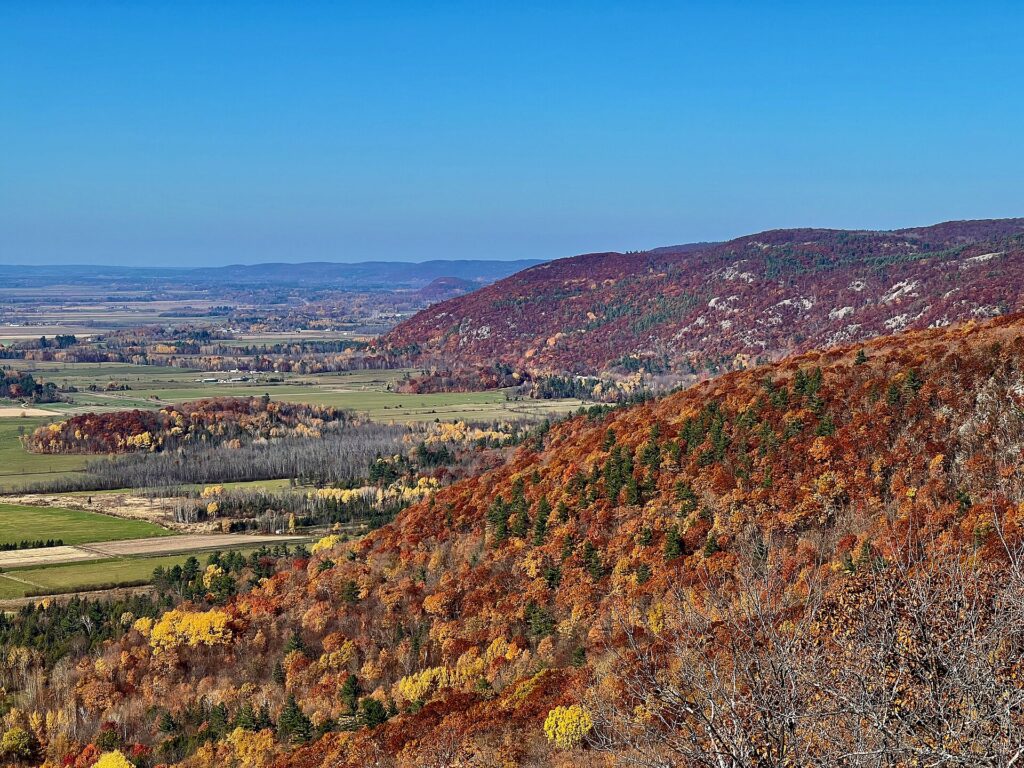
- Gatineau Park. The Mackenzie King Estate, the Champlain Lookout, Meech Lake and the trailheads have no useful transit; a car turns the park from a logistical problem into a fifteen-minute drive.
- Chelsea, Wakefield and the Nordik Spa, in the hills beyond the park.
- Merrickville and the canal villages, an hour southwest along the Rideau.
- Whitewater rafting on the Ottawa River near Beachburg, ninety minutes west.
- Upper Canada Village, Kingston and the Thousand Islands, ninety minutes to two hours south.
- Sugar shacks in March and April, in the valley on both sides of the river.
- Senators games at the Kanata arena, which is a long bus ride from downtown; a car or a ride-hail is faster.
- Staying in the suburbs or Kanata, or visiting family there.
- A road trip on to Montreal, Quebec City or Toronto; one-way rentals between the cities are routine.
If any of those apply, our rental car booking tips cover insurance, deposits and the questions to ask at the counter.
When it does not
- You are staying downtown, in the Market or in the Glebe and your plans are the city.
- You are in town for Canada Day, the Tulip Festival or Winterlude, when the streets around the events close and parking vanishes.
- You are visiting in summer and happy to cycle; the pathways reach most of what a visitor wants.
- You are travelling solo and the rental, insurance and parking add up to more than a couple of ride-hails and a day pass.
The hybrid plan
Go car-free for the city days and rent for the park and the countryside. Pick the car up downtown, not at the airport: the airport concession fees are avoided, you do not pay hotel parking on the nights you are not using the car, and the drive to Gatineau Park from downtown is fifteen minutes over the Portage Bridge. Most companies have branches around the Rideau Centre and along Catherine Street south of downtown. Return it downtown before the last city day or at the airport on the way to the flight, which most companies allow within the city at little or no extra charge. Ask for winter tires from November to April if Gatineau is in the plan. Compare the day rates on our Ottawa car rental page against a full-trip rental and the difference is usually obvious.
A worked cost comparison
Numbers change with the season and the booking window, so treat this as a method rather than a quote, and check current rates before deciding. For a three-night city break downtown for two, the car-free version costs two O-Train fares from the airport and back, a day pass or two, a bike-share afternoon and perhaps one ride-hail to Westboro for dinner; the rental version adds three days of a compact car, three nights of hotel parking, fuel and airport fees, and buys almost nothing you could not walk or ride to. Transit wins easily. For the same three nights plus a Gatineau Park day, the car-free version adds a taxi or ride-hail to the park and back, which is possible but awkward for a trailhead; the hybrid version adds a one-day rental from downtown, fuel and park parking, and gives you the whole park, the lookouts and Wakefield. The hybrid wins on value and flexibility. For a five-day trip with Merrickville, rafting and a drive on to Montreal, a rental for the whole stay from the airport, returned one-way in Montreal, is the only practical answer. Run the rates for your dates and put them beside the transit fares before you choose.
Decision table
| Your trip | Recommendation | Why |
|---|---|---|
| City break downtown, couple or solo | No car | Everything is walkable or on Line 1; parking is a cost with no benefit |
| Canada Day, Tulip Festival or Winterlude | No car | Street closures and no parking; the O-Train stops at the events |
| City plus Gatineau Park | Hybrid: one-day rental from downtown | Car-free city days, a car for the park |
| Summer visit, active | No car, rent bikes | The pathway network reaches most sights and the Gatineau side |
| Winter with young children | Rent, with winter tires | Gear, cold and Gatineau’s ski trails all argue for a car |
| Family visit to the suburbs or Kanata | Rent for the whole stay | Suburban distances make the car worthwhile daily |
| Ottawa plus Montreal or Kingston | Rent (consider one-way) or take the train | VIA Rail is competitive between the cities; a car adds the countryside |
| Senators game night | Ride-hail or a rental | The Kanata arena is a long bus ride from downtown |
Money-saving tips for both options
- On transit: tap a credit card rather than buying paper tickets; use a day pass on a heavy museum day; children twelve and under are free; take the O-Train from the airport.
- On a rental: pick up downtown rather than at the airport, rent only for the park and day-trip days, ask for winter tires in the cold months if Gatineau is in the plan, decline extras you already have through a credit card or home policy (check first), and fill up in Ontario.
- On the hotel: if you are renting, price the parking fee into the room rate, or choose a hotel with free parking on the O-Train corridor and ride in.
- On timing: avoid the Queensway and the bridges in the weekday peaks, and Gatineau Park’s parkways on summer Sunday mornings and fall colour weekends, when they close or fill; the best time to fly to Ottawa guide lists the busy weekends.
- On the museums: the parking lots are free or cheap, but the O-Train and the pathways reach the National Gallery, the Museum of History and the Museum of Nature without a car.
Frequently asked questions
Is it worth renting a car in Ottawa?
Not for the city, which is compact and well served by the O-Train and the pathways. For Gatineau Park, the canal villages, the rafting rivers or the suburbs, yes; rent for those days only.
Is Ottawa public transit good for tourists?
Good within the core: Line 1 links Parliament, the Market and the university in minutes, and the airport is now on the rail network. Buses cover the rest. Check for O-Train service notices on the day.
How do I get from Ottawa airport to downtown?
The O-Train, with changes at South Keys and Bayview, for a standard fare; a taxi or ride-hail in 20 to 30 minutes; or a rental from the terminal.
Can I get to Gatineau Park without a car?
Only awkwardly: a taxi or ride-hail to a trailhead, a bike along the pathways to the park’s southern edge, or a tour. A one-day rental is the practical answer.
Do I need winter tires in Ottawa?
Not by law in Ontario, but yes in Quebec from December 1 to March 15, which includes Gatineau and the park. Ask for them when you book.
Is parking expensive in downtown Ottawa?
Moderate by big-city standards, with hotel fees lower than Toronto’s; the ByWard Market is the hard place to park at any time, and event days are impossible.
Should I drive or take the train from Toronto or Montreal?
VIA Rail is two hours from Montreal and four and a half from Toronto, city centre to city centre, and is hard to beat for a city visit. Drive if you want the countryside or are continuing on a road trip; our Toronto to Ottawa guide covers the route, and our Montreal transit guide covers the other end.
Whichever way you go, start with the flight. Compare cheap flights to Ottawa, choose a neighbourhood with our Ottawa hotel search, and if Gatineau Park is on the list, price the rental for those days on our Ottawa car rental page.
Keep planning with TicketScanner
- Ottawa car rentals — compare airport and downtown pickup
- Cheap flights to Ottawa
- Ottawa hotels — factor parking into the rate
- Things to do in Ottawa: a first-timer's guide
- Best time to fly to Ottawa: month by month
- Ottawa International (YOW) airport guide
- Driving Toronto to Ottawa
- Montreal: rent a car or use transit?
- Rental car booking tips
- Car, transit or taxi in a new city?
Leave a Reply