Tag: Ottawa

  • Best Time to Fly to Ottawa: Seasons, Weather & Prices

    Best Time to Fly to Ottawa: Seasons, Weather & Prices

    Ottawa is a four-season capital, and that is not a slogan. It has a hot, humid summer, a brilliant short fall, a cold winter that the city has turned into an attraction, and a spring that arrives all at once in May with a million tulips. Its airfares follow that calendar closely, with three sharp spikes, the Tulip Festival, Canada Day and Bluesfest, and Winterlude, sitting on top of a fare curve that is otherwise gentler and lower than Toronto’s or Montreal’s. Ottawa is also a government town, which means the weekday flights fill with business travellers when Parliament is sitting and empty in August and over the holidays, a pattern that works in a leisure traveller’s favour. This guide walks through the weather month by month, the fare seasons, the events that move prices, and the airport, which has changed a great deal in the last few years.

    The short answer

    The best combination of weather and value is September to mid-October, when the summer humidity breaks, the Gatineau hills turn colour, and fares and hotel rates ease after Labour Day. Early June is the other excellent window, after the Tulip Festival and before Canada Day, with long warm days and the city’s summer programming beginning. The cheapest fares come in late January through March outside the Winterlude weekends, and in November. The most expensive stretches are the Canada Day week around July 1, which runs straight into Bluesfest, the Tulip Festival in the second half of May, particularly the Victoria Day long weekend, and the Winterlude weekends in February, when the Skateway is at its busiest. Whatever you choose, run a flexible-date search on our Ottawa flights page; a shift of a few days around Canada Day or the tulips can change the fare band entirely.
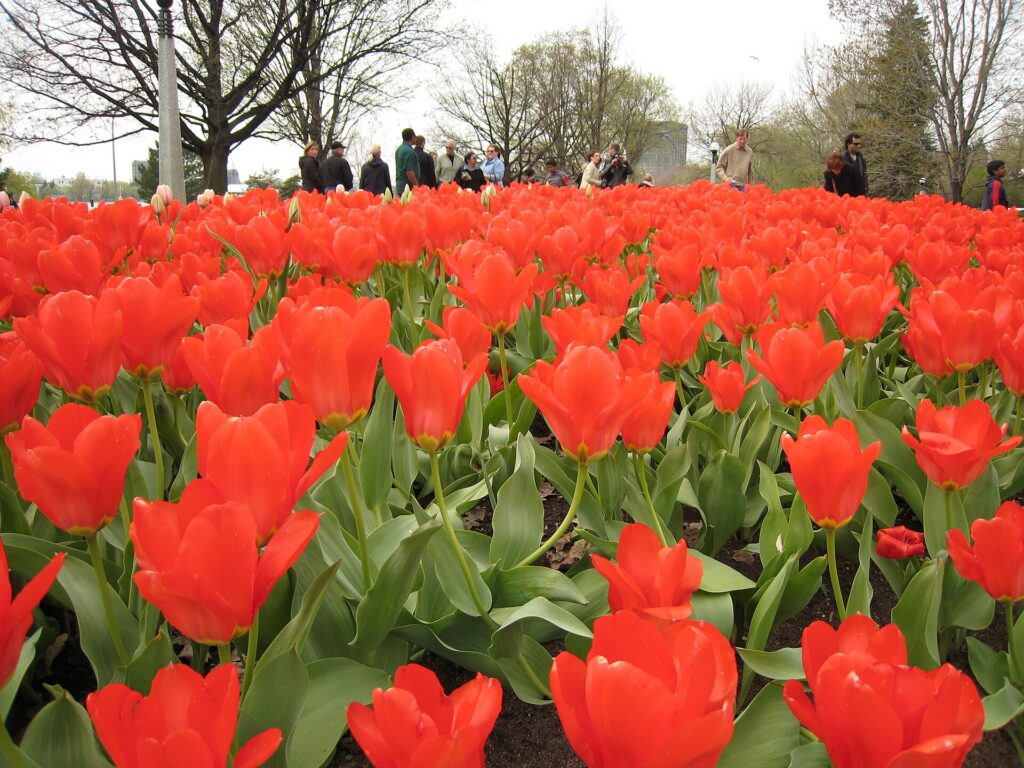
    Red tulips at Commissioners Park during the Canadian Tulip Festival in Ottawa
    The Canadian Tulip Festival in May, the first of Ottawa's three big fare spikes (Photo: elPadawan via Wikimedia Commons, CC BY-SA 2.0)

    Ottawa’s weather, season by season

    Ottawa sits inland at the meeting of the Ottawa, Rideau and Gatineau rivers, far from the moderating effect of the Great Lakes, and its climate is more continental than Toronto’s: hotter in July, colder in January, with more snow and a faster transition between them. The figures below are approximate seasonal patterns based on the long-term climate normals from Environment and Climate Change Canada; check the current forecast before you pack.

    MonthTypical daytime highTypical overnight lowWhat it feels likeFare pressure
    Januaryaround -6 °Caround -14 °CCold, snowy, bright; the Skateway usually opensLow after the first week
    Februaryaround -4 °Caround -13 °CCold and often sunny; Winterlude weekendsLow, with Winterlude and Family Day spikes
    Marcharound 2 °Caround -7 °CThaw begins; Skateway closes; slush and sugar shacksLow; spring-break spike
    Aprilaround 11 °Caround 1 °CGrey, wet, then suddenly warm; the canal refillsLow to moderate
    Mayaround 19 °Caround 8 °CSpring in a rush; tulips, patios, the Race WeekendModerate to high in the second half
    Junearound 24 °Caround 13 °CWarm, long days; Jazz FestivalModerate, rising late in the month
    Julyaround 27 °Caround 16 °CHot and humid, with storms; Canada Day and BluesfestPeak in the first half
    Augustaround 25 °Caround 15 °CWarm, humid, settled; the city emptiesModerate; lower than July
    Septemberaround 20 °Caround 10 °CWarm days, cool nights; the best monthModerate, falling after Labour Day
    Octoberaround 13 °Caround 4 °CCrisp; Gatineau colour peaks in the first two weeksLow to moderate; Thanksgiving spike
    Novemberaround 5 °Caround -2 °CGrey; first snow; lights go upLow
    Decemberaround -3 °Caround -10 °CCold and festive; lights on the HillLow until mid-month, then a holiday rise

    Two things the table cannot show. Ottawa’s humidity makes July feel hotter and January feel colder than the numbers, and the winter here is real: -20 °C cold snaps are normal, the snowbanks last until April, and the city is built for it, with an indoor life, a cross-country ski culture and the Skateway. Visitors who arrive dressed for Toronto’s winter are underdressed.

    How Ottawa’s fare seasons work

    Ottawa’s flights are driven by three calendars: the government’s, which fills weekday flights from September to June and empties them in August and over the holidays; the festivals’, which produce the three spikes; and the university’s, with Carleton and the University of Ottawa moving tens of thousands of students in and out in early September, late December and late April. Underneath, leisure demand follows the weather. The result is a fare curve with a summer plateau that is lower than Toronto’s, two spring and summer spikes, and a winter that is cheap apart from February’s festival weekends.

    Peak season

    The second half of May through mid-July, plus roughly December 18 to January 3. The Tulip Festival and the Victoria Day weekend lift the second half of May; late June brings the Jazz Festival and school holidays; Canada Day, July 1, is the single biggest hotel spike of the year, with the national celebration on the Hill and at LeBreton Flats, and Bluesfest follows within a week or two. Book early for any of these, and book the hotel before the flight.

    Shoulder season

    Early May, mid-July through August, September and October. August is the pleasant surprise: the government is on holiday, the festival crowds have gone, the weather is settled, and fares and rooms are noticeably softer than July’s. September and early October are the best weather of the year and the best value of the warm months, with the Gatineau colours peaking in the first two weeks of October. Watch Labour Day and Thanksgiving.

    Low season

    November, and mid-January to April outside the Winterlude weekends, Family Day and the March spring break. Fares are at their lowest, the Skateway and the ski trails are open, and the museums are empty. Build a weather buffer into connections and pack properly.

    As elsewhere, mid-week departures and early or late flights usually price below Friday and Sunday afternoons on the same route, and a whole-month search reveals cheaper pairs of dates close to your first choice. Our guide to the best times to book explains how to read those patterns.
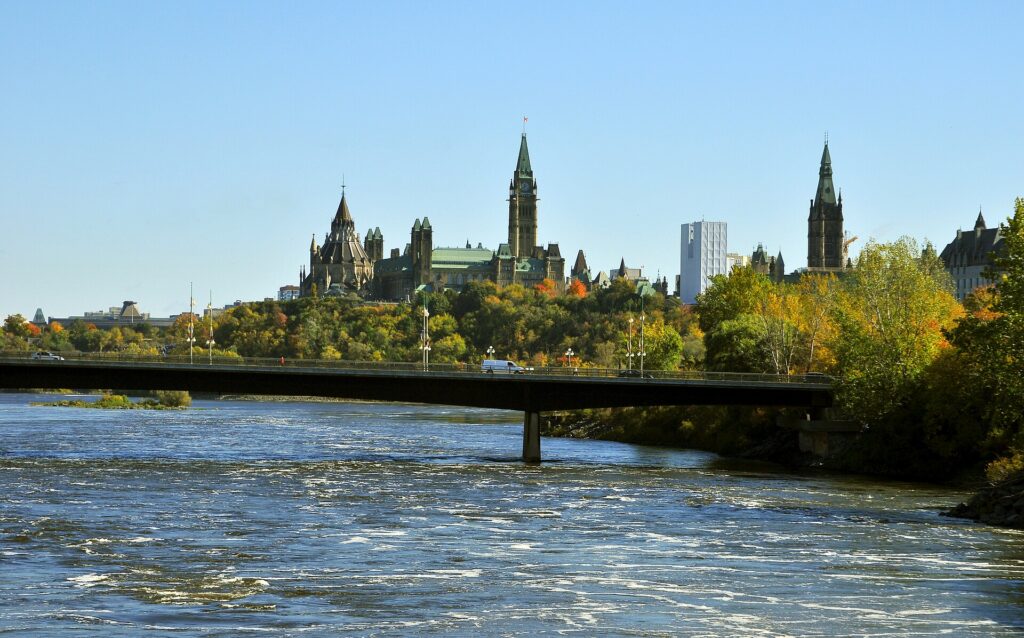
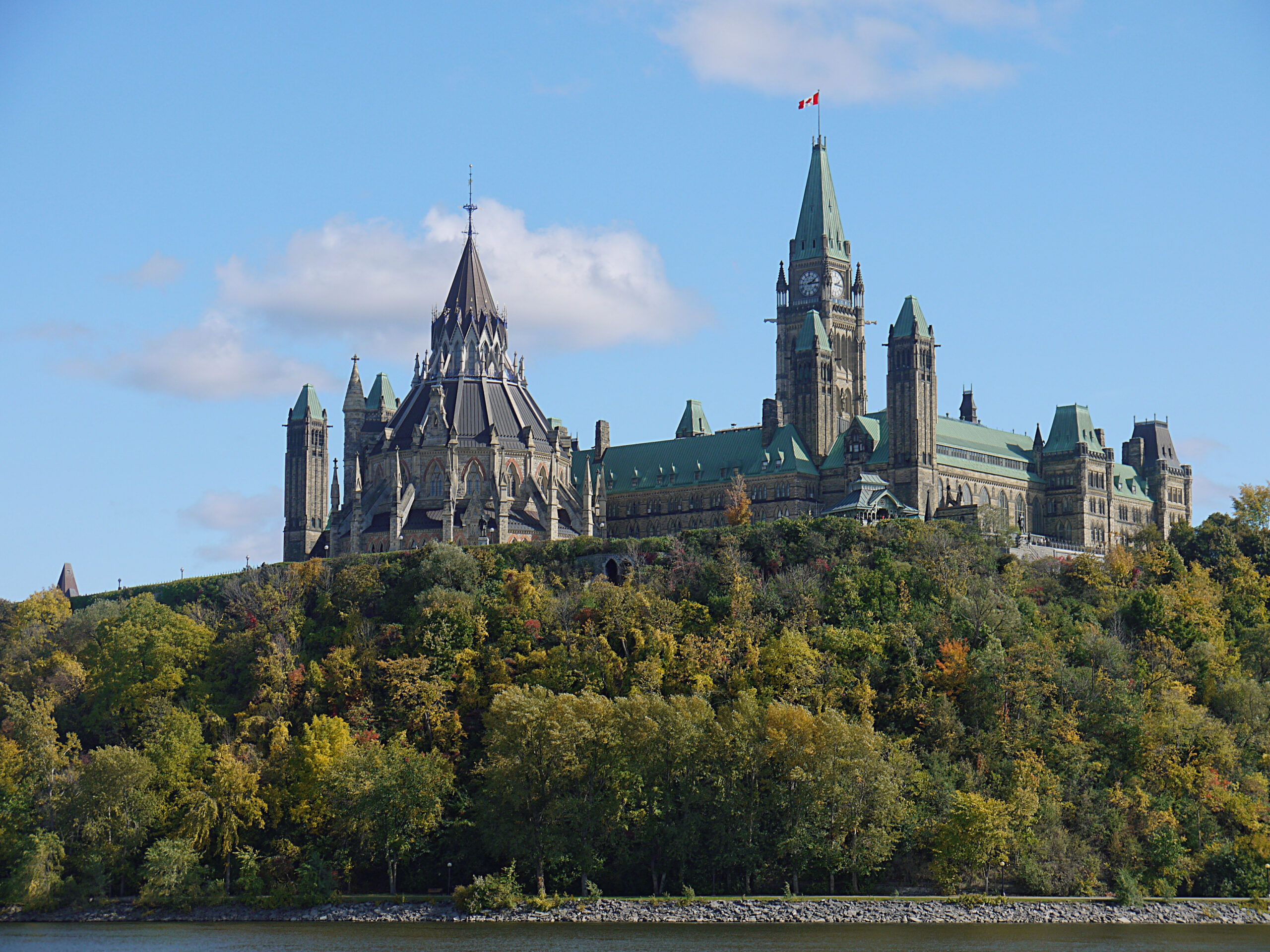
    Parliament Hill and the Ottawa skyline seen across the Ottawa River
    Parliament Hill above the Ottawa River, seen from the Gatineau side (Photo: LBM1948 via Wikimedia Commons, CC BY-SA 4.0)

    Ottawa month by month

    January

    Cold, bright and, after the first week, one of the cheapest months to fly in. The Rideau Canal Skateway usually opens in January, depending on the cold, and once it does the city’s winter comes alive; the Gatineau Park ski trails are in full operation, the Senators are at home, and the museums are quiet. Fares from Canadian cities are at their annual low.

    February

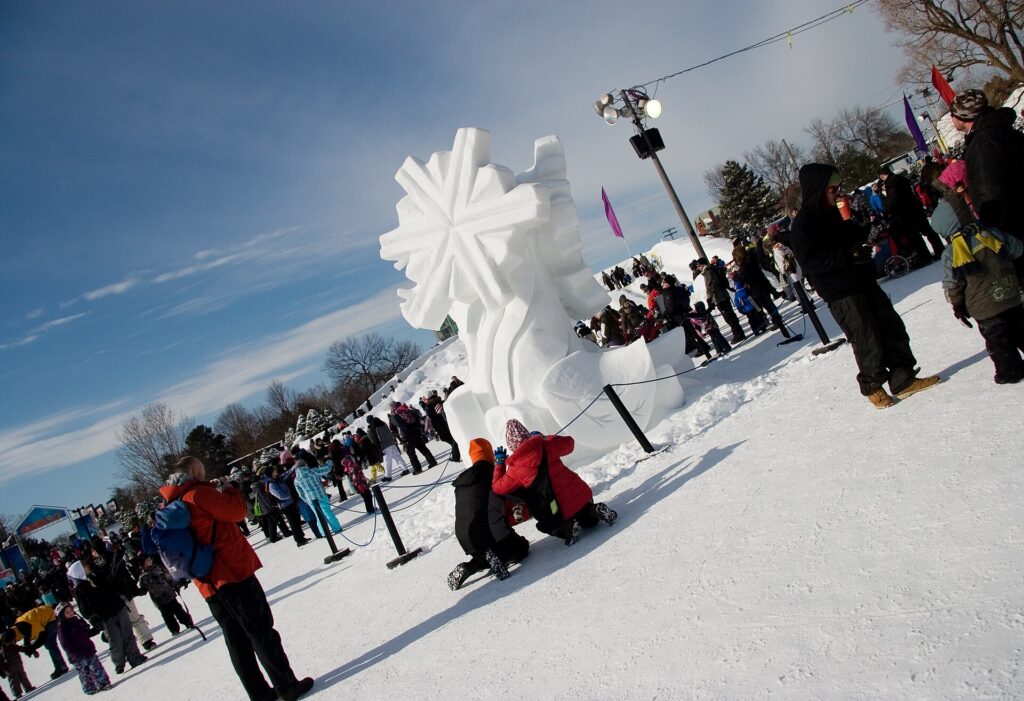
    Winterlude runs over the first three weekends, with ice sculptures in Confederation Park, the snow playground in Gatineau, and the Skateway at its busiest, and it is the one winter stretch when hotels fill and fares rise, especially over the Family Day long weekend on the third Monday. The weekdays between are still cheap, and February is the safest month for good ice.

    March

    The thaw. The Skateway usually closes in the first half of the month, the sugar shacks in the Ottawa Valley and across the river open for maple season, and the mid-to-late March spring break lifts fares for a fortnight. Otherwise a cheap, grey month.

    April

    Wet, grey and then, in the last week, suddenly warm. The canal refills, the paths dry out, and the city’s bikes come out. Fares are low, hotel rates are low, and the museums are the plan.

    May

    Spring arrives in a rush, and the second half is peak: the Canadian Tulip Festival fills Commissioners Park and the Hill for two weeks in the middle of the month, the Race Weekend brings tens of thousands of runners in the last weekend, and the Victoria Day long weekend on the Monday before May 25 sits in the middle of it. Early May is the value play, and it is often warm enough.

    June

    Long, warm, green and lively, with Italian Week on Preston Street, the Jazz Festival in the last week and the Changing of the Guard beginning on the Hill. Fares are moderate and rise as the month ends; the first three weeks are among the best windows of the year.

    July

    Peak. Canada Day on July 1 is the national celebration, and the city is at its fullest and most expensive for the days around it; Bluesfest follows within a week or two at LeBreton Flats and draws big-name headliners for ten days. After Bluesfest ends, the second half of July eases, though the weather stays hot and humid. If you are coming for either event, book the hotel first; the Ottawa hotel search shows what is left.

    August

    The quiet month, and the value month of the summer. Parliament and the civil service are on holiday, the festival crowds have gone, Chamberfest and the Lebanese Festival are the calendar, and the beaches at Meech Lake and Westboro are in use. Fares and hotel rates are noticeably lower than July’s.

    September

    The best month by most measures: warm days, cool nights, the humidity gone, and fares easing after Labour Day. The students return in the first week and the government in the second, which busies the weekday flights, but the weekends and the hotels are soft. The Animation Festival is in late September.

    October

    Crisp and colourful. The Gatineau hills peak in the first two weeks, and the park’s Fall Rhapsody weekends are the busiest of the season on the parkways; Thanksgiving, on the second Monday, is the one date to book around. Fares fall through the month.

    November

    Grey, cold and the cheapest month of the year, with the Christmas lights on the Hill switching on in early December to look forward to. The Senators and Redblacks are both in season. A museums-and-restaurants trip in November costs a fraction of one in July.

    December

    Two months in one. The first half is November’s pricing with the lights on the Hill and in the Market; the last two weeks bring the holiday rise as students and families move, though it is gentler than in Toronto, and the Skateway may open by New Year in a cold year.
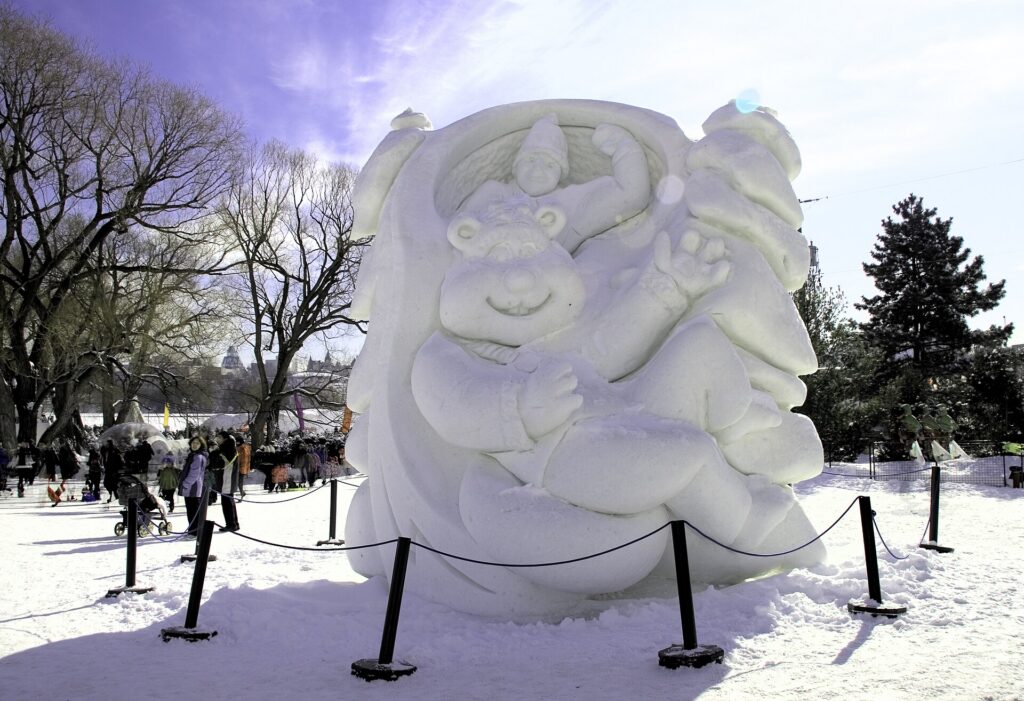
    Skaters on the Rideau Canal Skateway during Winterlude
    Winterlude in February: the one winter stretch when Ottawa fares and hotels rise (Photo: Michel Rathwell from Cornwall, Canada via Wikimedia Commons, CC BY 2.0)

    Events that move Ottawa flight and hotel prices

    Cross-check these against your dates before you book. Exact dates shift each year; Ottawa Tourism keeps the current calendar.

    • Winterlude (first three weekends of February) and the Family Day long weekend.
    • Spring break (mid-to-late March).
    • Canadian Tulip Festival (mid-to-late May) and the Victoria Day weekend.
    • Ottawa Race Weekend (last weekend of May).
    • Ottawa Jazz Festival (late June).
    • Canada Day (July 1): the single largest hotel spike of the year.
    • Bluesfest (early-to-mid July).
    • Labour Day and the university move-in (first week of September).
    • Thanksgiving (second Monday of October) and the Gatineau colour weekends.
    • Christmas to New Year.
    • Senators playoff runs and stadium concerts at TD Place; our Ottawa events page shows what is on sale for your dates.

    Getting in from the airport

    Ottawa has one commercial airport, Ottawa Macdonald-Cartier International (YOW), about 10 kilometres south of downtown, with a single, easy terminal, nonstop flights from most Canadian cities and a handful of U.S. hubs, and seasonal flights to Europe and the sun destinations. The big change of the last few years is rail: the O-Train’s Line 2 and its airport branch, Line 4, now connect the terminal to the city, with a change at South Keys, and take you to Bayview to join the east-west Line 1 through downtown. Taxis and ride-hail pick up outside arrivals and take 20 to 30 minutes to the centre, and the rental counters are in the terminal. Check the airport’s site and OC Transpo for current service; our YOW airport guide covers the layout, and our car-versus-transit guide works through whether you need a rental.
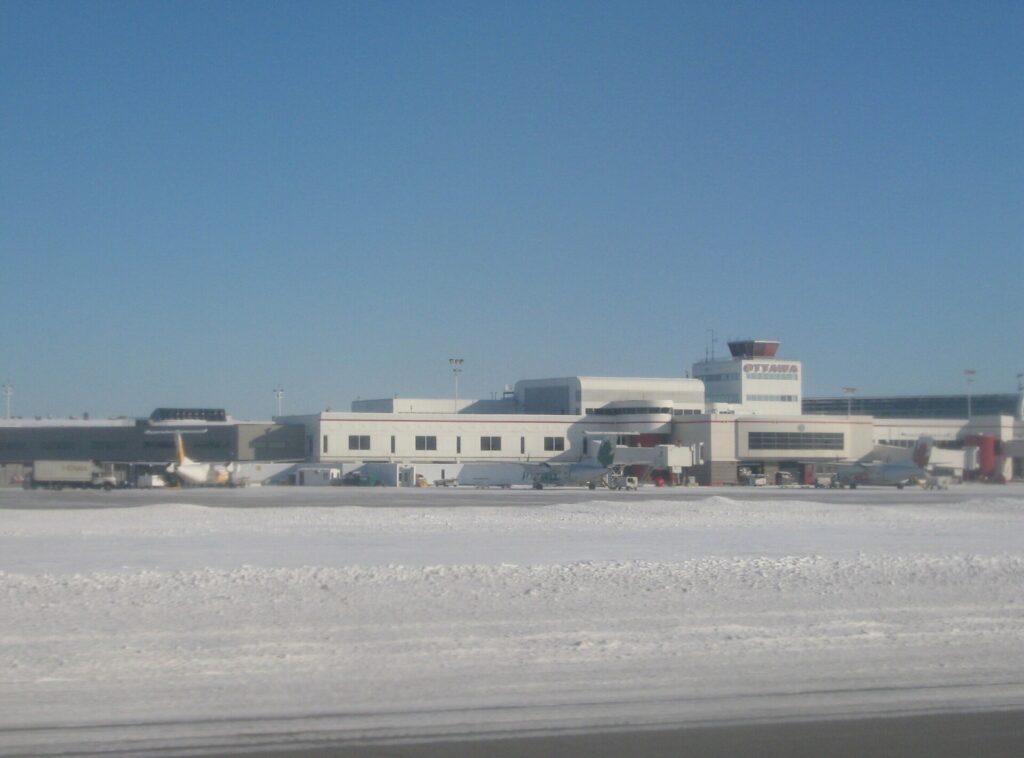
    The terminal at Ottawa Macdonald-Cartier International Airport (YOW)
    Ottawa Macdonald-Cartier International (YOW), now linked to downtown by the O-Train (Photo: dave_7 from Lethbridge, Canada via Wikimedia Commons, CC BY-SA 2.0)

    Timing tricks that work for Ottawa

    • Search the whole month. Ottawa’s spikes are short and sharp: a week either side of Canada Day or the tulips can be dramatically cheaper. A calendar search on TicketScanner shows them instantly.
    • Consider August. It is the anomaly in Ottawa’s calendar: summer weather, empty government, low fares.
    • Book the hotel first for Canada Day, the tulips and Winterlude. Rooms disappear before fares rise; run an Ottawa hotel search before you commit to the flight.
    • Fly mid-week, but not with Parliament. Monday morning and Thursday evening are the government-traveller flights on the Toronto and Montreal routes when the House is sitting; Tuesday and Wednesday, and any day in August, are softer.
    • Price Montreal too. Montreal’s airport is two hours away by train or car and often has better international fares; a Montreal flight plus the train or a one-way rental can beat a direct flight to Ottawa from overseas, and you get two cities for one trip.
    • Toronto by road or rail. From Toronto, VIA Rail and the 401 are competitive with flying once airport time is counted; our Toronto to Ottawa route guide covers the drive.
    • Build a winter buffer. Snow can disrupt YOW between December and March; avoid the tightest connections. Our guide to how early to arrive covers what to allow.
    • Flying out of Ottawa instead? The same seasonality applies in reverse; see cheap flights from Ottawa.

    Ottawa, Montreal or Toronto: choosing your gateway

    Ottawa’s airport is convenient, but it is a regional one, and for anyone flying in from outside Canada the cheapest route is often through one of its bigger neighbours. From the United States, nonstop flights to Ottawa exist from a handful of hubs, and a connection through Toronto or Montreal is normal; from Europe, direct service is seasonal and limited, and most itineraries route through Toronto or Montreal anyway. That makes it worth pricing three options rather than one. First, a direct or one-stop fare into Ottawa. Second, a fare into Montreal, followed by VIA Rail’s two-hour service or a one-way rental up Highway 417, which turns the trip into a two-city holiday and often costs less overall. Third, a fare into Toronto, with a four-and-a-half-hour train or a short connecting flight; Toronto’s long-haul fares are frequently the lowest in the country, and the onward leg is cheap if booked early. The right answer depends on your origin and your dates, but the pattern is consistent: in Ottawa’s three spike periods, when direct fares are at their highest, the Montreal or Toronto route is most likely to save money, and in the low season, when Ottawa’s own fares are soft, the direct flight usually wins on time. Run all three on TicketScanner before you commit, and remember that a hotel in Montreal for a night is not a cost if you wanted to see Montreal anyway.

    How far ahead to book

    Ottawa rewards early booking for its spikes and patience for everything else. For Canada Day, the Tulip Festival and the Winterlude weekends, both flights and hotels tend only to rise as the date approaches, and downtown rooms sell out weeks ahead, so book as soon as your dates are fixed, with the hotel first. For the summer plateau and September, a few weeks out is usually enough for the flight, and hotel rates are stable. For the low season, from November through April, fares are low and flat, last-minute deals are common on the Toronto and Montreal routes, and the only reason to book early is to lock in a particular non-stop time. In every season, a whole-month search on our Ottawa flights page will show you the cheap dates near your own; the difference between a Wednesday and the adjacent Friday can be larger than any discount you will find by waiting.

    What to pack, by season

    Winter (December to March): a genuinely warm coat, a hat, gloves, a scarf, boots with grip, and layers; skates can be rented on the canal. Spring (April to May): a rain shell, layers, and a warm jacket for April; May can be hot. Summer (June to August): light clothing, sun protection, a rain shell for the storms, and something for air-conditioned museums. Fall (September to October): layers, a warm jacket by October, and walking shoes for the Gatineau trails.

    The best time to fly to Ottawa for…

    The tulips

    Mid-to-late May, booked early; the exact peak depends on the spring, and the festival’s site posts bloom updates.

    Canada Day

    Arrive by June 29 and leave July 2 or later, booked months ahead with the hotel first.

    Skating the canal

    February, with January and early March as the fringe; check the ice report before booking non-refundable fares, and consider Winterlude for the atmosphere or a mid-week in late January for the space.

    Fall colours

    The first two weeks of October, with the weekend parkway closures in Gatineau Park adding to the crowds; a weekday is better.

    The lowest fares

    November, and late January to April outside the festival and holiday weekends.

    Families

    August for the beaches and empty museums, or early July for Canada Day if you book far ahead.

    Cross-border and international visitors

    U.S. citizens need a valid passport; most other visa-exempt travellers arriving by air need an Electronic Travel Authorization. The Government of Canada’s visitor page explains what applies to you, and CATSA lists what you can carry through security.

    Frequently asked questions

    What is the cheapest month to fly to Ottawa?

    November and late January through March, outside the Winterlude and Family Day weekends, are consistently the lowest, with April close behind.

    What is the best month to visit Ottawa?

    September for weather and value, May for the tulips, February for the Skateway, and July for Canada Day, in roughly that order of ease.

    How expensive is Ottawa over Canada Day?

    Hotels downtown are at their annual maximum and book out; fares rise too, but less sharply. A week later, the city is at August prices.

    Is Ottawa cheaper than Toronto or Montreal to fly to?

    Often, from Canadian cities; from overseas, Montreal and Toronto usually have the cheaper long-haul fares and Ottawa is a short connection or a train ride from either.

    Can I rely on the Skateway being open?

    No. It depends on sustained cold; February is the safest bet, and a mild winter can shorten or nearly cancel the season. Have a Gatineau Park backup plan.

    How far ahead should I book?

    Earlier for Canada Day, the Tulip Festival and Winterlude, when fares only rise; for the low season, fares are stable and finding the right dates matters more.

    Ready to pick your dates? Compare fares across the whole month on our Ottawa flights page, then find a room with our Ottawa hotel search. For what to do when you land, start with our first-timer’s guide to Ottawa.

  • Ottawa: Should You Rent a Car or Rely on Public Transit?

    Ottawa: Should You Rent a Car or Rely on Public Transit?

    Ottawa is one of the easiest Canadian cities to visit without a car, and one of the few where the question is genuinely close for a lot of visitors. The core is compact: Parliament Hill, the ByWard Market, the National Gallery, the canal, Elgin Street and the Glebe are all within a half-hour walk of each other, the O-Train now runs from the airport through downtown, and the city has more kilometres of paved recreational pathway than almost anywhere in North America. But Ottawa’s second great attraction is Gatineau Park, a wilderness of hills and lakes fifteen minutes from Parliament that has no useful transit at all, and its third is the countryside of canal villages, rafting rivers and sugar shacks around it. So the answer depends on which Ottawa you are visiting. This guide explains how the city is laid out, how transit and fares work, what driving and parking are really like, when a car is worth it, and gives you a straightforward way to decide.

    The short answer

    Skip the car if you are staying downtown, in the ByWard Market or in the Glebe, and your plans are Parliament, the museums, the canal and the neighbourhoods; the O-Train, your feet and a bike will cover everything, and you will not pay downtown parking. Rent a car if Gatineau Park, the Nordik Spa, Wakefield, Merrickville, the rafting rivers or a road trip on to Montreal or Kingston is on the itinerary, if you are staying in the suburbs or Kanata, or if you are visiting in winter with young children. And for most first-time visitors who want both, the hybrid answer is the right one: car-free in the city, a one- or two-day rental picked up downtown for the park and the day trips. Compare rental rates for any of these plans on our Ottawa car rental page.

    How Ottawa is laid out

    Ottawa sits on the south bank of the Ottawa River, with Gatineau, Quebec, on the north bank and five bridges between them. The Rideau Canal runs south from the river through the middle of the city and splits the centre in two: west of it, Parliament Hill, the Sparks Street mall, Centretown and Elgin Street; east of it, the Château Laurier, the Rideau Centre, the ByWard Market, the National Gallery and Lowertown. The Glebe and Lansdowne are south along the canal; Little Italy, Chinatown and Dows Lake are to the southwest; Hintonburg, Wellington West and Westboro run west along the river; New Edinburgh, Rockcliffe and the aviation museum are east along Sussex Drive. Beyond that, the city is a wide ring of suburbs, with Kanata and the Senators’ arena far to the west, Orleans to the east, and Barrhaven and the airport to the south. The inner ring is walkable and cyclable; the suburbs assume a car.

    Hotels cluster around Parliament and the Rideau Centre, in the ByWard Market, along the O-Train corridor to the west, and near the airport and in Kanata for business travellers. Our Ottawa hotel search lets you compare them.

    Getting in from the airport

    Ottawa Macdonald-Cartier International (YOW) is about 10 kilometres south of downtown, and the arrival options have improved sharply. The O-Train‘s Line 4 runs from a station at the terminal to South Keys, where you change to Line 2 north to Bayview and then Line 1 east into downtown; it is a two-change journey but a cheap and reliable one. Taxis and ride-hail pick up outside arrivals and reach the centre in 20 to 30 minutes on the Airport Parkway. Every major rental company has counters in the terminal. Check the airport’s site and OC Transpo for current service; our YOW airport guide covers the layout.

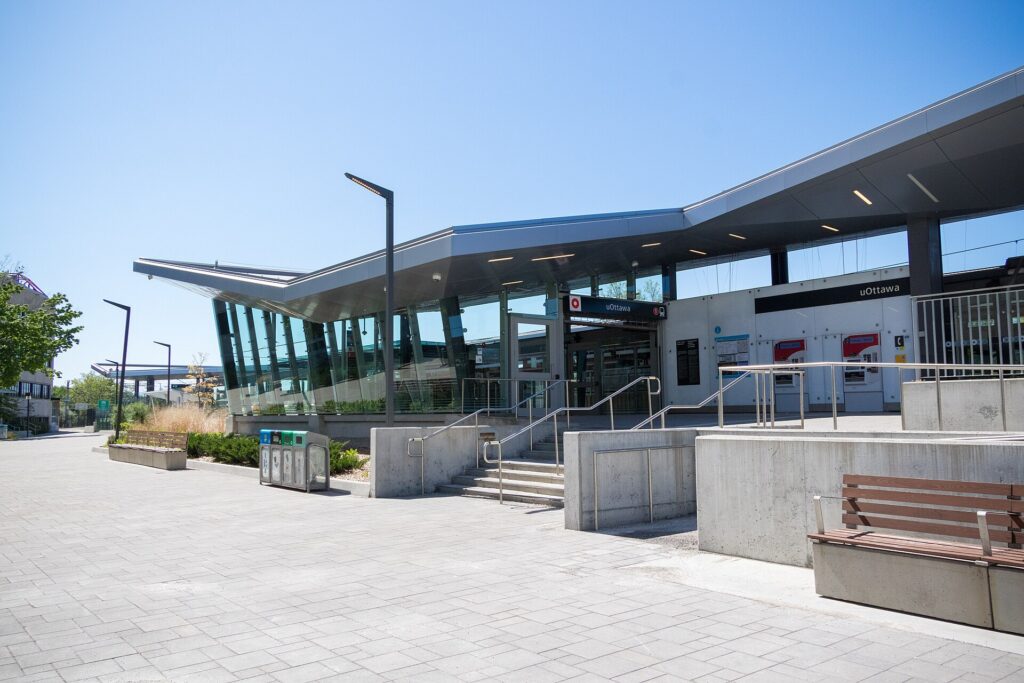
    uOttawa station on the O-Train Confederation Line in Ottawa
    The O-Train's Line 1 at uOttawa station: the rail spine through downtown (Photo: Hutima via Wikimedia Commons, CC BY-SA 4.0)

    Ottawa’s transit, explained

    OC Transpo runs the O-Train light rail and the bus network on the Ontario side; the STO runs the buses in Gatineau, and the two systems accept each other’s fares on cross-river routes. The O-Train has had a difficult first few years, with reliability problems on Line 1 that made local headlines, so check for service notices on the day; when it is running, it is the fastest way across the city.

    The O-Train

    Line 1, the Confederation Line, runs east-west through downtown in a tunnel, with stations at Parliament, Rideau (for the Market and the Rideau Centre), uOttawa and Lyon, and continues west to Tunney’s Pasture and beyond, and east to Blair and, as the extensions open, toward Orleans. Line 2, the Trillium Line, runs north-south from Bayview, where it meets Line 1, past Carleton University and south to Limebank, and Line 4 branches off it to the airport at South Keys. For a visitor, Line 1 is the one you will use daily: Parliament station is a block from the Hill, Rideau is under the Market, and the ride between them is two minutes.

    Buses

    Buses feed the rail lines and cover the neighbourhoods off them, including Elgin Street, the Glebe and Lansdowne, Westboro and Wellington West, the Museum of Nature, the aviation museum at Rockcliffe, and, on game nights, the Senators’ arena in Kanata. Frequencies are good on the main routes during the day and thin out in the evenings; check times before relying on a bus for a late return.

    Fares and tickets

    Tap a contactless credit or debit card, or a phone wallet, on the readers at O-Train fare gates and bus doors, or buy a Presto card, the same card used in Toronto, and load it; single-ride paper tickets are also sold at station machines. A fare gives you 90 minutes of transfers across trains and buses, and day passes are available. Children twelve and under ride free with a fare-paying adult. Fares to and from the airport station are the standard fare. Check OC Transpo’s site for current prices and any special-event fares.

    Accessibility

    Every O-Train station is step-free, and every bus is low-floor and accessible.

    Beyond OC Transpo

    • Walking. Parliament to the Market is ten minutes; the Market to the Glebe is thirty along the canal. Most of a first visit is on foot.
    • Bikes and the pathways. The National Capital Commission’s pathway network runs for hundreds of kilometres along the canal, both rivers and out into Gatineau; bike-share e-bikes and scooters operate from spring to fall, and rental shops near the Market and at Dows Lake hire by the day. On Sunday mornings in summer, the parkways along the river and in Gatineau Park close to cars for cyclists. For a warm-weather visit, a bike is the best transit in the city.
    • Taxis and ride-hail. Uber, Lyft and licensed taxis cover the city; for a group, a short ride is competitive with transit fares and far quicker to Westboro or the aviation museum.
    • Crossing to Gatineau. The Museum of History and old Hull are a walk over the Alexandra or Portage bridge; STO buses cross from downtown; a bike is the best way to the Gatineau side’s paths.
    • Intercity. VIA Rail runs from the station east of downtown to Montreal in two hours and Toronto in four and a half; intercity buses serve the same cities and the towns of the valley.
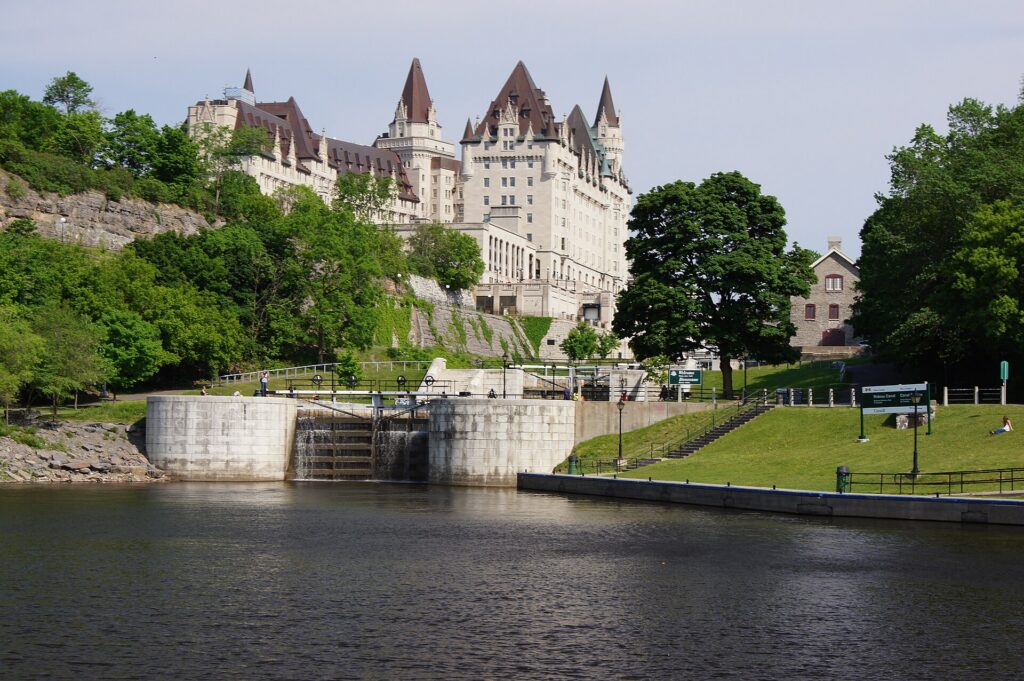
    The Rideau Canal locks below the Château Laurier in Ottawa
    The canal locks below the Château Laurier: the pathways that start here are Ottawa's best summer transit (Photo: DavidWEnstrom via Wikimedia Commons, CC BY-SA 4.0)

    Driving in Ottawa: what it is really like

    Ottawa is an easy city to drive in by the standards of the big Canadian cities. The roads are wide, the grid is mostly logical, the Queensway (Highway 417) runs east-west across the city and is the way to the suburbs, and traffic is calmer than in Toronto or Montreal. The frustrations are specific. The Queensway jams in the weekday peaks, especially through the centre. The bridges to Gatineau back up at rush hour with commuters crossing provinces. Downtown is a tangle of one-way streets around Parliament, with Wellington Street in front of the Hill closed to through traffic, and it is not a place to drive between sights that are ten minutes apart on foot. Construction season runs from May to October. And winter is real: snow is cleared efficiently, but the side streets narrow to one lane between snowbanks, freezing rain is a hazard, and the Gatineau Park roads are closed to cars for the ski season.

    Parking

    Downtown hotels charge a nightly parking fee that is lower than Toronto’s but not trivial, and the commercial garages around the Rideau Centre and Sparks Street are priced accordingly. Street parking is metered downtown, with a phone-app option, and is free on Sundays and holidays in most of the core; it is scarce in the ByWard Market at any hour, and nearly impossible on a summer weekend evening. The museums have their own lots, which are the easy part; the aviation and agriculture museums, the War Museum and the Museum of History all have parking on site. In Gatineau Park, the parking lots at the lakes and the main trailheads fill by mid-morning on summer weekends and during the fall colour season, and the park charges for parking at the popular beaches. During Canada Day, the Tulip Festival and Winterlude, parking near the events is not worth attempting; take the O-Train.

    Rules and conditions worth knowing

    • Two provinces. Cross a bridge and the rules change: Quebec requires winter tires on every vehicle from December 1 to March 15, including rentals, and Quebec’s rental cars will have them; Ontario does not require them, and an Ontario rental may be on all-seasons. If you plan to drive in Gatineau in winter, ask for winter tires when you book.
    • Right turns on red are permitted after a full stop in Ottawa and, since 2003, in Gatineau outside the old Montreal-style ban, but watch for signs at individual intersections.
    • Photo radar and red-light cameras operate in Ottawa’s school zones and at major intersections; fines follow the car and the rental company will bill you.
    • Gatineau Park’s parkways close to cars on summer Sunday mornings and for the winter; check the National Capital Commission’s site for closures and the fall colour weekend shuttle system.
    • Highway 417 and the 401 to Toronto are toll-free; the 407 near Toronto is a toll road that bills the rental company by plate. See our Toronto to Ottawa route guide.
    • Fuel is cheaper in Ontario than in Quebec; fill up on the Ottawa side.
    • Wildlife is real on the Gatineau Park roads and the rural highways at dusk.
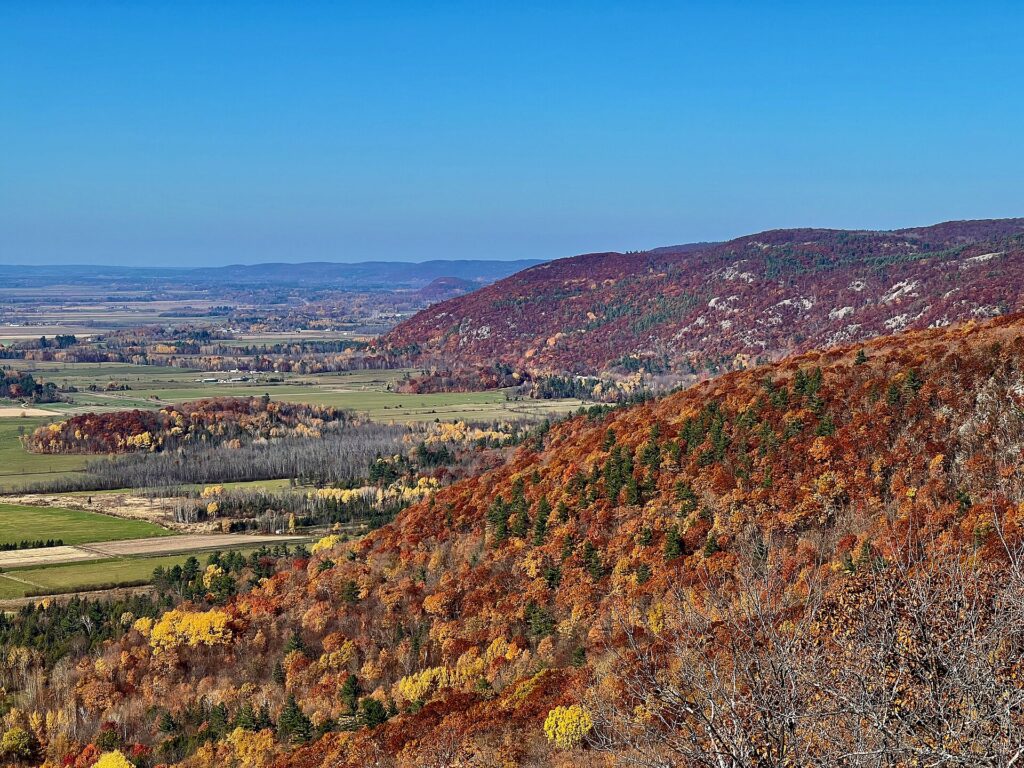
    The view from the Champlain Lookout in Gatineau Park in autumn
    Gatineau Park, fifteen minutes from Parliament and the main reason to rent a car (Photo: Dwong33 via Wikimedia Commons, Public domain)

    When renting a car makes sense

    • Gatineau Park. The Mackenzie King Estate, the Champlain Lookout, Meech Lake and the trailheads have no useful transit; a car turns the park from a logistical problem into a fifteen-minute drive.
    • Chelsea, Wakefield and the Nordik Spa, in the hills beyond the park.
    • Merrickville and the canal villages, an hour southwest along the Rideau.
    • Whitewater rafting on the Ottawa River near Beachburg, ninety minutes west.
    • Upper Canada Village, Kingston and the Thousand Islands, ninety minutes to two hours south.
    • Sugar shacks in March and April, in the valley on both sides of the river.
    • Senators games at the Kanata arena, which is a long bus ride from downtown; a car or a ride-hail is faster.
    • Staying in the suburbs or Kanata, or visiting family there.
    • A road trip on to Montreal, Quebec City or Toronto; one-way rentals between the cities are routine.

    If any of those apply, our rental car booking tips cover insurance, deposits and the questions to ask at the counter.

    When it does not

    • You are staying downtown, in the Market or in the Glebe and your plans are the city.
    • You are in town for Canada Day, the Tulip Festival or Winterlude, when the streets around the events close and parking vanishes.
    • You are visiting in summer and happy to cycle; the pathways reach most of what a visitor wants.
    • You are travelling solo and the rental, insurance and parking add up to more than a couple of ride-hails and a day pass.

    The hybrid plan

    Go car-free for the city days and rent for the park and the countryside. Pick the car up downtown, not at the airport: the airport concession fees are avoided, you do not pay hotel parking on the nights you are not using the car, and the drive to Gatineau Park from downtown is fifteen minutes over the Portage Bridge. Most companies have branches around the Rideau Centre and along Catherine Street south of downtown. Return it downtown before the last city day or at the airport on the way to the flight, which most companies allow within the city at little or no extra charge. Ask for winter tires from November to April if Gatineau is in the plan. Compare the day rates on our Ottawa car rental page against a full-trip rental and the difference is usually obvious.

    A worked cost comparison

    Numbers change with the season and the booking window, so treat this as a method rather than a quote, and check current rates before deciding. For a three-night city break downtown for two, the car-free version costs two O-Train fares from the airport and back, a day pass or two, a bike-share afternoon and perhaps one ride-hail to Westboro for dinner; the rental version adds three days of a compact car, three nights of hotel parking, fuel and airport fees, and buys almost nothing you could not walk or ride to. Transit wins easily. For the same three nights plus a Gatineau Park day, the car-free version adds a taxi or ride-hail to the park and back, which is possible but awkward for a trailhead; the hybrid version adds a one-day rental from downtown, fuel and park parking, and gives you the whole park, the lookouts and Wakefield. The hybrid wins on value and flexibility. For a five-day trip with Merrickville, rafting and a drive on to Montreal, a rental for the whole stay from the airport, returned one-way in Montreal, is the only practical answer. Run the rates for your dates and put them beside the transit fares before you choose.

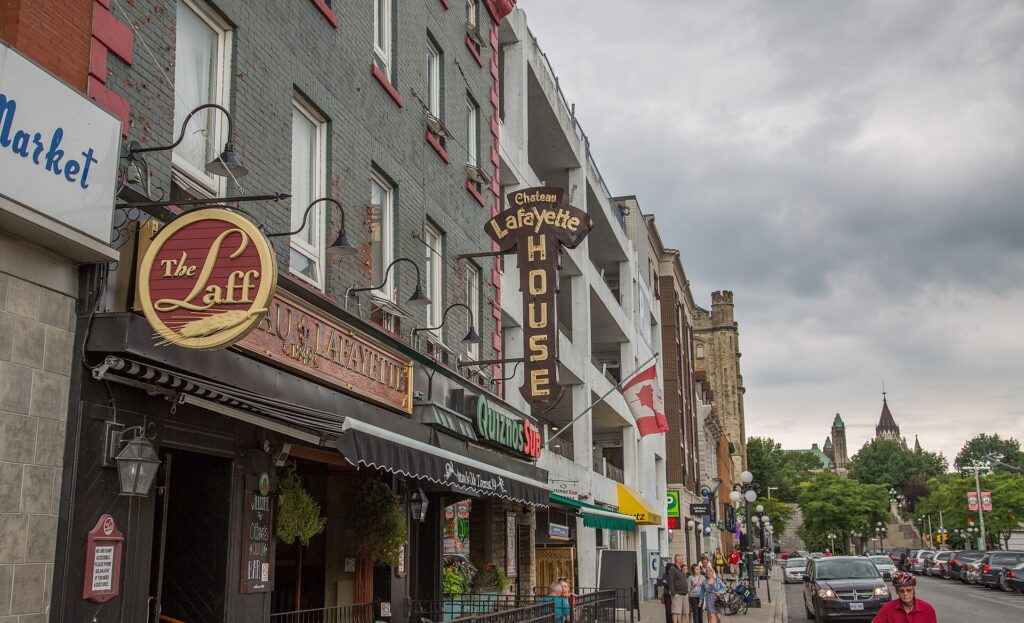
    York Street in the ByWard Market, Ottawa
    The ByWard Market: walkable from Parliament, and the hardest place in the city to park (Photo: Tony Webster via Wikimedia Commons, CC BY-SA 4.0)

    Decision table

    Your tripRecommendationWhy
    City break downtown, couple or soloNo carEverything is walkable or on Line 1; parking is a cost with no benefit
    Canada Day, Tulip Festival or WinterludeNo carStreet closures and no parking; the O-Train stops at the events
    City plus Gatineau ParkHybrid: one-day rental from downtownCar-free city days, a car for the park
    Summer visit, activeNo car, rent bikesThe pathway network reaches most sights and the Gatineau side
    Winter with young childrenRent, with winter tiresGear, cold and Gatineau’s ski trails all argue for a car
    Family visit to the suburbs or KanataRent for the whole staySuburban distances make the car worthwhile daily
    Ottawa plus Montreal or KingstonRent (consider one-way) or take the trainVIA Rail is competitive between the cities; a car adds the countryside
    Senators game nightRide-hail or a rentalThe Kanata arena is a long bus ride from downtown

    Money-saving tips for both options

    • On transit: tap a credit card rather than buying paper tickets; use a day pass on a heavy museum day; children twelve and under are free; take the O-Train from the airport.
    • On a rental: pick up downtown rather than at the airport, rent only for the park and day-trip days, ask for winter tires in the cold months if Gatineau is in the plan, decline extras you already have through a credit card or home policy (check first), and fill up in Ontario.
    • On the hotel: if you are renting, price the parking fee into the room rate, or choose a hotel with free parking on the O-Train corridor and ride in.
    • On timing: avoid the Queensway and the bridges in the weekday peaks, and Gatineau Park’s parkways on summer Sunday mornings and fall colour weekends, when they close or fill; the best time to fly to Ottawa guide lists the busy weekends.
    • On the museums: the parking lots are free or cheap, but the O-Train and the pathways reach the National Gallery, the Museum of History and the Museum of Nature without a car.

    Frequently asked questions

    Is it worth renting a car in Ottawa?

    Not for the city, which is compact and well served by the O-Train and the pathways. For Gatineau Park, the canal villages, the rafting rivers or the suburbs, yes; rent for those days only.

    Is Ottawa public transit good for tourists?

    Good within the core: Line 1 links Parliament, the Market and the university in minutes, and the airport is now on the rail network. Buses cover the rest. Check for O-Train service notices on the day.

    How do I get from Ottawa airport to downtown?

    The O-Train, with changes at South Keys and Bayview, for a standard fare; a taxi or ride-hail in 20 to 30 minutes; or a rental from the terminal.

    Can I get to Gatineau Park without a car?

    Only awkwardly: a taxi or ride-hail to a trailhead, a bike along the pathways to the park’s southern edge, or a tour. A one-day rental is the practical answer.

    Do I need winter tires in Ottawa?

    Not by law in Ontario, but yes in Quebec from December 1 to March 15, which includes Gatineau and the park. Ask for them when you book.

    Is parking expensive in downtown Ottawa?

    Moderate by big-city standards, with hotel fees lower than Toronto’s; the ByWard Market is the hard place to park at any time, and event days are impossible.

    Should I drive or take the train from Toronto or Montreal?

    VIA Rail is two hours from Montreal and four and a half from Toronto, city centre to city centre, and is hard to beat for a city visit. Drive if you want the countryside or are continuing on a road trip; our Toronto to Ottawa guide covers the route, and our Montreal transit guide covers the other end.

    Whichever way you go, start with the flight. Compare cheap flights to Ottawa, choose a neighbourhood with our Ottawa hotel search, and if Gatineau Park is on the list, price the rental for those days on our Ottawa car rental page.

  • Things to Do in Ottawa: A First-Timer’s Guide

    Things to Do in Ottawa: A First-Timer’s Guide

    Ottawa has a reputation to overcome. It is the capital, which means visitors expect a government town of grey buildings and early nights, and what they find instead is a compact, green, bilingual city on two rivers and a canal, with a concentration of national museums that no other Canadian city can match, a market district that has been feeding people since 1826, a wilderness park fifteen minutes from Parliament, and a calendar of festivals, tulips in May, Canada Day in July, the Skateway in February, that gives every season its own reason to come. It is also cheaper than Toronto and Montreal, easier to get around than either, and small enough that a first visit covers most of it on foot. This guide walks through the sights that earn a day, the neighbourhoods worth a half-day, the museums, Gatineau across the river, the food, the festivals, the day trips, and the practical details.

    If you are still comparing cheap flights to Ottawa, read this alongside our guides to the best time to fly to Ottawa and whether you need a car. Between the three you can plan the whole trip.

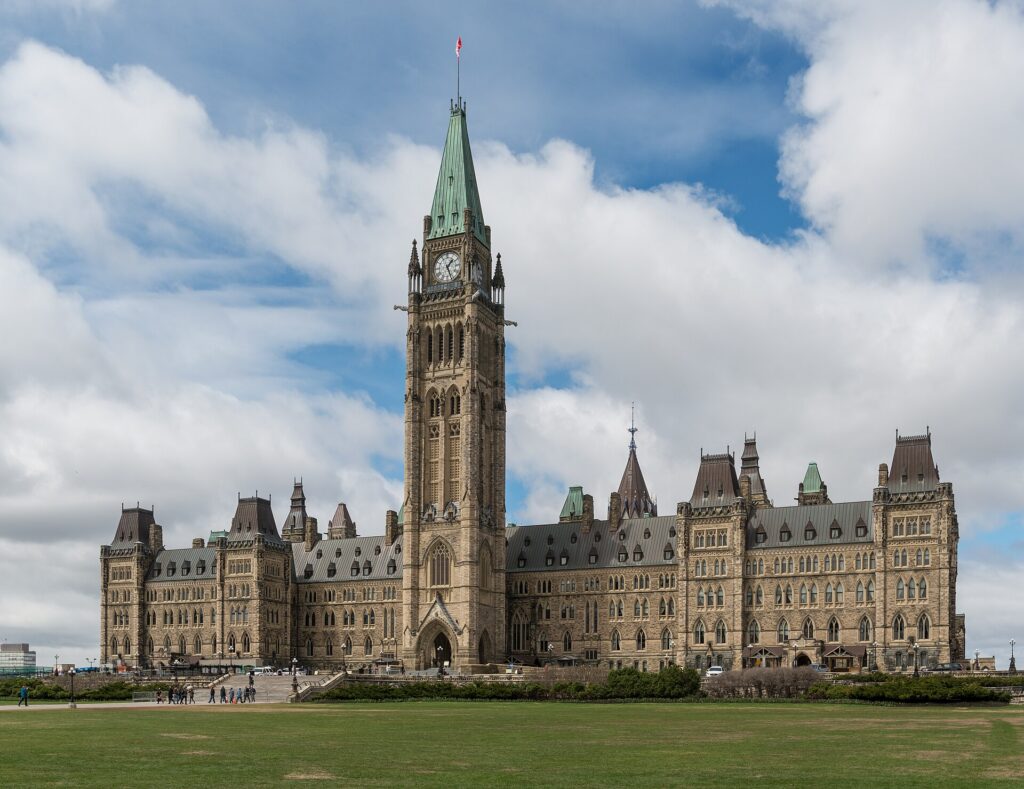
    Centre Block and the Peace Tower on Parliament Hill, Ottawa
    Centre Block and the Peace Tower on Parliament Hill, mid-restoration but still the heart of the city (Photo: DXR via Wikimedia Commons, CC BY-SA 4.0)

    Ottawa at a glance for first-timers

    • Airport: Ottawa Macdonald-Cartier International (YOW), about 10 km south of downtown; the O-Train’s Line 2 and Line 4 now connect the terminal to the city, and a taxi takes 20 to 30 minutes. See our YOW airport guide.
    • Getting around: the O-Train light rail runs east-west through downtown and now south to the airport; the core, from Parliament to the ByWard Market to the Glebe, is walkable; the pathways along the canal and the rivers are made for bikes. A car is only for Gatineau Park and day trips.
    • Money: Canadian dollars; Ontario’s 13 percent HST is added at the till. Tipping 15 to 20 percent in restaurants is customary.
    • Language: English and French, with Gatineau across the river mostly French-speaking. Everyone in the tourist trade speaks English.
    • Weather: a genuine four-season city, with hot, humid summers, a glorious brief fall, cold snowy winters that the city embraces, and a spring that arrives all at once in May. Our month-by-month guide has the detail.
    • Where to stay: downtown for Parliament and the museums; the ByWard Market for food and nightlife; the Glebe or Westboro for a residential feel. Our Ottawa hotel search covers them all.

    Parliament Hill and the Peace Tower

    Start where the city does. Parliament Hill, on a limestone bluff above the Ottawa River, is the set piece: the Gothic Revival Centre Block with the Peace Tower, flanked by the East and West Blocks and, behind it, the round Library of Parliament, the only part of the original building to survive the 1916 fire. Centre Block is closed for a restoration that will run for years, so the House of Commons sits temporarily in a glass-roofed courtyard in West Block and the Senate in the old railway station across Wellington Street, and both offer free guided tours when Parliament is not sitting; book through the Parliament of Canada’s visitor site well ahead in summer. In summer, the Changing of the Guard takes place on the lawn every morning and a sound-and-light show plays on the Centre Block facade after dark; on Canada Day, the Hill is the centre of the national celebration. The grounds, the Centennial Flame and the statues are open all year, and the walk behind the buildings along the cliff edge, with the river and Gatineau below, is the best free view in the city. Across Wellington, the Supreme Court and the Bank of Canada Museum, which is small, free and better than it sounds, complete the precinct.

    The Rideau Canal, in every season

    The Rideau Canal was built in the 1820s as a military route between Ottawa and Kingston, and its 202 kilometres of locks, lakes and cut channels are a UNESCO World Heritage Site. In Ottawa it runs from the Ottawa River, where eight stepped locks climb the hill beside the Château Laurier, south through the middle of the city to Dows Lake, and it is the city’s spine. In summer, walk or cycle the paths on either side, rent a kayak or paddleboard at Dows Lake, and watch the locks being cranked by hand at the bottom of the flight. In winter, from January into March in a good year, it freezes into the Rideau Canal Skateway, 7.8 kilometres of maintained ice through the centre of the city, with skate rentals at the access points, warming huts, and BeaverTails pastries sold on the ice. It is one of the great winter experiences in the country, and it is free. The season depends entirely on the weather; check the National Capital Commission’s site for current ice conditions.

    Skaters on the frozen Rideau Canal during Winterlude in Ottawa
    The Rideau Canal Skateway: 7.8 kilometres of skating through the middle of the city in winter (Photo: Michel Rathwell from Cornwall, Canada via Wikimedia Commons, CC BY 2.0)

    The ByWard Market

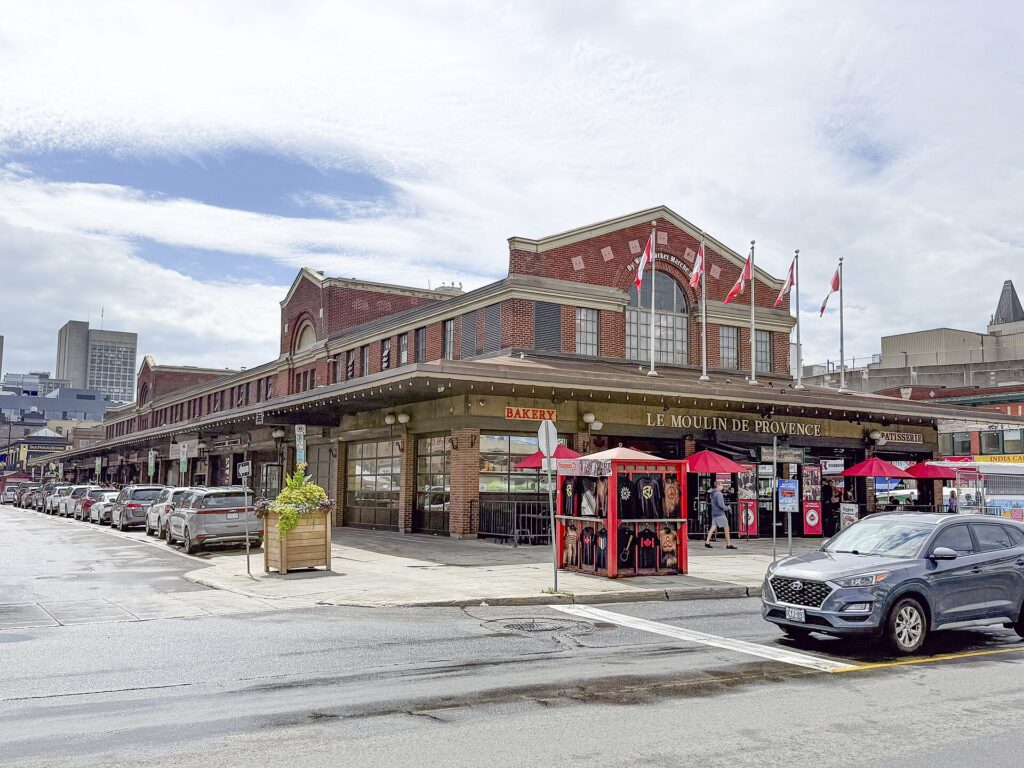
    East of the canal, the ByWard Market is the oldest part of the city and its liveliest. The market building itself, with its food stalls and artisans, and the outdoor produce and flower stands around it are the daytime draw; the surrounding blocks hold the densest concentration of restaurants, bars, cafés and pubs in Ottawa, which makes it the evening one. It is also where you find the BeaverTail stand that started the chain, the Ottawa Art Gallery, a free contemporary gallery, and, a block north, the Notre-Dame Cathedral Basilica, whose twin spires face the National Gallery. On weekend nights the Market is the city’s nightlife district and can be rowdy; on a weekday morning it is the best place in the city for breakfast and a wander.

    The ByWard Market building in Ottawa
    The ByWard Market, Ottawa's oldest neighbourhood and its food and nightlife district (Photo: Hayden Soloviev via Wikimedia Commons, CC BY 4.0)

    The national museums

    Ottawa’s museums are its strongest hand, and the good ones are genuinely among the best in the country. The National Gallery of Canada, a glass-and-granite building by Moshe Safdie beside the ByWard Market, holds the definitive collection of Canadian art, from the Group of Seven to contemporary Indigenous work, plus a reconstructed convent chapel and Louise Bourgeois’s giant spider, Maman, on the plaza outside. The Canadian Museum of History, across the river in Gatineau with the best view of Parliament from its lawn, is the country’s most visited museum: the Grand Hall of Pacific coast totem poles, the Canadian History Hall, a children’s museum and an IMAX theatre. The Canadian War Museum, west of downtown on the river, is a serious, moving building with a collection that ranges from the War of 1812 to Afghanistan. The Canadian Museum of Nature, in a castle-like Victorian building south of downtown, has the dinosaurs and a blue whale skeleton and is the children’s favourite. The Canada Aviation and Space Museum, out at Rockcliffe, has one of the finest aircraft collections in the world; the Canada Science and Technology Museum and the Canada Agriculture and Food Museum, a working farm in the middle of the city, round out the family options. Most are free on Thursday evenings; a museums passport, sold at the participating institutions, covers several for one price if you plan to see three or more.

    Neighbourhoods worth a half-day

    Centretown and Elgin Street

    The blocks south of Parliament are the working downtown, and Elgin Street, running south from Confederation Square, is its restaurant and bar row, with Ottawa’s city hall and the Museum of Nature at its southern end. Sparks Street, a block from Parliament, is the pedestrian mall, quiet in the evenings and better for lunch.

    The Glebe and Lansdowne

    South along the canal, the Glebe is a leafy neighbourhood of Edwardian houses, independent shops and cafés along Bank Street, and at its foot is Lansdowne Park, with the football stadium, the Aberdeen Pavilion farmers’ market, the Great Lawn and a strip of restaurants. It is where Ottawa spends a Saturday.

    Westboro and Wellington West

    West of downtown, Wellington Street West and Richmond Road run through two neighbourhoods that have become the city’s best stretch of independent restaurants, bakeries, bookshops and outdoor-gear stores, ending at Westboro Beach on the river. The Parkdale Market is the smaller, friendlier cousin of the ByWard.

    Little Italy and Chinatown

    Preston Street, Little Italy, and Somerset Street West, Chinatown, meet near Dows Lake and share the city’s best cheap, good food; Italian Week in June closes Preston to traffic.

    Hintonburg

    Between Little Italy and Westboro, the former working-class neighbourhood is now the city’s most interesting for breweries, galleries and small restaurants, and it borders the City Centre complex of makers and bakers.

    New Edinburgh and Rockcliffe

    East of the Market along Sussex Drive, past the Royal Canadian Mint, where you can tour the production of collector coins, and the prime minister’s residence, are the embassies, Rideau Hall, the governor general’s residence with free tours and grounds open all year, and the grand houses of Rockcliffe Park.

    Gatineau, across the river

    Ottawa’s twin city sits on the Quebec side of the river, and a visit is not complete without crossing. The Museum of History is the first reason. Gatineau Park is the second: 361 square kilometres of Canadian Shield hills, lakes and forest beginning fifteen minutes from Parliament, with the Mackenzie King Estate, the lookouts along the Champlain Parkway, swimming at Meech Lake, hundreds of kilometres of hiking and mountain-bike trails, and, in winter, the best cross-country skiing network in the country. The fall colours in the first two weeks of October are the park’s most famous fortnight. The Nordik Spa in Chelsea, the largest outdoor spa in North America, is the third reason, and the fourth is the casino and the old Hull neighbourhood’s restaurants and terrasses. The park and Chelsea need a car or a bike; the museum and Hull are a walk across the Alexandra or Portage bridge.

    Festivals and events

    Ottawa’s calendar is one of its main attractions, and several of these are worth planning a trip around. The Canadian Tulip Festival, in the second half of May, fills Commissioners Park beside Dows Lake and the Parliament grounds with a million tulips, a gift from the Netherlands that dates from the Second World War. Canada Day, July 1, is the biggest national celebration in the country, with concerts on the Hill and LeBreton Flats and fireworks over the river. Bluesfest, in early-to-mid July at LeBreton Flats, is one of the largest outdoor music festivals in Canada and books headliners far beyond blues. The Ottawa Jazz Festival in late June, Chamberfest in late July, the Ottawa International Animation Festival in September and the Ottawa Race Weekend in late May fill in the summer. In winter, Winterlude, over three weekends in February, brings ice sculptures to Confederation Park, a snow playground in Gatineau and the Skateway at its busiest. Check Ottawa Tourism for dates, and our Ottawa events page for what is on sale during your visit.

    Tulip beds at Commissioners Park during the Canadian Tulip Festival in Ottawa
    Commissioners Park beside Dows Lake during the Canadian Tulip Festival in May (Photo: elPadawan via Wikimedia Commons, CC BY-SA 2.0)

    Sports

    The Ottawa Senators play at the Canadian Tire Centre in Kanata, on the western edge of the city, until their planned move to a new arena at LeBreton Flats; a game night is a bus or a drive. The Ottawa Redblacks play Canadian football at TD Place at Lansdowne from June to November, a far easier evening from downtown, and Atlético Ottawa plays professional soccer in the same stadium. The Ottawa Charge play in the Professional Women’s Hockey League, and the 67’s are the junior hockey team, both at TD Place’s arena. See what is on sale in Ottawa for your dates.

    What to eat, and where

    Ottawa’s food scene has grown up in the last fifteen years, and the pattern is easy to follow: the ByWard Market for breakfast, lunch and late nights, Elgin Street and Centretown for dinner, and the western neighbourhoods, Hintonburg, Wellington West and Westboro, for the independent restaurants that locals argue about. Three things are specifically Ottawan. The BeaverTail, a flat fried pastry with cinnamon sugar or worse, was invented here and is best eaten on the canal ice. The shawarma is the city’s late-night food, with a Lebanese community that has made Ottawa the shawarma capital of Canada; there is one on nearly every downtown block. And the Ottawa Valley supplies the farmers’ markets, the ByWard, Lansdowne and Parkdale, with the maple syrup, cheese and produce that the better restaurants build on. Across the river, Gatineau and Chelsea have the French-Canadian bistros, and a poutine or a tourtière on the Quebec side is worth the bridge. Coffee is taken seriously, especially in Hintonburg and the Glebe.

    Ottawa through the seasons

    Spring (April to May) is the Tulip Festival, the canal filling with water again, and the Race Weekend; April is grey and wet, May is the reward. Summer (June to August) is Canada Day, Bluesfest, the Changing of the Guard, the sound-and-light show, swimming at Meech Lake, the patios in the Market and on Elgin, and hot, humid days that suit the river beaches. Fall (September to October) is the local favourite: warm days, cool nights, the Gatineau hills in colour, the Animation Festival and the Fall Rhapsody in the park. Winter (December to March) is the Skateway, Winterlude, cross-country skiing in Gatineau Park, the Christmas lights on the Hill, and a city that has decided to enjoy the cold. Our month-by-month guide matches each season to fares.

    Ottawa with kids

    Few Canadian cities are easier with children. The Museum of Nature’s dinosaurs, the Museum of History’s children’s museum, the aviation museum’s hangars and the working farm at the Agriculture Museum, where you can watch the cows being milked, fill four days on their own. Skating on the canal in winter, and the Snowflake Kingdom during Winterlude, are the winter draws; the beaches at Meech Lake, Britannia and Westboro, the splash pads in the parks, and the paddle boats at Dows Lake are the summer ones. The Changing of the Guard on the Hill and the Mint tour appeal to older children. Calypso, the large waterpark east of the city, is a car trip.

    Ottawa on a budget

    Much of the best of the city is free: Parliament Hill and its tours, the Changing of the Guard and the sound-and-light show, the Rideau Canal in any season, Rideau Hall’s grounds, the Ottawa Art Gallery, the Bank of Canada Museum, the ByWard Market itself, the river and canal pathways, and Gatineau Park’s trails. The national museums charge admission, but most are free on Thursday evenings, and the museums passport reduces the cost of several. Shawarma and the Market’s food stalls are the cheap meals; the farmers’ markets are the cheap picnics. Hotels are consistently cheaper than Toronto’s or Montreal’s outside Canada Day, the Tulip Festival and Winterlude; compare by neighbourhood on our Ottawa hotel search.

    Day trips from Ottawa

    Gatineau Park is the obvious one. Montreal is two hours by train or car, and many visitors do both cities on one trip; our Montreal guide covers it. Kingston, two hours south, is the other end of the Rideau Canal, with Fort Henry and the Thousand Islands cruises. Merrickville, an hour along the canal, is the prettiest of the canal villages, and Wakefield, in the Gatineau hills, has a covered bridge, a steam-train heritage and the best cafés outside the city. Upper Canada Village, a living-history settlement on the St. Lawrence, is ninety minutes south. Whitewater rafting on the Ottawa River, ninety minutes west, is among the best in North America from May to September. Most of these need a car; see our Ottawa car rental page, and, if you are arriving from Toronto by road, our Toronto to Ottawa route guide.

    Two sample itineraries

    Two days, no car

    Day one: Parliament Hill in the morning, with a tour booked in advance, then the National Gallery, a late lunch in the ByWard Market, the Notre-Dame Basilica, a walk down the canal locks and along the water to the Château Laurier, and dinner and the evening in the Market. Day two: cross the river to the Museum of History for the morning, walk back along the Ottawa River pathway past the War Museum, lunch on Elgin Street, the Museum of Nature or a canal walk to the Glebe and Lansdowne in the afternoon, and dinner in Hintonburg or Wellington West.

    Four days, with a car

    Add a day in Gatineau Park with the Mackenzie King Estate, the lookouts, a swim or a hike, and the Nordik Spa or Wakefield on the way back, and a day for Merrickville and the canal villages, or, in winter, the Skateway in the morning and cross-country skiing in the park in the afternoon.

    Practical details

    • Transit: OC Transpo’s O-Train and buses; buy a Presto card or tap a credit card on the readers. See our transit-versus-car guide for detail.
    • From YOW: the O-Train from the terminal, a taxi or ride-hail in 20 to 30 minutes, or a rental from the terminal. The airport’s site covers ground transport.
    • Weather: Environment Canada’s forecast is the one to check; pack for real cold in winter and real heat in summer.
    • Time zone: Eastern, the same as Toronto, Montreal and New York.
    • Entry requirements: U.S. citizens need a valid passport; most other visa-exempt visitors arriving by air need an Electronic Travel Authorization. The Government of Canada’s visitor page is the authoritative source.
    • Safety: a safe city; the Market late on weekend nights is the only place that needs ordinary caution.

    Frequently asked questions

    How many days do you need in Ottawa?

    Two full days covers Parliament, the canal, the Market and two or three museums; three lets you cross to Gatineau properly; four adds the park and a day trip.

    What is Ottawa best known for?

    Parliament Hill, the Rideau Canal and its winter Skateway, the national museums, the Tulip Festival and Canada Day.

    Is Ottawa worth visiting?

    Yes, and more so than its reputation suggests: it has the best museums in Canada, a walkable core, a wilderness park on its doorstep and lower prices than Toronto or Montreal.

    Is Ottawa walkable?

    Very. Parliament, the Market, the canal, Elgin Street and the National Gallery are all within twenty minutes of each other on foot, and the O-Train covers the rest.

    Do I need a car in Ottawa?

    Not for the city. For Gatineau Park, the canal villages and the rafting rivers, yes; rent for those days only.

    When does the Rideau Canal Skateway open?

    It depends on the cold. In a good winter it opens in January and runs into early March; in a mild one it may open late or for only a few weeks. Check the National Capital Commission’s site for conditions.

    Is Ottawa expensive?

    Less than Toronto, Vancouver or Montreal for hotels and dining, with the exception of Canada Day, the Tulip Festival and Winterlude weekends.

    Ready to go? Compare flights to Ottawa, find a place to stay with our Ottawa hotel search, and if Gatineau Park or the valley is on the list, price a rental car for those days.