
Halifax is a port city first and everything else second. It sits on one of the largest natural harbours in the world, its history is written in shipwrecks, convoys, an explosion that levelled half the city in 1917 and the graves of Titanic victims, and its downtown runs down a hill to a four-kilometre boardwalk where the ferries, the tall ships and the Navy’s frigates come and go. It is also the biggest city in Atlantic Canada, a university town with a pub on every corner, a music scene out of proportion to its size, a seafood culture built on lobster and scallops and chowder, and the base for the two most famous day trips in the country, Peggy’s Cove and Lunenburg. It is compact, friendly and cheaper than the big cities, and a first visit covers the essentials in two days and the coast in two more. This guide covers the sights, the neighbourhoods, Dartmouth across the water, the food and the pubs, the seasons, the day trips and the practical details.
If you are still comparing cheap flights to Halifax, read this alongside our guides to the best time to fly to Halifax and whether you need a car. Between the three you can plan the whole trip.
Halifax at a glance for first-timers
- Airport: Halifax Stanfield International (YHZ), about 35 km northeast of downtown in Enfield, the most distant big-city airport in Canada; a taxi or ride-hail takes 30 to 40 minutes, and the MetroX bus reaches downtown in about an hour. See our YHZ airport guide.
- Getting around: downtown, the waterfront, the Citadel, the Public Gardens and the North End are walkable, though hilly; the ferry to Dartmouth is transit and a sight at once; the buses cover the rest. A car is only for the coast.
- Money: Canadian dollars; Nova Scotia’s 14 percent HST is added at the till. Tipping 15 to 20 percent in restaurants is customary.
- Weather: maritime and moody: cool foggy springs, warm summers that peak in August, a long mild fall, and snowy, windy winters with freeze-thaw cycles rather than deep cold. Our month-by-month guide has the detail.
- Where to stay: the downtown waterfront for the boardwalk and the pubs; the South End near the universities and Point Pleasant for quiet; the North End for the restaurants; Dartmouth across the ferry for value and the view. Our Halifax hotel search covers them all.
The waterfront boardwalk
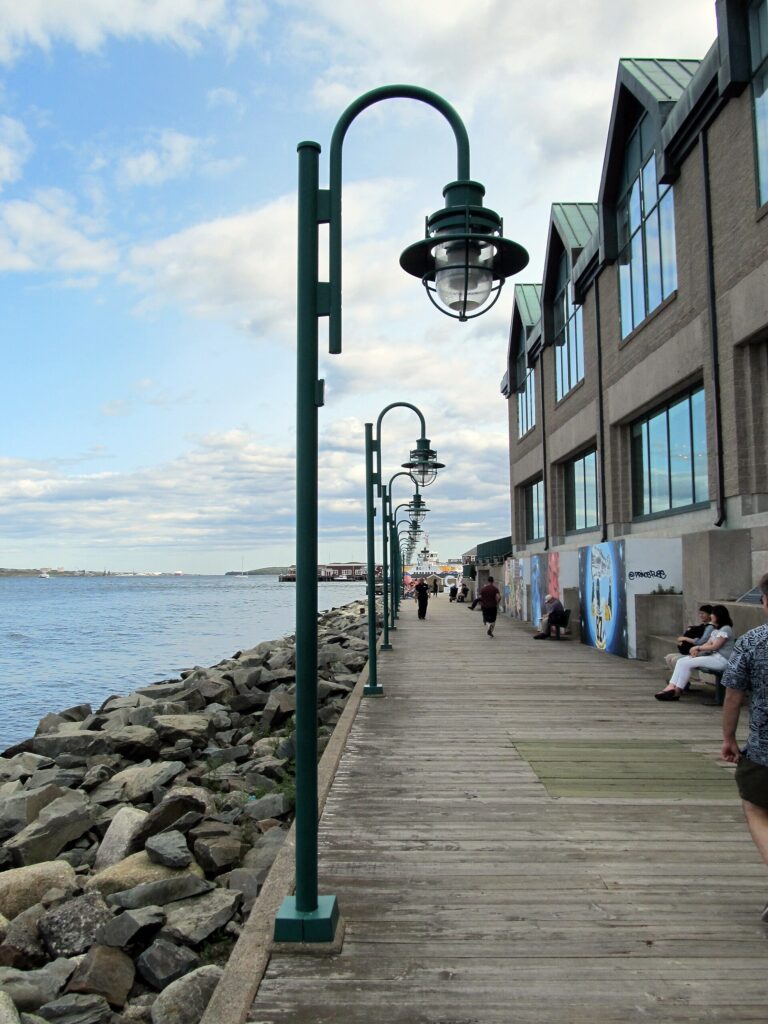
Start at the water. The Halifax waterfront boardwalk runs for about four kilometres along the harbour from the Casino and the Seaport farmers’ market at the south end past the ferry terminal, the Historic Properties warehouses, the Maritime Museum, the tall ships, the hammocks and food stalls, the wave sculpture that every child climbs, and the Navy dockyard at the north end. In summer it is the busiest place in the province, with buskers, patios, ice cream, harbour tours, the Theodore Tugboat replica and, on Canada Day and during the Busker Festival, the whole city; in winter it is a cold, bracing walk with the harbour steaming. The Maritime Museum of the Atlantic, in the middle of it, is the essential indoor stop: the Titanic gallery, with a deck chair and the story of how Halifax’s ships recovered the bodies; the Halifax Explosion gallery, about the 1917 collision that killed nearly two thousand people; the age of sail and the convoys; and the CSS Acadia moored outside. The Canadian Museum of Immigration at Pier 21, at the southern end beside the cruise terminal, tells the story of the million immigrants who entered Canada through this building between 1928 and 1971, and is one of the best museums in the country for anyone with a family connection. The Halifax Seaport Farmers’ Market, the oldest continuously operating farmers’ market in North America, is beside it on Saturday mornings.
Citadel Hill
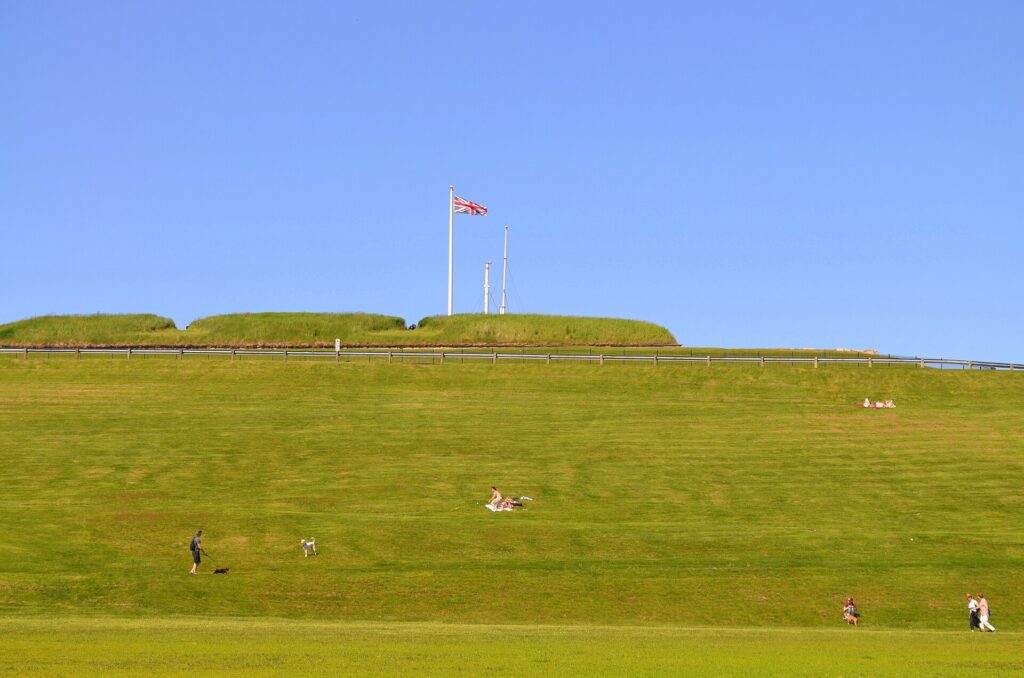
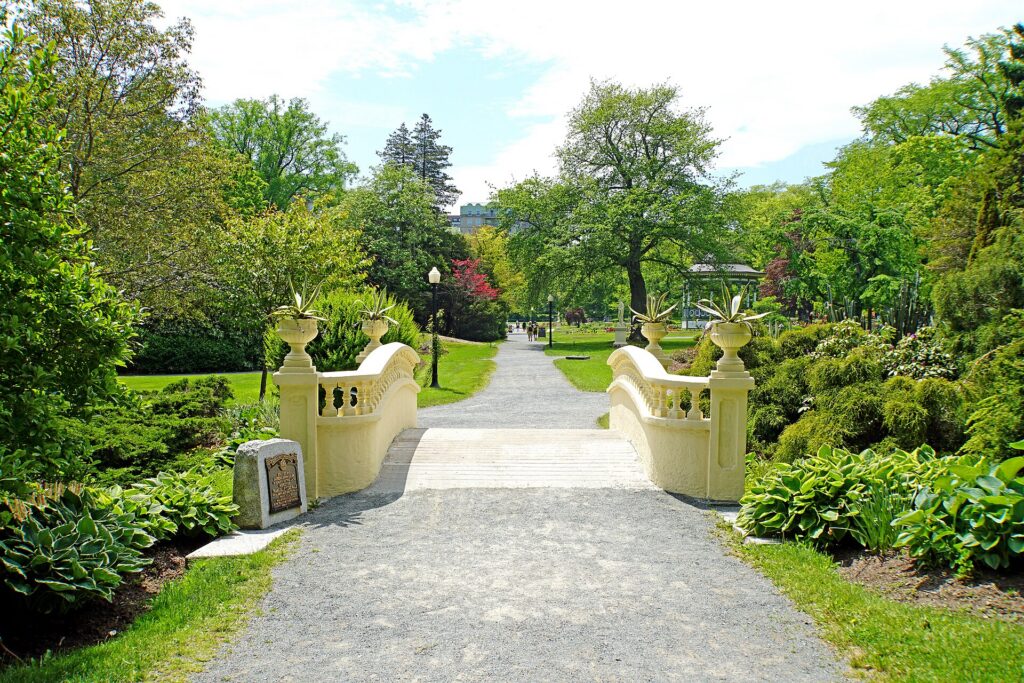
Above downtown, the Halifax Citadel is the star-shaped fort the British completed in 1856, the fourth on the site, and it is the city’s landmark: the noon gun that fires every day, the 78th Highlanders in kilts in summer, the Town Clock on the slope below that Prince Edward gave the city in 1803, and, from the ramparts, the view over the harbour to Dartmouth and out to sea that explains why the city is here. The fort has a good museum, a ghost tour in the evenings, and a lawn that is the city’s sledding hill in winter and its picnic spot in summer. Around it, the Halifax Common is the big park, and the Public Gardens, at the southern corner, are a formal Victorian garden of ponds, bandstand, fountains and flowerbeds, opened in 1867 and one of the finest surviving examples of their kind in North America; they are free and open from spring to late fall.
Downtown, Spring Garden Road and the South End
Downtown Halifax is a compact grid of streets running downhill from the Citadel to the water, and its landmarks are close together: the Art Gallery of Nova Scotia, whose great treasure is the reassembled painted house of the folk artist Maud Lewis; Province House, the oldest legislature in Canada, with free tours; St. Paul’s, the oldest Protestant church in the country; the Halifax Central Library, a glass-and-cantilever building on Spring Garden Road that became an instant landmark in 2014 and has a rooftop terrace with a view; and Argyle Street, the pedestrian-friendly block of patios and bars that is the city’s evening centre. Spring Garden Road is the shopping street, running west from the library past the Public Gardens toward the universities. The South End, beyond it, is the leafy district of Dalhousie and Saint Mary’s universities, Victorian houses, and, at its tip, Point Pleasant Park, a 75-hectare wooded park on the harbour mouth with sea views, ruined batteries, a Martello tower and the city’s best walk.
The North End
North of the Citadel, the North End is the neighbourhood the Explosion destroyed and the one the city’s restaurant scene has since rebuilt. Gottingen Street and Agricola Street are the two spines, lined with the small restaurants, bakeries, cafés, breweries and bars that locals argue over, plus the Hydrostone, the garden-city neighbourhood built after 1917 that is now a pretty strip of shops and cafés on Young Street. The Halifax Explosion memorial at Fort Needham Park, on a hill above the Narrows where the ships collided, is the place to understand what happened; the memorial bells ring at 9:04 each December 6. The North End is a fifteen-minute walk from downtown and is where to eat dinner.
Dartmouth, by ferry
The Halifax-Dartmouth ferry is the oldest saltwater ferry service in North America, has run since 1752, and is the single best value in the city: a regular transit fare buys twelve minutes on the harbour with the downtown skyline, the Navy ships and the bridges around you. Dartmouth, on the other side, has reinvented itself in the last decade: Alderney Landing and its farmers’ market at the ferry terminal, the restaurants and shops along Portland Street, the Dartmouth Harbourwalk, and a chain of lakes, Banook and Micmac, with beaches and canoe clubs ten minutes from the ferry. The Alderney Ferry lands you in the middle of it; the Woodside Ferry goes to the eastern side. Do it once for the crossing and again for dinner.
What to eat, and where
Halifax eats from the sea. Lobster, from the boiled-whole to the roll, is everywhere and best in season, which on the South Shore is late spring and on the Eastern Shore is summer; Digby scallops, seared, are the province’s other signature; chowder, thick with haddock and cream, is the winter dish; fish and chips with haddock is the everyday one; and oysters from the North Shore and Cape Breton have their own bars downtown. The donair, a Halifax invention of spiced beef, sweet garlic sauce and a pita, is the city’s official food and its 2 a.m. one; every pizza shop sells it. The Seaport market is the Saturday morning; the North End, Argyle Street and the waterfront patios are the evenings; and Dartmouth’s Portland Street is the value. Halifax also has one of the best craft beer scenes in Canada, with a dozen breweries within walking distance of downtown, and the pub culture, live Celtic and folk music most nights, is a genuine part of the city rather than a tourist show; the Old Triangle, the Lower Deck on the waterfront and the Carleton are the standards. Coffee is taken seriously in the North End.
Music, festivals and events
Halifax is a music city with a small-city budget, and it punches far above its weight. The Halifax Jazz Festival in July, the Busker Festival on the waterfront in late July or August, the Halifax Pride festival, one of the largest in Canada, in July, the Atlantic Film Festival in September, the Halifax Pop Explosion in October and the Royal Nova Scotia International Tattoo, a military and cultural show in the arena in late June or early July, are the anchors. Natal Day, the city’s birthday on the first weekend of August, brings fireworks over the harbour; Canada Day on the waterfront is the biggest single day. Nocturne, the all-night art festival in October, and the Christmas tree lighting on the Grand Parade in November fill the shoulder seasons. The Halifax Mooseheads play junior hockey at the Scotiabank Centre downtown, which also hosts the arena concerts; the Halifax Wanderers play professional soccer at the Wanderers Grounds beside the Common from spring to fall. Discover Halifax keeps the calendar, and our Halifax events page lists what is on sale during your dates.
Halifax through the seasons
Summer (late June to early September) is the season: the boardwalk at full volume, the tall ships, the festivals, the patios, the beaches at Crystal Crescent and Lawrencetown, and the coast at its best. August is the warmest month and the busiest. Fall (mid-September to October) is the local favourite: warm, settled, less foggy than spring, with the film festival and Pop Explosion, the Cabot Trail in colour in mid-October, and the cruise ships in port. Winter (December to March) is grey, wet and windy more than deeply cold, with nor’easters that drop snow and then rain, the Citadel’s sledding hill, the pubs at their cosiest, and the lowest prices of the year. Spring (April to mid-June) is slow, foggy and cool, with the Public Gardens opening in May and the lobster season on the South Shore. Our month-by-month guide matches each season to fares.
Halifax with kids
The waterfront is a playground on its own: the wave sculpture, the hammocks, the Theodore Tugboat harbour tour, the ferries, the tall ships in summer and the Maritime Museum’s Titanic gallery. The Citadel’s noon gun, the soldiers and the sledding hill are a hit; the Discovery Centre, the science centre on the waterfront, is the rainy-day option; the Public Gardens have ducks and a model of the Titanic in the pond; Point Pleasant has trails and ruins to explore; and Dartmouth’s lakes have beaches. Peggy’s Cove needs close supervision on the rocks. Lunenburg’s Fisheries Museum and the Bluenose II, when she is in port, are the coastal day.
Beaches, trails and the outdoors near the city
Halifax is a city where the outdoors starts at the edge of downtown. Point Pleasant Park is the everyday walk, with 39 kilometres of trails through the woods on the harbour mouth, still recovering from Hurricane Juan’s damage in 2003 and the better for its new sightlines to the sea. McNabs Island, in the middle of the harbour and reached by a short boat from Eastern Passage, has abandoned forts, beaches and trails and almost no people. The Halifax Common and the Dartmouth lakes, Banook and Micmac, are the swimming and paddling spots within the city; Long Lake Provincial Park, on the western edge, has trails and a swimming lake twenty minutes from downtown. The beaches are the summer reason to rent a car for a day: Crystal Crescent, half an hour south, is three white-sand crescents on the open Atlantic with a coastal trail beyond them; Lawrencetown, half an hour east, is the surf beach, with board and wetsuit rentals and a year-round surf community that paddles out in January; Rainbow Haven and Martinique, further along the Eastern Shore, are longer and emptier. The water is cold in every month, warmest in late August and September. For a walk with a view, the Bluff Wilderness Trail southwest of the city and the Polly’s Cove trail beside Peggy’s Cove are the locals’ choices, and Duncan’s Cove, on the way to Crystal Crescent, is a coastal path over granite barrens with the same scenery as Peggy’s Cove and none of the coaches. Kayak rentals and guided paddles run from the waterfront and from the Eastern Passage in summer, and the harbour, with its islands and its Navy ships, is a good place to be on the water.
Halifax on a budget
The best of Halifax is free or nearly so: the boardwalk, the Citadel’s grounds and the view, the Public Gardens, Point Pleasant Park, the Common, the ferry crossing for a transit fare, the Seaport market, the Explosion memorial, and the busker and Canada Day festivals. The museums are modestly priced and the Art Gallery has free evenings; check its site. Eat cheaply on donairs, fish and chips, the market stalls and Dartmouth’s Portland Street. Hotels are cheaper than in the big cities outside July and August and the cruise-ship days; compare by neighbourhood on our Halifax hotel search.
Day trips from Halifax
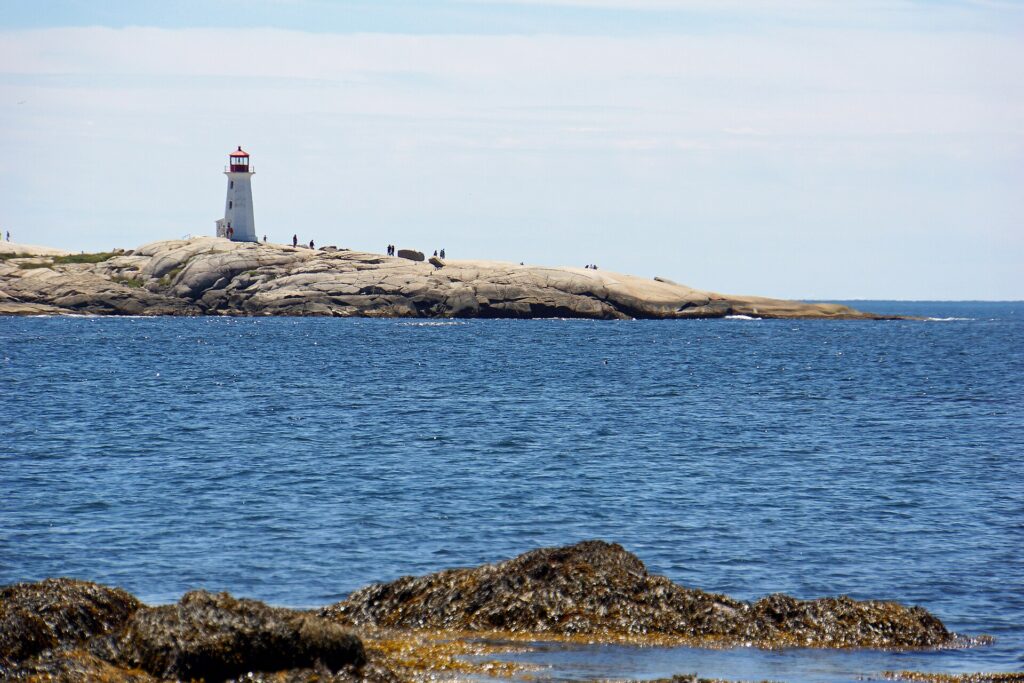
Peggy’s Cove, 45 minutes southwest, is the tiny fishing village on a granite headland whose lighthouse is the most photographed in Canada; go early or late to avoid the coaches, stay off the black rocks, and have the chowder. Lunenburg, ninety minutes down the South Shore, is a UNESCO World Heritage Site, a perfectly preserved eighteenth-century British colonial town of painted wooden houses on a hill above the harbour, home of the Bluenose II schooner and the Fisheries Museum of the Atlantic, with Mahone Bay‘s three churches and Chester on the way. Together they are the classic day. The Annapolis Valley, an hour northwest, has the wineries, the apple orchards and the tidal marshes of Grand-Pré, a UNESCO site of the Acadian expulsion. Lawrencetown Beach, half an hour east, is the surf beach. The Bay of Fundy and its tides are ninety minutes north. And Cape Breton’s Cabot Trail, five hours away, is the great road trip of the region, better as two or three nights. All of these need a car; see our Halifax car rental page, and Tourism Nova Scotia for the province.
Two sample itineraries
Two days, no car
Day one: the Citadel in the morning for the noon gun, the Public Gardens, lunch on Spring Garden Road and the library’s rooftop, the Art Gallery and Province House in the afternoon, a walk down to the waterfront, and dinner and live music on Argyle Street. Day two: the Seaport market or Pier 21 first, the boardwalk end to end with the Maritime Museum in the middle, the ferry to Dartmouth for lunch on Portland Street, back across for an afternoon in Point Pleasant Park, and dinner in the North End.
Four days, with a car
Add a day for Peggy’s Cove in the morning and the South Shore to Lunenburg via Chester and Mahone Bay, and a day for the Annapolis Valley wineries and Grand-Pré, or Lawrencetown and the Eastern Shore; with more time, drive the Cabot Trail.
Practical details
- Transit: Halifax Transit’s buses and ferries; pay cash with exact change, buy tickets, or use the HFXGO app. See our transit-versus-car guide for detail.
- From YHZ: a taxi or ride-hail in 30 to 40 minutes, the MetroX 320 bus in about an hour, or a rental from the terminal. The airport’s site covers ground transport.
- Weather: a windproof, waterproof layer in every season, and warm layers from November to April. Environment Canada’s forecast is the one to check, and the fog rolls in without warning.
- Time zone: Atlantic, one hour ahead of Toronto and New York.
- Entry requirements: U.S. citizens need a valid passport; most other visa-exempt visitors arriving by air need an Electronic Travel Authorization. The Government of Canada’s visitor page is the authoritative source.
- Safety: a safe, friendly city; the rocks at Peggy’s Cove are the one genuine hazard in the region, and they kill visitors who ignore the signs.
Frequently asked questions
How many days do you need in Halifax?
Two full days covers the waterfront, the Citadel, the museums and Dartmouth; two more for Peggy’s Cove, Lunenburg and the valley; and two or three more if the Cabot Trail is the goal.
What is Halifax best known for?
The harbour and the boardwalk, the Citadel, the Titanic and Halifax Explosion histories, Pier 21, Peggy’s Cove and Lunenburg nearby, lobster, donairs and the pub music scene.
Is Halifax walkable?
Very, though hilly: the waterfront, downtown, the Citadel, the Gardens, the North End and Point Pleasant are all within a half hour of each other on foot, and the ferry covers Dartmouth.
Do I need a car in Halifax?
Not for the city. For Peggy’s Cove, Lunenburg, the valley and Cape Breton, yes; rent for those days only.
When is lobster season in Nova Scotia?
It varies by district: the South Shore near Halifax fishes from late November to May, so spring is the local peak, while the Eastern Shore and the Gulf side fish in summer. Lobster is available year-round in restaurants.
Is Halifax expensive?
Less than Toronto, Vancouver or Montreal outside the July and August peak, though the HST is higher and hotel supply is tight on cruise and festival days.
Which is better, Peggy’s Cove or Lunenburg?
Both, in one day: Peggy’s Cove early for the lighthouse without the coaches, then the South Shore road to Lunenburg for lunch and the afternoon.
Ready to go? Compare flights to Halifax, find a place to stay with our Halifax hotel search, and if the coast is on the list, price a rental car for those days.
Keep planning with TicketScanner
- Cheap flights to Halifax
- Halifax hotels — by neighbourhood
- Halifax car rentals — for Peggy's Cove, Lunenburg and the Cabot Trail
- Events in Halifax — Mooseheads, concerts and shows on sale
- Best time to fly to Halifax: month by month
- Halifax: rent a car or use transit?
- Halifax Stanfield (YHZ) airport guide
- Where to stay: the downtown waterfront
- Things to do in Quebec City
Leave a Reply