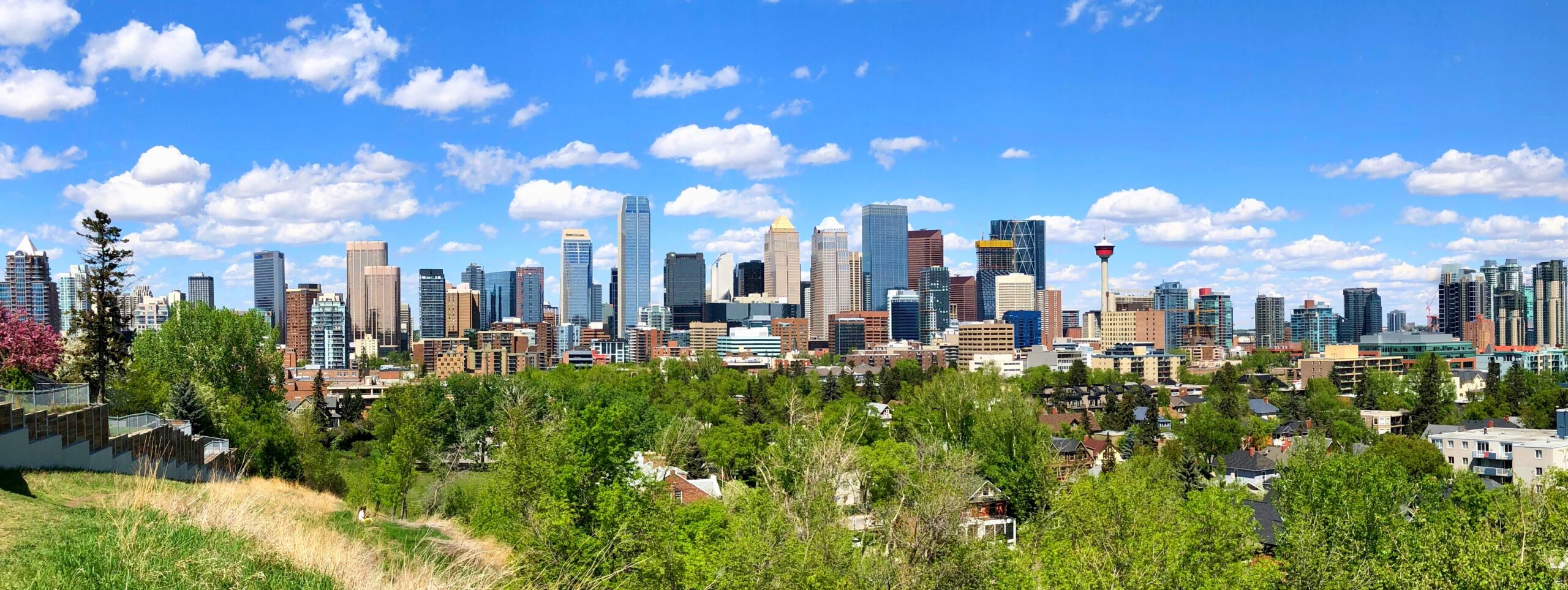
Calgary gets underestimated. Most visitors treat it as the airport for Banff, spend a night near the highway and drive west, and they miss a city that has quietly become one of the most interesting in Canada: a downtown rebuilt around a river, a music museum and a library that architecture critics travel to see, neighbourhoods full of independent restaurants, a food scene built on Alberta beef and one of the country’s best Vietnamese communities, and, for ten days every July, the biggest party in the country. And the mountains are still ninety minutes away. This guide covers the sights that earn a day, the neighbourhoods worth a half-day, the food, the Stampede and the sports, the day trips that make Calgary a base as much as a destination, and the practical details that turn a stopover into a trip.
If you are still comparing cheap flights to Calgary, read this alongside our guides to the best time to fly to Calgary and whether you need a car. Between the three you can plan the whole trip.
Calgary at a glance for first-timers
- Airport: Calgary International (YYC), in the northeast about 17 km from downtown; the Route 300 bus, a taxi or a rental gets you in. See our YYC airport guide.
- Getting around: the CTrain covers downtown, Kensington and the Stampede grounds, and is free within the downtown zone; the inner city is walkable and the river pathways are made for bikes. Beyond that, and for the mountains, most visitors rent a car.
- Money: Canadian dollars. Alberta has no provincial sales tax, so only the 5 percent federal GST is added at the till, which makes shopping and dining noticeably cheaper than in Ontario or Quebec. Tipping 15 to 20 percent in restaurants is customary.
- Weather: sunny and dry in every season, cold winters with sudden chinook thaws, cool nights even in July, and the possibility of snow in any month. Pack layers. Our month-by-month guide has the detail.
- Where to stay: downtown for the Tower, Stephen Avenue and the +15; the Beltline for restaurants and nightlife; Kensington or Inglewood for a local feel; the west side of the city if Banff is the focus. Our Calgary hotel search covers them all.
Downtown: the Tower, Stephen Avenue and the +15
The Calgary Tower is where to start. It was the tallest structure in the city when it opened in 1968 and has long since been overtaken by the office towers around it, but the observation deck, with a glass floor and a view that stretches from the prairie to the whole front range of the Rockies on a clear day, is still the best way to understand the geography. Below it, Stephen Avenue, the pedestrian stretch of 8 Avenue, is the historic heart of downtown: sandstone buildings from the city’s first boom, restaurants with terraces in summer, the Core shopping centre with its indoor Devonian Gardens, and the Glenbow, the city’s main museum of art and history, which has been closed for a multi-year rebuild; check its site for its reopening status before you plan around it. Above street level, the +15 network of enclosed walkways links most of downtown one storey up, and walking a few blocks of it is a genuinely Calgarian experience, especially in winter.
The East Village: Studio Bell and the Central Library
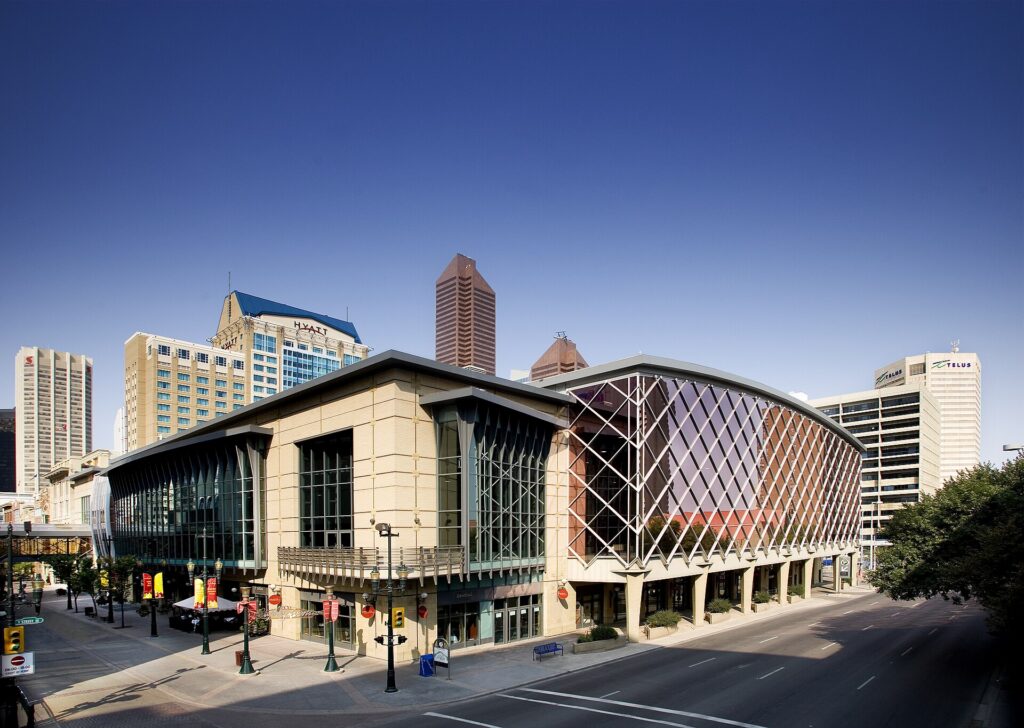
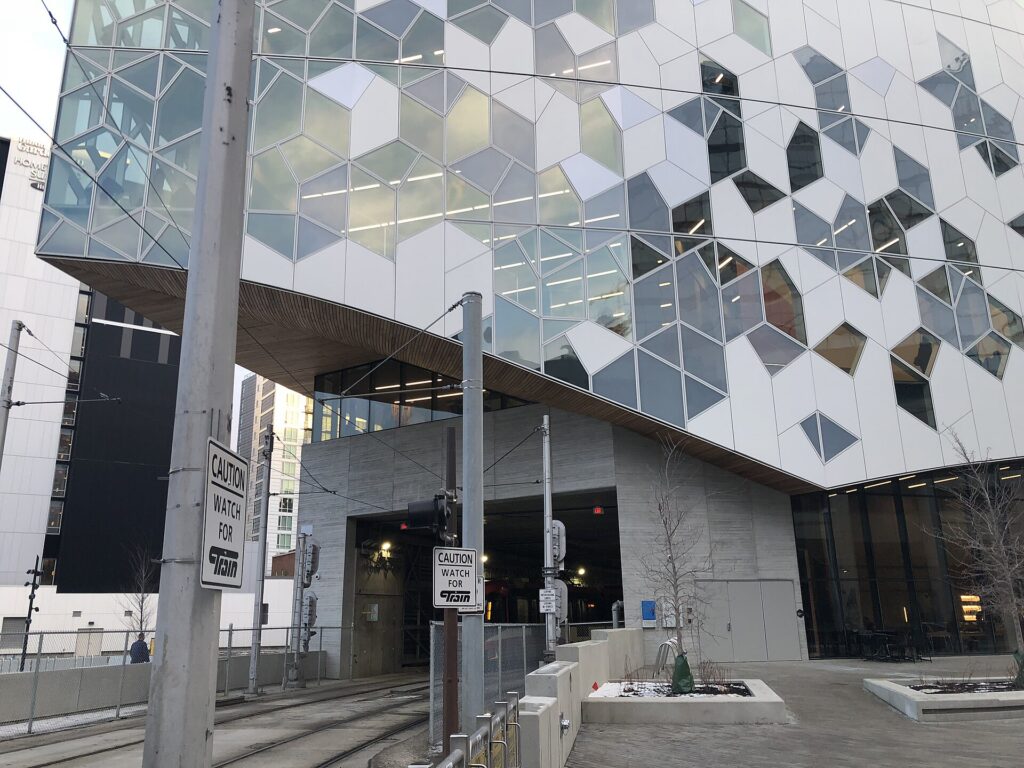
A decade ago the East Village was a neglected corner between downtown and the river; now it holds two of the best buildings in the country. Studio Bell, home of the National Music Centre, is a curved, copper-clad complex of galleries about Canadian music, with a collection of historic instruments and studios, hands-on exhibits where you can play them, and the Rolling Stones’ mobile recording studio parked inside. The Central Library, a block away, is a timber-and-glass building that straddles the CTrain tracks and has become a landmark on its own; the reading rooms and the children’s floor are open to everyone, and the café is a good stop. Between them, the RiverWalk along the Bow leads to St. Patrick’s Island, a reclaimed park in the river with a beach and a hill, and to Fort Calgary, the site of the original Mounted Police post, now The Confluence historic site.
The river: Prince’s Island, the Peace Bridge and the pathways
Calgary’s downtown was built on the Bow, and the river is the city’s best public space. Prince’s Island Park, reached by footbridges from Eau Claire, is the downtown green: lawns, wetlands, a summer festival stage and the best picnic spot in the city. The Peace Bridge, Santiago Calatrava’s red helix across the river, connects Eau Claire to the north bank and Kensington and is the most photographed structure in the city after the Tower. From either side, the paved river pathways run for kilometres in both directions along the Bow and the Elbow, past Inglewood and the bird sanctuary to the east and toward Edworthy Park and the Douglas Fir Trail to the west. The city has one of the largest urban pathway networks in North America; rent a bike or grab a shared e-scooter and you can see the whole inner city from the water. In summer, locals float the Bow on rafts from Bowness downstream to Prince’s Island, and rafting companies rent the gear.
Neighbourhoods worth a half-day
Kensington
Across the Peace Bridge or a CTrain stop from downtown, Kensington is the walkable village of cafés, bookshops, pubs and independent restaurants along Kensington Road and 10 Street NW. It is the easiest place in the city to spend an unplanned afternoon, and the closest neighbourhood to downtown with a local feel.
Inglewood
Calgary’s oldest neighbourhood, along 9 Avenue SE east of the Elbow River, has the best concentration of independent shops, vintage stores, galleries, breweries and restaurants in the city, plus the Inglewood Bird Sanctuary on the river and the Esker Foundation, a free contemporary art gallery that is one of the country’s best. Combine it with the East Village for a full day on foot.
17th Avenue and the Beltline
17 Avenue SW is the city’s restaurant and bar row, running for a dozen blocks through the Beltline, and it is the place to eat dinner and stay out. During a Flames playoff run it becomes the Red Mile, a street party that spills out of every bar. The Beltline around it, with Central Memorial Park and the Sheldon Chumir square, is the densest, most walkable residential neighbourhood in the city.
Mission and 4th Street
South of 17th, 4 Street SW through Mission is a quieter strip of restaurants and cafés along the Elbow River, with the Lilac Festival closing the street in late May.
Chinatown and the Vietnamese strip
Calgary’s Chinatown, beside downtown on the river, is small but has the Chinese Cultural Centre with its painted dome and good dim sum; Centre Street north of the river and 17 Avenue SE, International Avenue, have the Vietnamese restaurants that are one of the city’s culinary strengths. Ginger beef, the sweet crispy dish on every Chinese-Canadian menu in the country, was invented in Calgary.
Museums, culture and family attractions
Heritage Park, on the Glenmore Reservoir in the southwest, is a living-history village with a steam train, a paddlewheeler, a 1930s main street and costumed interpreters, and it is the best family day in the city. The Wilder Institute / Calgary Zoo, on St. George’s Island in the river, is one of the largest in Canada, with a strong conservation focus and a Canadian wilds section that suits the climate. TELUS Spark, the science centre in the northeast, has a dome theatre and hands-on galleries. Canada Olympic Park, now WinSport, on the western edge of the city, was the 1988 Winter Olympics venue: in summer you can ride the bobsleigh track and the zipline and see the ski jumps; in winter it is the city’s beginner ski hill, and Canada’s Sports Hall of Fame is on the site. The Military Museums, the largest in western Canada, are worth an afternoon for anyone interested in the subject. For live performance, Arts Commons downtown houses the Calgary Philharmonic and several theatres; Theatre Calgary and Alberta Theatre Projects are the main companies. For what is on stage and in the arenas during your dates, our Calgary events page lists concerts, shows and games.
The Stampede
For ten days from the first Friday of July, Calgary becomes the Stampede. The core of it is at Stampede Park, on the CTrain south of downtown: the rodeo every afternoon, the chuckwagon races and the grandstand show every evening, a midway, agricultural shows and concerts. But the Stampede is also the whole city: the parade through downtown on the first morning, free pancake breakfasts hosted by businesses and community groups all over town, office towers closing early, and everyone in boots and a hat. It is the biggest annual event in Canada, hotels sell out months ahead, and it is worth experiencing once even if you have no interest in rodeo. If you are coming for it, book the hotel before the flight and buy rodeo and grandstand tickets early; if you are not, the week after is one of the best-value weeks of the summer.
Sports
The Calgary Flames play at the Saddledome, the arena with the sagging roof beside the Stampede grounds, until their new arena beside it is finished; a game there is loud, and the walk back along 17th Avenue afterward is louder. The Calgary Stampeders play Canadian football at McMahon Stadium near the university from June to November. Cavalry FC, the professional soccer club, plays at Spruce Meadows on the southern edge of the city, which is also one of the world’s great show-jumping venues; the tournaments there in June, July and September draw international crowds and are a surprisingly good day out even for non-riders. Check what is on sale in Calgary for your dates before you book flights.
What to eat, and where
Two things define Calgary’s food. The first is Alberta beef: the steakhouses downtown and in the Beltline are genuinely good, and a proper Alberta steak is worth one dinner of the trip. The second is a restaurant scene that punches above the city’s size, concentrated in Inglewood, on 17th Avenue, in Kensington and, increasingly, in the industrial-turned-craft-beer district south of the Beltline known as the Barley Belt, where a dozen breweries sit within walking distance of each other. Beyond that: some of the best Vietnamese food in Canada along Centre Street and International Avenue; dim sum in Chinatown; the farmers’ markets, with the Calgary Farmers’ Market in the south and the Crossroads Market near Inglewood, for Alberta produce, bison and honey; and the unavoidable local invention, ginger beef, which every visitor should try once. Brunch is taken seriously, especially in Kensington and Inglewood.
Calgary through the seasons
Calgary is a different city in each season, and what you do depends on when you come. Winter (November to March) is cold, bright and dry, and the city is built for it: the +15 network keeps downtown walkable without a coat, the outdoor rinks at Olympic Plaza and Bowness Park are free, WinSport has beginner skiing and tubing twenty minutes from downtown, and the Flames are in season. Chinook days, when the temperature jumps above freezing in an afternoon, are for the river pathways; the cold snaps are for the museums and the Barley Belt. Spring (April to May) is brown before it is green, and the mountains are still skiing; it is the quietest, cheapest time to see the city. Summer (June to August) is patios on 17th Avenue and in Kensington, rafting the Bow, the Stampede, Sled Island and the Folk Festival on Prince’s Island, the Calgary Fringe, and long evenings that stay light past ten. Fall (September to October) is the local favourite: warm, settled, gold along the river, and the larch season in the mountains at the end of September. Beakerhead, the art-and-science festival, and the Calgary International Film Festival fill September; the holiday lights and the Spruce Meadows Christmas market close the year. Our month-by-month guide has the fare patterns that go with each season.
Calgary with kids
Calgary is an easy city with children. Heritage Park is the obvious full day, with the steam train, the antique midway and the wagon rides; the zoo, with its dinosaur park and penguin plunge, is the other. TELUS Spark has a dedicated under-eights gallery and a dome theatre. In summer, the wading pools and spray parks in Prince’s Island and Riley Park are free, rafting the Bow with a rental company is a hit with older kids, and the Calaway Park amusement park sits on the western edge of the city on the way to the mountains. In winter, the free outdoor rinks, the tubing park at WinSport and the Glenbow’s children’s programming fill the days. The Stampede has a children’s midway, agricultural shows with real animals, and the free pancake breakfasts that small children find magical. For families heading into the mountains, the Banff gondola, the hot springs and the Johnston Canyon walk are all manageable with young children; our family car rental guide covers the vehicle question.
Calgary on a budget
Much of the best of Calgary is free: the river pathways, Prince’s Island, the Peace Bridge, the Central Library, the Esker Foundation, the Inglewood Bird Sanctuary, the Stampede parade and pancake breakfasts, and the CTrain within the downtown zone. The Calgary Tower and Studio Bell charge admission but are modest; Heritage Park and the zoo are the expensive days, and both sell cheaper tickets online in advance. Eat well for less along International Avenue and Centre Street, at the food halls in the Beltline, and at the farmers’ markets. Hotel rates outside Stampede week and the summer Banff season are lower than in Toronto or Vancouver, and the absence of provincial sales tax takes a few percent off everything. Compare rates by neighbourhood on our Calgary hotel search.
Day trips from Calgary
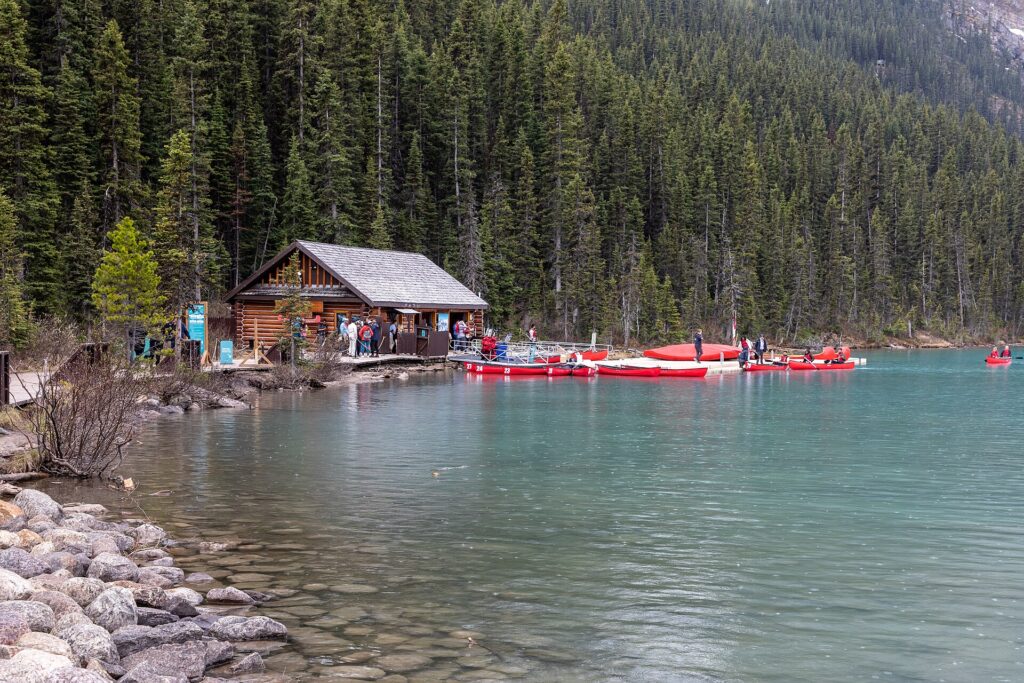
Banff is ninety minutes west on the Trans-Canada: the town, the hot springs, the gondola up Sulphur Mountain, Lake Minnewanka, the Bow Valley Parkway and, in winter, three ski areas. Lake Louise is two hours, and Moraine Lake, where private vehicles are now restricted and a shuttle runs from a park-and-ride, is just beyond it; Banff and Lake Louise Tourism and Parks Canada cover the logistics and the park pass every vehicle needs. Canmore, just outside the park gate, is the cheaper and more relaxed base. Kananaskis Country, south of the highway, has the same mountains with a fraction of the visitors. Drumheller, ninety minutes east in the badlands, is a different world: the Royal Tyrrell Museum, one of the world’s great dinosaur museums, the hoodoos, and the eerie eroded valley of the Red Deer River. Head-Smashed-In Buffalo Jump, a UNESCO site two hours south, tells the story of the Plains peoples’ bison hunt. All of these are car trips; see our Calgary car rental page, and ask for winter tires from November to April. Travel Alberta covers the wider province.
Two sample itineraries
Two days, no car
Day one: the Calgary Tower and Stephen Avenue in the morning, Studio Bell and the Central Library in the East Village, a walk along the RiverWalk to Inglewood for lunch and an afternoon among the shops and the Esker Foundation, dinner on 17th Avenue. Day two: the Peace Bridge and Prince’s Island in the morning, brunch in Kensington, a bike along the river pathways in the afternoon, an Alberta steak downtown, and a Flames game or a show at night.
Four days, with the mountains
Add a day for Heritage Park or the zoo and the Barley Belt breweries, then pick up a car downtown and spend two days in Banff and Lake Louise, or one day in the mountains and one in Drumheller, returning the car at the airport on the way home.
Practical details
- Transit: buy tickets at CTrain stations or through the My Fare app; rides within the downtown zone on 7 Avenue are free. Calgary Transit has maps; our transit-versus-car guide goes into detail.
- From YYC: the Route 300 bus to downtown, a taxi, or a rental from the terminal. The airport’s site covers ground transport.
- Weather: layers in every season, sun protection for the altitude, and a warm layer for the evenings even in July. Environment Canada’s forecast is the one to check, and it changes fast.
- Time zone: Mountain, two hours behind Toronto and one ahead of Vancouver.
- Entry requirements: U.S. citizens need a valid passport; most other visa-exempt visitors arriving by air need an Electronic Travel Authorization. The Government of Canada’s visitor page is the authoritative source.
- Safety: a safe city by any standard; the usual big-city awareness applies downtown late at night.
Frequently asked questions
How many days do you need in Calgary?
Two full days covers downtown, the East Village, the river and two neighbourhoods; add two or three for Banff and Lake Louise, and one more for Drumheller.
What is the number one thing to do in Calgary?
In July, the Stampede. Any other time, the river: walk or cycle the pathways from Prince’s Island across the Peace Bridge to Kensington, and finish with a steak.
Is Calgary walkable?
Downtown, the Beltline, Kensington and Inglewood are; the rest of the city assumes a car. The +15 network makes downtown walkable even in January.
Do I need a car in Calgary?
Not for the inner city. For Banff, Drumheller and the suburbs, yes, and that is most visitors; pick it up downtown on the morning you leave.
Is Calgary expensive?
Less than Toronto or Vancouver outside Stampede week, helped by the absence of provincial sales tax. Hotels during the Stampede and the summer Banff season are the exception.
What is Calgary known for?
The Stampede, the Rockies on its doorstep, the 1988 Winter Olympics, Alberta beef, the energy industry, and a downtown that has reinvented itself around the river.
Ready to go? Compare flights to Calgary, find a place to stay with our Calgary hotel search, and if the mountains are on the list, price a rental car for those days.
Keep planning with TicketScanner
- Cheap flights to Calgary
- Calgary hotels — by neighbourhood
- Calgary car rentals — for Banff, Lake Louise and Drumheller
- Events in Calgary — Flames, Stampeders, concerts and shows on sale
- Best time to fly to Calgary: month by month
- Calgary: rent a car or use transit?
- Calgary International (YYC) airport guide
- Where to stay: the Beltline
- Things to do in Edmonton
Leave a Reply