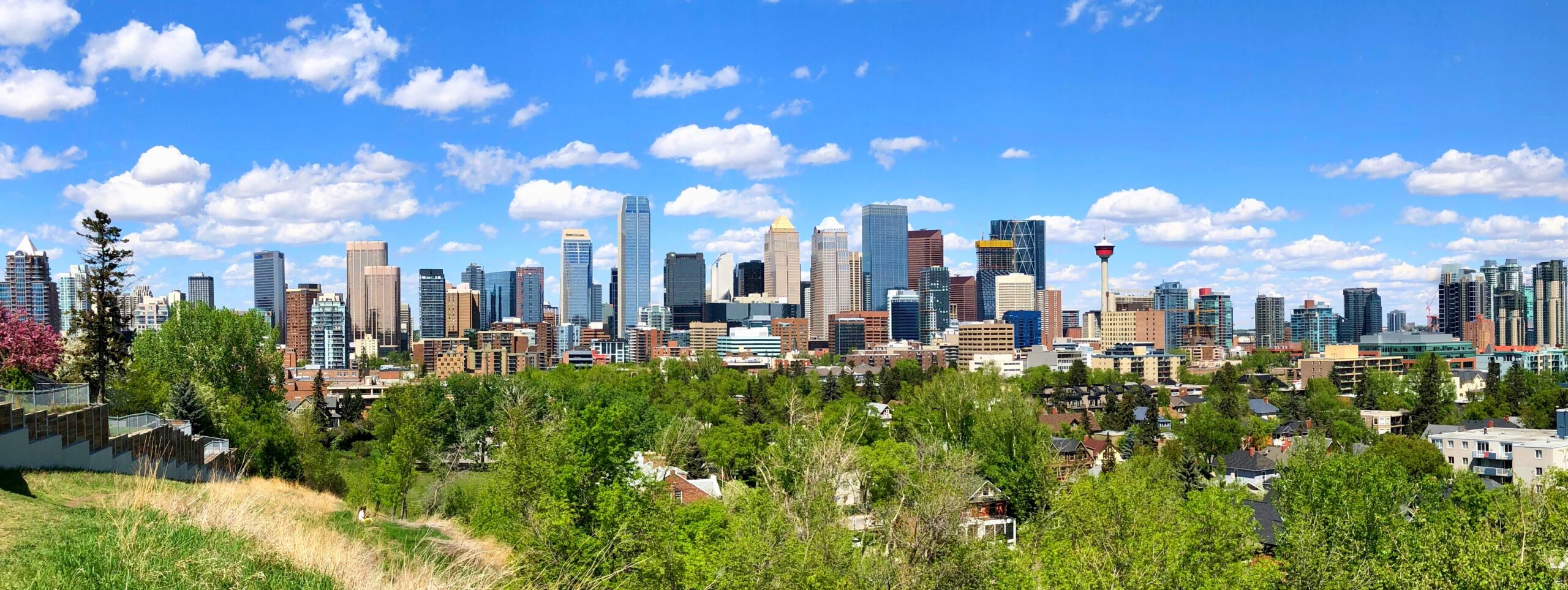
Tag: Calgary

  • Calgary: Should You Rent a Car or Rely on Public Transit?

    Calgary: Should You Rent a Car or Rely on Public Transit?

    Calgary is the first city in this series where the honest answer to “should I rent a car?” is often yes. It is a spread-out, car-oriented prairie city with a good but limited light-rail system, and, more to the point, most people who fly here are on their way to Banff, Lake Louise and the Rockies, ninety minutes west on a highway that was built for exactly that drive. But “often” is not “always”. If your trip is the city itself, the CTrain and the walkable downtown core cover it well, downtown parking on a weekday is expensive, and scheduled shuttle coaches run straight from the airport to Banff for visitors who would rather not drive in the mountains. This guide explains how the city is laid out, how transit and fares work, what driving here is really like in every season, how the mountain shuttles compare with a rental, and gives you a straightforward way to decide.

    The short answer

    Rent a car if Banff, Lake Louise, Kananaskis, Drumheller or the wider Rockies are on the itinerary, if you are staying in the suburbs or with family, if you are visiting in winter with young children and ski gear, or if Calgary is one stop on an Alberta road trip. That is most visitors. Skip the car if you are staying downtown or in the Beltline for a city break, a conference or the Stampede, and your plans are downtown, the river pathways, Kensington, Inglewood, 17th Avenue and a Flames game; the CTrain, your feet and the occasional taxi will cover that, and you will not pay for parking. And if you want the mountains without the driving, the shuttle coaches to Banff and Lake Louise are a genuine third option. Compare rental rates for any of these plans on our Calgary car rental page.

    How Calgary is laid out

    Calgary is a grid on the prairie, split into quadrants (NW, NE, SW, SE) by Centre Street and the Bow River, and every address carries its quadrant; 17th Avenue SW and 17th Avenue SE are several kilometres apart. Downtown sits on the south bank of the Bow, with the Beltline, the dense inner neighbourhood of restaurants and apartments, directly south of it, and Kensington across the river to the northwest. Inglewood, the oldest neighbourhood, is a short hop east along the river; Mission and 17th Avenue are south of the Beltline. The city then sprawls for kilometres in every direction, with the airport in the northeast and the Trans-Canada Highway running west out of the city toward the mountains. The inner ring is compact and walkable; everything beyond it assumes a car.

    Hotels cluster downtown around the Calgary Tower and Stephen Avenue, in the Beltline, along the airport corridor in the northeast, and in the west of the city on the Trans-Canada, which is where visitors on their way to Banff often stay. Our Calgary hotel search lets you compare them.

    Getting in from the airport

    Calgary International (YYC) is in the northeast of the city, about 17 kilometres from downtown, and the CTrain does not reach it. Calgary Transit’s Route 300 runs a direct bus between the terminal and downtown in about 45 minutes, for a premium fare; the regular Route 100 connects the airport to the Blue Line CTrain at McKnight-Westwinds station for a standard fare and a longer trip. Taxis and ride-hail pick up outside arrivals, and the drive downtown along Deerfoot Trail takes 25 to 40 minutes depending on traffic. Every major rental company has counters in the terminal, and the rental car centre is a short walk or shuttle from the doors. If Banff is your destination, several scheduled shuttle companies run coaches straight from the airport to Banff and Lake Louise several times a day, which is the option to compare against a rental. Check the airport’s site for current ground-transport details; our YYC airport guide covers the layout.
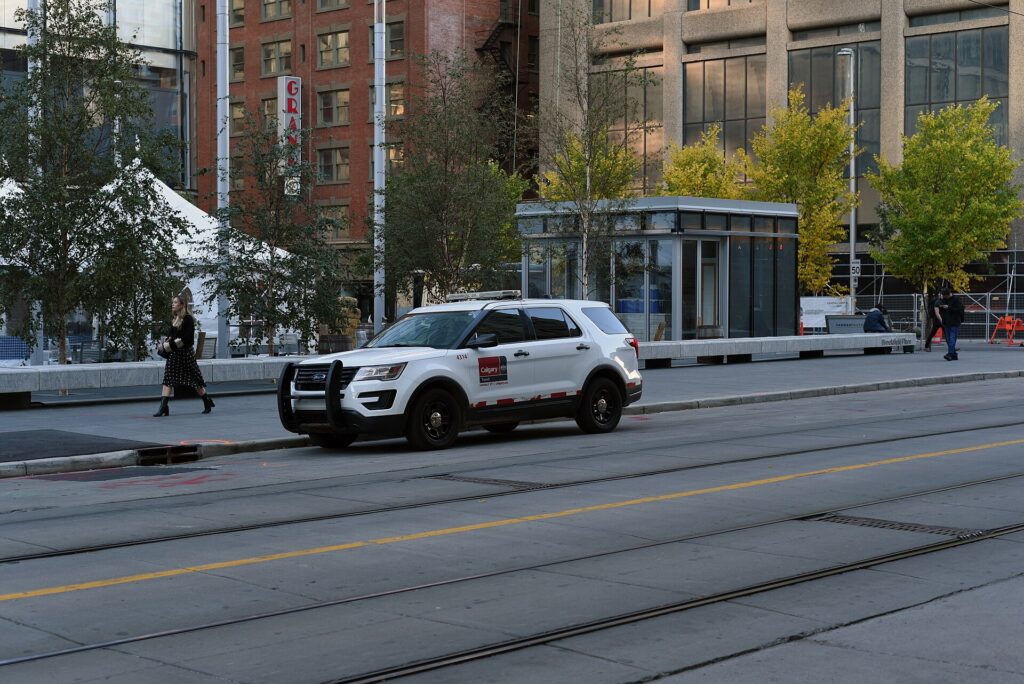
    A CTrain light-rail train on 7 Avenue in downtown Calgary
    The CTrain on 7 Avenue: free to ride within the downtown zone (Photo: Milan Suvajac via Wikimedia Commons, CC BY-SA 4.0)

    Calgary’s transit, explained

    Calgary Transit runs the CTrain light rail and the bus network. It is clean, safe and reliable, and for a downtown-based visit it is entirely adequate; its limitation is coverage, because the two rail lines serve the city’s spine and the buses that fan out from them run less frequently than a visitor from Toronto or Montreal would expect.

    The CTrain

    Two lines. The Red Line runs from the deep northwest through Kensington (Sunnyside station), across the river into downtown along 7 Avenue, and south past the Stampede grounds (Victoria Park/Stampede and Erlton/Stampede stations) and Chinook Centre to the far south. The Blue Line runs from the northeast, where a bus links it to the airport, through downtown on the same 7 Avenue tracks and out to the west, past the University of Calgary’s western campus. Both lines share the downtown transit corridor along 7 Avenue, and every CTrain ride within the downtown free-fare zone along 7 Avenue is free; you only tap or buy a ticket when you leave the zone. A third line, the Green Line, has been under construction for years; check Calgary Transit’s map for its status when you travel. Trains run from early morning until after midnight.

    Buses

    Buses fill in the rest, including the airport routes, the MAX rapid-bus lines with their own lanes on the busier corridors, and the routes to the zoo, Heritage Park, WinSport and the outer neighbourhoods. Frequencies drop sharply in the evenings and on weekends outside the core routes; check times before relying on a bus for a return trip.

    Fares and tickets

    Buy single tickets or a day pass from the machines at any CTrain station, or use the My Fare app on your phone; tickets are valid for 90 minutes of travel in any direction across trains and buses. There is no tap-to-pay with a credit card on Calgary Transit at the time of writing, so plan to use the app or the machines. The Route 300 airport bus charges a higher fare than the standard one. Children twelve and under ride free with a fare-paying adult. Check Calgary Transit’s site for current fares before you go.

    Accessibility

    Every CTrain station is step-free and every bus is low-floor and accessible; the system is one of the more accessible in Canada.

    Beyond Calgary Transit

    • Walking and the +15. Downtown, the Beltline and the river pathways are walkable, and the +15 skywalk network, some 18 kilometres of enclosed bridges and corridors one storey above street level, connects most downtown buildings, the Core shopping centre and the Calgary Tower, which is how the city gets around in January.
    • The river pathways. Calgary has one of the longest urban pathway networks in North America, running along the Bow and Elbow rivers past Prince’s Island, the Peace Bridge, Inglewood and out to Fish Creek. A rented bike or a shared e-scooter, which are widely available in the warmer months, is the best way to see the inner city.
    • Taxis and ride-hail. Uber and licensed taxis operate across the city; for a group, a short ride is competitive with transit fares and far quicker to the neighbourhoods off the CTrain.
    • Mountain shuttles. Scheduled coaches run from the airport and downtown hotels to Canmore, Banff and Lake Louise year-round, and within Banff National Park the Roam transit buses connect the town, the hot springs, the gondola, Lake Louise and Moraine Lake in season, where private vehicles are now heavily restricted. A visitor who wants the mountains without driving can do it entirely by coach and bus; Banff and Lake Louise Tourism lists the operators.
    • Intercity buses connect Calgary with Edmonton, Red Deer and the mountain towns from the downtown terminal.
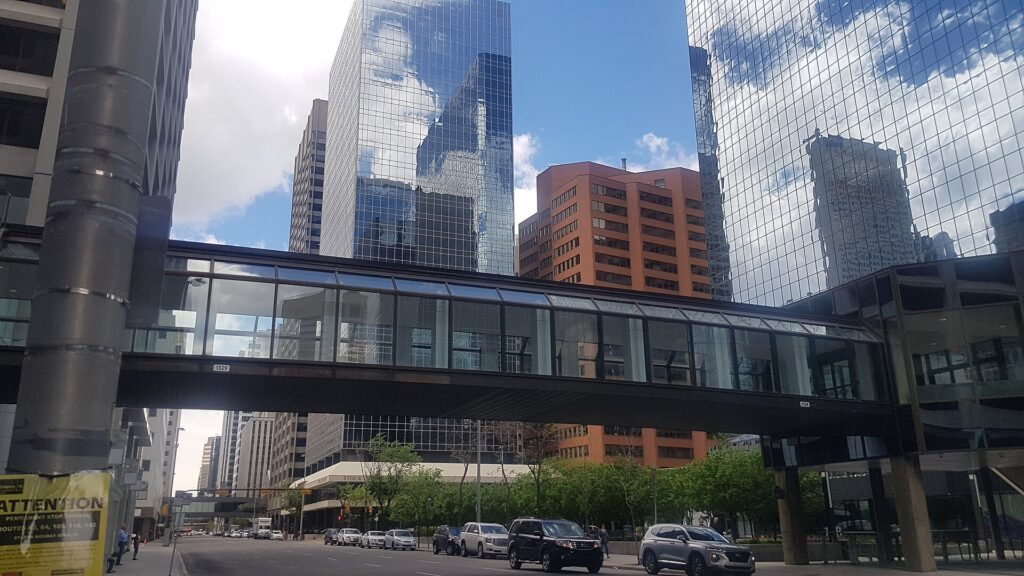
    One of the +15 elevated walkways connecting downtown Calgary buildings
    The +15 network: 18 kilometres of enclosed walkways above downtown, which is how Calgary gets around in January (Photo: Mule hollandaise via Wikimedia Commons, CC0)

    Driving in Calgary and beyond: what it is really like

    Calgary is an easy city to drive in by the standards of the big eastern cities: wide roads, a logical grid, plentiful parking outside the core, and drivers who are, on the whole, calm. The frustrations are specific. Deerfoot Trail, the north-south freeway between the airport and downtown, jams every weekday morning and evening and whenever there is a crash, which is often. Crowchild and Glenmore Trails are the other reliable bottlenecks. The Stampede closes streets around the grounds for ten days in July and makes downtown parking nearly impossible. And construction season runs from May to October on the main routes.
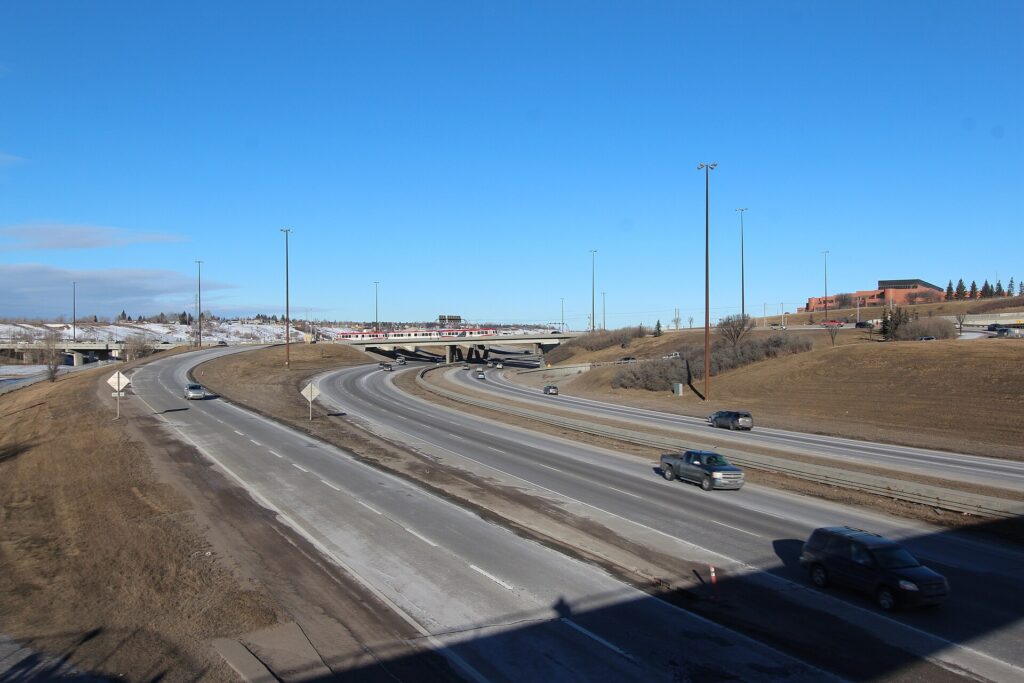
    Traffic on Deerfoot Trail, Calgary's main north-south freeway
    Deerfoot Trail, the route between the airport and downtown, and the city's most reliable traffic jam (Photo: davebloggs007 via Wikimedia Commons, CC BY 2.0)

    Parking

    Downtown Calgary has some of the highest weekday parking rates in Canada, driven by the energy-industry office towers; hotels charge a substantial nightly fee, and the commercial lots are priced for corporate accounts. The good news for visitors is that the picture changes outside office hours: street parking is free in the evenings and on Sundays and holidays, and many lots drop their rates after 6 p.m. and on weekends. The city runs on the ParkPlus system, which uses licence plates rather than tickets on the dashboard; register the rental’s plate at a machine or in the app when you park on the street. Outside the core, parking at the zoo, Heritage Park, the malls and the mountain trailheads is straightforward, though Banff’s town centre and the Lake Louise and Moraine Lake lots fill early in summer, which is exactly why Parks Canada has moved to shuttles there.

    Rules and conditions worth knowing

    • Winter tires are not required by law in Alberta, and rental cars usually come on all-seasons. For the city, in a chinook winter, that is generally fine. For the Trans-Canada to Banff and any mountain road between November and April, ask for winter tires when you book; the highway can be dry in Calgary and glare ice at Canmore on the same afternoon. Alberta 511 publishes road conditions and closures.
    • Hail. Calgary sits in one of the most hail-prone regions in North America, and a summer thunderstorm can dent a car in minutes. Park under cover when storms are forecast, and understand what the rental’s damage waiver covers.
    • Wildlife on the highways. Deer and elk are common on the Trans-Canada at dawn and dusk, and bighorn sheep on the road at Banff are a daily event. Slow down and do not stop in the driving lane to photograph them.
    • Park passes. Every vehicle entering Banff National Park needs a Parks Canada pass, sold online and at the park gates; Kananaskis Country requires its own Alberta conservation pass.
    • Photo radar and intersection cameras operate across the city; fines follow the car and the rental company will bill you.
    • Right turns on red are permitted after a full stop unless signed otherwise.
    • Fuel is cheaper in Alberta than in most of Canada, one small point in the rental’s favour.
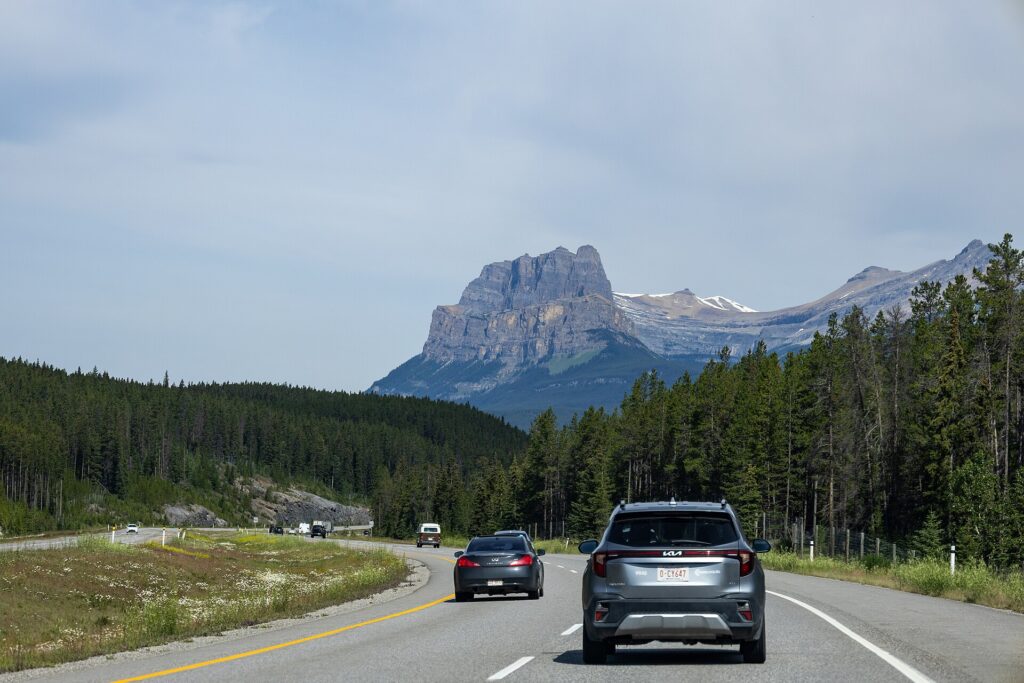
    The Trans-Canada Highway approaching the Rockies near Banff
    The Trans-Canada Highway west of Calgary: Banff is 90 minutes, Lake Louise two hours (Photo: Chris Woodrich via Wikimedia Commons, CC BY-SA 4.0)

    When renting a car makes sense

    • Banff, Lake Louise and the Icefields Parkway. The drive is the point, the trailheads are spread out, and a car lets you go early, before the shuttles and the crowds; note the restrictions at Moraine Lake and plan around the shuttle there.
    • Kananaskis Country, the less-visited mountain range south of the Trans-Canada, is effectively car-only.
    • Drumheller and the badlands, ninety minutes east, home of the Royal Tyrrell dinosaur museum, is a car trip.
    • Family in the suburbs. Calgary’s suburbs are on transit but spread out; a car earns its keep daily.
    • Winter with young children and ski gear. A car and a hotel with parking make the whole trip simpler.
    • Alberta road trips. Calgary to Edmonton, Waterton, Head-Smashed-In Buffalo Jump or Jasper via the Icefields Parkway; our Calgary to Edmonton route guide covers the first of those.

    If any of those apply, our rental car booking tips cover insurance, deposits and the questions to ask at the counter, and our family car rental guide looks at vehicle choice.

    When it does not

    • You are staying downtown or in the Beltline and your plans are the city.
    • You are in town for a conference, a Flames game or the Stampede, when downtown parking is at its worst and the CTrain stops at the grounds.
    • You want the mountains for a day or two and are happy to take the coach and use the Roam buses in Banff.
    • You are travelling solo and the rental, insurance and parking add up to more than the shuttles.

    The hybrid plan for a city-plus-mountains trip

    Go car-free for the city days and rent for the mountain days, and think carefully about where you pick up. Renting at the airport makes sense if you are heading straight to Banff on arrival, because the Trans-Canada is a few minutes from the terminal and you never enter downtown traffic. Renting downtown makes sense if you are spending the first nights in the city, because you avoid the airport concession fees and the hotel parking on the nights you are not using the car. A common pattern that works well: coach or taxi into the city, two or three car-free days, pick up a rental downtown, drive to Banff for the mountain days, and return the car at the airport on the way to the flight home, which most companies allow within the city at little or no extra charge. Book ahead for July, August and the ski holidays, and ask for winter tires from November to April. Compare the day rates on our Calgary car rental page against a full-trip rental and the difference is usually obvious.

    A worked cost comparison

    Numbers change with the season and the booking window, so treat this as a method rather than a quote, and check current rates before deciding. For a four-night city break downtown for two people, the car-free version costs a return airport bus or taxi for two, a couple of transit day passes, and perhaps two or three short ride-hail trips to Inglewood and back; the rental version adds four days of a compact car, four nights of hotel parking at downtown rates, fuel and the airport concession fees, and buys you very little you could not walk or ride to. The transit option wins easily. For the same four nights with two days in Banff, the car-free version adds return coach tickets to Banff for two and the free Roam buses in the park; the hybrid version adds a two-day rental picked up downtown, the park pass, fuel for the round trip, and parking in Banff. Priced honestly, the coach is usually cheaper for two people, and the rental is usually cheaper for four, and the rental wins on flexibility for anyone who wants Moraine Lake shuttles, Kananaskis, an early trailhead or a stop in Canmore. For a seven-day mountain trip based in Canmore or Banff, a rental is the only practical answer, and the airport pickup, with its concession fee, is still cheaper than the taxi into the city and back to collect a car downtown. Run the rental rates for your dates on our Calgary car rental page and put them beside the coach fares before you choose.

    Driving the Calgary-to-Banff corridor in each season

    The Trans-Canada from Calgary to Banff is a divided highway for its whole length, with wildlife fencing and overpasses through the park, and in summer it is one of the easiest mountain drives anywhere. It is also where most first-time visitors underestimate the conditions. In summer, the problems are traffic and parking: westbound on Friday evening and eastbound on Sunday afternoon, all of Calgary is on the road, and the Lake Louise and Moraine Lake lots fill before eight in the morning, which is why Parks Canada runs shuttles from a park-and-ride and restricts private vehicles at Moraine. Go early, or go on a weekday. In fall, the larch fortnight at the end of September brings summer traffic back for two weeks, and the first snow can arrive in the mountains in September while Calgary is still warm. In winter, the highway is plowed and generally open, but it ices at the Canmore gap and in the shade of the mountains even on a sunny day, and a chinook that clears Calgary’s streets can leave the Bow Valley in a snowstorm; winter tires, a full tank, and a check of Alberta 511 before you leave are not optional. Ski traffic to Sunshine, Lake Louise and Norquay makes weekend mornings busy. In spring, the road is often wet, the hiking trails are still snowbound above the valley floor, and the animals are on the move at dusk. In every season, the drive itself, with the front range appearing on the horizon about half an hour out of the city, is one of the reasons people fly to Calgary in the first place.

    Decision table

    Your tripRecommendationWhy
    City break downtown, couple or soloNo carThe CTrain, the +15 and the river pathways cover it; weekday parking is expensive
    Stampede weekNo carStreets close, parking vanishes, and the CTrain stops at the grounds
    Banff and Lake Louise, several daysRent at the airportThe highway starts at the terminal; trailheads need a car
    City plus a mountain day or twoHybrid: rent downtown for the mountain days, or take the coachCar-free city days, car or coach for the Rockies
    Mountains without drivingCoach to Banff plus Roam busesScheduled shuttles and park transit cover the main sights
    Family visit to the suburbsRent for the whole staySuburban distances make the car worthwhile daily
    Winter ski trip with childrenRent at the airport with winter tiresGear, weather and the highway all argue for a car
    Alberta road tripRent (consider one-way to Edmonton)Calgary is the start, not the destination

    Money-saving tips for both options

    • On transit: ride the CTrain free within the downtown zone; buy a day pass for a heavy sightseeing day; children twelve and under are free.
    • On a rental: compare airport and downtown pickup, book early for July, August and the ski weeks, ask for winter tires in the cold months, decline extras you already have through a credit card or home policy (check first), park under cover in hail season, and buy the park pass online before you reach the gates.
    • On the hotel: if you are renting, price the parking fee into the room rate, and remember that street parking downtown is free in the evenings and on Sundays.
    • On timing: avoid Deerfoot in the weekday peaks and the Trans-Canada westbound on Friday evening and eastbound on Sunday afternoon in summer, when all of Calgary is coming back from the mountains; the best time to fly to Calgary guide lists the busiest weekends.
    • On the mountain shuttles: for one or two people going to Banff for a few days, a return coach ticket and the free Roam buses usually cost less than a rental plus fuel, parking and the park pass.

    Frequently asked questions

    Is it worth renting a car in Calgary?

    For the Rockies, the badlands, the suburbs or a road trip, yes, and that is most visitors. For a downtown city break, a conference or the Stampede, no; the CTrain and your feet are enough.

    Is Calgary public transit good for tourists?

    Good within the inner city: two CTrain lines, a free downtown zone and the +15 network cover the core. It thins out quickly beyond that, and it does not reach the airport by rail.

    How do I get from Calgary airport to downtown?

    The Route 300 bus in about 45 minutes, a taxi or ride-hail in 25 to 40 minutes, or the Route 100 bus to the Blue Line CTrain for a standard fare.

    Can I get to Banff from Calgary without a car?

    Yes. Scheduled coaches run from the airport and downtown to Banff and Lake Louise several times a day, and Roam transit covers the main sights within the park.

    Do I need winter tires to drive to Banff?

    Not by law in Alberta, but the Trans-Canada and every mountain road can be icy from November to April; ask for them when you book.

    Is parking expensive in downtown Calgary?

    On weekdays during office hours, very. Evenings, Sundays and holidays are free on the street and cheap in most lots.

    Can I take a rental car into Banff National Park?

    Yes, with a Parks Canada pass for the vehicle. Note that private vehicles are restricted at Moraine Lake and, at peak times, at Lake Louise, where shuttles run from a park-and-ride.

    Whichever way you go, start with the flight. Compare cheap flights to Calgary, choose a neighbourhood with our Calgary hotel search, and if the mountains are on the list, price the rental for those dates on our Calgary car rental page.

  • Best Time to Fly to Calgary: Seasons, Weather & Prices

    Best Time to Fly to Calgary: Seasons, Weather & Prices

    Calgary is two destinations in one, and its airfares reflect both. It is a prairie city with the sunniest climate of any major Canadian city, a ten-day rodeo in July that is the biggest annual event in the country, and a downtown that empties and fills with the energy industry’s calendar. It is also the gateway to Banff, Lake Louise and the Canadian Rockies, an hour and a half west, which means demand for seats into Calgary tracks the mountain seasons as much as the city’s own. Add the chinook, the warm winter wind that can turn a -20 °C morning into a +10 °C afternoon, and you have a place where the “best time” question has more than one right answer. This guide walks through the weather month by month, the fare seasons, the events and mountain windows that move prices, and how to handle the airport.

    The short answer

    For the city alone, the best value-and-weather windows are late May to late June, before the Stampede and the peak mountain season, and September, when the summer crowds have gone and the weather is often the most settled of the year. For the Rockies, early September to early October is the connoisseur’s choice: warm days, cold nights, larches turning gold in the last week of September, and fewer people on the trails. The cheapest fares come in January and February outside the ski-holiday weeks, and in November. The most expensive stretches are Stampede week in early-to-mid July, when the city’s hotels are as full as they ever get, July and August generally, when Banff drives demand, and the Christmas and New Year ski weeks. Whatever you choose, run a flexible-date search on our Calgary flights page; a shift of a few days around the Stampede or a long weekend can change the fare band entirely.

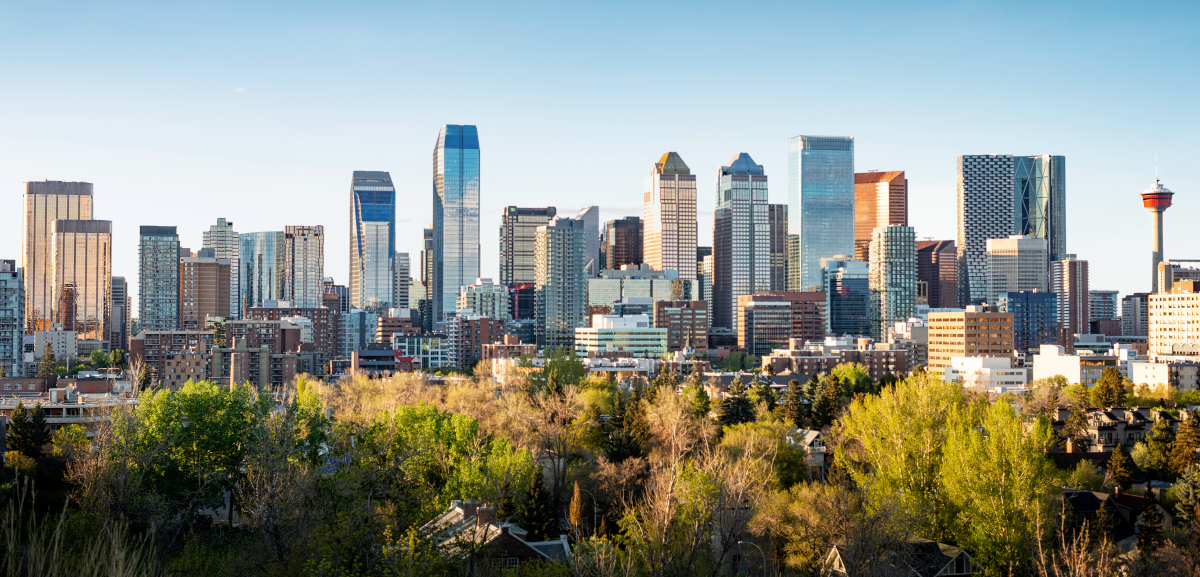
    The downtown Calgary skyline
    Downtown Calgary, with the Calgary Tower on the skyline (Photo: AceYYC via Wikimedia Commons, CC BY-SA 4.0)

    Calgary’s weather, season by season

    Calgary sits a kilometre above sea level on the edge of the prairies, in the rain shadow of the Rockies. That gives it dry air, an enormous amount of sunshine, cold winters interrupted by chinooks, cool nights even in July, and the ability to snow in any month of the year. The figures below are approximate seasonal patterns based on the long-term climate normals from Environment and Climate Change Canada; check the current forecast before you pack, because Calgary’s weather changes faster than almost anywhere else in the country.

    MonthTypical daytime highTypical overnight lowWhat it feels likeFare pressure
    Januaryaround -1 °Caround -12 °CCold and sunny; chinooks bring sudden thaws, cold snaps bring -30 °CLow, except the first week and ski weekends
    Februaryaround 1 °Caround -10 °CSimilar; the light returns noticeablyLow; rises for Family Day and school breaks
    Marcharound 5 °Caround -6 °CThaw and refreeze; late snowstorms are common; the mountains are still deep in ski seasonLow to moderate; spring break spike
    Aprilaround 11 °Caround -2 °CUnpredictable; sun one day, snow the next; brown before it is greenModerate
    Mayaround 16 °Caround 3 °CSpring proper, with the risk of a snowfall right up to the end of the monthModerate; rises for the May long weekend
    Junearound 20 °Caround 8 °CThe wettest month, with afternoon thunderstorms, but long and greenModerate to high
    Julyaround 24 °Caround 10 °CWarm, dry days and cool nights; hail is possiblePeak, with a Stampede spike
    Augustaround 23 °Caround 9 °CWarm and dry; wildfire smoke from BC or the interior is possible in some yearsHigh
    Septemberaround 18 °Caround 5 °COften the most settled month; warm days, frosty nights, larch season in the mountainsModerate, falling after Labour Day
    Octoberaround 12 °Caround -1 °CCrisp; first snow usually arrives; the mountains are between seasonsLow to moderate
    Novemberaround 4 °Caround -7 °CWinter arrives; ski hills open through the monthLow
    Decemberaround -1 °Caround -11 °CCold, bright, festive; the mountains are in full winterLow until mid-month, then peak

    Three things the table cannot show. First, the chinook: a warm, dry wind off the mountains that can raise the temperature by 15 to 20 degrees in a few hours, melting the snow and giving Calgary winter days that feel like April. It is why winter here is more variable, and often more pleasant, than the averages suggest. Second, the sun: Calgary records more hours of sunshine than any other large Canadian city, and even January is bright. Third, the altitude and the dry air: nights are cool in every month, sunburn comes faster than you expect, and you will drink more water than you planned.

    How Calgary’s fare seasons work

    Three calendars drive seats into Calgary: the Rockies, which pull visitors from June to September and skiers from December to April; the Stampede, which fills the city for ten days in July; and the energy industry, whose conferences and business travel keep the weekday flights busy year-round and, when the sector is booming, keep hotel rates high on weeknights. The result is a summer plateau with a sharp Stampede spike on top, a winter that is softer than summer but never as cheap as Toronto’s because of the skiing, and two shoulders where the weather is good and the prices are not.

    Peak season

    Late June to early September, plus roughly December 18 to January 3. Stampede week, which starts on the first Friday of July, is in a class of its own: hotel rates across the city climb steeply, downtown books out months ahead, and flights from across Canada and the U.S. fill with visitors in cowboy hats. The rest of July and August is driven by Banff and Lake Louise, whose summer season is short and intense; the city’s hotels absorb the overflow. If you must travel in peak, book early, fly mid-week, and consider basing yourself in Canmore or the city rather than in Banff itself.

    Shoulder season

    May to late June and September to mid-October. Late May and June give you spring in the city and early summer in the mountains, with some high lakes still frozen into June; September gives you the most reliable weather of the year and the larch turn in Kananaskis and around Lake Louise, which briefly makes the last week of September as busy in the mountains as August. Watch the May long weekend, Labour Day and Thanksgiving.

    Low season

    November, and mid-January to early March outside the ski-holiday weeks. Fares are at their lowest, the city is sunny and cold, and the mountains are in full ski season with Banff Sunshine, Lake Louise and Norquay all operating. The exceptions are the Family Day long weekend in February and the mid-to-late March spring break, when family ski travel lifts fares from other Canadian cities. Build a weather buffer into connections and pack for real cold.

    As elsewhere, mid-week departures and early or late flights usually price below Friday and Sunday afternoons on the same route, and a search across a whole month reveals cheaper pairs of dates close to your first choice. Our guide to the best times to book explains how to read those patterns.

    Calgary month by month

    January

    Cold, bright and, after the first week, one of the two cheapest months to fly in. Highs hover around freezing, cold snaps drop far below, and a chinook can arrive any day and make it feel like spring. The mountains are in prime ski condition, the Flames are at home at the Saddledome, and the city’s indoor attractions, the Central Library, Studio Bell, TELUS Spark, the +15 skywalk network for getting between downtown buildings without a coat, are at their least crowded. Ski weekends and the return from the holidays keep some flights from Canadian cities busier than the season suggests.

    February

    Similar weather with more daylight, and low fares outside the Family Day long weekend (the third Monday of February), which is a big ski-travel weekend. The Calgary Snow Show and a winter festival calendar in the city and in Banff fill the month; this is a strong value month for a city-plus-skiing trip if you avoid the long weekend.

    March

    Thaw and refreeze, with late snowstorms most years and the mountains still deep in ski season, which is often at its best in March for snow depth and longer days. The mid-to-late March spring break is a two-week spike in family ski travel; book around it and March is good value.

    April

    The most unpredictable month: warm sunny days, then a foot of snow, then brown grass. Ski season winds down in Banff through April and into May at Sunshine; hotel rates in the city are noticeably lower than they will be in eight weeks; and the Flames’ season ends, or the playoffs begin, which can tighten downtown hotels on game nights. Good for a museum-and-food trip; not ideal for hiking.

    May

    Spring arrives, unevenly. The river pathways and Prince’s Island Park green up, patios open on 17th Avenue and in Kensington, and the mountains are between seasons: lower trails open, high lakes and passes still frozen. The May long weekend (the Monday before May 25) is the one date to book around. Fares are moderate, and the second half of May is one of the better value windows for the city.

    June

    Long, green and the wettest month of the year, with afternoon thunderstorms that clear quickly. The Sled Island music festival fills the city’s venues in late June, Lake Louise thaws by mid-month, and fares step up from the third week as schools finish and the Stampede approaches. Early June is the value play.

    July

    Peak season, and the Stampede, ten days from the first Friday, is the city’s defining event: the rodeo and chuckwagon races at Stampede Park, the parade, the free pancake breakfasts across the city, and a downtown that dresses in denim and hats for a week and a half. Hotel rates are at their annual maximum and rooms downtown sell out well in advance; the Stampede’s site has dates. The week after the Stampede is a small pocket of relief before August, and it coincides with the best mountain weather.

    August

    Warm, dry and busy with Banff traffic. The Calgary Folk Music Festival and Pride fill the calendar, wildfire smoke can settle over the city for days in some years, and the last week, once families head home, is slightly softer on prices. Hail is a genuine August hazard for rental cars; park under cover when a storm is forecast.

    September

    The month many Calgarians would send you to: settled, sunny, warm afternoons and cold nights, with the summer crowds gone from the city after Labour Day. In the mountains, the larch trees turn gold in the last week of the month, which draws big crowds to Lake Louise and Kananaskis for a fortnight; book those hotels early even though the city is quiet. Fares are moderate and falling.

    October

    Crisp days, the first lasting snow usually by mid-month, and steadily lower prices apart from the Thanksgiving weekend on the second Monday. The mountains are between seasons, with hiking finishing and skiing not yet started; the city itself is at its quietest and cheapest for a fall visit.

    November

    Winter arrives, the ski hills open through the month, and fares and hotel rates are at their annual low. The Flames and Stampeders are both in season, the holiday lights switch on in late November, and a city-and-early-ski trip is exceptional value.

    December

    Two months in one. The first half continues November’s pricing with the festive lights, the Christmas market at Spruce Meadows, and the mountains in full winter. From about December 18, fares and hotel rates jump for the Christmas and New Year ski weeks, which are among the most expensive of the year in Banff and Lake Louise and push demand into Calgary’s hotels too.

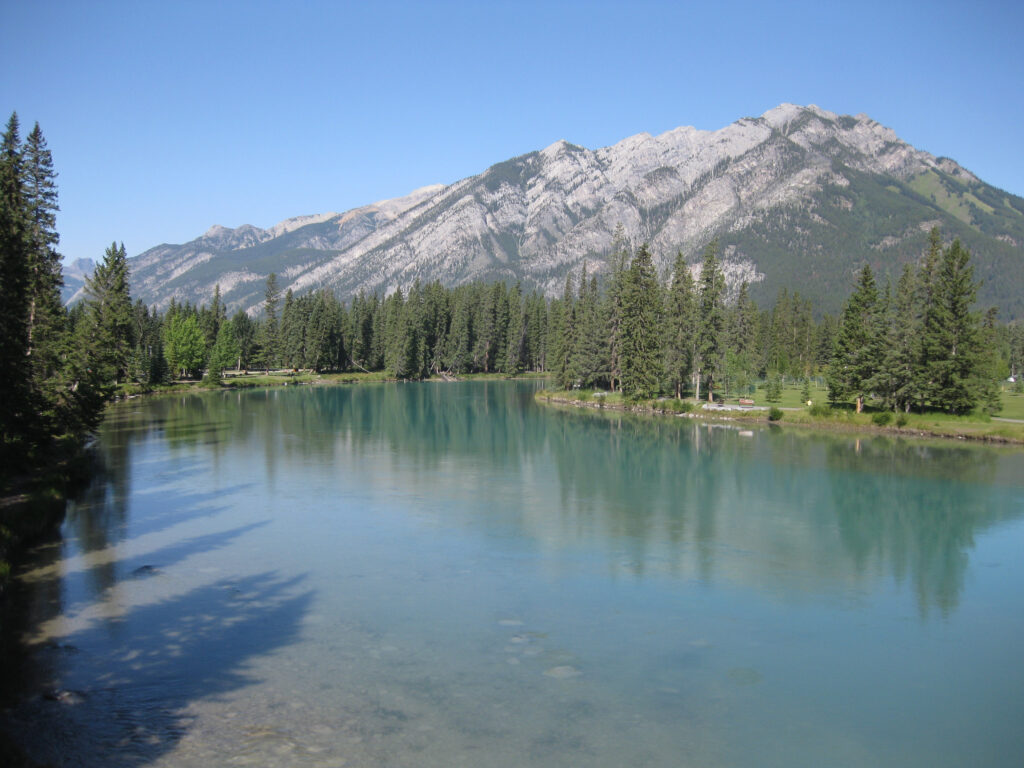
    The Bow River running through Calgary
    The Bow River, which threads through downtown Calgary and its pathway system (Photo: Phil Whitehouse via Wikimedia Commons, CC BY 2.0)

    Events that move Calgary flight and hotel prices

    Cross-check these against your dates before you book. Exact dates shift each year; Tourism Calgary keeps the current calendar.

    • Family Day weekend (third Monday of February): the biggest ski-travel weekend of the winter.
    • Spring break (mid-to-late March, varies by school board).
    • May long weekend (Monday before May 25): the unofficial start of the mountain summer.
    • Calgary Stampede (ten days from the first Friday of July): the single largest hotel spike of the year.
    • Labour Day weekend and the larch season (last week of September, first week of October) in the mountains.
    • Thanksgiving weekend (second Monday of October).
    • Christmas to New Year and the ski weeks either side.
    • Flames playoff runs (April to June in a good year), Stampeders home games, and stadium concerts. Our Calgary events page shows what is on sale for your dates.
    • Energy-industry conferences, which can fill downtown hotels on weeknights without warning; if your dates are mid-week and the rates look strangely high, that is usually why.

    Getting in from the airport

    Calgary has one commercial airport, Calgary International (YYC), in the northeast of the city about 17 kilometres from downtown, and it is the gateway for the whole southern Rockies. The domestic and international terminals are connected, WestJet is headquartered here and Air Canada is the other major operator, and there are nonstop flights from most large Canadian and U.S. cities and from London, Frankfurt, Amsterdam, Tokyo and several other international hubs. Getting downtown: Calgary Transit’s Route 300 bus runs a direct service between the airport and downtown, taxis and ride-hail pick up outside arrivals, and the rental counters are in the terminal; the CTrain light rail does not reach the airport, although a bus connects to the Blue Line. For most visitors heading to Banff, the question is not how to get downtown but whether to rent a car at the airport or take one of the scheduled shuttle coaches that run straight to Banff and Lake Louise; our Calgary car-versus-transit guide works through that decision, and our YYC airport guide covers the layout.

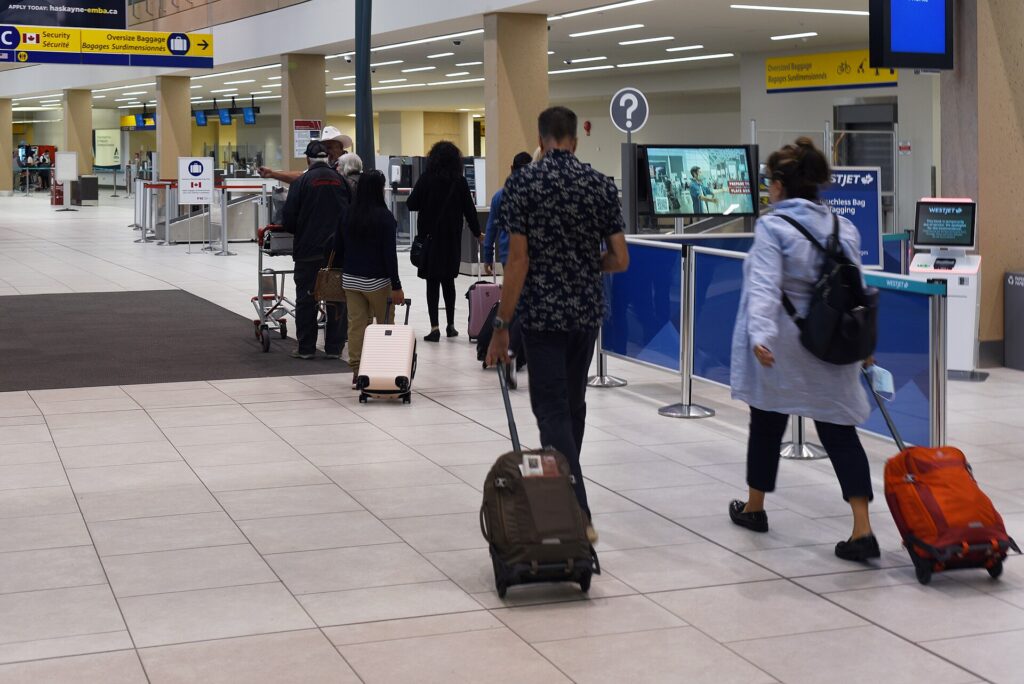
    The terminal at Calgary International Airport (YYC)
    Calgary International (YYC), the gateway airport for Banff and the Rockies (Photo: Milan Suvajac via Wikimedia Commons, CC BY-SA 4.0)

    Timing tricks that work for Calgary

    • Search the whole month. The Stampede and the ski weekends create sharp edges in the fare calendar. A calendar search on TicketScanner shows them instantly, and the week after the Stampede is often a bargain relative to the week of it.
    • Book the hotel first in July. A cheap fare into Stampede week is not cheap once the room is added. Run a Calgary hotel search for the same dates before you commit to either.
    • Fly mid-week. Calgary’s business traffic makes Monday morning and Friday afternoon the busiest and priciest flights on most routes; Tuesday to Thursday in the middle of the day is usually the value.
    • Think of Calgary as the Rockies’ airport. If Banff is the goal, September’s larch season and June’s early summer both offer mountain weather that is nearly as good as August at a fraction of the price.
    • Consider Edmonton for a road trip. Three hours north, Edmonton’s airport occasionally has better fares, and a one-way rental between the two cities is a classic Alberta itinerary.
    • Build a winter buffer. Snow and, occasionally, extreme cold can disrupt YYC between November and March; avoid the tightest connections. Our guide to how early to arrive covers what to allow.
    • Flying out of Calgary instead? The same seasonality applies in reverse; see cheap flights from Calgary.
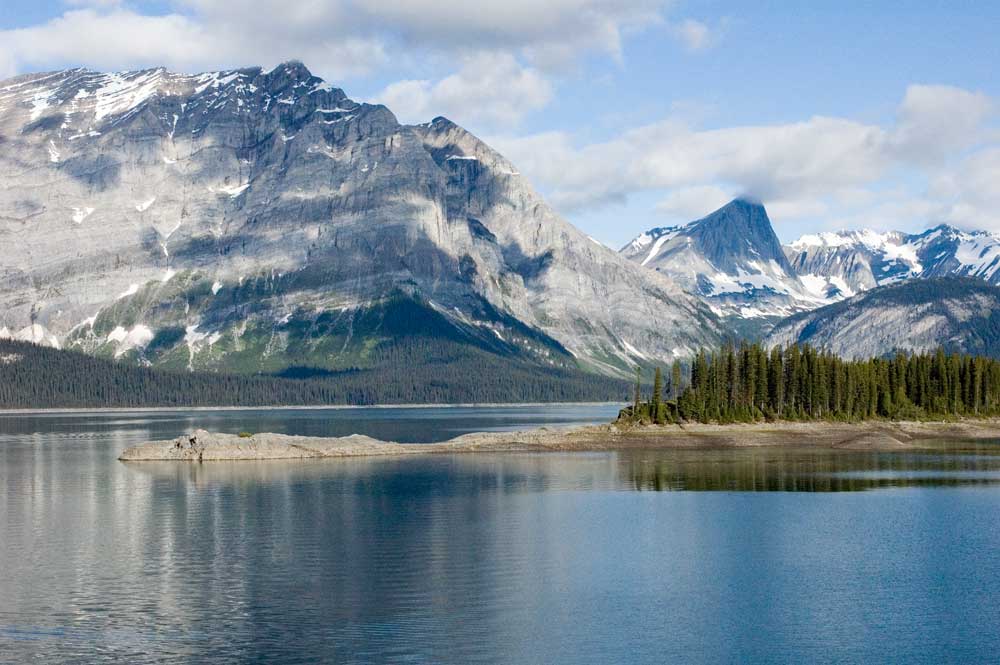
    Upper Kananaskis Lake in Kananaskis Country
    Kananaskis Country, less than an hour from Calgary and a popular day trip (Photo: Cszmurlo via Wikimedia Commons, CC BY 2.5)

    What to pack, by season

    Winter (November to March): a warm, wind-resistant coat, a hat, gloves, boots with grip, and layers, because a chinook can turn a parka day into a fleece day by lunchtime. Spring (April to May): layers and a rain shell, and be ready for snow. Summer (June to August): light clothing for the days, a warm layer for the cool evenings, sun protection for the altitude, and a rain shell for the afternoon storms. Fall (September to October): layers again, a warm jacket by October, and sunglasses year-round. For the mountains in any season, add hiking shoes and a warmer layer than the city needs.

    The best time to fly to Calgary for…

    The Stampede

    Early-to-mid July, booked as early as you can manage, with the hotel first.

    Banff and the Rockies in summer

    Late June for long days and green valleys, or the first three weeks of September for the best weather and fewer crowds; the larch turn at the end of September is spectacular but busy.

    Skiing

    January and February for snow and value, March for longer days, with the Christmas weeks and Family Day weekend the most expensive.

    The lowest fares

    November, and mid-January to early March outside the long weekend. Pair with a city-and-ski itinerary.

    Families

    The last week of August into Labour Day, or the July week after the Stampede, when the mountains are at their best and the city has calmed down.

    Cross-border and international visitors

    U.S. citizens need a valid passport; most other visa-exempt travellers arriving by air need an Electronic Travel Authorization. The Government of Canada’s visitor page explains what applies to you, and CATSA lists what you can carry through security. Banff National Park requires a park pass for every vehicle; Parks Canada sells them online and at the gates.

    Frequently asked questions

    What is the cheapest month to fly to Calgary?

    November and January are consistently the lowest, followed by February and early March outside the ski holidays and October outside Thanksgiving.

    What is the best month to visit Calgary for weather?

    September, with July and August close behind for warmth. June is green but wet; May can still snow.

    How expensive is Calgary during the Stampede?

    Very: it is the single most expensive week of the year for hotels, and downtown books out months ahead. Flights rise too, though less sharply. The week after is dramatically cheaper.

    What is a chinook?

    A warm, dry wind that descends from the Rockies and can raise Calgary’s temperature by 15 to 20 degrees in a few hours, melting snow in midwinter. Calgarians love them; visitors find them disorienting.

    Should I fly into Calgary or Edmonton for Banff?

    Calgary. It is an hour and a half from Banff; Edmonton is four hours. Only consider Edmonton if the fare gap is large and you are planning a road trip anyway.

    How far ahead should I book?

    Earlier for the Stampede, the Christmas ski weeks and July and August generally, when fares tend only to rise; for November through early March, fares are stable enough that finding the right dates matters more.

    Does it snow in Calgary in summer?

    Rarely in July, but it has snowed in every month of the year, and a cold, wet day in June or early September is normal. Pack a warm layer whenever you come.

    Ready to pick your dates? Compare fares across the whole month on our Calgary flights page, then find a room with our Calgary hotel search. For what to do when you land, start with our first-timer’s guide to Calgary.

  • Things to Do in Calgary: A First-Timer’s Guide

    Things to Do in Calgary: A First-Timer’s Guide

    Calgary gets underestimated. Most visitors treat it as the airport for Banff, spend a night near the highway and drive west, and they miss a city that has quietly become one of the most interesting in Canada: a downtown rebuilt around a river, a music museum and a library that architecture critics travel to see, neighbourhoods full of independent restaurants, a food scene built on Alberta beef and one of the country’s best Vietnamese communities, and, for ten days every July, the biggest party in the country. And the mountains are still ninety minutes away. This guide covers the sights that earn a day, the neighbourhoods worth a half-day, the food, the Stampede and the sports, the day trips that make Calgary a base as much as a destination, and the practical details that turn a stopover into a trip.

    If you are still comparing cheap flights to Calgary, read this alongside our guides to the best time to fly to Calgary and whether you need a car. Between the three you can plan the whole trip.

    Calgary at a glance for first-timers

    • Airport: Calgary International (YYC), in the northeast about 17 km from downtown; the Route 300 bus, a taxi or a rental gets you in. See our YYC airport guide.
    • Getting around: the CTrain covers downtown, Kensington and the Stampede grounds, and is free within the downtown zone; the inner city is walkable and the river pathways are made for bikes. Beyond that, and for the mountains, most visitors rent a car.
    • Money: Canadian dollars. Alberta has no provincial sales tax, so only the 5 percent federal GST is added at the till, which makes shopping and dining noticeably cheaper than in Ontario or Quebec. Tipping 15 to 20 percent in restaurants is customary.
    • Weather: sunny and dry in every season, cold winters with sudden chinook thaws, cool nights even in July, and the possibility of snow in any month. Pack layers. Our month-by-month guide has the detail.
    • Where to stay: downtown for the Tower, Stephen Avenue and the +15; the Beltline for restaurants and nightlife; Kensington or Inglewood for a local feel; the west side of the city if Banff is the focus. Our Calgary hotel search covers them all.

    Downtown: the Tower, Stephen Avenue and the +15

    The Calgary Tower is where to start. It was the tallest structure in the city when it opened in 1968 and has long since been overtaken by the office towers around it, but the observation deck, with a glass floor and a view that stretches from the prairie to the whole front range of the Rockies on a clear day, is still the best way to understand the geography. Below it, Stephen Avenue, the pedestrian stretch of 8 Avenue, is the historic heart of downtown: sandstone buildings from the city’s first boom, restaurants with terraces in summer, the Core shopping centre with its indoor Devonian Gardens, and the Glenbow, the city’s main museum of art and history, which has been closed for a multi-year rebuild; check its site for its reopening status before you plan around it. Above street level, the +15 network of enclosed walkways links most of downtown one storey up, and walking a few blocks of it is a genuinely Calgarian experience, especially in winter.

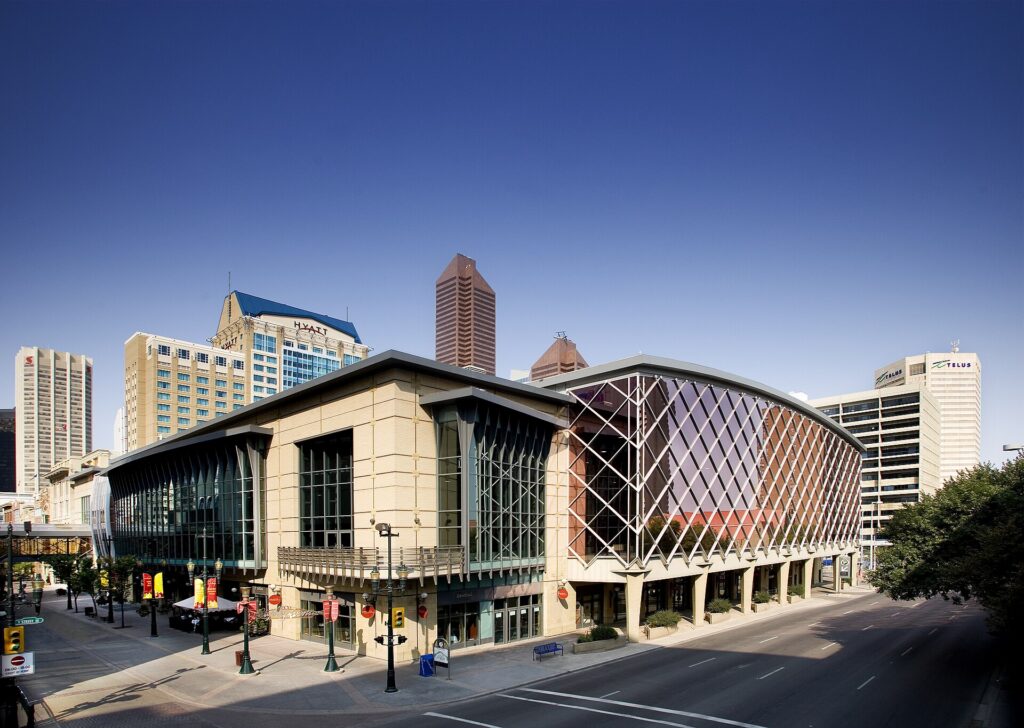
    Stephen Avenue Walk, the pedestrian street through downtown Calgary
    Stephen Avenue, the pedestrian heart of downtown (Photo: Calgary Convention Centre via Wikimedia Commons, CC0)

    The East Village: Studio Bell and the Central Library

    A decade ago the East Village was a neglected corner between downtown and the river; now it holds two of the best buildings in the country. Studio Bell, home of the National Music Centre, is a curved, copper-clad complex of galleries about Canadian music, with a collection of historic instruments and studios, hands-on exhibits where you can play them, and the Rolling Stones’ mobile recording studio parked inside. The Central Library, a block away, is a timber-and-glass building that straddles the CTrain tracks and has become a landmark on its own; the reading rooms and the children’s floor are open to everyone, and the café is a good stop. Between them, the RiverWalk along the Bow leads to St. Patrick’s Island, a reclaimed park in the river with a beach and a hill, and to Fort Calgary, the site of the original Mounted Police post, now The Confluence historic site.

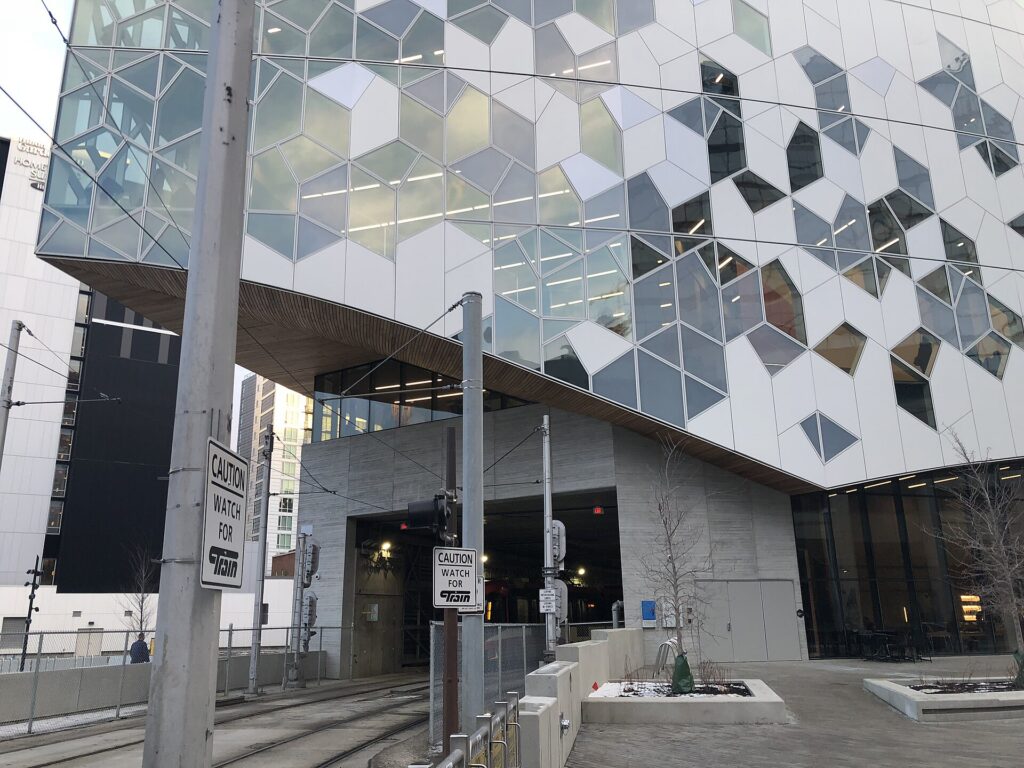
    The exterior of the Calgary Central Library in the East Village
    The Central Library in the East Village, one of the most admired new buildings in Canada (Photo: Kelapstick via Wikimedia Commons, CC BY-SA 4.0)

    The river: Prince’s Island, the Peace Bridge and the pathways

    Calgary’s downtown was built on the Bow, and the river is the city’s best public space. Prince’s Island Park, reached by footbridges from Eau Claire, is the downtown green: lawns, wetlands, a summer festival stage and the best picnic spot in the city. The Peace Bridge, Santiago Calatrava’s red helix across the river, connects Eau Claire to the north bank and Kensington and is the most photographed structure in the city after the Tower. From either side, the paved river pathways run for kilometres in both directions along the Bow and the Elbow, past Inglewood and the bird sanctuary to the east and toward Edworthy Park and the Douglas Fir Trail to the west. The city has one of the largest urban pathway networks in North America; rent a bike or grab a shared e-scooter and you can see the whole inner city from the water. In summer, locals float the Bow on rafts from Bowness downstream to Prince’s Island, and rafting companies rent the gear.

    Neighbourhoods worth a half-day

    Kensington

    Across the Peace Bridge or a CTrain stop from downtown, Kensington is the walkable village of cafés, bookshops, pubs and independent restaurants along Kensington Road and 10 Street NW. It is the easiest place in the city to spend an unplanned afternoon, and the closest neighbourhood to downtown with a local feel.

    Inglewood

    Calgary’s oldest neighbourhood, along 9 Avenue SE east of the Elbow River, has the best concentration of independent shops, vintage stores, galleries, breweries and restaurants in the city, plus the Inglewood Bird Sanctuary on the river and the Esker Foundation, a free contemporary art gallery that is one of the country’s best. Combine it with the East Village for a full day on foot.

    17th Avenue and the Beltline

    17 Avenue SW is the city’s restaurant and bar row, running for a dozen blocks through the Beltline, and it is the place to eat dinner and stay out. During a Flames playoff run it becomes the Red Mile, a street party that spills out of every bar. The Beltline around it, with Central Memorial Park and the Sheldon Chumir square, is the densest, most walkable residential neighbourhood in the city.

    Mission and 4th Street

    South of 17th, 4 Street SW through Mission is a quieter strip of restaurants and cafés along the Elbow River, with the Lilac Festival closing the street in late May.

    Chinatown and the Vietnamese strip

    Calgary’s Chinatown, beside downtown on the river, is small but has the Chinese Cultural Centre with its painted dome and good dim sum; Centre Street north of the river and 17 Avenue SE, International Avenue, have the Vietnamese restaurants that are one of the city’s culinary strengths. Ginger beef, the sweet crispy dish on every Chinese-Canadian menu in the country, was invented in Calgary.

    Museums, culture and family attractions

    Heritage Park, on the Glenmore Reservoir in the southwest, is a living-history village with a steam train, a paddlewheeler, a 1930s main street and costumed interpreters, and it is the best family day in the city. The Wilder Institute / Calgary Zoo, on St. George’s Island in the river, is one of the largest in Canada, with a strong conservation focus and a Canadian wilds section that suits the climate. TELUS Spark, the science centre in the northeast, has a dome theatre and hands-on galleries. Canada Olympic Park, now WinSport, on the western edge of the city, was the 1988 Winter Olympics venue: in summer you can ride the bobsleigh track and the zipline and see the ski jumps; in winter it is the city’s beginner ski hill, and Canada’s Sports Hall of Fame is on the site. The Military Museums, the largest in western Canada, are worth an afternoon for anyone interested in the subject. For live performance, Arts Commons downtown houses the Calgary Philharmonic and several theatres; Theatre Calgary and Alberta Theatre Projects are the main companies. For what is on stage and in the arenas during your dates, our Calgary events page lists concerts, shows and games.

    The Stampede

    For ten days from the first Friday of July, Calgary becomes the Stampede. The core of it is at Stampede Park, on the CTrain south of downtown: the rodeo every afternoon, the chuckwagon races and the grandstand show every evening, a midway, agricultural shows and concerts. But the Stampede is also the whole city: the parade through downtown on the first morning, free pancake breakfasts hosted by businesses and community groups all over town, office towers closing early, and everyone in boots and a hat. It is the biggest annual event in Canada, hotels sell out months ahead, and it is worth experiencing once even if you have no interest in rodeo. If you are coming for it, book the hotel before the flight and buy rodeo and grandstand tickets early; if you are not, the week after is one of the best-value weeks of the summer.

    Sports

    The Calgary Flames play at the Saddledome, the arena with the sagging roof beside the Stampede grounds, until their new arena beside it is finished; a game there is loud, and the walk back along 17th Avenue afterward is louder. The Calgary Stampeders play Canadian football at McMahon Stadium near the university from June to November. Cavalry FC, the professional soccer club, plays at Spruce Meadows on the southern edge of the city, which is also one of the world’s great show-jumping venues; the tournaments there in June, July and September draw international crowds and are a surprisingly good day out even for non-riders. Check what is on sale in Calgary for your dates before you book flights.

    What to eat, and where

    Two things define Calgary’s food. The first is Alberta beef: the steakhouses downtown and in the Beltline are genuinely good, and a proper Alberta steak is worth one dinner of the trip. The second is a restaurant scene that punches above the city’s size, concentrated in Inglewood, on 17th Avenue, in Kensington and, increasingly, in the industrial-turned-craft-beer district south of the Beltline known as the Barley Belt, where a dozen breweries sit within walking distance of each other. Beyond that: some of the best Vietnamese food in Canada along Centre Street and International Avenue; dim sum in Chinatown; the farmers’ markets, with the Calgary Farmers’ Market in the south and the Crossroads Market near Inglewood, for Alberta produce, bison and honey; and the unavoidable local invention, ginger beef, which every visitor should try once. Brunch is taken seriously, especially in Kensington and Inglewood.

    Calgary through the seasons

    Calgary is a different city in each season, and what you do depends on when you come. Winter (November to March) is cold, bright and dry, and the city is built for it: the +15 network keeps downtown walkable without a coat, the outdoor rinks at Olympic Plaza and Bowness Park are free, WinSport has beginner skiing and tubing twenty minutes from downtown, and the Flames are in season. Chinook days, when the temperature jumps above freezing in an afternoon, are for the river pathways; the cold snaps are for the museums and the Barley Belt. Spring (April to May) is brown before it is green, and the mountains are still skiing; it is the quietest, cheapest time to see the city. Summer (June to August) is patios on 17th Avenue and in Kensington, rafting the Bow, the Stampede, Sled Island and the Folk Festival on Prince’s Island, the Calgary Fringe, and long evenings that stay light past ten. Fall (September to October) is the local favourite: warm, settled, gold along the river, and the larch season in the mountains at the end of September. Beakerhead, the art-and-science festival, and the Calgary International Film Festival fill September; the holiday lights and the Spruce Meadows Christmas market close the year. Our month-by-month guide has the fare patterns that go with each season.

    Calgary with kids

    Calgary is an easy city with children. Heritage Park is the obvious full day, with the steam train, the antique midway and the wagon rides; the zoo, with its dinosaur park and penguin plunge, is the other. TELUS Spark has a dedicated under-eights gallery and a dome theatre. In summer, the wading pools and spray parks in Prince’s Island and Riley Park are free, rafting the Bow with a rental company is a hit with older kids, and the Calaway Park amusement park sits on the western edge of the city on the way to the mountains. In winter, the free outdoor rinks, the tubing park at WinSport and the Glenbow’s children’s programming fill the days. The Stampede has a children’s midway, agricultural shows with real animals, and the free pancake breakfasts that small children find magical. For families heading into the mountains, the Banff gondola, the hot springs and the Johnston Canyon walk are all manageable with young children; our family car rental guide covers the vehicle question.

    Calgary on a budget

    Much of the best of Calgary is free: the river pathways, Prince’s Island, the Peace Bridge, the Central Library, the Esker Foundation, the Inglewood Bird Sanctuary, the Stampede parade and pancake breakfasts, and the CTrain within the downtown zone. The Calgary Tower and Studio Bell charge admission but are modest; Heritage Park and the zoo are the expensive days, and both sell cheaper tickets online in advance. Eat well for less along International Avenue and Centre Street, at the food halls in the Beltline, and at the farmers’ markets. Hotel rates outside Stampede week and the summer Banff season are lower than in Toronto or Vancouver, and the absence of provincial sales tax takes a few percent off everything. Compare rates by neighbourhood on our Calgary hotel search.

    Day trips from Calgary

    Banff is ninety minutes west on the Trans-Canada: the town, the hot springs, the gondola up Sulphur Mountain, Lake Minnewanka, the Bow Valley Parkway and, in winter, three ski areas. Lake Louise is two hours, and Moraine Lake, where private vehicles are now restricted and a shuttle runs from a park-and-ride, is just beyond it; Banff and Lake Louise Tourism and Parks Canada cover the logistics and the park pass every vehicle needs. Canmore, just outside the park gate, is the cheaper and more relaxed base. Kananaskis Country, south of the highway, has the same mountains with a fraction of the visitors. Drumheller, ninety minutes east in the badlands, is a different world: the Royal Tyrrell Museum, one of the world’s great dinosaur museums, the hoodoos, and the eerie eroded valley of the Red Deer River. Head-Smashed-In Buffalo Jump, a UNESCO site two hours south, tells the story of the Plains peoples’ bison hunt. All of these are car trips; see our Calgary car rental page, and ask for winter tires from November to April. Travel Alberta covers the wider province.

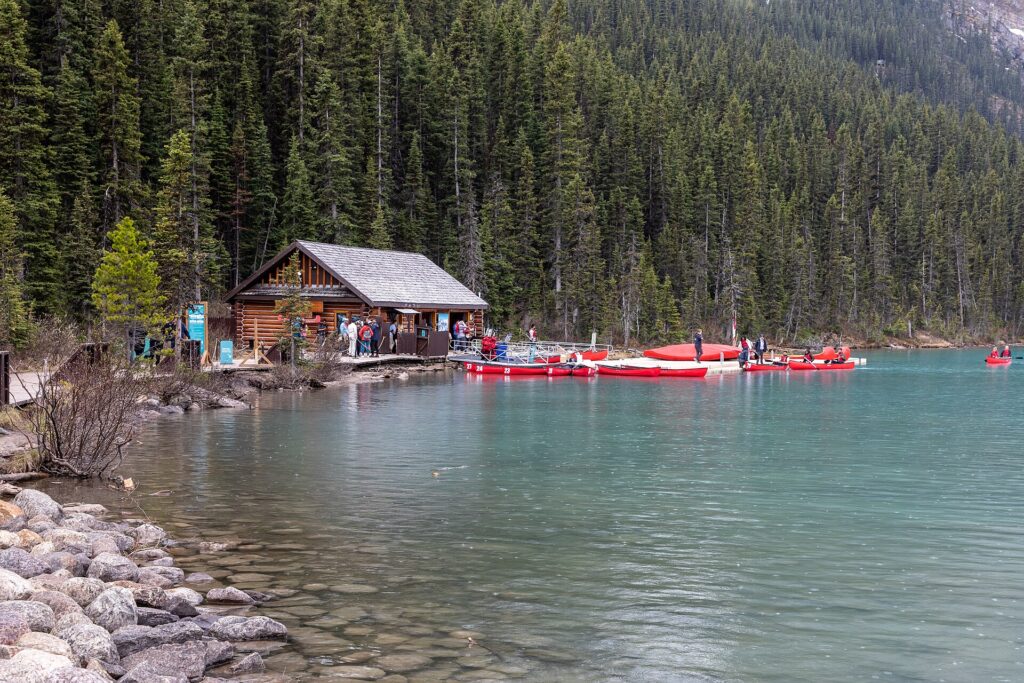
    Lake Louise in Banff National Park, two hours west of Calgary
    Lake Louise, two hours from downtown Calgary and the reason many visitors fly in (Photo: Dietmar Rabich via Wikimedia Commons, CC BY-SA 4.0)

    Two sample itineraries

    Two days, no car

    Day one: the Calgary Tower and Stephen Avenue in the morning, Studio Bell and the Central Library in the East Village, a walk along the RiverWalk to Inglewood for lunch and an afternoon among the shops and the Esker Foundation, dinner on 17th Avenue. Day two: the Peace Bridge and Prince’s Island in the morning, brunch in Kensington, a bike along the river pathways in the afternoon, an Alberta steak downtown, and a Flames game or a show at night.

    Four days, with the mountains

    Add a day for Heritage Park or the zoo and the Barley Belt breweries, then pick up a car downtown and spend two days in Banff and Lake Louise, or one day in the mountains and one in Drumheller, returning the car at the airport on the way home.

    Practical details

    • Transit: buy tickets at CTrain stations or through the My Fare app; rides within the downtown zone on 7 Avenue are free. Calgary Transit has maps; our transit-versus-car guide goes into detail.
    • From YYC: the Route 300 bus to downtown, a taxi, or a rental from the terminal. The airport’s site covers ground transport.
    • Weather: layers in every season, sun protection for the altitude, and a warm layer for the evenings even in July. Environment Canada’s forecast is the one to check, and it changes fast.
    • Time zone: Mountain, two hours behind Toronto and one ahead of Vancouver.
    • Entry requirements: U.S. citizens need a valid passport; most other visa-exempt visitors arriving by air need an Electronic Travel Authorization. The Government of Canada’s visitor page is the authoritative source.
    • Safety: a safe city by any standard; the usual big-city awareness applies downtown late at night.

    Frequently asked questions

    How many days do you need in Calgary?

    Two full days covers downtown, the East Village, the river and two neighbourhoods; add two or three for Banff and Lake Louise, and one more for Drumheller.

    What is the number one thing to do in Calgary?

    In July, the Stampede. Any other time, the river: walk or cycle the pathways from Prince’s Island across the Peace Bridge to Kensington, and finish with a steak.

    Is Calgary walkable?

    Downtown, the Beltline, Kensington and Inglewood are; the rest of the city assumes a car. The +15 network makes downtown walkable even in January.

    Do I need a car in Calgary?

    Not for the inner city. For Banff, Drumheller and the suburbs, yes, and that is most visitors; pick it up downtown on the morning you leave.

    Is Calgary expensive?

    Less than Toronto or Vancouver outside Stampede week, helped by the absence of provincial sales tax. Hotels during the Stampede and the summer Banff season are the exception.

    What is Calgary known for?

    The Stampede, the Rockies on its doorstep, the 1988 Winter Olympics, Alberta beef, the energy industry, and a downtown that has reinvented itself around the river.

    Ready to go? Compare flights to Calgary, find a place to stay with our Calgary hotel search, and if the mountains are on the list, price a rental car for those days.