Tag: Travel Guides

  • Things to Do in New York: A First-Timer’s Guide

    Things to Do in New York: A First-Timer’s Guide

    New York does not need an introduction, which is exactly the problem for a first visit. Everyone arrives with a list already written by films, songs and other people’s photographs, and the list is too long for any trip: the Statue of Liberty, the Empire State Building, Central Park, Times Square, Broadway, the Met, the Brooklyn Bridge, the 9/11 Memorial, a slice, a bagel, a show. All of those are worth doing. But the city New Yorkers live in is the one between the landmarks: the Village streets that ignore the grid, the dumpling counters of Flushing, the free ferry with the best view of the harbor, the neighborhoods of Brooklyn and Queens that have become destinations in their own right. This guide covers the sights that earn a day, the neighborhoods worth a half-day, the food, Broadway and the sports, the day trips that are easier here than from any other American city, and the practical details that turn a checklist into a trip.

    If you are still comparing cheap flights to New York, read this alongside our guides to the best time to fly to New York and whether you need a car (you almost certainly do not). Between the three you can plan the whole trip.
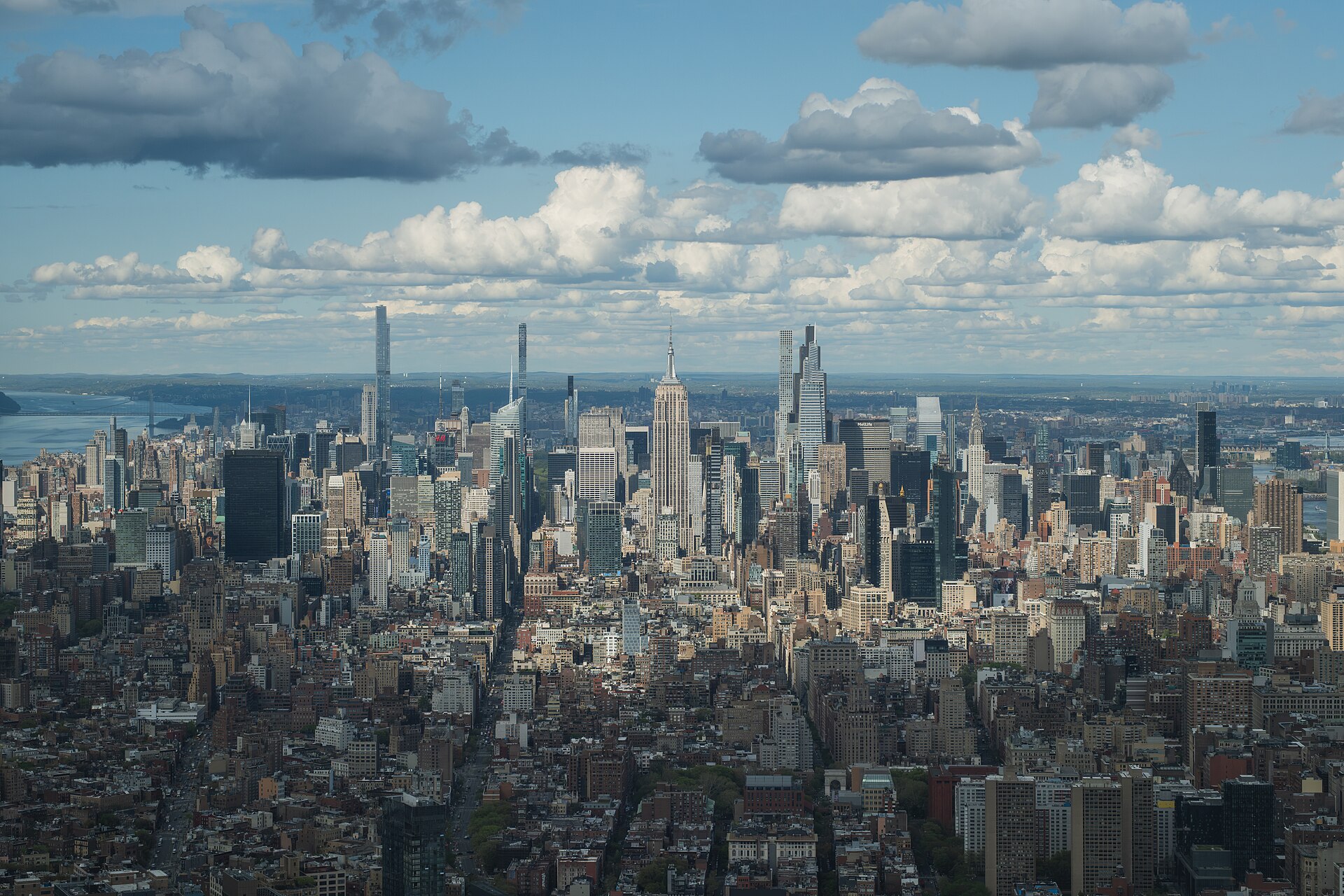
    The Midtown Manhattan skyline with the Empire State Building
    Midtown Manhattan from the One World Observatory downtown (Photo: Christian David via Wikimedia Commons, CC BY-SA 4.0)

    New York at a glance for first-timers

    • Airports: three of them. John F. Kennedy International (JFK) in Queens handles most long-haul flights and is about 24 km (15 miles) from Midtown; LaGuardia (LGA), also in Queens, is closer and mostly domestic; Newark Liberty (EWR) is across the Hudson in New Jersey. See our JFK airport guide.
    • Getting around: the subway runs 24 hours a day and is the fastest way around the city; tap a contactless card or phone at the turnstile. Manhattan is walkable block by block, and the Staten Island Ferry is free. Nobody needs a car, and our car-versus-transit guide explains why.
    • Money: US dollars. Sales tax of just under 9 percent is added at the register, not shown on the tag, but clothing and footwear under a set price per item are exempt. Tipping 18 to 20 percent in restaurants is expected, and a dollar or two per drink at a bar.
    • Weather: four real seasons: cold, sometimes snowy winters, a short lovely spring, hot and humid summers, and a long golden fall. Our month-by-month guide has the detail.
    • Where to stay: Midtown and Times Square for theaters and first-visit convenience; Lower Manhattan for the harbor and quieter weekends; Chelsea, the Village or the Lower East Side for restaurants and nightlife; Williamsburg, Downtown Brooklyn or Long Island City for lower rates a short subway ride from Manhattan. Our New York hotel search covers them all.

    Midtown: the Empire State Building, Grand Central and Times Square

    Midtown is where most first visits start, and its landmarks sit within a twenty-minute walk of one another. The Empire State Building, with decks on the 86th and 102nd floors, is still the classic view; Top of the Rock at Rockefeller Center is the view of the Empire State Building, with Central Park spread out to the north; and Summit One Vanderbilt, beside Grand Central, is the most theatrical, with mirrored rooms and glass ledges over Madison Avenue. Pick one for sunset and book a timed ticket. Grand Central Terminal is free and is the best building in Midtown: the celestial ceiling of the main concourse, the whispering gallery outside the Oyster Bar, and the food market on the Lexington Avenue side. Two blocks west, the New York Public Library opens its Rose Main Reading Room to anyone, and Bryant Park behind it has a free ice rink and holiday market in winter and lawn chairs and movies in summer. Rockefeller Center has the rink and the tree, Radio City Music Hall and St. Patrick’s Cathedral across Fifth Avenue. Times Square is loud, bright and worth one evening; the TKTS booth under the red steps sells discounted same-day theater tickets, and the Broadway houses are on the side streets just west of it.
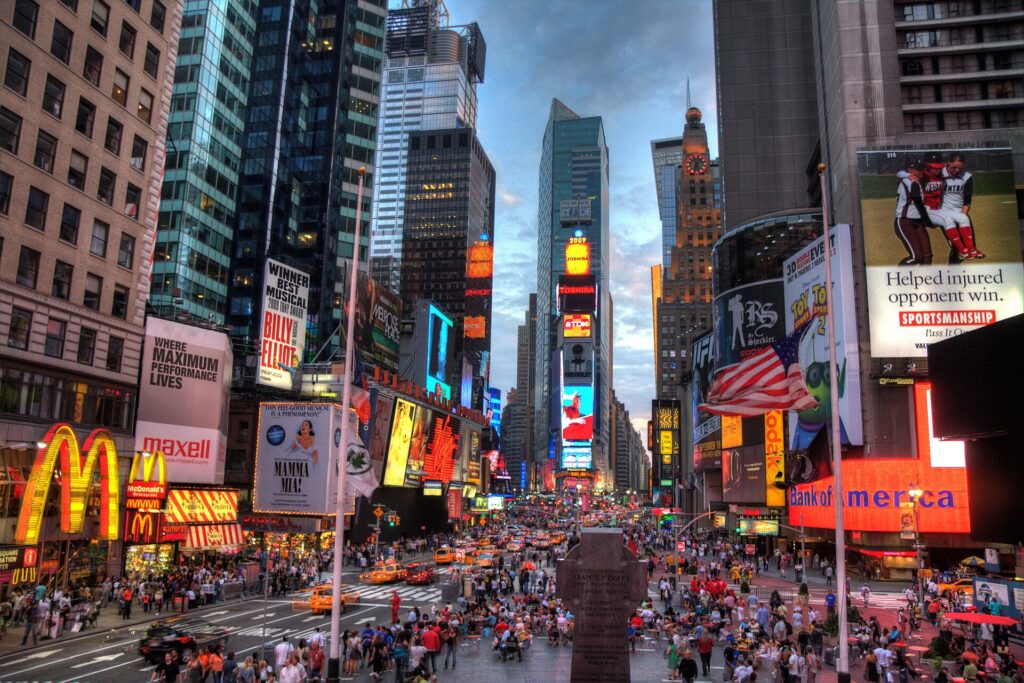
    Times Square in Midtown Manhattan, lit by its screens
    Times Square, worth one evening for the screens, the crowd and the TKTS booth (Photo: Terabass via Wikimedia Commons, CC BY-SA 3.0)

    Lower Manhattan: the Statue of Liberty, the 9/11 Memorial and the Brooklyn Bridge

    The southern tip of Manhattan holds the two sights most visitors would name first. The Statue of Liberty and Ellis Island are reached only by the official ferry authorized by the National Park Service, which leaves from the Battery; one ticket covers both islands and their museums, and pedestal and crown access sell out weeks ahead, so book early and take the first boat of the morning to beat the security lines. The 9/11 Memorial, two reflecting pools in the footprints of the twin towers, is free; the 9/11 Memorial & Museum beneath it is a serious, moving two hours, and the Oculus, the white-ribbed transit hall next door, is a landmark in its own right. From here it is a short walk past Trinity Church and Wall Street to the Brooklyn Bridge, which you should walk, ideally from Brooklyn toward Manhattan in the late afternoon so the skyline is in front of you; allow about half an hour. The Staten Island Ferry, from the Whitehall Terminal, is free, runs around the clock, and passes the Statue of Liberty on its 25-minute crossing; ride it over and straight back for the cheapest harbor cruise in the world.
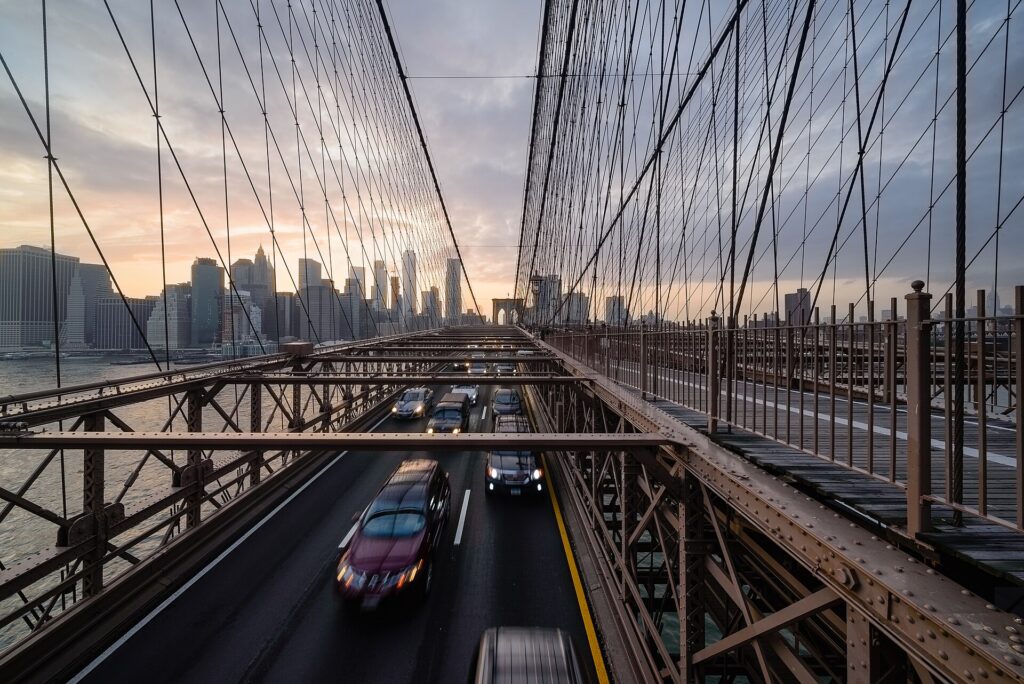
    The Brooklyn Bridge over the East River with Lower Manhattan behind
    The Brooklyn Bridge: walk it toward Manhattan in the late afternoon (Photo: Arild Vågen via Wikimedia Commons, CC BY-SA 4.0)

    Central Park and the rivers

    Central Park is 843 acres in the middle of Manhattan, and it deserves a morning rather than a shortcut. From Grand Army Plaza at the southeast corner, walk north past the zoo, up the elm-lined Mall to Bethesda Terrace and its fountain, over Bow Bridge into the Ramble, and up to Belvedere Castle above Turtle Pond and the Delacorte Theater, home of free Shakespeare in the Park in summer. Strawberry Fields near West 72nd Street remembers John Lennon, the Reservoir loop is the classic run, and the Conservatory Garden at 105th Street is the formal garden most visitors never find. The Central Park Conservancy publishes maps and free tours. The city’s other great green spaces are on the water. The High Line, a freight railway turned elevated park, runs from the Whitney Museum in the Meatpacking District to Hudson Yards; go early or at dusk to avoid the crowds. Little Island, a park on pillars in the Hudson at 13th Street, and the long Hudson River Park are where Manhattan watches the sunset. Across the East River, Brooklyn Bridge Park runs along the water under both bridges, with the best skyline view in the city from its piers and from the Brooklyn Heights Promenade above.

    Neighborhoods worth a half-day

    Greenwich Village and the West Village

    South of 14th Street the grid breaks down, and the streets around Washington Square Park and west toward the Hudson are the most walkable in the city: brownstones, corner cafés, the Stonewall National Monument on Christopher Street, the Village Vanguard and other jazz clubs, and old coal-oven pizzerias on Bleecker Street. It is the best place in Manhattan for an unplanned afternoon and a late set.

    SoHo, Chinatown and the Lower East Side

    SoHo’s cast-iron warehouses hold the city’s densest shopping; Chinatown, across Canal Street, has dim sum, hand-pulled noodles and the best cheap lunches in Manhattan; and the Lower East Side is Katz’s Delicatessen, Russ & Daughters, the Essex Market, the bars of Ludlow and Orchard Streets, and the Tenement Museum, which tells the immigrant story through the restored apartments of a single building.

    Chelsea, the Meatpacking District and Hudson Yards

    The galleries of West Chelsea, between roughly 19th and 27th Streets near the High Line, are free and show more contemporary art on a Saturday than most museums. Chelsea Market fills the old Nabisco factory, the Whitney anchors the foot of the High Line, and Hudson Yards at the top has the Shed arts center and the Edge deck, with a glass floor 100 stories above the West Side.

    Harlem

    Take the 2 or 3 train to 125th Street for the Apollo Theater, where Amateur Night on Wednesdays is an institution, soul food, the brownstones of Strivers’ Row and, on Sunday mornings, gospel services at churches that welcome respectful visitors. Combine it with the Cloisters, the Met’s medieval branch in Fort Tryon Park.

    Brooklyn: DUMBO, Brooklyn Heights and Williamsburg

    DUMBO, under the Manhattan Bridge, is the photograph everyone takes on Washington Street, plus Jane’s Carousel; Brooklyn Heights above it is the loveliest residential neighborhood in the city. Williamsburg, a stop from Manhattan on the L, is restaurants, vintage shops, rooftop bars and the Smorgasburg food market on warm-weather Saturdays.

    Queens: Jackson Heights, Flushing and Long Island City

    The 7 train from Times Square is the best food tour in America. Get off at Jackson Heights for Indian, Nepali, Tibetan and Colombian kitchens, and ride to the end of the line in Flushing for a Chinatown larger than Manhattan’s. Long Island City has MoMA PS1 and the skyline from Gantry Plaza State Park; Astoria is the Greek neighborhood.

    Museums, culture and family attractions

    New York has more first-rank museums than any visitor can see, so choose. The Metropolitan Museum of Art on Fifth Avenue deserves a full day: the Temple of Dendur, the European paintings, the American Wing, the arms and armor, and the rooftop garden in summer. The Museum of Modern Art on 53rd Street has Van Gogh’s The Starry Night, Monet’s water lilies and the definitive modern collection. The American Museum of Natural History, across the park from the Met, is the dinosaurs, the blue whale, the planetarium and the Gilder Center’s cave-like atrium; it is the museum for families. The Guggenheim, Frank Lloyd Wright’s spiral on Fifth Avenue, is worth seeing for the building alone; the Frick Collection is back in its Fifth Avenue mansion after a long renovation; and the Whitney, the Brooklyn Museum and the Intrepid Museum, an aircraft carrier on the Hudson with a space shuttle on its flight deck, each fill a half-day. The Bronx Zoo and the New York Botanical Garden sit side by side in the Bronx. For live performance, Lincoln Center houses the Metropolitan Opera, the New York Philharmonic and New York City Ballet, whose Nutcracker runs through December; Carnegie Hall is on 57th Street. For what is on during your dates, our New York events page lists concerts, shows and games.

    Broadway

    Broadway is the city’s defining night out, and the mechanics are simpler than they look. Around forty theaters in the blocks west of Times Square run shows most nights, with Monday the usual dark night and matinees on Wednesday, Saturday and Sunday. The long-running hits sell out months ahead; newer plays often have seats on the day. The TKTS booth sells same-day tickets at a discount, and most shows run a digital lottery or rush tickets; check each show’s own site the day before. Twice a year, in winter and again in late summer, NYC Broadway Week offers two-for-one tickets across much of the season. Off-Broadway, in smaller houses across the Village and Chelsea, is where new work starts and seats cost far less. Dress as you like, and eat before the show a few blocks west in Hell’s Kitchen, along Ninth Avenue, rather than on the square. If you are coming for a particular show, buy those tickets before the flights.

    Sports

    New York has two of everything. The Yankees play in the Bronx, about 20 minutes from Midtown on the 4, B or D trains, and the Mets at Citi Field in Queens on the 7. The Knicks and the Rangers share Madison Square Garden, directly above Penn Station; the Nets and the WNBA’s Liberty play at Barclays Center in Brooklyn. The Giants and Jets share MetLife Stadium in New Jersey, reached on game days by NJ Transit from Penn Station with a change at Secaucus. The US Open fills Flushing Meadows for two weeks from late August, and the New York City Marathon on the first Sunday of November turns all five boroughs into a grandstand. Check what is on sale in New York for your dates before you book flights.

    What to eat, and where

    New York eats better and more variously than any city in the country, and the essentials are cheap. The slice is the city’s food: folded in half from a corner shop and eaten standing up, with a coal-oven pie in the Village or under the Brooklyn Bridge for the full version. The bagel with cream cheese and lox from an appetizing store, and pastrami on rye at Katz’s, which has been slicing since 1888, are the other pillars. Then there are the halal carts that feed Midtown at lunch, the bacon, egg and cheese from a bodega, Nathan’s hot dogs on the Coney Island boardwalk, cheesecake at Junior’s, and Korean barbecue on 32nd Street after midnight. The real depth is in the boroughs: Flushing and Jackson Heights for Chinese, Indian and Latin American food, Arthur Avenue in the Bronx for old-school Italian, and the Smorgasburg markets on weekends. At the top end, NYC Restaurant Week, in winter and summer, is the affordable way in. Book serious restaurants weeks ahead, and remember that tax and tip add roughly 30 percent to the menu price.

    New York through the seasons

    New York is a different city in each season. Winter (December to February) opens with the holidays: the Rockefeller Center tree, the Fifth Avenue windows, the rinks at Bryant Park and Wollman, the Radio City Christmas Spectacular and the New Year’s Eve crowd in Times Square. January and February are cold and much cheaper, with Restaurant Week, Broadway Week, the Lunar New Year celebrations in Chinatown and quiet museums. Spring (March to May) is short and lovely: the St. Patrick’s Day Parade up Fifth Avenue, cherry blossoms at the Brooklyn Botanic Garden in late April, and Fleet Week over Memorial Day. Summer (June to August) is hot and humid, but it is also Shakespeare in the Park, outdoor movies in Bryant Park, the Pride March on the last Sunday of June, the Macy’s fireworks on the Fourth of July, ferries to Governors Island and the beaches at Coney Island and the Rockaways. Fall (September to November) is the local favorite and the priciest hotel season: perfect weather, Fashion Week and the UN General Assembly in September, the Feast of San Gennaro in Little Italy, leaves turning in Central Park, the Village Halloween Parade, the Marathon and the Macy’s Thanksgiving Day Parade. Our month-by-month guide has the fare patterns for each.

    New York with kids

    New York is easier with children than it looks, because the subway is an adventure and the sights are close together. The Natural History Museum is the obvious full day; the Central Park Zoo, the carousel and the playgrounds are across the park. The Intrepid’s flight deck, the Statue of Liberty ferry, the free Staten Island Ferry, the Roosevelt Island Tramway, which runs on a subway fare, and the New York Transit Museum, set in a disused Brooklyn subway station with vintage cars you can climb through, are all reliable hits. The Bronx Zoo, Coney Island’s rides in summer and the Brooklyn Bridge Park playgrounds fill the rest, and a family musical makes the best evening. Children 44 inches (112 cm) and under ride the subway free with a paying adult; strollers and stairs do not mix, so choose a hotel near a station with an elevator.

    New York on a budget

    The city is expensive to sleep in and cheap to see. Free: Central Park, the High Line, the Brooklyn Bridge, the Staten Island Ferry, Grand Central, the Public Library, the 9/11 Memorial plaza, the Chelsea galleries, the Brooklyn Heights Promenade and Times Square at night. Several museums have a pay-what-you-wish or free evening; check each site before you go. The subway is the best bargain in town: tap the same card or phone for every ride and, after a set number of paid trips in any seven-day period, the rest of that week’s rides are free. TKTS and rush tickets put Broadway within reach, and the slice, the bagel, the halal cart and the 7 train neighborhoods feed you well for very little. The hotel is where the money goes, and hotel taxes add roughly 15 percent to the rate: look at Long Island City, Downtown Brooklyn and the Upper West Side. Our guide to New York on a budget goes deeper, and our New York hotel search compares rates by neighborhood.

    Day trips from New York

    No American city makes it easier to leave for a day without a car. The Hudson Valley is under two hours north on Metro-North from Grand Central: Dia Beacon, a vast contemporary art museum a short walk from Beacon station, and the river town of Cold Spring, with hiking trails from the platform. The beaches are on the subway and the train: Coney Island and the Rockaways by subway or ferry, Long Beach and Jones Beach by the Long Island Rail Road. Philadelphia is about 90 minutes by train from Penn Station and an easy day; Washington, DC is about three hours and Boston nearer four, which makes each an easy overnight; our guides to Washington and Boston cover both. Hoboken, a PATH train or ferry across the Hudson, has the best view of Manhattan from the west. The trips that need a car, the Catskills, Bear Mountain, Storm King Art Center and the North Fork vineyards, are best done with a rental picked up the morning you leave; our car-versus-transit guide explains how. For Niagara Falls and Toronto, fly: our New York to Toronto guide covers the options. I Love NY, the state tourism office, covers everything beyond the city.
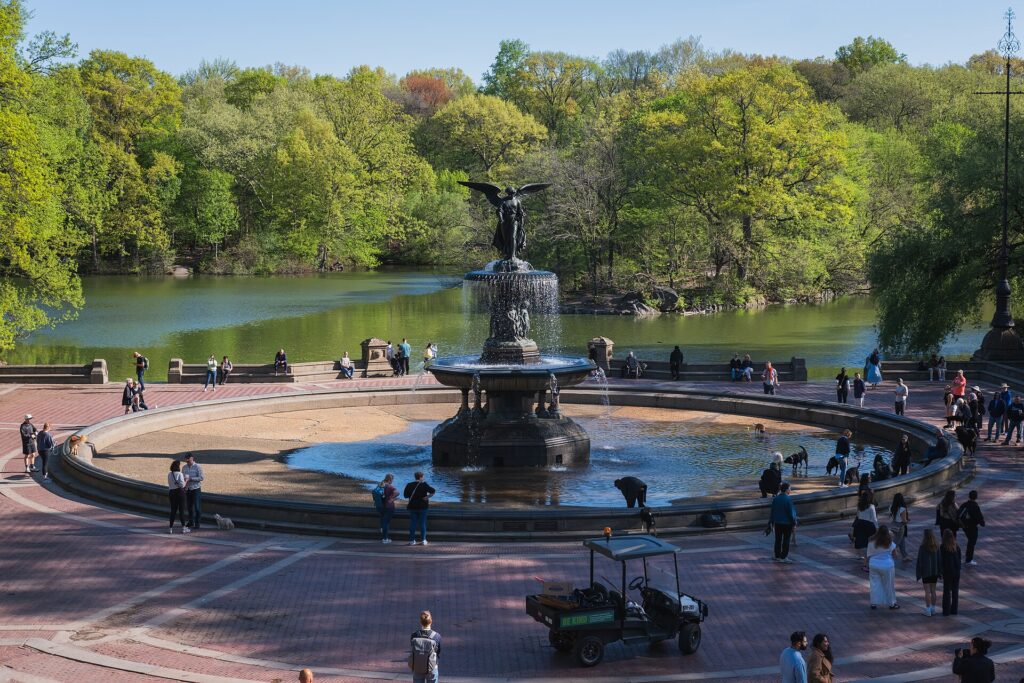
    Bethesda Fountain and the Lake in Central Park
    Bethesda Fountain and the Lake, the heart of Central Park (Photo: Christian David via Wikimedia Commons, CC BY-SA 4.0)

    Two sample itineraries

    Three days, first visit

    Day one: the first ferry to the Statue of Liberty and Ellis Island, the 9/11 Memorial and the Oculus, a walk through Chinatown to the Lower East Side for a late lunch at Katz’s, and the Brooklyn Bridge at golden hour, ending in DUMBO for dinner. Day two: the Met in the morning, Central Park from the Conservatory Garden down to Bethesda Terrace, Rockefeller Center and Grand Central in the afternoon, and a Broadway show with dinner in Hell’s Kitchen. Day three: the High Line from Hudson Yards to the Whitney, Chelsea Market, an afternoon in Greenwich Village, and a jazz set or a sunset observation deck.

    Five days, deeper

    Add a Brooklyn day (the Heights, Brooklyn Bridge Park and a Williamsburg evening) and a Queens day on the 7 train to Jackson Heights and Flushing, or swap one for a Hudson Valley train trip or a Yankees game with dinner on Arthur Avenue.

    Practical details

    • Transit: tap a contactless card, phone or watch at any subway turnstile or bus reader; one fare includes a free transfer within two hours. Express trains skip stations, so check before you board. The MTA has maps and service alerts; our transit-versus-car guide goes into detail.
    • From the airports: from JFK, the AirTrain to Jamaica, then the Long Island Rail Road or the E train into Manhattan, or a taxi at a flat fare plus tolls; from LaGuardia, the Q70 bus to the subway or a taxi; from Newark, the AirTrain and an NJ Transit train to Penn Station. The JFK airport site covers ground transport and the ongoing terminal rebuild.
    • Weather: layers in spring and fall, real cold-weather gear in January and February, light clothing and an umbrella in summer. The National Weather Service’s New York office has the forecast.
    • Time zone: Eastern, the same as Toronto, Boston and Washington.
    • Entry requirements: visitors from Visa Waiver Program countries need an approved ESTA before boarding; most others need a visa. The State Department’s travel site is the authoritative source.
    • Safety: one of the safest large cities in the country; the usual awareness applies on late-night trains and in crowds.

    Frequently asked questions

    How many days do you need in New York?

    Three full days covers the landmarks, one museum, Central Park, a Brooklyn walk and a show; five lets you add Queens, a second museum and a day trip. Nobody ever finishes.

    What is the number one thing to do in New York?

    Walk the Brooklyn Bridge toward Manhattan in the late afternoon. If you can buy only one ticket, make it the Statue of Liberty ferry; if you have one evening, make it Broadway.

    Is New York walkable?

    The most walkable big city in America. Manhattan’s grid makes navigation easy (about twenty north-south blocks to the mile), and the subway fills the gaps.

    Do I need a car in New York?

    No. Parking is expensive, traffic is slow, and the subway is faster to nearly everywhere. Rent one only for a day trip the trains do not reach.

    Is New York expensive?

    Hotels and sit-down dinners are, especially in the fall and at Christmas. Everything else can be done cheaply: the subway, the free sights, the slice, discount theater tickets and free museum evenings.

    Which borough should I stay in?

    Manhattan for a first visit, ideally near a station served by several lines. Brooklyn or Long Island City for lower rates a short ride from Midtown.

    Ready to go? Compare flights to New York, find a place to stay with our New York hotel search, and see what is on stage and in the arenas for your dates on our New York events page.

  • Things to Do in London: A First-Timer’s Guide

    Things to Do in London: A First-Timer’s Guide

    London does not need selling, but it does need editing. It is a city of nine million people spread across more than 1,500 square kilometres, with two thousand years of history layered on top of each other, a dozen world-class museums that charge nothing to enter, a theatre district that runs more shows in a week than most countries stage in a year, and neighbourhoods so different from one another that Greenwich, Notting Hill and Shoreditch could be three separate cities. First-time visitors tend to make one of two mistakes: they try to see all of it and spend the trip on the Underground, or they stay within a mile of Big Ben and never find out why Londoners love the place. This guide is the edit. It covers the sights that earn a day, the neighbourhoods worth a half-day, the free museums, the parks and the river, the theatre and the football, the food, the day trips that England makes easy, and the practical details that turn a long-haul flight into a good trip.

    If you are still comparing cheap flights to London, read this alongside our guides to the best time to fly to London and whether you need a car (you almost certainly do not). Between the three you can plan the whole trip.

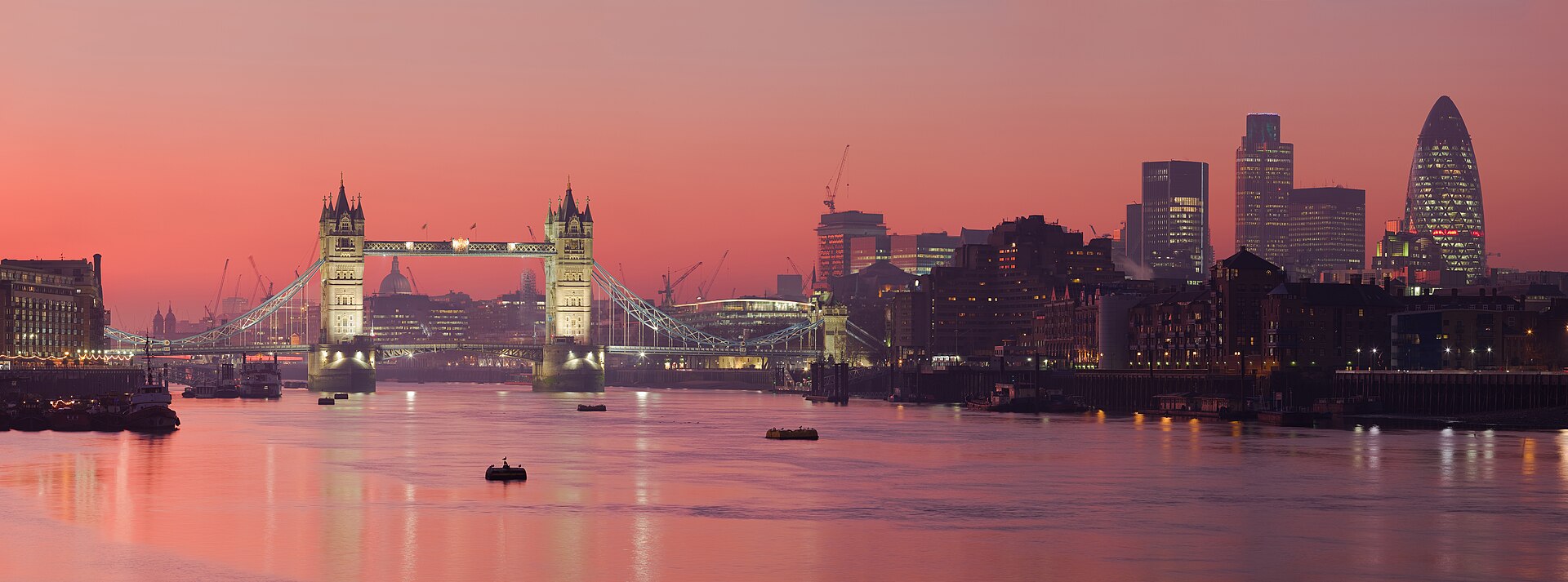
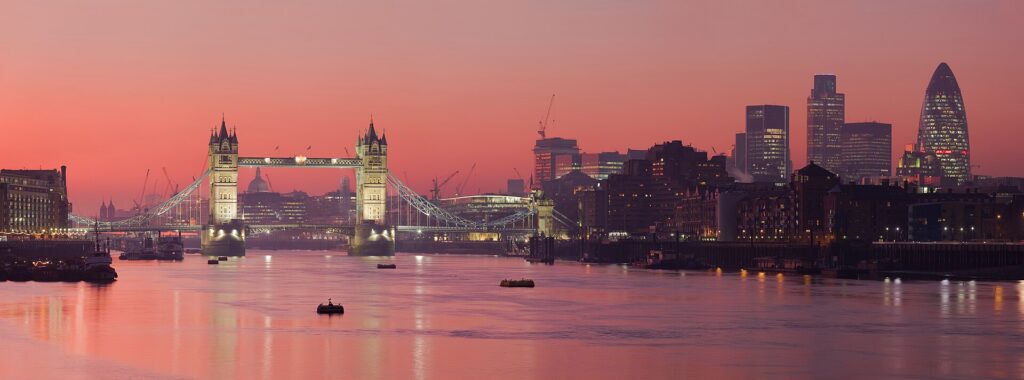
    Tower Bridge and the towers of the City of London across the Thames
    Tower Bridge and the City of London from the south bank of the Thames (Photo: Diliff via Wikimedia Commons, CC BY 3.0)

    London at a glance for first-timers

    • Airports: Heathrow (LHR), the main long-haul gateway, is about 24 km west of the centre and connected by the Elizabeth line, the Heathrow Express and the Piccadilly line; Gatwick, Stansted, Luton and London City handle much of the European and low-cost traffic. See our Heathrow airport guide.
    • Getting around: the Underground, the buses and the Elizabeth line reach everything in this guide, and you pay by tapping a contactless card or phone with an automatic daily cap. Walking between central sights is often faster than the Tube. Nobody needs a car in London; our transport guide explains why.
    • Money: pounds sterling. Contactless payment is accepted almost everywhere, including on buses, which no longer take cash. Prices include 20 percent VAT, and a service charge of around 12.5 percent is usually added to restaurant bills, so no further tip is expected. Tipping in pubs is not customary.
    • Weather: mild, grey and changeable in every season, with cool summers and wet, rarely freezing winters. A light waterproof layer is more useful than an umbrella. Our month-by-month guide has the detail.
    • Where to stay: Westminster, St James’s and Covent Garden for the sights on foot; South Bank and Southwark for the river and the theatres; Kensington for the museums and the parks; Shoreditch or Camden for nightlife; King’s Cross for a value base with the best transport links in the city. Our hotel booking tips cover how to get the rate down.

    Westminster: Big Ben, the Abbey and the palaces

    Start where the postcards do. The Houses of Parliament, properly the Palace of Westminster, fill the north bank of the Thames between Westminster Bridge and Lambeth Bridge, and the clock tower that everyone calls Big Ben (the name belongs to the bell) is best seen from the south end of Westminster Bridge in the early morning before the crowds arrive. Across Parliament Square, Westminster Abbey has crowned every English and British monarch since 1066 and holds the graves of Newton, Darwin, Dickens and Chaucer; it is one of the few major sights in London that charges admission, and it is worth it, particularly with the audio guide. A ten-minute walk up Whitehall passes the Cenotaph, Downing Street behind its gates, and the Horse Guards, where the mounted sentries change through the morning, before reaching Trafalgar Square and Nelson’s Column. Off Whitehall, the Churchill War Rooms, the underground complex from which the Second World War was directed, is one of the best museums in the city. From Trafalgar Square, the Mall runs through St James’s Park to Buckingham Palace; the Changing of the Guard takes place on set mornings, the State Rooms open to visitors in summer, and the park itself, with its pelicans and its view of the palace across the lake, is the prettiest in central London.

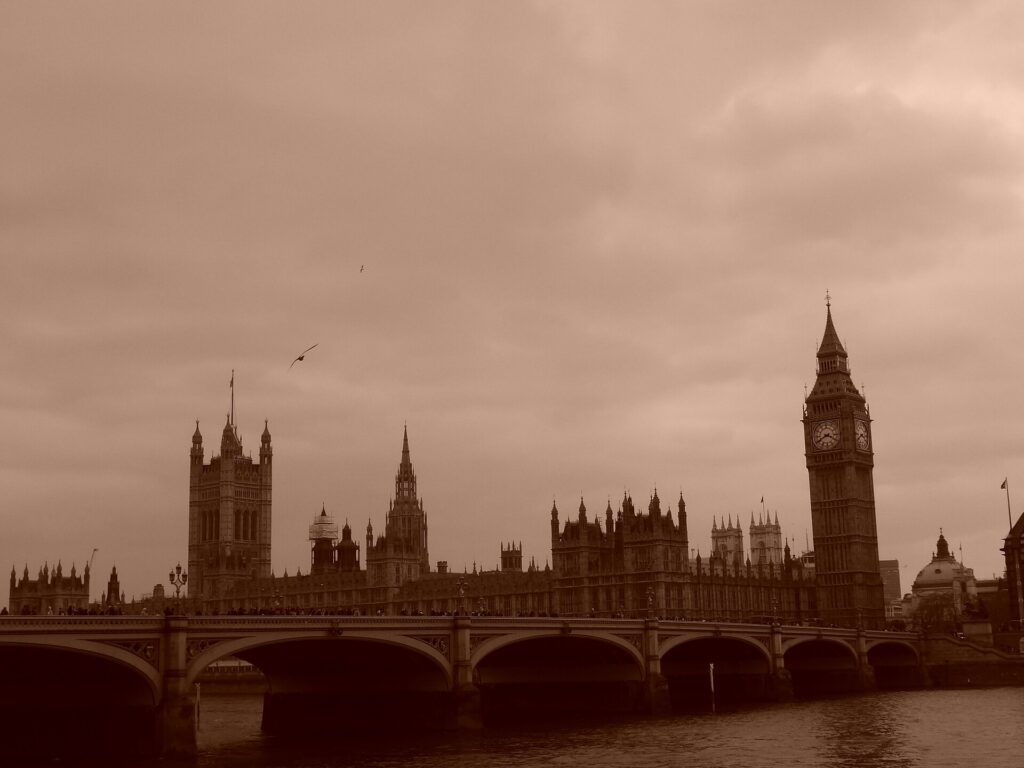
    The Houses of Parliament and the Elizabeth Tower beside Westminster Bridge
    The Palace of Westminster and Big Ben from the South Bank (Photo: Mikey from Wythenshawe, Manchester, UK via Wikimedia Commons, CC BY 2.0)

    The South Bank and Bankside: the river walk everyone should take

    The south bank of the Thames between Westminster Bridge and Tower Bridge is the best walk in London, and it takes about an hour without stops, which nobody manages. It begins at the London Eye, the observation wheel opposite Parliament, passes the National Theatre and the concrete arts complex of the Southbank Centre, with its skateboarders, book market under Waterloo Bridge and riverside bars, and continues past the Oxo Tower to Tate Modern, the power station turned gallery whose Turbine Hall is free to walk into and whose viewing terrace gives one of the best free views of St Paul’s across the river. Next door, Shakespeare’s Globe is a faithful reconstruction of the 1599 theatre; the summer season plays to standing “groundlings” in the open yard for a few pounds, which is the best theatre bargain in the city. Beyond it, under the railway arches by London Bridge, Borough Market has been feeding the city for centuries and is now its most famous food market, at its best on a weekday morning. The walk ends at Tower Bridge, with HMS Belfast moored below it and the Shard, the tallest building in Britain, rising over London Bridge station behind you.

    The City and the Tower

    The Tower of London is the essential paid attraction, a thousand-year-old fortress that has been a palace, a prison, a mint and a zoo and that still houses the Crown Jewels; book a timed ticket through Historic Royal Palaces, arrive at opening, go straight to the jewels before the queue forms and then join a Yeoman Warder tour. From the Tower, the Square Mile of the City of London, the financial district on the site of the Roman town, is a place of contrasts: medieval churches and livery halls between glass towers with nicknames (the Gherkin, the Walkie-Talkie, the Cheesegrater). The Sky Garden at the top of the Walkie-Talkie is free to visit with an advance booking and gives a better view than most paid decks. St Paul’s Cathedral, Wren’s masterpiece after the Great Fire of 1666, charges admission but the climb to the Whispering Gallery and the dome is one of the great London experiences. The City empties at weekends, which makes Saturday the best day to walk its lanes and the worst to look for lunch; Leadenhall Market and the streets around the Bank of England are at their most atmospheric on a weekday.

    The great free museums

    London’s national museums are free, which changes how you use them: instead of one exhausting day, visit two or three for an hour or two each. The British Museum in Bloomsbury holds the Rosetta Stone, the Parthenon sculptures and the Egyptian galleries under Norman Foster’s glass Great Court; go early and pick three rooms. The National Gallery on Trafalgar Square has Van Gogh’s Sunflowers, Turner, Constable and the great Italian collection, with the National Portrait Gallery around the corner. In South Kensington, three museums sit on one street: the Natural History Museum, with its dinosaurs and its cathedral-like Romanesque hall, the Science Museum, and the V&A, the world’s largest museum of design and decorative art, whose café and courtyard are worth the visit alone. Across the river, Tate Britain holds the Turner collection and Tate Modern the contemporary art, with a boat linking the two. Smaller and stranger: the Wallace Collection in Marylebone, Sir John Soane’s Museum in Lincoln’s Inn Fields, the Imperial War Museum in Lambeth, and the Museum of London Docklands on the history of the port. Most charge for special exhibitions and all are busiest on wet weekend afternoons.

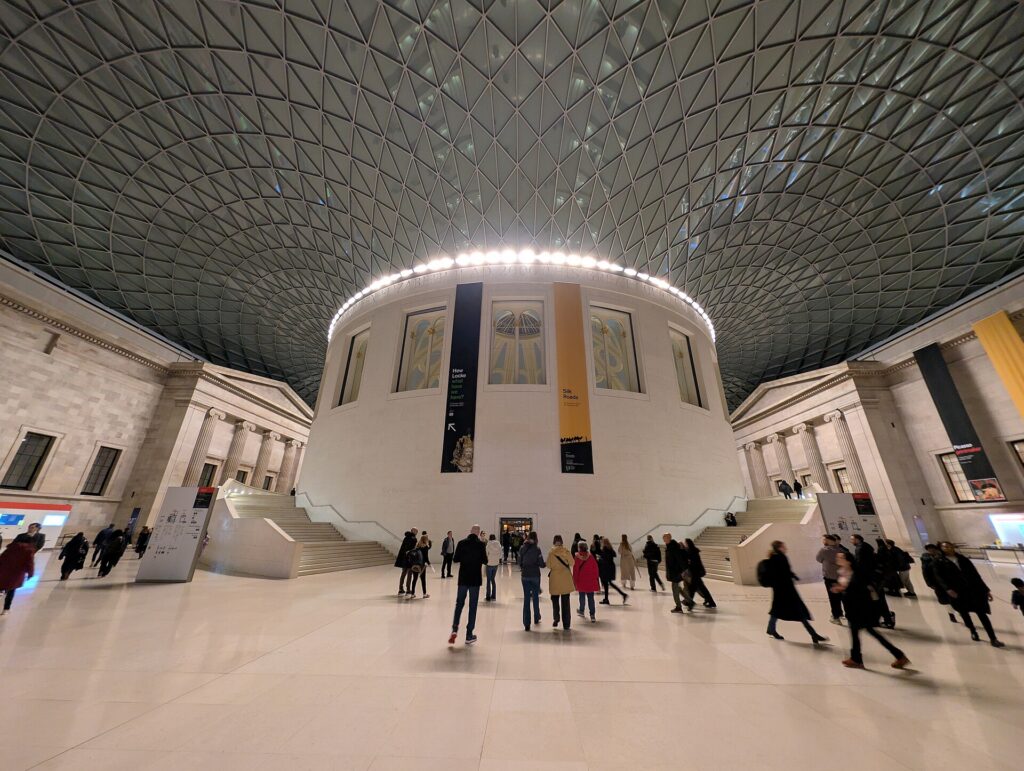
    The glass-roofed Great Court of the British Museum in Bloomsbury
    The Great Court of the British Museum, free to enter like all of London's national museums (Photo: Andy Li via Wikimedia Commons, CC0)

    Neighbourhoods worth a half-day

    Soho and Covent Garden

    The West End’s two liveliest districts sit side by side. Covent Garden’s piazza and covered market have street performers, the London Transport Museum and the Royal Opera House; Soho, to the west, is the city’s restaurant, bar and theatre village, with Chinatown at its southern edge and Carnaby Street on its western one. Come for dinner and a show and stay for the pubs.

    Notting Hill and Portobello Road

    West of Hyde Park, Notting Hill’s pastel terraces and the Saturday antiques market on Portobello Road are the reason the area is so photographed. Go on a Saturday morning for the market, or on a weekday for the quiet streets and the independent shops of Westbourne Grove; in late August the Notting Hill Carnival takes over the whole district.

    Shoreditch, Spitalfields and the East End

    East of the City, Shoreditch is the street-art, bar and independent-shop quarter, Spitalfields has a covered market and Georgian streets, and Brick Lane has the curry houses, the Sunday market and the bagel bakeries that stay open all night. Columbia Road’s Sunday flower market is a half-hour’s walk north. This is the London that changes fastest, and the best area for a night out.

    Camden and Regent’s Park

    Camden Town’s markets along the canal are chaotic, touristy and still fun, and the music venues around it launched half of British rock. Walk south along the Regent’s Canal to Regent’s Park, the rose garden and London Zoo, or climb Primrose Hill for the skyline view.

    Greenwich

    Downriver by boat or on the DLR, Greenwich is a day on its own: the Cutty Sark, the Royal Observatory on the hill where the Prime Meridian is marked in the courtyard, the National Maritime Museum, the Old Royal Naval College and its Painted Hall, the covered market, and the park with the best view of Canary Wharf and the Thames in the city.

    Kensington and Chelsea

    The museums of South Kensington, Kensington Palace and its gardens, the Royal Albert Hall, the shops of the King’s Road and the riverside at Chelsea Embankment: this is the grand, expensive, well-kept London of the guidebooks, and it is at its best on a sunny afternoon.

    Parks, palaces and the river

    London has more green space than any comparable capital, and the Royal Parks are the core of it. Hyde Park and Kensington Gardens together form a two-mile stretch of lawns, the Serpentine lake, Speakers’ Corner and the Diana memorial fountain; Regent’s Park has the rose garden and the zoo; St James’s Park and Green Park frame Buckingham Palace; and Richmond Park, in the southwest, is a genuine deer park of ancient oaks and bracken that feels a hundred miles from the city. Hampstead Heath has the swimming ponds and the view from Parliament Hill. The palaces are spread along the river: Kensington Palace in the park, Hampton Court, Henry VIII’s Tudor palace with its maze and gardens, about 35 minutes by train from Waterloo, and Kew Gardens, the world’s most important botanic garden, with its Victorian glasshouses and treetop walkway, on the District line. The Thames itself is a transport route: Uber Boat by Thames Clippers runs a scheduled river bus from Putney in the west past Westminster and the Tower to Greenwich and beyond, accepts contactless payment, and is the most enjoyable way to travel between Westminster, the Tower and Greenwich.

    Theatre, music and sport

    The West End runs around forty theatres within a few streets of Shaftesbury Avenue and the Strand, with musicals, new plays and the long-runners, and the National Theatre, the Old Vic, the Globe and the Almeida stage the serious drama. Buy on the day at the TKTS booth in Leicester Square or through the theatres’ own sites; matinees are cheaper. Classical music runs at the Barbican, the Southbank Centre, Wigmore Hall and the Royal Albert Hall, where the Proms fill every night from mid-July to mid-September with cheap standing tickets. The O2 in Greenwich is the big arena, and Wembley Stadium and the Tottenham Hotspur Stadium host the stadium shows. For sport, London usually has six or seven clubs in the Premier League, with Arsenal, Chelsea and Tottenham the biggest names and Crystal Palace, Fulham, Brentford and West Ham among the others, and the England national side at Wembley. Rugby is at Twickenham, cricket at Lord’s and the Oval, and the two weeks of Wimbledon in late June and early July are the most famous tennis tournament in the world; the daily ballot and the queue still give walk-up fans a chance. For what is on stage and in the stadiums during your dates, our London events page lists concerts, shows and matches on sale.

    What to eat, and where

    London’s food has two faces, and both are good. The first is the pub: a Sunday roast with Yorkshire pudding, fish and chips, a pie, a pint of cask ale, in a room that has served the same purpose for two or three hundred years. The riverside pubs in Hammersmith, Wapping and Greenwich, the ancient ones off Fleet Street and in Southwark, and any well-run local in Bloomsbury or Islington will do. The second is the city of immigrants: Indian and Bangladeshi food on Brick Lane and, better, in Tooting and Southall; Turkish grills on Green Lanes and in Dalston; Vietnamese on Kingsland Road; Chinatown and the dim sum houses of Soho; Caribbean in Brixton; Portuguese in Stockwell. Add the markets, with Borough for produce and lunch, Maltby Street for the arches, Broadway Market and Brixton Village at weekends, and the food halls that have opened in every district; the afternoon tea rituals of the grand hotels and the department stores; and a restaurant scene that ranges from the chains everyone loves to some of the world’s best tasting menus. Coffee is now excellent everywhere, and the bakeries of Hackney and Bermondsey are worth a detour on a Saturday morning.

    London through the seasons

    London works in every season, which is one reason it is among the most visited cities in the world. Winter (December to February) is dark by four but the city dresses for it: the Christmas lights on Regent Street and Oxford Street, the markets on the South Bank, the seasonal ice rinks at Somerset House and elsewhere, Winter Wonderland in Hyde Park, and the January sales. It is also when the museums and the theatres are quietest and the hotel rates lowest. Spring (March to May) brings blossom to the parks, daffodils to St James’s, the Boat Race on the Thames, the London Marathon in April, and the Chelsea Flower Show in late May; the days are long by May and the weather is at its most reliable in the second half of the season. Summer (June to August) is the crowded, expensive, glorious version: Wimbledon, the Proms, open-air theatre in Regent’s Park, the Buckingham Palace State Rooms, swimming on the Heath, and long evenings on the river. Autumn (September to November) is the local favourite, with the parks turning gold, Open House weekend opening buildings that are normally closed, the film festival in October, Bonfire Night fireworks on the fifth of November and the Lord Mayor’s Show on the second Saturday of November. Our month-by-month guide matches the seasons to the fare patterns.

    London with kids

    London is an outstanding city for children, and much of it is free. The Natural History Museum, with the blue whale in the hall and the dinosaur gallery, and the Science Museum next door, with its hands-on floors and flight gallery, are the obvious full day in South Kensington, and the Diana Memorial Playground in Kensington Gardens is next to them. The Tower of London, with its ravens, armour and Crown Jewels, and HMS Belfast, the warship moored by Tower Bridge, cover a day in the east. The London Transport Museum in Covent Garden lets children climb on old buses and Tube trains. London Zoo in Regent’s Park, the Cutty Sark and the Observatory in Greenwich, a ride on the London Eye, the top deck of a red bus and the front seat of a driverless DLR train through Docklands all work for younger children; the Changing of the Guard is a hit if you arrive early enough to see. The Warner Bros. Studio Tour, the Harry Potter film sets at Leavesden northwest of the city, needs a timed ticket booked well ahead and a train to Watford Junction. Children under eleven travel free on the Tube and buses with an adult, and most restaurants are relaxed about families before seven in the evening.

    London on a budget

    London is expensive to sleep in and cheap to see. The national museums, the parks, the river walk, the Changing of the Guard, the Sky Garden, the markets, the street art of Shoreditch, the view from Primrose Hill and the ceremonial streets of Westminster all cost nothing. Pay for the Tower, the Abbey and one view, and skip the rest of the ticketed attractions unless one really matters to you. Travel with a contactless card and the daily cap means you will never overpay on transport, and the bus, with its Hopper fare, is the cheapest tour in the city. Eat at the markets, in the pubs and in the neighbourhoods rather than in the West End, and use the supermarket meal deal for lunch, as the locals do. Theatre on the day from TKTS, standing tickets at the Globe and the Proms, and the cheaper seats booked directly with the theatres are far below the headline prices. Hotels are the cost that matters, and the answer is location: stay in Zone 2 near a good Tube or Elizabeth line station rather than in Zone 1, book well ahead for summer, and read our guide to the best times to book before you commit.

    Day trips from London

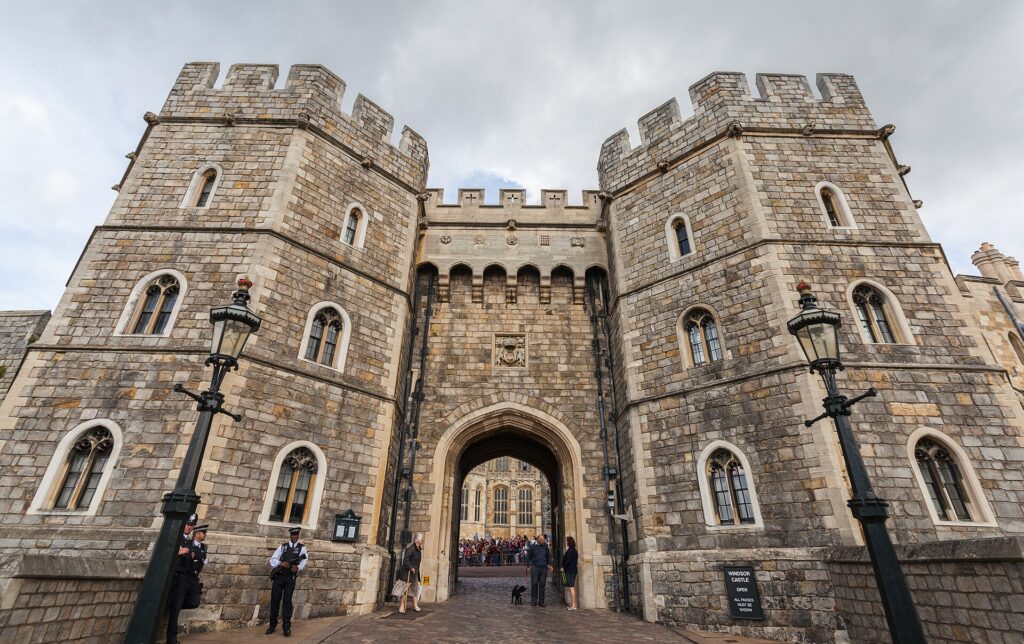
    England is small and its railways start in London, which makes the day trips easy and the car unnecessary. Windsor, with the castle that is the monarch’s weekend home and the town beneath it, is under an hour by train from Waterloo or Paddington. Oxford and Cambridge are each about an hour by train, from Paddington and King’s Cross respectively, and both are best seen on foot with a walking tour of the colleges. Bath, the Georgian spa city with its Roman baths, is about an hour and a half from Paddington. Brighton, the seaside city with the pier, the Royal Pavilion and the Lanes, is an hour from Victoria or London Bridge. Canterbury and its cathedral are an hour on the high-speed line from St Pancras. Stonehenge is the one that needs a tour or a train to Salisbury and a bus; English Heritage runs the site and sells timed tickets. Further afield, Paris is a little over two hours by Eurostar from St Pancras, close enough for an overnight, and our Paris guide and Paris flights page cover it; our guide to multi-city trips in Europe explains how to combine the two. For any of these, buy train tickets in advance through National Rail and travel after the morning peak for the cheapest fares. VisitBritain covers the rest of the country.

    Windsor Castle above the town of Windsor, west of London
    Windsor Castle, under an hour by train from central London (Photo: Diego Delso via Wikimedia Commons, CC BY-SA 4.0)

    Two sample itineraries

    Two days, on foot and by Tube

    Day one: Westminster Bridge at eight for Big Ben without the crowds, the Abbey at opening, Whitehall and the Churchill War Rooms, lunch in St James’s, Buckingham Palace and the park, the National Gallery for an hour, then dinner in Soho and a West End show. Day two: the Tower of London at opening, a walk across Tower Bridge and along the South Bank past Borough Market for lunch, Tate Modern and the Globe, the river bus back to Westminster or on to Greenwich, and a pub dinner by the river.

    Four days, with the neighbourhoods

    Add a morning in the British Museum and an afternoon in Bloomsbury and Covent Garden, then a day split between South Kensington’s museums, Hyde Park and Notting Hill; finish with Greenwich by boat, or a day trip to Windsor, Oxford or Brighton, and a final evening in Shoreditch.

    Practical details

    • Transport: tap a contactless card, phone or Oyster card at the gates and on the bus; fares cap automatically each day and each week. Transport for London has the maps and the journey planner; our transport guide explains the zones, the peak hours and the airport options.
    • From Heathrow: the Elizabeth line to Paddington and the West End, the Heathrow Express to Paddington in a quarter of an hour, or the Piccadilly line for the cheapest ride. Heathrow’s site covers the terminals, and our Heathrow guide the layout.
    • Weather: a waterproof layer in every season, comfortable shoes always, and a warm coat from November to March. The Met Office forecast is the one to trust.
    • Time zone: Greenwich Mean Time in winter and British Summer Time from late March to late October; five hours ahead of Toronto and New York and eight ahead of Vancouver for most of the year.
    • Entry requirements: Canadian, American and most other visa-exempt visitors now need an Electronic Travel Authorisation before boarding, applied for online in advance. The UK government’s visa checker is the authoritative source and tells you what applies to your passport.
    • Safety: a safe city by the standards of any capital; the practical risks are phone-snatching from bikes in the centre and pickpockets on crowded Tube platforms, so keep phones out of sight at the kerb.

    Frequently asked questions

    How many days do you need in London?

    Three full days covers Westminster, the South Bank, the Tower and two or three museums; five lets you add the neighbourhoods and Greenwich; a week gives you a day trip or two and a proper feel for the city.

    What is the number one thing to do in London?

    Walk the South Bank from Westminster Bridge to Tower Bridge with stops at Tate Modern and Borough Market. It is free, it takes a morning, and it shows you more of London than any single ticketed attraction.

    Is London walkable?

    The centre is, and most first-time itineraries cover Westminster, the West End, the City and the South Bank on foot with a few Tube rides between them. The outer neighbourhoods need the Tube, the bus or the boat.

    Do I need a car in London?

    No. Driving in central London involves a congestion charge, an emissions zone, scarce and expensive parking and slower journeys than the Tube. Day trips go by train. Our car-versus-transport guide explains the exceptions.

    Is London expensive?

    Hotels and drinks are; almost everything else can be done cheaply. The major museums are free, transport is capped, and the markets and pubs feed you well for less than the West End restaurants.

    What is London known for?

    The monarchy and its palaces, Parliament and Big Ben, the Tower and the Crown Jewels, the West End theatres, the red buses and black cabs, the pubs, the free museums, the Premier League, and a mixture of cultures that makes it one of the most cosmopolitan cities on earth.

    Ready to go? Compare flights to London, check the best month to travel before you pick dates, and see what is on in London while you are there, from West End shows to Premier League matches.

  • Things to Do in Paris: A First-Timer’s Guide

    Things to Do in Paris: A First-Timer’s Guide

    Paris is the city everyone thinks they already know, and that is exactly why a first visit can disappoint the people who plan it badly. They queue for the lift at the Eiffel Tower at noon, walk the Louvre from end to end in one exhausted afternoon, eat a mediocre croque-monsieur beside the Champs-Élysées and leave wondering what the fuss was about. Plan it well and Paris repays every hour: a medieval island with a rebuilt cathedral at its heart, the world’s greatest concentration of art, twenty arrondissements that each feel like a separate small town, a food culture built around the daily bread run and the neighbourhood market, and a river that ties it all together. This guide covers the landmarks that earn their queues, the museums worth booking, the neighbourhoods worth a slow half-day, the food, the calendar and the sport, the day trips to Versailles, Giverny and Champagne, and the practical details that turn a checklist into a trip.

    If you are still comparing cheap flights to Paris, read this alongside our guides to the best time to fly to Paris and whether you need a car. Between the three you can plan the whole trip.

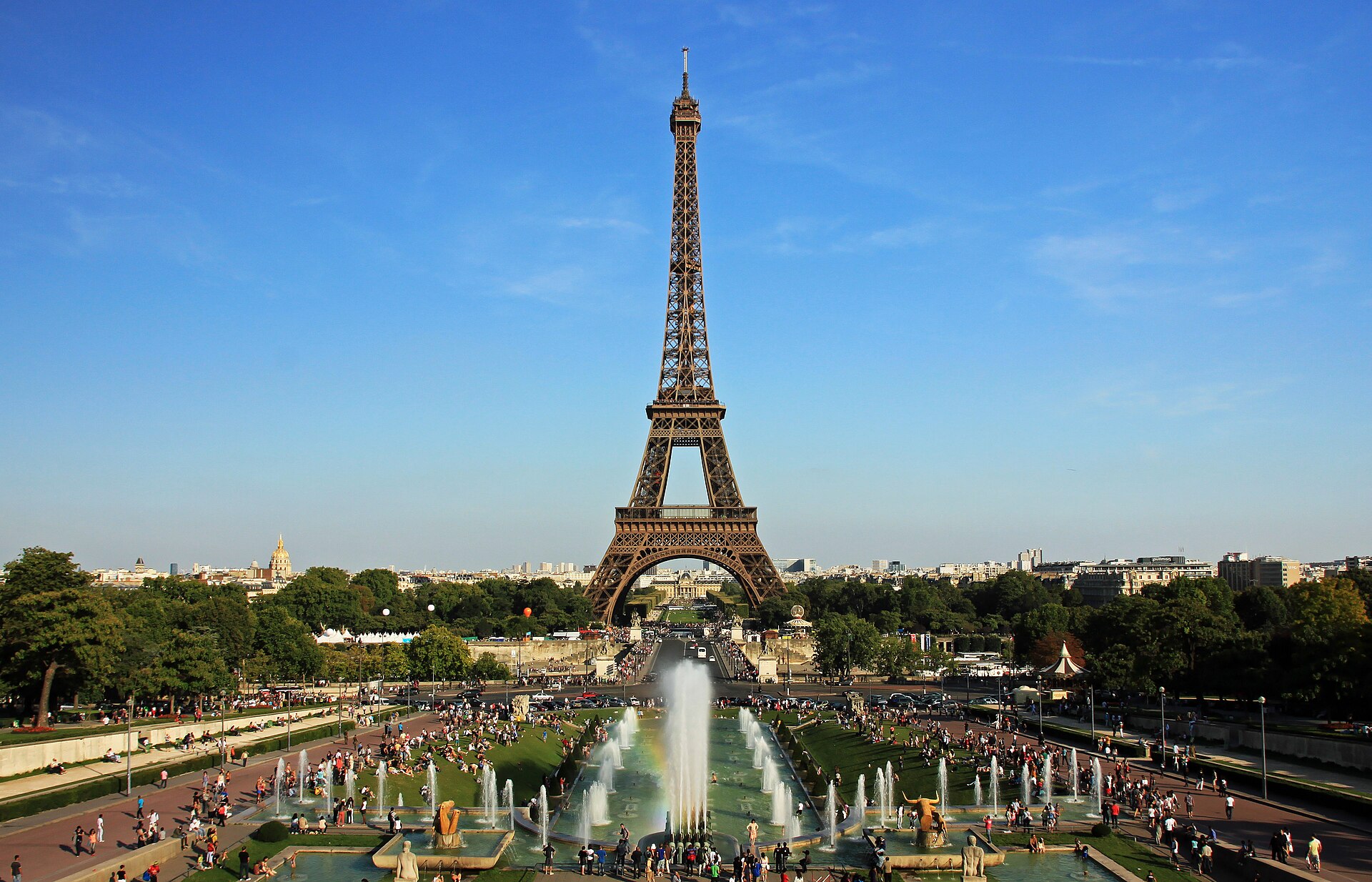
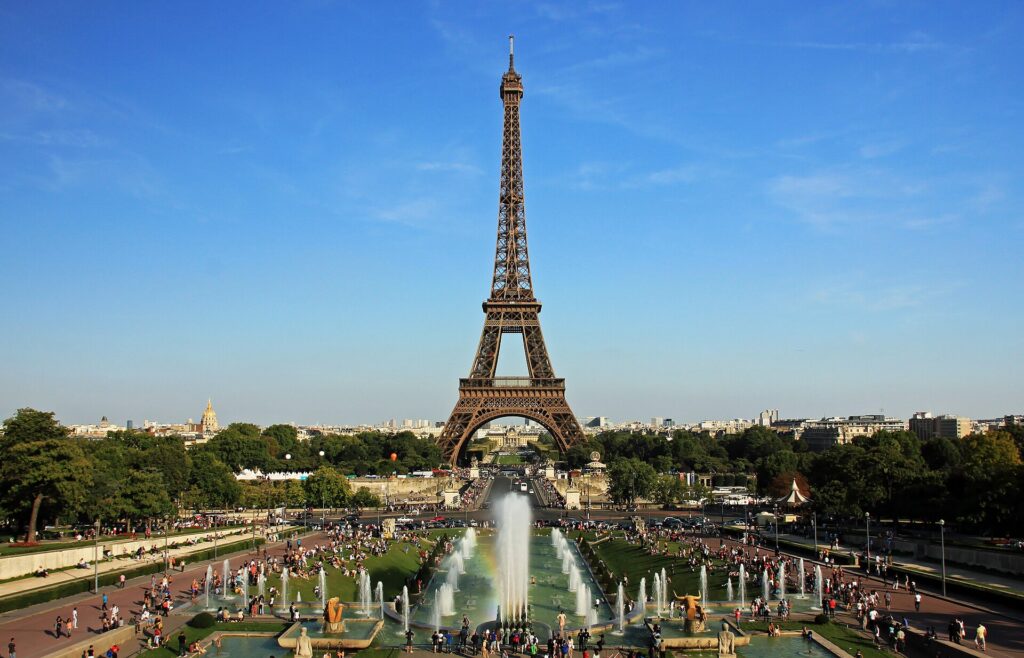
    The Eiffel Tower seen across the Trocadéro gardens in Paris
    The Eiffel Tower from the Trocadéro, the classic first view of Paris (Photo: NonOmnisMoriar via Wikimedia Commons, CC BY-SA 3.0)

    Paris at a glance for first-timers

    • Airports: Charles de Gaulle (CDG), about 25 km northeast of the centre, handles most long-haul flights; Orly (ORY), about 14 km south, handles many European and domestic routes. The RER B train, Métro line 14 from Orly, or a fixed-fare taxi gets you in. See our CDG airport guide.
    • Getting around: the Métro reaches within a few minutes’ walk of almost everything, the RER trains cross the city and run to Versailles and Disneyland, and the centre is compact enough to walk from the Louvre to the Latin Quarter in twenty minutes. A car is a liability inside the city.
    • Money: euros. Cards, including contactless, are accepted almost everywhere, though a few bakeries and market stalls still prefer cash for small sums. Service is included in restaurant prices by law, so tipping is optional; rounding up or leaving a euro or two for good service is plenty.
    • Weather: mild and changeable, with grey, damp winters, a soft spring, warm summers that can turn to heatwaves, and a golden early autumn. Rain is frequent but rarely heavy. Our month-by-month guide has the detail.
    • Where to stay: Le Marais for walking everywhere and a lively evening; Saint-Germain or the Latin Quarter for the classic Left Bank; the 7th near the Eiffel Tower for calm; Montmartre or the Canal Saint-Martin for a more local feel and lower prices. Our Paris hotel search covers them all.

    The Eiffel Tower, the Trocadéro and the Seine

    Start where everyone starts, but do it properly. The Eiffel Tower was built for the 1889 World’s Fair and was meant to be temporary; it is now one of the most visited paid monuments in the world, and the queue is the only thing that can spoil it. Book a timed ticket online, go early in the morning or after dark, and consider walking the stairs to the second floor, which is quicker than the lift queue and more interesting. For the classic photograph, cross the river to the terraces of the Trocadéro, and come back after dark, when the tower sparkles with thousands of lights for five minutes at the start of every hour. The lawns of the Champ de Mars below it are the city’s favourite summer picnic ground. From the foot of the tower, a Seine cruise is the laziest and one of the best introductions to the city: an hour on the water passes the Musée d’Orsay, the Louvre, Notre-Dame and a string of bridges, of which the gilded Pont Alexandre III is the grandest.

    The islands: Notre-Dame, Sainte-Chapelle and the Île Saint-Louis

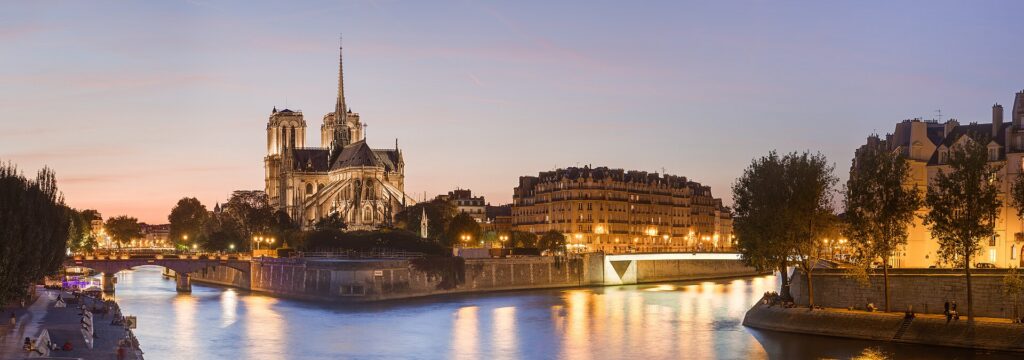
    Paris began on the Île de la Cité, and the island is still its symbolic centre. Notre-Dame reopened in December 2024 after the fire of 2019 and a five-year restoration that rebuilt the spire and the roof and cleaned the interior to a pale, luminous stone that few living Parisians had ever seen; entry to the cathedral is free, the queue moves quickly, and you can reserve a time slot online to skip most of it. The climb up the towers is ticketed separately. A few minutes’ walk away, Sainte-Chapelle, the royal chapel built in the 1240s to hold relics, is the single most beautiful interior in the city: the upper chapel is almost entirely walls of thirteenth-century stained glass, and on a sunny morning it glows. The Conciergerie next door is the prison where Marie Antoinette spent her last weeks. Cross the footbridge behind Notre-Dame to the Île Saint-Louis, a quiet island of seventeenth-century mansions, small shops and the famous Berthillon ice cream, and walk its quays at sunset.

    Notre-Dame de Paris on the Île de la Cité at dusk, seen from the Pont de la Tournelle
    Notre-Dame, reopened in December 2024 after five years of restoration (Photo: Benh LIEU SONG via Wikimedia Commons, CC BY-SA 4.0)

    The Louvre, the Tuileries and the great museums

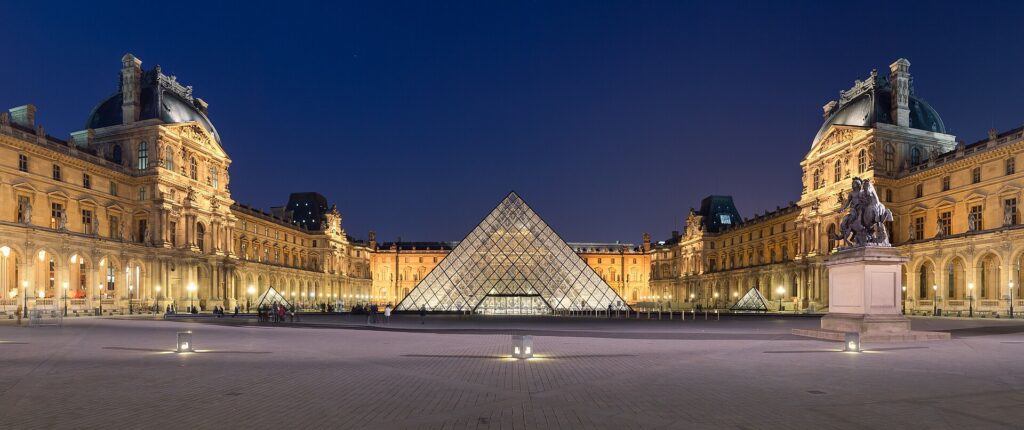
    The Louvre is the largest art museum in the world, a former royal palace with more than eight centuries of history behind I. M. Pei’s glass pyramid, and no one sees it in a day. Book a timed ticket online, which is required; arrive at opening; and choose a wing rather than trying to cover the whole building. The Mona Lisa, the Venus de Milo and the Winged Victory of Samothrace are the big three and draw the crowds; the Egyptian antiquities and the Napoleon III apartments reward walking further. It is closed on Tuesdays. From the Louvre, the Tuileries Garden runs west to the Place de la Concorde, and at its far end the Musée de l’Orangerie holds Monet’s Water Lilies in two oval rooms designed for them, one of the most serene half-hours in Paris. Across the river, the Musée d’Orsay, in a former Beaux-Arts railway station, has the world’s finest Impressionist and Post-Impressionist collection: Monet, Renoir, Degas, Van Gogh, Cézanne and Manet’s Luncheon on the Grass. It is closed on Mondays. If you plan to visit several major museums, the Paris Museum Pass, sold for two, four or six days, covers most of them.

    The glass pyramid in the Cour Napoléon of the Louvre
    The Louvre's glass pyramid; book a timed ticket and choose one wing (Photo: Benh LIEU SONG (Flickr) via Wikimedia Commons, CC BY-SA 3.0)

    Neighbourhoods worth a half-day

    Le Marais

    Straddling the 3rd and 4th arrondissements on the Right Bank, the Marais is the best-preserved quarter of pre-revolutionary Paris and the most rewarding neighbourhood to wander. The Place des Vosges, laid out in the early 1600s, is the oldest planned square in the city; the streets around it hold aristocratic mansions turned into museums, the Musée Picasso and the Musée Carnavalet, the museum of the history of Paris, whose permanent collection is free. Rue des Rosiers, the heart of the old Jewish quarter, is where to queue for falafel, and the Marché des Enfants Rouges, the city’s oldest covered market, is the lunch stop. Many of its boutiques open on Sundays.

    Saint-Germain and the Latin Quarter

    The Left Bank of legend. Saint-Germain-des-Prés has the literary cafés, the Café de Flore and Les Deux Magots, and the city’s best-dressed shop windows; the Luxembourg Gardens, with the Senate palace, the Medici fountain and the green metal chairs, are the most Parisian park in Paris. East of them, the Latin Quarter climbs past the Sorbonne to the domed Panthéon, where Voltaire, Victor Hugo and Marie Curie are buried, and down the market street of rue Mouffetard.

    Montmartre

    The hill in the north of the city, crowned by the white domes of the Sacré-Cœur, still feels like the village it was when Renoir, Picasso and Toulouse-Lautrec lived there. Entry to the basilica is free and the view from its steps takes in the whole city; the funicular saves the climb and takes a standard transit ticket. The Place du Tertre is crowded with portrait painters, but the lanes behind it, the vineyard, the Musée de Montmartre and the Rue de l’Abreuvoir, are quiet and lovely. Ignore anyone offering to tie a string bracelet on your wrist at the bottom of the steps.

    Canal Saint-Martin and Belleville

    In the northeast, the tree-lined Canal Saint-Martin, with its iron footbridges and locks, is where young Parisians picnic on summer evenings, and the streets around it are full of independent cafés, bakeries and bars. Uphill, Belleville is one of the most diverse neighbourhoods in the city, with Chinese, Vietnamese and North African restaurants, street art and the Parc de Belleville, which has one of the best free views of Paris. Père Lachaise, the cemetery of Chopin, Oscar Wilde and Édith Piaf, is a short walk south.

    The Champs-Élysées and the Arc de Triomphe

    The grand avenue itself is mostly flagship stores and chains now, but the walk from the Place de la Concorde to the Arc de Triomphe is still one of the great urban axes. Climb the arch, about 280 steps, for a rooftop view straight down the twelve avenues that radiate from it, and come at dusk, when the flame over the Tomb of the Unknown Soldier is rekindled.

    More museums, culture and landmarks

    Beyond the big three, Paris has more first-rate museums than any visitor can manage. The Musée Rodin, in an eighteenth-century mansion with a rose garden, has The Thinker and The Kiss, and the garden alone is worth the small entry fee. Les Invalides houses the army museum and Napoleon’s tomb under its golden dome. The Palais Garnier, the nineteenth-century opera house, can be toured by day and is as extravagant inside as out. The Fondation Louis Vuitton, Frank Gehry’s glass sailing ship in the Bois de Boulogne, and the Bourse de Commerce are the two big contemporary art addresses. The Centre Pompidou, the home of modern art, closed in 2025 for a renovation expected to last until around 2030, so check before you plan around it. Underground, the Catacombs at Denfert-Rochereau, a kilometre and a half of tunnels lined with the bones of six million Parisians, sell out days ahead; book online. For music, the Philharmonie de Paris in the Parc de la Villette is one of the world’s best concert halls, and for what is on stage and in the stadiums during your dates, our Paris events page lists concerts, shows and games. The Paris tourist office has current opening hours and exhibition listings.

    The Paris calendar: Bastille Day and the big events

    The biggest day of the Paris year is 14 July, the national holiday the rest of the world calls Bastille Day: a military parade down the Champs-Élysées in the morning, with a fly-past trailing the tricolour, firefighters’ balls in fire stations across the city the night before, and fireworks over the Eiffel Tower after dark, watched by crowds on the Champ de Mars and along the Seine. On 21 June, the Fête de la Musique puts free concerts on every street corner until the small hours. From mid-July to late August, Paris Plages brings sand, deckchairs and activities to the riverbanks and the Bassin de la Villette, and since the 2024 Olympics, supervised swimming spots have opened in the Seine itself in summer. The Journées du Patrimoine, on the third weekend of September, open ministries, palaces and private mansions that are closed the rest of the year. Fashion Weeks in late winter and early autumn fill the hotels and the smartest restaurants, and from late November the department stores on Boulevard Haussmann unveil their Christmas windows and the Champs-Élysées lights up. If you are coming for any of these, book the hotel before the flight.

    Sports

    Paris Saint-Germain, the city’s football club, plays at the Parc des Princes in the southwest of the city, and a match there is one of the loudest nights in European sport; tickets are scarce and sold mainly to members, so plan ahead. The Stade de France in Saint-Denis, reached by RER, hosts the French national football and rugby teams, the Six Nations in February and March, and the biggest stadium concerts. Roland-Garros, the French Open, runs for a fortnight from late May into early June at the clay courts beside the Bois de Boulogne, and ground passes for the outer courts are the best-value tickets in tennis. The Tour de France traditionally finishes in Paris on a Sunday in late July, and watching the riders race past on the Champs-Élysées is free. Check what is on sale in Paris for your dates before you book flights.

    What to eat, and where

    Paris eats around the day’s rhythm, and the best meals are often the simplest. Start at the boulangerie: a croissant in the morning, a baguette tradition at lunchtime, and a pastry in the afternoon; the city holds an annual competition for the best baguette, and the winner supplies the Élysée Palace for a year. At lunch, look for the formule, the fixed-price two- or three-course menu that most bistros offer on weekdays and that is far better value than dinner. The revived bouillons, huge, noisy dining rooms with low prices, serve the classics. The street markets, from the Marché d’Aligre near Bastille to the market streets of rue Cler and rue Mouffetard, are the place to assemble a picnic of cheese, charcuterie, fruit and bread. Beyond French food, eat falafel in the Marais, Vietnamese and Chinese food in the 13th arrondissement, couscous in Belleville, and Breton crêpes around Montparnasse, where Brittany’s trains arrive. Ask for a carafe d’eau and tap water is free; many restaurants close on Sundays or Mondays and for part of August.

    Paris through the seasons

    Paris is a different city in each season, and the best things to do change with it. Winter (December to February) is grey and damp, rarely freezing: the museums are at their least crowded, the Christmas windows fill December, and a long bistro lunch is the answer to a wet afternoon. Spring (March to May) is the season of the songs: the chestnut trees flower along the boulevards in April, the cafés put their tables back out, and the May public holidays give Parisians a string of long weekends. Summer (June to August) is long evenings that stay light until ten, the Fête de la Musique, Bastille Day, Paris Plages and open-air cinema at La Villette; in August many Parisians leave town, some small shops and restaurants close, and the city feels oddly quiet. Autumn (September to November) is the local favourite: the rentrée brings new exhibitions and restaurant openings, the light is golden on the river, the Journées du Patrimoine open closed doors, and November is quiet and cheap. Our month-by-month guide has the fare patterns that go with each season.

    Paris with kids

    Paris is better with children than its reputation suggests. The Luxembourg Gardens have a large playground, a puppet theatre and the pond where children push wooden sailboats with sticks; the Jardin d’Acclimatation in the Bois de Boulogne is an old-fashioned amusement park with rides, animals and play areas. The Jardin des Plantes combines a small historic zoo with the Grande Galerie de l’Évolution, a parade of stuffed animals under a glass roof that children love. The Cité des Sciences at La Villette has hands-on galleries for every age. National museums, including the Louvre and Orsay, are free for under-18s, which makes short visits painless. For a day out, Disneyland Paris is 40 minutes away on the RER A, and Parc Astérix, the French alternative, is north of CDG. Buggies are hard work on the Métro, which has many stairs; the buses are step-free.

    Paris on a budget

    Paris is expensive, but much of its best is free. Notre-Dame and the Sacré-Cœur cost nothing to enter; the permanent collections of the city’s own museums, including the Carnavalet and the Petit Palais, are free; the gardens, the Seine quays, Père Lachaise and the view from the Parc de Belleville cost nothing; and the rooftop terrace of the Galeries Lafayette department store has a free view of the Opéra and the Eiffel Tower. Several national museums are free on the first Sunday of certain months, EU residents under 26 get into national collections free, and the Museum Pass pays for itself if you visit three or four major sites. Eat the lunchtime formule rather than dinner, picnic from the markets, and drink wine at the counter rather than at a table. Stay in the 10th, 11th or 18th rather than the 1st or 7th. Compare rates by neighbourhood on our Paris hotel search.

    Day trips from Paris

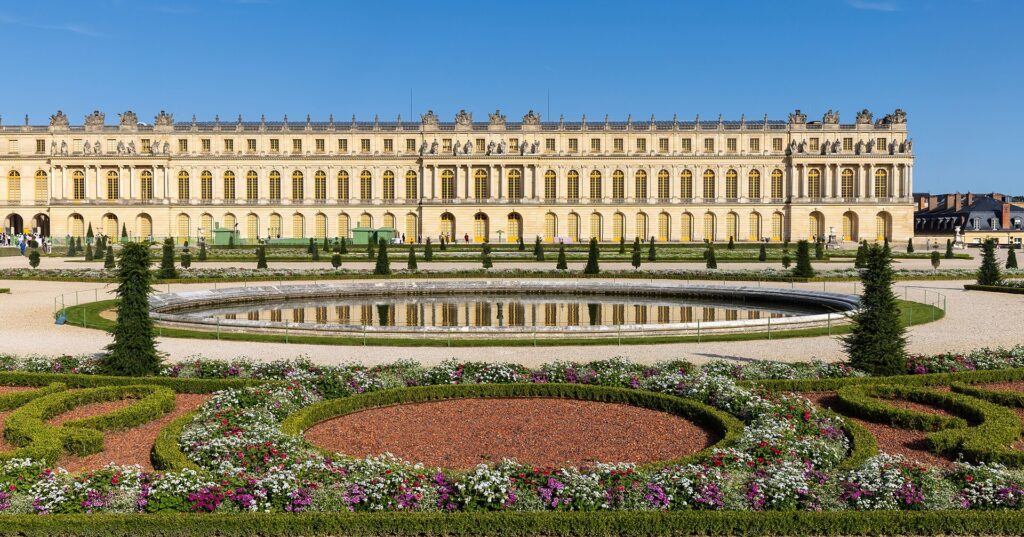
    Versailles is the essential one: the Château de Versailles, the Hall of Mirrors, the vast formal gardens, Marie Antoinette’s hamlet and the Trianon palaces, 40 minutes away on the RER C. Book a timed ticket, avoid Mondays, when it is closed, and Tuesdays, when it is busiest, and allow a full day. Giverny, Monet’s house and water garden, is an hour by train from Saint-Lazare to Vernon plus a shuttle, and is open from spring to autumn only. Disneyland Paris is at the end of the RER A. Fontainebleau, a royal château many visitors prefer to Versailles, with a huge forest for walking, is 40 minutes from Gare de Lyon. Reims, the champagne capital, with its Gothic cathedral and the great champagne houses’ cellars, is about 45 minutes by high-speed train from Gare de l’Est. Chartres, with the finest medieval stained glass in Europe, is about an hour from Montparnasse. Mont-Saint-Michel and the Normandy D-Day beaches are possible as long day trips but much better with a night away. All of these work by train; our car-versus-transport guide explains when a rental earns its keep. And London is little more than two hours away by Eurostar; see our guide to things to do in London.

    The Palace of Versailles seen from its formal gardens
    Versailles, 40 minutes from central Paris on the RER C and the essential day trip (Photo: Basile Morin via Wikimedia Commons, CC BY-SA 4.0)

    Two sample itineraries

    Three days, first visit

    Day one: Notre-Dame and Sainte-Chapelle at opening, the Île Saint-Louis, lunch in the Marais and an afternoon among its squares and museums, then dinner in the Latin Quarter. Day two: the Louvre at opening, a walk through the Tuileries to the Orangerie, the Champs-Élysées to the Arc de Triomphe, and the Eiffel Tower after dark with a timed ticket. Day three: the Musée d’Orsay in the morning, lunch in Saint-Germain and an afternoon in the Luxembourg Gardens, then Montmartre for sunset from the Sacré-Cœur and dinner on the hill.

    Five days, with day trips

    Add a full day at Versailles, and a fifth day for Giverny in season, Reims for champagne, or the Canal Saint-Martin, Belleville and Père Lachaise for the Paris most visitors never see.

    Practical details

    • Transit: load tickets onto a Navigo Easy card or your phone through the official app; a weekly Navigo pass runs Monday to Sunday and covers the airports, Versailles and Disneyland. The RATP has maps; our transport guide goes into detail.
    • From the airports: the RER B from CDG to Gare du Nord and Châtelet, Métro line 14 from Orly, or a fixed-fare taxi from either. Paris Aéroport covers ground transport for both.
    • Weather: pack layers and a compact umbrella in every season. Météo-France is the forecast to check, including heatwave warnings in summer.
    • Time zone: Central European Time, one hour ahead of London and six ahead of New York.
    • Entry requirements: Canadian, American, British and most other visa-exempt travellers can spend up to 90 days in any 180 in the Schengen area without a visa. The EU’s Entry/Exit System now records non-EU travellers’ fingerprints and photo at the border, and the ETIAS travel authorisation is due to follow; check the official EU travel page for what applies to you.
    • Safety: violent crime against visitors is rare; pickpocketing on Métro line 1, around the Eiffel Tower and at the Sacré-Cœur is not. Keep bags closed and ignore petition-signers and the “found” gold ring.

    Frequently asked questions

    How many days do you need in Paris?

    Three full days covers the essential landmarks, two major museums and two neighbourhoods; five lets you add Versailles and a slower day, and a week barely scratches the surface.

    What is the number one thing to do in Paris?

    For the view, the Eiffel Tower after dark. For the experience, a slow walk along the Seine from the Île Saint-Louis past Notre-Dame and the Louvre, ending with dinner on the Left Bank.

    Is Paris walkable?

    Very. The historic centre is compact, and walking between the Louvre, Notre-Dame, the Marais and Saint-Germain is faster and more pleasant than the Métro for short hops.

    Do I need a car in Paris?

    No. The Métro and RER cover the city and the main day trips, and parking is scarce and expensive. Rent only for the Loire, Normandy or a road trip, and pick it up on the way out.

    Do I need to book the Louvre and the Eiffel Tower in advance?

    Yes. The Louvre requires a timed ticket, and booking the Eiffel Tower online saves hours in summer. Versailles, the Catacombs and Sainte-Chapelle also sell out.

    Is Paris expensive?

    Hotels and dinners are; transport, bread, markets, parks and many museums are not. Lunch menus and a weekly transit pass stretch a budget a long way.

    Ready to go? Compare flights to Paris, find a place to stay with our Paris hotel search, and see what is on in Paris during your dates.