Montreal is a city where locals rent cars to leave, not to stay. The metro reaches nearly every neighbourhood a visitor cares about, the 747 bus runs from the airport around the clock, BIXI bikes are on every second corner from spring to fall, and the parts of the city worth seeing, Old Montreal, downtown, the Plateau, Mile End, the mountain, are close together and best on foot. Driving, meanwhile, comes with a set of local rules and conditions that catch first-timers out: no right turns on red anywhere on the island, a legal requirement for winter tires from December to March, a permanent construction season, one-way streets, and parking regulations that fill a small book. And yet the Laurentians, the Eastern Townships and Quebec City are all easy, beautiful drives, so a car for a day or two is often the right call. This guide explains how the island is laid out, how transit and fares work, what driving here is really like, and gives you a straightforward way to decide.
The short answer
Skip the car if you are staying downtown, in Old Montreal, the Plateau or Mile End, and your plans are the city itself. Transit, walking and a BIXI will cover all of it, and you will never think about parking, snow-removal bans or which way the street runs. Rent a car if you are driving to Mont-Tremblant, the Laurentians or the Eastern Townships, combining Montreal with Quebec City or Ottawa by road, visiting a sugar shack in March, staying with family off the island, or travelling in deep winter with young children and a lot of gear. And for many first-time visitors the best answer is both: transit for the city days, then a rental from a downtown location for exactly the days you leave. Compare rates on our Montreal car rental page.
How Montreal is laid out
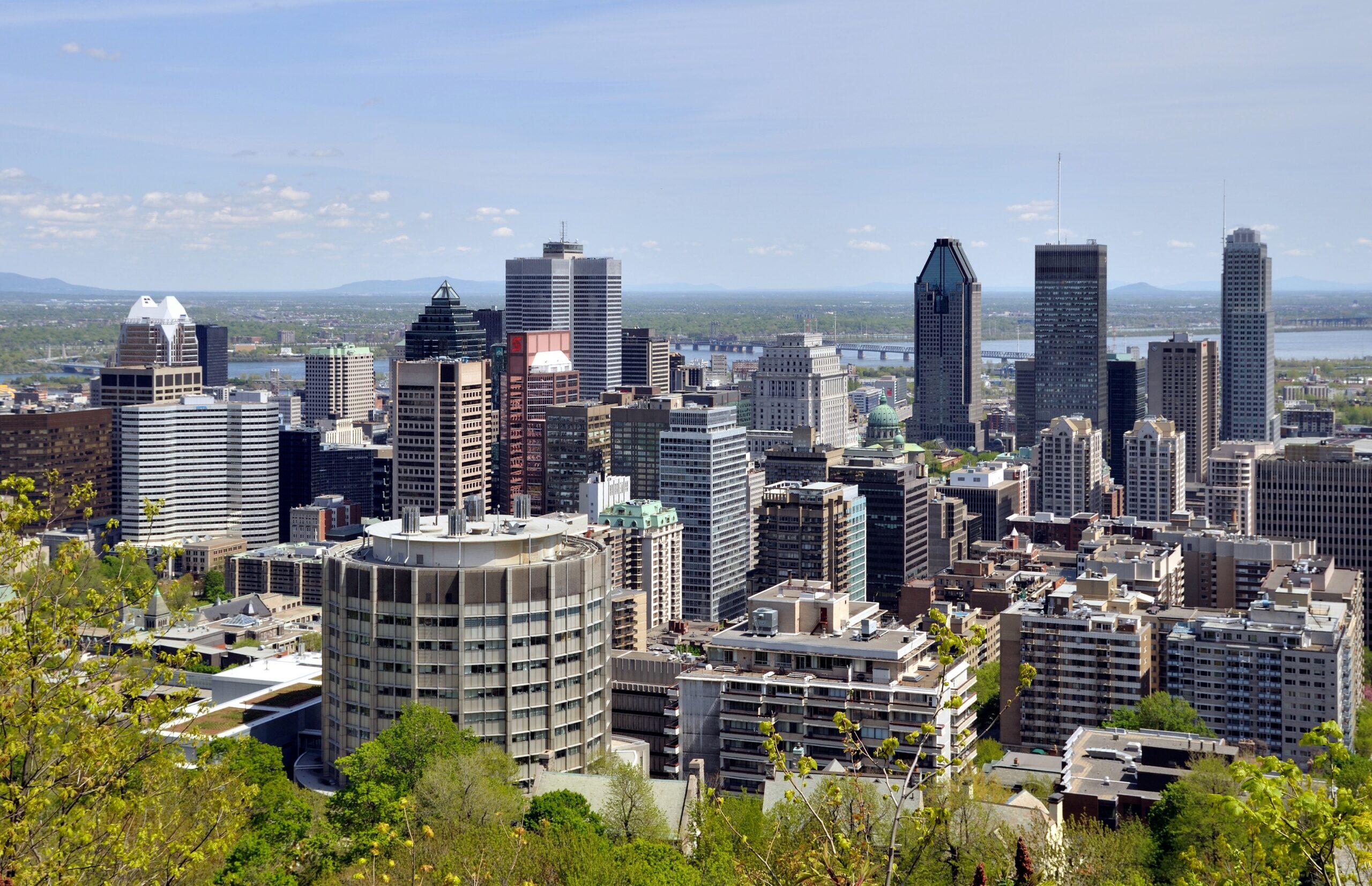
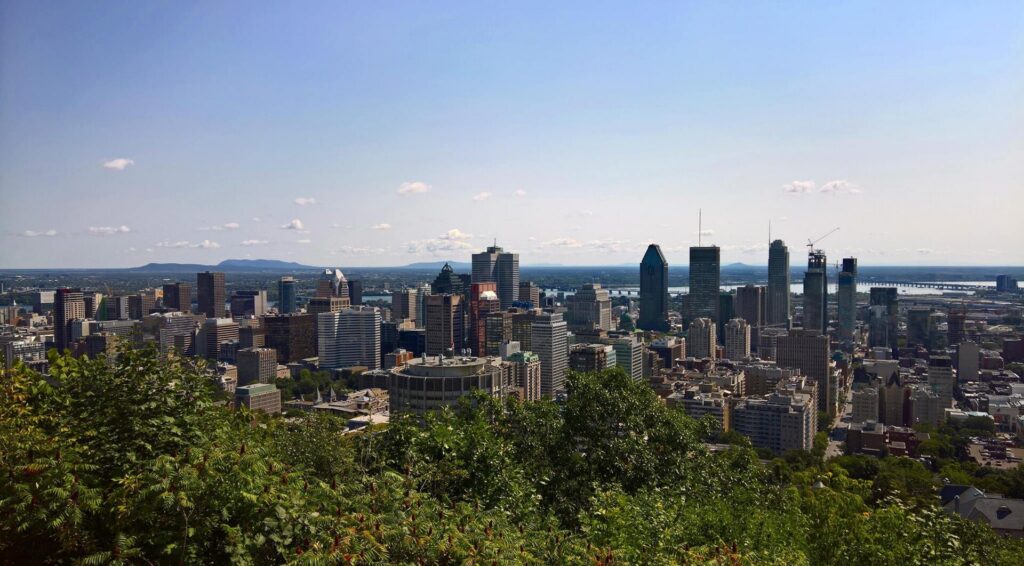
Montreal is an island in the St. Lawrence, and Mount Royal, the wooded hill the city is named for, sits in the middle of it. Downtown is on the south slope of the mountain between it and the river; Old Montreal and the Old Port are on the riverbank below downtown; the Plateau and Mile End are on the east side of the mountain; Westmount and Notre-Dame-de-Grâce are on the west. Almost everything a first-time visitor wants is inside that ring, and most of it is walkable from the metro’s Orange and Green lines, which cross under downtown. The suburbs on and off the island are served by the metro’s outer stations, the REM and the commuter trains. Note that Montreal’s “north” is not true north: the street grid is rotated, and locals call the direction toward the river “south” and the direction away from it “north” regardless of the compass.
Hotels cluster downtown around the Bell Centre and Central Station, in Old Montreal among the boutique conversions, in the Quartier des Spectacles for the festivals, and in the Plateau for a more local feel. All four are on or near the metro. Our Montreal hotel search lets you compare them.
Getting in from the airport
From Montréal-Trudeau (YUL)
Trudeau is in Dorval, about 20 kilometres west of downtown. The 747 bus, run by the STM, leaves from outside arrivals around the clock and runs to downtown along René-Lévesque Boulevard, ending at the Berri-UQAM metro station, in about 45 to 70 minutes depending on traffic. Buy the fare at the machines in the terminal; it includes 24 hours of unlimited travel on the STM network, which makes it the best-value airport transfer in Canada. A flat-rate taxi fare applies from the airport to downtown, and ride-hail services pick up at the terminal. A REM light-rail station is under construction at the airport; check the airport’s site for its status. Every major rental company has counters in the terminal. Our Trudeau airport guide covers the layout.
Montreal’s transit, explained
The Société de transport de Montréal, the STM, runs the metro and buses on the island. It is frequent, clean, safe and, for visitors, simple once you know the four lines.
The metro
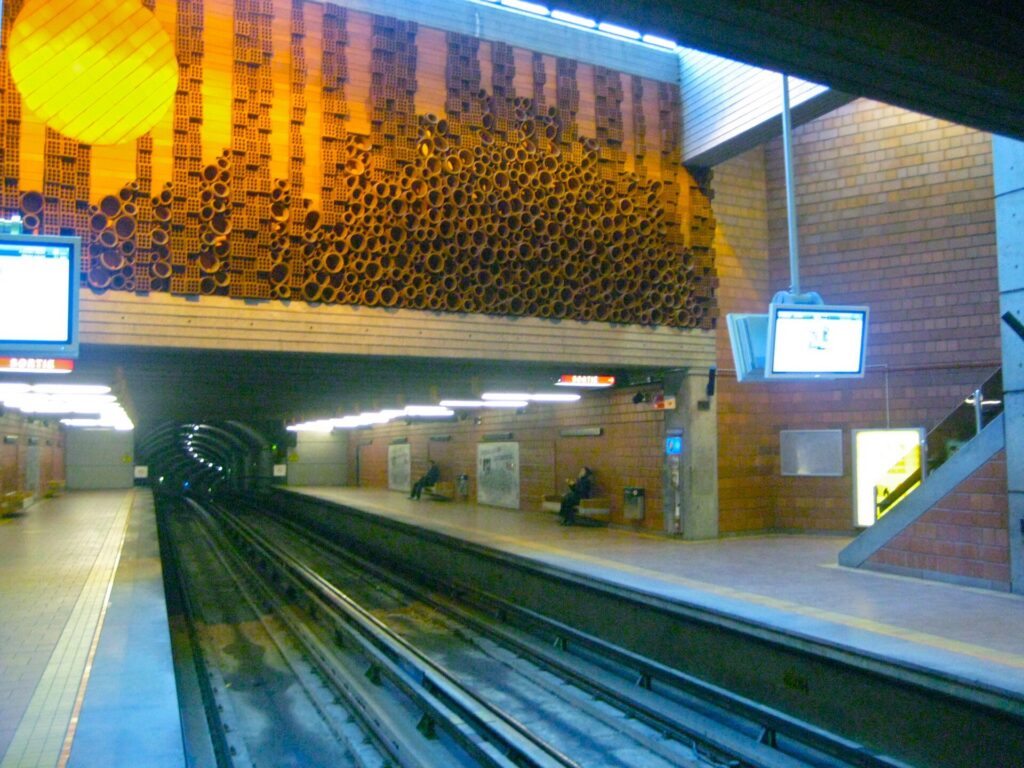
Four colour-coded lines. The Orange Line is a U that runs under downtown from Bonaventure and Central Station north through the Plateau (Sherbrooke, Mont-Royal, Laurier stations) and Little Italy (Jean-Talon) and out to Laval. The Green Line runs east-west under downtown along Boulevard de Maisonneuve, from Atwater and Westmount through the shopping district (Peel, McGill), the Quartier des Spectacles (Place-des-Arts) and Berri-UQAM to the Olympic Park (Pie-IX, Viau) and the east end. The Yellow Line is a short link from Berri-UQAM under the river to Parc Jean-Drapeau (the islands, the casino, Osheaga and the Grand Prix circuit) and Longueuil. The Blue Line serves the north side of the mountain and the Université de Montréal. The trains run on rubber tires, which is why they are quiet and why the whole system is underground; almost every station has a different piece of art or architecture. Trains run from about 5:30 a.m. to around 1 a.m., later on Saturdays. The STM’s site has maps and service alerts.
Buses
Buses fill in everything the metro does not reach. The useful ones for visitors are the 747 to the airport, the 55 up Saint-Laurent Boulevard through the Plateau and Mile End, the 11 to the top of Mount Royal, and the 129 and 24 along Sherbrooke Street past the museums. Night buses cover the hours after the metro closes.
The REM
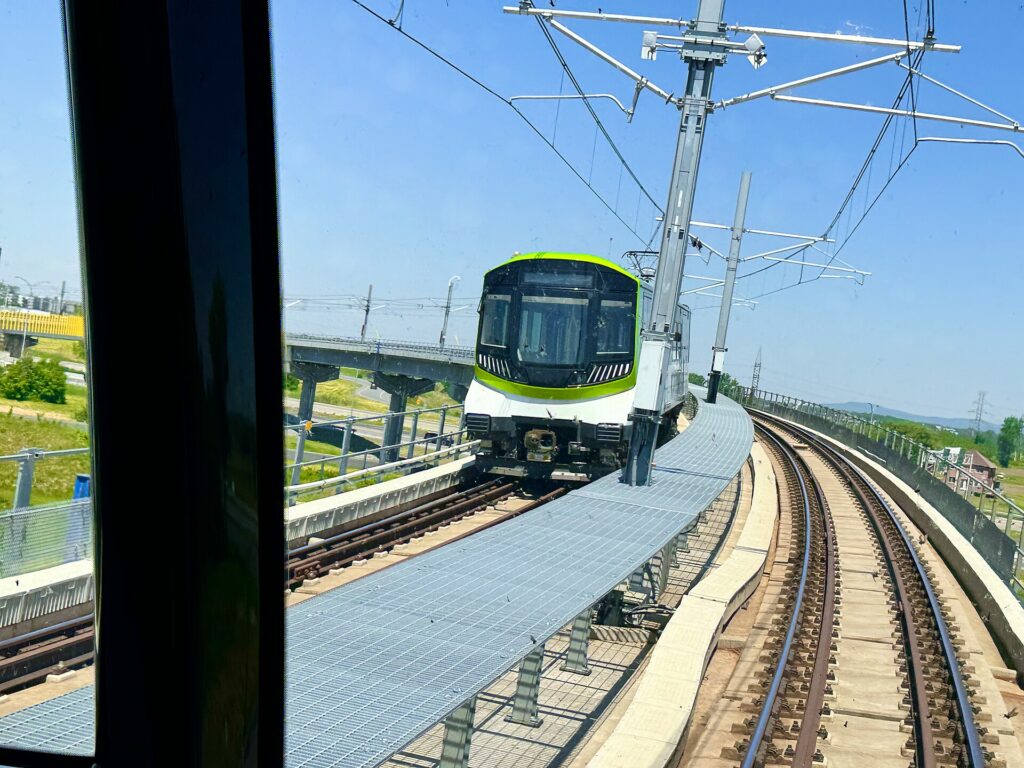
The Réseau express métropolitain is a new automated light-rail network that has opened in stages since 2023. The first section runs from Brossard on the South Shore over the new Champlain Bridge to Central Station downtown; further branches to the West Island, the northern suburbs and the airport have been opening or are under construction. For most visitors it matters mainly as the future airport link and as the way to Parc Jean-Drapeau’s South Shore neighbours; check rem.info for what is running when you travel.
Fares and the OPUS card
The reliable way to pay is to buy an OPUS card from the machines in any metro station and load it with single fares, a bundle, or an unlimited pass; single-use paper tickets are also sold at the machines. Unlimited passes come in one-day, three-day, weekend, weekly and monthly versions, and the three-day and weekend passes are good value for a sightseeing trip. The 747 airport fare includes a 24-hour pass. Children eleven and under ride free with a fare-paying adult. The STM has been rolling out contactless payment with credit and debit cards; check its site for what is accepted on buses and at the turnstiles when you travel rather than assuming you can tap. Fares are integrated across the region under the ARTM authority, so an appropriate zone fare covers the metro, buses, the REM and the exo commuter trains.
Accessibility
The metro was built in the 1960s and 1970s, and although the STM has been adding elevators steadily, many stations still lack them. All buses are low-floor and accessible, and the REM is fully step-free. If step-free access matters, check the STM’s list of accessible stations and plan around it.
Beyond the STM
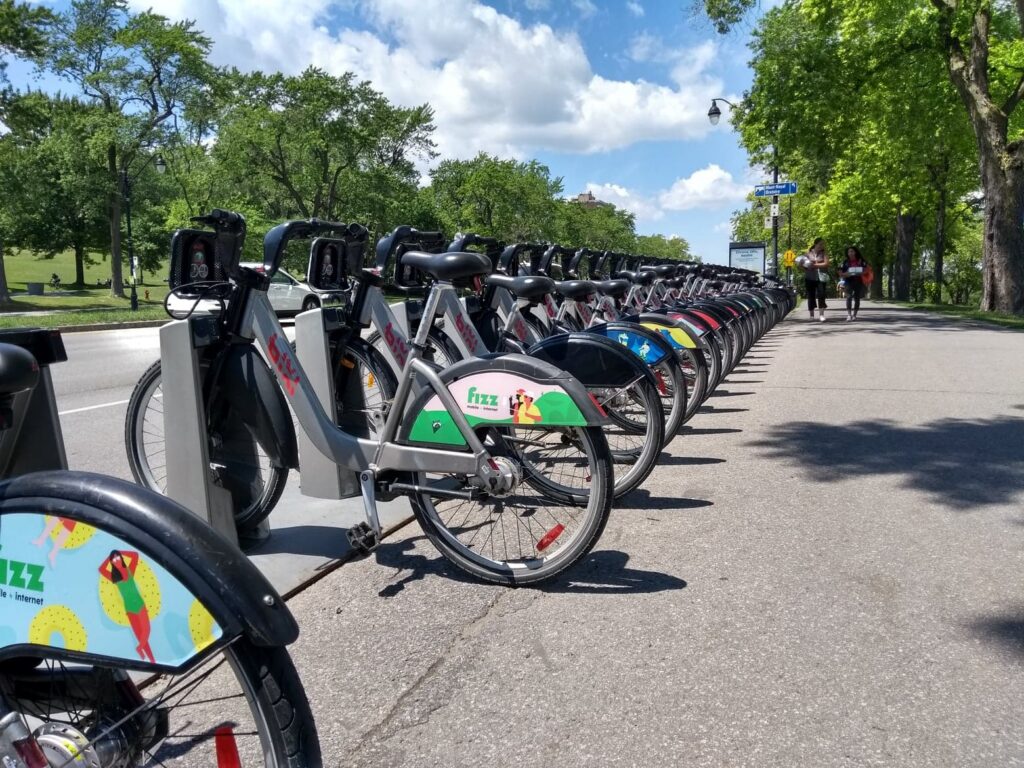
- BIXI. Montreal invented the modern bike-share system, and BIXI has hundreds of stations across the central city with a growing winter service. The city has one of the most extensive bike-lane networks in North America, including the protected paths along the Lachine Canal, the river and the Plateau’s main streets. A day of BIXI is often the best way to see the city.
- Walking and the underground city. Downtown, Old Montreal and the Plateau are all walkable. In winter, the RESO, the underground pedestrian network, links Central Station, most downtown hotels, the shopping centres, the Bell Centre and several metro stations over roughly 30 kilometres of corridors.
- exo commuter trains serve the suburbs and the North Shore from Central Station and Lucien-L’Allier.
- VIA Rail runs from Central Station to Quebec City, Ottawa and Toronto; the Quebec City route in particular is a genuine alternative to driving.
- Taxis and ride-hail. Uber operates across Montreal, and licensed taxis are plentiful downtown. For a group of three or four, a short ride is competitive with transit fares and quicker late at night.
Driving in Montreal: what it is really like
Montrealers drive assertively, the road network is old and under permanent repair, and there are a handful of rules that differ from the rest of North America. It is manageable, but it is not relaxing, and the case for a car inside the city is weak.
Rules and conditions worth knowing
- No right turns on red anywhere on the island of Montreal. This is the single rule that trips up visitors most. Right on red is legal elsewhere in Quebec (except where signed), but not on the island; a red light means stop and wait.
- Winter tires are mandatory in Quebec from December 1 to March 15 on every passenger vehicle, rentals included. Cars rented in Montreal in those months will be equipped; if you drive in from Ontario or the U.S., yours must be too, or you risk a fine.
- Signs are in French. Arrêt means stop, and the key parking words are interdit (prohibited), sauf (except), livraison (delivery) and the days of the week. A photo of any sign you are unsure of, translated on your phone, is the visitor’s friend.
- Construction season is permanent. Orange cones are a running joke in the city for a reason; expect detours on any route, especially in summer. Quebec’s Quebec 511 service lists closures.
- The Décarie (Autoroute 15), the Métropolitaine (Autoroute 40) and the Ville-Marie (Autoroute 720) expressways carry most through traffic and jam in the peaks, roughly seven to nine-thirty and three-thirty to six-thirty on weekdays. The bridges on and off the island, the Champlain, the Jacques-Cartier and the Mercier, are the bottlenecks. The Autoroute 30 bypass south of the city has a tolled section; the new Champlain Bridge does not.
- Photo radar and red-light cameras operate across the city; fines follow the car and the rental company will bill you.
- Bike lanes are extensive and many are two-way on one side of the street; check for cyclists coming from both directions before turning.
- Moving day, July 1, fills the streets with trucks and is best avoided by car.
Parking
Parking is the deciding factor, as in most big cities, with a Montreal twist. Downtown hotels charge a substantial nightly fee, commercial lots are expensive, and street parking, where it exists, comes with signs that stack four or five conditions on one pole. In winter, snow-removal operations impose temporary parking bans street by street, announced by orange signs and enforced by towing; a rental car parked on the wrong street after a snowfall can be gone by morning. If you do rent, choose a hotel with parking and leave the car there for the city days.
When renting a car makes sense
- The Laurentians and Mont-Tremblant. Ninety minutes north; skiing, lakes and a pedestrian village. Coaches run, but a car gives you the villages along the way.
- The Eastern Townships. An hour and a half east; wineries, cider, lakes and small towns like Magog and Knowlton. Effectively car-only.
- Quebec City or Ottawa by road. Both are three hours or less, and both work by VIA Rail too; a car makes sense if you want to stop in the countryside or continue beyond.
- Sugar shacks in March and April. The cabanes à sucre are in the countryside; a car or a tour is the only way.
- Family off the island. Laval, Longueuil and the outer suburbs are on transit but spread out; a car earns its keep daily.
- Deep winter with young children. Strollers, snowsuits and metro stations without elevators are a hard combination.
- Cross-border trips to Vermont, upstate New York or the Adirondacks, all within two hours.
If any of those apply, our rental car booking tips cover insurance, deposits and the questions to ask at the counter, and our family car rental guide looks at vehicle choice.
When it does not
- You are staying downtown, in Old Montreal, the Plateau or Mile End.
- Your plans are the old city, the mountain, the museums, the markets, the festivals and a Canadiens game.
- You are visiting during the Grand Prix, the jazz festival or Osheaga, when downtown streets are closed and parking is impossible.
- You are travelling as a couple or solo and value your time over a fixed vehicle.
- You dislike driving in snow and are visiting between December and March.
The hybrid plan most visitors should use
Go car-free for the city days, then rent for exactly the days you leave town, picking up from a downtown location rather than the airport. Downtown pickups avoid airport surcharges, skip the drive in at peak time, and save hotel parking on the nights you are not using the car. Book ahead for the dates you need, especially in ski season and for the Townships in fall. Return the car the evening before you fly and take the 747 to the airport. Compare the day rates on our Montreal car rental page against a full-trip rental and the difference is usually obvious.
Rental logistics in Montreal, if you do rent
A few local details make the rental itself smoother. Where to pick up: the airport counters are in the terminal, and every major company has downtown branches, most of them around Central Station, the Bell Centre and the hotel district along René-Lévesque and Sherbrooke; a downtown pickup avoids the airport concession fees and lets you collect the car on the morning you actually leave the island rather than paying for it to sit in a hotel garage. Winter tires are supplied on every Quebec rental between December 1 and March 15 because the law requires it, but if your dates straddle those boundaries, ask; a car rented on November 28 may still be on all-seasons. One-way rentals to Quebec City, Ottawa or Toronto are routine, and dropping the car in Quebec City after the drive along the north shore of the St. Lawrence pairs well with a VIA Rail return. Insurance: Quebec’s public plan covers injury but not vehicle damage, so collision coverage is sold as an add-on unless your credit card or home policy provides it; check before you arrive. Crossing the border into Vermont or New York is allowed by most companies, but confirm, and carry the rental agreement. Fuel is priced per litre and, like everywhere in Quebec, higher than in neighbouring Ontario; fill up before you return. And if your trip includes a sugar shack in March, ask for the address in advance and load it into your phone; the best ones are on rural roads where the French-only signage and the spring mud make navigation part of the adventure.
Decision table
| Your trip | Recommendation | Why |
|---|---|---|
| Weekend in Old Montreal or downtown | No car | Everything is walkable or one metro ride; parking would cost more than transit |
| Four or five days with a Tremblant or Townships day trip | Hybrid: rent for one or two days downtown | Car-free city days, car for the countryside |
| Montreal plus Quebec City | Train, or hybrid | VIA Rail is comfortable and central; a car only if you want to stop along the way |
| Family visit to Laval or the South Shore | Rent for the whole stay | Suburban distances make the car worthwhile daily |
| Winter trip with small children | Rent, choose a hotel with parking | Snow, gear and stairs make transit hard work; winter tires are supplied |
| Ski trip to Tremblant, staying at the resort | Rent at YUL, or take the resort coach | The village is pedestrian; the car is only for getting there |
| Grand Prix, jazz festival or Osheaga weekend | No car | Street closures and no parking downtown |
| Business trip, meetings across the region | Rent, or taxi and the REM | Depends on how spread out the meetings are |
Money-saving tips for both options
- On transit: the 747 fare doubles as a 24-hour pass, so plan a sightseeing day around your arrival; a three-day or weekend pass usually beats single fares for a short trip; children eleven and under are free.
- On a rental: compare downtown and airport pickup, book early for ski season and fall colour weekends, decline extras you already have through a credit card or home policy (check first), and ask how the company handles the Autoroute 30 toll.
- On the hotel: if you are renting, price the parking fee into the room rate and confirm the hotel’s lot is off-street, so snow-removal bans are not your problem.
- On timing: avoid the bridges and the Décarie in the weekday peaks and stay off the roads on July 1; the best time to fly to Montreal guide lists the festival weekends when downtown is closed to traffic.
- On the airport run: the 747 is far cheaper than a taxi for one or two people; the flat-rate taxi is competitive for three or four with luggage.
Frequently asked questions
Is it worth renting a car in Montreal?
Only if you are leaving the island: Tremblant, the Townships, Quebec City by road, or the suburbs. For a city visit, the metro, walking and BIXI are faster and far cheaper once parking is counted.
Is Montreal public transit good for tourists?
Yes. Four metro lines reach nearly every major sight, the 747 bus links the airport around the clock, and a three-day pass covers a typical visit.
How do I get from Trudeau airport to downtown Montreal?
The 747 bus, about 45 to 70 minutes, with a fare that includes 24 hours of transit; or a flat-rate taxi or ride-hail. An REM station at the airport is under construction.
Can I turn right on a red light in Montreal?
No. Right turns on red are prohibited everywhere on the island of Montreal, although they are allowed elsewhere in Quebec unless signed.
Do I need winter tires to drive in Montreal?
Yes, by law, from December 1 to March 15 on every passenger vehicle. Rental cars in Quebec are equipped in those months.
Can I use my credit card on the Montreal metro?
Contactless payment has been rolling out; check the STM’s site for current acceptance. Buying an OPUS card or tickets from the station machines always works.
Is parking expensive in downtown Montreal?
Yes, and complicated: hotel and lot fees are high, street signs stack multiple restrictions, and winter snow-removal bans are enforced by towing.
Whichever way you go, start with the flight. Compare cheap flights to Montreal, choose a neighbourhood with our Montreal hotel search, and if the Laurentians or the Townships are on the list, price the rental for those dates on our Montreal car rental page.
Keep planning with TicketScanner
- Montreal car rentals — compare downtown and airport pickup
- Cheap flights to Montreal
- Montreal hotels — factor parking into the rate
- Things to do in Montreal: a first-timer's guide
- Best time to fly to Montreal: month by month
- Montreal-Trudeau (YUL) airport guide
- Rental car booking tips
- Car, transit or taxi in a new city?
Leave a Reply