Tag: Montreal

  • Montreal: Should You Rent a Car or Rely on Public Transit?

    Montreal: Should You Rent a Car or Rely on Public Transit?

    Montreal is a city where locals rent cars to leave, not to stay. The metro reaches nearly every neighbourhood a visitor cares about, the 747 bus runs from the airport around the clock, BIXI bikes are on every second corner from spring to fall, and the parts of the city worth seeing, Old Montreal, downtown, the Plateau, Mile End, the mountain, are close together and best on foot. Driving, meanwhile, comes with a set of local rules and conditions that catch first-timers out: no right turns on red anywhere on the island, a legal requirement for winter tires from December to March, a permanent construction season, one-way streets, and parking regulations that fill a small book. And yet the Laurentians, the Eastern Townships and Quebec City are all easy, beautiful drives, so a car for a day or two is often the right call. This guide explains how the island is laid out, how transit and fares work, what driving here is really like, and gives you a straightforward way to decide.

    The short answer

    Skip the car if you are staying downtown, in Old Montreal, the Plateau or Mile End, and your plans are the city itself. Transit, walking and a BIXI will cover all of it, and you will never think about parking, snow-removal bans or which way the street runs. Rent a car if you are driving to Mont-Tremblant, the Laurentians or the Eastern Townships, combining Montreal with Quebec City or Ottawa by road, visiting a sugar shack in March, staying with family off the island, or travelling in deep winter with young children and a lot of gear. And for many first-time visitors the best answer is both: transit for the city days, then a rental from a downtown location for exactly the days you leave. Compare rates on our Montreal car rental page.

    How Montreal is laid out

    Montreal is an island in the St. Lawrence, and Mount Royal, the wooded hill the city is named for, sits in the middle of it. Downtown is on the south slope of the mountain between it and the river; Old Montreal and the Old Port are on the riverbank below downtown; the Plateau and Mile End are on the east side of the mountain; Westmount and Notre-Dame-de-Grâce are on the west. Almost everything a first-time visitor wants is inside that ring, and most of it is walkable from the metro’s Orange and Green lines, which cross under downtown. The suburbs on and off the island are served by the metro’s outer stations, the REM and the commuter trains. Note that Montreal’s “north” is not true north: the street grid is rotated, and locals call the direction toward the river “south” and the direction away from it “north” regardless of the compass.

    Hotels cluster downtown around the Bell Centre and Central Station, in Old Montreal among the boutique conversions, in the Quartier des Spectacles for the festivals, and in the Plateau for a more local feel. All four are on or near the metro. Our Montreal hotel search lets you compare them.

    Getting in from the airport

    From Montréal-Trudeau (YUL)

    Trudeau is in Dorval, about 20 kilometres west of downtown. The 747 bus, run by the STM, leaves from outside arrivals around the clock and runs to downtown along René-Lévesque Boulevard, ending at the Berri-UQAM metro station, in about 45 to 70 minutes depending on traffic. Buy the fare at the machines in the terminal; it includes 24 hours of unlimited travel on the STM network, which makes it the best-value airport transfer in Canada. A flat-rate taxi fare applies from the airport to downtown, and ride-hail services pick up at the terminal. A REM light-rail station is under construction at the airport; check the airport’s site for its status. Every major rental company has counters in the terminal. Our Trudeau airport guide covers the layout.

    Montreal’s transit, explained

    The Société de transport de Montréal, the STM, runs the metro and buses on the island. It is frequent, clean, safe and, for visitors, simple once you know the four lines.

    The metro

    Four colour-coded lines. The Orange Line is a U that runs under downtown from Bonaventure and Central Station north through the Plateau (Sherbrooke, Mont-Royal, Laurier stations) and Little Italy (Jean-Talon) and out to Laval. The Green Line runs east-west under downtown along Boulevard de Maisonneuve, from Atwater and Westmount through the shopping district (Peel, McGill), the Quartier des Spectacles (Place-des-Arts) and Berri-UQAM to the Olympic Park (Pie-IX, Viau) and the east end. The Yellow Line is a short link from Berri-UQAM under the river to Parc Jean-Drapeau (the islands, the casino, Osheaga and the Grand Prix circuit) and Longueuil. The Blue Line serves the north side of the mountain and the Université de Montréal. The trains run on rubber tires, which is why they are quiet and why the whole system is underground; almost every station has a different piece of art or architecture. Trains run from about 5:30 a.m. to around 1 a.m., later on Saturdays. The STM’s site has maps and service alerts.
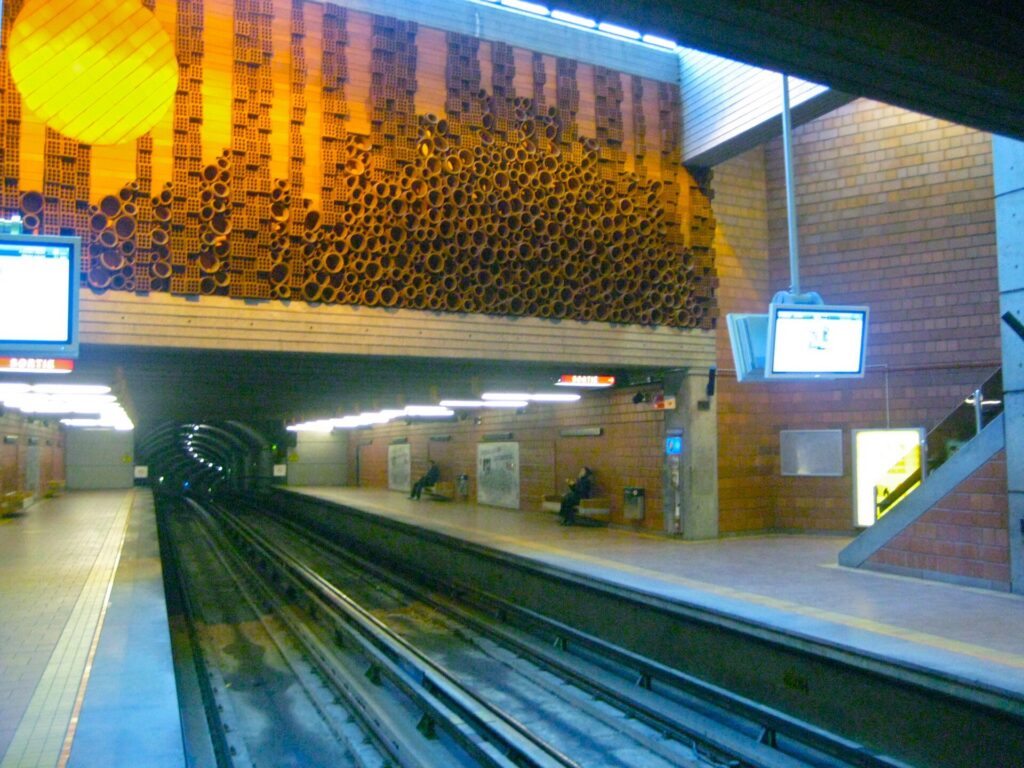
    A platform on the Montreal Metro
    The Montreal Metro: four lines, rubber-tired trains, and a different piece of art in nearly every station (Photo: Alexcaban via Wikimedia Commons, CC BY 3.0)

    Buses

    Buses fill in everything the metro does not reach. The useful ones for visitors are the 747 to the airport, the 55 up Saint-Laurent Boulevard through the Plateau and Mile End, the 11 to the top of Mount Royal, and the 129 and 24 along Sherbrooke Street past the museums. Night buses cover the hours after the metro closes.

    The REM

    The Réseau express métropolitain is a new automated light-rail network that has opened in stages since 2023. The first section runs from Brossard on the South Shore over the new Champlain Bridge to Central Station downtown; further branches to the West Island, the northern suburbs and the airport have been opening or are under construction. For most visitors it matters mainly as the future airport link and as the way to Parc Jean-Drapeau’s South Shore neighbours; check rem.info for what is running when you travel.
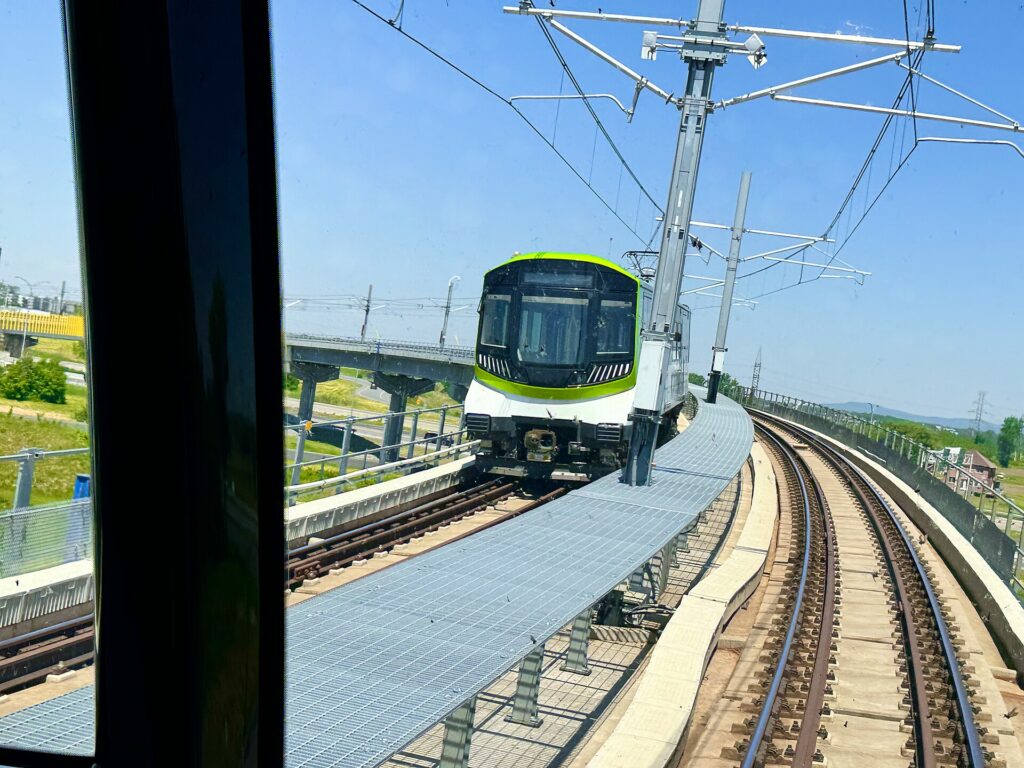
    A REM light-rail train in Montreal
    The REM light-rail network, opened in stages from 2023, links the South Shore and the suburbs to Central Station downtown (Photo: Harrison Keely via Wikimedia Commons, CC BY 4.0)

    Fares and the OPUS card

    The reliable way to pay is to buy an OPUS card from the machines in any metro station and load it with single fares, a bundle, or an unlimited pass; single-use paper tickets are also sold at the machines. Unlimited passes come in one-day, three-day, weekend, weekly and monthly versions, and the three-day and weekend passes are good value for a sightseeing trip. The 747 airport fare includes a 24-hour pass. Children eleven and under ride free with a fare-paying adult. The STM has been rolling out contactless payment with credit and debit cards; check its site for what is accepted on buses and at the turnstiles when you travel rather than assuming you can tap. Fares are integrated across the region under the ARTM authority, so an appropriate zone fare covers the metro, buses, the REM and the exo commuter trains.

    Accessibility

    The metro was built in the 1960s and 1970s, and although the STM has been adding elevators steadily, many stations still lack them. All buses are low-floor and accessible, and the REM is fully step-free. If step-free access matters, check the STM’s list of accessible stations and plan around it.

    Beyond the STM

    • BIXI. Montreal invented the modern bike-share system, and BIXI has hundreds of stations across the central city with a growing winter service. The city has one of the most extensive bike-lane networks in North America, including the protected paths along the Lachine Canal, the river and the Plateau’s main streets. A day of BIXI is often the best way to see the city.
    • Walking and the underground city. Downtown, Old Montreal and the Plateau are all walkable. In winter, the RESO, the underground pedestrian network, links Central Station, most downtown hotels, the shopping centres, the Bell Centre and several metro stations over roughly 30 kilometres of corridors.
    • exo commuter trains serve the suburbs and the North Shore from Central Station and Lucien-L’Allier.
    • VIA Rail runs from Central Station to Quebec City, Ottawa and Toronto; the Quebec City route in particular is a genuine alternative to driving.
    • Taxis and ride-hail. Uber operates across Montreal, and licensed taxis are plentiful downtown. For a group of three or four, a short ride is competitive with transit fares and quicker late at night.
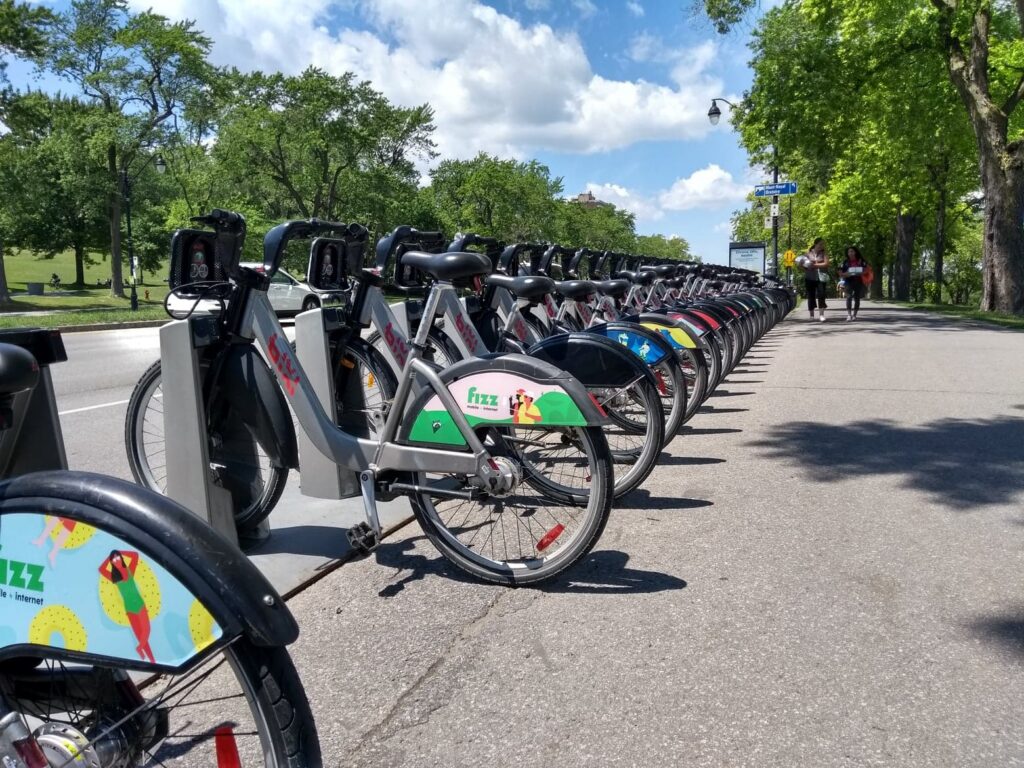
    A BIXI bike-share station beside Parc Jeanne-Mance in Montreal
    BIXI, Montreal's bike-share system, has hundreds of stations and a city built for cycling (Photo: Jane Bingley via Wikimedia Commons, CC BY-SA 4.0)

    Driving in Montreal: what it is really like

    Montrealers drive assertively, the road network is old and under permanent repair, and there are a handful of rules that differ from the rest of North America. It is manageable, but it is not relaxing, and the case for a car inside the city is weak.

    Rules and conditions worth knowing

    • No right turns on red anywhere on the island of Montreal. This is the single rule that trips up visitors most. Right on red is legal elsewhere in Quebec (except where signed), but not on the island; a red light means stop and wait.
    • Winter tires are mandatory in Quebec from December 1 to March 15 on every passenger vehicle, rentals included. Cars rented in Montreal in those months will be equipped; if you drive in from Ontario or the U.S., yours must be too, or you risk a fine.
    • Signs are in French. Arrêt means stop, and the key parking words are interdit (prohibited), sauf (except), livraison (delivery) and the days of the week. A photo of any sign you are unsure of, translated on your phone, is the visitor’s friend.
    • Construction season is permanent. Orange cones are a running joke in the city for a reason; expect detours on any route, especially in summer. Quebec’s Quebec 511 service lists closures.
    • The Décarie (Autoroute 15), the Métropolitaine (Autoroute 40) and the Ville-Marie (Autoroute 720) expressways carry most through traffic and jam in the peaks, roughly seven to nine-thirty and three-thirty to six-thirty on weekdays. The bridges on and off the island, the Champlain, the Jacques-Cartier and the Mercier, are the bottlenecks. The Autoroute 30 bypass south of the city has a tolled section; the new Champlain Bridge does not.
    • Photo radar and red-light cameras operate across the city; fines follow the car and the rental company will bill you.
    • Bike lanes are extensive and many are two-way on one side of the street; check for cyclists coming from both directions before turning.
    • Moving day, July 1, fills the streets with trucks and is best avoided by car.

    Parking

    Parking is the deciding factor, as in most big cities, with a Montreal twist. Downtown hotels charge a substantial nightly fee, commercial lots are expensive, and street parking, where it exists, comes with signs that stack four or five conditions on one pole. In winter, snow-removal operations impose temporary parking bans street by street, announced by orange signs and enforced by towing; a rental car parked on the wrong street after a snowfall can be gone by morning. If you do rent, choose a hotel with parking and leave the car there for the city days.
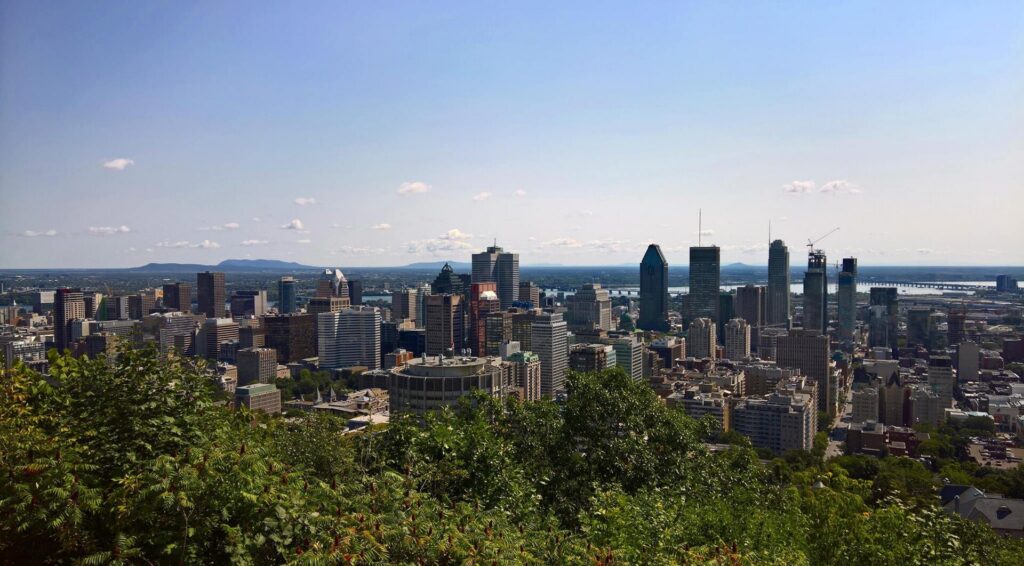
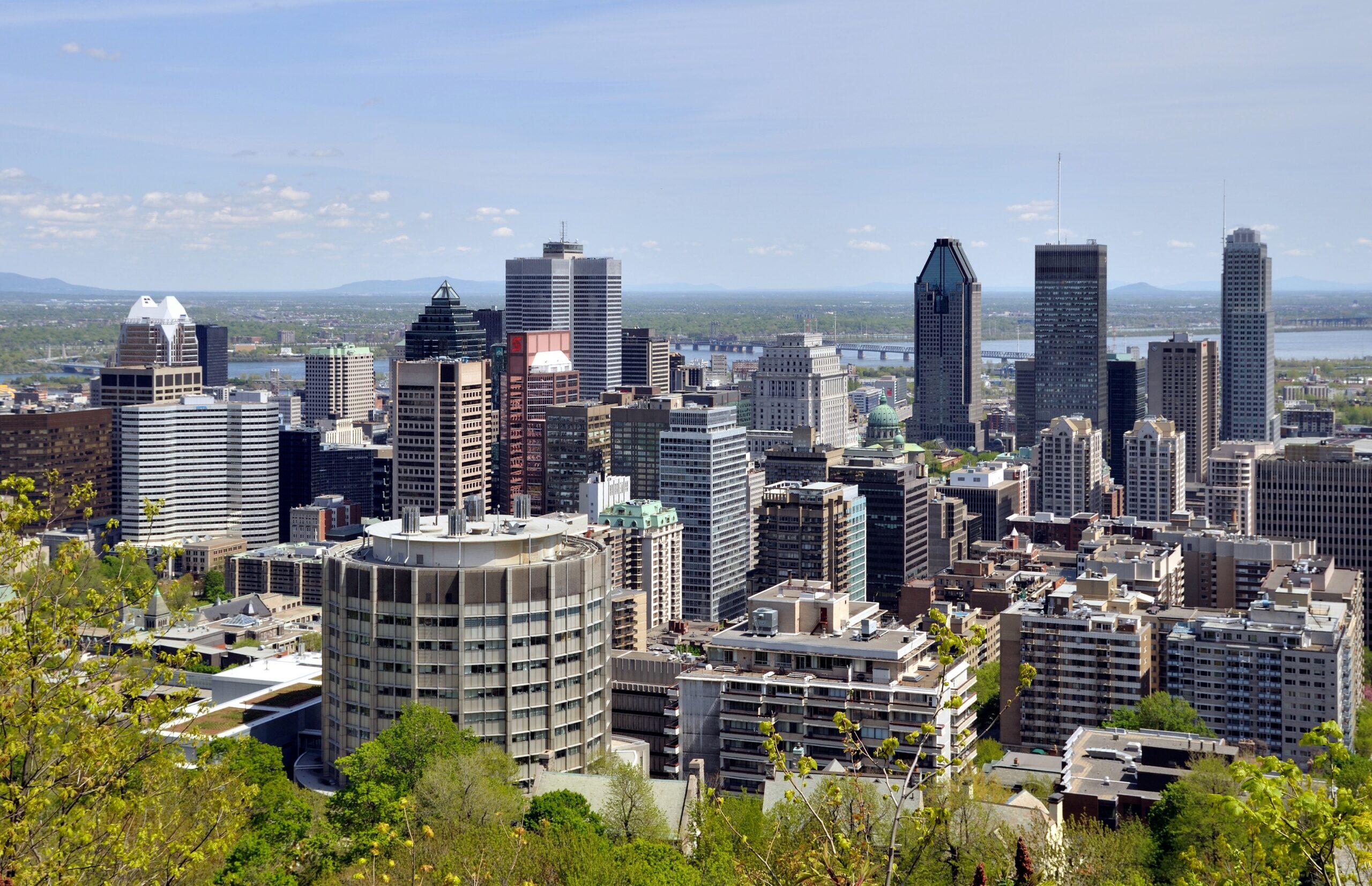
    The Montreal skyline from the Kondiaronk lookout on Mount Royal
    Downtown from the Mount Royal lookout, a 20-minute walk up from the Plateau and no car required (Photo: Andre Carrotflower via Wikimedia Commons, CC BY-SA 4.0)

    When renting a car makes sense

    • The Laurentians and Mont-Tremblant. Ninety minutes north; skiing, lakes and a pedestrian village. Coaches run, but a car gives you the villages along the way.
    • The Eastern Townships. An hour and a half east; wineries, cider, lakes and small towns like Magog and Knowlton. Effectively car-only.
    • Quebec City or Ottawa by road. Both are three hours or less, and both work by VIA Rail too; a car makes sense if you want to stop in the countryside or continue beyond.
    • Sugar shacks in March and April. The cabanes à sucre are in the countryside; a car or a tour is the only way.
    • Family off the island. Laval, Longueuil and the outer suburbs are on transit but spread out; a car earns its keep daily.
    • Deep winter with young children. Strollers, snowsuits and metro stations without elevators are a hard combination.
    • Cross-border trips to Vermont, upstate New York or the Adirondacks, all within two hours.

    If any of those apply, our rental car booking tips cover insurance, deposits and the questions to ask at the counter, and our family car rental guide looks at vehicle choice.

    When it does not

    • You are staying downtown, in Old Montreal, the Plateau or Mile End.
    • Your plans are the old city, the mountain, the museums, the markets, the festivals and a Canadiens game.
    • You are visiting during the Grand Prix, the jazz festival or Osheaga, when downtown streets are closed and parking is impossible.
    • You are travelling as a couple or solo and value your time over a fixed vehicle.
    • You dislike driving in snow and are visiting between December and March.

    The hybrid plan most visitors should use

    Go car-free for the city days, then rent for exactly the days you leave town, picking up from a downtown location rather than the airport. Downtown pickups avoid airport surcharges, skip the drive in at peak time, and save hotel parking on the nights you are not using the car. Book ahead for the dates you need, especially in ski season and for the Townships in fall. Return the car the evening before you fly and take the 747 to the airport. Compare the day rates on our Montreal car rental page against a full-trip rental and the difference is usually obvious.

    Rental logistics in Montreal, if you do rent

    A few local details make the rental itself smoother. Where to pick up: the airport counters are in the terminal, and every major company has downtown branches, most of them around Central Station, the Bell Centre and the hotel district along René-Lévesque and Sherbrooke; a downtown pickup avoids the airport concession fees and lets you collect the car on the morning you actually leave the island rather than paying for it to sit in a hotel garage. Winter tires are supplied on every Quebec rental between December 1 and March 15 because the law requires it, but if your dates straddle those boundaries, ask; a car rented on November 28 may still be on all-seasons. One-way rentals to Quebec City, Ottawa or Toronto are routine, and dropping the car in Quebec City after the drive along the north shore of the St. Lawrence pairs well with a VIA Rail return. Insurance: Quebec’s public plan covers injury but not vehicle damage, so collision coverage is sold as an add-on unless your credit card or home policy provides it; check before you arrive. Crossing the border into Vermont or New York is allowed by most companies, but confirm, and carry the rental agreement. Fuel is priced per litre and, like everywhere in Quebec, higher than in neighbouring Ontario; fill up before you return. And if your trip includes a sugar shack in March, ask for the address in advance and load it into your phone; the best ones are on rural roads where the French-only signage and the spring mud make navigation part of the adventure.

    Decision table

    Your tripRecommendationWhy
    Weekend in Old Montreal or downtownNo carEverything is walkable or one metro ride; parking would cost more than transit
    Four or five days with a Tremblant or Townships day tripHybrid: rent for one or two days downtownCar-free city days, car for the countryside
    Montreal plus Quebec CityTrain, or hybridVIA Rail is comfortable and central; a car only if you want to stop along the way
    Family visit to Laval or the South ShoreRent for the whole staySuburban distances make the car worthwhile daily
    Winter trip with small childrenRent, choose a hotel with parkingSnow, gear and stairs make transit hard work; winter tires are supplied
    Ski trip to Tremblant, staying at the resortRent at YUL, or take the resort coachThe village is pedestrian; the car is only for getting there
    Grand Prix, jazz festival or Osheaga weekendNo carStreet closures and no parking downtown
    Business trip, meetings across the regionRent, or taxi and the REMDepends on how spread out the meetings are

    Money-saving tips for both options

    • On transit: the 747 fare doubles as a 24-hour pass, so plan a sightseeing day around your arrival; a three-day or weekend pass usually beats single fares for a short trip; children eleven and under are free.
    • On a rental: compare downtown and airport pickup, book early for ski season and fall colour weekends, decline extras you already have through a credit card or home policy (check first), and ask how the company handles the Autoroute 30 toll.
    • On the hotel: if you are renting, price the parking fee into the room rate and confirm the hotel’s lot is off-street, so snow-removal bans are not your problem.
    • On timing: avoid the bridges and the Décarie in the weekday peaks and stay off the roads on July 1; the best time to fly to Montreal guide lists the festival weekends when downtown is closed to traffic.
    • On the airport run: the 747 is far cheaper than a taxi for one or two people; the flat-rate taxi is competitive for three or four with luggage.

    Frequently asked questions

    Is it worth renting a car in Montreal?

    Only if you are leaving the island: Tremblant, the Townships, Quebec City by road, or the suburbs. For a city visit, the metro, walking and BIXI are faster and far cheaper once parking is counted.

    Is Montreal public transit good for tourists?

    Yes. Four metro lines reach nearly every major sight, the 747 bus links the airport around the clock, and a three-day pass covers a typical visit.

    How do I get from Trudeau airport to downtown Montreal?

    The 747 bus, about 45 to 70 minutes, with a fare that includes 24 hours of transit; or a flat-rate taxi or ride-hail. An REM station at the airport is under construction.

    Can I turn right on a red light in Montreal?

    No. Right turns on red are prohibited everywhere on the island of Montreal, although they are allowed elsewhere in Quebec unless signed.

    Do I need winter tires to drive in Montreal?

    Yes, by law, from December 1 to March 15 on every passenger vehicle. Rental cars in Quebec are equipped in those months.

    Can I use my credit card on the Montreal metro?

    Contactless payment has been rolling out; check the STM’s site for current acceptance. Buying an OPUS card or tickets from the station machines always works.

    Is parking expensive in downtown Montreal?

    Yes, and complicated: hotel and lot fees are high, street signs stack multiple restrictions, and winter snow-removal bans are enforced by towing.

    Whichever way you go, start with the flight. Compare cheap flights to Montreal, choose a neighbourhood with our Montreal hotel search, and if the Laurentians or the Townships are on the list, price the rental for those dates on our Montreal car rental page.

  • Best Time to Fly to Montreal: Seasons, Weather & Prices

    Best Time to Fly to Montreal: Seasons, Weather & Prices

    Montreal has two personalities and prices them differently. From late June to early September the city is a festival: terraces on every street, the Quartier des Spectacles closed to traffic for the jazz festival and the comedy festival, the Grand Prix roaring through Parc Jean-Drapeau, and hotel rates to match. From December to March it is one of the snowiest major cities on earth, with a culture built around embracing that, and airfares that drop to their lowest of the year. In between are two short, lovely shoulders. This guide walks through the weather month by month, the fare seasons, the specific festival weeks that move prices more than the calendar suggests, and how to choose between Trudeau airport and the alternatives.

    The short answer

    For weather and value together, the windows are mid-May to mid-June and early September to mid-October. Spring brings the terraces back out before the festival crowds arrive; early fall keeps most of the summer’s warmth, adds the colour, and drops the prices. The cheapest fares of the year come from mid-January to early March and again in November, when Montreal is cold or grey and the planes are filled by business travel. The most expensive stretches are the Grand Prix weekend in mid-June, which is the single biggest hotel spike of the year, the festival heart of summer from late June through early August, and the Christmas and New Year period. Whichever window you choose, run a flexible-date search on our Montreal flights page; a few days either side of a festival weekend can change the fare band entirely.

    A performer on stage at the Montreal International Jazz Festival
    The Montreal International Jazz Festival takes over the Quartier des Spectacles for ten days from late June (Photo: Pierre5018 via Wikimedia Commons, CC BY 4.0)

    Montreal’s weather, season by season

    Montreal sits on an island in the St. Lawrence River, far enough inland to have a fully continental climate: real winters, humid summers, and short transitions. The figures below are approximate seasonal patterns based on the long-term climate normals from Environment and Climate Change Canada; check the current forecast before you pack, because the city can swing from a thaw to a blizzard inside a week in March or November.

    MonthTypical daytime highTypical overnight lowWhat it feels likeFare pressure
    Januaryaround -5 °Caround -13 °CCold, bright, snow-packed; the coldest snaps drop well below -20 °CLow, except the first week
    Februaryaround -3 °Caround -12 °CStill deep winter, with the most reliable snow cover of the yearLow; rises for Igloofest and Nuit Blanche weekends
    Marcharound 3 °Caround -5 °CThaw and refreeze; slush, then the first mild afternoons; maple season beginsLow, apart from the early-March school break
    Aprilaround 12 °Caround 2 °CUnpredictable; the snow finally goes, the city is grey and then suddenly greenModerate
    Mayaround 19 °Caround 9 °CSpring proper; the terraces reopen, the mountain turns greenModerate; rises around the late-May long weekend
    Junearound 24 °Caround 14 °CWarm and lively; the Grand Prix and the jazz festival open the summerHigh, with a Grand Prix spike
    Julyaround 27 °Caround 17 °CHot and humid; heat waves push the humidex into the high 30sHigh
    Augustaround 25 °Caround 16 °CHot, humid, thundery; cooling in the last weekHigh, with an Osheaga spike
    Septemberaround 20 °Caround 11 °CWarm days, cool nights; the best-kept-secret monthModerate, falling after Labour Day
    Octoberaround 13 °Caround 5 °CPeak fall colour on the mountain; jacket weather; first frostsModerate to low
    Novemberaround 5 °Caround -1 °CGrey and damp; the first lasting snow usually arrives late in the monthLow
    Decemberaround -2 °Caround -9 °CWinter arrives properly; holiday lights, markets and the first skatingLow until mid-month, then peak

    Two things the table does not capture. Snow: Montreal averages roughly two metres of it a season, and the city is built for it, with an underground pedestrian network, heated stations and a snow-clearing operation that is a spectacle in its own right. Winter here is not a reason to stay away; it is a reason to pack properly. Humidity: July and August afternoons routinely feel several degrees hotter than the thermometer, and the summer festivals are outdoor events; plan for shade, water and an air-conditioned hotel.

    How Montreal’s fare seasons work

    Montreal’s demand is driven by three overlapping calendars: the Quebec and Ontario school years, the corporate and university year, and a festival programme so dense from June to August that the city markets itself as a festival capital. The result is a summer plateau with sharp spikes on specific weekends, a real but shorter winter bump around the holidays and the February events, and two shoulder windows where the weather is often excellent and the prices are not.

    Peak season

    Mid-June to mid-August, plus roughly December 18 to January 3. The Canadian Grand Prix weekend, usually the second or third weekend of June, is in a class of its own: hotel rates across the city can double or more, and flights from the U.S. Northeast and Europe fill early. The jazz festival, the comedy festival, the fireworks competition and Osheaga keep demand high through July and into August. If you must travel in peak, book the hotel first, fly mid-week, and consider staying just outside the festival core.

    Shoulder season

    Mid-April to mid-June, avoiding the Grand Prix, and September to October. May and September are the months locals would send you to: terrace weather, manageable crowds, and hotel rates well below summer. Watch the Victoria Day weekend in late May, which Quebec marks as the National Patriots’ Day holiday, and Canadian Thanksgiving in early October.

    Low season

    Mid-January to early March and most of November. Fares are at their lowest, and Montreal’s winter has a genuine programme: Igloofest, the outdoor electronic music festival on the Old Port waterfront on weekends from mid-January to early February; Montréal en Lumière, the winter festival in late February with an all-night Nuit Blanche; skating in the parks; and the city’s restaurant scene at full strength with no waits. The trade-off is weather risk; build a buffer into connections and check the forecast before you fly.

    Fares also move with the day of the week and the hour: early-morning and late-evening departures and mid-week days usually sit below Friday and Sunday afternoons on the same route. Our guide to the best times to book flights and hotels goes deeper on reading those patterns.

    Montreal month by month

    January

    Cold, bright and, after the first week, the cheapest month of the year to fly in. Highs sit below freezing and the coldest days bring wind chills well past -25 °C. What January does well: Igloofest in the Old Port on weekends from mid-month, the Canadiens at the Bell Centre, the underground city for getting between downtown hotels, shops and the metro without a coat, cross-country skiing and tobogganing on Mount Royal, and a restaurant scene that is a large part of why people visit Montreal at all. Pack a real coat and boots with grip.

    February

    Deep winter, reliable snow, and still low fares outside two things: Montréal en Lumière, the winter festival that fills the Quartier des Spectacles in the second half of the month and ends with the all-night Nuit Blanche, and the Quebec school break, which usually falls in the first week of March but can begin in late February. Igloofest continues into early February. Valentine’s weekend lifts hotel rates briefly.

    March

    A transition month, and honest about it: slush, sudden thaws, and a late blizzard most years. The school break, known as la relâche, in the first week of March, brings family travel and higher fares for a week; outside it, March is a low-season month. It is also maple syrup season, when the sugar shacks in the countryside outside the city open for the traditional cabane à sucre meals; a car or a tour makes that easy.

    April

    The snow finally goes and the city is briefly grey and muddy before turning green almost overnight in the last week. Fares are moderate and hotel rates are noticeably lower than they will be in eight weeks. The Canadiens’ season ends, or, in a good year, the playoffs begin, which can tighten hotels on game nights.

    May

    The terraces reopen, the mountain greens up, the cyclists and the BIXI bikes reappear, and the city is at its most cheerful. The Victoria Day long weekend in late May, National Patriots’ Day in Quebec, is the one date to book around; otherwise May offers spring weather at prices well below June. If you can travel in the second half of May, it is one of the best value-for-weather windows of the year.

    June

    Summer arrives, and so does the Grand Prix, usually on a mid-June weekend, when the city’s hotels are fuller and pricier than at any other time. The Fringe festival runs in mid-June, Saint-Jean-Baptiste Day on June 24 is Quebec’s national holiday, and the jazz festival opens in the last days of the month. Early June, before the race, is the value play; the week after the race is a small pocket of relief before July.

    The Old Port of Montreal in summer
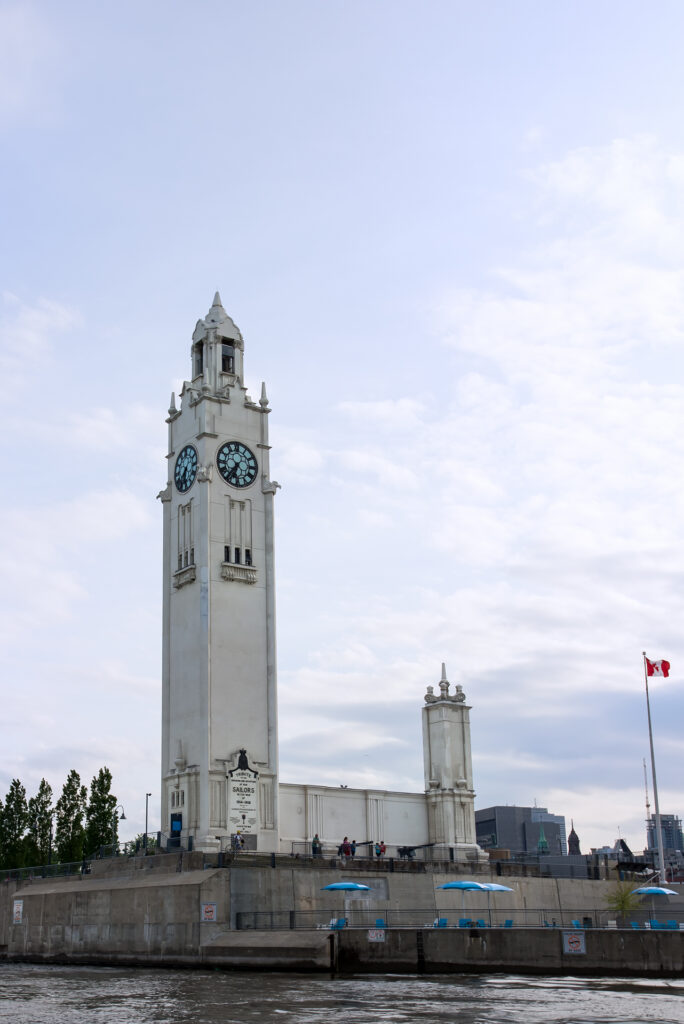
    The Clock Tower in the Old Port, where Montreal spends its short, hot summer (Photo: Thebrianking via Wikimedia Commons, CC BY-SA 3.0)

    July

    Peak season, and Montreal at full volume. The jazz festival runs into the first week of the month, the Just for Laughs comedy festival takes over in the second half, the international fireworks competition lights up the river on weekends, Canada Day on July 1 opens the month, and the humidity settles in. Fares and hotel rates are at their annual high; book early and fly mid-week. Note that July 1 is also Quebec’s traditional moving day, which affects locals far more than visitors but does mean the city is busy that week.

    August

    Still peak, with Osheaga, the big outdoor music festival at Parc Jean-Drapeau, on the first weekend of the month, Montreal Pride in the second week, and the film festival at the end. The last week of August, once families have flown home and before the universities return, is a small pocket of softer pricing.

    September

    Many Montrealers will tell you this is the best month, and the weather agrees: warm days, cool nights, and the first hint of colour on Mount Royal. Fares and hotel rates fall after Labour Day and stay moderate through the month. The universities are back, the restaurants are full of locals rather than visitors, and the terraces stay open.

    October

    Fall colour peaks on the mountain and in the Laurentians in the first half of the month, and the Thanksgiving long weekend on the second Monday is the one demand spike. Late October is one of the best value-for-weather windows of the whole year, with jacket-weather days, quiet hotels and the city’s food at its seasonal best.

    November

    Grey, damp and quiet, and with January the cheapest month to fly. The first lasting snow usually arrives late in the month, the holiday lights and markets switch on in the second half, and the Canadiens are well into their season. If you want Montreal’s festive atmosphere without festive prices, the last ten days of November are the target.

    December

    Two months in one. The first half continues November’s value pricing with the holiday markets, the lights in the Old Port and the first skating of the season. From about December 18, fares and hotel rates jump for Christmas and New Year and stay high into the first days of January. Winter is fully here: expect snow, short days, and the occasional weather delay at Trudeau.

    Heavy snow falling on a Montreal street in winter
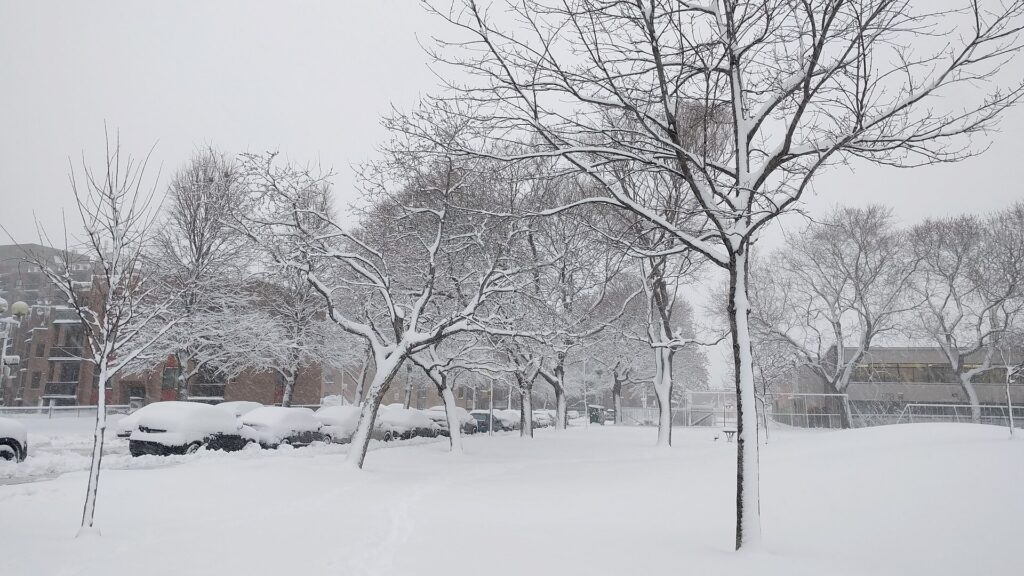
    Montreal in January: real winter, and the cheapest fares of the year (Photo: Wiki-asd-97 via Wikimedia Commons, CC BY 4.0)

    Events that move Montreal flight and hotel prices

    Cross-check these against your dates before you book. Exact dates shift each year; Tourisme Montréal keeps the current calendar.

    • Igloofest (weekends, mid-January to early February).
    • Montréal en Lumière and Nuit Blanche (late February).
    • Quebec school break, la relâche (usually the first week of March).
    • Victoria Day / National Patriots’ Day weekend (late May).
    • Canadian Grand Prix (a mid-June weekend): the biggest hotel spike of the year by a wide margin.
    • Saint-Jean-Baptiste Day (June 24) and Canada Day (July 1).
    • Montreal International Jazz Festival (late June to early July).
    • Just for Laughs (second half of July) and the international fireworks competition (summer weekends).
    • Osheaga (first weekend of August) and Montreal Pride (mid-August).
    • Thanksgiving weekend (second Monday of October).
    • Christmas to New Year.
    • Canadiens playoff runs (April to June in a good year) and stadium concerts. Our Montreal events page shows what is on sale for your dates.

    Which airport should you fly into?

    Montréal-Trudeau International (YUL)

    Montreal’s only commercial airport for scheduled passenger flights, in Dorval about 20 kilometres west of downtown, handles everything from the transborder shuttle flights to the Air Canada and Air Transat routes to Europe, North Africa and the Caribbean. Getting downtown is straightforward: the STM’s 747 bus runs around the clock between the terminal and downtown, stopping along René-Lévesque Boulevard and at the Berri-UQAM metro hub, in about 45 to 70 minutes depending on traffic, for a fare that includes 24 hours of unlimited transit. A flat-rate taxi fare applies from the airport to downtown; ride-hail services also pick up at the terminal. A station for the REM light-rail network is being built at the airport; check the airport’s site for its status and current ground-transport options. Our Trudeau airport guide covers the layout, and our Montreal car-versus-transit guide will help you decide whether to book a car at all.

    Montreal-Trudeau International Airport (YUL)
    Montreal-Trudeau International Airport (YUL) in Dorval, about 20 kilometres west of downtown (Photo: Wilfredor via Wikimedia Commons, CC0)

    Plattsburgh and Burlington (United States)

    For Montrealers and for visitors with a car, two small airports across the U.S. border, Plattsburgh (about an hour south) and Burlington, Vermont (about two hours), have long offered cheaper U.S. domestic and sun fares than Trudeau. They only make sense with a vehicle and a passport, and border wait times can erase the savings on a busy day. If you are a visitor rather than a resident, ignore them.

    Ottawa (YOW) and Quebec City (YQB)

    Ottawa’s airport is two hours away by road or VIA Rail and occasionally has better fares on specific routes; Quebec City’s is three hours. Neither is a practical substitute for a Montreal trip unless you are visiting both cities anyway. See our Ottawa flights and Quebec City flights pages if you are.

    Timing tricks that work for Montreal

    • Search the whole month. Montreal’s fare curve has sharper edges than most cities because of the festival weekends. A calendar search on TicketScanner shows the Grand Prix and Osheaga spikes instantly.
    • Book the hotel before the flight in June and July. A cheap fare into Grand Prix weekend is not cheap once the room is added; hotel rates move more than airfares that week. Run a Montreal hotel search for the same dates before you commit to either.
    • Fly mid-week in summer. Tuesday and Wednesday departures on the same route often sit in a lower band than the Friday.
    • Book the event weeks early and the low-season weeks late. Grand Prix, jazz festival and Christmas fares rarely fall as the date approaches; January and November fares are stable enough that waiting for the right dates costs little.
    • Coming from the U.S. Northeast? Montreal is a short flight from New York, Boston and Washington, and the shuttle-style frequency means the fare spread across a single day can be large.
    • Consider the train for a two-city trip. VIA Rail links Montreal with Toronto, Ottawa and Quebec City through the downtown Central Station; flying into one and out of the other can be cheaper than a return to the same city.
    • Build a winter buffer. Snow can disrupt Trudeau between December and March; avoid the tightest connections. Our guide to how early to arrive for an international flight covers what to allow.
    • Flying out of Montreal instead? The same seasonality applies in reverse; see cheap flights from Montreal.

    What to pack, by season

    Winter (December to March): an insulated, wind-resistant coat, a hat that covers your ears, a scarf, waterproof boots with real grip, and layers for overheated interiors; Montreal winter is colder than Toronto’s and it shows in what locals wear. Spring (April to May): a rain shell, a mid-weight jacket and shoes that can get wet. Summer (June to August): light, breathable clothing, sun protection, and something for aggressively air-conditioned restaurants and metro cars. Fall (September to November): layers, a warm jacket by mid-October, and an umbrella in November. Year-round, comfortable shoes: Montreal is a walking city with hills and cobblestones.

    The best time to fly to Montreal for…

    Families

    Late May or the last week of August for warm weather without peak prices, or the school break in early March for a snow-and-city trip if you book early.

    The lowest fares

    Mid-January to early March outside the relâche week, and November. Pair with a downtown hotel and lean into the indoor and winter city.

    Festivals

    Late June to early August, booked months ahead, with the hotel first. Or February, for Montréal en Lumière at a fraction of the price.

    Food

    Any month; Montreal’s restaurants are its most reliable attraction. September and October are the sweet spot for terraces, harvest menus and quiet tables.

    Skiing

    January to March, with the Laurentians and Mont-Tremblant ninety minutes north; see our Montreal car rental page, and note that Quebec requires winter tires on all vehicles from December 1 to March 15.

    Cross-border and international visitors

    U.S. citizens need a valid passport; most other visa-exempt travellers arriving by air need an Electronic Travel Authorization. The Government of Canada’s visitor page explains what applies to you, and CATSA lists what you can carry through security.

    Frequently asked questions

    What is the cheapest month to fly to Montreal?

    January and February, followed by November and early March outside the school break. The first week of January is the exception, as it is still priced with the holidays.

    What is the best month to visit Montreal for weather?

    September, with June a close second if you can avoid Grand Prix weekend. Both are far more comfortable than the humid heart of July.

    Is Montreal expensive in summer?

    The festival weeks are, and the Grand Prix weekend is the most expensive time of the year for hotels by a wide margin. Mid-week travel and early booking help; May and September give you most of the summer at a fraction of the price.

    How cold is Montreal in winter?

    Colder than Toronto and most U.S. cities: daytime highs below freezing from December to February and cold snaps well below -20 °C. The city is built for it, and a proper coat and boots make it entirely enjoyable.

    Which airport does Montreal use?

    Montréal-Trudeau (YUL), about 20 kilometres west of downtown, reached by the 747 bus, taxi or ride-hail. There is no other scheduled passenger airport in the city.

    How far ahead should I book a flight to Montreal?

    Earlier for the festival weeks and the holidays, when fares tend only to rise; for low-season dates, fares are stable enough that finding the right pair of days matters more than booking months out.

    Do I need to speak French in Montreal?

    No. French is the official language and you will hear it everywhere, but English is widely spoken in hotels, restaurants and shops in the areas visitors frequent, and a few words of French are appreciated.

    Ready to pick your dates? Compare fares across the whole month on our Montreal flights page, then find a room with our Montreal hotel search. For what to do when you land, start with our first-timer’s guide to Montreal.

  • Things to Do in Montreal: A First-Timer’s Guide

    Things to Do in Montreal: A First-Timer’s Guide

    Montreal is the closest thing North America has to a European city, and it wears the comparison lightly. The cobblestones and the 17th-century church squares are real, the French is real, and so are the bagels, the hockey, the winter and the festivals that turn the downtown streets into a stage every summer. What makes it easy for a first-time visitor is that it is compact: Old Montreal, downtown, the mountain and the Plateau are all within a few metro stops or a long walk of each other, and each is a half-day or more. This guide covers the sights that earn their reputation, the neighbourhoods locals actually spend their weekends in, the food (which is the real reason many people come), the museums, the sports, the day trips, and the practical details that make the trip work.

    If you are still comparing cheap flights to Montreal, read this alongside our guides to the best time to fly to Montreal and whether you need a car. Between the three you can plan the whole trip.

    The twin-towered façade of Notre-Dame Basilica on Place d'Armes in Old Montreal
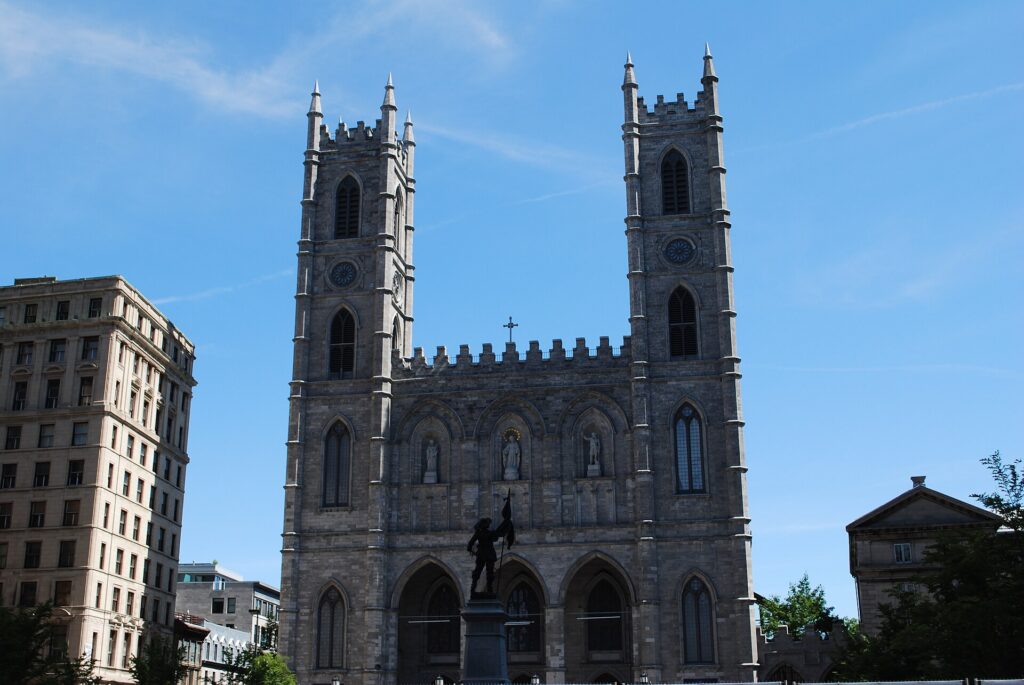
    Notre-Dame Basilica on Place d'Armes, the centrepiece of Old Montreal (Photo: Concierge.2C via Wikimedia Commons, CC BY-SA 3.0)

    Montreal at a glance for first-timers

    • Airport: Montréal-Trudeau (YUL), in Dorval about 20 km west of downtown; the 747 bus runs downtown around the clock. See our Trudeau airport guide.
    • Getting around: four metro lines, buses, BIXI bikes and your feet. The city is walkable and most visitors do not need a car unless they are leaving the island.
    • Language: French is the official language and the everyday one; English is widely spoken in hotels, restaurants and shops in the areas visitors frequent. A bonjour goes a long way.
    • Money: Canadian dollars. Menu and shelf prices exclude the federal GST and the Quebec sales tax, which together add about 15 percent at the till. Tipping 15 to 20 percent in restaurants is customary. Tap-to-pay is nearly universal.
    • Where to stay: Old Montreal for atmosphere and boutique hotels; downtown for the Bell Centre, the museums and the underground city; the Quartier des Spectacles for the festivals; the Plateau for a local, café-and-terrace feel. Our Montreal hotel search covers them all.

    Old Montreal and the Old Port

    Notre-Dame Basilica and Place d’Armes

    Start at Place d’Armes, the square where the city was founded, and go inside Notre-Dame Basilica. The exterior is handsome Gothic Revival; the interior is something else, a deep blue vault studded with gold stars above an altar carved in wood, and one of the most beautiful church interiors on the continent. The AURA light-and-sound show in the evenings sells out and is worth booking ahead. Around the square are the old Bank of Montreal head office and the Sulpician seminary, the oldest building in the city.

    The streets and squares

    Rue Saint-Paul, the oldest street in Montreal, runs the length of the old town past galleries, boutiques and the domed Bonsecours Market, now a crafts market. Place Jacques-Cartier slopes down from City Hall to the river, lined with terraces and street performers in summer and a Christmas market in December. The Château Ramezay, an 18th-century governor’s residence, and Pointe-à-Callière, the archaeology museum built over the actual foundations of the first settlement, are the two history museums to prioritise; Pointe-à-Callière in particular is a superb piece of museum design. Old Montreal is at its most atmospheric early in the morning and after dark, when the tour groups are gone and the lamplit streets look like the postcards.

    The Old Port

    Between the old town and the river, the former docks are now a linear park. The big Ferris wheel gives the best view of the old town’s rooftops and the river; Bota Bota, a spa built into a converted ferry, is the most Montreal way to spend a winter afternoon; the Clock Tower at the eastern end has a small urban beach beside it in summer; and the Montreal Science Centre on the King Edward Pier is the best rainy-day option with children. In winter the Old Port has a large skating rink and, on weekends from mid-January, the Igloofest electronic music festival. The river cruises and the jet-boat trips through the Lachine Rapids leave from here.

    The Old Port of Montreal in summer
    The Clock Tower at the eastern end of the Old Port (Photo: Thebrianking via Wikimedia Commons, CC BY-SA 3.0)

    Mount Royal

    The wooded hill in the middle of the city is Montreal’s Central Park, designed by the same architect, Frederick Law Olmsted, and it is the best free thing to do in the city. From the Plateau, the walk up from the Sir George-Étienne Cartier Monument on Avenue du Parc takes twenty to thirty minutes on a winding path and ends at the Kondiaronk Belvedere, the terrace in front of the chalet with the definitive view of downtown and the river. Beaver Lake, on the far side of the summit, has paddle boats in summer and skating and tobogganing in winter; cross-country ski trails loop through the woods. On Sunday afternoons from spring to fall, the Tam-Tams, an informal drum circle that has gathered at the monument for decades, turns the lawn into a festival. On the west flank of the mountain, Saint Joseph’s Oratory is a vast domed basilica with a view of its own; pilgrims still climb its central steps on their knees.

    The Montreal skyline from the Kondiaronk lookout on Mount Royal
    Downtown from the Kondiaronk lookout on Mount Royal, a 20-minute climb from the Plateau (Photo: Andre Carrotflower via Wikimedia Commons, CC BY-SA 4.0)

    The Plateau and Mile End

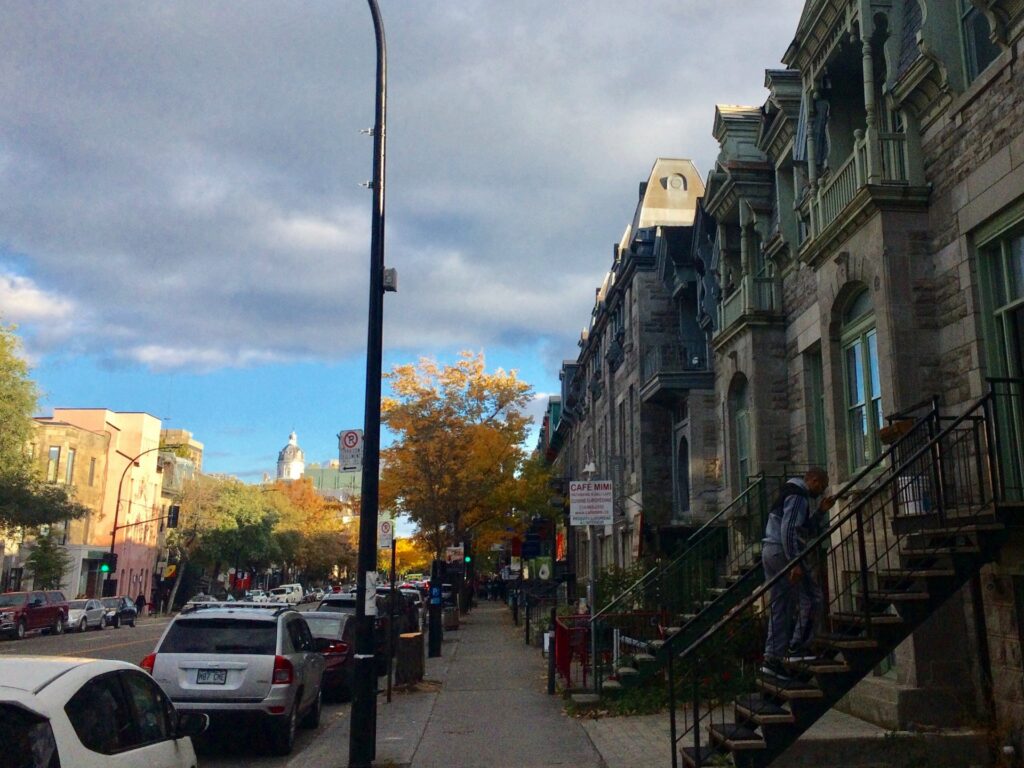
    East of the mountain, the Plateau Mont-Royal is the neighbourhood that defines the city’s image: three-storey walk-ups with painted cornices and iron outdoor staircases spiralling down to the sidewalk, murals on the gable ends, cafés and terraces on every corner. Boulevard Saint-Laurent, the Main, is the historic dividing line between the French east and the English west and the spine of the neighbourhood’s nightlife; Avenue du Mont-Royal and Rue Saint-Denis are the shopping and café streets; Parc La Fontaine is the front lawn. The murals are the legacy of the annual MURAL festival in June, which paints a fresh crop each year along the Main.

    Outdoor staircases on a residential street in the Plateau Mont-Royal, Montreal
    The outdoor staircases and painted cornices of the Plateau Mont-Royal (Photo: Andre Carrotflower via Wikimedia Commons, CC BY-SA 4.0)

    Mile End, north of the Plateau, is where the bagels are. St-Viateur and Fairmount, both open around the clock, bake Montreal’s wood-fired, honey-sweetened bagels a few blocks apart, and the argument about which is better has run for seventy years. The neighbourhood is also the city’s indie-music and café heartland, with Wilensky’s, a lunch counter unchanged since the 1930s, as its landmark. A morning here, with a bag of hot bagels and a coffee, is the most Montreal morning there is.

    Downtown and the Quartier des Spectacles

    Downtown is Sainte-Catherine Street, the long shopping spine, and the grid around it. The Montreal Museum of Fine Arts on Sherbrooke Street is the one museum every visitor should see, with a strong Canadian collection, Old Masters, decorative arts and blockbuster exhibitions spread across several pavilions; the McCord Stewart Museum, a few blocks east, covers the city’s social history and has an excellent First Nations collection. The Quartier des Spectacles, around Place des Arts, is the festival district, a set of squares wired for light and sound that hosts the jazz festival, the comedy festival and Montréal en Lumière, and is worth wandering on any summer evening. Below all of it runs the RESO, the underground city, roughly 30 kilometres of corridors linking metro stations, shopping centres, hotels and Central Station, which is how Montrealers cross downtown in January. The Bell Centre, home of the Canadiens, sits at the western edge.

    The markets, Little Italy and the canal

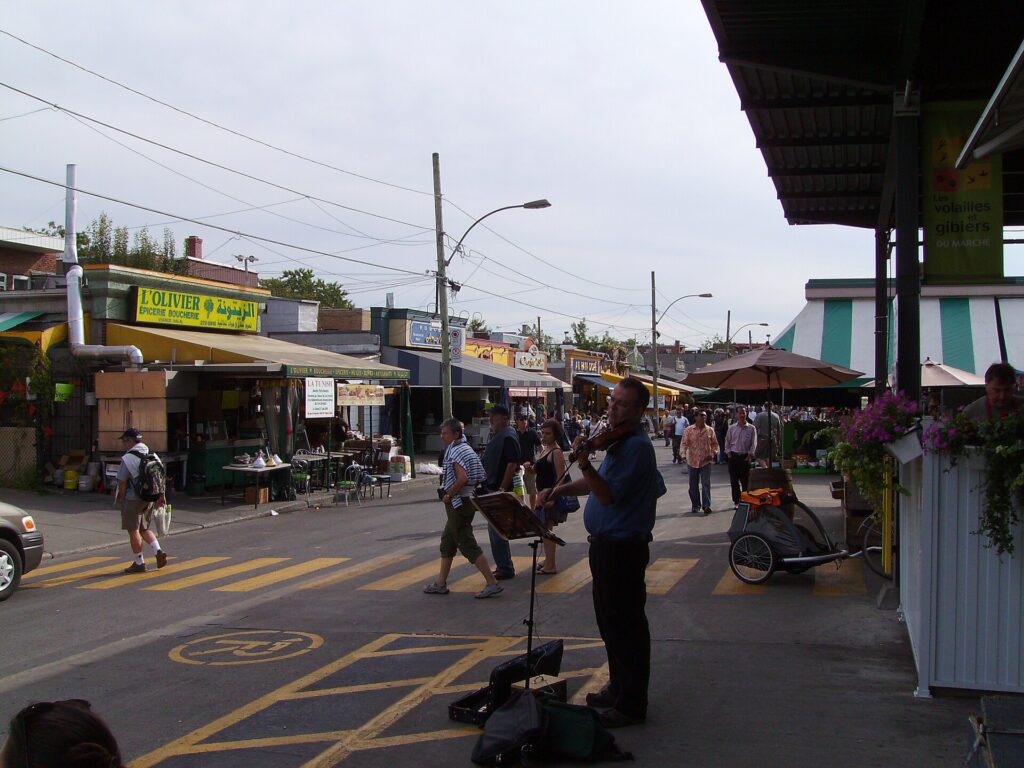
    Jean-Talon Market, in Little Italy on the Orange Line, is one of the largest open-air markets in North America and a highlight of any visit: Quebec produce, cheeses, maple products, prepared food and, in late summer, a riot of peppers, corn and tomatoes. Little Italy around it has the espresso bars and trattorias to match. Atwater Market, in the southwest, is smaller and more elegant, with an Art Deco tower and the city’s best butchers, and it sits on the Lachine Canal, whose bike path runs from the Old Port through the reinvented industrial neighbourhoods of Griffintown and Saint-Henri to the rapids at Lachine. A BIXI along the canal, stopping at Atwater for lunch, is a perfect summer half-day.

    Produce stalls at Jean-Talon Market in Montreal
    Jean-Talon Market in Little Italy, one of the largest open-air markets in North America (Photo: figa via Wikimedia Commons, CC BY 3.0)

    Parc Jean-Drapeau and the Olympic Park

    Two islands in the river, reached by the Yellow Line metro, make up Parc Jean-Drapeau: the site of Expo 67, whose Biosphere, Buckminster Fuller’s geodesic dome, is now an environment museum; La Ronde, the city’s amusement park; the casino; a swimming beach; and the Circuit Gilles Villeneuve, the Grand Prix track, which is open to cyclists and skaters the rest of the year. Osheaga, the big summer music festival, happens here. Across town at the east end of the Green Line, the Olympic Park’s leaning tower is still the tallest inclined structure in the world, and the Space for Life complex beside it groups the Biodome, with its recreated ecosystems, the Botanical Garden with its celebrated Chinese and Japanese gardens, the Insectarium and the Planetarium. With children, this is the best day in the city.

    What to eat, and where

    Montreal’s food is the strongest reason to visit, and it rewards a plan. Smoked meat, the city’s cured brisket, is best at Schwartz’s on the Main, where the queue is part of the experience, or at its rivals nearby. Bagels are Mile End, above. Poutine is everywhere, but La Banquise on the Plateau, open all night with dozens of variations, is the pilgrimage. Portuguese grilled chicken from the rotisseries around the Plateau is the local takeout. Tourtière, the meat pie, and maple everything are the Quebec classics, best at the sugar shacks in March or at the markets year-round. The city’s serious restaurants cluster in Little Burgundy, Saint-Henri, the Plateau and Old Montreal, and its bring-your-own-wine restaurants along Rue Duluth and Rue Prince-Arthur are a Montreal institution that makes a good meal considerably cheaper. Quebec cheeses, craft beer from the city’s many microbreweries, and the dépanneurs that sell both on every corner round out the picture. Two festivals bring prix-fixe menus to hundreds of restaurants: MTLàTABLE in November and the winter festival’s food programme in February.

    Sports and live events

    The Montreal Canadiens are the most decorated franchise in hockey and the Bell Centre on a game night is the loudest room in the country; tickets are hard to come by but worth the effort, and the pre-game atmosphere in the bars around the arena is part of it. CF Montréal play soccer at Stade Saputo beside the Olympic Stadium, and the Alouettes play football at the Percival Molson Stadium on the slope of the mountain, one of the most scenic places to watch a game anywhere. The festival calendar is the densest in North America: the jazz festival from late June, the Just for Laughs comedy festival in July, the fireworks competition on summer weekends, Osheaga in early August, Pride, the film festival, and in winter Igloofest and Montréal en Lumière. For tickets across all of it, check what is on sale in Montreal for your dates before you book flights, because the Grand Prix and a Canadiens playoff run can fill the city’s hotels in a day. Tourisme Montréal keeps the festival dates.

    Montreal with kids

    The Biodome, the Insectarium and the Planetarium at Space for Life; the Science Centre and the Ferris wheel in the Old Port; La Ronde and the beach at Parc Jean-Drapeau; the paddle boats on Beaver Lake; the Ecomuseum Zoo in the West Island; and, in winter, skating in the Old Port and tobogganing on the mountain. The metro is an adventure in itself, and children eleven and under ride free.

    Montreal through the seasons

    Montreal changes character with the calendar more than any other Canadian city, and it is worth choosing your season deliberately. Summer (June to August) is the city at full volume: the Jazz Festival, Just for Laughs, the Francofolies and Osheaga back to back, the fireworks competition over the river on summer evenings, terrasses on every street, the Tam-Tams drum circle on Mount Royal every Sunday, and pedestrianized stretches of Mont-Royal Avenue and Sainte-Catherine. Fall (September to October) is the quieter, cheaper version, with the maples on the mountain turning in early October, the Marathon, Pop Montreal, and the best restaurant season of the year as the summer crowds leave. Winter (December to March) is cold, and Montrealers have built a city to enjoy it: the Underground City, with its 30-plus kilometres of connected passages, malls and metro stations, keeps downtown walkable in any weather; the outdoor rinks in the Old Port and at Parc La Fontaine, the Fête des Neiges on Île Sainte-Hélène, Igloofest’s outdoor electronic music in January, Montréal en Lumière and the all-night Nuit Blanche in late February, and the Canadiens at the Bell Centre fill the calendar. Spring (April to May) is mud and sugar shacks, with the cabanes à sucre in the countryside serving maple-drenched meals through March and April, then a sudden explosion of terrasses in May. Our month-by-month guide matches each season to the fare calendar.

    Montreal on a budget

    Montreal is the most affordable of Canada’s big three cities, and the free list is long: Mount Royal and the lookout, the Tam-Tams, the outdoor stages of the summer festivals, the Old Port promenade, Parc La Fontaine, the Lachine Canal path, the markets, the Notre-Dame Basilica exterior and the Place d’Armes, and the Underground City itself. The Montreal Museum of Fine Arts has free admission to its permanent collection for visitors under a certain age and reduced days for everyone; check its site. Eat cheaply and brilliantly at the bagel bakeries, the smoked-meat counters, the Jean-Talon Market stalls, and the Portuguese chicken and Vietnamese pho on Saint-Laurent and in Côte-des-Neiges. The metro’s unlimited weekend and multi-day passes are good value, and BIXI bikes are cheap for short hops. Hotels are noticeably cheaper than Toronto’s outside the festival weeks and the Grand Prix; compare them by neighbourhood on our Montreal hotel search, and see our guide to the best times to book flights and hotels for the booking side.

    Day trips from Montreal

    Quebec City, three hours away by car or by VIA Rail, is the walled capital with the Château Frontenac and the only fortified city north of Mexico; it deserves an overnight, but a long day is possible by train. See our Quebec City guide. Mont-Tremblant, ninety minutes north in the Laurentians, is the ski resort in winter and a lakes-and-hiking base in summer; Tremblant has resort details. The Eastern Townships, an hour and a half east, are wine, cider, lakes and small towns like Magog, Knowlton and North Hatley. Ottawa is two hours west by road or train. In March and April, the sugar shacks in the countryside serve the traditional maple feast; in the fall, the orchards around Mont-Saint-Hilaire and Oka open for apple picking. Most of these are easier with a car; see our Montreal car rental page, and note that Quebec requires winter tires from December 1 to March 15. Bonjour Québec covers the wider province.

    Two sample itineraries

    Two days, no car

    Day one: Notre-Dame Basilica and Old Montreal in the morning, lunch on Rue Saint-Paul, the Old Port and the Ferris wheel in the afternoon, dinner in Old Montreal or Griffintown. Day two: bagels in Mile End, walk south through the Plateau along Saint-Laurent, climb Mount Royal to the lookout, descend to downtown for the Museum of Fine Arts, smoked meat at Schwartz’s for dinner, and a Canadiens game or a show at night.

    Four days, with one day trip

    Add a day for Jean-Talon Market, Little Italy and the Space for Life complex, a day for the Lachine Canal by BIXI with lunch at Atwater Market and an evening in Little Burgundy, and use the fourth for Quebec City by train or Tremblant and the Laurentians by car, rented from a downtown location for that day only.

    Practical details

    • Transit: buy an OPUS card or tickets from any metro station; a three-day pass covers most visits. The STM’s site has maps; our transit-versus-car guide goes into detail.
    • From Trudeau: the 747 bus runs around the clock to downtown and its fare includes 24 hours of transit. The airport’s site covers ground transport.
    • Weather: real winters, humid summers, and two short, lovely shoulders. Our month-by-month guide has the table; check Environment Canada’s forecast before you pack.
    • Driving: no right turns on red on the island of Montreal, and winter tires are mandatory from December 1 to March 15.
    • Entry requirements: U.S. citizens need a valid passport; most other visa-exempt visitors arriving by air need an Electronic Travel Authorization. The Government of Canada’s visitor page is the authoritative source.
    • Safety: a safe city by any standard; the usual big-city awareness applies downtown late at night.

    Frequently asked questions

    How many days do you need in Montreal?

    Three full days covers Old Montreal, the mountain, the Plateau and the museums comfortably; five lets you add the markets, the Olympic Park and a day trip. A weekend is enough for the old town and the Plateau.

    What is the number one thing to do in Montreal?

    Notre-Dame Basilica’s interior, then the walk up Mount Royal to the lookout. And eat a bagel from Mile End on the way.

    Is Montreal walkable?

    Very. Old Montreal, downtown and the Plateau are all connected on foot, and the metro fills the gaps. In winter the underground city keeps you moving without a coat.

    Do I need to speak French in Montreal?

    No, but it helps. English is widely spoken in the areas visitors frequent, and starting with bonjour is both polite and appreciated.

    Do I need a car in Montreal?

    Not for the city. Rent one for Tremblant, the Townships or a road trip to Quebec City, ideally from a downtown location for just those days.

    What is Montreal famous for?

    Its French character, Old Montreal, the Canadiens, the summer festivals, and its food: smoked meat, bagels, poutine and one of the best restaurant scenes in North America.

    Ready to go? Compare flights to Montreal, find a place to stay with our Montreal hotel search, and if Tremblant or the Townships are on the list, price a rental car for those days.