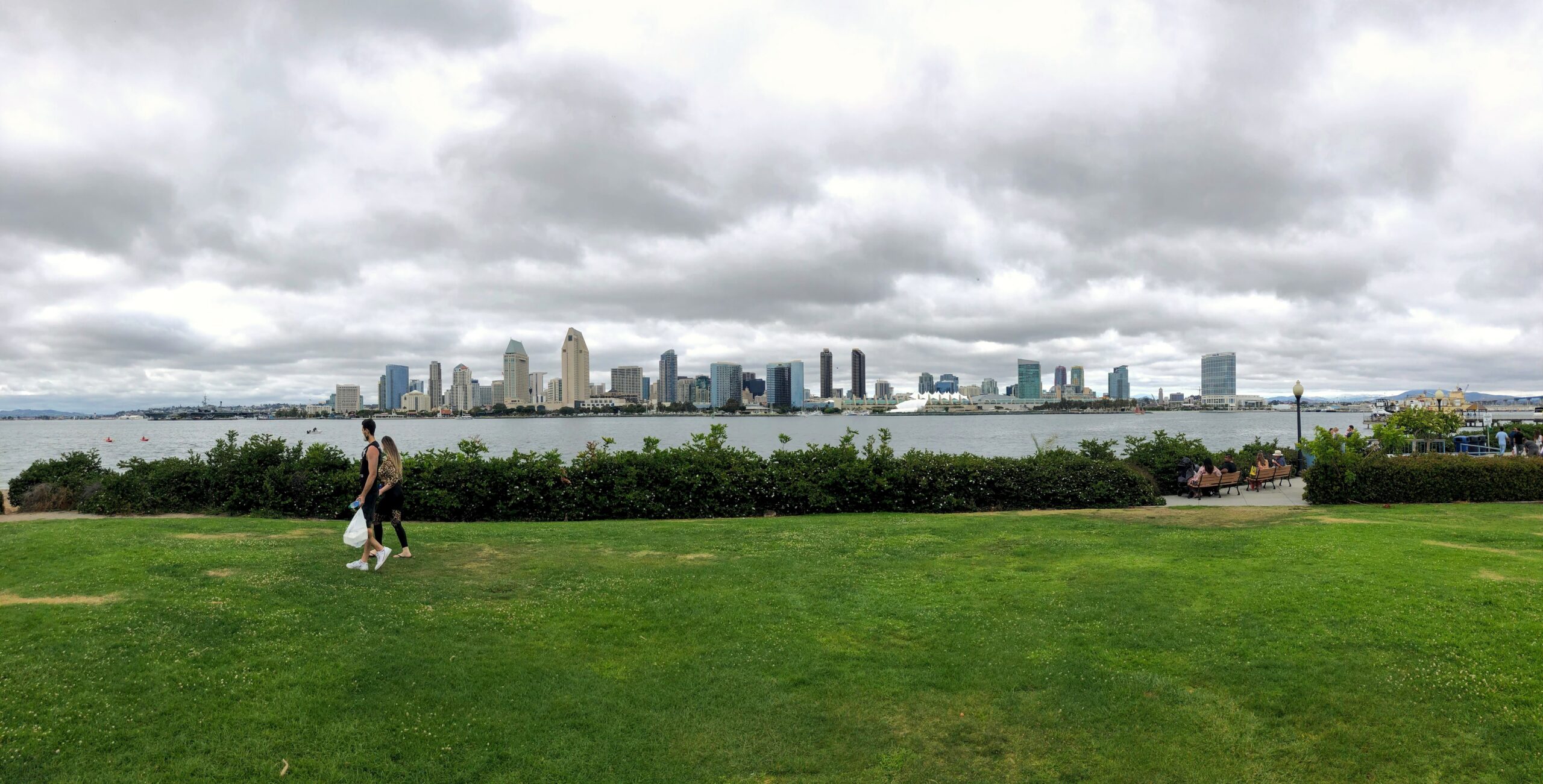
San Diego sits in the middle of the American spectrum on this question. It is neither a transit city nor as car-dependent as Phoenix or Los Angeles. The downtown core is compact and walkable, the Trolley links it to Old Town, Mission Valley, the university area and the Mexican border, a ferry crosses the bay to Coronado, and the airport is only a few kilometers from the Gaslamp Quarter. But the things that make San Diego special are spread along a long coastline: La Jolla, Point Loma, the beach towns and North County are either off the rail network or a slow bus ride away, and most day trips are car trips. This guide explains how the city is laid out, how the MTS Trolley, buses and coastal trains work, what driving and parking are really like, when a car earns its keep, and gives you a straightforward way to decide.
The short answer
Rent a car if La Jolla, Torrey Pines, Point Loma and the beach towns are the heart of your trip, if you are staying in a beach neighborhood or in North County, if you plan day trips to the Safari Park, LEGOLAND, Temecula, Julian or the desert, if you have young children, or if this is part of a road trip. Skip the car if you are staying downtown in the Gaslamp Quarter or Little Italy for a convention, a Padres game or a short city break, and your plans are the waterfront, the USS Midway, Balboa Park, Old Town, Coronado by ferry and a day in Tijuana; the Trolley, the ferry, buses and the occasional ride-hail will cover that, and you will avoid steep downtown hotel parking fees. Many visitors do best with a hybrid: car-free city days and a car for the coast and the day trips. Compare rental rates for any of these plans on our San Diego car rental page.
How San Diego is laid out
Downtown San Diego sits on the east shore of San Diego Bay, with the Gaslamp Quarter, East Village and Petco Park to the south, Little Italy and the airport to the north, and Balboa Park rising on the mesa just to the northeast. West of the airport, the Point Loma peninsula shelters the bay, with Cabrillo National Monument at its tip and Ocean Beach at its northern end. North of that, Mission Bay’s lagoons are fronted by Mission Beach and Pacific Beach, and La Jolla sits on the headland beyond, about 20 kilometers (12 miles) from downtown. Inland, Old Town and Mission Valley follow the San Diego River east toward San Diego State University, and North County’s beach towns and inland suburbs stretch 50 kilometers (30 miles) up the coast. The freeways tie it together: I-5 runs north-south along the coast from the Mexican border through downtown to Los Angeles; I-805 is its inland twin; I-8 runs east from Ocean Beach through Mission Valley toward Arizona; I-15 heads inland to Escondido, Temecula and Las Vegas; and SR 163 runs through Balboa Park’s canyon between downtown and the northern suburbs.
Hotels cluster downtown around the Gaslamp and the convention center, in Little Italy, near the airport and on Harbor and Shelter Islands, in Mission Valley along I-8, in the beach neighborhoods, in Coronado and in La Jolla. Our San Diego hotel search lets you compare them.
Getting in from the airport
San Diego International (SAN) sits on the bay about 5 kilometers (3 miles) northwest of downtown, and getting into the city is quick. A taxi or ride-hail from the marked zones outside the terminals takes about ten minutes to the Gaslamp outside rush hour and about twenty to La Jolla or Pacific Beach. On public transit, an MTS bus runs between the terminals and downtown, and the airport-run shuttle connects the terminals with the Old Town Transit Center, where you can change to the Trolley, the Coaster commuter train and Amtrak. For a rental, shared shuttle buses run from the terminals to the consolidated Rental Car Center on the north side of the airport, where the major companies have their counters. The airport has been redeveloping Terminal 1 and its roads for several years, so pickup zones and routes may have moved since your last visit; check the airport’s site for current ground-transport details. Our SAN airport guide covers the layout.
San Diego transit, explained
The San Diego Metropolitan Transit System (MTS) runs the Trolley and most buses across the southern half of the county, and the North County Transit District runs the Coaster commuter train and North County’s buses. Its limitation is the coast, where rail barely reaches and the buses are slow for sightseeing.
The Trolley
The San Diego Trolley, opened in 1981, is the backbone. The UC San Diego Blue Line runs from the Mexican border at San Ysidro through downtown and Old Town, then north along the Mid-Coast extension to UC San Diego and the University Towne Center area near La Jolla. The Green Line runs from downtown past Old Town, through Mission Valley’s hotels and malls, to Snapdragon Stadium, San Diego State and Santee. The Orange Line runs east from downtown to El Cajon, and the Copper Line links El Cajon and Santee; a vintage Silver Line loops downtown on limited days. Trains run from early morning until around midnight, typically every 15 minutes on the main lines through the day and less often late at night. Downtown stops serve Little Italy, the Santa Fe Depot, the convention center, the Gaslamp and Petco Park.
Buses
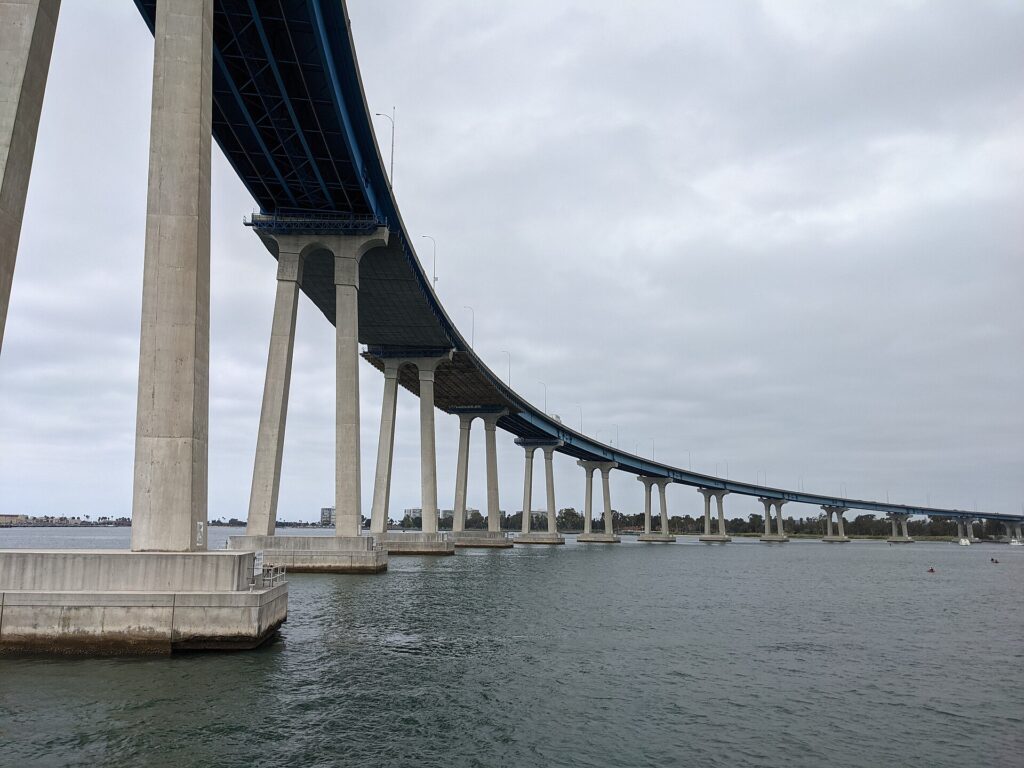
MTS buses cover most of the city, and several are useful to visitors: routes along Park Boulevard and El Cajon Boulevard pass Balboa Park and the zoo, buses from the Old Town Transit Center fan out to Ocean Beach, Mission Beach, Pacific Beach and La Jolla, and routes cross the Coronado Bridge to Coronado. Frequencies drop in the evenings and on weekends on many routes, so check the timetable before relying on a bus for a late return.
The Coaster and the Pacific Surfliner
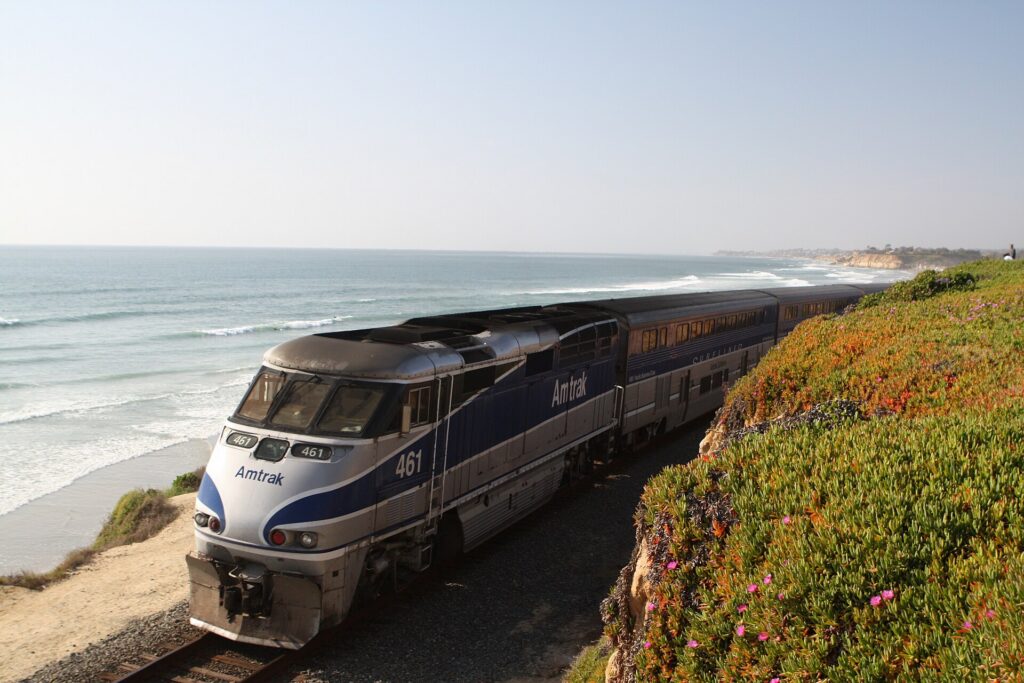
NCTD’s Coaster runs up the coast from the Santa Fe Depot downtown through Old Town, Sorrento Valley, Solana Beach, Encinitas and Carlsbad to Oceanside, with a busier schedule on weekdays than at weekends. It is a scenic and relaxed way to reach the North County beach towns. Amtrak’s Pacific Surfliner follows much of the same line and continues to Los Angeles Union Station in about three hours, then on to Santa Barbara. Coastal landslides near San Clemente have periodically suspended or reduced service in recent years, so check the current status before building a trip around the train.
Fares and tickets
One fare system covers the Trolley and MTS buses. Pay with a PRONTO card or the PRONTO app, which cap what you pay at the price of a day pass once you have taken enough rides in a day, or buy tickets from the machines on the Trolley platforms. Tap before boarding, because fare inspectors check on board. The Coaster and the Surfliner have their own fares, and reduced fares are available for seniors, riders with disabilities and younger riders. Check the MTS site for current fares before you go.
Accessibility
The Trolley has low-floor cars and step-free stations throughout, and all MTS buses are accessible, with ramps and space for wheelchairs.
Beyond MTS
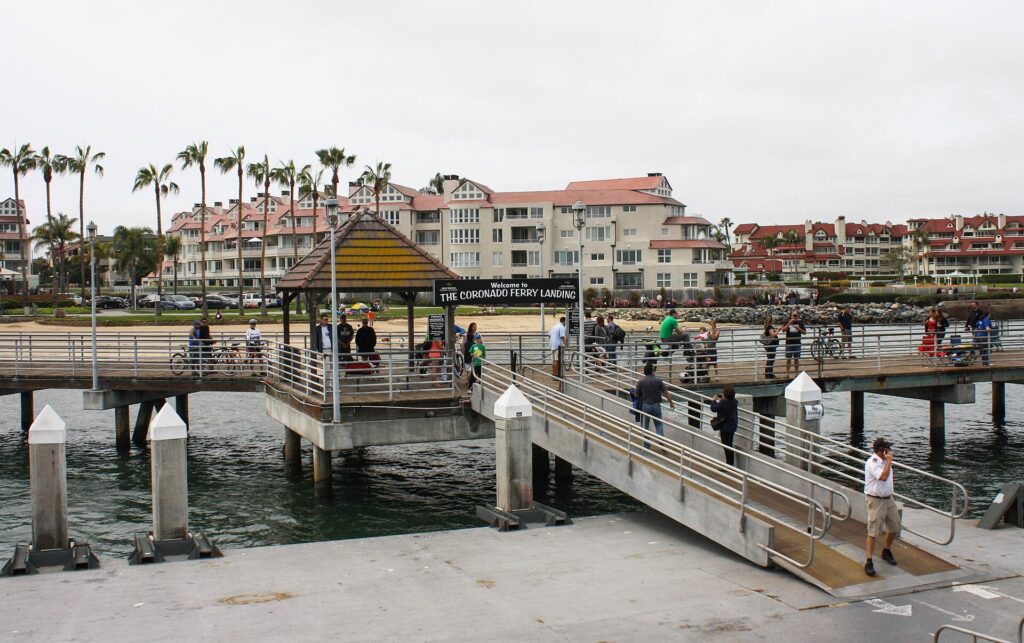
- The Coronado ferry. Ferries cross the bay from the Broadway Pier area downtown to the Coronado Ferry Landing in about fifteen minutes, with bicycles welcome on board; the landing is a short walk from Orange Avenue.
- Ride-hail and taxis. Uber and Lyft operate across the county, and for trips to La Jolla, Point Loma, the beach towns and the brewery districts, they are much faster than the bus. Surge pricing after big events can be steep.
- Walking and cycling. Downtown, the Embarcadero, Coronado and the beach boardwalks are excellent on foot or by bike. Shared e-bikes and e-scooters operate in many neighborhoods, subject to city rules, including slow zones on the boardwalks.
- Tours and hop-on buses. Trolley-style sightseeing tours loop the main sights,, and day tours run to the Safari Park.
- Crossing to Tijuana. The Blue Line runs to San Ysidro, where most visitors walk across the border. Carry a valid passport; Mexico’s Instituto Nacional de Migración sets the entry rules, and the return requires U.S. entry documents that U.S. Customs and Border Protection accepts for your nationality.
Driving in San Diego: what it is really like
By the standards of Southern California, San Diego is a reasonable place to drive: the freeways are well signed, the streets are easy to navigate once you know the main corridors, and traffic is lighter than in Los Angeles. The frustrations are specific. Weekday rush hours, roughly 6 to 9 a.m. and 3 to 7 p.m., slow I-5 and I-805 through the central city and at the Merge, where the two meet near Del Mar, along with I-15 and I-8 through Mission Valley. Sunday afternoons bring heavy northbound traffic on I-5 as weekend visitors head back to Orange County and Los Angeles. Events clog downtown, from Padres games and conventions to the Comic-Con crowds, and summer weekends fill the roads to the beaches.
Parking
Parking is the real cost of a car in San Diego. Downtown has metered street parking with posted hours and many garages, which charge premium event rates on game and concert nights, and most downtown hotels charge a hefty nightly fee for parking or valet. Balboa Park’s lots, free for decades, have moved to paid parking in recent years, so check the park’s current rules before you go. In La Jolla, time-limited street parking near the Cove and the village fills quickly, especially on weekends, and paid garages fill the gap. The beach lots in Mission Beach, Pacific Beach and Ocean Beach fill by late morning on summer weekends, and street parking in those neighborhoods is tight. Never leave valuables visible in a parked car at a beach or trailhead.
Rules and conditions worth knowing
- The border. Southbound I-5 and I-805 end at the San Ysidro crossing, and the last U.S. exits come quickly; watch the signs, because missing them puts you in the lanes for Mexico, where most rental agreements do not allow the car to go.
- Mexico with a rental. Most U.S. rental companies forbid or restrict driving into Mexico, and those that allow it require Mexican auto insurance; for a Tijuana day trip, walking across is far simpler.
- Express lanes and tolls. The I-15 Express Lanes and the I-5 lanes in North County are free for qualifying carpools and tolled for solo drivers with a FasTrak account, and SR 125 in the South Bay is a toll road; rental companies bill tolls through their own programs, often with a daily fee, so ask at the counter.
- Phones. California law bans holding a phone while driving; use a mount and hands-free mode.
- Right turns on red are permitted after a full stop unless signed otherwise.
- Checkpoints. Border Patrol checkpoints operate on the main highways north and east of the city, including I-5 near San Onofre; carry ID.
- Road conditions. 511 San Diego and the California Department of Transportation publish closures, crashes and conditions, including winter snow on the mountain roads to Julian and on I-8 east of the city.
When renting a car makes sense
- The coast. La Jolla, Torrey Pines, Point Loma, Cabrillo National Monument, Sunset Cliffs and the beach towns are strung along the shore, with slow bus links between them; a car lets you see several in a day.
- North County and inland day trips. The Safari Park, LEGOLAND and the Flower Fields in Carlsbad, the Temecula wine country, Julian and Anza-Borrego are all a 40-minute to two-hour drive away.
- Beach stays. If you are staying in Mission Beach, Pacific Beach, La Jolla or North County, a car makes getting downtown and to the attractions much easier.
- Families. Car seats, beach gear and early starts at the zoo all argue for a car, and our family car rental guide looks at vehicle choice.
- Road trips. Los Angeles is two to three hours north and Phoenix about five and a half hours east; our Los Angeles to San Diego route guide and Phoenix to San Diego route guide cover the drives.
If any of those apply, our rental car booking tips cover insurance, deposits and the questions to ask at the counter.
When it does not
- You are staying downtown and your plans are the waterfront, Balboa Park, Old Town and Coronado by ferry.
- You are in town for a convention, Comic-Con or a Padres game, when downtown parking is at its most expensive and the Trolley stops beside the venues.
- Your main day trip is Tijuana, which is easiest on the Trolley and on foot.
- You are staying at a single resort in Coronado or on Mission Bay and plan to spend most of the time on the sand, with ride-hail for the occasional dinner.
The hybrid plan for a city-plus-coast trip
Go car-free for the downtown days and rent for the coast and the day trips, and think about where you pick up. Every major company operates from the airport’s Rental Car Center, which is convenient but adds airport fees and surcharges; neighborhood offices downtown and elsewhere in the city can avoid some of those charges and make sense if you are spending the first nights in the Gaslamp or Little Italy. A pattern that works well: take a taxi or ride-hail from the airport, spend two or three car-free days on the waterfront, in Balboa Park, in Old Town and on the Coronado ferry, then pick up a car for La Jolla, Point Loma and the beaches, and a day in Carlsbad, Temecula or at the Safari Park, and return it to the airport on the way to your flight home. Compare the day rates on our San Diego car rental page against a full-trip rental and the difference is usually obvious.
A worked cost comparison
Numbers change with the season and the booking window, so treat this as a method rather than a quote, and check current rates before deciding. For a three-night city break downtown for two people, the car-free version costs a couple of ride-hail trips from and to the airport, Trolley and bus fares capped at a day pass each per day, the ferry to Coronado, and perhaps two ride-hail trips to La Jolla and Ocean Beach; the rental version adds three days of a compact car, airport fees and surcharges, three nights of downtown hotel parking and fuel. Transit wins clearly, largely because of parking. For a five-night stay with two coast days and a trip to the Safari Park, the hybrid version adds a two-day rental from a city location and fuel, against ride-hail trips of 30 to 60 minutes each way for the car-free version; the rental usually wins for two or more people. For a week at a beach hotel with a family, a rental for the whole stay is the practical answer, especially if the hotel’s parking is free or reasonable. Run the rental rates for your dates on our San Diego car rental page and put them beside the parking and ride-hail costs before you choose.
Driving out of San Diego in each season
The highways out of San Diego are good, but each has its own character. I-5 north to Los Angeles follows the coast through North County and past Camp Pendleton, about 200 kilometers (120 miles) downtown to downtown; allow two hours with light traffic and three or more at rush hour, on Friday afternoons northbound and on Sunday afternoons,. I-15 north reaches Temecula in about an hour and Las Vegas in about five, crossing the Mojave, where summer heat makes a breakdown dangerous. I-8 east to Phoenix climbs through the mountains east of the city, where winter storms can bring snow and ice to the high passes, then drops into the low desert past El Centro and Yuma, some of the hottest country in North America in summer; about five and a half hours in all, with fuel stops far apart. The mountain roads to Julian occasionally require chains after winter snow. In fall, Santa Ana wind events bring wildfire risk and occasional road closures. In summer, start desert drives early with a full tank and plenty of water. Before any long drive, check the Caltrans and 511 San Diego conditions.
Decision table
| Your trip | Recommendation | Why |
|---|---|---|
| City break downtown | No car | The waterfront, Balboa Park, Old Town and Coronado by ferry are all reachable without one |
| Convention, Comic-Con or a Padres game | No car | The Trolley stops beside the venues; event and hotel parking is expensive |
| Tijuana day trip | No car | Trolley to San Ysidro and walk across; rentals rarely allowed into Mexico |
| Coronado or Mission Bay resort, mostly on the sand | No car, ride-hail for outings | Avoids parking fees for a car you rarely use |
| La Jolla, Point Loma and the beach towns | Rent for those days | The coast is poorly served by rail |
| City plus North County day trips | Hybrid: rent from a city location for the trip days | Car-free downtown, car for the Safari Park, Carlsbad or Temecula |
| Family beach holiday | Rent for the whole stay | Car seats, beach gear and spread-out attractions |
| Southern California or Southwest road trip | Rent (consider one-way to Los Angeles or Phoenix) | San Diego is one stop on the route |
Money-saving tips for both options
- On transit: use PRONTO so your fares cap at a day pass automatically, and combine the Trolley with the Coronado ferry and walking downtown.
- On a rental: compare airport and neighborhood pickup, rent only for the days you need, book early for summer, and decline extras you already have through a credit card or home policy (check first).
- On the hotel: if you are renting, price the parking into the room rate; beach and Mission Valley hotels often charge far less than downtown.
- On timing: avoid I-5 at rush hour and on Sunday afternoons northbound; our best time to fly to San Diego guide lists the busiest weeks, and for the rest of Southern California, our guide to renting a car in Los Angeles covers the other end of I-5, and our Phoenix car guide covers the far end of I-8.
- On ride-hail: for a group of three or four on a short trip, a single ride often costs less than four fares and saves a long bus ride; our guide to car, transit or taxi sets out the general trade-offs.
Frequently asked questions
Is it worth renting a car in San Diego?
For La Jolla, Point Loma, the beach towns and North County day trips, yes. For a downtown stay built around the waterfront, Balboa Park, Old Town and Coronado, no.
Is San Diego public transit good for tourists?
Good for downtown, Old Town, Mission Valley and the border, and the ferry covers Coronado. The coast is harder: buses reach the beaches and La Jolla, but slowly.
How do I get from San Diego airport to downtown?
A taxi or ride-hail in about ten minutes, or an MTS bus. The airport shuttle to the Old Town Transit Center connects with the Trolley, the Coaster and Amtrak.
Can I take the Trolley to Mexico?
Yes. The Blue Line runs to San Ysidro, where you walk across the border. Carry a valid passport and the documents you need to re-enter the United States.
Is parking expensive in San Diego?
Downtown, yes, especially at hotels and on event nights. It is easier and cheaper in the beach neighborhoods outside summer weekends, and in Mission Valley.
Can I take the train from San Diego to Los Angeles?
Yes, on the Amtrak Pacific Surfliner from the Santa Fe Depot or Old Town to Union Station in about three hours, when coastal landslides are not disrupting service.
Can I drive a rental car into Mexico?
Usually not. Most U.S. rental companies forbid it, and those that allow it require Mexican insurance. Walk across at San Ysidro instead.
Whichever way you go, start with the flight. Compare cheap flights to San Diego, choose a neighborhood with our San Diego hotel search, and if the coast or North County is on the list, price the rental for those dates on our San Diego car rental page. For what to do once you arrive, start with our first-timer’s guide to San Diego.
Keep planning with TicketScanner
- San Diego car rentals — compare airport and neighborhood pickup
- Cheap flights to San Diego
- San Diego hotels — check parking fees before you book
- Things to do in San Diego: a first-timer's guide
- Best time to fly to San Diego: month by month
- San Diego International (SAN) airport guide
- Where to stay: the Gaslamp Quarter
- Driving Los Angeles to San Diego
- Driving Phoenix to San Diego
- Rental car booking tips
Leave a Reply