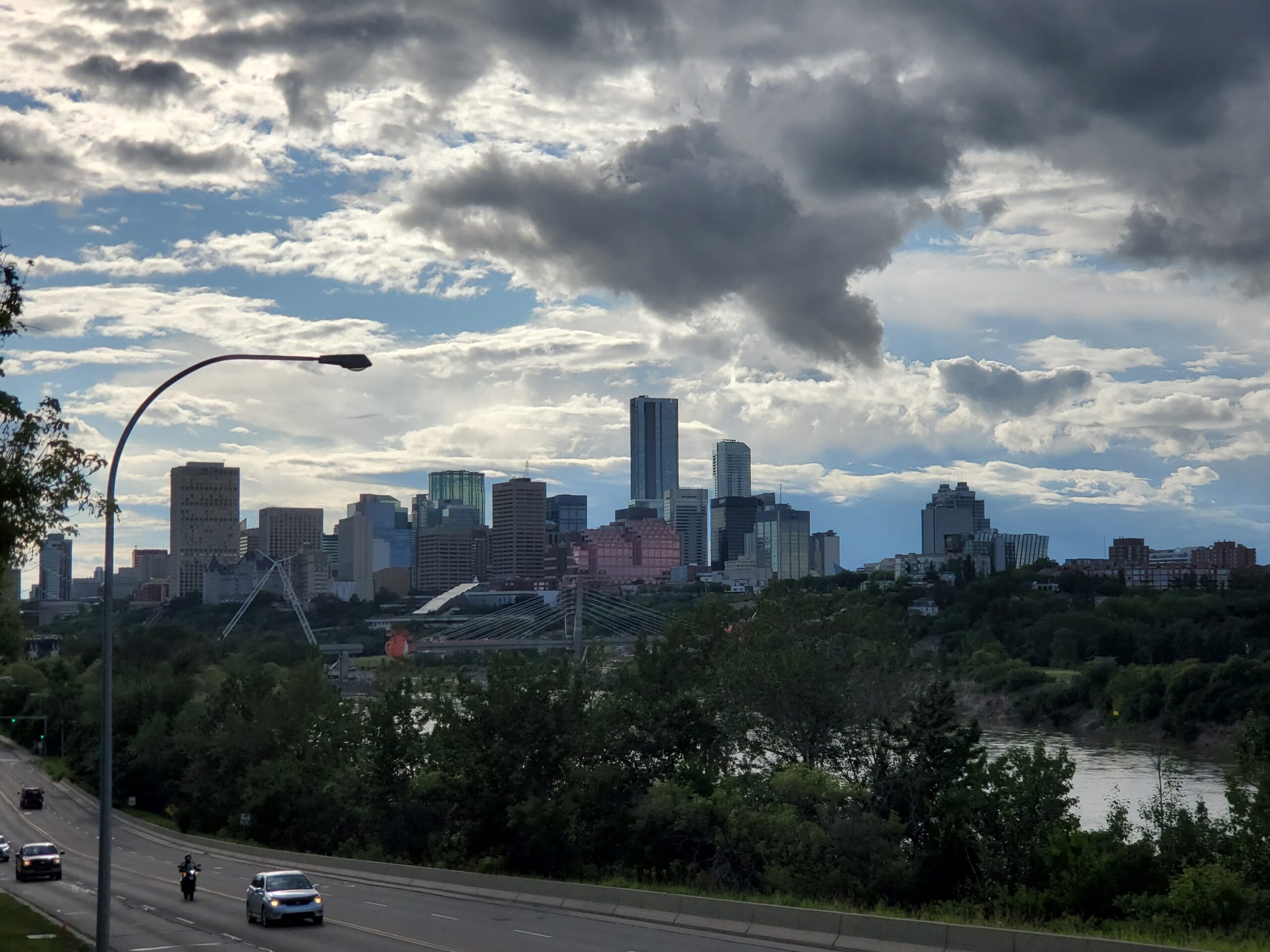
Edmonton’s year has two halves that could belong to different cities. From June to early September it is Festival City, with a river valley in full leaf, daylight past ten at night, and a calendar so dense that the Fringe, the Folk Festival and the Heritage Festival run within a fortnight of each other. From November to March it is the coldest big city in Canada, dry, bright and often below -20 °C, with a population that has decided to enjoy it. Fares follow that split more sharply than in most Canadian cities: a summer plateau with an August spike, a long cheap winter, and two shoulders that are short and, for the flight-shopper, the best value of the year. There is one wildcard, the Oilers, whose playoff runs in April, May and June can fill the city’s hotels at a moment’s notice. This guide walks through the weather month by month, the fare seasons, the events that move prices, and the airport, which is farther from the city than most.
The short answer
The best combination of weather and value is the first three weeks of June, when the valley is green, the days are at their longest and the festival season has begun but the August crowds have not, and the first half of September, when the summer weather usually holds, the aspens begin to turn and fares ease after Labour Day. The cheapest fares come in January and February outside the holiday weeks, and in November and April. The most expensive stretches are the first three weeks of August, when the Folk Festival, the Heritage Festival and the Fringe run back to back and hotel rates across the city climb, the Christmas and New Year weeks, and any Oilers playoff series, which can double downtown hotel rates on game nights with a few days’ notice. Whatever you choose, run a flexible-date search on our Edmonton flights page; a shift of a few days at either end of August can change the fare band entirely.
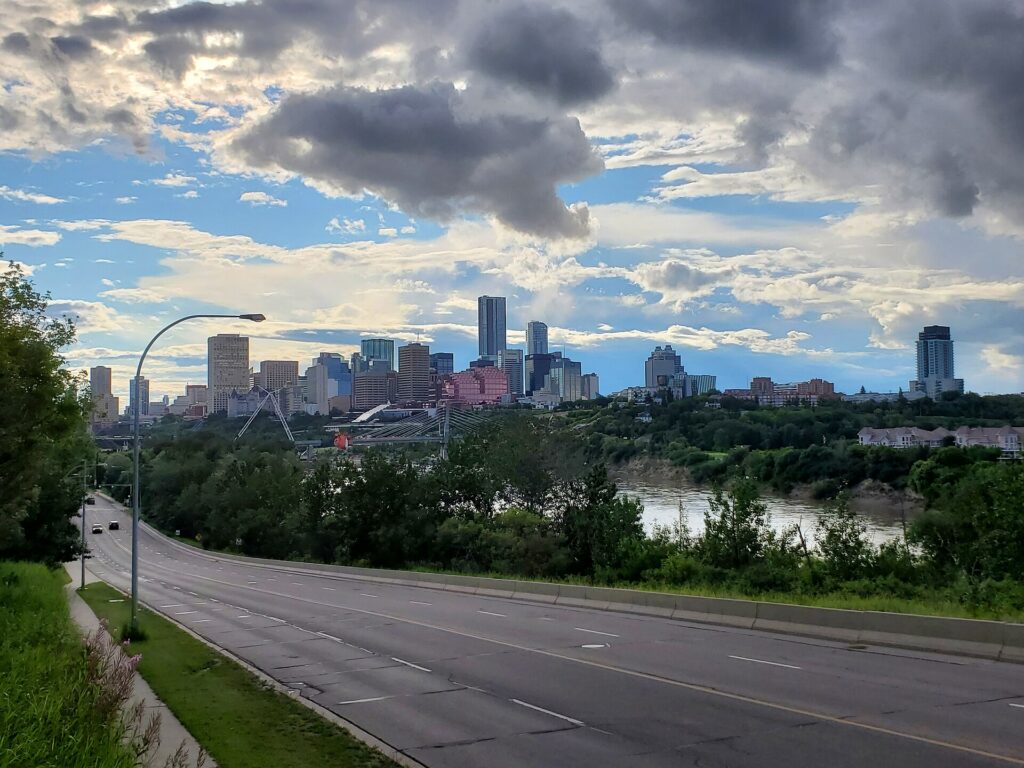
Edmonton’s weather, season by season
Edmonton sits at 53 degrees north, farther north than any other big city on the continent, and its climate is continental to the core: cold, dry winters with far more sunshine than eastern Canada’s, warm and fairly dry summers, and short transitions between. The reward for the latitude is the light, with sunset after ten in late June and a long blue dusk beyond it. The figures below are approximate seasonal patterns based on the long-term climate normals from Environment and Climate Change Canada; check the current forecast before you pack.
| Month | Typical daytime high | Typical overnight low | What it feels like | Fare pressure |
|---|---|---|---|---|
| January | around -6 °C | around -15 °C | Cold, dry, bright; cold snaps to -30 °C and below | Low after the first week |
| February | around -3 °C | around -12 °C | Similar; the light returns fast; Silver Skate Festival | Low; Family Day spike |
| March | around 3 °C | around -8 °C | Thaw and refreeze; late storms | Low; spring-break spike |
| April | around 12 °C | around -1 °C | Brown, windy, unpredictable; Oilers playoffs begin | Low, unless the Oilers are winning |
| May | around 18 °C | around 5 °C | Green arrives in the second half; snow still possible | Moderate; May long weekend and playoffs |
| June | around 21 °C | around 10 °C | Long, warm, showery; sunset after 10 p.m. | Moderate |
| July | around 24 °C | around 12 °C | Warm, dry, sunny; the warmest month; K-Days | Moderate to high |
| August | around 23 °C | around 11 °C | Warm, settled; Folk, Heritage and Fringe festivals | Peak in the first three weeks |
| September | around 17 °C | around 5 °C | Cooling fast; aspens gold in the last two weeks; frost | Moderate, falling after Labour Day |
| October | around 10 °C | around -1 °C | Crisp; first snow usually arrives | Low; Thanksgiving spike |
| November | around 0 °C | around -9 °C | Winter sets in; short days | Low |
| December | around -5 °C | around -13 °C | Cold, festive, dark by 4:30 p.m. | Low until mid-month, then a holiday rise |
Two things the table cannot show. First, Edmonton’s dryness: winter cold here is a dry cold, which is more bearable than the damp -10 °C of Toronto, and summers rarely have the humidity of the east. Second, the daylight: seventeen hours of it in late June, less than eight in late December. A June visit feels longer than the calendar says; a December one feels shorter.
How Edmonton’s fare seasons work
Three things drive seats into Edmonton: leisure demand, which follows the weather and the festivals; the energy and government economies, which fill weekday flights from Calgary, Toronto and Vancouver year-round and keep hotels busy mid-week; and the north, because Edmonton is the connecting airport for Fort McMurray, Yellowknife and the territories, which adds a steady base of traffic that does not care about the season. The result is a fare curve with a summer plateau, an August peak, a long soft winter with holiday bumps, and an Oilers wildcard.
Peak season
Late July through the third week of August, plus roughly December 18 to January 3. K-Days at the end of July starts it; the Folk Festival in the second weekend of August, the Heritage Festival on the August long weekend and the Fringe in the second half of the month keep hotels full for three weeks. Book early for any of these, and book the hotel first for the Folk Festival weekend.
Shoulder season
June to late July, and September to mid-October. June is the best-value warm month, with the longest days and the Street Performers Festival and Pride to start the season; September is quieter and cheaper, with the valley in colour. Watch the May long weekend, Labour Day and Thanksgiving.
Low season
November, and mid-January to April outside the Family Day weekend and the March spring break. Fares are at their lowest, hotel rates too, and the city’s winter festivals and the Oilers are the draw. The exception is a playoff run: if the Oilers are alive in April or May, downtown hotel rates on game nights climb steeply and flights from Canadian cities fill with travelling fans, sometimes within a day of a series being confirmed.
As elsewhere, mid-week departures and early or late flights usually price below Friday and Sunday afternoons on the same route, and a whole-month search reveals cheaper pairs of dates close to your first choice. Our guide to the best times to book explains how to read those patterns.
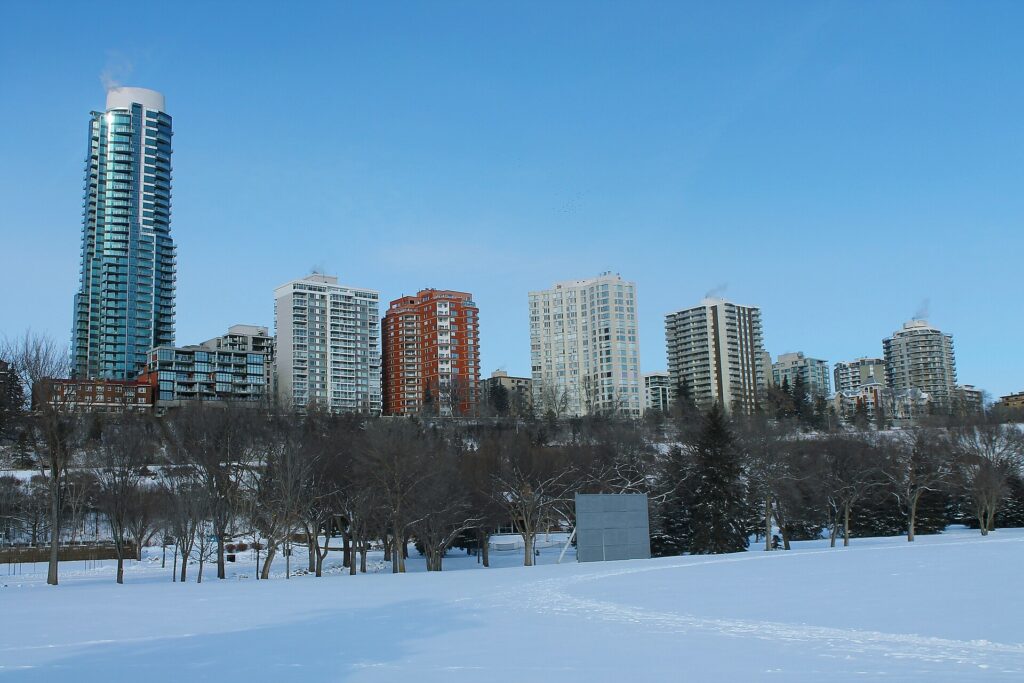
Edmonton month by month
January
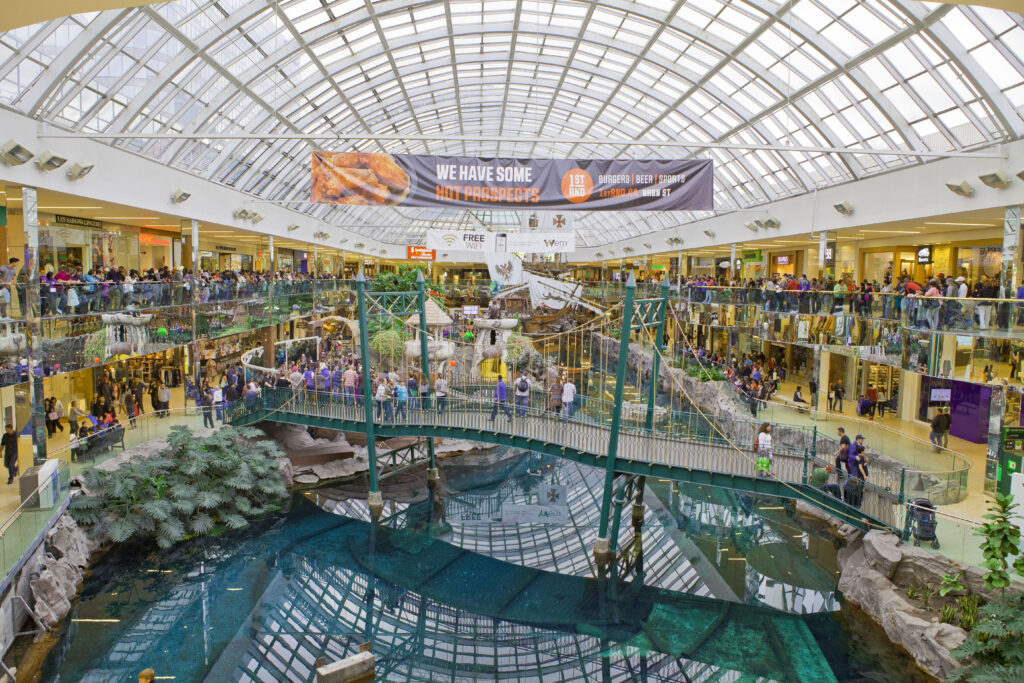
Cold, dry and bright, and, after the first week, the cheapest month of the year to fly in. The river valley trails are groomed for skiing, the Ice District is at its busiest with the Oilers, the Deep Freeze festival on Alberta Avenue and the Flying Canoë Volant light festival in the Mill Creek ravine give the city its winter colour, and the mall’s waterpark is the family fallback. Dress for -25 °C and it is a fine, cheap trip.
February
Similar weather with noticeably more daylight. The Silver Skate Festival in Hawrelak Park is the city’s main winter event, and the Family Day long weekend on the third Monday is the one date when fares from other Canadian cities rise. Otherwise a low-fare month.
March
Thaw and refreeze, with late snowstorms most years. The mid-to-late March spring break lifts fares for a fortnight; the rest of the month is cheap and unglamorous.
April
Brown, windy and unpredictable, the least rewarding month for scenery and one of the cheapest, with one large exception: the NHL playoffs begin in mid-April, and in a year when the Oilers go deep, the city transforms and hotel rates with it. If the team is in contention, book early or plan around game nights.
May
Green arrives in the second half of the month, the farmers’ markets move outdoors, and the patios open on Whyte. The May long weekend (the Monday before May 25) is the traditional start of the camping season and a busy travel weekend, and a continuing playoff run keeps downtown tight. Early May is the value play.
June
The best-value warm month: the valley is green, the days run past ten at night, the Street Performers Festival and Pride open the festival season, and fares are moderate. The Oilers’ season ends, with a Stanley Cup Final in mid-June if the year is a good one.
July
Warm, dry and sunny, the warmest month of the year, with Taste of Edmonton, the Street Performers, the Freewill Shakespeare Festival in Hawrelak Park and, in the last ten days, K-Days, the summer fair. Fares step up through the month toward August.
August
Peak. The Folk Music Festival on the second weekend, the Heritage Festival over the August long weekend, and the Fringe in the second half fill the city, and the hotels in Old Strathcona and downtown sell out around them. The last week of August, once the Fringe closes, is a small pocket of relief before September. If you are coming for the festivals, book the hotel first; the Edmonton hotel search shows what is left.
September
Cooling fast but often lovely, with the aspens gold in the valley in the last two weeks, the Kaleido festival on Alberta Avenue, the film festival, and the Oilers and Elks both in season. Fares ease after Labour Day, and mid-September is one of the best-value windows of the year.
October
Crisp, with the first lasting snow usually by the end of the month. Fares are low apart from the Thanksgiving weekend on the second Monday, and Jasper’s Dark Sky Festival in the middle of the month is a reason to combine the city with the mountains.
November
Winter sets in, the days shorten, and fares and hotel rates are at their annual low. The Canadian Finals Rodeo, when it is in the city, and the Oilers are the draw; the Legislature’s lights switch on at the start of December.
December
Two months in one. The first half continues November’s pricing with the holiday lights on the Legislature grounds and in the Ice District; the last two weeks bring the holiday rise as students and families move, and the northern connections fill with workers heading home.
Events that move Edmonton flight and hotel prices
Cross-check these against your dates before you book. Exact dates shift each year; Explore Edmonton keeps the current calendar.
- Family Day weekend (third Monday of February).
- Spring break (mid-to-late March).
- Oilers playoff series (mid-April to mid-June in a good year): the single most unpredictable hotel spike in the city.
- May long weekend (Monday before May 25).
- K-Days (late July).
- Edmonton Folk Music Festival (second weekend of August).
- Heritage Festival (August long weekend).
- Edmonton International Fringe Theatre Festival (second half of August).
- Labour Day and the university move-in (first week of September).
- Thanksgiving (second Monday of October).
- Christmas to New Year.
- Stadium concerts at Commonwealth Stadium and arena shows at Rogers Place; our Edmonton events page shows what is on sale for your dates.
Getting in from the airport
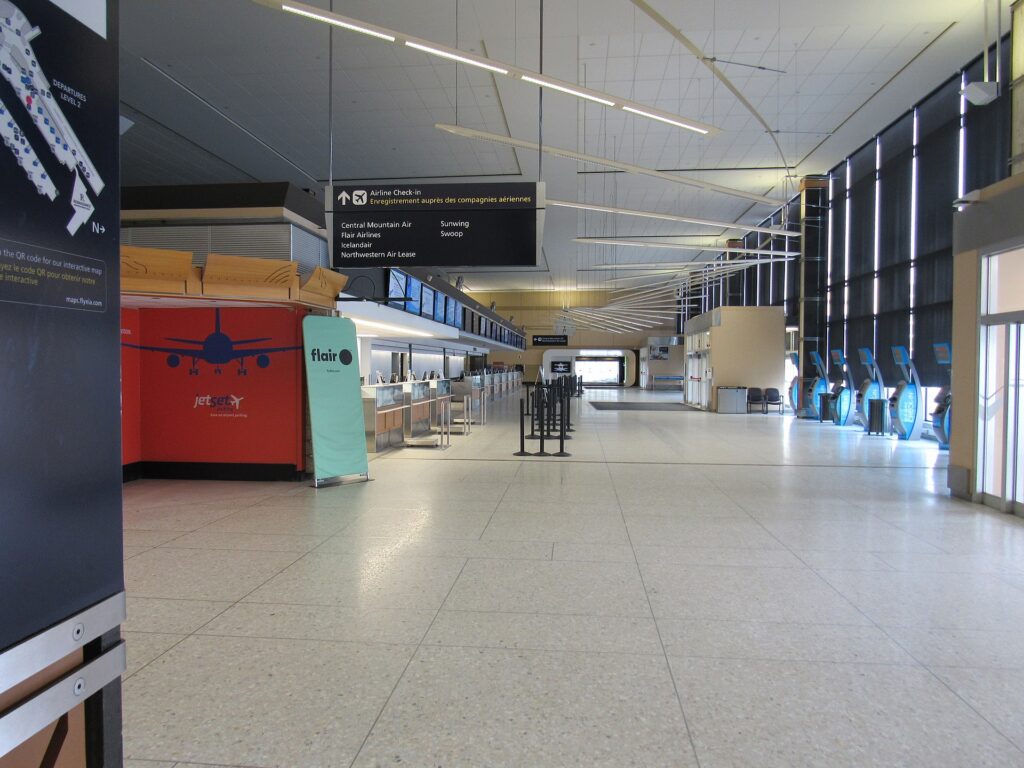
Edmonton has one commercial airport, Edmonton International (YEG), about 30 kilometres south of downtown beside Leduc, which makes it one of the more distant airports of any Canadian city. It has a single terminal, nonstop flights from most Canadian cities and several U.S. hubs, seasonal European and sun-destination service, and heavy traffic to the north. Getting downtown takes planning: a taxi or ride-hail takes 30 to 45 minutes and is priced for the distance; the airport’s public bus route runs to the Century Park LRT station on the south side, from which the train reaches downtown in about 25 minutes; private shuttles serve the hotels; and every major rental company is in the terminal. For a group, or with luggage, the rental is often the cheapest way into the city and the natural choice if Jasper or Elk Island is in the plan. Our YEG airport guide covers the layout, and our car-versus-transit guide works through whether you need one.
Timing tricks that work for Edmonton
- Search the whole month. The August festivals create a three-week plateau with sharp edges: late July and the last days of August are noticeably cheaper. A calendar search on TicketScanner shows the edges instantly.
- Check the Oilers’ schedule. A home playoff game can make downtown hotels unaffordable for a night; shift by a day, stay in Old Strathcona or the west end, or embrace it and get a ticket. Our Edmonton events page lists what is on sale.
- Book the hotel first for the Folk Festival. Rooms near Gallagher Park disappear before fares rise; run an Edmonton hotel search before you commit to the flight.
- Price Calgary too. Calgary’s airport is three hours south on a divided highway, often has better fares, especially from overseas, and a one-way rental between the two cities is a classic Alberta itinerary. Compare Calgary flights against Edmonton’s, and see our Calgary to Edmonton route guide.
- Fly mid-week. Edmonton’s business and northern traffic makes Monday morning and Friday afternoon the busiest and priciest flights on the Calgary, Vancouver and Toronto routes; Tuesday to Thursday is the value.
- Think of June as August without the crowds. The valley is green, the light is longer, and the city is cheaper.
- Build a winter buffer. Extreme cold and snow can disrupt YEG between November and March, and the drive from the airport is long; avoid the tightest connections. Our guide to how early to arrive covers what to allow.
- Flying out of Edmonton instead? The same seasonality applies in reverse; see cheap flights from Edmonton.
Edmonton or Calgary: choosing your gateway
Alberta has two big airports three hours apart on a divided highway, and for many trips it is worth pricing both. Calgary has more nonstop routes, especially from the United States and Europe, and its fares from overseas are frequently lower; Edmonton has the shorter drive to Jasper, the direct connections to the north, and, for a city-focused trip, the cheaper hotels once you land. The classic way to use both is a one-way rental: fly into whichever is cheaper, drive the Icefields Parkway between Jasper and Lake Louise in the middle of the trip, and fly home from the other, which most rental companies allow for a modest drop fee. Compare Calgary flights against Edmonton’s for your dates, and read our Calgary to Edmonton route guide for the drive between them. For a trip that is only Edmonton, the difference between the two airports rarely justifies the three hours on Highway 2, except in the August festival weeks or during a playoff run, when Edmonton’s own fares are at their highest and Calgary’s may not be.
How far ahead to book
Edmonton rewards early booking for its August peak and its holiday weeks and patience for everything else. For the Folk Festival, the Heritage Festival and the Fringe, both flights and hotels tend only to rise as the dates approach, and Old Strathcona’s rooms sell out weeks ahead, so book as soon as your dates are fixed, with the hotel first. For June, July and September, a few weeks out is usually enough for the flight and hotel rates are stable. For the low season, from October through April, fares are low and flat, last-minute deals are common on the Calgary, Vancouver and Toronto routes, and the only reason to book early is to lock in a particular non-stop time. The exception is playoff hockey, which nobody can plan around: if the Oilers advance, everyone books at once, and the traveller who moves the same day the series is confirmed gets the room. In every season, a whole-month search on our Edmonton flights page will show you the cheap dates near your own.
What to pack, by season
Winter (November to March): a genuinely warm coat rated for -25 °C or colder, a hat, insulated gloves, a scarf or neck warmer, boots with grip and insulation, and layers; the dry cold is more bearable than it sounds but it is not forgiving of underdressing. Spring (April to May): layers, a windproof shell, and be ready for snow into May. Summer (June to August): light clothing, sun protection, a warm layer for the cool evenings, an eye mask if the late light bothers you, and rain gear for the June showers. Fall (September to October): layers, a warm jacket by October, and walking shoes for the valley trails.
The best time to fly to Edmonton for…
The festivals
The first three weeks of August, booked early with the hotel first; the Folk Festival’s tickets sell out in hours when they go on sale in the spring.
The Oilers
October to April for regular-season games; April to June, at short notice and high prices, for the playoffs.
Jasper and the northern Rockies
Late June to mid-September for hiking, with the Dark Sky Festival in October and the ski season at Marmot Basin from November to April; the Icefields Parkway is at its best from July to September.
The lowest fares
November, January and February outside the holiday weeks, and April if the Oilers are out of contention.
Families
Late June or the last week of August, when the valley and Fort Edmonton are at their best and the festival hotels have eased; in winter, the mall’s waterpark and the valley’s skating make January a cheap and workable option.
Cross-border and international visitors
U.S. citizens need a valid passport; most other visa-exempt travellers arriving by air need an Electronic Travel Authorization. The Government of Canada’s visitor page explains what applies to you, and CATSA lists what you can carry through security.
Frequently asked questions
What is the cheapest month to fly to Edmonton?
November and January are consistently the lowest, with February, early March and April close behind outside the holiday weekends and any Oilers playoff run.
What is the best month to visit Edmonton?
August for the festivals, June for weather and value, September for the fall colour in the valley. For a winter visit, February has the most light and the Silver Skate Festival.
How cold does Edmonton get?
Winter highs are around -5 °C and lows around -15 °C on an average day, with cold snaps to -30 °C or below most winters. It is a dry cold, and the sun is out most days.
Should I fly into Edmonton or Calgary?
Edmonton for the city itself, Jasper and the north; Calgary for Banff and often for the cheaper fare from overseas. The three-hour drive between them makes a one-way rental an easy way to do both.
How far is the airport from downtown?
About 30 kilometres, 30 to 45 minutes by taxi, or bus plus LRT in about an hour. Factor the transfer into a short trip.
How far ahead should I book?
Earlier for the August festivals and the Christmas weeks, when fares only rise; for the low season, fares are stable and finding the right dates matters more. Playoff travel is booked at short notice by everyone, so move quickly when a series is confirmed.
Ready to pick your dates? Compare fares across the whole month on our Edmonton flights page, then find a room with our Edmonton hotel search. For what to do when you land, start with our first-timer’s guide to Edmonton.
Keep planning with TicketScanner
- Cheap flights to Edmonton — compare fares across the whole month
- Edmonton hotels — book early for the August festivals
- Edmonton car rentals — for Jasper and Elk Island
- Events in Edmonton — Oilers, Elks, concerts and shows on sale
- Things to do in Edmonton: a first-timer's guide
- Edmonton: rent a car or use transit?
- Edmonton International (YEG) airport guide
- Cheap flights to Calgary — three hours south, often cheaper
- Best times to book flights and hotels
Leave a Reply