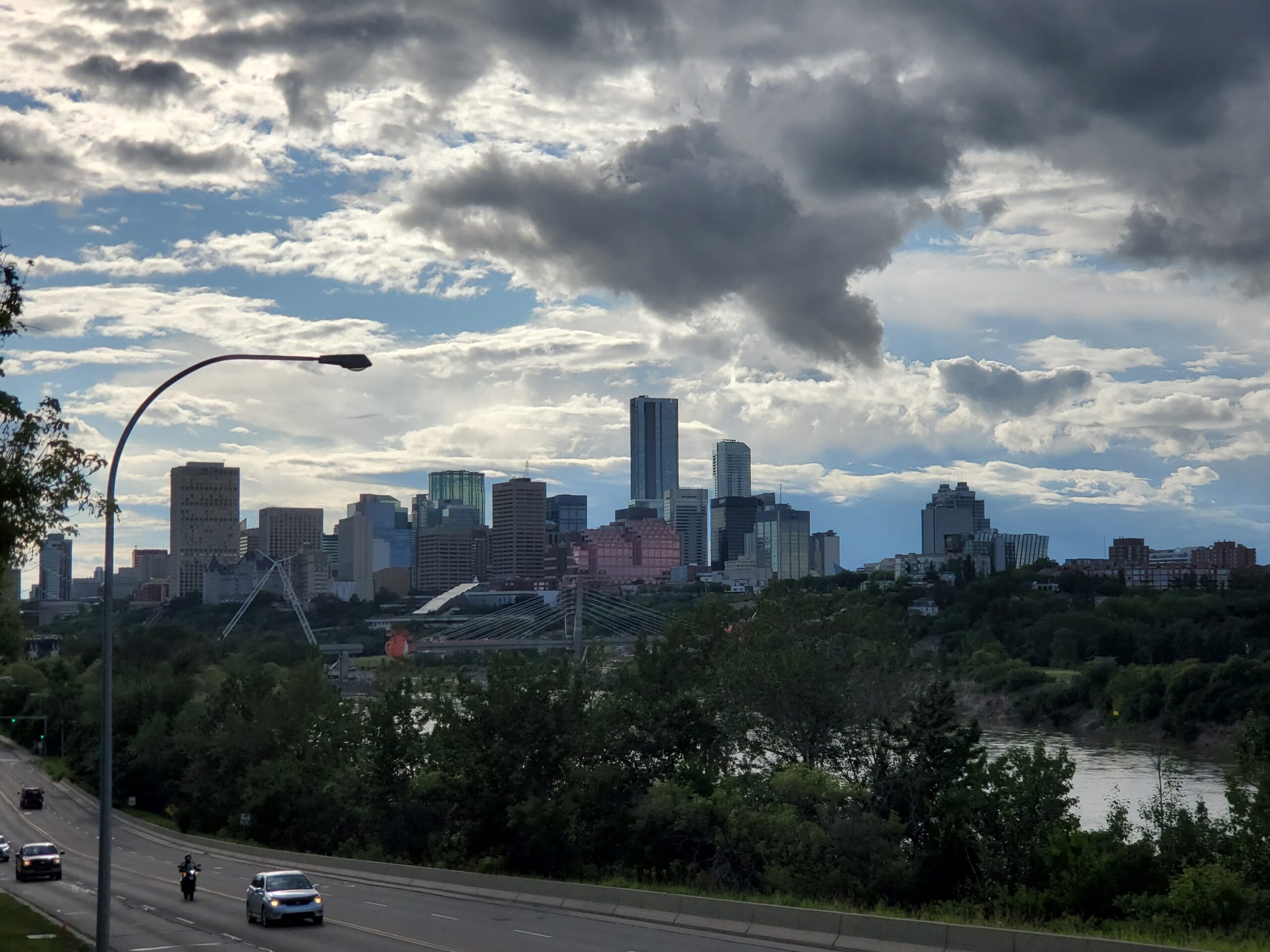
Tag: Edmonton

  • Edmonton: Should You Rent a Car or Rely on Public Transit?

    Edmonton: Should You Rent a Car or Rely on Public Transit?

    Edmonton is a car city that has been building its way toward being something else. It is enormous by area, spread across the prairie on both sides of a deep river valley, with an airport thirty kilometres from downtown and a mall in the west end that is one of its biggest attractions; most of its residents drive, and most visitors assume they will too. But the last decade has changed the picture for a visitor with a downtown or Old Strathcona base: the LRT now links the airport bus, the university, downtown, the Ice District and the southeast at street level, the two central neighbourhoods are walkable and connected by the river valley trails, and parking downtown on a game night is enough to make anyone reconsider. So the answer depends on which Edmonton you are visiting. This guide explains how the city is laid out, how transit and fares work, the airport transfer, what driving and parking are really like in every season, when a car is worth it, and gives you a straightforward way to decide.

    The short answer

    Rent a car if Jasper, Elk Island, the Ukrainian Village, the lakes, a drive to Calgary or the north is on the itinerary, if you are staying in the suburbs or with family, if West Edmonton Mall is a major part of the plan, or if you are visiting in deep winter with young children. That is a large share of visitors. Skip the car if you are staying downtown, in the Ice District or in Old Strathcona for a city break, an Oilers game, a conference or the August festivals, and your plans are the museums, the Legislature, Whyte Avenue and the river valley; the LRT, your feet and the occasional ride-hail will cover that, and you avoid downtown parking and the long airport drive. For many first-timers, the hybrid is right: car-free in the city, a one- or two-day rental picked up downtown for Elk Island and the mall. Compare rental rates for any of these plans on our Edmonton car rental page.

    How Edmonton is laid out

    Edmonton is a numbered grid on the prairie, split diagonally by the North Saskatchewan River valley, with avenues running east-west and streets north-south from a centre point near the old town; 100 Street and 100 Avenue meet downtown, and the numbers climb outward. Downtown sits on the north bank of the river, with the Ice District and Rogers Place on its northern edge, Churchill Square and the museums in its middle, the Legislature on its southwestern corner above the valley, and Jasper Avenue running through it. Across the High Level Bridge to the south are the university and Old Strathcona, with Whyte Avenue (82 Avenue) as its main street. The west end holds 124 Street, the mall and the Telus World of Science; the north holds Commonwealth Stadium and Alberta Avenue; the southeast holds Mill Woods and the Valley Line; and the city then continues for kilometres in every direction. The inner core is compact and walkable; everything beyond it assumes a car or a long bus ride.

    Hotels cluster downtown and in the Ice District, in Old Strathcona and near the university, along the west end near the mall, and on the south side along Gateway Boulevard for value. Most Edmonton hotels outside the downtown core include parking, which changes the arithmetic. Our Edmonton hotel search lets you compare them.

    Getting in from the airport

    Edmonton International (YEG) is about 30 kilometres south of downtown beside Leduc, and the transfer is the first transport decision of the trip. A taxi or ride-hail takes 30 to 45 minutes and is priced for the distance; for one person it is the single most expensive thing about a car-free Edmonton visit. The airport’s public bus, Route 747, runs to Century Park LRT station on the south side of the city, from which the Capital Line reaches the university and downtown in about 25 minutes, for a modest combined fare; it is the cheap option and takes about an hour. Hotel shuttles serve the airport-area and some downtown hotels. And every major rental company is in the terminal, with the divided Queen Elizabeth II Highway running straight from the airport to the city’s southern edge in about half an hour. For two or more people, or with luggage, a rental picked up at the airport is often cheaper than two taxi rides, and it is the obvious choice if the trip includes Jasper or Elk Island. Check the airport’s site and Edmonton Transit for current service; our YEG airport guide covers the layout.
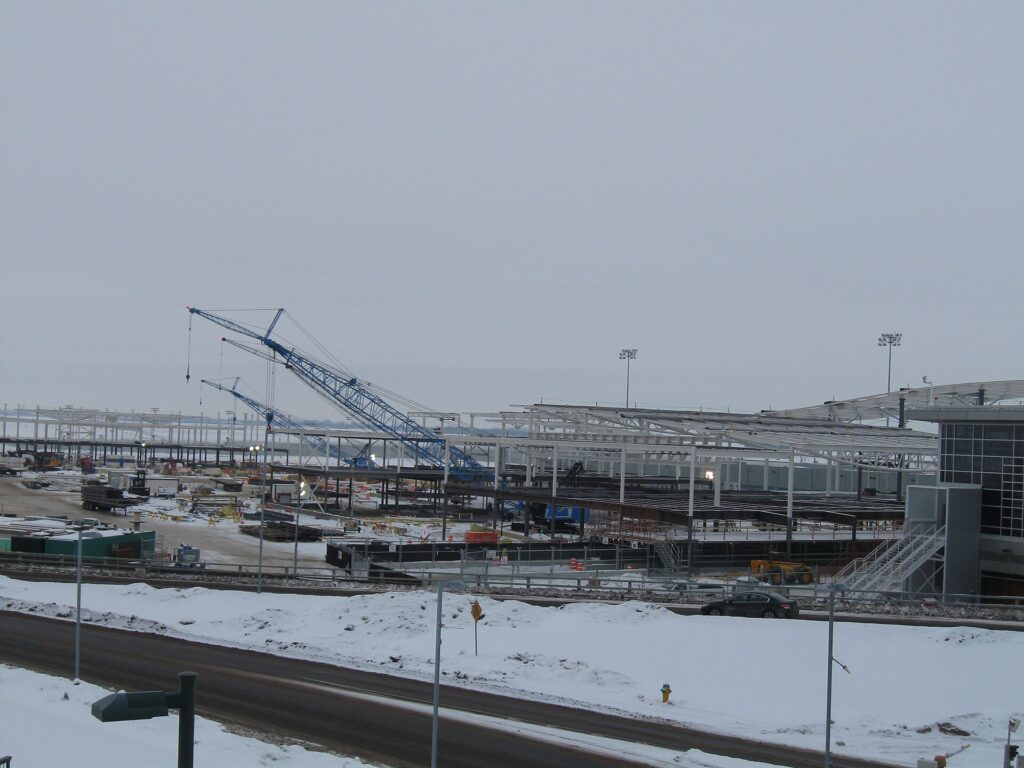
    The terminal at Edmonton International Airport (YEG)
    Edmonton International, 30 kilometres from downtown: the transfer is the first transport decision of the trip (Photo: Ohyeh via Wikimedia Commons, CC BY-SA 3.0)

    Edmonton’s transit, explained

    Edmonton Transit Service runs the LRT and the bus network. It is clean and generally reliable, and for a visitor based downtown or in Old Strathcona it covers the core well; its limitation, as in Calgary, is coverage of the outer city and the evening frequencies on the buses.

    The LRT

    Three lines. The Capital Line runs from Clareview in the northeast, past Commonwealth Stadium, through downtown in a tunnel with stations at Churchill (for the museums and city hall), Central and Bay/Enterprise, then south across the river to the University, Southgate mall and Century Park, where the airport bus connects. The Metro Line shares the downtown tunnel and runs northwest past the Royal Alexandra Hospital and MacEwan University toward the north. The Valley Line, the newest, runs at street level from downtown at Churchill and 102 Street, across a new bridge over the river valley past the Muttart Conservatory and Bonnie Doon, and southeast to Mill Woods, with a western extension under construction toward the mall. For a visitor, the Capital Line is the workhorse: it links the stadium, downtown and the university in fifteen minutes, and the Old Strathcona strip is a ten-minute walk from University station. Rogers Place is beside MacEwan station on the Metro Line and a short walk from Churchill. Trains run from early morning until after midnight.

    Buses

    Buses fill in the rest: the Route 747 airport service, the routes to the mall and the west end, Fort Edmonton Park, the Telus World of Science, Whyte Avenue’s own crosstown route, and the neighbourhoods off the rail lines. Frequencies drop in the evenings and on weekends outside the core routes; check times before relying on a bus for a late return, and use ride-hail for the last leg if in doubt.

    Fares and tickets

    Edmonton uses the Arc card, the regional smart card, which you can buy at LRT stations and load with value; you can also tap a contactless credit or debit card or phone wallet directly on the validators at stations and on buses. A fare gives you 90 minutes of transfers across the LRT and buses, and daily fare caps apply so that you never pay more than a day pass. Children twelve and under ride free. The airport bus charges a premium fare. Check Edmonton Transit’s site for current prices.

    Accessibility

    Every LRT station is step-free, and every bus is low-floor and accessible.
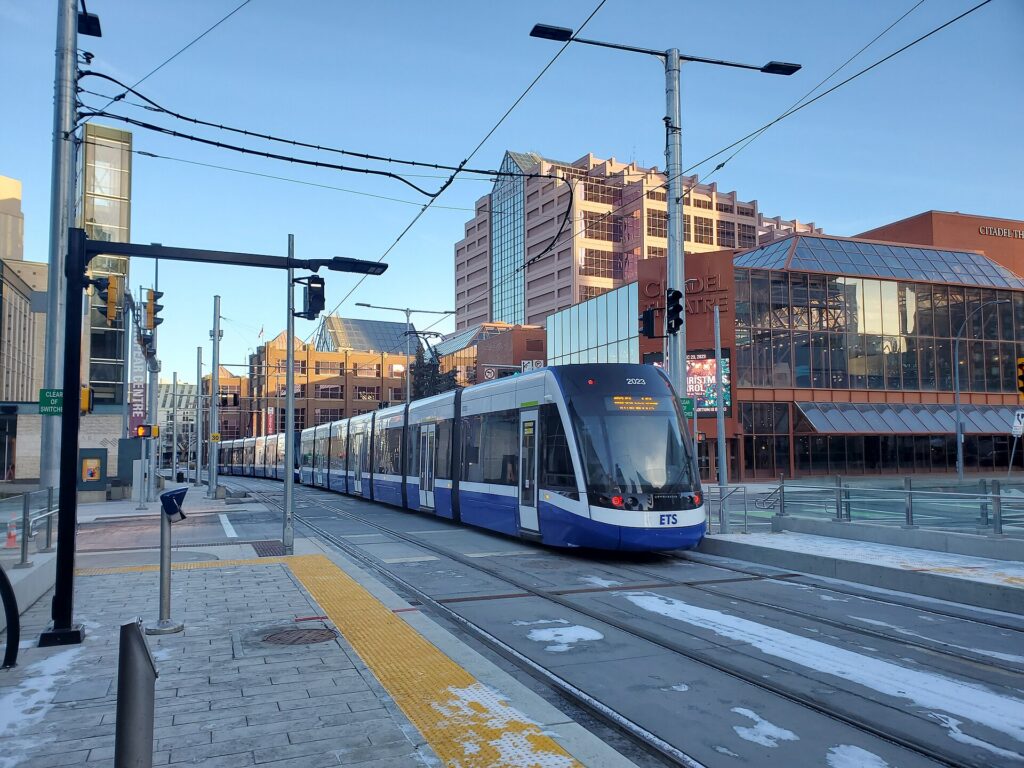
    A Valley Line LRT train departing Churchill stop in downtown Edmonton
    The Valley Line at Churchill stop: Edmonton's newest LRT line runs at street level through downtown (Photo: Matthew Boonstra via Wikimedia Commons, CC BY-SA 4.0)

    Beyond Edmonton Transit

    • Walking. Downtown is compact; the Legislature to the Ice District is twenty minutes; the High Level Bridge takes you from downtown to the university and Old Strathcona in half an hour on foot, and the pedestrian path on the bridge has the best view in the city.
    • Bikes and the valley trails. The river valley’s 160 kilometres of trails connect nearly every sight a visitor wants, from the Legislature to Fort Edmonton and from the Muttart to Hawrelak Park. Bike-share e-bikes and scooters operate in the warmer months, and rental shops downtown and near Whyte hire by the day. The funicular at 100 Street drops you into the valley from downtown without the climb.
    • The High Level Bridge Streetcar. A heritage tram runs across the top deck of the High Level Bridge between downtown and Old Strathcona on summer days; it is transport, a sight and the best photo in the city for a small fare.
    • Taxis and ride-hail. Uber and licensed taxis cover the city; for a group, a short ride to the mall or 124 Street is competitive with transit fares and far quicker.
    • Intercity. Buses connect Edmonton with Calgary, Red Deer, Jasper and the north from the downtown terminal; the Calgary route is frequent and cheap and competitive with a one-way rental for a solo traveller.

    Driving in Edmonton and beyond: what it is really like

    Edmonton is an easy city to drive in by the standards of the big eastern cities: wide roads, a logical grid, plentiful and often free parking outside the core, and drivers who are calm. The frustrations are specific. The Anthony Henday ring road and the Whitemud and Yellowhead freeways jam in the weekday peaks and after any crash; the river crossings are the pinch points, with the High Level, Walterdale and Groat bridges backing up at rush hour; construction season runs from May to October and the Valley Line’s western extension has closed lanes in the west end for years; and Whyte Avenue on a weekend night is a slow crawl with nowhere to park. And winter is the real difference. Snow stays on the ground from November to March, the side streets rut and narrow between snowbanks, black ice on the bridges is routine, and extreme cold, -30 °C and below, is a normal occurrence that a rental car needs to be ready for.

    Parking

    Downtown parking is the one place Edmonton is genuinely expensive. The Ice District’s garages are priced for game nights, when the streets around Rogers Place fill hours before the puck drops; the office-tower lots and hotel garages charge nightly fees comparable to Calgary’s; and street parking downtown is metered by the EPark system, which uses licence plates and an app or a machine, and is free in the evenings and on Sundays and holidays. Outside the core, parking is easy and usually free: the museums, Fort Edmonton, the Legislature grounds, the mall, the parks and the Valley Zoo all have lots, and most hotels outside downtown include parking in the rate, which is a genuine saving compared with Toronto or Vancouver. Whyte Avenue is the exception in the south: the strip itself is tight, but the side streets and the market lot are workable except on weekend evenings and during the Fringe.

    Rules and conditions worth knowing

    • Winter tires are not required by law in Alberta, and rental cars usually come on all-seasons. For the city, in a normal winter, that is manageable with care. For the Yellowhead to Jasper or any highway between November and April, ask for winter tires when you book. Alberta 511 publishes road conditions and closures.
    • Extreme cold. Below about -25 °C, cars struggle to start and tire pressure drops. Rentals are generally in good condition, but park in a garage on the coldest nights if you can, and keep the tank above half full.
    • Block heaters. Edmonton’s parking lots have electrical outlets for a reason. A rental will usually have a block-heater cord; ask at the counter how to use it if the forecast is severe.
    • Photo radar is widespread across the city, including automated speed and intersection cameras; fines follow the car and the rental company will bill you.
    • Right turns on red are permitted after a full stop unless signed otherwise.
    • Wildlife on the highways. Deer are common on the Yellowhead and Highway 2 at dawn and dusk; moose are a genuine hazard on the road to Jasper and in the north. Slow down at those hours.
    • Park passes. Elk Island and Jasper both need a Parks Canada pass per vehicle, sold online and at the gates.
    • Fuel is cheaper in Alberta than in most of Canada.
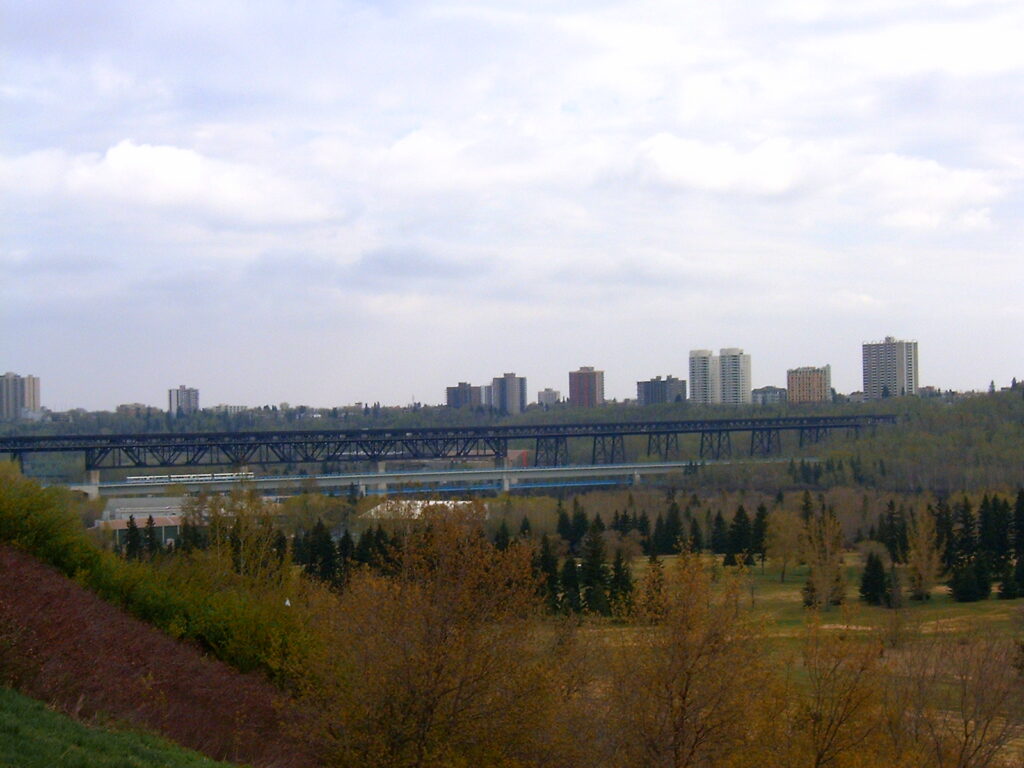
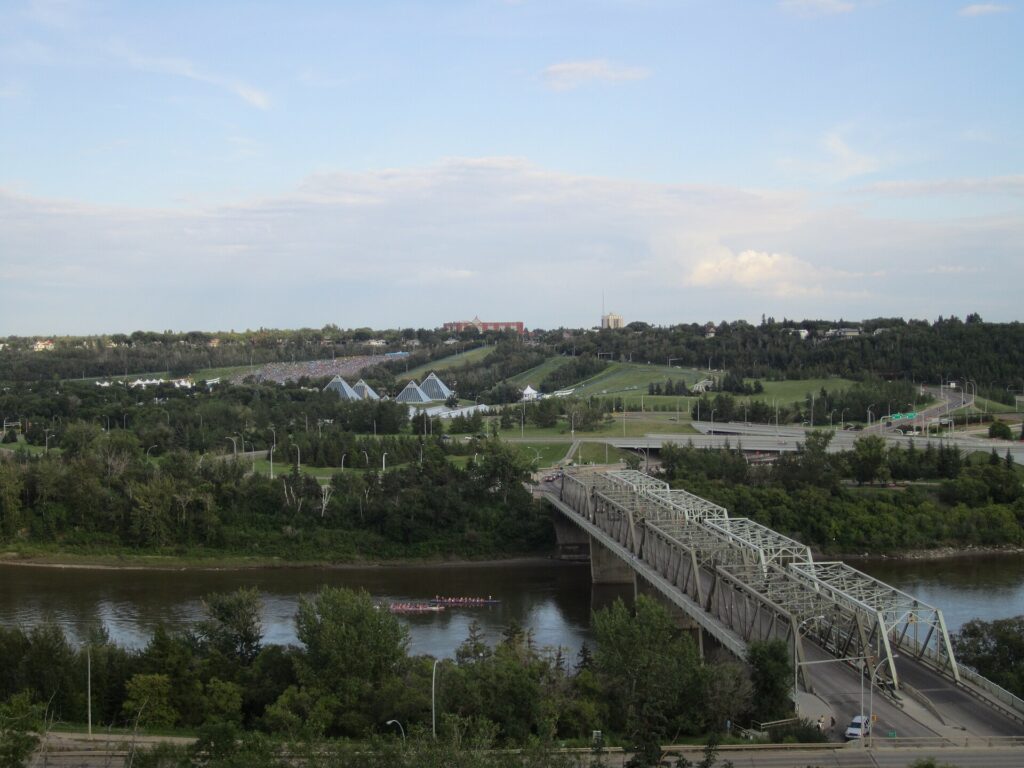
    The High Level Bridge over the North Saskatchewan River in Edmonton
    The High Level Bridge links downtown to Old Strathcona and the university: a walk, a bike ride or a summer streetcar (Photo: Glenlarson at English Wikipedia via Wikimedia Commons, Public domain)

    When renting a car makes sense

    • Jasper and the northern Rockies. Four hours west on the Yellowhead; the drive is the point, the trailheads are spread out, and the Icefields Parkway continues south to Lake Louise for a return via Calgary.
    • Elk Island National Park, forty minutes east, with the bison herds and the dark-sky preserve, has no transit.
    • The Ukrainian Cultural Heritage Village, on the same road as Elk Island.
    • West Edmonton Mall and the west end, if it is a major part of the plan; the bus works, but with children and a waterpark day, a car is easier.
    • Fort Edmonton Park and the Valley Zoo, which are reachable by bus but awkward.
    • Family in the suburbs. Edmonton’s suburbs are on transit but spread out; a car earns its keep daily.
    • Deep winter with young children. A car, a hotel with parking and a plugged-in block heater make the whole trip simpler.
    • Alberta road trips. Calgary via Highway 2 and Drumheller, the lakes, or the north; our Calgary to Edmonton route guide covers the first of those, and our Calgary transit guide the other end.

    If any of those apply, our rental car booking tips cover insurance, deposits and the questions to ask at the counter.

    When it does not

    • You are staying downtown or in Old Strathcona and your plans are the city.
    • You are in town for an Oilers game, a concert at Rogers Place or a conference in the Ice District, when parking is at its worst and the LRT stops at the door.
    • You are coming for the Fringe or the Folk Festival, when Old Strathcona and Gallagher Park are pedestrian zones in all but name and the LRT and the valley trails are the way in.
    • You are travelling solo and the rental, insurance and downtown parking add up to more than the airport bus, a few transit fares and a ride-hail or two.

    The hybrid plan

    Go car-free for the city days and rent for the day trips, and think about where you pick up. If Jasper is in the plan, rent at the airport on arrival or on the way out and skip the city drive; the Yellowhead west is reached from the ring road without touching downtown. If Elk Island and the mall are the goal, pick up downtown or on the south side on the morning you need it, avoid the airport concession fees, and return it the same evening or at the airport on the way home, which most companies allow within the city at little or no extra charge. Ask for winter tires from November to April. Compare the day rates on our Edmonton car rental page against a full-trip rental and the difference is usually obvious.

    A worked cost comparison

    Numbers change with the season and the booking window, so treat this as a method rather than a quote, and check current rates before deciding. For a three-night city break downtown for two people, the car-free version costs the airport bus and LRT each way, a couple of day passes, and two or three short ride-hails to 124 Street or Whyte; the rental version adds three days of a compact car, three nights of downtown hotel parking, fuel and the airport concession fees, and buys you the mall and Fort Edmonton in exchange. If those two are on the list, the rental is close to break-even; if they are not, transit wins clearly. For the same three nights plus Elk Island, a one-day rental from downtown plus the park pass and fuel is cheap and turns a logistical problem into a forty-minute drive; the hybrid wins. For a week with Jasper, a rental for the whole stay from the airport is the only practical answer, and it is still cheaper than two taxis plus a mid-trip pickup. Run the rates for your dates and put them beside the transit fares before you choose.
    The Yellowhead Highway approaching the Rockies in Jasper National Park
    The Yellowhead Highway into Jasper, four hours west of Edmonton and the main reason to rent for the whole trip (Photo: Benfwilliamson via Wikimedia Commons, CC0)

    Driving to Jasper in each season

    The Yellowhead Highway (Highway 16) west from Edmonton to Jasper is four hours of divided highway across the parkland to Hinton, then two-lane road into the mountains and the park gate. In summer, it is an easy, beautiful drive, with the only problems being traffic through the townsite and full parking lots at Maligne Lake and the Athabasca Falls by mid-morning; leave early. In fall, the larches and aspens turn in late September, the Dark Sky Festival in October fills the town, and the first snow can arrive in the mountains while Edmonton is still mild. In winter, the highway is plowed and generally open, but the section west of Hinton ices and drifts, wildlife is on the road at dusk, daylight is short, and a rental without winter tires is not the vehicle for it; check Alberta 511 before leaving and carry a full tank, warm clothes and a charged phone. Marmot Basin’s ski season and the frozen Maligne Canyon icewalk are the reasons to make the drive in the cold. In spring, the road is wet, the trails above the valley are still snowbound into June, and the animals, including bears, are on the move. In every season, the last hour, as the mountains rise out of the foothills, is one of the reasons people fly to Edmonton in the first place.

    Decision table

    Your tripRecommendationWhy
    City break downtown or in Old Strathcona, couple or soloNo carThe LRT and the valley trails cover it; downtown parking is expensive
    Oilers game, arena concert or conferenceNo carThe LRT stops at the door; game-night parking is the worst in the city
    Fringe or Folk Festival weekNo carOld Strathcona and Gallagher Park are best reached on foot or by LRT
    City plus Elk Island or the mallHybrid: one-day rental from downtownCar-free city days, a car for the day trips
    Jasper, several daysRent at the airport for the whole tripThe Yellowhead starts at the ring road; the park needs a car
    Family visit to the suburbsRent for the whole staySuburban distances make the car worthwhile daily
    Deep winter with childrenRent, with winter tires, at a hotel with parkingCold, gear and the mall all argue for a car
    Alberta road tripRent (consider one-way to Calgary)Edmonton is the start, not the destination

    Money-saving tips for both options

    • On transit: take the Route 747 bus and the LRT from the airport rather than a taxi; tap a credit card and let the daily fare cap work for you; children twelve and under are free; ride the summer streetcar over the High Level Bridge for the price of a coffee.
    • On a rental: compare airport and downtown pickup, book early for the August festivals and the ski weeks, ask for winter tires in the cold months, decline extras you already have through a credit card or home policy (check first), plug in the block heater on the coldest nights, and buy the park pass online before you reach the gates.
    • On the hotel: if you are renting, choose a hotel outside the core that includes parking; if you are not, stay on the Capital Line and ride in.
    • On timing: avoid the river crossings and the ring road in the weekday peaks, the Ice District in the two hours before a game, and Whyte Avenue on weekend nights; the best time to fly to Edmonton guide lists the busiest weekends.
    • On the day trips: for one or two people, an intercity bus to Jasper or Calgary can beat a rental if you do not need a car at the other end.

    Frequently asked questions

    Is it worth renting a car in Edmonton?

    For Jasper, Elk Island, the suburbs, the mall or a road trip, yes, and that covers many visitors. For a downtown or Old Strathcona city break, an Oilers game or the festivals, no; the LRT and your feet are enough.

    Is Edmonton public transit good for tourists?

    Good within the core: three LRT lines link the stadium, downtown, the Ice District, the university and the southeast, and an airport bus connects at Century Park. It thins out quickly beyond that and does not reach the mall by rail yet.

    How do I get from Edmonton airport to downtown?

    The Route 747 bus to Century Park LRT station and the train downtown, in about an hour; a taxi or ride-hail in 30 to 45 minutes; a hotel shuttle; or a rental from the terminal.

    Can I get to Jasper from Edmonton without a car?

    Yes, by intercity bus or by VIA Rail’s transcontinental train, which stops in Jasper on a few days a week. Within the park, though, you will want a car or a tour to reach the lakes and trailheads.

    Do I need winter tires to drive in Edmonton?

    Not by law in Alberta, but the highways to Jasper and Calgary ice from November to April; ask for them when you book, and for the city alone, drive carefully on all-seasons.

    Is parking expensive in downtown Edmonton?

    On weekdays and game nights, yes; evenings, Sundays and holidays are free on the street. Outside the core, parking is easy and most hotels include it.

    Can I drive a rental car to Calgary and leave it there?

    Yes; one-way rentals between Edmonton and Calgary are routine, usually with a modest drop fee. Our Calgary to Edmonton route guide covers the drive.

    Whichever way you go, start with the flight. Compare cheap flights to Edmonton, choose a neighbourhood with our Edmonton hotel search, and if Jasper or Elk Island is on the list, price the rental for those dates on our Edmonton car rental page.

  • Best Time to Fly to Edmonton: Seasons, Weather & Prices

    Best Time to Fly to Edmonton: Seasons, Weather & Prices

    Edmonton’s year has two halves that could belong to different cities. From June to early September it is Festival City, with a river valley in full leaf, daylight past ten at night, and a calendar so dense that the Fringe, the Folk Festival and the Heritage Festival run within a fortnight of each other. From November to March it is the coldest big city in Canada, dry, bright and often below -20 °C, with a population that has decided to enjoy it. Fares follow that split more sharply than in most Canadian cities: a summer plateau with an August spike, a long cheap winter, and two shoulders that are short and, for the flight-shopper, the best value of the year. There is one wildcard, the Oilers, whose playoff runs in April, May and June can fill the city’s hotels at a moment’s notice. This guide walks through the weather month by month, the fare seasons, the events that move prices, and the airport, which is farther from the city than most.

    The short answer

    The best combination of weather and value is the first three weeks of June, when the valley is green, the days are at their longest and the festival season has begun but the August crowds have not, and the first half of September, when the summer weather usually holds, the aspens begin to turn and fares ease after Labour Day. The cheapest fares come in January and February outside the holiday weeks, and in November and April. The most expensive stretches are the first three weeks of August, when the Folk Festival, the Heritage Festival and the Fringe run back to back and hotel rates across the city climb, the Christmas and New Year weeks, and any Oilers playoff series, which can double downtown hotel rates on game nights with a few days’ notice. Whatever you choose, run a flexible-date search on our Edmonton flights page; a shift of a few days at either end of August can change the fare band entirely.

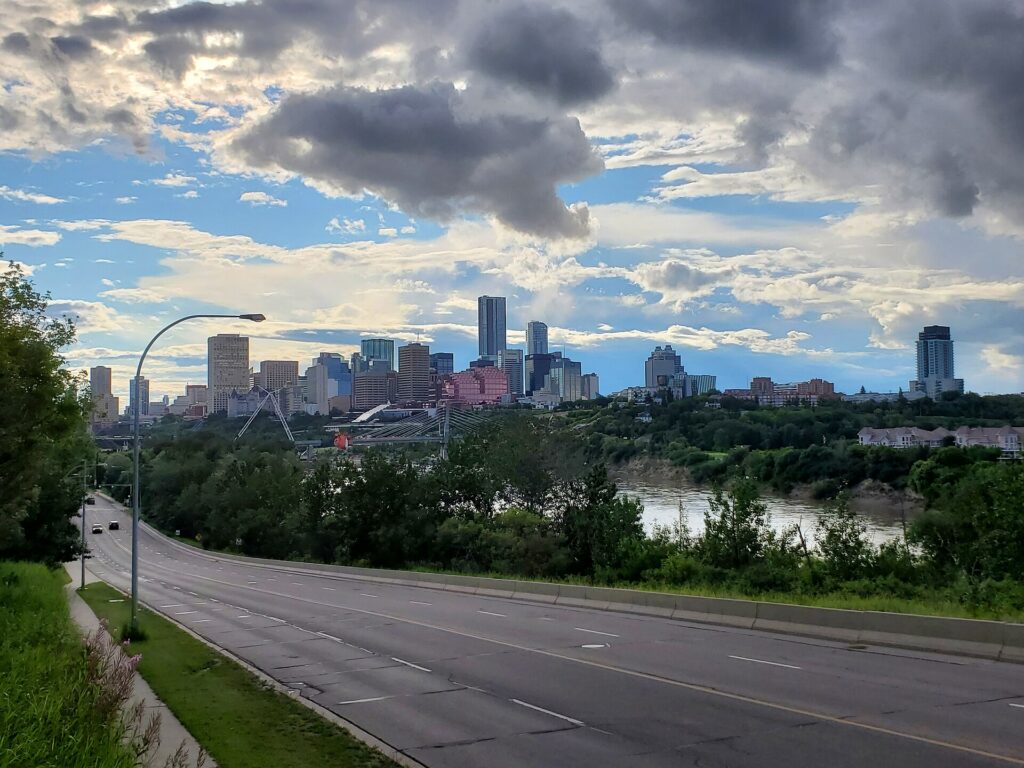
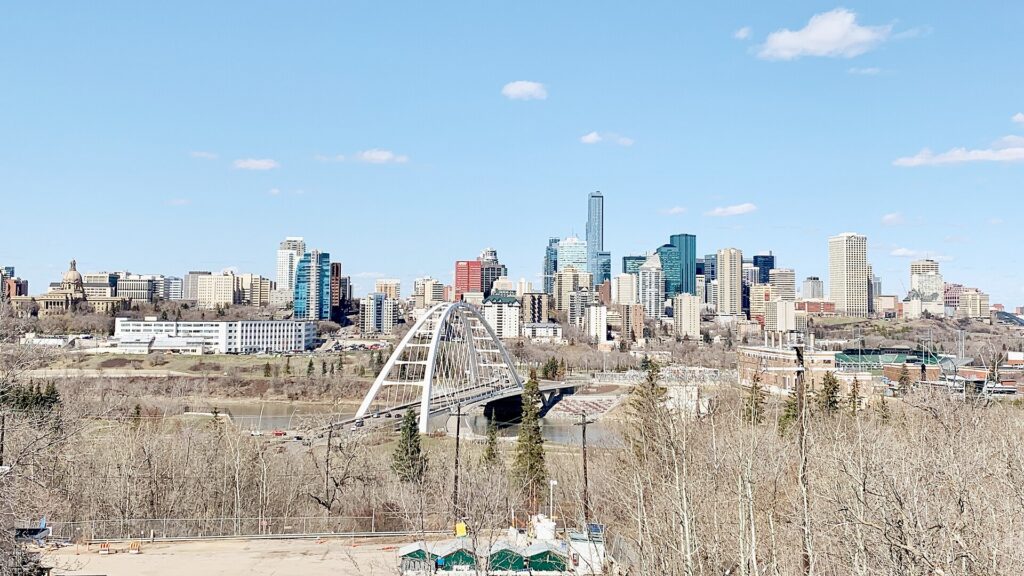
    The downtown Edmonton skyline seen from across the river valley
    Downtown Edmonton above the North Saskatchewan valley (Photo: Matthew Boonstra via Wikimedia Commons, CC BY-SA 4.0)

    Edmonton’s weather, season by season

    Edmonton sits at 53 degrees north, farther north than any other big city on the continent, and its climate is continental to the core: cold, dry winters with far more sunshine than eastern Canada’s, warm and fairly dry summers, and short transitions between. The reward for the latitude is the light, with sunset after ten in late June and a long blue dusk beyond it. The figures below are approximate seasonal patterns based on the long-term climate normals from Environment and Climate Change Canada; check the current forecast before you pack.

    MonthTypical daytime highTypical overnight lowWhat it feels likeFare pressure
    Januaryaround -6 °Caround -15 °CCold, dry, bright; cold snaps to -30 °C and belowLow after the first week
    Februaryaround -3 °Caround -12 °CSimilar; the light returns fast; Silver Skate FestivalLow; Family Day spike
    Marcharound 3 °Caround -8 °CThaw and refreeze; late stormsLow; spring-break spike
    Aprilaround 12 °Caround -1 °CBrown, windy, unpredictable; Oilers playoffs beginLow, unless the Oilers are winning
    Mayaround 18 °Caround 5 °CGreen arrives in the second half; snow still possibleModerate; May long weekend and playoffs
    Junearound 21 °Caround 10 °CLong, warm, showery; sunset after 10 p.m.Moderate
    Julyaround 24 °Caround 12 °CWarm, dry, sunny; the warmest month; K-DaysModerate to high
    Augustaround 23 °Caround 11 °CWarm, settled; Folk, Heritage and Fringe festivalsPeak in the first three weeks
    Septemberaround 17 °Caround 5 °CCooling fast; aspens gold in the last two weeks; frostModerate, falling after Labour Day
    Octoberaround 10 °Caround -1 °CCrisp; first snow usually arrivesLow; Thanksgiving spike
    Novemberaround 0 °Caround -9 °CWinter sets in; short daysLow
    Decemberaround -5 °Caround -13 °CCold, festive, dark by 4:30 p.m.Low until mid-month, then a holiday rise

    Two things the table cannot show. First, Edmonton’s dryness: winter cold here is a dry cold, which is more bearable than the damp -10 °C of Toronto, and summers rarely have the humidity of the east. Second, the daylight: seventeen hours of it in late June, less than eight in late December. A June visit feels longer than the calendar says; a December one feels shorter.

    How Edmonton’s fare seasons work

    Three things drive seats into Edmonton: leisure demand, which follows the weather and the festivals; the energy and government economies, which fill weekday flights from Calgary, Toronto and Vancouver year-round and keep hotels busy mid-week; and the north, because Edmonton is the connecting airport for Fort McMurray, Yellowknife and the territories, which adds a steady base of traffic that does not care about the season. The result is a fare curve with a summer plateau, an August peak, a long soft winter with holiday bumps, and an Oilers wildcard.

    Peak season

    Late July through the third week of August, plus roughly December 18 to January 3. K-Days at the end of July starts it; the Folk Festival in the second weekend of August, the Heritage Festival on the August long weekend and the Fringe in the second half of the month keep hotels full for three weeks. Book early for any of these, and book the hotel first for the Folk Festival weekend.

    Shoulder season

    June to late July, and September to mid-October. June is the best-value warm month, with the longest days and the Street Performers Festival and Pride to start the season; September is quieter and cheaper, with the valley in colour. Watch the May long weekend, Labour Day and Thanksgiving.

    Low season

    November, and mid-January to April outside the Family Day weekend and the March spring break. Fares are at their lowest, hotel rates too, and the city’s winter festivals and the Oilers are the draw. The exception is a playoff run: if the Oilers are alive in April or May, downtown hotel rates on game nights climb steeply and flights from Canadian cities fill with travelling fans, sometimes within a day of a series being confirmed.

    As elsewhere, mid-week departures and early or late flights usually price below Friday and Sunday afternoons on the same route, and a whole-month search reveals cheaper pairs of dates close to your first choice. Our guide to the best times to book explains how to read those patterns.

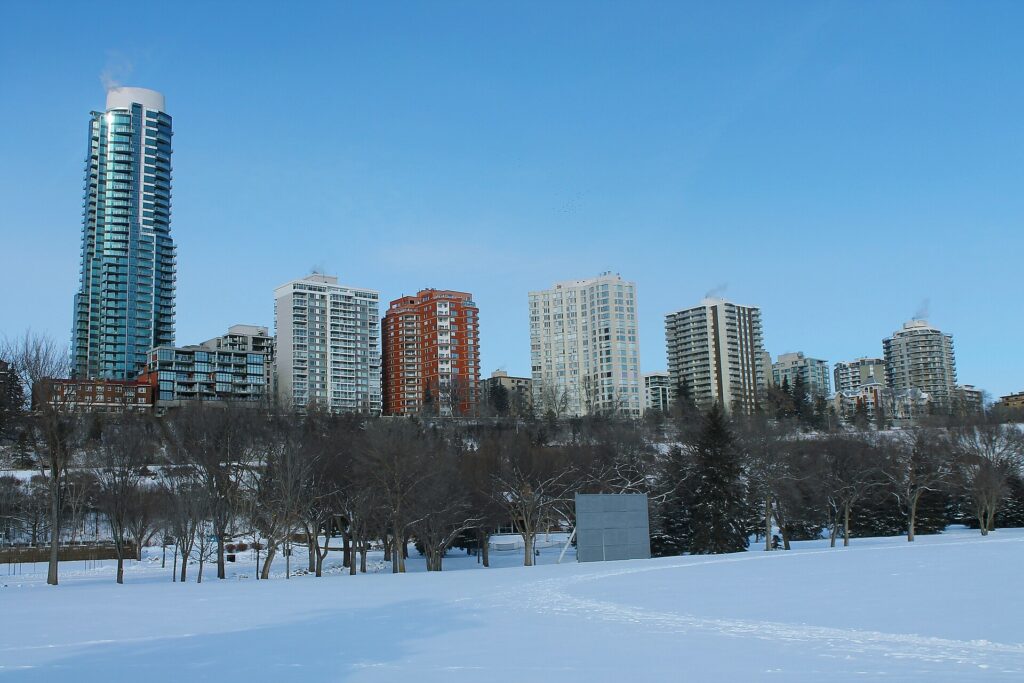
    The frozen North Saskatchewan River in Edmonton in winter
    The river valley in winter: cold, dry and bright, and the cheapest season to fly in (Photo: formulanone from Huntsville, United States via Wikimedia Commons, CC BY-SA 2.0)

    Edmonton month by month

    January

    Cold, dry and bright, and, after the first week, the cheapest month of the year to fly in. The river valley trails are groomed for skiing, the Ice District is at its busiest with the Oilers, the Deep Freeze festival on Alberta Avenue and the Flying Canoë Volant light festival in the Mill Creek ravine give the city its winter colour, and the mall’s waterpark is the family fallback. Dress for -25 °C and it is a fine, cheap trip.

    February

    Similar weather with noticeably more daylight. The Silver Skate Festival in Hawrelak Park is the city’s main winter event, and the Family Day long weekend on the third Monday is the one date when fares from other Canadian cities rise. Otherwise a low-fare month.

    March

    Thaw and refreeze, with late snowstorms most years. The mid-to-late March spring break lifts fares for a fortnight; the rest of the month is cheap and unglamorous.

    April

    Brown, windy and unpredictable, the least rewarding month for scenery and one of the cheapest, with one large exception: the NHL playoffs begin in mid-April, and in a year when the Oilers go deep, the city transforms and hotel rates with it. If the team is in contention, book early or plan around game nights.

    May

    Green arrives in the second half of the month, the farmers’ markets move outdoors, and the patios open on Whyte. The May long weekend (the Monday before May 25) is the traditional start of the camping season and a busy travel weekend, and a continuing playoff run keeps downtown tight. Early May is the value play.

    June

    The best-value warm month: the valley is green, the days run past ten at night, the Street Performers Festival and Pride open the festival season, and fares are moderate. The Oilers’ season ends, with a Stanley Cup Final in mid-June if the year is a good one.

    July

    Warm, dry and sunny, the warmest month of the year, with Taste of Edmonton, the Street Performers, the Freewill Shakespeare Festival in Hawrelak Park and, in the last ten days, K-Days, the summer fair. Fares step up through the month toward August.

    August

    Peak. The Folk Music Festival on the second weekend, the Heritage Festival over the August long weekend, and the Fringe in the second half fill the city, and the hotels in Old Strathcona and downtown sell out around them. The last week of August, once the Fringe closes, is a small pocket of relief before September. If you are coming for the festivals, book the hotel first; the Edmonton hotel search shows what is left.

    September

    Cooling fast but often lovely, with the aspens gold in the valley in the last two weeks, the Kaleido festival on Alberta Avenue, the film festival, and the Oilers and Elks both in season. Fares ease after Labour Day, and mid-September is one of the best-value windows of the year.

    October

    Crisp, with the first lasting snow usually by the end of the month. Fares are low apart from the Thanksgiving weekend on the second Monday, and Jasper’s Dark Sky Festival in the middle of the month is a reason to combine the city with the mountains.

    November

    Winter sets in, the days shorten, and fares and hotel rates are at their annual low. The Canadian Finals Rodeo, when it is in the city, and the Oilers are the draw; the Legislature’s lights switch on at the start of December.

    December

    Two months in one. The first half continues November’s pricing with the holiday lights on the Legislature grounds and in the Ice District; the last two weeks bring the holiday rise as students and families move, and the northern connections fill with workers heading home.

    Events that move Edmonton flight and hotel prices

    Cross-check these against your dates before you book. Exact dates shift each year; Explore Edmonton keeps the current calendar.

    • Family Day weekend (third Monday of February).
    • Spring break (mid-to-late March).
    • Oilers playoff series (mid-April to mid-June in a good year): the single most unpredictable hotel spike in the city.
    • May long weekend (Monday before May 25).
    • K-Days (late July).
    • Edmonton Folk Music Festival (second weekend of August).
    • Heritage Festival (August long weekend).
    • Edmonton International Fringe Theatre Festival (second half of August).
    • Labour Day and the university move-in (first week of September).
    • Thanksgiving (second Monday of October).
    • Christmas to New Year.
    • Stadium concerts at Commonwealth Stadium and arena shows at Rogers Place; our Edmonton events page shows what is on sale for your dates.

    Getting in from the airport

    Edmonton has one commercial airport, Edmonton International (YEG), about 30 kilometres south of downtown beside Leduc, which makes it one of the more distant airports of any Canadian city. It has a single terminal, nonstop flights from most Canadian cities and several U.S. hubs, seasonal European and sun-destination service, and heavy traffic to the north. Getting downtown takes planning: a taxi or ride-hail takes 30 to 45 minutes and is priced for the distance; the airport’s public bus route runs to the Century Park LRT station on the south side, from which the train reaches downtown in about 25 minutes; private shuttles serve the hotels; and every major rental company is in the terminal. For a group, or with luggage, the rental is often the cheapest way into the city and the natural choice if Jasper or Elk Island is in the plan. Our YEG airport guide covers the layout, and our car-versus-transit guide works through whether you need one.

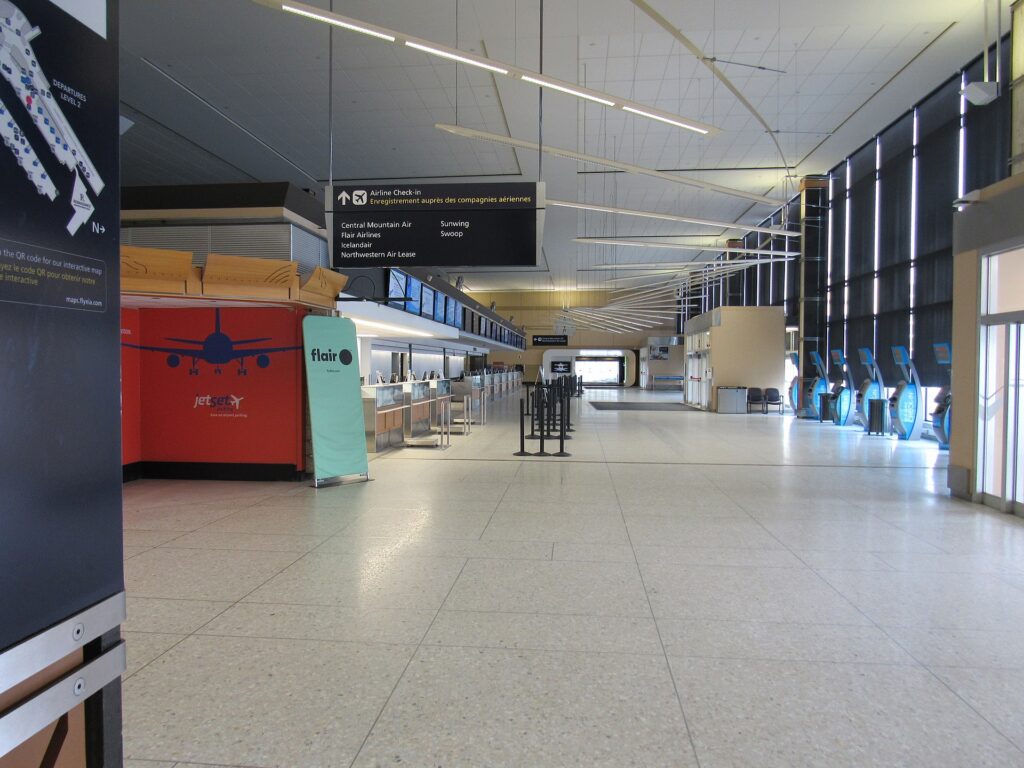
    The departures area at Edmonton International Airport (YEG)
    Edmonton International (YEG), about 30 kilometres south of downtown (Photo: Khoshhat via Wikimedia Commons, CC BY-SA 4.0)

    Timing tricks that work for Edmonton

    • Search the whole month. The August festivals create a three-week plateau with sharp edges: late July and the last days of August are noticeably cheaper. A calendar search on TicketScanner shows the edges instantly.
    • Check the Oilers’ schedule. A home playoff game can make downtown hotels unaffordable for a night; shift by a day, stay in Old Strathcona or the west end, or embrace it and get a ticket. Our Edmonton events page lists what is on sale.
    • Book the hotel first for the Folk Festival. Rooms near Gallagher Park disappear before fares rise; run an Edmonton hotel search before you commit to the flight.
    • Price Calgary too. Calgary’s airport is three hours south on a divided highway, often has better fares, especially from overseas, and a one-way rental between the two cities is a classic Alberta itinerary. Compare Calgary flights against Edmonton’s, and see our Calgary to Edmonton route guide.
    • Fly mid-week. Edmonton’s business and northern traffic makes Monday morning and Friday afternoon the busiest and priciest flights on the Calgary, Vancouver and Toronto routes; Tuesday to Thursday is the value.
    • Think of June as August without the crowds. The valley is green, the light is longer, and the city is cheaper.
    • Build a winter buffer. Extreme cold and snow can disrupt YEG between November and March, and the drive from the airport is long; avoid the tightest connections. Our guide to how early to arrive covers what to allow.
    • Flying out of Edmonton instead? The same seasonality applies in reverse; see cheap flights from Edmonton.
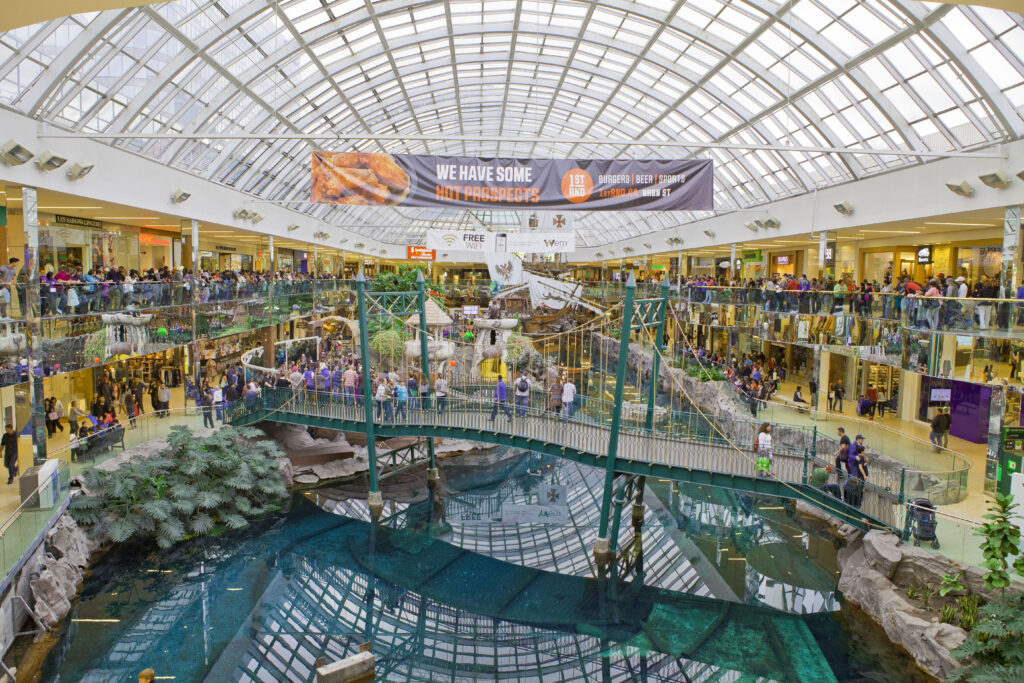
    The interior atrium at West Edmonton Mall
    West Edmonton Mall, one of the largest shopping and entertainment complexes in North America (Photo: GoToVan via Wikimedia Commons, CC BY 2.0)

    Edmonton or Calgary: choosing your gateway

    Alberta has two big airports three hours apart on a divided highway, and for many trips it is worth pricing both. Calgary has more nonstop routes, especially from the United States and Europe, and its fares from overseas are frequently lower; Edmonton has the shorter drive to Jasper, the direct connections to the north, and, for a city-focused trip, the cheaper hotels once you land. The classic way to use both is a one-way rental: fly into whichever is cheaper, drive the Icefields Parkway between Jasper and Lake Louise in the middle of the trip, and fly home from the other, which most rental companies allow for a modest drop fee. Compare Calgary flights against Edmonton’s for your dates, and read our Calgary to Edmonton route guide for the drive between them. For a trip that is only Edmonton, the difference between the two airports rarely justifies the three hours on Highway 2, except in the August festival weeks or during a playoff run, when Edmonton’s own fares are at their highest and Calgary’s may not be.

    How far ahead to book

    Edmonton rewards early booking for its August peak and its holiday weeks and patience for everything else. For the Folk Festival, the Heritage Festival and the Fringe, both flights and hotels tend only to rise as the dates approach, and Old Strathcona’s rooms sell out weeks ahead, so book as soon as your dates are fixed, with the hotel first. For June, July and September, a few weeks out is usually enough for the flight and hotel rates are stable. For the low season, from October through April, fares are low and flat, last-minute deals are common on the Calgary, Vancouver and Toronto routes, and the only reason to book early is to lock in a particular non-stop time. The exception is playoff hockey, which nobody can plan around: if the Oilers advance, everyone books at once, and the traveller who moves the same day the series is confirmed gets the room. In every season, a whole-month search on our Edmonton flights page will show you the cheap dates near your own.

    What to pack, by season

    Winter (November to March): a genuinely warm coat rated for -25 °C or colder, a hat, insulated gloves, a scarf or neck warmer, boots with grip and insulation, and layers; the dry cold is more bearable than it sounds but it is not forgiving of underdressing. Spring (April to May): layers, a windproof shell, and be ready for snow into May. Summer (June to August): light clothing, sun protection, a warm layer for the cool evenings, an eye mask if the late light bothers you, and rain gear for the June showers. Fall (September to October): layers, a warm jacket by October, and walking shoes for the valley trails.

    The best time to fly to Edmonton for…

    The festivals

    The first three weeks of August, booked early with the hotel first; the Folk Festival’s tickets sell out in hours when they go on sale in the spring.

    The Oilers

    October to April for regular-season games; April to June, at short notice and high prices, for the playoffs.

    Jasper and the northern Rockies

    Late June to mid-September for hiking, with the Dark Sky Festival in October and the ski season at Marmot Basin from November to April; the Icefields Parkway is at its best from July to September.

    The lowest fares

    November, January and February outside the holiday weeks, and April if the Oilers are out of contention.

    Families

    Late June or the last week of August, when the valley and Fort Edmonton are at their best and the festival hotels have eased; in winter, the mall’s waterpark and the valley’s skating make January a cheap and workable option.

    Cross-border and international visitors

    U.S. citizens need a valid passport; most other visa-exempt travellers arriving by air need an Electronic Travel Authorization. The Government of Canada’s visitor page explains what applies to you, and CATSA lists what you can carry through security.

    Frequently asked questions

    What is the cheapest month to fly to Edmonton?

    November and January are consistently the lowest, with February, early March and April close behind outside the holiday weekends and any Oilers playoff run.

    What is the best month to visit Edmonton?

    August for the festivals, June for weather and value, September for the fall colour in the valley. For a winter visit, February has the most light and the Silver Skate Festival.

    How cold does Edmonton get?

    Winter highs are around -5 °C and lows around -15 °C on an average day, with cold snaps to -30 °C or below most winters. It is a dry cold, and the sun is out most days.

    Should I fly into Edmonton or Calgary?

    Edmonton for the city itself, Jasper and the north; Calgary for Banff and often for the cheaper fare from overseas. The three-hour drive between them makes a one-way rental an easy way to do both.

    How far is the airport from downtown?

    About 30 kilometres, 30 to 45 minutes by taxi, or bus plus LRT in about an hour. Factor the transfer into a short trip.

    How far ahead should I book?

    Earlier for the August festivals and the Christmas weeks, when fares only rise; for the low season, fares are stable and finding the right dates matters more. Playoff travel is booked at short notice by everyone, so move quickly when a series is confirmed.

    Ready to pick your dates? Compare fares across the whole month on our Edmonton flights page, then find a room with our Edmonton hotel search. For what to do when you land, start with our first-timer’s guide to Edmonton.

  • Things to Do in Edmonton: A First-Timer’s Guide

    Things to Do in Edmonton: A First-Timer’s Guide

    Edmonton is the northernmost big city in North America, the capital of Alberta, and, by its own cheerful admission, a place that people rarely put on a bucket list. That is their loss. It has the largest stretch of urban parkland in Canada running through its middle, a river valley twenty-two times the size of Central Park that you can hike, ski or cycle end to end. It has a festival season so dense that the city calls itself Festival City without irony, with the second-largest fringe theatre festival in the world and a folk festival on a hillside that regulars call the best-run in North America. It has the Oilers and a downtown that has been rebuilt around their arena, a strip in Old Strathcona that is the best night out in the province, a provincial museum and an art gallery that both punch above their weight, a mall that is still a genuine tourist attraction after forty years, and a food scene shaped by a wave of newcomers that has made it the cheapest good eating in western Canada. And it is the gateway to Jasper and to the north. This guide covers the sights, the neighbourhoods, the festivals, the food, the day trips and the practical details for a first visit.

    If you are still comparing cheap flights to Edmonton, read this alongside our guides to the best time to fly to Edmonton and whether you need a car. Between the three you can plan the whole trip.

    The downtown Edmonton skyline above the North Saskatchewan River valley
    Downtown Edmonton from Saskatchewan Drive, across the largest urban parkland in Canada (Photo: TagaSanPedroAko via Wikimedia Commons, CC BY-SA 4.0)

    Edmonton at a glance for first-timers

    • Airport: Edmonton International (YEG), about 30 km south of downtown near Leduc, one of the more distant airports of any Canadian city; a taxi or ride-hail takes 30 to 45 minutes, and a public bus route connects to the LRT. See our YEG airport guide.
    • Getting around: the LRT covers downtown, the university, the Ice District and the Valley Line to the southeast; downtown, Old Strathcona and the river valley trails between them are walkable. Beyond that, and for the day trips, most visitors rent a car.
    • Money: Canadian dollars. Alberta has no provincial sales tax, so only the 5 percent federal GST is added at the till. Tipping 15 to 20 percent in restaurants is customary.
    • Weather: long, cold, dry winters with more sunshine than you expect; warm, dry summers with daylight past ten at night in June; short springs and falls. Pack layers in every season. Our month-by-month guide has the detail.
    • Where to stay: downtown and the Ice District for the arena, the museums and the LRT; Old Strathcona for restaurants, bars and the Fringe; the south side near the university for value; the west end for the mall. Our Edmonton hotel search covers them all.

    The river valley

    Start with the geography, because the North Saskatchewan River valley is the reason Edmonton is worth visiting and the thing that surprises every first-timer. It is a green gash a hundred metres deep running diagonally across the whole city, and within it are more than twenty parks connected by some 160 kilometres of trails, plus a funicular, a footbridge network, ski hills, golf courses, a zoo, a botanical conservatory and a fort. Start at the 100 Street Funicular beside the Hotel Macdonald, which drops you from downtown to the valley floor with a viewing platform on the way, and walk or cycle in either direction: east to the Muttart Conservatory’s glass pyramids and Gallagher Park, west under the High Level Bridge to Kinsmen Park and the Legislature grounds. Hawrelak Park, further west, is the venue for the Heritage Festival and the Symphony Under the Sky, and Fort Edmonton Park, at the western end, is a living-history park with a fur-trade fort, three period streets, a steam train and a midway that is the city’s best family day. In winter, the trails are groomed for cross-country skiing, the ski hills in the valley open, and the river freezes; the Silver Skate Festival in February and the ice castle installations in past winters have been the valley’s cold-weather draw. Rent a bike from the shops near Old Strathcona or downtown; the valley is flatter than it looks once you are down in it.

    Downtown and the Ice District

    Downtown Edmonton was rebuilt around the Oilers. Rogers Place, the arena that opened in 2016, anchors the Ice District, a cluster of towers, hotels, restaurants and a public plaza that fills on game nights and concert nights and is where a visitor staying downtown ends up. A block east, Churchill Square is the civic centre: the Art Gallery of Alberta, in a swooping steel-and-glass building by Randall Stout that is worth seeing even from outside, the Winspear Centre for the symphony, the Citadel Theatre, city hall, and the Royal Alberta Museum, the largest museum in western Canada, with natural history, Indigenous history and a bug gallery that children remember. The Alberta Legislature, a Beaux-Arts dome on the river bank a short walk south, offers free guided tours, and its grounds, with fountains and wading pools in summer and a light show at Christmas, are the best free afternoon in the city. Jasper Avenue, the downtown’s main street, has the office-tower restaurants and the historic Hotel Macdonald; 104 Street, a block north, is the small pedestrian-friendly strip of independent restaurants and the Saturday farmers’ market in summer.

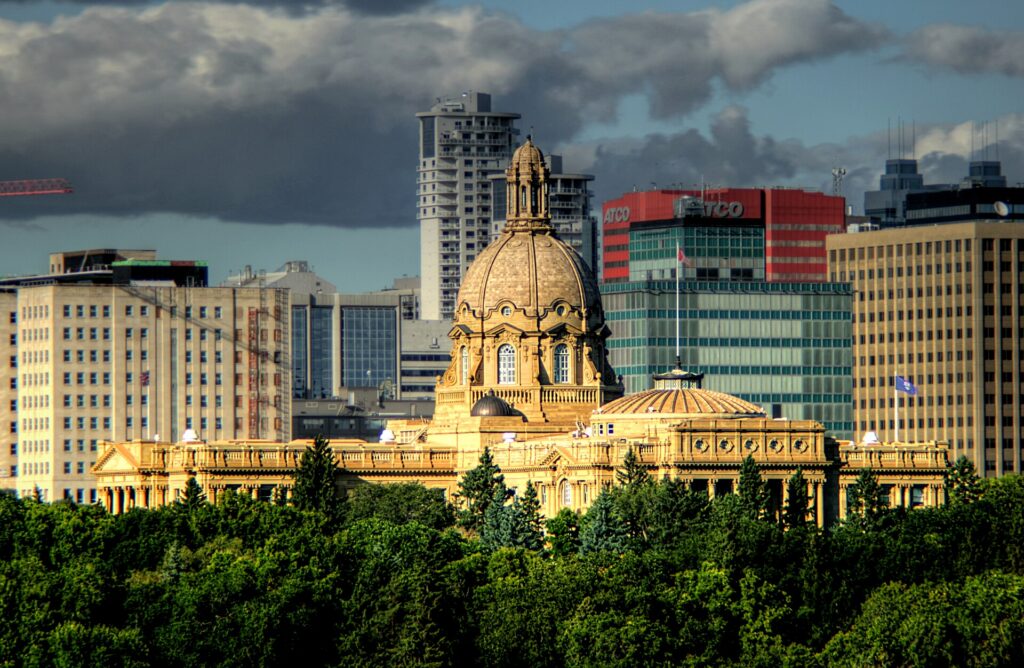
    The Alberta Legislature Building in Edmonton
    The Alberta Legislature and its grounds, free to tour and the city's best picnic lawn (Photo: WinterE229 (WinterforceMedia) via Wikimedia Commons, CC0)

    Whyte Avenue and Old Strathcona

    South of the river, Old Strathcona was a separate town until 1912, and it kept its brick main street. Whyte Avenue, 82 Avenue, runs through it for a dozen blocks of bars, restaurants, cafés, vintage shops, bookstores, independent theatres and the Old Strathcona Farmers’ Market, which runs on Saturdays year-round in a former bus barn and is one of the best in Canada. It is the city’s nightlife district, its student district and the home of the Fringe, and on a summer evening it is the most alive street in Alberta. The side streets have the Princess Theatre, the Varscona and the Walterdale theatres, the Garneau cinema, and the restaurants that locals argue over. The university campus and the river valley are a ten-minute walk north.

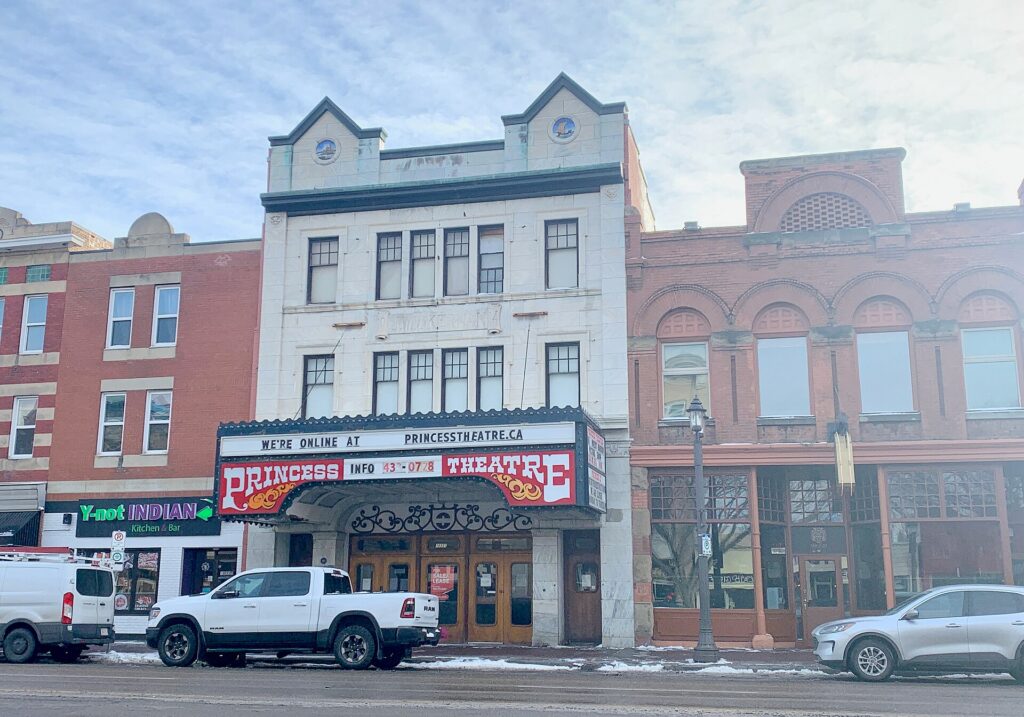
    The Princess Theatre on Whyte Avenue in Old Strathcona, Edmonton
    Whyte Avenue in Old Strathcona, the neighbourhood where Edmonton goes out (Photo: TagaSanPedroAko via Wikimedia Commons, CC BY-SA 4.0)

    West Edmonton Mall

    Forty years after it opened, West Edmonton Mall is still one of the largest shopping centres in the world and still, improbably, one of Alberta’s most visited attractions. The shops are the least of it. Inside are a full waterpark with a wave pool and slides, an indoor amusement park with a roller coaster, an ice rink where the Oilers occasionally practise, a sea-lion show and aquarium, a mini-golf course, a replica of Columbus’s Santa Maria, a themed hotel, a casino, and two streets modelled on Bourbon Street and a European boulevard. It is kitsch and enormous and, on a -30 °C day in January, exactly what a visiting family wants. It is in the west end, a bus or a drive from downtown.

    Museums and culture

    Beyond the Royal Alberta Museum and the Art Gallery of Alberta, Fort Edmonton Park is the third essential, especially with children; the Indigenous Peoples Experience there is one of the best of its kind in the country. The Telus World of Science, in the west end, has the planetarium and an IMAX. The Muttart Conservatory‘s four glass pyramids in the river valley hold arid, temperate and tropical biomes and a rotating feature display, and are photogenic from outside at any time of year. The Alberta Aviation Museum, in a wartime hangar at the old city-centre airport, and the Ukrainian Cultural Heritage Village, a living-history site east of the city, reflect two of the things that built Edmonton. The Citadel Theatre and the Winspear Centre hold the main stages; for what is on during your dates, our Edmonton events page lists concerts, shows and games.

    Festival City

    Edmonton earns its nickname. The Edmonton International Fringe Theatre Festival, in the second half of August in Old Strathcona, is the largest fringe in North America and second in the world only to Edinburgh’s, with more than a thousand performances and a street festival around them. The Edmonton Folk Music Festival, in early August in Gallagher Park, puts the audience on a natural hillside facing the skyline and books far beyond folk; its tickets sell out in hours. The Heritage Festival, on the August long weekend in Hawrelak Park, is a three-day feast of food and performance from more than a hundred cultural communities and one of the best free events in the country. K-Days, the ten-day summer fair in late July, brings a midway and concerts to the Expo Centre. The Edmonton International Street Performers Festival in July, the Taste of Edmonton in late July, the Interstellar Rodeo, Cariwest Caribbean festival, Pride in June, and, in winter, the Silver Skate Festival and the Flying Canoë Volant light festival in the Mill Creek ravine fill in the rest. Explore Edmonton keeps the calendar.

    Crowds on the hill at the Edmonton Folk Music Festival in Gallagher Park
    The Folk Music Festival on the Gallagher Park hill in August, with the skyline as the backdrop (Photo: Mack Male from Edmonton, AB, Canada via Wikimedia Commons, CC BY-SA 2.0)

    Sports

    The Oilers are the city’s religion, and a game at Rogers Place, in the middle of the Ice District, is the single most Edmonton thing a visitor can do; a playoff run in spring turns the district into a street party. The Edmonton Elks play Canadian football at Commonwealth Stadium, north of downtown on the LRT, from June to November, and the stadium also hosts the big summer concerts. The Oil Kings, the junior hockey team, also play at Rogers Place, and are the cheap way to see the arena. See what is on sale in Edmonton for your dates before you book flights.

    What to eat, and where

    Edmonton eats well and cheaply, and the reason is who lives here. It has one of the largest Ukrainian communities outside Ukraine, and perogies, cabbage rolls and kubasa are in every farmers’ market and half the diners. It has a large and long-established Vietnamese community, with the pho and bún along 97 Street, Chinatown’s spine, and on the south side that rank with Calgary’s. It has a big Filipino community, a growing South Asian one along 34 Avenue and in Mill Woods, an Ethiopian strip along 118 Avenue, Lebanese bakeries, and a green-onion-cake tradition, a Chinese pancake adopted as the city’s unofficial street food and sold at every festival. Alberta beef and bison anchor the steakhouses downtown. The independent restaurants that draw the critics are on 104 Street downtown, on Whyte Avenue and its side streets, along 124 Street in the west end, and in the Ritchie and Highlands neighbourhoods. The Old Strathcona and 104 Street farmers’ markets are the places to graze; the craft breweries are concentrated in the Ritchie and Old Strathcona industrial blocks. Brunch is an institution, and the queues on Whyte on a Sunday morning are real.

    Neighbourhoods worth a half-day

    124 Street

    West of downtown, 124 Street is a walkable strip of galleries, independent restaurants, bakeries and design shops, with the High Street market and the Roxy Theatre, and the closest thing Edmonton has to a gallery district.

    Chinatown and 97 Street

    Northeast of downtown, the old Chinatown is threadbare but the food along 97 Street is some of the cheapest and best in the city.

    Ritchie and Mill Creek

    South of Whyte, the Ritchie Market building, with its butcher, brewery and coffee roaster, is the hub of a neighbourhood of breweries and small restaurants, and the Mill Creek ravine trail runs through it into the river valley.

    Highlands and Alberta Avenue

    North of the river, the Highlands is a heritage neighbourhood with a strip of cafés and a golf course above the valley, and Alberta Avenue, 118 Avenue, has the Ethiopian restaurants and the Kaleido arts festival in September.

    Strathcona to the university

    Between Whyte and the river, the tree-lined streets of Garneau and the university campus have the Garneau cinema, the campus’s small museums, and, in winter, the university’s Butterdome and the Clare Drake arena.

    Edmonton through the seasons

    Summer (June to August) is the reason to come: the festivals, the river valley in full leaf, the farmers’ markets, patios on Whyte, and daylight until after ten in June. Fall (September to October) is short, gold and quiet, with the aspens in the valley turning in the last two weeks of September, the Oilers and Elks both in season, and Kaleido and the film festival on the calendar. Winter (November to March) is long and cold but bright and dry, and the city has learned to embrace it: cross-country skiing and skating in the valley, the Silver Skate Festival, Flying Canoë Volant, the Deep Freeze festival on Alberta Avenue, the Legislature’s light display, the mall’s waterpark, and the Oilers at their most intense. Dress properly and it is a good time to visit at the lowest prices of the year. Spring (April to May) is brown and windy, then suddenly green in the second half of May; it is the cheapest season and the least rewarding, unless the Oilers are in the playoffs. Our month-by-month guide matches each season to fares.

    Edmonton with kids

    Few cities are easier with children, especially in winter. Fort Edmonton Park, the Royal Alberta Museum’s bug gallery and children’s gallery, the Telus World of Science, the Valley Zoo, and the waterpark and amusement park at West Edmonton Mall are each a full day. The river valley’s playgrounds, the wading pools at the Legislature grounds in summer, the splash park at Hawrelak, the Muttart pyramids, the funicular ride and the Streetcar across the High Level Bridge, a summer heritage tram with the best view in the city, fill the gaps. K-Days in July is the fair, and the Heritage Festival in August is the cheapest way to feed a family from a hundred countries in an afternoon. Elk Island’s bison, forty minutes east, are the day trip children remember.

    Edmonton on a budget

    Edmonton is the cheapest of Canada’s big cities to visit, helped by the absence of provincial sales tax. The river valley, the Legislature tours and grounds, the funicular, the Muttart’s exterior, the Old Strathcona market, the Heritage Festival, the Fringe’s street festival and the Art Gallery of Alberta’s free evenings cost nothing; the museums and Fort Edmonton are moderately priced and cheaper online. Eat for very little along 97 Street, 34 Avenue and 118 Avenue, at the markets, and at the green-onion-cake stands at any festival. Hotel rates are well below Calgary’s, Vancouver’s or Toronto’s outside Oilers playoff runs and the August festival weeks; compare by neighbourhood on our Edmonton hotel search.

    Day trips from Edmonton

    Elk Island National Park, forty minutes east, is a fenced aspen parkland with free-roaming herds of plains and wood bison, a lake to paddle, a dark-sky preserve and easy trails; it is the day trip every visitor should make. The Ukrainian Cultural Heritage Village is on the same road. Jasper and the northern Rockies are four hours west on the Yellowhead Highway, and Edmonton is Jasper’s airport as much as Calgary is Banff’s; the Icefields Parkway between Jasper and Lake Louise is one of the great drives in the world, and Jasper’s dark-sky festival in October is a reason to make the trip in fall. Drumheller and the badlands are three hours southeast. Calgary is three hours south on the divided Highway 2, and a one-way rental between the two cities is a classic Alberta itinerary; our Calgary to Edmonton route guide covers it, and our Calgary guide covers the other end. The lakes north of the city, Pigeon Lake, Sylvan Lake and Lac Ste. Anne, are the summer cottage country. All of these need a car; see our Edmonton car rental page, and Travel Alberta for the wider province.

    Two sample itineraries

    Two days, no car

    Day one: the Royal Alberta Museum and the Art Gallery of Alberta in the morning, lunch on 104 Street, the Legislature tour and grounds in the afternoon, the funicular and a walk in the river valley, and an Oilers game or a show in the Ice District at night. Day two: the LRT to the university and a walk to Old Strathcona, the farmers’ market if it is Saturday, brunch and the shops on Whyte, a bike along the valley to the Muttart Conservatory and back over the High Level Bridge, and dinner and drinks on Whyte.

    Four days, with a car

    Add a day for Fort Edmonton Park and 124 Street, and a day for Elk Island’s bison with the Ukrainian Village on the way, or, with more time, drive to Jasper for two nights and return the car in Calgary.

    Practical details

    • Transit: Edmonton Transit’s LRT and buses; buy an Arc card or tap a credit card on the validators. See our transit-versus-car guide for detail.
    • From YEG: a taxi or ride-hail in 30 to 45 minutes, the public bus route to the LRT, or a rental from the terminal. The airport’s site covers ground transport.
    • Weather: layers in every season, real cold-weather gear from November to March, sun protection in summer. Environment Canada’s forecast is the one to check.
    • Time zone: Mountain, the same as Calgary and Denver.
    • Entry requirements: U.S. citizens need a valid passport; most other visa-exempt visitors arriving by air need an Electronic Travel Authorization. The Government of Canada’s visitor page is the authoritative source.
    • Safety: a safe city by any standard; parts of downtown and along 97 Street and the LRT stations late at night need ordinary big-city awareness.

    Frequently asked questions

    How many days do you need in Edmonton?

    Two full days covers downtown, Old Strathcona, the river valley and two museums; three adds Fort Edmonton and the mall; four adds Elk Island. Jasper needs two more nights.

    What is Edmonton best known for?

    The Oilers, West Edmonton Mall, the river valley, the Fringe and Folk festivals, and being the gateway to Jasper and the north.

    Is Edmonton worth visiting?

    Yes, especially from June to September when the festivals run and the valley is green, and it is the cheapest big-city break in Canada.

    Is Edmonton walkable?

    Downtown, Old Strathcona and the river valley trails between them are. The rest of the city, including the mall and the airport, assumes a car or a long bus ride.

    Do I need a car in Edmonton?

    Not for the core. For the mall, Fort Edmonton, Elk Island and Jasper, yes; rent for those days, or for the whole trip if Jasper is the plan.

    Is Edmonton cold?

    In winter, genuinely: -20 °C is normal and -30 °C happens. It is also dry and sunny, which makes it more bearable than it sounds, and the city is built to enjoy it. Summers are warm and long.

    Which is better to visit, Edmonton or Calgary?

    Calgary for the Rockies on the doorstep and the Stampede; Edmonton for the festivals, the river valley, the food and the prices. The three-hour drive between them makes doing both easy.

    Ready to go? Compare flights to Edmonton, find a place to stay with our Edmonton hotel search, and if Elk Island or Jasper is on the list, price a rental car for those days.