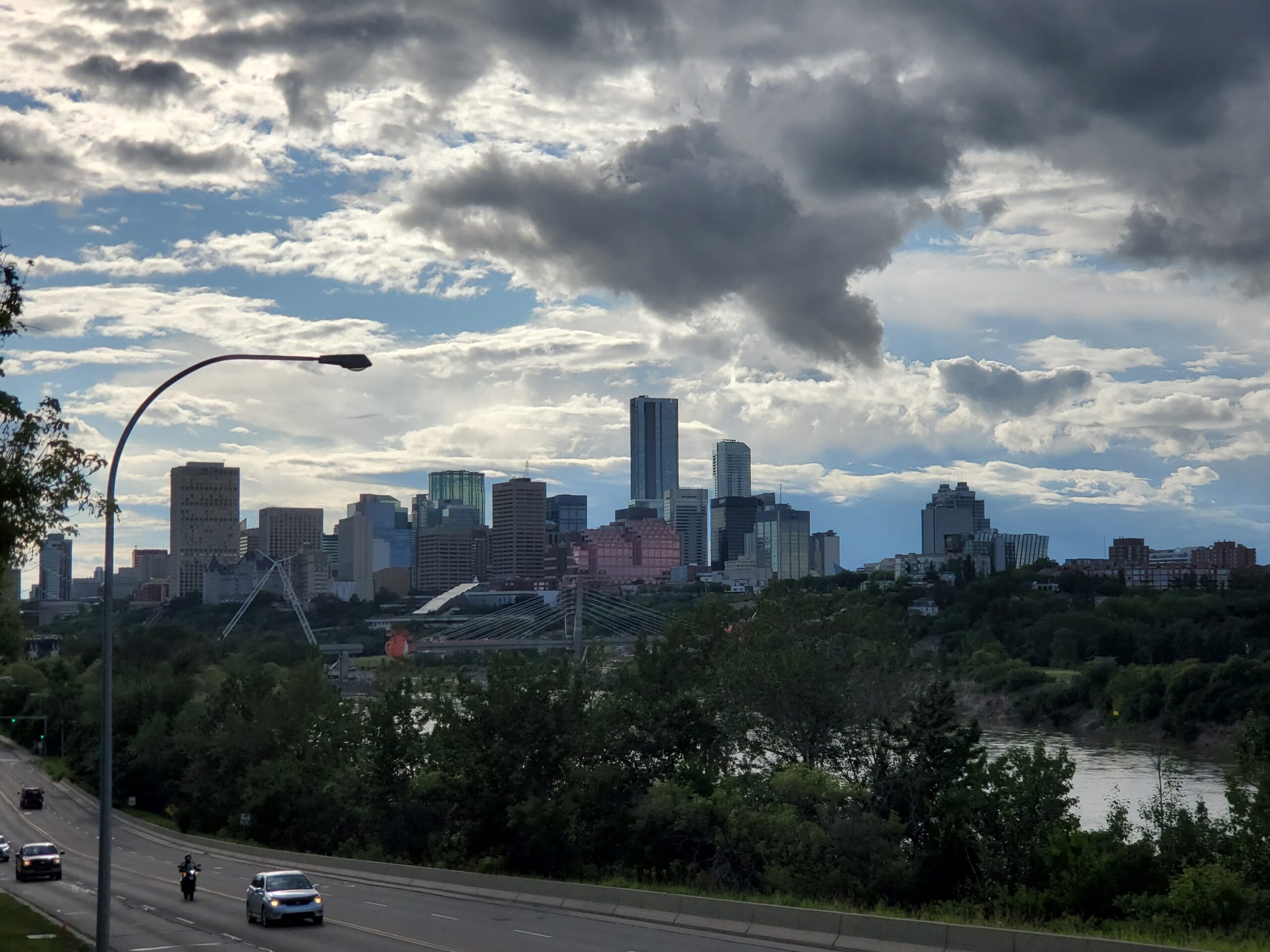
Edmonton is a car city that has been building its way toward being something else. It is enormous by area, spread across the prairie on both sides of a deep river valley, with an airport thirty kilometres from downtown and a mall in the west end that is one of its biggest attractions; most of its residents drive, and most visitors assume they will too. But the last decade has changed the picture for a visitor with a downtown or Old Strathcona base: the LRT now links the airport bus, the university, downtown, the Ice District and the southeast at street level, the two central neighbourhoods are walkable and connected by the river valley trails, and parking downtown on a game night is enough to make anyone reconsider. So the answer depends on which Edmonton you are visiting. This guide explains how the city is laid out, how transit and fares work, the airport transfer, what driving and parking are really like in every season, when a car is worth it, and gives you a straightforward way to decide.
The short answer
Rent a car if Jasper, Elk Island, the Ukrainian Village, the lakes, a drive to Calgary or the north is on the itinerary, if you are staying in the suburbs or with family, if West Edmonton Mall is a major part of the plan, or if you are visiting in deep winter with young children. That is a large share of visitors. Skip the car if you are staying downtown, in the Ice District or in Old Strathcona for a city break, an Oilers game, a conference or the August festivals, and your plans are the museums, the Legislature, Whyte Avenue and the river valley; the LRT, your feet and the occasional ride-hail will cover that, and you avoid downtown parking and the long airport drive. For many first-timers, the hybrid is right: car-free in the city, a one- or two-day rental picked up downtown for Elk Island and the mall. Compare rental rates for any of these plans on our Edmonton car rental page.
How Edmonton is laid out
Edmonton is a numbered grid on the prairie, split diagonally by the North Saskatchewan River valley, with avenues running east-west and streets north-south from a centre point near the old town; 100 Street and 100 Avenue meet downtown, and the numbers climb outward. Downtown sits on the north bank of the river, with the Ice District and Rogers Place on its northern edge, Churchill Square and the museums in its middle, the Legislature on its southwestern corner above the valley, and Jasper Avenue running through it. Across the High Level Bridge to the south are the university and Old Strathcona, with Whyte Avenue (82 Avenue) as its main street. The west end holds 124 Street, the mall and the Telus World of Science; the north holds Commonwealth Stadium and Alberta Avenue; the southeast holds Mill Woods and the Valley Line; and the city then continues for kilometres in every direction. The inner core is compact and walkable; everything beyond it assumes a car or a long bus ride.
Hotels cluster downtown and in the Ice District, in Old Strathcona and near the university, along the west end near the mall, and on the south side along Gateway Boulevard for value. Most Edmonton hotels outside the downtown core include parking, which changes the arithmetic. Our Edmonton hotel search lets you compare them.
Getting in from the airport
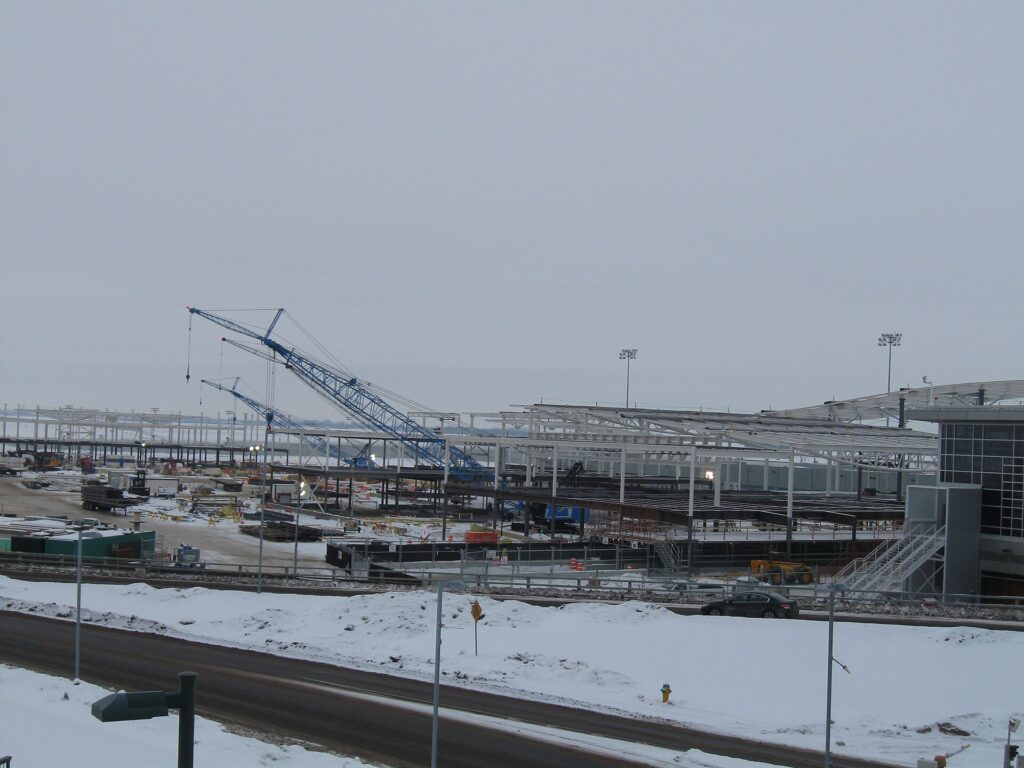
Edmonton International (YEG) is about 30 kilometres south of downtown beside Leduc, and the transfer is the first transport decision of the trip. A taxi or ride-hail takes 30 to 45 minutes and is priced for the distance; for one person it is the single most expensive thing about a car-free Edmonton visit. The airport’s public bus, Route 747, runs to Century Park LRT station on the south side of the city, from which the Capital Line reaches the university and downtown in about 25 minutes, for a modest combined fare; it is the cheap option and takes about an hour. Hotel shuttles serve the airport-area and some downtown hotels. And every major rental company is in the terminal, with the divided Queen Elizabeth II Highway running straight from the airport to the city’s southern edge in about half an hour. For two or more people, or with luggage, a rental picked up at the airport is often cheaper than two taxi rides, and it is the obvious choice if the trip includes Jasper or Elk Island. Check the airport’s site and Edmonton Transit for current service; our YEG airport guide covers the layout.
Edmonton’s transit, explained
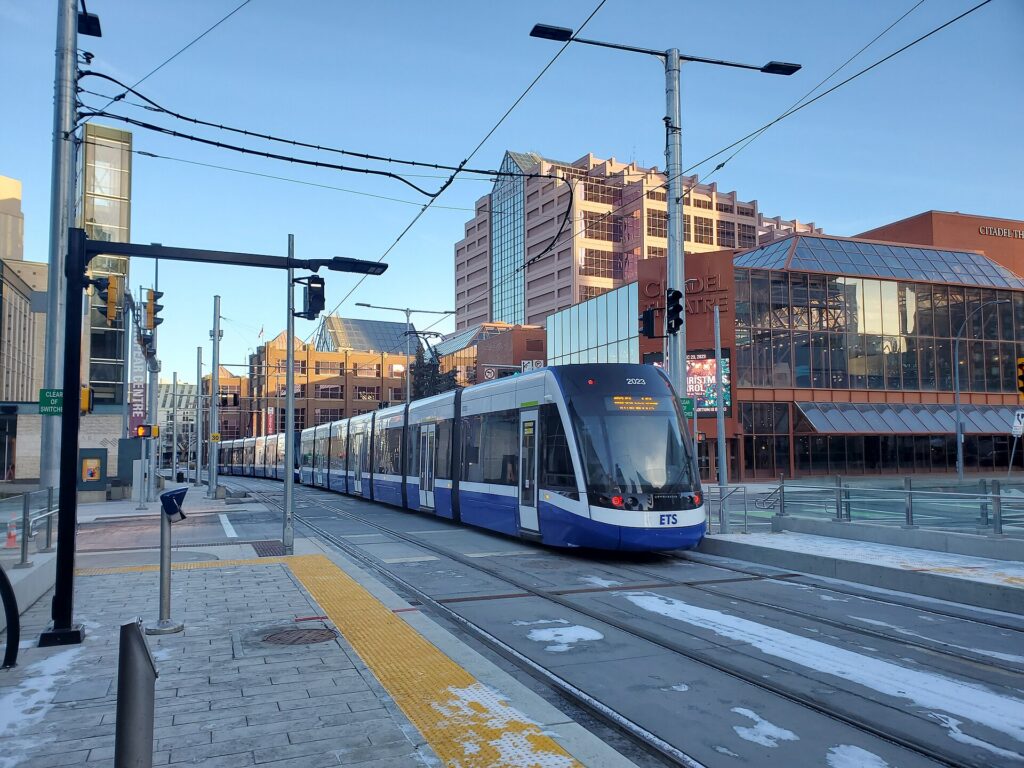
Edmonton Transit Service runs the LRT and the bus network. It is clean and generally reliable, and for a visitor based downtown or in Old Strathcona it covers the core well; its limitation, as in Calgary, is coverage of the outer city and the evening frequencies on the buses.
The LRT
Three lines. The Capital Line runs from Clareview in the northeast, past Commonwealth Stadium, through downtown in a tunnel with stations at Churchill (for the museums and city hall), Central and Bay/Enterprise, then south across the river to the University, Southgate mall and Century Park, where the airport bus connects. The Metro Line shares the downtown tunnel and runs northwest past the Royal Alexandra Hospital and MacEwan University toward the north. The Valley Line, the newest, runs at street level from downtown at Churchill and 102 Street, across a new bridge over the river valley past the Muttart Conservatory and Bonnie Doon, and southeast to Mill Woods, with a western extension under construction toward the mall. For a visitor, the Capital Line is the workhorse: it links the stadium, downtown and the university in fifteen minutes, and the Old Strathcona strip is a ten-minute walk from University station. Rogers Place is beside MacEwan station on the Metro Line and a short walk from Churchill. Trains run from early morning until after midnight.
Buses
Buses fill in the rest: the Route 747 airport service, the routes to the mall and the west end, Fort Edmonton Park, the Telus World of Science, Whyte Avenue’s own crosstown route, and the neighbourhoods off the rail lines. Frequencies drop in the evenings and on weekends outside the core routes; check times before relying on a bus for a late return, and use ride-hail for the last leg if in doubt.
Fares and tickets
Edmonton uses the Arc card, the regional smart card, which you can buy at LRT stations and load with value; you can also tap a contactless credit or debit card or phone wallet directly on the validators at stations and on buses. A fare gives you 90 minutes of transfers across the LRT and buses, and daily fare caps apply so that you never pay more than a day pass. Children twelve and under ride free. The airport bus charges a premium fare. Check Edmonton Transit’s site for current prices.
Accessibility
Every LRT station is step-free, and every bus is low-floor and accessible.
Beyond Edmonton Transit
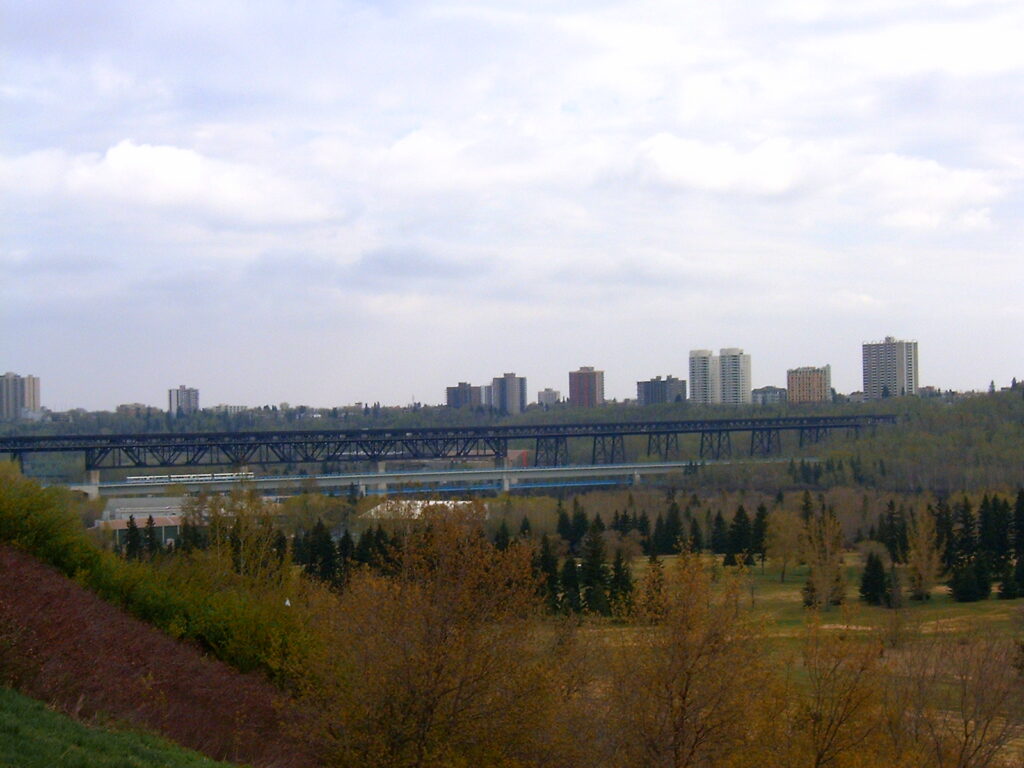
- Walking. Downtown is compact; the Legislature to the Ice District is twenty minutes; the High Level Bridge takes you from downtown to the university and Old Strathcona in half an hour on foot, and the pedestrian path on the bridge has the best view in the city.
- Bikes and the valley trails. The river valley’s 160 kilometres of trails connect nearly every sight a visitor wants, from the Legislature to Fort Edmonton and from the Muttart to Hawrelak Park. Bike-share e-bikes and scooters operate in the warmer months, and rental shops downtown and near Whyte hire by the day. The funicular at 100 Street drops you into the valley from downtown without the climb.
- The High Level Bridge Streetcar. A heritage tram runs across the top deck of the High Level Bridge between downtown and Old Strathcona on summer days; it is transport, a sight and the best photo in the city for a small fare.
- Taxis and ride-hail. Uber and licensed taxis cover the city; for a group, a short ride to the mall or 124 Street is competitive with transit fares and far quicker.
- Intercity. Buses connect Edmonton with Calgary, Red Deer, Jasper and the north from the downtown terminal; the Calgary route is frequent and cheap and competitive with a one-way rental for a solo traveller.
Driving in Edmonton and beyond: what it is really like
Edmonton is an easy city to drive in by the standards of the big eastern cities: wide roads, a logical grid, plentiful and often free parking outside the core, and drivers who are calm. The frustrations are specific. The Anthony Henday ring road and the Whitemud and Yellowhead freeways jam in the weekday peaks and after any crash; the river crossings are the pinch points, with the High Level, Walterdale and Groat bridges backing up at rush hour; construction season runs from May to October and the Valley Line’s western extension has closed lanes in the west end for years; and Whyte Avenue on a weekend night is a slow crawl with nowhere to park. And winter is the real difference. Snow stays on the ground from November to March, the side streets rut and narrow between snowbanks, black ice on the bridges is routine, and extreme cold, -30 °C and below, is a normal occurrence that a rental car needs to be ready for.
Parking
Downtown parking is the one place Edmonton is genuinely expensive. The Ice District’s garages are priced for game nights, when the streets around Rogers Place fill hours before the puck drops; the office-tower lots and hotel garages charge nightly fees comparable to Calgary’s; and street parking downtown is metered by the EPark system, which uses licence plates and an app or a machine, and is free in the evenings and on Sundays and holidays. Outside the core, parking is easy and usually free: the museums, Fort Edmonton, the Legislature grounds, the mall, the parks and the Valley Zoo all have lots, and most hotels outside downtown include parking in the rate, which is a genuine saving compared with Toronto or Vancouver. Whyte Avenue is the exception in the south: the strip itself is tight, but the side streets and the market lot are workable except on weekend evenings and during the Fringe.
Rules and conditions worth knowing
- Winter tires are not required by law in Alberta, and rental cars usually come on all-seasons. For the city, in a normal winter, that is manageable with care. For the Yellowhead to Jasper or any highway between November and April, ask for winter tires when you book. Alberta 511 publishes road conditions and closures.
- Extreme cold. Below about -25 °C, cars struggle to start and tire pressure drops. Rentals are generally in good condition, but park in a garage on the coldest nights if you can, and keep the tank above half full.
- Block heaters. Edmonton’s parking lots have electrical outlets for a reason. A rental will usually have a block-heater cord; ask at the counter how to use it if the forecast is severe.
- Photo radar is widespread across the city, including automated speed and intersection cameras; fines follow the car and the rental company will bill you.
- Right turns on red are permitted after a full stop unless signed otherwise.
- Wildlife on the highways. Deer are common on the Yellowhead and Highway 2 at dawn and dusk; moose are a genuine hazard on the road to Jasper and in the north. Slow down at those hours.
- Park passes. Elk Island and Jasper both need a Parks Canada pass per vehicle, sold online and at the gates.
- Fuel is cheaper in Alberta than in most of Canada.
When renting a car makes sense
- Jasper and the northern Rockies. Four hours west on the Yellowhead; the drive is the point, the trailheads are spread out, and the Icefields Parkway continues south to Lake Louise for a return via Calgary.
- Elk Island National Park, forty minutes east, with the bison herds and the dark-sky preserve, has no transit.
- The Ukrainian Cultural Heritage Village, on the same road as Elk Island.
- West Edmonton Mall and the west end, if it is a major part of the plan; the bus works, but with children and a waterpark day, a car is easier.
- Fort Edmonton Park and the Valley Zoo, which are reachable by bus but awkward.
- Family in the suburbs. Edmonton’s suburbs are on transit but spread out; a car earns its keep daily.
- Deep winter with young children. A car, a hotel with parking and a plugged-in block heater make the whole trip simpler.
- Alberta road trips. Calgary via Highway 2 and Drumheller, the lakes, or the north; our Calgary to Edmonton route guide covers the first of those, and our Calgary transit guide the other end.
If any of those apply, our rental car booking tips cover insurance, deposits and the questions to ask at the counter.
When it does not
- You are staying downtown or in Old Strathcona and your plans are the city.
- You are in town for an Oilers game, a concert at Rogers Place or a conference in the Ice District, when parking is at its worst and the LRT stops at the door.
- You are coming for the Fringe or the Folk Festival, when Old Strathcona and Gallagher Park are pedestrian zones in all but name and the LRT and the valley trails are the way in.
- You are travelling solo and the rental, insurance and downtown parking add up to more than the airport bus, a few transit fares and a ride-hail or two.
The hybrid plan
Go car-free for the city days and rent for the day trips, and think about where you pick up. If Jasper is in the plan, rent at the airport on arrival or on the way out and skip the city drive; the Yellowhead west is reached from the ring road without touching downtown. If Elk Island and the mall are the goal, pick up downtown or on the south side on the morning you need it, avoid the airport concession fees, and return it the same evening or at the airport on the way home, which most companies allow within the city at little or no extra charge. Ask for winter tires from November to April. Compare the day rates on our Edmonton car rental page against a full-trip rental and the difference is usually obvious.
A worked cost comparison
Numbers change with the season and the booking window, so treat this as a method rather than a quote, and check current rates before deciding. For a three-night city break downtown for two people, the car-free version costs the airport bus and LRT each way, a couple of day passes, and two or three short ride-hails to 124 Street or Whyte; the rental version adds three days of a compact car, three nights of downtown hotel parking, fuel and the airport concession fees, and buys you the mall and Fort Edmonton in exchange. If those two are on the list, the rental is close to break-even; if they are not, transit wins clearly. For the same three nights plus Elk Island, a one-day rental from downtown plus the park pass and fuel is cheap and turns a logistical problem into a forty-minute drive; the hybrid wins. For a week with Jasper, a rental for the whole stay from the airport is the only practical answer, and it is still cheaper than two taxis plus a mid-trip pickup. Run the rates for your dates and put them beside the transit fares before you choose.
Driving to Jasper in each season
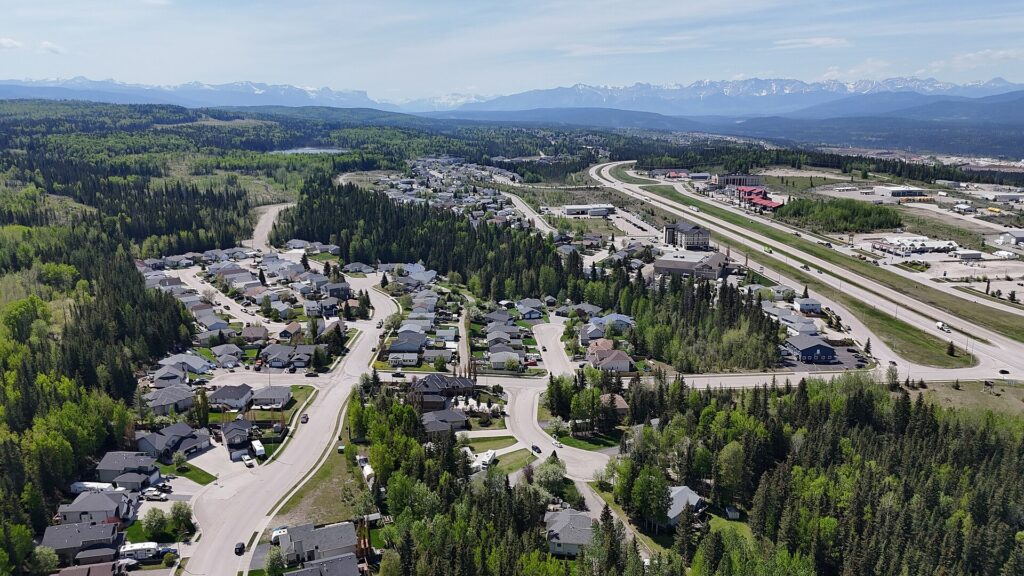
The Yellowhead Highway (Highway 16) west from Edmonton to Jasper is four hours of divided highway across the parkland to Hinton, then two-lane road into the mountains and the park gate. In summer, it is an easy, beautiful drive, with the only problems being traffic through the townsite and full parking lots at Maligne Lake and the Athabasca Falls by mid-morning; leave early. In fall, the larches and aspens turn in late September, the Dark Sky Festival in October fills the town, and the first snow can arrive in the mountains while Edmonton is still mild. In winter, the highway is plowed and generally open, but the section west of Hinton ices and drifts, wildlife is on the road at dusk, daylight is short, and a rental without winter tires is not the vehicle for it; check Alberta 511 before leaving and carry a full tank, warm clothes and a charged phone. Marmot Basin’s ski season and the frozen Maligne Canyon icewalk are the reasons to make the drive in the cold. In spring, the road is wet, the trails above the valley are still snowbound into June, and the animals, including bears, are on the move. In every season, the last hour, as the mountains rise out of the foothills, is one of the reasons people fly to Edmonton in the first place.
Decision table
| Your trip | Recommendation | Why |
|---|---|---|
| City break downtown or in Old Strathcona, couple or solo | No car | The LRT and the valley trails cover it; downtown parking is expensive |
| Oilers game, arena concert or conference | No car | The LRT stops at the door; game-night parking is the worst in the city |
| Fringe or Folk Festival week | No car | Old Strathcona and Gallagher Park are best reached on foot or by LRT |
| City plus Elk Island or the mall | Hybrid: one-day rental from downtown | Car-free city days, a car for the day trips |
| Jasper, several days | Rent at the airport for the whole trip | The Yellowhead starts at the ring road; the park needs a car |
| Family visit to the suburbs | Rent for the whole stay | Suburban distances make the car worthwhile daily |
| Deep winter with children | Rent, with winter tires, at a hotel with parking | Cold, gear and the mall all argue for a car |
| Alberta road trip | Rent (consider one-way to Calgary) | Edmonton is the start, not the destination |
Money-saving tips for both options
- On transit: take the Route 747 bus and the LRT from the airport rather than a taxi; tap a credit card and let the daily fare cap work for you; children twelve and under are free; ride the summer streetcar over the High Level Bridge for the price of a coffee.
- On a rental: compare airport and downtown pickup, book early for the August festivals and the ski weeks, ask for winter tires in the cold months, decline extras you already have through a credit card or home policy (check first), plug in the block heater on the coldest nights, and buy the park pass online before you reach the gates.
- On the hotel: if you are renting, choose a hotel outside the core that includes parking; if you are not, stay on the Capital Line and ride in.
- On timing: avoid the river crossings and the ring road in the weekday peaks, the Ice District in the two hours before a game, and Whyte Avenue on weekend nights; the best time to fly to Edmonton guide lists the busiest weekends.
- On the day trips: for one or two people, an intercity bus to Jasper or Calgary can beat a rental if you do not need a car at the other end.
Frequently asked questions
Is it worth renting a car in Edmonton?
For Jasper, Elk Island, the suburbs, the mall or a road trip, yes, and that covers many visitors. For a downtown or Old Strathcona city break, an Oilers game or the festivals, no; the LRT and your feet are enough.
Is Edmonton public transit good for tourists?
Good within the core: three LRT lines link the stadium, downtown, the Ice District, the university and the southeast, and an airport bus connects at Century Park. It thins out quickly beyond that and does not reach the mall by rail yet.
How do I get from Edmonton airport to downtown?
The Route 747 bus to Century Park LRT station and the train downtown, in about an hour; a taxi or ride-hail in 30 to 45 minutes; a hotel shuttle; or a rental from the terminal.
Can I get to Jasper from Edmonton without a car?
Yes, by intercity bus or by VIA Rail’s transcontinental train, which stops in Jasper on a few days a week. Within the park, though, you will want a car or a tour to reach the lakes and trailheads.
Do I need winter tires to drive in Edmonton?
Not by law in Alberta, but the highways to Jasper and Calgary ice from November to April; ask for them when you book, and for the city alone, drive carefully on all-seasons.
Is parking expensive in downtown Edmonton?
On weekdays and game nights, yes; evenings, Sundays and holidays are free on the street. Outside the core, parking is easy and most hotels include it.
Can I drive a rental car to Calgary and leave it there?
Yes; one-way rentals between Edmonton and Calgary are routine, usually with a modest drop fee. Our Calgary to Edmonton route guide covers the drive.
Whichever way you go, start with the flight. Compare cheap flights to Edmonton, choose a neighbourhood with our Edmonton hotel search, and if Jasper or Elk Island is on the list, price the rental for those dates on our Edmonton car rental page.
Keep planning with TicketScanner
- Edmonton car rentals — compare airport and downtown pickup
- Cheap flights to Edmonton
- Edmonton hotels — most include parking
- Things to do in Edmonton: a first-timer's guide
- Best time to fly to Edmonton: month by month
- Edmonton International (YEG) airport guide
- Driving Calgary to Edmonton
- Calgary: rent a car or use transit?
- Rental car booking tips
- Car, transit or taxi in a new city?
Leave a Reply