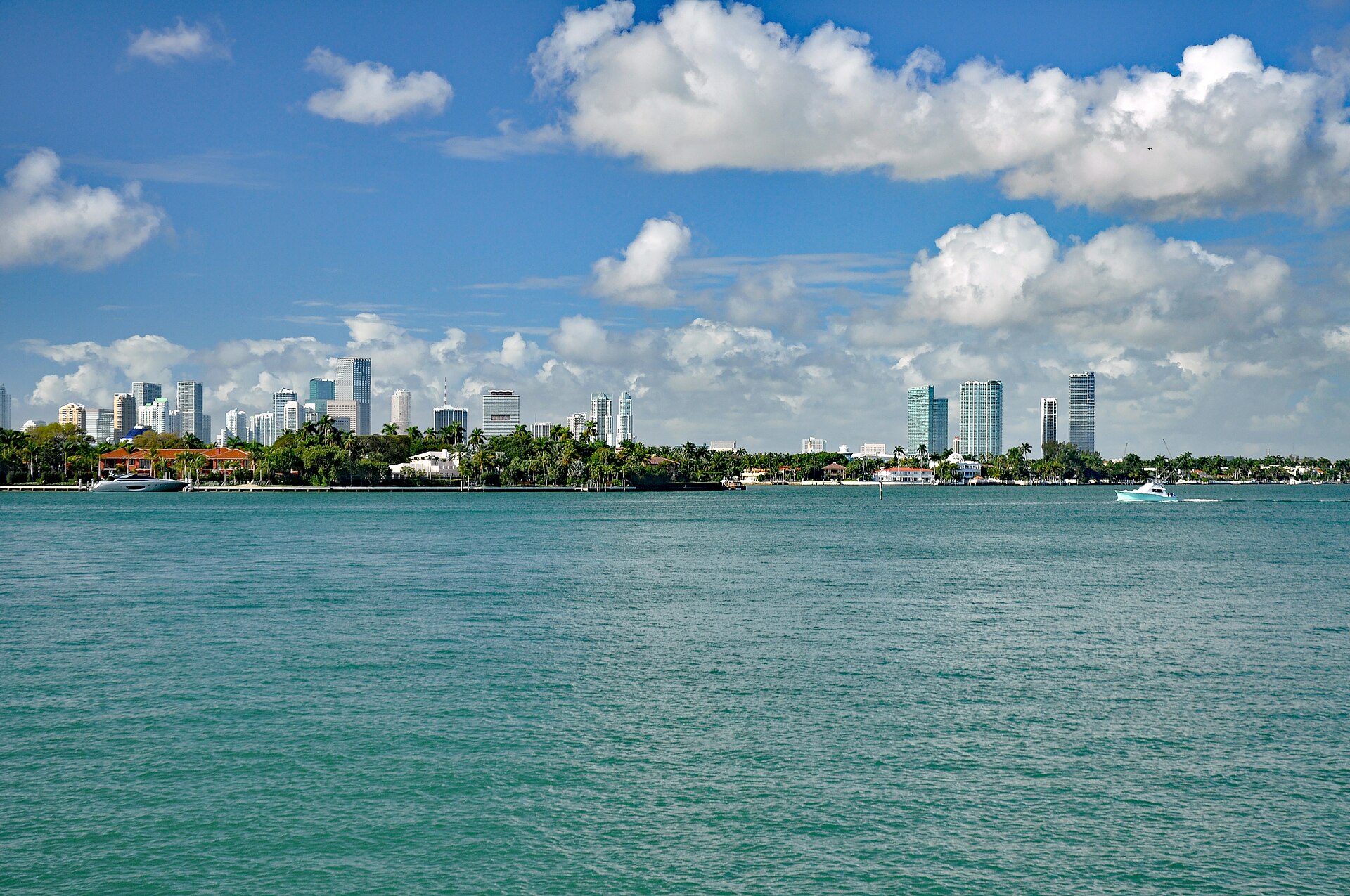
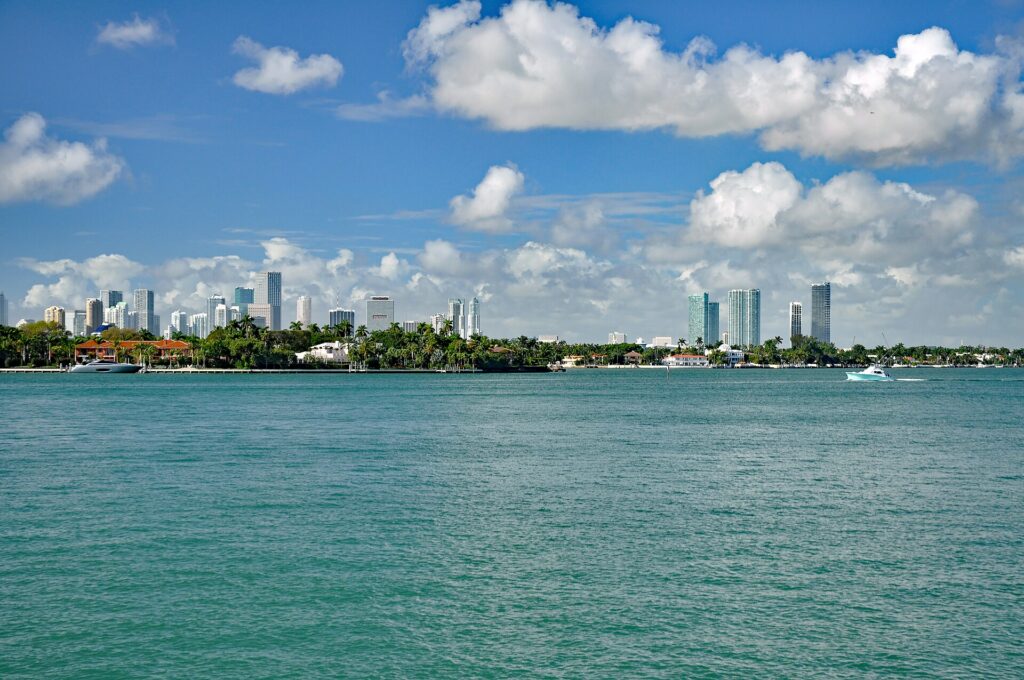
Miami is not one place but several, strung along a bay and a barrier island, and first-time visitors who only see the sand in front of their hotel leave with half the picture. South Beach is the postcard: pastel Art Deco hotels, a wide white beach and Ocean Drive at night. But the city across the causeways is just as interesting: a downtown that has grown into a forest of glass towers around a bayfront art museum, the murals of Wynwood, the Cuban cafés and domino tables of Little Havana, the banyan-shaded streets of Coconut Grove and Coral Gables, a food scene that runs from colada windows to some of the best Peruvian and Haitian cooking in the country, and, an hour to the west, the Everglades, one of the strangest and most important wild places in North America. This guide covers the sights that earn a day, the neighborhoods worth a half-day, the food, the big events and the sports, the day trips that make Miami a base as much as a beach, and the practical details that turn a resort stay into a real trip.
If you are still comparing cheap flights to Miami, read this alongside our guides to the best time to fly to Miami and whether you need a car. Between the three you can plan the whole trip.
Miami at a glance for first-timers
- Airport: Miami International (MIA), about 13 km (8 miles) west of downtown and roughly twice that from South Beach. Metrorail’s Orange Line runs from the airport to downtown, the Airport Flyer bus goes straight to Miami Beach, and taxis, ride-hail and the Rental Car Center are all reached from the terminal. Fort Lauderdale’s airport, about 45 minutes north, is the main alternative. See our MIA airport guide.
- Getting around: the free Metromover loops through downtown and Brickell, Metrorail links the airport, downtown, Coconut Grove and Coral Gables, and free trolleys run in Miami Beach and several city neighborhoods. South Beach itself is flat and easy on foot or by bike. For the Everglades, the Keys and the far-flung neighborhoods, most visitors drive or use ride-hail.
- Money: US dollars. Sales tax is added at the register, hotels add their own taxes and often a nightly resort fee, and tipping 18 to 20 percent is expected. Many restaurants in Miami Beach add an automatic service charge to the bill, so read it before you tip on top.
- Weather: warm all year. The dry season from November to April is sunny and pleasant and is the high season; the wet season from May to October brings heat, humidity and short, violent afternoon storms, and hurricane season runs from June through November. Our month-by-month guide has the detail.
- Where to stay: South Beach for the beach, the Art Deco District and the nightlife; Mid-Beach and North Beach for quieter sand and bigger resorts; Brickell and downtown for the skyline, the bay and the Metromover; Coconut Grove or Coral Gables for a leafy, local feel.
South Beach and the Art Deco District
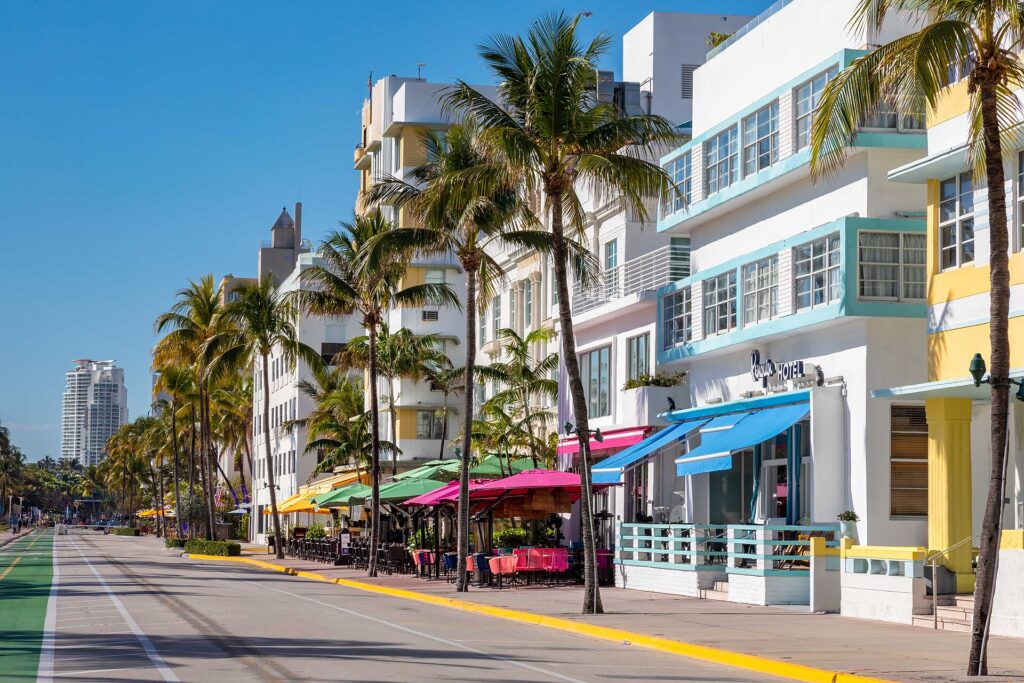
South Beach, the southern end of the Miami Beach barrier island, is where most visitors start, and it earns its reputation. The Art Deco Historic District, the first twentieth-century neighborhood placed on the National Register of Historic Places, holds hundreds of low-rise hotels and apartment buildings from the 1930s and 1940s, painted in pastels and trimmed with neon, porthole windows and racing stripes. The best way to see it is on foot: the Miami Design Preservation League runs guided walking tours from its Art Deco Welcome Center on Ocean Drive, and a slow walk along Ocean Drive, Collins Avenue and Washington Avenue covers the highlights. Ocean Drive is at its most photogenic in the early morning and after dark, when the neon comes on. Across the road, the beach runs north for miles, backed by the dunes and Lummus Park, with the brightly painted lifeguard towers that have become a symbol of the city. At the southern tip, South Pointe Park has a pier, lawns and the best view of the cruise ships leaving PortMiami at dusk. Inland, Lincoln Road is a pedestrian mall of shops and restaurants designed by Morris Lapidus, and Española Way is a short, Mediterranean-style street of cafés and bars.
Wynwood and the Design District
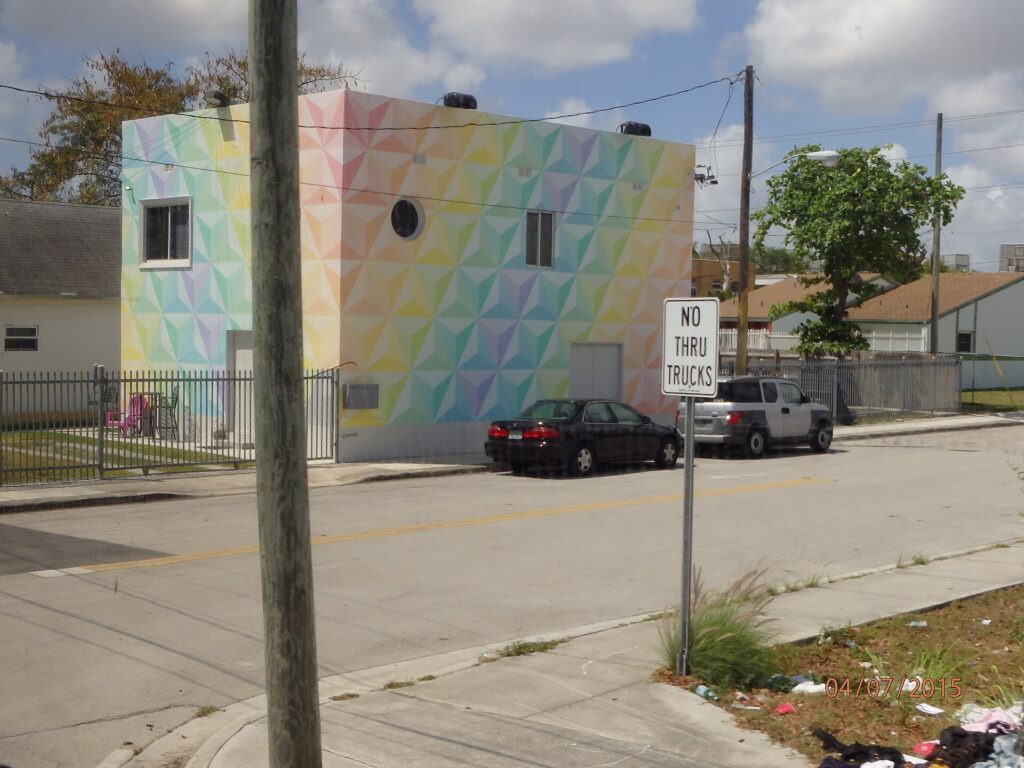
Twenty years ago, Wynwood was a district of warehouses and garment factories north of downtown; now it is one of the largest collections of outdoor murals in the world. The Wynwood Walls, a ticketed open-air gallery of large-scale works by street artists from around the globe, is the centerpiece, but the murals cover almost every wall for blocks in every direction, and walking the streets around NW 2nd Avenue is free. The neighborhood has filled in with breweries, galleries, coffee shops, restaurants and bars, and it is busiest on the second Saturday of the month, when the galleries hold their Art Walk. Just north, the Design District went the other way, from furniture showrooms to a compact grid of luxury flagship stores wrapped in striking architecture and public art. It is also home to the Institute of Contemporary Art, Miami, a free museum with a sculpture garden, and a cluster of design-led restaurants. Between them, the two neighborhoods show the art-world side of Miami that Art Basel brings to a peak every December.
The water: Biscayne Bay, Key Biscayne and the beaches
Miami is built around water, and some of its best days are spent on or beside it. Downtown’s Bayfront Park and Museum Park open onto Biscayne Bay, and the Baywalk links them to the Brickell waterfront. The causeways to the beach are sights in themselves: the Venetian Causeway, a low bridge hopping across a chain of residential islands, is a favorite route for cyclists and runners, while the MacArthur Causeway gives the classic view of the cruise ships and Star Island. South of downtown, the Rickenbacker Causeway crosses to Key Biscayne, where Crandon Park has a calm family beach and Bill Baggs Cape Florida State Park has a restored 1820s lighthouse, a quiet beach and a sea-wall trail looking back at the skyline. On Miami Beach, the character changes as you go north: South Beach is lively, Mid-Beach is lined with grand resorts and the paved Beachwalk, and North Beach and Surfside are quieter and more residential. Haulover Park, north of Bal Harbour, has a beach and an inlet where many fishing and sailing charters leave. Boat tours of the bay and Millionaire’s Row leave from Bayside Marketplace downtown, and paddleboard and kayak rentals are easy to find on the calm bay side of the islands.
Neighborhoods worth a half-day
Little Havana
West of downtown along SW 8th Street, known as Calle Ocho, Little Havana is the heart of Cuban Miami. Stop at a ventanita, a walk-up coffee window, for a colada to share, watch the domino players in Máximo Gómez Park, look at the Walk of Fame stars and the murals, visit the cigar shops and the historic Tower Theater, and stay for a plate of ropa vieja. On the last Friday of each month, Viernes Culturales brings music and art to the street, and the Calle Ocho festival in March is one of the largest street parties in the country.
Brickell and downtown
Brickell, just south of the Miami River, is the city’s financial district and its densest neighborhood, a canyon of high-rise condos with rooftop bars and restaurants and the Brickell City Centre shopping complex. Downtown, to the north, has the museums in Museum Park, Bayside Marketplace, the Kaseya Center arena, the Freedom Tower and the Adrienne Arsht Center for the Performing Arts. The free Metromover links all of it, and riding its elevated loops is a good tour in its own right.
Coconut Grove
The Grove, on the bay south of Brickell, is one of the oldest settlements in the area, with shady streets under banyan trees, a marina full of sailboats, waterfront parks and a village center of shops and cafés. It is where Miami goes for a slower afternoon, and Vizcaya Museum and Gardens, a 1910s Italian Renaissance-style villa with formal gardens on the bay, is on its northern edge.
Coral Gables
A planned city from the 1920s, Coral Gables is all Mediterranean Revival architecture, tree canopy and wide boulevards. The Venetian Pool, a public swimming pool carved from a coral rock quarry with grottoes and waterfalls, is unique; the Biltmore Hotel is a landmark; and Miracle Mile is the main shopping street. Fairchild Tropical Botanic Garden, south of the city, is one of the finest tropical gardens in the country.
Little Haiti and the MiMo District
Little Haiti, north of the Design District, is the center of Haitian culture in the US, with the Little Haiti Cultural Complex, Caribbean markets, record shops and restaurants serving griot and diri djon djon. Farther north along Biscayne Boulevard, the MiMo District preserves the Miami Modern motels and buildings of the 1950s and 1960s, with a growing number of good restaurants.
Museums, culture and family attractions
The Pérez Art Museum Miami, in Museum Park on the bay, is the city’s flagship modern and contemporary art museum, and its building, with hanging gardens and a shaded terrace over the water, is worth the visit even before you go inside. Next door, the Phillip and Patricia Frost Museum of Science has a planetarium and a three-level aquarium that is a hit with children. On Miami Beach, The Bass shows contemporary art, and The Wolfsonian, run by Florida International University, has a remarkable collection of design and propaganda from the late nineteenth and early twentieth centuries. The Holocaust Memorial Miami Beach is small and deeply moving. The New World Center, a Frank Gehry building that is home to the New World Symphony, projects some concerts onto its outdoor wall for free WALLCAST screenings in the park, one of the best free evenings in the city. Downtown, the HistoryMiami Museum tells the story of South Florida, and the Adrienne Arsht Center hosts Broadway tours, opera and ballet. For families, Zoo Miami in the south of the county is large and suited to the climate, and Jungle Island on Watson Island has bird shows and animal encounters. For concerts, shows and games during your dates, our Miami events page lists what is on sale.
Art Basel and the big events
Miami’s calendar is packed, and a few events shape the city. Art Basel Miami Beach, in early December, is the big one: the art fair fills the Miami Beach Convention Center, dozens of satellite fairs and pop-ups spread across Wynwood, the Design District and the beach, and the parties run all week. Hotel rates are at their peak and restaurants are booked out, so plan months ahead or avoid those dates. In late March, Miami Music Week and the Ultra Music Festival bring the electronic music world to town, and the Miami Open tennis tournament runs at Hard Rock Stadium in Miami Gardens around the same time. In early May, the Formula 1 Miami Grand Prix fills the same stadium complex. Earlier in the year, Art Deco Weekend in January, the South Beach Wine and Food Festival in late February, the Coconut Grove Arts Festival and the Miami International Boat Show in February, and the Calle Ocho festival in March all draw crowds. Spring break brings college students to South Beach through March, and Miami Beach has in recent years introduced curfews and security measures on the busiest weekends. If you are coming for any of these, book the hotel before the flight; if you are not, check the dates and plan around them.
Sports
Miami is a four-team town, plus a soccer club with a global following. The Miami Heat play basketball at the Kaseya Center on the downtown waterfront, walkable from the Metromover and Bayside, and a game there is a lively night. The Miami Dolphins play football at Hard Rock Stadium in Miami Gardens, north of the city, from September to January; the University of Miami Hurricanes play there too. The Miami Marlins play baseball at loanDepot park, a retractable-roof stadium in Little Havana that keeps out the summer rain and heat. The Florida Panthers play hockey in Sunrise, west of Fort Lauderdale, and Inter Miami CF, the MLS club, has drawn huge interest since Lionel Messi arrived; it is moving from its temporary home in Fort Lauderdale to a new stadium at Miami Freedom Park, near the airport. Check what is on sale in Miami for your dates before you book flights.
What to eat, and where
Miami’s food is shaped by its Caribbean and Latin American communities, and eating well is one of the best reasons to leave the beach. Start with Cuban food: a Cuban sandwich, croquetas, pastelitos filled with guava and cheese, and a cafecito or a colada from a coffee window. Little Havana is the obvious place, and Versailles on Calle Ocho is the landmark, but good Cuban bakeries and cafés are all over the city, including near the airport and in Hialeah. Then explore further: Peruvian ceviche and Venezuelan arepas in Doral and Brickell, Haitian griot in Little Haiti, and Colombian and Nicaraguan kitchens across the western suburbs. From mid-October into early May, stone crab claws are in season, served cold with mustard sauce; Joe’s Stone Crab in South Beach, open since 1913, is the classic. Key lime pie is on nearly every dessert menu. For a big night, Brickell, the Design District and Miami Beach have the city’s high-end restaurants, and in August and September the Miami Spice program offers fixed-price menus at many of the best restaurants during the slow season, one of the best dining deals in the city.
Miami through the seasons
Miami is warm in every month, but the seasons are real, and what you do depends on when you come. Winter (December to February) is the high season: dry, sunny, warm by day and pleasant in the evening, with cool fronts that occasionally drop the temperature enough for locals to put on jackets. The beaches, restaurants and hotels are at their busiest, and Art Basel, the holidays and the festival calendar fill the weeks. Spring (March to May) is hotter and still dry until late May, with spring break, Ultra, the Miami Open and the Grand Prix bringing big crowds. Summer (June to August) is hot and humid, with afternoon thunderstorms most days; mornings are the time for the beach and outdoor sights, and the afternoons are for museums and long lunches. Hotel rates drop, the ocean is warm, and many locals think it is the best time for the water. Fall (September to November) is the peak of hurricane season, the quietest and cheapest time to visit, and it improves rapidly in November as the humidity falls. Our month-by-month guide has the fare patterns that go with each season.
Miami with kids
Miami is a good city for children, especially if you plan around the heat. The beaches are the main event: Crandon Park on Key Biscayne and the beaches in Mid-Beach and Surfside are calmer and quieter than South Beach, and the lifeguard towers make it easy to choose a supervised spot. The Frost Museum of Science, with its aquarium and planetarium, is the best rainy-afternoon option, and Zoo Miami, Jungle Island and the Venetian Pool in Coral Gables each fill a morning. Watching the cruise ships from South Pointe Park, riding the free Metromover above downtown, and a boat tour on Biscayne Bay are all easy wins. For a bigger outing, the Shark Valley tram tour in the Everglades, with alligators lying beside the path, is unforgettable for children of most ages. Pack sun protection, plan outdoor time for the morning, and our family car rental guide covers the vehicle question.
Miami on a budget
Much of the best of Miami costs nothing: the beach, the Art Deco District, South Pointe Park, the Wynwood murals outside the Walls, Little Havana’s streets and domino park, the Venetian Causeway on foot or by bike, the WALLCAST concerts at the New World Center, the ICA Miami in the Design District, and the Metromover and the city’s free trolleys. Stay a few blocks back from Ocean Drive and Collins, or in Mid-Beach or North Beach, and room rates drop sharply; always check whether a resort fee is added to the nightly rate before you book. Eat at Cuban cafés and bakeries, the Latin American kitchens in the western suburbs, and happy hours in Brickell and Wynwood. Summer and early fall are much cheaper for hotels, and Miami Spice makes the good restaurants affordable in August and September. Compare South Beach rates on our South Beach hotel page before you decide where to stay.
Day trips from Miami
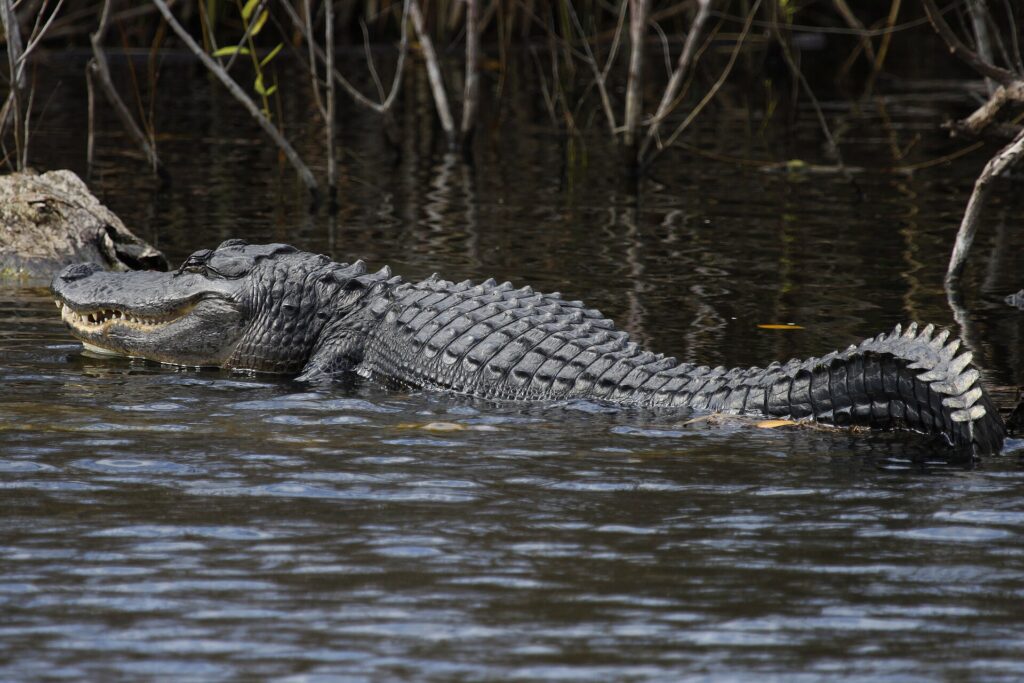
The Everglades are the essential day trip. Everglades National Park has two easy entrances from Miami: Shark Valley, on the Tamiami Trail about an hour west, where a paved 15-mile loop can be walked, cycled or ridden on a tram tour to an observation tower, and the Ernest F. Coe Visitor Center near Homestead, from which the Anhinga Trail boardwalk offers some of the best alligator and bird viewing in the park. Airboat rides are run by private operators along the Tamiami Trail outside the park. Biscayne National Park, south of the city, is almost all water, with boat tours, snorkeling and paddling from its visitor center. The Florida Keys begin an hour south: Key Largo, with John Pennekamp Coral Reef State Park and its glass-bottom boats and snorkeling trips, is an easy day, while Key West, at the end of the Overseas Highway across the Seven Mile Bridge, is about three and a half to four hours each way and is better as an overnight; the Florida Keys tourism council covers the islands. North of the city, Fort Lauderdale has a beach promenade and canals, and Palm Beach has grand mansions and Worth Avenue, both reachable by Brightline train. Most of these are car trips; see our Miami car rental page, and if you are combining Miami with the theme parks, our Orlando to Miami drive guide covers the route. Greater Miami and the Beaches, the official tourism board, covers the wider region.
Two sample itineraries
Three days, no car
Day one: an early walk through the Art Deco District and along Ocean Drive, the morning on the beach at Lummus Park, lunch on Española Way, the Wolfsonian or the Bass in the afternoon, sunset at South Pointe Park and dinner in South Beach. Day two: a ride over the causeway to downtown, the Pérez Art Museum and a walk along the bay, lunch in Brickell, then Wynwood’s murals and breweries in the afternoon and a meal in the Design District. Day three: Little Havana in the morning for coffee and dominoes, Vizcaya and Coconut Grove in the afternoon, and a Heat game or a rooftop bar in Brickell at night.
Five days, with the Everglades and the Keys
Add a car for the last two days: one for the Everglades at Shark Valley and a drive back through Coral Gables, and one for Key Largo and the reef, or drive to Key West and stay the night, returning the car at the airport on the way home.
Practical details
- Transit: the Metromover is free; Metrorail and Metrobus take an EASY Card, the transit app or, on most readers, a contactless bank card. Miami-Dade Transit has maps and fares; our transit-versus-car guide goes into detail.
- From MIA: the MIA Mover to the Miami Intermodal Center for Metrorail and the Rental Car Center, the Airport Flyer bus to Miami Beach, or a taxi or ride-hail from the arrivals level. The airport’s site covers ground transport.
- Weather: light clothes, strong sun protection and a rain jacket or umbrella in every season, plus a light layer for air-conditioned interiors and the occasional cool winter evening. The National Weather Service’s Miami office is the forecast to check, especially in hurricane season.
- Time zone: Eastern, the same as New York.
- Entry requirements: Canadians need a valid passport; visitors from Visa Waiver Program countries need an approved ESTA before boarding, and everyone else needs a visa. U.S. Customs and Border Protection is the authoritative source.
- Safety: the tourist districts are as safe as any big American city’s; use the usual care on quiet streets late at night, swim only near lifeguards and heed the beach flags for rip currents, and never leave valuables visible in a parked car.
Frequently asked questions
How many days do you need in Miami?
Three full days covers South Beach, downtown, Wynwood and Little Havana; add a day for the Everglades and one or two more for the Keys.
What is the number one thing to do in Miami?
Walk the Art Deco District and spend the morning on South Beach. Then cross the causeway, because the city beyond the beach is what most visitors miss.
Is Miami walkable?
South Beach, downtown, Brickell, Wynwood, Coconut Grove and the center of Coral Gables are, and the free Metromover links downtown and Brickell. Between neighborhoods, distances and the heat make transit, ride-hail or a car more practical.
Do I need a car in Miami?
Not if you are staying in South Beach or Brickell and sticking to the city. For the Everglades, the Keys and the suburbs, yes; rent it for those days only.
Is Miami expensive?
In the winter high season and during Art Basel, spring break and the big festivals, very. From June to October, hotel rates fall sharply, and much of the best of the city is free.
What is Miami known for?
South Beach and its Art Deco hotels, Cuban culture in Little Havana, Latin American influence across the city, the Wynwood murals, Art Basel, the Everglades on its doorstep, and a skyline that has grown faster than almost any in the country.
Ready to go? Compare flights to Miami, find a place to stay with our South Beach hotel search, and if the Everglades or the Keys are on the list, price a rental car for those days.
Keep planning with TicketScanner
- Cheap flights to Miami
- Where to stay: South Beach — beach, Art Deco and nightlife
- Miami car rentals — for the Everglades and the Keys
- Events in Miami — Heat, Dolphins, Marlins, concerts and shows on sale
- Best time to fly to Miami: month by month
- Miami: rent a car or use transit?
- Miami International (MIA) airport guide
- Driving Orlando to Miami
- Things to do in Cancun
Leave a Reply