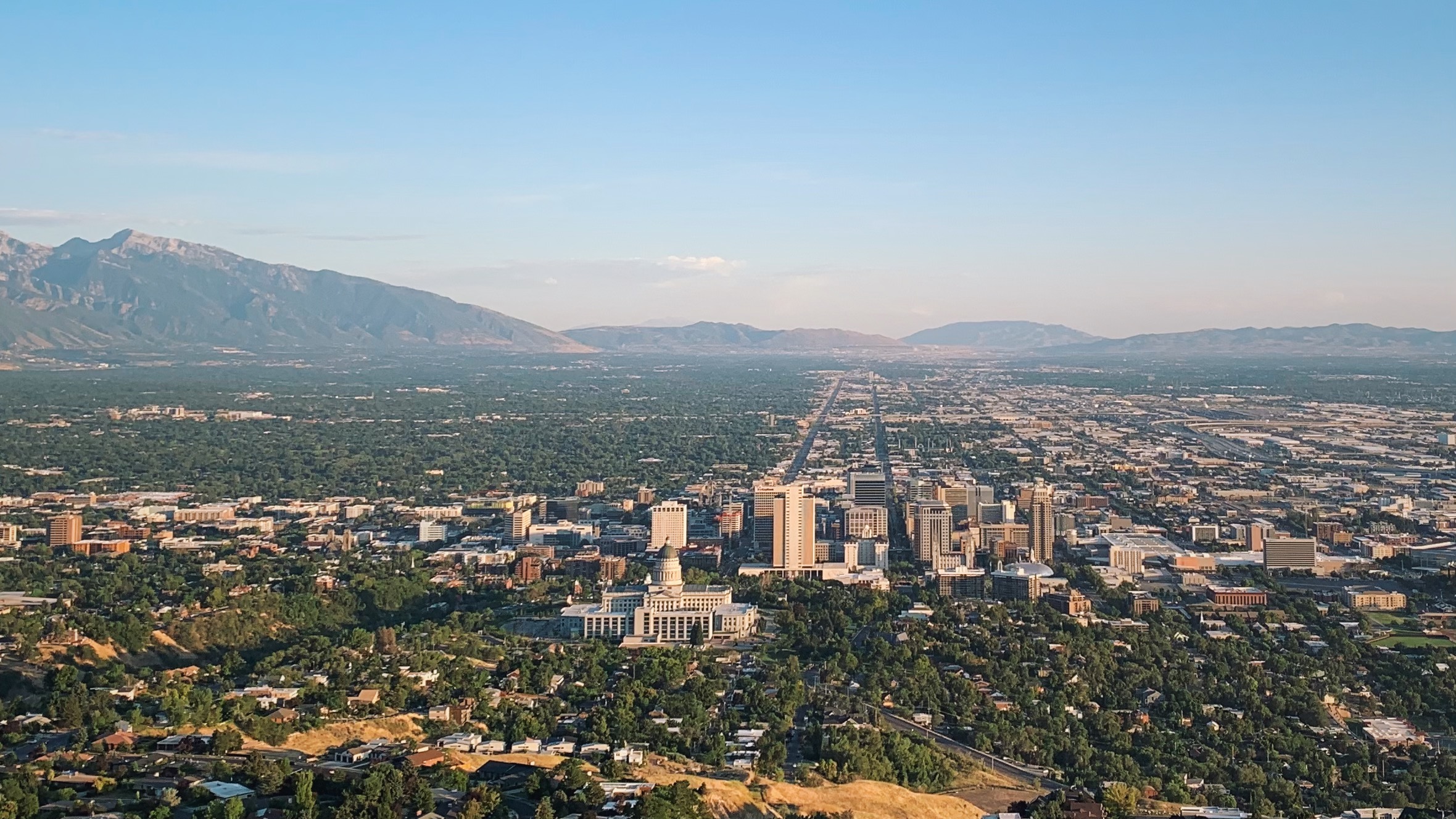
Salt Lake City gets treated as a connection. Delta runs one of its biggest hubs here, so millions of travelers see the airport and nothing else, and many who do leave the terminal head straight up a canyon to ski or south toward the national parks. They miss a city with far more going on than its quiet reputation suggests: a downtown laid out around Temple Square, the historic heart of a worldwide church, a domed Capitol on a hill with the whole valley below it, a natural history museum that ranks among the best in the West, walkable neighborhoods full of coffee shops and independent restaurants, two major-league teams in the same downtown arena, and a food and drink scene that has outgrown every joke about Utah’s liquor laws. And the mountains are not ninety minutes away but twenty-five: seven ski areas sit within about an hour of downtown, with the Great Salt Lake on the other side of town. This guide covers the sights that earn a day, the neighborhoods worth a half-day, the food, the skiing and the sports, the day trips that make Salt Lake City a base as much as a destination, and the practical details that turn a layover into a trip.
If you are still comparing cheap flights to Salt Lake City, read this alongside our guides to the best time to fly to Salt Lake City and whether you need a car (for downtown, often not; for the canyons and the parks, usually yes). Between the three you can plan the whole trip.
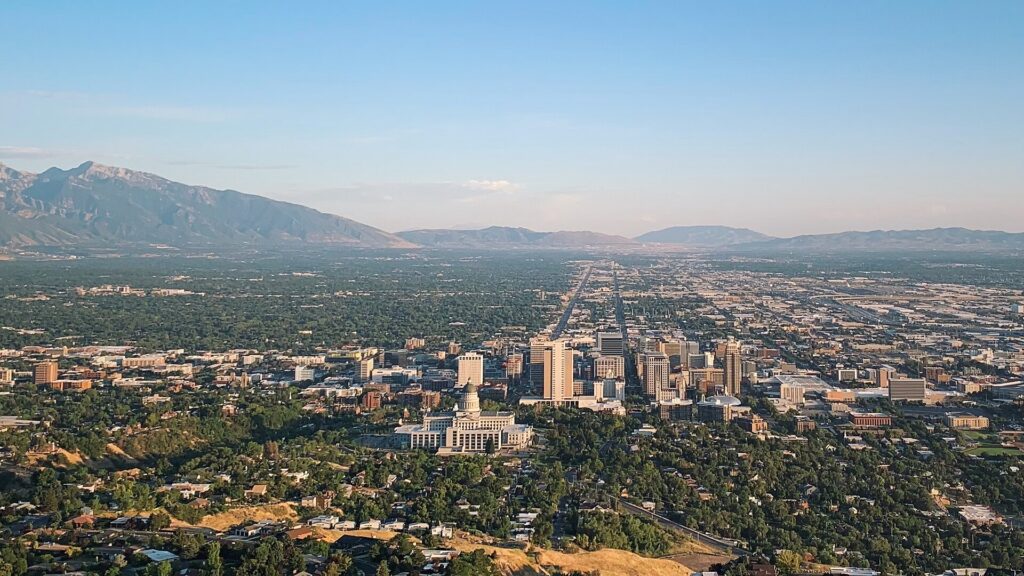
Salt Lake City at a glance for first-timers
- Airport: Salt Lake City International (SLC), about 6 km (4 miles) west of downtown, rebuilt from scratch and opened in stages from 2020. The TRAX Green Line runs from the terminal to downtown in roughly 20 minutes, and it is one of the closest big airports to its city center in the country. See our SLC airport guide.
- Getting around: downtown is compact and TRAX light rail is free within the downtown Free Fare Zone; the University of Utah, Sugar House and the airport are all on rail. For the ski canyons, Park City and the national parks, most visitors rent a car. Our car-versus-transit guide explains when it helps.
- Money: US dollars. Sales tax is added at the register rather than shown on the tag, and hotel taxes are higher again. Tipping 18 to 20 percent in restaurants is expected.
- Altitude and air: the city sits about 1,300 m (4,300 feet) above sea level and the ski areas are far higher. The air is dry, so drink more water than usual and wear sunscreen in every season.
- Weather: four distinct seasons: hot, dry summers, a long clear fall, snowy winters with occasional inversion haze in the valley, and a changeable spring. Our month-by-month guide has the detail.
- Where to stay: downtown near Temple Square for the sights, the arena and TRAX; Sugar House for a neighborhood feel; the airport area for early flights; Park City or the canyon lodges if skiing is the whole point. Our Salt Lake City hotel search covers them all.
Temple Square and downtown
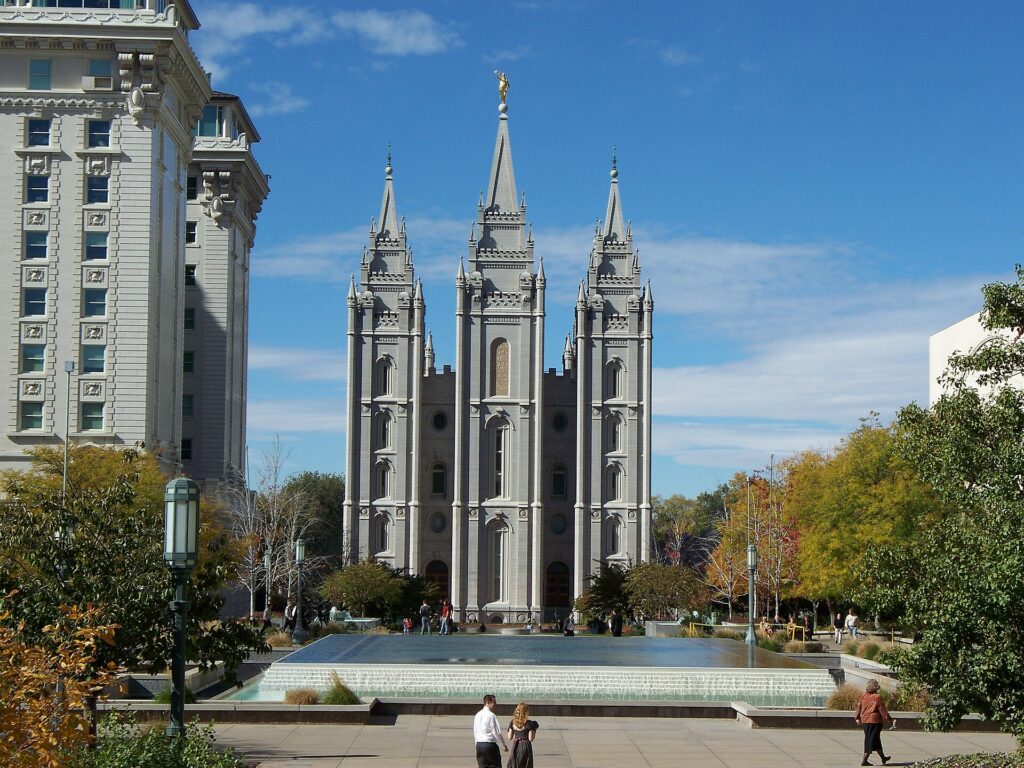
Temple Square is where the city began and where most first visits start. The pioneers who arrived in the valley in 1847, members of The Church of Jesus Christ of Latter-day Saints, laid out their city from this point, and the block and the surrounding campus remain the church’s worldwide headquarters. The granite Salt Lake Temple, completed in 1893 after forty years of construction, has been closed for a long seismic renovation, and the church plans a public open house with free tickets before the temple is rededicated; check the official Temple Square site for reservations and the current state of the grounds. After it is rededicated, only church members entering for worship go inside, but the gardens, the visitors’ center and much of the campus are open to everyone. The domed Tabernacle, famous for its acoustics and its enormous organ, is home to the Tabernacle Choir at Temple Square, whose weekly Music & the Spoken Word broadcast on Sunday mornings is free to attend. Across North Temple, the 21,000-seat Conference Center has a landscaped rooftop garden with a view of the Wasatch, and the Family History Library, the largest genealogical library in the world, is free and open to anyone who wants to trace their own ancestors. The Beehive House, the home of Brigham Young, offers free tours. Visitors of any faith, or none, are welcome throughout; dress is casual, and volunteers offer tours and answer questions without pressure.
Immediately south, City Creek Center is an open-air shopping district with a restored creek running through it and a retractable glass roof. West of the square, the Delta Center hosts the Utah Jazz and the NHL’s Utah Mammoth, and the Salt Palace Convention Center fills the blocks to the south. Abravanel Hall, home of the Utah Symphony, and the Eccles Theater, where Broadway tours stop, are both a short walk away. Our downtown and Temple Square hotel page lists the options in the center.
Capitol Hill and City Creek Canyon
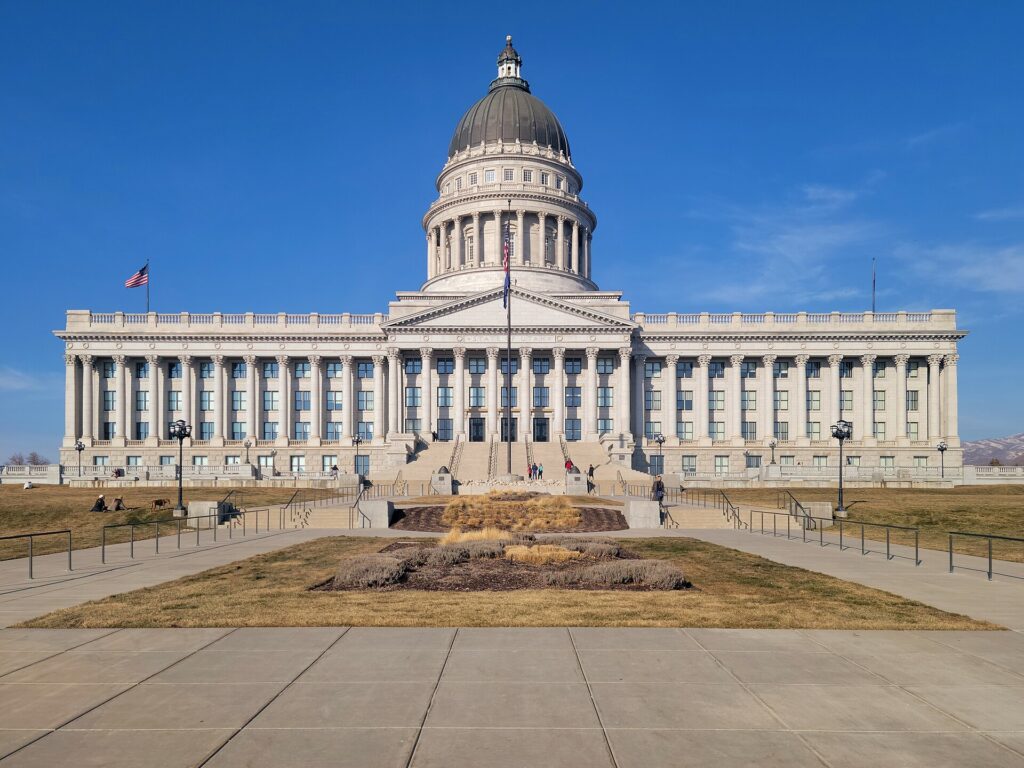
The Utah State Capitol sits on the hill directly north of downtown, a granite building with a great central dome, completed in 1916 and restored after a major seismic retrofit in the 2000s. It is free to enter, the rotunda and the chambers are open when the legislature is not sitting, and free guided tours run on weekdays; the steps give the best easy view in the city, straight down State Street to the southern end of the valley, with the Oquirrh Mountains to the west and the Wasatch to the east. East of the Capitol, City Creek Canyon is a narrow wooded canyon that runs straight out of the city into the mountains, with a paved road that is closed to cars on alternating days in summer so walkers and cyclists have it to themselves. Memory Grove, at the canyon mouth, is a quiet war-memorial park a few minutes’ walk from downtown. For a longer hike with a summit, Ensign Peak, a short, steep climb from the top of the Avenues, is where the pioneer leaders are said to have surveyed the valley in 1847, and it has the city’s best sunset view.
The east bench: museums, gardens and the pioneer story
The foothills above the University of Utah hold the city’s best cluster of attractions. The Natural History Museum of Utah, in the Rio Tinto Center, a building terraced into the hillside, is the highlight: a wall of dinosaur skulls and skeletons from Utah’s extraordinary fossil beds, galleries on the Great Salt Lake, the state’s Native peoples and its geology, and a top-floor terrace with a view across the valley. Next door, Red Butte Garden is a large botanical garden with foothill trails and a summer outdoor concert series that sells out quickly. Down the hill, This Is the Place Heritage Park marks the spot where Brigham Young is said to have first looked out over the valley; it has a monument and a reconstructed pioneer village with costumed interpreters, craft demonstrations and a small train, and it tells the settlement story, including the Native nations who were already here. The Hogle Zoo is across the road, and the Utah Museum of Fine Arts is on the campus below. TRAX’s Red Line reaches the university, and buses cover the rest.
Neighborhoods worth a half-day
Sugar House
A few miles southeast of downtown and reached on the S-Line streetcar, Sugar House is the city’s liveliest neighborhood away from the center: independent shops, bookstores, restaurants and bars along Highland Drive and 2100 South, and Sugar House Park, a big green space with a pond and a view of the Wasatch. It is the easiest place in the city to spend an unplanned afternoon.
9th and 9th and 15th and 15th
Named for their intersections, these two small commercial nodes east of downtown are the city’s most charming, with cafés, a vintage movie theater, bakeries and restaurants set among tree-lined streets of bungalows. Liberty Park, home of Tracy Aviary, is a short walk from 9th and 9th.
The Avenues
Climbing the hill northeast of Temple Square, the Avenues is the city’s oldest residential district, a grid of Victorian houses and small corner restaurants with views of downtown. Walk up from the Capitol, take in Ensign Peak, and come back down for dinner.
Central Ninth and the Granary District
South and west of downtown, these former warehouse and light-industrial areas have filled with breweries, distilleries, coffee roasters and restaurants. They are less polished than Sugar House and more fun for it.
Museums, culture and family attractions
Tracy Aviary, in Liberty Park, is one of the oldest bird parks in the country, with free-flight bird shows in summer. The Clark Planetarium, at the Gateway, has a dome theater and free exhibit floors. The Leonardo, a science and art museum in the old downtown library building on Library Square, is aimed at older children and curious adults. The Church History Museum, beside Temple Square, is free and covers the church’s story in art and artifacts. For live performance, the Utah Symphony, Utah Opera and Ballet West are the main companies, and the Eccles Theater hosts Broadway tours. Library Square, with the striking curved glass Salt Lake City Public Library by Moshe Safdie, is worth a visit for the building alone: walk up the sloping outer wall to the rooftop garden. For what is on stage and in the arenas during your dates, our Salt Lake City events page lists concerts, shows and games.
Skiing the Wasatch
Salt Lake City has a claim no other big American city can match: world-class skiing within about 40 minutes of downtown, and the airport less than an hour from the lifts. Utah’s license plates advertise “the Greatest Snow on Earth”, and the dry, light powder that falls on the Wasatch is the reason. Big Cottonwood Canyon holds Solitude and Brighton, the latter a local favorite with night skiing. Little Cottonwood Canyon, next door, holds Snowbird and Alta, two of the most celebrated ski mountains in the country for steep terrain and deep snow; Alta is one of the few resorts in North America that remains skiers only. Park City, over Parleys Canyon on I-80, has Park City Mountain, one of the largest ski areas in the country, and Deer Valley, known for grooming and service. The season generally runs from late November or early December into April, and Snowbird often stays open later. The canyon roads are the catch: they are narrow, steep and prone to closures for avalanche control after big storms, parking at several resorts now requires payment or reservations on busy days, and traction rules apply to cars in winter; our car-versus-transit guide covers the rules and the ski buses. Ski Utah has resort information and snow reports. Salt Lake City hosted the 2002 Winter Games and has been chosen to host again in 2034.
Sports
The Utah Jazz play NBA basketball at the Delta Center, one of the loudest arenas in the league, and since 2024 they have shared it with the city’s NHL team, now called the Utah Mammoth, which has given downtown a winter game-night crowd almost every week from October to April. Real Salt Lake plays MLS soccer, and the Utah Royals play in the NWSL, both at the soccer stadium in Sandy, south of the city and within reach of the TRAX Blue Line. The Salt Lake Bees, the Triple-A baseball team, have moved to a new ballpark in the Daybreak development in South Jordan, at the end of the TRAX Red Line. On fall Saturdays, the University of Utah’s football team fills Rice-Eccles Stadium, where the 2002 Olympic opening ceremony was held. Check what is on sale in Salt Lake City for your dates before you book flights.
What to eat and drink, and where
Salt Lake City’s food scene is more varied than visitors expect. Start with the local classics: fry sauce, the pink mix of ketchup and mayonnaise served with fries at every burger stand; the pastrami burger, a Utah drive-in staple; Utah-style scones, which are fried dough with honey butter rather than anything British; and funeral potatoes, a cheesy potato casserole that turns up at every family gathering. Drive-through “dirty soda” shops, mixing sodas with syrups and cream, are a local obsession. Beyond those, State Street and the west side have excellent Mexican food; the valley’s large Pacific Islander communities mean good Tongan and Samoan food; and downtown, Sugar House, 9th and 9th and the Central Ninth warehouse district hold the ambitious new restaurants. The Downtown Farmers Market in Pioneer Park runs on Saturdays in summer and early fall. As for drinks, Utah’s reputation lags the reality. The city has a thriving craft beer scene, several distilleries and plenty of bars; draft beer is limited to a lower alcohol content than elsewhere, with stronger beers sold in cans and bottles, restaurants serve wine and cocktails with food, and bars admit only those 21 and over. Wine and spirits for home are sold only in state-run liquor stores, which are closed on Sundays and holidays.
Salt Lake City through the seasons
Winter (December to March) is ski season: the canyons get deep, dry snow, the resorts are busy, and the Jazz and the Mammoth are both at home. The valley itself is colder and grayer than the mountains, and on still days a temperature inversion can trap haze over the city for a week, which is exactly when locals head uphill into the sunshine. Spring (April to May) is changeable, with late snow in the city and spring skiing in the canyons into April; it is the quietest, cheapest time in the valley, and the orchards and gardens bloom. Summer (June to August) is hot and dry, with long evenings, the Utah Arts Festival and Utah Pride in June, Pioneer Day on July 24 with a big parade and fireworks, and cool air in the high canyons. Fall (September to October) is the local favorite: warm, clear days, the aspens and maples turning gold and red in the canyons from late September, the Utah State Fair in early September, and the national parks at their most comfortable. The church’s General Conference, held on the first weekend of April and October, brings large crowds downtown; plan hotels around it. Our month-by-month guide has the fare patterns that go with each season.
Salt Lake City with kids
Salt Lake City is one of the most family-oriented cities in the country, and it shows. The Natural History Museum of Utah, with its dinosaurs and hands-on galleries, is the obvious first stop, and the Hogle Zoo and This Is the Place Heritage Park, with its pioneer village and train, sit side by side for a full day. The Leonardo, the Clark Planetarium and the Loveland Living Planet Aquarium in the southern suburbs fill a rainy afternoon. In summer, the fountains at City Creek Center and the splash pads in the city parks are free, and a drive up Big Cottonwood Canyon to a lake at the top makes an easy mountain afternoon. In winter, every resort has a ski school, and Antelope Island’s bison make a memorable day at any time of year. Our family car rental guide covers the vehicle question for canyon and park trips.
Salt Lake City on a budget
A lot of the best of Salt Lake City costs nothing. Temple Square, the Tabernacle Choir broadcast, the Conference Center roof garden, the Family History Library, the Beehive House tour, the Church History Museum and the State Capitol are all free, as are Memory Grove, City Creek Canyon, Ensign Peak and the Library Square rooftop. TRAX rides within the downtown Free Fare Zone cost nothing, and the train from the airport is cheap. Eat well for less on State Street and the west side, at the drive-ins and at the Saturday farmers market. Downtown hotel rates are usually at their most reasonable outside convention weeks, General Conference weekends and the ski holidays. Compare rates by neighborhood on our Salt Lake City hotel search.
Day trips from Salt Lake City
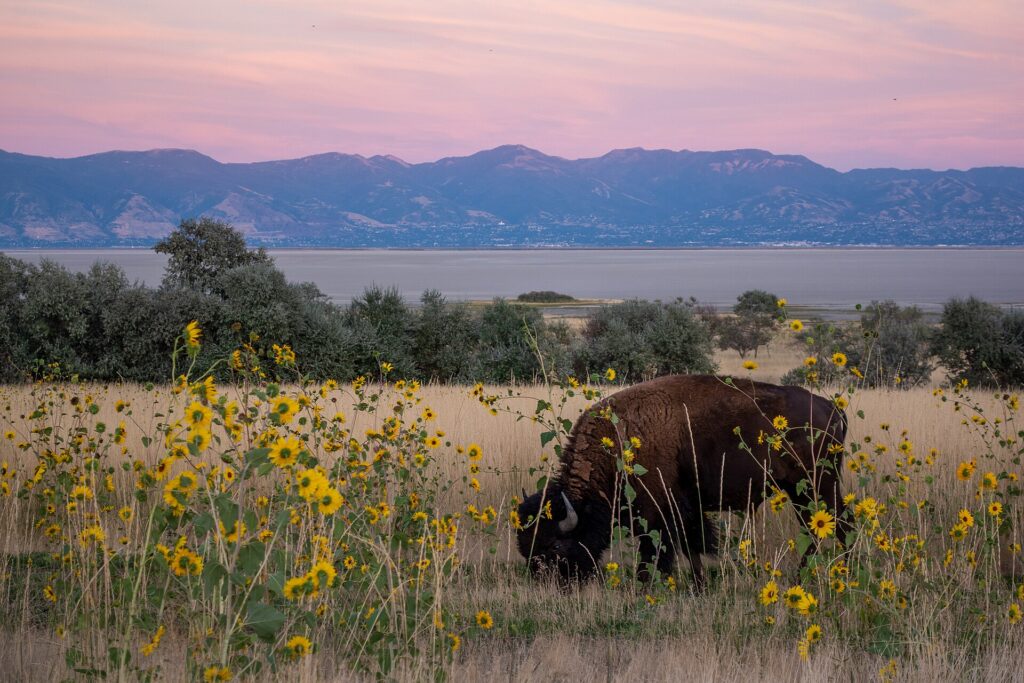
Antelope Island State Park, about an hour north across a causeway into the Great Salt Lake, is the essential lake trip: free-roaming bison and pronghorn, beaches where the salt water holds you up, and wide views across the water; the lake’s level rises and falls from year to year, and biting brine flies can be a nuisance in early summer. Park City, about 40 minutes east on I-80, is a former silver-mining town with a historic Main Street, galleries, restaurants, summer mountain biking and the Utah Olympic Park; the Sundance Film Festival, which put the town on the map every January, is moving to Boulder, Colorado, from 2027. The Bonneville Salt Flats, about 90 minutes to two hours west on I-80, are a blinding white plain famous for land-speed records. Golden Spike National Historical Park, about two hours north, marks where the first transcontinental railroad was completed in 1869. The Alpine Loop through American Fork Canyon, about an hour south and closed in winter, passes Timpanogos Cave and is one of the prettiest fall-color drives in the state. Utah’s famous national parks are farther than most visitors assume: Arches and Canyonlands near Moab are around four hours southeast, Capitol Reef and Bryce Canyon about four, and Zion around four and a half to the south. They are overnight trips rather than day trips, and Arches has used a timed-entry reservation system in recent peak seasons, so check the National Park Service site for current rules before you go. All of these are car trips; see our Salt Lake City car rental page. For a longer road trip, the drive between Salt Lake City and Denver takes about eight hours; our Denver to Salt Lake City route guide covers it, and our guide to things to do in Denver covers the other end. Utah’s official tourism site covers the wider state.
Two sample itineraries
Two days, no car
Day one: TRAX from the airport, Temple Square and the Conference Center roof garden in the morning, lunch at City Creek or on Main Street, the walk up to the State Capitol and through Memory Grove in the afternoon, and dinner in the Avenues or downtown, with a Jazz or Mammoth game if one is on. Day two: TRAX to the university and a bus up to the Natural History Museum and Red Butte Garden in the morning, This Is the Place in the early afternoon, then the S-Line to Sugar House for the park, the shops and dinner.
Four days, with the mountains and the lake
Add a day in the canyons, skiing in winter or hiking and a scenic drive up Big Cottonwood in summer and fall, and a day split between Antelope Island and the Great Salt Lake shore, or Park City and the Olympic Park. Pick up a car downtown for those days and return it at the airport on the way home; in winter, confirm the car meets the canyon traction rules before you drive up.
Practical details
- Transit: buy tickets at TRAX station machines or through UTA’s app; rides that start and end in the downtown Free Fare Zone are free. UTA has maps, fares and service alerts; our transit-versus-car guide goes into detail.
- From SLC: the TRAX Green Line to downtown, a taxi or ride-hail, or a rental from the counters in the garage facing the terminal. The airport’s site covers ground transport.
- Weather: layers in every season, sunscreen and sunglasses year-round, a warm coat and good footwear from November to March, and water for summer heat. NOAA’s National Weather Service office in Salt Lake City has the forecast and air-quality context during inversions.
- Sundays: the city is quieter on Sundays; most attractions and restaurants open, but some shops close, state liquor stores are shut, and some transit runs a reduced schedule.
- Time zone: Mountain, two hours behind New York and one ahead of Los Angeles.
- Entry requirements: visitors from Visa Waiver Program countries need an approved ESTA before boarding; most others need a visa. The State Department’s travel site is the authoritative source.
- Safety: the areas visitors spend their time in are generally safe; use ordinary big-city awareness around the downtown transit hubs late at night, and in the mountains, check avalanche and weather conditions before heading off the groomed runs or up a trail.
Frequently asked questions
How many days do you need in Salt Lake City?
Two full days covers Temple Square, the Capitol, the east bench museums and a neighborhood; add a day for Antelope Island or Park City, several for skiing, and at least three or four for a loop through the national parks.
What is the number one thing to do in Salt Lake City?
For a first visit, Temple Square and the walk up to the Capitol. In winter, ski the Cottonwood Canyons, which are closer to a major city than any comparable resorts in the country.
Is Salt Lake City walkable?
Downtown is, though the blocks are much longer than in most cities and a walk takes longer than the map suggests. The Avenues, Sugar House and 9th and 9th are pleasant on foot; the rest of the valley assumes a car.
Do I need a car in Salt Lake City?
Not for downtown, the university or Sugar House, all on TRAX or the streetcar. For the canyons, Park City, Antelope Island and the national parks, yes.
Can non-members visit Temple Square?
Yes. The grounds, gardens, visitors’ center, Tabernacle, Conference Center and Family History Library are open to all visitors free of charge. The temple itself is open to the public only during a pre-dedication open house; after rededication, entry is for church members attending worship.
What is Salt Lake City known for?
Temple Square and the church headquarters, the Great Salt Lake, the 2002 Winter Olympics, powder skiing in the Wasatch, the Utah Jazz, and its role as the gateway to Utah’s national parks.
Ready to go? Compare flights to Salt Lake City, find a place to stay with our Salt Lake City hotel search, and if the canyons or the parks are on the list, price a rental car for those days.
Keep planning with TicketScanner
- Cheap flights to Salt Lake City
- Salt Lake City hotels — by neighborhood
- Salt Lake City car rentals — for the ski canyons, Antelope Island and the national parks
- Events in Salt Lake City — Jazz, Mammoth, Real Salt Lake, concerts and shows on sale
- Best time to fly to Salt Lake City: month by month
- Salt Lake City: rent a car or use public transit?
- Salt Lake City International (SLC) airport guide
- Where to stay: downtown and Temple Square
- Driving Denver to Salt Lake City
- Things to do in Denver — the other end of a classic Rockies road trip
Leave a Reply