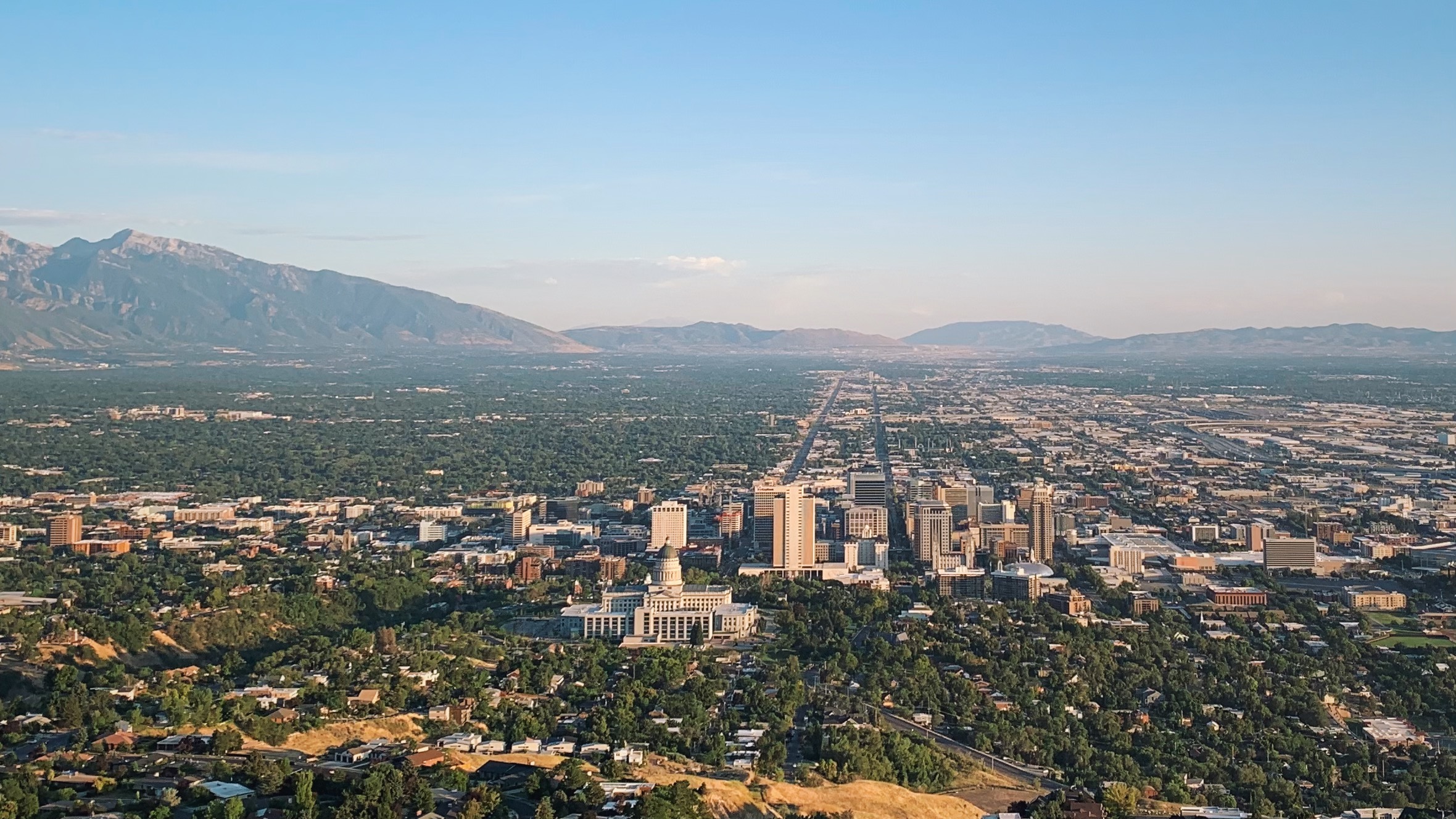
Salt Lake City runs on two calendars at once, and its airfares follow both. In winter it is the most convenient ski gateway in North America, with seven resorts within about an hour of the terminal and powder that draws skiers from both coasts and from overseas. From spring to fall it is one of the two main gateways, with Las Vegas, to Utah’s national parks, and road-trippers pour through on their way to Arches, Bryce Canyon and Zion. Layer on top of that a Delta hub that makes the airport one of the best connected in the West, twice-yearly church conferences that fill every downtown hotel, a July holiday that belongs to Utah alone, and a winter weather pattern, the valley inversion, that no temperature table can show, and you have a city where the “best time” depends entirely on why you are going. This guide walks through the weather month by month, the fare seasons, the events and holidays that move prices, and how to handle the airport.
The short answer
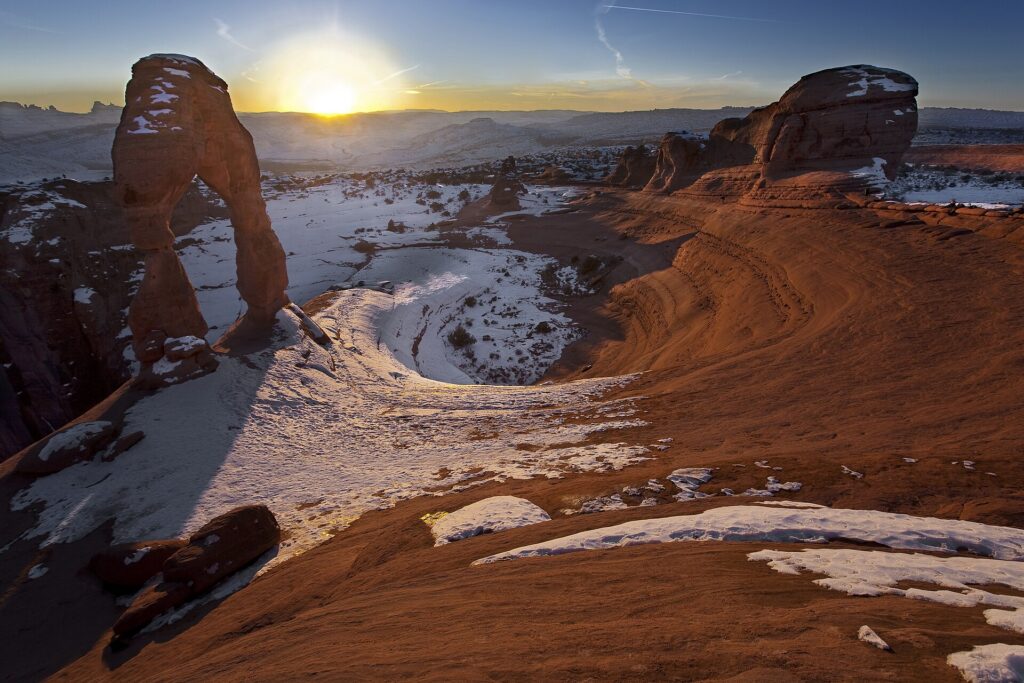
For the city and the canyons without skis, the best value-and-weather windows are mid-May to mid-June, before the summer heat and the peak road-trip season, and mid-September to mid-October, when the canyons turn gold and red, the air is clear and the national parks are at their most comfortable. For skiing, January outside the holiday weekends and early March combine deep snow with fares below the Christmas and Presidents’ Day peaks. The cheapest fares usually come in late April and May, when the ski season is over and the summer has not started, in November before Thanksgiving, and in early December. The most expensive stretches are the Christmas and New Year ski weeks, the Martin Luther King Jr. and Presidents’ Day weekends, March spring-break weeks, and June to August generally, when the parks drive demand. Whatever you choose, run a flexible-date search on our Salt Lake City flights page; a shift of a few days around a holiday weekend or a General Conference can change the fare band entirely.
Salt Lake City’s weather, season by season
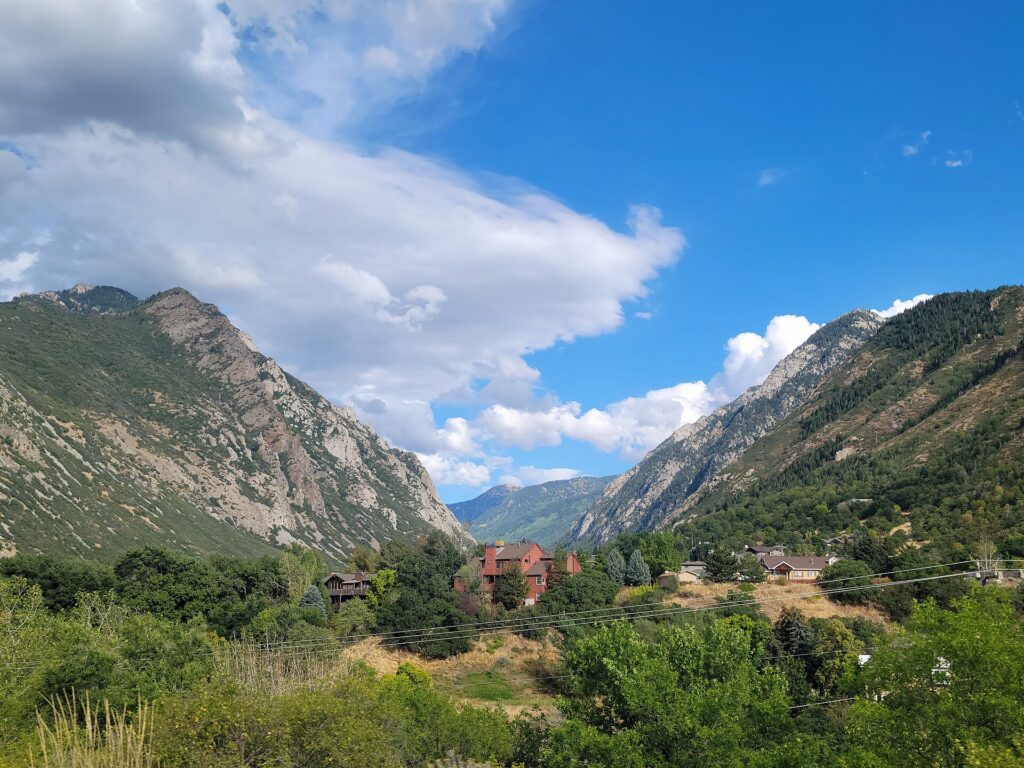
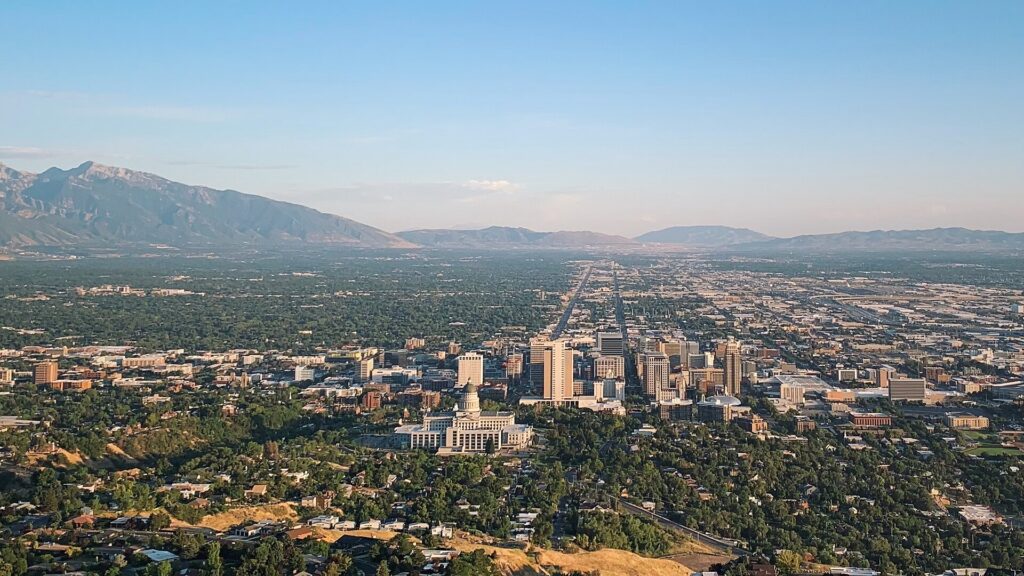
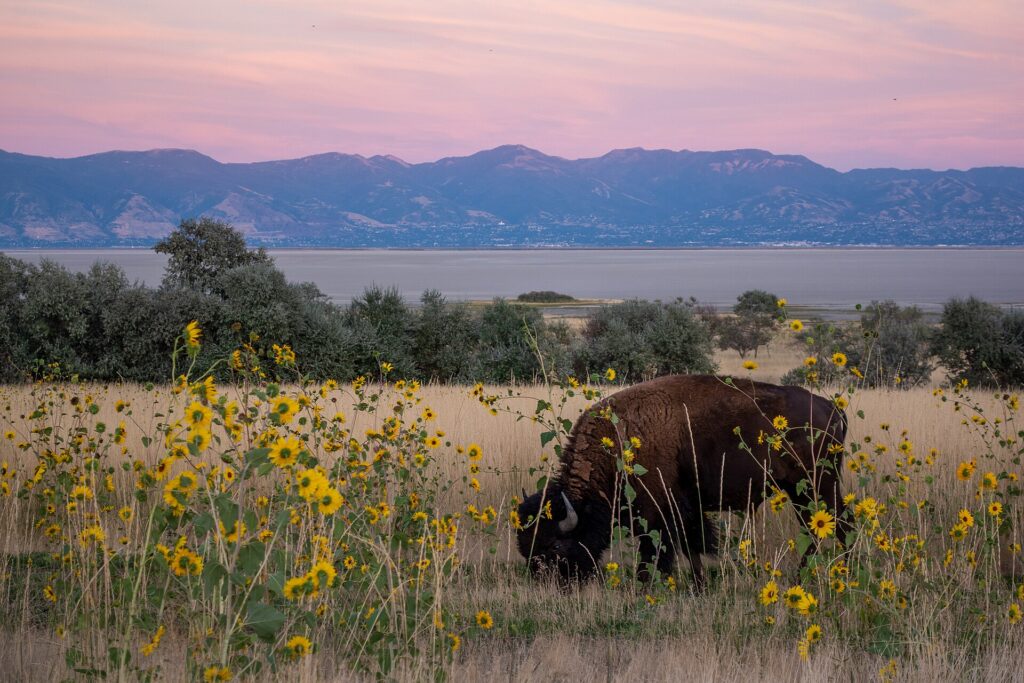
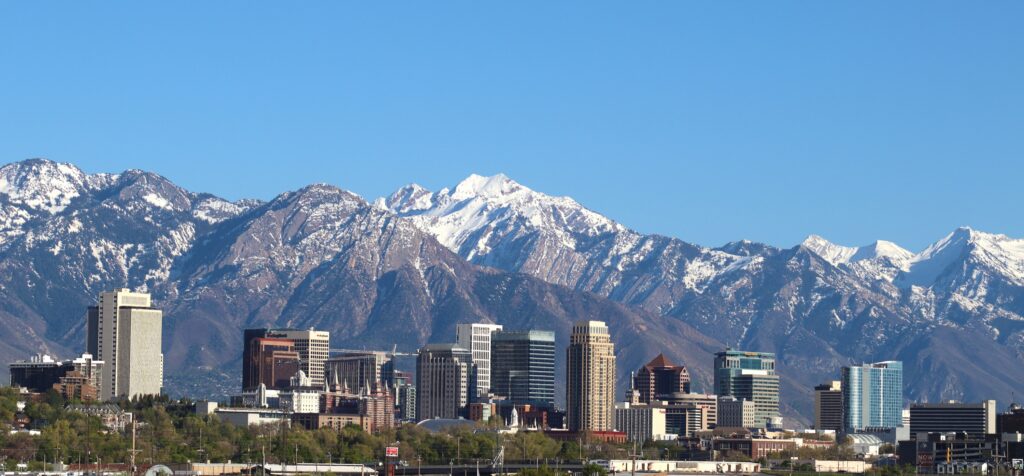
Salt Lake City sits about 1,300 m (4,300 feet) above sea level on the floor of a valley between the Wasatch Range to the east and the Oquirrh Mountains to the west, with the Great Salt Lake to the northwest. That gives it a semi-arid climate with four distinct seasons: hot, dry summers, cold winters with regular snow, and short, changeable springs and falls, while the ski areas a few thousand feet higher are far colder and snowier than the city. The figures below are approximate seasonal patterns based on the long-term climate normals from NOAA’s National Weather Service office in Salt Lake City; check the current forecast before you pack, because a storm can drop the temperature sharply in a few hours, and the mountains are always colder than the valley.
| Month | Typical daytime high | Typical overnight low | What it feels like | Fare pressure |
|---|---|---|---|---|
| January | around 3 °C (38 °F) | around -5 °C (23 °F) | Cold, often gray in the valley during inversions; deep powder in the mountains | High for MLK weekend, otherwise moderate |
| February | around 7 °C (44 °F) | around -3 °C (27 °F) | Still wintry; storms alternate with clear, cold days | Moderate; Presidents’ Day spike |
| March | around 12 °C (54 °F) | around 1 °C (34 °F) | Mild in the city, often big snow in the canyons; longer days on the slopes | High during spring-break weeks |
| April | around 16 °C (61 °F) | around 4 °C (40 °F) | Changeable; blossom in the valley, spring skiing up high, late snow possible | Moderate early, falling as the resorts close |
| May | around 22 °C (72 °F) | around 9 °C (49 °F) | Green and pleasant; spring showers; high trails still snowbound | Low to moderate; rises for Memorial Day |
| June | around 28 °C (83 °F) | around 14 °C (58 °F) | Warm, dry and sunny; the canyons are green and cool | High |
| July | around 34 °C (93 °F) | around 19 °C (67 °F) | Hot and dry; afternoon thunderstorms late in the month | Peak |
| August | around 33 °C (91 °F) | around 18 °C (65 °F) | Hot; monsoon storms; wildfire smoke possible in some years | High, easing late in the month |
| September | around 27 °C (80 °F) | around 13 °C (55 °F) | Often the best month: warm, dry and clear; fall color begins up high | Moderate, falling after Labor Day |
| October | around 18 °C (65 °F) | around 6 °C (42 °F) | Crisp and bright; peak canyon color early; first snow in the mountains | Low to moderate |
| November | around 10 °C (50 °F) | around -1 °C (31 °F) | Cooling fast; the first valley snow; ski areas open late in the month | Low, then high for Thanksgiving |
| December | around 3 °C (38 °F) | around -5 °C (23 °F) | Cold and festive; inversions begin; the mountains are in full winter | Low early, then peak for the holidays |
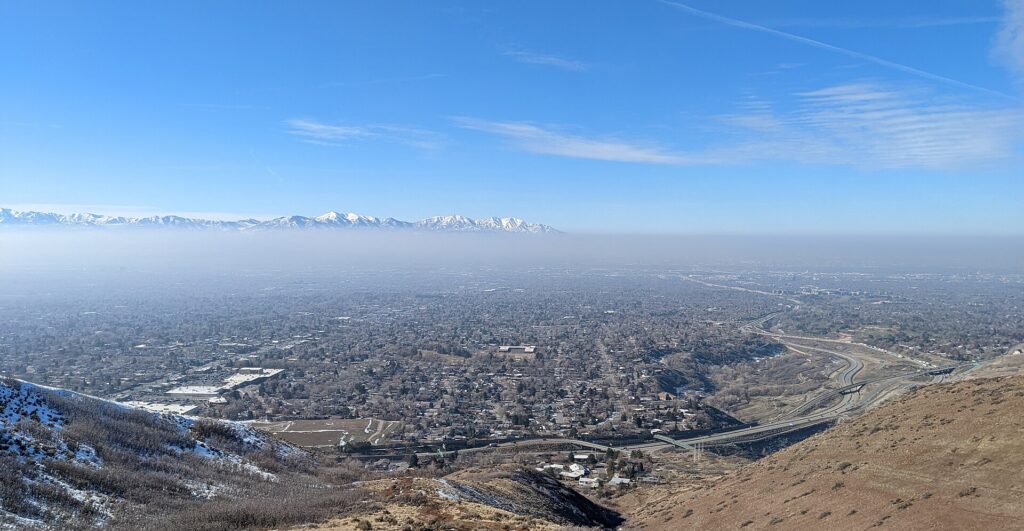
Three things the table cannot show. First, the inversion: on calm winter days a layer of cold air settles in the valley under warmer air above, trapping haze and pollution over the city for days at a time, sometimes a week or more, until a storm clears it. The city can sit under a gray lid at freezing point while the ski resorts twenty minutes up the canyons are in bright sunshine, which is one more reason to go uphill. Second, the snow: the Wasatch receives far more snow than the valley floor, and it is famously light and dry, partly thanks to the lake, which can add moisture to passing storms. The city might see a dusting while Alta measures a foot. Third, the dry heat and the sun: summer days feel less oppressive than the numbers suggest because the humidity is low, but the sun at altitude burns quickly, nights cool off, and you will drink more water than you planned.
How Salt Lake City’s fare seasons work
Three calendars drive seats into Salt Lake City: the ski season, which pulls visitors from late November to April and peaks on holiday weekends; the national parks and road-trip season, which runs from spring to fall and peaks in summer; and the city’s own calendar of conventions, church conferences and events. Behind all three is the Delta hub, which gives the airport more nonstop routes than a metro area of its size would normally support and keeps competition healthy on the big domestic routes, with Southwest, United, American, Alaska and several low-cost carriers also serving the city. The result is a double-peaked year, with winter holiday spikes and a long summer plateau, and two genuine shoulder seasons in between.
Peak season
Roughly December 20 to January 3, the Martin Luther King Jr. weekend in mid-January, Presidents’ Day weekend in mid-February, the March spring-break weeks, and June through mid-August. The winter peaks are driven by skiers and are sharpest at the canyon and Park City lodging, which spills over into city hotels; the summer peak is driven by national park road trips, family travel and the long July holiday stretch that includes both Independence Day and Pioneer Day. If you must travel in peak, book early, fly mid-week, and compare Park City lodging against a city hotel with a rental car.
Shoulder season
Mid-April to early June and September to October. April offers spring skiing at the higher resorts and blossom in the valley; late May and early June offer green canyons, pleasant heat and the parks before the summer crowds. September and October are the best months of the year for many visitors: settled weather, spectacular fall color in Big Cottonwood Canyon and along the Alpine Loop, and the southern parks at their most comfortable temperatures. Watch Memorial Day, Labor Day, the October General Conference weekend and Utah’s school fall break.
Low season
Late April and May in the mountain towns, which locals call mud season, November before Thanksgiving, and the first half of December. Fares are at their lowest, city hotels discount, and the ski resorts are either closed or just opening. Early December can be excellent value for skiers if the early storms have delivered, but it is a gamble; the higher resorts, such as Alta, Snowbird and Brighton, are the safer bets for early snow.
As elsewhere, mid-week departures and early or late flights usually price below Friday and Sunday afternoons on the same route, and a search across a whole month reveals cheaper pairs of dates close to your first choice. Our guide to the best times to book explains how to read those patterns.
Salt Lake City month by month
January
Deep winter and prime powder. The resorts are in full swing after the Christmas rush, and the weeks after New Year’s are among the best value of the ski season, apart from the Martin Luther King Jr. Day weekend (the third Monday of January), a big ski-travel weekend. January is also peak inversion season, so the city can be gray and cold while the mountains are sunny. The Sundance Film Festival, long held in Park City in late January and a major driver of Park City prices, is moving to Boulder, Colorado, from 2027, so late-January demand in the Park City area may ease; check before assuming.
February
Similar conditions with more daylight, reliable snow and low-to-moderate fares outside the Presidents’ Day weekend (the third Monday of February), one of the busiest ski weekends of the year. Weekdays in early and late February are some of the best ski value in the calendar, and the Jazz and the Mammoth are both at home through the month.
March
Often the snowiest month in the mountains, with big spring storms and longer, warmer days, which makes it many skiers’ favorite. It is also the month of spring break, when school holidays across the country send families to the slopes over several weeks; fares and lodging rise sharply in those weeks. In the valley, March brings the first mild days and blossom.
April
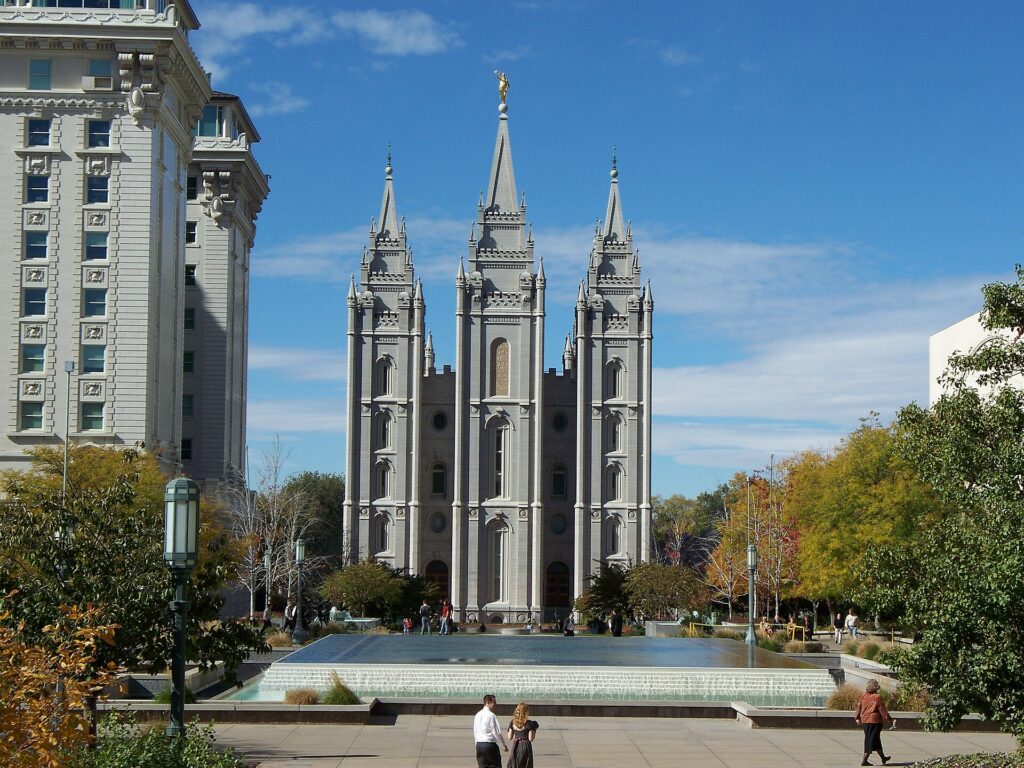
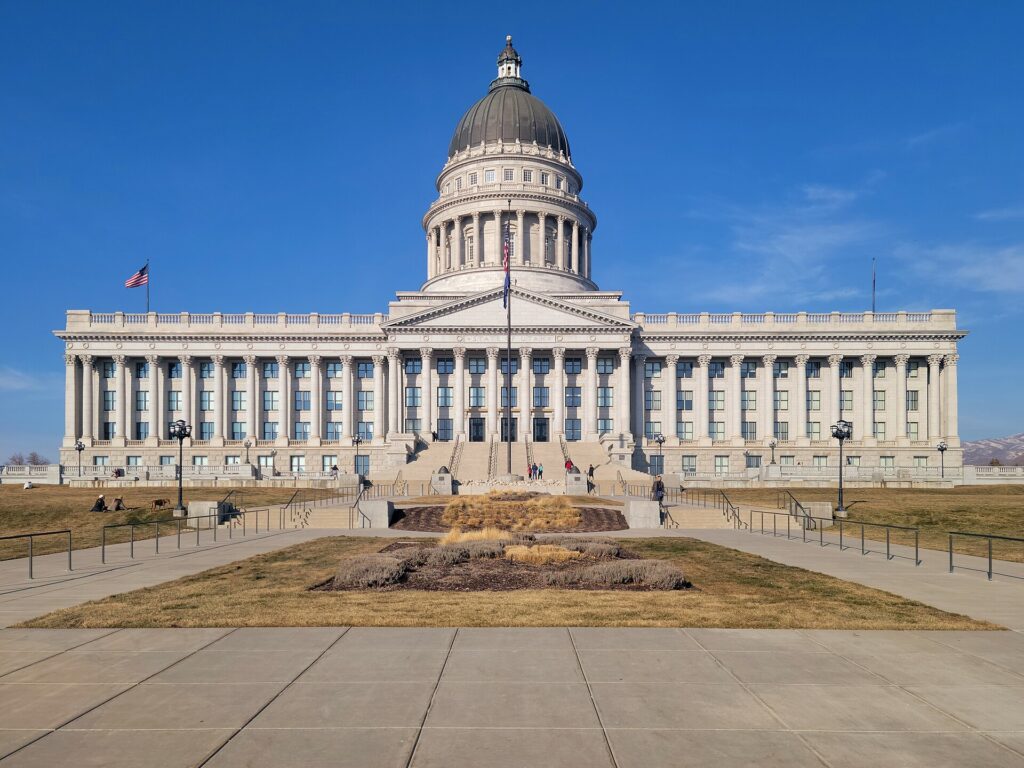
A month of transitions. The resorts close one by one, with Snowbird and some higher mountains often open into late spring, while the valley turns green and the orchards and the cherry trees at the Capitol bloom. The church’s General Conference, held on the first weekend of April, fills downtown hotels and adds crowds around Temple Square. Otherwise fares fall steadily through the month.
May
One of the best value months. The valley is green and warm, the canyons are waterfalls of snowmelt, and the southern national parks are pleasant before the summer heat, though the high country above about 2,700 m (9,000 feet) is often still under snow. Fares are low apart from the Memorial Day weekend at the end of the month.
June
Summer arrives with long days and dry heat. The Utah Arts Festival fills Library Square in late June, Utah Pride takes over downtown in early June, and the canyon trails open as the snow melts. Fares step up through the month as school ends and road-trip season begins in earnest.
July
Peak summer and peak heat. Independence Day is followed three weeks later by Pioneer Day on July 24, a Utah state holiday commemorating the arrival of the first pioneers in 1847, with a big downtown parade, rodeos and fireworks; for Utahns it is a bigger celebration than the Fourth. The canyons and Park City offer cooler air, and the southern parks are very hot. Fares are at their summer high.
August
Hot, with late-summer monsoon thunderstorms that can bring flash floods to the southern slot canyons, and wildfire smoke in some years. Fares ease in the second half as schools across the West return, which in Utah happens earlier than in many states. Late August is a good value window for the parks if you can handle the heat.
September
The month many locals would send you to: warm, dry, clear and calm, with the summer crowds thinning after Labor Day. The Utah State Fair runs in early September, the aspens start to turn at high elevation by late in the month, and the southern parks become comfortable for hiking again. Fares are moderate and falling.
October
Crisp, bright and often spectacular, with the canyon color peaking early in the month. The October General Conference weekend (the first weekend of the month) is the one date to book around downtown, and Utah’s school fall break brings a brief family-travel bump. The first snow usually dusts the peaks, and fares are low to moderate.
November
Winter arrives. The first snow often reaches the valley, the resorts open from about Thanksgiving depending on the snow, and fares and hotel rates are among the lowest of the year, with the exception of the Thanksgiving weekend itself, which is a heavy travel period nationally.
December
Two months in one. The first half continues November’s low pricing, with the holiday lights around Temple Square and City Creek and early-season skiing on reduced terrain. From about December 20, fares and lodging jump for the Christmas and New Year ski weeks, which are the most expensive of the year in Park City and the canyons.
Events that move Salt Lake City flight and hotel prices
Cross-check these against your dates before you book. Exact dates shift each year; Visit Salt Lake keeps the current calendar.
- Christmas to New Year: the peak of the ski season and the most expensive stretch of the year.
- Martin Luther King Jr. weekend (third Monday of January) and Presidents’ Day weekend (third Monday of February): the biggest ski weekends.
- Spring break (March, varying by school district across the country).
- General Conference (first weekends of April and October): downtown hotels fill with visitors from around the world.
- The Salt Lake Temple open house: the church plans a public open house for the renovated temple before its rededication, which is likely to raise demand for downtown hotels for as long as it runs; check Temple Square’s site for the dates.
- Memorial Day, Independence Day and Pioneer Day (July 24).
- Labor Day weekend and Utah’s school fall break in October.
- Thanksgiving weekend, and the resort opening weekends around it.
- Jazz and Mammoth home games, University of Utah football Saturdays, big concerts and conventions at the Salt Palace. Our Salt Lake City events page shows what is on sale for your dates.
Getting in from the airport
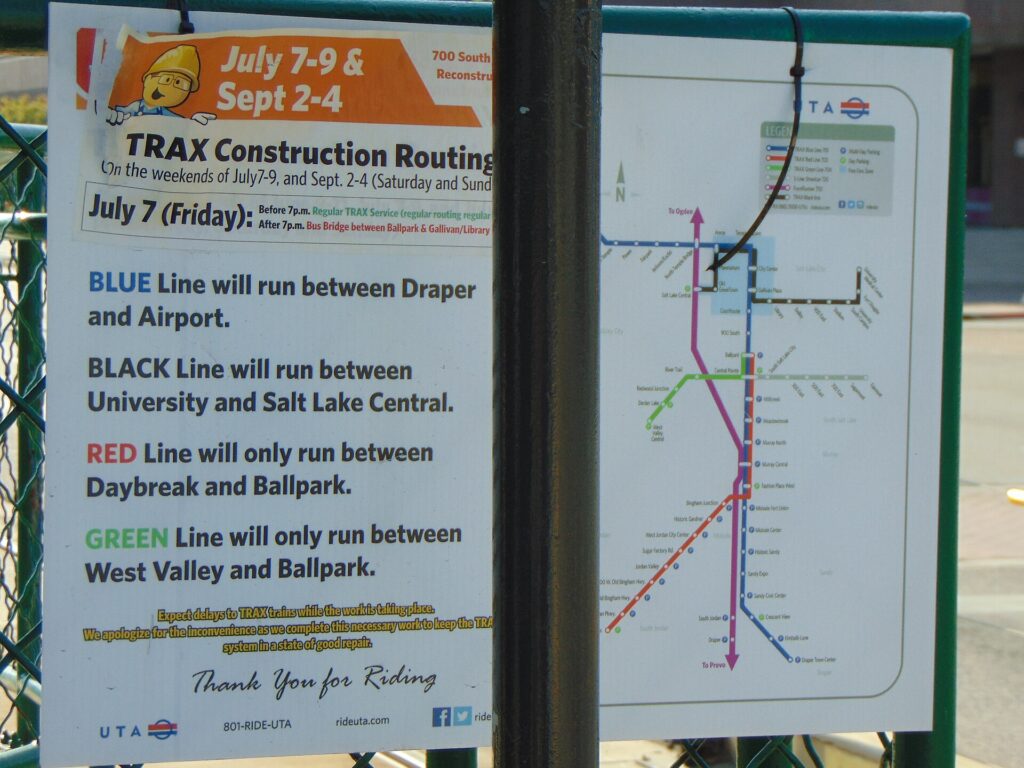
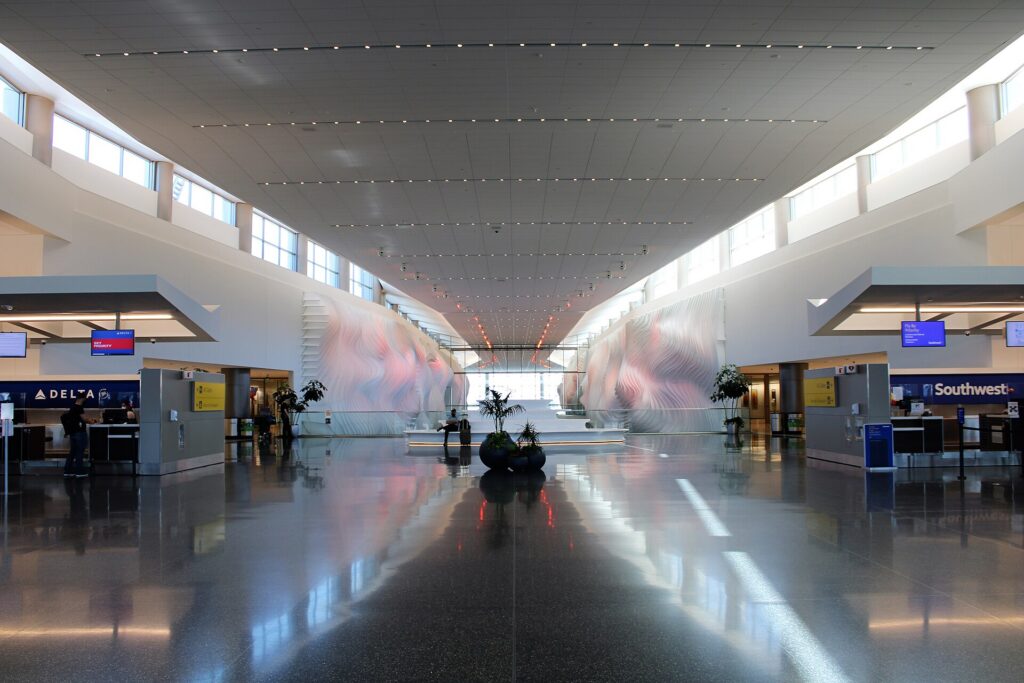
Salt Lake City has one commercial airport, Salt Lake City International (SLC), about 6 kilometers (4 miles) west of downtown, which makes it one of the closest major airports to its city center in the country. It was rebuilt from scratch as a single terminal with long concourses, opened in phases from 2020; the new building is bright and spacious, but the walk from security to the far gates is long, so allow extra time. Delta runs one of its main hubs here, with nonstop flights to most large US cities and a handful of international routes, and the other major and low-cost airlines serve the big domestic markets. Getting downtown: the TRAX Green Line light rail runs from the station beside the terminal to downtown in about 20 minutes, taxis and ride-hail pick up at the terminal, and the drive downtown takes 10 to 20 minutes outside rush hour. The rental counters are in the garage facing the terminal. For skiers, shuttle companies run to Park City and the canyon resorts, and the drive to the nearest lifts is under an hour. Our Salt Lake City car-versus-transit guide works through the rental decision, and our SLC airport guide covers the layout.
Timing tricks that work for Salt Lake City
- Search the whole month. Holiday weekends create sharp edges in the fare calendar. A calendar search on TicketScanner shows them instantly, and the week after Presidents’ Day or MLK weekend is often much cheaper than the weekend itself.
- Price lodging before the flight in ski season. A cheap fare into a holiday week is not cheap once a slopeside room is added. Compare a Salt Lake City hotel search with a rental car against canyon or Park City lodging for the same dates.
- Use the hub. Delta’s network means nonstop flights from many mid-sized cities, and competition on the big routes from Los Angeles, Denver, Phoenix, Seattle and the Bay Area keeps fares reasonable outside the peaks.
- Consider an open-jaw park trip. Fly into Salt Lake City and out of Las Vegas, or the reverse, and drive through Arches, Capitol Reef, Bryce Canyon and Zion on the way; compare flights to Las Vegas and the one-way rental fee before you commit.
- Or pair it with Denver. The drive between the two cities takes about eight hours; our Denver to Salt Lake City route guide covers it, and our guide to the best time to fly to Denver shows how that city’s seasons line up.
- Build a winter buffer. Snowstorms can disrupt SLC and close the canyon roads between December and March; avoid the tightest connections and leave a spare morning before an important flight home. Our guide to how early to arrive covers what to allow.
- Flying out of Salt Lake City instead? The same seasonality applies in reverse; see cheap flights from Salt Lake City.
What to pack, by season
Winter (December to March): a warm, waterproof coat, hat, gloves and boots with grip for the city, and full ski layers for the mountains, where temperatures are much lower. Sunglasses and sunscreen matter on bright snow. Spring (April to May): layers and a rain shell, with a warm layer for late cold snaps and the high canyons. Summer (June to August): light, breathable clothing, a wide-brimmed hat, strong sunscreen and a refillable water bottle, plus a fleece for canyon evenings and a rain shell for afternoon storms. Fall (September to October): layers again, a warm jacket by late October, and hiking shoes for the canyon trails. For the national parks in any season, add sturdy footwear and more water than you think you need.
The best time to fly to Salt Lake City for…
Skiing
Mid-January to early March outside the holiday weekends, for the best snow and value; March for longer days and big storms; early December only if you are flexible and watching the snow reports.
The national parks
Late April to early June and mid-September to late October, when temperatures in the southern parks are comfortable and the crowds are thinner than in summer. Check Arches and the other parks’ own pages for any reservation systems in force.
Fall color
Late September to mid-October, when the aspens and maples turn in Big Cottonwood Canyon, along the Alpine Loop and around Park City.
The lowest fares
Late April and May, November before Thanksgiving, and early December. Pair with a city break, a museum trip or the parks.
Temple Square and church events
Book early for General Conference weekends and the temple open house once its dates are set, and consider staying outside downtown if the center is full; TRAX makes it easy to get in.
International visitors
Visitors from Visa Waiver Program countries need an approved ESTA before boarding; most others need a visa. The State Department’s travel site explains what applies to you, and the TSA lists what you can carry through security. Many international visitors connect through another US hub; clear immigration at your first point of entry and allow for it in your connection time.
Frequently asked questions
What is the cheapest month to fly to Salt Lake City?
Late April and May are consistently among the lowest, along with November before Thanksgiving and the first half of December.
What is the best month to visit Salt Lake City for weather?
September, with late May, early June and early October close behind. July and August are hot; December and January can bring inversion haze in the valley.
What is the best month to ski in Utah?
February and March usually offer the deepest base and reliable storms, and weekdays outside Presidents’ Day and spring break are the best value. January has excellent snow but more inversion days in the valley.
What is an inversion?
A winter weather pattern in which cold air is trapped in the valley beneath warmer air above, holding haze and pollution over the city until a storm clears it. The mountains above are often sunny while it lasts.
Should I fly into Salt Lake City or Las Vegas for the national parks?
Salt Lake City is closer to Arches, Canyonlands and Capitol Reef; Las Vegas is closer to Zion. For a loop through all five, fly into one and out of the other.
How far ahead should I book?
Earliest for the Christmas ski weeks, the holiday weekends, spring break and General Conference, when fares and lodging tend only to rise; for the shoulder months, fares are stable enough that finding the right dates matters more than booking early.
Does it snow in Salt Lake City?
Yes, regularly from November to March in the valley, though it often melts within days; the mountains above get many times more, which is why the skiing is so good.
Ready to pick your dates? Compare fares across the whole month on our Salt Lake City flights page, then find a room with our Salt Lake City hotel search. For what to do when you land, start with our first-timer’s guide to Salt Lake City.
Keep planning with TicketScanner
- Cheap flights to Salt Lake City — compare fares across the whole month
- Salt Lake City hotels — book early for ski holidays and General Conference
- Salt Lake City car rentals — for the ski canyons and the national parks
- Events in Salt Lake City — Jazz, Mammoth, concerts and shows on sale
- Things to do in Salt Lake City: a first-timer's guide
- Salt Lake City: rent a car or use public transit?
- Salt Lake City International (SLC) airport guide
- Where to stay: downtown and Temple Square
- Best time to fly to Denver: month by month
- Best times to book flights and hotels