Philadelphia is where the United States was argued into existence, and you can still stand in the room where it happened. Independence Hall, the Liberty Bell and the brick streets of Old City sit within a few blocks of each other, and most of them are free. But visitors who come for the history and leave after an afternoon miss the reason people fall for the place: a compact, walkable grid of rowhouse neighborhoods, one of the great art museums in the country at the top of a boulevard modeled on the Champs-Élysées, a collection of Impressionist paintings so large it needs its own building, thousands of murals, an open-air market that has been selling produce for more than a century, a restaurant scene built on small BYOB dining rooms, and sports fans whose reputation arrives before they do. It is also cheaper than New York or Boston and sits between them on the rail line. This guide covers the sights that earn a day, the neighborhoods worth a half-day, the museums, the food, the big events, the day trips, and the practical details that make a first visit work.
If you are still comparing cheap flights to Philadelphia, read this alongside our guides to the best time to fly to Philadelphia and whether to rent a car or use public transit. Between the three you can plan the whole trip.
Philadelphia at a glance for first-timers
- Airport: Philadelphia International (PHL), in the southwest of the city about 13 km (8 miles) from Center City. The SEPTA Airport Line train reaches the downtown stations in around 25 minutes, and taxis charge a flat fare to Center City. See our PHL airport guide.
- Getting around: Center City and Old City are flat, compact and best on foot. SEPTA’s two subway lines, trolleys, buses and Regional Rail cover the rest, and Indego bike share docks are everywhere. A car is a burden in the center and useful only for day trips.
- Money: U.S. dollars. Sales tax in the city is higher than in the rest of Pennsylvania, but most clothing is exempt, which is a small bonus for shoppers. Tipping 18 to 20 percent in restaurants is customary.
- Weather: four distinct seasons, with a hot and humid summer, a cold but usually manageable winter, and a spring and fall that are the best times to walk the city. Our month-by-month guide has the detail.
- Where to stay: Old City for the historic sites on your doorstep; Rittenhouse Square for restaurants and a residential feel; around City Hall and the Convention Center for transit and value; University City near 30th Street Station if you arrive by train. Our Philadelphia hotel search covers them all.
Independence National Historical Park and Old City
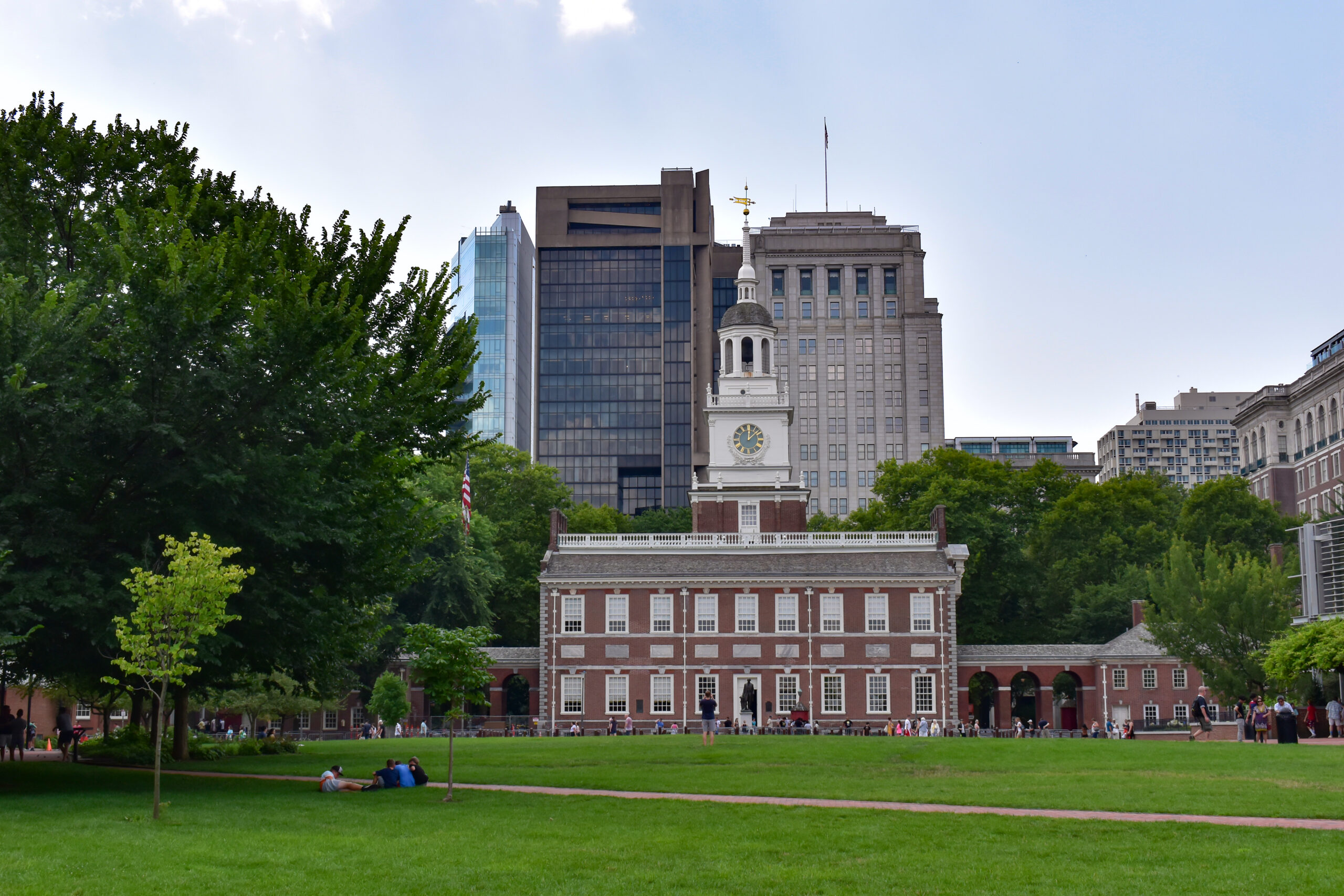
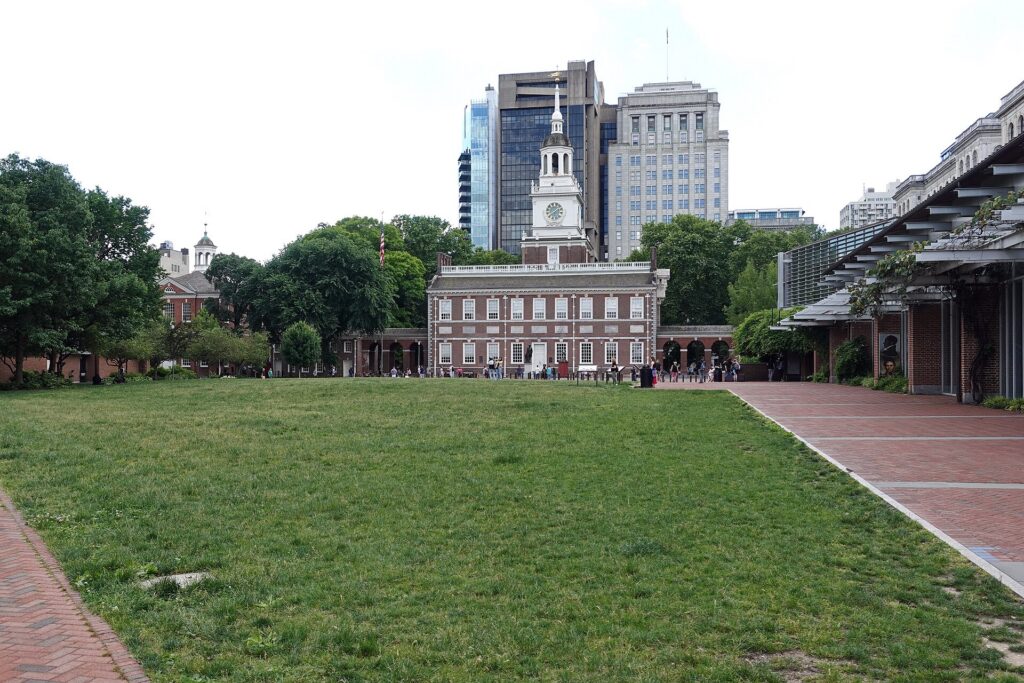
Start where the country did. Independence National Historical Park, run by the National Park Service, covers the blocks around Independence Mall, and its centerpiece is Independence Hall, the red-brick State House where the Declaration of Independence was debated and signed in 1776 and the Constitution was drafted in 1787. Tours are free and ranger-led, but for most of the year you need a timed ticket, released online in advance for a small booking fee and handed out on the day at the Independence Visitor Center until they run out; book before you fly if your dates are fixed. Across Chestnut Street, the Liberty Bell Center holds the cracked bell itself, with no ticket needed, just a security line that is shortest first thing in the morning. At the north end of the mall, the National Constitution Center is the best museum in the country on how the Constitution works, with a hall of life-size bronze statues of the signers. Two blocks east, the Museum of the American Revolution tells the story of the war with real objects, including George Washington’s own field tent, and it is worth two hours even for visitors who think they know the story. Allow a full morning for the hall, the bell and one museum, and book the Independence Hall tour first.
The streets around the park are the oldest part of the city. Elfreth’s Alley, a narrow lane of small houses dating to the early 1700s, is billed as the oldest continuously inhabited residential street in the country. Christ Church, where Washington and Franklin worshiped, is on Second Street, and Benjamin Franklin is buried in its burial ground a few blocks away, where visitors toss pennies onto his grave. The Benjamin Franklin Museum sits underground at Franklin Court, beneath a steel frame that outlines the house he lived in. Carpenters’ Hall, where the First Continental Congress met, and the Betsy Ross House are both within a ten-minute walk. In the evenings, Old City’s galleries, bars and restaurants along Market, Chestnut and Second streets fill up, and on the first Friday of each month the galleries stay open late.
Center City: City Hall, Reading Terminal and the squares
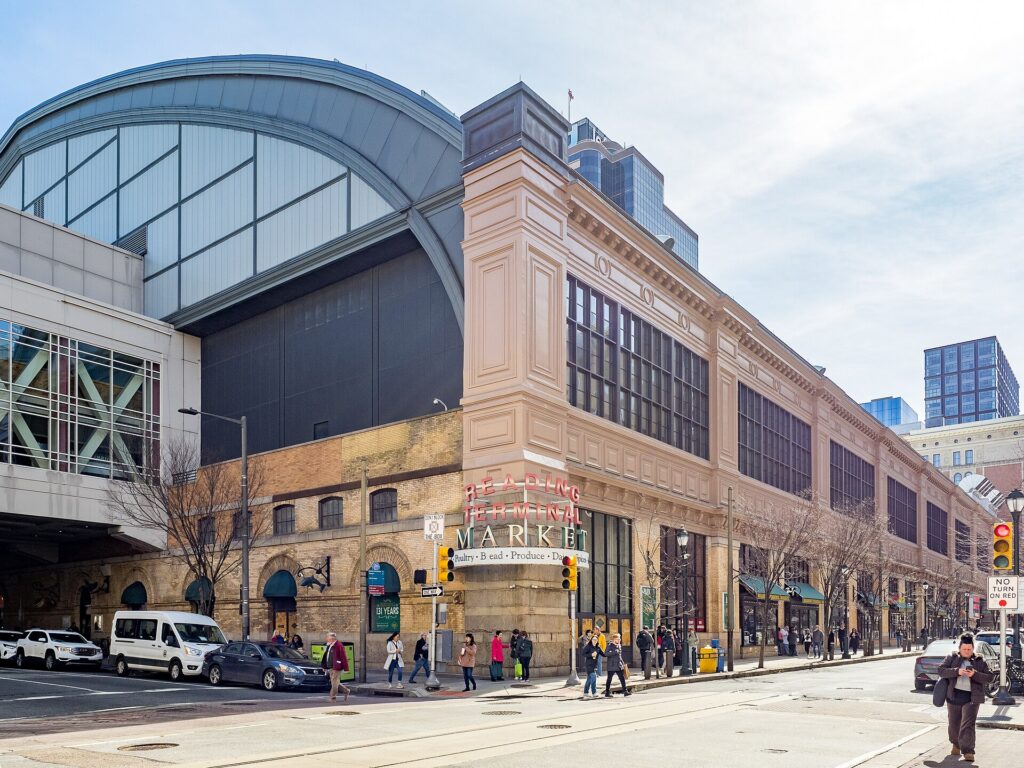
William Penn laid out Philadelphia in 1682 as a grid between two rivers, with a central square and four smaller squares around it, and the plan still works. At the center, City Hall is the largest municipal building in the country, a wedding cake of granite and marble topped by a bronze statue of Penn himself; for most of the twentieth century no building in the city was allowed to rise above his hat. Tours of the building and the tower observation level run on weekdays when they are operating, and the view down Broad Street and out to the Parkway is the best way to understand the city’s layout. Beside it, Dilworth Park has fountains in summer and an ice rink in winter, and across the street LOVE Park holds Robert Indiana’s famous red sculpture. Two blocks east, Reading Terminal Market, opened in 1893 beneath the train shed of the old Reading Railroad, is the best indoor market in the country, with more than seventy vendors selling roast pork sandwiches, cheesesteaks, soft pretzels, Pennsylvania Dutch baked goods and ice cream under one roof. Go at breakfast or mid-afternoon to avoid the lunch crush. Penn’s other squares are worth a detour: Rittenhouse Square is the elegant living room of the western half of Center City, Washington Square holds the Tomb of the Unknown Revolutionary War Soldier, and Franklin Square has a carousel and a mini-golf course laid out around Philadelphia landmarks.
The Benjamin Franklin Parkway and the museums
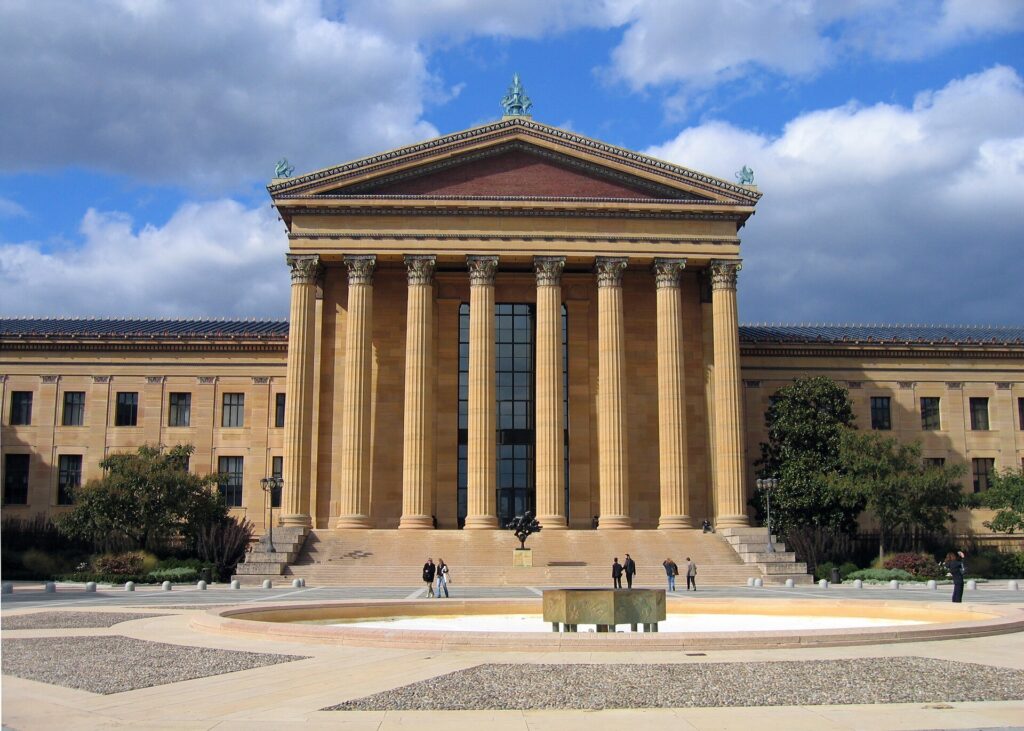
The Parkway runs diagonally from City Hall to the art museum, lined with flags and fountains, and it holds more of the city’s great collections than any other mile. At the top, the art museum, long known as the Philadelphia Museum of Art and recently rebranded as the Philadelphia Art Museum, is one of the largest in the country, with Van Gogh’s Sunflowers, Cézanne’s Large Bathers, a superb collection of Duchamp, complete rooms of European architecture and an Asian wing that includes a Japanese teahouse. Most visitors also run up the front steps made famous by Rocky, and the bronze statue of the boxer stands at the bottom for photographs. Down the Parkway, the Barnes Foundation displays one of the world’s great collections of Renoir, Cézanne and Matisse, hung exactly as the collector Albert Barnes arranged it, wall by wall, with old keys and hinges between the paintings; timed tickets are wise. The Rodin Museum, with The Thinker at its gate, is small and lovely. The Franklin Institute is the city’s science museum, with a walk-through giant heart and a planetarium, and the Academy of Natural Sciences of Drexel University across Logan Square has the dinosaur hall that children remember. Just beyond the art museum, Eastern State Penitentiary, a crumbling castle-like prison that opened in 1829 and held Al Capone, is one of the most atmospheric sights in the country, and in the fall it runs a famous Halloween event.
The rivers, Fairmount Park and Boathouse Row
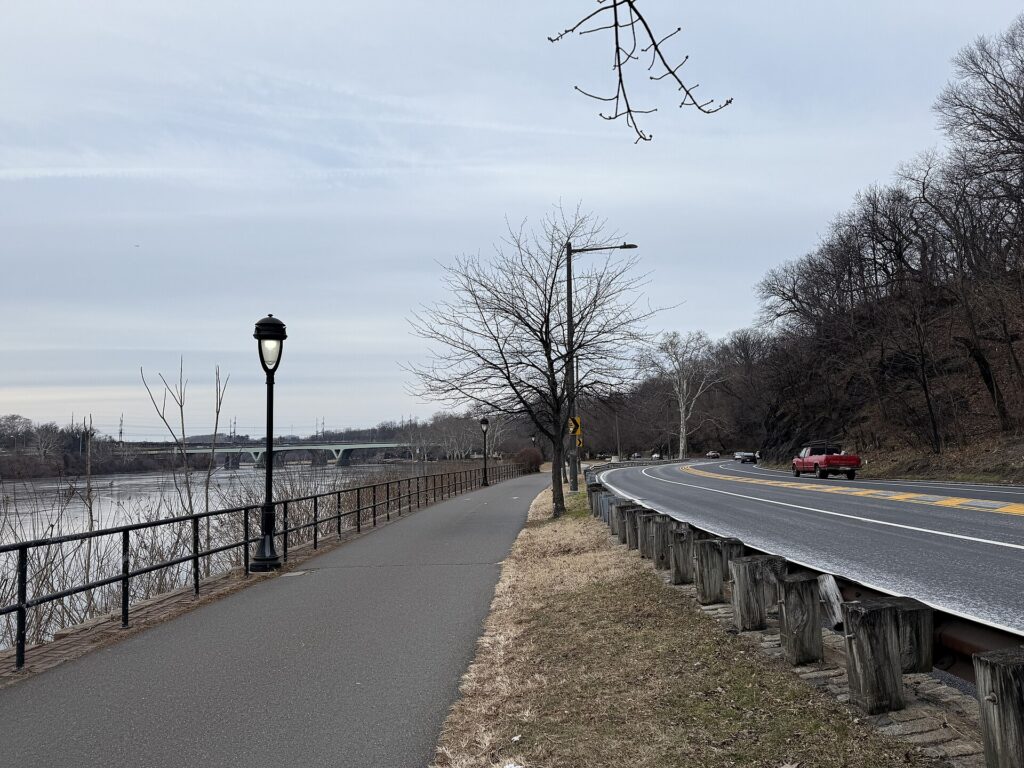
Behind the art museum, the Schuylkill River curves north past Boathouse Row, a line of Victorian rowing clubhouses outlined in lights at night, and the paved Schuylkill River Trail runs along the water from Center City to the park and beyond. It is the best walk, run or bike ride in the city. Fairmount Park, which begins here, is one of the largest urban park systems in the country, with historic country houses, the Japanese House and Garden, the Horticultural Center, and, in the northwest, the wooded gorge of the Wissahickon Valley, where the gravel Forbidden Drive follows the creek for miles and feels nothing like a city. On the other side of Center City, the Delaware River waterfront at Penn’s Landing has the Independence Seaport Museum, the tall ships, the Race Street Pier park under the Benjamin Franklin Bridge, and, in summer, Spruce Street Harbor Park, with hammocks, floating barges and food stalls. In winter the same stretch becomes Blue Cross RiverRink, an outdoor skating rink with a lodge. A long-running project to cap the I-95 highway will link Old City to the river more directly when it is complete.
Neighborhoods worth a half-day
Society Hill and Washington Square West
South of Independence Hall, Society Hill has the largest concentration of original eighteenth- and early nineteenth-century houses in the country, on quiet brick streets lit by gas lamps. Washington Square West, next door, is the heart of the Gayborhood, with rainbow street signs, independent restaurants along 13th Street and the lively bars of Midtown Village.
Rittenhouse and Fitler Square
The most elegant part of Center City, with the square itself, the boutiques and restaurants along Walnut and Chestnut streets, and brownstone blocks running west toward the Schuylkill. It is the best neighborhood for a hotel if restaurants matter more than history.
South Street, Queen Village and the Italian Market
South Street is the city’s bohemian strip, with tattoo parlors, bars and Philadelphia’s Magic Gardens, a maze of mirror-and-tile mosaics built by the artist Isaiah Zagar. A few blocks south and west, the Italian Market on 9th Street, one of the oldest open-air markets in the country, sells produce, cheese, fresh pasta and Mexican and Vietnamese groceries under metal awnings. Keep walking to where 9th Street meets Passyunk Avenue and you reach Pat’s and Geno’s, the rival cheesesteak stands that face each other across the intersection.
East Passyunk
Passyunk Avenue runs diagonally through South Philadelphia, and its eastern stretch is one of the best restaurant streets in the city, with small BYOB dining rooms, Italian bakeries, a lit fountain and a neighborhood feel that the tourist strips lack.
Fishtown and Northern Liberties
North of Old City along the Delaware, these former industrial neighborhoods have become the center of the city’s nightlife, with breweries, music venues, coffee roasters and many of its most talked-about restaurants along Frankford Avenue and Girard Avenue. The Market-Frankford Line gets you there in minutes.
University City
West of the Schuylkill, around the University of Pennsylvania and Drexel, the Penn Museum is one of the great archaeology museums in the world, with a granite sphinx, Egyptian mummies and treasures from the royal cemetery at Ur. 30th Street Station, the grand Amtrak terminal, is on the edge of the neighborhood.
Manayunk and Chestnut Hill
Two hilltop neighborhoods in the northwest, both on Regional Rail. Manayunk has a steep Main Street of bars and shops beside the old canal; Chestnut Hill has cobbled Germantown Avenue, independent shops and the Morris Arboretum. Either makes a gentle half-day away from the center.
Murals, oddities and family attractions
Philadelphia has more public murals than almost any city in the world, thanks to Mural Arts Philadelphia, which began as an anti-graffiti program in the 1980s and has painted thousands of walls since; walking and trolley tours explain the best of them, but you will see dozens simply walking through South Philadelphia or along the Market-Frankford Line. The Mütter Museum of the College of Physicians is a Victorian cabinet of medical curiosities, with skeletons, preserved specimens and slices of Einstein’s brain, and it is either the highlight of the trip or something you will never forgive the person who suggested it. The Philadelphia Zoo, the first in the country to be chartered, has an overhead trail network that lets the big cats and primates roam above visitors’ heads. The Please Touch Museum, in a grand building left over from the 1876 Centennial Exposition in Fairmount Park, is designed for children under eight. Across the Delaware in Camden, reached by the PATCO train or, in summer, a ferry from Penn’s Landing, the Adventure Aquarium and the Battleship New Jersey make a family day. For live performance, the Philadelphia Orchestra plays at the Kimmel Center on Broad Street’s Avenue of the Arts, the Academy of Music next door is the oldest opera house in the country still used for its original purpose, and the Walnut Street Theatre is the oldest theater in the country. Our Philadelphia events page lists concerts, shows and games during your dates.
The big events: the Fourth of July and New Year’s Day
Philadelphia treats the Fourth of July as its own holiday, which in a sense it is. The city’s Welcome America festival runs for several days around it, with free museum days, neighborhood events, a parade past Independence Hall and a free concert on the Parkway that ends with fireworks over the art museum; in 2026 the city was a focal point of the nation’s 250th anniversary celebrations. The other signature day is New Year’s Day, when the Mummers Parade, a century-old tradition of string bands, comic brigades and sequined, feathered costumes, fills Broad Street for most of the day. In early March, the Pennsylvania Horticultural Society’s Philadelphia Flower Show, one of the oldest and largest in the world, turns the Convention Center into a series of vast garden displays. The Penn Relays, the oldest and largest track meet in the country, fill Franklin Field in late April; the Broad Street Run, a ten-mile race straight down the city’s spine, is in early May; the Philadelphia Marathon is the weekend before Thanksgiving; and on Thanksgiving morning one of the oldest holiday parades in the country marches up the Parkway. From late November, a German-style Christmas Village fills the plaza by City Hall. Visit Philadelphia keeps the current calendar.
Sports
Philadelphia’s fans are loud, loyal and famous for it, and a game here is one of the best nights out in the city. All four major teams play at the South Philadelphia Sports Complex at the southern end of the Broad Street Line. The Eagles play NFL football at Lincoln Financial Field from September to January, won their second Super Bowl in February 2025, and are the closest thing the city has to a religion; tickets are hard to come by. The Phillies play baseball at Citizens Bank Park from April to September, and a summer evening there, with a roast pork sandwich and the skyline beyond the outfield, is easy to arrange. The Flyers (NHL) and the 76ers (NBA) share the arena next door. The Union play MLS soccer at Subaru Park on the river in Chester, just south of the airport. College basketball has deep roots too: the Big 5 rivalries between the city’s universities are played in historic gyms such as Penn’s Palestra. Check what is on sale in Philadelphia for your dates before you book flights.
What to eat, and where
Start with the cheesesteak, thin-sliced beef on a long roll with fried onions and your choice of provolone, American or Cheez Whiz. Pat’s and Geno’s in South Philadelphia are the tourist rite of passage, but locals will send you to a dozen neighborhood shops instead, and every one of them has an opinion. Many Philadelphians would argue the city’s best sandwich is actually the roast pork, with sharp provolone and broccoli rabe, the version at DiNic’s in Reading Terminal Market being the most famous. Then there are the hoagie, the city’s word for a sub, the twisted soft pretzel sold on street corners in the morning, water ice in summer, tomato pie served at room temperature in the Italian bakeries, and scrapple for the adventurous at breakfast. Beyond the classics, Philadelphia’s restaurant scene is one of the most creative in the country, and much of it is built on small, chef-owned BYOB restaurants, where you bring your own wine and the bill is lower for it; state-run liquor stores sell wine and spirits, and many supermarkets now sell beer and wine. Washington Avenue in South Philadelphia is lined with Vietnamese pho shops, the blocks around the Italian Market have some of the best Mexican food on the East Coast, Chinatown near the Convention Center has hand-pulled noodles and dim sum, and Fishtown and East Passyunk hold many of the city’s most talked-about dining rooms.
Philadelphia through the seasons
Philadelphia changes with the seasons more than visitors expect. Spring (March to May) starts with the Flower Show, brings cherry blossoms to Fairmount Park and the Horticultural Center in April, and ends with graduations, the Penn Relays and the first Phillies games; it is one of the best times to walk the city, although school groups crowd Independence Hall from April to June. Summer (June to August) is hot and often humid, so plan the historic sites for the morning, the museums for the afternoon, and the evenings for Spruce Street Harbor Park, rooftop bars and outdoor concerts; the Fourth of July is the peak. Fall (September to November) is the local favorite: warm, dry September days, Eagles season, the Fringe Festival, Halloween at Eastern State and foliage along the Wissahickon in late October. Winter (December to February) is cold, with a few snowy days most years, but the Christmas Village, the rinks at Dilworth Park and Penn’s Landing, the Mummers on New Year’s Day, and the empty galleries in January make it a surprisingly good time for a museum-focused trip at low prices. Our month-by-month guide has the fare patterns that go with each season.
Philadelphia with kids
Philadelphia is an easy city with children, because the history comes with real objects and costumed characters. The Liberty Bell and Independence Hall work best after the Museum of the American Revolution has set the scene, and in summer, storytellers and characters in eighteenth-century dress are stationed around Old City. The Franklin Institute, with its giant heart, the Academy of Natural Sciences, with its dinosaurs, and the Please Touch Museum for the youngest fill the rainy days. The Philadelphia Zoo and the Adventure Aquarium across the river are full-day outings. Franklin Square has the carousel and mini golf, Spruce Street Harbor Park and the Dilworth Park fountains are free summer entertainment, and a Phillies game is a good first ballgame. Sesame Place, the Sesame Street theme park, is about forty minutes north in Bucks County. If you are driving in from elsewhere, our family car rental guide covers the vehicle question.
Philadelphia on a budget
Much of the best of Philadelphia is free: the Liberty Bell and Independence Hall, the walk through Old City and Society Hill, Elfreth’s Alley, the murals, the Schuylkill River Trail and Boathouse Row, Fairmount Park and the Wissahickon, the Rocky Steps, Penn’s Landing and the parks along the river. The art museum and the Barnes have pay-what-you-wish or reduced-price periods at set times, so check their sites before you go. Eat for less at Reading Terminal Market, in Chinatown, on Washington Avenue and around the Italian Market, and take advantage of the BYOB restaurants, where skipping a wine list makes a big difference to the bill. Hotel rates are generally lower than in New York, Boston or Washington, especially on weekends and in January and February, and staying near City Hall rather than in Old City often saves money without adding much walking. Compare rates by neighborhood on our Philadelphia hotel search.
Day trips from Philadelphia
Valley Forge, where Washington’s army spent the winter of 1777 to 1778, is about 40 minutes northwest; Valley Forge National Historical Park has miles of trails and a driving tour past the reconstructed huts. Longwood Gardens, one of the great gardens of the country, with conservatories, fountain shows and a spectacular Christmas display, is about an hour southwest near Kennett Square, and the Brandywine Valley around it holds the Winterthur estate and the Brandywine museum with its Wyeth paintings. Lancaster County, the heart of Pennsylvania Dutch and Amish country, with farm stands, covered bridges and horse-drawn buggies on the back roads, is about 90 minutes west. New Hope and Bucks County, an hour north on the Delaware, pair artists’ galleries with Washington Crossing Historic Park. Gettysburg is about two and a half hours west. Atlantic City is about an hour east, and Cape May, with its Victorian houses and beaches, is about two hours south at the tip of New Jersey. By train, New York is about 70 to 90 minutes away and Washington, DC about two hours; our guides to things to do in New York and things to do in Washington, DC cover both, and drivers heading north can use our Philadelphia to Boston route guide on the way to Boston. Most of the countryside trips need a car; see our Philadelphia car rental page, and rent only for the days you leave the city.
Two sample itineraries
Three days, no car
Day one: Independence Hall, the Liberty Bell and the Museum of the American Revolution in the morning, lunch at Reading Terminal Market, then Elfreth’s Alley, Christ Church and Franklin Court in the afternoon, and dinner in Old City. Day two: the art museum at opening, the Rocky Steps, a walk along Boathouse Row on the river trail, the Barnes in the afternoon, and dinner around Rittenhouse Square. Day three: the Magic Gardens and South Street, a cheesesteak at the Italian Market, East Passyunk for the afternoon, and a Phillies game or a night in Fishtown.
Five days, with the region
Add a day for Eastern State Penitentiary, the Penn Museum and University City, then rent a car for Valley Forge and Longwood Gardens, or for Lancaster County, returning it before you head back into the city. New York or Washington by train is the car-free alternative for the fifth day.
Practical details
- Transit: use a SEPTA Key card or tap to pay where accepted on the subway, trolleys and buses; Regional Rail fares depend on the zone and the time of day. SEPTA has maps and service alerts; our transit-versus-car guide goes into detail.
- From PHL: the Airport Line train to Center City, a flat-fare taxi or ride-hail, or a rental from the airport’s rental car facilities. The airport’s site covers ground transport.
- Weather: light clothing and water in summer, layers in spring and fall, a warm coat from December to February. The National Weather Service’s Mount Holly office covers Philadelphia.
- Time zone: Eastern, the same as New York, Washington and Boston.
- Safety: Center City, Old City and the main visitor areas are busy and generally safe; as in any large city, stay aware late at night, and ask your hotel before walking to unfamiliar neighborhoods after dark.
- Entry requirements: visitors from Visa Waiver Program countries need an approved ESTA before boarding; most others need a visa. The State Department’s travel site is the authoritative source.
Frequently asked questions
How many days do you need in Philadelphia?
Two full days covers the historic district, the art museum and a neighborhood or two; three lets you add the Barnes, South Philadelphia and a game, and a fourth makes room for Valley Forge or Longwood Gardens.
Is the Liberty Bell free?
Yes, and so is Independence Hall, although the hall requires a free timed ticket for most of the year. The Constitution Center and the Museum of the American Revolution charge admission.
What is the number one thing to do in Philadelphia?
Tour Independence Hall and see the Liberty Bell, then walk the brick streets of Old City to Elfreth’s Alley and Franklin’s grave. Finish with a sandwich at Reading Terminal Market.
Is Philadelphia walkable?
Very. Center City is a flat grid about two miles wide between the rivers, and you can walk from Independence Hall to the art museum in around 40 minutes.
Do I need a car in Philadelphia?
No. Parking is expensive and enforcement is famously strict, and SEPTA and your feet cover the city. Rent for Valley Forge, Lancaster County or the Jersey Shore if you want them.
Where should I get a cheesesteak?
Pat’s and Geno’s are the famous pair; locals argue for a long list of neighborhood shops across the city. Try one of each and join the argument.
Ready to go? Compare flights to Philadelphia, find a place to stay with our Philadelphia hotel search, and if Valley Forge or Amish country is on the list, price a rental car for those days.
Keep planning with TicketScanner
- Cheap flights to Philadelphia
- Philadelphia hotels — by neighborhood
- Philadelphia car rentals — for Valley Forge, Longwood Gardens and Amish country
- Events in Philadelphia — Eagles, Phillies, Sixers, Flyers, concerts and shows on sale
- Best time to fly to Philadelphia: month by month
- Philadelphia: rent a car or use public transit?
- Philadelphia International (PHL) airport guide
- Where to stay: Old City
- Things to do in New York — about 70 to 90 minutes by train
- Things to do in Washington, DC
Leave a Reply