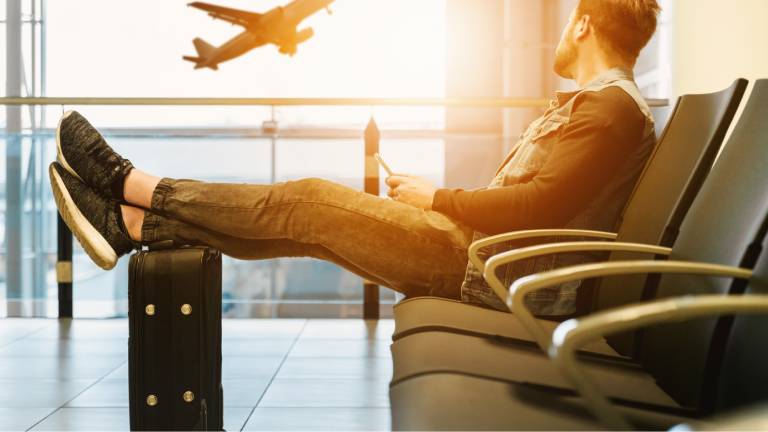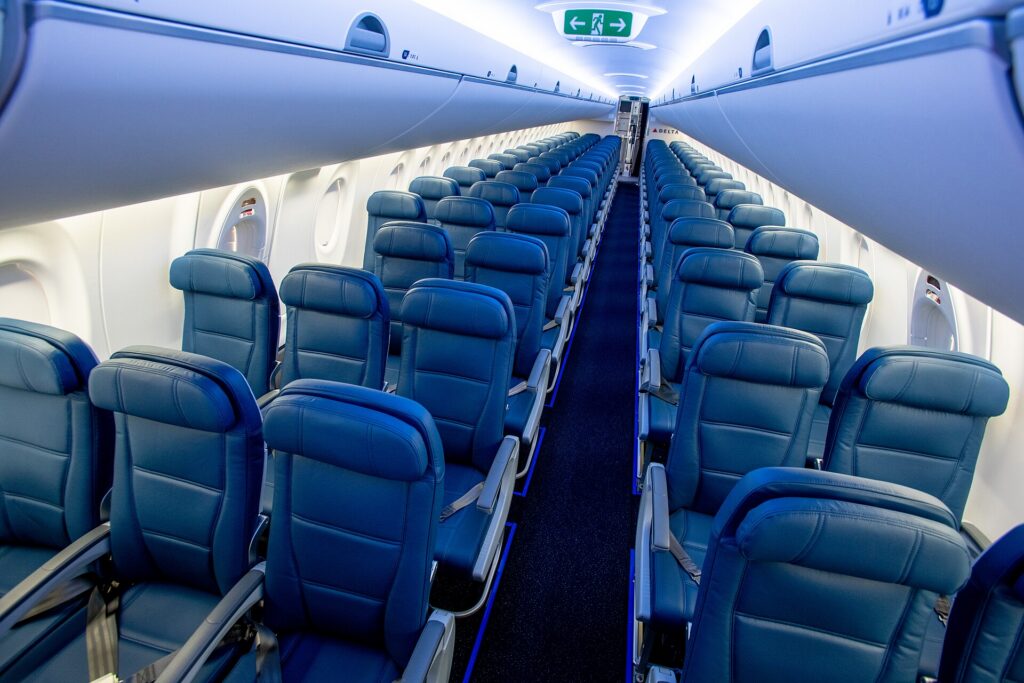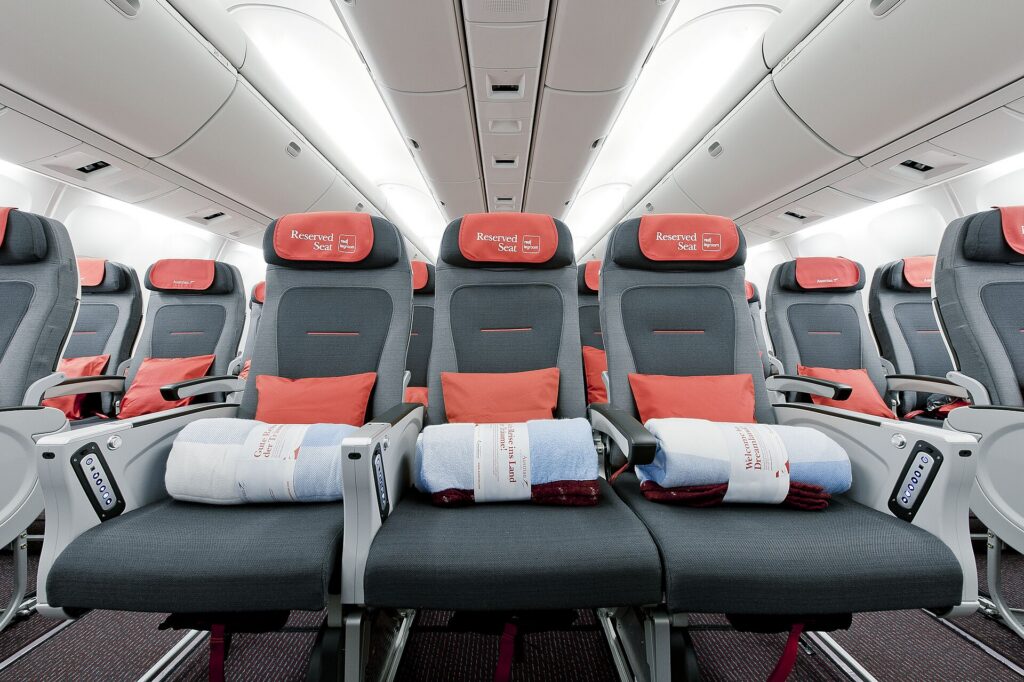
If you have searched for the best sleeping pills for flights, you are probably dreading a long overnight flight, a red-eye before an important meeting, or a trip across so many time zones that you expect to arrive exhausted. That is a real problem and worth solving. But the honest answer is that no website can tell you which pill is right for you, and we are not going to try. Sleep medicines, sedating antihistamines and even supplements such as melatonin carry risks that depend on your health, your other medicines and the flight itself. Those decisions belong with a doctor or pharmacist who knows your history. What we can do is explain the risks in plain terms, point you to the official sources that doctors use, and spend most of this guide on the things that help almost everyone sleep better in the air without taking anything: choosing the right seat, timing the flight, managing light, blocking noise, supporting your neck and using a simple jet-lag routine before and after you land.
The short answer
Before you take any sleep aid on a plane, including an over-the-counter product or melatonin, talk to a doctor or pharmacist first. Official health agencies flag real concerns: sleep medicines can leave you drowsy afterward, they can interact with alcohol and other medicines, and staying still for hours on a long flight is itself a risk factor for blood clots. For most travelers, the bigger and safer gains come from drug-free strategies: pick a seat that suits how you sleep, book a flight whose timing matches your body clock, use an eye mask and earplugs or noise-cancelling headphones, support your head properly, go easy on alcohol and caffeine, move around the cabin when you are awake, and shift your sleep schedule toward your destination before and after you fly.
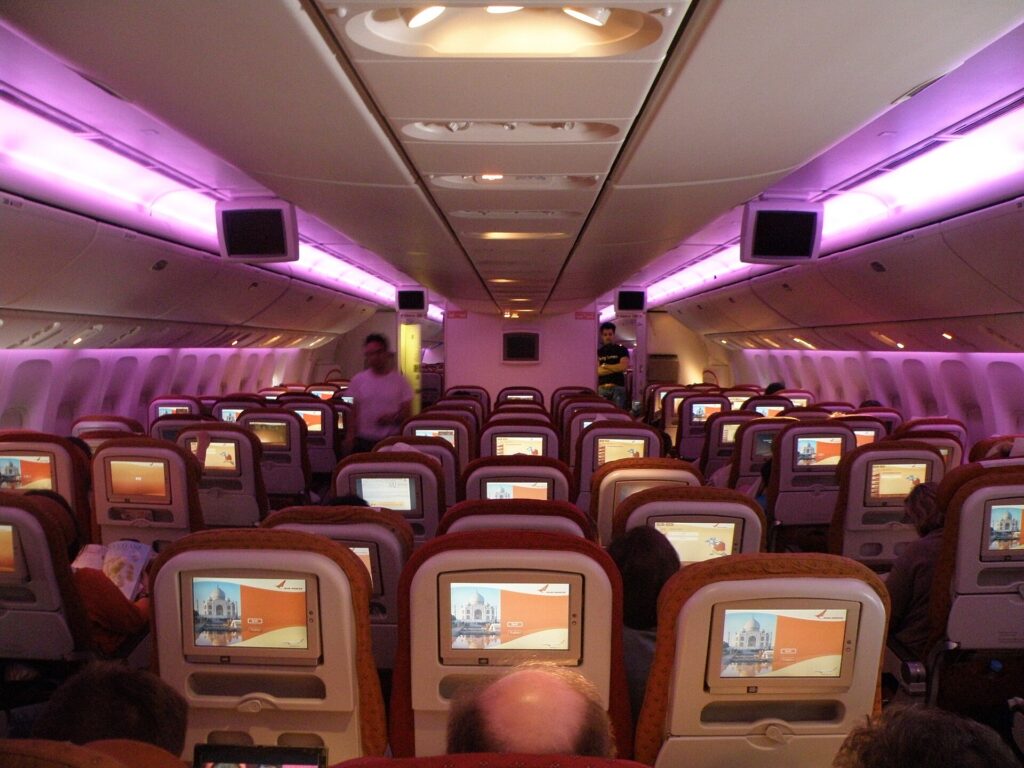
Why we changed this guide
An earlier version of this post ranked sleep supplements and an over-the-counter sleep aid and suggested when to take them. We removed that. Ranking medicines on a travel site is not responsible: a product that is harmless for one traveler can be risky for another, and the right choice, if there is one, depends on things only a clinician can weigh, such as your age, pregnancy, other prescriptions, breathing or heart conditions and history of blood clots. This guide now does two things. It explains the risks in general terms, with a link to the official source for every health statement, and it gives you a practical, step-by-step plan for sleeping better on a plane without medication.
What the official sources say about sleep aids on flights
We have kept this section deliberately general. It is not medical advice, and it does not name or compare products. Read it as a list of questions to bring to your doctor or pharmacist.
Drowsiness does not end when you land
The US Food and Drug Administration warns that with certain prescription insomnia medicines, you may still feel drowsy the day after taking one, and that these medicines can cause rare but serious “complex sleep behaviors” such as sleepwalking while not fully awake (source: FDA). On a plane, that matters in practical ways. You may need to wake quickly and follow crew instructions if there is turbulence, a medical situation on board or an emergency. You may need to navigate a busy connection, pass immigration, collect bags or drive a rental car soon after landing. Anything that leaves you groggy works against all of that, which is one reason to get professional advice before you fly rather than experimenting in the air.
Sitting still for hours and blood clot risk
The CDC says that anyone traveling more than four hours, by air, car, bus or train, can be at risk for blood clots, although the risk is generally very small; it is higher for people with other risk factors such as older age, obesity, recent surgery, pregnancy or a previous clot (source: CDC). The CDC’s clinical guidance for travel medicine adds that immobility while flying is a risk for venous thromboembolism, and that maintaining mobility could help prevent it (source: CDC Yellow Book). The UK’s NHS lists a long journey of more than four hours by plane, car or train among the situations that raise the chance of deep vein thrombosis (source: NHS). A deep, long sleep in a cramped seat means hours without moving your legs. If you have any clot risk factors, raise this specifically with your doctor before a long flight.
Interactions with other medicines and supplements
The FDA advises people taking prescription Z-drug insomnia medicines not to take them with any other sleep drugs, including over-the-counter ones (source: FDA). The US National Center for Complementary and Integrative Health says that people taking medicine should consult their health care providers before using melatonin, and that people with epilepsy and those taking blood thinners need medical supervision if they use it (source: NCCIH). The CDC’s clinical guidance also notes that sedating antihistamines and long-acting sedatives can worsen cognitive impairment, increase the risk of falls and impair physical performance (source: CDC Yellow Book). Travel adds its own complications: you may be taking a new antimalarial, a motion sickness remedy or a cold medicine at the same time. A pharmacist can check the whole list in a few minutes.
Alcohol and sleep aids do not mix
The FDA says not to drink alcohol before or while taking Z-drug insomnia medicines because together they may be more likely to cause side effects (source: FDA). The NHS notes that drinking alcohol while taking melatonin can stop it working as well as it should (source: NHS). A glass of wine with dinner service is part of the ritual of flying for many people, so this is worth planning for rather than deciding in the moment.
Sleep aids are not a jet lag cure
The NHS says that medicines are not usually needed for jet lag, which often improves within a few days, and that sleeping tablets can be addictive, so should only be used for a short time and if symptoms are severe (source: NHS). The CDC’s traveler advice is to talk to your doctor about taking medicine or other sleep aids if you struggle with jet lag, and to take any medicine or sleep aid as your healthcare provider directs (source: CDC).
Melatonin: a supplement in some countries, a prescription drug in others
Many travelers think of melatonin as a harmless natural option. Its legal status is a good reminder that it is not that simple, and that the same product can be treated very differently from one border to the next.
- United States: melatonin is sold as a dietary supplement, which the NCCIH explains means it is regulated less strictly than a prescription or over-the-counter drug; the NCCIH also notes that “natural” does not always mean safe and that some supplements may not contain what is listed on the label (source: NCCIH). The CDC’s clinical guidance makes the same point about label accuracy (CDC Yellow Book).
- Canada: Health Canada licenses melatonin as a natural health product for adults, available over the counter, and encourages parents and caregivers to consult a healthcare professional before giving it to children and adolescents (source: Health Canada).
- United Kingdom: the NHS states that melatonin is available on prescription only (source: NHS), and the NHS does not recommend melatonin tablets for jet lag because there is not enough evidence that they work (source: NHS).
- Elsewhere: the NCCIH notes that in several other countries, melatonin is available only with a prescription and is considered a drug (source: NCCIH).
Two practical takeaways. First, if you are thinking about melatonin, ask a doctor or pharmacist whether it is appropriate for you, the same as you would for any other sleep aid. Second, if you are flying to a country where it is prescription-only, check that country’s rules before packing a supplement bottle bought at home. We are not giving doses or timing for melatonin or any other product here; that is exactly the kind of advice that needs to come from someone who knows your health.
When to talk to a doctor or pharmacist
A short conversation before a long trip is worthwhile for almost anyone considering a sleep aid, and especially if any of these apply to you:
- You are thinking about any sleep aid on the flight, including melatonin, antihistamine-based products or herbal remedies.
- You take other prescription medicines, including blood thinners, antidepressants, pain medicines or anything for epilepsy, anxiety, heart or breathing conditions.
- You have ever had a blood clot, have had recent surgery, are pregnant or have other clot risk factors (the CDC lists these on its blood clots and travel page).
- You have a sleep condition, snore heavily or have been told you stop breathing during sleep.
- You are traveling with a child and wondering about anything to help them sleep.
- Your jet lag is severe or lasts well beyond a few days after previous trips.
Bring a list of everything you take, including supplements, plus your flight times and the time difference at your destination. A pharmacist at your usual drugstore can often help on the spot.
How to sleep on a plane without medication
This is where most of the real gains are. None of the steps below is dramatic on its own, but together they can turn a miserable overnight flight into a few hours of useful rest.
1. Choose your seat for sleep
Seat choice matters more than almost anything else you control.
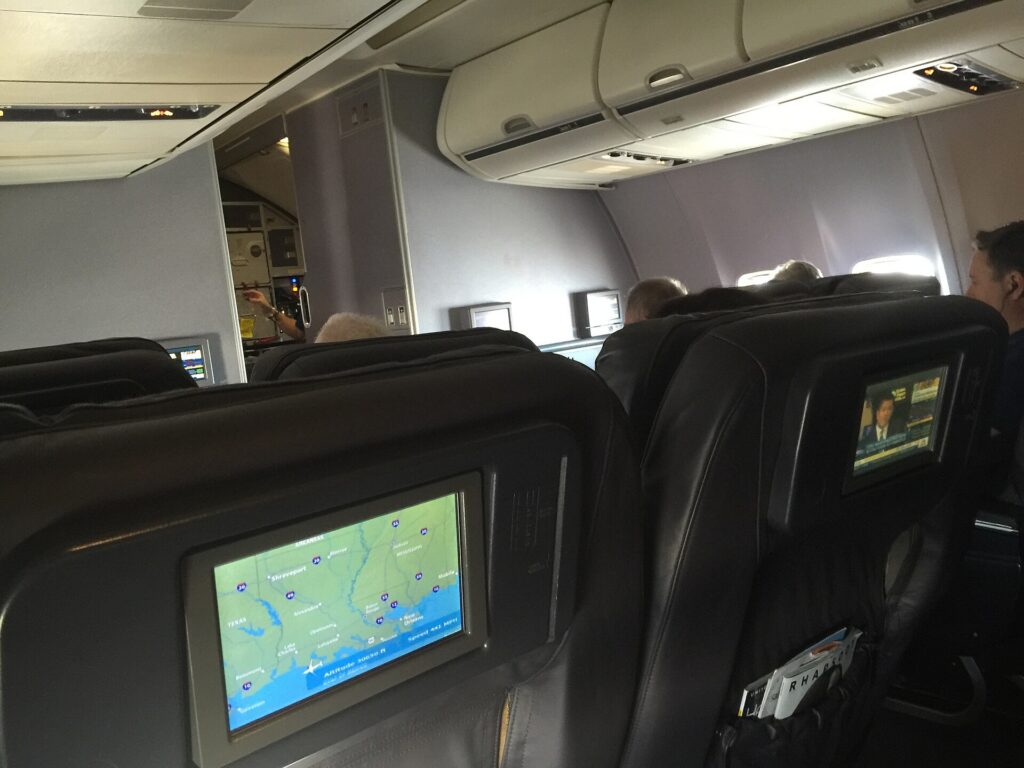
- Window seat if you want to sleep for a long stretch. You can lean against the wall, you control the shade and nobody climbs over you. The trade-off is that you have to climb over others to get up.
- Aisle seat if you want to get up and walk without disturbing anyone. The CDC’s clinical guidance notes that an aisle seat also might be a protective factor against blood clots because it makes moving around easier (source: CDC Yellow Book). If you have clot risk factors, that may outweigh the comfort of the window.
- Away from galleys and lavatories. Light, noise and foot traffic are constant near them, especially during meal service and before landing.
- Not in the row in front of an exit row on many aircraft, where seats may not recline. Check a seat map before you choose.
- Bulkhead rows give you legroom but often have fixed armrests and tray tables, and some airlines use them for bassinets, so they can be busy with families.
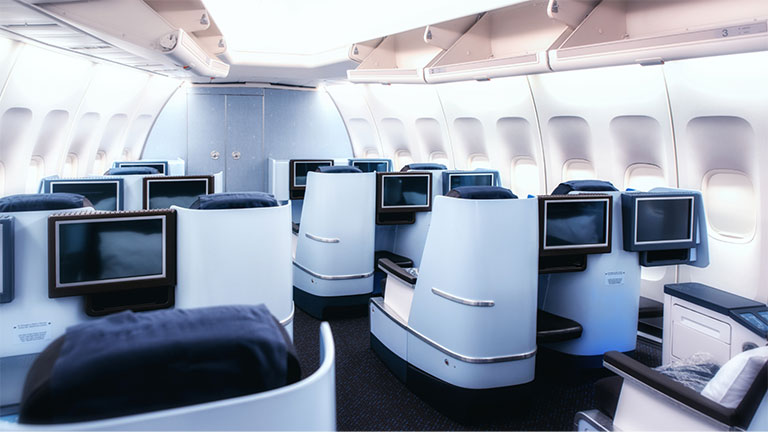
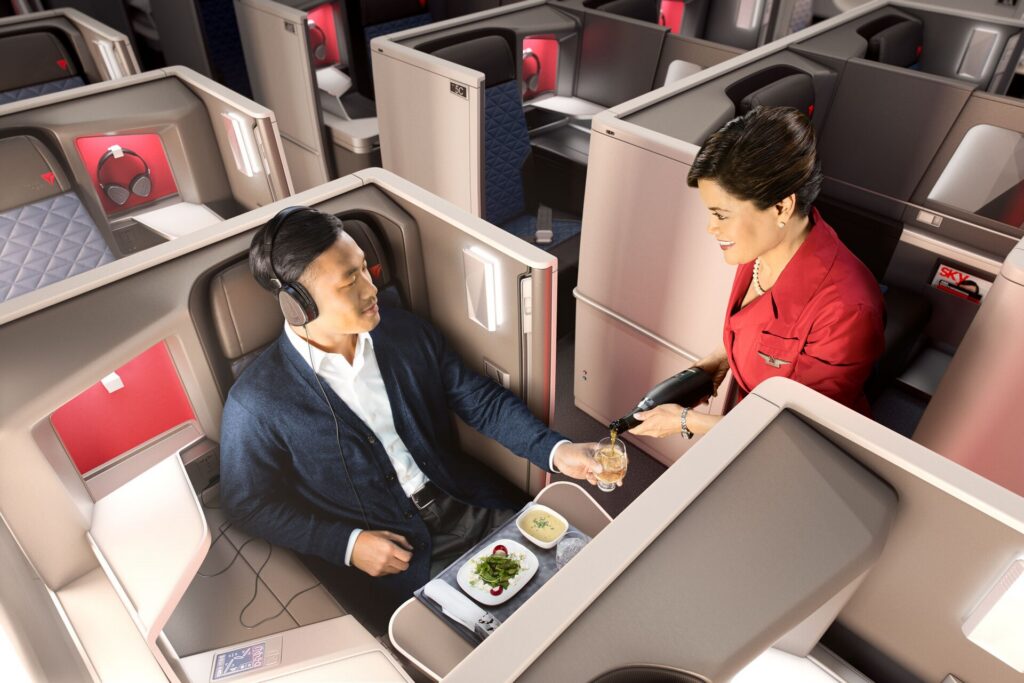
- Premium economy or business class make the biggest difference on long overnight flights, and a lie-flat seat changes the equation entirely. Our guides to the difference between first and business class and to business class upgrade strategies explain when the extra cost can make sense.
2. Time the flight to your body clock
When you compare fares, the schedule is part of the value. An overnight flight that departs late in the evening, after your normal bedtime, is far easier to sleep on than one that leaves at dinner time and lands before dawn at your destination. On daytime flights heading east, you may be better off staying awake and resetting to local time on arrival. If the fare difference is small, a well-timed flight is often worth more than the savings. Use a flexible-date search on our flight search to compare departure times across several days, and see our international flight booking tips for choosing connections that leave room for rest.
3. Start shifting your schedule before you fly
The NHS suggests getting plenty of rest before you travel and going to bed and getting up earlier or later than usual, closer to the time zone you are heading to (source: NHS). The CDC’s clinical guidance similarly suggests adjusting sleep time toward the destination’s sleep period for a few days before the trip where possible (source: CDC Yellow Book). Even a partial shift helps. Just as important: do not arrive at the airport already sleep-deprived from late-night packing. Pack a day early.
4. Manage light, the strongest signal to your body clock
According to the CDC’s clinical guidance, bright light in the morning tends to shift your body clock earlier, while light in the evening tends to shift it later (source: CDC Yellow Book). In practice:
- On board, when it is night at your destination, darken your world: lower the shade, dim your screen, use night mode and wear an eye mask.
- When it is day at your destination, open the shade (if your neighbors agree) and stay in the light.
- After you land, the CDC suggests staying in well-lit areas during the day, and the NHS recommends going outside during the day because natural light helps your body clock adjust (sources: CDC, NHS).
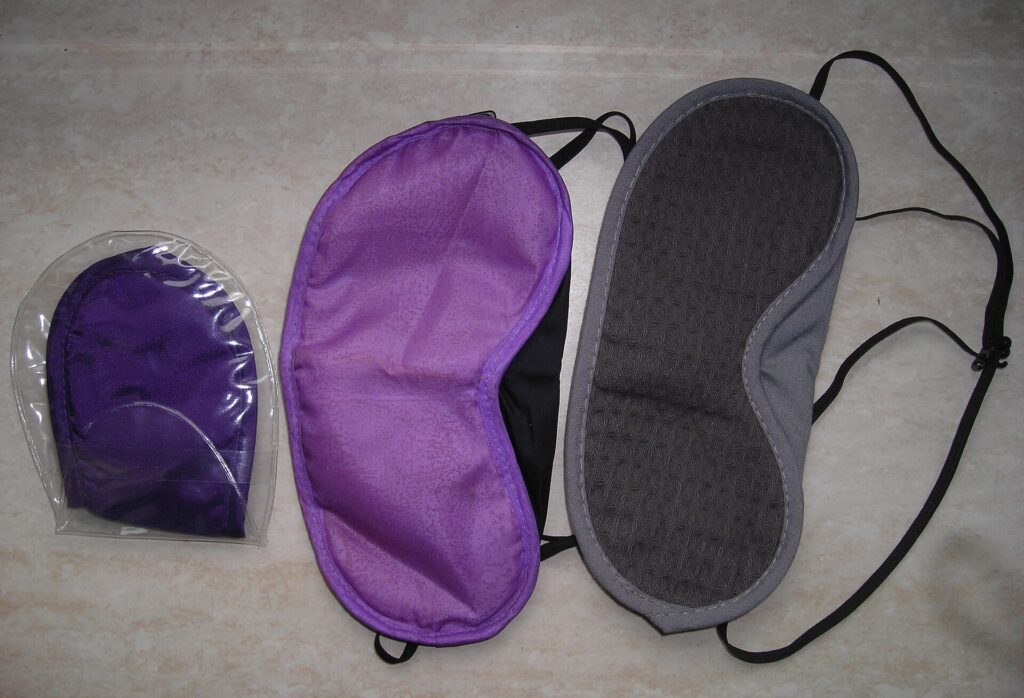
5. Use an eye mask and earplugs
Both the NHS and the CDC’s clinical guidance mention an eye mask and earplugs as simple ways to help you sleep on a flight (sources: NHS, CDC Yellow Book). The amenity-kit mask airlines hand out is better than nothing, but a contoured mask that sits off your eyelids blocks light more completely and is more comfortable over several hours. For noise, foam earplugs are cheap and light; reusable silicone or flanged plugs suit people who find foam uncomfortable. Pack two pairs, because one always goes missing under the seat.
6. Consider noise-cancelling headphones
Engine noise is a constant low rumble that earplugs only partly block. Active noise-cancelling headphones or earbuds are designed to reduce exactly that kind of steady low-frequency sound, and many travelers find them the single biggest upgrade for sleeping on planes. Over-ear models are often more comfortable for long wear if you sleep sitting up; small earbuds are easier if you lean your head against the window. Our guide to noise-cancelling headphones for airplane travel covers how to choose, battery life and using them with the seatback screen. Keep the volume low or play nothing at all; the cancellation alone helps.
7. Support your head and neck
The reason people wake up on planes is often their head falling forward or sideways. A good travel pillow solves that. Traditional U-shaped pillows help if you sleep upright; wrap-style or chin-support designs help if your head drops forward; a window-seat sleeper may prefer a small wedge against the wall. Our guide to the best airplane pillows for your neck goes through the styles and who each suits, and if space is tight, our guide to bags for travel pillows shows how to carry one without it taking over your carry-on.
8. Dress for sleep and for the cabin
Cabins swing between warm during boarding and cold at altitude. Wear soft, loose layers and bring a warm top or a light scarf that can double as a blanket. The NHS lists wearing loose clothing among ways to lower the chance of DVT on journeys of four hours or more (source: NHS). Slip-on shoes and warm socks make it easier to get comfortable. The CDC notes that some people may benefit from graduated compression stockings and advises talking with your doctor if you think you may be at risk for blood clots (source: CDC); our guide to compression socks for long flights covers the practical side of choosing and wearing them. For the rest of your outfit, see what not to wear on a flight.
9. Go easy on alcohol and caffeine
The CDC advises travelers to avoid alcohol because it disrupts sleep, and to use caffeine strategically during the day but avoid it in the evening (source: CDC). Its clinical guidance explains that alcohol tends to help you fall asleep faster but fragments sleep, so minimizing alcohol and caffeine helps in-flight sleep (source: CDC Yellow Book). The NHS gives similar advice: do not drink too much caffeine or alcohol, as both can make jet lag worse (source: NHS). A practical approach is to switch to water or herbal tea once the meal service starts on an overnight flight.
10. Drink water and keep moving when you are awake
The NHS recommends drinking plenty of water and keeping active by stretching and regularly walking around the cabin during your flight (source: NHS). For blood clot prevention, the CDC suggests moving your legs frequently on long trips, getting up and walking around every one to two hours, and exercising your calf muscles, for example by extending your legs and flexing your ankles to pull your toes toward you (source: CDC). Fasten your seatbelt loosely over your blanket so the crew does not need to wake you during turbulence, and plan your sleep around getting up once or twice, rather than aiming for one unbroken block.
11. Build a mini bedtime routine on board
Your brain responds to cues. The same small ritual you use at home, in the same order, tells it that it is time to sleep: brush your teeth in the lavatory, change into warm socks, put your phone on airplane mode and do not disturb, pull on the mask, put in earplugs or turn on noise cancelling, and recline. Eat the meal early or skip it if you are not hungry; you can ask the crew to not wake you for service. A familiar playlist, podcast or white-noise track can help you drift off.
12. Use the layover well
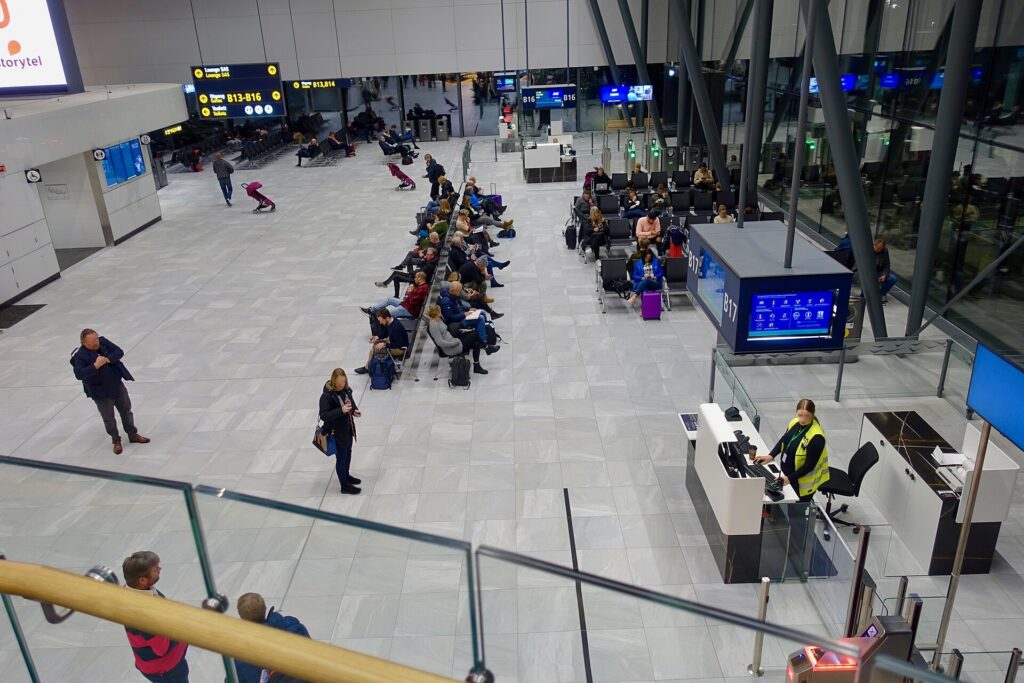
On a long itinerary with a connection, the layover can make or break the trip. Stretch, walk, get daylight if it is daytime at your destination and eat a light meal. For very long connections, some airports have quiet zones, lounges or airside hotels. Our guide to airport arrival times for international flights helps you plan the ground side of the trip so you are not rushing and stressed before you even board.
A jet lag routine for the days around your flight
| When | What to do | Why (source) |
|---|---|---|
| A few days before | Shift bedtime and wake time toward your destination | Recommended by the NHS and the CDC Yellow Book |
| The night before | Pack early and get a full night’s sleep | The NHS advises getting plenty of rest before you travel |
| On board, destination night | Mask, earplugs or headphones, pillow, dim screens, limit alcohol | Eye masks, earplugs and limiting alcohol and caffeine are advised by the NHS |
| On board, awake | Water, stretching, walking the aisle | Advised by the NHS and the CDC |
| Arrival day | Switch to local time, get outside in daylight, avoid long daytime naps | Advised by the NHS and CDC |
| First few nights | Set an alarm so you do not oversleep; keep caffeine to the daytime | Advised by the NHS and CDC |
For short trips, the NHS notes that if you are away only two or three days, you could try keeping your home eating and sleeping times to avoid having to change them again when you get back (source: NHS). For trips across more than three time zones, the CDC suggests following your destination’s sleep and waking routine once you arrive (source: CDC).
Situations that need a different plan
Red-eyes within North America
A five-hour red-eye gives you, at best, three or four hours of broken sleep. Treat it as a nap rather than a night: get settled fast, skip the meal and drinks, use every sleep tool you packed, and plan a short nap and early night on arrival day rather than a full schedule. If you have an important meeting, a daytime flight the day before is usually the better choice.
Ultra-long-haul flights
On flights of 14 hours or more, you will likely be awake for part of the flight whatever you do. Plan two sleep periods matched to your destination’s night, and use the waking time to walk, stretch and drink water. This is the kind of flight where the CDC’s movement advice matters most.
Traveling with children
Children sleep best with their own routine: pajamas, a familiar blanket or toy, a story. Book seats together, bring snacks and headphones sized for children, and plan for broken sleep for everyone. Health Canada encourages parents to consult a healthcare professional before giving melatonin to children and adolescents (source: Health Canada), and the same caution applies to any other sleep aid for a child.
Flying for work
If you must perform soon after landing, protect your sleep the night before the flight, choose a flight time that suits you, and build in a buffer on arrival. Groggy is not a good state for a presentation or a drive from the airport.
Anxious flyers
If fear of flying is what keeps you awake, that is worth discussing with a doctor in its own right, since anxiety and sleep are different problems with different answers. Breathing exercises, calming audio and choosing a seat over the wing, where motion tends to feel smoother, help some people.
A packing checklist for sleeping on planes
- Contoured eye mask
- Earplugs (two pairs) or noise-cancelling headphones, fully charged
- A travel pillow that suits how you sleep
- Warm layer, scarf or wrap, warm socks
- Refillable water bottle, empty through security
- Toothbrush, lip balm and a small moisturizer within liquid limits
- Any medicines you already take, in your carry-on, with the label
- A downloaded playlist, podcast or white-noise track
Keep all of this in one pouch at the top of your personal item so you can set up in a minute once you reach your seat. Our main guide to travel luggage helps you choose a carry-on and personal item that make this easy, and our guide to a travel first aid kit covers the small health items worth packing for any trip.
Common mistakes
- Trying a sleep aid for the first time on a plane. If you and your doctor decide a sleep aid is appropriate, you do not want your first experience of it to be at 35,000 feet.
- Combining alcohol and sleep aids. The FDA specifically warns against mixing alcohol with Z-drug insomnia medicines (FDA).
- Assuming “natural” means safe. The NCCIH is clear that it does not, and that supplements can interact with medicines (NCCIH).
- Sleeping for hours without moving on a long flight, especially with clot risk factors (CDC).
- Choosing the cheapest flight at any hour. A 6 a.m. departure after a sleepless night can cost you a day of your trip.
- Napping all afternoon on arrival day. The NHS advises only sleeping at night after you arrive (NHS).
- Forgetting your own routine. The same cues that help you sleep at home help in the air.
Frequently asked questions
What is the best sleeping pill for a long flight?
We do not recommend or rank any sleeping pill, sedative, antihistamine or supplement. The right answer depends on your health and other medicines, so ask a doctor or pharmacist before taking anything. Official sources such as the FDA and the CDC describe risks including next-day drowsiness, interactions and blood clots on long journeys.
Is it safe to take melatonin on a plane?
Talk to a doctor or pharmacist first. Melatonin is sold as a dietary supplement in the United States, as an over-the-counter natural health product for adults in Canada and as a prescription-only medicine in the United Kingdom, according to the NCCIH, Health Canada and the NHS. The NCCIH advises anyone taking medicine to consult their provider before using it.
Can I drink alcohol to help me sleep on a flight?
It tends to backfire. The CDC says alcohol disrupts sleep, and its clinical guidance explains that alcohol helps you fall asleep but fragments sleep (source: CDC). Alcohol should never be combined with sleep medicines unless a doctor has told you otherwise.
Which seat is best for sleeping on a plane?
A window seat away from galleys and lavatories is best for uninterrupted sleep. If you need to get up often or have clot risk factors, an aisle seat makes moving easier, which the CDC Yellow Book notes might be protective against clots.
Do eye masks and earplugs really help?
They are simple, cheap and recommended by the NHS as ways to help you sleep on a flight. Noise-cancelling headphones go further for engine noise.
How can I reduce jet lag without medicine?
Shift your schedule before you go, sleep on the plane when it is night at your destination, limit alcohol and caffeine, drink water, get daylight after you land and switch to local time quickly. These steps come from the NHS and CDC.
Should I wear compression socks if I plan to sleep on the flight?
The CDC says some people may benefit from graduated compression stockings and advises talking with your doctor if you think you may be at risk for blood clots. Ask your doctor whether they suit you.
Is it better to stay awake on a red-eye?
Usually not. Even a few hours of broken sleep is better than none. Treat a short red-eye as a nap, then keep arrival day light and go to bed early.
Good sleep in the air starts with the booking. Compare departure times across flexible dates on our flight search to find an overnight flight that fits your body clock, and if you are heading across the Atlantic, our guide to the best time to fly to London and our London flight deals are a good place to start. Book a hotel near the airport or city center on our hotel search so you can get to bed quickly on arrival. For the rest of your kit, start with our main guide to travel luggage. This guide is general information, not medical advice; for any question about medicines or supplements, speak with a doctor or pharmacist.
Keep planning with TicketScanner
- Top travel luggage bags: the buying guide — the travel gear guide
- Best airplane pillows for your neck
- Noise-cancelling headphones for airplane travel
- Compression socks for long flights
- Bags for travel pillows
- Travel first aid kits
- What not to wear on a flight
- Search flights — compare departure times across flexible dates
- Best time to fly to London