Tag: Airport Tips

  • How Early Should You Arrive at the Airport Before Your International Flight

    How Early Should You Arrive at the Airport Before Your International Flight

    “Get there three hours early” is the standard advice for international flights, and for many trips it is about right. But it is a rule of thumb, not a law. The time you actually need depends on the airport, the season, the time of day, whether you are checking bags, which border controls you pass through before boarding and who you are traveling with. Arrive too late and you can miss a check-in deadline you did not know existed, even with the plane still at the gate. Arrive far too early and you spend hours in a terminal you did not need to be in. This guide explains what the three hours is actually for, the deadlines that matter, the factors that add or remove time, how U.S. preclearance at Canadian airports changes the math, what happens when you land, and how to build a timeline for your own flight.

    The short answer

    For most international flights, plan to arrive about three hours before departure, which is what many airlines and large airports recommend. Allow more at peak holiday periods, at very large or unfamiliar airports, when you are checking bags, traveling with children or needing assistance, and when you clear U.S. customs and immigration before boarding at a Canadian airport. You can cut it closer at a smaller airport, off-peak, with no checked bags and a trusted traveler membership, but never plan to arrive after the airline’s check-in and bag drop deadlines. The three numbers to look up for every flight are the check-in cutoff, the bag drop cutoff and the boarding gate closing time. Your airline’s website lists them, and your airport’s website usually lists its own recommended arrival times.

    Travelers lined up for security screening at Toronto Pearson International Airport
    A security line at Toronto Pearson: the least predictable step in any airport timeline (Photo: Mike from Vancouver, Canada via Wikimedia Commons, CC BY-SA 2.0)

    What the three hours is actually for

    The recommendation is built from a sequence of steps, each of which can take a few minutes or a long time depending on the day. Here is a typical international departure, working backward from the departure time.

    StepTypical time neededWhat can slow it down
    Getting to the airport and into the terminalVaries; add a buffer to your normal travel timeTraffic, parking shuttles, rental car returns, weather
    Check-in and bag dropA few minutes to more than an hourPeak times, document checks, oversize items, overweight bags
    Security screeningA few minutes to more than an hourTime of day, holidays, bags pulled for extra screening
    Exit controls or U.S. preclearance (some airports)A few minutes to an hour or moreSeveral departures at once, secondary inspection
    Walking or taking a train to the gate5 to 30 minutes at large airportsRemote gates, terminal transfers
    BoardingOften begins 30 to 60 minutes before departure on long-haul flightsDocument checks at the gate on international flights

    On a quiet day, all of this can take well under an hour. On a busy day, each step can stack. The three-hour guideline gives you enough margin for a bad day at most large airports, and on a good day, time for a meal before you board.

    The deadlines that actually matter

    Airlines set hard cutoffs, and missing them can cost you your seat even if the aircraft has not left. These vary by airline, airport and route, so check the details for your flight; the principles are the same everywhere.

    Check-in cutoff

    This is the latest time you can check in for your flight, online or at the airport. For international flights, it is commonly around 60 minutes before departure and can be earlier at some airports and on some routes. After the cutoff, the system may close and the airline can give your seat away. Checking in online, often from 24 hours before departure, protects you from missing this one, but international passengers sometimes must still have documents verified at the counter before a boarding pass is issued.

    Bag drop cutoff

    If you are checking a bag, there is usually a separate, and sometimes earlier, deadline for dropping it off. Bags need time to be screened and loaded. Arrive after the bag drop closes and you may be told you can fly without the bag or not at all.

    Boarding gate closing time

    Gates typically close somewhere from 10 to 30 minutes before departure, often earlier on international and wide-body flights, so the airline can finalize the passenger list and close the doors on time. “Departure time” means the time the aircraft door closes and it pushes back, not the time you need to reach the gate.

    Put all three times in your calendar the day before, and plan to be at the gate well before boarding begins. Our flight details guide explains where to find these times on your booking and boarding pass.

    What adds time, and what saves it

    FactorEffectWhat to do
    Peak holidays and school breaksLonger lines at every stepAdd an hour to your usual buffer
    Early morning departure bankMany flights leave at once; security can be busy right after openingCheck when security opens and arrive with margin
    Checked bagsAdds the bag drop step and its cutoffUse online check-in and bag tags where offered
    Children, strollers, car seatsSlower at security and check-inAdd 30 minutes or more; see family lanes where available
    Wheelchair or mobility assistanceAssistance must be arranged and can take timeRequest assistance in advance through the airline and arrive early
    Pets, sports equipment, oversized itemsSpecial handling counters and documentsConfirm airline procedures and add time
    U.S. preclearance or exit passport controlAn extra border control before the gateAdd time; use trusted traveler programs if eligible
    Returning a rental carReturn, inspection and shuttle to the terminalAdd 30 minutes or more; see our car rental return timing guide
    Trusted traveler membershipFaster security or border lanesCan cut time significantly, but lanes are not always open
    Carry-on only, checked in onlineSkips the counter entirely at many airportsGo straight to security if no document check is required

    Trusted traveler programs

    If you fly internationally more than once or twice a year, a trusted traveler program is the most effective way to shorten your airport time.

    • NEXUS is a joint Canada and U.S. program for pre-approved travelers. It provides expedited border processing when entering Canada and the United States, and members can use dedicated security lines at many Canadian airports.
    • Global Entry is the U.S. program for expedited entry into the United States for pre-approved travelers.
    • TSA PreCheck provides expedited security screening at participating U.S. airports, on participating airlines.

    Applications take time and include an interview or in-person step, so apply well before a trip. Eligibility and benefits change, so check the official page before relying on a program for a specific flight.

    Rows of airline check-in counters in an international departure hall
    Check-in and bag drop close well before departure, even when the plane is still at the gate (Photo: Cheng-en Cheng via Wikimedia Commons, CC BY-SA 2.0)

    Flying from Canada to the U.S.: preclearance

    Several large Canadian airports, including Toronto Pearson, Vancouver, Montreal, Calgary, Edmonton, Ottawa, Winnipeg and Halifax, have U.S. preclearance. That means you go through U.S. customs and immigration in Canada, before you board, and arrive in the United States as if on a domestic flight.

    Preclearance makes arrival easy, but it moves a border control to the start of your trip. After check-in and security, you queue for U.S. Customs and Border Protection, and the time this takes varies with how many U.S.-bound flights are leaving at once. For that reason, transborder flights often need as much time as long-haul international flights. Many airports and airlines recommend arriving around the same time as for international departures. Checked bags travel through the preclearance process too, so bag drop deadlines can be earlier.

    If you are traveling between Canada and the U.S., our guide to cheap flights between New York and Toronto covers the route, and our Toronto Pearson airport guide explains the terminals.

    Departing from the U.S., the UK and Europe

    From the United States

    The U.S. does not have exit passport control in the way many countries do. After check-in, you go through TSA screening, and your airline checks your passport and any required visa or authorization for your destination at check-in or the gate. The liquids rule for carry-on bags is explained on the TSA liquids page, and the full list of what you can bring is on TSA’s What Can I Bring page.

    From Canada

    Canada does not have exit immigration either. Screening is carried out by CATSA, whose site lists what you can pack. For flights to the United States from a preclearance airport, add the U.S. border step described above.

    From the UK and the Schengen area

    Leaving the Schengen area involves exit passport control after security, and the EU’s digital Entry/Exit System, which records non-EU travelers’ biometrics, can add time, particularly during rollout and at busy times. Large hubs such as London Heathrow and Paris Charles de Gaulle also have long walks and transit trains between areas, so allow extra time when returning home too.

    Security rules that slow people down

    Most delays at screening come from avoidable items in carry-on bags. The main principles are similar at most airports, though details differ and change, so check before you fly.

    • Liquids: in Canada and the U.S., carry-on liquids, gels and aerosols generally must be in containers of 100 ml (3.4 oz) or less, together in one clear, resealable bag of about one liter. Some airports with newer scanners have relaxed these rules, but assume the limit applies unless your departure airport says otherwise, and remember the return airport may have different rules.
    • Electronics: have laptops and larger electronics easy to reach in case you are asked to remove them.
    • Sharp items and tools: check the rules for knives, scissors, tools and sporting goods before packing.
    • Batteries: spare lithium batteries and power banks typically must be in carry-on, not checked bags.
    • Clothing: belts with big buckles, heavy jewelry and complicated footwear slow things down. Our guide to what not to wear on a flight covers what makes screening easier.
    • Bag size: an oversized carry-on can be sent back to check-in at the gate. Check your airline’s limits; our carry-on size guide explains how.

    Getting to the airport

    Your airport timeline starts at home. Build a buffer into the journey itself, especially at rush hour and in winter.

    • Public transit and airport trains: often the most predictable option at rush hour. Toronto has the UP Express from Union Station to Pearson, and Vancouver’s Canada Line runs to YVR. Check the first and last trains for early or late flights.
    • Driving and parking: allow time to park and take a shuttle from long-term lots, which can add 20 to 30 minutes. Reserve airport parking ahead at busy times.
    • Rental car returns: returning a car, having it inspected and taking a shuttle to the terminal can take longer than expected.
    • Staying near the airport: for very early departures, a hotel near the airport can remove the biggest source of uncertainty. Our hotel search can show properties near major airports.

    The gate areas along the concourse of Terminal 1 at Toronto Pearson
    At large airports the walk to the gate can take 20 minutes or more; gates close 10 to 30 minutes before departure (Photo: Daniel Case via Wikimedia Commons, CC BY-SA 3.0)

    How to build your own timeline

    Instead of guessing, work backward from your flight.

    • Start with departure time and look up the gate closing time for your airline. Aim to be at the gate at least 15 minutes before boarding begins.
    • Add the walk to the gate, which can be 20 minutes or more at large airports.
    • Add security and any border control. Many airports show estimated wait times online. At busy times, allow at least 30 to 60 minutes for each.
    • Add check-in and bag drop if you need them, and make sure the result is well before the cutoffs.
    • Add your journey to the airport plus a buffer for traffic or transit delays.

    For most international trips, this works out close to the three-hour guideline. At a small airport off-peak, with no bags and a trusted traveler card, it may be less. At a major hub during the holidays, it may be more.

    Examples

    ScenarioSuggested arrivalWhy
    Long-haul flight from a major hub, checked bags, summer3 hours or a little moreBusy counters, security and long walks
    Transborder flight from a Canadian preclearance airportAbout 3 hours, especially at peak timesSecurity plus U.S. customs and immigration before boarding
    International flight from a small regional airport, carry-on onlyAbout 2 hoursShorter lines, but deadlines still apply
    Family with young children and a stroller, holiday period3.5 hours or moreEvery step takes longer, and you want time for a break
    Traveler needing wheelchair assistanceAt least the airline’s recommended time, plus a bufferAssistance is coordinated across check-in, security and the gate

    These are planning examples, not guarantees. Always check your airline’s and airport’s current recommendations for your flight.

    Notes on some major airports

    Every airport publishes its own advice, and it is worth reading before you go. A few patterns at airports our readers use most:

    • Toronto Pearson (YYZ): Canada’s busiest airport, with two terminals connected by a free automated train. Know which terminal your airline uses before you set out, and allow time for U.S. preclearance on transborder flights. The Toronto Pearson website shows current guidance and security wait estimates.
    • Vancouver (YVR): the main gateway to Asia and a preclearance airport for U.S. flights. Domestic, U.S. and international departures use different areas of the terminal, so follow signs for your flight type.
    • Montreal-Trudeau (YUL): handles domestic, transborder and international flights in one terminal building with separate zones, and has U.S. preclearance.
    • Calgary (YYC): has U.S. preclearance and a busy international area in summer and during the ski season.
    • New York JFK: several separate terminals linked by the AirTrain. Road traffic to the airport can be slow, so many travelers use rail connections to the AirTrain instead of a taxi at rush hour.
    • London Heathrow (LHR): multiple terminals that are not all walkable from each other; check your terminal, and allow for long walks and transit to remote gates.
    • Paris Charles de Gaulle (CDG): a very large airport where terminals can be far apart. Leave time for exit passport control on flights leaving the Schengen area.

    Whatever the airport, check your terminal the day before. Going to the wrong one is among the most common ways people lose half an hour they did not have.

    Using the extra time well

    Arriving early is less painful if you plan to use the time. International terminals often have better food and more seating than domestic ones. If you have lounge access through your ticket, status or a card, check its hours and location beforehand. If you are flying in a premium cabin, our guides to business class upgrade strategies and the difference between first and business class explain the lounge and priority lane benefits that come with them. Otherwise, a refillable water bottle, a snack and a charged phone make the wait easier.

    Passport control desks in an airport arrivals hall
    On arrival, immigration queues depend on how many flights land at once (Photo: Vasyatka1 via Wikimedia Commons, CC BY-SA 4.0)

    When you land: immigration and customs

    The other half of the airport experience is arriving. Plan for it when you book connections and ground transport.

    • Immigration: present your passport and any visa or authorization. Many airports use automated kiosks or e-gates for eligible passengers. Queues vary widely with how many flights arrive together.
    • Baggage claim: if you checked bags, collect them before customs.
    • Customs: declare goods as required. Entering Canada, the Canada Border Services Agency explains what to declare; entering the U.S., U.S. Customs and Border Protection does the same.
    • Connections: if you connect after arriving in a new country, you may need to clear immigration, collect and recheck bags and go through security again. This is why international connections need more time; our international flights booking tips cover how much to allow.

    If you are running late

    • Check in online as soon as you can, so you are inside the check-in deadline.
    • Contact your airline through its app or phone line; it may be able to rebook you before you miss the flight.
    • Tell staff in line if your flight is close to closing; many airports have procedures to help passengers on imminent flights.
    • Do not abandon a checked bag plan at the last minute without asking; a bag that misses the cutoff may need to travel on a later flight.
    • Know the rules if you miss it: policies vary by airline and fare. Some airlines have a same-day rebooking policy for passengers who arrive shortly after departure; others treat a missed flight as a no-show, which can cancel the rest of your itinerary.

    The day before your flight

    • Check in online when it opens and download or print boarding passes.
    • Check the flight status and the terminal.
    • Look up check-in, bag drop and gate closing times.
    • Confirm your passport, visa or electronic authorization.
    • Pack liquids and electronics where you can reach them.
    • Weigh checked bags.
    • Plan your journey to the airport, including a backup.
    • Set two alarms for early departures.

    Frequently asked questions

    Is three hours really necessary for an international flight?

    Often, yes, at large airports and busy times. At a smaller airport off-peak, with no checked bags, two hours may be enough. Always stay well ahead of the check-in, bag drop and gate closing deadlines.

    How early should I arrive for a flight from Canada to the U.S.?

    At airports with U.S. preclearance, plan for roughly the same time as an international flight, because you clear U.S. customs and immigration before boarding. Check your airport’s current guidance.

    What happens if I arrive after check-in closes?

    The airline can refuse to check you in, and you may need to rebook. Policies vary; contact the airline immediately.

    Does online check-in mean I can arrive later?

    It helps, especially with carry-on only. International passengers may still need a document check at the counter, and security and border lines take the same time either way.

    How long does security usually take?

    From a few minutes to an hour or more depending on the airport, time of day and season. Many airports publish live wait times on their websites.

    Should I arrive earlier during holidays?

    Yes. Add at least an hour around major holidays, school breaks and long weekends.

    Can I arrive too early?

    Yes. Check-in counters for a specific flight often open only a few hours before departure, so arriving much earlier with bags may mean waiting landside. If you have a very early arrival, check when your airline’s counter opens and whether the airport offers bag storage.

    How long does it take to clear immigration when I land?

    It varies widely by airport and time of arrival. Trusted traveler programs and automated kiosks can shorten it considerably.

    Ready to book? Compare departure times as well as fares on our flight search, since an early-morning flight changes your airport timeline, and read our guide to the best time to book cheap flights and hotels before you choose dates. If you need a room near the airport for an early start, check our hotel search.

  • Does It Matter If You Return Your Car Rental a Few Hours Early or Late

    Does It Matter If You Return Your Car Rental a Few Hours Early or Late

    Does it matter if you return a rental car a few hours early or a few hours late? Yes, and more than most travelers expect. The return time on your agreement is not a rough guide; it is the point at which the price you agreed to ends. Bring the car back a couple of hours late and you can pay for a whole extra day, often at a higher rate than the one you booked. Bring it back a day or two early and, depending on the rate and the company, you may get nothing back, or even pay more. This guide explains how rental companies count time, how grace periods and late charges typically work, why early returns can backfire, how to extend properly, what happens with after-hours drop-offs, and how much time to allow when you are returning a car at the airport before a flight.

    Policies differ between companies, locations and countries, and they change, so treat this as a guide to the questions to ask. Your rental agreement and the company’s own terms are what count. If you are still at the booking stage, our car rental search shows the pickup and return times for every offer, and it is worth playing with them before you commit.

    The short answer

    • Late: expect a short grace period at best, then hourly charges, then a full extra day once you are a few hours over. Extra days of add-ons such as coverage, child seats and toll programs are usually charged too.
    • Early: on a prepaid rate, unused days are often not refunded. On a pay-later rate, the company may recalculate your price at a different rate for the shorter rental, which can wipe out the saving or even raise the total. Some companies charge an early-return fee.
    • Either way: call or use the app before your return time. Changes agreed in advance almost always cost less than surprises.

    How rental companies count time

    Most car rentals in North America, and many elsewhere, are priced in 24-hour periods starting from the pickup time, not in calendar days. If you pick up at 10 am on Monday and return at 10 am on Thursday, that is three rental days. Return at 1 pm on Thursday and you have started a fourth period, and after any grace period you will be charged for part or all of it.

    This has two practical consequences. First, the pickup time you choose sets the return time for the whole rental, so choosing sensibly at booking is the cheapest decision you will make. Second, the clock is indifferent to your reasons: a slow breakfast, a traffic jam or a detour to fill the tank all count.

    A few details vary:

    • Weekly and weekend rates. Many companies offer weekly rates that are cheaper per day than daily rates, and some price weekend rentals differently. The rate you are charged depends on the length of the rental and sometimes on the days it spans, which is why changing the length, in either direction, can change the rate itself.
    • Some local and international rentals count calendar days or have their own rules. Read the agreement.
    • The recorded return time is normally when the car is checked in, by an agent with a handheld device or by the location’s system. For after-hours drop-offs this can be different, as explained below.
    Rental car return signage at Toronto Pearson International Airport
    The return time on your agreement is when the price you agreed to ends, so plan to arrive early (Photo: formulanone from Huntsville, United States via Wikimedia Commons, CC BY-SA 2.0)

    Grace periods: what to expect, and why not to rely on one

    Many major companies allow a short grace period before late charges begin, commonly around half an hour at US locations, but it is not universal, it is not always written in the same way, and it can differ between corporate and franchise locations and between countries. Some locations have none. Some apply a grace period to the time charges but not to add-ons. And a grace period is not an extension; it is a tolerance for small delays.

    The safe assumption is that there is no grace period. If you want to know for certain, ask at the counter when you pick up, and check the terms on the company’s own site, such as Hertz, Avis, Budget or National. Write down what you are told and who told you.

    Returning late: what typically happens

    The first few hours

    After any grace period, many companies charge an hourly rate for each hour, or part of an hour, that you are late. Once the hourly charges reach a threshold, commonly after a few hours, they stop charging hourly and charge a full extra day instead. So returning three or four hours late often costs the same as returning twenty hours late.

    The rate you pay for the extra time

    The extra day may not be charged at the discounted rate you booked. Agreements often allow the company to charge its standard or current rate for additional time, which can be higher, especially at busy periods. If you booked a weekly rate and go over the week, the extra time may be charged at the daily rate.

    Add-ons are charged too

    Anything priced per day, such as a collision damage waiver, supplemental liability, a child seat, a GPS unit or a toll program with a daily fee, is usually charged for the extra day as well. On a family rental with coverage and two car seats, the add-ons can cost more than the car.

    Late fees and knock-on effects

    Some companies add a separate late-return fee. If the car was due for another customer, the location may not be pleased, but that is their problem to solve, not a charge you should see. What you do need to watch is coverage: if your rental agreement has ended and you have not extended, the company’s waiver may no longer apply, and your credit card’s rental benefit may only cover the rental period you agreed. Keeping the car without authorization for a long time can eventually lead a company to treat it as overdue or unreturned, with far more serious consequences. That is rare and avoidable: just call.

    How to avoid late charges

    1. Set the return time with a buffer. If your flight leaves at 3 pm, do not book a 2 pm return at an airport where the rental center is a shuttle ride away.
    2. Plan the fuel stop and allow for it in your timing.
    3. Check traffic for the drive back, especially on a Friday or a Sunday afternoon near a big city.
    4. Call before your return time if you will be late, and ask whether it is cheaper to extend formally.

    Returning early: why it does not always save money

    It seems logical that returning a car early should cost less. Sometimes it does. Often it does not, for three reasons.

    Prepaid rates

    If you paid in advance, many companies and booking platforms do not refund unused days, or refund them only minus fees. The terms of prepaid rates are usually stricter than pay-later rates for exactly this reason.

    Rate recalculation

    Your price was calculated for the rental you booked. If you shorten it, the company may recalculate at the rate for the new length. The classic example is a weekly rental returned after four or five days: the weekly rate no longer applies, the daily rate does, and four or five days at the daily rate can cost as much as, or more than, the full week. Pay-later rentals are usually recalculated this way.

    Early-return fees

    Some companies charge a flat fee for returning a car significantly earlier than agreed, and some count an early return as a change to the reservation. The terms, and whether a location applies them, vary.

    When early returns make sense

    • A few hours early on the last day, within the same 24-hour period: usually no effect on price, and it gives you a buffer.
    • A day or more early on a pay-later daily rate, where no weekly or special rate applies: often a genuine saving.
    • When your plans have changed and the car would cost you parking, tolls or a hotel garage fee for days you do not need it.

    Before you return early, call or check the reservation online and ask exactly what the new total will be. If it is higher, keep the car, or at least keep the reservation, and simply return at the original time.

    Scenarios at a glance

    SituationWhat typically happensWhat to do
    Return 15 minutes lateOften within a grace period, but not guaranteedDo not rely on it; call if you are running behind
    Return one to three hours lateHourly charges, plus per-day add-ons, possibly a late feeCall before the return time; compare an extension
    Return more than a few hours lateA full extra day, possibly at a higher rateExtend formally before the return time
    Return a few hours early, same dayUsually no changeFine; use the buffer
    Return a day or more early, pay-later rateRate may be recalculated; may or may not save moneyAsk for the new total before deciding
    Return early on a prepaid rateUnused days often not refundedCheck the prepaid terms; there may be nothing to gain
    After-hours drop-offYou remain responsible until check-inPhotograph everything; ask how the time is recorded
    Return to a different locationDrop fee or a recalculated one-way rateChange the reservation before, not after
    Flight delayed at pickupCar may be released if you are a no-showAdd your flight number; call if very late
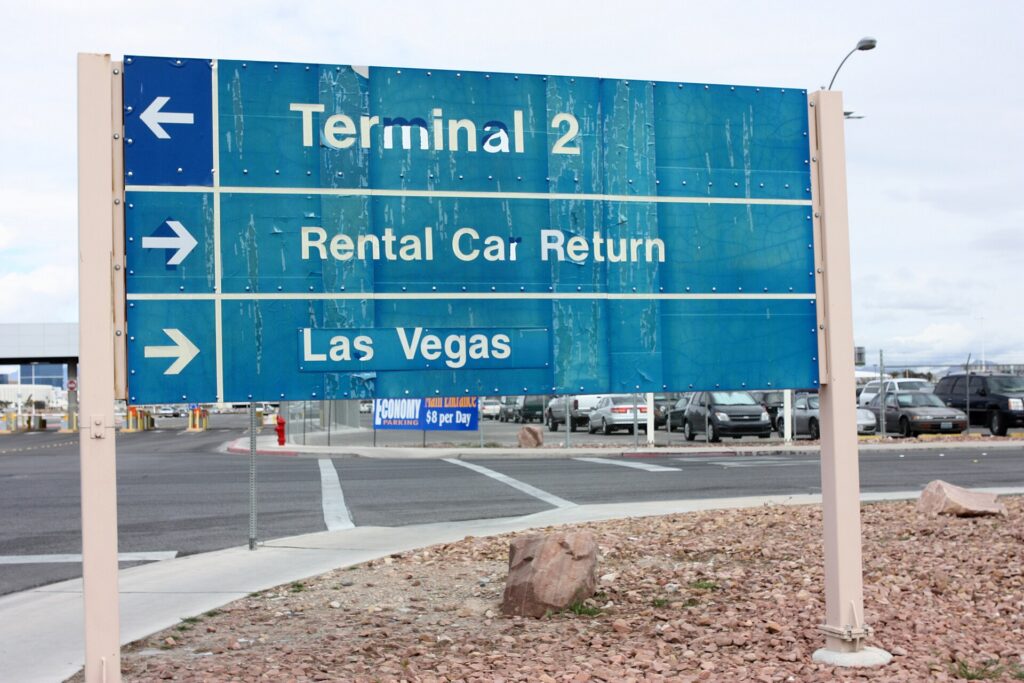
    A road sign directing drivers to rental car return at the Las Vegas airport
    Return entrances are often signposted separately from departures, and easy to miss on the last morning (Photo: Michael Dorausch from Venice, USA via Wikimedia Commons, CC BY-SA 2.0)

    Extending a rental the right way

    If you need the car longer, extend before your return time. Most companies let you do it by phone, in their app or at any branch. Ask for:

    • The new rate and the new total, including taxes and add-ons for the extra days.
    • A new return time recorded on the agreement, and a confirmation by email or in the app.
    • Whether your coverage continues. If you bought the company’s waiver, confirm it is extended. If you rely on a credit card benefit, check the maximum rental length it covers; many cards cap coverage at a set number of consecutive days, and a long extension can push you past it.
    • Whether a longer rental unlocks a cheaper rate. Extending a five-day rental to seven can sometimes trigger a weekly rate and cost little more.

    If the location cannot extend, for example because the car is reserved for someone else, they may ask you to swap it at a branch. That is inconvenient but far better than an unauthorized overrun.

    After-hours drop-offs

    Many airport locations are open late or around the clock, but many neighborhood branches are not, and most offer a key drop box. Returning after hours is convenient, but it shifts some risk to you:

    • You are usually responsible for the car until staff check it in, often the next morning. Damage, vandalism or theft overnight can become your problem.
    • The return time may be recorded at check-in, not when you dropped it, depending on the company. Ask at pickup how after-hours returns are timed.
    • Fuel and mileage will be recorded when they check it in, so your own record matters.

    Protect yourself: park in the designated return area, take a time-stamped video walkaround and dashboard photos showing fuel and mileage, photograph the car in its spot with the branch sign visible, photograph the key going into the drop box, remove all your belongings and keep the fuel receipt. If the branch has a return app or a self-service check-in, use it.

    Returning at the airport before a flight

    This is where timing problems are most costly, because a late return can mean a missed flight as well as extra charges.

    Know where the return is

    At some airports the rental return is in a garage next to the terminal. At many large US airports it is a consolidated rental car center reached by a shuttle bus or an automated train, which adds time. San Francisco International, for example, connects its Rental Car Center to the terminals by AirTrain, and Miami International links its Rental Car Center to the terminal by the MIA Mover, as the airport’s site explains. At other airports, individual companies run their own shuttle buses from off-site lots. Check the airport’s own website, or our airport guides such as SFO, Miami and Denver, before your last day.

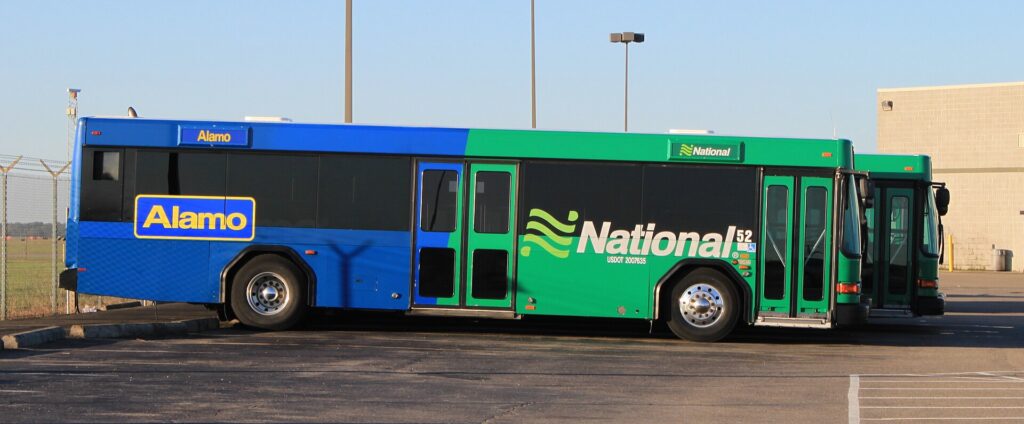
    A rental car shuttle bus at Detroit Metropolitan Airport
    Where the rental return is a shuttle ride from the terminal, add that time to your airport buffer (Photo: Dwight Burdette via Wikimedia Commons, CC BY 3.0)

    How much time to allow

    Start with the time your airline and airport recommend you arrive for your flight; our guide to how early to get to the airport covers domestic and international flights. Then add time for:

    • The fuel stop, which can take longer than expected if the stations nearest the airport are busy.
    • Finding the return entrance, which is often signposted separately from departures and easy to miss.
    • The check-in, which is usually quick but can queue at peak times.
    • The shuttle or train to the terminal, including waiting for it.
    • Unloading children, car seats and luggage, which always takes longer than you think; our guide to car rentals for family vacations has more on traveling with kids.

    As a rule of thumb, add at least 30 minutes on top of the normal recommendation at an airport where the return is next to the terminal, and more where a shuttle is involved or you are traveling with a family. Set the rental return time on your agreement with that in mind, so that you are early for the car and on time for the flight.

    Don’t forget the pickup side

    Return timing starts with pickup timing:

    • Add your flight number to the reservation. If your flight is delayed, many locations will hold the car; without it, a late arrival can be treated as a no-show and the car released.
    • Know the location’s hours. If your flight lands after the counter closes, you may not be able to collect the car until morning.
    • Choose times that fit the whole trip. If you land at 11 pm and fly home at 8 am a week later, a 10 am pickup the morning after you land might save you a day and a night of hotel parking.

    Use timing to lower the price

    • Keep pickup and return at the same time of day to avoid starting an extra 24-hour period.
    • Test slightly longer rentals. Five or six days sometimes cost as much as, or more than, seven if a weekly rate applies.
    • Test weekend pickup and return days, which some locations price differently.
    • Rent only for the days you need the car. In a transit-friendly city, start the rental on the day you leave town. Our guide to car versus transit versus taxi helps decide.
    • Book on a free-cancellation rate and rebook if you find a better combination of times or a lower price.

    Fuel, charging and tolls around the return

    On a full-to-full rental, the car must come back full, and the refueling charge for a car returned short is usually far above the pump price. Plan a fuel stop within a few miles of the return location, and keep the receipt. Some companies ask for it if the needle sits just below full.

    For an electric car, ask what charge level is required at return and plan charging time into your last day; a fast charger can still take a meaningful amount of time, and chargers near airports can be busy. The US Department of Energy’s Alternative Fuels Data Center has a station locator.

    If you accepted the company’s toll program, remember that its daily fee often applies to each day of the rental, so an extension extends that charge too. Toll-by-plate charges can arrive weeks after the trip; keep your agreement until they have settled.

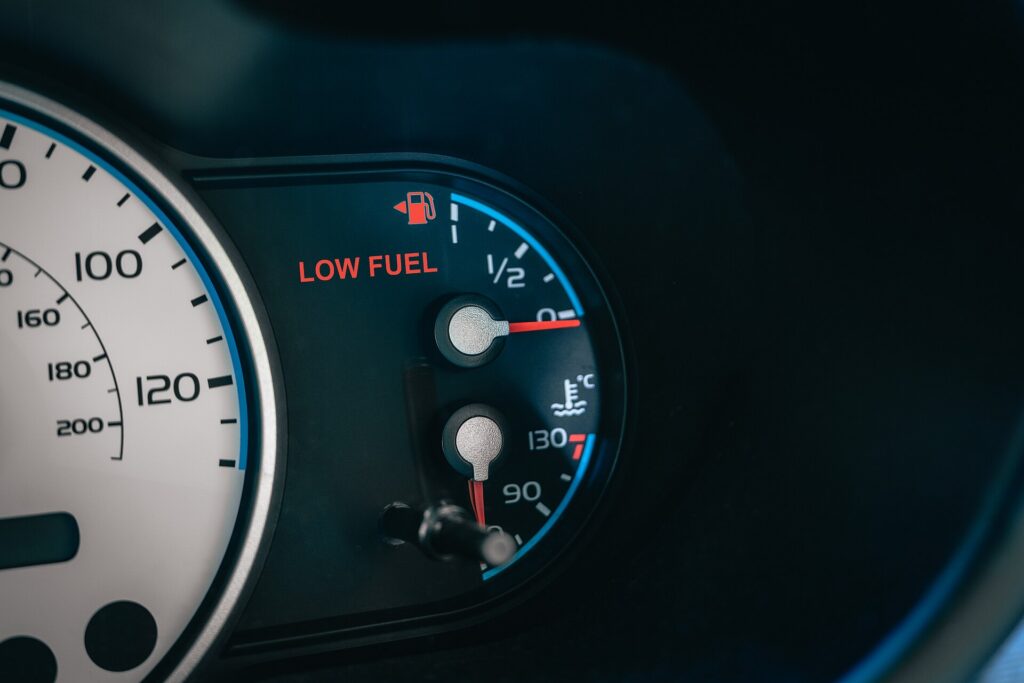
    A car fuel gauge reading close to empty
    A car returned short of full on a full-to-full rental is refueled at a rate well above the pump price (Photo: Icomparioimages via Wikimedia Commons, CC BY-SA 4.0)

    What to do at the return

    1. Remove everything: glove box, door pockets, under the seats, the trunk, the charging cable and any toll transponder you brought.
    2. Record the car: a video walkaround and dashboard photos showing fuel or charge and mileage.
    3. Wait for check-in if an agent is present, and ask for a closed receipt showing the final charges. If the location uses an emailed receipt, check it arrives before you leave the airport or city.
    4. Query anything unexpected immediately, while you are still there with the car.
    5. Watch your card statement for the following weeks for fuel, damage, toll or ticket charges, and dispute anything you cannot match to your records.

    When things go wrong

    • Your flight home is canceled or delayed: call the rental company as soon as you know and extend, rather than returning the car and then needing another one.
    • The car breaks down: call the roadside assistance number on the key tag or agreement. A breakdown that is not your fault should not lead to late charges, but document the call and the time.
    • Bad weather closes roads: call, explain, and ask them to note it on the agreement. Keep screenshots of road closure notices.
    • You have an accident: make sure everyone is safe, follow local rules on reporting, photograph everything and notify the rental company. Timing charges are the least of your concerns, but still tell them if you cannot return on time.

    Our complete guide to rental car booking tips covers insurance, fuel policies, inspections and fees in more detail.

    Frequently asked questions

    Is there a grace period for returning a rental car late?

    Many companies allow a short one, commonly around half an hour at US locations, but it varies by company, location and country, and some have none. Ask at pickup and do not rely on it.

    How much does it cost to return a rental car late?

    Typically an hourly charge for the first few hours, then a full extra day, plus per-day add-ons and sometimes a late fee. The extra day may be charged at a higher rate than the one you booked.

    Do I get money back if I return a rental car early?

    Not always. Prepaid rates often do not refund unused days, and pay-later rentals may be recalculated at a different rate, which can make a shorter rental cost as much as or more than the original.

    Can I return a rental car after hours?

    Often, using a key drop box. You usually remain responsible for the car until staff check it in, so photograph the car, the dashboard and the drop, and ask how the return time is recorded.

    How early should I return a rental car before a flight?

    Take the airport’s recommended arrival time for your flight and add at least 30 minutes, more if the return is a shuttle ride from the terminal or you are traveling with children.

    Can I extend my rental without going back to the counter?

    Usually, yes, by phone or in the company’s app. Do it before the return time, get the new total and return time confirmed in writing, and check that your coverage extends too.

    What if my flight is delayed and I pick up the car late?

    If your flight number is on the reservation, many locations will hold the car. The agreement is usually opened when you collect the car, but check the return time printed on it before you drive away, because it may still reflect your original booking.

    The simplest way to avoid timing charges is to choose the right times at the start. Compare rates and pickup windows on our car rental search, match them to your flight times, and if you land late, consider a night near the airport with our hotel search and a fresh start at the counter in the morning.