Tag: Air Travel Tips

  • Hacks for Scoring a Cheap Airline Business Class Upgrade

    Hacks for Scoring a Cheap Airline Business Class Upgrade

    A lie-flat seat on an overnight flight can turn a trip you survive into a trip you enjoy, and it is natural to wonder whether there is a clever way to get one without paying the full business class fare. There is, but it rarely looks like the tricks that circulate online. Nobody reliably talks their way into the front cabin at the gate, and a nice jacket is not a boarding pass. What actually works is understanding how airlines sell and give away premium seats, then putting yourself in the right place at the right moment: on the right fare, on the right flight, with the right offer in front of you or the right points in your account. This guide explains how upgrades really work, the five genuine routes to a better seat, when each one pays off, how to judge whether an upgrade is worth the money, and which popular “hacks” to stop worrying about. It is part of our flight booking series, which starts with our guide to the best time to book cheap flights and hotels.

    The short answer

    If you only remember a handful of things, make it these. Do not buy the cheapest basic fare if you want any chance of an upgrade, because many airlines exclude those fares from both paid and complimentary upgrades. Price the premium cabin outright before you book economy, because a discounted business fare sometimes costs less than economy plus an upgrade. Watch for paid upgrade offers after you book, in the airline’s app, at online check-in and at the airport, since prices often fall as departure approaches and seats remain empty. Use miles for upgrades only when the numbers make sense, and check which fares are eligible first. Concentrate your flying with one airline or alliance if you fly often enough for elite status to matter, because status is what drives complimentary upgrades. And choose flights where premium seats are likely to go unsold: off-peak days, leisure routes and less popular departure times. Start by comparing fares, cabins and dates on our flight search.
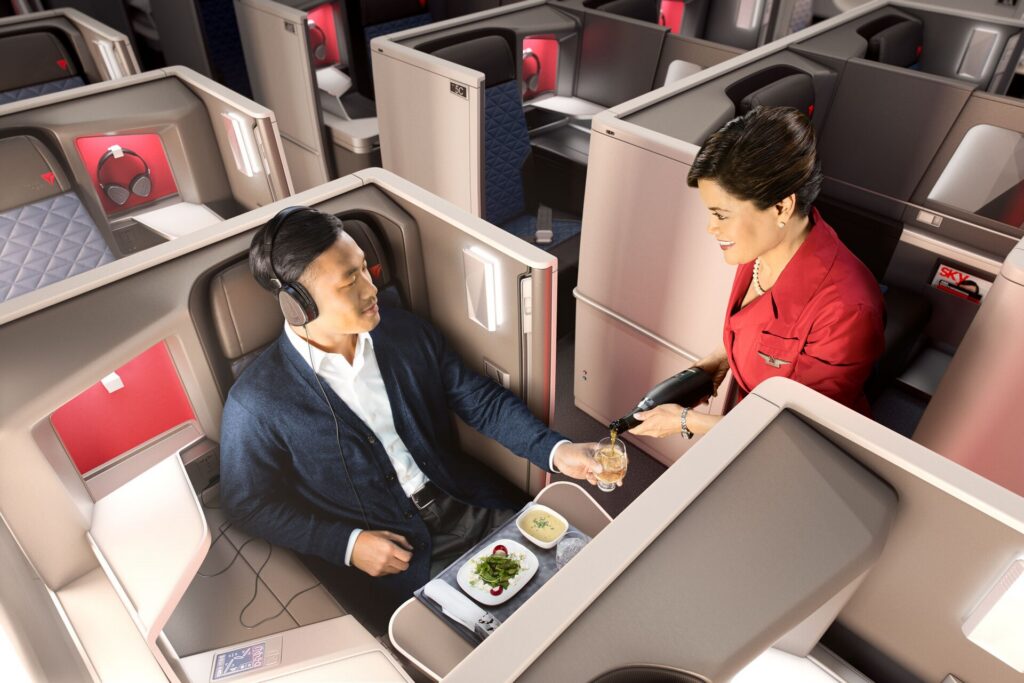
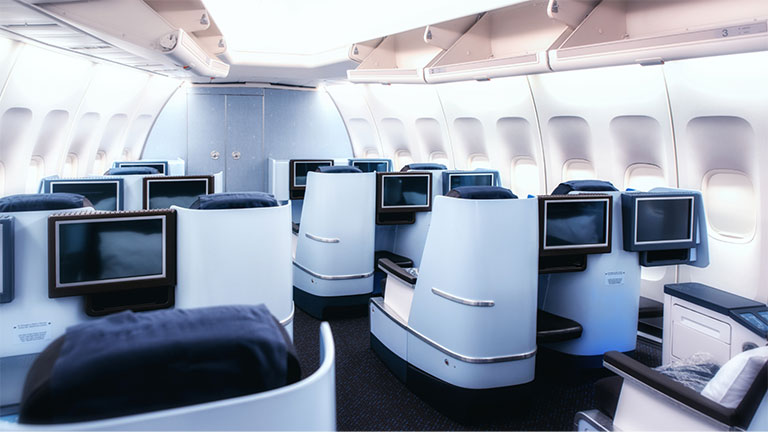
    A lie-flat business class suite in a Delta One cabin
    A lie-flat business class seat: most valuable on an overnight flight (Photo: Delta News Hub via Wikimedia Commons, CC BY 2.0)

    How airline upgrades actually work

    Every premium seat an airline flies empty is revenue it will never get back, so airlines work hard to fill those seats. They do it in a predictable order, and knowing that order explains almost every upgrade tip worth following.

    First, they try to sell the seat

    The airline’s first choice is to sell a business class seat at a business class fare. Revenue management systems release premium seats at several price levels and watch how quickly they sell. On routes with strong corporate demand, such as weekday flights between major business centers, the front cabin often sells out at high fares. On leisure routes and off-peak days, it may not, and that is where discounted premium fares and cheap upgrade offers come from.

    Then they sell it to someone already booked

    As departure approaches and seats remain unsold, the airline starts offering them to passengers who have already bought economy or premium economy tickets. These offers appear during booking, in the airline’s app or website after you book, at online check-in, at airport kiosks and sometimes at the gate. Some airlines run an auction instead, inviting passengers to bid for the seat. The price of these offers is set by the airline’s systems and changes with demand, so two passengers on the same flight may be offered different prices on different days.

    Then they give it to their best customers

    Whatever remains is typically used for complimentary upgrades for elite members of the airline’s loyalty program, and for upgrades booked with miles or upgrade certificates. Airlines rank the list by rules that usually weigh elite tier first, then the fare you paid, then when you requested the upgrade, though each airline sets its own order. Delta, for example, publishes its complimentary upgrade windows by Medallion tier on its Medallion benefits page: higher tiers become eligible earlier before departure. Because programs change, check your airline’s current rules before you count on any of this.

    Finally, operational upgrades

    Very occasionally, when economy is oversold and premium seats are empty, an airline moves passengers forward to make room. These are rare and usually go to elite members first, so treat one as a pleasant surprise, not a strategy.

    The five real routes to a premium seat

    Almost every legitimate upgrade comes through one of these five doors. The table compares them before we look at each in detail.

    RouteWhat it costsBest forWatch out for
    Buy a discounted premium fareCash, sometimes surprisingly close to economy plus extrasAnyone with flexible dates on leisure routesFare rules, and whether the “business” seat is actually lie-flat
    Paid upgrade offer after bookingCash, priced by demandTravelers who want certainty before the flightFare eligibility and whether the offer covers every flight
    Upgrade bid or auctionCash, only if your bid is acceptedFlexible travelers on flights with empty premium seatsBidding more than the seat is worth to you
    Miles or points upgradeMiles, sometimes plus a cash co-payMembers with a healthy balance and an eligible fareLimited availability and poor value per mile
    Elite status or certificatesYour loyalty over a year of flyingFrequent flyers concentrated on one airline or allianceLong upgrade lists on busy routes

    1. Buy a discounted premium fare outright

    The most overlooked upgrade is not an upgrade at all. Premium cabins go on sale, especially on routes where the airline has more business seats than business travelers, and during quieter seasons. Before you buy economy and hope, run the same search in business and premium economy across a range of dates. Flexibility matters here even more than in economy: the same route can carry very different premium fares on different days of the week. Our guide to the best time to book flights and hotels explains the seasons and booking windows, and the same patterns apply to the front of the plane.

    When you compare, count everything. A premium fare usually includes checked bags, seat selection, priority check-in and boarding, better food and often lounge access. If you would have paid for bags, a seat and airport food anyway, the true gap between economy and business is smaller than the headline fares suggest.

    2. Paid upgrade offers after booking

    Once you hold a ticket, keep an eye on the airline’s app and your booking page. Many airlines show a price to move up to the next cabin, and that price is not fixed. On flights where premium seats are selling slowly, offers often become cheaper in the days before departure, and they reappear at online check-in and at the airport kiosk. Delta, for instance, explains on its upgrades page that eligible travelers can upgrade after booking through its website or app, for cash or miles, when a seat is available.

    Two cautions. First, read what the offer covers: an upgrade may apply to one flight of a connecting itinerary rather than the whole journey. Second, check how it interacts with changes. If you voluntarily change your flight after upgrading, some airlines do not carry the upgrade over. Delta’s own page says exactly that, so assume the same until your airline tells you otherwise.

    3. Upgrade bids and auctions

    Several airlines let economy passengers bid for a premium seat, usually by invitation by email or through the booking page after purchase. You name an amount within a range the airline sets, provide payment details, and are charged only if your bid is accepted, typically a day or two before departure or at check-in. Whether you win depends on how many seats are empty, how many other passengers bid and what the airline decides to accept, none of which you can see.

    The right way to bid is to decide what the upgrade is worth to you before you look at the range. Ask yourself what you would pay for a lie-flat seat on this particular flight if it were on sale at booking. Bid that, and no more. If your bid fails, you have lost nothing but a little hope. Avoid the temptation to bid near the top of the range out of fear of missing out: at that level you may be paying close to a premium fare while taking the risk of not getting the seat at all, and you could have bought the seat outright with certainty.

    Bidding programs come and go, and their rules differ, so look for the offer in your booking and read the terms rather than assuming your airline runs one.

    4. Miles and points

    Most loyalty programs let you use miles to move up a cabin, either through the website and app or by calling the airline. Some add a cash co-pay, and many restrict upgrades to certain fare classes, which is why the cheapest economy tickets usually cannot be upgraded with miles. Delta’s upgrade page, for example, excludes its basic fares from upgrades with miles and notes that upgrading yourself online requires the whole reservation to be marketed and operated by Delta, while some partner flights can be upgraded by calling reservations.

    To judge whether a miles upgrade is good value, compare it with two alternatives: the cash price of the same upgrade, and what those miles would buy as an award ticket. If the miles would otherwise cover a whole economy ticket for another trip, spending them on a short daytime upgrade is usually poor value. On an overnight long-haul flight, where a flat bed can decide whether you are functional the next day, it may be the best use of your balance.

    Points from bank and credit card programs can often be transferred to airline programs. That flexibility is useful, but transfers are usually one-way, so never move points until you have confirmed that the upgrade or award seat is actually available.

    5. Elite status and upgrade certificates

    Complimentary upgrades are the classic perk of airline elite status. They are real, but they are earned through a lot of flying or spending with one airline, and on busy routes the upgrade list can be long. Delta’s Medallion program is a good illustration of how structured these benefits are: its benefits page lists complimentary upgrades to Delta First and Delta Comfort for Medallion members on eligible tickets, excluding its basic fares, with the upgrade window opening earlier for higher tiers, and some top-tier benefits include upgrade certificates that can be requested in advance. The details change from year to year, so read the current page rather than relying on a summary.

    Status is worth pursuing only if you already fly enough for it to happen naturally. Buying extra flights just to reach a tier rarely pays off for an occasional traveler, and the money is usually better spent buying a premium fare on the one trip that matters.
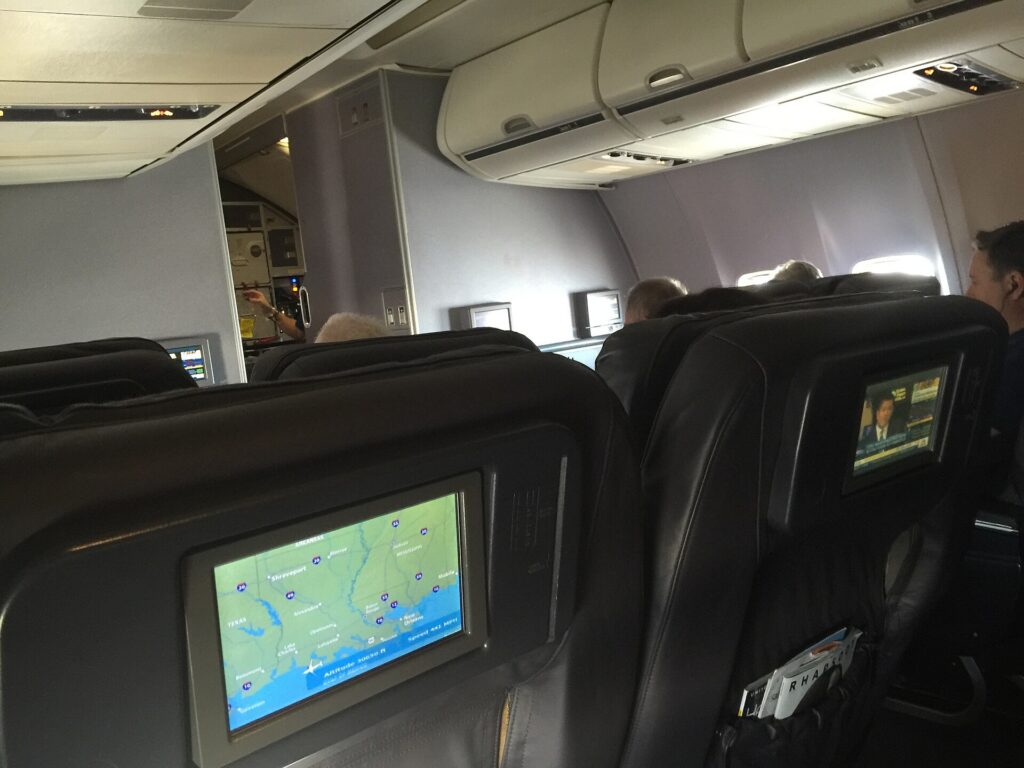
    Wide recliner seats in the domestic first class cabin of a Boeing 737
    On short flights in North America, the upgrade is usually a wider recliner, not a bed (Photo: LuccaV via Wikimedia Commons, CC BY-SA 4.0)

    Timing: which flights are most likely to have cheap upgrades

    Upgrade prices follow the same demand patterns as fares. You cannot see how full a cabin is in every case, but you can make sensible bets.

    • Off-peak days and seasons. Midweek flights outside holidays, and the shoulder and low seasons for your destination, tend to have more empty premium seats. The fare seasons in our booking timing guide apply here too.
    • Leisure-heavy routes. Flights to beach and holiday destinations often carry few full-fare business travelers, so airlines are more willing to sell the front cabin cheaply.
    • Weekends on business routes. A route packed with corporate travelers on Monday morning may have plenty of premium space on Saturday.
    • Less popular departure times. Very early and late flights sometimes carry fewer premium passengers than the mid-morning and early-evening banks.
    • Close to departure. Paid offers often get cheaper in the final days if seats remain empty, but on popular flights they can also disappear entirely. If a price is one you are happy to pay, taking it is better than gambling.

    Avoid counting on upgrades at the busiest times of year. During major holidays, school breaks and big events, premium cabins often sell out at full price, and elite upgrade lists are at their longest.

    Fares matter more than any trick

    The single most important upgrade decision happens when you choose your fare. Basic economy products have become common, and they are designed for travelers who want the lowest price and accept strict limits. Upgrades are one of the things they usually give up. Delta’s page for Delta Main Basic, its basic economy product, lists paid or complimentary upgrades among the benefits the fare is not eligible for. Other airlines have similar rules.

    If there is any chance you will want to upgrade, whether with cash, miles or status, the standard economy fare is often worth the difference. The same logic applies to premium economy: on a long flight, it can be both a worthwhile product in its own right and a stepping stone, since the price to move from premium economy to business is sometimes lower than from economy.

    Understanding what you are buying helps here. Our guide to reading your flight details explains fare brands, fare classes and the codes on your booking, and our international flights booking tips cover how to compare fare brands on long-haul routes.

    The popular hacks, honestly assessed

    A lot of upgrade advice has been repeated so often that it sounds true. Here is how the common suggestions hold up.

    Travel solo

    There is a sound logic to this one. When a single premium seat is left, it can only go to one person, and a couple or family on one booking may not be moved forward unless there is room for everyone, depending on the airline’s rules. Traveling alone does not make you more deserving; it simply means you need one seat rather than several. If you are traveling with others and only one of you is offered an upgrade, decide in advance whether you would split up.

    Dress the part

    Looking neat is a good idea, but modern upgrades are mostly decided by software using status, fare and timing, not by an agent scanning the line for good tailoring. Dressing well will not create an upgrade that the system has not assigned. It may help at the margins if an agent is choosing between otherwise equal passengers, but there is no reliable evidence that it moves the odds much. Wear what is comfortable and practical, and if you want ideas, our guide to what not to wear on a flight covers the balance between comfort and looking put together.

    Be polite

    Always, but not as a tactic. Courtesy makes seat changes and rebooking go more smoothly; it will not override the upgrade list.

    Check in early and ask at the gate

    Checking in as soon as your window opens has real benefits: you see any paid upgrade offer early, you get a better choice of seats, and on some airlines the time you requested or checked in can play a role in tie-breaking. Asking at the gate costs nothing, and some airlines do sell remaining premium seats there. Keep your request short: ask whether there are any paid upgrades available, accept the answer gracefully, and step aside. If an offer is made, confirm the price before you hand over a card.

    Book a premium economy or flexible fare

    The original version of this guide suggested that premium or flexible fares can come with upgrade options. That is broadly right: higher fares tend to rank ahead of cheaper ones on upgrade lists, are more often eligible for miles upgrades, and sometimes come with cheaper paid upgrade offers. The exact benefits depend on the airline, so check the fare rules at booking.
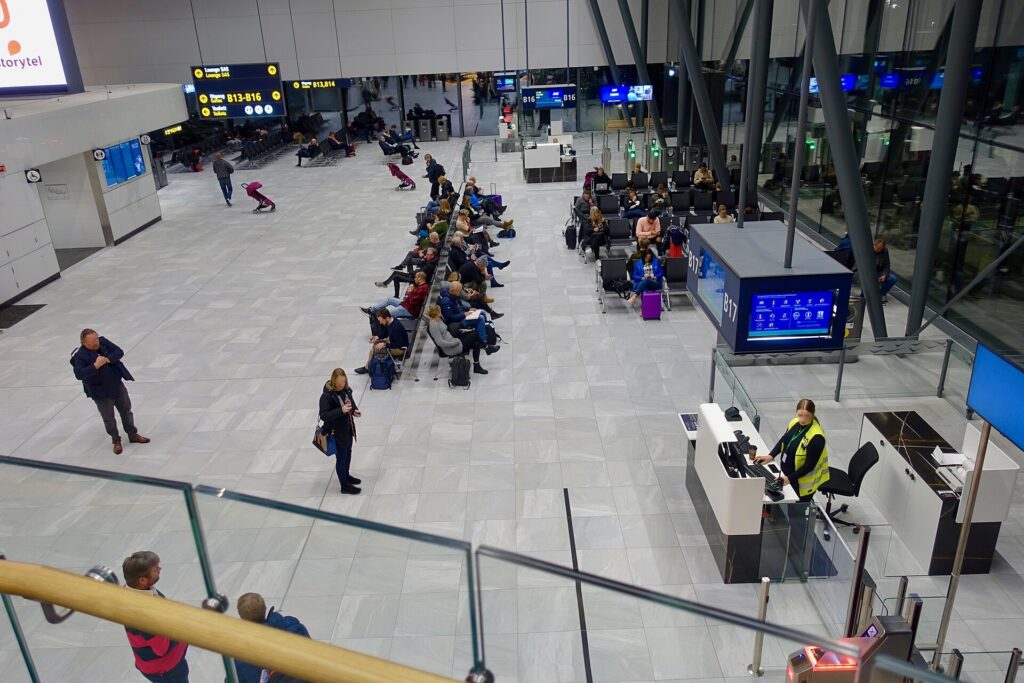
    Passengers seated at a departure gate waiting to board a flight
    Asking once at the gate about paid upgrades costs nothing (Photo: Wolfmann via Wikimedia Commons, CC BY-SA 4.0)

    Is an upgrade actually worth it?

    A premium seat is a luxury on some flights and nearly a necessity on others. A simple framework helps you decide how much to pay.

    Price it by the hour of useful sleep

    On an overnight transatlantic or transpacific flight, business class buys you a flat bed and the chance to arrive rested. Divide the upgrade price by the hours of sleep it gives you and compare it with what a hotel night costs at your destination. If you would otherwise lose most of your first day to exhaustion, the value can be high. On a two-hour daytime hop, the same money buys a wider seat, a snack and priority boarding, which is pleasant but rarely life-changing.

    Count what comes included

    Premium tickets often include checked bags, lounge access, priority security at some airports and better meals. If you were going to pay for two checked bags and eat at the airport, subtract those costs from the upgrade price. Delta’s page for Delta First lists up to two free checked bags among its benefits, for example, and its Delta One page describes lie-flat seats on international and select long-haul domestic routes. Check the current inclusions for your fare, because airlines increasingly sell stripped-back versions of premium cabins too.

    Know what seat you are buying

    “Business class” covers a huge range of products. On a long-haul widebody, it usually means a lie-flat seat; on a short-haul flight in North America, the premium cabin is usually a wider recliner branded as first class; on many European short-haul flights, business class can mean an economy seat with the middle seat kept empty. Before you pay for an upgrade, look at the seat map and the aircraft type. Our guide to the difference between first class and business class explains how to tell what you are really getting.

    Consider the alternatives

    Sometimes a smaller spend solves the real problem. An extra-legroom economy seat, a premium economy seat or even a well-chosen standard seat can make a long flight far more bearable for a fraction of the price. Delta’s Delta Comfort, for instance, adds extra legroom, earlier boarding and dedicated overhead bin space without the cost of a premium cabin.

    Lounges: the upgrade you can sometimes buy separately

    For many travelers, the best part of business class happens before the flight. A quiet lounge with food, showers and reliable Wi-Fi can transform a long connection. Premium tickets usually include lounge access on international flights, but you do not always need the ticket to get the lounge. Depending on the airline, you may be able to buy a day pass, access lounges through an airline membership, or get entry through certain credit cards or elite status. Rules differ widely and change often, including exclusions for basic versions of premium fares; Delta’s Delta One page, for example, notes that some lounge access excludes its basic business fare. If lounge access is the main thing you want, price it on its own before paying for a full upgrade.
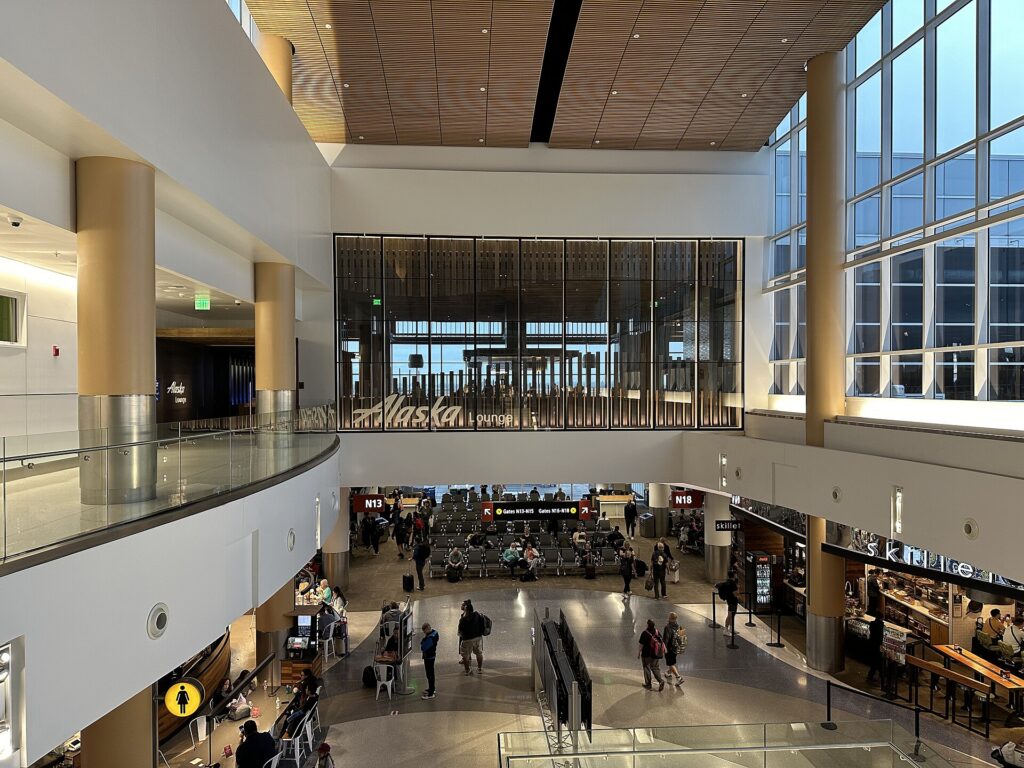
    Seating and windows in an airline lounge at Seattle-Tacoma International Airport
    Lounge access is sometimes available without buying a premium ticket (Photo: Zheng Zhou via Wikimedia Commons, CC BY-SA 4.0)

    A step-by-step plan for your next long flight

    1. Search economy, premium economy and business together. Compare the full prices across flexible dates on our flight search, and note how much the premium cabins cost on different days.
    2. Look at the aircraft and seat map. Confirm that the business seat on your flight is actually lie-flat if that is what you are paying for.
    3. Choose an upgrade-friendly fare. If you are buying economy, avoid the basic fare so that paid, miles and status upgrades remain possible.
    4. Credit the flight to one program. Put your frequent flyer number on the booking so you earn miles, receive offers and appear on any upgrade list you qualify for.
    5. Watch for offers. Check the airline’s app and your booking page periodically, especially in the week before departure and when online check-in opens.
    6. Bid sensibly if invited. Decide what the seat is worth to you and bid that, not the maximum.
    7. Check in as soon as the window opens. Review any offer, choose the best available seat and confirm your upgrade status.
    8. Enjoy whatever seat you end up in. Pack for comfort either way: layers, a good pillow and headphones make economy much better. Our guide to airplane pillows and our pick of noise-cancelling headphones for flying are good places to start.

    Upgrades on connecting and partner flights

    Each flight on a connecting journey is usually handled separately, so you might be upgraded on the long-haul flight but not the short connection. The operating airline controls the seat, which means upgrades on partner-operated flights are often more limited; Delta’s upgrade page draws exactly this distinction. Keep connections on one ticket so delays are protected and your requests stay attached to the whole journey, and leave extra time if you hope to sort out an upgrade at check-in. Our guide to how early to arrive for an international flight gives realistic timings.

    Common upgrade mistakes

    • Buying basic economy and hoping. Most basic fares are excluded from upgrades entirely.
    • Paying for an upgrade on a short flight that you would not buy at booking. Decide your price first so the moment does not decide for you.
    • Bidding the maximum. At that level, buying the premium fare outright may have been cheaper and certain.
    • Spending miles at poor value. Compare the miles cost with the cash price and with what the miles would buy as an award.
    • Transferring points before confirming availability. Transfers are usually irreversible.
    • Not checking the seat. Paying for “business” and getting an economy seat with an empty middle is a common disappointment on short routes.
    • Changing your flight after upgrading. Some airlines do not carry an upgrade over to a new flight.

    Frequently asked questions

    What is the cheapest way to fly business class?

    Usually a discounted business fare on a leisure route or an off-peak date, found by searching flexible dates in the premium cabin from the start. Paid upgrade offers and bids can also be good value on flights with empty premium seats, and miles upgrades can work well on overnight flights if your fare is eligible.

    Can you still get a free upgrade just by asking?

    Rarely. Complimentary upgrades mostly go to elite members according to published rules. Asking at check-in or the gate about paid upgrades is reasonable and costs nothing, but a free upgrade for a polite request is not something to plan around.

    Does dressing well get you upgraded?

    There is no reliable evidence that it does. Upgrades are mainly decided by status, fare and timing. Dress neatly and comfortably because it makes travel pleasant, not because it will move you forward.

    Can I upgrade a basic economy ticket?

    Often not. Many airlines exclude basic economy from paid, miles and complimentary upgrades. Delta, for example, lists upgrades among the benefits its basic fare does not include. Check your airline’s fare rules before you buy.

    When do upgrade offers appear?

    At booking, in your booking page or the airline’s app afterward, at online check-in and sometimes at airport kiosks or the gate. Prices can drop as departure approaches if seats remain unsold, but on busy flights they can also disappear.

    Are upgrade bids worth it?

    They can be, if you bid what the seat is genuinely worth to you and treat a rejection as no loss. Bidding near the maximum rarely makes sense, because you might have bought the seat outright for a similar price.

    Is it better to use miles for an upgrade or a free flight?

    It depends on the value. Compare the miles price of the upgrade with the cash price of the same upgrade and with what an award ticket would cost in miles. Upgrades tend to be the better use on long overnight flights, where a flat bed makes the most difference.

    Do elite members always get upgraded?

    No. Even elite members depend on seat availability, their tier relative to others on the list and their fare. On busy routes and at peak times, many elites do not clear.

    Ready to see what a premium seat really costs on your route? Compare economy, premium economy and business fares across flexible dates on our flight search, then find somewhere to recover in comfort with our hotel search. For the timing that makes every fare cheaper, start with our guide to the best time to book cheap flights and hotels.

  • Everything You Need to Know About Flight Details

    Everything You Need to Know About Flight Details

    A flight booking packs a surprising amount of information into a few lines: a six-character code, a thirteen-digit number, a flight number that may belong to a different airline than the one you fly, times in two time zones, a fare brand, a baggage code, a seat, and a set of rules you probably never opened. Most of the time none of it matters. When something changes, though, knowing how to read those details is what separates a quick fix from hours on hold or a missed flight. This guide explains every part of a typical flight itinerary and boarding pass, what to check right after you book, how to handle schedule changes, and what happens on the day, from check-in to customs at the other end. It is written for anyone who wants to understand exactly what they have bought.

    The short answer

    Right after booking, check five things: the names match your passport or ID exactly, the dates and airports are the ones you meant (including arrival dates on overnight flights), which airline actually operates each flight, what your fare includes in bags, seats and changes, and that any connections are on one ticket with enough time. Save your booking reference and e-ticket number, add the flights to your calendar, and turn on notifications in the airline’s app so you hear about schedule changes first. On the day, the details that matter most are the check-in cutoff, the terminal and the time the boarding gate closes. You can compare flights by time, connection and airline on our flight search before you book.

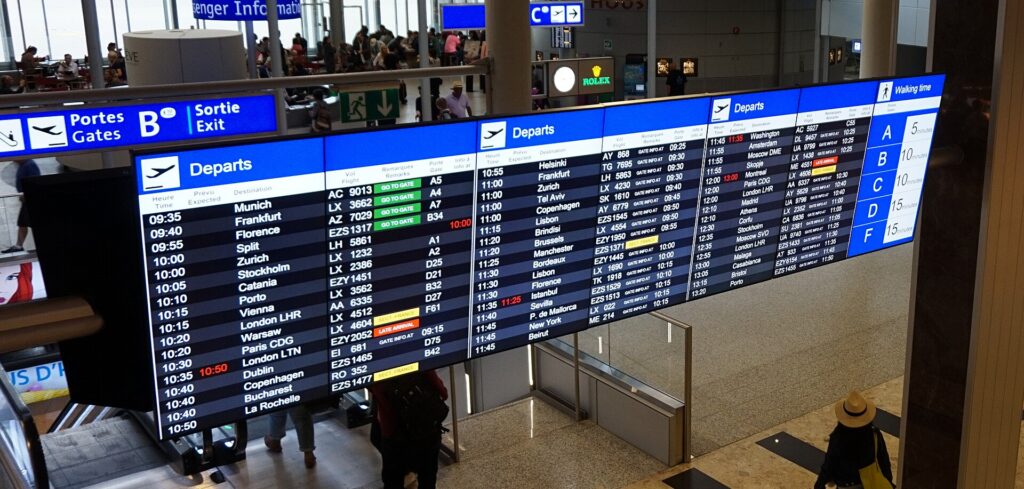
    A flight departure board at Geneva Airport listing destinations, times and gates
    Flight numbers, times and gates: the details worth checking again on the day (Photo: Tiia Monto via Wikimedia Commons, CC BY-SA 3.0)

    Anatomy of a flight booking

    Here is what the main items on a confirmation mean and why each one matters.

    DetailWhat it looks likeWhy it matters
    Booking referenceSix letters and numbers, also called a confirmation code, record locator or PNRUsed to manage the booking, check in and contact the airline
    E-ticket numberUsually 13 digits; the first three identify the airline that issued the ticketProof that the ticket is paid for; needed for refunds and some changes
    Passenger namesSurname and given names as entered at bookingMust match the passport or ID you travel with
    Flight numberTwo-character airline code plus a number, such as AC 123Identifies the flight; codeshares have more than one number
    Operated byThe airline that flies the aircraftDetermines where you check in, which terminal and often which bag rules
    AirportsThree-letter codes such as YYZ, YVR, JFK, LHR, CDGMany cities have more than one airport
    TimesLocal times at each airport; a “+1” means the next dayArrival dates on overnight flights affect hotel bookings
    Cabin and fare brandEconomy, premium economy, business; basic, standard, flexible and similarControls bags, seat selection, changes and refunds
    Booking classA single letter, sometimes shown next to the cabinAffects miles earned and upgrade eligibility
    Baggage allowancePieces (1PC, 2PC, 0PC) or weight (23 kg)Shows whether a checked bag is included
    SeatRow number and letter, or “assigned at check-in”Whether you are seated together and where

    A ten-minute routine right after you book

    The best time to catch a problem is the moment the confirmation arrives, when changes are cheapest or free. Work through this list before you close the email.

    • Open the confirmation and the e-ticket receipt. A booking without a ticket number may not be fully ticketed yet. If no ticket number appears within a day, contact whoever you booked with.
    • Read every name letter by letter against the passports.
    • Check every date and airport code. Look for “+1” arrivals and any change of airport at a connection.
    • Look up the booking on the airline’s website, and on the operating airline’s website for codeshare flights. Seeing the same reservation there confirms it is active.
    • Add your frequent flyer number so the flights earn miles and any status benefits apply.
    • Choose seats if your fare allows it, especially if you are traveling with children or want to sit together.
    • Note the baggage allowance for each traveler and decide whether to prepay for a bag.
    • Save the fare rules or a screenshot of the conditions shown when you bought the ticket.
    • Add the flights to your calendar and turn on notifications in the airline app.
    • Check entry requirements for every country on the trip, including connections.

    If anything is wrong and you booked a flight to, from or within the United States at least seven days before departure, you usually have 24 hours to cancel without penalty. Other markets have different rules, so act quickly either way.

    Names: the detail that causes the most trouble

    Airlines check that the name on your ticket matches the name on your government ID, and on international flights, the name in your passport. Small differences can cause problems at check-in or at the border, and some airlines charge to correct a name after ticketing.

    • Use your full legal name as it appears on your passport, not a nickname.
    • Middle names are usually fine to include or leave out, but follow the airline’s instructions and be consistent.
    • Hyphenated and multiple surnames can be displayed differently by different systems; enter them exactly as on your passport.
    • Titles such as Mr or Ms are sometimes appended to the first name on tickets; that is normal.
    • Fix mistakes immediately. For flights to, from or within the U.S. booked at least seven days ahead, the Department of Transportation’s 24-hour rule lets you cancel without penalty within a day of booking, explained on the DOT Aviation Consumer Protection site. Otherwise, call the airline as soon as you notice an error.

    Flight numbers and codeshares

    A codeshare is a flight sold by one airline but operated by another. You might buy a ticket from one airline with its flight number, but the aircraft, crew and service belong to its partner. Your itinerary will say “operated by” followed by the partner’s name.

    This matters in several practical ways:

    • Check-in and terminal: you usually check in with the operating airline, and at airports with several terminals, you go to the operating airline’s terminal.
    • Bags: baggage rules can follow the operating or marketing carrier depending on the itinerary. Check your booking, and ask if unsure.
    • Seats: seat selection may only be possible through the operating airline’s website, using its own booking reference, which can differ from the one you received.
    • Service: the cabin, food and entertainment are those of the operating airline.

    If a codeshare is involved, look up the booking on the operating airline’s website as well, so you can see its version of your reservation and seat.

    Airports, terminals and times

    Airport codes

    Every commercial airport has a three-letter code. Some cities also have a city code covering several airports, such as NYC for New York or LON for London, which search engines use to show all airports at once. When you book, check which airport each flight actually uses: arriving at London Gatwick when your hotel is near Heathrow, or at Newark instead of JFK, changes your ground transport. Our airport guides, such as JFK, London Heathrow and Toronto Pearson, explain terminals and transfers.

    Terminals

    Terminals are sometimes shown on the booking and sometimes only on the day. Check the airline app or the airport website the day before, especially at large airports where terminals are far apart.

    Times and dates

    All times on an itinerary are local to the airport. A flight from Toronto to London that leaves at 9 p.m. arrives the next morning, shown with a “+1”. Flights west across the Pacific can arrive two calendar days later, while some eastbound flights across the Pacific appear to arrive before they left. The flight duration shown is the real time in the air plus taxiing, which is the easiest way to sanity-check an itinerary. When you book the hotel, match the arrival date, not the departure date.

    Passengers boarding a Boeing 737 at an airport gate
    Boarding time is when the line starts, not when the door closes (Photo: Infrastorian via Wikimedia Commons, CC0)

    Fare brands, cabins and booking classes

    Most airlines now sell each cabin in several fare brands. The names differ, but they usually run from a basic fare with the fewest inclusions to a flexible fare with the most.

    Typical fare brandOften includesOften excludes
    BasicA seat, and a personal itemAdvance seat selection, changes, refunds; on some airlines a full-size carry-on or checked bag
    StandardCarry-on, free or low-cost seat selection, changes with a fare differenceRefunds; sometimes checked bags
    FlexibleChanges without fees, often refunds, more milesPremium cabin benefits
    Premium cabinsMore space, checked bags, priority servicesVaries by airline and route

    The single letter shown next to your cabin is the booking class, a code for the fare level within the cabin. You rarely need it, but it determines how many miles you earn and whether you can use certain upgrade options. Our guides to business class upgrade strategies and the difference between first and business class explain how cabins and upgrades work.

    The fare rules

    Every fare has rules, usually behind a link near the price. They cover changes, cancellations, refunds or credits, and what happens if you miss a flight. One rule surprises many travelers: on many airlines, if you do not show up for one flight on your itinerary, the remaining flights may be cancelled. If you need to skip a leg, contact the airline first.

    Baggage allowance, decoded

    Baggage allowances are usually shown in one of two ways. The piece concept lists a number of bags, such as 1PC or 2PC, each with a weight and size limit, and is common on flights to and from North America. The weight concept gives a total weight, such as 23 kg, across all your checked bags. “0PC” or “no free bags” means you will pay for any checked bag.

    • Carry-on: most airlines allow one carry-on and one personal item in economy, with size limits, and some fares allow only the personal item. Our carry-on size guide explains how to check your airline’s current limits.
    • Checked bags: fees are often per bag, per direction, and can be cheaper when paid in advance.
    • Multiple airlines: when more than one airline is on your ticket, the rules of one carrier generally apply to the whole journey; your booking should say which.
    • Separate tickets: each ticket has its own allowance, and bags are not transferred between separate tickets automatically.

    Seats

    Seat maps use row numbers and letters. On a typical single-aisle aircraft with three seats on each side, A and F are windows and C and D are aisles. Wide-body aircraft add more letters, and the pattern varies, so look at the seat map rather than guessing. Exit rows have extra legroom but come with age and ability requirements. Bulkhead rows often have bassinet positions for infants but may have fixed armrests.

    If your fare does not include seat selection, seats are usually assigned at check-in. Families traveling with young children should check the airline’s seating policy for keeping children with an adult; many airlines have one, and the U.S. DOT tracks which airlines commit to family seating.

    Connections and layovers

    Connections are where itineraries break, so check them carefully.

    • Connection time: every airport has a minimum connection time, and tickets sold as one itinerary meet it. On international connections, especially where you must clear immigration or change terminals, more time is more comfortable.
    • Change of airport: some itineraries connect between two airports in the same city, such as arriving at one London airport and leaving from another. The booking will flag it; it requires a ground transfer and much more time.
    • Overnight connections: a long layover overnight may require a hotel and, in some countries, a visa to leave the airport.
    • Stops versus connections: a “direct” flight with one stop keeps the same flight number but lands on the way. A nonstop does not land.
    • One ticket versus several: on one ticket, the airline must rebook you if a delay causes a missed connection. On separate tickets, it does not.

    Our international flights booking tips cover how to choose routings and how much connection time to allow.

    Schedule changes and flight status

    Airlines adjust schedules regularly, especially in the months before a flight. A change of a few minutes is routine. A change of hours, a new connection or a cancelled flight gives you options.

    • Watch for notifications. Keep your contact details in the booking and turn on app notifications.
    • Check the new itinerary. Is the connection still long enough? Does the new arrival still work for your hotel and plans?
    • Know your options. In the U.S., the DOT requires a refund when an airline cancels or significantly changes a flight and you choose not to travel. In Canada, the Air Passenger Protection Regulations set out airline obligations for schedule disruptions. In the EU, EU air passenger rights apply to many flights.
    • Ask for alternatives. If the new time does not work, airlines can often move you to another flight on the same day or nearby dates.

    For flight status on the day, the airline’s app is the most accurate source. The U.S. DOT’s FlightRights.gov dashboard summarizes what major U.S. airlines commit to when flights are delayed or cancelled for reasons within their control.

    Check-in

    Online check-in typically opens 24 hours before departure on many airlines, sometimes earlier. It confirms you will travel, lets you choose or confirm a seat and issues a boarding pass. On international flights you may need to enter passport details, known as advance passenger information, and some passengers must still have documents verified at the airport before boarding.

    Know the airline’s check-in and bag drop deadlines for your flight. For international departures they are often around an hour before departure and can be earlier. Our guide to how early to arrive for an international flight explains how to plan your airport timeline.

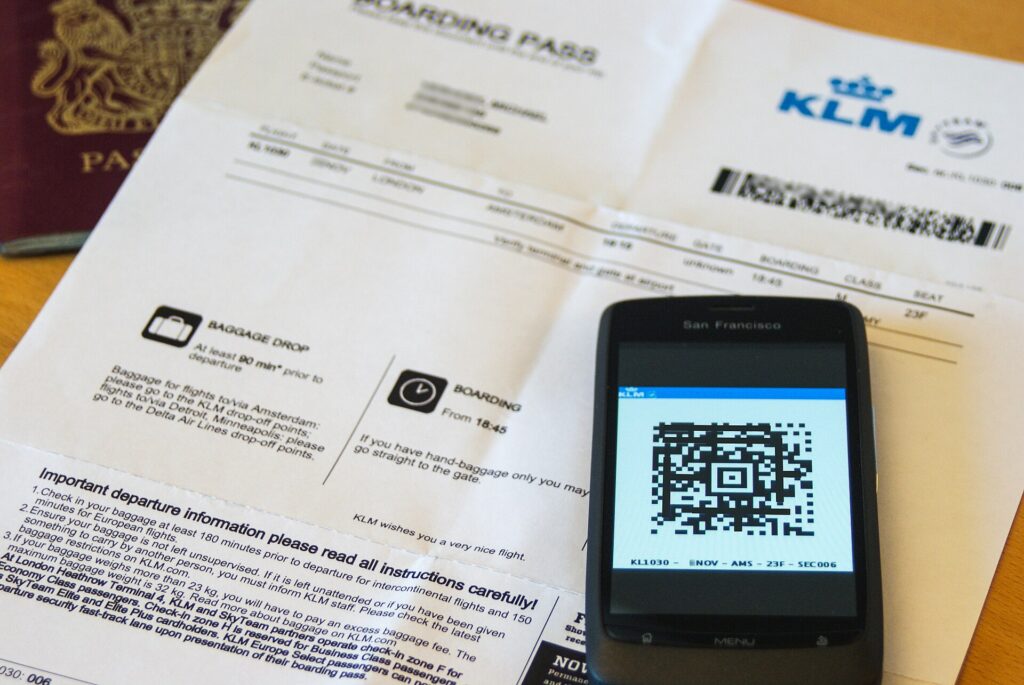
    A mobile boarding pass with a 2D barcode on a phone screen
    The barcode holds your booking reference, so keep boarding passes off social media (Photo: Mtcv via Wikimedia Commons, CC BY-SA 3.0)

    Your boarding pass, decoded

    FieldMeaning
    NameMust match your ID
    Flight and dateFlight number and the local departure date
    GateMay be blank or change; check airport screens
    Boarding timeWhen boarding begins, not when the door closes
    Group or zoneYour boarding order
    SeatYour assigned seat, or a note to see an agent
    Sequence numberThe order in which you checked in
    Security indicatorsOn U.S. flights, “TSA PreCheck” if eligible; “SSSS” means selected for additional screening
    Barcode or QR codeContains your name and booking reference

    Do not post a photo of your boarding pass online. The barcode contains your booking reference, which someone could use to access or change your reservation.

    Security and boarding

    Security screening rules are set by each country. In the U.S., the TSA’s What Can I Bring page lists what is allowed, and the liquids rule limits carry-on liquids to small containers in one bag. In Canada, CATSA publishes the equivalent guidance. Pack liquids and electronics where you can reach them, and dress for easy screening; our guide to what not to wear on a flight covers what slows people down.

    Boarding usually begins 30 to 60 minutes before departure on larger aircraft, in groups or zones. Have your boarding pass and ID ready. On international flights, staff often check passports again at the gate. Gates close before departure, so do not wander too far once boarding is near.

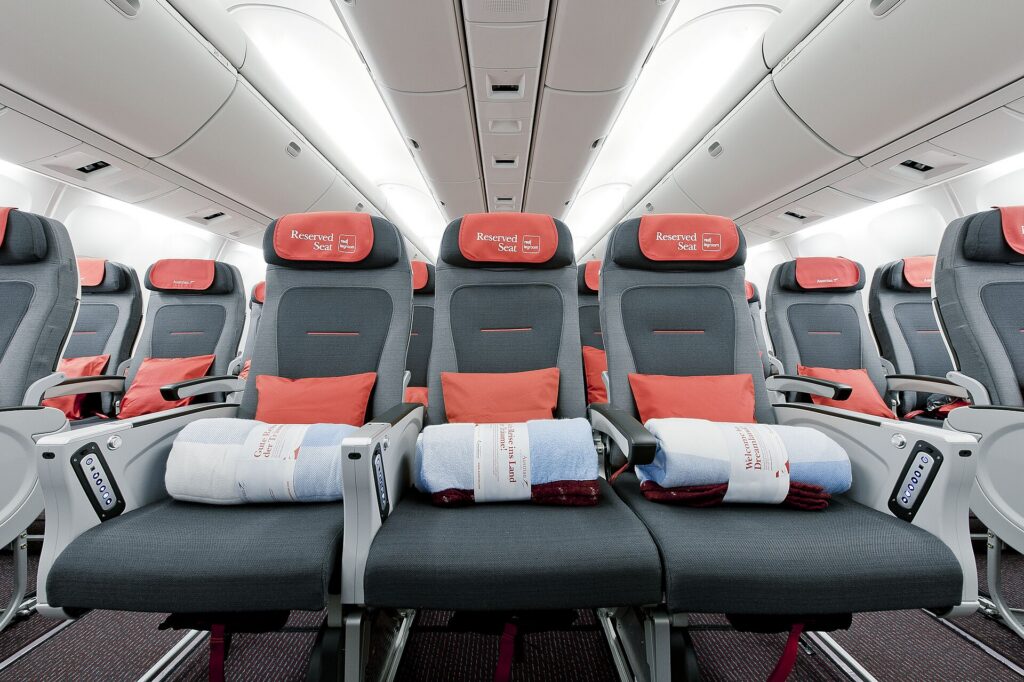
    The economy cabin of an Austrian Airlines long-haul aircraft
    Seat letters vary by aircraft; check the seat map rather than guessing (Photo: Austrian Airlines via Wikimedia Commons, CC BY-SA 2.0)

    On board

    For comfort on longer flights, a few things help: wear layers, drink water, move around when it is safe, and keep essentials such as your passport, medications, chargers and a change of clothes in your carry-on, not in a checked bag. On long-haul flights, entertainment is usually provided, but downloading shows to your own device is a good backup. Our guides to airplane neck pillows and noise-cancelling headphones cover gear worth packing.

    Arrival, immigration and customs

    On an international arrival, follow signs to immigration, present your passport and any visa or authorization, collect your bags and then clear customs. Customs rules vary by country; entering Canada, the Canada Border Services Agency explains what to declare. If you are connecting, you may need to recheck bags and go through security again. Before you travel, check your destination’s entry rules through your government’s travel advice, such as Canada’s travel advice and advisories.

    Special situations to flag on your booking

    Some details are not part of the ticket itself but need to be added to the reservation, ideally at the time of booking.

    • Infants and children: a lap infant usually needs to be added to the booking and may need their own ticket on international flights. Request a bassinet early if the aircraft offers them.
    • Young travelers flying alone: airlines have their own age limits and procedures, and some charge for the service. Arrange it directly with the airline.
    • Accessibility and assistance: request wheelchair assistance or other support when you book, and confirm it before the flight. Mobility aids and medical devices have specific handling rules.
    • Special meals: dietary meals on full-service flights generally need to be requested in advance, often at least a day or two before departure.
    • Pets: pets in the cabin or hold must be booked with the airline, have limited spaces and require documents for international travel.
    • Sports equipment and musical instruments: check size limits and fees, and add them to the booking where the airline allows.

    Keeping your flight details organized

    • Save the essentials in one place: booking reference, e-ticket number, airline contact details and your frequent flyer number.
    • Add every flight to your calendar in the local time of departure, and check that your calendar handles time zones correctly.
    • Take a screenshot of your boarding pass in case the app fails, and keep a paper copy for important trips.
    • Share your itinerary with someone at home.
    • Add your frequent flyer number to each booking, including codeshares.
    • Keep receipts for bags and seats in case of refunds or disputes.

    Common mistakes

    • Name mismatches between the ticket and the passport.
    • Booking the wrong airport in a multi-airport city.
    • Missing the “+1” and booking the hotel for the wrong night.
    • Going to the wrong terminal on a codeshare flight.
    • Assuming a bag is included on a basic fare.
    • Skipping a flight and losing the rest of the itinerary.
    • Ignoring schedule change notices that break a connection.
    • Posting a boarding pass photo online.

    Frequently asked questions

    What is the difference between a booking reference and a ticket number?

    The booking reference is a six-character code that identifies your reservation. The ticket number, usually 13 digits, proves the ticket has been paid for. You typically use the booking reference to manage your trip and the ticket number for refunds and some changes.

    What does “operated by” mean on my ticket?

    It means the flight is a codeshare: another airline flies the aircraft. You usually check in with that airline and go to its terminal.

    Why does my arrival say “+1”?

    The flight lands the next calendar day, local time. Book your hotel for that date.

    How do I know if my fare includes a checked bag?

    Look for the baggage allowance on your booking, often shown as 1PC, 2PC, 0PC or a weight. If unsure, check the airline’s website with your booking reference.

    What should I do if the airline changes my flight time?

    Check whether the new schedule still works, including connections. If it does not, contact the airline about alternatives or a refund, depending on the rules that apply.

    Can I skip one flight on my itinerary?

    Be careful. Many airlines cancel the rest of your itinerary if you miss a flight without telling them. Contact the airline first.

    What does SSSS on my boarding pass mean?

    On U.S. flights, it means you have been selected for additional security screening. Allow extra time at security.

    Ready to book with confidence? Compare flights by time, connection and operating airline on our flight search, and read our guide to the best time to book cheap flights and hotels to pick the right dates. Once your flight is set, find a room for the right night on our hotel search.

  • Flying in Comfort: 8 Things You Should Never Wear on a Flight

    Flying in Comfort: 8 Things You Should Never Wear on a Flight

    What you wear on a plane decides how you feel for the next several hours, and sometimes for the first day of your trip. A cabin is a strange environment: you sit still for a long time in a narrow seat, the temperature swings from stuffy on the ground to chilly at altitude, the air is dry, and you have to pass through security, sprint to a connection and perhaps sleep upright before you arrive. The wrong outfit makes all of that harder. The right one is almost invisible: you stop thinking about your clothes and get on with the trip. This guide covers the things that are best left at home on flight day, why each one causes trouble, what to wear instead, and how to adjust for long-haul flights, short hops, business trips, hot and cold destinations and flying with children. It is part of our flight booking series, which starts with our guide to the best time to book cheap flights and hotels.

    The short answer

    Dress in soft, breathable layers that you can add or remove in your seat, and choose clothes that let you sit, bend and sleep without anything digging in. Wear closed, comfortable shoes that are easy to take off and put back on, not high heels, brand-new shoes or flip-flops. Keep metal, jewelry and complicated accessories to a minimum to get through security quickly. Skip strong perfume in a shared, sealed cabin. Carry a warm layer even on a hot-weather flight, because cabins get cold. And pack a spare top and essentials in your carry-on in case your checked bag goes missing or someone spills a drink. If you have not booked yet, compare fares across flexible dates on our flight search.

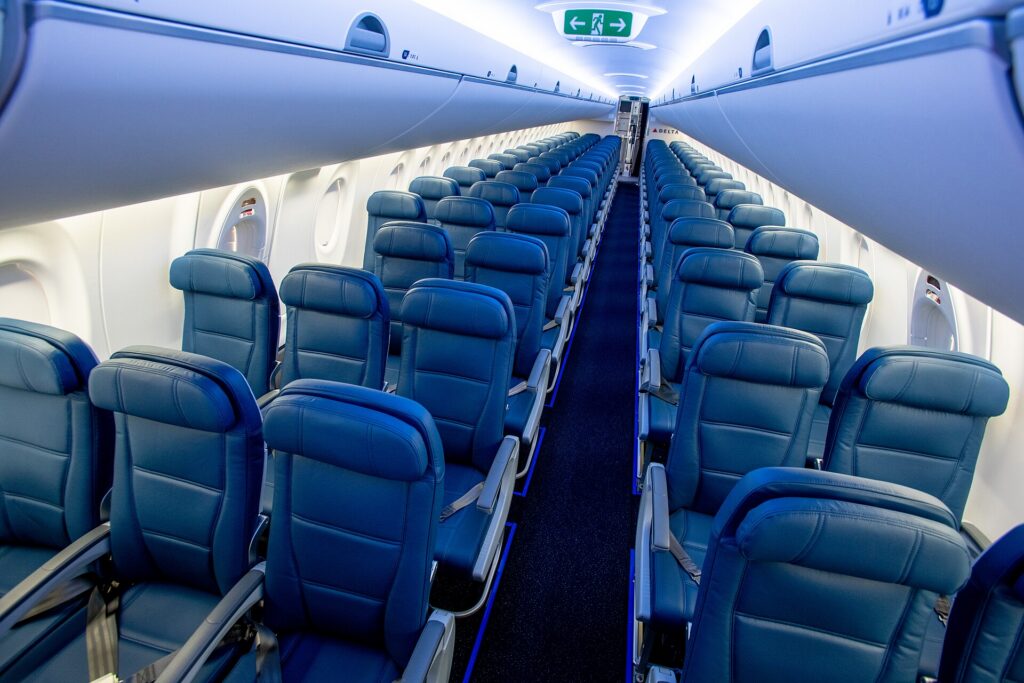
    Rows of economy seats in the main cabin of a narrowbody airliner
    Hours in a narrow seat: the reason comfort beats style on flight day (Photo: Delta News Hub via Wikimedia Commons, CC BY 2.0)

    What makes flight clothing different

    A few features of air travel explain nearly every piece of advice below.

    • You sit still for a long time. Clothes that feel fine for an hour at a desk can pinch at the waist, knees or ankles after several hours in a seat with limited room to move.
    • The temperature changes. A cabin can be warm during boarding on a hot day and cool at cruising altitude, especially at night and near the windows.
    • The air is dry. Many travelers notice dry skin, eyes and lips on long flights, which affects fabric and contact lens choices.
    • Security screening is part of the journey. At checkpoints you may be asked to put outerwear, metal items and certain belongings in bins. The Canadian Air Transport Security Authority lists what goes in the bins, including jackets, coats and bulky sweaters worn over your clothes, plus loose change, keys and small metal items.
    • Space is tight. You will reach into overhead bins, squeeze past neighbors and use a very small lavatory.
    • Safety matters. In the rare event of an evacuation, you need to move quickly in whatever you are wearing. The Federal Aviation Administration’s passenger safety advice specifically tells passengers to remove high-heeled shoes before using an evacuation slide.

    Ten things to avoid wearing on a flight

    The table gives the quick version. The sections after it explain each one and suggest better choices.

    AvoidWhy it causes troubleWear instead
    High heelsHard to walk long terminals in; must come off for an evacuation slideSupportive sneakers, flats or loafers
    Tight or restrictive clothingPinches at the waist and knees after hours of sittingStretch fabrics and relaxed cuts
    Heavy or lots of jewelrySlows security; snags and gets lostOne or two simple pieces; pack the rest
    Strong perfume or cologneTrapped in a sealed cabin; can bother neighborsUnscented or very light products
    Complicated outfitsAwkward in a tiny lavatory and at securitySimple separates you can manage in seconds
    Very revealing or beachwearCold at altitude; may breach airline rulesLight layers you can remove after landing
    Noisy fabricsRustle every time you move, especially at nightQuiet cotton, jersey and soft knits
    Stiff or scratchy fabricsIrritate skin over a long flightSoft, breathable natural or technical fabrics
    Flip-flops or brand-new shoesPoor protection and support; blistersClosed, broken-in shoes
    A heavy coat you cannot stowTakes up bin space and must go through screeningA packable jacket or warm layer

    1. High heels

    Heels look sharp but work badly at every stage of a flight. Airports involve long walks, moving walkways, stairs and occasional sprints for connections. Your feet may also feel tighter after hours of sitting, which makes structured shoes less comfortable by the end of the flight. And in an emergency, the FAA’s safety guidance tells passengers to remove high-heeled shoes before going down a slide, which costs precious seconds. Choose supportive sneakers, flats or loafers, and pack heels for your destination if you need them. If you spend a lot of time on your feet when you travel, our guide to comfortable walking shoes for traveling goes into more detail.

    2. Tight or restrictive clothing

    Skinny jeans, tight waistbands, shapewear and fitted dresses can feel fine when you are standing and become miserable after hours in an economy seat. Anything that digs in at the waist, behind the knees or around the ankles gets worse the longer you sit. Choose stretch fabrics, relaxed or tapered trousers, joggers that look neat, knit dresses with room to move or leggings with a long top. Travel trousers with stretch and useful pockets are a good compromise between comfort and a put-together look; our guide to travel pants for men covers what to look for.

    3. Heavy or a lot of jewelry

    Large metal jewelry can slow you down at security and may need to go through screening separately. Rings and bracelets snag on seat belts and blankets, necklaces tangle when you sleep, and small pieces are easy to lose in a seat pocket or security bin. Wear one or two simple pieces, and pack anything valuable or sentimental in a small case inside your carry-on rather than in checked baggage. Our pick of travel jewelry cases can help keep it organized.

    4. Strong perfume or cologne

    Cabin air circulates, but you are still sitting inches from your neighbors for hours. A scent that is pleasant at a party can be overwhelming in a row of three, and some people are sensitive to fragrance. Skip perfume on flight day, or use a very light, unscented moisturizer and deodorant. You can freshen up after landing. If you pack fragrance or toiletries in your carry-on, remember the liquid limits covered in our carry-on guide.

    5. Complicated outfits

    Jumpsuits, outfits with many buttons, lace-up boots, multiple belts and accessories all look good and all become a problem in a lavatory the size of a closet, at a security checkpoint or during a quick connection. Choose separates you can manage in seconds, shoes you can slip on and off, and a belt with minimal metal, or none at all.

    6. Very revealing clothing or beachwear

    This is less about modesty than practicality. Short shorts, tank tops and swimwear leave you cold once the cabin cools down, expose skin to seats and armrests, and offer no protection against spilled hot drinks. Airlines also include rules on passenger conduct and attire in their conditions of carriage, and crews can ask passengers to change or cover up if something is considered inappropriate or offensive; the same applies to clothing with offensive slogans or images. Wear light layers you can shed after landing and change into beach clothes at your destination.

    7. Noisy fabrics

    Some synthetic shells and stiff technical fabrics rustle every time you move. That is irritating in a quiet cabin at night, both for you and for your neighbors trying to sleep. Save your crinkly rain jacket for the destination, or keep it in the overhead bin, and wear quieter fabrics such as cotton, jersey, fleece and soft knits in your seat.

    8. Stiff or scratchy fabrics

    Rough wool, stiff denim, heavily starched shirts and scratchy seams become more irritating over a long flight, especially in dry cabin air. Soft cotton, merino, modal, bamboo blends and brushed technical fabrics are all comfortable against the skin. If a garment bothers you after an hour at home, it will bother you more at 35,000 feet.

    9. Flip-flops and brand-new shoes

    Flip-flops and loose sandals offer little support for long walks, little protection if something heavy falls from a bin or a bag rolls over your foot, and poor grip if you ever need to move quickly. Brand-new shoes carry a different risk: blisters, discovered halfway through a connection. Wear closed shoes you have already broken in, with socks. Socks also keep your feet warm and clean when you slip your shoes off in the cabin or at security.

    10. A heavy coat you cannot stow

    A bulky winter coat has to go through screening, takes up precious overhead bin space and is too hot to wear on board. If you are flying to or from somewhere cold, choose a packable insulated jacket or a fleece and a shell that you can compress into your bag. Many airlines allow a coat in addition to your carry-on allowance, but it still has to fit somewhere. Delta’s carry-on page, for example, lists a jacket among the items you can bring in addition to your carry-on and personal item.

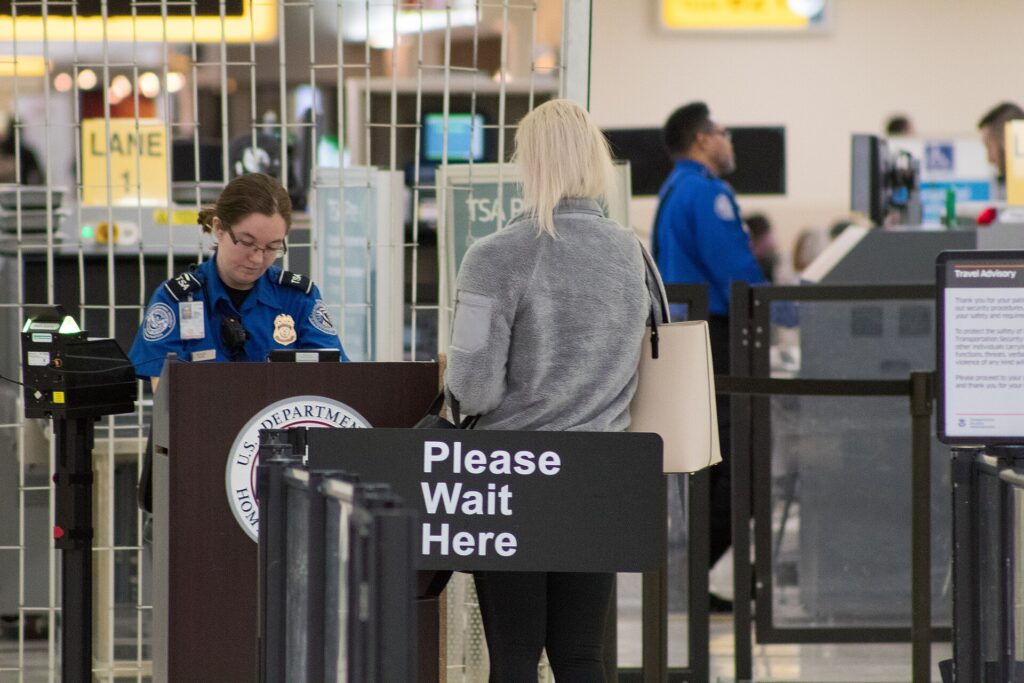
    A security officer at an airport screening checkpoint
    Less metal and easy-off layers mean a faster trip through security (Photo: Michael Ball via Wikimedia Commons, CC0)

    What to wear instead: the comfortable flight outfit

    A good flight outfit works on three levels: a comfortable base, a warm middle layer and practical shoes and accessories.

    Base layer

    Start with a soft, breathable top in cotton, merino or a quality technical fabric, and comfortable trousers with stretch: joggers, travel trousers, soft chinos, leggings or a relaxed knit dress with leggings underneath. Dark colors hide spills and wrinkles, which matters on long trips when you head straight from the airport to a meeting or dinner.

    Warm layer

    Add a cardigan, zip fleece, light sweater or hoodie that you can take off in seconds. Cabins can be warm while you board and cool once you are in the air, and a layer you control beats relying on a thin airline blanket. A large scarf or wrap doubles as a blanket, a pillow or a sunshade for your eyes.

    Shoes and socks

    Wear supportive, closed shoes that slip on and off easily, such as sneakers or loafers, with comfortable socks. Screening rules for footwear vary between countries and checkpoints, so easy-off shoes save time wherever you fly. Some travelers bring a spare pair of warm socks to change into on long flights.

    Accessories

    • A small personal item with your essentials that fits under the seat in front of you.
    • A neck pillow and eye mask for sleep. Our guide to airplane pillows compares styles.
    • Headphones, ideally noise-cancelling, to cut engine noise. See our pick of noise-cancelling headphones for flying.
    • Glasses rather than contact lenses if dry air bothers your eyes on long flights.
    • A refillable water bottle, emptied before security and filled afterward, to stay hydrated.

    Staying comfortable on long flights

    Clothing is only part of a comfortable long flight. Moving regularly matters too.

    Get up and walk the aisle when the seat belt sign is off, stretch your legs and flex your ankles in your seat, and drink water. Keep your seat belt loosely fastened while seated, though: the FAA’s turbulence guidance recommends keeping it buckled at all times, because turbulence can happen without warning, even in clear skies.

    Some travelers wear compression socks on long flights. If you have a history of blood clots, a recent surgery, pregnancy, a medical condition or any other risk factor, talk to your doctor before a long flight about what is right for you, rather than relying on general advice. The Government of Canada’s travel health and safety pages are a good starting point for health planning before any trip. Our guide to compression socks for long flights explains the options if your doctor recommends them.

    For sleep, dress as though you are going to bed on a slightly cold night: soft layers, warm socks and something to cover your eyes. Our guide to sleeping better on flights covers routines, seat choice and light.

    A traveler in comfortable clothes standing with a suitcase
    Soft layers and broken-in shoes: the outfit you stop thinking about (Photo: Russell Lee via Wikimedia Commons, Public domain)

    Dressing for your trip: situational advice

    Long-haul and overnight flights

    Prioritize sleep and temperature control. Soft trousers, a breathable top, a warm layer, warm socks and slip-on shoes are ideal. If you want to look fresh on arrival, pack a clean top, a toothbrush and deodorant in your carry-on and change before landing. Premium cabins on some airlines hand out pajamas; if you are hoping for a flat bed, our guide to the difference between first class and business class explains what each cabin includes.

    Short domestic flights

    Comfort still matters, but you can dress closer to your normal clothes. The priorities are easy security, comfortable shoes for the terminal and a layer for the cabin.

    Business trips

    If you are going straight to a meeting, wear comfortable, wrinkle-resistant clothing on the plane and carry your jacket, or change at the airport or your hotel. Dark, stretchy tailoring, knit blazers and travel trousers look professional without the discomfort of a full suit in an economy seat. Keep your meeting outfit in your carry-on, never in checked baggage.

    Flying from cold to hot

    Wear layers that end in something suitable for the destination: a T-shirt under a sweater under a packable jacket. Stow the heavy layers once you are through security. Leave the parka in the car or at home if someone is driving you to the airport.

    Flying from hot to cold

    Pack your warm jacket, hat and gloves in your carry-on, not your checked bag, so you are not stuck at a chilly arrivals curb or car rental lot waiting for your luggage. Change into warm socks and closed shoes before landing.

    Flying with children

    Dress children in soft, comfortable layers that are easy to change, and pack at least one complete spare outfit per child in your carry-on, plus a spare top for yourself. Avoid outfits with many fastenings that make lavatory visits slow. Slip-on shoes help at security for everyone.

    Red-eye flights

    Treat it as bedtime: comfortable clothes, warm socks, an eye mask and earplugs or headphones. Pack a clean top and toiletries so you can freshen up before a morning arrival.

    Getting through security smoothly

    Many flight clothing choices come down to security. A few habits save time and stress:

    • Put metal items in your bag before the line. Keys, coins, a watch and a phone can go into a jacket pocket or your carry-on while you wait.
    • Wear outerwear you can remove quickly. CATSA asks passengers to place jackets, coats and bulky sweaters worn over their clothes in a bin.
    • Keep your liquids bag accessible. At some checkpoints with newer scanners you may not need to take it out, but have it ready. CATSA explains when CT-equipped lines let items stay in your bag.
    • Choose a belt with little or no metal. Or skip the belt on travel day.
    • Check the rules for where you are flying from. Screening procedures differ by country and change over time. Check CATSA for flights from Canada and the TSA for flights from the United States before you fly.

    Security lines are only one part of airport timing. Our guide to how early to arrive for an international flight helps you plan the whole journey to the gate.

    What to pack in your carry-on, just in case

    Even the perfect outfit cannot stop a spilled coffee or a delayed bag. A small backup kit in your carry-on protects the first day of your trip:

    • A clean top and underwear, and a full change of clothes for children.
    • Any medication you need, in its original packaging.
    • Toothbrush, toothpaste and deodorant, within liquid limits.
    • A warm layer and socks.
    • Chargers and any spare batteries, which generally have to travel in the cabin; the FAA’s PackSafe pages explain the rules for U.S. flights.
    • Your meeting outfit or anything you cannot replace quickly at the destination.

    Fitting all of this into your allowance takes a little planning. Our guide to carry-on luggage sizes explains dimensions and packing strategies, and our travel luggage guide helps you choose the right bag.

    The economy cabin of an Austrian Airlines long-haul aircraft
    On an overnight flight, dress as if you are going to bed on a slightly cold night (Photo: Austrian Airlines via Wikimedia Commons, CC BY-SA 2.0)

    Common flight clothing mistakes

    • Dressing for the destination, not the journey. Beach clothes are cold on a plane; a winter coat is hot in a terminal.
    • Trying new clothes or shoes on flight day. Discover the scratchy seam or the blister at home, not on board.
    • Putting your warm layer in checked baggage. Keep it with you.
    • Forgetting the lavatory test. If an outfit takes a minute to manage at home, it will take three in a turbulent lavatory.
    • Wearing heavy metal accessories. They slow security and are easily lost in bins.
    • Packing no spare clothes. One spill or one lost bag can ruin the first day.
    • Ignoring health advice. If you have risk factors for circulation problems, speak to a doctor before a long flight.

    Frequently asked questions

    What is the most comfortable thing to wear on a plane?

    Soft, breathable layers: a comfortable top, stretch trousers or leggings, a warm layer you can remove easily, comfortable socks and closed, slip-on shoes you have already broken in.

    Can I wear leggings or sweatpants on a flight?

    Yes. They are comfortable and widely worn. Neat joggers or leggings with a longer top look put-together, and they are far more comfortable than tight jeans on a long flight.

    Is it okay to wear shorts on a plane?

    You can, but cabins often get cold, especially on long or overnight flights. If you wear shorts, bring a warm layer and consider long trousers in your carry-on.

    Why shouldn’t you wear high heels on a plane?

    They are uncomfortable for long walks through airports, and the FAA’s passenger safety guidance tells passengers to remove high-heeled shoes before using an evacuation slide. Wear flats or sneakers and pack heels.

    Should I wear jeans on a flight?

    Stretch jeans with a relaxed fit can be fine on a short flight. Stiff or tight jeans become uncomfortable on long flights, when softer trousers are usually the better choice.

    Can airlines refuse to let you fly because of your clothes?

    Airlines set conduct and attire rules in their conditions of carriage, and crews can ask passengers to change or cover up if clothing is considered offensive or inappropriate. Dressing practically and neutrally avoids any issue.

    What should I avoid wearing through airport security?

    Lots of metal jewelry, heavy belts, bulky outerwear and shoes that are hard to remove all slow screening. Put metal items in your bag before the line and wear layers you can take off quickly.

    Should I wear compression socks on a long flight?

    Some travelers find them comfortable, but whether they are right for you is a question for your doctor, especially if you have risk factors for blood clots or other health conditions.

    Outfit sorted? Find the best fare for your dates on our flight search, then compare places to stay at your destination with our hotel search. If you are heading somewhere cold this winter, our guide to the best time to fly to Montreal explains what to expect when you land.