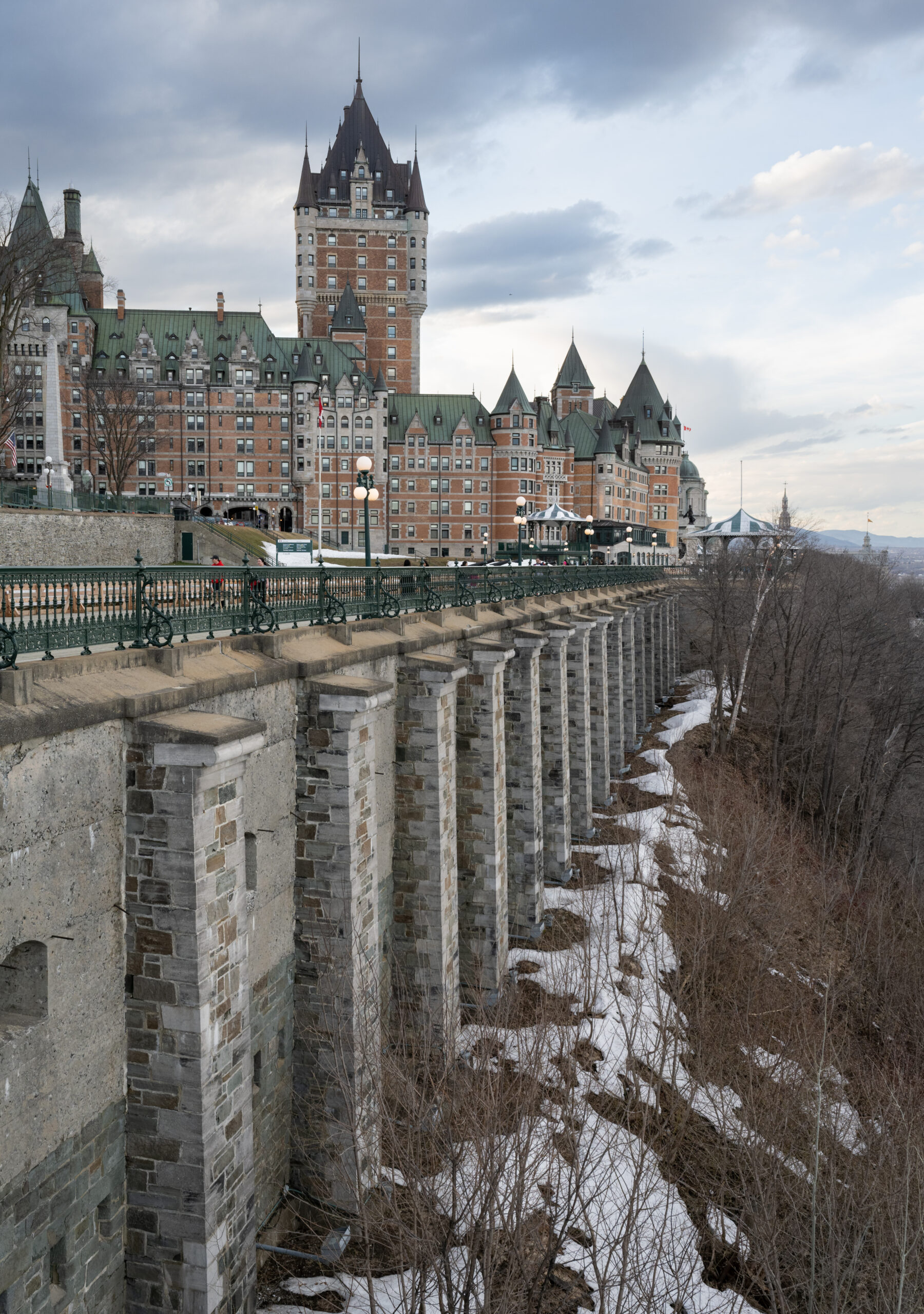
Quebec City has the most seasonal calendar of any major Canadian destination, and it is worth choosing your month deliberately. Summer brings the Festival d’été, the cruise ships and the crowds on the Petit-Champlain; fall brings the maples and the emptiest, loveliest Old Town of the year; winter brings four months of snow, the Christmas market, the ice hotel and the Carnaval, and a city that has made cold its brand; spring brings mud, maple syrup and the year’s lowest prices. The airport is small, with a limited set of nonstop routes, which means that for many visitors the real question is not only when to fly but whether to fly to Quebec City at all or to Montreal, three hours away, and take the train. This guide walks through the weather month by month, the fare seasons, the events that move prices, the airport, and the Montreal alternative.
The short answer
The best combination of weather and value is September to mid-October, when the summer crowds have gone, the maples on the Plains and along the river turn in early October, and hotel rates inside the walls ease. Early June is the other excellent window, warm and green, before the school holidays and the Festival d’été. For winter, January and early-to-mid March give you the snow, the skiing and the ice hotel without the Carnaval prices. The cheapest fares come in November, late January and April. The most expensive stretches are the Festival d’été in the first half of July, the Carnaval over ten days in early February, the Christmas and New Year weeks, when the Old Town under snow is at its most popular, and the Saint-Jean-Baptiste and Canada Day week at the end of June. Whatever you choose, run a flexible-date search on our Quebec City flights page, and price Montreal alongside it; a few days’ shift, or a train from Montreal, can change the cost of the trip entirely.
Quebec City’s weather, season by season
Quebec City sits on the St. Lawrence where the river narrows, 250 kilometres downstream of Montreal, and its climate is colder and snowier than Montreal’s in every season: more than three metres of snow in an average winter, a spring that arrives two weeks later, and summers that are warm but rarely oppressive. The figures below are approximate seasonal patterns based on the long-term climate normals from Environment and Climate Change Canada; check the current forecast before you pack.
| Month | Typical daytime high | Typical overnight low | What it feels like | Fare pressure |
|---|---|---|---|---|
| January | around -8 °C | around -17 °C | Deep winter; heavy snow; bright cold days | Low after the first week |
| February | around -6 °C | around -16 °C | Cold and snowy; the Carnaval | Low, with a sharp Carnaval spike |
| March | around 0 °C | around -9 °C | Still winter; best skiing; sugar shacks open | Low; spring-break spike |
| April | around 8 °C | around -1 °C | Melt and mud; the river ice breaks up | Lowest of the year |
| May | around 17 °C | around 6 °C | Spring arrives in the second half; tulips and terrasses | Low to moderate; Victoria Day / Patriots’ Day weekend |
| June | around 22 °C | around 11 °C | Warm, long days; the city fills from mid-month | Moderate, rising fast in the last week |
| July | around 25 °C | around 14 °C | Warm, sometimes humid; the Festival d’été; peak crowds | Peak |
| August | around 24 °C | around 13 °C | Warm and settled; New France festival; cruise season | High |
| September | around 18 °C | around 8 °C | Warm days, cool nights; crowds ease after Labour Day | Moderate, falling |
| October | around 11 °C | around 3 °C | Crisp; colour peaks in the first two weeks; cruise ships | Moderate on colour weekends, then low |
| November | around 3 °C | around -3 °C | Grey; first snow; the Christmas market opens late in the month | Low |
| December | around -4 °C | around -12 °C | Snow, lights, the market; deep cold by the end | Low until mid-month, then a holiday peak |
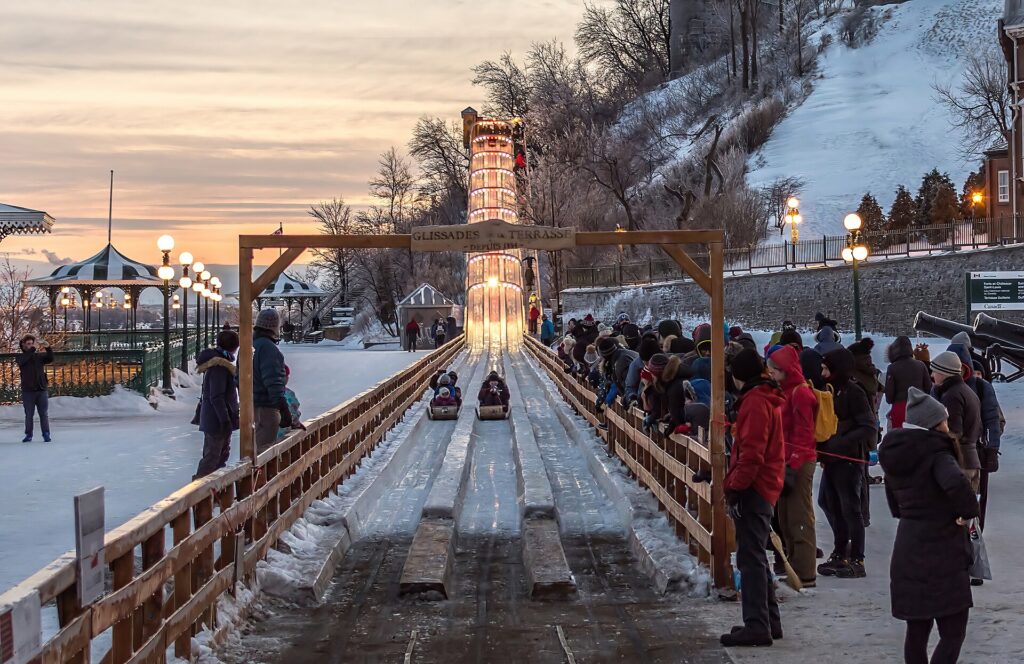
Two things the table cannot show. First, the snow: Quebec City gets more than any other big city in eastern Canada, and from December to March the Old Town is reliably white, which is the whole point of a winter visit; it also means the stairs and cobbles are icy and proper boots are not optional. Second, the river: the St. Lawrence moderates the summer heat, so the city rarely has Montreal’s humidity, and in winter the ice floes and the canoe race across them are part of the scenery.
How Quebec City’s fare seasons work
Quebec City’s airport is small and its nonstop routes are limited, which makes its fares less elastic than the big hubs’: there are fewer seats to discount in the low season and fewer to add in the peak. Demand is driven by leisure almost entirely, with the provincial government adding a modest weekday base, and it follows three calendars: the summer tourist season, from Saint-Jean-Baptiste Day on June 24 to Labour Day, with the Festival d’été as its peak; the winter festival season, from the Christmas market through the Carnaval; and the fall colour and cruise season in late September and October, when the Old Port is full of ships. The result is a fare curve with a high summer, a sharp February spike, a holiday peak, and two lows in April and November that are among the deepest of any Canadian city.
Peak season
Late June to late August, plus roughly December 20 to January 3, plus the Carnaval’s ten days in early February. The Festival d’été, in the first half of July, is the single biggest hotel event of the year; the last week of June, with Quebec’s national holiday on the 24th and Canada Day on the 1st, runs straight into it. August brings the Fêtes de la Nouvelle-France and the peak of the cruise season. Book early, and book the hotel first.
Shoulder season
Early to mid-June, September and October. Early June is warm, green and cheap; September is the best month by most measures, with the humidity gone and the crowds thinning after Labour Day; the first two weeks of October are the colour peak, busy on weekends, quiet mid-week. Watch Labour Day and Thanksgiving.
Low season
November, mid-January through March outside the Carnaval and the spring break, and April. Fares and hotel rates are at their lowest, and for a winter trip, January and March deliver the snow, the skiing at Mont-Sainte-Anne and the ice hotel without the Carnaval premium. April is the deepest low: the snow is melting, the river is breaking up, and the sugar shacks are the reason to come.
As elsewhere, mid-week departures and early or late flights usually price below Friday and Sunday afternoons on the same route, and a whole-month search reveals cheaper pairs of dates close to your first choice. Our guide to the best times to book explains how to read those patterns.
Quebec City month by month
January
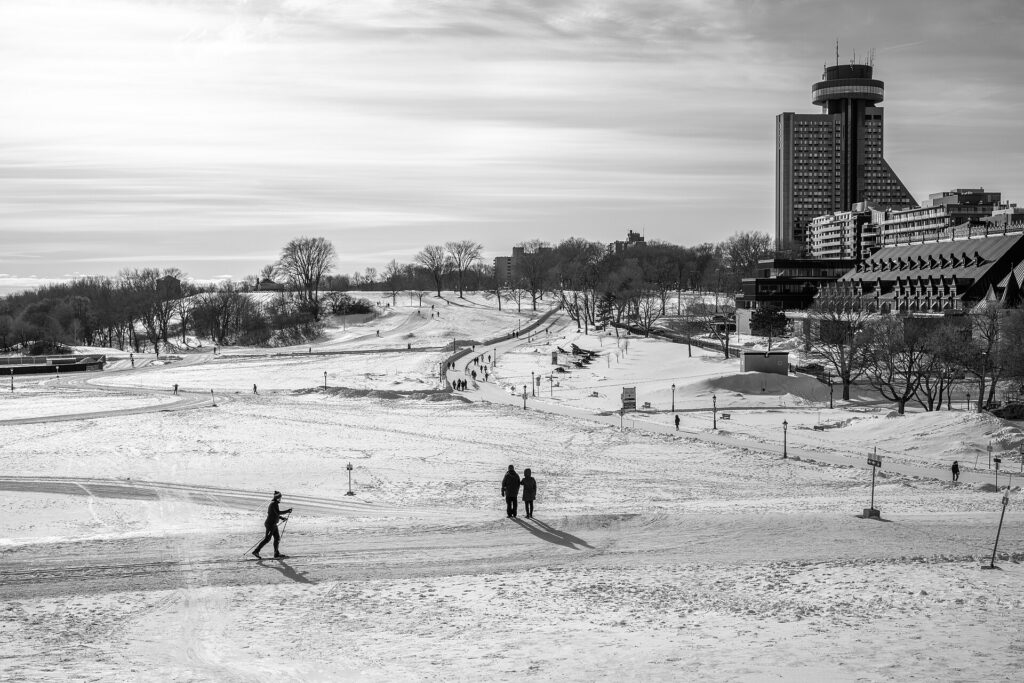
Deep winter, with heavy snow and bright cold days, and after the first week one of the cheapest months to visit. The Old Town is white and quiet, the Hôtel de Glace opens for the season outside the city, the ski hills at Mont-Sainte-Anne, Stoneham and the Massif are in full operation, the Plains are groomed for cross-country, and the toboggan run on the Terrasse is running. Fares are low; hotels inside the walls offer their best rates of the year.
February
The Carnaval de Québec fills ten days in the first half of the month with parades, ice sculptures, the ice palace, the canoe race across the river and Bonhomme, and it is the one winter stretch when hotels fill and fares from other Canadian cities rise; the Family Day weekend elsewhere in Canada adds to the third weekend. The weeks either side are cheap and still deep winter.
March
Still winter here, with the best snow of the season on the ski hills and the sugar shacks opening in the countryside for maple season; the mid-to-late March spring break, which in Quebec falls in the first week of March, lifts fares briefly. Otherwise a cheap, snowy, sunny month.
April
The melt. Grey skies, slush in the Old Town, the river ice breaking up, and the lowest fares and hotel rates of the year. The reasons to come are the sugar shacks, the museums, and the price.
May
Spring arrives in the second half, later than in Montreal, with tulips on the Plains and the terrasses opening on the Grande Allée. The Journée nationale des patriotes weekend, the same Monday as Victoria Day elsewhere, is a busy travel weekend. Late May is a good-value window, still quiet.
June
Warm, green and increasingly busy. The first three weeks are among the best windows of the year: long days, the island’s strawberry season, and the city’s summer programme beginning. The last week, with Saint-Jean-Baptiste on June 24 and Canada Day a week later, is peak, and fares and hotels rise sharply.
July
Peak. The Festival d’été, eleven days from early July, puts international headliners on the Plains of Abraham and fills every hotel in the city; the Old Town is at its most crowded, the fireworks light the river, and the weather is at its warmest. If you are coming for the festival, book the hotel first; the Quebec City hotel search shows what is left. The second half of July eases slightly.
August
Warm, settled and busy, with the Fêtes de la Nouvelle-France in the Lower Town, the cruise ships beginning their season in the Old Port, and the island in full harvest. Fares are high but below July’s, and the last week, once Quebec’s schools return in late August, is noticeably softer.
September
The month many locals would send you to: warm days, cool nights, the crowds gone after Labour Day, the cruise ships in port on weekdays, and the first colour by the end of the month. Fares and hotel rates fall through the month.
October
The colour peak in the first two weeks, when the Plains, the island and the Charlevoix hills are at their best and the leaf-peeping weekends and the cruise calendar fill the Old Town; mid-week is quiet and good value. Thanksgiving, on the second Monday, is the one date to book around. By the end of the month the city is quiet and cheap.
November
Grey, cold and the cheapest month alongside April. The first snow usually arrives, and the German Christmas market and the Old Town lights open in the last week, which makes the end of the month a lovely, inexpensive time to visit.
December
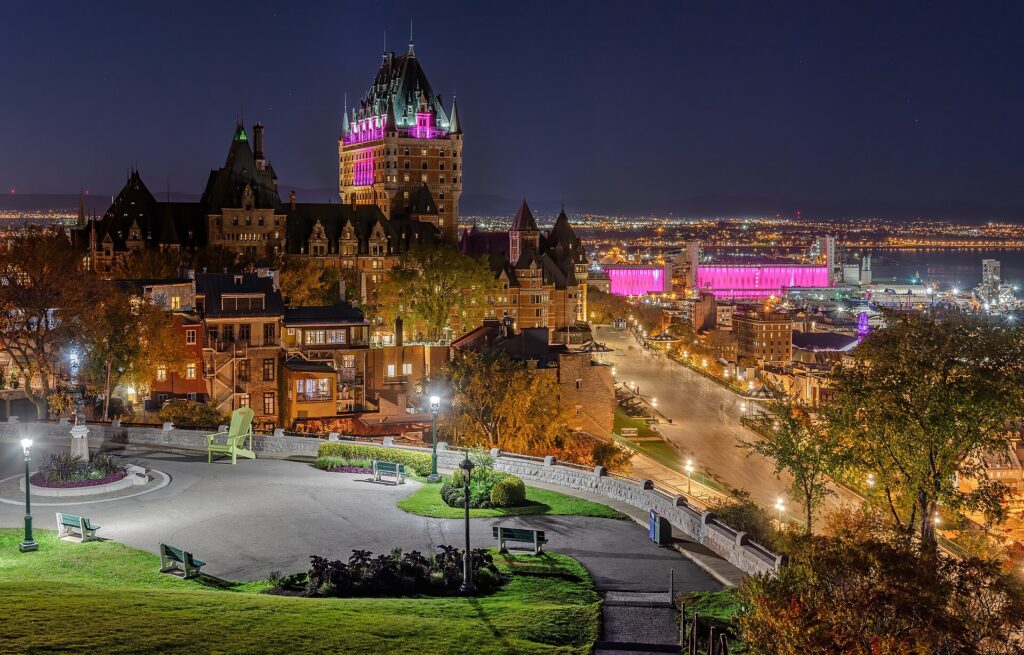
Two months in one. The first three weeks bring the Christmas market, the lights on the Château and the Petit-Champlain, and early-season snow at November prices; from about December 20, the Old Town under snow is one of the most sought-after Christmas destinations in the country, and fares and hotel rates peak through New Year.
Events that move Quebec City flight and hotel prices
Cross-check these against your dates before you book. Exact dates shift each year; Destination Québec cité keeps the current calendar.
- Carnaval de Québec (ten days in early February): the winter’s one hotel spike.
- Quebec spring break (first week of March) and the rest of Canada’s (mid-to-late March).
- Patriots’ Day / Victoria Day weekend (Monday before May 25).
- Saint-Jean-Baptiste Day (June 24) and Canada Day (July 1).
- Festival d’été de Québec (eleven days from early July): the single largest hotel spike of the year.
- Fêtes de la Nouvelle-France (early August).
- Labour Day (first Monday of September).
- Fall colour weekends (first two weeks of October) and Thanksgiving.
- Christmas to New Year.
- Cruise-ship days from August to October, which crowd the Lower Town in the middle of the day without affecting hotels much.
- Concerts and shows at the Centre Vidéotron and the Grand Théâtre; our Quebec City events page shows what is on sale for your dates.
Getting in from the airport
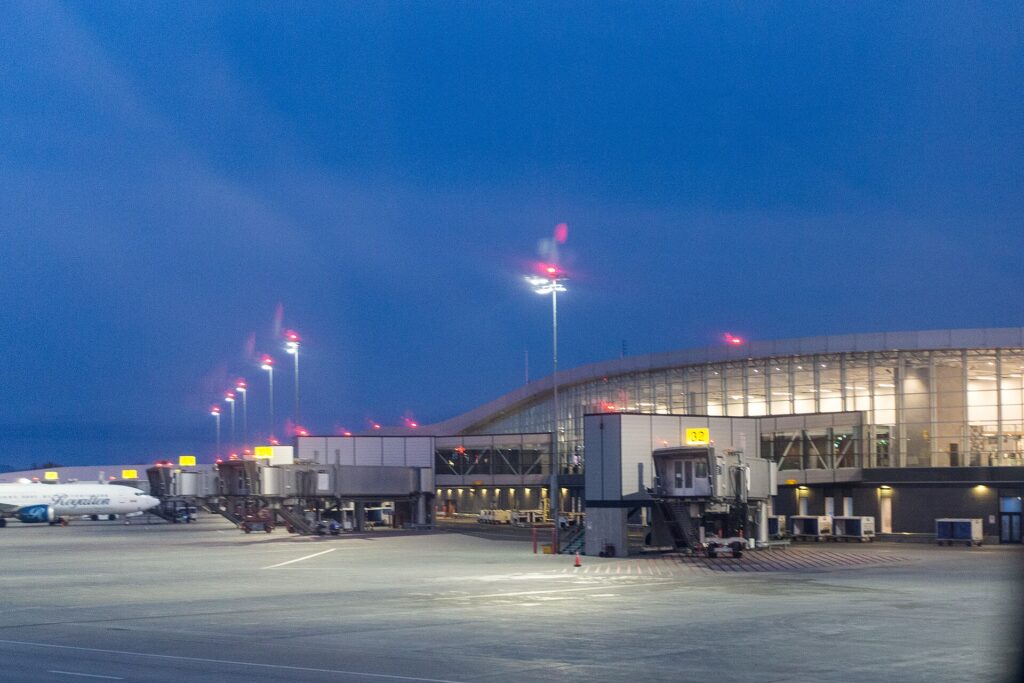
Quebec City’s airport, Québec City Jean Lesage International (YQB), is about 15 kilometres west of the Old Town, small, modern and easy. It has nonstop flights from Montreal, Toronto, Ottawa and a few other Canadian cities year-round, seasonal service from a handful of U.S. hubs and, in summer, from Paris, and sun-destination charters in winter; most international itineraries connect through Montreal or Toronto. Getting into the city: taxis operate at a fixed fare to the downtown zone and take 20 to 30 minutes; ride-hail is available; an RTC bus route connects the terminal to the network; and the rental counters are in the terminal, which matters here because the Île d’Orléans and Charlevoix are the reasons many visitors rent. Our YQB airport guide covers the layout, and our car-versus-transit guide works through whether you need a rental, which inside the walls you emphatically do not.
Quebec City or Montreal: choosing your gateway
This is the question that matters most for anyone flying from outside eastern Canada. Montreal’s airport, three hours away, has vastly more nonstop routes and, from the United States, Europe and the rest of Canada, usually lower fares; Quebec City’s has the convenience of landing fifteen minutes from the Old Town. There are three ways to weigh it. First, price the direct or one-stop fare into Quebec City for your dates. Second, price a fare into Montreal plus VIA Rail’s three-hour service from Montreal’s Central Station to the Gare du Palais in the Lower Town, which arrives a walk from the Old Town’s hotels; the train is comfortable, frequent and often cheap when booked ahead, and the combination frequently beats a direct fare, especially in the Festival d’été and Carnaval weeks. Third, price a fare into Montreal plus a one-way rental up Highway 20 or the prettier Highway 40 along the north shore, which turns the trip into a two-city holiday and gives you the car for the island and Charlevoix; our Montreal to Quebec City route guide covers the drive. In the low season, when Quebec City’s own fares are soft, the direct flight usually wins on time; in the peaks, the Montreal route usually wins on money. Run all three on TicketScanner before you commit.
Timing tricks that work for Quebec City
- Search the whole month. The Festival d’été and the Carnaval are short, sharp spikes; a week either side can be dramatically cheaper. A calendar search on TicketScanner shows the edges instantly.
- Book the hotel first for the festival, the Carnaval and Christmas. Rooms inside the walls disappear before fares rise; run a Quebec City hotel search before you commit to the flight, and look at Saint-Roch and the Grande Allée for value.
- Take the winter without the Carnaval. January and March give you the same snow, the ice hotel and the ski hills at low-season prices.
- Consider the train from Montreal. For most international visitors, it is the cheapest route to the Old Town and a pleasant one.
- Go mid-week in October. The colour weekends fill the Old Town; Tuesday to Thursday in the first fortnight is the same scenery with half the people.
- Build a winter buffer. Snow can disrupt YQB and the Montreal connections between December and March; avoid the tightest connections. Our guide to how early to arrive covers what to allow.
- Flying out of Quebec City instead? The same seasonality applies in reverse; see cheap flights from Quebec City.
What to pack, by season
Winter (December to March): a genuinely warm coat, a hat, gloves, a scarf, insulated boots with grip for the icy stairs, and layers; the Old Town is walked, not driven, and you will be outside more than you expect. Spring (April to May): waterproof boots for the slush in April, a rain shell, and layers. Summer (June to August): light clothing, sun protection, a warm layer for the river breeze in the evening, and comfortable shoes for the cobbles and hills. Fall (September to October): layers, a warm jacket by October, and walking shoes for the Plains and Charlevoix.
The best time to fly to Quebec City for…
The Old Town under snow
Late November for the Christmas market at low prices, or January for the deep snow and the ice hotel; the Christmas week is the most expensive and most sought-after.
The Carnaval
Early February, booked months ahead with the hotel first.
The Festival d’été
The first half of July, booked as early as the line-up is announced in the spring; the pass is cheap, the hotel is not.
Fall colours
The first two weeks of October, mid-week if you can.
The lowest fares
April and November, then late January and early-to-mid March.
Families
Late June for the strawberries and the long days if you can avoid the last week, or the last week of August; in winter, the Carnaval is built for children if the budget allows, and January is the cheap alternative.
Cross-border and international visitors
U.S. citizens need a valid passport; most other visa-exempt travellers arriving by air need an Electronic Travel Authorization. The Government of Canada’s visitor page explains what applies to you, and CATSA lists what you can carry through security.
Frequently asked questions
What is the cheapest month to fly to Quebec City?
April and November are consistently the lowest, with late January and March close behind outside the Carnaval and the spring breaks.
What is the best month to visit Quebec City?
September or early October for weather, colour and value; early June for warmth without crowds; January for snow without the Carnaval prices; July for the festival if you book early.
Is it better to fly to Quebec City or Montreal?
From within eastern Canada, Quebec City direct. From the United States, Europe or western Canada, Montreal plus the three-hour train is usually cheaper and sometimes the only nonstop option; price both.
How cold is Quebec City in winter?
Highs around -7 °C and lows around -16 °C on an average January day, with cold snaps well below -20 °C and more than three metres of snow over the season. Dress for it and it is magical.
How crowded is Quebec City in summer?
Very, in July and August, especially in the Lower Town in the middle of the day and during the Festival d’été. Early mornings and evenings, and the neighbourhoods outside the walls, are the escape.
How far ahead should I book?
Months ahead for the Festival d’été, the Carnaval and Christmas, when hotels inside the walls sell out; a few weeks for summer and fall; and as late as you like in April and November.
Ready to pick your dates? Compare fares across the whole month on our Quebec City flights page, then find a room with our Quebec City hotel search. For what to do when you land, start with our first-timer’s guide to Quebec City.
Keep planning with TicketScanner
- Cheap flights to Quebec City — compare fares across the whole month
- Quebec City hotels — book early for the Festival d'été and Carnaval
- Quebec City car rentals
- Events in Quebec City — concerts and shows on sale
- Things to do in Quebec City: a first-timer's guide
- Quebec City: rent a car or use transit?
- Quebec City Jean Lesage (YQB) airport guide
- Cheap flights to Montreal — three hours away, usually cheaper from abroad
- Best times to book flights and hotels
Leave a Reply