
On a family vacation, the rental car is more than transport. It is where the car seats live, where the snacks and the spare clothes ride, where toddlers nap between stops and where everyone starts and ends each day. Get it right and the trip flows; get it wrong and you spend the week wrestling luggage into a trunk that was never big enough, arguing with a counter about a car seat that is not there, or paying for extras you did not know you had agreed to. This guide covers what actually matters when renting for a family: which vehicle fits your family and your gear, the car seat decision, how the major rental companies differ in ways that matter to parents, how to keep the cost down, and how to make the pickup, the drives and the return easier with children in tow.
When you are ready to compare, our car rental search shows minivans, SUVs and sedans from the major companies side by side for your dates.
The short version
- Size the car for the car seats and the luggage, not just the number of people.
- Book early, especially minivans and three-row SUVs for school holidays and summer, and use a free-cancellation rate.
- Decide on car seats before the trip: bring your own if you can, reserve if you must rent, and plan to install them yourself.
- Join the company’s free loyalty program so you can skip the counter where that is offered.
- Pick up at the airport unless you have a strong reason not to; the saving from an off-airport branch rarely survives a shuttle ride with tired children.
- Compare total prices, including add-ons such as seats, extra drivers and coverage, before choosing a company.
Is a rental car the right call for your family?
For most family trips, yes, but not all. In spread-out destinations, such as Orlando, Southern California, Phoenix, the Rockies or any national park, a car is close to essential, and one vehicle for the whole family is usually cheaper than taxis or tours. In the densest cities, such as New York, London or Paris, a car with children can be more trouble than it is worth: parking is scarce, hotel garages charge nightly, and the subway with a stroller, while not effortless, is often faster. Many families split the difference, going car-free for the city days and renting for the day trips or the road-trip part of the holiday. Our guide to renting a car versus public transport versus taxis works through that decision.
Choosing the right vehicle
Rental companies sell classes, not models, and the car you get will be the one pictured “or similar”. What you can control is the class. For families, the class decision is mostly about three things: seats, car seat fit and luggage.
| Vehicle class | Works well for | Car seat fit | Luggage reality |
|---|---|---|---|
| Midsize or full-size sedan | Two adults, one or two children | Two seats fit comfortably; three across is rarely possible | Two large suitcases plus carry-ons; a stroller may not fit with them |
| Compact or midsize SUV | Two adults, two children, moderate luggage | Two seats comfortably, sometimes a booster between them | Better height for strollers; check the cargo cover and floor depth |
| Standard or full-size SUV (two rows) | Two adults, two or three children | Wider rear bench; three across may be possible with narrow seats | Generous, and good for winter trips with bulky gear |
| Three-row SUV | Families of five to seven | More positions, but third-row access can be awkward with seats installed | Very little luggage space with the third row up |
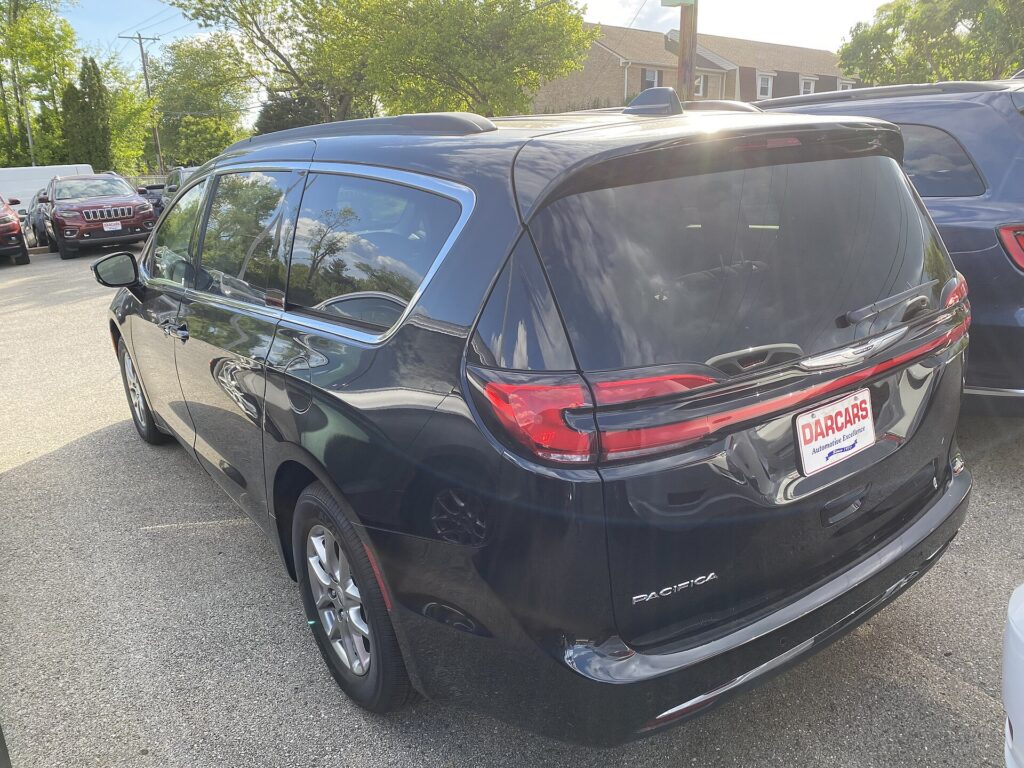
| Minivan | Families of four to seven, especially with young children | The easiest vehicle for multiple car seats, with sliding doors and walk-through access | Deep well behind the third row; the best all-rounder for gear |
| Large passenger van | Groups and multigenerational trips of eight or more | Many positions | Plenty of space, but harder to drive and park, and often excluded from credit card coverage |
A few rules of thumb from experience:
- Count car seats as passengers and a half. A rear-facing infant seat takes a lot of front-to-back space and can push the front passenger seat forward.
- Three seats across a single row is difficult in most sedans and many SUVs. With three children in seats, a minivan or three-row vehicle is usually the answer.
- With a third row in use, luggage space collapses in most SUVs. If you need all seven seats and have suitcases, a minivan is usually the better choice.
- Strollers are the forgotten bag. A full-size stroller can take as much space as a large suitcase. A compact travel stroller saves room.
- If you need all-wheel drive for a winter trip to the mountains, check whether the class guarantees it; many do not.
- If you are renting in Europe, vehicles run smaller, manual gearboxes are common and minivans are harder to find. Filter for automatic and book early.
The car seat decision
This is the part of a family rental that causes the most stress, and it is worth deciding well before the trip.
Renting seats from the rental company
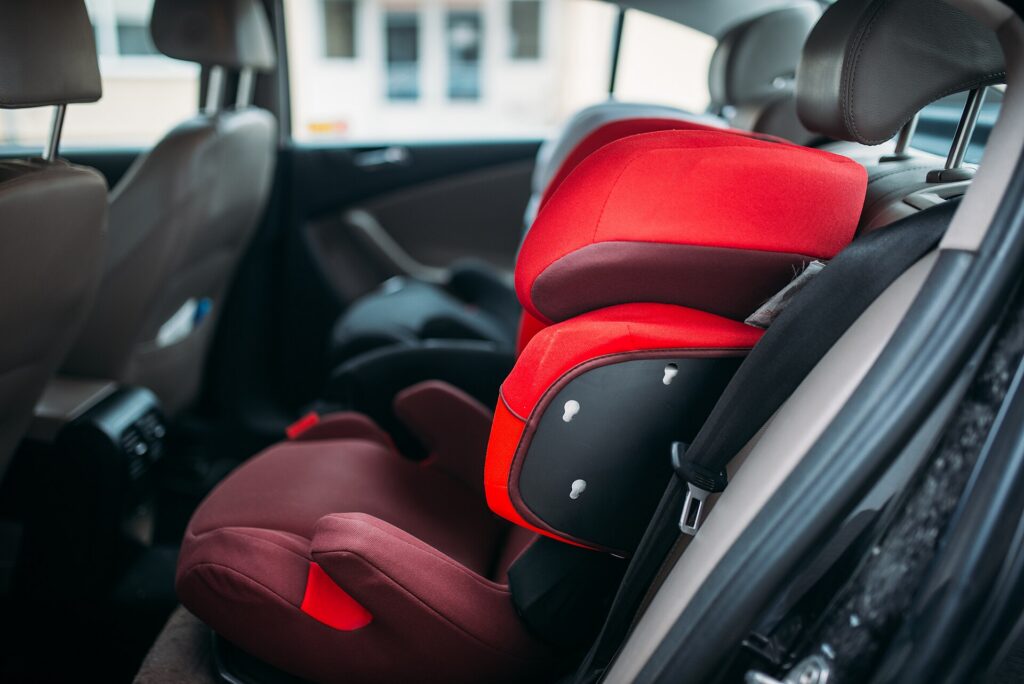
All the major companies offer child seats and boosters as an optional extra, usually for a daily fee, often capped per rental. The drawbacks are real: availability is not guaranteed unless you reserve, and even then a busy location can run out; you cannot choose the model; you may not know the seat’s history; and counter staff are generally not permitted to install seats for you, so you will be doing it yourself in a parking garage, possibly without the manual. If you rent, reserve the specific type you need (rear-facing infant, convertible, forward-facing or booster), check the seat when you collect the car for its expiration date, labels, harness and cleanliness, and ask for another if anything looks wrong.
Bringing your own
Many parents prefer to bring their own seat: you know its history, you know how to install it, and your child is used to it. Most major airlines in the US and Canada let you check a car seat free of charge, and often a stroller too, but confirm with your airline, because policies differ. Consider a padded travel bag to protect the seat in the hold. If you buy a seat on the plane for your child, you can use an approved car seat on board; the FAA explains which seats qualify and how to use them on its flying with children page. Booster seats are not approved for use during flight, but they are light and easy to carry on or check.
Installing seats in a rental
Most modern vehicles have lower anchors and top tethers, called LATCH in the US, UAS in Canada and ISOFIX in Europe, as well as seat belts you can use to install a seat. Practice installing your seat at home, bring the manual or download it to your phone, and give yourself time at pickup. The NHTSA car seat guidance and Transport Canada’s child car seat safety page explain how to choose and install the right seat for a child’s age and size.
Rules on the road
Car seat laws are set by each state, province and country, and they differ in the age, weight and height thresholds for each stage. The safe approach is to follow the stricter of your home rules and the local rules. Two principles are universal: never place a rear-facing seat in front of an active airbag, and keep children in the back seat whenever possible; safety agencies in both the US and Canada recommend the back seat for children under 13. In Europe, car seats must carry the local approval label, and a seat approved in North America may not meet that requirement, so check before relying on your own seat abroad.
The major rental companies, from a family’s point of view
The big brands are more similar than their marketing suggests. They have broadly similar fleets, all offer child seats as extras, and all have loyalty programs. Several also share owners: Enterprise, National and Alamo belong to the same group, as do Avis and Budget, while Hertz owns Dollar and Thrifty. What differs is their location networks, how they handle pickup and which travelers they target. Prices vary constantly by city, date and vehicle, so no brand is always cheapest; compare totals for your trip.
Enterprise
Enterprise is known for its large network of neighborhood branches as well as airport locations, which is useful if you want to rent for only part of the trip, start from near your hotel or swap cars mid-vacation. Its airport locations carry the usual range of SUVs and minivans. Its loyalty program is Enterprise Plus.
National
National is popular with frequent travelers because members of its Emerald Club can, at many airport locations, skip the counter and choose a car from a designated aisle. For a family, that means you can look at the actual cars and pick one whose trunk and rear seats suit your gear, rather than taking whatever is assigned.
Alamo
Alamo focuses on leisure travelers and is a common choice at vacation airports such as Orlando. At many locations you can check in online to skip the counter, and at many you can choose your own car from the available vehicles in your class, which, as with National, helps families find the right trunk and seat layout.
Hertz
Hertz has one of the widest airport networks and a broad fleet. Members of its free Gold Plus Rewards program can skip the counter at many airports and go straight to their car, which is a real advantage when you land with tired children.
Avis
Avis is another major airport brand with a wide network. Its Avis Preferred program lets members bypass the counter at many locations, and its app can manage parts of the rental.
Budget
Budget, Avis’s sister brand, is generally positioned as the value option and often shares facilities with Avis at airports. It is worth including in any comparison, particularly when you can apply a membership or employer discount.
Sixt
Sixt is headquartered in Germany, has a strong presence across Europe and a growing network at North American airports, and its fleet often includes European makes. For families renting in Europe it is one of the natural companies to compare, and in North America it is worth checking alongside the domestic brands.

How to choose between them
| What matters to you | What to look for |
|---|---|
| Avoiding a counter queue with kids | A free loyalty program with counter bypass at your airport (Emerald Club, Gold Plus Rewards, Avis Preferred, Alamo online check-in) |
| Choosing a car that fits your gear | Locations where you can pick from an aisle or lot (National, and Alamo at many locations) |
| Renting for only part of the trip | A strong neighborhood network near your hotel (Enterprise is known for this) |
| The lowest total price | A side-by-side comparison of totals, including seats, drivers and coverage, for your exact dates |
| Renting in Europe | Automatic transmission availability, larger vehicle classes, and car seats that meet local rules |
Big families, grandparents and groups
For multigenerational trips and groups of eight or more, you have two realistic choices: one large passenger van, or two ordinary cars. A large van keeps everyone together, but it is harder to drive and park, supply is limited, some companies restrict who may rent one, and many credit card rental benefits exclude it. Two minivans or SUVs cost more in fuel and parking but are easier to drive, give you the freedom to split up for different activities, and are usually covered by the same insurance as any other car. Whichever you choose, list every adult who might drive on the agreement. If a family member has limited mobility, ask about vehicles with easier step-in height, and if a driver needs hand controls, many major companies can fit them with advance notice; call the company’s accessibility line well before the trip rather than relying on the counter.
Keeping the cost down
- Book early on a free-cancellation rate and check again before the trip. Minivans and large SUVs are limited, and they go first in school holidays. If the price drops, book the new rate and then cancel the old one.
- Compare totals, not daily rates. A company with a slightly higher rate can come out cheaper once you add car seats, an extra driver and coverage.
- Bring your own car seats if you can. Daily seat fees across two or three seats add up over a week.
- Check the additional-driver fee. Many companies charge per day for a second driver; some waive it for a spouse or domestic partner, and some loyalty programs or memberships include it. Ask.
- Use discounts you already have: auto club, warehouse club, employer or credit card programs often have codes with the major brands.
- Know your insurance before you reach the counter. Check what your own auto policy and your credit card cover, in which countries and for which vehicle types; large vans and some SUVs can be excluded. Our rental car booking tips explain the coverage products in plain terms.
- Choose full-to-full fuel and refill near the return location.
- Test the length of the rental. A weekly rate can make seven days cost little more than five.
- Price parking into the hotel. A hotel or vacation rental with free parking can be worth more than a slightly lower room rate; our guide to the best time to book hotels for family vacations covers the rest of the accommodation side.
Pickup day with children
- Put your flight number on the reservation so the car is held if you are delayed.
- Split up if you can. One adult collects the car while the other waits with the children and luggage at the curb or in a quiet corner of arrivals.
- Use the counter bypass if your loyalty program offers it at your airport.
- Check the car before loading it: walk around it recording a video, photograph the dashboard, and make sure the rear doors have child locks and the seat anchors are accessible.
- Install the car seats before anything else, then load the luggage, then the children.
- Set up the car: connect your phone, set the navigation for the hotel and adjust the mirrors while still parked.
On the road with kids
- Plan shorter driving days than you would as adults, and build in stops every couple of hours for restrooms, food and running around.
- Download offline maps and entertainment before you leave the hotel Wi-Fi.
- Pack a car bag within reach: snacks, water, wipes, a change of clothes, a small first-aid kit, sick bags and chargers. Our guide to the best travel first-aid kits covers what to carry.
- Use window shades for sun on long drives, and never leave a child alone in a parked car, even briefly; cars heat up dangerously fast.
- Keep valuables out of sight when you park at attractions, and take them with you where you can.
- Let the drivers rest. If there are two adults, both should be on the agreement so you can swap.
Returning the car
Leave more time than you think for the return. Refueling, finding the return entrance, unloading car seats and luggage, and catching the shuttle to the terminal all take longer with children. Rental periods are usually counted in 24-hour blocks, so a late return can add a full day, including a day of seat rental and coverage. Our guide to car rental return timing explains grace periods, late charges and how much time to allow before a flight. Check under every seat and in every seatback pocket before you hand over the keys; small toys and pacifiers are the most common casualties.
Family road-trip destinations where a rental shines
- Orlando: theme parks, resorts, the Space Coast and Gulf beaches are spread across a large area. Compare Orlando car rentals and flights to Orlando.
- Calgary and the Rockies: Banff, Lake Louise and the Icefields Parkway are a drive from the airport. See our Calgary car or transit guide and Calgary car rentals.
- Southern California: beaches, theme parks and San Diego’s zoo and coastline are best linked by car. Compare Los Angeles and San Diego rentals.
- Phoenix and the Grand Canyon: desert parks and red-rock country need a car. See Phoenix car rentals.
- Denver and Colorado: mountain towns and national parks in summer, ski areas in winter. See Denver car rentals.

Common mistakes families make
- Booking a car that fits the people but not the luggage.
- Assuming a rented car seat will be waiting, without reserving, or assuming staff will install it.
- Booking late for school holidays, and finding minivans sold out.
- Letting a partner drive without adding them to the agreement.
- Renting off-airport to save a little, then spending an hour on a shuttle with overtired children.
- Underestimating the return, and running for the flight.
Frequently asked questions
What is the best rental car for a family of five?
A minivan in most cases, especially with young children in car seats, because it combines easy access, space for three seats and room for luggage. A three-row SUV works if you pack light.
Do rental car companies provide car seats?
Yes, all the major companies offer them for a fee, usually per day with a cap. Reserve in advance, inspect the seat at pickup, and expect to install it yourself.
Is it better to bring my own car seat?
Often, yes. You know its history and how to install it, and most major airlines check car seats free of charge. Check your airline’s policy before you fly.
Which rental company is best for families?
There is no single best. Look for a company with a counter bypass or car choice at your airport, the vehicle class you need, and the lowest total price for your dates once seats, drivers and coverage are included.
Do I need to pay extra for my spouse to drive?
Sometimes. Many companies charge an additional-driver fee, but some waive it for a spouse or domestic partner, and some jurisdictions require them to. Ask at booking.
How far ahead should I book a minivan?
As early as your dates are firm, especially for summer, spring break and holiday weeks, on a free-cancellation rate so you can rebook if the price falls.
Can I use a US car seat in a rental car in Europe?
Possibly not legally. European rules require seats with local approval labels, which most North American seats do not carry. Check the rules for your destination or rent a compliant seat.
Ready to plan? Compare minivans and SUVs on our car rental search, find family-friendly flight times, and choose a hotel with parking through our hotel search. For more on why the trip is worth the effort, read our piece on family vacations and work-life balance.
Keep planning with TicketScanner
- Rental car booking tips: the complete guide
- Rent a car, take transit or use taxis?
- Car rental return timing: early, late and after hours
- Compare car rentals — minivans and SUVs side by side
- Best time to book hotels for family vacations
- Orlando car rentals
- Calgary: rent a car or use transit?
- Why family vacations matter
Leave a Reply