Tag: Travel Safety

  • Best Money Belt for Travel: Top Picks for Every Budget

    Best Money Belt for Travel: Top Picks for Every Budget

    A money belt is one of the least glamorous pieces of travel gear and one of the most reassuring. It is a slim pouch worn under your clothes, against your body, where a pickpocket cannot see it and cannot reach it without you noticing. Used well, it holds the things that would turn a bad day into a ruined trip: your passport, a backup card, emergency cash and a copy of your travel documents. Used badly, it becomes a sweaty lump you dig into at the ticket counter, which tells everyone watching exactly where your valuables are. This guide explains how to choose the best money belt for travel and how to use it properly: what a money belt is for and what it is not for, the alternatives worth knowing, which features matter, how to wear one comfortably in heat, what to carry in it, what happens at airport security, the cash reporting rules at borders, and the money belts from our original list.

    The short answer

    Choose a slim, flat, breathable money belt that fits your passport, has a sturdy zipper and an adjustable elastic strap, and comes in a color that does not show through light clothing. Wear it under your waistband, at the front or on your hip, and use it only for reserves: passport, backup card and emergency cash. Carry a small daily wallet with a day’s cash and one card for everyday spending, so you never have to open the money belt in public. RFID blocking is a harmless extra, not a deciding feature. If you are crossing a border with a large amount of cash, remember that many countries require you to declare it, however well hidden it is.

    What a money belt is for, and what it is not

    The single most important idea in this guide is that a money belt is a safe you wear, not a wallet. It works because nobody knows it is there. The moment you pull up your shirt to pay for a coffee, that advantage is gone.

    A money belt is for:

    • Your passport on days when you need to carry it, such as travel days, border crossings and places where you are required to carry ID.
    • A backup card from a different account or network than your main card, so one lost wallet does not cut you off from money.
    • Emergency cash, ideally in a widely accepted currency, for the day your cards do not work.
    • Copies of key documents, such as a photocopy of your passport data page, insurance details and emergency contacts.

    It is not for your phone, your daily spending money, your transit card or anything you need to reach several times a day. Those belong in a secure front pocket, a small wallet or a bag like the ones in our guide to anti-theft backpacks.

    Money belt types and alternatives

    “Money belt” covers a few different designs, and some travelers prefer an alternative altogether. This table compares the main options.

    TypeHow it is wornStrengthsWatch out for
    Under-clothes waist pouchFlat pouch on an elastic strap, under your waistbandHolds a passport, very discreet, the classic choiceCan feel warm and sweaty; awkward to reach
    Belt with hidden zipperA normal-looking belt with a zippered channel insideInvisible, nothing extra to wearHolds only folded cash; no room for a passport or cards
    Neck walletPouch on a cord around your neck, under your shirtHolds a passport, easy to reachCord can show; easier to snatch if visible
    Leg or ankle walletStrapped to your calf or ankle under trousersVery hard for a pickpocket to reachOnly works with long pants; can be uncomfortable when walking a lot
    Clip-on or bra pouchSmall pouch clipped inside clothingTiny and lightHolds little; not for a passport
    Hidden pocket in clothingZippered inner pocket in pants or a jacketNothing extra to wearDepends on what you are wearing that day
    Waist pack worn outsideVisible belt bag at the front of your bodyEasy access, holds moreVisible, so it is a bag, not a hidden stash

    For most travelers, an under-clothes waist pouch is the best all-round choice because it holds a passport comfortably. A hidden-zipper belt is a good complement for a small cash reserve, and a neck wallet suits people who find anything around the waist uncomfortable.
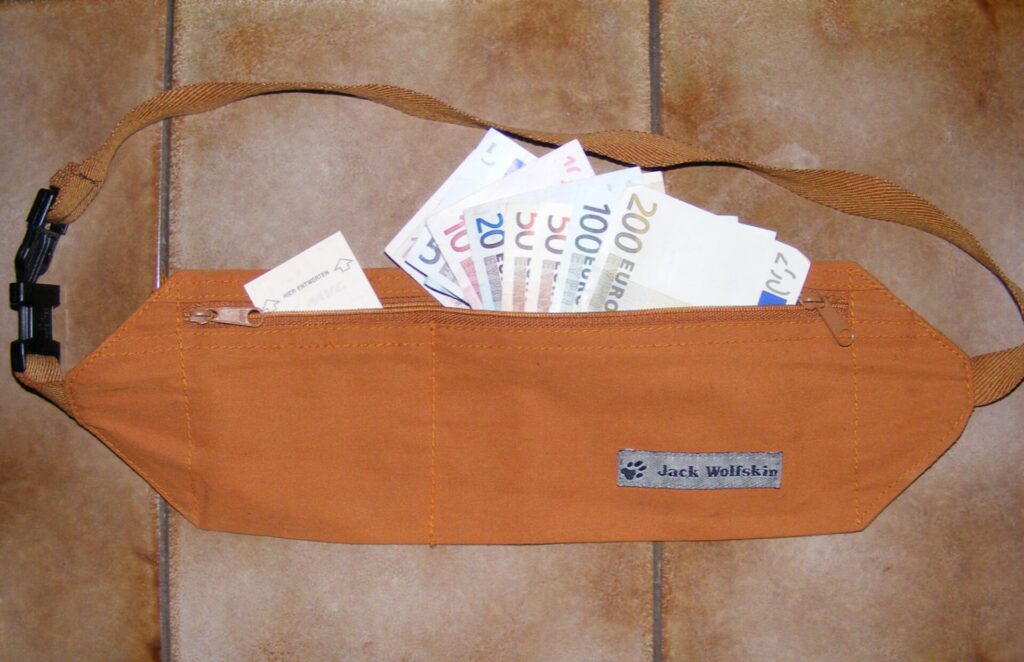
    A brown belt with a hidden zippered compartment for folded cash
    A belt with a hidden zipper holds a folded cash reserve but has no room for a passport (Photo: User:Mattes via Wikimedia Commons, Public domain)

    What to look for

    Size and capacity

    Make sure the pouch fits your passport without bending it, plus a few cards and folded bills. Bigger is not better: a thick, overstuffed money belt shows through clothing and is uncomfortable. Look for two or three compartments so you can separate your passport, cards and cash.

    Comfort and fabric

    You may wear a money belt for many hours in heat. A soft, breathable back panel against your skin makes a big difference. Lightweight nylon or polyester fronts with a mesh or moisture-wicking back are common. Avoid stiff or scratchy materials and bulky seams.

    Strap and buckle

    An adjustable elastic strap lets you wear the belt at your waist or lower on your hips and keeps it snug when you sit. A flat, low-profile buckle is more comfortable and less visible than a chunky one. Check that the strap is long enough for your waist measurement, especially if you want to wear it over a layer.

    Zippers

    The zipper is the part most likely to fail. Look for a smooth, sturdy zipper with a pull you can find by feel, and ideally a design where the zipper faces your body so it cannot be opened from outside.

    Color

    Choose a neutral color that does not show through the clothes you plan to wear. Beige and skin-tone shades disappear under light shirts; black suits dark clothing. Bright colors defeat the purpose.

    Sweat protection

    Sweat can soak through to your passport and cash on hot days. Some money belts include a water-resistant inner layer; if yours does not, keep documents inside a thin zip-top bag within the pouch.

    RFID blocking

    Many money belts advertise RFID-blocking layers that stop radio signals from reaching contactless cards and chipped passports. That does no harm, but remote skimming is a far less common risk for travelers than a hand in a pocket or a lost wallet. Treat RFID blocking as a small bonus, not a reason to choose one belt over another.

    Washability

    A money belt worn against skin needs washing. Check that it can be hand washed and dries quickly.

    How to wear a money belt properly

    • Under your waistband, not over it. Wear the belt against your skin or over a thin base layer, with your pants or skirt waistband over it, and your shirt tucked in or hanging over.
    • At the front or on your hip. At the front, you will feel any interference. On the hip, it can be more comfortable when sitting. At the back, it is harder to monitor.
    • Tuck the pouch into your pants. Many travelers wear the belt around the waist and tuck the pouch just inside the waistband of their pants, which hides it well.
    • Access it in private. If you need something from it, go to a restroom, your hotel room or a quiet corner, not the ticket counter or the market stall.
    • Adjust before you leave. Walk around your room, sit and bend to check it does not slip or show.
    • Choose clothes that help. Loose shirts and pants with a comfortable waistband hide a money belt better than tight-fitting clothes. Our guide to travel pants for men covers pants with room for one.

    The split system: how a money belt fits into your kit

    The safest approach to carrying money is to split it so that no single loss can strand you:

    • Daily wallet: a day’s cash and one card, in a zippered front pocket or a secure bag. This is what you use for everyday spending. A slim organizer like those in our guide to travel wallets for women works well.
    • Money belt: passport (when needed), a backup card and emergency cash.
    • Hotel safe: spare cards, extra cash, your passport on days you do not need it, and valuables such as jewelry; a small case from our guide to travel jewelry cases keeps them together.
    • Digital backup: a photo of your passport data page, card emergency numbers and insurance details stored securely on your phone and in the cloud.

    With that setup, a stolen daily wallet costs you a day’s cash and a card you can freeze from your banking app, and nothing more.

    Money belts from our original list

    The money belts below were featured in the original version of this guide. They are not a ranked test, and they come from small brands whose designs, materials and dimensions change between versions, so check the current product listing for compartment layout, size and materials before you buy. All five follow the same basic idea: a slim pouch worn under clothing, with RFID-blocking material advertised as an extra.

    Peak Gear RFID Blocking Travel Money Belt

    Peak Gear’s money belt is a classic under-clothes waist pouch, sold in neutral colors including beige that disappear under light clothing. A traditional design like this suits most travelers who want a straightforward place for a passport, cards and cash, and who will wear it under a shirt all day.

    Alpha Keeper Money Belt

    Alpha Keeper markets its money belt as a hidden passport holder with RFID blocking and several zippered sections. A layout with separate compartments suits travelers who carry more than one currency, or who want to keep their passport apart from cards and cash so they can reach one without exposing the rest.

    VENTURE 4TH Money Belt

    VENTURE 4TH’s money belt is a slim under-clothes design with a simple layout; the version in our original list was black. A minimal, no-frills belt suits budget travelers and backpackers who want the essentials done well without extra pockets. Choose a lighter color if you mostly wear pale clothes.

    Slim RFID-blocking money belt and passport holder

    The original list also included a generic slim money belt marketed as a low-profile waist pouch that can be worn under clothes, with an RFID-blocking pocket and water-resistant material. Generic designs like this vary a lot in quality, so check the zipper, the strap and the seller’s return policy, and do not rely on water resistance alone to protect a passport from sweat.

    The Belt of Orion Money Belt

    The Belt of Orion sells a slim anti-theft money belt marketed for both men and women, designed to sit flat against the body with space for a passport, cash and small documents. It suits travelers who want a modern, purpose-built design. As with any money belt, check that the current version fits your passport without bending it.

    Choosing between them

    Because these belts share the same basic design, choose on fit and comfort: a pouch that holds your passport flat, a strap that fits your waist comfortably, a color that disappears under your clothes and a zipper that feels sturdy. If you can, compare the listed dimensions against your passport before ordering.
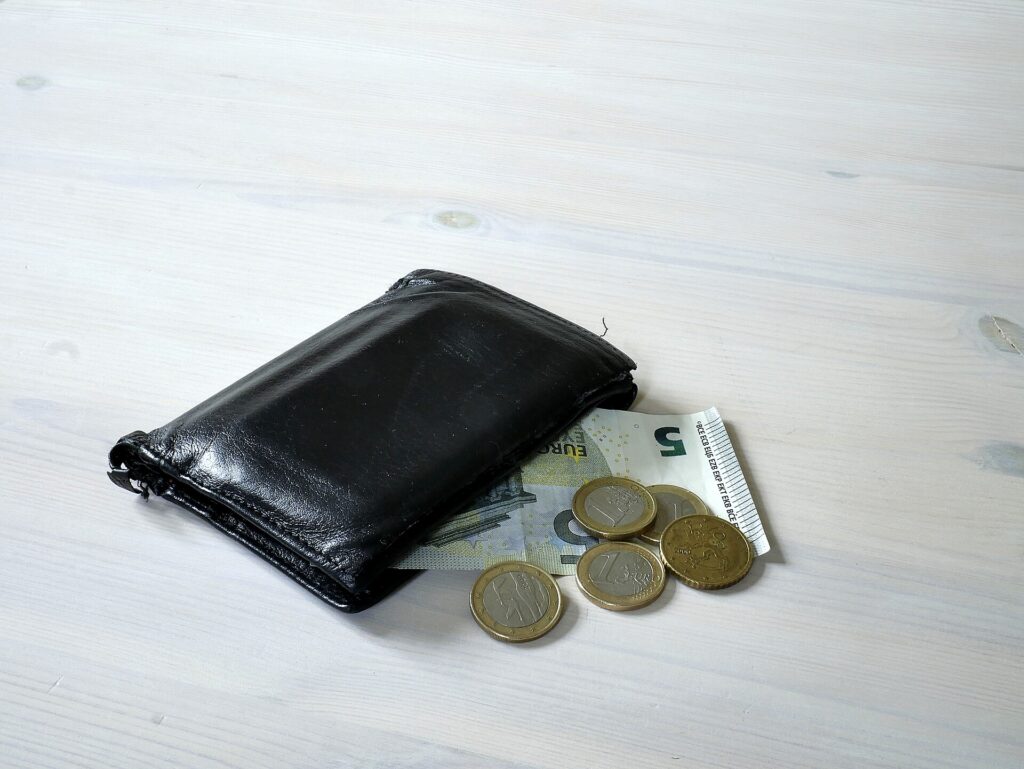
    A wallet with banknotes and coins
    Keep a day's cash and one card in a daily wallet so the money belt stays closed (Photo: Santeri Viinamäki via Wikimedia Commons, CC BY-SA 4.0)

    What to carry in a money belt, and what to leave out

    Put in

    • Your passport on travel days or when ID is required.
    • One backup debit or credit card, ideally on a different network from your main card.
    • Emergency cash in a widely accepted currency, in addition to some local currency.
    • A photocopy of your passport data page and your travel insurance emergency number.
    • A small card with an emergency contact.

    Leave out

    • Your phone, which is too bulky and which you need often.
    • Daily spending money, which should be in your daily wallet.
    • Keys, coins and receipts, which add bulk and noise.
    • Anything you need to reach often, such as transit cards or tickets.

    If you only carry a passport and a card or two, a slim passport holder kept in a hidden pocket of your bag can do the job instead; our passport holder guide covers the options.

    Money belts at airport security

    Security screening procedures vary between countries and airports and change over time. Officers may ask you to remove a money belt and put it through the X-ray, or may screen it on your body, and metal zippers and buckles can trigger a metal detector. To keep things simple, many travelers take the money belt off before the checkpoint and put it inside their carry-on bag, then put it back on in a restroom airside. Keep your boarding pass and passport somewhere easy to reach for the checks before and after security. In the United States, see the TSA’s security screening pages; in Canada, check CATSA’s guidance. Never leave your bag with the money belt inside out of sight at the checkpoint.

    Carrying cash across borders

    A money belt hides cash from pickpockets, not from customs. Many countries require travelers to declare large amounts of cash and other monetary instruments when they enter or leave. Carrying the money is usually legal; failing to declare it can lead to seizure and penalties.

    • Canada: you must report currency and monetary instruments of CAN$10,000 or more to the Canada Border Services Agency when you arrive in or leave Canada. See the CBSA’s page on travelling with CAN$10,000 or more.
    • United States: travelers entering or leaving with more than US$10,000 or its foreign equivalent in currency or monetary instruments must file a report with Customs and Border Protection. See CBP’s page on money and other monetary instruments.
    • Elsewhere: thresholds and rules differ by country, and some apply to families traveling together. Check the official customs site for every country on your itinerary before you go.

    Rules change, so confirm them before each trip rather than relying on any figure in a blog post, this one included.

    Wearing a money belt in hot weather

    Heat is where money belts are least pleasant and where people are most tempted to leave them behind. A few habits help:

    • Choose a belt with a breathable, moisture-wicking back panel.
    • Wear it over a thin, breathable base layer rather than directly against skin if you sweat a lot.
    • Keep documents in a thin zip-top bag inside the pouch.
    • Wear it lower on your hips, where there may be more airflow, or try a neck or leg wallet instead.
    • Leave the passport in the hotel safe on sightseeing days if local rules allow, and carry a copy instead.
    • Wash the belt regularly and let it dry fully.

    At the beach, a money belt is not practical at all. Take only what you need, use the hotel safe for the rest, and consider a small waterproof pouch. Our guide to travel flip-flops covers the rest of a light beach kit.
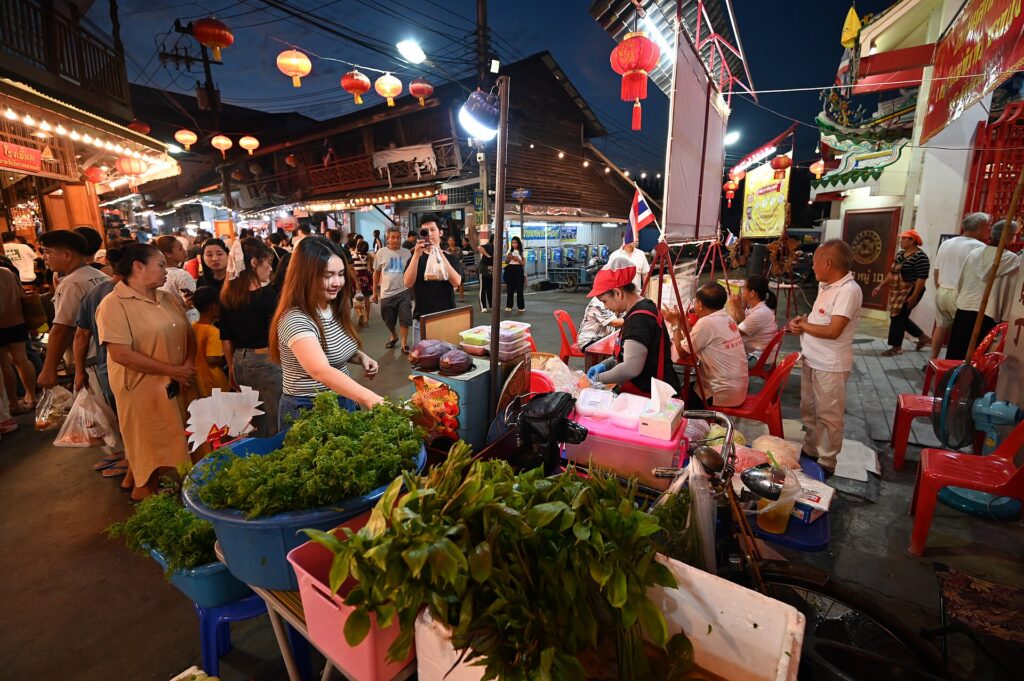
    A crowded evening market with shoppers browsing food stalls under lanterns
    Crowded markets and transit hubs are where a hidden money belt earns its place (Photo: PattayaPatrol via Wikimedia Commons, CC BY-SA 4.0)

    Where money belts make the most sense

    A money belt earns its place most clearly on travel days, border crossings, overnight trains and buses, busy transit hubs, crowded markets and big tourist sights, and in destinations where your government’s advice warns of pickpocketing or bag snatching. Canada’s travel advice and advisories describe common scams and theft risks for each country. In a quiet town where you leave your passport in the hotel safe, a zippered pocket and a daily wallet may be all you need. Walking all day with a money belt is also far more pleasant in comfortable shoes; our guide to walking shoes for travel covers how to choose them.

    If something is lost or stolen

    • Freeze cards first using your banking apps, then call your bank to report the loss.
    • Report the theft to local police and get a report number for your insurer.
    • Replace your passport. Canadians abroad can find help through the Government of Canada’s emergency assistance page. US citizens should follow the State Department’s lost or stolen passport guidance. Contact your embassy or consulate as soon as possible if you have a flight coming up.
    • Use your backups. This is exactly what the backup card, emergency cash and document copies in your money belt are for.
    • Contact your travel insurer promptly, since many policies have time limits and require a police report.

    Common mistakes

    • Using the money belt as a wallet. Every time you open it in public, you show thieves where your valuables are.
    • Overstuffing it. A bulging money belt shows through clothes and is uncomfortable.
    • Wearing it over your clothes. Then it is just a waist pack.
    • Putting everything in one place. Split cards and cash between your daily wallet, the money belt and the hotel safe.
    • Forgetting sweat. Protect documents with a thin plastic bag inside the pouch.
    • Assuming hidden cash is exempt from customs. Declare large sums where required.
    • Choosing a bright color. Neutral colors disappear under clothes.

    Frequently asked questions

    Are money belts still worth it?

    Yes, for travel days, border crossings, crowded cities and overnight transport. With contactless payments and phones, many travelers carry less cash than before, but a passport and backup card still need a safe home. A money belt is one of the simplest ways to protect them.

    Where should I wear a money belt?

    Under your clothes, with the pouch at the front or on your hip and tucked inside your waistband. Avoid wearing it at the back, where you cannot feel it.

    Is a money belt or a neck wallet better?

    A waist money belt is usually more discreet and stable. A neck wallet is easier to reach and can be cooler in heat, but the cord can show. Choose the one you will actually wear all day.

    Do I need RFID blocking?

    It is a harmless extra, but physical theft and lost wallets are much more common risks. Choose a money belt for comfort, size and zippers first.

    Can I wear a money belt through airport security?

    You may be asked to remove it for screening. Many travelers put it in their carry-on before the checkpoint and put it back on afterward. Check the rules for your departure airport.

    How much cash should I carry in a money belt?

    Enough to cover an emergency, such as a night’s accommodation, a meal and transport, until you can reach a bank or replace a card. Remember that many countries require you to declare large amounts at the border.

    Can people tell I am wearing a money belt?

    Not if it is slim, in a neutral color and worn under loose clothing, and if you never open it in public.

    With your valuables secured, the trip itself can take center stage. Compare fares on our flight search, choose a hotel with an in-room safe for your passport and spares on our hotel search, and if you are exploring a big, busy city, our guides to things to do in Rome and things to do in Paris will help you plan days where a well-worn money belt earns its place. For the rest of your kit, start with our main guide to travel luggage.
  • Top Anti-Theft Backpack Options for Travelers and Commuters

    Top Anti-Theft Backpack Options for Travelers and Commuters

    Most travel theft is not dramatic. It is a hand slipping into an outside pocket on a packed metro, a phone lifted from a café table, a bag hooked off the back of a chair or a daypack unzipped in a crowd while you look at a map. An anti-theft backpack is designed to make those quick, opportunistic grabs harder: zippers that face your back or lock, pockets hidden against your body, fabric and straps that resist a blade, and a way to anchor the bag to something solid. None of that makes a bag theft-proof, and the habits you travel with matter at least as much as the bag you carry. This guide explains how bag theft actually happens, what each anti-theft feature does and does not do, how to choose the right style for commuting, business travel, sightseeing or one-bag trips, a handful of well-known options from our original list, and what to do if something is taken anyway.

    The short answer

    For most travelers, the features that matter most are main zippers that sit against your back or can be locked, a hidden pocket for your passport and cards that is hard to reach while you wear the bag, and sturdy straps and fabric. Cut-resistant panels, locking cables and RFID-blocking pockets are useful extras, but they address less common risks. Choose the size by how you travel: a sling or small daypack for sightseeing, a laptop backpack for commuting and business trips, or a carry-on travel backpack if it is your main bag. Then pair the bag with good habits: wear it in front in crowds, never hang it on a chair and keep your phone out of outside pockets.

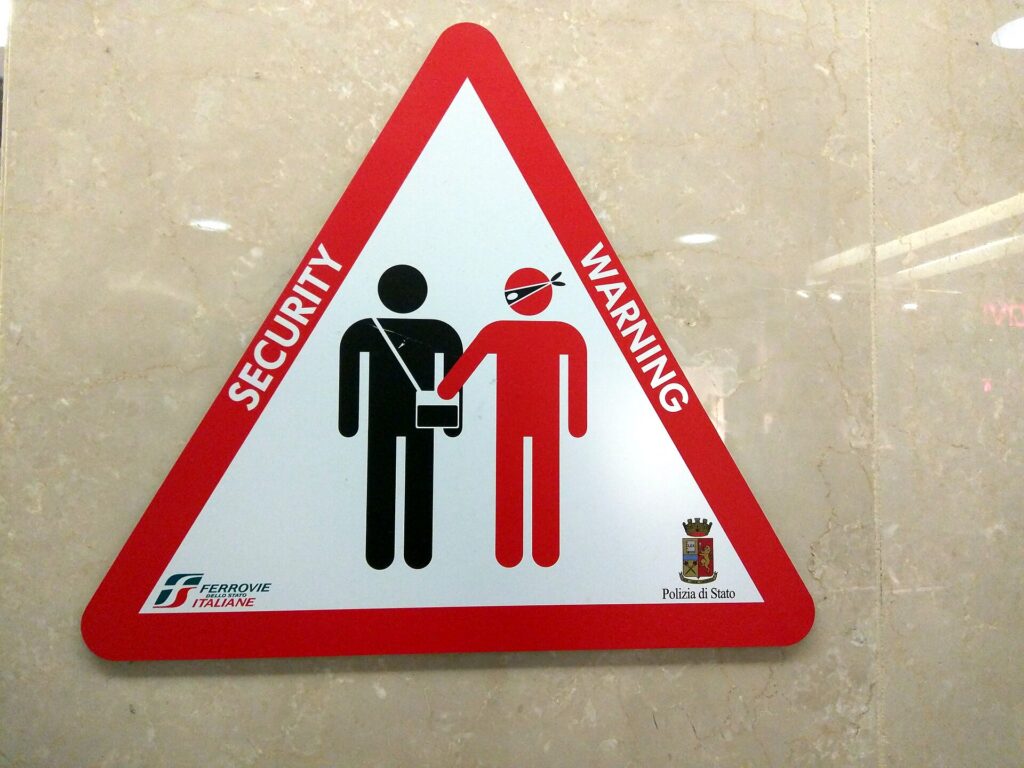
    A pickpocket warning sign in a railway station
    Stations, metros and busy squares are where quick bag thefts happen most, which is why back-facing and locking zippers matter (Photo: Cory Doctorow from Beautiful Downtown Burbank, USA via Wikimedia Commons, CC BY-SA 2.0)

    How bag theft actually happens

    Understanding the common methods tells you which features are worth paying for.

    • Pickpocketing in crowds. On busy trains, buses, escalators and in tourist hot spots, thieves open outside pockets and main zippers on bags worn on the back. This is the most common threat for travelers, and hidden or locking zippers address it directly.
    • Distraction. Someone asks for directions, spills something on you, or creates a commotion while a partner opens your bag. No feature beats awareness here, but a bag that takes several seconds to open helps.
    • Grab and run. A bag left on a chair, the floor beside a table or a luggage rack is simply picked up. A strap looped around your leg or a locking cable to a fixed object stops this.
    • Snatching. A thief grabs a bag or phone and runs, sometimes from a scooter. Strong straps and wearing the bag on both shoulders or across the body help.
    • Slashing. Cutting a bag or strap to get at the contents is much less common, but it is the risk cut-resistant materials are designed for.
    • Opportunistic theft from rooms and cars. Valuables left in view in a parked car or out on a hotel room desk are easy targets. Here the fix is the room safe, the trunk and not leaving the bag at all.

    Anti-theft features explained

    Hidden and back-facing zippers

    The most effective anti-theft design is also the simplest: put the main compartment zipper against your back, or hide it under a flap, so nobody can open it while you are wearing the bag. Some designs open only from the back panel. The trade-off is convenience; you have to take the bag off to get into it, which is exactly the point.

    Locking zipper pulls

    Many travel-focused bags let you clip zipper pulls together or into a catch, so a zipper cannot be quietly opened. Some accept a small padlock. This slows a pickpocket down enough to make your bag a worse target than the next one.

    Cut-resistant fabric and straps

    Some bags build a wire mesh or cut-resistant layer into the body and a steel cable into the straps. That defends against slashing and against a strap being cut in a snatch. It adds weight and cost, so it matters most for travelers in areas where that kind of theft is a known problem.

    Locking cable or anchor strap

    A strap or cable that wraps around a chair leg, a table or a luggage rack and locks to the bag stops a grab-and-run at a café or on an overnight train. It is one of the most underrated features for travelers who work in coffee shops or sleep on trains.

    Hidden pockets against your back

    A slim pocket in the back panel, reachable only when the bag is off, is the right place for a passport, a spare card and emergency cash. It is also useful on any bag, anti-theft or not.

    RFID-blocking pockets

    RFID-blocking pockets are lined to block radio signals from contactless cards and passports with chips. They do no harm and many travelers like the reassurance, but remote skimming is a far less common risk than a hand in your pocket. Treat RFID blocking as a small extra, not a reason to choose one bag over another.

    Water resistance and USB ports

    Water-resistant fabric protects a laptop and documents in rain, which is genuinely useful. USB ports on backpacks are usually a pass-through cable: you still need to put your own power bank inside, and the port itself does not store power.

    FeatureProtects againstHow much it matters
    Back-facing or hidden zippersPickpocketing in crowdsHigh for most travelers
    Locking zipper pullsQuiet opening while you walk or standHigh in busy cities and on transit
    Hidden back-panel pocketLoss of passport, cards and cashHigh; worth having on any bag
    Anchor strap or locking cableGrab-and-run at cafés, trains, stationsMedium to high for café workers and rail travelers
    Cut-resistant body and strapsSlashing and strap cuttingMedium; depends on destination
    RFID-blocking pocketRemote card skimmingLow; a small extra
    Water-resistant fabricRain damage to electronicsMedium; useful everywhere

    Choosing the right style for how you travel

    Daily commuting

    For a commute with a laptop, look for a slim backpack with a padded laptop compartment, a back-facing or hidden main zipper and a quick-access pocket that sits against your back for a transit card. Keep it light; you carry it every day.

    Business and tech travel

    A larger laptop backpack with organized pockets for chargers and cables, a sleeve for your laptop and a luggage pass-through strap that slides over a suitcase handle is the most practical combination. If you would rather not carry a heavy tech bag at all, our guide to rolling laptop bags covers wheeled options, and our list of laptop travel accessories helps keep the contents organized.

    Sightseeing and city days

    For a day out, a small daypack or a convertible sling is plenty: water, a layer, a phone, a wallet and maybe a small camera. A sling that can be worn across the body and swung to the front in crowds is one of the most practical anti-theft carries.

    One-bag travel

    If the backpack is your only luggage, you need a carry-on travel pack with a clamshell opening, a laptop compartment and lockable zippers. Our guide to the Peak Design Travel Backpack 45L covers how to choose and pack a carry-on travel backpack, and the same principles apply to anti-theft designs.

    Outdoors and remote work

    For campsites, RV trips and remote work with expensive hardware, a rugged, water-resistant bag with a structured interior protects equipment from knocks as well as from theft. For real trail use, though, a hiking pack with a hip belt carries weight far better; see our guide to hiking backpacks.

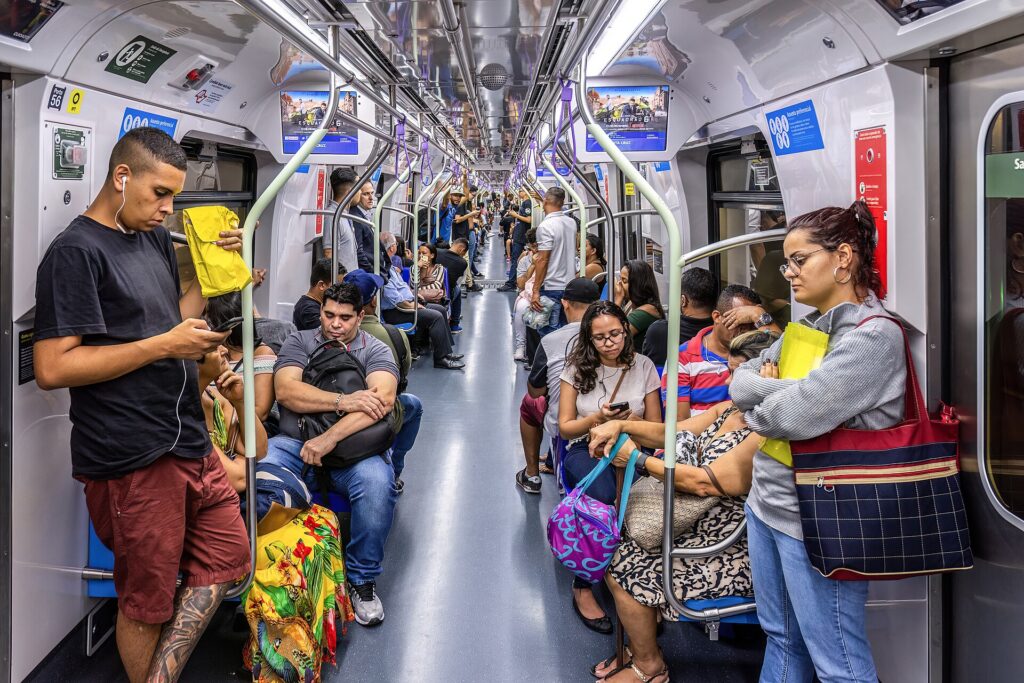
    Passengers standing close together in a crowded metro carriage
    In a packed carriage, swing your backpack to the front and keep a hand on it (Photo: Wilfredor via Wikimedia Commons, CC0)

    Options from our original list

    The bags below were featured in the original version of this guide. They cover different needs rather than a single ranking, and designs, sizes and features change between versions, so check the current details from the manufacturer or seller before you buy.

    BANGE anti-theft laptop backpack (17.3-inch)

    BANGE’s anti-theft backpack is aimed at business travelers and commuters who carry a large laptop. It is designed to fit a 17.3-inch notebook, uses water-resistant materials and includes a USB charging port that connects to a power bank you carry inside. It suits people who need room for a big laptop plus files and accessories, and who want the main compartment harder to open while the bag is on their back.

    Bags designed for a Starlink Mini kit

    The original list included a travel bag built around a Starlink Mini satellite dish and its accessories, with water-resistant material and anti-theft features. It is a niche choice, but a sensible one if you travel in an RV, camp or work remotely with that hardware: a bag shaped for the kit protects it far better than a general-purpose backpack. Check that the bag fits your exact kit before buying.

    Travelon Anti-Theft Voyages Daypack

    Travelon is one of the best-known names in anti-theft travel bags, and its range is built around features like lockable zippers, slash-resistant body panels and straps, and RFID-blocking pockets. The Voyages Daypack from the original list is a casual, lightweight daypack for sightseeing, museums and markets. Check the current product details for the exact feature set of the version you are buying.

    Travelon Anti-Theft Classic Convertible Sling Backpack

    This compact convertible bag can be worn as a backpack or a sling, which makes it easy to move to the front of your body in a crowd. It suits commuters who carry only essentials and travelers who want a secure second bag for day trips alongside their main luggage. Expect room for a phone, wallet, small tablet and a few daily items.

    NOMATIC Navigator Travel Backpack

    NOMATIC‘s Navigator is a premium carry-on travel backpack of around 32 liters with room to expand, a dedicated laptop compartment and protected access points. It suits frequent flyers and digital nomads who want one main bag that stays secure through airport lines, public transit and city walks. As with any expandable bag, check that it still fits your airline’s carry-on limit once expanded.

    Other brands to know

    Pacsafe is another long-established travel security brand, known for bags and accessories built around locking zippers, cut-resistant materials and anchor cables. It is worth a look alongside the options above if you want a wide choice of sizes and styles.

    Comfort and fit still come first

    A secure bag you hate wearing ends up at home. Check that the shoulder straps are padded and adjustable, that the back panel is not so stiff that it digs in, and that the bag sits high and close to your back rather than hanging low. A sternum strap helps a heavier laptop bag stay put. Remember that cut-resistant panels and steel-cable straps add weight, so compare empty weights if you will carry the bag all day. If possible, load the bag with a laptop and a water bottle in the store and walk around with it for a few minutes before deciding.

    What to carry in a city daypack

    A well-packed daypack means you rarely need to open it in a crowd. A sensible kit for a day of sightseeing:

    • Water, a light layer or rain jacket, and a snack.
    • Phone, a compact power bank and one cable; a 3-in-1 Apple charger back at the hotel keeps everything topped up overnight.
    • One card, some local cash and a transit card in an easy but body-side pocket.
    • A photocopy or photo of your passport, with the original in the safe unless you need it.
    • A few plasters, pain relief and hand sanitizer from a small travel first aid kit.

    Everything you need often should be reachable without opening the main compartment, and everything valuable should be in the pockets that are hardest to reach while you wear the bag.

    Habits that matter more than the bag

    • Wear it in front in crowds. On packed trains, escalators, markets and big events, swing the backpack to your chest or move a sling to the front.
    • Nothing valuable in outside pockets. Phones in back pockets and wallets in outside bag pockets are the easiest targets there are.
    • Never hang your bag on a chair. Keep it on your lap or loop a strap around your leg or the chair leg.
    • Keep your phone in your hand, not on the table. Café tables near doors and terraces are a favorite spot for quick phone grabs.
    • Split your valuables. One card and some cash in your wallet, a backup card and cash somewhere else, and your passport in the hotel safe or a hidden pocket. A money belt worn under clothing is a good home for backups.
    • Be wary of distractions. If someone creates a commotion close to you, put a hand on your bag first and help second.
    • Look like you know where you are going. Check maps before you step onto a busy street, or step into a doorway to do it.
    A backpack sitting on a seat on a metro train
    A bag out of your hands is a bag anyone can pick up; keep it on your lap or strapped to you (Photo: JIP via Wikimedia Commons, CC BY-SA 3.0)

    Protecting documents, cards and small valuables

    Your passport is the one item that can end a trip if it goes missing. Keep it in a hidden pocket or a passport holder inside your bag, not in an outside pocket, and carry a photo of the data page on your phone and in your email. For cards and cash, a slim organizer such as the ones in our guide to travel wallets for women keeps everything in one place you can grip. Jewelry is best left at home, or kept in a small case like those in our guide to travel jewelry cases and locked in the room safe when you go out.

    On transit, in cafés, hotels and cars

    Trains and buses

    On long-distance trains, keep your daypack with you rather than on a distant luggage rack, and lock larger bags to the rack with a cable if you plan to sleep. On metros, stand with your bag in front and away from the doors, where snatch-and-exit thefts happen as doors close.

    Cafés and restaurants

    Choose a seat against a wall, keep the bag between your feet with a strap around your leg, and keep your phone off the table. If you work from cafés, an anchor strap is worth its weight.

    Hotels

    Use the room safe for your passport, spare cash and small electronics. Do not leave a laptop out on the desk when housekeeping is due. In hostels, use a locker and bring your own padlock.

    Rental cars

    Never leave bags visible in a parked car, even for a few minutes. Put luggage in the trunk before you arrive at your destination, not in the parking lot where people can see you do it. If you are renting a car on your trip, our car rental search lets you compare vehicles with an enclosed trunk rather than an open cargo area.

    A dense crowd of tourists in Times Square, New York
    Big tourist crowds are where distraction thefts work best; stay aware and keep valuables out of outside pockets (Photo: Rosapicci via Wikimedia Commons, CC BY-SA 4.0)

    Anti-theft bags at the airport

    Anti-theft backpacks go through security like any other bag. Locking zippers are fine at the checkpoint, but officers may need to open the bag, so keep it easy to unlock. Laptops and liquids may need to come out depending on the airport and screening lane. The TSA’s What Can I Bring? tool covers specific items in the United States, and CATSA’s what can I bring page does the same for Canada. Airports are also a place where bags go missing: never leave yours unattended, keep it in contact with your body at the gate, and count your bags when you leave the checkpoint.

    If something is stolen

    • Freeze cards first. Most banking apps let you lock a card instantly. Do that before anything else.
    • Report it to the police. Get a report number; your insurer and airline may need it.
    • Replace a lost or stolen passport. Canadians abroad can find help through the Government of Canada’s emergency assistance page. US citizens should follow the State Department’s lost or stolen passport guidance. Contact your embassy or consulate as early as possible if you have a flight coming up.
    • Change passwords if a phone or laptop was taken, and use your device’s find-and-erase feature.
    • Contact your travel insurer promptly; policies often have time limits and need a police report.

    Before you go, read your government’s advice for your destination, which often describes common scams and theft hot spots. Canada’s travel advice and advisories are a good starting point.

    Common mistakes

    • Believing the bag does the work. A locked zipper will not help if the bag is hanging on a chair behind you.
    • Buying a bag that screams “valuables”. Plain, understated bags attract less attention than obviously expensive ones.
    • Making it too hard to use. If every pocket needs unlocking, you will stop locking them. Lock the main compartment and keep one easy pocket for a transit card.
    • Carrying everything every day. Leave the passport and backup card in the safe on normal sightseeing days unless local rules require you to carry ID.
    • No backups. Keep a photo of your passport, a backup card and emergency contacts somewhere separate.

    Frequently asked questions

    Do anti-theft backpacks really work?

    They make the most common thefts, like quick pickpocketing and unzipping in crowds, harder and slower, which often means a thief picks an easier target. They do not stop determined theft, so combine the bag with good habits.

    What is the most important anti-theft feature?

    Main zippers that face your back or lock, plus a hidden pocket for your passport and cards. Those address the thefts travelers face most often.

    Is RFID blocking necessary?

    It is a harmless extra. Remote skimming is much less common than physical theft, so do not choose a bag mainly for RFID blocking.

    Are anti-theft backpacks allowed as carry-on?

    Yes, if they fit the airline’s carry-on or personal-item limits. Smaller daypacks and slings usually count as personal items; larger travel packs count as the carry-on.

    Is a sling safer than a backpack?

    A sling worn across the body and moved to the front in crowds is easier to keep an eye on. A backpack carries more and is more comfortable for heavier loads. Many travelers use both.

    Where should I keep my passport while sightseeing?

    In the hotel safe if you do not need it, or in a hidden pocket against your back or under your clothes if you do. Never in an outside pocket.

    Can I lock my backpack when I go through security?

    Yes, but officers may need to open it. Keep locks easy to remove, and use a lock that security can open if you are checking the bag on a flight in or to the United States.

    Once your bag is sorted, focus on the trip itself. Compare fares on our flight search, choose a hotel with a room safe on our hotel search, and if you are exploring a big, busy city, our guides to things to do in Rome and things to do in London will help you plan days where a secure daypack earns its place. For the rest of your kit, start with our main guide to travel luggage.
  • Top 10 Traveling Jewelry Cases for Stylish and Organized Jetsetters

    Top 10 Traveling Jewelry Cases for Stylish and Organized Jetsetters

    Jewelry is small, light and easy to pack, which is exactly why it causes so much trouble on a trip. Fine chains knot themselves into tangles in a toiletry bag, earring backs vanish into suitcase linings, a ring left on a hotel sink disappears down the drain or into housekeeping’s towels, and a favorite necklace comes home scratched from rattling against a watch. A travel jewelry case solves most of that: every piece has its own slot, nothing touches anything else, and the whole case goes into your carry-on and then into the room safe. This guide covers the main types of travel jewelry cases and when each makes sense, what matters in size, lining, closures and structure, how to pack different kinds of jewelry so they arrive untangled, what to know about airport security, customs and checked bags, and ten cases from our original list, from keychain ring capsules to roll-up organizers and watch cases.

    The short answer

    For most trips, a small zippered case with a soft lining, ring rolls, earring slots and a separate section for necklaces is the most useful travel jewelry case. It protects pieces from each other, fits a carry-on or handbag and is easy to lock in a safe. If you pack only a ring or two and studs, a keychain-sized capsule is enough. If you pack a lot of necklaces, a roll-up organizer with hooks or separate pouches keeps chains apart. Whatever you choose, keep jewelry in your carry-on, never in a checked bag, bring less than you think you need, and leave irreplaceable pieces at home.

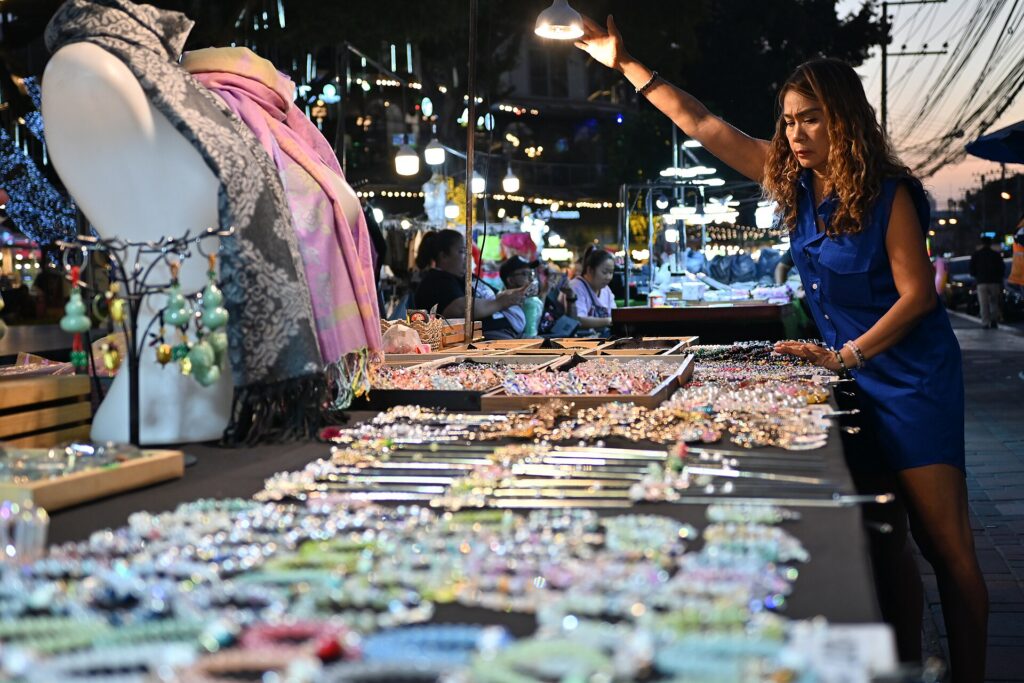
    A night market stall with trays of sparkling jewelry and accessories
    Small, shiny and easy to lose: jewelry needs a case where every piece has its own slot (Photo: PattayaPatrol via Wikimedia Commons, CC BY-SA 4.0)

    Why a dedicated case beats a sandwich bag

    • It prevents tangles. Separate hooks, sleeves or pouches keep fine chains apart, which saves a frustrating half hour with a pin in your hotel room.
    • It prevents scratches. Softer metals, pearls and some gemstones can be scratched by harder stones or metal watch bands. A lined case keeps pieces from rubbing.
    • It keeps small parts together. Earring backs, spare links and tiny studs go missing easily in a suitcase. Dedicated slots make it obvious if something is missing.
    • It makes the safe easy. One case goes into the room safe every morning. Scattered pieces tend to stay on the dresser.
    • It speeds up packing. Everything has a home, so packing and unpacking takes seconds and nothing gets left behind in a hotel drawer.

    The main types of travel jewelry cases

    Zippered boxes with compartments

    A small, structured box, often square or rectangular, that zips closed and opens to reveal ring rolls, earring slots, a necklace section and sometimes a mirror. The structure protects pieces from being crushed, and the zipper keeps everything inside. This is the best all-round choice for most travelers.

    Roll-up organizers

    A fabric roll with zipped pockets, ring bands and necklace snaps that folds or rolls flat. It is light and packs into small gaps in a suitcase. It suits travelers with more necklaces and bracelets, and anyone who packs light. The trade-off is less crush protection than a structured box.

    Flat organizers and folios

    Flat cases that open like a book, with clear zip pockets and elastic loops. They slide into a laptop sleeve or a suitcase lid pocket and let you see everything at a glance. Good for business travelers who carry a few pieces for different outfits.

    Keychain and capsule cases

    Tiny hard capsules sized for a ring or two and a pair of studs. You clip them to a keyring, bag strap or gym bag. They are ideal for protecting a wedding or engagement ring while you swim, work out, wash your hands in a public restroom or apply sunscreen, and for minimalist travelers who wear only a couple of pieces.

    Pouch sets

    A set of small padded or velvet pouches, sometimes stored inside a larger case. One piece or one set per pouch keeps everything separate and flexible. This style suits people who travel with a lot of pieces for events such as weddings.

    Watch cases and rolls

    A padded case or roll with a cushion or pillow for one or more watches. Watches are heavy and can scratch other jewelry or be scratched themselves, so a dedicated case is worth it if you travel with a good watch or two.

    TypeBest forTrade-off
    Zippered compartment boxMost travelers, mixed jewelryTakes a little more space
    Roll-up organizerMany necklaces, light packersLess crush protection
    Flat folioBusiness trips, a few piecesLimited room for bulky items
    Keychain capsuleRings and studs, active daysHolds very little
    Pouch setWeddings, events, large collectionsEasy to lose one pouch
    Watch case or rollOne or more watchesOnly for watches

    What to look for

    Size

    Match the case to what you actually pack, not to your whole collection. A weekend away with one pair of earrings, a necklace and your everyday rings needs a small case; a wedding trip with outfits for several events might need a medium case or a roll plus pouches. A case that fits your handbag or personal item is one you will keep with you.

    Lining

    Soft linings such as velvet, suede-like fabrics or microfiber protect polished metal and stones. Some cases add anti-tarnish lining or a pocket for anti-tarnish strips, which helps with silver in humid places.

    Structure

    A semi-rigid or hard shell protects pieces from being crushed in a packed bag. Soft cases pack flatter. If you travel with delicate pieces, choose structure.

    Closures

    Zippers keep small pieces from escaping if the case tips over. Snaps and magnetic flaps are quicker but less secure. For keychain capsules, a screw or twist closure keeps a ring from falling out.

    Necklace storage

    Look for snaps, hooks or individual sleeves that hold each chain straight. A single open necklace compartment defeats the purpose.

    Ring rolls and earring slots

    Ring rolls should be firm enough to hold rings in place. Earring sections should include holes or slots for studs and a separate space for hoops and drops.

    Mirror and extras

    A small mirror in the lid is handy in hotels with poor lighting. Removable trays and small zip pockets for spare earring backs are useful extras.

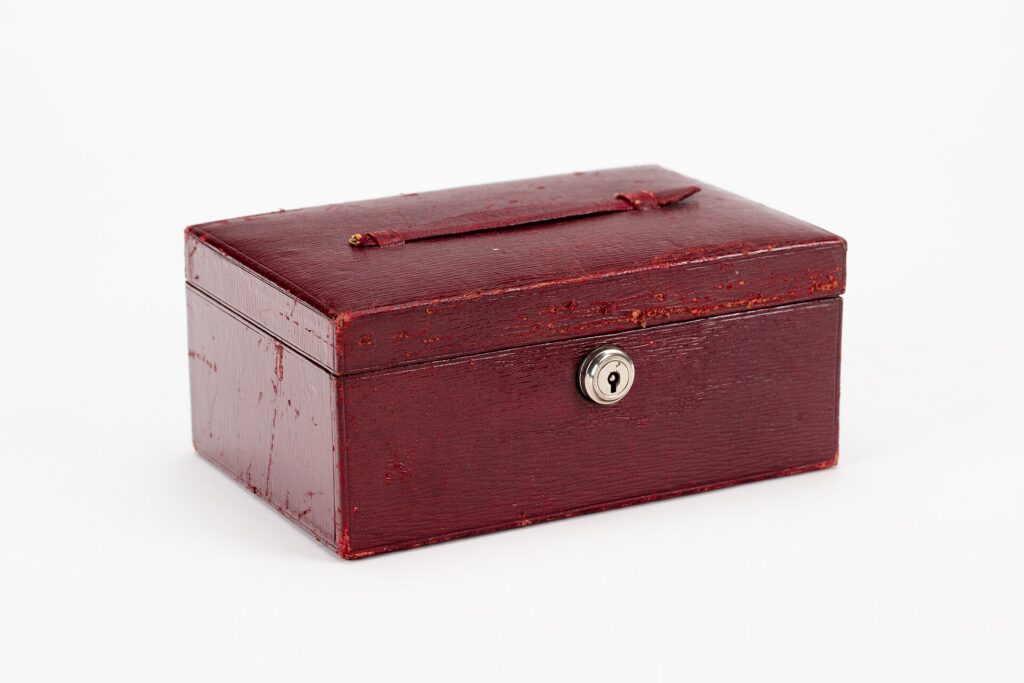
    A historic jewelry case from a museum collection
    Jewelry cases have always done the same job: give each piece its own protected place so nothing rubs or tangles (Photo: Auckland Museum Collections from Auckland, Aotearoa New Zealand via Wikimedia Commons, CC BY 2.0)

    How to pack different kinds of jewelry

    Necklaces and fine chains

    Fasten the clasp and hang or snap each necklace separately. If your case lacks hooks, thread a fine chain through a drinking straw and fasten the clasp outside it, or lay it flat on a folded tissue and roll it up. Never let chains share a pocket.

    Rings

    Slide rings onto a ring roll or into individual slots. Stack delicate rings separately from rings with raised stones that can scratch them.

    Earrings

    Push studs through a slot or a piece of card and replace the backs. Hang hoops and drops on a bar or keep them in a small pouch each. Pack a few spare earring backs; they are the item most often lost on trips.

    Bracelets and bangles

    Soft bracelets can go into a zip pocket. Bangles and cuffs can slip around a rolled scarf in your bag to keep their shape and avoid knocking into other pieces.

    Watches

    Store watches on a cushion or in their own case, with the face protected. If you travel with a mechanical watch you do not wear daily, keep it in a padded case and away from heavy items.

    Pearls and delicate pieces

    Many jewelers advise keeping pearls in a soft pouch rather than an airtight plastic bag and keeping them away from perfume and sunscreen. When in doubt, ask the jeweler who sold you the piece how they recommend storing it.

    Ten travel jewelry cases from our original list

    The cases below were featured in the original version of this guide. They cover different styles rather than a strict ranking. Colors, sizes and features change between versions, and we have not tested them ourselves, so check the current details from the manufacturer or seller before you buy.

    1. Benevolence LA Plush Velvet Jewelry Box

    A compact, velvet-covered jewelry box from Benevolence LA with multiple compartments and a built-in mirror. It suits short trips and weekend getaways, and it is a popular choice as a gift. The soft lining helps protect delicate pieces from rubbing.

    2. Lion Latch Travel Jewelry Case

    Lion Latch makes small, keychain-sized travel jewelry cases meant for rings and small earrings. The idea is simple: clip it to a gym bag, keys or carry-on and drop your rings in before a workout, swim or hand wash. It suits active travelers and minimalists who wear only a few pieces. The original list also included a second Lion Latch design; the brand offers several variations, so check which size and style suit the pieces you carry.

    3. BELALIFE Foldable Jewelry Storage Roll

    A roll-up organizer with space for necklaces, rings and earrings that folds flat for packing. It suits travelers who want something light and roomy that keeps everything visible and separated, on both long vacations and business trips.

    4. BAGSMART Travel Jewelry Organizer

    BAGSMART is a travel bag and organizer brand, and its travel jewelry organizer is a small, soft case with ring bands, necklace hooks and a zip pocket. It suits light packers and weekend trips when you want a compact case that fits a handbag or carry-on.

    5. CONBOLA Rotating Layered Jewelry Box

    A multi-layer box whose trays rotate out to reveal rings, earrings and bracelets. It is more of a vanity organizer than a pure travel case, so it suits road trips, longer stays and people who want one box for home and travel. For flying, a flatter zippered case is usually easier to pack.

    6. Oirlv Leather Travel Watch Case

    A leather travel watch case designed to hold a watch securely during travel. It suits men and women who travel with a watch they care about and want to keep it apart from other jewelry and away from knocks.

    7. Mini portable jewelry travel boxes

    The original list included a small, inexpensive zippered jewelry box with slots for rings and earrings and room for a necklace. This style is ideal for short trips and handbags, and it is a practical first travel case if you are not sure how much you will use one.

    8. Vlando Jewelry Organizer with Zipper Pouches

    A case that holds several small zipper pouches inside a larger travel case, so each set or piece has its own pouch. It suits travelers with larger collections, wedding guests with outfits for several events and anyone who likes to grab one pouch per day.

    9. LANDICI Small Jewelry Box

    A compact box with a leather-look exterior and an interior laid out to keep pieces organized and untangled. It suits travelers who want an entry-level, tidy case for their everyday pieces.

    10. A simple pouch set for minimalists

    If you pack only two or three pieces, a set of small soft pouches, one per piece, inside a zipped toiletry pocket is a perfectly good travel jewelry case. It costs little, weighs nothing and keeps pieces apart. Upgrade to a structured case if you start packing more.

    Airport security, checked bags and customs

    Carry jewelry on, never check it

    Checked bags are sometimes delayed, opened for inspection or lost, and many airlines limit their liability for jewelry and other valuables packed in checked luggage. Read your airline’s conditions of carriage for its rules, but the simple rule is to keep jewelry in your carry-on or personal item, ideally in a bag that stays under the seat in front of you.

    Security screening

    Jewelry is generally allowed through security, but large metal pieces can set off the walk-through detector and lead to extra screening. Many travelers put rings, watches and chunky bracelets into their case and into their carry-on before they reach the checkpoint rather than loose in a tray. Check the TSA’s What Can I Bring? tool in the US and CATSA’s what can I bring page in Canada for current screening rules, and watch your tray until your bag comes out of the scanner.

    Customs and valuable pieces

    If you travel abroad with expensive jewelry or watches, especially pieces made in another country, customs officers at home may ask about them on your return. US travelers can find guidance on registering items before a trip on CBP’s Know Before You Go page. Canadian residents can ask the Canada Border Services Agency about identifying valuables before departure so they can be brought back without question. Keep receipts or appraisals for important pieces.

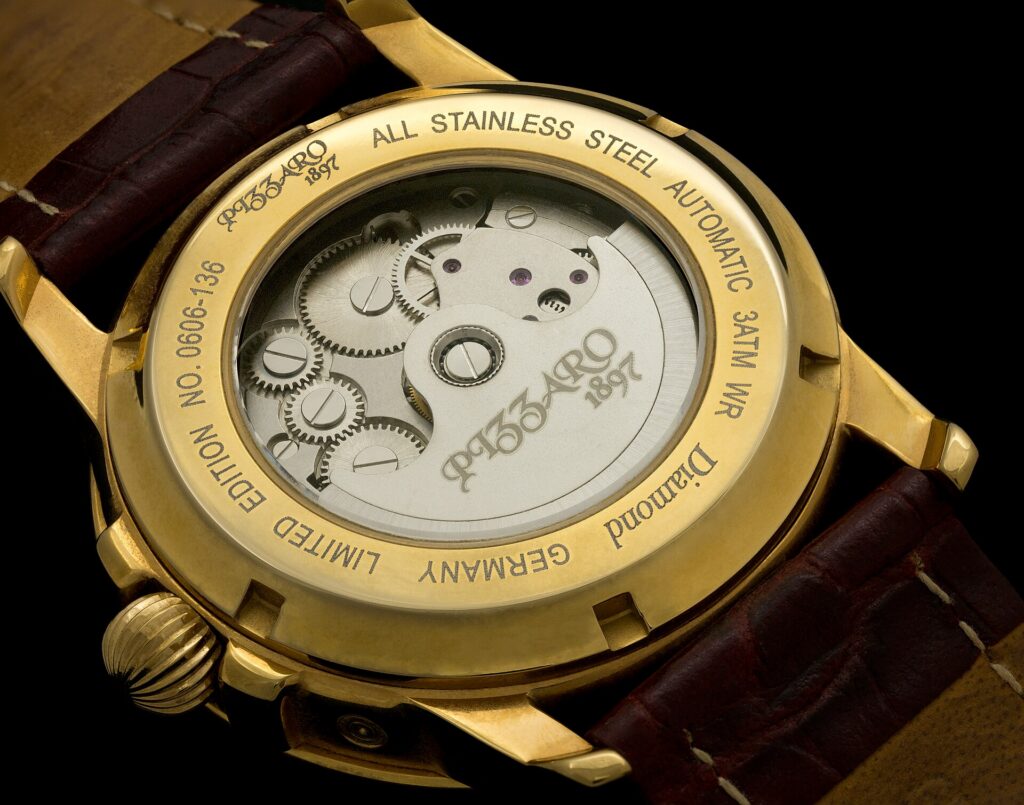
    A self-winding wristwatch seen from its transparent case back
    Watches are heavy and can scratch other jewelry, so give a good one its own padded case (Photo: Petar Milošević via Wikimedia Commons, CC BY-SA 4.0)

    Keeping jewelry safe at your destination

    • Use the room safe. Lock the case in the safe every time you go out. If there is no in-room safe, ask whether the front desk has one. Filtering for rooms with a safe is easy on our hotel search.
    • Do not leave rings by the sink. Hotel sinks, shared bathrooms and beach showers are where rings get lost. Put them straight into a case.
    • Dress down in busy places. In crowded markets, metros and tourist hot spots, flashy jewelry can attract attention. Canada’s travel advice and advisories describe local theft risks by country.
    • Take rings off for the beach and pool. Cold water shrinks fingers and rings slip off; sand and chlorine can also damage some pieces.
    • Keep a list and photos. A photo of each valuable piece helps with police reports and insurance claims.
    • Check your insurance. Home or travel insurance may or may not cover jewelry away from home, and may have limits per item. Check before you go.

    How much jewelry to bring

    The best travel jewelry kit is small. A simple approach that works for most trips:

    • Everyday pieces you wear: the rings, studs or watch you wear daily.
    • One or two versatile extras: a necklace and a pair of earrings that go with most of your outfits.
    • Event pieces, only if needed: for a wedding, gala or business dinner, bring the specific pieces for that event and keep them in the safe until then.
    • Nothing irreplaceable: family heirlooms and pieces with deep sentimental value are safer at home. Many travelers bring good-looking costume jewelry instead.

    Jewelry on specific kinds of trips

    Beach and resort holidays

    Salt water, sunscreen and chlorine are hard on jewelry. Pack a few simple pieces, keep a capsule case in your beach bag for rings, and leave anything valuable in the safe. If you are planning a beach escape, our guide to things to do in Cancun covers where to go.

    Weddings and events abroad

    Bring a structured case or a pouch set with each outfit’s pieces labeled, and carry it on the plane. Our guide to planning a honeymoon in the Cayman Islands is a good read if the event is your own.

    Business trips

    A slim folio or small zippered case with a watch, a pair of earrings and a necklace covers most meetings and dinners. Pack it in your laptop bag so it never leaves your side.

    Adventure and hiking trips

    Leave most jewelry at home. A silicone band or a capsule for your wedding ring keeps it safe while you hike, climb or paddle. See our guide to hiking backpacks for the rest of your trail kit.

    Caring for jewelry while you travel

    Put jewelry on last, after sunscreen, perfume and hair products, and take it off first. Wipe pieces with a soft cloth before you pack them away each night. In humid destinations, a small anti-tarnish strip or a silica gel packet in the case helps silver stay bright. If a clasp or setting feels loose before the trip, have a jeweler check it; loose settings are how stones are lost.

    Common mistakes

    • Packing jewelry in checked luggage. Keep it in your carry-on.
    • Throwing chains into one pouch. Separate every necklace.
    • Bringing too much. Plan pieces around your outfits and leave the rest.
    • Leaving it on the dresser. Make the safe part of your routine.
    • Taking heirlooms. Bring pieces you could live without.
    • No record. Photograph valuable pieces and keep receipts.
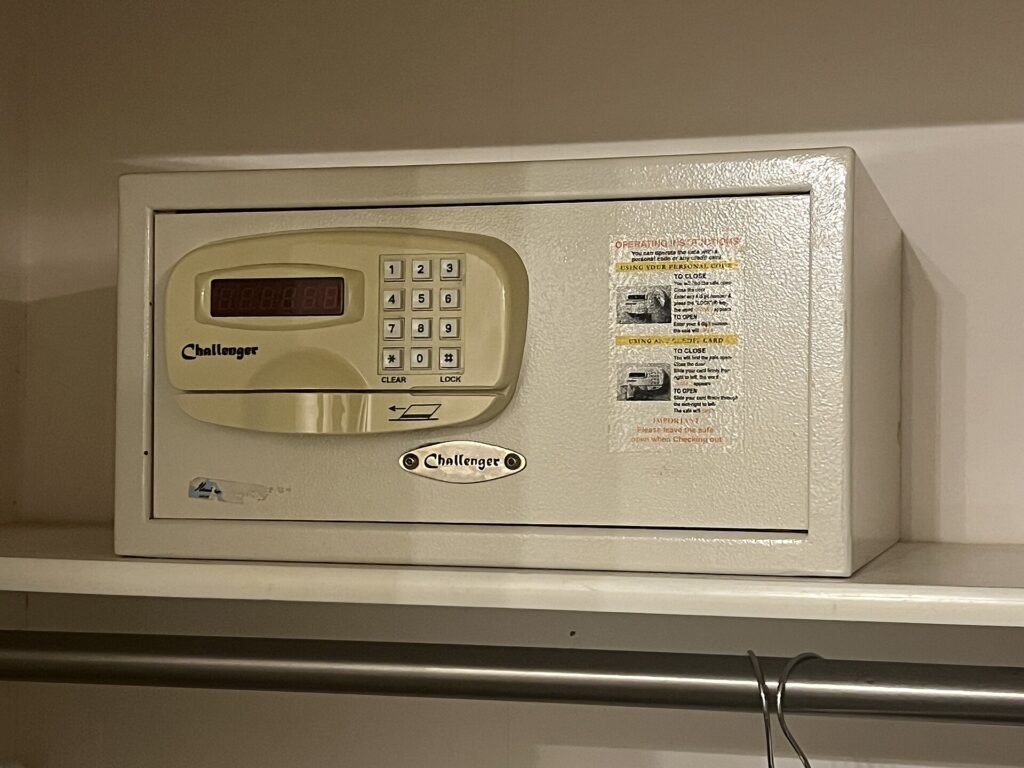
    An electronic safe inside a hotel room closet
    Make the room safe part of your routine: the jewelry case goes in every time you go out (Photo: TaurusEmerald via Wikimedia Commons, CC BY-SA 4.0)

    Where a jewelry case fits in your packing

    A jewelry case belongs in your personal item alongside the other things you never want to be separated from: your passport, wallet, medications and electronics. A passport holder and a slim travel wallet keep documents and money organized next to it, and a small travel first aid kit fits in the same bag. If you carry a daypack around the city, an anti-theft backpack with a hidden pocket is a good place for anything you wear out and take off later. For choosing the carry-on itself, see our main guide to travel luggage.

    Frequently asked questions

    What is the best way to pack jewelry for travel?

    Use a lined case with separate slots for rings, earrings and necklaces, fasten every clasp, and keep the case in your carry-on. Thread fine chains through a straw if your case has no hooks.

    Can I bring jewelry through airport security?

    Generally yes. Large metal pieces may trigger extra screening, so many travelers pack them in a case in their carry-on before the checkpoint. Check TSA or CATSA guidance for current rules.

    Should I put jewelry in checked luggage?

    No. Checked bags can be delayed, opened or lost, and airlines often limit liability for valuables in checked bags. Keep jewelry in your carry-on.

    Are velvet-lined cases better?

    A soft lining such as velvet or microfiber helps prevent scratches. The layout, with separate spaces for each piece, matters just as much.

    Are jewelry rolls better than hard cases?

    Rolls are light and flexible; hard or semi-rigid cases protect better against crushing. Choose a roll for many necklaces and light packing, a structured case for delicate pieces.

    What size travel jewelry case do I need?

    One that fits the pieces you are actually taking and the bag you will carry it in. For most trips, a small case that fits a handbag or personal item is enough.

    Can I use a travel jewelry case at home?

    Yes. Many travel cases work well for daily storage, which also means your case is already packed when you leave.

    How do I keep silver from tarnishing on a trip?

    Keep it dry and apart from other pieces, wipe it before storing it, and add an anti-tarnish strip or silica gel packet to the case in humid places.

    With your jewelry packed, the fun part is the trip. Compare fares across flexible dates on our flight search, choose a hotel with an in-room safe on our hotel search, and if your trip is a city break, our guide to things to do in Paris is a lovely excuse to wear your favorite pieces. For the rest of your kit, start with our main guide to travel luggage bags.

  • Top 10 Travel Wallets for Women: Stylish and Functional Options

    Top 10 Travel Wallets for Women: Stylish and Functional Options

    The wallet you carry at home is rarely the wallet you want on a trip. At home it holds a dozen cards, receipts, loyalty cards and coins you never use. On the road you need something different: a place for a passport or boarding pass on flying days, one or two payment cards, some local cash, a transit card and perhaps a hotel key, all in something you can hold securely in a crowded market or on a packed train. A good travel wallet is slim enough to keep in a front pocket or crossbody bag, closes securely, and makes it obvious at a glance whether everything is still there. This guide covers the main styles of travel wallets for women, what matters in size, closures, materials and card layout, an honest look at RFID blocking, how to split money and cards so one loss does not strand you, and ten wallets from our original list, grouped by the kind of traveler they suit.

    The short answer

    For most trips, the best setup is two small wallets rather than one big one: a slim everyday wallet or card holder with one card and the day’s cash, and a passport wallet or hidden pouch with your passport, a backup card and emergency money. Choose an everyday wallet with a zipper or secure snap, room for a few cards and folded notes, and a size that fits a front pocket or a small crossbody bag. A wristlet strap is useful for markets and festivals. RFID blocking is a harmless extra rather than a must-have. Leave the rest of your cards at home.

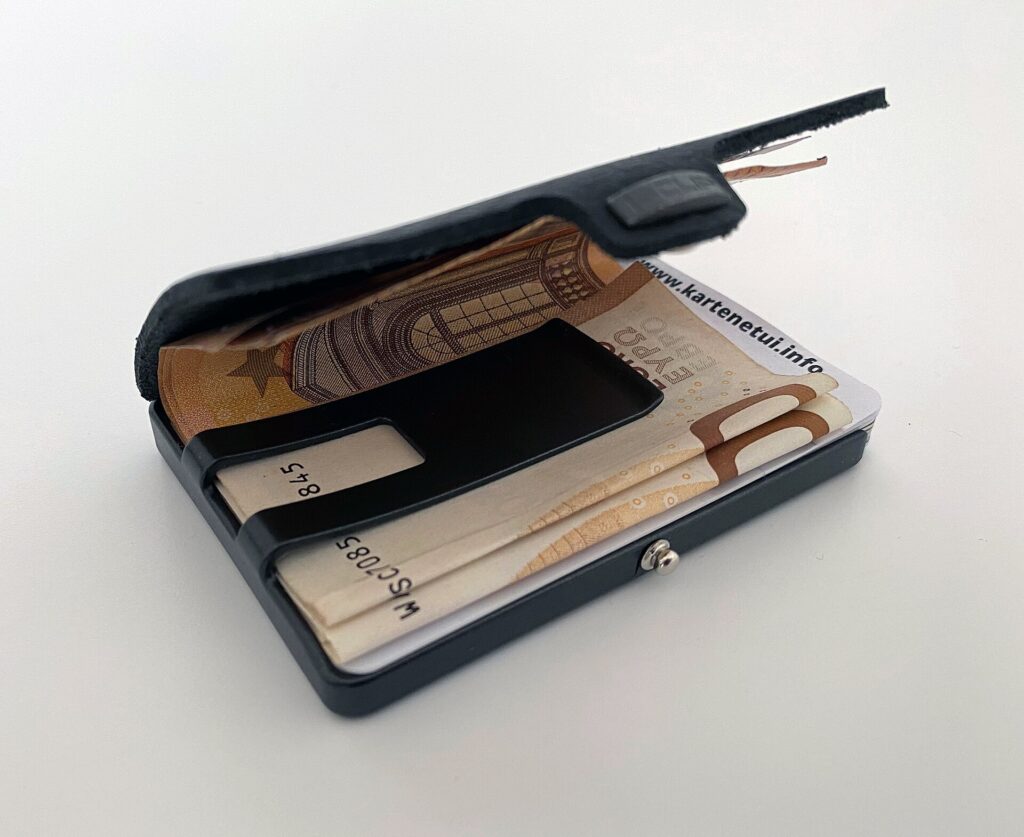
    A slim minimalist wallet holding cards and euro banknotes
    On a trip, carry less: one card, a transit card and the day's cash in a slim wallet you can keep in a front pocket (Photo: www.kartenetui.info via Wikimedia Commons, CC BY 4.0)

    What makes a travel wallet different

    • It carries less. A travel wallet is about subtraction: fewer cards, less cash and nothing you would hate to lose.
    • It handles more than one currency. On international trips you may have home currency for the airport and local currency for the trip. Separate note sections make that easier.
    • It may need to hold travel documents. Passport wallets and larger zip-around wallets have room for a passport, boarding pass and tickets on flying days.
    • It has to be secure in crowds. A zip closure, a wrist strap or a size that fits a zipped bag pocket matter more on a trip than at home.
    • It has to be easy to use one-handed. Paying at a ticket machine while holding a bag, a coffee or a child’s hand is normal travel life.

    The main styles

    Passport wallets

    A passport wallet is a zippered case sized for a passport, with card slots, a note section and often a pen loop. It is ideal for flying days, when you need your passport, boarding pass and a card in quick succession. Once you arrive, many travelers move the passport to the hotel safe and switch to a smaller wallet. For more on this style, see our guide to passport holders.

    Zip-around wallets and wristlets

    A zip-around wallet closes on three sides, so nothing falls out, and holds cards, notes and coins in separate sections. Many include a wrist strap, which lets you carry the wallet on its own for an evening out or keep it looped around your wrist in a busy market. The trade-off is size: they are usually too large for a pocket.

    Trifold wallets

    Trifolds pack cards, notes and a coin pocket into a compact, thick rectangle. They hold a lot for their footprint and fit most handbags. For travel, look for a secure snap or zipper on the coin pocket, and resist filling every slot.

    Slim bifolds and card holders

    A small bifold or card holder carries a few cards, folded notes and sometimes an ID window. It fits a front pocket or the smallest crossbody bag, which makes it the best everyday travel wallet for many women. The ID window is handy for transit passes and building access cards.

    Keychain and wristlet card cases

    Tiny zip card cases that clip to a key ring or bag strap hold a couple of cards and a few notes. They are great for festivals, beach days and nights out when you want the bare minimum and something that is hard to set down and forget.

    Crossbody wallet bags

    A small crossbody bag with built-in card slots doubles as a wallet and a purse, with room for a phone. Worn across the body and moved to the front in crowds, it is one of the most practical anti-theft carries for city days.

    StyleBest forWatch out for
    Passport walletFlying days, documents plus cardsToo big for daily carry
    Zip-around wristletMarkets, evenings, organized carryUsually too large for a pocket
    TrifoldHandbag carry with coinsGets thick if overfilled
    Slim bifold or card holderFront-pocket everyday travel walletLimited room for coins and receipts
    Keychain card caseFestivals, beach, nights outHolds only the bare minimum
    Crossbody wallet bagCity days, phone plus wallet in oneAnother bag to keep track of

    What to look for

    Size and where you will carry it

    Decide first where the wallet will live. A front trouser pocket, a jacket’s inside pocket, a small crossbody bag and a large tote all suit different sizes. A wallet that fits the pocket or bag you use every day is one you will not leave lying on a table.

    Closures

    Zippers are the most secure closure for travel because nothing falls out and it takes a moment to open. Snaps are quicker and fine for wallets carried inside a zipped bag. Magnetic closures are convenient but less secure in a crowd.

    Card slots and layout

    You probably need three to six slots on a trip: one or two payment cards, a transit card, an ID and perhaps a hotel key or museum pass. A wallet with far more slots tempts you to carry cards you do not need. Clear ID windows are useful for transit passes you tap often.

    Notes and coins

    If you are traveling to a country where cash and coins are still widely used, a zipped coin pocket and a full-length note section are worth having. Two note sections make it easy to keep home and local currency apart.

    Materials

    • Leather is durable and looks polished, but can be heavier and needs care if soaked.
    • Vegan and synthetic leather is lighter and often cheaper; better versions wear well, cheaper ones can peel at the edges.
    • Nylon and fabric are light, quick-drying and good for beach, hiking and adventure trips.

    Color and visibility

    A bright or patterned wallet is easier to find in a dark bag and harder to leave behind on a café table. An understated wallet draws less attention in places where you want to blend in. Many travelers pick a bright interior and a plain exterior for both reasons.

    RFID blocking, honestly

    RFID-blocking wallets use a lining meant to stop radio signals reaching contactless cards. It does no harm, and plenty of good travel wallets include it. But contactless card payments are designed so that each transaction uses a one-time code, and card skimming from a distance is a far less common problem than a wallet lifted from a bag or left on a counter. Choose a wallet for its size, closure and layout first, and treat RFID blocking as a small bonus rather than a deciding feature.

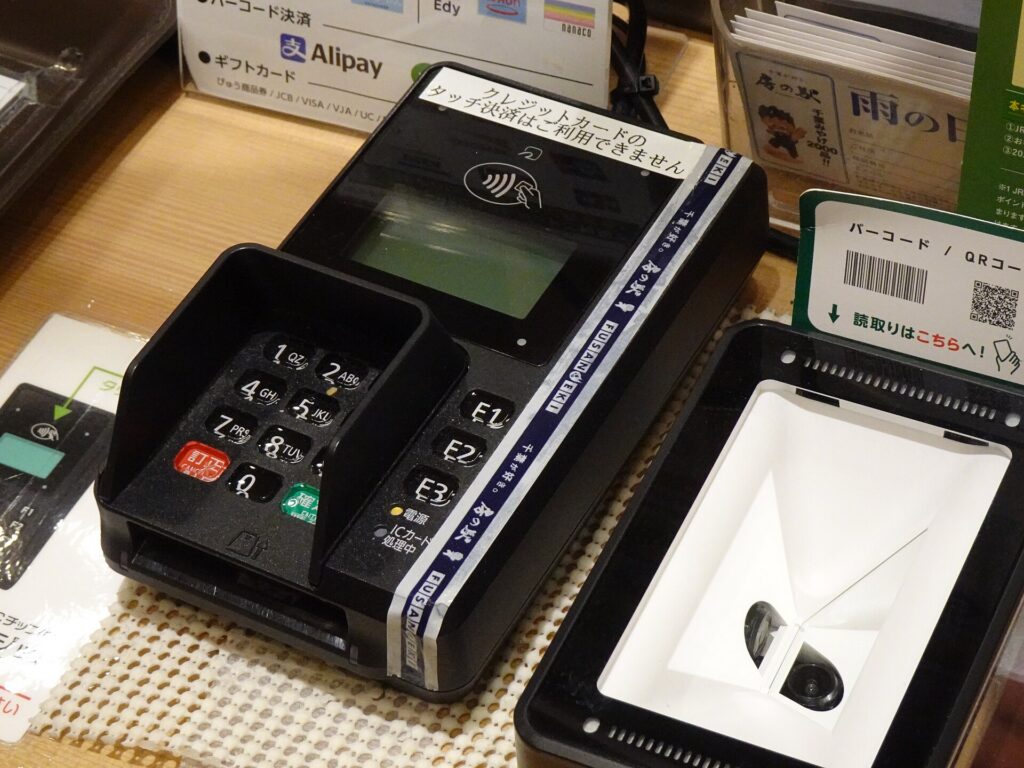
    Card payment terminals for contactless and chip card payments at a shop counter
    When a terminal offers to charge you in your home currency, choosing the local currency is usually the better deal (Photo: RuinDig/Yuki Uchida via Wikimedia Commons, CC BY 4.0)

    Build a simple money system for the trip

    The wallet matters less than how you split your money. A system that works for most trips:

    • Everyday wallet. One payment card, a transit card and the day’s cash. This is what you pull out in shops, cafés and ticket machines.
    • Backup stash. A second card from a different account and some emergency cash in a money belt, a hidden pouch or a separate zipped pocket.
    • Hotel safe. Your passport on days you do not need it, spare cash and any cards you are not using.
    • Phone wallet. A card loaded on your phone is a useful extra backup, as long as your phone is charged and secured.

    Split like this, a lost or stolen wallet is an annoyance instead of a crisis.

    Cards and cash abroad

    • Tell your bank or check your app. Many banks no longer need travel notices, but it is worth confirming your cards work abroad and noting the phone numbers for reporting a lost card.
    • Know your fees. Foreign transaction fees and ATM fees vary by card and account. Canada’s Financial Consumer Agency has plain-language information on bank and credit card fees.
    • Pay in local currency. If a card terminal or ATM offers to charge you in your home currency, the conversion rate is often worse. Choosing the local currency is usually the better option.
    • Carry a little cash. Even in card-friendly countries, small cafés, markets, tips and some transit need cash.
    • Use bank ATMs. Machines inside or attached to banks are generally safer than standalone machines in quiet spots. Cover the keypad when you type your PIN.

    Ten travel wallets from our original list

    The wallets below were featured in the original version of this guide. They are grouped by the kind of traveler they suit rather than ranked. Colors, sizes and features change between versions, and we have not tested them ourselves, so check the current details from the manufacturer or seller before you buy.

    1. Travelon RFID Blocking Passport Zip Wallet

    Travelon is a well-known travel accessories brand, and this zip wallet is sized for a passport with room for cards and travel documents, plus RFID-blocking lining. It suits flying days and anyone who wants documents, cards and cash in one zipped case. Patterned designs make it easy to spot in a bag.

    2. GOIACII Women’s Large Capacity Wallet

    A large zip-around wallet with multiple card slots, a cash compartment and a wrist strap, sold with RFID blocking. It suits travelers who like everything organized in one place and want to carry the wallet on its own, looped on the wrist, for markets and evenings out.

    3. Michael Kors Women’s Trifold Wallet

    A trifold with compartments for cards, cash and coins and a snap closure. It suits travelers who want a dressier wallet that works for a business trip or a nice dinner, carried inside a zipped handbag rather than a pocket.

    4. Black Cat Floral RFID Wallet

    A small, slim bifold in synthetic leather with a zipper coin pocket and an ID window. It suits travelers who want a compact everyday wallet with a bit of personality, and the ID window is handy for a transit card.

    5. CLUCI Leather RFID Trifold Wallet

    A larger trifold with multiple card slots and compartments for cash and coins, sold with RFID blocking. It suits women who carry a handbag and want room for two currencies and receipts on a longer trip.

    6. BOSTANTEN Vegan Leather Small Crossbody Bag

    A small crossbody bag that doubles as a wallet, with an adjustable strap and compartments for cards, cash and a phone. It suits city days when you want your phone and wallet in one bag worn across your body, which you can move to the front in crowds.

    7. Slim RFID card holder with ID window

    The original list included a small, slim card holder with an ID window and several card slots. This style is ideal for the “everyday wallet” in a two-wallet system: one or two cards, a transit card and folded notes in a front pocket.

    8. CLUCI Small Bifold Mini Card Holder

    A mini bifold organizer with card slots, a zipper coin pocket and a removable ID window. It suits travelers who want a compact wallet that still handles coins, without carrying a bulky purse.

    9. FurArt Keychain Credit Card Wallet

    A small zipper card case with a keychain attachment, sold with RFID blocking. It suits festivals, beaches and nights out, when you want just a card and a little cash clipped to your keys or bag strap.

    10. Gostwo Small RFID Trifold Wallet

    A compact trifold with multiple card slots and a zippered coin pocket. It suits travelers who want trifold organization in a smaller size that fits a crossbody bag.

    Choosing by trip type

    City breaks

    A slim bifold or card holder in a front pocket or crossbody bag, with a backup card at the hotel. If you are heading somewhere famous for crowds, such as the big sights in Rome or Paris, add a hidden pouch for your passport on days you need it. Our guides to things to do in Rome and things to do in Paris will help you plan those days.

    Business trips

    A dressier trifold or slim leather wallet, plus a passport wallet for the airport. Keep receipts in a separate envelope so your wallet does not swell.

    Beach and resort holidays

    A small fabric or synthetic card case that can handle sand and damp hands, and a waterproof pouch for the beach. Leave the leather wallet and most of your cards in the room safe.

    Festivals and events

    A keychain or wristlet card case with one card and a little cash, carried in a front pocket or a small crossbody bag. If you are traveling for a concert or game, our Toronto events page is one place to see what is on.

    Backpacking and long trips

    A light nylon everyday wallet plus a money belt for backups. Durability and quick-drying fabric matter more than looks when you are on the road for months.

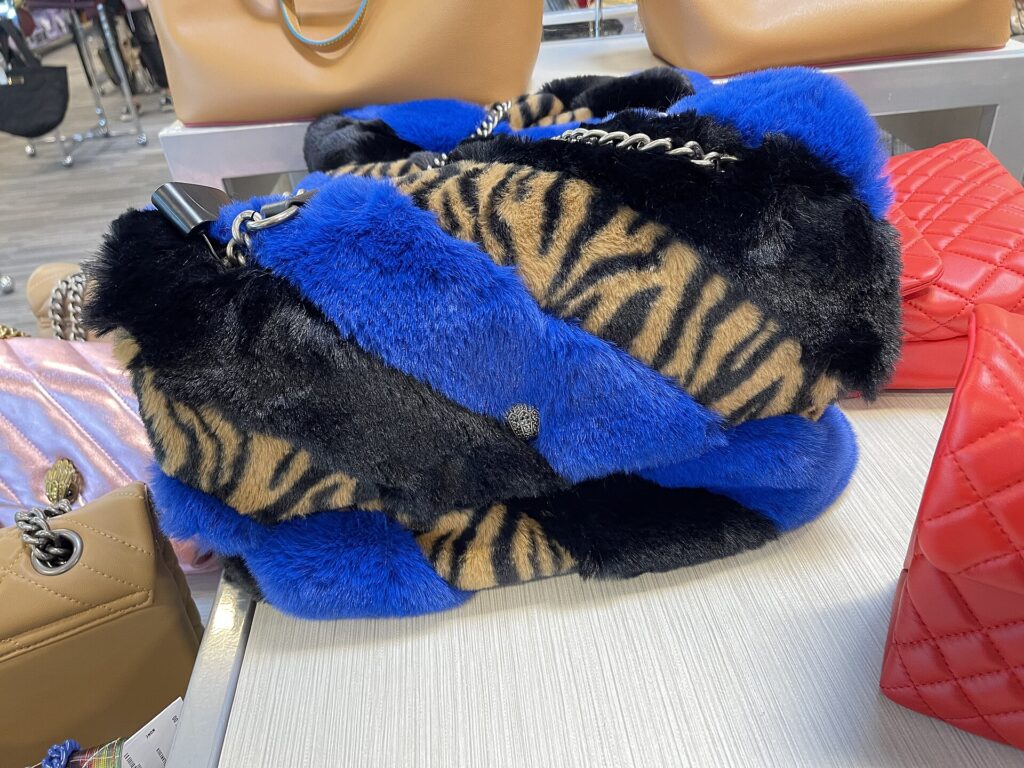
    A small handbag on display in a store
    A small zipped bag worn across the body is easier to guard in crowds than a wallet loose in an open tote (Photo: Missvain via Wikimedia Commons, CC BY 4.0)

    Habits that protect your wallet

    • Front, not back. Keep your wallet in a front pocket or a zipped bag pocket, never a back pocket or an open tote.
    • Nothing on the table. Cafés and restaurant terraces are a favorite place for quick grabs. Keep the wallet and phone in your bag, and the bag on your lap or strapped to your chair leg.
    • Take out only what you need. Have the fare or payment ready before you reach the counter or ticket machine.
    • Watch for distractions. If someone bumps you, spills something or asks for help in a crowd, check your wallet first.
    • Carry the bag in front in crowds. A crossbody bag or anti-theft backpack worn to the front on packed transit is much harder to open.
    • Read local advice. Canada’s travel advice and advisories describe common scams and theft hot spots by country.

    At the airport

    Keep your wallet, passport and phone in one zipped pocket of your personal item, not in a jacket that goes through the scanner separately. Check the tray before you walk away from security. In Canada, CATSA’s what can I bring page covers screening rules for carry-on items; in the US, the TSA’s What Can I Bring? tool does the same. If your trip starts early, our guide to airport arrival times for international flights helps you avoid the rush that leads to lost items.

    What to pack alongside your wallet

    A travel wallet is one part of a small everyday carry. Alongside it, most travelers want a phone with a charged battery, a compact power bank, a copy of their passport, hand sanitizer and a few basic first aid items. Our guide to travel first aid kits covers what to put in a small pouch, and our guide to travel-friendly feminine hygiene products covers the personal items that are easy to forget. If you are bringing jewelry, a small travel jewelry case keeps it organized and easy to lock in the safe.

    If your wallet is lost or stolen

    • Lock or cancel cards immediately using your banking apps or the phone numbers you saved before the trip.
    • Use your backup card and cash from the separate stash.
    • Report it to the police and get a report number for insurance claims.
    • If your passport was in the wallet, contact your embassy or consulate. Canadians abroad can use the Government of Canada’s emergency assistance page, and US citizens can start with the State Department’s traveler’s checklist resources.
    • Contact your travel insurer promptly; many policies have time limits.

    Common mistakes

    • Bringing your whole home wallet. Remove loyalty cards, extra credit cards and anything you will not use on the trip.
    • One wallet for everything. Keep a backup card and cash somewhere else.
    • Choosing style over closure. An open card sleeve looks neat but loses cards in a busy bag.
    • Buying for RFID alone. It is a small extra; closure, size and layout matter more.
    • A wallet too big for your bag. If it does not fit the bag you carry every day, it will end up in an outside pocket.
    • Not photographing your cards. Keep a secure note of card numbers and bank phone numbers so you can report a loss quickly.
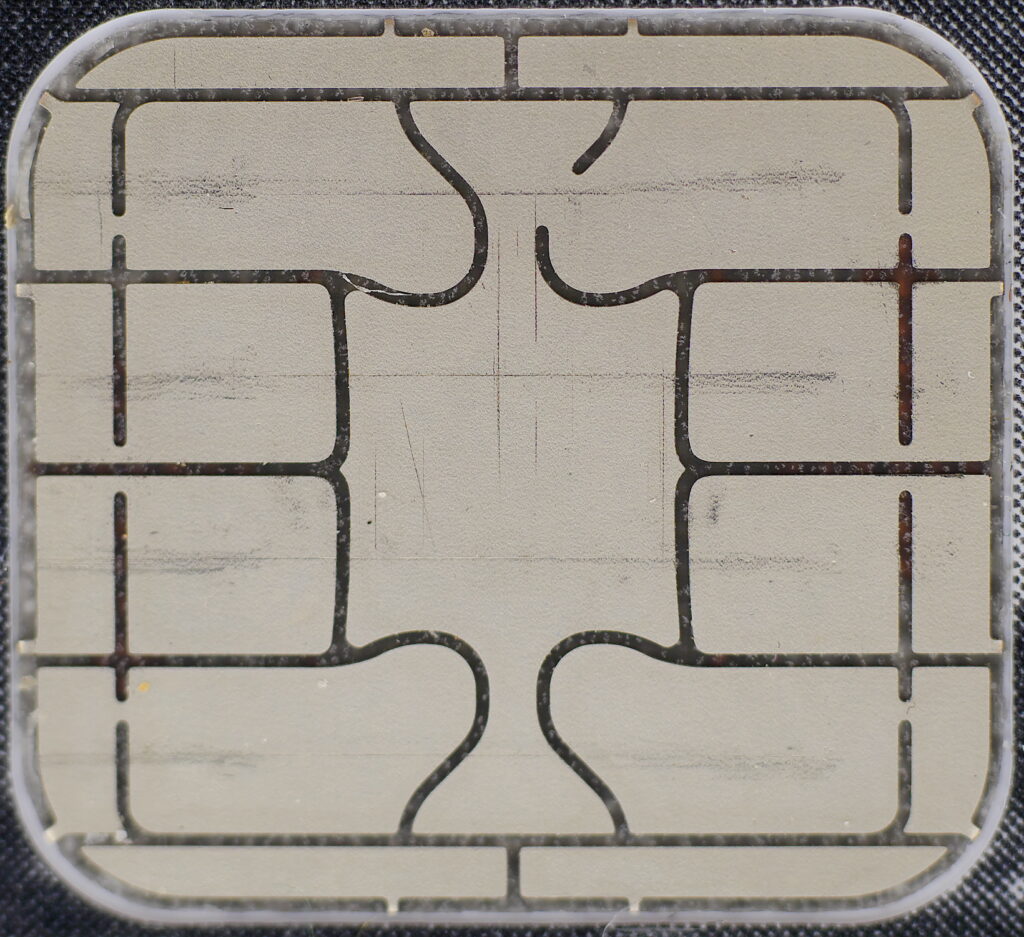
    Close-up of the chip contact pad on a credit card
    Keep a secure note of your card numbers and your bank's phone numbers so you can lock a lost card in minutes (Photo: Bautsch via Wikimedia Commons, CC0)

    Caring for your wallet on the road

    Empty receipts every evening so the wallet stays slim and closes properly. If a leather wallet gets wet, empty it, blot it and let it dry naturally away from a heater. Fabric wallets can often be hand-washed after a beach trip. Before a long trip, check the zipper runs smoothly and the stitching around card slots is intact, since those are the first things to fail.

    Frequently asked questions

    What is the best type of travel wallet for women?

    For most trips, a slim zippered wallet or card holder for daily spending plus a passport wallet or hidden pouch for documents and backups. Choose the size by where you will carry it.

    Do I need an RFID-blocking wallet?

    No. It is a harmless extra. Losing a wallet or having it taken from a bag is much more common than remote card skimming, so choose a wallet for its closure and size first.

    Can a travel wallet hold my passport?

    Passport wallets and larger zip-around wallets can. Slim card holders and most trifolds cannot, which is one reason many travelers use two wallets.

    Is a crossbody bag safer than a wallet in a handbag?

    A crossbody bag worn across the body and moved to the front in crowds is easier to keep an eye on than a wallet loose in an open tote. A zipped bag is always better than an open one.

    How much cash should I carry?

    Enough for the day’s small purchases, tips and transit, plus a separate emergency amount. The right number depends on how widely cards are accepted at your destination.

    Are leather wallets better than synthetic ones?

    Leather is durable and polished but heavier. Good synthetic and fabric wallets are lighter and handle damp conditions better. Choose by trip type and personal preference.

    How do I clean a travel wallet?

    Follow the maker’s care instructions. Leather is usually wiped with a slightly damp cloth; many fabric wallets can be hand-washed. Empty the wallet first.

    Once your wallet is sorted, put the savings toward the trip itself. Compare fares on our flight search, find a hotel with an in-room safe on our hotel search, and if you are renting a car, compare pickup options on our car rental search. For the bag that carries it all, start with our main guide to travel luggage bags.

  • Top 10 Passport Holders to Safeguard Your Documents While Traveling

    Top 10 Passport Holders to Safeguard Your Documents While Traveling

    Your passport is the one thing in your bag that can end a trip if it goes missing. Flights, hotels and rental cars can all be rebooked; a lost passport means a police report, a trip to an embassy or consulate, and often missed connections while you wait for emergency documents. A passport holder will not make theft impossible, but the right one keeps your passport clean, flat and in one predictable place, keeps boarding passes and cards together at the airport, and makes it much harder to leave something behind on a tray at security. This guide explains the main types of passport holders, what to look for in materials, size and closures, how much RFID blocking really matters, which style suits solo travelers, families and people who want to carry documents under their clothes, and ten options from our original list. It also covers the habits that protect your passport more than any holder can.

    The short answer

    For most travelers, the best passport holder is a slim cover or wallet that holds your passport plus one or two cards and a boarding pass, closes securely and lets the passport slide out easily when an officer asks for it. If you travel as a family, a zippered document organizer that holds several passports, tickets and a pen saves a lot of fumbling at check-in. If you are going somewhere busy with pickpockets, or you want your passport on you all day, a neck pouch or hidden belt wallet worn under clothing is the more secure carry. RFID blocking is a harmless extra, not a reason to choose one holder over another. Whatever you buy, keep a photo of your passport’s data page somewhere separate, and leave the passport in the hotel safe on days you do not need it.

    Four different national passports laid side by side
    Passport booklets are a similar size, but thickness varies with pages and visas, so check a holder fits yours without bending it (Photo: Horizon206 via Wikimedia Commons, CC0)

    What a passport holder actually does

    It is easy to think of a passport holder as a fashion accessory, but its real jobs are practical:

    • Protection from wear. Passports get bent, wet and scuffed. A damaged passport can cause problems at a border or when you try to use it again, so a cover that keeps the booklet flat and dry has real value over the years you use the same passport.
    • Organization. At the airport you need your passport, boarding pass, sometimes a visa or arrival form, and a payment card within the space of a few minutes. A holder puts them all in one place.
    • A fixed home. Travelers most often lose passports by putting them down: on a check-in desk, a seat-back pocket, a security tray or a café table. A holder that always goes back into the same pocket makes that less likely.
    • Security, in some styles. Holders worn under clothing, in a neck pouch or on a belt, keep the passport out of reach of pickpockets. Ordinary covers do not add security on their own; they are only as safe as the pocket you put them in.

    The main types of passport holders

    Slim passport covers

    A simple cover wraps around the passport and adds a card slot or two. It keeps the booklet clean and adds almost no bulk, which makes it the best choice for travelers who carry their passport in an inside jacket pocket or a zipped bag pocket. The downside is that covers hold very little, and some are so snug that it is awkward to remove the passport at a border desk.

    Passport wallets

    A passport wallet is larger and usually closes with a zipper or snap. It holds the passport, several cards, some cash, a boarding pass and often a pen. It is the most useful all-in-one travel document holder for flying days, and it can double as your everyday wallet on the trip. Because it is larger, it belongs in a bag rather than a back pocket.

    Family document organizers

    Family organizers are zippered cases, often the size of a small tablet, with a slot for each passport and room for tickets, itineraries, vaccination records and a pen. One adult carries all the documents and hands them over together at check-in and passport control. They are bulky, but for families they remove a lot of stress.

    Neck pouches

    A neck pouch hangs on a cord around your neck and is worn under a shirt or jacket. It keeps your passport and backup cash against your body, which pickpockets cannot easily reach. It is less convenient to get into, so treat it as a secure store rather than your everyday wallet.

    Hidden belt wallets and money belts

    These sit flat around your waist under your clothes, or loop onto your belt and tuck inside your waistband. They are the most discreet way to carry a passport and backup money. Our guide to money belts for travel covers how to choose and wear one comfortably.

    Holders with a tracker slot

    Some passport holders include a small pocket designed to fit a Bluetooth tracker. A tracker can help you find a holder you left behind or dropped nearby. It does not stop theft and depends on the tracker network where you are, so think of it as a way to locate a misplaced holder, not as security.

    TypeBest forMain trade-off
    Slim coverLight packers, inside-pocket carryHolds little; some are tight to remove
    Passport walletAirport days, all-in-one carryBulkier; belongs in a bag
    Family organizerParents carrying several passportsLarge; easy to set down and forget
    Neck pouchBusy cities, long travel daysSlow to access; can be warm
    Hidden belt walletMaximum discretion for backupsMust undress slightly to reach
    Tracker-slot holderTravelers prone to misplacing thingsHelps locate, does not prevent theft

    What to look for

    Fit and size

    Passport booklets are a fairly standard size, but thickness varies with the number of pages and how many visas and stamps you have. Look for a holder that takes your passport without bending it and lets it slide in and out cleanly. Border officers often ask travelers to take the passport out of its cover so they can scan and stamp it, so avoid covers that grip so tightly you have to wrestle with them at the desk.

    Materials

    • Leather ages well, feels good and is durable, but it can be heavier and needs a little care if it gets wet.
    • Synthetic leather is lighter and usually cheaper; quality varies widely, and cheaper versions can peel at the edges over time.
    • Nylon and ripstop fabrics are light, quick to dry and common on neck pouches and belt wallets that sit against your body.
    • Water-resistant fabrics or liners are worth having if you travel in rain, near water or in hot climates where sweat can reach a passport worn under clothing.

    Closures

    Open covers are quick but let cards slip out. Snaps are a good middle ground. Zippers keep everything inside and are best for wallets and family organizers that carry cash and tickets. For neck pouches and belt wallets, a zipper is essential.

    Card slots and pockets

    Think about what you will actually carry on a flight day: passport, boarding pass, one or two payment cards, some cash and maybe a transit card. More slots are not always better; a holder stuffed with every card you own becomes thick and heavy, and you have more to lose in one go.

    Visibility and color

    A brightly colored holder is easier to spot in a dark bag and harder to leave on a gray security tray. Some families choose a different color for each person, which also helps when handing documents around.

    RFID blocking, honestly

    Many passport holders advertise RFID blocking: a lining that stops radio signals reaching the chip in an electronic passport or a contactless card. It does no harm, and some travelers like the reassurance. But the realistic risks to your passport are loss and physical theft, not someone reading its chip from a distance. Remote skimming of passports is not a common problem for travelers, and many holders without RFID lining do the job just as well. Treat RFID blocking as a small extra, never as the main reason to buy one holder over another.

    Open passport pages with entry stamps from the United States and United Kingdom
    Officers need to open and stamp the passport, so choose a holder it slides out of easily (Photo: Jon Evans via Wikimedia Commons, CC BY 2.0)

    Choosing by the way you travel

    Solo travelers and couples

    A slim passport wallet with a zipper or snap is usually the best fit. It holds your passport, a boarding pass and a couple of cards, and goes into a zipped inside pocket of your daypack or jacket. If you carry an anti-theft backpack, its hidden back-panel pocket is an ideal home for the holder.

    Families

    A family organizer carried by one adult keeps every passport, ticket and printed itinerary in one place, which makes check-in and passport control much smoother. The risk is that you now have every passport in one bag, so never put that organizer down, and consider moving it to a secure bag as soon as you are through the airport.

    Business travelers

    A leather cover or slim wallet that fits an inside jacket pocket keeps you moving through security and lounges without digging through a bag. If you travel with a laptop bag, pick a dedicated pocket for the passport and use it every time.

    Backpackers and long trips

    On long trips through busy cities and on overnight buses and trains, a neck pouch or belt wallet worn under clothing is worth the minor discomfort. Carry your daily money in a separate small wallet so you never have to reach under your shirt in public.

    Cruises and resort stays

    On a cruise you may need your passport at embarkation and in some ports, and a ship card most of the rest of the time. A waterproof pouch or water-resistant holder is useful for beach days and tender boats, and the passport can stay in your cabin safe when you do not need it.

    Ten passport holders from our original list

    The holders below were featured in the original version of this guide. They cover different needs rather than a strict ranking. Designs, sizes, colors and features change between versions, and we have not tested them ourselves, so check the current details from the manufacturer or seller before you buy.

    1. Valante Premium Family Travel Document Organizer

    A family-sized zippered organizer meant to hold several passports together with tickets, cards and other travel documents. It suits parents who want every document in one case at check-in and passport control. As with any family organizer, it is bulky, so plan to carry it in a shoulder bag or backpack, not in a pocket.

    2. HERO Neck Wallet

    A neck wallet designed to be worn under clothing, with compartments for a passport, cards and cash, and RFID-blocking material. It suits travelers who want hands-free carry and their passport kept against their body in crowded places. Keep a separate small wallet for daily spending so the neck wallet stays hidden.

    3. Zero Grid Passport Wallet

    A compact passport wallet with space for a passport, boarding passes and cards, sold with RFID blocking. It suits travelers who want a single, tidy document wallet for airport days that slips into a bag or jacket pocket.

    4. WALNEW Passport Holder Neck Pouch

    A slim neck pouch on a lanyard strap with multiple compartments for passports, tickets and cards, designed to be worn under clothing. It is a simple, lightweight option for travelers who want a secure under-shirt carry without much bulk.

    5. Spigen Life Passport Card Cover Holder

    A passport cover with added slots for cards and cash, marketed with RFID blocking. It suits travelers who want a slim cover rather than a full wallet, and who carry the passport in an inside pocket or bag.

    6. Family neck-pouch passport organizers

    The original list included a family-sized travel pouch with a neck strap that holds several passports plus tickets and cards. This style keeps family documents on one adult’s body, which is handy at busy check-in desks and boarding gates, but it can get heavy and warm with several passports inside. Look for a wide, comfortable strap.

    7. Passport covers with a tracker pocket

    The original list included a leather passport cover with a pocket shaped for Apple’s AirTag. This style suits travelers who worry about leaving their passport behind in a taxi or at a café, since the tracker can help you locate it. Remember that the tracker is sold separately, and that it helps you find a lost holder rather than prevent theft.

    8. Lightweight family passport holders

    A lighter alternative to a full organizer: a slim zippered holder with room for several passports and a zipper pocket for cash. It suits families who want to keep passports together without carrying a tablet-sized case.

    9. Leather travel wallets with a passport slot

    A compact genuine leather wallet with card slots, a cash pocket and a dedicated space for the passport. It suits travelers who want a single, good-looking wallet that serves as both passport holder and everyday wallet on the trip.

    10. Shacke Hidden Travel Belt Wallet

    A slim belt wallet from Shacke, worn around the waist under clothing, with compartments for cash, cards and a passport, and an RFID-blocking layer. It suits travelers who want their passport and backup money out of sight all day. See our guide to money belts for tips on wearing one comfortably.

    How to carry your passport day to day

    On travel days

    From the curb to your seat, you may show your passport several times: at check-in or bag drop, at security, at passport control and at the gate. Keep the holder in one zipped pocket that you can reach without taking your bag off, and put it back in that pocket every single time. Before you leave a desk or a security tray, look at your hand and check you have the passport. If you are flying internationally, our guide to airport arrival times for international flights helps you allow enough time that you are not rushing and fumbling.

    At your destination

    On ordinary sightseeing days you often do not need your passport at all. Many travelers leave it in the hotel room safe and carry a photocopy or a photo of the data page instead. Some countries require visitors to carry identification, and you will usually need the passport to check into hotels, pick up a rental car or change money, so check your destination’s rules. Canada’s travel advice and advisories list local laws and entry requirements by country, and the US State Department’s traveler’s checklist covers what to prepare before you go.

    In hotels

    Use the room safe for your passport, spare cards and cash. If there is no safe, ask whether the front desk has one. Choosing a hotel with an in-room safe is an easy filter when you search on our hotel search.

    When driving

    If you rent a car, you will need your driver’s license and usually a credit card and ID at pickup. Do not leave passports in a parked car, even in the glove box. Our car rental search helps you compare pickup locations and vehicles.

    Automated e-passport control gates in an airport arrivals area
    Automated gates need the photo page open and flat, which is easier with a holder that folds back or releases the passport quickly (Photo: Zurich International Airport – 2018-11-01 – IMG 1783.jpg: PESP/ Wikimedia
    derivative work: Bonus bon via Wikimedia Commons, CC BY-SA 4.0)

    Protect the passport itself

    • Keep it flat and dry. Water damage, torn pages and a peeling data page can make a passport unusable. A cover helps, and a zip bag inside the cover is a cheap extra layer on beach and boat days.
    • Check the expiry date early. Many countries require your passport to be valid for a set period beyond your stay, and airlines may refuse boarding if it is not. Check the entry requirements for your destination well before you book.
    • Check blank pages. Some countries need one or more blank pages for stamps or visas.
    • Do not write in it or add stickers. Keep notes and addresses on a separate card in the holder.
    • Know how to renew. Canadians can find renewal and application information on the Government of Canada’s Canadian passports page. Allow plenty of time before a trip.

    Backups that make a lost passport less painful

    Prepare these before every international trip:

    • A photo of your passport data page stored on your phone and in your email or a secure cloud folder.
    • A paper photocopy kept in a different bag from the passport.
    • Emergency contacts and your embassy or consulate details for each country you visit.
    • A backup payment card and some cash kept separately from your main wallet.
    • Your travel insurance policy number and the insurer’s emergency phone number.

    At airport security and border control

    Passport holders go through screening like any other item. You can usually keep the passport in its holder until you reach the officer, who may ask you to remove it from the cover. In the US, the TSA’s identification page explains which IDs are accepted at checkpoints, and in Canada CATSA’s what can I bring page covers screening rules for the items you carry. Take your holder out of any jacket or bag you put on the belt, or keep it on your body, so it does not ride through the scanner in a tray where it can be picked up by mistake. At automated passport gates, you will need to open the passport to the photo page, so a holder that folds back flat or releases the passport quickly helps.

    If your passport is lost or stolen

    • Report it. Report the loss or theft to local police and get a report number; insurers and consulates may ask for it.
    • Contact your government. Canadians abroad can find help through the Government of Canada’s emergency assistance page, which explains how to reach consular services. Travelers from other countries should contact their own embassy or consulate as early as possible.
    • Tell your airline if you have a flight coming up, and ask about rebooking options.
    • Freeze cards if your holder also carried payment cards, and contact your travel insurer.

    Common mistakes

    • Back-pocket carry. A passport wallet in a back pocket is easy to lose and easy to steal. Use a front or inside pocket, or a zipped bag pocket.
    • Carrying it every day for no reason. If you do not need it, leave it in the safe and carry a copy.
    • A holder so full it will not close. Carry only what you need for that day.
    • Putting every family passport in one unattended bag. One adult, one organizer, never out of hand.
    • Buying for RFID alone. Choose on fit, closure and how you will carry it; RFID is a small extra.
    • No backup copy. A photo of the data page takes seconds and saves hours if something goes wrong.
    Two Canadian passports from older and newer series
    Check your passport's expiry date and blank pages well before you book, not at the airport (Photo: Jusfiq via Wikimedia Commons, CC BY-SA 4.0)

    Pairing a passport holder with the rest of your kit

    A passport holder works best as part of a simple system. Your passport and one backup card live in the holder or a hidden pocket; your daily money lives in a small wallet; your phone lives in a front pocket or crossbody bag; and valuables you do not need stay in the hotel safe. Our guide to travel wallets for women covers everyday wallets that pair well with a passport holder, and if you are packing jewelry, a small travel jewelry case keeps pieces together and easy to lock away. A compact travel first aid kit belongs in the same daypack. For the bag that carries it all, start with our main guide to travel luggage.
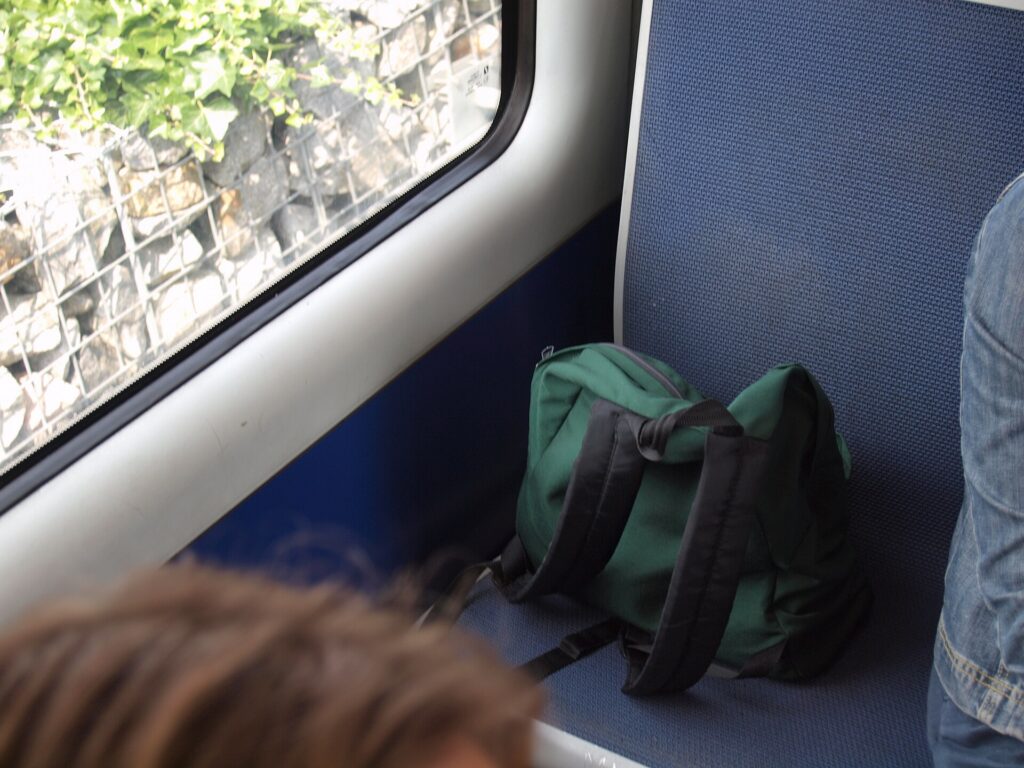
    Frequently asked questions

    Do I need a passport holder?

    You do not strictly need one, but a holder protects your passport from wear, keeps travel documents together and gives your passport one predictable home, which makes it less likely you will leave it behind.

    Is an RFID-blocking passport holder necessary?

    No. It is a harmless extra. Loss and physical theft are far more common risks than someone reading a passport chip remotely, so choose a holder for its fit, closure and carry style first.

    Will border officers make me remove my passport from its cover?

    Often, yes. Officers and automated gates need to scan the data page, and many officers prefer the passport out of its cover. Choose a holder that releases the passport easily.

    What is the safest way to carry a passport?

    If you do not need it, in the hotel safe. If you do, in a neck pouch, belt wallet or hidden pocket against your body, not in an outside or back pocket.

    Can I fit several passports in one holder?

    Family organizers are designed for several passports plus tickets. Slim covers usually hold only one.

    Are leather passport holders worth it?

    Leather is durable and looks good for years, but it is heavier and less water-resistant than nylon. Choose based on how you travel, not on material alone.

    Should I carry a copy of my passport?

    Yes. Keep a photo on your phone and in email, and a paper copy in a separate bag. It speeds up replacement if the original is lost.

    How do I clean a passport holder?

    Follow the maker’s instructions. Leather is usually wiped with a slightly damp cloth and left to dry naturally; many fabric holders can be hand-washed. Always remove the passport first.

    With your documents organized, the rest is planning the trip itself. Compare fares across flexible dates on our flight search, choose a hotel with a room safe on our hotel search, and if your first stamp is going to be a European one, our guides to things to do in Paris and things to do in London are a good place to start. For the rest of your travel gear, head back to our main guide to travel luggage bags.