
Europe is built for multi-city travel. Distances are short, high-speed trains link many of the great cities center to center, budget airlines cover the longer hops, and a border crossing inside the Schengen area can be as uneventful as changing trains. That ease is also the trap. It is tempting to squeeze eight cities into two weeks and come home having seen mostly station platforms and airport queues. A good multi-city trip is designed: a route that flows in one direction, the right number of bases for the time you have, transport chosen leg by leg, and flights into one city and out of another. This guide walks through each decision in order, with sample itineraries, a transport comparison, the entry rules North American travelers need to know, and the mistakes that cost the most time and money.
The short answer
Plan around bases, not cities: allow at least three nights in each place, and fewer bases than you think. Draw the route in one direction and book an open-jaw flight, into the first city and home from the last, so you never backtrack. Take the train for journeys up to around four or five hours, where it usually beats flying once airport time is counted, and fly for longer hops, checking bag fees and airport locations. Travel in May, June, September or October for the best balance of weather, crowds and prices. And check entry rules before you book: the Schengen 90-day limit, the EU’s new border systems and the UK’s electronic travel authorization all apply to Canadian and US visitors. Start by comparing fares into the major gateways on our flight search.
Step 1: Decide what kind of trip you want
Before you open a map, decide what the trip is for. It shapes which cities make the cut and how long you spend in each.
- Art, history and landmarks: Rome, Paris, Florence, Athens, Vienna, London.
- Scenery and the outdoors: the Swiss Alps, the Norwegian fjords, the Dolomites, the Cinque Terre, the Scottish Highlands.
- Nightlife and city energy: Berlin, Budapest, Barcelona, Amsterdam.
- Food and wine: Lyon, Bologna, San Sebastián, Porto, and the wine regions of France, Italy and Spain.
- Value: Lisbon, Kraków, Budapest and Prague, where daily costs are lower than in the western capitals; our guide to budget travel destinations covers the best-value options in depth.
Write down your top priorities, such as museums, food, beaches, hiking or architecture, and rank candidate cities against them. If you are torn between the classic three countries, our comparison of England, Italy and France helps you choose. And if part of the trip is about doing very little, our list of relaxing vacations for doing absolutely nothing includes slower European options.
Step 2: Match the number of cities to the time you have
This is where most itineraries go wrong. Every move costs you roughly half a day: checking out, getting to the station or airport, the journey, getting to the new hotel, and finding your feet. Three moves in a week means a day and a half of travel. The rule of thumb that works for most travelers is at least three nights per base, with day trips to see nearby places without changing hotels.
| Trip length (nights in Europe) | Comfortable number of bases | Example |
|---|---|---|
| 7 nights | 2 | Paris and London, or Rome and Florence |
| 10 nights | 3 | London, Paris and Amsterdam |
| 14 nights | 3 to 4 | London, Paris, a stop in between, and Rome |
| 21 nights | 5 to 6 | Berlin, Prague, Vienna, Budapest and one or two smaller towns |
Big cities deserve more time than small ones. Paris, London and Rome each justify four nights or more on a first visit; a smaller town can often be covered in two, or as a day trip from a larger base.
Step 3: Build a route that flows
A good route moves in one general direction and connects cities that are close together by fast, direct transport. A bad one zigzags, which wastes days and money.
Classic routes by region
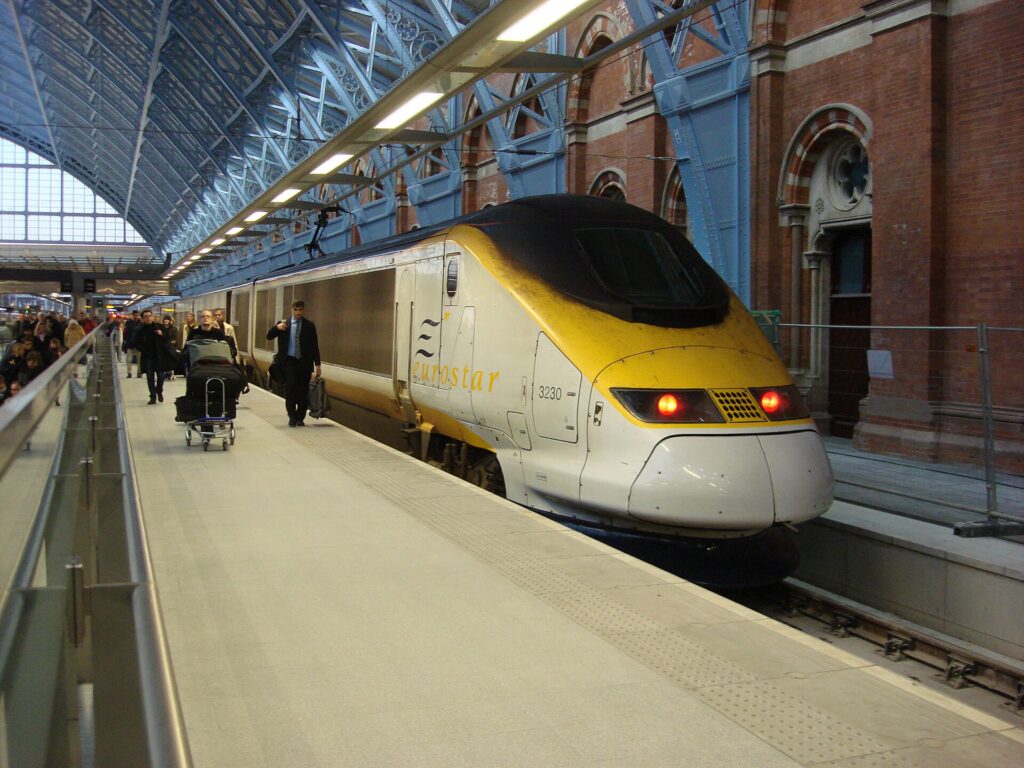
- Western Europe: London to Paris to Brussels to Amsterdam. All four are linked by high-speed rail, including the Eurostar under the Channel.
- Central Europe: Berlin to Prague to Vienna to Budapest. Trains connect each pair, and the cities are close enough that no single leg is long.
- Italy: Venice to Florence to Rome, with high-speed trains between each, and Naples or the Amalfi Coast as an extension south.
- Iberia and the Mediterranean: Lisbon to Madrid to Barcelona, then on to Nice or Rome. Use a flight for the longer hops, such as Lisbon to Madrid or Barcelona to Rome.
- Eastern Europe: Kraków to Budapest and on to Bucharest or Sofia, using a mix of trains, buses and short flights, since rail connections in the region are slower.
Use open-jaw flights
An open-jaw ticket flies you into one city and home from another, for example into London and out of Rome. It saves you the time and cost of returning to your starting point, and on many routes it costs about the same as a round trip. When you search, use the multi-city option and compare it with a round trip plus a one-way budget flight back to your arrival city. The major gateways from North America include London, Paris, Rome, Amsterdam, Frankfurt, Lisbon and Madrid; compare fares to London, Paris and Rome to see which combination is cheapest for your dates.
Consider arrival and departure airports
Know what to expect when you land. Our airport guides for London Heathrow, Paris Charles de Gaulle and Rome Fiumicino cover terminals and transfers into the city, which matters when you land after an overnight flight.

Sample itineraries
Ten days: London, Paris and Amsterdam
Fly into London and spend three nights, then take the Eurostar to Paris for four nights, and continue by high-speed train to Amsterdam for three nights before flying home. Every leg is by rail from city center to city center. Our guides to things to do in London and things to do in Paris help you plan the days, and our guides to getting around London and Paris explain transit passes and airport transfers.
Two weeks: London, Paris and Rome
The classic first trip. Four nights in London, four in Paris, then a flight or an overnight train south to Rome for five nights, with a day trip to Florence or Naples by high-speed train. Fly home from Rome. Our guide to things to do in Rome covers the city, and our guide to getting around Rome explains why a car is rarely worth it in the city itself.
Three weeks: Central Europe
Fly into Berlin for four nights, take the train to Prague for four, continue to Vienna for four and Budapest for four, with a couple of nights in a smaller town such as Český Krumlov or Salzburg along the way. Fly home from Budapest or Vienna. Daily costs are generally lower in Prague and Budapest than in Berlin and Vienna, which balances the budget.
Ten days in fall: wine and harvest
Fly into Lisbon for three nights, take the train to Porto for three, then fly to Rome and finish with four nights in Rome with a day in the countryside. For more autumn ideas, see our guide to the best places to visit in Europe in fall.
Step 4: Choose transport leg by leg
There is no single best way to get around Europe. Pick the right mode for each leg.
| Mode | Best for | Watch out for |
|---|---|---|
| High-speed train | Trips up to about four or five hours; city center to city center | Fares that rise closer to departure; seat reservations on many routes |
| Night train | Long legs where you save a hotel night and a daytime | Limited routes; book sleeper or couchette berths early |
| Budget airline | Long distances and routes with no fast rail | Bag fees, strict size limits, airports far from the city |
| Long-distance bus | Tight budgets and routes with poor rail | Longer journey times, traffic delays |
| Rental car | Countryside, wine regions, small villages | City traffic zones, parking, cross-border and one-way fees |
Trains
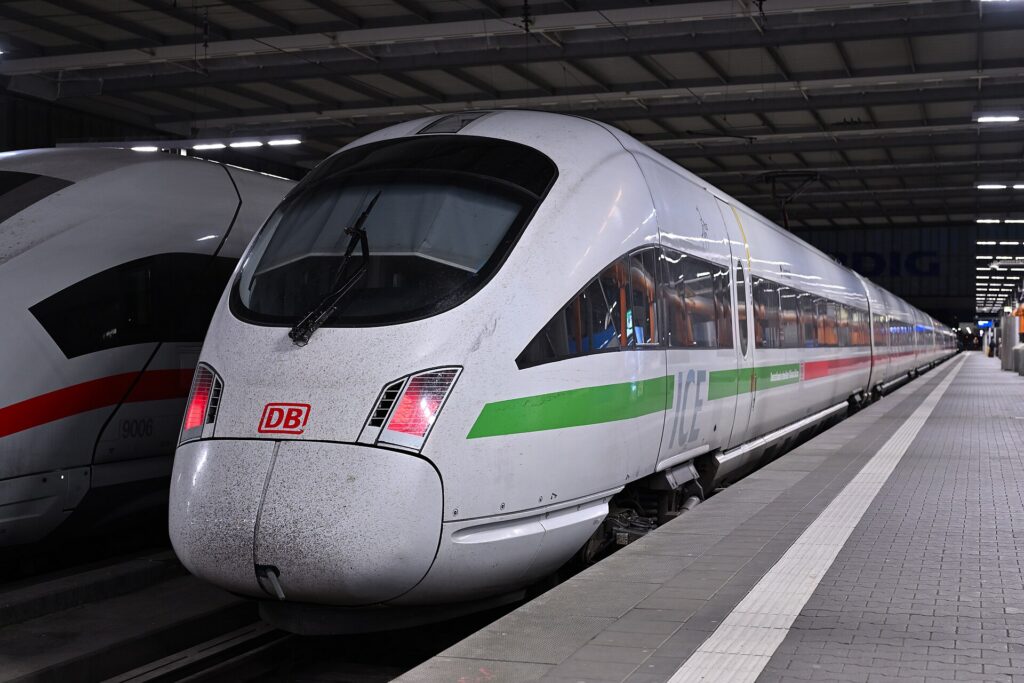
Rail is the most pleasant way to cross Europe and, on many routes, the fastest once you count airport security and transfers. High-speed lines link the major cities of France, Germany, Italy, Spain, Belgium and the Netherlands, and the Eurostar connects London with Paris, Brussels and Amsterdam. National operators such as Deutsche Bahn sell tickets across much of the network and are good for checking timetables. On many high-speed routes, the cheapest fares go early and prices climb as departure approaches, so book once your route is set.
Night trains have made a comeback on several routes; the Austrian operator’s Nightjet network is one of the largest. A sleeper saves a night’s accommodation and a daytime spent traveling, though berths sell out early in summer.
Rail passes
A Eurail pass (for non-European residents; Europeans use Interrail) gives unlimited travel on a set number of days. It can be good value for trips with many long rail legs or for travelers who want to decide on the day. For a trip with only a few journeys booked in advance, individual tickets are often cheaper. Many high-speed and night trains also require a seat reservation on top of the pass, sometimes with a fee, so check before you rely on one.
Budget airlines
Carriers such as Ryanair, easyJet and Wizz Air cover huge networks at low base fares, and they are the sensible choice for long hops like Lisbon to Rome. The fare is only the start. Carry-on allowances are often limited to a small under-seat bag unless you pay more, checked bags cost extra, and some routes use secondary airports far from the city, adding transfer time and cost. Paris-Beauvais, for example, is well outside Paris. Price the whole journey, including bags and the airport transfer, before you compare with the train.
Buses
Companies such as FlixBus and BlaBlaCar Bus run extensive networks at low fares. Buses are slower than trains but can be the cheapest option, and on some routes in Eastern Europe and the Balkans they are more direct than rail.
Rental cars
A car is a liability in big cities and a gift in the countryside. Pick one up when you leave a city for Tuscany, Provence or the Scottish Highlands, and return it before the next city. Watch for restricted traffic zones in many Italian historic centers, where driving in without a permit brings automatic fines, and for steep fees when you drop a car in a different country. Some countries require an International Driving Permit alongside your license; Canadians can read the requirements on the Government of Canada’s International Driving Permit page. Compare rental rates on our Rome car rental page or on our main car rental search, and read our rental car booking tips before you book.
Step 5: Set a realistic budget
Costs vary more within Europe than many first-time visitors expect. London, Paris, Zurich, Amsterdam and the Nordic capitals are among the most expensive cities in the world for accommodation, while Lisbon, Kraków, Budapest and Prague offer more for less. A route that mixes both balances the total.
Build the budget from real numbers: price your flights and a few candidate hotels for your dates, add a daily figure for food and local transit, then add intercity transport, attractions, insurance and a buffer of 10 to 15 percent. Our guide on how to save money for a trip includes a worksheet and a savings timeline. A few habits save the most:
- Eat your main meal at lunch, when many restaurants offer a set menu.
- Buy city transit passes rather than single tickets if you will ride often.
- Look for free museum days and free permanent collections; many major London museums are free to enter.
- Carry a refillable water bottle; many cities have public fountains.
- Travel light to avoid bag fees on budget airlines.
Step 6: Choose where to stay in each city
On a multi-city trip, location matters twice: for sightseeing and for getting out on moving day. A hotel near the station you will leave from, or on a direct metro line to it, makes transfer days far easier.
- Stay central or on a direct line. A cheaper room far out often costs more in time and transit.
- Check the total price with city taxes. Many European cities add a per-person, per-night tourist tax.
- Use refundable rates until your route is fixed, then decide whether to switch to cheaper prepaid rates.
- Mix accommodation types: a hotel in one city, an apartment with a kitchen in another, a guesthouse in a small town.
Compare rooms on our hotel search, including Paris hotels and Rome hotels, and neighborhoods like the Marais in Paris and Trastevere in Rome. Our hotel booking tips explain how to compare rates, fees and cancellation terms.
Step 7: Know the entry rules
Entry rules for Europe have been changing, and they matter more on a multi-country trip. Confirm the current requirements for your passport on official sites before you book and again before you fly.
The Schengen area and the 90-day rule
Most of continental Europe is part of the Schengen area, which has no routine passport checks between member countries. Canadian and US citizens can usually visit for up to 90 days in any 180-day period without a visa, and that limit counts all Schengen countries together, not each one separately. Your passport generally needs to have been issued within the last ten years and remain valid for at least three months after your planned departure from the area.
The EU Entry/Exit System and ETIAS
The EU has introduced the Entry/Exit System (EES), which registers non-EU travelers electronically, including fingerprints and a facial image, when they cross the external Schengen border, replacing passport stamps. Allow extra time at your first entry. The EU also plans to require visa-exempt visitors to obtain an ETIAS travel authorization before traveling; check the official site for its start date and apply only there.
The United Kingdom and Ireland
The UK is not in the Schengen area, and time there does not count toward your 90 days. Visitors from Canada, the US and many other countries now need an Electronic Travel Authorisation (ETA) before traveling to the UK, including when connecting through some UK airports. Ireland is also outside Schengen and has its own entry rules.
Currencies
The euro is used in most, but not all, of the countries on a typical route. The UK uses the pound, Switzerland the franc, and the Czech Republic, Hungary, Poland, Denmark, Sweden and Norway their own currencies. A card without foreign transaction fees and a bank ATM on arrival cover most needs; always pay in the local currency when a terminal offers to convert.
Step 8: Pack for several climates and a lot of stairs
Multi-city trips mean carrying your luggage through stations, up hotel stairs and over cobblestones. Pack less than you think.
- Aim for a carry-on and a daypack. Moving is faster, and you avoid bag fees on budget flights.
- Layers beat bulk. A light waterproof jacket and a warm mid-layer cover most shoulder-season weather.
- Bring the right plug adapters. Most of continental Europe uses Type C and F plugs, the UK and Ireland use Type G, and Switzerland uses Type J, though Type C plugs usually fit there too.
- Comfortable walking shoes matter more than anything else you pack; our guide to comfortable walking shoes for traveling helps you choose.
- Keep documents in two places: originals on you, copies in a secure cloud folder.
For staying connected, a European eSIM or a local SIM is usually far cheaper than your home carrier’s roaming plan. Download offline maps and a translation app before you leave. Pickpocketing is the most common problem in busy tourist areas and on crowded transit, so keep valuables in a zipped inner pocket, a money belt or an anti-theft backpack.
Step 9: Pick the right season
- Late spring (April to early June): mild weather, long days, gardens in bloom, and fewer crowds than summer.
- Summer (late June to August): the warmest weather and the longest days, but also the biggest crowds and highest prices. Late July and August are peak, and some businesses in southern European cities close for part of August.
- Early fall (September to October): warm seas in the south, harvest festivals, Oktoberfest in Munich, and falling prices; many travelers consider it the best time of all.
- Winter (November to March): the cheapest months outside the holidays, with Christmas markets in December and short, cold days in the north.
Our month-by-month guides to the best time to fly to Paris, London and Rome show how fares and weather change through the year.
Mistakes that cost the most
- Too many cities. The most common mistake by far. Cut one base and add a day trip.
- Zigzag routes. Draw the route on a map before you book anything.
- Round-trip tickets that force backtracking. Price an open jaw first.
- Comparing budget fares without bags. A cheap flight plus a checked bag and a long airport bus can cost more than the train.
- Buying a rail pass by default. Price your actual journeys as point-to-point tickets first.
- Forgetting the 90-day rule. It counts across all Schengen countries combined.
- Driving into historic centers. Traffic zone fines can arrive by mail months later.
Frequently asked questions
How many cities should I visit in two weeks?
Three or four is the sweet spot for most travelers. That allows three to four nights in each, plus a day trip or two, without spending half the trip in transit.
Is it cheaper to fly or take the train between European cities?
It depends on the route and how early you book. Budget flights can have lower base fares, but once you add bags and airport transfers, the train is often competitive, and it is usually faster door to door on routes under about four or five hours.
Do I need a rail pass?
Not usually. Passes suit trips with many long journeys or travelers who want total flexibility. For a typical two-week trip with a handful of legs booked in advance, individual tickets are often cheaper.
How far ahead should I book?
Book transatlantic flights once your dates are firm and fares look reasonable, often a few months out. Book high-speed trains as soon as your route is fixed, since fares tend to rise. Reserve refundable hotels early for summer.
Do Canadians and Americans need a visa for Europe?
For short tourist visits to the Schengen area, usually not, within the 90-in-180-day limit. The UK requires an ETA, and the EU’s ETIAS authorization is due to follow. Always check the official requirements for your passport.
Can I use one currency everywhere?
No. The euro covers much of the continent, but the UK, Switzerland, the Czech Republic, Hungary, Poland and the Nordic countries outside Finland use their own currencies. A no-fee card handles most of this seamlessly.
Can I book the whole trip in one place?
You can compare flights, hotels and rental cars for each leg on TicketScanner; our guide to planning a trip with TicketScanner explains how to use flexible dates and combine the three. Rail tickets are booked with the operators.
Ready to build your route? Start with the flights: compare open-jaw fares into and out of Europe’s gateways on our flight search, then line up rooms city by city on our hotel search. For more ideas on where to go, see our guide to budget travel destinations.
Keep planning with TicketScanner
- Budget travel destinations: the best-value picks
- Best places to visit in Europe in fall
- England, Italy or France: how to choose
- How to save money for a trip
- Relaxing vacations for doing absolutely nothing
- How to plan a trip with TicketScanner
- Compare flights to Europe — price open-jaw fares into one city and out of another
- Things to do in Paris
- Things to do in Rome