Tag: Outdoor Travel

  • Best Hiking Backpacks for Comfort, Durability, and Storage

    Best Hiking Backpacks for Comfort, Durability, and Storage

    A hiking backpack is the one piece of outdoor gear you feel on every step. The right pack moves weight onto your hips, keeps water and snacks within reach, and stays comfortable after hours on a trail. The wrong one pulls at your shoulders, rubs your back raw and turns a great day into a slog. The good news is that choosing well is not complicated once you know what matters: the right capacity for your trips, a proper fit to your torso, a suspension that suits the load, and a handful of features that make a real difference. This guide explains how to size and fit a hiking pack, frame types and features, day packs versus overnight and multi-day packs, the packs from our original list and who each suits, how to pack a pack so it carries well, and how to fly with one when your hike starts at the other end of a flight.

    The short answer

    For day hikes, a 20 to 30 liter daypack with a padded hip belt, a hydration sleeve or bottle pockets, and room for a warm layer and rain jacket covers most needs. For overnight and weekend backpacking, look at 40 to 65 liters with an internal frame, an adjustable torso length and a padded hip belt that carries most of the weight. Size by trip length and how bulky your gear is, not by what looks impressive. Above all, fit the pack to your torso length, not your height, and load it with weight before you decide. A well-fitted mid-priced pack will carry better than an expensive one that is the wrong size.
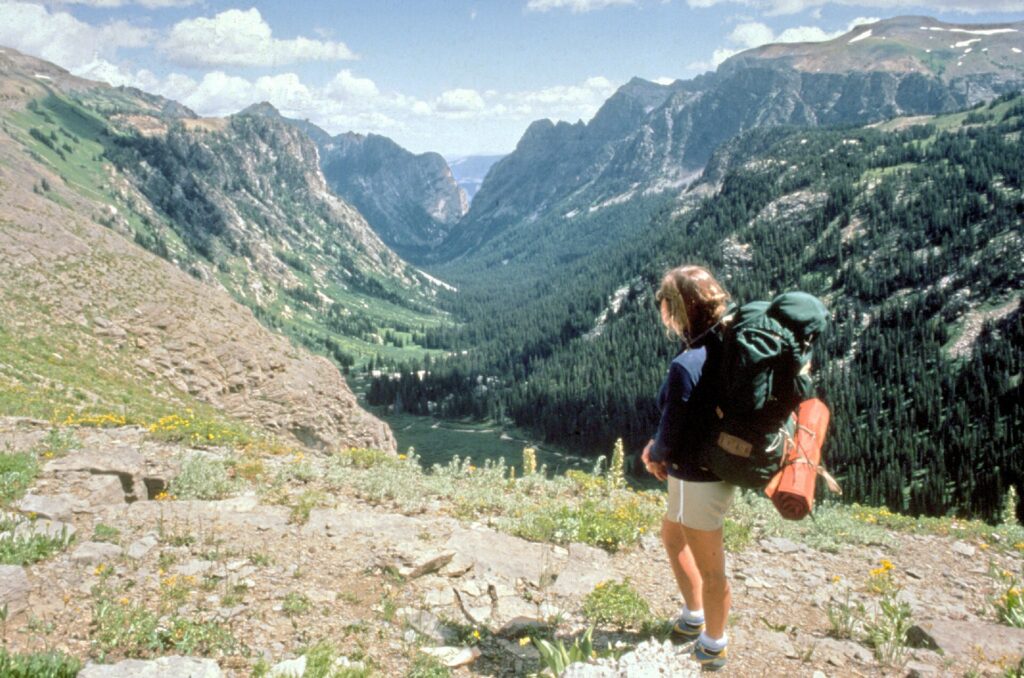
    A backpacker carrying a large internal frame pack on a trail in Grand Teton National Park
    An internal frame and a snug hip belt move the load off your shoulders on multi-day trips (Photo: National Park Service via Wikimedia Commons, Public domain)

    Choose capacity by trip, not by ambition

    Backpack capacity is measured in liters. More space tempts you to carry more, and more weight is the enemy on a trail. Use the table as a starting point, then adjust for how compact your gear is and the season.

    Trip typeTypical capacityWhat it holdsFrame and belt
    Short day hike15 to 25 LWater, snacks, layer, rain shell, first aid, phoneFrameless; simple webbing or light padded belt
    Long or alpine day hike25 to 35 LAdds extra layers, more food and water, map, headlampLight frame sheet; padded hip belt
    Overnight or light weekend35 to 50 LCompact tent or shelter, sleeping bag and pad, stove, food for one or two daysInternal frame; padded hip belt
    Weekend, 2 to 3 nights50 to 65 LFull camping kit, food for several days, more clothingInternal frame; adjustable torso; supportive belt
    Week or longer, winter trips65 L and upBulky winter gear, extended food, shared group gearRobust internal frame built for heavy loads

    If you are new to hiking, start with the pack for the trips you will take most often. Many people do mostly day hikes with the occasional overnight, and a 30 to 40 liter pack can stretch to cover both if your gear is compact.
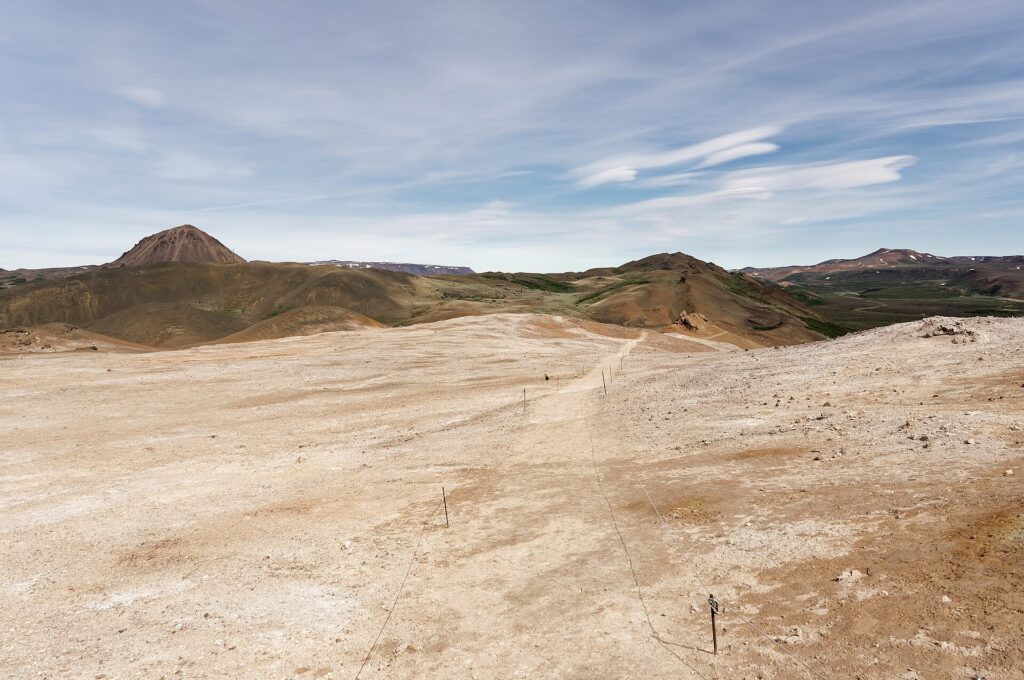
    A marked hiking trail crossing a colorful volcanic mountainside
    For day hikes, a light 20 to 30 liter pack with water, layers and the essentials is all you need (Photo: Jakub Hałun via Wikimedia Commons, CC BY 4.0)

    Fit: the part that matters most

    Most discomfort comes from a pack that does not fit, not from a pack that is poorly made. Fit depends on your torso length and hip size, not your height; two people of the same height can need different sizes.

    Measure your torso

    Have someone measure along your spine from the prominent bone at the base of your neck (tilt your head forward to find it) down to the level of the top of your hip bones. That distance is your torso length. Manufacturers publish which torso range each size fits, and many overnight packs have an adjustable back system to fine-tune it.

    Adjust in the right order

    • Load the pack with a realistic weight, loosen every strap and put it on.
    • Hip belt first. Center the padded belt over the top of your hip bones and tighten it firmly. The belt should carry most of the load on an overnight pack.
    • Shoulder straps next. Snug them so they wrap your shoulders without taking the weight off your hips. The straps should attach to the pack a little below the top of your shoulders.
    • Load lifters. If your pack has small straps from the top of the shoulder straps to the pack body, pull them to bring the load closer to your back.
    • Sternum strap last. Clip it across your chest, a few centimeters below your collarbones, just tight enough to hold the shoulder straps in place.

    Walk around, climb some stairs and lean forward. The pack should move with you, not sway or pull backward. Many brands offer women’s-specific fits with shorter torso ranges, differently shaped shoulder straps and hip belts, and these are worth trying regardless of how the pack is marketed.

    Frame types

    • Frameless packs are light and simple, ideal for day hikes and for ultralight backpackers who carry very little weight. They rely on how you pack them for structure.
    • Internal frame packs have a frame sheet, stays or a perimeter frame inside the pack. This is the standard for overnight and multi-day hiking because it transfers weight to the hip belt and keeps the load close to your body for balance on uneven ground.
    • External frame packs hang the bag on a visible frame. They are less common now but still carry heavy, awkward loads well and ventilate your back. They are less stable on rough terrain.

    Features that make a real difference

    • Padded hip belt with pockets. The belt carries the weight, and small belt pockets keep snacks, a phone and sunscreen in reach without stopping.
    • Water access. Stretch side pockets you can reach while walking, or a hydration sleeve and port for a water bladder, keep you drinking often.
    • Ventilated back panel. A suspended mesh back keeps air flowing and reduces a sweaty back in hot weather, at the cost of pushing the load slightly away from you.
    • Rain cover. Pack fabrics are water-resistant, not waterproof. An integrated or included rain cover, plus a liner or dry bags inside, keeps a sleeping bag and clothes dry.
    • Access. Top-loading is simplest and lightest. A front panel zip or a separate bottom compartment for a sleeping bag makes it easier to reach items without unpacking.
    • Compression straps. These cinch a partly full pack so the load does not shift, and let you strap on a foam pad or tent poles.
    • Tool loops. Loops for trekking poles and an ice axe matter on mountain routes.
    • Durable fabric and zippers. Abrasion-resistant fabric at the base and sides, and sturdy zippers, make a pack last many seasons.

    Weight: pack and base weight

    Every gram of the empty pack is a gram you carry all day. Heavier packs usually have more padding, stronger frames and more features, which is worth it for heavy loads and often not worth it for light ones. Backpackers talk about “base weight”: everything you carry except food, water and fuel. Reducing base weight, by choosing a lighter shelter, sleeping bag and cooking kit, often lets you choose a smaller, lighter pack, which makes the whole trip more pleasant. Pack light first, then choose the pack that fits what you carry.

    Packs from our original list

    The packs below were featured in the original version of this guide. They cover a range of trips and budgets rather than a ranking, and models, sizes and features change, so check the current specifications and torso-fit range from the manufacturer or seller before you buy.

    MOUNTAINTOP hiking backpack (25L and 40L)

    MOUNTAINTOP’s hiking backpack, listed in 25 and 40 liter versions, is an affordable option for day hikes and light overnights. It focuses on lightweight comfort with padded straps, a breathable back panel and multiple pockets. The 25 liter size suits day hikers who carry layers, food and water; the 40 liter size can stretch to a light overnight if your camping gear is compact. It is a sensible first pack for newer hikers.

    TETON 65L Explorer internal frame backpack

    TETON Sports is known for budget-friendly camping and backpacking gear. The 65L Explorer is a large internal frame pack with an adjustable torso, a padded hip belt, multiple compartments and gear loops, and an included rain cover. It suits backpackers who need room for a tent, sleeping bag and several days of food, and who want an adjustable fit at a lower price than premium brands. At 65 liters, resist filling every corner; pack only what you need.

    TETON 55L Scout internal frame backpack

    The 55L Scout is a slightly smaller sibling of the Explorer, with the same approach: internal frame, padded hip belt and shoulder straps, compression straps, gear loops and a rain cover. For many weekend backpackers, 55 liters is a better middle ground than 65, especially with reasonably compact gear. It is also a practical choice for teenagers and for scout or school trips where budget matters.

    Amazon Basics internal frame hiking backpack

    The Amazon Basics internal frame pack is a budget option with adjustable straps, an included rainfly, compression straps and a separate sleeping bag compartment. It suits people trying backpacking for the first time who do not want to invest heavily before they know they enjoy it. As with any budget pack, check the fit carefully: an adjustable torso and a hip belt that sits properly on your hips matter more than extra pockets.

    32 liter hiking backpack with internal frame and rain cover

    The original list also included an unbranded 32 liter pack with a light internal frame, an adjustable chest strap, breathable padding and a rain cover. A pack of this size and style bridges the gap between a daypack and an overnight pack: ideal for long day hikes with extra layers and food, or a minimalist hut-to-hut or overnight trip. Generic packs vary a lot in quality, so look closely at stitching, buckles and zippers.

    How to pack a hiking backpack

    A well-packed bag carries lighter than a badly packed one of the same weight.

    • Bottom: bulky, light items you will not need until camp, such as your sleeping bag and sleep clothes.
    • Middle, close to your back: the heaviest items, such as food, water reservoir, stove and cook kit. Keeping weight close to your spine and around shoulder-blade height keeps you balanced.
    • Outer middle and top: layers, rain jacket, first aid kit, water filter and toilet kit, where you can reach them quickly.
    • Lid and hip belt pockets: map, snacks, sunscreen, headlamp, phone and insect repellent.
    • Outside: as little as possible. Items dangling from the outside snag on branches and throw off your balance.

    Whatever the trip, carry the essentials for safety: navigation, a headlamp, sun protection, first aid, a knife or repair kit, a way to start a fire, shelter, extra food, extra water and extra clothes. The US National Park Service explains each of the Ten Essentials, and our guide to travel first aid kits covers what a compact kit should include. In Canadian national parks, Parks Canada’s visitor safety page covers wildlife, weather and trip planning.
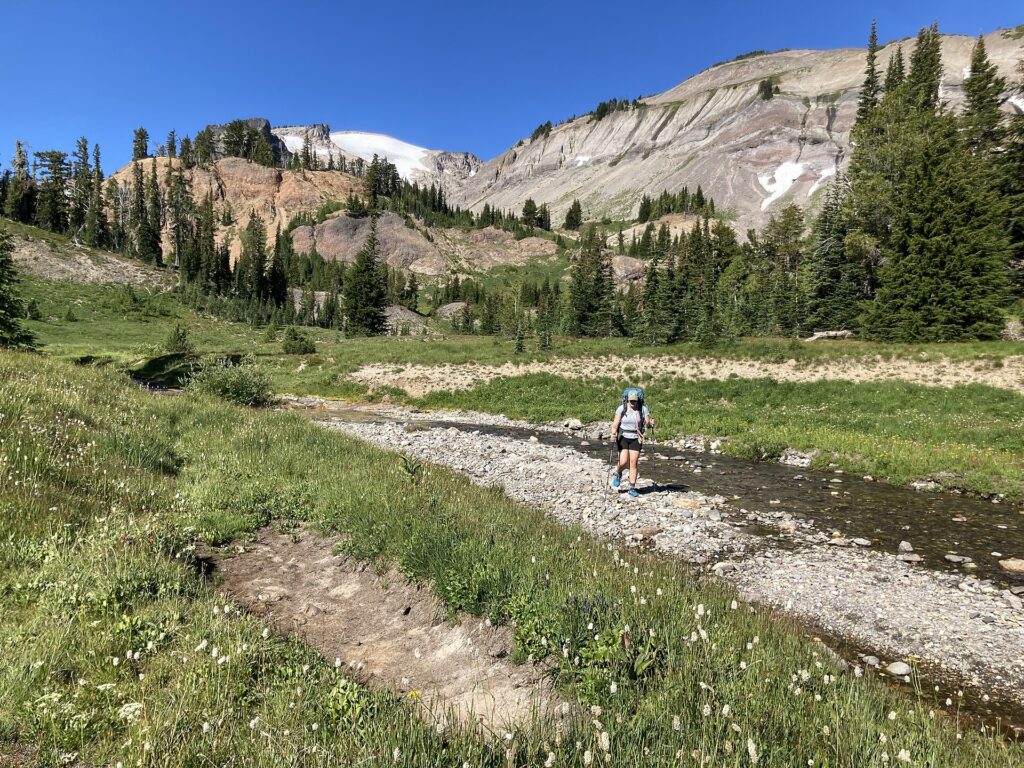
    A backpacker with a loaded pack crossing a mountain stream
    A pack that sits close to your back keeps you balanced on stream crossings and rough ground (Photo: Mattsjc via Wikimedia Commons, CC BY 4.0)

    Footwear, clothing and the rest of your kit

    A great pack cannot fix bad shoes. For well-maintained trails, trail runners or light hiking shoes work for many people; for rough terrain and heavy loads, boots with more support may suit you better. Our guide to comfortable walking shoes for traveling covers fit and break-in. A pair of light sandals or eco-friendly flip-flops makes a welcome camp shoe. Dress in layers of quick-drying fabrics rather than cotton, and pack a waterproof shell even on a sunny morning. For trips that combine town and trail, our guide to travel pants for men covers versatile, quick-drying options.

    Flying with a hiking backpack

    Many hikes start with a flight to the mountains. A few things to plan for:

    • Size. Most packs above about 40 to 45 liters are too big for carry-on limits and will need to be checked. Smaller packs may carry on if they fit the airline’s dimensions; check the airline’s official page.
    • Protect the straps. Loose hip belts and straps catch on baggage belts. Tighten everything, tuck straps away, and consider packing the pack inside a large duffel or a dedicated travel cover.
    • Stoves and fuel. Camping fuel canisters are not allowed on passenger flights. Stoves may be allowed if they are completely clean and empty, but rules vary, so check before you pack and plan to buy fuel at your destination.
    • Bear spray, knives and poles. Bear spray is generally not permitted on planes. Knives belong in checked bags, and trekking poles often have to be checked too. The TSA’s What Can I Bring? tool covers specific items for US flights, and CATSA’s what can I bring page covers Canadian airports.
    • Batteries in the cabin. Spare lithium batteries for headlamps, GPS units and power banks generally must travel in your carry-on. The FAA’s PackSafe guidance explains the rules.
    • Keep a carry-on day kit. Put your boots or trail shoes, a layer and any essential medication in the cabin with you, so a delayed checked pack does not stop you hitting the trail.

    If you are traveling to the trailhead with other luggage, our main guide to travel luggage explains how to combine a checked bag with a carry-on, and our guide to the Peak Design Travel Backpack 45L covers the brand’s Outdoor Backpack 45L for trips that mix trails and towns.

    Where to take a new pack

    Some of the best hiking in North America is a short flight and a drive away. Calgary is the gateway to Banff and the Canadian Rockies; see our guide to things to do in Calgary and compare flights to Calgary. Denver puts Colorado’s Front Range within reach; compare flights to Denver. Vancouver pairs city and mountains in one trip; read our guide to things to do in Vancouver. For more ideas closer to home, our guide to America’s most unique state parks has trails for every level. Most trailheads are not served by transit, so a car is usually essential; our Calgary car rentals page is a good place to start for the Rockies. For overnight trips in US national parks, read the National Park Service’s guidance on backcountry camping, since many areas require permits.
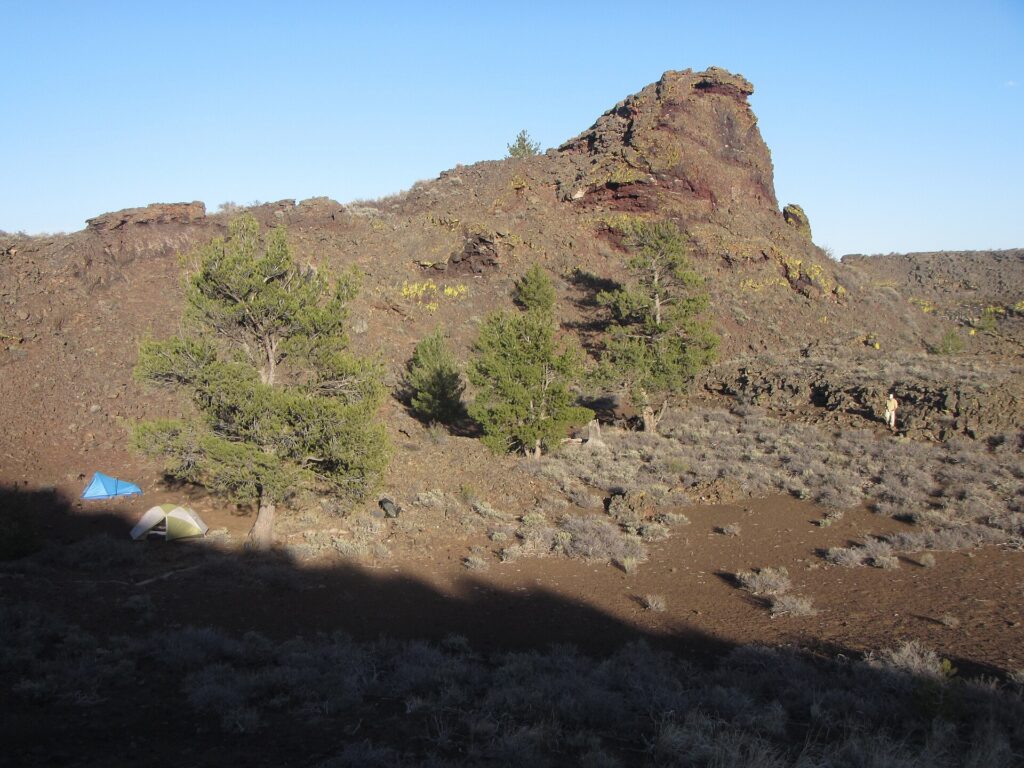
    Two tents pitched in a sheltered volcanic crater at a backcountry campsite
    Overnight trips need room for a shelter, sleeping bag and food; many US parks require a backcountry permit (Photo: NPS Photo via Wikimedia Commons, Public domain)

    Day hike, overnight or multi-day: getting it right

    Day hikes

    Keep it light and simple. A comfortable daypack with a hip belt, two bottle pockets or a hydration sleeve, and room for the essentials. Choose a pack you would happily wear all day on a city trip too, since many travelers use one bag for both.

    Overnight

    This is where an internal frame earns its place. A 35 to 50 liter pack with a proper hip belt, a sleeping bag compartment and compression straps handles one night comfortably if your shelter and sleeping bag are compact.

    Multi-day

    Fit, frame and hip belt matter most. Test the pack with the full weight you plan to carry, including food and water, and make sure the torso length is right. A few hours with the pack loaded around your neighborhood before the trip will reveal hot spots.

    Trying a pack before you buy

    If you can, try packs on in a store that lets you load them with weighted bags, and wear each one for at least ten minutes while walking and climbing stairs. Bring the gear you already own, especially a sleeping bag and water bottles, to see how it fits inside. If you buy online, check the return policy first, load the pack at home with your real gear, and wear it around the house before taking the tags off. For children and teenagers, choose a pack with a generous torso adjustment range so it can grow with them, and keep their loads light.

    Caring for your pack

    Empty the pack completely after every trip, shake out dirt and crumbs, and let it dry fully before storing it to avoid mildew. Clean it with a sponge, lukewarm water and mild soap; avoid washing machines and harsh detergents, which damage coatings and foam. Rinse a hydration bladder and let it dry open. Store the pack loosely, out of direct sunlight, in a dry place. Check buckles, stitching and zippers before each season; small repairs are easy early and hard in the backcountry.

    Common mistakes

    • Choosing by height, not torso. Measure your torso and check the size chart.
    • Buying too big. A 70 liter pack for a weekend trip invites overpacking.
    • Carrying the weight on your shoulders. Tighten the hip belt on your hip bones first.
    • Heavy items at the bottom or outside. Keep heavy gear close to your back and centered.
    • Trusting fabric to stay dry. Use a rain cover and a liner or dry bags.
    • First use on the big trip. Try the pack loaded on a shorter hike first.
    • Checking a pack with loose straps. Straps catch on baggage systems; tuck them or use a cover.

    Frequently asked questions

    What size hiking backpack do I need?

    Roughly 15 to 30 liters for day hikes, 35 to 50 for overnights and 50 to 65 for weekend trips of two or three nights. Longer or winter trips may need more. Compact gear lets you go smaller.

    How do I know if a hiking pack fits?

    The hip belt should sit on top of your hip bones and carry most of the weight, the shoulder straps should wrap your shoulders without gaps, and the pack should not sway when you walk. Choose the size by torso length.

    Is an internal frame backpack worth it for day hikes?

    For most day hikes, a frameless or lightly framed pack is enough. A frame helps on long days with heavy water, winter layers or camera gear.

    Are budget hiking backpacks any good?

    Many are fine for occasional use, especially for beginners. Check the fit, hip belt and build quality carefully, and upgrade once you know what you need.

    Can I bring a hiking backpack on a plane?

    Smaller packs may fit carry-on limits. Larger packs usually need to be checked, with straps tucked away or the pack placed in a cover. Fuel, bear spray and some tools are restricted.

    Do I need a women’s-specific hiking pack?

    Not necessarily, but women’s-specific fits often have shorter torso ranges and shaped straps and hip belts that suit many bodies better. Try both types.

    Should I use a hydration bladder or bottles?

    Bladders make it easy to sip often; bottles are easier to refill, check and clean. Many hikers use one of each.

    Once the pack is ready, pick the trail. Compare fares on our flight search for a mountain getaway, find a base near the trails on our hotel search, and book a car for the drive to the trailhead on our car rental search. For the Rockies, our guide to the best time to fly to Calgary will help you time your trip for the hiking season.

  • America’s Most Unique State Parks: Adventure Awaits

    America’s Most Unique State Parks: Adventure Awaits

    America’s national parks get the headlines, but some of the country’s strangest and most beautiful landscapes are protected as state parks. Red sandstone that seems to burn at sunset, stone spires named after a color film, a cypress swamp draped in Spanish moss, a river gorge with three great waterfalls, a volcanic field where you can dig for diamonds and keep what you find: these places are often less crowded than the big national parks, easier to fit into a long weekend, and close to cities with good flight connections. This guide profiles the state parks that stand out as genuinely unique, from the four in the original version of this article to seven more that deserve a place on the list. For each one, you will find what makes it special, when to go, how to get there and what to know before you set off, followed by advice on fees, reservations, safety and building a fly-and-drive trip around them.

    The short answer

    If you want desert color, start with Valley of Fire in Nevada, an hour from Las Vegas, and the Utah trio of Kodachrome Basin, Goblin Valley and Dead Horse Point. For water and forest, go to Letchworth in New York for its waterfalls and Caddo Lake in Texas for its cypress bayous. For wildlife, Custer State Park in South Dakota has free-roaming bison. For something completely different, dig for diamonds at Crater of Diamonds in Arkansas. Visit desert parks from fall to spring, not in midsummer; check each park’s official site for closures and reservations before you go; and plan to fly into a nearby city and rent a car, since almost none of these parks can be reached by public transport. Compare fares on our flight search and rental rates on our car rental search.

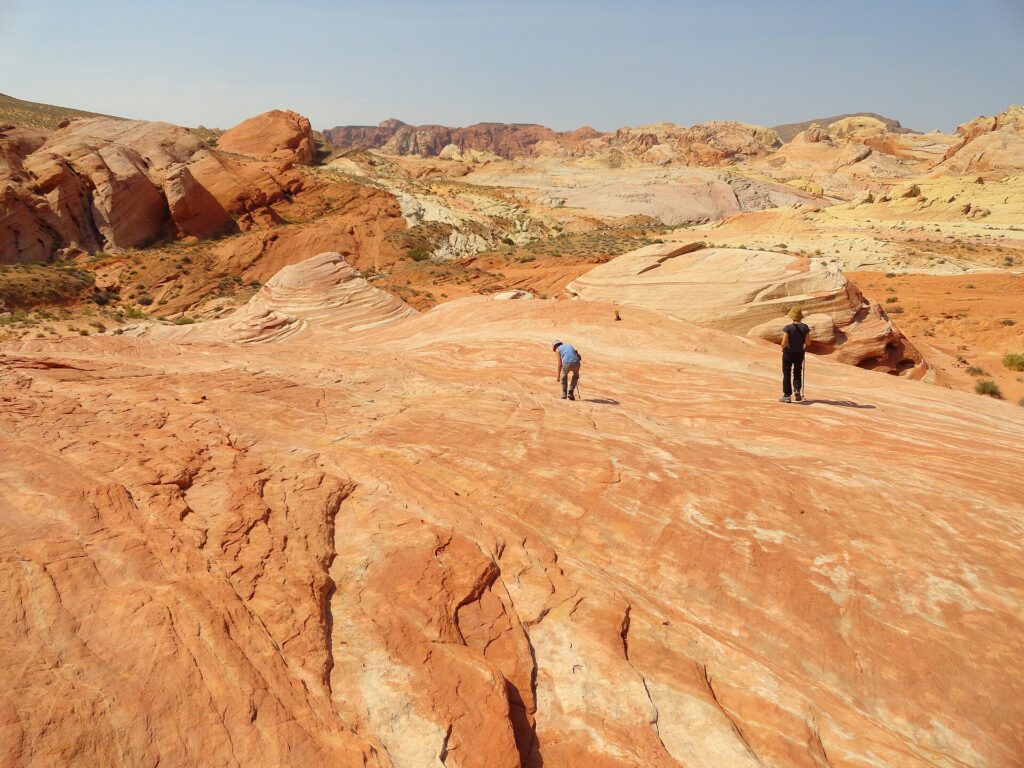
    Swirling red and white sandstone stripes on the Fire Wave Trail in Valley of Fire State Park, Nevada
    The Fire Wave in Valley of Fire State Park, about an hour from Las Vegas (Photo: Fabio Achilli from Milano, Italy via Wikimedia Commons, CC BY 2.0)

    State parks versus national parks

    State parks are run by individual states rather than the federal government, and that affects how you plan a visit.

    • Fees and passes are set by each state. A federal national parks pass does not cover state parks. Most charge a day-use fee per vehicle or per person, and some charge more for vehicles registered out of state. If you plan several visits in one state, check whether a state annual pass is available.
    • Reservations work differently. Campgrounds and cabins are booked through each state’s own reservation system, and popular parks fill up months ahead for weekends and holidays. Some parks also limit day-use entry at busy times.
    • They are often less crowded. Many state parks see far fewer visitors than nearby national parks, especially midweek, although the most famous ones can still be busy on weekends and holidays.
    • They pair well with national parks. Several of the parks below sit close to famous national parks, which makes them easy to add to a road trip.

    America’s most unique state parks

    1. Valley of Fire State Park, Nevada

    Valley of Fire earned its name from the red sandstone that seems to glow at sunrise and sunset. The park covers some 40,000 acres of bright red Aztec sandstone set among gray and tan limestone, with petrified trees and petroglyphs more than 2,000 years old. It is Nevada’s oldest state park and one of its most visited.

    • Don’t miss: the swirling stripes of the Fire Wave, the pastel rocks of the White Domes, the petroglyphs at Atlatl Rock and along the Mouse’s Tank trail, and Elephant Rock near the east entrance.
    • When to go: fall through spring. Summer temperatures are extreme, and some trails close during the hottest months for safety. The park also closes completely for maintenance for the first two weeks of December each year.
    • Getting there: about an hour’s drive northeast of Las Vegas, which makes it an easy day trip. Fly into Harry Reid International Airport, compare flights to Las Vegas, and pick up a rental car in Las Vegas.

    Hours, fees, closures and trail information are on the official Valley of Fire page from Nevada State Parks. Our guides on whether you need a rental car in Las Vegas and things to do in Las Vegas help you build a trip that combines the Strip with the desert.

    2. Kodachrome Basin State Park, Utah

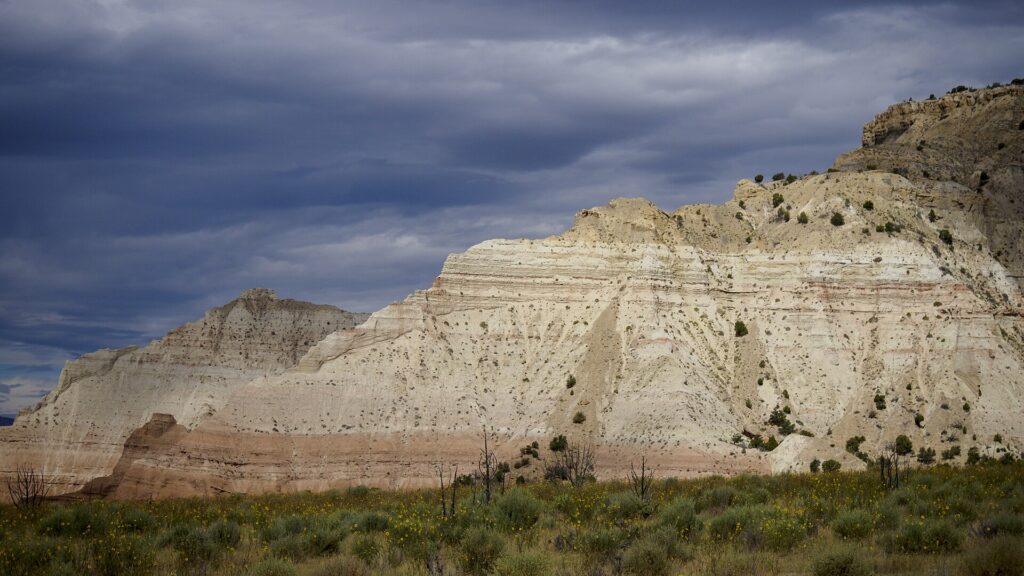
    The color and beauty of this basin in southern Utah led a National Geographic Society expedition to name it after Kodachrome color film in 1948. Its signature features are 67 monolithic stone spires called sedimentary pipes, rising from multi-hued sandstone layers that reveal around 180 million years of geologic history.

    • Don’t miss: the easy nature trail, the Panorama Trail for a longer loop past the spires, and the colors at sunrise and sunset.
    • When to go: spring and fall are ideal. Summers are hot, and winters can bring snow and cold nights at this elevation.
    • Stay: the park has campgrounds and cabins, which are popular, so reserve early.
    • Combine it: it sits a short drive from Bryce Canyon National Park, so many visitors pair the two, and it fits naturally into a southern Utah loop from Las Vegas or Salt Lake City.

    See the official Kodachrome Basin page from Utah State Parks for camping and trail details.

    Colorful sandstone cliffs and rock spires in Kodachrome Basin State Park, Utah
    Kodachrome Basin in southern Utah, named after the color film in 1948 (Photo: Nhartmannphotos via Wikimedia Commons, CC BY 4.0)

    3. Goblin Valley State Park, Utah

    Goblin Valley looks like another planet. Thousands of mushroom-shaped rock formations, known as hoodoos or goblins, crowd a valley in the desert of east-central Utah, and unlike many parks, visitors are free to wander among them off trail. The park is also known for its dark night skies, making it a great place to stargaze.

    • When to go: spring and fall. Summer days are very hot, and there is little shade.
    • Combine it: it sits between Capitol Reef National Park and the Moab area, so it slots easily into a longer Utah road trip.

    4. Dead Horse Point State Park, Utah

    Dead Horse Point is famous for one view: a sheer overlook high above a dramatic gooseneck bend in the Colorado River, with the canyons of Canyonlands stretching away beyond. It is close to Moab and to both Arches and Canyonlands national parks, and it is popular for sunrise, sunset and stargazing.

    5. Caddo Lake State Park, Texas

    The original list described Caddo Lake as a labyrinth of waterways and swamps, and that still captures it. Towering bald cypress trees draped with Spanish moss rise out of Big Cypress Bayou, and paddling the channels feels closer to the Louisiana bayou country next door than to the Texas of most people’s imagination. The fishing is excellent, with more than 70 species recorded.

    • Don’t miss: a canoe or kayak trip along the paddling trails, a guided boat tour from one of the nearby marinas, and a night in one of the historic cabins built by the Civilian Conservation Corps more than 80 years ago.
    • When to go: spring and fall are the most comfortable. Summer is hot and humid, and the mosquitoes are out in force.
    • Getting there: the park is in East Texas, close to the Louisiana line, a few hours’ drive east of Dallas. Compare flights to Dallas and a rental car in Dallas; our guide on whether to rent a car or use transit in Dallas explains the options.

    Reservations, alerts and paddling maps are on the official Caddo Lake State Park page from Texas Parks and Wildlife.

    6. Palo Duro Canyon State Park, Texas

    Texas Parks and Wildlife describes Palo Duro Canyon as the second largest canyon in the country. It cuts through the flat Texas Panhandle in layers of red, orange and white rock, and it is a surprise to anyone who expects nothing but plains.

    • Don’t miss: the hike to the Lighthouse, the canyon’s best-known rock formation; the scenic drive to the canyon floor; and, in summer, the outdoor musical performances held in the canyon amphitheater.
    • When to go: spring and fall. Summer is very hot on the canyon floor, so hike early and carry plenty of water.
    • Getting there: the park is near Amarillo, which is reached by domestic flights or a long drive from Dallas.

    Visit the official Palo Duro Canyon State Park page for trail conditions and reservations.

    7. Letchworth State Park, New York

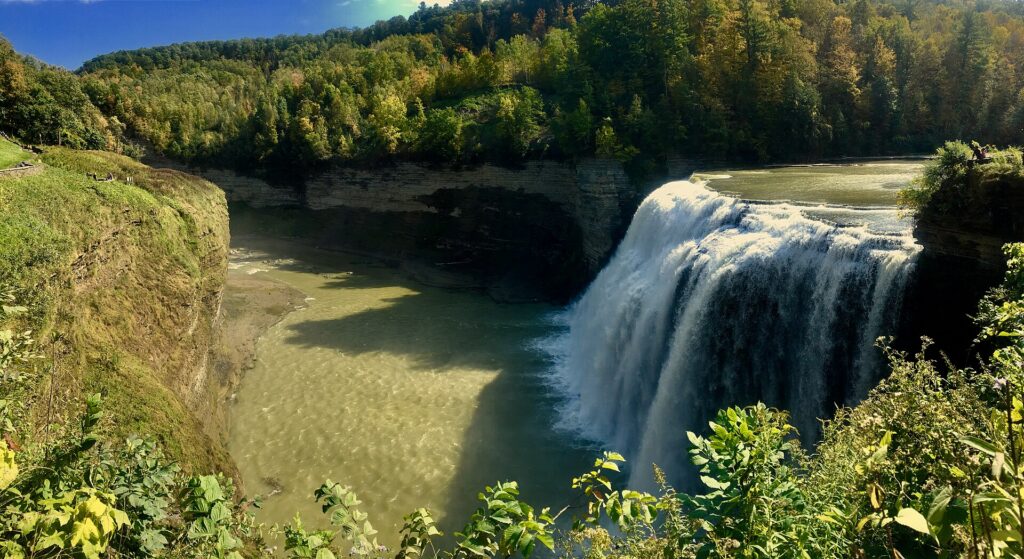
    Known as the “Grand Canyon of the East”, Letchworth is one of the most scenic places in the eastern United States. The Genesee River roars through a gorge over three major waterfalls, between cliffs as high as 600 feet in some places, surrounded by forest. There are 66 miles of hiking trails, as well as routes for horseback riding, biking and winter sports.

    • Don’t miss: the Upper, Middle and Lower Falls, the Gorge Trail along the rim, and the views from the park’s many overlooks.
    • When to go: summer for long days and full facilities; October for spectacular fall color, which makes it one of the park’s busiest times. Campgrounds and cabins operate seasonally and are booked through the state’s reservation system.
    • Getting there: the park is in western New York, within easy driving distance of Rochester and Buffalo, and it makes a good road trip from Toronto via one of the Niagara crossings; bring your passport and check border requirements. Compare car rentals in Toronto and confirm that your rental company allows cross-border travel.

    Opening dates and camping information are on the official Letchworth State Park page from New York State Parks. If you would rather combine New York’s outdoors with the city, our guide to New York on a budget covers the other end of the state.

    The Middle Falls of the Genesee River plunging into the gorge at Letchworth State Park, New York
    Middle Falls at Letchworth State Park, the "Grand Canyon of the East" (Photo: Andre Carrotflower via Wikimedia Commons, CC BY-SA 4.0)

    8. Custer State Park, South Dakota

    Custer State Park, in the Black Hills, is one of the best places in the country to see bison roaming free. Its Wildlife Loop Road passes through grasslands where you may also see pronghorn, elk, deer and the park’s famous begging burros, and its winding scenic roads squeeze between granite spires and through narrow tunnels.

    • Safety: the animals are used to cars, but they are wild. Stay in your vehicle or keep at least 100 yards from bison and elk, as the park advises.
    • When to go: late spring to early fall. The park’s annual bison roundup in the fall is a major event.
    • Combine it: Mount Rushmore, Wind Cave National Park and Badlands National Park are all within reach, making the Black Hills a great road-trip region.

    See the official Custer State Park page from South Dakota Game, Fish and Parks for lodging, campgrounds and visitor centers.

    9. Anza-Borrego Desert State Park, California

    Anza-Borrego is the largest state park in California, a vast desert of badlands, palm oases and canyons with hundreds of miles of dirt roads and twelve wilderness areas. In a good year, spring rains trigger spectacular wildflower displays, and patient visitors may spot bighorn sheep.

    • Don’t miss: the visitor center near Borrego Springs, the badlands views from Font’s Point, and the giant metal sculptures scattered around Borrego Springs.
    • When to go: late fall through spring. Wildflower season depends entirely on winter rainfall, so check the park’s updates. Summers are dangerously hot.
    • Check before you go: some trails can be closed after fire or flood damage; the park’s page lists current closures.
    • Getting there: a scenic drive inland from San Diego. Compare flights to San Diego and car rentals in San Diego, and see our guide to things to do in San Diego.

    The official Anza-Borrego Desert State Park page from California State Parks has closures, campground information and seasonal updates.

    10. Crater of Diamonds State Park, Arkansas

    This is the only place in the world where the public can search for natural diamonds in their original volcanic source. Visitors search a 37-acre plowed field on the eroded surface of an ancient volcanic crater, and any rock, mineral or gem you find is yours to keep. The largest diamond ever unearthed in the United States, the 40.23-carat Uncle Sam, was found here before it became a state park.

    • How it works: bring your own hand tools or rent them at the park. Battery-operated and motorized tools are not allowed.
    • Tips: searching after rain can make diamonds easier to spot on the surface, and the park staff can help identify finds.
    • When to go: spring and fall are most comfortable; summer in the open field is hot.

    The official Crater of Diamonds page from Arkansas State Parks explains the rules and has tips for first-time searchers.

    11. Starved Rock State Park, Illinois

    Starved Rock surprises visitors who think of Illinois as flat. Sandstone canyons carved by glacial meltwater cut into the bluffs along the Illinois River, and after spring rains or snowmelt, waterfalls pour into many of them. In winter, eagles gather along the river.

    At a glance

    ParkStateWhy it is uniqueBest seasonNearest major airport
    Valley of FireNevadaRed sandstone, petroglyphsOctober to AprilLas Vegas
    Kodachrome BasinUtahSedimentary pipes, colorSpring and fallLas Vegas or Salt Lake City
    Goblin ValleyUtahThousands of hoodoos, dark skiesSpring and fallSalt Lake City
    Dead Horse PointUtahColorado River gooseneck overlookSpring and fallSalt Lake City
    Caddo LakeTexasCypress bayou paddlingSpring and fallDallas
    Palo Duro CanyonTexasSecond largest canyon in the countrySpring and fallAmarillo or Dallas
    LetchworthNew YorkGorge with three major waterfallsSummer and OctoberBuffalo, Rochester or Toronto
    CusterSouth DakotaFree-roaming bisonLate spring to early fallRapid City
    Anza-BorregoCaliforniaDesert wilderness, wildflowersLate fall to springSan Diego
    Crater of DiamondsArkansasDig for diamonds and keep themSpring and fallLittle Rock
    Starved RockIllinoisCanyons and seasonal waterfallsSpring, fall and winterChicago

    Road trips that link several parks

    The Southwest loop

    Fly into Las Vegas and spend a day at Valley of Fire. Continue into southern Utah for Kodachrome Basin and Bryce Canyon, then head north and east through Capitol Reef to Goblin Valley and on to Moab for Dead Horse Point, Arches and Canyonlands. Finish in Salt Lake City and fly home from there. A one-way rental usually costs more than a round trip, so compare it with looping back to Las Vegas; our guide to car rental return timing explains how pickup and drop-off times affect the price.

    Texas two ways

    From Dallas, Caddo Lake makes a relaxed weekend of paddling and cabin life in East Texas. Palo Duro Canyon is a separate trip to the Panhandle, best combined with a stay in Amarillo.

    Great Lakes and New York

    Letchworth pairs naturally with Niagara Falls and the Finger Lakes wine region, and it is an easy drive from Toronto, Buffalo or Rochester. Starved Rock is a separate day trip from Chicago.

    The Black Hills

    Fly into Rapid City and spend three or four days combining Custer State Park with Mount Rushmore, Wind Cave and the Badlands.

    Planning your trip

    Flights

    These parks are spread across the country, so start by finding the nearest major airport with good fares from your home city. Our guide to cheap domestic flights in the USA explains how to find them, and our guide to the best time to book cheap flights and hotels covers timing. Canadian travelers should compare flights from Toronto and other gateways into Las Vegas, Salt Lake City, Dallas, San Diego or Chicago.

    Rental cars

    A car is essential for almost every park on this list. Reserve early for peak seasons, check mileage limits for long road trips, and choose a vehicle suited to the roads; most park roads are paved, but some scenic drives and backcountry routes are gravel or dirt and may be off limits under your rental agreement. Our rental car booking tips cover insurance and fees, and our guide to car rentals for family vacations helps if you are traveling with children.

    Where to stay

    State park campgrounds and cabins are the most atmospheric option and often the best value, but they book up quickly. Reserve through each state’s official system as soon as your dates are set. Otherwise, stay in the nearest gateway town or city; in Las Vegas, for example, rooms on the Strip are often much cheaper midweek than at weekends, which suits a desert day trip. Compare options on our hotel search.

    Fees, reservations and passes

    Every state sets its own fees, and some charge more for out-of-state vehicles. Check the official park page for current day-use fees, hours and any timed-entry or reservation system before you drive out, and consider a state annual pass if you plan several visits. Parks are one of the best-value trips there is, and our guide on how to save money for a trip shows how to fund the flights and car.

    Safety and park etiquette

    • Respect the heat. Desert parks can be dangerously hot from late spring to early fall. Hike early, carry more water than you think you need, and turn back if you feel unwell. Some parks close trails in summer for this reason.
    • Keep your distance from wildlife. Bison, elk and other large animals can injure people who get too close. Follow each park’s distance guidance.
    • Stay on marked trails where required and leave rocks, plants and artifacts where you find them, except at Crater of Diamonds, where keeping your finds is the point.
    • Never touch petroglyphs. Oils from skin damage them, and defacing them is illegal.
    • Check conditions before you go. Flash floods, fire damage, maintenance closures and seasonal road closures all happen. The official park page is the most reliable source.
    • Leave no trace. Pack out all trash, respect quiet hours in campgrounds and keep pets leashed where they are allowed.

    What to pack

    Bring sturdy walking shoes or hiking boots, a sun hat, sunscreen and sunglasses, layers for cool desert mornings and evenings, a refillable water bottle or hydration pack, snacks, a headlamp for stargazing, and a paper map, since cell coverage is patchy in many parks. A comfortable daypack makes a big difference on longer hikes; our guide to the best hiking backpacks can help you choose one. For paddling at Caddo Lake, add insect repellent and quick-drying clothes; for Crater of Diamonds, a bucket, a small trowel and a change of shoes.

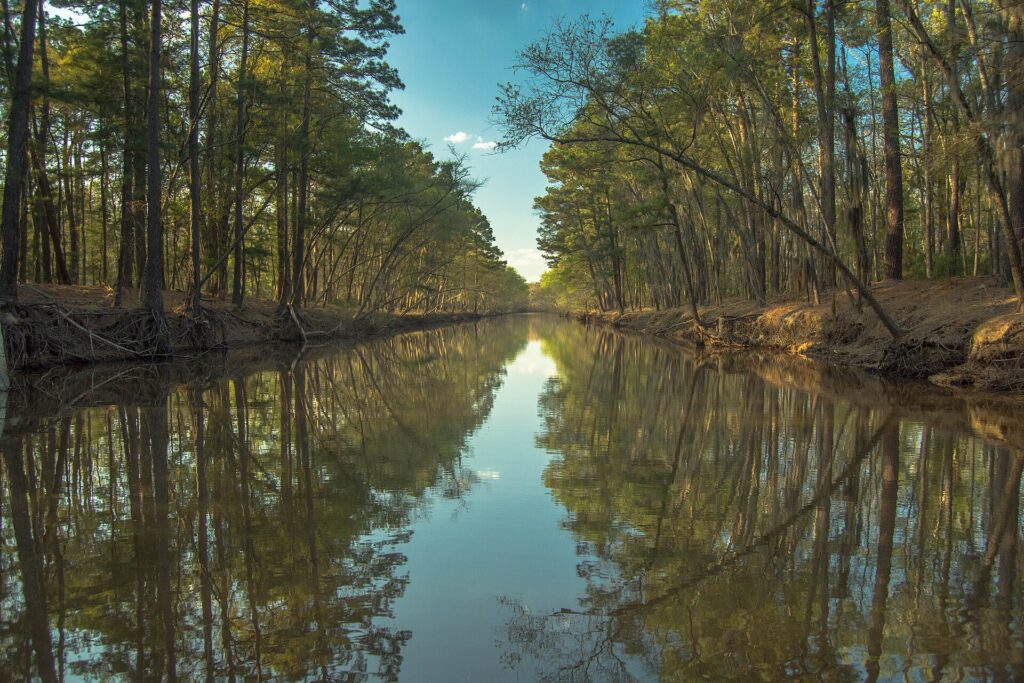
    Bald cypress trees rising from the calm water of Caddo Lake in East Texas
    Bald cypress on Caddo Lake, best explored by canoe or kayak (Photo: Maciej Kraus via Wikimedia Commons, CC BY 2.0)

    Common mistakes to avoid

    • Visiting desert parks in midsummer without planning for extreme heat.
    • Assuming a national parks pass covers state parks. It does not.
    • Arriving without a reservation for popular campgrounds and cabins on holiday weekends.
    • Underestimating distances. Parks that look close on a map can be hours apart, especially in Utah and Texas.
    • Not checking closures. Valley of Fire, for example, closes for two weeks every December, and trails anywhere can close after storms or fires.
    • Relying on your phone for navigation. Download offline maps before you lose signal.

    Frequently asked questions

    What is the most unique state park in the US?

    It depends on what you are looking for, but Crater of Diamonds stands out because it is the only place in the world where the public can dig for diamonds in their original volcanic source. For scenery, Valley of Fire, Kodachrome Basin and Goblin Valley are hard to beat.

    Do I need a reservation to visit a state park?

    For day visits, usually not, though some popular parks limit entry at busy times. Campgrounds and cabins almost always need reservations, often months ahead for weekends and holidays. Check the official park page before you go.

    Does the America the Beautiful pass work at state parks?

    No. That pass covers federal lands such as national parks. State parks set their own fees, and many states sell their own annual passes.

    When is the best time to visit desert state parks?

    Fall through spring. Summer temperatures in parks like Valley of Fire, Anza-Borrego and Goblin Valley can be dangerous, and some trails close in the hottest months.

    Can I visit these parks without a car?

    Generally not. A few offer guided tours from nearby cities, such as Valley of Fire from Las Vegas, but a rental car gives you far more flexibility.

    Which state park is best for families?

    Crater of Diamonds is a hit with children, Custer State Park’s wildlife is thrilling for all ages, and Starved Rock and Letchworth have plenty of shorter trails and overlooks.

    Can Canadians easily visit these parks?

    Yes. Letchworth and Starved Rock are within reach of the Great Lakes region, and the western parks are an easy fly-and-drive trip via Las Vegas, Salt Lake City or San Diego. Carry your passport and check US entry requirements before you travel.

    Ready to explore? Find flights to the nearest gateway city on our flight search, book a rental car for the drive, and compare rooms near the park on our hotel search. For more ways to travel well without overspending, read our guide to budget travel destinations, and for a very different kind of escape, see our relaxing vacations for doing absolutely nothing or our guide to the best cities for Christmas in the USA.