Tag: Los Angeles

  • Best Time to Fly to Los Angeles: Seasons, Weather & Prices

    Best Time to Fly to Los Angeles: Seasons, Weather & Prices

    Los Angeles has the kind of climate that makes “best time to visit” sound like a trick question. It is mild and mostly dry in every month, and there is no season when the city shuts down. But the airfares and hotel rates tell a different story. Los Angeles International is one of the busiest airports in the world, and demand for its seats follows the school calendar, the holidays, the award shows, the theme parks, the festivals in the desert and the conventions downtown far more than it follows the weather. Add a coastal climate where June can be gray at the beach while the Valley bakes, and timing matters more than the postcard suggests. This guide walks through the weather month by month, the fare seasons, the events that move prices, the airports, and the timing tricks that work for Los Angeles.

    The short answer

    For weather and value together, the best windows are mid-September to early November, when the ocean is at its warmest, the summer crowds have gone home and the skies are often the clearest of the year, and late April to mid-May, before the coastal gray and the summer fares set in. The cheapest fares usually come in late January and February, outside the Presidents’ Day weekend, and in the first two weeks of December. The most expensive stretches are mid-June to mid-August, when families fill the theme parks and the beaches, Thanksgiving week, the Christmas and New Year holidays, and the spring break weeks of March and early April. Competition among the many airlines serving Los Angeles keeps fares lower than demand alone would suggest, but the gap between a good week and a bad one is large. Whatever you choose, run a flexible-date search on our Los Angeles flights page; moving a trip by three or four days around a holiday weekend often changes the price band entirely.
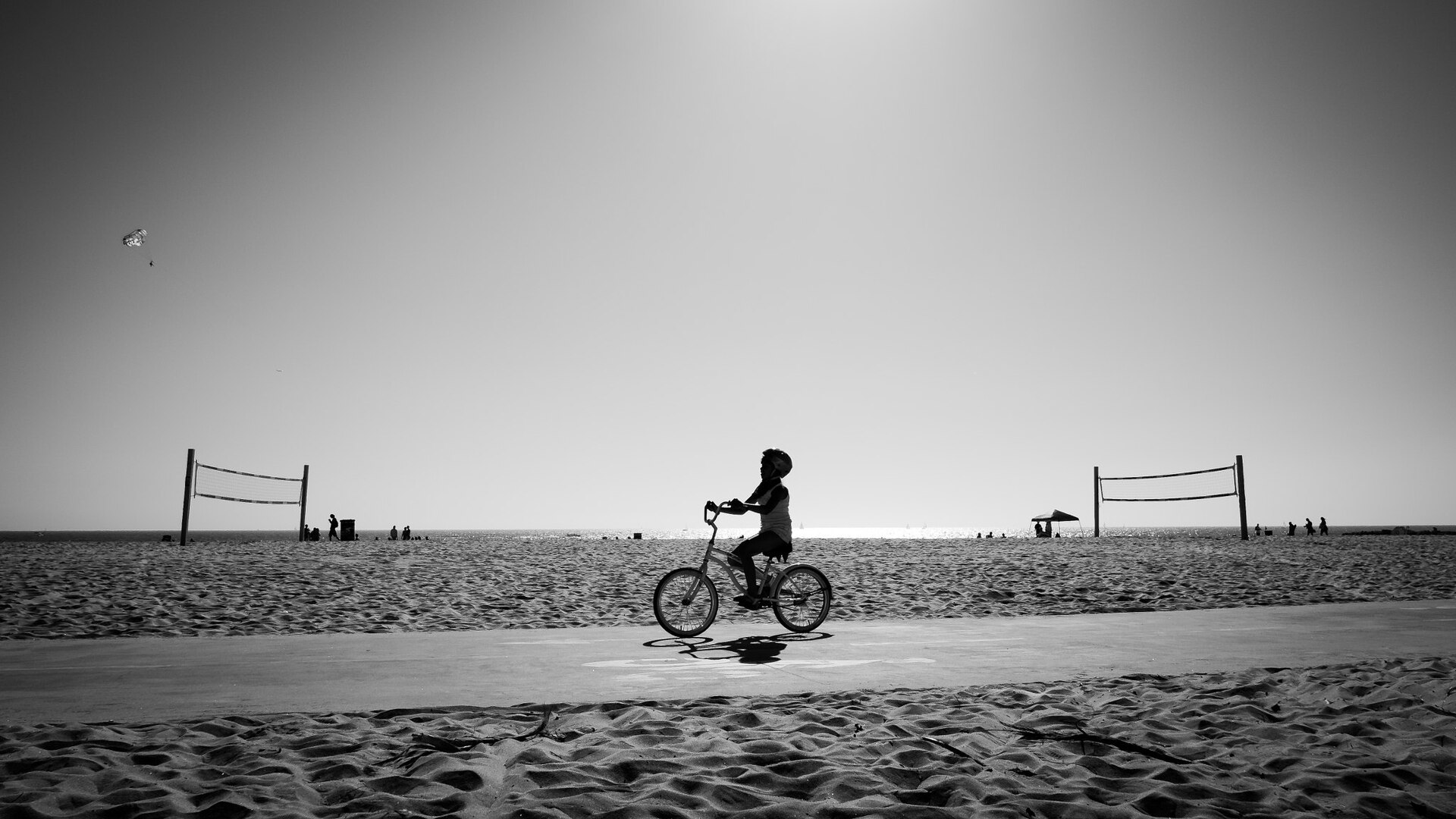
    Venice Beach on a sunny day in Los Angeles
    Venice Beach in late summer, when the ocean is at its warmest and the fares start to fall (Photo: Giuseppe Milo via Wikimedia Commons, CC BY 3.0)

    Los Angeles weather, season by season

    Los Angeles has a Mediterranean climate: warm, dry summers, mild winters with a short rainy season, and sunshine for most of the year. What complicates it is geography. The city runs from the Pacific to the mountains, and the temperature can differ by 10 °C (20 °F) between Santa Monica and the San Fernando Valley on the same summer afternoon. The figures below are approximate seasonal patterns for downtown, based on the long-term climate normals published by NOAA and the National Weather Service’s Los Angeles office; the beach cities run cooler in summer and the Valley and inland areas run hotter, so check the forecast for the part of the city where you will be staying.

    MonthTypical daytime highTypical overnight lowWhat it feels likeFare pressure
    Januaryaround 20 °C (68 °F)around 9 °C (49 °F)Mild, clear days between storms; snow on the mountains behind the cityHigh for New Year, then low
    Februaryaround 20 °C (68 °F)around 10 °C (50 °F)The wettest month on average, though most days are dry and brightLow, except Presidents’ Day weekend
    Marcharound 21 °C (70 °F)around 11 °C (52 °F)Green hills, the last rain of the season, wildflowers inlandModerate to high; spring break
    Aprilaround 23 °C (73 °F)around 13 °C (55 °F)Pleasant and settled; cool eveningsModerate; Easter and festival weekends busy
    Mayaround 24 °C (75 °F)around 14 °C (58 °F)“May Gray”: overcast mornings at the coast, sun inland by noonModerate; rises for Memorial Day
    Junearound 26 °C (79 °F)around 17 °C (62 °F)“June Gloom” at the beach, warm inland, long eveningsHigh from mid-month
    Julyaround 29 °C (84 °F)around 18 °C (65 °F)Sunny and warm; hot in the Valley and the desertPeak
    Augustaround 29 °C (85 °F)around 19 °C (66 °F)The warmest month on average; heat waves inlandPeak until the last week
    Septemberaround 29 °C (84 °F)around 18 °C (65 °F)Hot spells, warm ocean, empty beaches after Labor DayModerate, falling after Labor Day
    Octoberaround 26 °C (79 °F)around 16 °C (60 °F)Clear and dry; Santa Ana winds can bring heat and fire weatherLow to moderate
    Novemberaround 23 °C (73 °F)around 12 °C (53 °F)Warm days, cool nights, the first rain in some yearsLow, except Thanksgiving week
    Decemberaround 19 °C (67 °F)around 9 °C (48 °F)Mild and often sunny; storms possibleLow until mid-month, then peak

    Three things the table cannot show. First, the marine layer: in late spring and early summer, a bank of low cloud forms over the cool Pacific overnight and sits over the coast until late morning or, on some days, all day. Locals call it May Gray and June Gloom, and it means that a June beach day in Santa Monica can be 20 °C (68 °F) and overcast while Burbank, fifteen miles inland, is sunny and ten degrees warmer. Second, the ocean: the water off Los Angeles is cold by subtropical standards, around 14 to 16 °C (the upper 50s to about 60 °F) in winter and spring, and only reaching the upper teens to around 21 °C (the upper 60s to around 70 °F) in August and September, which is why the best swimming comes late in the summer. Third, the Santa Ana winds: hot, dry winds from the desert that blow toward the coast mostly between October and early spring, bringing the clearest air and the highest temperatures of the year to the beach and, with them, the serious wildfire risk that the region lives with.

    How Los Angeles fare seasons work

    Three forces drive seats into Los Angeles. The first is leisure travel, which follows the American school calendar: summer, spring break, Thanksgiving and the winter holidays are when families fly in for Disneyland, Universal and the beach. The second is the entertainment and business calendar, with the award season from January to March, the big conventions downtown, and the film, music and tech industries keeping weekday flights busy year-round. The third is the airport itself. LAX is a hub for several major airlines and a gateway to Asia, Australia and Latin America, and with Burbank, Long Beach, Orange County and Ontario also in the region, few cities in the world have more competition on more routes. The result is a strong summer peak, sharp holiday spikes, and long stretches of the year when fares into Los Angeles are among the best value in the country for the distance flown.

    Peak season

    Mid-June to mid-August, the week of Thanksgiving, roughly December 18 to January 2, and the spring break weeks in March and early April. Summer is the longest and most expensive: school is out across the country, the theme parks run extended hours, and international visitors from Europe and Asia add to the domestic crowds. If you must travel in summer, book early, fly mid-week, and consider staying downtown or inland rather than on the coast, where rates climb fastest.

    Shoulder season

    Late April to early June and mid-September to early November. Late spring gives you green hills, settled weather and moderate prices, with May Gray the main drawback for a beach trip. Early fall is the local favorite: the ocean is warm, the days are long enough and the kids are back in school. Watch the long weekends, Memorial Day, Labor Day and Columbus Day or Indigenous Peoples’ Day, and the weekends of big festivals and conventions.

    Low season

    Early to mid-January after the holidays, February outside Presidents’ Day weekend, and the first half of December. Fares and hotel rates are at their lowest, the air is at its clearest after the winter rains, and the snow on the San Gabriel Mountains makes the skyline views the best of the year. The trade-off is a chance of a few days of heavy rain and cooler evenings.

    As elsewhere, mid-week departures and early morning or late evening flights usually price below Friday and Sunday afternoons on the same route, and a search across a whole month reveals cheaper pairs of dates close to your first choice. Our guide to the best times to book explains how to read those patterns.

    Los Angeles month by month

    January

    The year opens with the Rose Parade and the Rose Bowl game in Pasadena on New Year’s Day, which fills hotels across the San Gabriel Valley and keeps fares high through the first weekend. After that, January is one of the best-value months of the year. Days are mild and often brilliantly clear after a storm, the mountains are white, and museums and the Getty are at their least crowded. Award season begins with the Golden Globes in Beverly Hills.

    February

    Statistically the wettest month, but rain comes in a handful of storms rather than every day, and the rest of the month is bright and green. The Grammys are held downtown, Lunar New Year brings the Golden Dragon Parade to Chinatown and celebrations to the San Gabriel Valley, and the Presidents’ Day weekend (the third Monday) is a busy family travel weekend. Outside it, February has some of the lowest fares of the year.

    March

    The hills are at their greenest, wildflowers bloom in the deserts and the Antelope Valley, and the gray whale migration passes Palos Verdes. The Oscars are held at the Dolby Theatre in Hollywood in late winter or early spring, closing streets around Hollywood and Highland for days. The LA Marathon runs from Dodger Stadium to Santa Monica. Spring break starts mid-month for many schools, and fares climb through the second half.

    April

    Settled, pleasant weather, and a busy month for the region because of the Coachella and Stagecoach festivals, held on consecutive weekends in Indio in the desert east of the city. Most festival-goers fly into Los Angeles or Palm Springs, which lifts fares into LAX on those Thursdays and Fridays. Easter and the tail of spring break add to the demand.

    May

    One of the most comfortable months for sightseeing, with warm afternoons and cool evenings, and one of the better value windows before summer. The catch is May Gray at the coast: beach mornings are often overcast, although the sun usually breaks through inland. Memorial Day weekend (the last Monday) is the unofficial start of summer and the one date to book around.

    June

    Summer arrives in stages. The marine layer, now called June Gloom, keeps the beaches cool and cloudy on many mornings, while the Valley and Pasadena warm up quickly. Schools finish across the country in the first half of the month, and fares rise steadily from about the third week. LA Pride fills West Hollywood, and the Hollywood Bowl season begins.

    July

    Peak season. The marine layer burns off earlier, the beaches are at their busiest, the theme parks are packed, and the Dodgers are in full swing. The Fourth of July brings fireworks at the Rose Bowl, the beaches and across the county, and Anime Expo fills the convention center downtown around the holiday. Comic-Con, in San Diego later in the month, pulls visitors through Los Angeles too. Hotel rates are at their annual high, especially at the beach and in Anaheim.

    August

    The warmest month on average, and often the most humid, with heat waves in the Valley and inland. Demand stays high until the last week, when schools in California and much of the country go back and prices soften noticeably.

    September

    The local secret. After Labor Day (the first Monday), the crowds disappear, fares fall and the beaches empty on weekdays, but the weather stays summery, and heat waves in September are common; some of the hottest days of the year arrive now. The Emmys are held in Los Angeles, NFL season starts at SoFi Stadium, and the ocean is at its warmest.

    October

    Clear, dry and warm, with low fares outside the long weekend in the middle of the month. The Santa Ana winds can arrive now, bringing heat, very dry air and a red-flag fire risk; check the forecast and any warnings before you plan a hike. Halloween is huge, with the West Hollywood carnival, haunted attractions at the theme parks, and Día de los Muertos celebrations running into early November.

    November

    Warm days, cool evenings and, in some years, the first rain of the season. Fares are low until Thanksgiving week (the fourth Thursday), one of the busiest travel periods of the year in the United States. The LA Auto Show opens downtown late in the month, and the theme parks switch to their holiday decorations.

    December

    Two months in one. The first half is quiet and cheap, with holiday lights, the Hollywood Christmas Parade and festive seasons at Disneyland and the Grove. From about December 18, fares and hotel rates jump for the Christmas and New Year holidays, when Los Angeles fills with domestic and international visitors and the theme parks hit capacity.
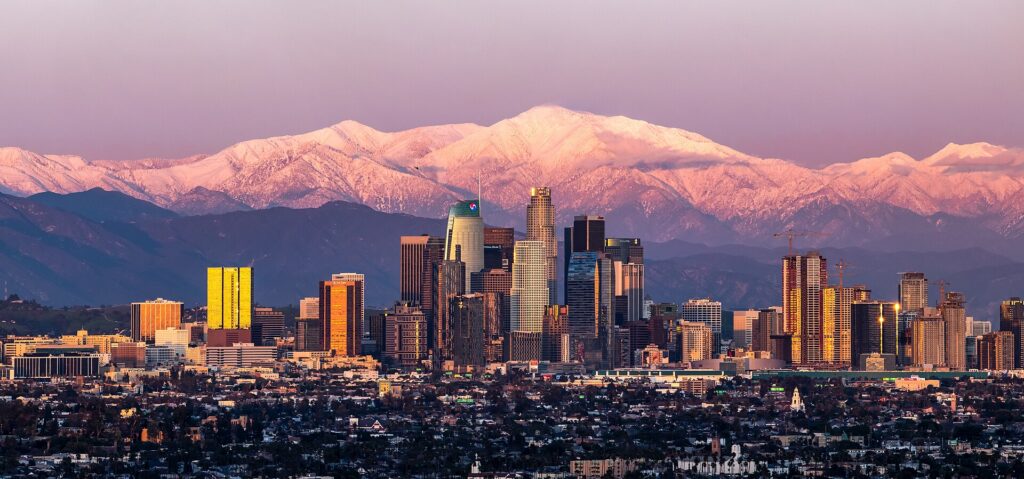
    Downtown Los Angeles at sunset with snow-capped Mount Baldy behind
    Winter in Los Angeles: clear air after the rain, snow on the mountains, and the lowest fares of the year (Photo: Alek Leckszas via Wikimedia Commons, CC BY-SA 4.0)

    Events that move Los Angeles flight and hotel prices

    Cross-check these against your dates before you book. Exact dates shift each year; Discover Los Angeles, the official tourism board, keeps the current calendar.

    • The Rose Parade and Rose Bowl (New Year’s Day, or January 2 when the first falls on a Sunday): Pasadena’s hotels sell out; the Tournament of Roses publishes the details.
    • Award season (January to March): the Golden Globes, the Grammys and the Oscars tighten hotels in Hollywood, Beverly Hills and downtown around their dates.
    • Presidents’ Day weekend (third Monday of February) and spring break (mid-March to mid-April, varying by school district).
    • Coachella and Stagecoach (consecutive weekends in April): fares into LAX and Palm Springs rise for each festival weekend.
    • Memorial Day (last Monday of May), the Fourth of July and Labor Day (first Monday of September): the three biggest summer travel weekends.
    • Anime Expo (around the Fourth of July) and other large conventions at the LA Convention Center, which fill downtown hotels; check the convention calendar if downtown rates look unusually high.
    • Thanksgiving week and Christmas to New Year: the busiest holiday travel of the year.
    • Home games, playoffs and stadium concerts: Dodgers postseason runs, Rams and Chargers games at SoFi, and stadium tours can fill hotels near the venues. Our Los Angeles events page shows what is on sale for your dates.
    • The 2028 Olympic and Paralympic Games, which Los Angeles hosts in the summer of 2028, will make that July and August the most in-demand weeks the city has seen in decades; book very early if you plan to be there.

    Getting in from the airport

    Most visitors arrive at Los Angeles International (LAX), on the coast in Westchester, about 30 kilometers (18 miles) southwest of downtown. It is a horseshoe of terminals around a single loop road, with the Tom Bradley International Terminal at the far end. The loop is notoriously congested, and the airport has been in the middle of a long modernization program: taxis and ride-hail pickups operate from the LAX-it lot, reached by a free shuttle or a short walk from the terminals; the FlyAway bus runs to Union Station downtown and to Van Nuys in the Valley; and the LAX/Metro Transit Center station, linked to the terminals by shuttle and, when complete, by the new automated people mover train, connects the airport to the Metro rail network. Rental companies are reached by shuttle from the terminals. Check the airport’s site for the current state of the people mover and the rental car center before you land.

    Los Angeles also has four other commercial airports, and they are often worth checking. Hollywood Burbank (BUR) is small, quick and closest to Hollywood, Universal and the Valley. Long Beach (LGB) is convenient for the South Bay, Long Beach and the cruise terminals. John Wayne (SNA) in Orange County is the closest to Disneyland, and Ontario (ONT), in the Inland Empire, sometimes has the lowest fares for travelers heading east toward Palm Springs or Joshua Tree. A search that includes all five can turn up a better fare or a shorter drive; our Los Angeles car-versus-transit guide covers the ground transport from each, and our LAX airport guide covers the layout.
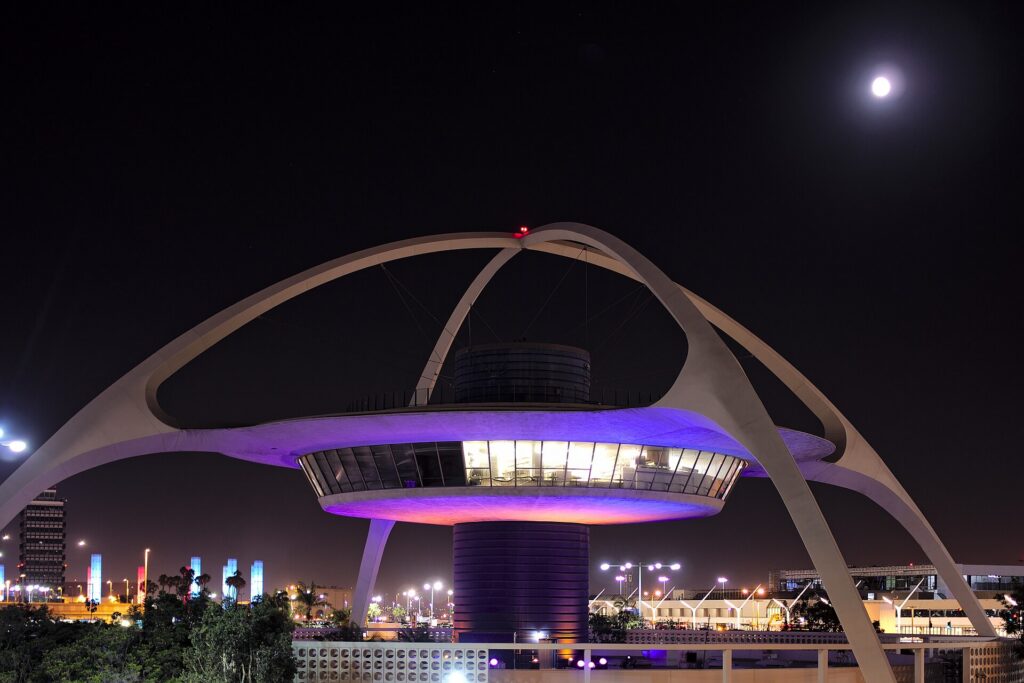
    The Theme Building at Los Angeles International Airport (LAX)
    LAX, one of the busiest airports in the world, with the 1961 Theme Building at its center (Photo: Junkyardsparkle via Wikimedia Commons, CC0)

    Timing tricks that work for Los Angeles

    • Search the whole month. Holiday weekends, festivals and school breaks create sharp edges in the fare calendar; a calendar search on TicketScanner shows them instantly.
    • Check all five airports. Burbank, Long Beach, Orange County and Ontario compete with LAX on many routes; the cheapest fare is not always into the biggest airport, and the shortest drive rarely is.
    • Price the hotel before the flight in summer. A cheap fare into July is not cheap once a beach hotel is added. Run a Los Angeles hotel search for the same dates, and compare the beach with Hollywood and downtown.
    • Fly mid-week and avoid the loop at rush hour. Tuesday, Wednesday and Saturday flights are often the cheapest, and an arrival outside the weekday afternoon peak saves an hour on the freeway.
    • Go in September for summer without the summer prices. The weather is as warm as August, the ocean warmer, and fares and hotel rates drop the day after Labor Day.
    • Pair Los Angeles with a road trip. San Diego, Las Vegas and San Francisco are all classic drives, and an open-jaw ticket, flying into one city and out of another, can cost little more than a return; see our Los Angeles to San Diego and Los Angeles to Las Vegas route guides.
    • Allow time at LAX. Security lines and the loop road are unpredictable; our guide to how early to arrive covers what to allow, and if you are flying out of Los Angeles instead, see cheap flights from Los Angeles.
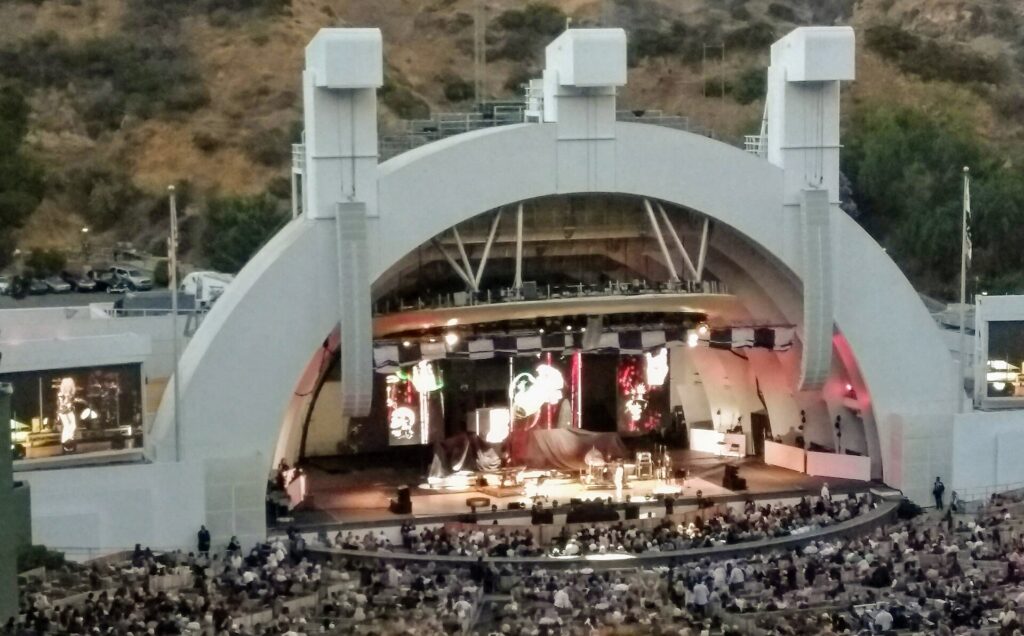
    The Hollywood Bowl amphitheater in the Hollywood Hills
    The Hollywood Bowl, whose summer season runs from June to September (Photo: Royalsafira via Wikimedia Commons, CC BY-SA 4.0)

    What to pack, by season

    Winter (December to February): layers for mild days and chilly evenings, a light jacket or sweater for nights that can drop below 10 °C (50 °F), and a rain jacket and shoes that can handle a downpour. Spring (March to May): layers again, a light jacket for the gray coastal mornings, and sunscreen for the afternoons. Summer (June to August): light clothing, a hat and serious sun protection, swimwear, and a sweater for the beach in the evening, when the ocean breeze makes it cooler than you expect. Fall (September to November): summer clothing into October, with a layer for the evenings, and plenty of water on hot, dry Santa Ana days. In any season, bring comfortable walking shoes.

    The best time to fly to Los Angeles for…

    The beach

    Late July to early October, when the marine layer has cleared and the ocean is at its warmest; September after Labor Day is the sweet spot.

    Theme parks

    Mid-week in January, February, early May, September and early December, avoiding school holidays; lines are shortest and tickets are often cheaper outside the peak dates.

    Sightseeing and museums

    Late winter and spring, from late January to May, for clear air, comfortable temperatures and the lowest crowds at the Getty and Griffith Observatory.

    The lowest fares

    Late January and February, outside Presidents’ Day weekend, and the first half of December.

    Families

    The last two weeks of August, once many schools are back, or the week after spring break in April, when the weather is good and the parks are calmer.

    International visitors

    Canadians need a valid passport; travelers from Visa Waiver Program countries need an approved ESTA before boarding, and everyone else needs a visa. U.S. Customs and Border Protection explains what applies to you, and the TSA lists what you can carry through security. For desert day trips, Joshua Tree National Park is best visited from October to April, when the heat is bearable.

    Frequently asked questions

    What is the cheapest month to fly to Los Angeles?

    February is usually the cheapest, followed by January after the New Year holiday and the first half of December. September and October, outside long weekends, are the best-value months for good weather.

    What is the best month to visit Los Angeles for weather?

    September and October, for warm days, a warm ocean and clear skies. April and May are also excellent, apart from gray mornings at the coast.

    Does it rain much in Los Angeles?

    Not much. Downtown averages around 14 inches (355 mm) a year, almost all of it between November and March, usually in a few heavy storms. Summer is almost completely dry.

    What are May Gray and June Gloom?

    A layer of low cloud that forms over the cool Pacific and covers the coast in late spring and early summer, often burning off by midday. The beaches are cooler and grayer than inland neighborhoods during those weeks.

    Should I fly into LAX or Burbank?

    LAX has far more flights and is closer to the beaches and the Westside; Burbank is quicker to get through and closer to Hollywood, Universal and the Valley. Compare both, along with Long Beach and Orange County, for your dates.

    How far ahead should I book?

    Earlier for summer, spring break, Thanksgiving and the winter holidays, when fares tend only to rise. For January, February, the fall and early December, finding the right dates matters more than booking months ahead.

    When are the Santa Ana winds?

    Mostly between October and March, with the strongest events often in the fall. They bring hot, very dry weather and high fire danger; the National Weather Service issues warnings when they are expected.

    Ready to pick your dates? Compare fares across the whole month on our Los Angeles flights page, then find a room with our Los Angeles hotel search. For what to do when you land, start with our first-timer’s guide to Los Angeles.

  • Los Angeles: Should You Rent a Car or Rely on Public Transit?

    Los Angeles: Should You Rent a Car or Rely on Public Transit?

    Los Angeles is the city that made the car famous, and for decades the answer to “do I need to rent one?” was an automatic yes. That answer is now out of date. The Metro rail network has grown to reach Hollywood, downtown, Koreatown, Pasadena, Long Beach, Santa Monica and, since 2025, a station connected to the airport, and each of the districts most visitors want to see is walkable on its own. At the same time, Los Angeles is still enormous, the freeways still define it, and the beaches of Malibu, the theme parks in Orange County, the San Gabriel Valley’s restaurants and every day trip out of the city are far easier with a car. This guide explains how the city is laid out, how transit works, what driving and parking are really like, and gives you a straightforward way to decide.

    The short answer

    Skip the car if you are staying in Hollywood, downtown, Koreatown, Santa Monica or Pasadena for a city break of three or four days, and your plans are the Walk of Fame, Griffith Observatory, downtown’s museums and food halls, Santa Monica and Venice, Universal Studios and a Dodgers or Lakers game; the Metro, your feet and the occasional ride-hail will cover that, and you will not pay the nightly parking fees that Los Angeles hotels charge. Rent a car if Malibu and the Pacific Coast Highway, Disneyland, the Getty and the Westside, the San Gabriel Valley, Joshua Tree, Palm Springs, San Diego or Las Vegas are on the itinerary, if you are traveling as a family with small children, or if you are staying in the Valley, the South Bay or with friends in the suburbs. For many visitors, the hybrid, car-free for the city days and a short rental for the driving days, is the best of both. Compare rental rates for any of these plans on our Los Angeles car rental page.

    How Los Angeles is laid out

    Los Angeles is not one city but a basin of dozens of them, stitched together by freeways and boulevards. Downtown sits roughly in the middle, with Union Station, the hub of the rail network, on its northern edge. West of downtown, Wilshire Boulevard runs sixteen miles to the ocean through Koreatown, the Miracle Mile and Museum Row, Beverly Hills, Westwood and Santa Monica. To the northwest, Hollywood sits at the foot of the hills, with West Hollywood beside it and Griffith Park above; over the hills is the San Fernando Valley, with Burbank, Universal City and North Hollywood. Pasadena is to the northeast, the San Gabriel Valley to the east, and the airport, the South Bay beaches and Long Beach are to the southwest and south. Malibu stretches along the coast northwest of Santa Monica, and Disneyland is in Anaheim, in Orange County, about 28 miles southeast of downtown. The distances are the thing visitors underestimate: Santa Monica to downtown is about 15 miles, and at rush hour that can take more than an hour by car.

    Hotels cluster in Hollywood, downtown around LA Live and the historic core, in Santa Monica and Venice, in West Hollywood and Beverly Hills, near the airport, and in Anaheim around Disneyland. The base you choose decides how much time you spend in transit. Our Los Angeles hotel search lets you compare them.

    Getting in from the airport

    Los Angeles International (LAX) is on the coast in Westchester, about 18 miles southwest of downtown, and the terminal loop is one of the most congested roads in the region. The FlyAway bus runs from the terminals to Union Station downtown, and to Van Nuys in the Valley, using the freeway carpool lanes where it can. The Metro connection runs from the LAX/Metro Transit Center station, reached from the terminals by a free shuttle and, once it opens, by the airport’s new automated people mover train; from there the C and K lines connect to the rest of the rail network. Taxis and ride-hail pick up at the LAX-it lot, a short shuttle ride or walk from the terminals, rather than at the curb. And every major rental company is reached by shuttle from the arrivals level. The drive downtown or to Santa Monica takes 30 minutes at night and an hour or more at rush hour. If you are arriving at Hollywood Burbank Airport, you are much closer to Hollywood, Universal and the Valley, and there are Metrolink and Amtrak stations beside the airport. Check the airport’s site for current ground-transport details; our LAX airport guide covers the layout.

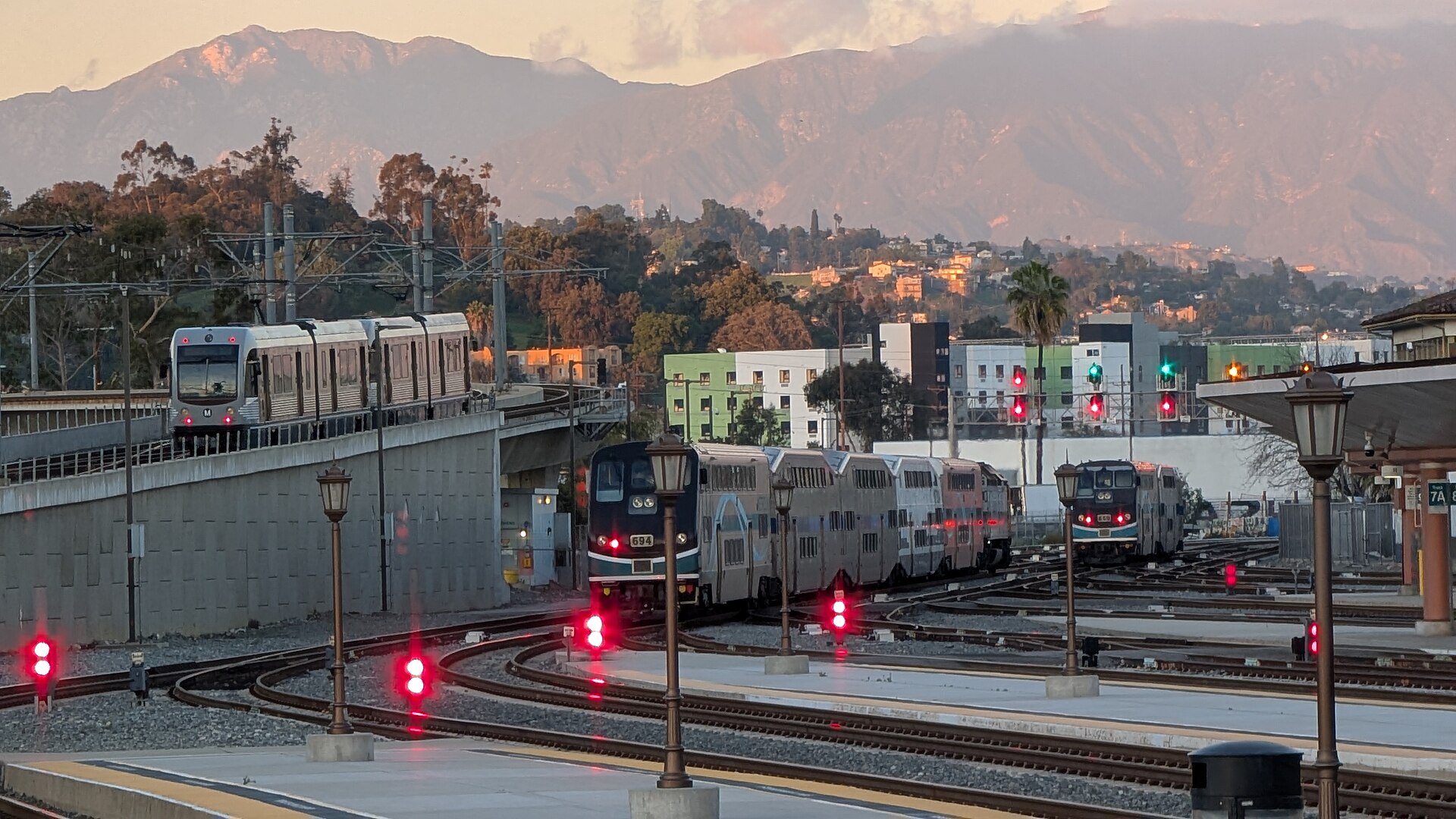
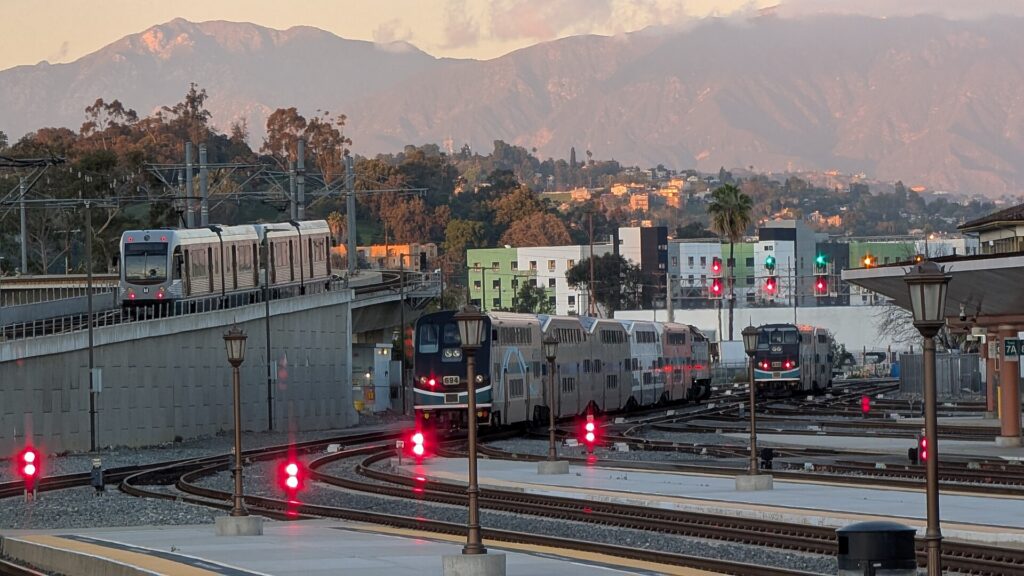
    A Los Angeles Metro A Line train and Metrolink trains at Union Station
    Metro Rail now links Hollywood, downtown, Pasadena, Long Beach and Santa Monica (Photo: RailTypes via Wikimedia Commons, CC BY 4.0)

    Los Angeles transit, explained

    The Los Angeles County Metropolitan Transportation Authority, known simply as Metro, runs the rail network and most of the buses. It is cheaper and more extensive than its reputation and the fastest way across the city at rush hour on the routes it serves; its limitation is coverage, because much of the Westside and the hills are still a bus ride from the nearest station.

    Metro Rail

    The rail network is a mix of subway and light rail, with lines identified by letter and color. The B Line subway is the visitor’s line: it runs from Union Station through downtown and Koreatown’s edge to Hollywood/Vine and Hollywood/Highland, then under the hills to Universal City and North Hollywood. The D Line subway runs under Wilshire Boulevard from downtown through Koreatown, and is being extended west in stages toward Beverly Hills, Century City and Westwood. The E Line light rail runs from East Los Angeles through Little Tokyo and downtown to Exposition Park, USC and Culver City, and on to downtown Santa Monica, a few blocks from the pier. The A Line runs from the San Gabriel Valley foothills through Pasadena and downtown to Long Beach, one of the longest light-rail lines in the world. The C and K lines serve the South Bay, Inglewood’s stadium district and the airport transit center. Trains run from early morning until around midnight.

    Buses

    Metro’s buses fill in the rest, including the Rapid lines with fewer stops on the main boulevards, and two busways that work like rail: the G Line across the San Fernando Valley and the J Line between the San Gabriel Valley, downtown and San Pedro. Several cities run their own buses that connect with Metro: Santa Monica’s Big Blue Bus, with a Rapid route to the airport; Culver City’s buses; and the city of Los Angeles’s DASH shuttles, which run short, cheap loops through downtown, Hollywood and other neighborhoods, including the route up to Griffith Observatory.

    Fares and tickets

    Metro uses the TAP card, which you can buy at any rail station vending machine or add to the wallet on your phone. You tap on every bus and every train, including at the gates and the validators on the platform, and a single fare includes free transfers for two hours. The best feature for visitors is fare capping: once you have spent the equivalent of a day pass in a day, or a weekly pass in a week, the rest of your rides are free, so there is no need to decide in advance which pass to buy. DASH and the Big Blue Bus accept TAP too. Check Metro’s site for current fares and for any changes to how you can pay before you go.

    Safety and comfort

    Metro has added staff, security and cleaning after years of complaints, and most visitors find the main lines perfectly usable, especially by day. Late at night the usual big-city awareness applies: ride in a busy car and keep valuables out of sight.

    Accessibility

    Every Metro rail station has elevators and step-free boarding, and every Metro bus is low-floor with a ramp or lift. Elevator outages do happen; Metro publishes their status.

    Beyond Metro

    • Walking. Downtown, Little Tokyo, Hollywood Boulevard, Santa Monica and Venice, Old Pasadena and Koreatown are all pleasant on foot. Walking between them is not.
    • Ride-hail and taxis. Uber and Lyft are everywhere and are the default for crossing the gaps in the rail network, especially at night; licensed taxis operate too. For a group of three or four, a short ride-hail trip can cost less than the transit fares combined.
    • Driverless taxis. Waymo operates self-driving robotaxis across a growing part of the city, including Santa Monica, Hollywood and downtown, booked through its app; check its current service area.
    • Metrolink and Amtrak. Metrolink commuter trains run from Union Station to the suburbs, Burbank’s airport, Orange County and the Inland Empire. Amtrak’s Pacific Surfliner runs along the coast to Anaheim, San Diego and Santa Barbara, and is the best car-free day trip out of the city.
    • Bikes and scooters. Metro Bike Share and dockless e-scooters are common in downtown, Hollywood, Santa Monica and Venice, and the Marvin Braude Bike Trail along the beach is the best ride in the city.
    • Universal’s shuttle. Universal Studios runs a free shuttle up the hill from the Universal City/Studio City B Line station.
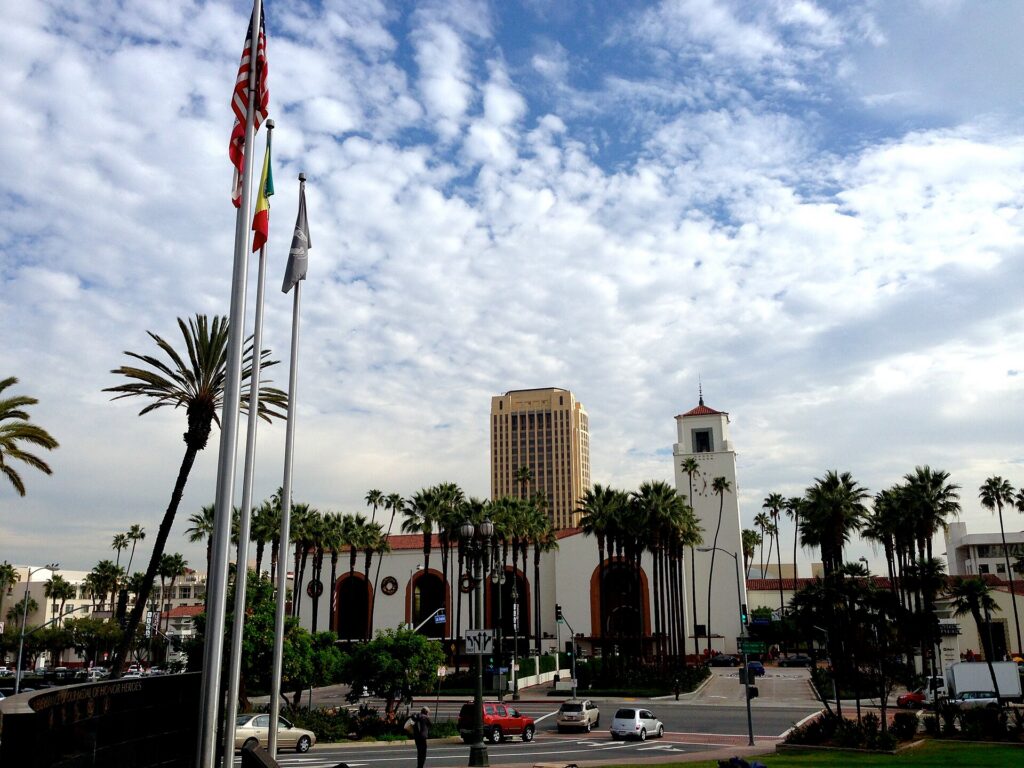
    The exterior of Union Station in downtown Los Angeles
    Union Station, the hub for Metro Rail, the FlyAway bus, Metrolink and Amtrak (Photo: ZhengZhou via Wikimedia Commons, CC BY-SA 3.0)

    Driving in Los Angeles: what it is really like

    Driving in Los Angeles is less terrifying than its reputation and more time-consuming than visitors expect. The freeways are wide, well signed and fast outside the peaks, and locals refer to them with the definite article: “the 405”, “the 10”, “the 101”. Weekday rush hours run roughly from 6 to 10 a.m. and from 3 to 7 p.m., the 405 through the Sepulveda Pass and past the airport, the 10 between downtown and Santa Monica, and the 101 through Hollywood and the Cahuenga Pass are congested for much of the day, and a single crash can add an hour to a trip. For shorter trips, boulevards like Sunset and Wilshire are often as quick. Locals measure distance in minutes, not miles, and check a traffic app before every trip. Weekend mornings and weekday evenings after seven are the easiest times to drive.

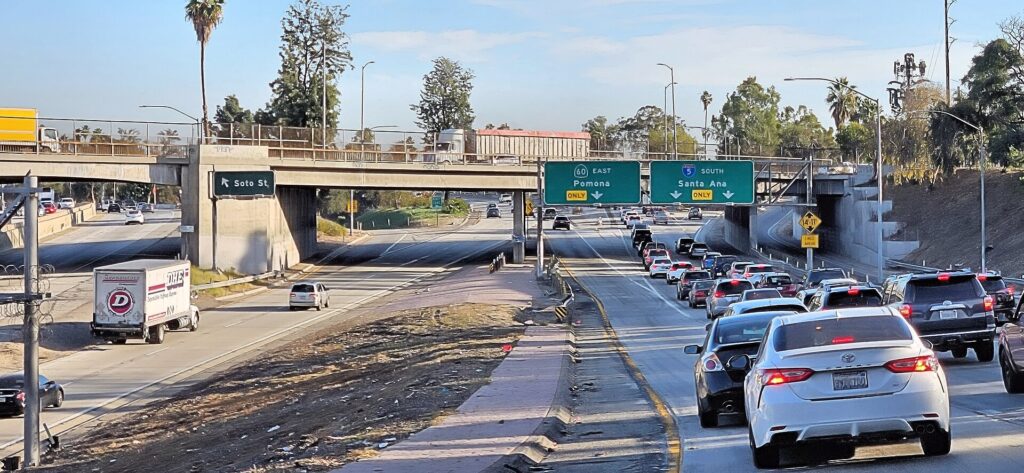
    Traffic on a Los Angeles freeway
    The freeways: fast at 10 p.m., slow at 5 p.m., and the reason Angelenos measure distance in minutes (Photo: Eric Polk via Wikimedia Commons, CC BY-SA 4.0)

    Parking

    Parking is the hidden cost of a Los Angeles rental. Hotels in Hollywood, downtown, Santa Monica and Beverly Hills charge a substantial nightly fee, and many offer valet only. Street parking exists almost everywhere but comes with rules: meters, time limits, residential permit zones, and weekly street-cleaning hours when cars are ticketed or towed. Read every sign on the pole, and remember the curb colors: red means no stopping, white is for passenger loading, green is short-term, and yellow is for commercial loading. Restaurants and bars often offer valet, and many shopping centers and museums, including the Getty Center, charge for their garages. Beach lots fill by late morning on summer weekends.

    Malibu's beach and pier on the Pacific Coast Highway
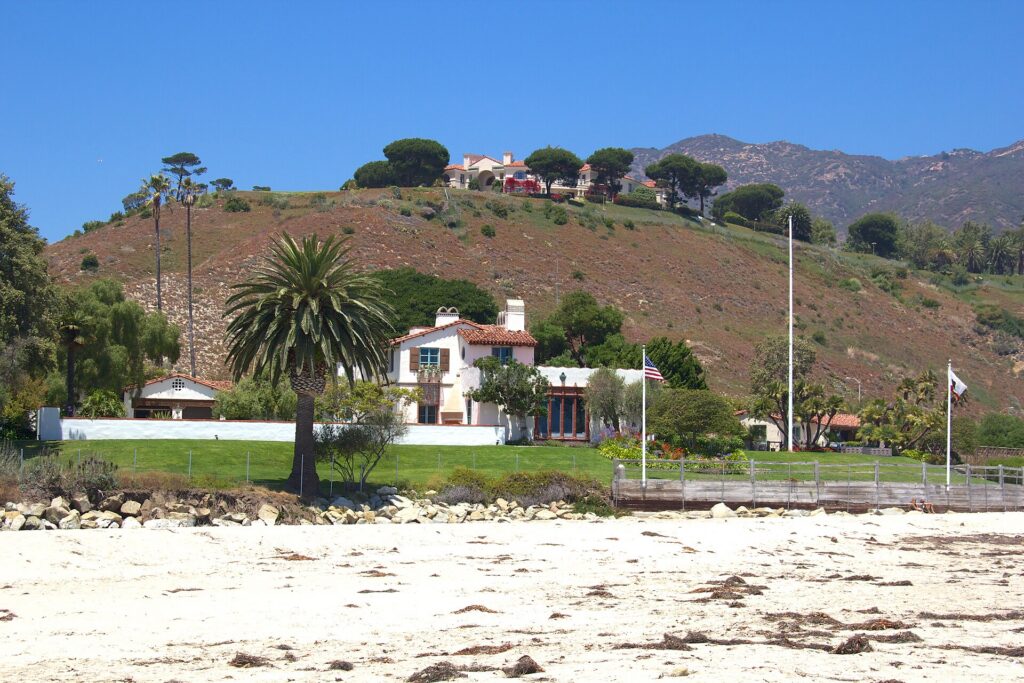
    Malibu's beach and pier, reached along the Pacific Coast Highway: the drive that makes a rental worthwhile (Photo: Photograph by Mike Peel (www.mikepeel.net). via Wikimedia Commons, CC BY-SA 4.0)

    Rules and conditions worth knowing

    • Carpool lanes on most freeways are marked with a diamond and require two or more people, sometimes three; the ExpressLanes on the 10 and the 110 charge solo drivers a toll and require a FasTrak transponder. Ask the rental company how it handles tolls.
    • Toll roads in Orange County, on the routes around Irvine and inland, are cashless and billed by plate; the rental company will pass the charge on with a fee, so avoid them unless you have agreed a toll plan.
    • Car break-ins are common at trailheads, beaches and tourist areas. Leave nothing visible in the car, not even a jacket or a charging cable, and never leave luggage in the trunk overnight in a street spot.
    • Right turns on red are allowed after a full stop unless a sign says otherwise.
    • Hands-free only: California law bans holding a phone while driving, including at red lights; mount it before you set off.
    • Fuel in California is among the most expensive in the country, which adds up on day trips to Las Vegas or Joshua Tree.
    • Weather and fire: the first rain after a dry spell makes the roads slick, winter storms can close mountain and canyon roads, and wildfires or Santa Ana wind events can close the Pacific Coast Highway and the canyon routes at short notice. Caltrans publishes current conditions and closures.

    When renting a car makes sense

    • Malibu and the Pacific Coast Highway. The beaches at Zuma, Point Dume and El Matador, the canyon roads and the Santa Monica Mountains trailheads are effectively car-only. Check for closures along the fire-affected stretches before you go.
    • Disneyland and Orange County. A car makes the Anaheim day and the beaches of Huntington and Laguna far simpler, especially with children.
    • The Getty, the Westside and the canyons. The Getty Center, Brentwood, Westwood and the hilltop viewpoints are poorly served by rail until the D Line extension is complete.
    • The San Gabriel Valley. The best Chinese restaurants in North America are spread across strip malls in Alhambra, San Gabriel and Monterey Park, and a car turns a food crawl into an afternoon.
    • Day trips and road trips. Joshua Tree, Palm Springs, Big Bear, Santa Barbara and the drives to San Diego and Las Vegas, or up the coast toward San Francisco on our San Francisco to Los Angeles route.
    • Families and anyone staying in the suburbs. Car seats, beach gear and long distances all argue for a car.

    If any of those apply, our rental car booking tips cover insurance, deposits, tolls and the questions to ask at the counter, and our family car rental guide looks at vehicle choice.

    When it does not

    • You are staying in Hollywood, downtown or Santa Monica and your plans are the sights along the B, D and E lines.
    • You are in town for a concert, a game at Crypto.com Arena or Dodger Stadium, or a convention downtown, when parking is expensive and the Metro or a shuttle gets you close.
    • You are traveling solo or as a couple for a short trip, and the rental, the hotel parking, the fuel and the time spent in traffic add up to more than the occasional ride-hail.

    The hybrid plan for a city-plus-coast trip

    Go car-free for the city days and rent for the driving days, and think carefully about where you pick up. Renting at LAX makes sense if you are heading straight to the beach cities, Orange County or out of town, because the airport sits beside the 405 and the 105. Renting from a neighborhood branch in Hollywood, downtown or Santa Monica makes sense if you are spending the first nights in the city, because you avoid the airport’s fees and the queue for the shuttle, and you do not pay hotel parking on the nights the car would sit unused. A pattern that works well: FlyAway or Metro into the city, two or three car-free days, a car picked up on the morning you head for Malibu, the Getty or Disneyland, and returned at the airport on the way home. Compare the day rates on our Los Angeles car rental page against a full-trip rental and the difference is usually obvious.

    A worked cost comparison

    Numbers change with the season and the booking window, so treat this as a method rather than a quote, and check current rates before deciding. For a four-night city break for two people based in Hollywood, the car-free version costs two FlyAway or Metro trips from the airport, capped Metro fares for each day, and perhaps three or four ride-hail trips to Griffith Observatory, the Getty or a late dinner; the rental version adds four days of a compact car, four nights of hotel parking, fuel, the airport fees, and time spent looking for street parking, and buys you very little you could not ride to. The car-free option wins comfortably. For the same four nights plus a day in Malibu and a day at Disneyland, the car-free version needs long ride-hail trips or the train and a bus to Anaheim; a two-day rental picked up from a Hollywood branch, plus fuel and parking at the beach and the park, usually costs less for two people and far less for four, and saves hours. For a week-long family trip with the theme parks and a day in San Diego, a rental for the whole stay is the practical answer, and a hotel with included parking, easier to find in Anaheim, Pasadena or near the airport, saves a meaningful amount. Run the rental rates for your dates on our Los Angeles car rental page and put them beside a realistic ride-hail budget before you choose.

    Driving out of Los Angeles in each season

    The road trips are where a rental earns its keep, and each has its own seasonal quirks. In summer, the Pacific Coast Highway to Malibu is at its most beautiful and its most crowded; go early on a weekday and expect the beach lots to fill by late morning. The Interstate 15 to Las Vegas, about four to five hours in normal traffic, crosses the Mojave Desert, where summer temperatures can pass 43 °C (110 °F); carry water, keep the tank topped up, and avoid the Sunday afternoon return, when the southbound traffic out of Las Vegas backs up for miles. The Interstate 5 to San Diego takes around two to three hours and is busiest on Friday afternoons and holiday weekends. In fall, the desert cools down, making it the best season for Joshua Tree and Palm Springs, but the Santa Ana winds can close canyon roads and PCH during fire events, so check conditions before you go. In winter, the Grapevine, the steep section of the Interstate 5 over the mountains toward San Francisco and the Central Valley, is closed by snow a few times a season, and the Cajon Pass on the Interstate 15 can be affected too; chains may be required on mountain roads to Big Bear. In spring, the deserts bloom and the coast road toward Santa Barbara is at its greenest, although Highway 1 through Big Sur has a history of landslide closures; check Caltrans before planning the full coastal route.

    Decision table

    Your tripRecommendationWhy
    City break in Hollywood or downtown, couple or soloNo carThe B, D and E lines cover the main sights; hotel parking is expensive
    Beach break in Santa Monica or VeniceNo carThe E Line reaches downtown; bikes and the beach path cover the coast
    City plus Malibu, the Getty or DisneylandHybrid: rent from a city branch for the driving daysCar-free city days, car for the places Metro does not reach
    Family trip with theme parksRent for the whole stayCar seats, gear and distances make the car worthwhile daily
    Concert, game or convention downtownNo carParking is scarce and costly; Metro and shuttles serve the venues
    Staying in the Valley, South Bay or suburbsRentTransit exists but trips are long; the car saves hours
    Joshua Tree, Palm Springs or Big BearRentNo practical transit; the drive is the trip
    Road trip to San Diego, Las Vegas or San FranciscoRent (consider one-way)Los Angeles is the start, not the destination; the train is an option to San Diego

    Money-saving tips for both options

    • On transit: load a TAP card into your phone’s wallet and let fare capping do the work; use DASH for short hops downtown and in Hollywood; take the FlyAway or Metro from LAX rather than a ride-hail at rush hour.
    • On a rental: compare airport and neighborhood pickup, book early for summer and the holidays, decline extras you already have through a credit card or home policy (check first), agree a toll plan or avoid the toll roads, and return the car full.
    • On the hotel: if you are renting, price the parking fee into the room rate, and consider a base with free or cheaper parking in Pasadena, the Valley or near the airport.
    • On timing: drive before 7 a.m., between 10 a.m. and 2 p.m., or after 7 p.m.; avoid the 405 and the 10 in the weekday peaks; and check the best time to fly to Los Angeles guide for the busiest holiday weekends.
    • On ride-hail: compare apps, walk a block away from the busiest pickup points, and use it to fill the gaps in the rail network rather than for every trip; our guide to car, transit or taxi in a new city sets out the general trade-offs.

    Frequently asked questions

    Is it worth renting a car in Los Angeles?

    For Malibu, the theme parks, the San Gabriel Valley, day trips or a family trip, yes. For a short city break based in Hollywood, downtown or Santa Monica, no; the Metro, walking and occasional ride-hail are cheaper and often faster.

    Is Los Angeles public transit good for tourists?

    Better than its reputation. The Metro rail lines link Hollywood, downtown, Koreatown, Universal, Pasadena, Long Beach and Santa Monica, and fare capping keeps costs low. Coverage thins out on the Westside, in the hills and at the beaches north of Santa Monica.

    How do I get from LAX to downtown or Hollywood?

    The FlyAway bus to Union Station, the Metro from the LAX/Metro Transit Center, or a taxi or ride-hail from the LAX-it lot. For Hollywood, take the Metro or FlyAway to Union Station and transfer to the B Line.

    Can I visit Disneyland without a car?

    Yes. Take Amtrak’s Pacific Surfliner or Metrolink from Union Station to Anaheim and a short bus or ride-hail to the park, or stay in a hotel near the park that runs a shuttle. It takes longer than driving outside rush hour.

    How bad is traffic in Los Angeles?

    Among the worst in the country at rush hour, especially on the 405, the 10 and the 101. Outside the peaks, and on weekend mornings, it is manageable. Plan in minutes, not miles.

    Whichever way you go, start with the flight. Compare cheap flights to Los Angeles, choose a neighborhood with our Los Angeles hotel search, and if the coast, the parks or the desert are on the list, price the rental for those dates on our Los Angeles car rental page. For what to see once you are there, our first-timer’s guide to Los Angeles has the sights, neighborhoods and itineraries.

  • Things to Do in Los Angeles: A First-Timer’s Guide

    Things to Do in Los Angeles: A First-Timer’s Guide

    Los Angeles is not a city you see; it is a city you assemble. There is no single center, no walkable old town where the sights line up, and the first-time visitor who tries to “do LA” from one hotel in three days usually leaves tired, having spent half of it on the 405. Approached differently, it is one of the great destinations in the world: the Hollywood of the movies and the Hollywood of the hills, a downtown that has rebuilt itself around a concert hall and a free contemporary art museum, forty miles of beaches from Malibu to Palos Verdes, museums funded by oil and film fortunes, Dodger Stadium on a summer evening, and the best Mexican, Korean, Thai and Chinese food in the United States, much of it served from trucks and strip malls. This guide covers the sights that earn a day, the neighborhoods worth a half-day, the food, the sports and theme parks, the day trips, and the practical details that make the geography work for you rather than against you.

    If you are still comparing cheap flights to Los Angeles, read this alongside our guides to the best time to fly to Los Angeles and whether you need a car. Between the three you can plan the whole trip.

    The downtown Los Angeles skyline with the San Gabriel Mountains behind
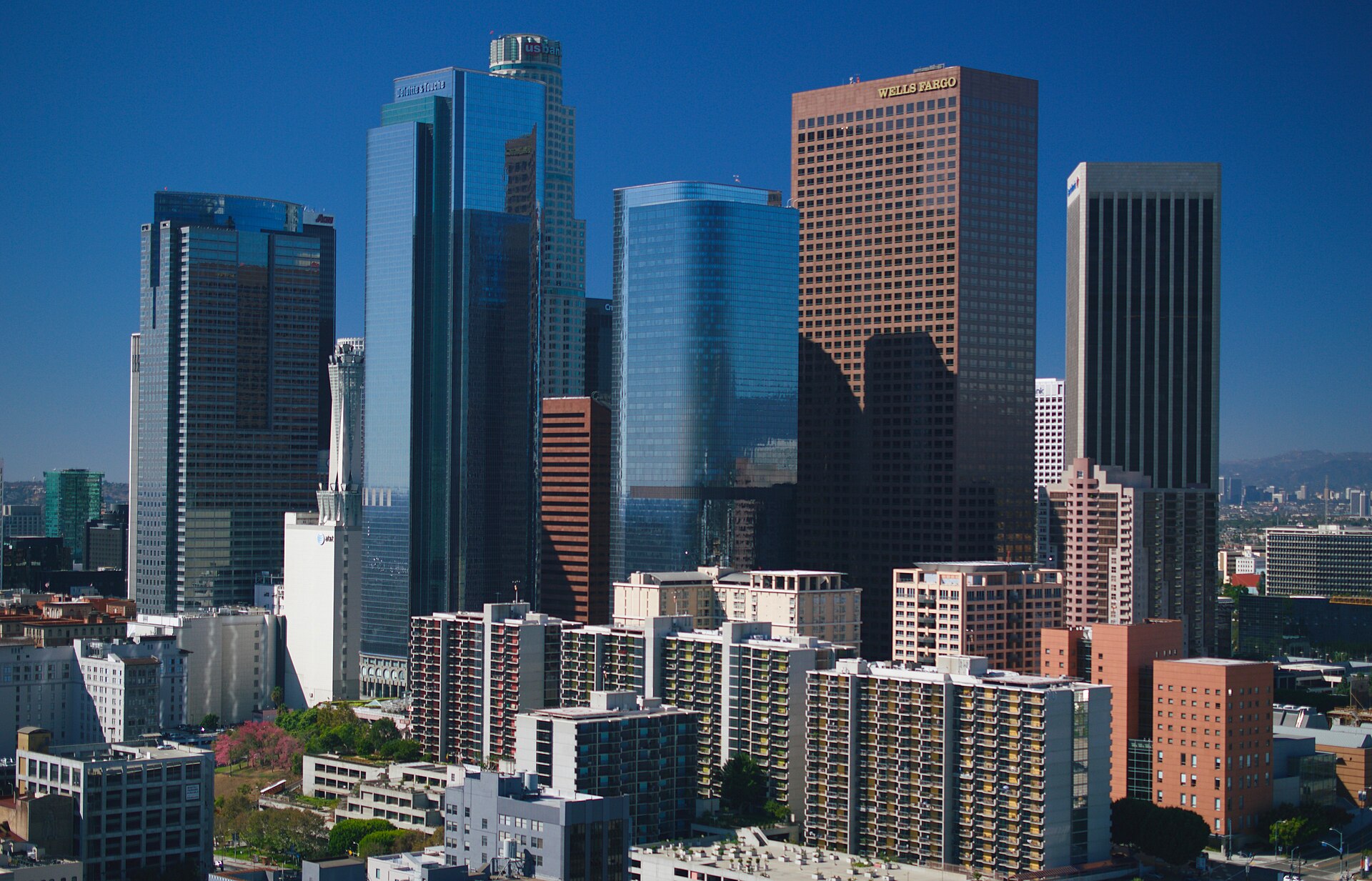
    Downtown Los Angeles, which has become a destination in its own right over the last decade (Photo: Levi Clancy via Wikimedia Commons, CC BY-SA 4.0)

    Los Angeles at a glance for first-timers

    • Airport: Los Angeles International (LAX), on the coast in Westchester about 30 km (18 miles) southwest of downtown. The FlyAway bus to Union Station, a taxi or ride-hail from the LAX-it lot, the Metro connection from the airport’s transit center, or a rental car gets you in. Burbank, Long Beach, Orange County and Ontario are the alternatives. See our LAX airport guide.
    • Getting around: the Metro rail network now links downtown, Hollywood, Koreatown, Santa Monica, Pasadena, Long Beach and the airport, and each of those districts is walkable on its own. Between districts, and for Malibu, the theme parks and the day trips, most visitors drive or use ride-hail.
    • Money: US dollars. Sales tax in Los Angeles County is among the highest in the country and is added at the register; tipping 18 to 20 percent in restaurants is expected, and many restaurants add a service or health surcharge, so read the bill.
    • Weather: mild and dry almost all year, with a short rainy season from December to March, gray mornings at the coast in May and June, hot inland afternoons in summer and early fall, and the Santa Ana winds that bring fire weather in October and November. Our month-by-month guide has the detail.
    • Where to stay: Hollywood for the sights and the Metro; downtown for the museums, food halls and nightlife; Santa Monica or Venice for the beach; West Hollywood or Beverly Hills for shopping and restaurants; Pasadena for a quieter base. Our Los Angeles hotel search covers them all.

    Hollywood: the Sign, the Walk of Fame and Griffith Observatory

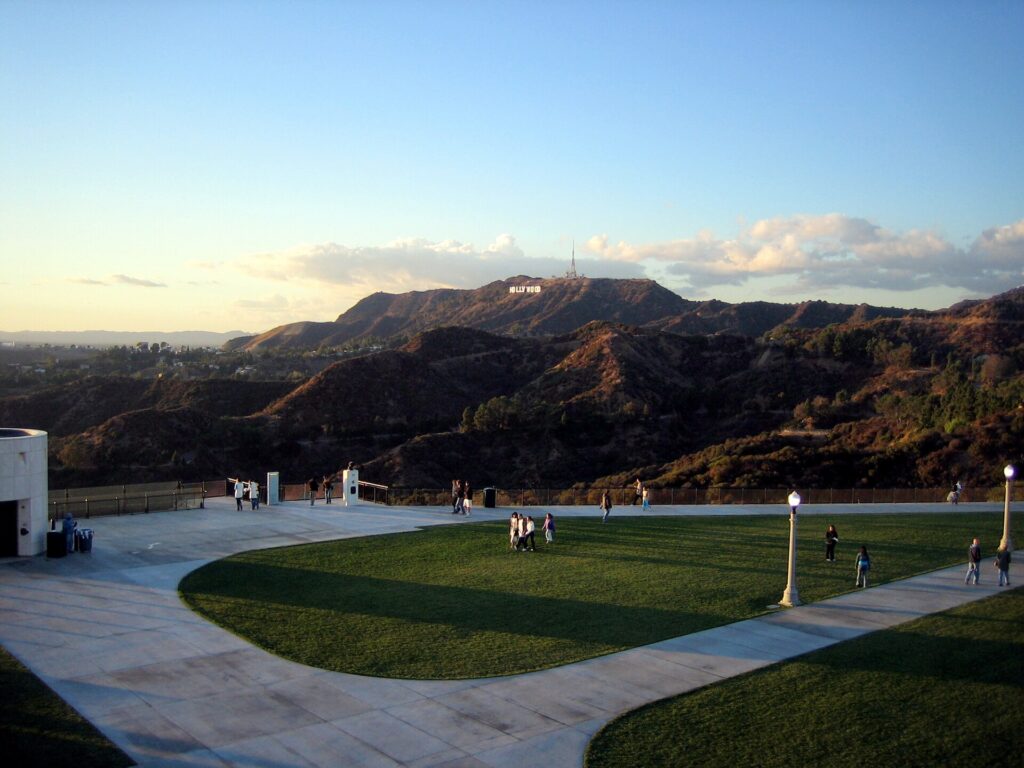
    Start with the view. Griffith Observatory, on the southern slope of Mount Hollywood in Griffith Park, is free to enter, has a planetarium and public telescopes, and offers the single best panorama in the city: the Hollywood Sign to the west, downtown to the southeast, and on a clear winter day the Pacific and Catalina Island beyond. It is also the best place to photograph the Hollywood Sign, which sits on Mount Lee across the canyon; the trails from the observatory and from Bronson Canyon get you closer, and the walk up to the summit behind the letters is a genuine three-hour hike. Down the hill, Hollywood Boulevard is the part every first-timer sees once: the Walk of Fame stars set into the sidewalk, the handprints in the forecourt of the TCL Chinese Theatre, the Dolby Theatre where the Oscars are held, and a lot of costumed characters and souvenir shops. The Hollywood Bowl, the outdoor amphitheater in the hills above, is the summer home of the LA Philharmonic and one of the best concert venues anywhere; bringing a picnic to a Bowl concert on a warm evening is as Los Angeles as it gets. For the working side of the industry, the Warner Bros. Studio Tour in Burbank takes you onto real backlots and sound stages.

    The Hollywood Sign on Mount Lee above Los Angeles
    The Hollywood Sign, best seen from Griffith Observatory or the trails of Griffith Park (Photo: Serouj via Wikimedia Commons, Public domain)

    Downtown: the Broad, Disney Hall and Grand Central Market

    Twenty years ago visitors were told to avoid downtown; now it is where many of them spend their best day. On Grand Avenue, Walt Disney Concert Hall, Frank Gehry’s stainless-steel sail, is the home of the LA Philharmonic and worth a walk around even without a ticket; the Broad next door is a free contemporary art museum with a serious collection, from Basquiat and Koons to Kusama’s infinity rooms, and free timed tickets that you should book ahead. Down the hill, Grand Central Market is the city’s century-old food hall, where a plate of carnitas and a coffee make the best cheap lunch downtown, and the Angels Flight funicular, which bills itself as the shortest railway in the world, climbs back up to Bunker Hill for a small fare. Across Broadway, the Bradbury Building has the wrought-iron atrium from Blade Runner, and The Last Bookstore nearby is one of the most photographed shops in the city. To the north, Olvera Street, the city’s oldest street, is a Mexican marketplace beside the 1818 Avila Adobe, and Union Station across the road is one of the finest railway stations in America and the hub of the Metro system. Little Tokyo, with the Japanese American National Museum, and the Arts District beyond it, with breweries and galleries, round out a full day on foot.

    The Westside: Santa Monica, Venice and the beaches

    The Pacific is what makes Los Angeles a resort as well as a city, and the beach cities are a different world from Hollywood. Santa Monica is the easy one: the pier with its Pacific Park ferris wheel and the sign marking the end of Route 66, the wide beach, Third Street Promenade for shopping, and the Metro E Line, which drops you a block from the sand. From the pier, the paved Marvin Braude Bike Trail runs south along the beach through Venice, whose boardwalk, with its skate park, Muscle Beach and street performers, is the city’s most reliable spectacle, and whose canals and Abbot Kinney Boulevard, a few blocks inland, are its most pleasant surprise. Further south, Manhattan Beach and Hermosa Beach are the volleyball-and-surf towns. North of Santa Monica, the Pacific Coast Highway runs through Pacific Palisades and into Malibu, where the beaches at Zuma, Point Dume and El Matador are the best in the county. The fires of January 2025 destroyed much of Pacific Palisades and stretches of the Malibu coast, and rebuilding will take years; the highway is open, but check current conditions and respect the closures before you plan a day there. The Santa Monica Mountains National Recreation Area behind Malibu has the canyon trails and the old movie ranches.

    Santa Monica Pier and the Pacific Park ferris wheel at the end of Route 66
    Santa Monica Pier, the end of Route 66 and the start of the beach path to Venice (Photo: Ken Lund from Reno, Nevada, USA via Wikimedia Commons, CC BY-SA 2.0)

    Museums and culture

    Los Angeles has more good museums than a first visit can hold, and most of the best are cheap or free. The Getty Center, on a hilltop in Brentwood, is free to enter (you pay for parking), reached by a tram from the parking structure, and combines Richard Meier’s travertine campus, gardens, a collection of European paintings and sculpture, and a view over the whole basin to the ocean; it is the one museum every visitor should see. The Getty Villa in Pacific Palisades, a recreated Roman villa full of Greek and Roman antiquities, needs a separate free timed ticket; check its status after the 2025 fires. On Wilshire Boulevard’s Museum Row, LACMA, the largest art museum in the western United States, has been rebuilding its main galleries for years; the Urban Light lamppost installation out front is always open and always photographed, and the new galleries are worth checking for status before you go. Next door, the Academy Museum of Motion Pictures is the museum the film industry finally built for itself, with the Oscars gallery, real props and costumes, and a sphere-shaped theater; the Petersen Automotive Museum across the street is a showpiece for car lovers; and the La Brea Tar Pits beside them are exactly what they sound like, active asphalt seeps in the middle of the city that have produced millions of Ice Age fossils, with a museum to show them. In Exposition Park, near USC, the Natural History Museum and the California Science Center, the permanent home of the space shuttle Endeavour, are free or cheap and superb with children; the shuttle is being moved into a new wing for a vertical display, so confirm what is viewable when you visit. In San Marino, next to Pasadena, the Huntington Library, Art Museum and Botanical Gardens, with its Gainsborough portraits, Gutenberg Bible and vast gardens, is worth most of a day.

    The Getty Center on its hilltop in Brentwood, Los Angeles
    The Getty Center: free admission, a tram ride up the hill, and one of the best views in the city (Photo: Ken Lund from Reno, Nevada, USA via Wikimedia Commons, CC BY-SA 2.0)

    Neighborhoods worth a half-day

    Koreatown

    The densest neighborhood in the city, west of downtown on the Metro D Line, and home to one of the largest Korean communities outside Korea. It is where Angelenos go for barbecue at midnight, for the Korean spas that are a rite of passage, for karaoke and for the bakeries and cafés along Wilshire and 6th Street. Go hungry and go late.

    Silver Lake, Los Feliz and Echo Park

    The hilly neighborhoods east of Hollywood are the city’s coffee-and-vintage belt: Sunset Junction and the reservoir loop in Silver Lake, Vermont and Hillhurst avenues in Los Feliz below Griffith Park, and Echo Park’s lake with its swan boats and view of the downtown skyline. This is where a visitor with an unplanned afternoon should go.

    West Hollywood and the Sunset Strip

    The Sunset Strip’s rock clubs, the Whisky a Go Go and the Troubadour, the comedy clubs, the design shops of Melrose Avenue and the restaurants along Santa Monica Boulevard make West Hollywood the city’s most concentrated nightlife district, and its Pride and Halloween celebrations are the biggest in the region.

    Beverly Hills and Rodeo Drive

    The most famous three blocks of shopping in the world are worth a walk even if you buy nothing, and the residential streets north of Santa Monica Boulevard, with their palms and mansions, are what most visitors picture when they think of Los Angeles.

    Pasadena

    Fifteen minutes from downtown on the Metro A Line, Pasadena is a proper small city with a walkable Old Town, the Rose Bowl in the Arroyo Seco, the Gamble House and the Craftsman bungalows, and the Huntington and Norton Simon museums.

    Long Beach and San Pedro

    At the south end of the Metro A Line, Long Beach has the Aquarium of the Pacific, the retired ocean liner Queen Mary and a lively waterfront; neighboring San Pedro is the working port, the departure point for Catalina Island, and home to the Korean Bell of Friendship on its clifftop.

    Theme parks

    Southern California invented the theme park and still runs the best ones. Disneyland, the original, and California Adventure next to it are in Anaheim, about 45 km (28 miles) southeast of downtown in Orange County; the drive is an hour in traffic, and most families either stay near the park or give it a full day with an early start. Universal Studios Hollywood, in the hills above Hollywood on the Metro B Line, combines the studio tram tour, the Wizarding World of Harry Potter and Super Nintendo World, and is the park to choose if you have one day and no car. Knott’s Berry Farm near Anaheim and Six Flags Magic Mountain in Valencia are the roller-coaster parks. Every park is cheaper booked online in advance and busiest on Saturdays, in summer and over the winter holidays.

    Sports

    Los Angeles is a two-of-everything sports town. The Dodgers play at Dodger Stadium, the 1962 ballpark in the hills above downtown with a view of the mountains, from late March to October, and a summer evening game with a Dodger Dog is the best cheap night out in the city. The Lakers and the Kings play at Crypto.com Arena beside the LA Live district downtown; the Clippers moved to their own Intuit Dome in Inglewood, next to SoFi Stadium, where the Rams and the Chargers play NFL football from September to January and which hosted matches at the 2026 World Cup. LAFC and the Galaxy play soccer, the Angels play in Anaheim, and college football fills the Rose Bowl and the Coliseum on fall Saturdays. Los Angeles hosts the Olympic Games in the summer of 2028, which will reshape the sports calendar and the hotel market for that year. Check what is on sale in Los Angeles for your dates before you book flights.

    What to eat, and where

    Los Angeles may be the best eating city in the United States, and the reason is that its best food is cheap. Start with tacos: from the trucks and stands of East Los Angeles and Boyle Heights, from the al pastor spits that appear on Hollywood street corners after dark, and from the sit-down Oaxacan and Sinaloan restaurants that are as good as anything in Mexico. Korean barbecue in Koreatown, Thai food in Thai Town on Hollywood Boulevard, Ethiopian along Fairfax in Little Ethiopia, Armenian in Glendale, Japanese on Sawtelle Boulevard and in Little Tokyo, and the Chinese food of the San Gabriel Valley, in Alhambra, San Gabriel and Monterey Park, which is the best in North America, are all within a half-hour drive. The two downtown institutions are Philippe the Original, which claims to have invented the French dip sandwich in 1918, and Langer’s in Westlake, whose pastrami sandwich is the city’s best-known lunch; Grand Central Market and the Smorgasburg market on Sundays at ROW DTLA cover the rest. For a restaurant meal, the concentrations are the Arts District, Silver Lake, West Hollywood, Culver City and Venice’s Abbot Kinney; book ahead for weekends.

    Los Angeles through the seasons

    The climate is mild enough that Los Angeles works in every month, but the city changes more than visitors expect. Winter (December to February) is the secret: clear air after the rains, snow on the San Gabriel Mountains behind the skyline, daytime highs in the high teens Celsius (the 60s Fahrenheit), the Rose Parade on New Year’s Day, the Grammys and the Oscars season, and the lowest hotel rates of the year outside the holidays. Rain, when it comes, comes in a few heavy storms. Spring (March to May) brings wildflowers in the hills, whale migration off Palos Verdes, the LA Marathon, and the coastal gray known as May Gray. Summer (June to September) is the beach, Dodger Stadium, the Hollywood Bowl season, June Gloom on the coast in the mornings, and heat in the Valley and inland that the beach cities never feel; it is also the busiest and most expensive season. Fall (October and November) is the local favorite: the ocean is at its warmest, the crowds have gone, and the Santa Ana winds bring the clearest skies of the year along with the fire risk that comes with them. Halloween, with the West Hollywood carnival, is enormous. Our month-by-month guide has the fare patterns that go with each season.

    Los Angeles with kids

    Few cities are easier with children. The theme parks are the obvious draw, but the free and cheap days are the ones families remember: the California Science Center and the Natural History Museum in Exposition Park, the La Brea Tar Pits, Griffith Observatory and the pony rides and merry-go-round in Griffith Park, the Santa Monica Pier and the beach path on rented bikes, the Aquarium of the Pacific in Long Beach, and the tide pools at Abalone Cove. The Los Angeles Zoo in Griffith Park is a manageable size. Distances are the challenge: plan each day around one part of the city, and if you are driving, leave before eight or after ten. Our family car rental guide covers the vehicle question.

    Los Angeles on a budget

    Much of the best of Los Angeles is free: the beaches, Griffith Observatory and the park, the Getty Center and the Getty Villa, the Broad, the Hollywood Walk of Fame, Olvera Street, the Venice boardwalk, Urban Light at LACMA, the Huntington on its free-admission days, and the hikes in Runyon Canyon and the Santa Monica Mountains. The Metro makes the sights cheap to reach, and daily fare capping means a heavy sightseeing day never costs more than a day pass. Eat from the trucks, the food halls and the strip malls rather than the hotel; a taco dinner for two costs less than a downtown cocktail. Hotel rates are lowest in January and February and in the weeks after Labor Day, and neighborhoods like Koreatown, Culver City and Pasadena are cheaper than the beach or Beverly Hills without being far from anything. Compare rates by neighborhood on our Los Angeles hotel search.

    Day trips from Los Angeles

    Los Angeles is a base for the whole of Southern California. San Diego is two hours south on Interstate 5, a fine city in its own right with the zoo, Balboa Park and Coronado; our Los Angeles to San Diego route guide and our San Diego guide cover it. Santa Barbara is ninety minutes north on the coast, with its Spanish mission and wine country behind it. Joshua Tree National Park is two and a half to three hours east, with Palm Springs and its mid-century architecture and aerial tramway on the way; both are best from October to April. Catalina Island is an hour by ferry from Long Beach or San Pedro, and the Channel Islands, from Ventura, are the wild version. Las Vegas is four hours up Interstate 15 and a classic road trip; our Los Angeles to Las Vegas route guide and our Las Vegas guide have the detail. All of these are car trips except Catalina and San Diego, which has Amtrak’s Pacific Surfliner along the coast; see our Los Angeles car rental page. Visit California covers the wider state, and Discover Los Angeles, the official tourism board, keeps the city’s event calendar.

    Two sample itineraries

    Three days, no car

    Day one: Metro to Hollywood for the Walk of Fame and the Chinese Theatre in the morning, a ride-hail or the DASH bus up to Griffith Observatory for the afternoon and sunset, dinner in Thai Town or Los Feliz. Day two: downtown on foot: the Broad and Disney Hall, lunch at Grand Central Market, Angels Flight, the Bradbury Building and the Last Bookstore, Olvera Street and Union Station, an evening in Little Tokyo or the Arts District, or a Dodgers game if they are home. Day three: the E Line to Santa Monica, the pier and a rented bike to Venice and back, a late lunch on Abbot Kinney, and sunset on the beach.

    Five days, with a car

    Add a day for the Getty Center and Museum Row on Wilshire, with Koreatown barbecue at night, then a day on the Pacific Coast Highway to Malibu’s beaches and a canyon hike, and if the family is along, swap either for Disneyland. Pick the car up on the morning of day four so the city days are car-free and the hotel parking bill is short.

    Practical details

    • Transit: buy a TAP card at any Metro station or load one into your phone’s wallet, tap on every ride, and let the daily and weekly fare caps do the rest. LA Metro has maps; our transit-versus-car guide goes into detail.
    • From LAX: the FlyAway bus to Union Station, the Metro connection from the airport’s transit center, a taxi or ride-hail from the LAX-it pickup lot, or a rental car. The airport’s site covers ground transport and the status of its new people-mover train.
    • Weather: a light layer for the coast in every season, a warm one for winter evenings, sun protection year-round, and a rain jacket from December to March. The National Weather Service’s Los Angeles office is the forecast to check, especially for heat and fire-weather warnings.
    • Time zone: Pacific, three hours behind New York.
    • Entry requirements: Canadians need a valid passport; visitors from Visa Waiver Program countries need an approved ESTA before boarding, and everyone else needs a visa. U.S. Customs and Border Protection is the authoritative source, and the TSA lists what you can carry through security.
    • Safety: the tourist districts are as safe as any big American city’s; downtown’s Skid Row, a few blocks east of the historic core, is best avoided, and the usual awareness applies on the Metro late at night. Lock the car and leave nothing visible in it, anywhere.

    Frequently asked questions

    How many days do you need in Los Angeles?

    Three full days covers Hollywood, downtown and the beach; five adds the Getty and Museum Row, Malibu or a theme park. A week lets you add San Diego, Joshua Tree or Santa Barbara.

    What is the number one thing to do in Los Angeles?

    Griffith Observatory at sunset, for the view of the Sign, the city and the ocean. After that, the Getty Center and a Dodgers game.

    Is Los Angeles walkable?

    District by district, yes: downtown, Hollywood, Santa Monica, Venice, Koreatown, Pasadena and Old Town are all walkable on their own. Between districts, you ride the Metro or drive.

    Do I need a car in Los Angeles?

    Not for a three-day trip based near the Metro. For Malibu, the theme parks, the San Gabriel Valley and any day trip, yes. Most visitors do best with a hybrid: car-free city days, then a rental for the driving days.

    Is Los Angeles expensive?

    Hotels and car rental are pricey by American standards, especially at the beach and in summer; food and the sights are not, because so much of the best of both is cheap or free.

    What is Los Angeles known for?

    Hollywood and the film industry, the beaches and the surf culture, the freeways, the Dodgers and the Lakers, the 1932, 1984 and upcoming 2028 Olympics, the tacos, and the fact that it is a hundred neighborhoods looking for a city.

    Ready to go? Compare flights to Los Angeles, find a place to stay with our Los Angeles hotel search, and if the coast or the desert is on the list, price a rental car for those days.