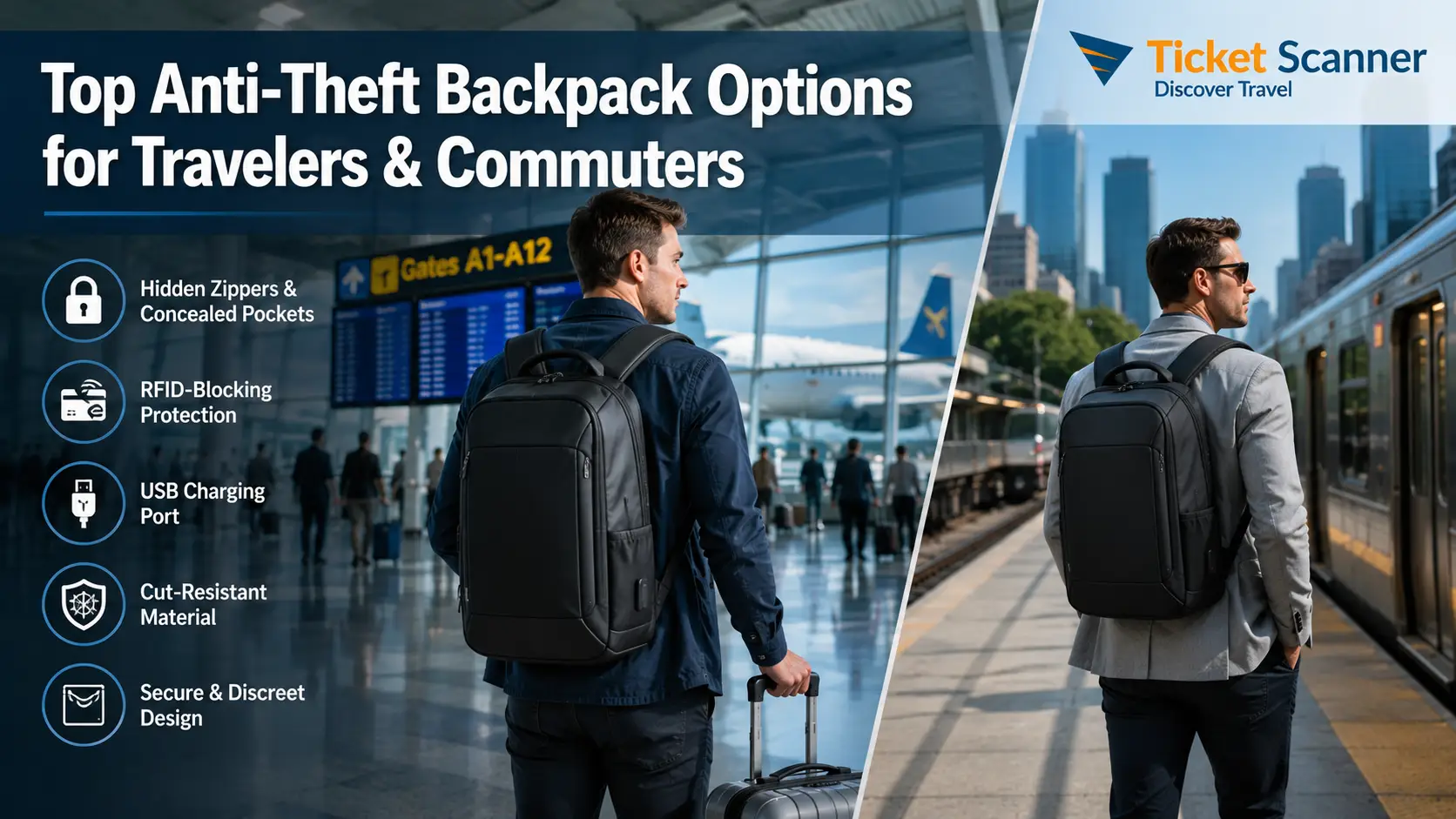
Most travel theft is not dramatic. It is a hand slipping into an outside pocket on a packed metro, a phone lifted from a café table, a bag hooked off the back of a chair or a daypack unzipped in a crowd while you look at a map. An anti-theft backpack is designed to make those quick, opportunistic grabs harder: zippers that face your back or lock, pockets hidden against your body, fabric and straps that resist a blade, and a way to anchor the bag to something solid. None of that makes a bag theft-proof, and the habits you travel with matter at least as much as the bag you carry. This guide explains how bag theft actually happens, what each anti-theft feature does and does not do, how to choose the right style for commuting, business travel, sightseeing or one-bag trips, a handful of well-known options from our original list, and what to do if something is taken anyway.
The short answer
For most travelers, the features that matter most are main zippers that sit against your back or can be locked, a hidden pocket for your passport and cards that is hard to reach while you wear the bag, and sturdy straps and fabric. Cut-resistant panels, locking cables and RFID-blocking pockets are useful extras, but they address less common risks. Choose the size by how you travel: a sling or small daypack for sightseeing, a laptop backpack for commuting and business trips, or a carry-on travel backpack if it is your main bag. Then pair the bag with good habits: wear it in front in crowds, never hang it on a chair and keep your phone out of outside pockets.
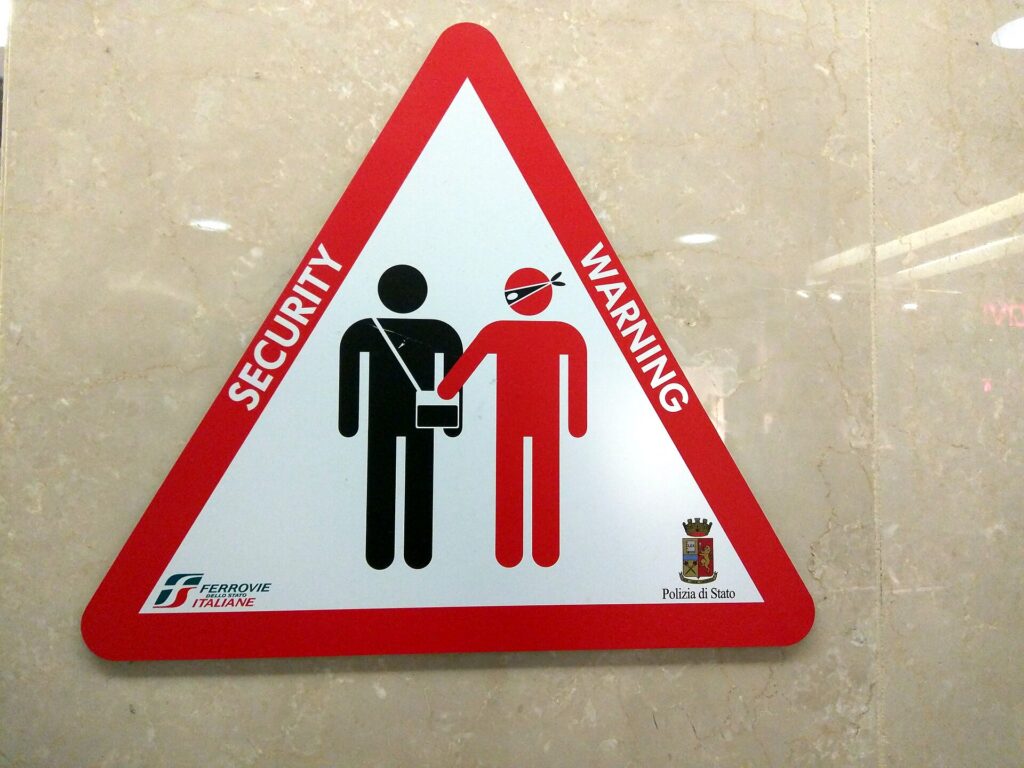
How bag theft actually happens
Understanding the common methods tells you which features are worth paying for.
- Pickpocketing in crowds. On busy trains, buses, escalators and in tourist hot spots, thieves open outside pockets and main zippers on bags worn on the back. This is the most common threat for travelers, and hidden or locking zippers address it directly.
- Distraction. Someone asks for directions, spills something on you, or creates a commotion while a partner opens your bag. No feature beats awareness here, but a bag that takes several seconds to open helps.
- Grab and run. A bag left on a chair, the floor beside a table or a luggage rack is simply picked up. A strap looped around your leg or a locking cable to a fixed object stops this.
- Snatching. A thief grabs a bag or phone and runs, sometimes from a scooter. Strong straps and wearing the bag on both shoulders or across the body help.
- Slashing. Cutting a bag or strap to get at the contents is much less common, but it is the risk cut-resistant materials are designed for.
- Opportunistic theft from rooms and cars. Valuables left in view in a parked car or out on a hotel room desk are easy targets. Here the fix is the room safe, the trunk and not leaving the bag at all.
Anti-theft features explained
Hidden and back-facing zippers
The most effective anti-theft design is also the simplest: put the main compartment zipper against your back, or hide it under a flap, so nobody can open it while you are wearing the bag. Some designs open only from the back panel. The trade-off is convenience; you have to take the bag off to get into it, which is exactly the point.
Locking zipper pulls
Many travel-focused bags let you clip zipper pulls together or into a catch, so a zipper cannot be quietly opened. Some accept a small padlock. This slows a pickpocket down enough to make your bag a worse target than the next one.
Cut-resistant fabric and straps
Some bags build a wire mesh or cut-resistant layer into the body and a steel cable into the straps. That defends against slashing and against a strap being cut in a snatch. It adds weight and cost, so it matters most for travelers in areas where that kind of theft is a known problem.
Locking cable or anchor strap
A strap or cable that wraps around a chair leg, a table or a luggage rack and locks to the bag stops a grab-and-run at a café or on an overnight train. It is one of the most underrated features for travelers who work in coffee shops or sleep on trains.
Hidden pockets against your back
A slim pocket in the back panel, reachable only when the bag is off, is the right place for a passport, a spare card and emergency cash. It is also useful on any bag, anti-theft or not.
RFID-blocking pockets
RFID-blocking pockets are lined to block radio signals from contactless cards and passports with chips. They do no harm and many travelers like the reassurance, but remote skimming is a far less common risk than a hand in your pocket. Treat RFID blocking as a small extra, not a reason to choose one bag over another.
Water resistance and USB ports
Water-resistant fabric protects a laptop and documents in rain, which is genuinely useful. USB ports on backpacks are usually a pass-through cable: you still need to put your own power bank inside, and the port itself does not store power.
| Feature | Protects against | How much it matters |
|---|---|---|
| Back-facing or hidden zippers | Pickpocketing in crowds | High for most travelers |
| Locking zipper pulls | Quiet opening while you walk or stand | High in busy cities and on transit |
| Hidden back-panel pocket | Loss of passport, cards and cash | High; worth having on any bag |
| Anchor strap or locking cable | Grab-and-run at cafés, trains, stations | Medium to high for café workers and rail travelers |
| Cut-resistant body and straps | Slashing and strap cutting | Medium; depends on destination |
| RFID-blocking pocket | Remote card skimming | Low; a small extra |
| Water-resistant fabric | Rain damage to electronics | Medium; useful everywhere |
Choosing the right style for how you travel
Daily commuting
For a commute with a laptop, look for a slim backpack with a padded laptop compartment, a back-facing or hidden main zipper and a quick-access pocket that sits against your back for a transit card. Keep it light; you carry it every day.
Business and tech travel
A larger laptop backpack with organized pockets for chargers and cables, a sleeve for your laptop and a luggage pass-through strap that slides over a suitcase handle is the most practical combination. If you would rather not carry a heavy tech bag at all, our guide to rolling laptop bags covers wheeled options, and our list of laptop travel accessories helps keep the contents organized.
Sightseeing and city days
For a day out, a small daypack or a convertible sling is plenty: water, a layer, a phone, a wallet and maybe a small camera. A sling that can be worn across the body and swung to the front in crowds is one of the most practical anti-theft carries.
One-bag travel
If the backpack is your only luggage, you need a carry-on travel pack with a clamshell opening, a laptop compartment and lockable zippers. Our guide to the Peak Design Travel Backpack 45L covers how to choose and pack a carry-on travel backpack, and the same principles apply to anti-theft designs.
Outdoors and remote work
For campsites, RV trips and remote work with expensive hardware, a rugged, water-resistant bag with a structured interior protects equipment from knocks as well as from theft. For real trail use, though, a hiking pack with a hip belt carries weight far better; see our guide to hiking backpacks.
Options from our original list
The bags below were featured in the original version of this guide. They cover different needs rather than a single ranking, and designs, sizes and features change between versions, so check the current details from the manufacturer or seller before you buy.
BANGE anti-theft laptop backpack (17.3-inch)
BANGE’s anti-theft backpack is aimed at business travelers and commuters who carry a large laptop. It is designed to fit a 17.3-inch notebook, uses water-resistant materials and includes a USB charging port that connects to a power bank you carry inside. It suits people who need room for a big laptop plus files and accessories, and who want the main compartment harder to open while the bag is on their back.
Bags designed for a Starlink Mini kit
The original list included a travel bag built around a Starlink Mini satellite dish and its accessories, with water-resistant material and anti-theft features. It is a niche choice, but a sensible one if you travel in an RV, camp or work remotely with that hardware: a bag shaped for the kit protects it far better than a general-purpose backpack. Check that the bag fits your exact kit before buying.
Travelon Anti-Theft Voyages Daypack
Travelon is one of the best-known names in anti-theft travel bags, and its range is built around features like lockable zippers, slash-resistant body panels and straps, and RFID-blocking pockets. The Voyages Daypack from the original list is a casual, lightweight daypack for sightseeing, museums and markets. Check the current product details for the exact feature set of the version you are buying.
Travelon Anti-Theft Classic Convertible Sling Backpack
This compact convertible bag can be worn as a backpack or a sling, which makes it easy to move to the front of your body in a crowd. It suits commuters who carry only essentials and travelers who want a secure second bag for day trips alongside their main luggage. Expect room for a phone, wallet, small tablet and a few daily items.
NOMATIC Navigator Travel Backpack
NOMATIC‘s Navigator is a premium carry-on travel backpack of around 32 liters with room to expand, a dedicated laptop compartment and protected access points. It suits frequent flyers and digital nomads who want one main bag that stays secure through airport lines, public transit and city walks. As with any expandable bag, check that it still fits your airline’s carry-on limit once expanded.
Other brands to know
Pacsafe is another long-established travel security brand, known for bags and accessories built around locking zippers, cut-resistant materials and anchor cables. It is worth a look alongside the options above if you want a wide choice of sizes and styles.
Comfort and fit still come first
A secure bag you hate wearing ends up at home. Check that the shoulder straps are padded and adjustable, that the back panel is not so stiff that it digs in, and that the bag sits high and close to your back rather than hanging low. A sternum strap helps a heavier laptop bag stay put. Remember that cut-resistant panels and steel-cable straps add weight, so compare empty weights if you will carry the bag all day. If possible, load the bag with a laptop and a water bottle in the store and walk around with it for a few minutes before deciding.
What to carry in a city daypack
A well-packed daypack means you rarely need to open it in a crowd. A sensible kit for a day of sightseeing:
- Water, a light layer or rain jacket, and a snack.
- Phone, a compact power bank and one cable; a 3-in-1 Apple charger back at the hotel keeps everything topped up overnight.
- One card, some local cash and a transit card in an easy but body-side pocket.
- A photocopy or photo of your passport, with the original in the safe unless you need it.
- A few plasters, pain relief and hand sanitizer from a small travel first aid kit.
Everything you need often should be reachable without opening the main compartment, and everything valuable should be in the pockets that are hardest to reach while you wear the bag.
Habits that matter more than the bag
- Wear it in front in crowds. On packed trains, escalators, markets and big events, swing the backpack to your chest or move a sling to the front.
- Nothing valuable in outside pockets. Phones in back pockets and wallets in outside bag pockets are the easiest targets there are.
- Never hang your bag on a chair. Keep it on your lap or loop a strap around your leg or the chair leg.
- Keep your phone in your hand, not on the table. Café tables near doors and terraces are a favorite spot for quick phone grabs.
- Split your valuables. One card and some cash in your wallet, a backup card and cash somewhere else, and your passport in the hotel safe or a hidden pocket. A money belt worn under clothing is a good home for backups.
- Be wary of distractions. If someone creates a commotion close to you, put a hand on your bag first and help second.
- Look like you know where you are going. Check maps before you step onto a busy street, or step into a doorway to do it.
Protecting documents, cards and small valuables
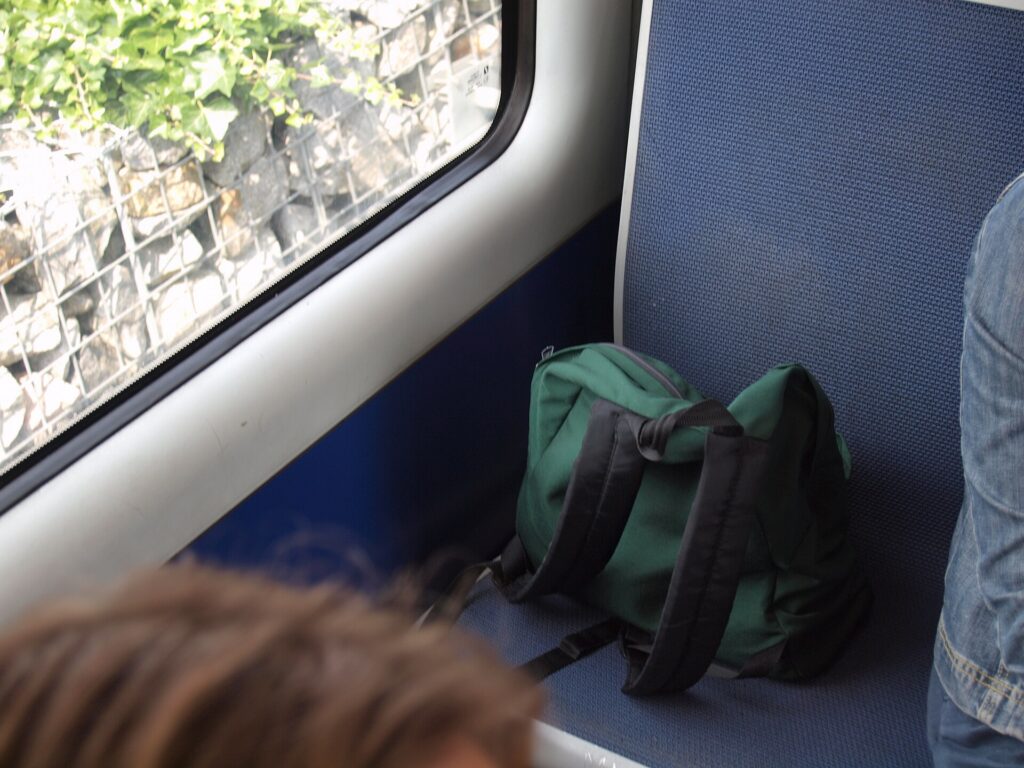
Your passport is the one item that can end a trip if it goes missing. Keep it in a hidden pocket or a passport holder inside your bag, not in an outside pocket, and carry a photo of the data page on your phone and in your email. For cards and cash, a slim organizer such as the ones in our guide to travel wallets for women keeps everything in one place you can grip. Jewelry is best left at home, or kept in a small case like those in our guide to travel jewelry cases and locked in the room safe when you go out.
On transit, in cafés, hotels and cars
Trains and buses
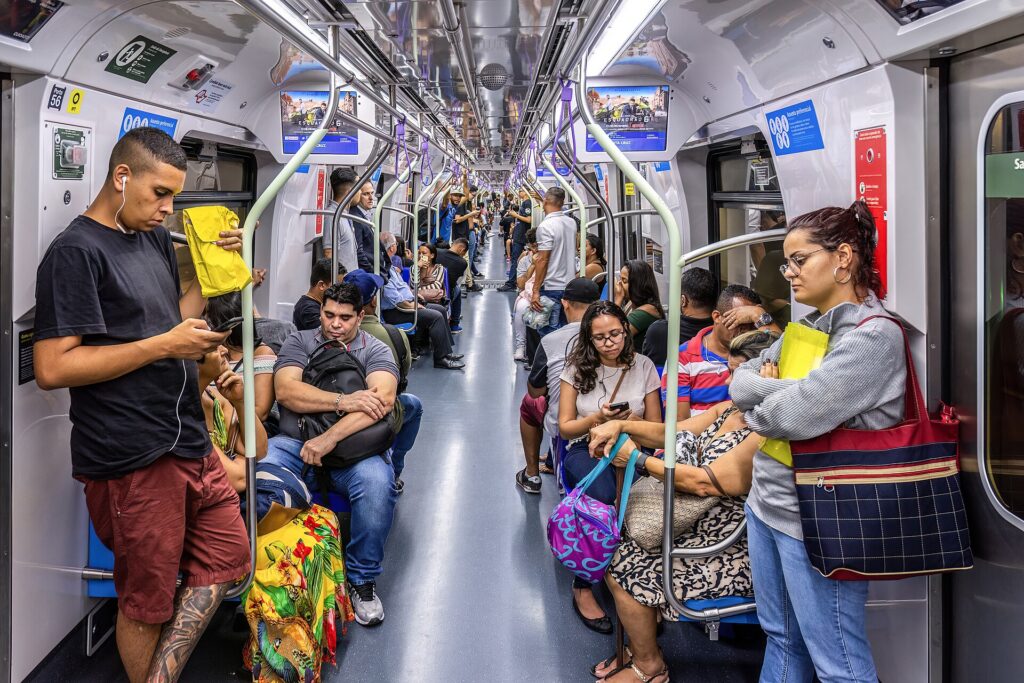
On long-distance trains, keep your daypack with you rather than on a distant luggage rack, and lock larger bags to the rack with a cable if you plan to sleep. On metros, stand with your bag in front and away from the doors, where snatch-and-exit thefts happen as doors close.
Cafés and restaurants
Choose a seat against a wall, keep the bag between your feet with a strap around your leg, and keep your phone off the table. If you work from cafés, an anchor strap is worth its weight.
Hotels
Use the room safe for your passport, spare cash and small electronics. Do not leave a laptop out on the desk when housekeeping is due. In hostels, use a locker and bring your own padlock.
Rental cars
Never leave bags visible in a parked car, even for a few minutes. Put luggage in the trunk before you arrive at your destination, not in the parking lot where people can see you do it. If you are renting a car on your trip, our car rental search lets you compare vehicles with an enclosed trunk rather than an open cargo area.

Anti-theft bags at the airport
Anti-theft backpacks go through security like any other bag. Locking zippers are fine at the checkpoint, but officers may need to open the bag, so keep it easy to unlock. Laptops and liquids may need to come out depending on the airport and screening lane. The TSA’s What Can I Bring? tool covers specific items in the United States, and CATSA’s what can I bring page does the same for Canada. Airports are also a place where bags go missing: never leave yours unattended, keep it in contact with your body at the gate, and count your bags when you leave the checkpoint.
If something is stolen
- Freeze cards first. Most banking apps let you lock a card instantly. Do that before anything else.
- Report it to the police. Get a report number; your insurer and airline may need it.
- Replace a lost or stolen passport. Canadians abroad can find help through the Government of Canada’s emergency assistance page. US citizens should follow the State Department’s lost or stolen passport guidance. Contact your embassy or consulate as early as possible if you have a flight coming up.
- Change passwords if a phone or laptop was taken, and use your device’s find-and-erase feature.
- Contact your travel insurer promptly; policies often have time limits and need a police report.
Before you go, read your government’s advice for your destination, which often describes common scams and theft hot spots. Canada’s travel advice and advisories are a good starting point.
Common mistakes
- Believing the bag does the work. A locked zipper will not help if the bag is hanging on a chair behind you.
- Buying a bag that screams “valuables”. Plain, understated bags attract less attention than obviously expensive ones.
- Making it too hard to use. If every pocket needs unlocking, you will stop locking them. Lock the main compartment and keep one easy pocket for a transit card.
- Carrying everything every day. Leave the passport and backup card in the safe on normal sightseeing days unless local rules require you to carry ID.
- No backups. Keep a photo of your passport, a backup card and emergency contacts somewhere separate.
Frequently asked questions
Do anti-theft backpacks really work?
They make the most common thefts, like quick pickpocketing and unzipping in crowds, harder and slower, which often means a thief picks an easier target. They do not stop determined theft, so combine the bag with good habits.
What is the most important anti-theft feature?
Main zippers that face your back or lock, plus a hidden pocket for your passport and cards. Those address the thefts travelers face most often.
Is RFID blocking necessary?
It is a harmless extra. Remote skimming is much less common than physical theft, so do not choose a bag mainly for RFID blocking.
Are anti-theft backpacks allowed as carry-on?
Yes, if they fit the airline’s carry-on or personal-item limits. Smaller daypacks and slings usually count as personal items; larger travel packs count as the carry-on.
Is a sling safer than a backpack?
A sling worn across the body and moved to the front in crowds is easier to keep an eye on. A backpack carries more and is more comfortable for heavier loads. Many travelers use both.
Where should I keep my passport while sightseeing?
In the hotel safe if you do not need it, or in a hidden pocket against your back or under your clothes if you do. Never in an outside pocket.
Can I lock my backpack when I go through security?
Yes, but officers may need to open it. Keep locks easy to remove, and use a lock that security can open if you are checking the bag on a flight in or to the United States.
Once your bag is sorted, focus on the trip itself. Compare fares on our flight search, choose a hotel with a room safe on our hotel search, and if you are exploring a big, busy city, our guides to things to do in Rome and things to do in London will help you plan days where a secure daypack earns its place. For the rest of your kit, start with our main guide to travel luggage.
Keep planning with TicketScanner
- Top travel luggage bags: the buying guide — the travel gear guide
- Peak Design Travel Backpack 45L and carry-on travel packs
- Best money belts for travel
- Passport holders
- Travel wallets for women
- Rolling laptop bags for business travel
- Hiking backpacks: how to choose and fit one
- Search hotels — find a room with a safe
- Things to do in Rome