Few things sour the start of a trip faster than being told at the gate that your bag is too big. Carry-on rules look simple, a few numbers on an airline’s website, but the details trip people up: whether wheels and handles count, what happens on small regional jets, how a personal item differs from a carry-on, why a bag labeled “carry-on” in a store can still be too long, and how the rules change when your trip involves more than one airline. This guide explains Delta’s carry-on size rules as published on its official website, how they compare with Air Canada and WestJet, how to measure your bag properly, what to look for when you buy carry-on luggage, and how to pack so that one bag and one personal item really are enough. Airline rules change, so treat the figures here as a starting point and check the airline’s own page before you fly. This guide is part of our flight booking series, which starts with our guide to the best time to book cheap flights and hotels.
The short answer
At the time of writing, Delta’s carry-on baggage page says that each passenger can bring one carry-on bag and one personal item free of charge. The carry-on must not exceed 22 x 14 x 9 inches (56 x 35 x 23 cm), and its combined length, width and height must not exceed 45 linear inches (114 cm). Those measurements include handles and wheels. The personal item, such as a purse, laptop bag or small backpack, must fit under the seat in front of you. On Delta Connection flights with 50 seats or fewer, only personal items can be carried on board, and larger bags are tagged and loaded in the hold, then returned to you as you leave the aircraft. Delta also notes that its SkyTeam and codeshare partners may have different rules. Check before you fly, measure your bag at home including the wheels, and if you are booking now, compare fares and total costs on our flight search.
Delta’s carry-on rules in detail
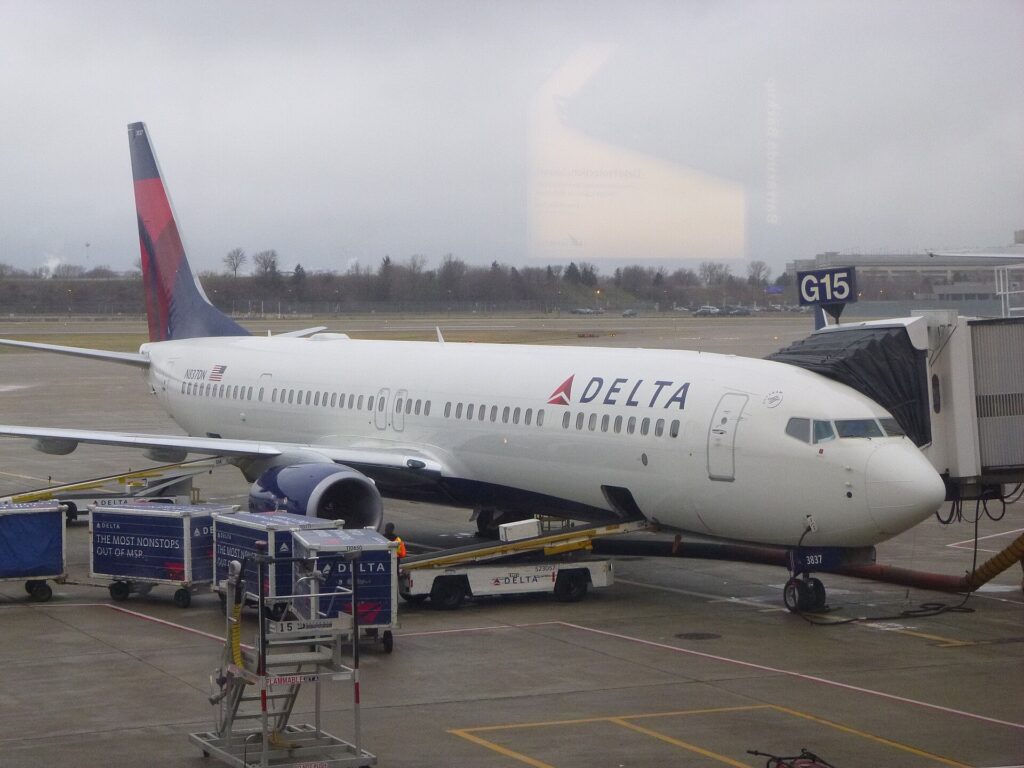
Here is what Delta’s carry-on page says, in plain terms. Rules can change at any time, so confirm on the official page before each trip.
The allowance
Each passenger can bring one carry-on bag for the overhead bin and one personal item for under the seat. Delta gives examples of personal items: a purse, briefcase, small backpack, belt bag, camera bag, diaper bag or laptop bag, or another item of similar or smaller size. Laptops should stay in the cabin; Delta notes that computers cannot be checked unless security directs otherwise. Exceptions apply for passengers traveling with an infant in arms or with a pet in the cabin.
The size limit
The carry-on bag must not exceed 22 inches long, 14 inches wide and 9 inches deep (56 x 35 x 23 cm), and the three measurements added together must not exceed 45 inches (114 cm). The limits include handles and wheels. Delta says that size check displays are available at ticket counters and gates if you want to confirm that your bag fits.
Items that do not count toward your allowance
Delta lists several things you can bring in addition to your carry-on and personal item: a jacket or umbrella, food or drink bought after security, a bag of duty-free purchases, and special items such as strollers, wheelchairs, child safety seats and assistive devices.
Weight
Delta’s carry-on page sets out dimensions rather than a weight limit for the carry-on. It does, however, say that flight attendants are unable to proactively help customers place bags in overhead bins, with certain exceptions. In practice, that means you should be able to lift your bag above your head yourself. Rules can differ on partner airlines and in some countries, so check if your trip includes another carrier.
Full flights and gate checking
If your bag does not fit, or a very full flight runs short of bin space, Delta says a flight attendant or gate agent can check your bag at the gate. On crowded flights, some carry-on bags may be gate checked free of charge during boarding and returned when you leave the aircraft, with a pink Gate Claim or Planeside tag attached.
Regional flights
On Delta Connection flights with 50 seats or fewer, overhead space is limited, so Delta permits only personal items on board. Larger items get a pink Gate Claim or Planeside tag, are loaded in the hold and are returned to you when you leave the aircraft. If your trip includes a small regional aircraft, pack your carry-on so it can be handed over at the door without stress, which means keeping valuables, medication and spare batteries in your personal item.
Comfort devices
Delta also lists comfort items that are not allowed on its flights, including inflatable seat devices, knee defenders and seat recline blockers, foot hammocks, window and tray table organizers, pods and tents. Check the list before you pack travel gadgets.
How Delta compares with Air Canada and WestJet
Many trips involve more than one airline, especially between Canada and the United States. The table shows the carry-on and personal item sizes each airline published on its official site when we checked. Rules change, and fare type can matter, so confirm on each airline’s page before you fly.
| Airline | Carry-on bag | Personal item | Basic fare notes |
|---|---|---|---|
| Delta | 22 x 14 x 9 in (56 x 35 x 23 cm), 45 linear in (114 cm), including handles and wheels | Must fit under the seat in front; examples given, no dimensions listed on the page | Personal items only on Delta Connection flights with 50 seats or fewer |
| Air Canada | 23 x 40 x 55 cm (9 x 15.5 x 21.5 in), including wheels and handles | 33 x 43 x 16 cm (13 x 17 x 6 in) | Economy Basic fares bought on or after January 3, 2025 allow only a personal item on some itineraries |
| WestJet | 56 x 23 x 36 cm (22 x 9 x 14 in) | 41 x 15 x 33 cm (16 x 6 x 13 in) | UltraBasic allows a personal item only, with exceptions such as flights to and from Europe and Asia |
Two practical lessons come out of this comparison. First, the numbers are close but not identical. Air Canada’s limit is slightly shorter than Delta’s (55 cm against 56 cm) but wider (40 cm against 35 cm). A bag that fits both needs to respect the smaller figure in each direction: roughly 55 x 35 x 23 cm. Second, the fare can matter as much as the airline. Basic fares on some airlines and routes allow only a personal item, so always check what your ticket includes before you plan to travel carry-on only. Air Canada also states that no weight limit applies to carry-on bags, but that you must be able to lift yours into the bin without help.
If you are comparing fares, add the cost of a checked bag, or of a fare that includes a carry-on, to the cheapest price before deciding. Our international flights booking tips explain how to compare fare brands, and our guide to reading your flight details shows where the baggage allowance appears on a booking.
How to measure your bag properly
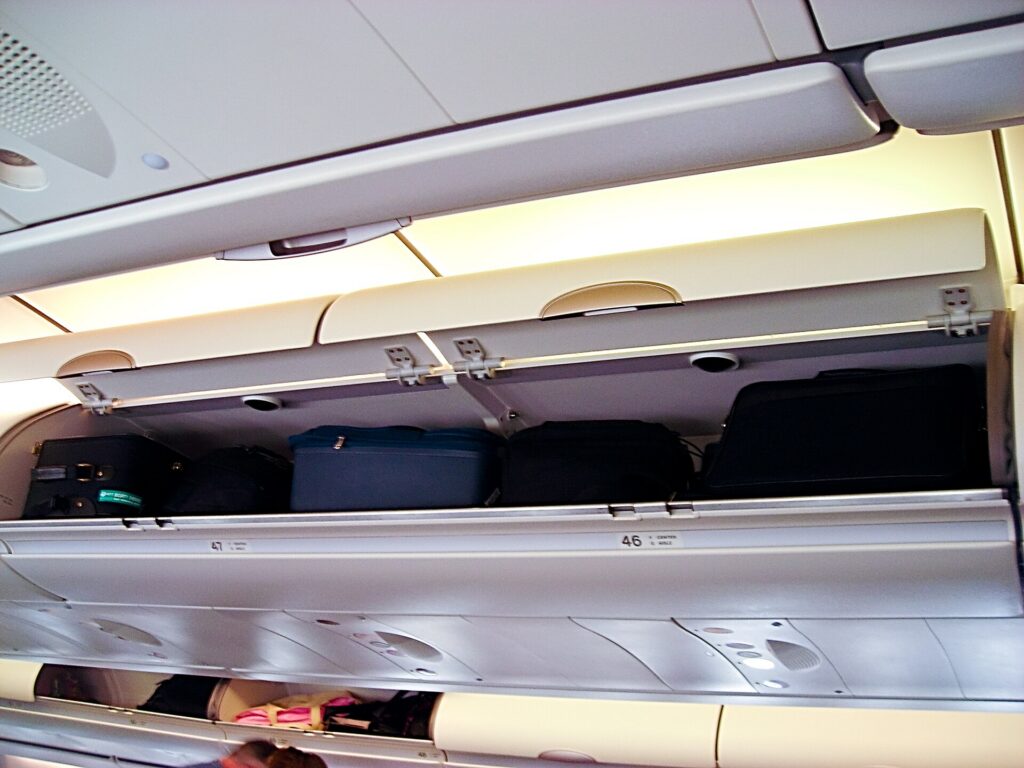
Most carry-on problems come from measuring the wrong thing. Retail listings often quote the size of the main compartment or round the numbers, and they may leave out the wheels and handles that airlines include.
- Pack the bag as you will travel with it. An empty softside bag measures smaller than a full one, and outside pockets bulge.
- Measure the height from the floor to the top of the handle, with the telescoping handle fully retracted and the bag standing on its wheels.
- Measure the width across the widest point, including side handles and any feet.
- Measure the depth from the front of the fullest pocket to the back, including wheel housings.
- Add the three numbers and check them against the airline’s linear limit as well as each individual limit.
- Check the expansion zipper. Many bags meet carry-on limits only when unexpanded. If you expand it to fit souvenirs on the way home, measure again.
- Compare with the airline’s page, not the product label. If you fly several airlines, use the smallest figure in each direction.
A simple check: a bag sold as a “22.75-inch” carry-on is, by its own description, longer than 22 inches unless that figure excludes the wheels. Some bags labeled “carry-on plus” or “large carry-on” are designed for airlines with bigger limits. The label is marketing; the tape measure is the rule.
Buying carry-on luggage: what to look for
The original version of this guide listed several popular carry-on suitcases from brands such as SWISSGEAR, Delsey, Travelers Club and Wrangler. All of these brands sell bags marketed as carry-ons, but product listings change often and are not always clear about whether wheels are included in the dimensions, so rather than repeat a list we cannot vouch for, here is how to judge any bag yourself.
External dimensions, including wheels
This is the first and most important check. Look for a manufacturer’s page that states the overall dimensions including wheels and handles, then compare with the airline limit. If the listing is unclear, measure the bag in the store or when it arrives, and keep the packaging until you are sure.
Hardside or softside
Hardside bags protect fragile contents and resist rain, and they hold their shape, which makes the size predictable. Softside bags usually have outside pockets for quick access and can squeeze into a tight bin or sizer, but they bulge when overpacked. Frequent carry-on travelers are split between the two; choose based on how you pack and what you carry.
Spinner or two-wheel
Four spinner wheels make a bag easy to roll down a narrow aircraft aisle and through crowded terminals. Two inline wheels are recessed into the bag, which often leaves more packing space for the same external size and survives rough pavement better. If you want every centimeter of space within the limit, a two-wheel bag often has the edge.
The bag’s own weight
A lighter bag leaves more of your strength, and any weight limit on other airlines, for your belongings. Since Delta expects you to lift your own bag into the bin, a light bag also makes boarding easier.
Handles, zippers and wheels
These are the parts that fail. Look for a handle that locks firmly at more than one height without wobbling, sturdy zippers, and wheels that can be replaced. A good warranty from the manufacturer is worth paying for.
Locks
Many bags include locks designed so that security officers can open them for inspection without breaking them. They are useful for checked bags; for a carry-on that stays with you, they matter less.
Organization
Compression straps, a divided interior and a laptop sleeve make it easier to live out of one bag. A front pocket for your liquids bag and documents speeds up security.
Other types of carry-on bag
- Travel backpacks. A structured travel backpack is easier on stairs, cobblestones and trains than a roller, and often fits carry-on limits well. Our review of the Peak Design Travel Backpack 45L looks at one popular option, and our guide to anti-theft backpacks covers security features.
- Duffels. Soft duffels squeeze into tight spaces, but can be hard on the shoulders over long walks.
- Underseat bags. A small roller or tote designed to fit under the seat can work as your personal item or, on basic fares, as your only bag. Our guide to rolling laptop bags covers options for work travelers.
- Suitcase sets. A matching set can be good value, but check the carry-on piece’s overall dimensions separately, since set pieces are not always sized for strict airline limits.
For a wider look at choosing luggage, see our travel luggage guide.
Liquids, batteries and what goes in your carry-on
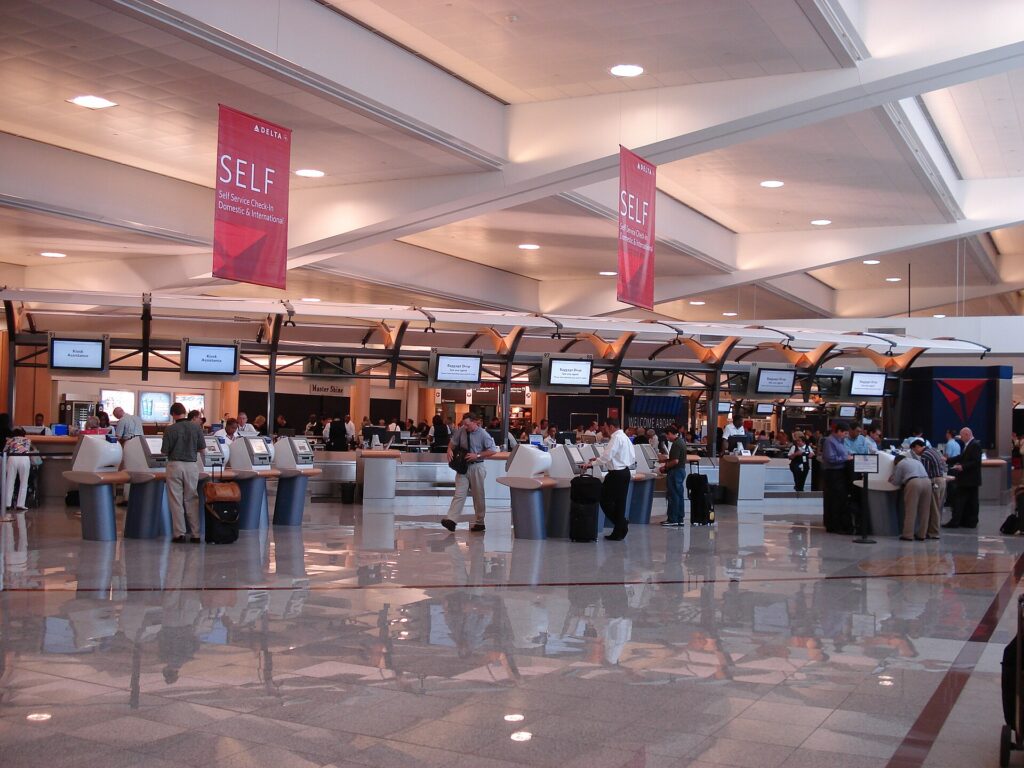
Size is only half the carry-on story. What you pack inside also has rules.
Liquids
Delta’s page summarizes the common rule: liquids, gels, aerosols and pastes in containers of up to 3.4 ounces or 100 milliliters, all in a single quart-size clear, resealable bag, which you may need to take out at security. In Canada, CATSA describes the same principle as containers of 100 mL or less in one clear 1 L bag, and notes that at CT-equipped screening lines, liquids and large electronics may stay in your bag. Medication, baby formula and breast milk usually have exemptions with extra screening. Check the rules for the country you are departing from: TSA in the United States and CATSA in Canada.
Batteries and electronics
Spare lithium batteries and power banks generally must travel in the cabin, not in checked baggage. The FAA’s PackSafe pages explain the rules for U.S. flights. This matters if your carry-on is gate checked: take power banks and spare batteries out and keep them in your personal item.
Things to keep with you
Whatever happens to your carry-on, your personal item should hold what you cannot be without: passport and documents, medication, phone, chargers, keys, valuables and a change of clothes. Our guide to what not to wear on a flight includes a short list of backup items worth carrying.
How to pack a carry-on for a week
Traveling with only a carry-on saves time at the airport and removes the risk of a lost bag. It takes a little discipline.
- Build a small capsule wardrobe. Choose a few tops and bottoms that all go together in two or three colors.
- Wear your bulkiest items. Heavy shoes and your warmest layer go on your body, not in the bag.
- Roll or use packing cubes. Cubes compress clothing and keep the bag organized when you open it in a hotel room.
- Limit shoes. Two pairs, including the pair you wear, cover most trips.
- Decant toiletries. Travel-size containers fit the liquid rules, and hotels often provide basics.
- Plan to do laundry. A sink wash or hotel laundry halfway through a trip halves what you need to pack.
- Leave space. A bag packed to bursting will not fit a sizer and has no room for anything you buy.
Boarding tips to keep your bag with you
Even a perfectly sized bag can end up gate checked if the bins fill before you board. A few habits improve your chances.
- Board with your group, and be ready. Bins fill from the front, and passengers in later boarding groups are the most likely to be asked to check bags.
- Consider a seat that boards earlier or comes with bin space. Delta’s Delta Comfort page, for example, lists earlier boarding and dedicated overhead bin space among its benefits.
- Put your bag in wheels first. On most aircraft, that uses the bin most efficiently; follow crew instructions where they differ.
- Keep your personal item under the seat. Placing it in the overhead bin takes space from someone else’s carry-on.
- Volunteer when it suits you. If the crew asks for volunteers to check bags free at the gate and you have no tight connection, it can save you the stress of hunting for space.
When to check a bag instead
Carry-on only is not always the best choice. Consider checking a bag if:
- You are traveling for more than a week to somewhere cold, with bulky clothing.
- You need liquids in larger quantities, such as specific skincare or medication that does not fit the liquid rules and is not exempt.
- You are carrying sports equipment, gifts or anything you cannot lift easily.
- Your fare includes a checked bag anyway, as many premium and some standard fares do.
- Your route includes small regional aircraft where carry-ons are handled at the door anyway.
If you check a bag, allow time to drop it before the deadline. Our guide to how early to arrive for an international flight explains why bag drop cut-offs matter. Travelers in premium cabins usually get a larger allowance; our guide to the difference between first class and business class covers what each cabin includes, and our guide to business class upgrade hacks explains how to get there for less.
Common carry-on mistakes
- Trusting the label. “Carry-on” on a tag does not mean the bag meets your airline’s limits including wheels.
- Measuring an empty bag. A full softside bag is bigger than an empty one.
- Expanding on the way home. An expanded bag often exceeds the depth limit.
- Assuming every airline is the same. Delta, Air Canada and WestJet all publish slightly different numbers.
- Ignoring your fare. Some basic fares allow only a personal item.
- Forgetting regional jets. On small Delta Connection aircraft, carry-ons go in the hold.
- Leaving batteries in a bag that gets gate checked. Move them to your personal item.
- Packing a bag you cannot lift. Crew may not be able to help you put it in the bin.
Frequently asked questions
What is Delta’s carry-on size limit?
According to Delta’s carry-on page at the time of writing, 22 x 14 x 9 inches (56 x 35 x 23 cm), with a combined total of no more than 45 inches (114 cm), including handles and wheels. Check the page before you fly, as rules can change.
Does Delta weigh carry-on bags?
Delta’s carry-on page lists size limits rather than a weight limit for the carry-on, but notes that flight attendants cannot proactively help lift bags into bins. Pack a bag you can lift yourself, and check partner airline rules if another carrier operates part of your trip.
Do wheels and handles count toward Delta’s carry-on size?
Yes. Delta says the measurements include any handles or wheels.
What counts as a personal item on Delta?
Delta gives examples such as a purse, briefcase, small backpack, belt bag, camera bag, diaper bag or laptop bag, or an item of similar size that fits under the seat in front of you.
Can I bring a carry-on on a Delta Connection flight?
On Delta Connection flights with 50 seats or fewer, Delta permits only personal items on board. Larger bags are tagged, loaded in the hold and returned to you when you leave the aircraft.
Will a bag that fits Delta also fit Air Canada?
Not necessarily. Air Canada’s published limit is 55 cm long, slightly shorter than Delta’s 56 cm, but allows 40 cm of width against Delta’s 35 cm. A bag of about 55 x 35 x 23 cm fits both.
What happens if my carry-on is too big?
Delta says a gate agent or flight attendant can check it at the gate. Depending on the airline and fare, a bag that should have been checked may carry a fee, so measure before you leave home.
Is a 22-inch suitcase a carry-on?
Only if the 22 inches includes the wheels and handle and the other dimensions also fit. Many bags described as 22-inch measure more once wheels are included, so measure the bag itself.
Bag measured and packed? Compare fares and baggage costs across flexible dates on our flight search, then find a place to stay with our hotel search. Flying through Delta’s biggest hub? Our Atlanta airport guide helps you find your way around, and our guide to the best time to fly to New York will help you choose your dates.
Keep planning with TicketScanner
- Best time to book cheap flights and hotels
- What not to wear on a flight
- How early to arrive for an international flight
- Flight details, decoded
- International flights booking tips
- Business class upgrade hacks that work
- Choosing the right travel luggage
- Compare flight prices — add bag costs before you compare
- Atlanta (ATL) airport guide
- Best time to fly to New York