
Winnipeg has the most extreme climate of any big city in Canada, and its fares are shaped by it in ways that reward a little planning. Winter is long, very cold and, unusually, very sunny; summer is short, hot and packed with festivals; the spring and fall between them are brief. Demand into the city is driven by leisure in July and August, by the Jets from October to April and unpredictably in the playoffs, by the polar bear season in Churchill, for which Winnipeg is the only gateway, in October and November, and by the steady business and government traffic of a provincial capital and a regional hub. The airport is ten minutes from downtown, which is a rare convenience, and the city is one of the cheapest in the country to stay in once you land. This guide walks through the weather month by month, the fare seasons, the events that move prices, the airport, and the tricks that work for a city in the middle of the continent.
The short answer
The best combination of weather and value is the first three weeks of June, when the days are long, the heat has not yet arrived, the Jazz festival and the Red River Ex open the season, and fares are moderate, and September, when the summer festivals have finished, the weather is often the most settled of the year, and fares ease after Labour Day. The cheapest fares come in January and February outside the Festival du Voyageur and the Family Day weekend, in November, and in April. The most expensive stretches are the second week of July, when the Folk Festival draws tens of thousands to Birds Hill Park, the first two weeks of August, when Folklorama fills the city, the Christmas and New Year weeks, any Jets playoff series, which can fill downtown hotels at a few days’ notice, and, for the Churchill connection, October and November. Whatever you choose, run a flexible-date search on our Winnipeg flights page; a shift of a few days around the festivals can change the fare band entirely.

Winnipeg’s weather, season by season
Winnipeg sits in the middle of the continent, far from any ocean, and its climate is as continental as they come: winters that are among the coldest of any city of its size in the world, summers that are genuinely hot, more than 2,300 hours of sunshine a year, low humidity most of the time, and rapid transitions between the seasons. The figures below are approximate seasonal patterns based on the long-term climate normals from Environment and Climate Change Canada; check the current forecast before you pack, and in winter check the wind chill, which is the number that matters.
| Month | Typical daytime high | Typical overnight low | What it feels like | Fare pressure |
|---|---|---|---|---|
| January | around -12 °C | around -21 °C | Very cold, dry, sunny; wind chills to -40; the river trail opens | Low after the first week |
| February | around -9 °C | around -19 °C | Still very cold; more light; Festival du Voyageur | Low, with Voyageur and Family Day spikes |
| March | around -2 °C | around -11 °C | Thaw begins late; slush; the river trail closes | Low; spring-break spike |
| April | around 10 °C | around -2 °C | Brown, windy; the Red River may flood; Jets playoffs | Lowest of the year, unless the Jets are winning |
| May | around 18 °C | around 5 °C | Green arrives fast; warm days; Manito Ahbee | Low to moderate; Victoria Day spike |
| June | around 23 °C | around 11 °C | Warm, long days; thunderstorms; mosquitoes arrive | Moderate |
| July | around 26 °C | around 14 °C | Hot, sunny; the Folk Festival and the Fringe; mosquitoes | High, peaking in the second week |
| August | around 25 °C | around 13 °C | Hot and drier; Folklorama; the beaches | Peak in the first two weeks |
| September | around 19 °C | around 7 °C | Warm days, cool nights; the most settled month; first frost | Moderate, falling after Labour Day |
| October | around 11 °C | around 0 °C | Crisp, brief fall; first snow late in the month; Churchill season | Low in the city; high on the Churchill connection |
| November | around 0 °C | around -9 °C | Winter sets in; short days; the Jets in full swing | Low |
| December | around -9 °C | around -18 °C | Deep cold arrives; sunny and festive | Low until mid-month, then a holiday peak |
Three things the table cannot show. First, the wind chill: Winnipeg’s winter cold is dry, which helps, but the prairie wind at Portage and Main can push a -20 °C day to a -35 wind chill, and that is the number to dress for. Second, the sunshine: Winnipeg is one of the sunniest cities in Canada, and a January day is often brilliantly clear, which makes the cold more bearable than a grey -5 in Toronto. Third, the mosquitoes: from mid-June to the end of July, in a wet year, they are a genuine feature of the outdoors, and repellent is not optional at the Folk Festival or the beach.
How Winnipeg’s fare seasons work
Winnipeg is a regional hub with frequent flights from Toronto, Calgary, Vancouver, Edmonton and Ottawa, a handful of U.S. routes, principally to Minneapolis, Chicago and Denver, seasonal sun flights in winter, and the Churchill service north. Demand is a mix of leisure, which follows the festivals and the weather; business and government, which fills weekday flights all year; the university, which moves students in early September, late December and late April; and the north, because Winnipeg is the connecting point for Churchill, Thompson and the Nunavut communities of the Kivalliq. The result is a fare curve with a short, sharp summer peak in July and August, a Christmas peak driven by Manitobans flying home, a long cheap winter with a Voyageur bump, and the two unpredictable elements, a Jets playoff run and the Churchill polar bear season.
Peak season
The second week of July through mid-August, plus roughly December 18 to January 3. The Folk Festival, over a long weekend in the second week of July at Birds Hill Park, draws tens of thousands, many of whom camp but many of whom fill the city’s hotels; the Fringe follows in the Exchange in the second half of July; and Folklorama’s two weeks at the start of August are the city’s busiest fortnight. Book early for any of these, and book the hotel first for the Folk Festival weekend.
Shoulder season
Late May to early July, and September to mid-October. June is the best-value warm month; September is quieter and often the best weather of the year, with the Banjo Bowl and Nuit Blanche on the calendar. Watch the Victoria Day weekend, Labour Day and Thanksgiving.
Low season
November, mid-January to March outside the Voyageur and Family Day weekends and the spring break, and April. Fares and hotel rates are at their annual low, and the winter city, the river trail, the Voyageur festival and the Jets, is the draw. The Churchill connection is the exception in October and November, when the polar bear season fills the northbound flights and the tour operators book Winnipeg’s hotels for their groups. And a Jets playoff run in April or May can fill downtown at a few days’ notice.
As elsewhere, mid-week departures and early or late flights usually price below Friday and Sunday afternoons on the same route, and a whole-month search reveals cheaper pairs of dates close to your first choice. Our guide to the best times to book explains how to read those patterns.
Winnipeg month by month
January
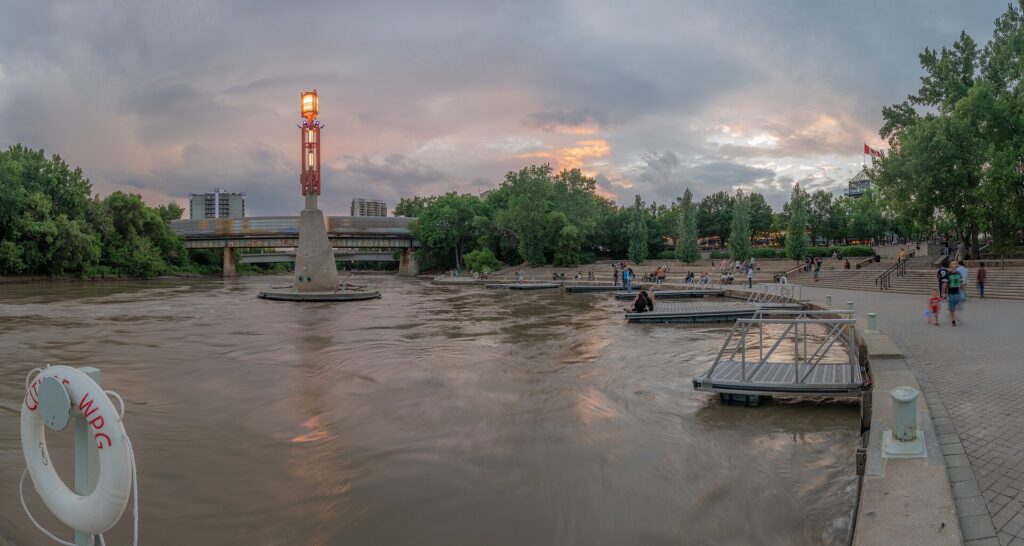
Very cold, very sunny and, after the first week, the cheapest month of the year to fly in. The river skating trail at The Forks opens as the ice thickens, the warming huts appear, the Jets are at home, the polar bears at the zoo are in their element, and the aurora is visible on clear nights outside the city. Dress for -35 wind chills and it is a fine, cheap trip.
February
Still deep winter, with more daylight, and the Festival du Voyageur over ten days in the second half of the month is the city’s great winter event and the one week when hotels fill and fares rise; the Family Day long weekend on the third Monday often falls inside it. The weeks either side are cheap.
March
The thaw begins late, the river trail closes, and the mid-to-late March spring break lifts fares for a fortnight. Otherwise a cheap, bright, slushy month.
April
Brown, windy and unpredictable, and the cheapest month of the year, with two exceptions: the Red River floods in some springs, which is a spectacle rather than a disruption in the city itself, and the Jets playoffs, which begin in mid-April and, in a good year, turn downtown into a whiteout with hotel rates to match. If the team is in contention, book early or plan around game nights.
May
Green arrives fast in the second half, the patios open on Corydon and in Osborne Village, the Manito Ahbee Indigenous festival fills the arena, and the Victoria Day weekend is the traditional start of the cottage season. Early May is the value play.
June
Warm, long days, the Red River Exhibition fair, Jazz Winnipeg, Pride, the Blue Bombers’ season opening and the Goldeyes at the ballpark. The first three weeks are among the best windows of the year for value; the mosquitoes arrive by the end of the month.
July
Hot and sunny, and peak. The Winnipeg Folk Festival, over the second weekend, is the single biggest hotel and flight spike of the summer, and the Fringe in the second half of the month keeps the Exchange full. If you are coming for the Folk Festival, book the hotel first; the Winnipeg hotel search shows what is left.
August
Hot and drier, with Folklorama filling the first two weeks with pavilions across the city and the beaches at Grand Beach and Gimli’s Icelandic Festival on the long weekend. The last two weeks of the month, once Folklorama ends, are a pocket of good value before September.
September
Often the best month: warm days, cool nights, the mosquitoes gone, the Banjo Bowl against Saskatchewan on the Labour Day weekend, the writers’ festival, and Nuit Blanche in the Exchange at the end of the month. Fares ease after Labour Day and the university move-in; mid-September is a strong value window.
October
Crisp and brief, with the first snow usually by the end of the month and the Jets’ season opening. Fares in the city are low apart from Thanksgiving, but the Churchill polar bear season, which peaks in late October and November, fills the northbound flights and brings tour groups through the city’s hotels; if Churchill is your goal, book months ahead.
November
Winter sets in, the days shorten, and the city’s fares and hotel rates are at their annual low; the Churchill connection is still at its peak. The Jets and the Blue Bombers’ playoffs, the Santa Claus parade and the holiday lights at The Forks are the calendar.
December
Deep cold arrives, sunny and festive, and the river trail opens by the end of the month in a cold year. The first half continues November’s pricing; from about December 18, Manitobans flying home from Alberta, Ontario and BC push fares up sharply through New Year.

Events that move Winnipeg flight and hotel prices
Cross-check these against your dates before you book. Exact dates shift each year; Tourism Winnipeg keeps the current calendar.
- Festival du Voyageur (ten days in the second half of February) and the Family Day weekend.
- Spring break (mid-to-late March).
- Jets playoff series (mid-April to June in a good year): the most unpredictable hotel spike in the city.
- Victoria Day weekend (Monday before May 25).
- Winnipeg Folk Festival (second weekend of July): the biggest summer spike.
- Winnipeg Fringe (second half of July).
- Folklorama (first two weeks of August).
- Labour Day, the Banjo Bowl and the university move-in (first week of September).
- Thanksgiving (second Monday of October).
- Churchill polar bear season (late October to November) on the northbound connection.
- Christmas to New Year.
- Arena concerts at the Canada Life Centre and stadium shows; our Winnipeg events page shows what is on sale for your dates.
Getting in from the airport
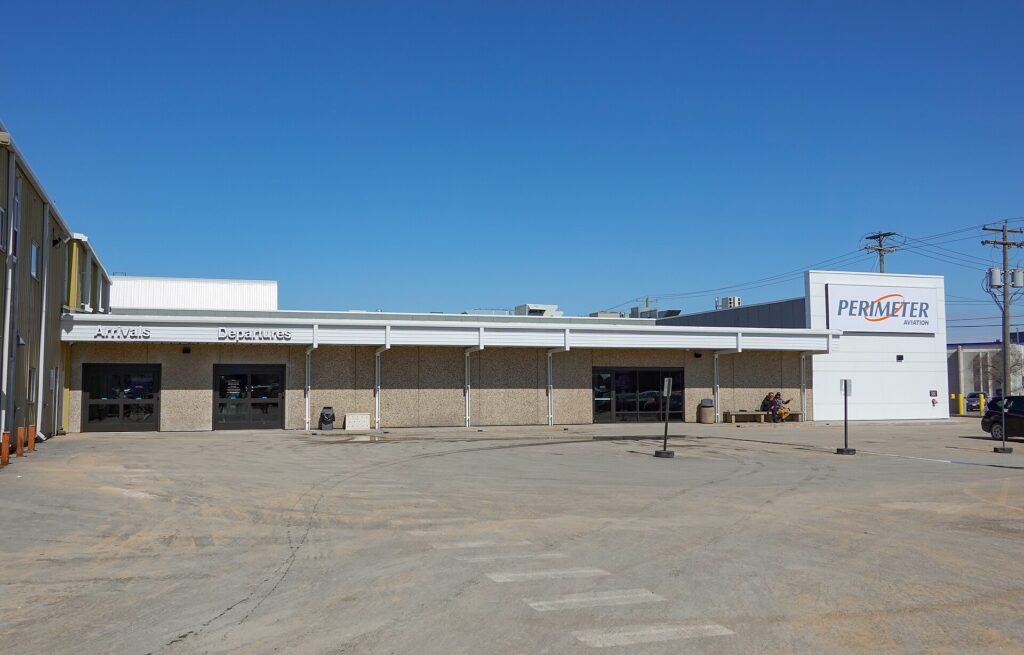
Winnipeg has one commercial airport, Winnipeg James Armstrong Richardson International (YWG), about 10 kilometres west of downtown, and it is one of the most convenient big-city airports in Canada: a single, modern terminal, a taxi or ride-hail to downtown in 15 to 20 minutes, a Winnipeg Transit bus route that runs to downtown for a standard fare in about half an hour, hotel shuttles, and every major rental company in the terminal. It has frequent flights from the big Canadian cities, U.S. service to Minneapolis, Chicago, Denver and a few seasonal points, winter sun flights, and the Calm Air and other services north to Churchill and Nunavut. Our YWG airport guide covers the layout, and our car-versus-transit guide works through whether you need a rental.
Timing tricks that work for Winnipeg
- Search the whole month. The Folk Festival and Folklorama are short, sharp spikes; the last two weeks of August and the first three of June are the value. A calendar search on TicketScanner shows the edges instantly.
- Check the Jets’ schedule. A home playoff game can make downtown hotels expensive for a night; shift by a day, stay near Polo Park or the airport, or embrace it and get a ticket. Our Winnipeg events page lists what is on sale.
- Book Churchill first. If the polar bears are the goal, the northbound flights and the Churchill hotels sell out months ahead; the Winnipeg leg is the easy part.
- Consider Minneapolis. For U.S. visitors, a fare into Minneapolis plus the seven-hour drive up Interstate 29 and Highway 75 is a classic prairie road trip and occasionally cheaper than the connection; for most, the direct flight wins on time.
- Fly mid-week. Winnipeg’s business and government traffic makes Monday morning and Friday afternoon the busiest and priciest flights on the Toronto and Calgary routes; Tuesday to Thursday is the value.
- Take the winter without the festival. Late January and early March give you the river trail, the Jets and the polar bears at low-season prices.
- Build a winter buffer. Extreme cold and blizzards can disrupt YWG between November and March, though the airport handles cold well; avoid the tightest connections. Our guide to how early to arrive covers what to allow.
- Flying out of Winnipeg instead? The same seasonality applies in reverse, and the winter sun flights to Mexico and the Caribbean peak in the school holidays; see cheap flights from Winnipeg.
What to pack, by season
Winter (November to March): a genuinely warm coat rated for -30 °C or colder, a hat that covers the ears, insulated gloves or mitts, a scarf or neck warmer, insulated boots with grip, and layers; the wind at Portage and Main is not a joke, and the river trail is a long way from a warm building. Spring (April to May): layers, a windproof shell, and be ready for anything from snow to 25 °C. Summer (June to August): light clothing, sun protection, insect repellent, a warm layer for the cool evenings, and rain gear for the thunderstorms. Fall (September to October): layers, a warm jacket by October, and walking shoes for the Exchange and the parks.
The best time to fly to Winnipeg for…
The festivals
The second week of July for the Folk Festival, the second half for the Fringe, and the first two weeks of August for Folklorama, each booked early with the hotel first.
The river trail and the winter city
Late January to early March, with the Festival du Voyageur in the second half of February as the peak and the weeks either side as the value.
The Jets
October to April for regular-season games; April to June, at short notice and high prices, for the playoffs.
Churchill’s polar bears
Late October to mid-November, booked months ahead; the beluga whales are the July and August alternative.
The lowest fares
November, January and February outside the festival and holiday weekends, and April if the Jets are out of contention.
Families
The last two weeks of August for the beaches and the empty museums, or late June for the value; in winter, The Forks’ trail and the polar bears at the zoo make a cheap January workable for children dressed for it.
Cross-border and international visitors
U.S. citizens need a valid passport; most other visa-exempt travellers arriving by air need an Electronic Travel Authorization. The Government of Canada’s visitor page explains what applies to you, and CATSA lists what you can carry through security.
Frequently asked questions
What is the cheapest month to fly to Winnipeg?
November, January and April are consistently the lowest, with February and early March close behind outside the Voyageur festival and the holiday weekends.
What is the best month to visit Winnipeg?
September for weather and value, June for the long days before the heat and mosquitoes, July and August for the festivals, and February for the winter city at its best.
How cold does Winnipeg get?
January highs around -12 °C and lows around -21 °C on an average day, with cold snaps to -35 °C and wind chills beyond -40. It is dry and sunny, and the city is built for it.
Is Winnipeg the gateway to Churchill?
Yes, the only one: Churchill has no road, and the flights and the two-day train both leave from Winnipeg. Polar bear season is late October to November, beluga season is July and August.
How far is the airport from downtown?
About 10 kilometres, 15 to 20 minutes by taxi, or half an hour by city bus. It is one of the easiest airport transfers in the country.
How far ahead should I book?
Months ahead for the Folk Festival, Folklorama, Christmas and Churchill; a few weeks for the summer and September; and as late as you like in the winter and spring low season. Playoff travel is booked at short notice by everyone, so move quickly when a series is confirmed.
Ready to pick your dates? Compare fares across the whole month on our Winnipeg flights page, then find a room with our Winnipeg hotel search. For what to do when you land, start with our first-timer’s guide to Winnipeg.
Keep planning with TicketScanner
- Cheap flights to Winnipeg — compare fares across the whole month
- Winnipeg hotels — book early for Folklorama and the Folk Festival
- Winnipeg car rentals
- Events in Winnipeg — Jets, Blue Bombers, concerts and shows on sale
- Things to do in Winnipeg: a first-timer's guide
- Winnipeg: rent a car or use transit?
- Winnipeg Richardson (YWG) airport guide
- Cheap flights to Minneapolis — the nearest U.S. hub
- Best times to book flights and hotels
Leave a Reply