Tag: Winnipeg

  • Best Time to Fly to Winnipeg: Seasons, Weather & Prices

    Best Time to Fly to Winnipeg: Seasons, Weather & Prices

    Winnipeg has the most extreme climate of any big city in Canada, and its fares are shaped by it in ways that reward a little planning. Winter is long, very cold and, unusually, very sunny; summer is short, hot and packed with festivals; the spring and fall between them are brief. Demand into the city is driven by leisure in July and August, by the Jets from October to April and unpredictably in the playoffs, by the polar bear season in Churchill, for which Winnipeg is the only gateway, in October and November, and by the steady business and government traffic of a provincial capital and a regional hub. The airport is ten minutes from downtown, which is a rare convenience, and the city is one of the cheapest in the country to stay in once you land. This guide walks through the weather month by month, the fare seasons, the events that move prices, the airport, and the tricks that work for a city in the middle of the continent.

    The short answer

    The best combination of weather and value is the first three weeks of June, when the days are long, the heat has not yet arrived, the Jazz festival and the Red River Ex open the season, and fares are moderate, and September, when the summer festivals have finished, the weather is often the most settled of the year, and fares ease after Labour Day. The cheapest fares come in January and February outside the Festival du Voyageur and the Family Day weekend, in November, and in April. The most expensive stretches are the second week of July, when the Folk Festival draws tens of thousands to Birds Hill Park, the first two weeks of August, when Folklorama fills the city, the Christmas and New Year weeks, any Jets playoff series, which can fill downtown hotels at a few days’ notice, and, for the Churchill connection, October and November. Whatever you choose, run a flexible-date search on our Winnipeg flights page; a shift of a few days around the festivals can change the fare band entirely.
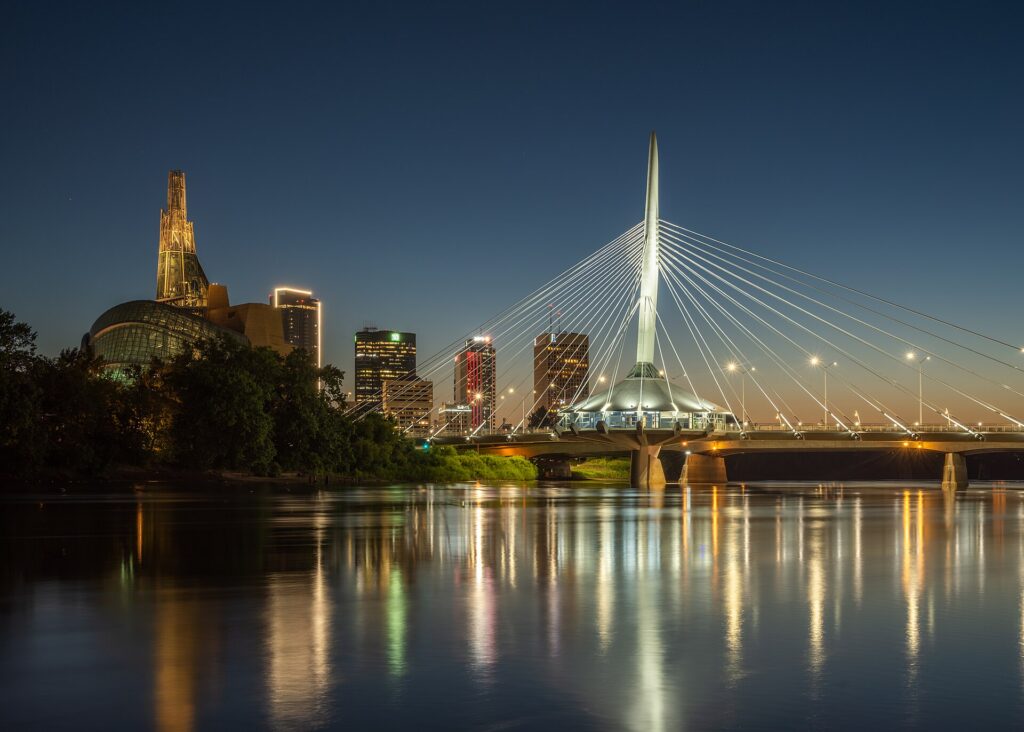
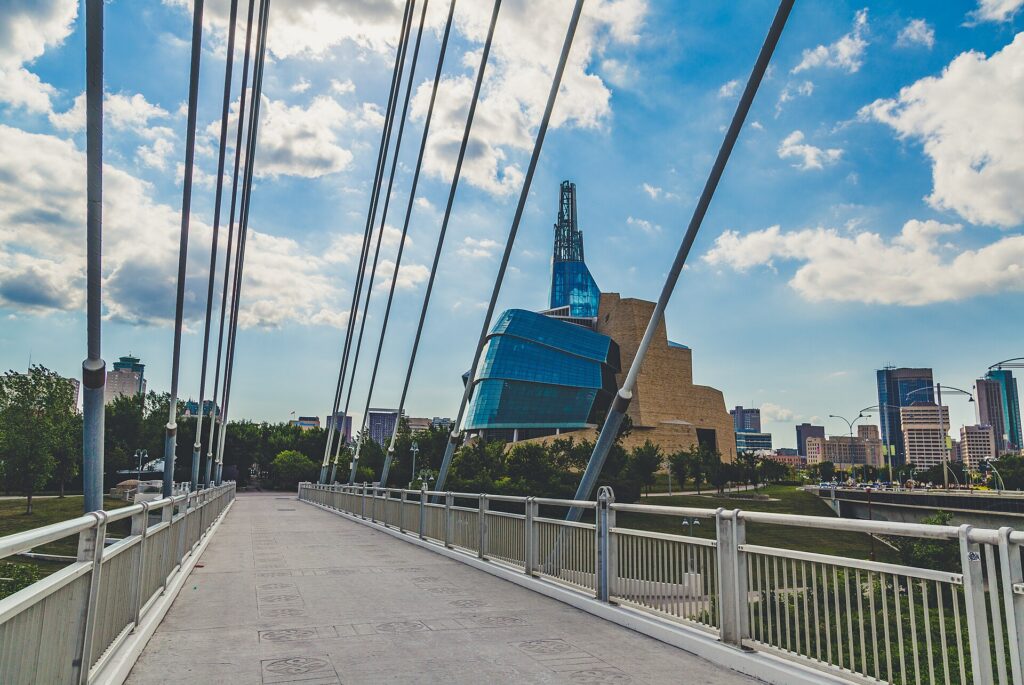
    The Esplanade Riel footbridge and the Winnipeg skyline at dusk
    The Esplanade Riel over the Red River at dusk (Photo: Ethan Sahagun via Wikimedia Commons, CC BY 4.0)

    Winnipeg’s weather, season by season

    Winnipeg sits in the middle of the continent, far from any ocean, and its climate is as continental as they come: winters that are among the coldest of any city of its size in the world, summers that are genuinely hot, more than 2,300 hours of sunshine a year, low humidity most of the time, and rapid transitions between the seasons. The figures below are approximate seasonal patterns based on the long-term climate normals from Environment and Climate Change Canada; check the current forecast before you pack, and in winter check the wind chill, which is the number that matters.

    MonthTypical daytime highTypical overnight lowWhat it feels likeFare pressure
    Januaryaround -12 °Caround -21 °CVery cold, dry, sunny; wind chills to -40; the river trail opensLow after the first week
    Februaryaround -9 °Caround -19 °CStill very cold; more light; Festival du VoyageurLow, with Voyageur and Family Day spikes
    Marcharound -2 °Caround -11 °CThaw begins late; slush; the river trail closesLow; spring-break spike
    Aprilaround 10 °Caround -2 °CBrown, windy; the Red River may flood; Jets playoffsLowest of the year, unless the Jets are winning
    Mayaround 18 °Caround 5 °CGreen arrives fast; warm days; Manito AhbeeLow to moderate; Victoria Day spike
    Junearound 23 °Caround 11 °CWarm, long days; thunderstorms; mosquitoes arriveModerate
    Julyaround 26 °Caround 14 °CHot, sunny; the Folk Festival and the Fringe; mosquitoesHigh, peaking in the second week
    Augustaround 25 °Caround 13 °CHot and drier; Folklorama; the beachesPeak in the first two weeks
    Septemberaround 19 °Caround 7 °CWarm days, cool nights; the most settled month; first frostModerate, falling after Labour Day
    Octoberaround 11 °Caround 0 °CCrisp, brief fall; first snow late in the month; Churchill seasonLow in the city; high on the Churchill connection
    Novemberaround 0 °Caround -9 °CWinter sets in; short days; the Jets in full swingLow
    Decemberaround -9 °Caround -18 °CDeep cold arrives; sunny and festiveLow until mid-month, then a holiday peak

    Three things the table cannot show. First, the wind chill: Winnipeg’s winter cold is dry, which helps, but the prairie wind at Portage and Main can push a -20 °C day to a -35 wind chill, and that is the number to dress for. Second, the sunshine: Winnipeg is one of the sunniest cities in Canada, and a January day is often brilliantly clear, which makes the cold more bearable than a grey -5 in Toronto. Third, the mosquitoes: from mid-June to the end of July, in a wet year, they are a genuine feature of the outdoors, and repellent is not optional at the Folk Festival or the beach.

    How Winnipeg’s fare seasons work

    Winnipeg is a regional hub with frequent flights from Toronto, Calgary, Vancouver, Edmonton and Ottawa, a handful of U.S. routes, principally to Minneapolis, Chicago and Denver, seasonal sun flights in winter, and the Churchill service north. Demand is a mix of leisure, which follows the festivals and the weather; business and government, which fills weekday flights all year; the university, which moves students in early September, late December and late April; and the north, because Winnipeg is the connecting point for Churchill, Thompson and the Nunavut communities of the Kivalliq. The result is a fare curve with a short, sharp summer peak in July and August, a Christmas peak driven by Manitobans flying home, a long cheap winter with a Voyageur bump, and the two unpredictable elements, a Jets playoff run and the Churchill polar bear season.

    Peak season

    The second week of July through mid-August, plus roughly December 18 to January 3. The Folk Festival, over a long weekend in the second week of July at Birds Hill Park, draws tens of thousands, many of whom camp but many of whom fill the city’s hotels; the Fringe follows in the Exchange in the second half of July; and Folklorama’s two weeks at the start of August are the city’s busiest fortnight. Book early for any of these, and book the hotel first for the Folk Festival weekend.

    Shoulder season

    Late May to early July, and September to mid-October. June is the best-value warm month; September is quieter and often the best weather of the year, with the Banjo Bowl and Nuit Blanche on the calendar. Watch the Victoria Day weekend, Labour Day and Thanksgiving.

    Low season

    November, mid-January to March outside the Voyageur and Family Day weekends and the spring break, and April. Fares and hotel rates are at their annual low, and the winter city, the river trail, the Voyageur festival and the Jets, is the draw. The Churchill connection is the exception in October and November, when the polar bear season fills the northbound flights and the tour operators book Winnipeg’s hotels for their groups. And a Jets playoff run in April or May can fill downtown at a few days’ notice.

    As elsewhere, mid-week departures and early or late flights usually price below Friday and Sunday afternoons on the same route, and a whole-month search reveals cheaper pairs of dates close to your first choice. Our guide to the best times to book explains how to read those patterns.

    Winnipeg month by month

    January

    Very cold, very sunny and, after the first week, the cheapest month of the year to fly in. The river skating trail at The Forks opens as the ice thickens, the warming huts appear, the Jets are at home, the polar bears at the zoo are in their element, and the aurora is visible on clear nights outside the city. Dress for -35 wind chills and it is a fine, cheap trip.

    February

    Still deep winter, with more daylight, and the Festival du Voyageur over ten days in the second half of the month is the city’s great winter event and the one week when hotels fill and fares rise; the Family Day long weekend on the third Monday often falls inside it. The weeks either side are cheap.

    March

    The thaw begins late, the river trail closes, and the mid-to-late March spring break lifts fares for a fortnight. Otherwise a cheap, bright, slushy month.

    April

    Brown, windy and unpredictable, and the cheapest month of the year, with two exceptions: the Red River floods in some springs, which is a spectacle rather than a disruption in the city itself, and the Jets playoffs, which begin in mid-April and, in a good year, turn downtown into a whiteout with hotel rates to match. If the team is in contention, book early or plan around game nights.

    May

    Green arrives fast in the second half, the patios open on Corydon and in Osborne Village, the Manito Ahbee Indigenous festival fills the arena, and the Victoria Day weekend is the traditional start of the cottage season. Early May is the value play.

    June

    Warm, long days, the Red River Exhibition fair, Jazz Winnipeg, Pride, the Blue Bombers’ season opening and the Goldeyes at the ballpark. The first three weeks are among the best windows of the year for value; the mosquitoes arrive by the end of the month.

    July

    Hot and sunny, and peak. The Winnipeg Folk Festival, over the second weekend, is the single biggest hotel and flight spike of the summer, and the Fringe in the second half of the month keeps the Exchange full. If you are coming for the Folk Festival, book the hotel first; the Winnipeg hotel search shows what is left.

    August

    Hot and drier, with Folklorama filling the first two weeks with pavilions across the city and the beaches at Grand Beach and Gimli’s Icelandic Festival on the long weekend. The last two weeks of the month, once Folklorama ends, are a pocket of good value before September.

    September

    Often the best month: warm days, cool nights, the mosquitoes gone, the Banjo Bowl against Saskatchewan on the Labour Day weekend, the writers’ festival, and Nuit Blanche in the Exchange at the end of the month. Fares ease after Labour Day and the university move-in; mid-September is a strong value window.

    October

    Crisp and brief, with the first snow usually by the end of the month and the Jets’ season opening. Fares in the city are low apart from Thanksgiving, but the Churchill polar bear season, which peaks in late October and November, fills the northbound flights and brings tour groups through the city’s hotels; if Churchill is your goal, book months ahead.

    November

    Winter sets in, the days shorten, and the city’s fares and hotel rates are at their annual low; the Churchill connection is still at its peak. The Jets and the Blue Bombers’ playoffs, the Santa Claus parade and the holiday lights at The Forks are the calendar.

    December

    Deep cold arrives, sunny and festive, and the river trail opens by the end of the month in a cold year. The first half continues November’s pricing; from about December 18, Manitobans flying home from Alberta, Ontario and BC push fares up sharply through New Year.
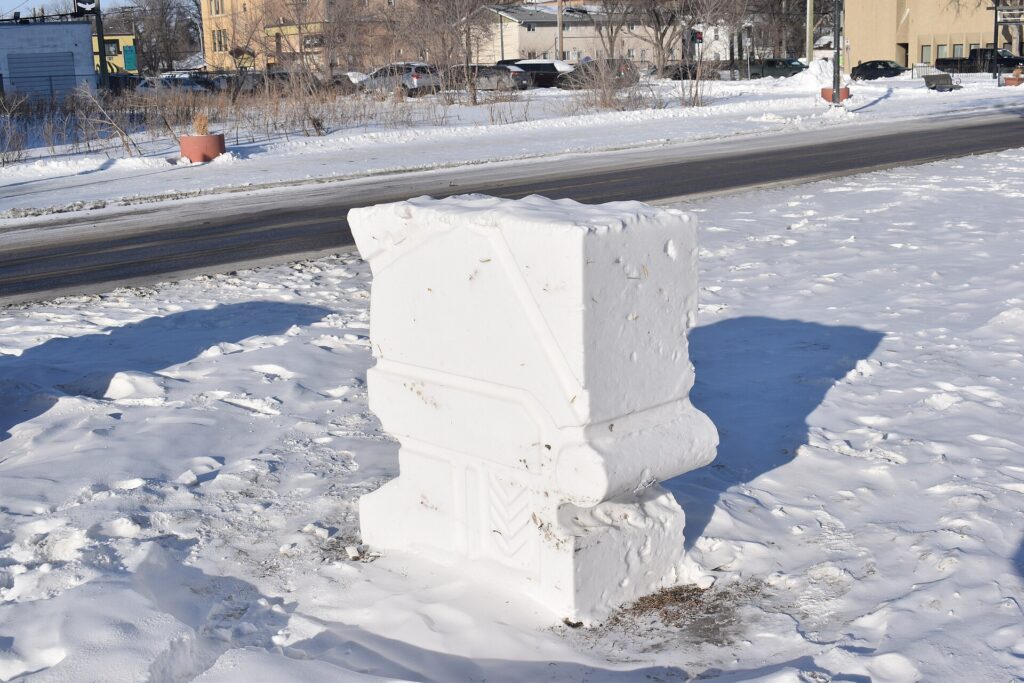
    A snow sculpture at the Festival du Voyageur in Saint-Boniface, Winnipeg
    The Festival du Voyageur in February, the one winter week that fills Winnipeg's hotels (Photo: Words in the Wind via Wikimedia Commons, CC BY 4.0)

    Events that move Winnipeg flight and hotel prices

    Cross-check these against your dates before you book. Exact dates shift each year; Tourism Winnipeg keeps the current calendar.

    • Festival du Voyageur (ten days in the second half of February) and the Family Day weekend.
    • Spring break (mid-to-late March).
    • Jets playoff series (mid-April to June in a good year): the most unpredictable hotel spike in the city.
    • Victoria Day weekend (Monday before May 25).
    • Winnipeg Folk Festival (second weekend of July): the biggest summer spike.
    • Winnipeg Fringe (second half of July).
    • Folklorama (first two weeks of August).
    • Labour Day, the Banjo Bowl and the university move-in (first week of September).
    • Thanksgiving (second Monday of October).
    • Churchill polar bear season (late October to November) on the northbound connection.
    • Christmas to New Year.
    • Arena concerts at the Canada Life Centre and stadium shows; our Winnipeg events page shows what is on sale for your dates.

    Getting in from the airport

    Winnipeg has one commercial airport, Winnipeg James Armstrong Richardson International (YWG), about 10 kilometres west of downtown, and it is one of the most convenient big-city airports in Canada: a single, modern terminal, a taxi or ride-hail to downtown in 15 to 20 minutes, a Winnipeg Transit bus route that runs to downtown for a standard fare in about half an hour, hotel shuttles, and every major rental company in the terminal. It has frequent flights from the big Canadian cities, U.S. service to Minneapolis, Chicago, Denver and a few seasonal points, winter sun flights, and the Calm Air and other services north to Churchill and Nunavut. Our YWG airport guide covers the layout, and our car-versus-transit guide works through whether you need a rental.
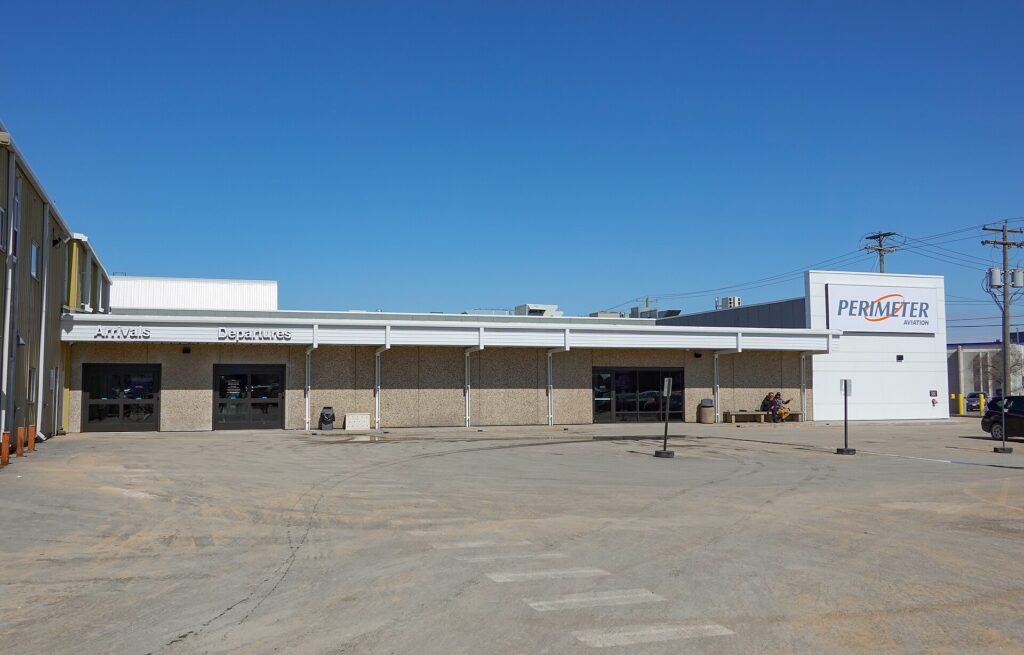
    The terminal at Winnipeg James Armstrong Richardson International Airport (YWG)
    Winnipeg Richardson International (YWG), fifteen minutes from downtown (Photo: Quintin Soloviev via Wikimedia Commons, CC0)
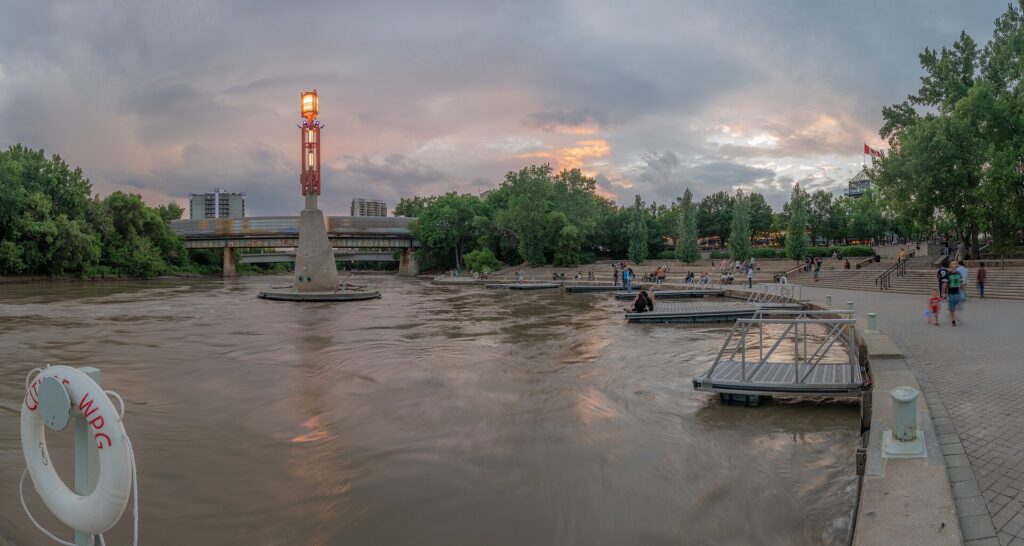
    The docks at The Forks on the Red River at dusk in summer
    The Forks in summer, when the river taxis run and the patios are full (Photo: Ethan Sahagun via Wikimedia Commons, CC BY 4.0)

    Timing tricks that work for Winnipeg

    • Search the whole month. The Folk Festival and Folklorama are short, sharp spikes; the last two weeks of August and the first three of June are the value. A calendar search on TicketScanner shows the edges instantly.
    • Check the Jets’ schedule. A home playoff game can make downtown hotels expensive for a night; shift by a day, stay near Polo Park or the airport, or embrace it and get a ticket. Our Winnipeg events page lists what is on sale.
    • Book Churchill first. If the polar bears are the goal, the northbound flights and the Churchill hotels sell out months ahead; the Winnipeg leg is the easy part.
    • Consider Minneapolis. For U.S. visitors, a fare into Minneapolis plus the seven-hour drive up Interstate 29 and Highway 75 is a classic prairie road trip and occasionally cheaper than the connection; for most, the direct flight wins on time.
    • Fly mid-week. Winnipeg’s business and government traffic makes Monday morning and Friday afternoon the busiest and priciest flights on the Toronto and Calgary routes; Tuesday to Thursday is the value.
    • Take the winter without the festival. Late January and early March give you the river trail, the Jets and the polar bears at low-season prices.
    • Build a winter buffer. Extreme cold and blizzards can disrupt YWG between November and March, though the airport handles cold well; avoid the tightest connections. Our guide to how early to arrive covers what to allow.
    • Flying out of Winnipeg instead? The same seasonality applies in reverse, and the winter sun flights to Mexico and the Caribbean peak in the school holidays; see cheap flights from Winnipeg.

    What to pack, by season

    Winter (November to March): a genuinely warm coat rated for -30 °C or colder, a hat that covers the ears, insulated gloves or mitts, a scarf or neck warmer, insulated boots with grip, and layers; the wind at Portage and Main is not a joke, and the river trail is a long way from a warm building. Spring (April to May): layers, a windproof shell, and be ready for anything from snow to 25 °C. Summer (June to August): light clothing, sun protection, insect repellent, a warm layer for the cool evenings, and rain gear for the thunderstorms. Fall (September to October): layers, a warm jacket by October, and walking shoes for the Exchange and the parks.

    The best time to fly to Winnipeg for…

    The festivals

    The second week of July for the Folk Festival, the second half for the Fringe, and the first two weeks of August for Folklorama, each booked early with the hotel first.

    The river trail and the winter city

    Late January to early March, with the Festival du Voyageur in the second half of February as the peak and the weeks either side as the value.

    The Jets

    October to April for regular-season games; April to June, at short notice and high prices, for the playoffs.

    Churchill’s polar bears

    Late October to mid-November, booked months ahead; the beluga whales are the July and August alternative.

    The lowest fares

    November, January and February outside the festival and holiday weekends, and April if the Jets are out of contention.

    Families

    The last two weeks of August for the beaches and the empty museums, or late June for the value; in winter, The Forks’ trail and the polar bears at the zoo make a cheap January workable for children dressed for it.

    Cross-border and international visitors

    U.S. citizens need a valid passport; most other visa-exempt travellers arriving by air need an Electronic Travel Authorization. The Government of Canada’s visitor page explains what applies to you, and CATSA lists what you can carry through security.

    Frequently asked questions

    What is the cheapest month to fly to Winnipeg?

    November, January and April are consistently the lowest, with February and early March close behind outside the Voyageur festival and the holiday weekends.

    What is the best month to visit Winnipeg?

    September for weather and value, June for the long days before the heat and mosquitoes, July and August for the festivals, and February for the winter city at its best.

    How cold does Winnipeg get?

    January highs around -12 °C and lows around -21 °C on an average day, with cold snaps to -35 °C and wind chills beyond -40. It is dry and sunny, and the city is built for it.

    Is Winnipeg the gateway to Churchill?

    Yes, the only one: Churchill has no road, and the flights and the two-day train both leave from Winnipeg. Polar bear season is late October to November, beluga season is July and August.

    How far is the airport from downtown?

    About 10 kilometres, 15 to 20 minutes by taxi, or half an hour by city bus. It is one of the easiest airport transfers in the country.

    How far ahead should I book?

    Months ahead for the Folk Festival, Folklorama, Christmas and Churchill; a few weeks for the summer and September; and as late as you like in the winter and spring low season. Playoff travel is booked at short notice by everyone, so move quickly when a series is confirmed.

    Ready to pick your dates? Compare fares across the whole month on our Winnipeg flights page, then find a room with our Winnipeg hotel search. For what to do when you land, start with our first-timer’s guide to Winnipeg.

  • Winnipeg: Should You Rent a Car or Rely on Public Transit?

    Winnipeg: Should You Rent a Car or Rely on Public Transit?

    Winnipeg is a prairie city that grew up around a railway and then around the car, and most of its residents drive. But the Winnipeg a visitor comes for is unusually concentrated: The Forks, the Canadian Museum for Human Rights, the Exchange District, the Legislative Building and Saint-Boniface are all within twenty minutes of each other on foot, the airport is ten minutes from downtown, and most of the hotels outside the core include parking anyway. So the question is less about the city than about the season and the day trips: Assiniboine Park and the polar bears are a bus ride in July and a car ride in January; Grand Beach, Lower Fort Garry, the Mennonite village and Riding Mountain are car trips in any season; and the Jets’ arena is in the middle of downtown. This guide explains how the city is laid out, how the buses and the rapid-transit line work, the airport transfer, what driving and parking are really like in a place where -30 is a normal January morning, when a car is worth it, and gives you a straightforward way to decide.

    The short answer

    Skip the car if you are staying downtown, in the Exchange District or near The Forks for a city break, a Jets game, a conference or a festival, and your plans are the museums, the rivers, the Exchange and Saint-Boniface; you will walk almost everywhere and take a bus or a ride-hail to Assiniboine Park. Rent a car if the beaches, Lower Fort Garry, the Mint, Fort Whyte, Steinbach, Riding Mountain or the Whiteshell are on the itinerary, if you are staying in the suburbs or with family, if you are visiting in deep winter and want the zoo, the aurora and the Voyageur festival without waiting for buses at -30, or if you are continuing on a prairie road trip. For most first-time visitors, the hybrid is right: car-free in the core, a one-day rental for the countryside. Compare rental rates for any of these plans on our Winnipeg car rental page.

    How Winnipeg is laid out

    Winnipeg sits at the confluence of the Red River, flowing north, and the Assiniboine, flowing east, and the two rivers define it. Downtown occupies the wedge north of the Assiniboine and west of the Red, with Portage Avenue and Main Street as its axes and their famous intersection at its heart; the Exchange District is the block of heritage warehouses north of Portage and Main, with the Jets’ arena on its edge; The Forks and the Human Rights Museum are at the tip of the wedge where the rivers meet; and the Legislative Building stands on the Assiniboine’s north bank at the western edge of downtown. Across the Red by the Esplanade Riel footbridge is Saint-Boniface, the French quarter; south across the Assiniboine are Osborne Village and, further, Corydon Avenue‘s Little Italy and the residential south end toward the university; west along Portage are the Polo Park shopping district and the airport; further west is Assiniboine Park. The North End, beyond the rail yards, holds the old immigrant neighbourhoods and the Main Street strip. The core is walkable and flat; the rest of the city is spread out across the prairie and assumes a car or a bus.

    Hotels cluster downtown around the arena and the convention centre, in the Exchange District, at The Forks, along the airport strip on Wellington Avenue, and around Polo Park; most outside the core include parking. Our Winnipeg hotel search lets you compare them.

    Getting in from the airport

    Winnipeg Richardson International (YWG) is about 10 kilometres west of downtown along Wellington Avenue and Portage, and the transfer is one of the easiest in the country. A taxi or ride-hail takes 15 to 20 minutes and is inexpensive by big-city standards. Winnipeg Transit’s Route 20 runs from the terminal along Wellington and Portage to downtown for a standard fare in about half an hour. Hotel shuttles serve the airport-strip hotels. And every major rental company is in the terminal, with Route 90 and the Perimeter Highway close by for anyone heading straight to the lake or the parks. Check the airport’s site and Winnipeg Transit for current service; our YWG airport guide covers the layout.

    Winnipeg’s transit, explained

    Winnipeg Transit runs the city’s buses; there is no rail, and the long-debated light rail has never been built. What the city does have is a rapid-transit busway, the Blue line, which runs on its own right-of-way from downtown south to the University of Manitoba, and a network of frequent routes along Portage, Main, Pembina, Henderson and the other arterials that, for a visitor, covers everything the walkable core does not. In 2025, Winnipeg Transit overhauled its whole network into a spine-and-feeder system with more frequent main lines and fewer meandering routes; the route numbers and patterns changed, so check the current map rather than an older guidebook.

    The routes that matter to a visitor

    The Blue rapid-transit line links downtown, Osborne Village, the Fort Rouge neighbourhoods and the university and stadium in the south; the Portage Avenue lines run west past Polo Park to the airport area and, with a change, to Assiniboine Park; the Main Street and Henderson lines run north and northeast to the North End and the river; and the routes across the Provencher Bridge serve Saint-Boniface, though the footbridge is quicker from The Forks. Downtown itself has a free-fare zone on some routes along Portage and Main, and the Downtown Spirit, when it runs, is a free circulator. Buses run from early morning until after midnight on the main lines.

    Fares and tickets

    Pay cash on board with exact change, buy tickets from the outlets around the city, or use a Peggo card, the reloadable smart card sold at the transit centres, Shoppers Drug Mart locations and online; a fare gives you a transfer window across the network, and day passes are available. Check Winnipeg Transit’s site for current prices and for the tap-to-pay options that have been rolling out.

    Accessibility

    The fleet is low-floor and accessible; the winter sidewalks and the wait at an unsheltered stop at -30 are the real challenge, and a ride-hail is the honest answer on the coldest days.

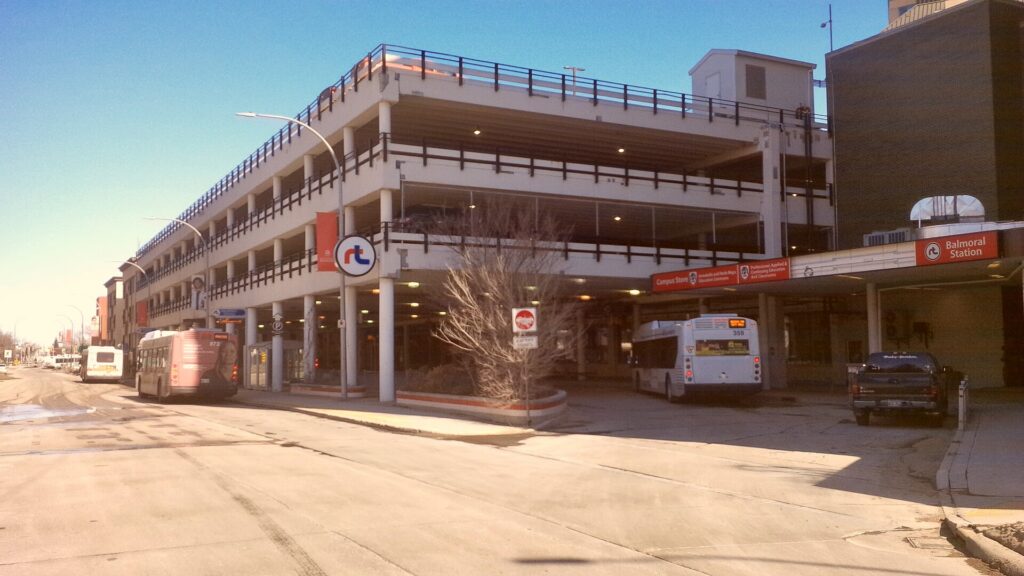
    A Winnipeg Transit bus at Balmoral Station
    Winnipeg Transit's Balmoral Station: the bus network is the city's only transit, and the core does not need much of it (Photo: Jimj wpg via Wikimedia Commons, CC BY-SA 4.0)

    Beyond Winnipeg Transit

    • Walking. The Forks to the Exchange is fifteen minutes; The Forks to Saint-Boniface over the Esplanade Riel is five; the Legislative Building to Osborne Village over the Osborne Bridge is ten. The core is flat and compact, and in summer it is entirely on foot.
    • The river trail. In winter, when the ice is thick enough, the skating and walking trail on the Red and Assiniboine from The Forks is a genuine, if seasonal, route to Osborne Village and Saint-Boniface, with warming huts along the way. Skates rent at The Forks.
    • River taxis. Splash Dash runs water taxis on the rivers from The Forks to the Legislative Building, Osborne Village and the Saint-Boniface cathedral in summer; slow, scenic and cheap.
    • Bikes. A growing network of protected lanes and the river trails make summer cycling easy, and the city is flat; bike rentals are available at The Forks and in Osborne Village, and a bike-share has been piloted.
    • Taxis and ride-hail. Uber and licensed taxis cover the city; a ride from downtown to Assiniboine Park, the Mint or Fort Whyte is short and, for a group, competitive with the bus.
    • Intercity. Buses connect Winnipeg with Brandon, Thunder Bay, Regina and Minneapolis from the downtown terminals; VIA Rail’s Canadian runs to Toronto and Vancouver and its Hudson Bay line to Churchill from the Union Station beside The Forks.
    The Esplanade Riel pedestrian bridge and the Winnipeg skyline
    The Esplanade Riel: the walk from The Forks to Saint-Boniface takes five minutes and needs no car (Photo: Tony Webster from Minneapolis, Minnesota, United States via Wikimedia Commons, CC BY-SA 2.0)

    Driving in Winnipeg: what it is really like

    Winnipeg is one of the easiest big Canadian cities to drive in for most of the year: flat, gridded, with the Perimeter Highway ringing it, wide arterials, cheap and plentiful parking outside the core, and drivers who are unhurried. The frustrations are specific. Route 90, Pembina Highway and the bridges over the rivers jam in the weekday peaks; construction season runs from May to October and the city’s roads, famous for their potholes after every thaw, are always being repaired somewhere; and the intersection of Portage and Main was closed to pedestrians for decades and has only recently reopened, so its crossings still confuse visitors. And winter is the real difference. Snow stays on the ground from November to March, the side streets rut and narrow, black ice on the bridges is routine, the city imposes snow-route parking bans overnight after storms, and extreme cold, -30 °C and below, is a normal occurrence that a rental car needs to be ready for.

    Parking

    Downtown parking is inexpensive by the standards of any other big Canadian city. The hotels charge a modest nightly fee or include it, the surface lots and garages around the arena and the convention centre are priced for locals, and street parking downtown is metered through the PayByPhone app and free in the evenings and on Sundays and holidays. On Jets game nights, the lots nearest the arena fill and the prices rise, but the walk from a few blocks away is short. Outside the core, parking is easy and almost always free: The Forks has large lots that charge a small fee in summer, Assiniboine Park, the zoo, the Mint, Fort Whyte, the museums and the malls all have their own. In winter, watch for the snow-route signs, which impose overnight bans on the main streets after a storm and are enforced with tows.

    Rules and conditions worth knowing

    • Winter tires are not required by law in Manitoba, and rental cars usually come on all-seasons; for the highways to the lake and the parks between November and March, ask for winter tires when you book. Manitoba 511 publishes road conditions and closures, and the Perimeter and the highways do close in blizzards.
    • Extreme cold. Below about -25 °C, cars struggle to start; park in a garage on the coldest nights if you can, keep the tank above half full, and ask at the counter how to use the block-heater cord, which every Winnipeg parking lot has outlets for.
    • Photo radar operates in school zones, construction zones and at intersections across the city; fines follow the car and the rental company will bill you.
    • Right turns on red are permitted after a full stop unless signed otherwise.
    • Wildlife. Deer are common on the Perimeter and the highways at dawn and dusk, and moose and bears on the roads to Riding Mountain and the Whiteshell.
    • The Red River floodway and the spring floods occasionally close roads north and south of the city in April; check before a spring day trip.
    • Fuel is cheaper in Manitoba than in most of Canada.
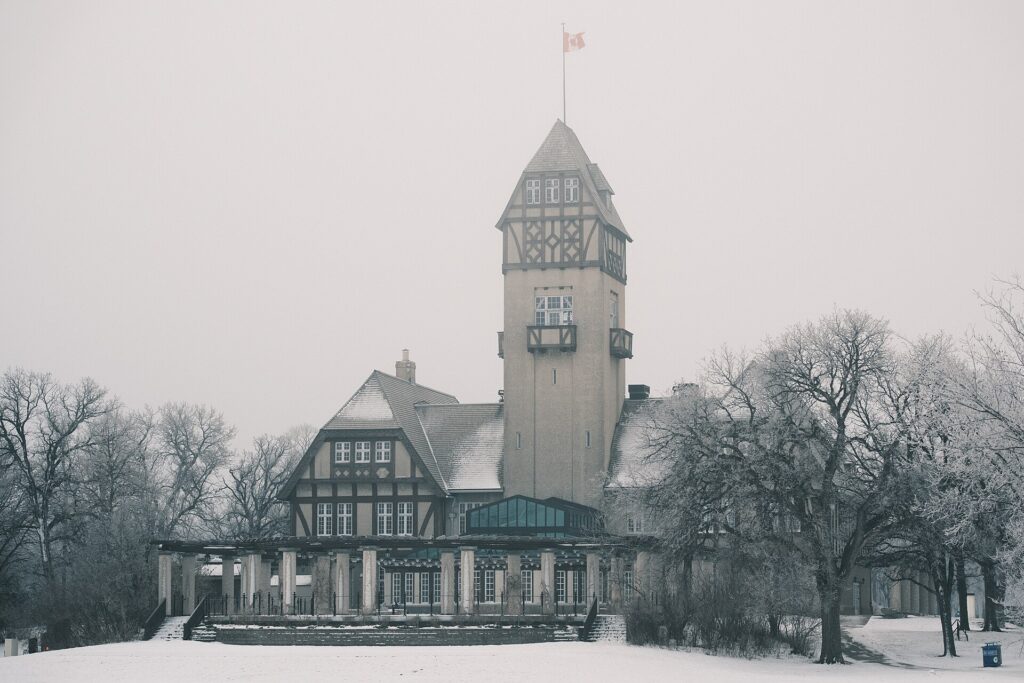
    The Assiniboine Park Pavilion in Winnipeg in December
    Assiniboine Park in December: a bus ride in summer, a car in January (Photo: Reid Campbell via Wikimedia Commons, CC0)

    When renting a car makes sense

    • Grand Beach and Lake Winnipeg, an hour north, with Gimli and the Interlake on the way.
    • Lower Fort Garry, half an hour north on the Red, and the Oak Hammock Marsh bird sanctuary nearby.
    • Steinbach‘s Mennonite Heritage Village, an hour southeast.
    • Riding Mountain National Park, three hours northwest, and the Whiteshell, two hours east; both are overnight trips.
    • Birds Hill Park, half an hour northeast, for the Folk Festival and the trails.
    • The Mint, Fort Whyte Alive and the aviation museum, which are reachable by bus but awkward.
    • Assiniboine Park and the zoo in winter, when the bus and the walk from the stop are a cold proposition.
    • The aurora. On a clear winter night, the northern lights are visible half an hour outside the city’s glow, and a car is the only way there.
    • Family in the suburbs, or a prairie road trip to Saskatchewan, Minnesota or North Dakota.

    If any of those apply, our rental car booking tips cover insurance, deposits and the questions to ask at the counter.

    When it does not

    • You are staying downtown, in the Exchange or at The Forks and your plans are the core.
    • You are in town for a Jets game, an arena concert or a convention, when the venue is a walk from every downtown hotel.
    • You are coming for the Fringe, Nuit Blanche or the Festival du Voyageur, which are on foot or a short bus ride.
    • You are travelling solo and a couple of ride-hails to the park and the Mint cost less than a day of rental.

    The hybrid plan

    Go car-free for the city days and rent for the countryside, and because the airport is so close, the pickup decision is easy: collect the car at the terminal on the morning of the day-trip day if you are staying on the airport strip, or from one of the downtown branches around the convention centre and Portage Avenue if you are in the core, and return it the same evening or at the airport on the way to the flight home. The airport concession fees in Winnipeg are modest, and the drive from the terminal to the Perimeter Highway is ten minutes. Ask for winter tires from November to March, and if the aurora is on the list, a night rental with a full tank and a thermos is the whole plan. Compare the day rates on our Winnipeg car rental page against a full-trip rental; because parking is cheap, the full-trip rental is closer to break-even here than in most cities, and for a family it often wins.

    A worked cost comparison

    Numbers change with the season and the booking window, so treat this as a method rather than a quote, and check current rates before deciding. For a three-night city break downtown for two people, the car-free version costs two short taxi rides from the airport or the Route 20 bus, a day pass or two, and a ride-hail to Assiniboine Park and back; the rental version adds three days of a compact car, three nights of modest hotel parking, fuel and airport fees, and buys the park, the Mint and Fort Whyte in exchange. If those are on the list, the rental is close to break-even; if not, transit wins. For the same three nights plus Grand Beach or Lower Fort Garry, a one-day rental plus fuel is cheap and the only practical way to go; the hybrid wins. For a family of four in winter, with the zoo, the Voyageur festival, the aurora and the airport all on the list, a rental for the whole stay from the terminal, with a hotel that includes parking, is usually cheaper than the taxis and ride-hails it replaces and far warmer. Run the rates for your dates and put them beside the taxi and transit fares before you choose.

    Skaters crossing the rail bridge on the river trail at The Forks in Winnipeg
    The river trail at The Forks, the one form of Winnipeg transport that only works in winter (Photo: Lorie Shaull from St Paul, United States via Wikimedia Commons, CC BY 2.0)

    Decision table

    Your tripRecommendationWhy
    City break downtown or in the Exchange, couple or soloNo carThe core is walkable; the park is a bus or a ride-hail away
    Jets game, arena concert or conventionNo carThe arena is a walk from every downtown hotel
    Summer city break with the park and the zooNo carThe bus and the river taxi reach the park; the core is on foot
    City plus Grand Beach, Lower Fort Garry or SteinbachHybrid: one-day rentalCar-free city days, a car for the prairie
    Winter visit with the zoo, the Voyageur festival and the auroraRent, with winter tiresCold, distance and the night drive all argue for a car
    Family of four, any seasonPrice a whole-trip rentalCheap parking and a close airport make it close to break-even
    Family visit to the suburbsRent for the whole staySuburban distances make the car worthwhile daily
    Riding Mountain, the Whiteshell or a prairie road tripRent for the whole tripWinnipeg is the start, not the destination

    Money-saving tips for both options

    • On transit: take the Route 20 bus from the airport if you are travelling light; walk the core; use the river taxi in summer for the ride and the view; buy a day pass if you will ride to the park and back.
    • On a rental: compare airport and downtown pickup, rent only for the day-trip days unless you are a family, ask for winter tires in the cold months, decline extras you already have through a credit card or home policy (check first), plug in the block heater on the coldest nights, and fill up in the city, where fuel is cheap.
    • On the hotel: if you are renting, choose a hotel that includes parking, which most outside the core do; if you are not, stay downtown or in the Exchange and walk.
    • On timing: avoid Route 90, Pembina and the bridges in the weekday peaks, the arena lots on game nights, and the highway to Grand Beach on summer Sunday afternoons; the best time to fly to Winnipeg guide lists the busy weekends.
    • On the aurora: a night rental and a drive north on Highway 59 past the city lights is the cheapest northern-lights trip in the country; check the aurora forecast first.

    Frequently asked questions

    Is it worth renting a car in Winnipeg?

    Not for the core, which is walkable and close to the airport. For the beaches, the forts, the parks, the aurora, a winter visit with children or a family trip where parking is cheap, yes.

    Is Winnipeg public transit good for tourists?

    Adequate: an airport bus, a rapid-transit busway to the university, and frequent arterial routes cover what the walkable core does not. There is no rail, and winter waits at unsheltered stops are cold.

    How do I get from Winnipeg airport to downtown?

    A taxi or ride-hail in 15 to 20 minutes, the Route 20 bus in about half an hour, a hotel shuttle, or a rental from the terminal.

    Can I get to Assiniboine Park and the zoo without a car?

    Yes, by bus along Portage with a change, by river taxi in summer, or by ride-hail in fifteen minutes. In winter, the ride-hail is the honest answer.

    Do I need winter tires in Winnipeg?

    Not by law, but the highways drift and ice from November to March; ask for them when you book, and for the city alone, drive carefully on all-seasons.

    Is parking expensive in downtown Winnipeg?

    No; it is among the cheapest of any big Canadian city, free on the street in the evenings and on Sundays, and included at most hotels outside the core. Game nights near the arena are the exception.

    Can I drive from Winnipeg to Churchill?

    No; Churchill has no road. The train from Union Station takes two days, and the flight takes two hours.

    Whichever way you go, start with the flight. Compare cheap flights to Winnipeg, choose a neighbourhood with our Winnipeg hotel search, and if the lake or the parks are on the list, price the rental for those dates on our Winnipeg car rental page.

  • Things to Do in Winnipeg: A First-Timer’s Guide

    Things to Do in Winnipeg: A First-Timer’s Guide

    Winnipeg is the city in the middle of the continent, the geographic centre of Canada, and, in most of the country’s imagination, a cold place that people fly over on the way to somewhere else. It is cold, in January. It is also one of the most surprising cities in Canada: a place where the Red and Assiniboine rivers have been a meeting point for six thousand years, where a national museum in a building of glass and Tyndall stone rises over that meeting point, where thirty blocks of terracotta warehouses from the 1900s boom survive intact as a film set for New York and Chicago, where the largest French-speaking community in western Canada keeps a winter festival of voyageur fiddling and maple taffy, where Filipino, Ukrainian, Mennonite, Métis and Indigenous cultures have all shaped what is on the plate, and where the Jets’ whiteout and the Blue Bombers’ banjo bowl are the city’s shared religion. It is friendly, affordable and unpretentious, and it rewards a first visit far beyond its reputation. This guide covers the sights, the neighbourhoods, the festivals, the food, the seasons, the day trips and the practical details.

    If you are still comparing cheap flights to Winnipeg, read this alongside our guides to the best time to fly to Winnipeg and whether you need a car. Between the three you can plan the whole trip.

    The Canadian Museum for Human Rights and the downtown Winnipeg skyline at night
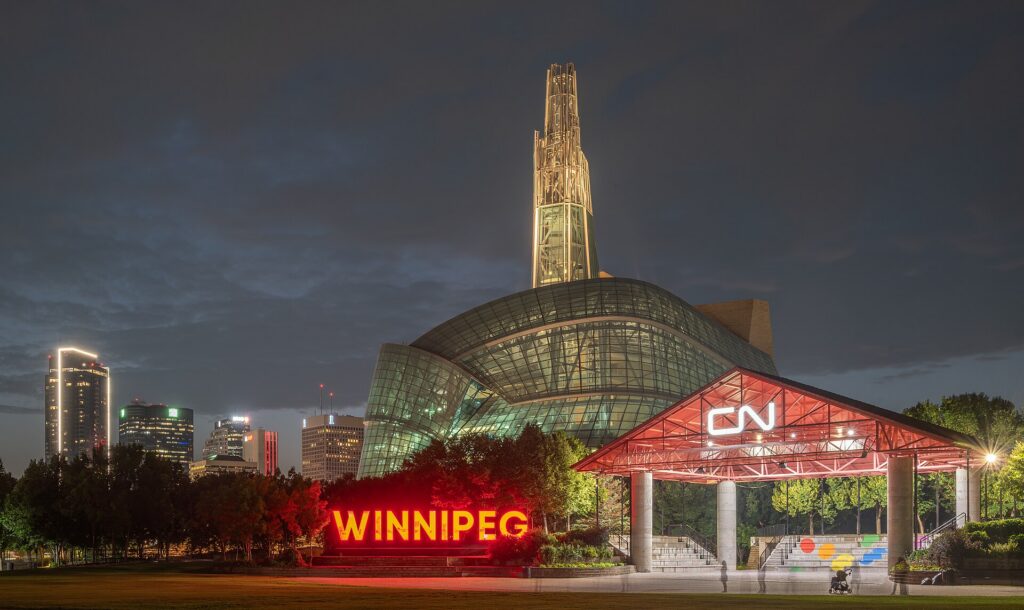
    The Canadian Museum for Human Rights at The Forks, the first national museum built outside the capital region (Photo: Ethan Sahagun via Wikimedia Commons, CC BY 4.0)

    Winnipeg at a glance for first-timers

    • Airport: Winnipeg James Armstrong Richardson International (YWG), about 10 km west of downtown, one of the most convenient big-city airports in Canada; a taxi takes 15 to 20 minutes, and a city bus runs to downtown. See our YWG airport guide.
    • Getting around: downtown, The Forks, the Exchange District and Saint-Boniface across the footbridge are walkable; Winnipeg Transit’s buses cover the rest, with the Blue rapid-transit line to the university. A car is for Assiniboine Park in winter and the day trips.
    • Money: Canadian dollars; Manitoba adds the 5 percent federal GST and a 7 percent provincial sales tax at the till. Tipping 15 to 20 percent in restaurants is customary.
    • Weather: the most continental climate of any big Canadian city: long, very cold, sunny winters; short, hot summers; brief springs and falls; and mosquitoes in June and July. Our month-by-month guide has the detail.
    • Where to stay: the Exchange District for the restaurants, galleries and the arena; downtown near The Forks for the museum and the rivers; Osborne Village or Corydon for a neighbourhood feel; the airport strip and Polo Park for value. Our Winnipeg hotel search covers them all.

    The Forks

    Start where the city started. The Forks, at the confluence of the Red and Assiniboine rivers on the edge of downtown, has been a meeting and trading place for Indigenous peoples for six thousand years, then a fur-trade post, then a rail yard, and since the 1980s the city’s living room: the Forks Market, a pair of converted stables full of food stalls, a craft beer hall and local makers; the river walk and the docks, with river taxis in summer; the Oodena Celebration Circle, an earthwork amphitheatre aligned to the stars; the Children’s Museum in an old locomotive shed; the skateboard plaza; and the Esplanade Riel, the cable-stayed footbridge with a restaurant in the middle, which crosses the Red to Saint-Boniface. In winter, The Forks becomes the Arctic Glacier Winter Park: a skating trail down the frozen rivers that in a good year runs for kilometres and is one of the longest naturally frozen trails in the world, warming huts designed by architects from around the world in an annual competition, a toboggan run, and a beer garden on the ice. It is the city’s best free attraction in every season.

    The Forks Market building in Winnipeg
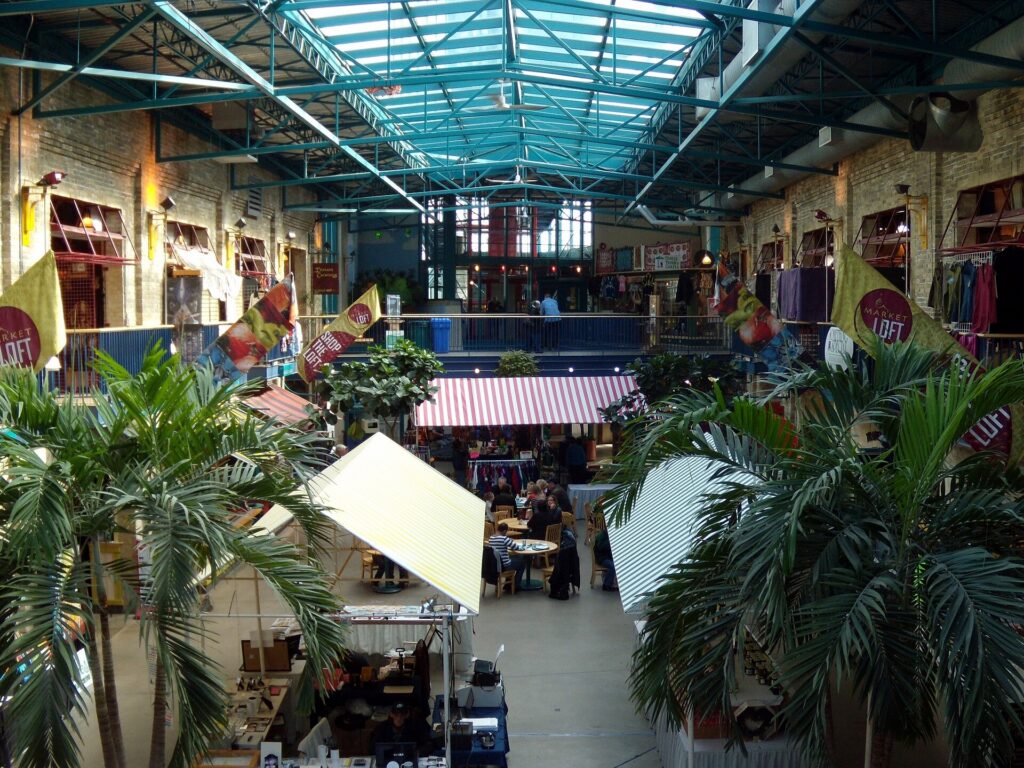
    The Forks Market, at the meeting of the Red and Assiniboine rivers, a gathering place for six thousand years (Photo: Ccyyrree via Wikimedia Commons, CC0)

    The Canadian Museum for Human Rights

    Rising over The Forks, the Canadian Museum for Human Rights is the first national museum built outside the Ottawa region and, since it opened in 2014, the reason many people visit Winnipeg at all. The building alone is worth the trip: a mountain of Tyndall limestone wrapped in a glass “cloud”, with a spiral of glowing alabaster ramps that climb through the galleries to the Tower of Hope, 100 metres above the rivers with a view across the prairie. The galleries are serious and often moving, from the Holocaust and the Holodomor to Indigenous rights, residential schools and the civil rights movement, with a strong Canadian focus and a great deal for children to engage with. Allow at least three hours; the museum is closed on Mondays outside the summer.

    The Exchange District

    North of Portage and Main, the famous windswept intersection, the Exchange District is a National Historic Site of some thirty blocks of terracotta, brick and stone warehouses, banks and office buildings from Winnipeg’s boom years between 1880 and 1920, when it was the “Chicago of the North” and the grain capital of the British Empire. It survived intact because the boom ended, and it is now the city’s most interesting neighbourhood: the restaurants and cocktail bars that locals argue about, the galleries, the theatres, including the Royal Manitoba Theatre Centre, the Winnipeg Art Gallery and its Qaumajuq wing, which holds the world’s largest public collection of Inuit art in a luminous new building, and, in July, the Fringe Festival’s Old Market Square hub. It is also a working film set; the streets have stood in for Chicago, New York and Moscow. Walking tours run in summer, and the Manitoba Museum, with its full-size replica of the Nonsuch, the ketch whose 1668 voyage founded the Hudson’s Bay Company, and its planetarium, is on the district’s northern edge.

    Albert Street in Winnipeg's Exchange District
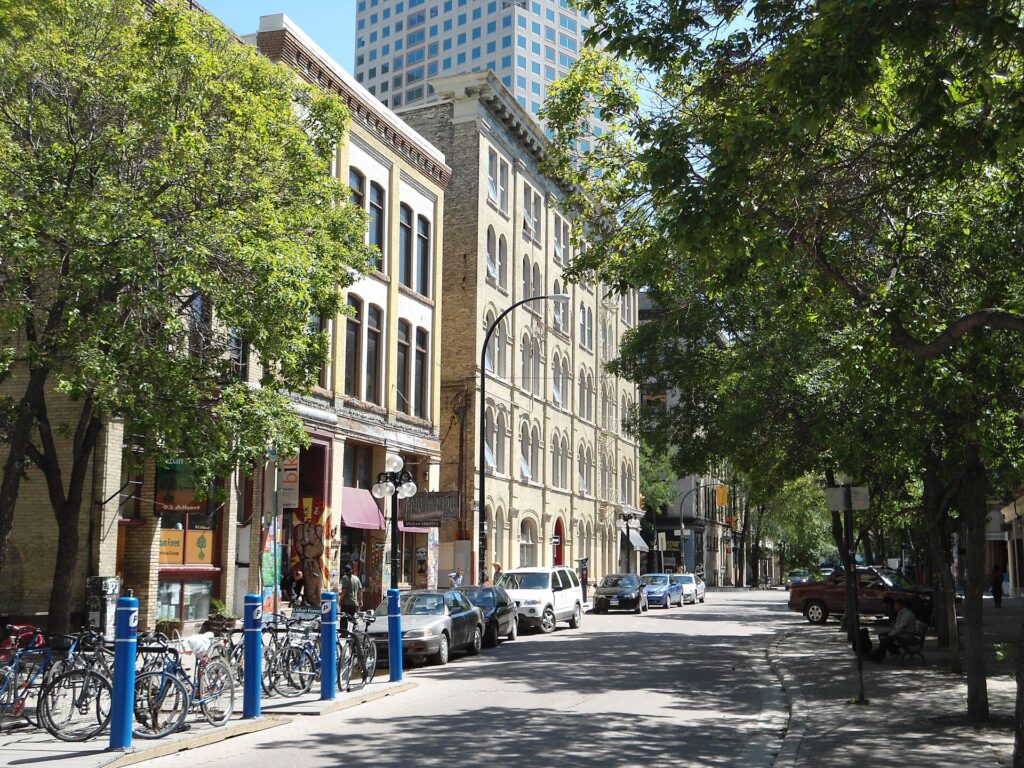
    The Exchange District, thirty blocks of terracotta and brick from Winnipeg's boom years (Photo: Interlaker via Wikimedia Commons, CC0)

    Saint-Boniface

    Across the Esplanade Riel, Saint-Boniface is the historic French quarter, the largest francophone community in western Canada, and the birthplace of Louis Riel, the Métis leader whose grave is in the cathedral cemetery. The Saint-Boniface Cathedral, whose stone facade survived a 1968 fire and now frames a modern church built inside the ruins, is one of the most striking sights in the city; the Saint-Boniface Museum, in the oldest building in Winnipeg, a Grey Nuns convent from 1846, covers Riel and the Métis; and Provencher Boulevard has the French bakeries, bistros and the Franco-Manitoban cultural centre. In February, Whittier Park hosts the Festival du Voyageur, the largest winter festival in western Canada, ten days of fiddle music, snow sculptures, voyageur history, maple taffy on snow and a great deal of caribou, the spiced fortified wine.

    Assiniboine Park and the zoo

    West of downtown, Assiniboine Park is the city’s great park: the English garden and the Leo Mol sculpture garden, the Pavilion with its galleries of local art, the duck pond, the miniature railway, the Lyric Theatre’s free summer concerts and the new Leaf, a horticultural conservatory of tropical and Mediterranean biomes under a cable-net roof. The Assiniboine Park Zoo‘s Journey to Churchill exhibit is its star: polar bears, most of them orphaned cubs rescued from the Hudson Bay coast, swimming over a glass tunnel, plus muskoxen, wolves and Arctic foxes in a landscape designed to look like the tundra. It is the best zoo exhibit in Canada and the closest most visitors will get to Churchill’s bears. The park is a bus or a drive from downtown.

    More museums and culture

    The Royal Canadian Mint, on the eastern edge of the city, is where every Canadian circulation coin is made, along with coins for dozens of other countries, and the tour is a genuine surprise. The Manitoba Legislative Building, downtown, is a Beaux-Arts palace with the Golden Boy on its dome and a hidden programme of hermetic symbolism that a popular tour decodes. The Winnipeg Railway Museum, the Royal Aviation Museum of Western Canada beside the airport, the Fort Whyte Alive nature centre with its bison herd on the city’s southwestern edge, and the Dalnavert Victorian house museum round out the list. The Royal Winnipeg Ballet, Canada’s oldest, and the Winnipeg Symphony perform at the Centennial Concert Hall; for what is on during your dates, our Winnipeg events page lists concerts, shows and games.

    Sports

    The Winnipeg Jets play at the Canada Life Centre downtown, on the edge of the Exchange, and a Jets game, especially during a playoff whiteout when the whole arena and the streets outside dress in white, is the most Winnipeg thing a visitor can do. The Blue Bombers, the city’s Canadian football team and the most successful of the last decade, play at Princess Auto Stadium at the university from June to November, with the Banjo Bowl against Saskatchewan in September the loudest game of the season. The Winnipeg Goldeyes play independent-league baseball in a riverside ballpark at The Forks in summer, and Valour FC plays professional soccer at the stadium. See what is on sale in Winnipeg for your dates.

    What to eat, and where

    Winnipeg eats from everywhere its people came from. The city has the largest Filipino community in Canada per capita, and the lechon, pancit and halo-halo along the northwestern strips and in the food courts are among the best on the continent. The Ukrainian and Mennonite traditions put perogies, cabbage rolls, kubasa and farmer sausage on every diner menu and every church supper. The Métis and Indigenous food scene, with bannock, bison and wild rice, has moved from festivals to serious restaurants in the Exchange. The Jewish delis on the North End’s Main Street and Selkirk Avenue, the Vietnamese pho along Ellice and Sargent, the Italian strip on Corydon, and the Winnipeg goldeye, a smoked freshwater fish that is the city’s namesake delicacy, fill in the rest. The Forks Market is the place to graze; the Exchange District, Osborne Village, Corydon Avenue and Sherbrook Street are the places to sit down. The city’s other specialities are a cheese-stuffed “fat boy” burger with chili sauce, the honey dill sauce served with chicken fingers everywhere, and the “Winnipeg-style” rye bread that half the country ships in.

    Festivals and events

    Winnipeg keeps a full calendar and two of its festivals are national institutions. Folklorama, over two weeks in August, is the largest and longest-running multicultural festival in the world: forty-odd pavilions across the city, each run by a cultural community with food, dancing and music, visited by shuttle bus in the evenings. The Winnipeg Folk Festival, in July at Birds Hill Park north of the city, is one of the oldest and most loved in North America, with camping, a dozen stages and headliners far beyond folk. The Winnipeg Fringe, in July in the Exchange, is the second largest in North America after Edmonton’s. The Festival du Voyageur in February, the Jazz Winnipeg festival in June, the Manito Ahbee Indigenous festival in May, Pride in June, the Red River Exhibition fair in June, the Winnipeg International Writers Festival in September and Nuit Blanche in the Exchange in late September fill in the year. Tourism Winnipeg keeps the calendar.

    Skaters crossing the rail bridge on the river trail at The Forks in Winnipeg
    The river skating trail at The Forks, one of the longest naturally frozen trails in the world (Photo: Lorie Shaull from St Paul, United States via Wikimedia Commons, CC BY 2.0)

    Winnipeg through the seasons

    Winter (November to March) is the reason for Winnipeg’s reputation and, handled right, one of the reasons to visit: the river skating trail and the warming huts at The Forks, the Festival du Voyageur, the Jets, the polar bears at the zoo, the northern lights on a clear night outside the city, and a city that has never pretended the cold is not there. It is very cold, regularly below -25 °C, and it is also dry and sunny. Spring (April to May) is short, muddy and, when the Red River floods, dramatic; it is the cheapest season. Summer (June to August) is hot, with long days, the Folk Festival, the Fringe, Folklorama, the Goldeyes at the ballpark, the patios on Corydon and in Osborne Village, and the beaches at Grand Beach on Lake Winnipeg an hour north. Fall (September to October) is brief and golden, with the Banjo Bowl, Nuit Blanche and the Jets’ season opening. Our month-by-month guide matches each season to fares.

    Winnipeg with kids

    The Forks was built for children: the Children’s Museum, the skate plaza, the river walk, the market’s food stalls, and in winter the skating trail, the toboggan run and the warming huts. The polar bears at the zoo, the Nonsuch and the planetarium at the Manitoba Museum, the Mint tour, the bison at Fort Whyte and the aviation museum’s hangar fill the other days; the Human Rights Museum has a strong family programme. In summer, the Assiniboine Park train and duck pond, the Goldeyes’ ballpark, the splash pads and Grand Beach’s dunes are the outdoor list. Folklorama’s pavilions are a painless world tour for children.

    Winnipeg on a budget

    Winnipeg is one of the most affordable cities in Canada, and the free list is long: The Forks and the river trail in every season, the Exchange District’s streets, the Legislative Building tour, Assiniboine Park and its gardens, the Saint-Boniface Cathedral ruins, Fort Whyte’s trails on some days, and Nuit Blanche and the Fringe’s outdoor stages. The Human Rights Museum, the art gallery and the Manitoba Museum are moderately priced and have discounted evenings; check their sites. Eat cheaply and well at the Forks Market, the Filipino food courts, the perogy suppers and the pho shops. Hotels are among the cheapest of any big Canadian city outside the Jets’ playoff runs and Folklorama; compare by neighbourhood on our Winnipeg hotel search.

    Day trips from Winnipeg

    Lower Fort Garry, half an hour north on the Red River, is the oldest intact stone fur-trade post in North America, with costumed interpreters in summer. Grand Beach on Lake Winnipeg, an hour north, is one of the best freshwater beaches on the continent, with white sand and dunes; Gimli, on the same lake, is the largest Icelandic community outside Iceland, with a festival in August. Riding Mountain National Park, three hours northwest, is a plateau of forest, lakes and bison above the prairie. Steinbach‘s Mennonite Heritage Village, an hour southeast, tells the story of the prairie’s Mennonite settlers. Whiteshell Provincial Park, two hours east, is Canadian Shield lake country. Birds Hill Park, half an hour northeast, hosts the Folk Festival and has trails and a beach. And Churchill, the polar bear capital, is not a day trip but a two-day train ride or a two-hour flight north, and the reason many visitors come through Winnipeg in October and November. All but Churchill need a car; see our Winnipeg car rental page, and Travel Manitoba for the province.

    Two sample itineraries

    Two days, no car

    Day one: the Canadian Museum for Human Rights in the morning, lunch at the Forks Market, the river walk and the Oodena circle, across the Esplanade Riel to Saint-Boniface for the cathedral and the museum, back for the Legislative Building, and dinner and drinks in the Exchange District. Day two: the Manitoba Museum and the Nonsuch first, the Exchange District on foot with the art gallery and Qaumajuq, lunch on Albert Street, a bus to Assiniboine Park for the polar bears and the Leaf in the afternoon, and dinner in Osborne Village or on Corydon, or a Jets game if the season is on.

    Four days, with a car

    Add a day for the Mint, Fort Whyte’s bison and Lower Fort Garry, and a day for Grand Beach and Gimli in summer, or, in winter, a day skating the river trail and driving out of the city lights for the aurora.

    Practical details

    • Transit: Winnipeg Transit’s buses; pay cash with exact change, buy tickets, or use a Peggo card. See our transit-versus-car guide for detail.
    • From YWG: a taxi or ride-hail in 15 to 20 minutes, the city bus to downtown, or a rental from the terminal. The airport’s site covers ground transport.
    • Weather: serious cold-weather gear from November to March, sun protection and insect repellent in summer. Environment Canada’s forecast is the one to check.
    • Time zone: Central, one hour behind Toronto and the same as Chicago.
    • Entry requirements: U.S. citizens need a valid passport; most other visa-exempt visitors arriving by air need an Electronic Travel Authorization. The Government of Canada’s visitor page is the authoritative source.
    • Safety: the downtown core and the Main Street strip north of the Exchange need ordinary big-city awareness late at night; The Forks, the Exchange and the neighbourhoods are relaxed.

    Frequently asked questions

    How many days do you need in Winnipeg?

    Two full days covers The Forks, the Human Rights Museum, the Exchange, Saint-Boniface and the zoo; three adds the Mint, Fort Whyte and Lower Fort Garry; a fourth adds a lake day in summer.

    What is Winnipeg best known for?

    The Canadian Museum for Human Rights, The Forks, the Exchange District, the Jets’ whiteout, Folklorama, the Festival du Voyageur, the polar bears at the zoo, and being the gateway to Churchill.

    Is Winnipeg worth visiting?

    Yes, and far more than its reputation suggests: a world-class museum, a preserved heritage district, a genuinely multicultural food scene and some of the lowest prices of any big Canadian city.

    Is Winnipeg walkable?

    The core is: The Forks, downtown, the Exchange and Saint-Boniface are within twenty minutes of each other. Assiniboine Park and the neighbourhoods need a bus or a car.

    Do I need a car in Winnipeg?

    Not for the core. For the zoo in winter, the Mint, Fort Whyte and the lake and park day trips, yes; rent for those days only.

    How cold does Winnipeg get?

    January highs are around -12 °C and lows around -21 °C, with cold snaps to -35 °C and wind chills beyond. It is dry and sunny, the city is built for it, and the river trail and the Voyageur festival are the reward.

    Can I see polar bears in Winnipeg?

    Yes, at the Assiniboine Park Zoo’s Journey to Churchill exhibit, year-round. For wild bears, Churchill is a two-hour flight north, best in October and November.

    Ready to go? Compare flights to Winnipeg, find a place to stay with our Winnipeg hotel search, and if the lake or the parks are on the list, price a rental car for those days.