Tag: Remote Work

  • Travel Keyboard: 7 Best Portable Foldable Keyboards for Work & Travel in 2026

    Travel Keyboard: 7 Best Portable Foldable Keyboards for Work & Travel in 2026

    Typing a long email on a phone screen is slow. Writing a report on a tablet’s on-screen keyboard is worse. And a laptop keyboard, perched on a hotel desk that is too high or a tray table that is too small, can leave your neck and wrists complaining by the end of a trip. A travel keyboard fixes a surprising amount of that for very little weight. It can turn a phone or a tablet into something close to a laptop for writing, and it can turn a laptop on a stand into a proper workstation. This guide explains the different kinds of travel keyboards, what actually matters when you choose one, how to set it up and use it on planes, trains and in hotel rooms, the options from our original list and who each one suits, and the few rules that apply when you fly with small battery-powered gadgets. It is part of our travel gear series, which starts with our main guide to choosing travel luggage.

    The short answer

    If you want to write on a phone or tablet, a slim Bluetooth keyboard with a built-in cover or a folding keyboard that packs to pocket size is the most practical. If you use a laptop on a stand, a compact Bluetooth keyboard with a normal key layout and a small mouse will serve you better than a tiny folding one. If you type all day, prioritize full-size key spacing and a layout without an awkward split, or choose an ergonomic split design deliberately. Whatever you pick, choose multi-device pairing so you can switch between phone, tablet and laptop, a rechargeable battery with USB-C so it shares a cable with your other gear, and a layout that matches your operating system. Try typing a paragraph on it at home before you rely on it for a deadline on the road.
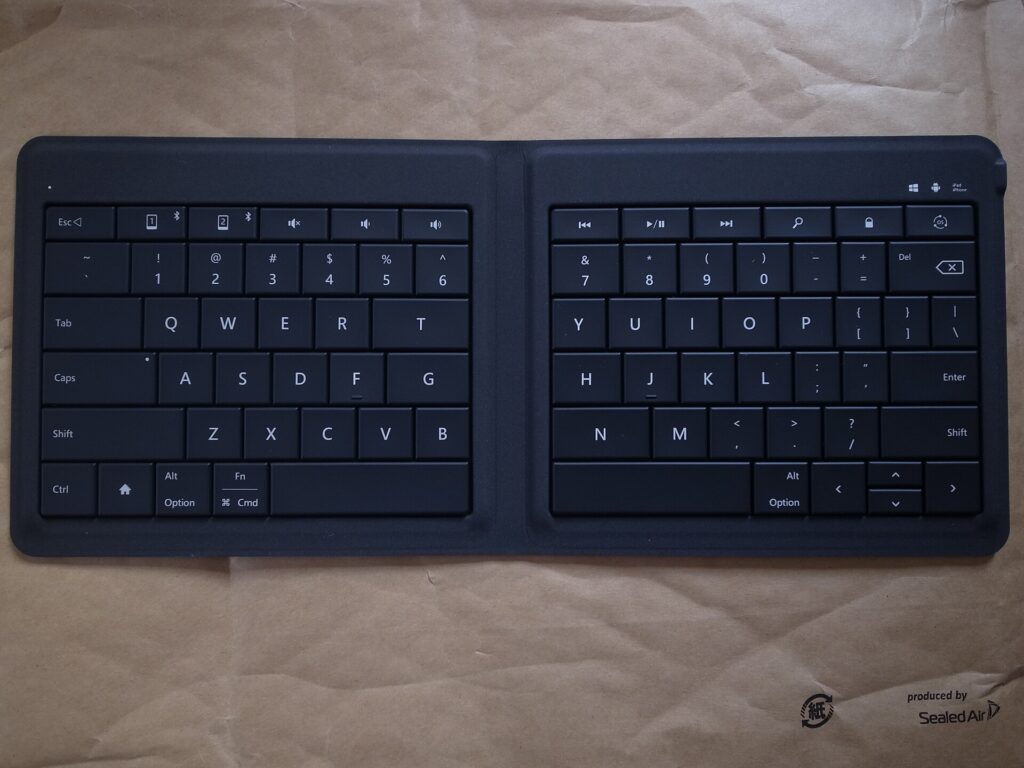
    A folding Bluetooth keyboard opened flat, showing its two halves
    Folding keyboards open to near full-size keys and close to about the size of a large phone (Photo: Toshiyuki IMAI via Wikimedia Commons, CC BY-SA 2.0)

    Why carry a travel keyboard at all?

    A keyboard is not essential for everyone. It earns its place if any of these sound familiar:

    • You want to leave the laptop at home. For writing, email and messaging, a tablet or even a phone plus a keyboard can handle a lot of work, and the combination is lighter than most laptops.
    • You work long hours from hotels. Raising the laptop screen on a stand improves your posture, but then you need a separate keyboard to type comfortably.
    • You write on the move. Journalists, students, novelists and bloggers often find that writing on trains and in cafés goes faster with real keys.
    • You switch devices a lot. A multi-device keyboard lets you answer a message on your phone and go straight back to a document on your tablet without changing keyboards.

    If you only write the occasional short message on a trip, you probably do not need one. If you plan to work on the road, it is one of the lightest upgrades you can pack, alongside the other items in our guide to laptop travel accessories.

    Types of travel keyboards

    Folding keyboards

    Folding keyboards hinge in the middle, or in two places for a tri-fold design, and close to roughly the size of a large phone or a paperback. Open, they give you something close to full-size keys. The trade-off is the fold itself: keys near the hinge can be split between halves or pushed slightly apart, which takes some getting used to, and the hinge is the part most likely to wear out. Many folding keyboards include a small stand for a phone.

    Slim non-folding keyboards

    These are thin, light keyboards with compact layouts that do not fold. Some include a cover that protects the keys in your bag and flips round to act as a surface or stand. They avoid the hinge problem and usually feel more solid to type on, but they are longer when packed, roughly the width of a small tablet.

    Split ergonomic folding keyboards

    Some folding keyboards turn the fold into a feature: the two halves angle apart so your hands sit in a more natural position. They take a few days to adjust to if you are used to a standard layout, and they suit people who type a lot and already like ergonomic keyboards at home.

    Tablet keyboard cases

    A keyboard case attaches to a specific tablet and doubles as protection. It is the tidiest option if you only ever type on one tablet, but it ties you to that device, adds weight to the tablet all the time and usually cannot be used with a phone or laptop.

    Keyboard and mouse combos

    Some folding keyboards are sold with a small wireless mouse. The pair gives you a complete setup for a laptop on a stand or a tablet that supports a mouse, useful for spreadsheets and editing work.

    Roll-up silicone keyboards

    Flexible silicone keyboards roll up and resist spills, but most people find their soft, mushy keys slow and tiring for real typing. They are a niche choice rather than a general recommendation.

    TypePacked sizeTyping feelBest forWatch out for
    Folding (bi-fold or tri-fold)Pocket or phone sizeGood once used to the splitPhone and tablet users who pack lightKeys near the hinge, hinge wear
    Slim non-folding with coverSmall-tablet widthSolid, familiarTablet writers, laptop-on-stand setupsLonger to pack
    Split ergonomic foldingPocket or phone sizeComfortable after adjustingHeavy typists who like ergonomic layoutsLearning curve
    Tablet keyboard caseAttached to tabletVaries by modelOne-tablet usersTied to one device, adds weight
    Keyboard and mouse comboPocket plus mouseSimilar to foldingLaptop on a stand, spreadsheet workTwo items to charge
    Roll-up siliconeRolled tubeSoft and slowSpill-prone environmentsPoor for long typing

    What matters when you choose

    Key size and spacing

    The single biggest factor in typing comfort is whether the keys are close to full size and spaced like a normal keyboard. Your fingers are trained on standard spacing, and a keyboard that shrinks it by even a little slows you down and adds typos. Check that the letter keys are full width and that important keys such as Shift, Enter, Backspace and the arrow keys are not squeezed into odd positions.

    Key feel

    Scissor-switch keys, similar to many laptop keyboards, feel crisp and stable. Softer membrane keys are quieter but can feel vague. Very short key travel is common on slim keyboards; some people like it and some find it tiring. If you can, try a keyboard in a store or buy from a seller with an easy return policy.

    Layout and operating system

    Windows, macOS, iPadOS, Android and ChromeOS use different modifier keys and shortcuts. Many travel keyboards support several systems and switch layouts automatically or with a key combination, and some brands sell separate versions for Apple devices. Choose one whose modifier keys match what you use most, or you will be fighting muscle memory every time you copy and paste.

    Multi-device pairing

    Many travel keyboards remember two or three devices and switch between them with a button. For travelers who use a phone, a tablet and a laptop, this is one of the most useful features, since it saves re-pairing every time you change device.

    Battery and charging

    Rechargeable keyboards with a USB-C port share a cable with the rest of your gear, which means one fewer thing to pack. Keyboards that use replaceable coin cells or AAA batteries can run a long time, but you need spares for a long trip. Whatever the type, look for an automatic sleep mode or a power switch, so the keyboard does not drain in your bag.

    Connection type

    Bluetooth connects directly to phones, tablets and most laptops without an extra part. Some keyboards also offer a small USB receiver or a wired USB-C connection, which can be steadier in places crowded with wireless signals and useful for devices without Bluetooth. A receiver is small and easy to lose, so keep it in a pocket of your cable pouch.

    Size, weight and protection

    A keyboard you leave at home helps nobody. Weigh the packed size against how much you type. A cover or case protects the keys in a packed bag and stops keys being pressed accidentally, which can wake your devices or drain the battery.

    Stand for a phone or tablet

    Some keyboards include a fold-out stand or a slot for a phone or tablet. Without one, you need a separate stand or a tablet case that props the screen up. A small, light stand is worth carrying if your keyboard does not include one.
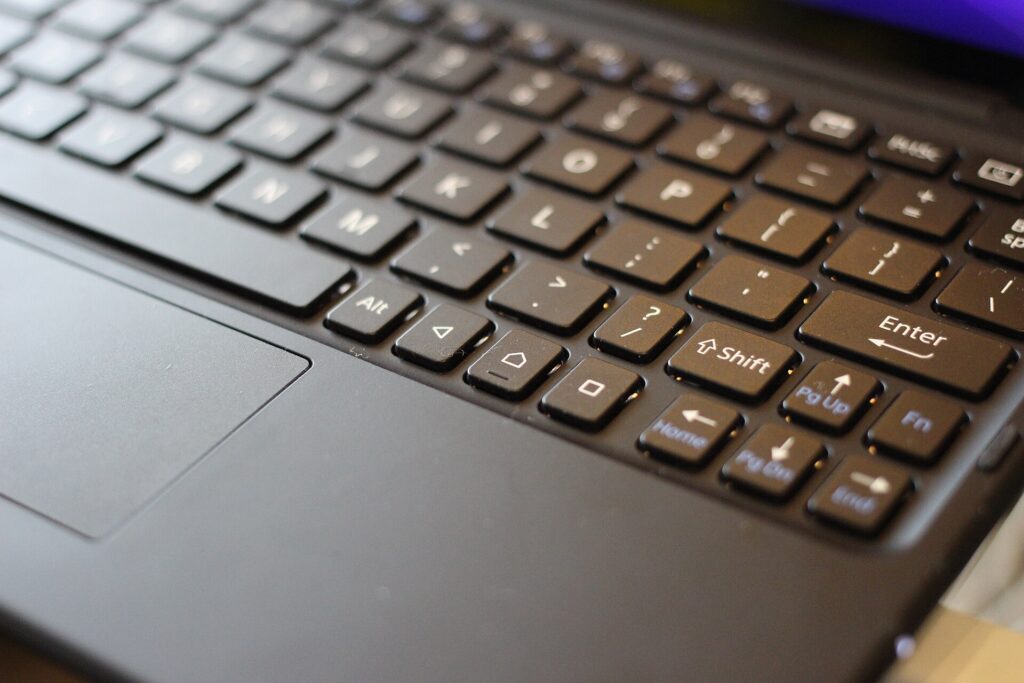
    Close-up of a slim Bluetooth keyboard attached to a tablet
    Paired with a tablet, a slim keyboard handles email and writing for far less weight than a laptop (Photo: Maurizio Pesce from Milan, Italia via Wikimedia Commons, CC BY 2.0)

    Options from our original list

    The keyboards below were featured in the original version of this guide. They cover different needs rather than a strict ranking. Models, layouts and features change, so check the current specifications from the maker or seller before you buy.

    TECKNET wireless foldable Bluetooth keyboard

    TECKNET’s foldable Bluetooth keyboard is a full-size folding design that includes a numeric keypad, which is unusual in a folding keyboard. It suits travelers who work with numbers, such as accountants, analysts and anyone who lives in spreadsheets, and who want a number pad without carrying a full desk keyboard. A keyboard with a number pad is wider when open, so check that it fits the tray tables and café tables you use.

    Logitech Keys-To-Go 2

    The Logitech Keys-To-Go 2 is a slim, non-folding keyboard with a built-in cover that protects the keys in your bag. Logitech describes it as using low-profile scissor keys, connecting to up to three devices and working with Android, ChromeOS, Windows, iPadOS, iOS and macOS, and it offers a universal version and a version with an Apple layout. It suits tablet users and anyone who wants a thin keyboard that slides into a sleeve or a handbag and feels more solid than a folding design.

    Targus Ergonomic Foldable Bluetooth Antimicrobial Keyboard

    The Targus Ergonomic Foldable Bluetooth Antimicrobial Keyboard uses a split layout that angles the two halves for a more natural hand position. Targus says it folds to about the size of a smartphone, pairs with up to three devices over Bluetooth, recharges over USB-C and is treated with its DefenseGuard antimicrobial additive. It suits travelers who already prefer ergonomic keyboards and do a lot of typing. The antimicrobial treatment is a surface feature, not a reason to skip cleaning, and the split layout takes a few days to get used to.

    Portable foldable keyboard and mouse combo

    The original list included an unbranded folding keyboard sold with a wireless mouse, listed with Bluetooth as well as USB-A and USB-C connection options. A combo like this suits travelers who want a complete, inexpensive setup for a laptop on a stand or a tablet that supports a mouse. With unbranded products, check the seller’s return policy and read the listing carefully for the connection types and operating systems it supports.

    Samsers foldable keyboard and mouse combo

    Samsers sells a folding keyboard with a rechargeable wireless mouse, and the original list featured it in more than one color. It is a budget-friendly way to put together a portable workstation for hotel rooms and coworking spaces. Check the listing for the exact connection options and which devices it supports before you buy.

    Samsers full-size foldable Bluetooth keyboard (KF08S)

    The Samsers KF08S is a folding Bluetooth keyboard without a mouse, sold with a protective cover. It suits travelers who want a full-size folding layout for a phone or tablet and do not need a mouse. As with any folding keyboard, pay attention to the keys near the fold when you first try it.

    Setting up a travel keyboard

    • Charge it fully at home and pair it with every device you plan to use, assigning each to a channel if it supports multi-device switching.
    • Set the layout on each device, especially the language and the operating-system mode, so symbols and shortcuts are where you expect.
    • Learn the switch keys for changing devices and for special functions like brightness, volume and the home screen on a tablet.
    • Practice for a few days. Write something real at home. It is much better to discover that you hate the split in your living room than on deadline in an airport.
    • Pack the charging cable in your cable pouch, or confirm that the keyboard charges from a cable you already carry.

    Using a keyboard on planes, trains and in hotels

    On a plane

    Economy tray tables are small, and the seat in front may recline into your space. A tablet in a stand plus a folding keyboard often fits better than a laptop, because the screen and keyboard can be arranged separately. Put the tablet at the back of the tray and the keyboard in front, or rest the keyboard on your lap. Bluetooth accessories are generally allowed during flights with the device in airplane mode and Bluetooth switched back on, but crew instructions and airline policies come first, especially during takeoff and landing. If the flight is long, a pair of noise-cancelling headphones makes focused work much easier.

    On a train

    Trains are often better than planes for working: bigger tables, more legroom and sometimes power outlets. A folding keyboard and a phone or tablet stand make good use of a small table seat. Keep the keyboard close when the train brakes, and put the whole setup away before your stop so nothing slides off the table.

    In a hotel room

    Hotel desks are often too high for comfortable laptop typing. Raise the laptop screen on a stand or a stack of books and put the keyboard lower on the desk, or on your lap in a chair, so your elbows are near a right angle. If you are choosing a hotel for a work trip, our business travel hotels guide explains what to look for in a room you will work from.

    In cafés and coworking spaces

    Café tables are small and crowded, and a keyboard plus a phone or tablet takes up less space than a laptop. Keep your bag at your feet with a strap around your leg, and never leave devices on the table when you go to order. Our guide to anti-theft backpacks covers habits and bag features that help in busy places.
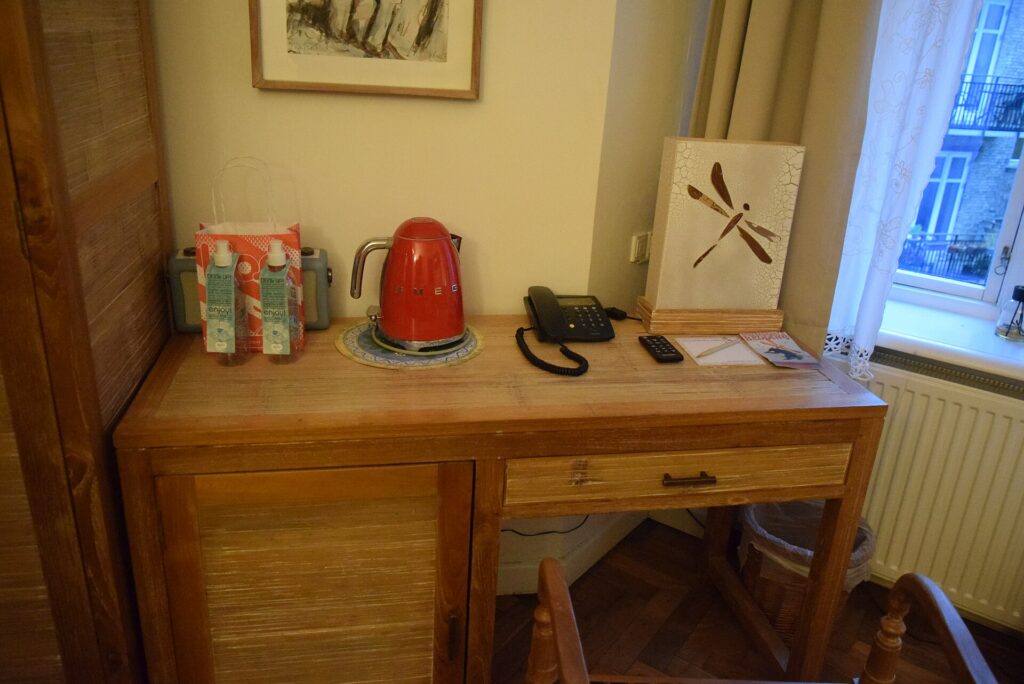
    A wooden writing desk with a phone and kettle in a hotel room
    Hotel desks are often too high for laptop typing; a stand and a separate keyboard fix the posture (Photo: Haydn Blackey from Cardiff, Wales via Wikimedia Commons, CC BY-SA 2.0)

    Tablet plus keyboard or laptop?

    For some trips, a tablet with a keyboard can replace a laptop entirely. It works well when your work is mainly writing, email, messaging, video calls and web-based tools, and when you value a light bag. It works less well when you need desktop software, many windows side by side, complex file management or a company laptop with its own security tools. Many travelers take both on long work trips and leave the laptop behind on short ones. Try a full working day on the tablet at home before you commit.
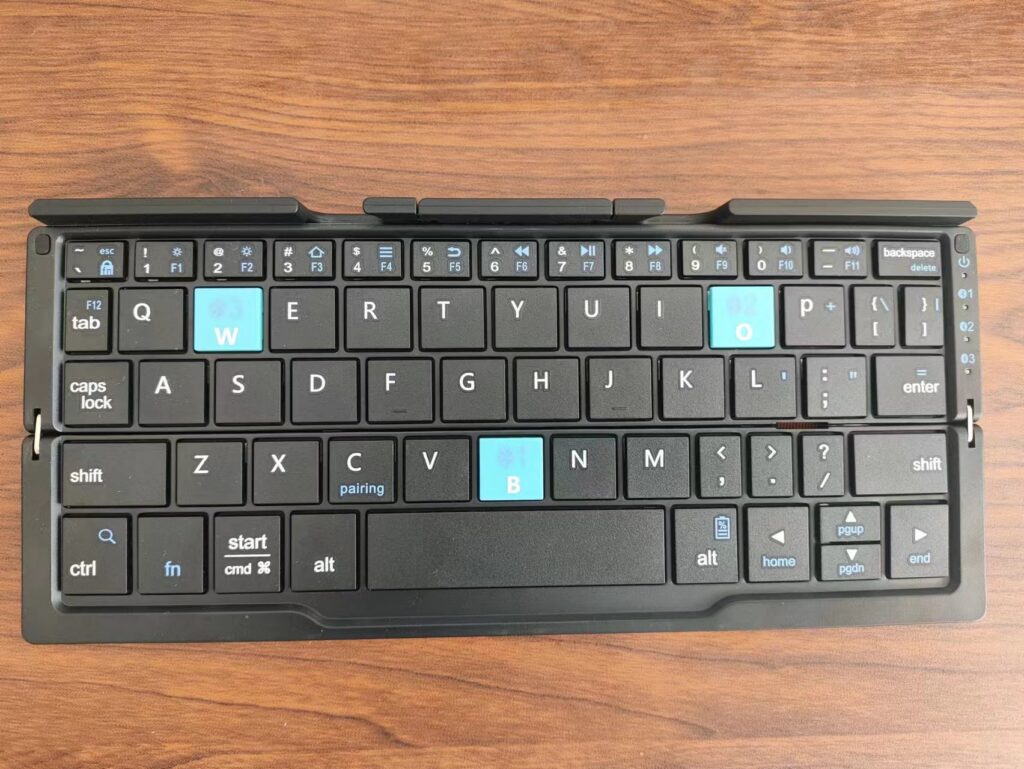
    A compact folding Bluetooth keyboard opened on a wooden table
    Keys near the fold take a little practice, so try a new keyboard at home before a work trip (Photo: Cartonfox via Wikimedia Commons, CC0)

    Flying with keyboards and small gadgets

    Keyboards, mice and other small accessories with built-in rechargeable batteries are generally fine in carry-on bags. The stricter rules apply to spare lithium batteries and power banks, which must travel in the cabin rather than in checked baggage. As principles:

    • Keep battery-powered gadgets in your carry-on where possible, where you can reach them and they are safe from rough handling.
    • Spare lithium batteries and power banks are cabin only, and should be protected from short circuits in their packaging, a case or a separate bag.
    • Switch keyboards off or use the cover so keys are not pressed in your bag.
    • Check the official rules before you fly: the FAA’s PackSafe lithium battery guidance, the TSA’s What Can I Bring? tool and CATSA’s guidelines for batteries. Airlines can add their own rules.

    If you are trying to carry fewer chargers overall, our guide to 3-in-1 Apple chargers covers one way to consolidate them.

    Packing a keyboard setup

    A complete mobile workstation can be surprisingly small: a folding or slim keyboard, a compact mouse, a folding stand for a laptop or tablet, and one USB-C cable that charges all of them. Keep the keyboard in a padded pocket of your bag or in a sleeve so the hinge and keys are protected, and keep small parts like a USB receiver in a zip pocket. If you carry a heavy tech bag through big airports, a rolling laptop bag can take the weight off your shoulders. For the bag the rest of your trip goes into, see our main travel luggage guide.

    Care and longevity

    The hinge on a folding keyboard and the charging port are the parts most likely to fail. Open and close the keyboard gently, do not force it past its natural angle, and avoid carrying it loose where it can be bent. Wipe the keys with a slightly damp cloth and let it dry fully before closing; avoid soaking it or spraying liquid directly onto the keys. Charge the battery every few weeks if you store the keyboard between trips, since leaving a lithium battery fully empty for a long time is hard on it.

    Common mistakes

    • Choosing the smallest keyboard possible. Tiny keyboards are easy to pack and hard to type on. Size for comfort first.
    • Ignoring the operating system. A keyboard laid out for a different system makes every shortcut awkward.
    • Not testing before the trip. Folding layouts take practice.
    • Forgetting a stand. A keyboard without a way to prop up the screen is only half a setup.
    • Leaving it switched on in a bag. Keys get pressed, devices wake up and batteries drain.
    • Losing the receiver or the cable. Keep small parts in one pouch.

    Frequently asked questions

    Are folding keyboards good for typing?

    Good ones are comfortable for most people once they adjust to the fold. Check that the letter keys are full size and try typing a real paragraph before a trip. If you type all day, a slim non-folding keyboard can feel more solid.

    Can I use a Bluetooth keyboard on a plane?

    Generally yes, with your device in airplane mode and Bluetooth switched back on, but crew instructions and airline policy always come first, particularly during takeoff and landing.

    Will a travel keyboard work with both my iPhone and my Windows laptop?

    Many do. Look for multi-device pairing and support for both operating systems, and check how the keyboard handles the different modifier keys.

    Can a tablet and keyboard replace a laptop for travel?

    For writing, email and web-based work, often yes. For desktop software, heavy multitasking or a company-managed laptop, usually not. Test a full day at home first.

    Is a keyboard with a built-in battery allowed in checked luggage?

    Small devices with installed batteries are treated differently from spare batteries, but it is safest to keep them in your carry-on. Spare lithium batteries and power banks are not allowed in checked bags.

    Rechargeable or replaceable batteries?

    Rechargeable keyboards with USB-C share a cable with your other gear. Replaceable batteries can last a long time but mean carrying spares on long trips.

    Do I need a mouse as well?

    For writing, usually not. For spreadsheets, editing and design work on a laptop on a stand, a compact mouse makes a big difference.

    Once your mobile office is packed, plan where you will use it. Compare fares on our flight search, find a hotel with a proper desk and good Wi-Fi on our hotel search, and if your trip needs a car, check our car rental search. Working from a new city for a week? Flights to Vancouver and our guide to things to do in Vancouver make a fine start, with plenty of cafés to test your new keyboard in.

  • Top 10 Laptop Travel Accessories You Can’t Travel Without

    Top 10 Laptop Travel Accessories You Can’t Travel Without

    A laptop is the most expensive and most fragile thing most people travel with, and it depends on a surprising number of small companions to be useful on the road. Without the right plug, it dies in a hotel room abroad. Without a sleeve, it picks up a cracked corner in an overhead bin. Without a stand and a mouse, a week of working from hotel desks leaves you hunched and sore. The good news is that the kit you need is small, and most of it costs far less than a repair. This guide covers the ten laptop travel accessories from our original list, what each one actually does, what to look for when you buy, which ones matter for which kind of trip, and the rules that apply to batteries and chargers when you fly. It is part of our travel gear series, which starts with our main guide to choosing travel luggage.

    The short answer

    If you only buy three things, make them a padded sleeve or a bag with a proper laptop compartment, a plug adapter for the countries you visit and a cable pouch that keeps your charger, cables and adapters in one place. Add a power bank that can charge your laptop over USB-C if you work in airports or on trains, and a folding stand plus a compact mouse if you work from hotel desks for more than a few days. Everything else, from cooling pads to anti-theft backpacks, depends on how and where you travel. Before any flight, remember the one rule that is not optional: power banks and spare lithium batteries travel in the cabin, never in checked bags.

    Start with how you travel

    The right kit for a weekend city break is very different from the right kit for a month of remote work. Three questions narrow it down quickly:

    • How many hours a day will you work? An hour of email needs almost nothing. Full workdays from hotels, cafés and coworking spaces justify a stand, a mouse and possibly a travel keyboard.
    • Where will you plug in? Domestic trips need no adapter. International trips need the right plug for each country, and long travel days with no outlets need a power bank.
    • How will you carry it? A backpack, a rolling bag or a suitcase with a laptop pocket each changes which protection and organization accessories make sense.

    The ten laptop travel accessories

    1. Travel laptop backpack

    A good travel laptop backpack puts the computer in a padded compartment against your back, keeps chargers and cables organized in their own pockets and spreads the weight across both shoulders. For travelers it is often the single most useful accessory because it is both protection and luggage. Look for:

    • A suspended or raised laptop compartment, so the laptop does not hit the ground when you set the bag down.
    • A clamshell or wide opening that lets you reach the laptop at security without unpacking everything.
    • A luggage pass-through strap to slide the bag over a suitcase handle.
    • Dimensions that fit your airline’s personal-item limit if you want it under the seat, or the carry-on limit if it is your main bag.

    If the backpack is also your main luggage, our guide to the Peak Design Travel Backpack 45L explains how to choose and pack a carry-on travel pack.

    2. Slim laptop sleeve

    A sleeve is the cheapest insurance you can buy for a laptop. It adds a layer of padding when the computer goes into a tote, a suitcase or a bag without its own compartment, and it lets you carry the laptop on its own into a meeting or a café. Choose a sleeve sized to your laptop’s actual dimensions rather than just the screen size, with padding on the edges and corners, since that is where drops do the most damage. Water-resistant fabric and a zipper that does not scratch the lid are worth having. A sleeve with a small front pocket for the charger turns it into a minimalist laptop bag for short trips.

    3. Adjustable laptop stand

    Hotel desks, café tables and airport counters put your laptop screen far below eye level, which means hours of looking down. A folding stand raises the screen closer to eye level, and most fold flat or into a small tube for packing. The catch is that once the laptop is raised, its own keyboard is too high to type on comfortably, so a stand works best with a separate keyboard and mouse. Look for a stand that is light, folds small, locks at several heights and feels stable when you type. It can also help air circulate under the laptop on a hot day.

    4. Portable laptop charger (power bank)

    A power bank that can charge a laptop keeps you working through long layovers, train journeys and flights without a working seat outlet. Not every power bank can charge a laptop, so check these points:

    • USB-C Power Delivery output with enough wattage for your laptop. The laptop’s own charger shows its wattage; a power bank with much lower output may charge slowly or only slow the drain while you work.
    • A watt-hour rating printed on the case. Airline and security rules are based on watt-hours, not the milliamp-hour number in the marketing. If only mAh is listed, you can estimate watt-hours as mAh multiplied by the battery voltage, divided by 1,000.
    • Size and weight. Laptop-capable power banks are heavier than phone ones. Carry the smallest one that gets you through a typical travel day.

    The flying rules for power banks are covered in detail below. The short version: cabin only, under the common 100 Wh threshold unless your airline approves a larger one, and protected from short circuits.

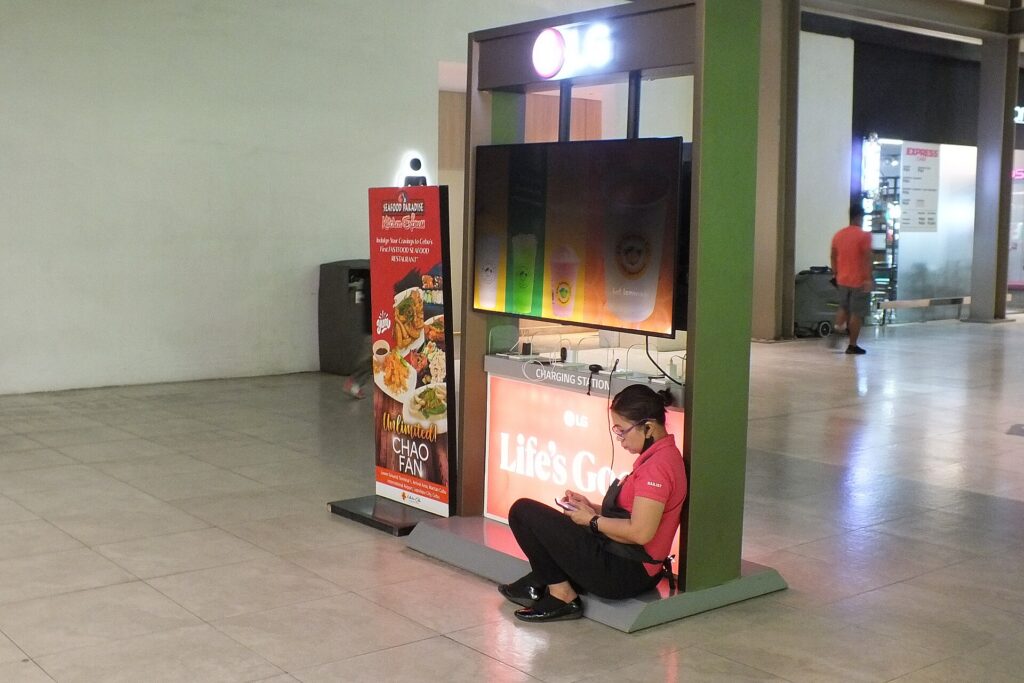
    A traveler charging a phone at a charging kiosk in an airport terminal
    Airport charging points are often busy or broken; a laptop-capable power bank keeps you independent of them (Photo: Wide Awake! via Wikimedia Commons, CC BY 4.0)

    5. Waterproof laptop bag

    Rain is the most common way travelers damage laptops without dropping them: a dash from a taxi to a hotel, a ferry deck, a sudden storm while sightseeing. A bag with water-resistant fabric, covered or coated zippers and a padded compartment keeps the laptop dry in ordinary weather. Truly waterproof bags with roll-top closures exist, mainly for outdoor and adventure travel, but for most trips water resistance plus a sleeve inside is enough. Whatever the bag claims, do not leave a laptop bag sitting in a puddle or on a wet boat deck.

    6. Anti-theft laptop backpack

    Anti-theft backpacks hide the main zipper against your back or let you lock it, add a hidden pocket for your passport and cards, and in some cases use cut-resistant fabric and straps. They make quick pickpocketing and grab-and-run theft harder, which is useful in busy cities, on crowded transit and in cafés where a bag sits on the floor. They are not theft-proof, and habits matter as much as features. Our full guide to anti-theft backpacks explains which features are worth paying for and which are marketing.

    7. Cable organizer pouch

    A cable pouch is the accessory that saves the most frustration for the least money. It keeps the laptop charger, phone cables, adapters, earbuds and a spare USB stick in one place, so you can pull them all out at a hotel desk and put them all back at checkout. It also makes security easier, since a tangle of loose cables around a laptop is more likely to need a second look. Choose a pouch with elastic loops or small mesh pockets, a zipper that opens wide and a bright interior color so you can see what is inside. Before a trip, pack it and check it against a list: laptop charger, phone cable, watch charger, plug adapter, power bank cable.

    8. Laptop cooling pad

    Cooling pads use one or more fans to push air under the laptop. They make the most sense for gaming laptops and powerful machines that run hot under sustained load, or for working in very warm rooms without air conditioning. For most travelers and most laptops, a cooling pad is optional; keeping the vents clear and working on a hard, flat surface rather than a bed or a sofa does most of the job. If you do pack one, choose a slim, light model that runs from a USB port, and remember it adds bulk. A folding stand that lifts the laptop off the table gives some of the same airflow benefit with less to carry.

    9. Universal travel adapter

    Plug shapes differ around the world, and an adapter lets your laptop charger fit a foreign outlet. A universal adapter with sliding pins covers many plug types in one block and often adds USB ports for phones and watches. Two things matter more than the number of countries on the box:

    • An adapter is not a voltage converter. It changes the plug shape, not the electricity. Most laptop and phone chargers are designed for a wide input range; Apple, for example, says its USB power adapters are designed for 100 to 240 volts. Check the input rating printed on your own charger before you rely on this. Hair dryers and other heating appliances are a different story.
    • Choose a solid, well-made adapter. A laptop charger is heavy, and a cheap adapter can sag out of the wall or fit loosely. An adapter with a safety shutter and a fuse is worth the small extra cost.

    If you travel with several devices, a single multi-port USB-C charger with interchangeable plug heads can replace several bricks and an adapter at once.

    10. Compact wireless mouse

    A trackpad is fine for an hour, but a small mouse makes long sessions of spreadsheets, design work or editing much more comfortable. Travel mice are smaller than desk mice and often connect by Bluetooth, which saves a USB port and removes the tiny receiver that is so easy to lose. Rechargeable models avoid carrying spare batteries. Look for one that fits your hand without cramping, has an on-off switch so it does not drain in your bag, and works on the surfaces you will actually use, such as glossy hotel desks.

    Comparison: which accessories matter for which trip

    AccessoryWeekend or city breakBusiness tripInternational tripLong-term remote work
    Laptop backpack or bagUsefulEssentialEssentialEssential
    Slim sleeveEssential if no laptop bagUsefulUsefulUseful
    Folding standOptionalUsefulUsefulEssential
    Laptop power bankOptionalUsefulUsefulUseful
    Water-resistant bagUsefulUsefulUsefulUseful
    Anti-theft backpackUseful in busy citiesOptionalUsefulUseful
    Cable pouchUsefulEssentialEssentialEssential
    Cooling padRarely neededRarely neededHot climatesPowerful laptops
    Travel adapterOnly abroadOnly abroadEssentialEssential abroad
    Compact mouseOptionalUsefulUsefulEssential

    Flying with a laptop, chargers and batteries

    Laptops, chargers and power banks all contain or depend on lithium batteries, which are regulated in aviation because a damaged or short-circuited battery can overheat. The details are set by each authority and airline and can change, but the principles are consistent:

    • Keep the laptop with you in the cabin. Devices with installed batteries are allowed in the cabin, and keeping them there also protects them from theft and rough handling.
    • Power banks and spare batteries are cabin only. They are not allowed in checked baggage. If your bag is gate-checked or taken at the aircraft door, take the power bank and any spare batteries out first.
    • Watt-hours decide what is allowed. Most phone and laptop batteries and power banks fall under the common 100 Wh threshold. Larger batteries usually need airline approval, and there is an upper limit beyond which they are not allowed as passenger baggage.
    • Protect the terminals. Keep spares in their packaging, a case or a separate plastic bag, away from keys and coins.
    • Your airline may be stricter. Some airlines have added their own limits on using or charging power banks during flights. Check the airline’s page as well as the government rules.
    • Damaged batteries stay home. A swollen, cracked or recalled battery should not fly.

    Read the official pages before you fly: the FAA’s PackSafe guidance on lithium batteries, the TSA’s power banks entry and its What Can I Bring? tool, and CATSA’s guidelines for batteries for Canadian airports. Transport Canada also has a plain-language explainer on travelling with lithium batteries.

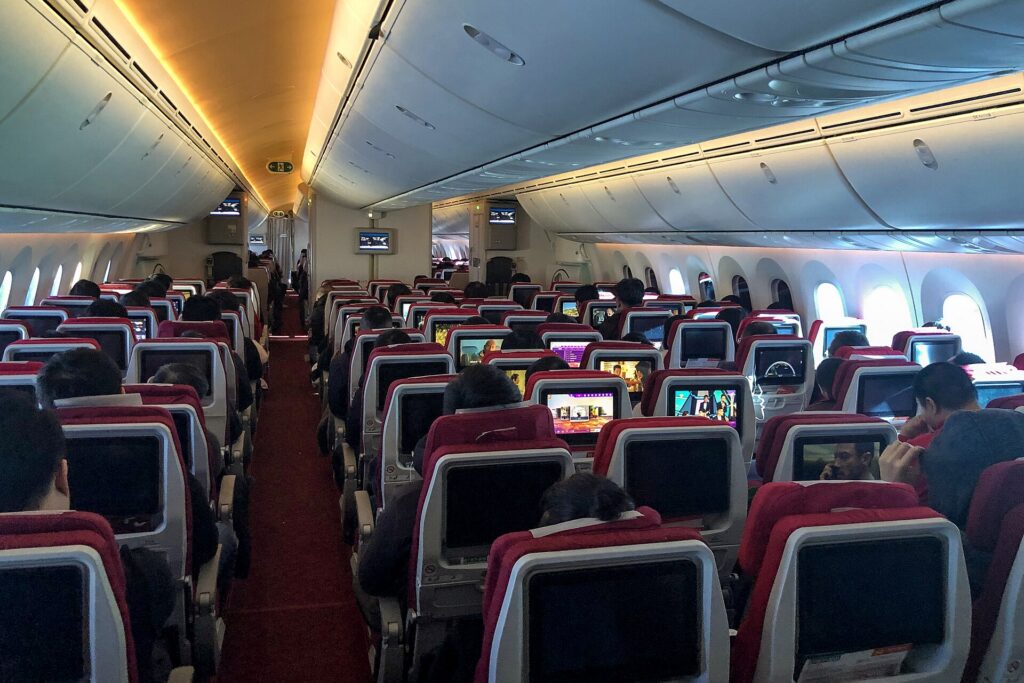
    The economy cabin of a widebody airliner with rows of seats and seatback screens
    Laptops, power banks and spare batteries fly in the cabin with you, never in a checked bag (Photo: N509FZ via Wikimedia Commons, CC BY-SA 4.0)

    Getting through security smoothly

    Laptop screening rules vary by airport, checkpoint and screening program. Some checkpoints still ask you to remove laptops and place them in a separate bin; newer screening lanes and some trusted traveler programs let them stay in the bag. Pack so either works:

    • Laptop in its own compartment near the top or back of the bag, so it slides out in one move.
    • Cables in the pouch, not wrapped around the laptop.
    • Power bank in an outside pocket in case officers want to see it.
    • Take off smart watches and put phones in the bag or bin before you reach the belt, so you are not the person holding up the line.
    • Watch your laptop come out of the scanner. The belt is one of the easiest places to leave a laptop behind or have it picked up by someone else.

    Working on the road: making a hotel room or café into an office

    With a stand, a mouse and a keyboard, almost any table becomes a reasonable workstation. A few habits make it work better:

    • Choose the room for the work. If you need to work from the hotel, look for a room with a real desk and a proper chair, and ask about Wi-Fi quality. Our business travel hotels guide explains what to look for.
    • Carry a short extension or small multi-outlet charger. Hotel outlets are often behind the bed or far from the desk.
    • Bring your own sound. Cafés, airport gates and planes are noisy; our guide to noise-cancelling headphones for flying covers how to choose a pair for calls and focus.
    • Protect the screen from eyes. A privacy screen filter narrows the viewing angle so the person next to you on the plane cannot read your email.
    • Treat public Wi-Fi with caution. Stick to secure sites, use your company’s security tools if you have them and avoid sensitive logins on networks you do not trust.

    Worth adding beyond the top ten

    • A travel keyboard. If you use a stand, or you want to work from a tablet instead of a laptop, a folding or slim Bluetooth keyboard completes the setup. See our guide to travel keyboards.
    • A multi-device charger. If you carry an iPhone, an Apple Watch and AirPods, a 3-in-1 Apple charger cuts three chargers down to one.
    • A rolling laptop bag. If your tech bag is heavy and your trips are mostly airports and offices, a rolling laptop bag takes the weight off your shoulders.
    • A cable lock. Useful in coworking spaces, shared offices and hostels, as long as your laptop has a lock slot or you use an adapter designed for it.
    • A small USB-C hub. Many thin laptops have few ports. A compact hub adds HDMI for hotel TVs and meeting-room screens, plus USB-A for older accessories.

    Before the trip: a laptop checklist

    • Back up your files to the cloud or an external drive before you leave.
    • Update the operating system and apps at home, not on hotel Wi-Fi the night before a presentation.
    • Download what you need offline: documents, maps, entertainment and boarding passes.
    • Turn on device encryption and a strong password, and make sure you can locate or wipe the laptop remotely.
    • Charge everything, including the power bank, the mouse and the keyboard.
    • Pack the cable pouch from a list, and check it again when you leave each hotel.
    • Photograph the serial number of your laptop and keep a copy of the receipt, in case you need to report a loss or make an insurance claim.
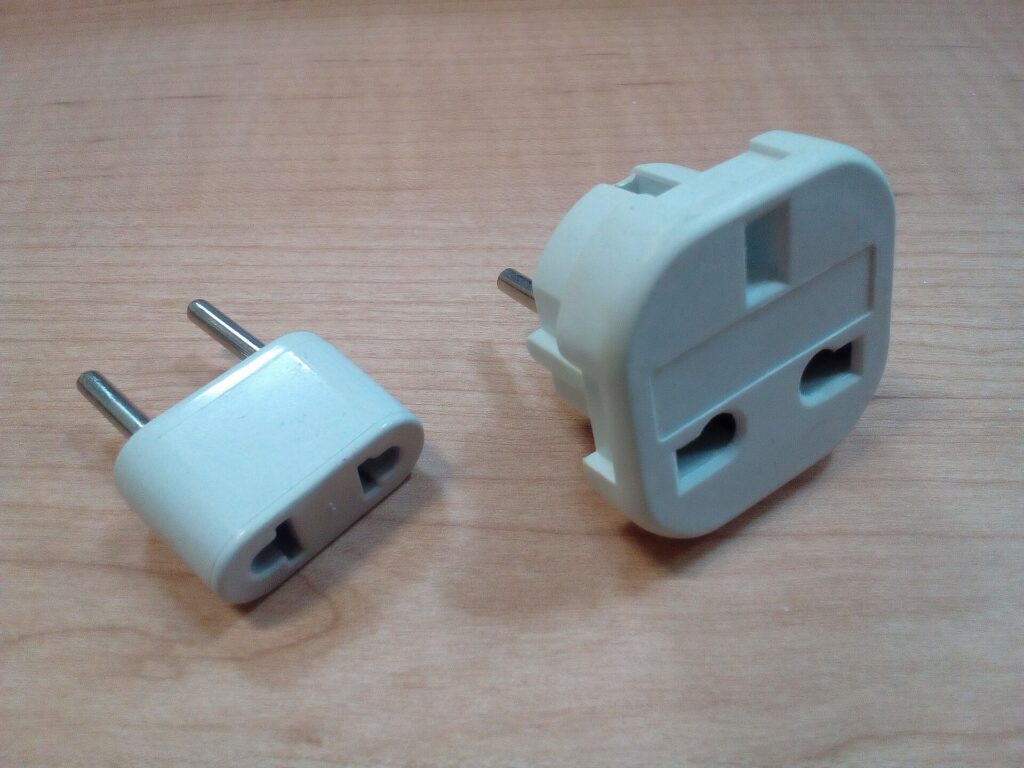
    Two plug adapters for different electrical outlet types on a wooden table
    A plug adapter changes the plug shape, not the voltage; check the input rating on your charger (Photo: Fructibus via Wikimedia Commons, CC0)

    Common mistakes

    • Checking the laptop or power bank. Laptops belong in the cabin, and spare batteries are not allowed in checked bags at all.
    • Buying a sleeve by screen size alone. Measure the laptop.
    • Assuming an adapter converts voltage. It does not. Check the input range on the charger itself.
    • Carrying a phone power bank for a laptop. Check the USB-C output wattage before you depend on it.
    • Leaving cables behind. Hotel rooms are full of forgotten chargers. A single pouch and a quick check at checkout prevent it.
    • Working hunched over for a week. A stand and a separate keyboard or mouse are small, light and make a big difference.
    • Relying on seat power. Not every plane has working outlets, and many that do deliver limited power. Arrive fully charged.

    Frequently asked questions

    What are the most important laptop travel accessories?

    A padded sleeve or laptop bag, a plug adapter for international trips and a cable pouch cover most travelers. A laptop-capable power bank, a folding stand and a compact mouse are the next most useful.

    Can I bring a laptop power bank on a plane?

    Yes, in your carry-on. Power banks are not allowed in checked baggage. Most fall under the common 100 Wh threshold; larger ones generally need airline approval. Check the FAA, TSA or CATSA pages linked above and your airline’s policy.

    Do I need a voltage converter for my laptop abroad?

    Usually not. Most laptop chargers accept a wide range of input voltages, so a plug adapter is enough. Check the input rating printed on your charger to be sure.

    Is a laptop cooling pad worth taking on a trip?

    For most laptops and most trips, no. Keeping the vents clear and using a hard, flat surface is enough. Cooling pads make more sense for powerful laptops or very hot rooms.

    Should I use a laptop sleeve inside a laptop backpack?

    It is not necessary if the backpack has a well-padded, suspended laptop compartment, but a sleeve adds protection and lets you carry the laptop on its own at your destination.

    Do I need to take my laptop out at airport security?

    It depends on the checkpoint and your screening program. Pack the laptop so it can come out quickly, and follow the officers’ instructions.

    How can I keep my laptop safe from theft while traveling?

    Keep it in the cabin, never leave it unattended at a café or gate, use a bag with lockable or hidden zippers in busy places and lock it in the room safe or your locked luggage when you go out without it.

    With your kit packed, the only thing left is the trip itself. Compare fares on our flight search, find a hotel with a real desk and reliable Wi-Fi on our hotel search, and if your work trip needs wheels, check our car rental search. Heading to a conference or client meeting in Chicago? Our guide to things to do in Chicago helps you make the most of the evenings, and flights to Chicago are a good place to start. For bags, suitcases and the rest of your gear, return to our main guide to travel luggage.