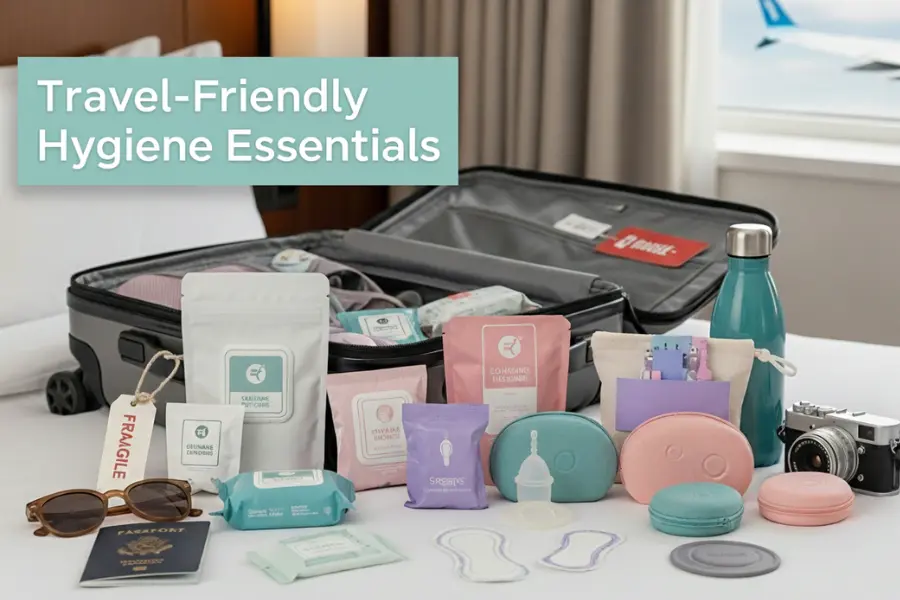
A period does not have to shape your itinerary, but it does change what you pack. On a long-haul flight you may be in your seat for hours with a lavatory line in the aisle. On a road trip the next clean restroom may be an hour away. On a beach holiday you might want to swim every day, and on a hiking trip there may be no bin at all. Abroad, the brand and format you rely on may be hard to find, and the words on the box may be in a language you do not read. Travel-friendly feminine hygiene products solve most of this: compact, discreet, easy to carry through airport security and suited to the kind of trip you are taking. This guide covers how to choose between disposable and reusable options, how airport security rules apply to period products and intimate care liquids, how much to pack, how to handle disposal and cleaning on the road, and a handful of well-known products from our original list that we have checked on the makers’ own sites.
The short answer
Pack a small, ready-to-grab pouch in your personal item with enough products for the travel day plus a spare, and put the rest in your main bag. Pads, liners, tampons, menstrual cups and period underwear are solids, so they are not affected by liquid limits; liquid washes, gels and sprays are, and have to follow the TSA’s 3-1-1 rule in the United States and CATSA’s 100 ml rule in Canada. Choose compact disposables for convenience and short trips, and consider reusable options like a cup or period underwear for long trips, remote places and less waste, as long as you are comfortable with cleaning them while traveling. Carry enough of what you prefer for the first few days, since formats and brands vary from country to country. If you use tampons, follow the FDA’s safety advice and the directions on the package.
What makes a product travel-friendly
- Compact and light. Thin pads, compact applicator or applicator-free tampons and a single reusable cup take up much less space than bulky packs.
- Individually wrapped. Wrapped items stay clean in a handbag or a jacket pocket and are easier to carry discreetly.
- Reliable for long stretches. Travel days are full of situations where you cannot change right away: boarding, taxiing, seatbelt signs, long drives and tours. Choose what you trust for those stretches, and always follow the product’s own directions on how long it can be worn.
- Easy to dispose of or clean. Disposables need a bin; reusables need water and somewhere to wash and dry them.
- Familiar. A trip is not the best time to try something completely new. If you want to switch to a cup or period underwear, try it at home for a cycle or two first.
Disposable vs reusable for travel
| Product | Why travelers like it | Trade-offs on the road | Airport security |
|---|---|---|---|
| Pads and liners | Easy, familiar, widely sold | Bulkier to pack; need a bin | Solid; no liquid limit |
| Tampons | Compact, discreet, swim-friendly | Need a bin; formats vary abroad | Solid; no liquid limit |
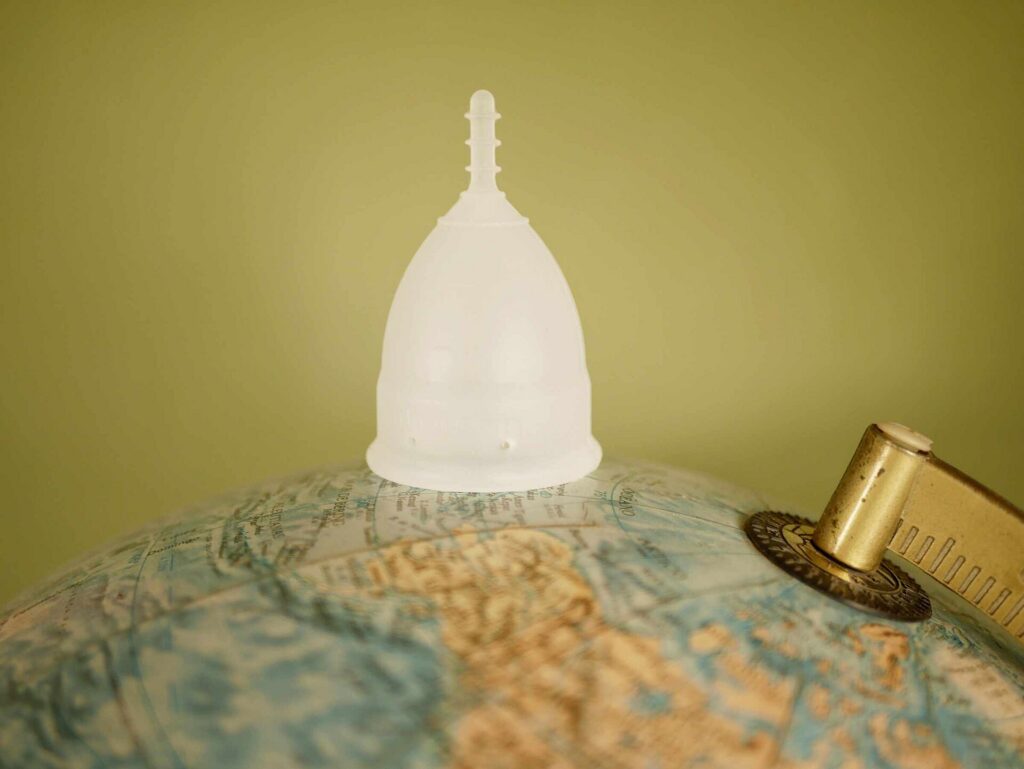
| Menstrual cup or disc | One item for the whole trip; less waste | Needs water and privacy to empty and clean | Solid; no liquid limit |
| Period underwear | Nothing to insert or throw away; good backup | Needs washing and drying time | Clothing |
| Intimate wash, gel or spray | Freshening up on long days | Counts toward liquid limits in carry-on | Liquid; follow TSA 3-1-1 or CATSA 100 ml |
| Wipes | Useful where facilities are basic | Do not flush; create waste | Check the TSA and CATSA item tools |
Many travelers end up with a mix: a cup or period underwear as the main option, and a few compact disposables as a backup for travel days, long bus rides and moments when there is no good place to clean a reusable.
Airport security rules for period products and liquids
Security rules are the part of this that trips people up, and they change, so check the official pages before you fly.
United States (TSA)
The TSA’s liquids, aerosols and gels rule allows travel-sized containers of 3.4 ounces (100 milliliters) or less per item in a single quart-sized bag in your carry-on. That covers liquid intimate washes, cleansing gels, sprays and any liquid cup wash you pack. Pads, liners, tampons, cups and period underwear are not liquids. For any specific item, search the TSA’s What Can I Bring? tool, and remember that the officer at the checkpoint makes the final call.
Canada (CATSA)
CATSA’s page on liquids, non-solid food and personal items sets the carry-on limit at containers of 100 ml or 100 g (3.4 oz) or less, all fitting in one clear, resealable plastic bag of no more than 1 L. Larger containers can go in checked baggage if they are not otherwise prohibited. The same logic applies: solid period products are fine; liquid washes and gels go in the bag.
Everywhere else
Most countries use a similar 100 ml approach for carry-on liquids, but screening technology and rules differ between airports. If you are connecting through another country, the rules at the transfer checkpoint apply. The simplest plan is to keep liquids small and together, and to carry solid period products loose in a separate pouch so nothing needs to come out of your bag.
Screening tips
- Keep period products in a plain pouch separate from your liquids bag, so the liquids bag can come out quickly if your lane requires it.
- A menstrual cup in its storage pouch is a small, soft item; there is nothing special to declare.
- If you are carrying medication for menstrual pain, keep it in its original labeled packaging in your carry-on.
Options from our original list
These products appeared in the earlier version of this guide. We have kept the ones we could confirm on each maker’s own website and described them by what they are and who they suit, not by claims about health or performance. Product lines change, so check the current range and directions from the maker before you buy.
Always Radiant Pads with FlexFoam
Always lists Radiant Pads with FlexFoam in its range, alongside its Infinity pads with FlexFoam and daily liners. Thin, individually wrapped pads like these are the easy choice for travelers who already use pads and want something slim enough to carry in a small bag or jacket pocket. Pair them with a few liners for the lighter days of a trip.
Rael Organic Cotton Cover Pads
Rael sells Organic Cotton Cover Pads with Wings in several sizes and pack counts, as well as liners. They suit travelers who prefer an organic cotton cover and want a mainstream, individually wrapped disposable pad. Buy the pack size that matches your trip so you are not carrying a bulky box.
Cora organic cotton tampons
Cora’s range includes applicator tampons and applicator-free tampons, pads, liners, discs and a cup. For travel, applicator-free tampons are the most compact option to pack, while compact applicator tampons suit people who prefer an applicator but want something smaller to carry. Several large brands make compact applicator tampons, so you have choices if one is hard to find.
DIVA Cup
Diva, the maker of the long-running DivaCup, currently sells the DIVA Cup Model 1 along with cleansing and period essentials bundles. A reusable cup is one item for the whole trip, which is why many long-term travelers and backpackers like cups. Read the maker’s instructions on sizing, wear time and cleaning, and practice at home before relying on it on a trip.
Saalt menstrual cups
Saalt makes reusable menstrual cups in several sizes and colors, and publishes cup instructions on its site. Like any cup, it suits travelers who are comfortable emptying and rinsing it in a private bathroom and want less waste. Follow Saalt’s own guidance on use and cleaning.
Thinx period underwear
Thinx makes period underwear designed to be worn in place of or as a backup to other products. On a trip, a couple of pairs are a useful backup for overnight flights, long drives and days when you want nothing to insert or throw away. Plan for washing and drying time; quick-dry fabrics and a hotel room with a heater or good airflow help.
We removed the other products from the original list because we could not confirm their current details on the makers’ own sites. That does not mean they are not good products; it means we are not in a position to describe them accurately.
Tampon safety and toxic shock syndrome
If you use tampons, it is worth knowing the FDA’s guidance, because travel days make it easy to lose track of time. The FDA explains in The Facts on Tampons and Tampon Safety that toxic shock syndrome (TSS) is rare and is caused by a toxic substance produced by certain kinds of bacteria. The FDA advises using the lowest absorbency you need, not wearing a tampon for more than eight hours and using tampons only during your period. It lists symptoms that may include a sudden high fever, vomiting, diarrhea, fainting or feeling faint when standing up, dizziness, or a rash that looks like a sunburn, and says that if you have any of these symptoms during or soon after your period, you should stop using tampons and seek medical attention immediately (source: FDA). On a long flight or a long travel day, set a phone reminder so a change does not slip your mind, and consider a pad or period underwear for overnight flights if you expect to sleep for a long stretch.
How much to pack
There is no universal number, but a simple method works:
- Estimate what you use in a typical cycle, by type (heavier days, lighter days, overnight).
- Add a buffer for travel days, delays and changes in routine. Cycles are not always predictable and trips get extended, so pack for the possibility that your period arrives during the trip even if you do not expect it.
- Decide whether to buy there. For a long trip to a place with plenty of shops, pack enough for the first few days and buy the rest locally. For remote destinations, cruises, safaris and hiking trips, pack everything you need.
- Split it up. Keep a day’s supply plus a spare in your personal item and the rest in your main bag, so a delayed checked bag does not leave you without.
The carry-on period pouch
A small zip pouch at the top of your personal item makes travel days much easier. A good kit includes:
- Enough pads, liners or tampons for the travel day plus a spare, or your cup in its pouch
- A spare pair of underwear or period underwear
- A few small, opaque disposal bags for when there is no bin
- Hand sanitizer and a few individually wrapped wipes
- Any pain relief you normally use, in its original packaging
- A small liquid wash, if you use one, inside your liquids bag
A slim pouch or organizer also keeps things discreet if your bag is opened at security. Our guide to travel wallets for women covers small organizers, and our guide to a travel first aid kit covers the basic health items worth carrying on every trip.
Managing your period on a flight
- Choose an aisle seat if you expect to get up often. It is easier to reach the lavatory without climbing over neighbors.
- Change just before boarding. Boarding, taxiing and the climb can take a long time with the seatbelt sign on.
- Take your pouch with you to the lavatory rather than digging through your bag in the aisle.
- Never flush products in an airplane toilet. Wrap them and use the bin in the lavatory.
- Dress for comfort. Dark, soft, loose layers are more comfortable on a long flight. Our guide on what not to wear on a flight has more.
- On overnight flights, consider a pad or period underwear as backup while you sleep. Our guide to sleeping on flights covers seat choice and routines for resting well in the air.
Disposal and cleaning on the road
Disposal
In many countries, plumbing is not designed for anything but toilet paper, and in some places even toilet paper goes in a bin. Look for signs in the bathroom, and when in doubt, wrap products and use the bin. Carry a few small opaque bags for places with no bin, such as trailheads, beaches and some bus stations, and dispose of them at the next trash can. In campgrounds and national parks, follow the park’s own rules for packing out waste.
Cleaning a cup on the go
Follow the maker’s cleaning instructions. On the road, the practical challenge is privacy and water: a hotel bathroom is easy; a shared toilet stall is harder. Some travelers carry a small bottle of water into the stall to rinse, or simply empty the cup, wipe it and reinsert, then do a full clean back at the hotel. If you are not comfortable with the local tap water, use bottled water to rinse. Bring the cup’s storage pouch and let it dry fully before storing.
Washing period underwear
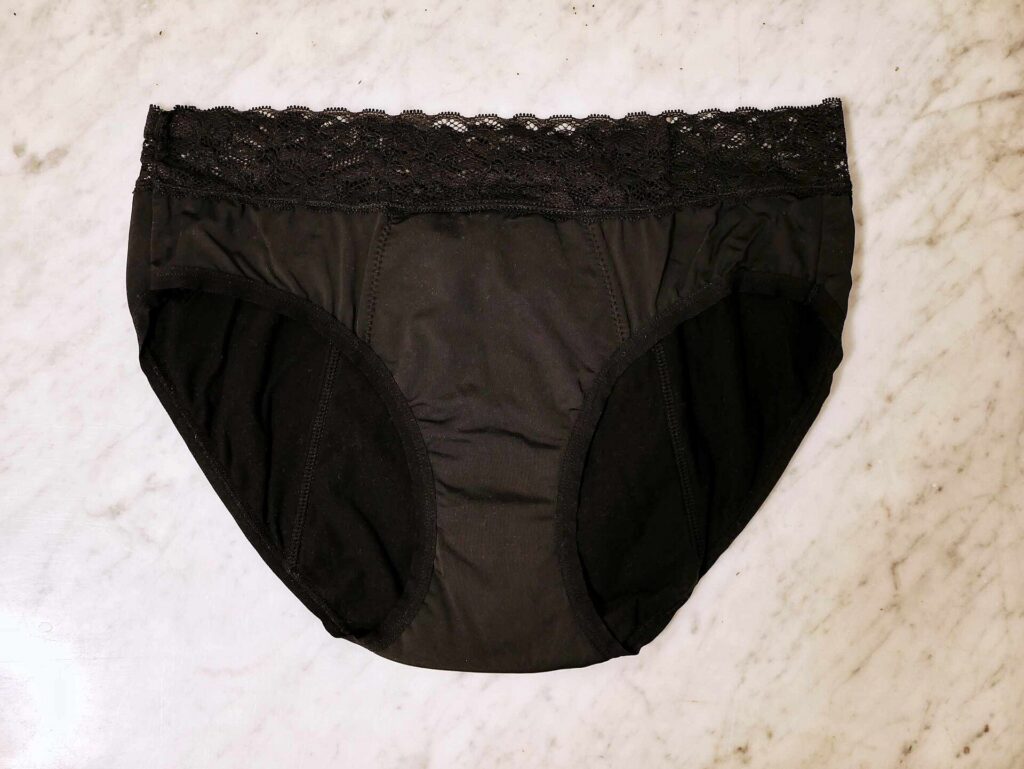
Rinse in cold water, wash according to the label and hang to dry. Hotel sinks, a small bottle of travel detergent within liquid limits and a travel clothesline make this manageable on longer trips. Plan around drying time, especially in humid climates.
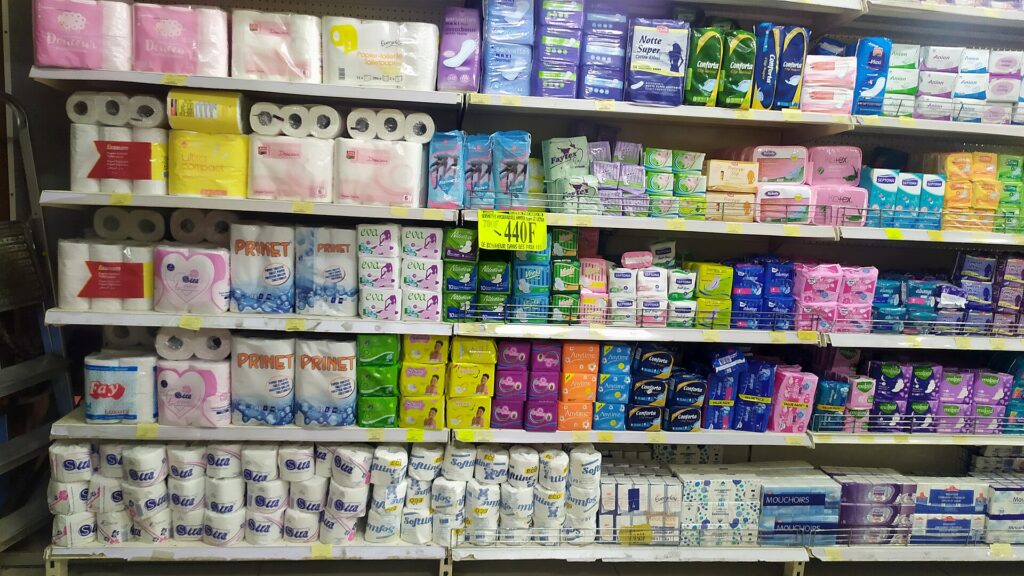
Buying period products abroad
Pads are sold almost everywhere, but the formats and brands you are used to may not be. Some places have a narrower range of tampons or cups, and packaging may not show sizes the way you expect. A few tips:
- Pack enough of your preferred product to get through the first few days.
- Look in pharmacies and large supermarkets rather than small convenience shops for a wider range.
- Take a photo of the box you use at home, including the absorbency or size, to show a pharmacist.
- Learn the local word for pads and tampons before you go; a translation app works too.
- In remote areas, islands and on cruise ships, assume that choice will be limited and prices higher.
Choosing by type of trip
Business trips
Discretion and convenience matter most. Compact, individually wrapped disposables in a slim pouch fit easily in a laptop bag. Pack a spare in your jacket or handbag for long meetings.
Beach and pool holidays
Tampons, cups and discs are the usual choice for swimming. Some brands also make period swimwear. Pack enough for extra changes after swimming.
Hiking, camping and remote travel
A cup or disc reduces what you have to carry and pack out, but it needs clean hands and water. Disposables need opaque, sealable bags to carry waste until you reach a bin. Plan with the facilities along your route in mind.
Road trips
Restroom stops can be far apart. Keep a pouch within reach in the car, not in the trunk, and stop before you need to. A rental car road trip is also a good reason to pack a small bin bag for the car. Our car rental search helps you plan the trip itself.
Long-term and backpacking trips
This is where reusables shine: a cup and a couple of pairs of period underwear can cover months of travel with very little space. Keep a small backup of disposables for travel days.
Festivals and events
Portable toilets and long lines make disposables with a wipe and a bag the easiest option. Carry a small pouch rather than a whole pack.
Sustainable choices
Reusable cups, discs and period underwear reduce the amount of waste you create on a trip, which is useful in places where trash collection is limited. Organic cotton disposables appeal to travelers who prefer natural materials. Whatever you use, dispose of it properly and never leave anything behind on trails or beaches. If you are building a lower-waste travel kit, our guide to eco-friendly travel flip-flops covers another small swap.
Common mistakes
- Packing everything in checked baggage. A delayed bag should not leave you without products.
- Trying a new product on the trip. Test cups, discs and period underwear at home first.
- Putting liquid washes in your pouch instead of the liquids bag. It can mean a bag search at security.
- Assuming you can buy your usual brand abroad. Bring enough for the first days.
- Losing track of time on travel days. Set reminders, especially if you use tampons.
- Flushing products. Especially on planes and in countries with older plumbing, always use the bin.
Frequently asked questions
Can I take tampons and pads through airport security?
Yes. They are solids, not liquids, so liquid limits do not apply. Check the TSA’s What Can I Bring? tool or CATSA’s carry-on page for any specific item you are unsure about.
Can I bring a menstrual cup in my carry-on?
Yes. A cup is a small solid item. Any liquid cup wash you bring follows the liquid rules.
Do intimate washes count toward the liquid limit?
Yes. In the United States they follow the TSA’s 3-1-1 rule, and in Canada CATSA’s 100 ml rule with a 1 L bag. Larger bottles can go in checked baggage.
Is it safe to wear a tampon on a long flight?
Follow the FDA’s guidance: use the lowest absorbency you need and do not wear a tampon for more than eight hours (FDA). On long or overnight flights, set a reminder or use a pad or period underwear while you sleep.
What is the most space-efficient option for a long trip?
A reusable cup or disc takes the least space, followed by applicator-free tampons. Period underwear is a good backup that packs like clothing.
Where do I throw away products on a plane?
Use the bin in the lavatory. Never flush anything but toilet paper in an airplane toilet.
Will my period products be easy to find abroad?
Pads usually are. Specific brands, tampon formats and cups can be harder to find, so bring enough of your preferred product for the first few days.
Should I pack period products even if my period is not due?
Yes. Timing is not always predictable and trips run long, and a small backup pouch weighs almost nothing.
With your kit sorted, the rest of the trip is about the booking. Compare fares and flexible dates on our flight search, find a hotel with a private bathroom and good laundry options on our hotel search, and if you are planning a city break, our guide to things to do in Paris is a good start. For the rest of your packing, see our main guide to travel luggage, our guide to travel jewelry cases and our guide to anti-theft backpacks for a secure daypack.
Keep planning with TicketScanner
- Top travel luggage bags: the buying guide — the travel gear guide
- Travel first aid kits
- Travel wallets for women
- Travel jewelry cases
- Sleeping on flights: what to know first
- What not to wear on a flight
- Anti-theft backpacks for travel
- Eco-friendly travel flip-flops
- Search flights — compare fares across flexible dates
- Things to do in Paris