Tag: Hotel Reservations

  • Hotel Booking Tips For Saving Money On Your Next Trip

    Hotel Booking Tips For Saving Money On Your Next Trip

    For most trips, the hotel is the biggest single cost after the flight, and on a longer stay it is often bigger. It is also the part of a trip where small decisions compound: a room that looks cheap but sits forty minutes from everything you came to see, a nonrefundable rate booked before your dates were firm, a parking charge nobody mentioned, a resort fee that shows up at checkout. Saving money on a hotel is rarely about finding a secret discount. It is about knowing what a room will really cost you, choosing the right location and the right rate for your situation, and booking at a sensible moment. This guide walks through the whole process in order, from deciding what you need to what to check at the front desk, and links to the more detailed guides in this series for deal hunting, last-minute stays, family trips, business travel and hotels in Canada.

    The short answer

    If you only remember a handful of things, make it these. Choose the neighborhood before the hotel, because location drives both your daily costs and how much you enjoy the trip. Compare the total price, including taxes, mandatory fees, parking and breakfast, not the nightly rate on the search results. Match the rate to your certainty: pay the premium for free cancellation when your plans might move, and take the cheaper prepaid rate only when they will not. Book early for peak dates and big events, and stay flexible for quiet periods, when waiting can pay. Read recent reviews for patterns, not for the single angry post. And once you have found a property you like, check the hotel’s own site before you pay, since the same room sometimes comes with better terms there. You can start comparing properties and prices across your dates on our hotel search.

    A spacious hotel lobby with couches, rugs and a chandelier
    A great lobby is nice; the total price, the location and the cancellation terms matter more (Photo: Basile Morin via Wikimedia Commons, CC BY-SA 4.0)

    Step 1: Decide what you actually need

    The fastest way to overspend is to start scrolling before you know what you are looking for. Every filter you set in advance removes rooms you would never have booked.

    Who is traveling, and why

    A couple on a city break, a family of five, a solo business traveler and a group of friends going to a concert need different things. Families usually care about room size, bed configuration, a pool and breakfast; our guide to the best time to book hotels for family vacations covers timing around school holidays in detail. Business travelers care about location relative to meetings, a reliable desk and Wi-Fi, early breakfast and a smooth late check-in, which is the focus of the business travel hotels guide.

    Your must-haves and your nice-to-haves

    Write down the three or four things you will not compromise on, then everything else. Typical must-haves are a maximum total budget, a specific area, two beds or a separate sleeping space for children, parking if you are driving, an accessible room, or a quiet room if you are a light sleeper. Nice-to-haves are the gym, the rooftop bar and the view. Nice-to-haves break ties; they should never push you over budget.

    Your real budget

    Set the budget as a total for the stay, including taxes and fees, not as a nightly rate. A single figure for the whole trip forces you to account for costs that do not appear on the first page of results.

    Step 2: Pick the neighborhood before the hotel

    Location is the decision that most affects both cost and experience, and it is the one people rush. A cheaper hotel on the edge of the city is only a deal if the savings survive the taxis, transit fares, parking and time it costs you to get to the places you came for. A slightly more expensive room near a subway stop, in a walkable district, or next to the conference center can be the cheaper option once the whole trip is counted.

    A practical way to choose:

    • List the three or four places you will go most. Attractions, a conference venue, a relative’s house, a stadium.
    • Look at them on a map together. The area in the middle, or along a direct transit line between them, is usually where to stay.
    • Check the walk to the nearest station, not just the distance to downtown. A hotel described as “near the center” might be close in a straight line and awkward in practice.
    • Look at the street, not just the building. Street View and reviews that mention the area show whether it is lively, quiet or empty at night.
    • Price in parking if you are driving. Downtown hotels in large cities often charge a daily parking fee, sometimes steep, while suburban and airport properties frequently include it.

    Each city has a handful of areas that suit most visitors. Our neighborhood pages show hotels in the districts people ask about most, such as the Entertainment District in Toronto, Old Montreal, Times Square in New York and the Las Vegas Strip. If you are weighing whether you will need a car at all, our comparison of renting a car, public transit and taxis helps you decide how central you need to be.

    Step 3: Choose your dates with demand in mind

    Hotel prices follow demand closely, and demand follows a few predictable patterns. Understanding them lets you shift a trip by a day or two and pay noticeably less for the same room.

    Weekdays versus weekends

    In business-heavy downtowns, rooms are often busiest from Monday to Thursday and quieter on Friday and Saturday nights, when those hotels chase leisure guests. In resort towns, beach areas and weekend-getaway destinations it tends to work the other way around. Run the same search across a few arrival days and compare the totals.

    Seasons, holidays and school breaks

    Every destination has a high season, a low season and the shoulder months in between. Summer and the December holidays are peak almost everywhere in North America, ski areas peak in winter, and shoulder months often combine decent weather with much better availability. Our guide to the best time to book cheap flights and hotels goes through the seasonal patterns and booking windows in more depth.

    Events and conventions

    The biggest price swings come from events: a major concert, a playoff game, a marathon, a trade show, a festival. Before you book, check event listings for your dates; if something big is on, book early or shift your trip. Our Toronto events and Las Vegas events pages are good examples of the calendars worth checking.
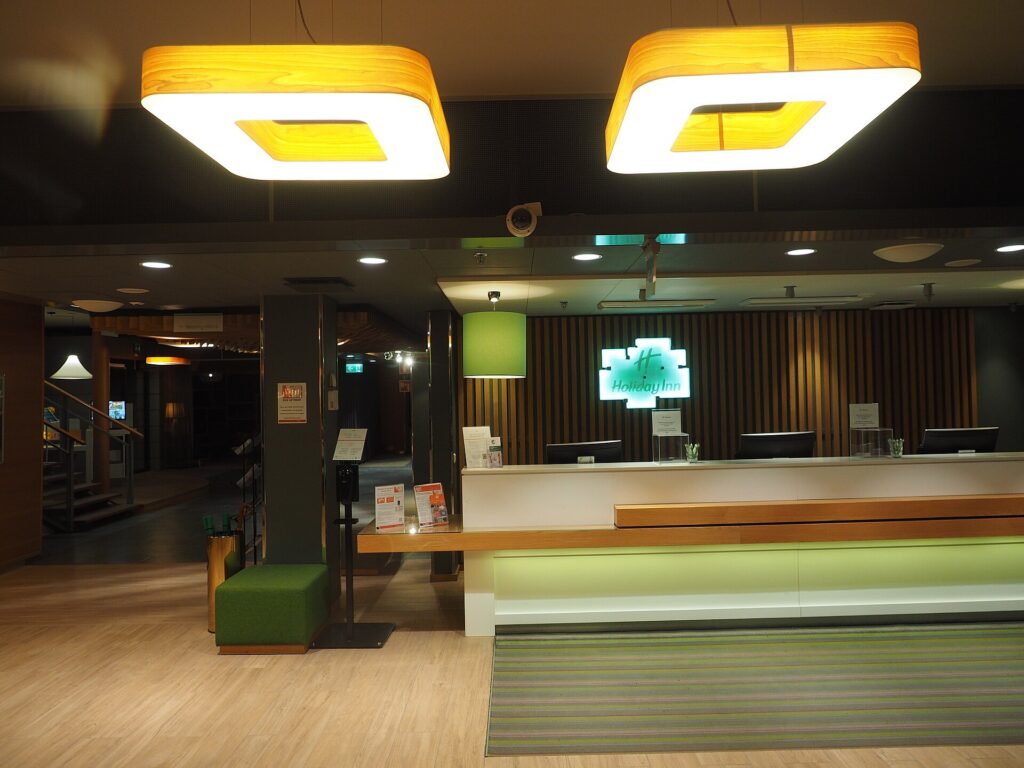
    The reception desk in a city-center hotel lobby
    Check-in is the moment to confirm your rate, what is included and the room you want (Photo: JIP via Wikimedia Commons, CC BY-SA 4.0)

    Step 4: Compare the total price, not the nightly rate

    This is the single most important habit. Two hotels showing the same nightly rate can end up far apart once taxes, fees and extras are added.

    The rules on how prices must be displayed have tightened. In the United States, the Federal Trade Commission has adopted a rule requiring hotels and booking sites to show the total price, including mandatory fees, up front. In Canada, the Competition Bureau treats advertising a price that cannot be attained because of added mandatory fees as drip pricing, a deceptive marketing practice. These rules cover mandatory charges; optional ones like parking and breakfast are still yours to add, so check the rate details before you compare.

    Charges to look for before you book

    ChargeWhat it isHow to handle it
    TaxesSales, lodging and tourism taxes, which vary by city and province or stateCompare totals after tax; some sites show pre-tax prices by default
    Resort or destination feeA mandatory daily charge for amenities such as Wi-Fi, pool or gym accessCheck the rate details; it must be in the total where display rules apply
    ParkingDaily self-parking or valet charge, often high downtownAdd it for every night you will have a car; compare with nearby public lots
    BreakfastIncluded in some rates, a separate charge in othersValue it at what you would otherwise spend; families save the most
    Extra guestsA charge for additional adults, or for children above a certain ageEnter every traveler correctly so the price you see is the price you pay
    Early check-in or late checkoutGuaranteed early arrival or late departure, sometimes chargedAsk at booking; often free on request if the hotel is not full
    Pet feePer-night or per-stay charge, sometimes a cleaning depositConfirm the policy and any size limits before booking
    Deposit or incidentals holdA temporary hold on your card at check-inNot a charge, but it reduces available credit; see the payment section below

    Build a quick total for your two or three finalists that includes every night, taxes, fees, parking and breakfast if it matters to you. The ranking often changes.

    Step 5: Choose the right rate type

    The same room is usually sold at several prices with different conditions attached. Picking the right one is about matching flexibility to how certain your plans are.

    Rate typeTypical conditionsBest for
    Flexible, pay at the hotelFree cancellation until a deadline, often a day or two before arrival; card held as a guaranteePlans that might change; trips booked well in advance
    Advance purchase, nonrefundableLower price, paid in full at booking, no refund if you cancelFixed dates, such as a wedding or a conference you are sure to attend
    Member rateA discount for signing in to the hotel’s free loyalty programAlmost everyone who books directly; joining is usually free
    Package (flight plus hotel)Bundled price; changes and cancellations follow the package’s own termsResort and beach trips where the bundle genuinely beats separate prices
    Discount rates (auto club, senior, government, corporate)Eligibility required; ID or proof is often checked at check-inTravelers who genuinely qualify

    The flexible rate is effectively insurance. If the nonrefundable rate is only slightly cheaper, the flexibility is almost always worth paying for. If the gap is large and your dates are fixed, take the savings. Read the cancellation deadline carefully: “free cancellation” sometimes ends several days before arrival, not the evening before.

    A flexible booking also lets you take advantage of price drops. If you book a refundable rate early and prices fall closer to your dates, you can book the cheaper rate and cancel the first one, as long as you are still inside the free cancellation window. Always make the new reservation before canceling the old one.

    Step 6: Read reviews like an investigator

    Reviews are the best free information you have, but they reward a careful reading. Star ratings tell you the category of a hotel; recent reviews tell you what it is actually like to stay there now.

    • Sort by most recent. Hotels renovate, change management and sometimes decline. Reviews from the last few months matter far more than a high average built years ago.
    • Look for patterns. One complaint about noise is a light sleeper; ten complaints about noise from the bar downstairs is a fact about the building.
    • Search reviews for your must-haves. “Parking”, “crib”, “elevator”, “air conditioning”, “walls” or “Wi-Fi”, whatever matters to you.
    • Compare guest photos with the hotel’s photos. Professional photos use wide lenses and good light; guest photos show the real room.
    • Read how management responds. A thoughtful reply to a complaint is a good sign about how they will treat you if something goes wrong.

    Step 7: Compare where you book

    The smart approach is usually to use a comparison search to find the property and the price, then check the terms on the hotel’s own site before paying.

    ChannelStrengthsWatch for
    Comparison searchShows many properties and sites side by side; quick to see price ranges across dates and areasThe final price and conditions are set by the site you book with; check them there
    Online travel agencyWide choice, one account for many bookings, sometimes package or member discountsChanges and problems may need to go through the agency rather than the hotel; loyalty points may not apply
    Hotel directlyLoyalty points and elite benefits, member rates, easier special requests and changesNot always the lowest price; compare like for like, including cancellation terms

    When you compare, make sure you are comparing the same thing: the same room type, the same bed configuration, the same cancellation policy, and the same inclusions such as breakfast. The companion guide to finding the best hotel deals online goes deeper into comparison tactics, member pricing, bundles and how to avoid fake booking sites.
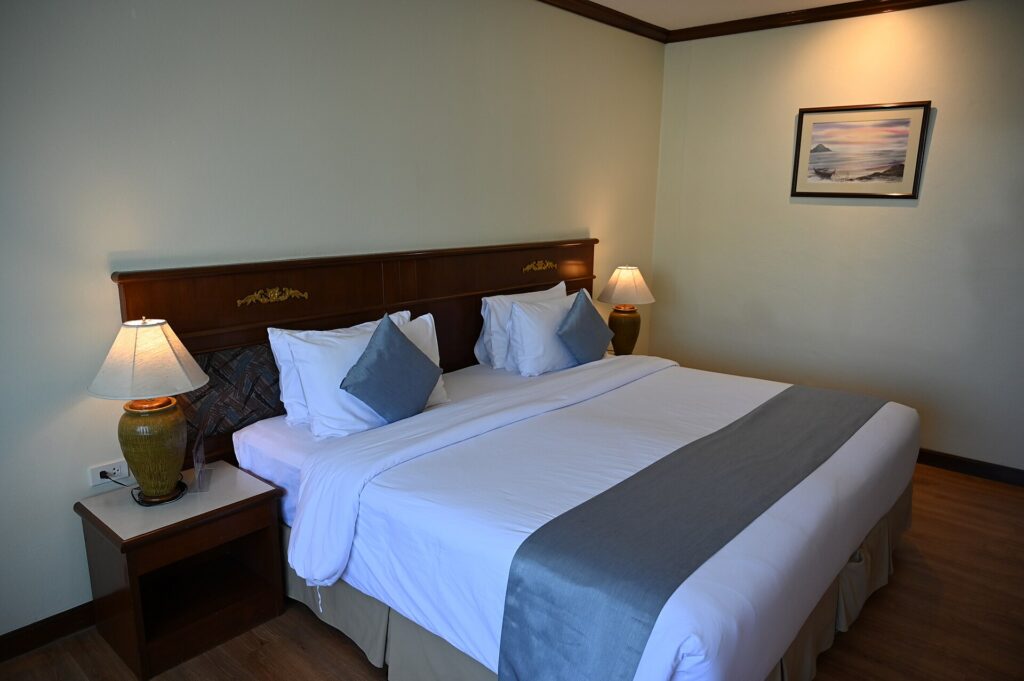
    A double bed with bedside lamps in a hotel room
    Room names vary by brand; check the bed configuration and room size, not just the label (Photo: JIP via Wikimedia Commons, CC BY-SA 4.0)

    Loyalty programs, briefly

    Every major hotel group runs a free loyalty program, and joining the one for the hotel you are booking is nearly always worthwhile, even for a single stay. Members typically get a lower rate when booking directly, free Wi-Fi at many brands, and the chance of perks such as late checkout.

    Loyalty becomes genuinely valuable when you travel often enough to concentrate your stays with one or two groups, which is where elite status, upgrades and breakfast benefits begin. If you travel once or twice a year, take the best total price and collect points where it costs nothing. Note that stays booked through third-party sites often do not earn points or recognize status, so check the program’s terms if that matters to you.

    Room types, beds and alternatives to hotels

    Room names vary wildly between brands, so read what is actually included. A “double” in one country is a single double bed; in another it means two beds. “Queen”, “king”, “two queens” and “double-double” are clearer. If you need two beds, choose a room type that guarantees them, because a “bed type requested” note is a request, not a promise. The listed room size tells you more than the name.

    For families and longer stays, consider suites and apartment-style hotels, which often include a kitchenette and a separate sleeping area. Solo travelers on a budget can look at hostels with private rooms. Vacation rentals can suit groups, but compare the full price including cleaning and service fees, and remember you give up a front desk.

    If you need an accessible room, book a room type that is specifically designated as accessible rather than adding a note, and call the hotel to confirm the features you need, such as a roll-in shower or visual alarms. In the United States, hotels are covered by the Americans with Disabilities Act, which includes requirements for how accessible rooms are described and reserved.

    When to book: a practical timeline

    • Peak dates and events: book as soon as your plans are firm, on a refundable rate. The best-located rooms go first.
    • Normal dates in a big city: booking a few weeks ahead is usually comfortable. Use a refundable rate and keep an eye on the price.
    • Quiet periods and low season: waiting can work, because hotels with empty rooms may lower rates close to the date. This is where last-minute booking shines, as explained in our last-minute hotel booking guide.
    • Small towns, national parks and island destinations: book early regardless of season, since there are only a few properties and they fill.

    The best strategy for most trips is to reserve a refundable room early, then check again a week or two before arrival. If the price has fallen, rebook. If it has risen, you are already protected.

    Paying: deposits, holds and currency

    Most hotels place a temporary hold on your card at check-in to cover incidentals, and sometimes the room total as well. The hold is released after checkout, but it can take several business days to disappear, and it reduces your available credit in the meantime. If you use a debit card, the hold may tie up money in your bank account, which is one reason many travelers prefer a credit card for hotels.

    When paying abroad, you may be offered the choice of paying in your home currency rather than the local one. This convenience usually comes with a less favorable exchange rate than your card would apply, so choosing the local currency is typically the cheaper option. If you are traveling internationally, also check your government’s advice for your destination before you book, such as Canada’s travel advice and advisories, for entry rules and local safety information.

    After you book, and at check-in

    Save your confirmation and check the dates, names, room type and number of guests. If you booked through a third party, contact the hotel a few days before arrival to confirm they have your reservation, and tell them if you will arrive late or have a special request such as a crib or a quiet room. Put your cancellation deadline in your calendar so you can recheck prices before it passes.

    At the desk, confirm the rate, the total and what is included, and ask politely about the room if anything matters to you; staff can often move you away from the elevator or to a higher floor when the hotel is not full. If something is wrong with the room, report it the first evening, when it is easiest to fix, and check the final bill before you leave.

    Common mistakes that cost money

    • Comparing nightly rates instead of totals. Taxes, mandatory fees and parking change the ranking.
    • Booking a nonrefundable rate for uncertain plans. The savings disappear the moment you need to change.
    • Choosing the cheapest area without costing the commute. Transit, taxis and lost time add up quickly.
    • Ignoring event calendars. A concert or convention can double the price of a normal weekend.
    • Booking through an unfamiliar site that looks like the hotel’s. Use known sites or the hotel’s official website, and be careful with phone numbers found in search ads; the FTC’s travel advice covers common booking scams.
    • Forgetting to recheck prices on a refundable booking. A quick search before your deadline can save real money.
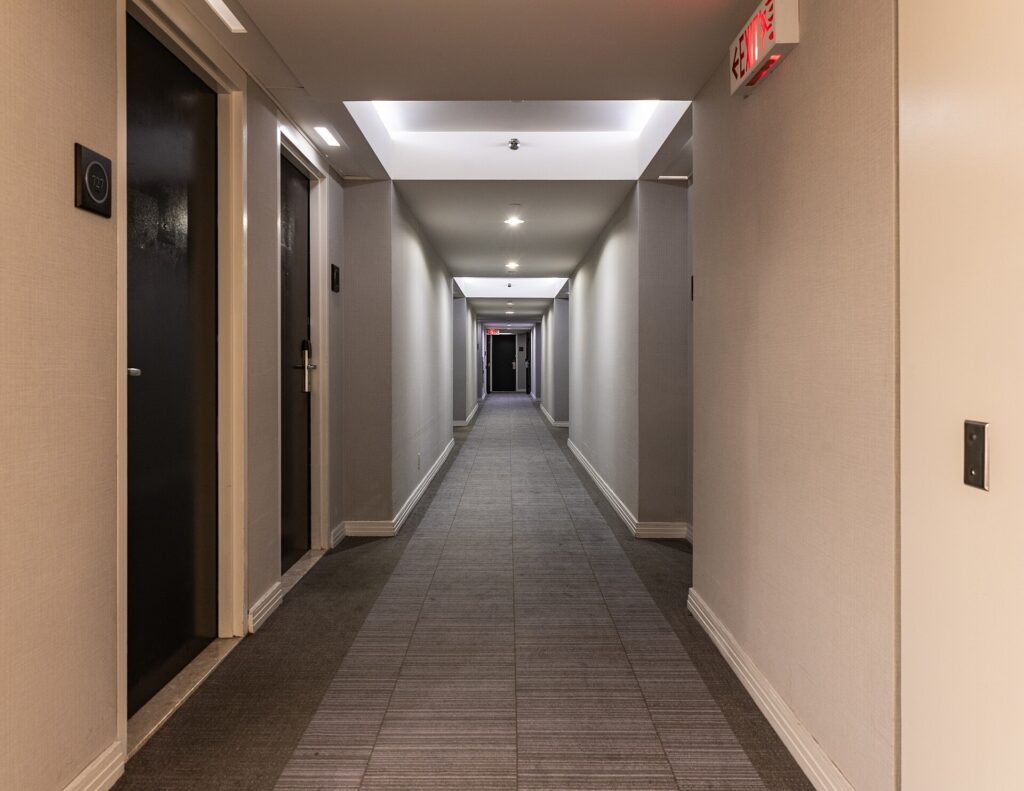
    A carpeted guest-room corridor in a downtown Toronto hotel
    Ask for a room away from the elevators and ice machine if you are a light sleeper (Photo: Chris Woodrich via Wikimedia Commons, CC BY-SA 4.0)

    Tips for specific situations

    Family trips

    Prioritize space and sleep, check that the rate covers every child, and book early for school holidays. The family vacation hotel booking guide covers timing, room choices and what to check with children in tow.

    Business travel

    Proximity to meetings is worth paying for. Check your employer’s policy and negotiated rates first, and confirm the hotel issues an itemized invoice. Our business travel hotels guide covers what to look for and how to handle expenses.

    Spontaneous trips

    If you are booking days or hours ahead, flexibility on area and room type is your biggest advantage, and checking whether there is an event in town is essential. The last-minute hotel booking guide explains when waiting pays and when it backfires.

    Traveling in Canada

    Big Canadian cities are busiest in summer and during major events, and national-park towns fill early. Our guide to hotel booking in Canada covers taxes, seasons and where to stay in the main cities, and you can browse options in Toronto, Vancouver, Montreal and Calgary.

    Combining hotel, flight and car

    If you are also flying, book the flight first when fares are the more volatile part of the trip, then fit the hotel around it, using a refundable rate so a schedule change does not strand you with a room for the wrong nights. If you are renting a car, factor hotel parking into your choice of property; our rental car booking tips cover the other half of that decision. You can compare flights and rental cars for the same dates on TicketScanner.

    Frequently asked questions

    Is it cheaper to book a hotel directly or through a booking site?

    It depends on the hotel and the date. Booking sites are best for finding and comparing options; the hotel’s own site often matches the price and may add a member discount, loyalty points or better cancellation terms. Check both for the same room and conditions before you pay.

    How far in advance should I book a hotel?

    For peak seasons, holidays and major events, as soon as your plans are firm. For ordinary dates in a large city, a few weeks ahead is usually fine. For quiet periods, waiting can sometimes pay. Reserving a refundable rate early and rechecking later gives you the best of both.

    What day of the week is cheapest for a hotel stay?

    In business districts, Friday and Saturday nights are often cheaper; in resort and leisure destinations, weeknights usually are. Search a few arrival days to see the pattern.

    Are resort fees mandatory?

    Where a hotel charges one, it is typically mandatory for every night of the stay. In the United States, federal rules now require the total price including mandatory fees to be shown up front, and in Canada, advertising prices that leave out mandatory fees is treated as drip pricing.

    Should I pay for a refundable rate?

    If there is any real chance your plans will change, yes, especially when the price difference is small. A refundable rate also lets you rebook if prices fall before your cancellation deadline.

    Why did my card get charged more than the room price at check-in?

    Most likely it is a temporary hold for incidentals, not a charge. It is released after checkout, though it can take several business days to clear. Ask the front desk how much it will be.

    Ready to put this into practice? Start with the neighborhood and your dates, then compare properties, prices and totals side by side on our hotel search. If you still need to get there, check cheap flights for the same dates, and read the guide to the best hotel deals online before you book.

  • The Ultimate Guide to Business Travel Hotels in 2026

    The Ultimate Guide to Business Travel Hotels in 2026

    On a work trip, the hotel is your office, your bedroom and your base of operations, and it is chosen under constraints a leisure traveler never faces: a meeting at a fixed address, a travel policy with a nightly cap, a flight home that leaves before breakfast, and a need to be sharp on camera or in a boardroom the next morning. The right business hotel is not necessarily the most expensive one or the one with the grandest lobby. It is the one that removes friction: a short, predictable commute, a quiet room, reliable Wi-Fi, a desk you can actually work at, breakfast that opens early enough, and a receipt your finance team will accept without questions. This guide explains how to choose one, which amenities really matter and which are marketing, how to handle conference room blocks, airport stays and extended trips, how loyalty programs and corporate rates work, and the mistakes that cost business travelers the most time and money.

    The short answer

    Choose on location first: the shortest reliable door-to-door time to where you need to be, at the time you need to be there. Then check the work essentials: recent reviews that mention the Wi-Fi, a real desk, a quiet room and breakfast hours that suit your schedule. Book a flexible rate, because business plans change, and book through a channel that produces an itemized folio in your or your company’s name. Join the chain’s loyalty program even if you only travel a few times a year. For conferences, book inside the official room block through the organizer’s link. For early flights, stay at the airport. Compare options on our hotel search, and see our pillar guide to hotel booking tips for the fundamentals.

    What makes a hotel good for business travel

    Hotels market themselves to business travelers with business centers, meeting rooms and executive lounges. Some of that matters; much of it does not, because most professionals now travel with a laptop and a phone and never touch a business center. What actually decides whether a work trip goes smoothly is more basic.

    • Commute time. The hours you spend getting between the hotel and your meetings are the single largest variable in a business trip. Fifteen minutes on foot beats forty in a taxi at rush hour, every day.
    • Sleep. A quiet, dark room with a good bed and working climate control is the amenity that most affects your performance. It rarely appears in the marketing.
    • Connectivity. Wi-Fi that handles video calls from the room, not just email in the lobby.
    • A place to work. A desk at the right height, a chair you can sit in for an hour, and power outlets where you need them.
    • Timing. Breakfast that opens before your first meeting, a gym that opens before breakfast, a front desk that can store luggage after checkout, and late checkout when your flight is in the evening.
    • Clean billing. An accurate, itemized receipt with the right name and company on it.

    Everything else, from the lobby design to the rooftop bar, is secondary. When you compare two hotels, compare them on those six things.

    Location: how to choose it properly

    “Near the meeting” is not the same as “a short commute”. A hotel two kilometers away across a river with one congested bridge can take longer to reach than one five kilometers away on a direct subway line. Before booking, check the route at the actual time you will travel, on the actual day of the week, using a map app’s departure-time setting. Consider:

    • Walkability. If you can walk to your meetings, you remove traffic, taxi queues and ride-hail surge pricing from the equation, and you arrive with a clear head.
    • Transit. In cities with good rail systems, a hotel on the same line as your office, the airport train or the convention center is often better than one closer by distance. Our city transport guides, such as Toronto: car rental or public transit, explain how each system works.
    • Multiple meeting locations. If you are visiting several clients across a city, stay near the best transit hub or the center of gravity of your appointments, not next to any single one.
    • Evening plans. A hotel in an empty office district may be ideal at 8 a.m. and bleak at 8 p.m. If you are entertaining clients, a location near restaurants matters.
    • Parking and driving. If you are driving or renting, factor in hotel parking, which in downtown cores can be a significant nightly charge, often valet-only. Our car rental search compares airport and downtown pickups.

    A slightly more expensive hotel with a ten-minute walk frequently costs less in total than a cheaper one that requires two taxis a day, and it gives you back the time. Most travel policies care about total trip cost, and a short explanation of the saving will usually justify a higher room rate.

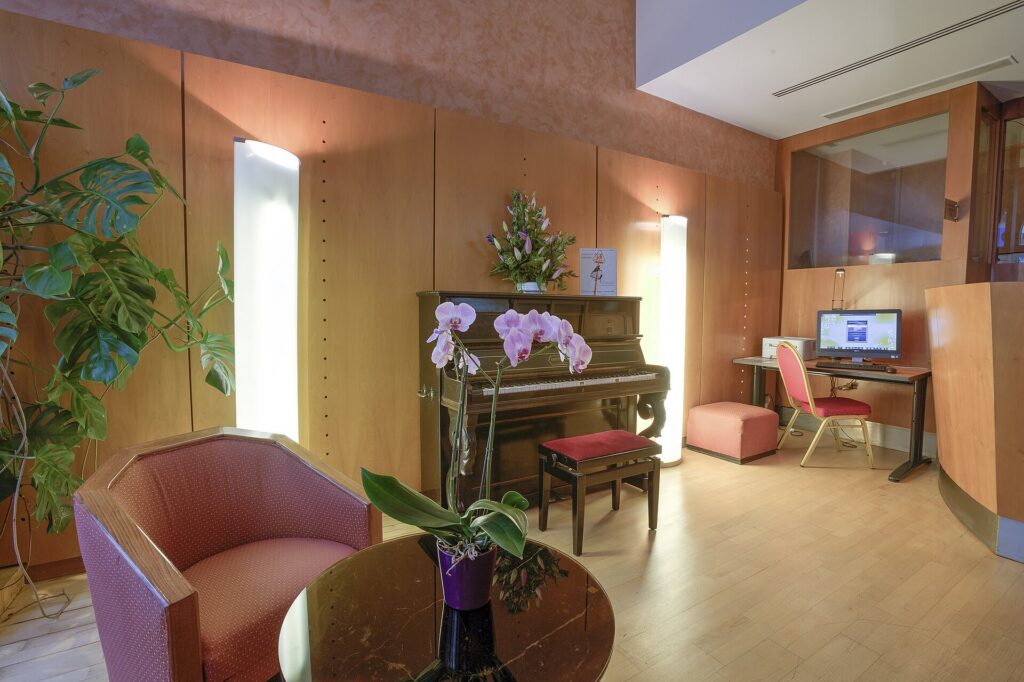
    A hotel lobby with a small business center
    Most business travelers now work from the room, not the business center (Photo: Opera Cadet from PARIS, FRANCE via Wikimedia Commons, CC BY-SA 2.0)

    The work essentials, and how to check them before you book

    Wi-Fi

    Almost every hotel advertises free Wi-Fi. What varies is whether it can handle a video call from your room at 9 a.m. when half the building is doing the same. The listing will not tell you; recent guest reviews will. Search the reviews for “Wi-Fi”, “internet” and “video call”, and weight comments from the last few months most heavily. Some hotels offer a faster paid tier or a faster tier for loyalty members. If a call or presentation matters, bring a backup: your phone’s hotspot, a travel eSIM with data, or a portable router. Public Wi-Fi, including hotel networks, should be treated as untrusted; use your company’s VPN, keep devices updated, and follow the guidance from the Canadian Centre for Cyber Security on connecting safely away from the office.

    The desk and the chair

    Room photos show whether there is a desk. They do not show whether it is a proper work surface or a narrow shelf beside the television. Look for photos taken by guests, and for rooms described as having a work desk or an ergonomic chair. Some newer select-service hotels have replaced desks with lounge seating and communal work areas; that suits some people and not others. If you need to take calls privately, check that the room, not only the lobby, is a usable work space.

    A quiet room

    Request a room away from the elevators, ice machines, the street side and any rooftop bar or event space, and on a higher floor. You can add this as a request at booking and repeat it at check-in. Loyalty members are more likely to have requests honored. If the room is noisy, ask to move on the first night rather than enduring it; it is much easier for the front desk to reassign a room before the hotel fills.

    Breakfast, gym and hours

    Check when breakfast opens. A hotel restaurant that starts serving at 7 a.m. is no use for a 7:30 meeting across town. Many select-service hotels offer a grab-and-go option from early morning. If you exercise, check the gym’s hours and equipment in recent photos. A 24-hour gym with two treadmills is different from a proper fitness center.

    Check-in and checkout

    Mobile check-in and digital room keys, now offered by the major chains through their apps, let you go straight to your room after a late arrival. Late checkout is often available on request, especially for elite members, and is invaluable when your flight is in the evening. If you cannot get it, ask the front desk to store your bags and find out whether the gym or lounge has showers you can use before the flight.

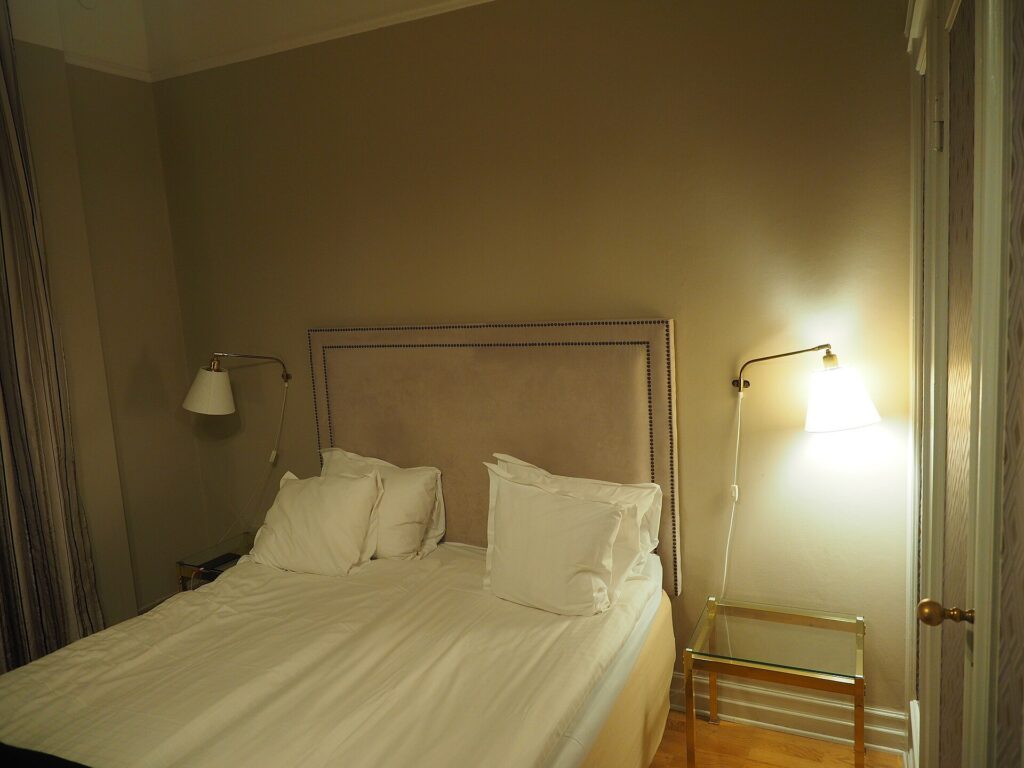
    A neatly made hotel room with a king bed and bedside lamps
    A quiet, dark room with a good bed matters more on a work trip than any lobby (Photo: PattayaPatrol via Wikimedia Commons, CC BY-SA 4.0)

    Types of business hotel, and when each makes sense

    Hotel typeBest forWatch for
    Downtown full-service hotelClient meetings, entertaining, trips with evening eventsHigher rates on weekdays, paid parking, paid breakfast
    Select-service hotelSolo trips with a tight budget cap; practical rooms and included breakfast at many brandsLimited dining, smaller desks at some brands, no room service
    Airport hotelEarly departures, late arrivals, meetings held at the airportIsolation from the city; shuttle schedules; noise on some sides
    Convention or attached hotelMulti-day conferences and trade showsRates rise sharply outside the official block; lines at peak times
    Extended-stay or apartment-hotelProjects of a week or more; relocations; training coursesFewer staff and services; housekeeping may be weekly
    Boutique or independent hotelCharacter, neighborhood locations, shorter tripsVariable Wi-Fi and desks; may not earn chain points or accept corporate rates

    Airport hotels: when they are the right call

    For a 6 a.m. departure, an airport hotel can be the difference between a normal night’s sleep and a 3:30 alarm and a taxi in the dark. They also work for late arrivals, for one-day trips where the meeting is near the airport, and as a fallback when a flight is cancelled. Several major Canadian airports have hotels connected to the terminal: at Toronto Pearson the Sheraton Gateway is linked to Terminal 3, Vancouver International has the Fairmont Vancouver Airport inside the terminal, Montreal-Trudeau has an in-terminal Marriott, and Calgary International has one as well. Elsewhere, airport hotels are usually a short shuttle ride away; check the shuttle’s hours, because some stop overnight or start after the first flights leave.

    Before booking, compare the total trip. An airport hotel plus a quick walk to security may cost less than a downtown hotel plus a pre-dawn taxi, and it buys you sleep. Our airport arrival time guide explains how early you need to be at the airport for different kinds of flight.

    Conferences, trade shows and room blocks

    Large events negotiate a block of rooms at one or more hotels near the venue, at an agreed group rate, and publish a booking link or housing service to attendees. Book inside that block when you can:

    • The block rate is often lower than what the same hotel charges the public during a big event, and it sometimes includes Wi-Fi or other extras.
    • The block has a cut-off date, usually weeks before the event, after which unsold rooms return to general inventory at regular prices. Book early.
    • Organizers rely on the block. Events often commit to filling a certain number of rooms, and attendees booking inside the block help keep registration prices and future venues viable.
    • Beware of unofficial housing offers. Exhibitors and attendees at large events are sometimes contacted by companies claiming to be the official housing provider. Book only through the link on the event’s own website or in the organizer’s official communications, and be suspicious of anyone who calls or emails you offering rooms.

    If the block is full, look at hotels one transit stop away rather than paying peak rates next door, and remember that during a citywide convention, rates across the whole city rise. Canada’s major convention centers, including the Metro Toronto Convention Centre, the Vancouver Convention Centre, the Palais des congrès de MontrĂ©al and the Shaw Centre in Ottawa, all have hotels within walking distance; our neighborhood pages for the Toronto Entertainment District, Old Montreal and the ByWard Market show nearby options.

    The Fairmont Vancouver Airport hotel inside the YVR terminal
    The Fairmont Vancouver Airport sits inside the terminal at YVR, ideal before an early flight (Photo: BriYYZ from Toronto, Canada via Wikimedia Commons, CC BY-SA 2.0)

    Rates, policies and paying for the room

    Corporate and negotiated rates

    Many companies negotiate rates with specific hotels or chains in the cities their staff visit most, often through a travel management company. If your employer has negotiated rates, use them: they are usually flexible, sometimes include breakfast or Wi-Fi, and keep you inside policy. Some chains also offer a general corporate rate to anyone traveling for business; it is not always cheaper than the best public rate, so compare. Government employees and contractors have their own rate programs.

    Per diems and policy caps

    If your employer sets a nightly cap, check it against the destination before you book; a cap that works in a mid-size city may not cover a downtown hotel in a major city during a busy week. Government per diem tables are a useful public benchmark for what lodging reasonably costs in a given place: the US General Services Administration publishes per diem rates by city, and the Government of Canada’s National Joint Council publishes its Travel Directive for public servants. If you have to exceed your policy, document why, such as a citywide event, before you book.

    Flexible rates

    Business plans change: meetings move, projects slip, a client cancels. For most work trips, a flexible rate with free cancellation until a day or two before arrival is worth the small premium over a prepaid rate. Note the deadline and time zone. If your trip is truly fixed and your company accepts the risk, prepaid rates can save money, but a no-show on a non-refundable rate is a cost nobody wants to explain.

    Fees, deposits and receipts

    Compare totals, not nightly rates: taxes, destination or resort fees, parking and paid Wi-Fi can change the ranking. At check-in, hotels usually place a hold on a card for incidentals. If you use a corporate card, make sure it is the card on file for the room and incidentals, and ask the front desk to email you an itemized folio at checkout. Expense teams generally need the folio, not just a credit card slip or a booking confirmation, and in Canada, a business registered for GST/HST may be able to recover the tax paid on accommodation; ask your finance team what documentation they need.

    Loyalty programs: worth it even for occasional travelers

    Joining a hotel chain’s loyalty program is free and pays off even at a few stays a year. Members typically get the best available rates on the chain’s own site, free or faster Wi-Fi at many brands, mobile check-in and digital keys, and a better chance of having room requests honored. Frequent travelers who reach elite status add late checkout, upgrades, lounge access and breakfast at some brands, depending on the program and tier. The largest programs include Marriott Bonvoy, Hilton Honors, World of Hyatt and IHG One Rewards; check each program’s current terms, because benefits change.

    Two practical points. First, if you want points and elite credit, book in a way that the program recognizes: usually directly with the hotel or through your company’s approved channel. Stays booked through some third parties may not earn. Second, do not let points override judgment. A hotel of your preferred chain that adds thirty minutes of commuting each way is not a good trade for the points it earns.

    Extended stays and project work

    For a week or more in one place, the math changes. An extended-stay hotel or apartment-hotel with a kitchen, a proper table and in-room laundry can cost less per night than a standard hotel and makes long trips far more livable. Ask about weekly or monthly rates, which are often not shown in standard searches, and about how often housekeeping comes. For very long stays, check whether your company has a preferred provider, and whether there are tax implications for stays beyond a certain length in the destination.

    Extending a work trip into the weekend

    Downtown hotels that are full of business travelers from Monday to Thursday often drop their rates on Friday and Saturday nights, when the business crowd leaves. That makes adding a weekend to a work trip, with a partner or family joining you, better value than it looks. Check your company’s policy on mixing personal and business travel: usually the employer pays for the business nights and you pay for the rest, and the flight change must not cost the company more. If your family is joining, our guide to booking hotels for family vacations covers room sizes and occupancy.

    Crossing the Canada-US border for work

    Business travel between Canada and the United States is routine, but the entry requirements are not the hotel’s problem, they are yours. Frequent cross-border travelers should look at NEXUS, the joint trusted-traveler program, and US citizens who travel internationally should consider Global Entry. Visa-exempt visitors flying to Canada from countries other than the US generally need an Electronic Travel Authorization. Rules about what counts as permitted business activity differ by country and change over time, so confirm on the official pages before you travel. For hotel advice specific to Canada, see our guide to hotel booking in Canada.

    The Metro Toronto Convention Centre in downtown Toronto
    The Metro Toronto Convention Centre: book inside the official room block before the cut-off (Photo: Raysonho @ Open Grid Scheduler / Grid Engine via Wikimedia Commons, Public domain)

    Safety and security on the road

    • Protect your room number. A good front desk writes it down rather than announcing it. If yours says it aloud in a busy lobby, ask for a different room.
    • Use the door’s secondary lock and check that connecting doors are locked.
    • Use the room safe or keep your laptop with you; do not leave devices unlocked.
    • Treat unexpected calls to your room with caution, especially ones asking you to confirm card details. Go to the front desk in person instead.
    • Know your exits. Take thirty seconds on arrival to find the nearest stairwell.
    • Share your itinerary with your company’s travel team if it has one; many employers have a duty-of-care process that relies on knowing where staff are staying.

    Common mistakes business travelers make

    Booking on price alone

    The cheapest hotel that meets policy can cost more once taxis, parking and lost time are counted. Compare the whole trip.

    Trusting “free Wi-Fi” without checking

    Free and usable are different things. Read recent reviews and bring a backup connection for anything important.

    Missing the conference block

    Booking after the cut-off, or outside the official link, often means paying more for a worse location.

    Forgetting the folio

    Ask for an itemized receipt at checkout, check it for errors before you leave, and file it with your expenses right away.

    A pre-trip checklist

    • Map the commute from each shortlisted hotel at the time you will travel.
    • Read recent reviews for Wi-Fi, noise and the desk.
    • Check breakfast and gym hours against your schedule.
    • Book a flexible rate within policy, under your loyalty number, with the right name and company.
    • For a conference, book through the organizer’s official link before the cut-off date.
    • Add requests: quiet room, high floor, late checkout if needed.
    • Book the flight on our flight search and, if needed, a car on our car rental search.
    • Save the hotel’s direct phone number and the cancellation deadline.

    Frequently asked questions

    What should I look for in a business travel hotel?

    A short, reliable commute to your meetings, a quiet room, Wi-Fi that handles video calls, a real desk, breakfast that opens early enough, flexible cancellation and an itemized receipt.

    Is it better to stay near the airport or downtown for a business trip?

    Downtown if your meetings are there and you have daytime flights. At the airport if you have a very early departure or a late arrival, or if your meeting is near the airport.

    How far ahead should I book a hotel for a work trip?

    As soon as the trip is confirmed, on a flexible rate. For conferences, book inside the official block well before its cut-off date. During citywide events, book as early as you can.

    Are hotel loyalty programs worth joining for occasional business travel?

    Yes. They are free, member rates are often the best available on the chain’s site, and members typically get better Wi-Fi and are more likely to have requests honored.

    Should I book the conference hotel or somewhere nearby?

    The official block is usually the best value and the most convenient. If it is full or over budget, look one transit stop away rather than paying peak public rates next to the venue.

    What receipt do I need for expenses?

    Usually the hotel’s itemized folio showing each night, taxes and any extras, in your name. Ask for it at checkout and check it before you leave.

    Why are downtown hotels cheaper on weekends?

    Because their weekday guests are business travelers who go home on Friday. With fewer guests on Friday and Saturday nights, many downtown hotels lower their rates.

    Ready to book your next work trip? Compare downtown, airport and convention-area options on our hotel search, find the right flight on our flight search, and price a rental on our car rental search. Headed to Canada’s biggest business city? Start with hotels in Toronto, and see our tips on finding the best hotel deals online and last-minute hotel booking for trips that come up at short notice.