An airplane cabin is a loud place to spend a few hours. Engines and air-conditioning produce a steady low roar, and on top of that come galley carts, announcements, conversations and the occasional crying baby. You stop noticing it after a while, but it keeps wearing on you, and it is a big part of why a long flight leaves you more tired than a day of sitting still should. Good noise-cancelling headphones take much of that edge off. They make movies and podcasts easier to hear at lower volume, they make sleep more likely, and they make it possible to read or work without your brain filtering noise the whole time. This guide explains how noise cancelling works, which features matter on a plane and which are marketing, over-ear versus earbuds, how to connect to seatback entertainment, the airline and battery rules that apply, and the models from our original list with who each one suits. It is part of our travel gear series, which starts with our main guide to choosing travel luggage.
The short answer
For most flyers, the best choice is a pair of over-ear headphones with active noise cancelling (ANC) that fold into a protective case, can be used with a cable for seatback screens, and have a battery that comfortably outlasts your longest flight plus the journey either side. Comfort matters more than a small difference in noise-cancelling strength, because you will wear these for hours: look for soft, deep ear cushions and moderate clamping force. If you hate the bulk, noise-cancelling earbuds with a good seal are the lighter alternative, at the cost of some low-frequency quiet and a harder time with wired seatback systems. Whatever you choose, pack a 3.5 mm cable and a two-prong airline adapter if your headphones support wired use, charge them before you leave home, and check what your airline allows during takeoff, landing and the safety briefing.
How noise cancelling actually works
There are two kinds of quiet at work in a good pair of travel headphones, and understanding them helps you choose.
Passive isolation
Passive isolation is simply blocking sound physically. Thick, well-sealed ear cushions on over-ear headphones, or snug tips on earbuds, stop a lot of higher-pitched sound such as voices, clinking cutlery and the rattle of a trolley. It needs no battery and it works even when the headphones are switched off. The quality of the seal matters a great deal: glasses arms, long hair or a poor fit can break the seal and let noise in.
Active noise cancelling
Active noise cancelling uses small microphones to listen to the noise around you and produces an opposing sound wave that cancels much of it before it reaches your ear. It is most effective against steady, low-frequency noise, which is exactly what engine and air-system noise is. It is less effective against sudden or irregular sounds, like a nearby conversation or a call button chime. That is why the best travel headphones combine both: ANC for the low drone and a good passive seal for everything else.
Hybrid ANC
“Hybrid” ANC means the headphones use microphones on both the outside and the inside of the ear cup, which generally lets them cancel a wider range of noise than systems with outside microphones only. Many mid-priced and premium headphones use this approach, and it is a reasonable feature to look for, though real-world results depend on the whole design, not one label.
Transparency or ambient modes
Most noise-cancelling headphones also offer a mode that deliberately lets outside sound in through the microphones, variously called transparency, ambient or aware mode. On a plane, it is useful for hearing a crew member’s question or a boarding announcement without taking the headphones off. Some models can switch into it automatically when you start speaking.
What matters on a plane
Comfort over hours
This is the most underrated factor. A pair that sounds wonderful in a shop can become painful after three hours if the headband presses on the top of your head, the ear cups press on your glasses, or the cushions trap heat. Look for deep, soft cushions that surround your ears rather than sitting on them, a padded headband and moderate clamping force. If you wear glasses, try them on with your glasses. If you plan to sleep in them, consider how they feel when you lean your head against a window or a neck pillow: flatter, smaller ear cups are easier to rest against.
Noise-cancelling strength
Premium models from long-established audio brands generally lead on noise cancelling, and budget models have improved a lot. The difference between a good budget pair and a premium pair is most noticeable on long-haul flights and in the loudest seats, which tend to be further back near the engines. If you fly long-haul often, the premium end is easier to justify. For occasional short flights, a well-reviewed budget hybrid-ANC pair can be plenty.
Battery life and charging
Your headphones need to last the whole journey, not just the flight: the train to the airport, the wait at the gate, a delay, a connection and the ride to your hotel. Look at the maker’s figure for battery life with ANC switched on, which is usually lower than the headline figure, and aim for a comfortable margin over your longest door-to-door trip. Quick charging, where a short charge gives a few hours of use, is useful when you realize at the gate that you forgot. A USB-C port lets the headphones share a charger and cable with your phone and laptop, which is one fewer thing to pack.
Wired use
Many seatback entertainment systems still need a wire. Headphones with a 3.5 mm input and a supplied cable can plug straight into the seat, and many keep noise cancelling working while wired as long as they are switched on. Some also play passively when the battery is flat, without ANC, which is a useful fallback. Check this before you buy if you watch a lot of in-flight movies.
Folding design and a case
A hard or semi-hard case protects the headband hinges and ear cups from being crushed in a backpack, and keeps the cable and adapter together. Headphones that fold flat or fold inward take up less room. If space is tight, earbuds win easily; our guide to laptop travel accessories covers other small items that are easy to lose in a bag, and why a single pouch helps.
Microphones and calls
If you take calls at airports and in hotel rooms, microphone quality matters. Most noise-cancelling headphones handle calls in quiet places reasonably well; busy terminals are the hard test. On the plane itself, calls are rarely allowed or practical, so this is mainly an airport and destination feature.
Multipoint and app features
Multipoint Bluetooth lets the headphones stay connected to two devices at once, such as a phone and a laptop, which saves re-pairing when you switch. Companion apps can offer an equalizer, adjustable noise cancelling and firmware updates. These are nice extras; they do not make up for poor comfort or weak battery life.
Over-ear, on-ear or earbuds?
Each style has a place. This table sums up the trade-offs for flying.
| Style | Noise reduction | Comfort on long flights | Packing | Best for |
|---|---|---|---|---|
| Over-ear ANC headphones | Usually the strongest, especially for low engine noise | Very good if cushions are deep and soft; can feel warm | Bulky; needs a case | Long-haul flights, frequent flyers, watching movies |
| On-ear ANC headphones | Moderate; passive seal is weaker | Can press on ears after a few hours | Smaller than over-ear | Short flights, people who dislike covering the whole ear |
| ANC earbuds | Good, depends heavily on tip fit | Good for side sleepers; can tire ear canals | Pocket size | Light packers, side sleepers, travelers with small bags |
| Wired earbuds or basic headphones | Passive only | Varies | Tiny | Backup pair, children, seatback screens only |
Many frequent flyers carry over-ear headphones for the flight and a small pair of earbuds as a backup and for the gym or the street at their destination. If you only want one, choose based on how you sleep on planes: if you rest your head sideways, earbuds and a good neck pillow are usually more comfortable than bulky ear cups.
Connecting to seatback entertainment
This catches out many travelers with new wireless headphones.
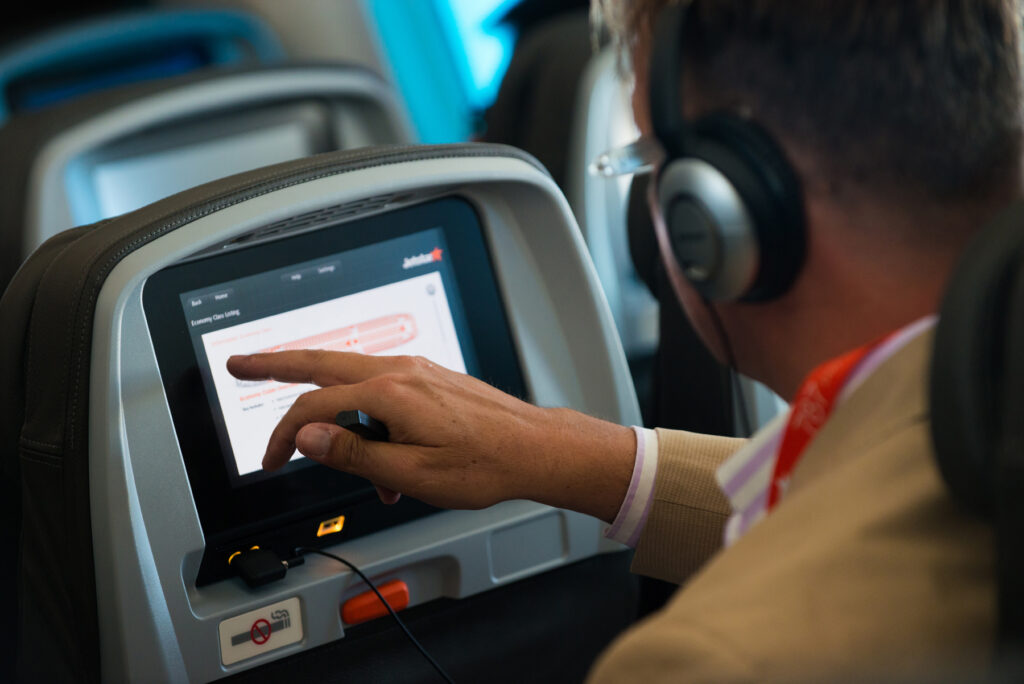
- Most seatback screens use a wired jack. Some are standard 3.5 mm sockets; older aircraft may use a two-prong socket, which needs a small airline adapter. Some headphones include one, and they are inexpensive to buy.
- Some newer systems support Bluetooth pairing. It depends on the airline and the aircraft, so you cannot count on it. If it is available, it will be explained on the seatback screen.
- Bluetooth transmitters are small battery-powered dongles that plug into the seat jack and send the audio to wireless headphones. They are handy if your headphones have no cable input, but they are another thing to charge.
- Check the wired-mode behavior. Some headphones keep noise cancelling working while wired only if they are switched on, and some play without power at all. Know which before you board.
- Bring your own cable. Airline-supplied headphones are usually basic, and the seat jack only helps if you have a cable to plug in.
Airline rules and etiquette
Rules on using headphones and wireless devices on board vary by airline and country, and they change. We will not quote specific policies here, because they go out of date. The principles are stable:
- Crew instructions always come first. Some airlines ask passengers to remove headphones, or at least one ear, during the safety briefing, taxi, takeoff and landing, so that you can hear instructions in an emergency. Do so when asked.
- Airplane mode is expected. Phones and tablets are generally used in airplane mode or with the cellular connection switched off. Whether you can use Bluetooth accessories, and when, is the airline’s decision. The FAA explained when it expanded device use that policies would vary by airline, and that passengers should check with their airline.
- Use transparency mode or remove a cup to talk to crew. It is quicker and more polite than asking someone to repeat themselves.
- Keep the volume sensible. Sound leaks from open or poorly sealed headphones, and a neighbor trying to sleep will notice. A side benefit of noise cancelling is that you can listen at lower volume, which is kinder to your ears too.
- Tell the person next to you if you plan to sleep. If you are in the window seat with headphones on, a small note on the seatback or a quick word before you nod off saves an awkward shoulder tap when they need to get out.
Batteries and security screening
Headphones and earbuds contain small lithium-ion batteries built into the device. As principles:
- Headphones and earbuds are generally fine in carry-on bags, and it is sensible to keep them there anyway so they are not crushed or lost.
- Spare lithium batteries and power banks must travel in the cabin, not in checked baggage, and should be protected from short circuits. If you carry a power bank to top up headphones, it goes in your carry-on.
- Check the official guidance before flying: the FAA’s PackSafe lithium battery page, the TSA’s What Can I Bring? tool and CATSA’s guidelines for batteries in Canada. Airlines can add their own rules.
- At security, large electronics may need to come out of your bag depending on the airport and the screening lane. Headphones in a case can usually stay in the bag, but follow the officer’s instructions.
To keep the number of chargers down, a multi-device charger is worth considering; our guide to 3-in-1 Apple chargers covers one approach.
Headphones from our original list
The headphones below were featured in the original version of this guide. They cover a range of budgets and styles rather than a strict ranking. Models are updated and replaced often, and prices change constantly, so check the current specifications and battery figures from the maker before you buy. Where we have linked to a maker’s page, the details mentioned come from that page.
Soundcore Life Q20
The Soundcore Life Q20 from Anker’s audio brand is a budget over-ear pair with hybrid active noise cancelling. Soundcore describes memory foam ear cups and says the headphones target low- and mid-frequency noise such as airplane engines, and the product page lists AUX wired use. It suits travelers who fly a few times a year and want real noise cancelling without spending much. Budget ANC is not as strong as the premium end, but it is a large step up from basic earbuds.
Soundcore Life Q30 and Soundcore Q20i
Two more Soundcore models appeared on the original list. The Life Q30 sits above the Q20 in the range and was featured for its multiple noise-cancelling modes and app-based sound customization. The Q20i is another budget hybrid-ANC model with app support. Both suit value-minded travelers. Soundcore’s lineup changes often, so compare the current models on the maker’s site before you buy.
TOZO HT2
The TOZO HT2 was featured as a budget over-ear pair with hybrid noise cancelling and app-based sound adjustment. It suits travelers who want long battery life and a basic app at a low price. As with any budget pair, check the current listing for the battery figure with ANC on and whether a cable is included for seatback screens.
INFURTURE active noise cancelling headphones
The original list included a pair of INFURTURE over-ear ANC headphones, featured in a rose gold finish. They are a budget option for travelers who care about looks as well as function. With lesser-known brands, pay particular attention to the seller’s return policy and read the listing carefully for battery and wired-use details.
Beats Studio Pro
The Beats Studio Pro is an over-ear pair with fully adaptive active noise cancelling and a transparency mode. Beats describes a foldable design with a carrying case, lossless audio over USB-C, and a 3.5 mm analog input for wired sources and in-flight entertainment. It suits travelers in the Apple ecosystem who want quick pairing, and also works with Android. Beats lists separate battery figures for ANC on and off, so look at the lower one when planning a long flight.
Beats Studio3 Wireless
The Studio3 was on the original list as an earlier Beats noise-cancelling model. Beats’ website now sends visitors looking for the Studio3 to the Studio Pro, a sign that the older model has been superseded. If you find a Studio3 as remaining stock or refurbished at a good price, it can still be a reasonable choice, but compare it with the Studio Pro first.
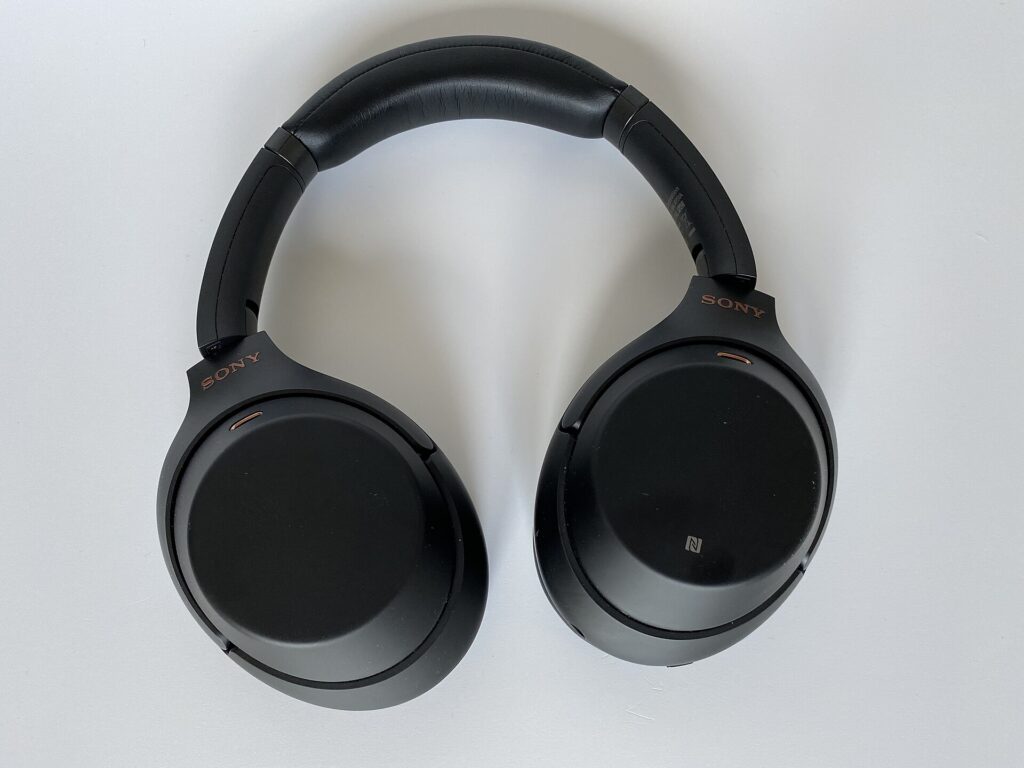
Sony WH-1000XM4
Sony’s WH-1000XM4 has been a popular choice among frequent flyers for years. Sony’s help guide for the XM4 explains using the supplied headphone cable on an airplane, where noise cancelling keeps working while the headset is switched on, and mentions a supplied plug adaptor for in-flight use. It also supports Speak-to-Chat, which pauses playback when you start talking. Sony has released newer models since, so the XM4 is often found at lower prices; compare it with the current generation before deciding.
Bose QuietComfort Headphones and QuietComfort Ultra Headphones
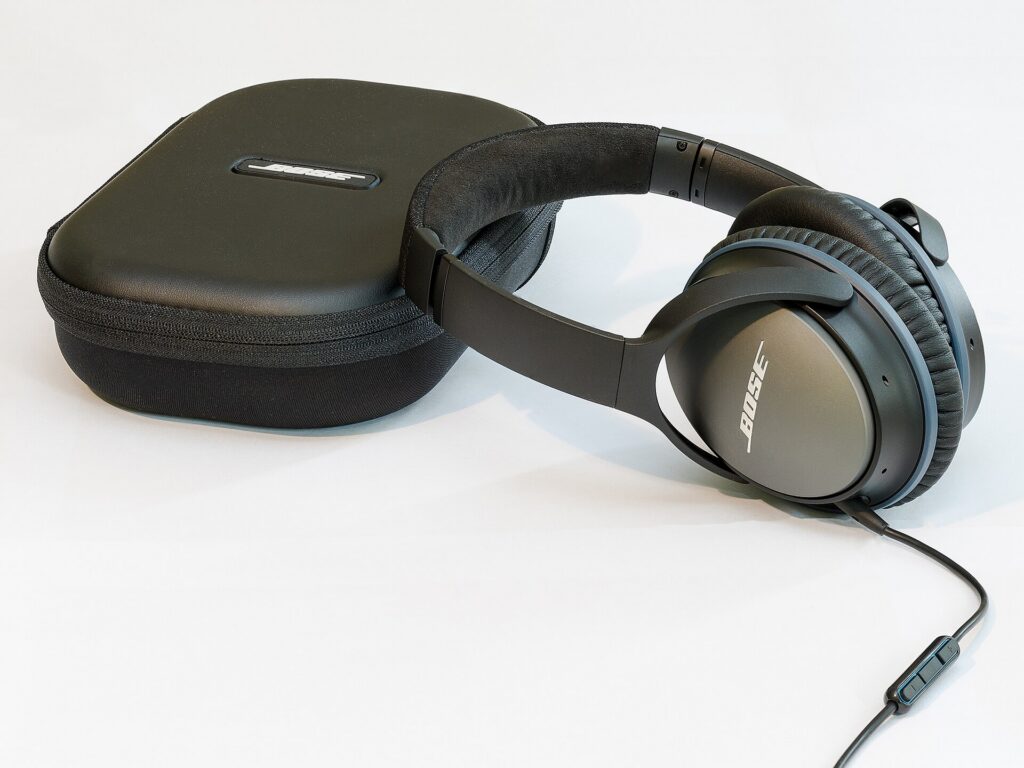
Bose has made noise-cancelling headphones for travelers for a long time, and two of its models were on the original list. The QuietComfort Headphones are the more affordable of the two. The QuietComfort Ultra Headphones are Bose’s premium over-ear model, which Bose describes with an Aware mode for hearing your surroundings and Bose Immersive Audio for spatialized sound. Bose announced a second-generation QuietComfort Ultra in 2025, so check which version you are buying. These suit frequent long-haul flyers who put noise cancelling and comfort first.
How to choose between them
- Occasional flyer on a budget: a Soundcore or TOZO hybrid-ANC pair, as long as it has a cable input for seatback screens.
- Apple user who wants seamless pairing: Beats Studio Pro.
- Frequent long-haul flyer: a premium Sony or Bose model, chosen for the fit that feels best on your head.
- Value in a premium model: the previous generation of a premium pair, such as the Sony WH-1000XM4, when it is discounted after a newer model arrives.
Getting the most from your headphones on a flight
- Charge fully the night before, and top up at the gate if there is an outlet.
- Download content before you leave. In-flight Wi-Fi can be slow, expensive or unavailable, and streaming apps often let you download for offline use.
- Keep the case, cable and adapter together in your personal item, not the overhead bin, so you can reach them without standing up.
- Switch ANC on at the gate. Airports are loud too, and starting the journey calm helps.
- Take short breaks. On a long flight, give your ears and head a rest every couple of hours, which also reminds you to stand up and stretch.
- Use a sleep playlist or white noise if you want to sleep. Silence plus ANC can feel odd at first; a quiet steady sound helps many people drift off. Our guide to sleeping on flights covers routines, light and seat choice.
- Keep one ear free on the ground in busy streets and stations at your destination. Transparency mode helps, but staying aware of traffic and your bag matters more.
Choosing a seat for a quieter flight
Headphones do most of the work, but where you sit helps too. Seats toward the front of the cabin are generally quieter than seats near the engines or behind the wing on many aircraft, and seats close to galleys and lavatories see more foot traffic, conversation and door noise. Bulkhead rows are often near bassinet positions, which some travelers prefer to avoid if they want to sleep. When you compare flights, look at the aircraft type as well as the time and price, and use the airline’s seat map when you select a seat. If a quiet flight really matters to you, our guide to the difference between first class and business class explains what premium cabins add beyond the seat.
Headphones for other parts of the trip
Noise-cancelling headphones earn their keep beyond the plane. On trains and buses, they cut the rumble of the track and road. In hotel rooms near elevators, busy streets or nightlife, they can make it possible to sleep, although soft foam earplugs are more comfortable for side sleepers. In coworking spaces and cafés, they help you focus on work; our guide to travel keyboards covers the rest of a portable work setup. If you are choosing a room for a work trip, our business travel hotels guide explains how to find a quieter room.
Care, storage and hygiene
- Store them in the case whenever they are not on your head. Crushed headbands and snapped hinges are the most common travel failures.
- Wipe the ear cushions with a slightly damp cloth after long flights and let them dry fully. Avoid soaking them or using harsh cleaners that can crack synthetic leather.
- Replace worn cushions. Many premium headphones sell replacement ear pads, which restore comfort and passive isolation for a fraction of the cost of a new pair.
- Keep the battery healthy by charging it every few weeks if the headphones sit unused between trips.
- Update firmware through the companion app before a big trip, not at the gate.
- Label the case or add a luggage tag. Headphones are among the items most often left behind in seat pockets.
Common mistakes
- Buying on noise cancelling alone. The quietest pair is no good if it hurts after two hours.
- Forgetting the cable. Without it, many seatback screens are useless to you.
- Trusting the headline battery figure. Look at the figure with ANC on, and plan for delays.
- Packing headphones in checked luggage. They can be crushed or lost, and you will not have them on the flight.
- Ignoring crew requests. When asked to remove headphones, do it promptly.
- Turning the volume up to drown out the engines. Let the noise cancelling do the work and keep the volume moderate.
Frequently asked questions
Can I use Bluetooth headphones on a plane?
Usually yes, with your phone or tablet in airplane mode and Bluetooth switched back on, but it is up to the airline, and crew instructions come first. Some airlines ask passengers to remove headphones during the safety briefing, takeoff and landing.
Will wireless headphones work with the seatback screen?
Only if the headphones have a cable input, the seat supports Bluetooth pairing, or you use a Bluetooth transmitter plugged into the seat jack. Most seatback systems still expect a wire.
Are noise-cancelling earbuds as good as over-ear headphones on a plane?
Good earbuds with a snug seal work well, but over-ear headphones usually cut more low engine noise. Earbuds are lighter, smaller and better for sleeping on your side.
Do noise-cancelling headphones block voices and crying babies?
Partly. Active noise cancelling works best on steady low sounds like engines. Voices and sudden sounds are reduced mainly by the passive seal, so fit matters, and some sound always gets through.
How much battery life do I need?
Enough for your longest door-to-door journey with noise cancelling switched on, plus a margin for delays. Check the maker’s figure for ANC-on use, which is lower than the headline number.
Can I bring headphones and a power bank in my carry-on?
Headphones are generally fine in carry-on bags. Power banks and spare lithium batteries must travel in the cabin, not in checked luggage. Check the FAA, TSA or CATSA guidance and your airline’s rules before flying.
What is the two-prong adapter for?
Some older aircraft use a two-prong audio socket. A small adapter lets you plug a standard 3.5 mm headphone cable into it. Some headphones include one, and they are inexpensive to buy separately.
Can I sleep in over-ear headphones?
Many people do, especially sitting upright or leaning back. If you rest your head on the side, the ear cups can press uncomfortably; earbuds or soft earplugs with a neck pillow may be better.
With the cabin noise handled, the rest is choosing the flight. Compare fares, aircraft and schedules on our flight search, find a quiet room on our hotel search, and if your trip continues by road, check our car rental search. Planning a long-haul trip to try your new headphones? Flights to London and our guide to things to do in London are a good place to start.
Keep planning with TicketScanner
- Top travel luggage bags: the buying guide — the travel gear guide
- Neck pillows for flying
- Compression socks for long flights
- Bags and cases for travel pillows
- How to sleep on a flight
- 3-in-1 Apple chargers for travel
- Travel keyboards for working on the road
- Laptop travel accessories
- Search flights — compare fares, schedules and aircraft
- Things to do in London