Tag: Detroit

  • Detroit: Should You Rent a Car or Rely on Public Transit?

    Detroit: Should You Rent a Car or Rely on Public Transit?

    Detroit is the Motor City, and it was built around the car in a way few places on earth can match: the freeways were cut through the city in the 1950s and 1960s, the streetcars were torn out, and the region spread for miles in every direction along wide avenues and mile roads. So it will not surprise you that for many visitors the honest answer to “should I rent a car?” is yes. But the picture has changed. Downtown, Midtown and the riverfront have become dense, walkable districts again, the QLine streetcar runs up Woodward Avenue, the elevated People Mover circles downtown, a bike-share system covers the core, and ride-hail is cheap and quick for short hops. Parking downtown can be expensive on game days, and a rental sitting in a hotel garage for a three-day city break is money wasted. The right answer depends on where you stay and what you plan to see. This guide explains how the region is laid out, how the transit works, what driving here is really like, what to know about driving into Canada, and gives you a straightforward way to decide.

    The short answer

    Rent a car if The Henry Ford in Dearborn, the suburbs, the Detroit Zoo, Ann Arbor, Cranbrook or a road trip to Toronto, Chicago or northern Michigan are on the itinerary, if you are staying with family or in a suburban hotel, or if you are traveling with small children and gear. That is a lot of visitors. Skip the car if you are staying downtown or in Midtown for a city break, a convention, a concert or a game, and your plans are the riverfront, the DIA, the Motown Museum, Eastern Market, Corktown and the stadiums; walking, the QLine, the People Mover, MoGo bikes and the occasional ride-hail will cover that, and you will not pay for parking. And if you need a car for only part of the trip, rent it only for those days, picking up in the city rather than at the airport. Compare rental rates for any of these plans on our Detroit car rental page.

    How Detroit is laid out

    Detroit is a wheel laid over a grid. Downtown sits on the north bank of the Detroit River, with the great avenues radiating from it like spokes: Woodward Avenue, the main street of the region, runs north through Midtown and New Center to the suburbs and all the way to Pontiac; Michigan Avenue runs west through Corktown to Dearborn; Gratiot runs northeast and Jefferson follows the river east. Beyond the inner city, the grid takes over, measured by the mile roads that count north from downtown; 8 Mile Road forms much of the city’s northern boundary, and suburbs such as Ferndale, Royal Oak, Southfield and Troy lie beyond it. Dearborn is to the west, the Grosse Pointes to the east along Lake St. Clair, and Windsor, Ontario, is directly across the river to the south. The core that visitors care most about, downtown, Midtown, Corktown and the riverfront, is compact; the region as a whole is enormous, and most of it assumes a car.

    Hotels cluster downtown around Campus Martius and the Renaissance Center, in Midtown and Corktown, in Dearborn, around the airport in Romulus, and along the suburban freeways in Southfield, Troy and Novi. Our Detroit hotel search lets you compare them, and it is worth checking the parking fee on any downtown hotel before you decide on a car.

    Getting in from the airport

    Detroit Metropolitan Wayne County Airport (DTW) is in Romulus, about 32 km (20 miles) southwest of downtown, and there is no rail link. By taxi or ride-hail, the drive along I-94 takes 25 to 40 minutes, longer at the weekday peaks. SMART, the suburban bus agency, runs express buses between the airport and downtown along Michigan Avenue; they cost a fraction of a taxi and take considerably longer, and they are a reasonable option for a solo traveler with light bags who is not in a hurry. The Michigan Flyer coach links the airport with Ann Arbor and East Lansing. Every major rental company serves DTW, with shuttle buses from both terminals to their lots, and if you are heading straight to Dearborn, Ann Arbor or the suburbs, the freeways start at the airport’s doorstep. Check the airport’s site for current ground-transport details; our DTW airport guide covers the terminals.
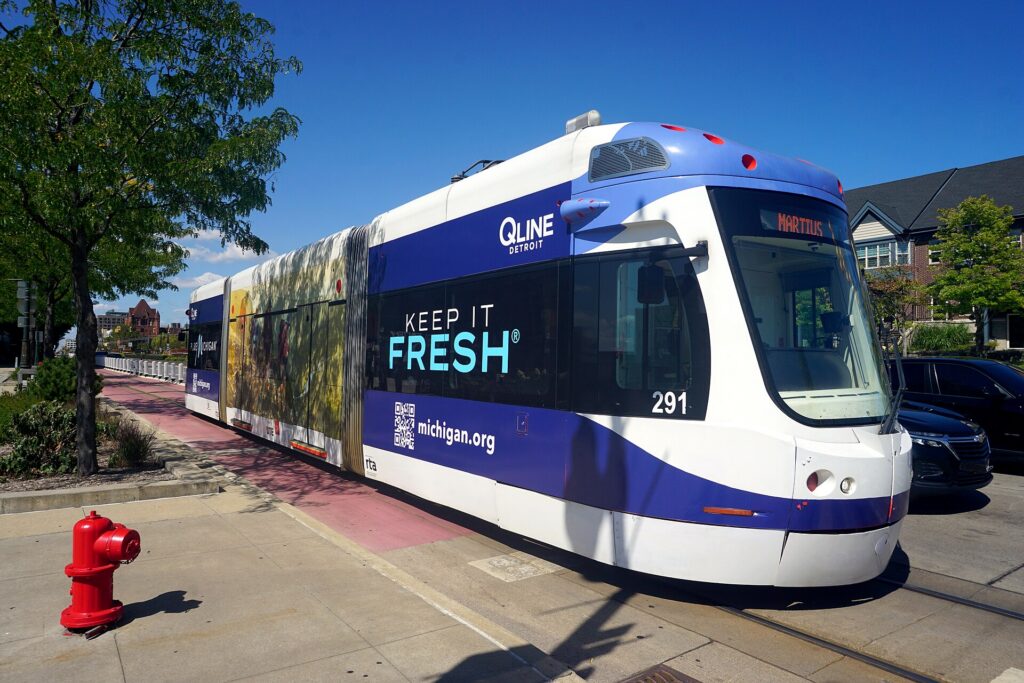
    A QLine streetcar on Woodward Avenue in Detroit
    The QLine on Woodward Avenue, linking downtown, Midtown's museums and New Center (Photo: Michael Barera via Wikimedia Commons, CC BY-SA 4.0)

    Detroit’s transit, explained

    Transit in Detroit is split among several operators: the city’s Department of Transportation (DDOT) runs the buses inside the city, SMART runs the suburban buses, and the QLine and the People Mover serve the core. For a visitor based downtown or in Midtown, the rail pieces are genuinely useful; the bus network works but runs less often than a visitor from Chicago or Toronto would expect.

    The QLine

    The QLine is a streetcar that runs about 5 km (3.3 miles) up Woodward Avenue, from Congress Street downtown past Campus Martius, the Fox Theatre, the stadiums, Midtown’s museums and Wayne State University to Grand Boulevard in New Center, where the Fisher Building and the Amtrak station are. It shares the road with traffic, so it is not fast, but it links most of the city’s big sights in a straight line, and it runs every 15 minutes or so through the day. Rides have been fare-free in recent years; check the current policy before you go.

    The People Mover

    The Detroit People Mover is an automated elevated train that runs a one-way loop of about 4.7 km (2.9 miles) around downtown, with 13 stations, including the Renaissance Center, Huntington Place, Greektown, Grand Circus Park and the stops nearest the stadiums. A full loop takes about 15 minutes. It is a handy way to hop around downtown, especially in bad weather, and the ride above the streets, with views of the river and the Art Deco towers, is a sightseeing trip in itself. Fares have been nominal or waived in recent years; check before you ride.

    Buses

    DDOT’s buses cover the city along the main avenues, with the Woodward, Gratiot, Michigan and Jefferson routes the most useful for visitors, and SMART’s buses run out along the same spokes into the suburbs. Frequencies vary widely by route and time of day, service thins in the evenings and on weekends, and on some routes you may wait 20 minutes or more. Real-time arrival apps help a great deal.

    Fares and tickets

    DDOT and SMART share a regional fare system called Dart, with passes for a few hours, a day, a week or a month that work on both agencies’ buses. The simplest option for a visitor is to buy passes in the Dart app on your phone; you can also pay cash on board, usually with exact change. Reduced fares are available for children, seniors and riders with disabilities. Check the agencies’ sites for current fares.

    Accessibility

    DDOT and SMART buses are low-floor with ramps, the QLine’s stations are level with the streetcar floor, and the People Mover’s stations have elevators, though an elevator out of service can make a station unusable; check before relying on a particular stop with a wheelchair or a stroller.

    Beyond DDOT and SMART

    • Walking. Downtown, the riverfront, Midtown and Corktown are all walkable, and the RiverWalk and the Dequindre Cut are among the best urban walks in the Midwest. Distances between neighborhoods are longer than they look on a map, though, and some stretches in between are empty.
    • MoGo bikes. Detroit’s bike-share system has pedal bikes and e-bikes at docks across downtown, Midtown, Corktown and the riverfront, and in several inner suburbs. The RiverWalk, the Dequindre Cut and the ride to Belle Isle make it the best way to see the waterfront.
    • Taxis and ride-hail. Ride-hail is quick and relatively inexpensive by big-city standards, and for a group of three or four it can cost less than transit for short trips. Late at night it is the easy way back to your hotel.
    • Amtrak. The Wolverine runs several times a day from Detroit’s New Center station and Dearborn to Ann Arbor and Chicago, and north to Pontiac. Amtrak is a real alternative to driving to Chicago or Ann Arbor.
    • The D2A2 coach. An express coach links downtown Detroit and Ann Arbor, handy for a day trip without a car.
    • To Windsor. Transit Windsor has run a tunnel bus between the two downtowns; check whether it is operating when you travel, and carry the same documents you would need by car. Via Rail trains run from Windsor to Toronto.
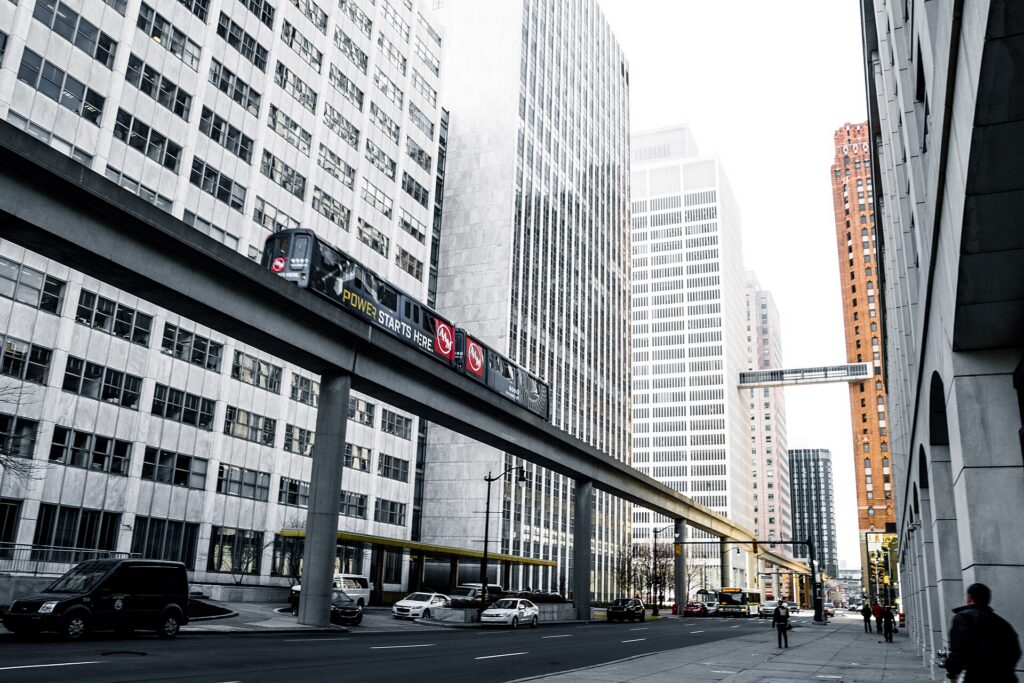
    A Detroit People Mover train on its elevated track downtown
    The People Mover's one-way loop around downtown, a sightseeing ride as much as transport (Photo: Sönke Biehl via Wikimedia Commons, CC BY-SA 2.0)

    Driving in Detroit: what it is really like

    Driving in Detroit is easier than in most big American cities. The freeways are wide and plentiful, traffic is lighter than in Chicago or Toronto outside the peaks, and the grid of mile roads makes navigation simple. The main freeways are I-94, which runs from the airport through the city toward Port Huron; I-75, which runs north-south through downtown toward Toledo and northern Michigan; I-96, heading northwest toward Lansing and Grand Rapids; the Lodge Freeway (M-10), the quick route from downtown to Southfield; and I-696, the crosstown route through the northern suburbs. Rush hours bring slowdowns, especially on I-94, I-75 and I-696, and construction season, from spring to fall, closes lanes and sometimes whole freeway segments on weekends; a project to replace the I-375 spur with a street-level boulevard is reshaping the eastern edge of downtown. The one habit that confuses every visitor is the Michigan left: on many divided boulevards, including stretches of Woodward, left turns are banned at intersections, and you instead drive through, make a U-turn at a marked crossover in the median, and come back to turn right. Watch for the signs and it soon feels natural.
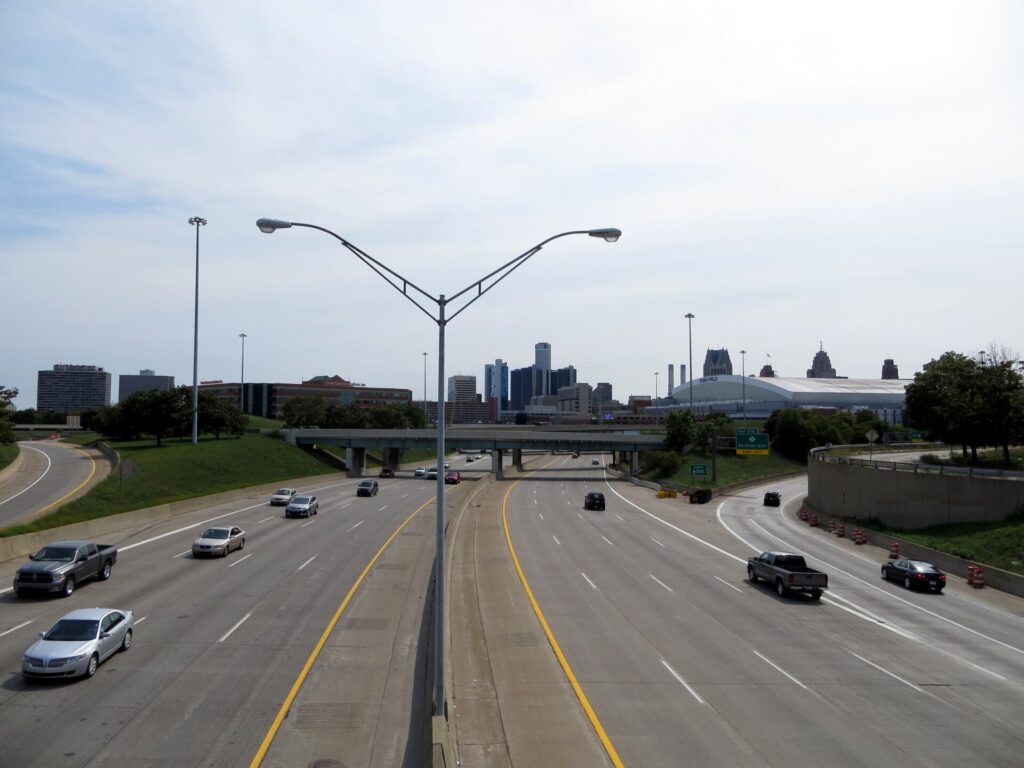
    The Chrysler Freeway (I-75) looking south toward downtown Detroit
    Detroit's freeways are wide and usually flow well outside the rush hours (Photo: Sean_Marshall via Wikimedia Commons, CC BY-SA 2.0)

    Parking

    Parking in Detroit is generally cheaper and easier to find than in Chicago or Toronto, but it has its moments. Downtown has street meters, payable at kiosks or with the ParkDetroit app, and plenty of garages and surface lots; hotels charge a nightly fee, often for valet only. On game, concert and festival days, the lots around Comerica Park, Ford Field, Little Caesars Arena and Hart Plaza raise their prices sharply, and traffic around the District Detroit backs up before and after events. Midtown and Corktown have street parking and small lots, and parking at the suburban hotels, malls and attractions is usually free. Read the signs for rush-hour and street-cleaning restrictions, and in winter look out for snow emergency rules on main streets.

    Rules and conditions worth knowing

    • Tolls. Michigan’s freeways are toll-free. The tolls you are likely to meet are on the crossings to Canada: the Detroit-Windsor Tunnel, the Ambassador Bridge and the other international bridges.
    • Phones. Michigan bans holding or using a phone while driving; hands-free only.
    • Right turns on red are permitted after a full stop unless signed otherwise.
    • Potholes. Michigan’s freeze-thaw winters produce famously bad potholes in late winter and spring. Drive with some caution in the right lane and report damage to the rental company.
    • Winter driving. The freeways are plowed and salted quickly, and rental cars on all-season tires cope with most Detroit winters, but a heavy snowfall or freezing rain can make roads slick for a day. The state’s Department of Transportation has road conditions and closures.
    • Fuel and fees. Airport rentals carry concession fees that city locations avoid, and gas stations are plentiful everywhere except downtown, so fill up in the suburbs before you return the car.

    Driving into Canada

    A rental makes a trip to Windsor, Point Pelee or Toronto easy, but crossing an international border in a rented car comes with a few principles. First, check the rental company’s cross-border policy before you book: most large companies allow their US cars into Canada, some restrict certain vehicle classes, and one-way rentals that end in Canada often carry a steep drop fee. Carry the rental agreement, and ask for proof of insurance that is valid in Canada. Second, everyone in the car needs documents both countries accept: for US citizens, a passport, passport card, NEXUS card or enhanced driver’s license; for everyone else, a passport plus whatever visa or status you need to enter Canada and to re-enter the United States. Third, declare what you carry, including food, alcohol, tobacco and large amounts of cash, and leave cannabis and firearms behind. The authoritative sources are the Canada Border Services Agency for entering Canada and U.S. Customs and Border Protection for returning. Across the river, speed limits and fuel are in kilometers and liters. The tunnel is the quickest route from downtown to downtown Windsor, the Ambassador Bridge connects to Southwest Detroit’s freeways, and the newest crossing, the Gordie Howe International Bridge, built to link I-75 directly to Ontario’s highways, is the natural route toward Toronto; check each crossing’s current status, tolls and wait times before you set off.
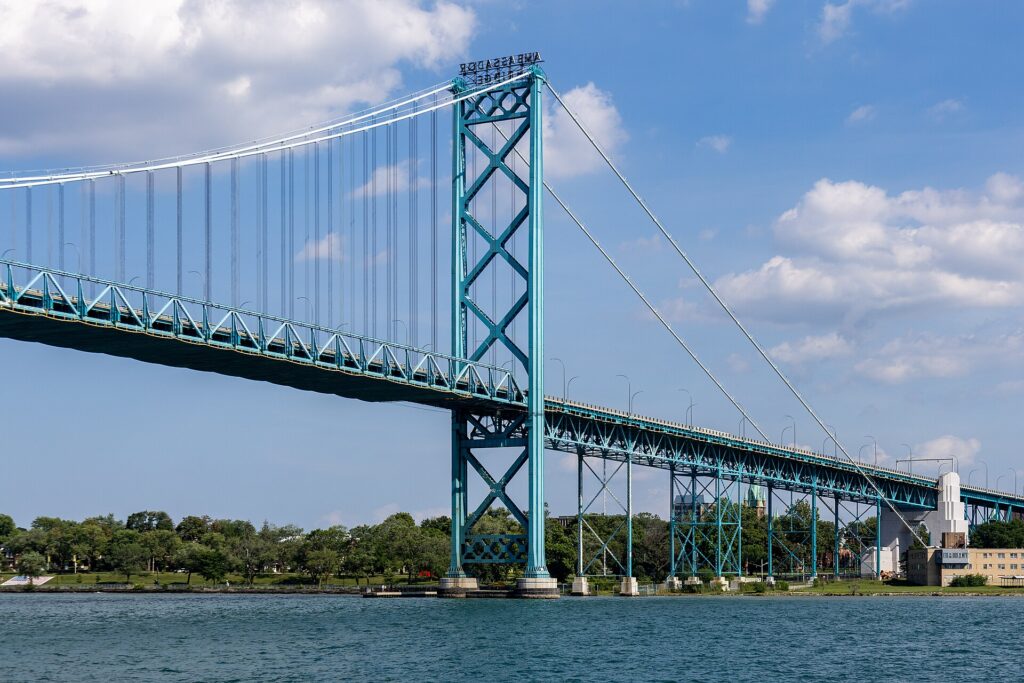
    The Ambassador Bridge over the Detroit River, seen from the Windsor side
    The Ambassador Bridge to Windsor: check your rental's cross-border policy before you cross (Photo: Chris Woodrich via Wikimedia Commons, CC BY-SA 4.0)

    When renting a car makes sense

    • Dearborn and the suburbs. The Henry Ford, the Detroit Zoo, Cranbrook and the suburban restaurants are spread out, and a car makes a day far easier.
    • Road trips. Detroit is the start of classic drives east to Toronto, west to Chicago, or north to the lakes and the Mackinac Bridge; our route guides for Detroit to Toronto and Chicago to Detroit cover the two big city runs.
    • Family visits and suburban hotels. If your base is in Troy, Novi or the Grosse Pointes, a car earns its keep daily.
    • Families with small children and gear, for whom the bus is not practical.
    • Business trips to suburban offices, where the auto companies, suppliers and engineering firms are spread along the freeways.

    If any of those apply, our rental car booking tips cover insurance, deposits and the questions to ask at the counter, and our family car rental guide looks at vehicle choice.

    When it does not

    • You are staying downtown or in Midtown, and your plans are the riverfront, the museums, Motown, Eastern Market and Corktown.
    • You are in town for a game, a concert, a festival or a convention at Huntington Place, when parking prices and traffic are at their worst and the People Mover and QLine go to the door.
    • Your day trips are Ann Arbor or Chicago, both reachable by Amtrak, or Ann Arbor by the D2A2 coach.
    • You are traveling solo or as a couple and would spend more on the rental, fees and hotel parking than on ride-hail and the odd transit pass.

    The hybrid plan for a city-plus-suburbs visit

    Go car-free for the downtown days and rent only for the days you leave the core, and think about where you pick up. Renting at DTW makes sense if you are heading straight to Dearborn, Ann Arbor or a suburban hotel, because the freeways start at the airport and you never touch downtown traffic. For everyone else, it pays to take a taxi or ride-hail downtown, spend the first days without a car, and pick up from a downtown or nearby rental office on the morning you head out; you avoid the airport fees and several nights of hotel parking. If your trip continues to Chicago or Toronto, a one-way rental is a classic itinerary, though one-way fees vary widely, and cross-border one-ways cost more. Book ahead for summer weekends, the Dream Cruise, football weekends and the holidays. Compare day rates on our Detroit car rental page against a full-trip rental and the difference is usually obvious.

    A worked cost comparison

    Numbers change with the season and the booking window, so treat this as a method rather than a quote, and check current rates before deciding. For a three-night city break downtown for two people, the car-free version costs a ride-hail each way from DTW, a handful of short ride-hail trips, perhaps a MoGo day pass and a transit pass; the rental version adds three days of a compact car with airport fees, three nights of hotel parking, fuel and event-day parking, and buys you little you could not reach almost as easily without it. The car-free option wins. For the same three nights plus a day at The Henry Ford, the hybrid version adds a single-day rental picked up downtown, or a pair of ride-hail trips to Dearborn, and both are cheaper than a three-day rental with parking. For a week split between the city, the suburbs and a drive to Toronto or up north, a rental is the practical answer, and the question becomes where to pick it up and whether your rental company allows the car into Canada. Run the rental rates for your dates on our Detroit car rental page and put them beside ride-hail and transit costs before you choose.

    Driving out of Detroit in each season

    The big drives from Detroit each have their own seasonal rhythm. In summer, the northbound I-75 is packed on Friday afternoons as the region heads “up north” to the lakes, cottages and the Mackinac Bridge, and southbound on Sunday evenings; leave early in the morning to avoid it. Border crossings to Canada are busiest on summer weekends and holiday Mondays in both directions. In fall, the drives north to Traverse City and the Leelanau Peninsula, and the color along the rivers, peak in early-to-mid October, and the roads are quieter once school is back. In winter, the freeways are plowed and generally open, but lake-effect snow can hit Ontario’s Highway 401 toward Toronto, west Michigan on the way to Chicago and the northern Lower Peninsula hard, making long drives slow for a few hours at a time; check the forecast and road conditions before you leave, and carry a scraper, a full tank and a warm layer. In spring, the roads are wet and potholed after the freeze-thaw, and construction season begins. The drive to Toronto takes about four hours on Highway 401 plus the border, and the drive to Chicago about four and a half hours on I-94, crossing into Central time, so you gain an hour going west and lose it coming back. Before a Toronto trip, read our Toronto car-versus-transit guide, because you will not want the car downtown there either.

    Decision table

    Your tripRecommendationWhy
    City break downtown or in MidtownNo carWalking, the QLine, the People Mover, MoGo and ride-hail cover it; hotel parking adds up
    Game, concert or festivalNo carThe People Mover and QLine serve the venues; event parking is expensive
    City plus The Henry FordHybrid: one-day rental or ride-hailDearborn is 20 minutes away by car
    Ann Arbor or ChicagoNo car: Amtrak or the D2A2 coachDirect services from Detroit
    Windsor for the dayEither: tunnel by car, or the tunnel bus if it is runningCheck documents and the rental’s cross-border policy
    Family visit to the suburbsRent for the whole staySuburban distances make the car worthwhile daily
    Business trip to suburban officesRent at DTWThe freeways start at the airport; offices are spread out
    Road trip to Toronto, Chicago or up northRent (check cross-border rules for Canada)Detroit is the start, not the destination

    Money-saving tips for both options

    • Without a car: stay downtown or in Midtown near the QLine, use the People Mover and MoGo for short hops, and share ride-hail trips with your group from the airport and between neighborhoods.
    • On a rental: pick up in the city to avoid the airport fees, rent only for the days you leave the core, decline extras you already have through a credit card or home policy (check first), and fill up before you return the car.
    • On the hotel: if you are renting, price the parking fee into the room rate, or stay in Dearborn or the suburbs where parking is usually free.
    • On timing: avoid the freeways at the weekday peaks and the northbound I-75 on summer Fridays, and watch for event weekends, when hotels and parking are at their most expensive; the best time to fly to Detroit guide lists the busiest dates.
    • On day trips: for one or two people, Amtrak or the D2A2 coach to Ann Arbor usually costs less than a day’s rental plus fuel and parking.

    Frequently asked questions

    Do you need a car in Detroit?

    Not for a downtown and Midtown visit, where walking, the QLine, the People Mover and ride-hail cover the main sights. For Dearborn, the suburbs and road trips, a car makes life much easier, so rent for those days.

    Is public transit in Detroit good for tourists?

    For the core, yes: the QLine and the People Mover link most of the big sights. The bus network works but runs less frequently than in Chicago or Toronto, so many visitors combine transit with ride-hail.

    How do I get from DTW to downtown Detroit?

    By taxi or ride-hail in 25 to 40 minutes, or by SMART’s express bus, which is much cheaper and slower. There is no train.

    Is parking expensive in downtown Detroit?

    Usually moderate by big-city standards, but hotel parking adds up over several nights and lots near the stadiums charge much more on game and event days.

    Can I drive a rental car from Detroit into Canada?

    Usually, with most major companies, but check the policy before you book, carry the rental agreement and proof of insurance valid in Canada, and make sure everyone in the car has documents both countries accept.

    Are there tolls around Detroit?

    Not on Michigan’s freeways. You pay tolls only at the international crossings, such as the tunnel and bridges to Canada.

    What is a Michigan left?

    On many divided roads, left turns at intersections are banned; you drive through, make a U-turn at a marked median crossover, and turn right at the intersection instead.

    Whichever way you go, start with the flight. Compare cheap flights to Detroit, choose a neighborhood with our Detroit hotel search, read our first-timer’s guide to Detroit, and if Dearborn, Windsor or a road trip is on the list, price the rental for those dates on our Detroit car rental page.

  • Best Time to Fly to Detroit: Seasons, Weather & Prices

    Best Time to Fly to Detroit: Seasons, Weather & Prices

    Detroit is an easy city to fly to and a surprisingly interesting one to time. Detroit Metropolitan Wayne County Airport (DTW) is one of Delta’s biggest hubs, with nonstop flights from almost every large city in North America and long-haul service to Europe and Asia, and low-cost carriers compete hard on the leisure routes to Florida, the Southwest and the East Coast. That keeps the airfare side of a Detroit trip fairly predictable. What moves the total price is the city’s calendar and its climate: a long, gray winter that makes January and February the cheapest months of the year; a short, sweet summer when the riverfront, Belle Isle and the festivals are at their best; a run of big events, from the auto show in January to the Grand Prix, the Dream Cruise, the Jazz Festival and the marathon, that can fill downtown hotels on particular weekends; and football Saturdays in Ann Arbor and Lions Sundays downtown that ripple through the whole region’s hotel market in the fall. This guide walks through the weather month by month, the fare and hotel seasons, the events that move prices, and how to get into the city from DTW.

    The short answer

    For the best balance of weather and price, go in late May to mid-June, when the parks are green and the patios open before the summer peak, or in September to mid-October, when the weather is often the most settled of the year and the fall color arrives. The cheapest fares and hotel rates come from January to early March, outside the auto show and the holiday weekends, when the city is cold and quiet and the hotels are hungry. The most expensive stretches are big event weekends: Movement and the Grand Prix around the end of May, the Fourth of July and the fireworks, the Woodward Dream Cruise in August, the Jazz Festival on Labor Day weekend, the marathon in October, Thanksgiving and the holiday weeks. Detroit’s summer peak is gentler than in coastal cities, because the region’s own residents head north to the lakes rather than into town. Whatever you choose, run a flexible-date search on our Detroit flights page; a shift of a few days can change the fare band entirely.

    The Detroit RiverWalk at Milliken State Park with downtown Detroit behind
    The Detroit RiverWalk in summer, when the city is at its liveliest and hotel rates at their highest (Photo: Fredlyfish4 via Wikimedia Commons, CC BY-SA 4.0)

    Detroit’s weather, season by season

    Detroit has a humid continental climate shaped by the Great Lakes. Winters are cold, cloudy and snowy, with a handful of Arctic outbreaks most years; spring is short and changeable, with cool, damp weeks and sudden warm spells; summers are warm to hot and humid, with thunderstorms; and fall is crisp and clear, with frost arriving in October. The figures below are approximate seasonal patterns based on the long-term climate normals from NOAA’s National Weather Service office for Detroit; check the current forecast before you pack, because a week in April can bring both snow and summer warmth.

    MonthTypical daytime highTypical overnight lowWhat it feels likeFare pressure
    Januaryaround 0 °C (32 °F)around -7 °C (19 °F)Cold, gray and snowy; the coldest monthLow after New Year’s week; auto show bump
    Februaryaround 2 °C (35 °F)around -6 °C (21 °F)Deep winter, with the odd thawLow
    Marcharound 8 °C (46 °F)around -2 °C (29 °F)Raw and changeable; snow and mild days alternateLow to moderate; spring break
    Aprilaround 15 °C (59 °F)around 4 °C (39 °F)Cool and showery; spring arrives in fitsModerate
    Mayaround 21 °C (70 °F)around 10 °C (50 °F)Green and pleasant; the best of springModerate; high on Memorial Day weekend
    Junearound 27 °C (80 °F)around 16 °C (60 °F)Warm, long days; thunderstormsHigh
    Julyaround 29 °C (84 °F)around 18 °C (64 °F)Hot and humid; the warmest monthHigh
    Augustaround 28 °C (82 °F)around 17 °C (63 °F)Hot and humid, easing late in the monthHigh, softer after mid-month
    Septemberaround 24 °C (75 °F)around 13 °C (55 °F)Warm, drier and often sunnyModerate; high on Labor Day weekend
    Octoberaround 17 °C (62 °F)around 6 °C (43 °F)Crisp and clear; fall colorModerate, with a marathon spike
    Novemberaround 9 °C (48 °F)around 1 °C (34 °F)Gray and cooling fast; first snow possibleLow, then high for Thanksgiving
    Decemberaround 3 °C (37 °F)around -4 °C (25 °F)Cold, cloudy and festive; snow likelyModerate early, then peak for the holidays

    Three things the table cannot show. First, the clouds: the Great Lakes keep Detroit under gray skies for much of November to February, and the lack of sun makes winter feel longer than the thermometer suggests. Second, the cold snaps: a few times most winters, Arctic air drops overnight lows well below -18 °C (0 °F) and the wind chill makes exposed skin a concern; snowfall is usually moderate rather than extreme, since the city sits upwind of the heaviest lake-effect bands, but a single storm can still close roads and delay flights. Third, the summer storms: thunderstorms build on hot afternoons from June to August, sometimes with damaging wind, and they are the main cause of summer delays at DTW.

    How Detroit’s fare seasons work

    Three calendars drive demand for Detroit. The first is the leisure and events calendar, which is concentrated between Memorial Day and mid-October, when the riverfront, the festivals, the ballpark and the big weekends draw visitors from across the Midwest and Ontario. The second is business travel: the auto industry, its suppliers and the engineering firms of the suburbs keep weekday flights and hotels near the airport and along the freeways busy year-round, with a lull at the holidays and in high summer. The third is the hub effect: because DTW is a major Delta connecting hub, there are far more seats into Detroit than the local market alone would support, so fares from other hubs and from Florida and the Sun Belt are often competitive, while routes where Delta faces little competition can be pricier. For most visitors, the hotel is the bigger swing factor, and it swings on event weekends.

    Peak season

    Late May to August, the big event weekends in September and October, and roughly Thanksgiving through New Year’s Day. Summer brings the highest hotel rates of the year downtown, with Memorial Day weekend, the Fourth of July and Dream Cruise weekend at the top; the holidays bring family travel and the big Thanksgiving Day parade and Lions game. If you must travel in peak, book early, fly mid-week and compare hotels across neighborhoods and the suburbs rather than only downtown.

    Shoulder season

    April to mid-May and mid-September to early November. Late spring gives you long days and green parks before the summer surge; fall gives you the most reliable weather and the color. Watch for home football weekends, both the Lions downtown and the University of Michigan in Ann Arbor, which can lift hotel rates across the region on fall weekends.

    Low season

    January to early March, outside New Year’s week, the auto show and the long weekends. Fares and hotel rates are at their lowest, the museums and restaurants are quiet, and the Red Wings and Pistons are in season. The trade-off is cold, gray weather and the chance of a snowstorm; build a buffer into connections.

    As elsewhere, mid-week departures and early or late flights usually price below Friday and Sunday afternoons on the same route, and a search across a whole month reveals cheaper pairs of dates close to your first choice. Our guide to the best times to book explains how to read those patterns.

    Detroit month by month

    January

    The cheapest month of the year to fly and to stay, after the New Year week, and the coldest. The Detroit Auto Show at Huntington Place, one of the oldest in the country, has returned to a winter slot after a few years in September; check its current dates, because it fills downtown hotels while it runs. Otherwise the city is yours: no lines at the DIA, skating at Campus Martius, and Red Wings and Pistons games at Little Caesars Arena.

    February

    Deep winter, with low fares and gray skies, broken by Presidents’ Day weekend and the occasional thaw. An excellent month for a museum, music and food trip if you pack for the cold, and hotel rates downtown are at their softest.

    March

    Raw and changeable, with snow one day and a mild spell the next. Corktown’s St. Patrick’s Day parade, one of the oldest in the Midwest, fills Michigan Avenue on the Sunday before the holiday, and college spring breaks lift fares in the middle of the month. The first half of March is still one of the cheapest windows of the year.

    April

    Spring arrives unevenly. The Tigers open their season at Comerica Park, in weather that can include snow flurries, and Opening Day is an unofficial city holiday. Fares are moderate, and graduation weekends at the region’s universities begin to fill hotels in Ann Arbor and the suburbs late in the month.

    May

    Green and pleasant, and the start of the busy season. Movement, the electronic music festival in Hart Plaza, takes over Memorial Day weekend and draws fans from around the world to the birthplace of techno, and the Detroit Grand Prix brings IndyCar racing to downtown streets around the end of the month or the start of June. Book around those weekends and May is a lovely time to visit.

    June

    Long days and warm weather. The riverfront and Belle Isle are at their best, the patios fill, and in late June the fireworks over the Detroit River, a joint celebration of Canada Day and the Fourth of July watched from both shores, draw enormous crowds downtown. Fares and hotel rates climb through the month; early June is the value play.

    July

    Peak summer: hot, humid and busy, with the Fourth of July, the free Concert of Colors world music festival in Midtown, Tigers games, and the beaches on Belle Isle and at Metroparks around the region. Many locals head “up north” to the lakes, which keeps city hotel rates below those of coastal cities in the same weeks.

    August

    The Woodward Dream Cruise, on the third Saturday of the month, is billed as the world’s largest one-day automotive event, with classic cars and huge crowds along Woodward Avenue through the northern suburbs, and hotels along the route fill for the weekend. The rest of the month is hot and summery, with slightly softer prices once schools start late in the month.

    September

    One of the best months to visit: warm, drier and settled. Labor Day weekend brings the free Detroit Jazz Festival downtown and Arts, Beats and Eats in Royal Oak, and the month continues with design events, since Detroit is a UNESCO City of Design, and the start of football season, with the Lions at Ford Field and Michigan in Ann Arbor. Outside the big weekends, it is excellent value.

    October

    Crisp and clear, with fall color on Belle Isle and in the parks and orchards around the region. The Detroit Free Press Marathon, in mid-October, is one of the few international marathons in the world, crossing the Ambassador Bridge into Canada and returning through the tunnel, and that weekend is busy downtown. The rest of the month is quiet and good value.

    November

    Gray and cooling, with the first snow possible late in the month. The first half is quiet and cheap. America’s Thanksgiving Parade marches down Woodward on Thanksgiving morning, the Lions play their traditional home game that afternoon, and the holiday tree goes up at Campus Martius; Thanksgiving week brings a sharp spike in fares as the whole country travels.

    December

    Two months in one. The first half is festive and moderately priced, with the rink and markets downtown and Noel Night, when Midtown’s museums and shops open their doors for an evening of music and lights in early December. From about the middle of the month, fares rise sharply for Christmas and New Year.

    Skaters on the ice rink at Campus Martius Park in downtown Detroit in winter
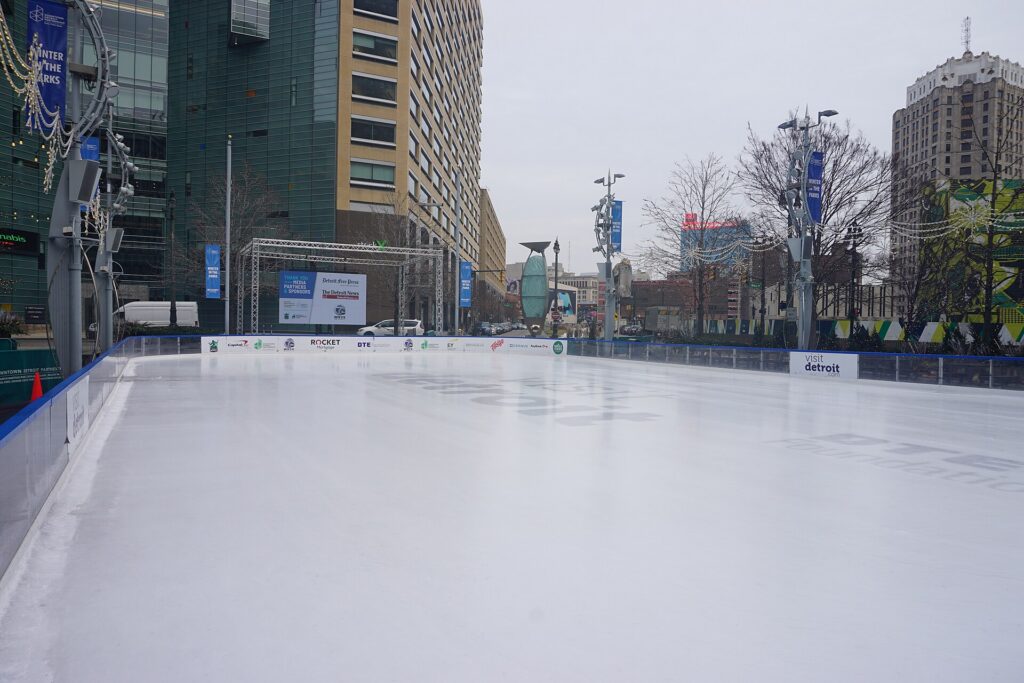
    Skating at Campus Martius: Detroit in winter is cold, gray and the cheapest time of year to visit (Photo: Michael Barera via Wikimedia Commons, CC BY-SA 4.0)

    Events that move Detroit flight and hotel prices

    Cross-check these against your dates before you book. Exact dates shift each year; Visit Detroit, the official tourism site, keeps the current calendar.

    • Detroit Auto Show (winter, at Huntington Place; check the current dates).
    • University graduations (late April and early May), which fill hotels in Ann Arbor and the suburbs.
    • Movement (Memorial Day weekend) and the Detroit Grand Prix (around the end of May or the start of June).
    • River fireworks (late June) and the Fourth of July.
    • Woodward Dream Cruise (the third Saturday of August).
    • Detroit Jazz Festival and Arts, Beats and Eats (Labor Day weekend).
    • Football weekends: the Lions at Ford Field and Michigan home games in Ann Arbor, from September.
    • Detroit Free Press Marathon (mid-October).
    • Thanksgiving, with the parade and the Lions game, through New Year’s Day.
    • Home games and concerts: Tigers from April to September, Red Wings and Pistons from October. Our Detroit events page shows what is on sale for your dates.

    Getting in from the airport

    Detroit Metropolitan Wayne County Airport (DTW) is in Romulus, about 32 km (20 miles) southwest of downtown Detroit, and it has two terminals. The McNamara Terminal, Delta’s hub, is a single long concourse with an elevated Express Tram running its length and a colorful light-and-music tunnel linking the concourses; Delta’s long-haul flights to Europe and Asia leave from here. The other terminal, the former North Terminal, handles most other airlines. The drive to downtown along I-94 takes 25 to 40 minutes by taxi or ride-hail, longer at rush hour; there is no rail link, but SMART runs express buses between the airport and downtown along Michigan Avenue, which are far cheaper and considerably slower, and the Michigan Flyer coach connects the airport with Ann Arbor and East Lansing. Rental companies run shuttle buses from both terminals to their lots. Our Detroit car-versus-transit guide works through the ground-transport decision, and our DTW airport guide covers the terminals.

    The McNamara Terminal at Detroit Metropolitan Wayne County Airport
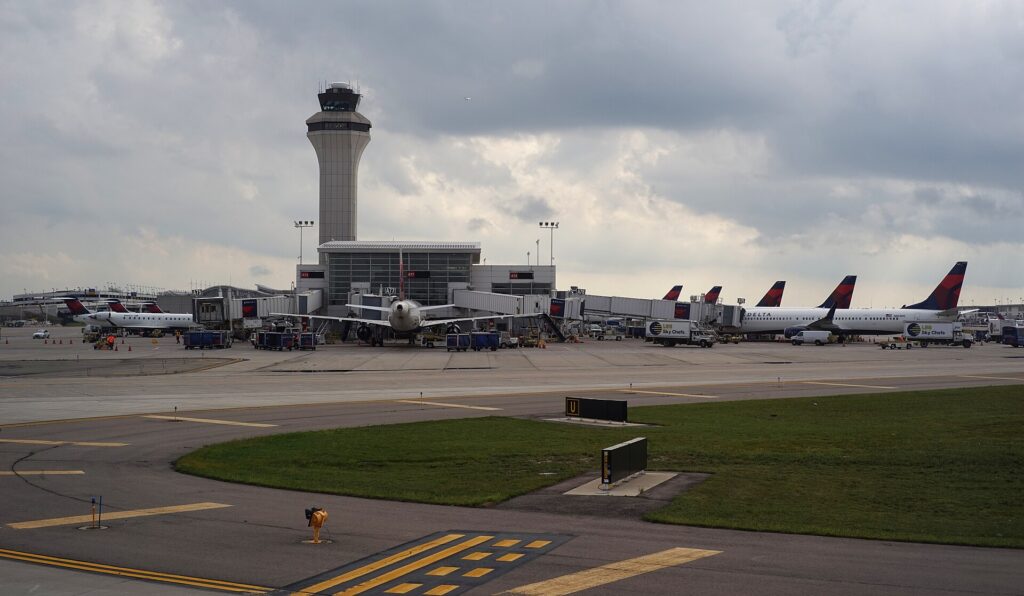
    The McNamara Terminal at DTW, Delta's Midwest hub and gateway to Europe and Asia (Photo: Dllu via Wikimedia Commons, CC BY-SA 4.0)

    Timing tricks that work for Detroit

    • Check the event calendar first. A cheap fare on Memorial Day weekend, Dream Cruise weekend or Labor Day weekend can come with a hotel rate that doubles the trip. Run a Detroit hotel search for the same dates before you commit.
    • Look at the suburbs. When downtown is full, hotels in Dearborn, near the airport or along the northern freeways are often much cheaper, and with a rental car the drive in is short outside rush hour.
    • Fly mid-week in shoulder season. Business travelers fill Monday morning and Thursday evening flights, and downtown hotels full of conference-goers on weekdays can be cheaper on weekends outside summer.
    • Go in winter for value. January to early March has the lowest prices of the year and the DIA, the Motown Museum and the restaurants at their quietest; just pack for the cold.
    • Coming from southwestern Ontario? Many travelers from Windsor and London drive across the border to fly from DTW because of its much larger route network. If you do, allow generous time for the crossing, carry documents both countries accept, and check U.S. Customs and Border Protection and the Canada Border Services Agency for current rules.
    • Build a weather buffer. Snowstorms in winter and thunderstorms in summer both cause delays at DTW; avoid the tightest connections. Our guide to how early to arrive covers what to allow.
    • Flying out of Detroit instead? DTW’s Delta network makes it one of the best departure airports in the Midwest for Europe and Asia; see cheap flights from Detroit.
    Classic Austin-Healey sports cars at the Woodward Dream Cruise
    The Woodward Dream Cruise in August, one of the busiest hotel weekends of the summer (Photo: Dane via Wikimedia Commons, CC BY 2.0)

    What to pack, by season

    Winter (December to March): a warm, windproof coat, a hat, gloves and a scarf, waterproof boots with grip for slushy sidewalks, and thermal layers for the coldest days. Spring (April to May): layers, a rain jacket and a sweater, because a warm afternoon can turn cold by evening, especially near the river. Summer (June to August): light, breathable clothing, sunscreen, a swimsuit for Belle Isle or a hotel pool, an umbrella for thunderstorms, and a light layer for air-conditioned museums and evenings on the RiverWalk. Fall (September to November): a medium jacket by October and a warm coat by November, plus layers for football games, which get cold after dark. In every season, bring comfortable walking shoes for downtown and Midtown, and your passport if Windsor is on the list.

    The best time to fly to Detroit for…

    Summer on the riverfront

    Mid-June to mid-July for long days, the fireworks and Belle Isle’s beach, or late August for warm weather with slightly softer prices. Book early for the big weekends.

    Good weather without the crowds

    September after Labor Day, or the first two weeks of June.

    The lowest fares

    Mid-January to early March, outside the auto show and the long weekends.

    Baseball and football

    May, June and September for comfortable Tigers games at Comerica Park; September to December for the Lions at Ford Field, with Thanksgiving Day the most famous (and most expensive) game of the year.

    Music lovers

    Memorial Day weekend for Movement and techno, Labor Day weekend for the free Jazz Festival, and any time of year for a Motown Museum tour.

    Families

    June to August, when Belle Isle, the Detroit Zoo, the RiverWalk and Greenfield Village at The Henry Ford are all in full swing; early December for the holiday lights and skating downtown.

    International visitors

    Travelers from Visa Waiver Program countries need an approved ESTA before they board; most others need a visa. The State Department’s travel site explains what applies to you, and the TSA lists what you can carry through security. If you plan a side trip to Windsor, check that your entry status allows you to leave and re-enter the United States by land before you go.

    Frequently asked questions

    What is the cheapest month to fly to Detroit?

    January, after the New Year week, followed by February and early March, outside the auto show and the long weekends.

    What is the best month to visit Detroit for weather?

    September, with late May, June and early October close behind. July and August are hot and humid; January and February are cold and gray.

    Is DTW a good airport to fly into?

    Yes. It is a large, modern Delta hub with a wide route network and two efficient terminals, and it has often ranked well in passenger satisfaction surveys. Its main drawback is the distance from downtown and the lack of a rail link.

    When are hotels most expensive in Detroit?

    On big event weekends: Memorial Day, the Grand Prix, the Fourth of July, the Dream Cruise, Labor Day, marathon weekend and Thanksgiving, plus the auto show in winter.

    How cold does Detroit get in winter?

    Daytime highs around freezing are typical in January, but Arctic outbreaks can push overnight lows below -18 °C (0 °F) for a few days most winters, with wind chills colder still.

    How far ahead should I book?

    Earlier for summer event weekends, football weekends, Thanksgiving and the holidays, when fares and hotel rates tend only to rise; from January to early March, fares are stable enough that finding the right dates matters more than booking early.

    Can I combine Detroit with Chicago or Toronto?

    Easily. Chicago is about four and a half hours west by car or a little longer on Amtrak, and Toronto about four hours east plus the border crossing. See our guides to things to do in Chicago and things to do in Toronto.

    Ready to pick your dates? Compare fares across the whole month on our Detroit flights page, then find a room with our Detroit hotel search. For what to do when you land, start with our first-timer’s guide to Detroit, and if you are weighing a car, read rent a car or use transit in Detroit.

  • Things to Do in Detroit: A First-Timer’s Guide

    Things to Do in Detroit: A First-Timer’s Guide

    Detroit rewards the visitor who arrives with an open mind. For decades the Motor City was shorthand for industrial decline, and the people who have not been still picture empty streets and abandoned factories. What they find instead is a downtown that has filled back up with restaurants, hotels and people, a riverfront that has been turned from parking lots and silos into one of the best urban walks in the country, an art museum with a collection that rivals any in America, the studio where Motown was born, the city that invented techno, and neighborhoods whose food, from Coney Islands and square pizza to Yemeni coffee and Mexican bakeries, reflects more than a century of migration. It is also a city built by and for the automobile, and the story of the car, from the Model T to the modern pickup, is told here better than anywhere on earth. This guide covers the sights that earn a day, the neighborhoods worth a half-day, the music, the sports, the food, the day trips across the river and into the suburbs, and the practical details that make a first visit easy.

    If you are still comparing cheap flights to Detroit, read this alongside our guides to the best time to fly to Detroit and whether to rent a car or rely on transit (in the Motor City, the answer is more nuanced than you might expect). Between the three you can plan the whole trip.

    The Detroit skyline across the Detroit River from Windsor, Ontario
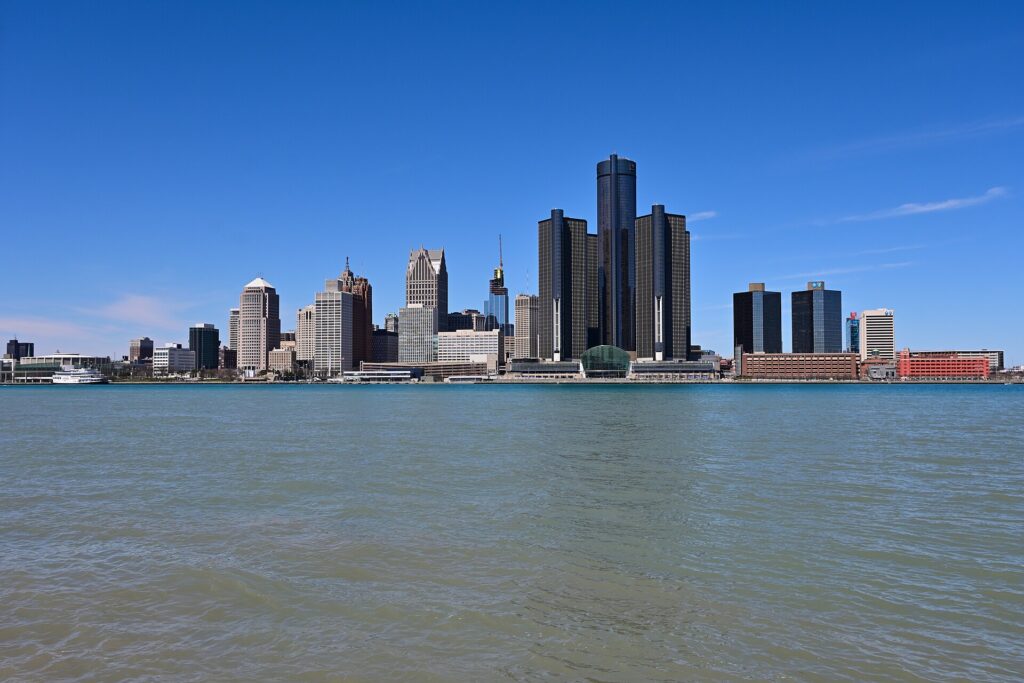
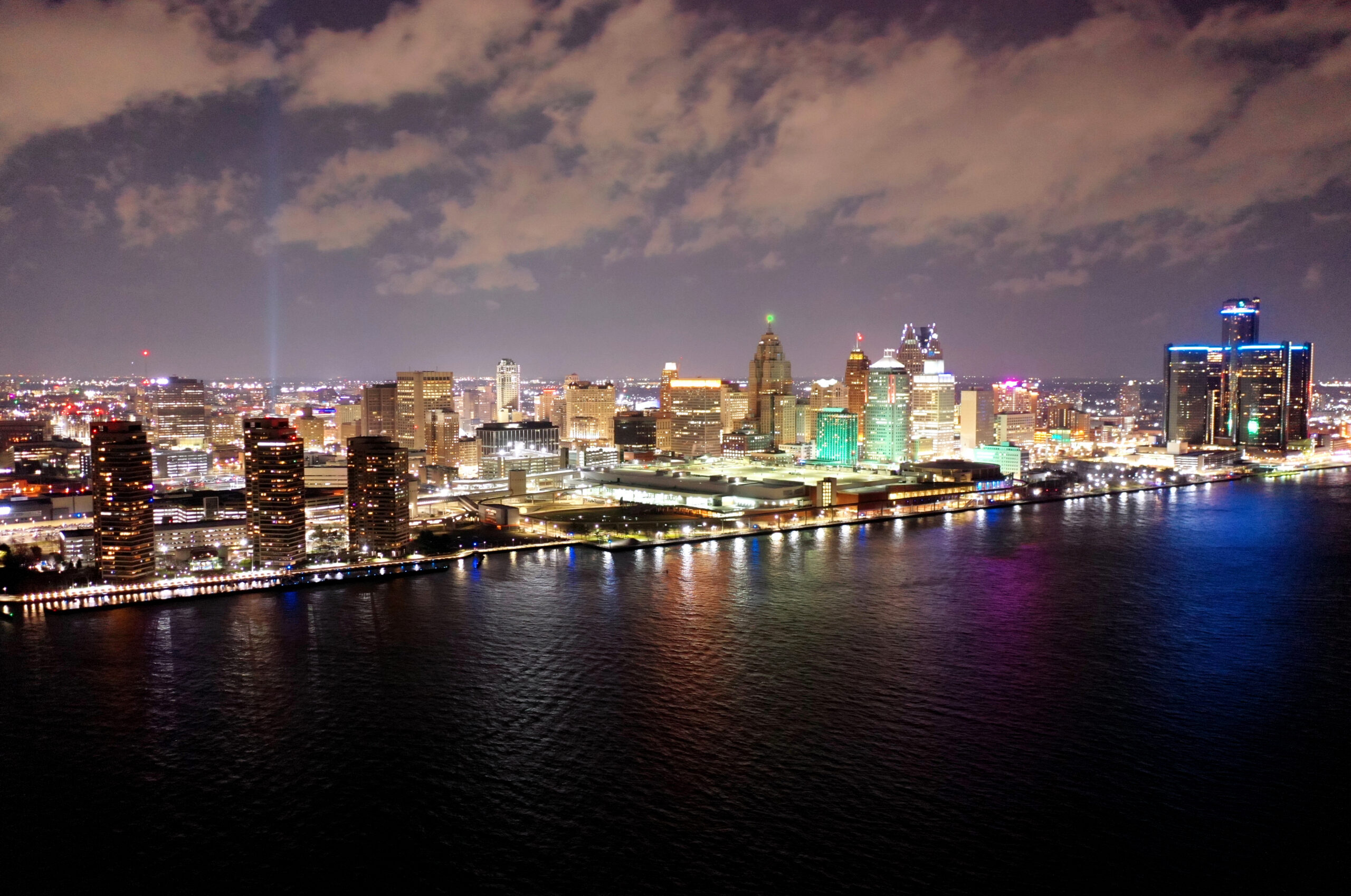
    Downtown Detroit across the river from Windsor, where the best skyline view is in Canada (Photo: Andrew Heneen via Wikimedia Commons, CC BY 4.0)

    Detroit at a glance for first-timers

    • Airport: Detroit Metropolitan Wayne County Airport (DTW), in Romulus, about 32 km (20 miles) southwest of downtown, is one of Delta’s largest hubs, with nonstops across North America and long-haul flights to Europe and Asia. The drive downtown on I-94 takes 25 to 40 minutes. See our DTW airport guide.
    • Getting around: downtown, Midtown and the riverfront are walkable, the elevated People Mover loops around downtown and the QLine streetcar runs up Woodward Avenue to Midtown and New Center. Beyond that core, Detroit is a car city, and our car-versus-transit guide explains when a rental earns its keep.
    • Money: US dollars. Michigan’s sales tax is 6 percent, added at the register, with extra taxes on hotel rooms. Tipping 18 to 20 percent in restaurants is expected. Canadian dollars are sometimes accepted near the border, at a poor rate; use a card.
    • Weather: four distinct seasons: cold, gray and snowy winters, a short spring, warm and humid summers, and a crisp, colorful fall. Our month-by-month guide has the detail.
    • Where to stay: downtown around Campus Martius for walking access to the riverfront, the stadiums and the theaters; Midtown for the museums; Corktown for the restaurants; Dearborn or the northern suburbs if you have a car. Our Detroit hotel search covers them all.

    Downtown: Campus Martius, Woodward and the Art Deco towers

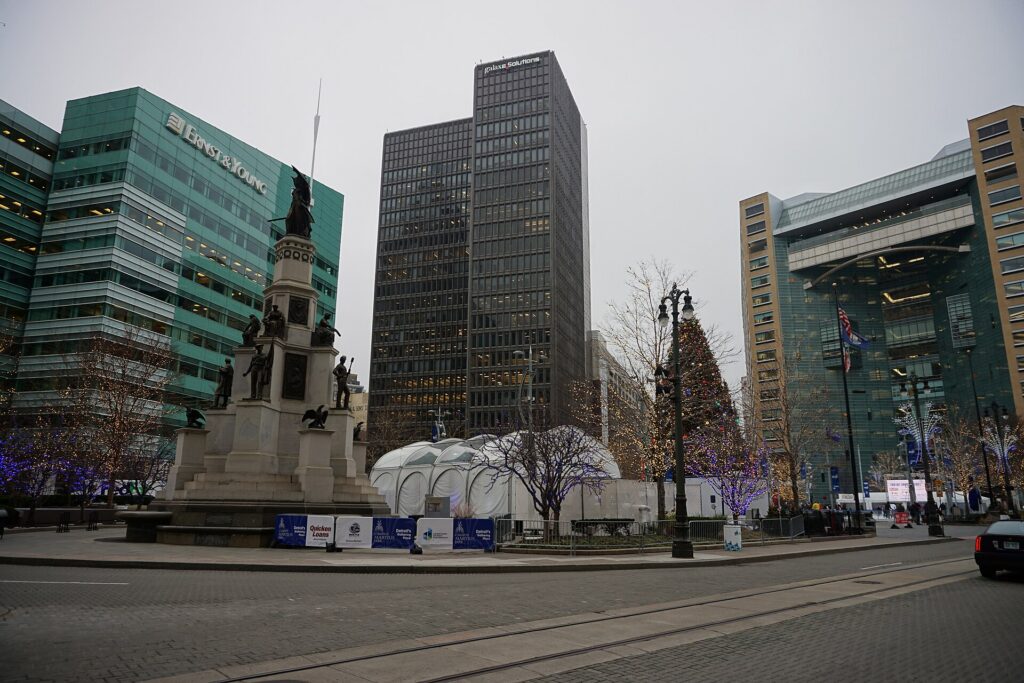
    Downtown Detroit is laid out like a wheel, a plan drawn up by Judge Augustus Woodward after a fire destroyed the town in 1805, with the great avenues radiating from a set of central squares. The hub is Campus Martius Park, the city’s living room, where office workers eat lunch among the fountains, a sandy urban beach appears in summer, and an ice rink and a towering Christmas tree take over from November. Woodward Avenue runs north from here toward Grand Circus Park and the theater district, and south to the river. Detroit’s 1920s boom left one of the finest collections of Art Deco skyscrapers in America, and several have lobbies you can walk into. The Guardian Building, completed in 1929 and nicknamed the Cathedral of Finance, has a vaulted banking hall covered in Pewabic and Rookwood tile in shades of orange and gold; step inside even if you see nothing else. At the foot of Woodward, the Spirit of Detroit, a large bronze figure holding a gilded sphere, sits outside the municipal center, and across Jefferson Avenue Hart Plaza hosts the big summer festivals. The glass towers of the Renaissance Center, long synonymous with General Motors, dominate the riverfront to the east; the ground-floor atrium leads straight out onto the RiverWalk.

    Campus Martius Park in downtown Detroit surrounded by office towers
    Campus Martius, the hub of Judge Woodward's plan and downtown's living room (Photo: Michael Barera via Wikimedia Commons, CC BY-SA 4.0)

    The riverfront: the RiverWalk, the Dequindre Cut and Belle Isle

    Twenty years ago most of the Detroit riverfront was cement silos, parking lots and fences. Today the Detroit RiverWalk runs for more than three miles along the water from near the Renaissance Center east toward the Belle Isle bridge, with gardens, fountains, a carousel and benches facing Windsor, Ontario, which sits directly across the river to the south; this is one of the few places where Canada lies south of the United States. Rent a MoGo bike-share bike and ride east along the river, then turn north up the Dequindre Cut, a former railroad line sunk below street level and turned into a greenway lined with murals and graffiti, which brings you out at Eastern Market. At the eastern end of the RiverWalk, the MacArthur Bridge crosses to Belle Isle, an island park of 982 acres in the middle of the Detroit River, larger than Central Park in New York. It has been run as a Michigan state park since 2014, and it holds a surprising number of treasures: the Belle Isle Aquarium, opened in 1904 in a building by Albert Kahn with a green-tiled vaulted ceiling; the Anna Scripps Whitcomb Conservatory, a glass-domed botanical house; the James Scott Memorial Fountain, a marble extravaganza that runs in the warmer months; the Dossin Great Lakes Museum, which tells the story of the freighters that still pass the island; and a beach and a giant slide for summer afternoons. Walking and cycling onto the island are free; vehicles need a Michigan Recreation Passport, which non-residents buy as a day or annual pass at the entrance.

    Belle Isle Park and the Detroit River in Detroit
    Belle Isle, an island park in the Detroit River larger than Central Park (Photo: Michael Barera via Wikimedia Commons, CC BY-SA 4.0)

    Neighborhoods worth a half-day

    Midtown and the Cultural Center

    North of downtown along Woodward, Midtown is home to Wayne State University, the city’s great museums, and a dense strip of cafes, bars and shops.

    Corktown and Michigan Central

    Detroit’s oldest surviving neighborhood, settled by Irish immigrants in the nineteenth century, is now one of its liveliest dining districts, with barbecue, cocktail bars and bakeries along Michigan Avenue. It is dominated by Michigan Central Station, the huge Beaux-Arts railroad terminal that stood empty for decades as the symbol of the city’s decline. Ford bought it, restored it and reopened it in 2024 as the anchor of a technology campus, and the grand hall is open to visitors; check the station’s current hours and tour options before you go.

    Eastern Market

    The largest historic public market district in the country, with sheds dating to the 1890s, Eastern Market is at its best on a Saturday morning, when farmers, butchers, flower sellers and food trucks fill the sheds and the surrounding streets, and tens of thousands of Detroiters come to shop.

    New Center

    At the north end of the QLine, New Center was built in the 1920s as a second downtown. Its centerpiece is Albert Kahn’s Fisher Building, completed in 1928, whose three-story arcade of marble, bronze and painted ceilings is often called the city’s largest art object. The Motown Museum is a short walk west along West Grand Boulevard.

    Southwest Detroit

    Southwest Detroit, around Bagley Street and Vernor Highway in the area known as Mexicantown, is the heart of the city’s Mexican and Latino community, with taquerias, panaderias and grocery stores, and the best view of the Ambassador Bridge soaring overhead.

    Hamtramck and the east side

    Hamtramck, a separate small city surrounded by Detroit, was built by Polish immigrants who worked in the auto plants and is now home to large Yemeni and Bangladeshi communities as well; its main streets are a lesson in how Detroit has always absorbed newcomers. To the east, the mansions of Indian Village show the wealth of the auto age, and the Heidelberg Project, the artist Tyree Guyton’s long-running outdoor installation of painted houses and found objects, has been partly dismantled and is being transformed; check what is open before making the trip.

    Museums, culture and family attractions

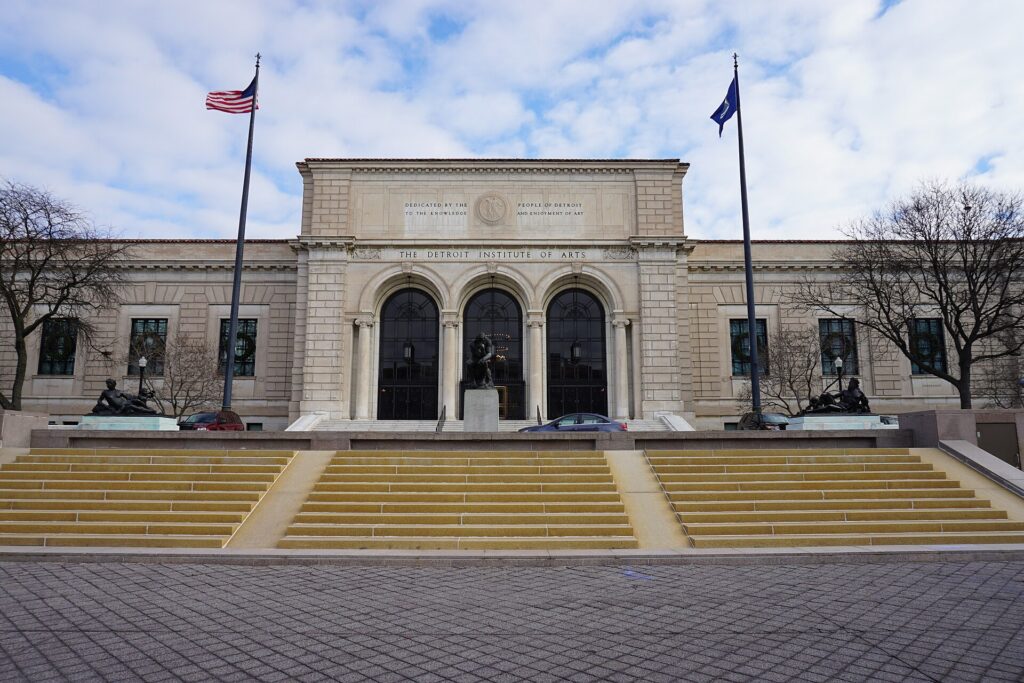
    The Detroit Institute of Arts, in Midtown’s Cultural Center, is one of the great art museums of the United States and the essential visit of any trip. Its heart is Rivera Court, where Diego Rivera’s Detroit Industry murals, painted in 1932 and 1933, cover all four walls with the workers, furnaces and assembly lines of the Ford Rouge plant; they are among the finest works of art in the country, and many visitors come to Detroit for them alone. The rest of the collection runs from ancient Egypt to a Van Gogh self-portrait, the first Van Gogh bought by an American museum, and it is strong in African American art. General admission is free for residents of Wayne, Oakland and Macomb counties, whose taxes support the museum; visitors from elsewhere pay a modest fee. Across the street and nearby, the Charles H. Wright Museum of African American History, one of the largest such museums in the world, walks visitors through the journey from Africa through slavery, the Underground Railroad, which ended for many at the Detroit River, and the Great Migration to the civil rights era. In Dearborn, 20 minutes west, The Henry Ford is a destination in itself: the Henry Ford Museum of American Innovation holds the bus on which Rosa Parks refused to give up her seat, the limousine in which President Kennedy was shot and a hall of historic cars and locomotives; Greenfield Village, next door, is an open-air museum of historic buildings including the Wright brothers’ bicycle shop and Thomas Edison’s Menlo Park laboratory; and the Ford Rouge Factory Tour takes you above the working assembly line where pickups are built. Allow a full day for the complex. For what is on stage at the Fox Theatre, Orchestra Hall and the Detroit Opera House during your dates, our Detroit events page lists concerts, shows and games.

    The Woodward Avenue entrance of the Detroit Institute of Arts
    The Detroit Institute of Arts, home of Diego Rivera's Detroit Industry murals (Photo: Michael Barera via Wikimedia Commons, CC BY-SA 4.0)

    Motown, techno and jazz

    Detroit’s gift to the world is its music, and no visit is complete without a pilgrimage to the Motown Museum on West Grand Boulevard. This modest house, which Berry Gordy named Hitsville U.S.A., is where the Supremes, Marvin Gaye, Stevie Wonder, the Temptations, Smokey Robinson and the Jackson 5 made the records that defined the 1960s, and the guided tour ends in Studio A, the small basement room where the hits were cut; tours sell out, so book ahead. Motown moved to Los Angeles in 1972, but the music never left. Detroit is the birthplace of techno, created in the 1980s by a group of young producers from the suburb of Belleville, and the Movement electronic music festival draws fans from around the world to Hart Plaza on Memorial Day weekend. Jazz has deep roots too: Baker’s Keyboard Lounge, on Livernois Avenue, claims to be the oldest continuously operating jazz club in the world, and the Detroit Jazz Festival on Labor Day weekend is one of the largest free jazz festivals anywhere. The grand old theaters are part of the experience: the Fox Theatre, a 1928 movie palace with about 5,000 seats and one of the most lavish interiors in America, hosts touring shows and concerts, and the Masonic Temple, the largest in the world, has a theater of its own.

    Sports

    Detroit has teams in all four major leagues, and three of the venues are within walking distance of each other downtown. Comerica Park, home of the Tigers, has views of the skyline, a Ferris wheel and a carousel inside the ballpark, and a statue garden of Tiger greats beyond the outfield; Opening Day in early April is an unofficial city holiday. Next door, Ford Field, home of the Lions, was built around an old department store warehouse, and the Lions’ home game on Thanksgiving Day, a tradition that goes back to the 1930s, is one of the fixtures of the American football calendar. Little Caesars Arena, a few blocks north in the District Detroit, is home to the Red Wings, one of the most successful franchises in hockey, which is why Detroit calls itself Hockeytown, and to the Pistons of the NBA. In late May or early June, the Detroit Grand Prix brings IndyCar racing to a street circuit downtown. And a short drive west in Ann Arbor, University of Michigan football fills Michigan Stadium, the Big House, the largest stadium in the United States, on fall Saturdays. Check what is on sale in Detroit for your dates before you book flights.

    What to eat, and where

    Start with the Coney Island, Detroit’s signature hot dog: a natural-casing frank in a steamed bun, covered in a beanless meat chili, mustard and chopped onions. American Coney Island and Lafayette Coney Island stand side by side on Lafayette Boulevard downtown, each with loyalists who will not set foot in the other, and “coney islands”, the diners that serve them, are on street corners across the region. Then there is Detroit-style pizza, baked in rectangular steel pans originally borrowed from the auto plants, with cheese spread to the edges so it caramelizes into a crisp, lacy crust and sauce ladled on top; Buddy’s, which claims to have created it in 1946, is the place to start. Beyond the classics, Detroit’s best food is in its communities: shawarma, grilled meats and Lebanese pastries in Dearborn, home to one of the largest Arab American communities in the country; tacos and tortas in Southwest Detroit; Yemeni coffee houses, Bangladeshi curry and Polish bakeries in Hamtramck, where lines form before dawn for paczki, the Polish doughnuts, on Fat Tuesday; flaming cheese in Greektown; and a new generation of chef-driven restaurants in Corktown, Midtown and downtown. Saturday breakfast at Eastern Market is a Detroit ritual.

    Detroit through the seasons

    Winter (December to March) is cold and gray, with regular snow and occasional deep freezes, but downtown makes the most of it: the rink at Campus Martius, the holiday markets, the Red Wings and Pistons in season, and the auto show at Huntington Place in January. Hotels are at their cheapest. Spring (April to May) is short and changeable; the Tigers open the season in April, the trees on Belle Isle come into leaf, and Movement closes out May with a weekend of techno. Summer (June to August) is the best time to see the city at its liveliest: the RiverWalk, Belle Isle’s beach, the beach at Campus Martius, the Grand Prix, fireworks over the river in late June, patios across downtown and Corktown, and the Woodward Dream Cruise, when tens of thousands of classic cars parade up Woodward Avenue through the northern suburbs on the third Saturday of August. It can be hot and humid, with thunderstorms. Fall (September to November) opens with the Jazz Festival and brings crisp, clear days, color on Belle Isle and in the parks, Lions and Michigan football, the Detroit Free Press Marathon, which crosses into Canada and back, and America’s Thanksgiving Parade on Woodward. Our month-by-month guide has the fare patterns that go with each season.

    Detroit with kids

    Detroit is a better family destination than its reputation suggests. The Henry Ford in Dearborn is the standout, with trains, planes and hands-on invention exhibits in the museum and steam train, carousel and Model T rides at Greenfield Village; allow a full day. The Michigan Science Center in Midtown has a planetarium and plenty of buttons to push, and the Detroit Zoo, just north of the city in Royal Oak, is one of the largest zoos in the Midwest, with a polar bear tunnel and a penguin center where the birds swim overhead. On Belle Isle, the aquarium, the nature center and the giant slide keep children happy for hours, and the RiverWalk’s carousel, splash fountains and wide paths are easy with a stroller. In winter, skating at Campus Martius is a treat, and a Tigers game in summer, with the Ferris wheel and carousel inside the ballpark, is a rite of passage. For families planning to drive, our family car rental guide covers the vehicle question.

    Detroit on a budget

    A great deal of Detroit’s best is free or nearly so: the RiverWalk and the Dequindre Cut, Campus Martius and the downtown lobbies of the Guardian and Fisher Buildings, Belle Isle on foot or by bike, the murals of Eastern Market, the Heidelberg Project, and the big festivals, including the Jazz Festival, the fireworks and the Dream Cruise, which cost nothing to attend. The DIA is free for tri-county residents and inexpensive for everyone else. Food is a bargain by big-city standards: a pair of coneys, a square of pizza, a Dearborn shawarma or a plate of tacos in Southwest Detroit will not dent your budget. Hotels are generally cheaper than in Chicago or Toronto, especially from January to March, though they spike on big event weekends. Compare them by neighborhood on our Detroit hotel search.

    Day trips from Detroit

    Windsor, Ontario, is the day trip everyone asks about, because it is right there: across the river, reached by the Detroit-Windsor Tunnel from downtown or the Ambassador Bridge from Southwest Detroit. Its riverfront parks and sculpture garden have the best view of the Detroit skyline, and there is a casino, Canadian food and a walkable downtown. It is an international border, so the principles are simple. Everyone needs identity and citizenship documents that both countries accept: for US citizens, that means a passport, passport card, NEXUS card or enhanced driver’s license, which Michigan issues; for everyone else, a passport plus whatever visa or status you need to enter Canada and to re-enter the United States, which you should check before you go rather than at the booth. Declare what you carry, leave cannabis behind (it cannot cross the border in either direction, even though it is legal on both sides), and allow extra time for queues. The official sources are the Canada Border Services Agency for entering Canada and U.S. Customs and Border Protection for coming back. Dearborn is 20 minutes west, with The Henry Ford, the Arab American National Museum and the food. Ann Arbor, about 45 minutes west, is a lively college town with the University of Michigan campus, bookshops and an excellent farmers’ market. Frankenmuth, about 90 minutes north, is a Bavarian-themed town famous for fried chicken dinners and a vast year-round Christmas store. Across the river, Point Pelee National Park, about an hour beyond Windsor, is the southernmost tip of mainland Canada and a famous stop for migrating birds and butterflies. For longer drives, see our route guides for driving from Detroit to Toronto, about four hours on Ontario’s Highway 401, and Chicago to Detroit, then read our guides to things to do in Toronto and things to do in Chicago. Price a car on our Detroit car rental page. Visit Detroit, the official tourism site, covers the region.

    Two sample itineraries

    Three days, mostly car-free

    Day one: Campus Martius, the Guardian Building and the downtown lobbies in the morning, lunch at the coney islands on Lafayette, then the RiverWalk and the Dequindre Cut by bike, with dinner in Corktown and a look at Michigan Central. Day two: the QLine to Midtown for the DIA and the Rivera murals, lunch on Cass Avenue, the Wright Museum in the afternoon, and a show at the Fox or a Tigers game at night. Day three: Eastern Market in the morning (on a Saturday if you can), the Motown Museum in the afternoon, and Detroit-style pizza for dinner.

    Five days, with a car

    Add a full day at The Henry Ford and the Rouge Factory Tour with dinner in Dearborn, an afternoon on Belle Isle, and a day in Windsor with your passport, or a drive to Ann Arbor, Cranbrook or Frankenmuth.

    Practical details

    • Transit: the People Mover loops around downtown, the QLine runs up Woodward to New Center, and DDOT and SMART buses cover the city and suburbs. Our transit-versus-car guide goes into detail.
    • From DTW: a taxi or ride-hail in 25 to 40 minutes, a SMART express bus, or a rental from the lots near the terminals. The airport’s site has current ground-transport options.
    • Weather: a serious coat, hat and gloves from December to March, layers in spring and fall, and light clothes and sunscreen in summer. NOAA’s National Weather Service office for Detroit has the forecast.
    • Time zone: Eastern, the same as New York and Toronto and one hour ahead of Chicago.
    • Entry requirements: international visitors from Visa Waiver Program countries need an approved ESTA before flying to the US; most others need a visa. The State Department’s travel site is the authoritative source, and a side trip to Windsor means checking Canada’s rules as well.
    • Safety: downtown, Midtown, Corktown, the riverfront and the main visitor areas are busy and generally safe; use ordinary big-city awareness at night, stick to lit, busy streets, and take a ride-hail rather than walking long distances between neighborhoods after dark.

    Frequently asked questions

    How many days do you need in Detroit?

    Three days covers downtown, the riverfront, the DIA, Motown and Eastern Market; add a day for The Henry Ford in Dearborn and another for Belle Isle, Windsor or Ann Arbor.

    What is the number one thing to do in Detroit?

    The Detroit Institute of Arts and the Rivera murals, followed closely by the Motown Museum. In summer, add a bike ride along the RiverWalk.

    Is Detroit safe for tourists?

    The areas visitors spend their time in, downtown, Midtown, Corktown and the riverfront, are busy and generally safe, especially by day. As in any big city, stay aware at night and use a ride-hail between neighborhoods.

    Do I need a car in Detroit?

    Not for a downtown and Midtown visit, where walking, the QLine and the People Mover cover the sights. For Dearborn, the suburbs and day trips, a car makes life much easier.

    Can I visit Windsor, Canada, from Detroit?

    Yes, easily, through the tunnel or over the bridge, but it is an international border: carry documents both countries accept, such as a passport, and check the official border agency sites before you go.

    What food is Detroit known for?

    The Coney Island hot dog and Detroit-style square pizza, plus Middle Eastern food in Dearborn, paczki in Hamtramck, Vernors, Faygo and Better Made chips.

    Ready to go? Compare flights to Detroit, find a place to stay with our Detroit hotel search, and if Dearborn, Windsor or a road trip is on the list, price a rental car for those days.