Tag: Boston

  • Best Time to Fly to Boston: Seasons, Weather & Prices

    Best Time to Fly to Boston: Seasons, Weather & Prices

    Boston runs on calendars that most cities do not have. It is a major tourist city with a short, glorious summer and the most famous fall foliage in the country, but it is also a college town on an enormous scale, with dozens of universities whose move-in days, parents’ weekends and graduations fill every hotel in the city several times a year. Add a medical and biotech economy that keeps the convention center busy, the oldest annual marathon in the world, a regatta that brings rowing crews from across the globe, and four professional teams with devoted followings, and you have a city where hotel rates, more than airfares, decide the real cost of a trip. The weather matters too: Boston winters are cold, snowy and occasionally stormy, and its springs arrive late. This guide walks through the weather month by month, the fare seasons, the events that move prices, and how to handle the airport.

    The short answer

    For the best combination of weather and value, aim for early June, before the summer peak takes hold, and the first half of November, when the foliage crowds have gone but the city is still mild and lively. Late September and October are the most beautiful weeks of the year, with crisp days and the leaves turning across New England, and also the most expensive, with hotel rates that rank among the highest in the country. The cheapest fares and rooms come in January, February and early March, outside the school vacation week in February. The priciest stretches are September and October, graduation weekends in May, Marathon weekend in April, and July and August for airfares. Whatever you choose, run a flexible-date search on our Boston flights page; moving a trip by a few days around a graduation or a holiday weekend can change the hotel bill far more than the fare.
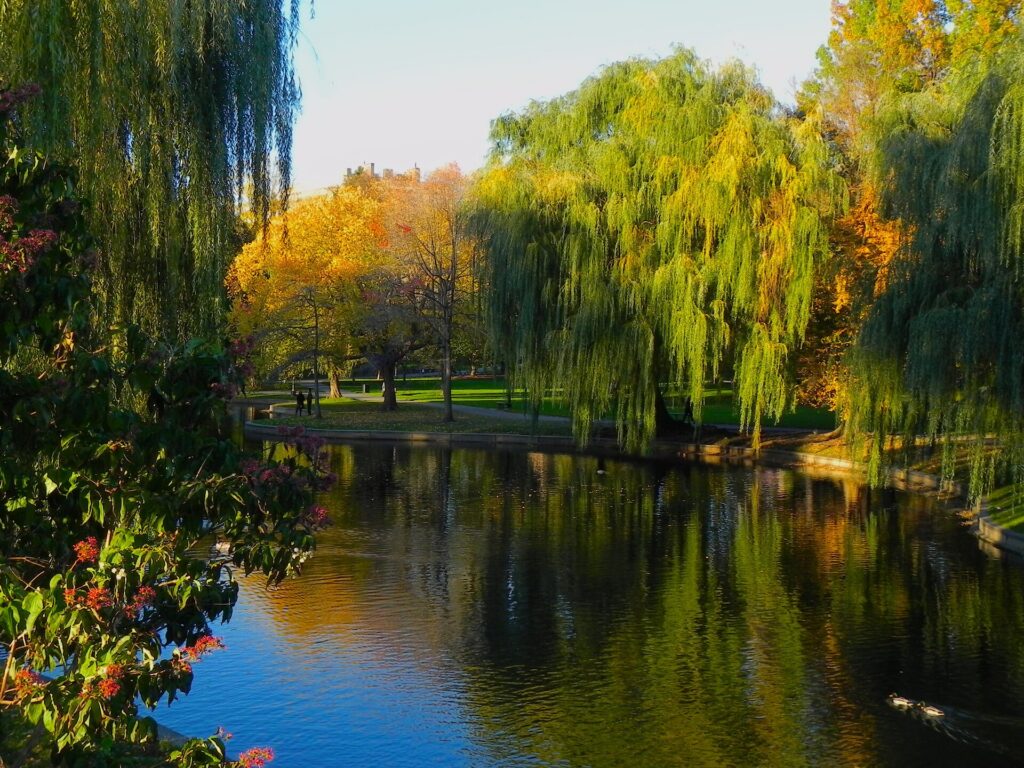
    Fall color in the Boston Public Garden
    Boston in the fall, the season with the best weather and the highest hotel rates (Photo: Nina La via Wikimedia Commons, CC BY 3.0)

    Boston’s weather, season by season

    Boston sits on the Atlantic at the edge of a sheltered harbor, and the ocean shapes its weather in every season. Winters are cold and damp, with snow most years and a nor’easter or two capable of dropping a foot or more in a day; spring is late, cool and changeable, especially near the water; summers are warm and sometimes humid, with a sea breeze that can make the waterfront several degrees cooler than the suburbs; and fall is long, dry and bright. The figures below are approximate seasonal patterns based on the long-term Logan Airport climate normals from NOAA’s National Weather Service; check the current forecast before you pack, because a week in March or November can hold both a mild afternoon and a snowstorm.

    MonthTypical daytime highTypical overnight lowWhat it feels likeFare pressure
    Januaryaround 3 °C (37 °F)around -5 °C (23 °F)Cold and raw off the harbor; snow and the odd nor’easterLow after New Year’s week
    Februaryaround 4 °C (39 °F)around -4 °C (25 °F)Often the snowiest month; bright, cold days between stormsLow; rises for Presidents’ Day and school vacation week
    Marcharound 8 °C (46 °F)around -1 °C (31 °F)Gray and changeable; a late snowstorm is commonLow
    Aprilaround 14 °C (57 °F)around 5 °C (41 °F)Cool, showery, the first blossoms late in the monthModerate; Marathon weekend spike
    Mayaround 19 °C (67 °F)around 10 °C (50 °F)Green and pleasant, cool by the waterHigh on graduation weekends
    Junearound 25 °C (77 °F)around 16 °C (60 °F)Warm and long-lit; often the best month for weatherModerate to high
    Julyaround 28 °C (82 °F)around 19 °C (66 °F)Warm to hot, humid spells, thunderstormsHigh
    Augustaround 27 °C (81 °F)around 18 °C (65 °F)Warm and humid; the harbor is at its warmestHigh, then a move-in spike at month’s end
    Septemberaround 23 °C (73 °F)around 14 °C (58 °F)Warm days, cool nights, low humidityPeak for hotels
    Octoberaround 17 °C (62 °F)around 8 °C (47 °F)Crisp and bright; foliage seasonPeak for hotels
    Novemberaround 11 °C (52 °F)around 3 °C (38 °F)Cooling fast; bare trees by midmonthModerate, falling; Thanksgiving spike
    Decemberaround 6 °C (42 °F)around -2 °C (29 °F)Cold, festive, the first snow likelyLow until mid-month, then high

    Three things the table cannot show. First, the nor’easter: a coastal storm that tracks up the Atlantic and can bring heavy snow, high winds and coastal flooding, usually between December and March. Most years bring at least one, and when one is forecast, flights cancel pre-emptively and the city slows for a day or two. Second, the sea breeze: on a spring or early summer afternoon, the wind can turn onshore and drop the temperature on the waterfront by 5 to 10 degrees in an hour, so a warm morning in the Public Garden does not guarantee a warm evening in the Seaport. Third, humidity: the numbers for July and August look moderate, but a humid week in the upper 80s °F feels a good deal hotter, and many older buildings and triple-deckers are not air-conditioned.

    How Boston’s fare seasons work

    Four calendars drive demand for Boston: summer tourism, which fills the flights from June to August; the academic year, which sends a wave of students and parents through the city at the start of September, again on parents’ weekends in October, and again at graduation in May; the fall foliage, which makes late September and October the peak for hotels and for travelers heading on to Vermont, New Hampshire and Maine; and the conventions and medical meetings, which fill downtown and the Seaport on weekdays at any time of year. The result is an unusual pattern in which airfares peak in summer but hotel rates peak in the fall, and the two do not always move together. Boston Logan is also a busy, competitive airport, with JetBlue as its largest carrier and all the major airlines present, which helps keep fares on many domestic routes reasonable even when rooms are not.

    Peak season

    June through October, plus graduation weekends, Marathon weekend and the week between Christmas and New Year. Summer airfares are at their highest in July and early August, when families travel and the Cape Cod crowds pass through Logan. From Labor Day to the end of October, hotel rates climb to the year’s maximum: the students are back, conventions return, the weather is at its best, and leaf-peepers from around the world use Boston as the gateway to New England. If you must travel in peak, book the hotel early, consider Cambridge, Brookline or a hotel near a T station farther out, and fly mid-week.

    Shoulder season

    April to May and November. April is cool but green by the end of the month, with baseball back at Fenway, and May is lovely, but both carry spikes, for the Marathon and for commencements, that can make a single weekend as expensive as October. November, once the leaves have fallen, is the value month of the fall: mild in the first half, quiet, and with hotel rates well down from their October highs, until Thanksgiving week pushes fares up again.

    Low season

    January through mid-March, outside the holidays and school vacation week. Fares and rooms are at their lowest, the museums are uncrowded, the Celtics and Bruins are in season, and the city is cold but entirely functional. The trade-off is weather: build a buffer into connections, because a nor’easter can ground flights for a day. Early December, before the holiday rush, is another quiet, inexpensive window.

    As elsewhere, mid-week departures and early or late flights usually price below Friday and Sunday afternoons on the same route, and a search across a whole month reveals cheaper pairs of dates close to your first choice. Our guide to the best times to book explains how to read those patterns.

    Boston month by month

    January

    Cold, often snowy and, after the first week, one of the cheapest months of the year for both flights and hotels. The Celtics and Bruins play at TD Garden, the Frog Pond rink on Boston Common is open for skating, and the museums, the Museum of Fine Arts, the Gardner, the Museum of Science, are at their quietest. Pack for real cold and plan indoor days; the city handles snow well, and the T keeps running.

    February

    Similar weather and often the snowiest month, with low fares outside Presidents’ Day weekend (the third Monday of February) and the Massachusetts school vacation week that surrounds it, when local families travel and flights out of Boston and hotels in the ski country fill. A good month for a museum, food and hockey weekend.

    March

    Gray, changeable and usually cheap. The St. Patrick’s Day parade through South Boston, held on the Sunday around March 17, is one of the biggest in the country and fills the bars for the weekend. College spring breaks empty the student neighborhoods for a week or two, and a late snowstorm is always possible.

    April

    Spring arrives slowly, and the calendar gets busy. Patriots’ Day, the third Monday of April, brings the Boston Marathon, reenactments at Lexington and Concord at dawn, and a Red Sox morning game at Fenway, and hotel rates around the course and in Back Bay are among the highest of the year that weekend. The Massachusetts school vacation week falls the same week. Opening Day at Fenway, the magnolias on Commonwealth Avenue in the last week of the month, and the Swan Boats’ return to the Public Garden lagoon mark the start of the season.

    May

    Green, pleasant and, on the right weekends, very expensive. Commencement season runs through the second half of the month, when Harvard, MIT, Boston University, Northeastern, Boston College and dozens of other schools hold graduations, and families book hotels a year ahead; if your dates coincide, look well outside the city. The Boston Calling music festival fills Memorial Day weekend. The weekdays between the big weekends are much better value.

    June

    Often the best month for weather, with long evenings and warmth without the full humidity of July. Harbor ferries run on their summer schedules, Pride fills the city early in the month, and Harborfest begins in the last days of June. Fares rise as schools finish; the first two weeks are the value play.

    July

    Peak summer. The Fourth of July brings the Boston Pops concert and fireworks at the Hatch Shell on the Esplanade, one of the most famous Independence Day celebrations in the country, and the USS Constitution’s annual turnaround cruise in the harbor. Airfares are at their summer high, the Harbor Islands and Cape Cod are at their best, and the North End’s saints’ feasts begin on summer weekends. Expect humid spells and thunderstorms.

    August

    Warm and humid, with the North End feasts, the biggest of which closes the neighborhood’s streets on the last weekend of the month. The final days of August and the first of September bring the city’s strangest event: the mass move-in, when tens of thousands of students arrive at once and apartment leases turn over, rental trucks clog the streets, and hotels near the universities sell out. Avoid those days if you can.

    September

    Many Bostonians would say this is the best month of the year: warm days, cool nights, low humidity and the whole city back from vacation. It is also where hotel rates reach their annual peak, with conventions, parents’ weekends and pennant races at Fenway all competing for rooms. Airfares are moderate after Labor Day, so the hotel is the number to watch.

    October

    The postcard month. The foliage turns across New England through the month, starting in the northern mountains in late September and reaching the Boston area in the second half of October; the Indigenous Peoples’ Day (Columbus Day) weekend, the second Monday, is the busiest leaf-peeping weekend of the year. The Head of the Charles Regatta fills the river and the hotels for a weekend in the second half of the month, and Salem’s month of Halloween events draws huge crowds on weekends. Book early.

    November

    Rates fall steadily once the leaves are down, and the first half of the month is often mild enough for walking the Freedom Trail in a light jacket. Thanksgiving, the fourth Thursday, sends fares up for the week; Plymouth, an hour south, marks the holiday in style. The holiday lights go up on Boston Common late in the month.

    December

    Two months in one. The first half is quiet and inexpensive, with the tree lighting on the Common, holiday markets, the Boston Pops holiday concerts at Symphony Hall and the reenactment of the Boston Tea Party on December 16. From about December 18, fares rise sharply for Christmas and New Year, and the city celebrates New Year’s Eve with First Night events and fireworks over the harbor.
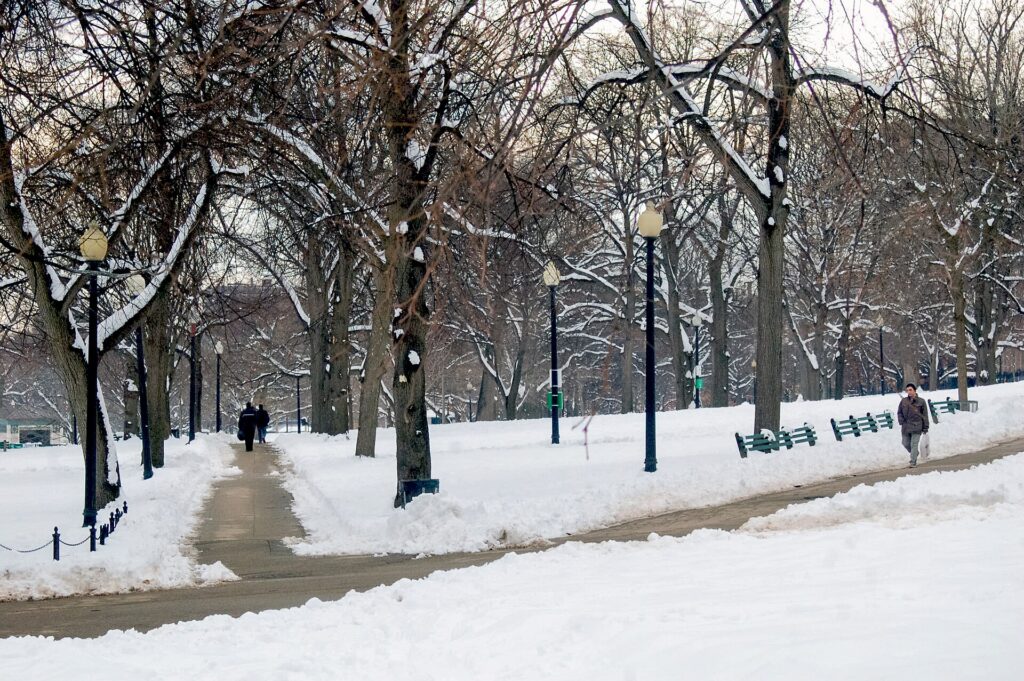
    Boston Common under snow in winter
    Boston in winter: cold and snowy, but the cheapest time of year to visit (Photo: Ethan Long via Wikimedia Commons, CC BY-SA 2.0)

    Events that move Boston flight and hotel prices

    Cross-check these against your dates before you book. Exact dates shift each year; Meet Boston, the city’s tourism bureau, keeps the current calendar.

    • Presidents’ Day weekend and February school vacation (third week of February).
    • St. Patrick’s Day parade (the Sunday around March 17).
    • Boston Marathon and Patriots’ Day (third Monday of April): a severe hotel spike across Back Bay and downtown.
    • Commencement weekends (second half of May): rooms sell out months ahead across the city and Cambridge.
    • Fourth of July and Harborfest.
    • Student move-in (the last days of August and September 1) and parents’ weekends in October.
    • Foliage season and the Head of the Charles (October): the highest hotel rates of the year.
    • Thanksgiving week and Christmas to New Year.
    • Red Sox, Celtics, Bruins and Patriots home games, playoff runs and stadium concerts. Our Boston events page shows what is on sale for your dates.
    • Medical and technology conventions at the Seaport, which can fill downtown hotels on weeknights without warning; if mid-week rates look strangely high, that is usually why.

    Getting in from the airport

    Boston is served by Boston Logan International (BOS), in East Boston on the far side of the harbor and only about 5 kilometers (3 miles) from downtown, which makes it one of the most convenient major airports in the country. It has four terminals, A, B, C and E, with Terminal E handling most international flights, and there are nonstop flights from nearly every large U.S. city and from dozens of destinations in Europe and beyond. Getting downtown is easy. The Silver Line SL1 bus runs from every terminal to South Station, where it connects with the Red Line, Amtrak and commuter rail, and has been free to board at the airport in recent years; free Massport shuttle buses link the terminals to Airport station on the Blue Line, which reaches downtown in minutes; water taxis cross the harbor to the waterfront; and taxis and ride-hail reach downtown through the harbor tunnels in 15 to 30 minutes when traffic is light. Logan Express buses run to Back Bay and several suburbs. Two alternatives are worth checking when Logan fares are high: Providence (PVD), about an hour south, has its own MBTA commuter rail station, and Manchester-Boston Regional (MHT) in New Hampshire is about an hour north by car. Our Boston car-versus-transit guide explains why most visitors do not need a car, and our Logan airport guide covers the layout.
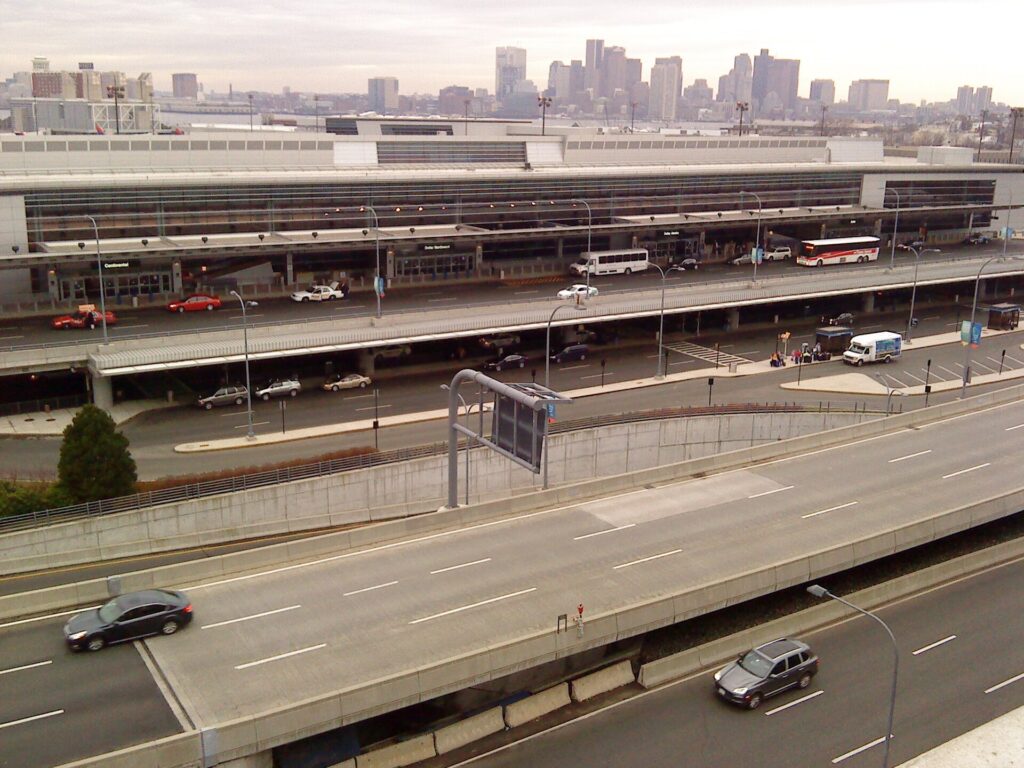
    A terminal at Boston Logan International Airport
    Boston Logan, just 5 kilometers (3 miles) across the harbor from downtown (Photo: CaribDigita via Wikimedia Commons, Public domain)

    Timing tricks that work for Boston

    • Search the whole month. Boston’s spikes are narrow: a graduation weekend or Marathon Monday can sit beside perfectly normal dates. A calendar search on TicketScanner shows the edges instantly.
    • Price the hotel first in the fall and in May. In September, October and on commencement weekends, the room costs more than the flight. Run a Boston hotel search for the same dates before you commit.
    • Look across the river. Cambridge and Somerville hotels on the Red Line can be cheaper than Back Bay on weekends, and business-district hotels in the Seaport and the Financial District often drop their rates on Friday and Saturday nights.
    • Fly mid-week. Boston’s business and university traffic makes Monday morning and Friday and Sunday afternoon the busiest flights; Tuesday to Thursday is usually the value.
    • Check Providence and Manchester. A cheaper fare into PVD with a commuter rail ride, or into MHT with a rental car, can beat Logan, especially in summer.
    • Build a winter buffer. Nor’easters can ground flights for a day between December and March; avoid tight connections, and read our guide to how early to arrive at the airport.
    • Flying out of Boston instead? The same seasonality applies in reverse; see cheap flights from Boston.
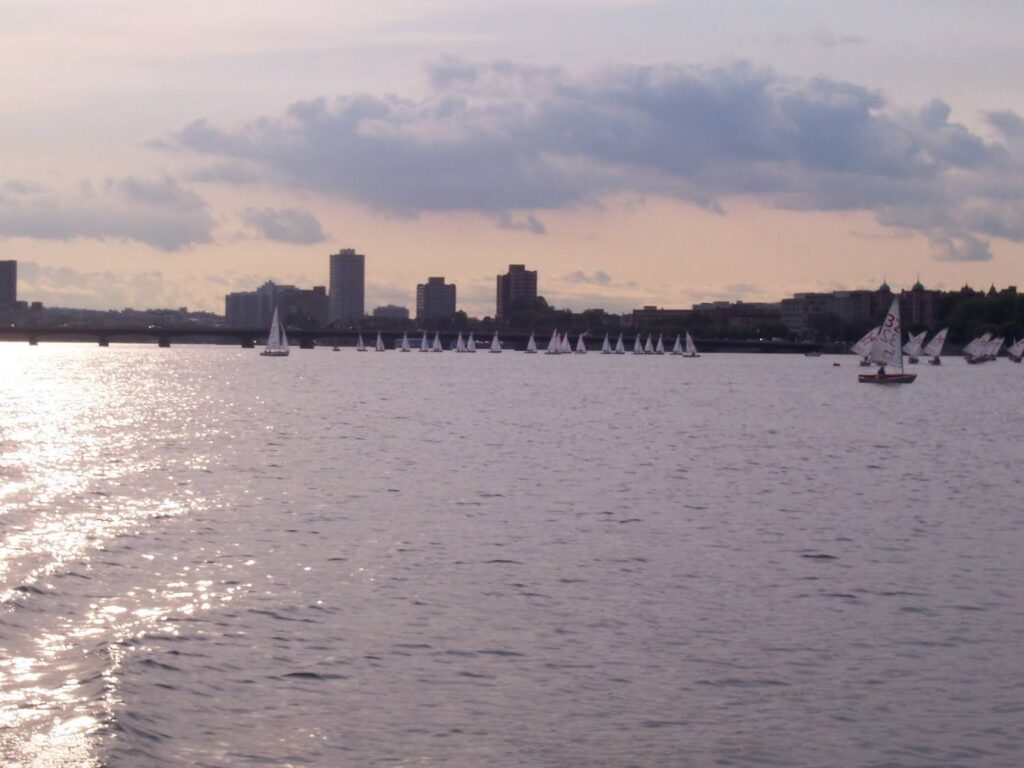
    Sailboats on the Charles River Basin in Boston in summer
    Summer on the Charles River, when airfares to Boston are at their highest (Photo: EgorovaSvetlana via Wikimedia Commons, CC BY-SA 4.0)

    What to pack, by season

    Winter (December to March): a warm, waterproof coat, a hat, gloves and boots with grip for slushy sidewalks and icy brick. Spring (April to May): layers, a rain jacket and a sweater for the evenings, especially near the water. Summer (June to August): light, breathable clothing, sunscreen, an umbrella for thunderstorms and a light layer for air-conditioned museums and harbor cruises. Fall (September to November): layers and a medium jacket, heavier by November. In any season, bring comfortable shoes: Boston’s brick sidewalks and cobblestones are hard on thin soles, and you will walk more than you expect.

    The best time to fly to Boston for…

    Fall foliage

    Early to mid-October for the mountains of Vermont, New Hampshire and Maine, and the second half of October for Boston itself, booked months in advance.

    The Marathon

    Patriots’ Day weekend in April, with the hotel booked as soon as you have a bib or a plan, or stay outside the city on a T line.

    Baseball at Fenway

    June, when the weather is warm but not humid, or September for the pennant race; April games are often cold.

    The lowest fares

    January through early March, outside Presidents’ Day week, and early December. Pair with museums, restaurants and a Celtics or Bruins game.

    Families

    Late June and early July, for the Harbor Islands, the Aquarium and the Fourth of July, or the first half of November for smaller crowds and lower rates.

    International visitors

    Travelers from Visa Waiver Program countries need an approved ESTA before boarding; most others need a visa. The State Department’s travel site explains what applies to you, and the TSA lists what you can carry through security.

    Frequently asked questions

    What is the cheapest month to fly to Boston?

    January and February are consistently the lowest for both flights and hotels, outside the February school vacation week, followed by early March and early December.

    What is the best month to visit Boston for weather?

    June and September, with October close behind for crisp days and foliage. July and August are warm and can be humid; winter is cold and snowy.

    When is fall foliage in Boston?

    The color reaches the Boston area in the second half of October, after peaking earlier in northern New England. The Arnold Arboretum and the Public Garden are the best places to see it in the city.

    Why are Boston hotels so expensive in the fall?

    Because everything happens at once: the students are back, the convention calendar is full, the weather is at its best and foliage visitors use Boston as their base. September and October are among the most expensive months of any American city.

    Should I avoid Boston in winter?

    Not if you pack for it. January and February are cold, but they bring the lowest prices, empty museums and hockey and basketball season. Allow for a possible storm delay.

    How far ahead should I book?

    For graduation weekends, the Marathon and October, book the hotel months ahead. For winter and November, finding the right dates matters more than booking early.

    Is it better to fly into Boston or Providence?

    Boston for convenience, since Logan is minutes from downtown. Providence is worth checking when Logan fares are high, with a commuter rail link from the airport to the city.

    Ready to pick your dates? Compare fares across the whole month on our Boston flights page, then find a room with our Boston hotel search. For what to do when you land, start with our first-timer’s guide to Boston.

  • Boston: Should You Rent a Car or Rely on Public Transit?

    Boston: Should You Rent a Car or Rely on Public Transit?

    Boston is one of the few American cities where a visitor is genuinely better off without a car. Its historic core is small enough to walk across in under an hour, the airport is a short subway or bus ride across the harbor, and the T, the oldest subway system in the country, reaches almost every sight a first-timer wants to see. Driving, meanwhile, is famously hard work: streets laid out on colonial cow paths and harbor landfill, one-way systems that change direction without warning, rotaries, tunnels, tolls, residents-only parking on most neighborhood streets and garage rates that rival New York’s. That said, Boston is also the gateway to New England, and the moment your plans include Cape Cod, the Berkshires, the coast of Maine or the fall foliage in the mountains, a car becomes the obvious choice. This guide explains how transit works, what driving is really like, and how to decide.

    The short answer

    Skip the car for any trip based in Boston or Cambridge, which is most visits. The T, your feet, the Bluebikes bike-share and the occasional taxi will cover the Freedom Trail, Back Bay, the North End, the Seaport, Fenway and Harvard faster and far more cheaply than driving, and you will not pay to park overnight. Rent a car for the days that need one: Cape Cod beyond the ferry towns, the North Shore beaches, Newport, the White Mountains or Vermont in foliage season, a visit to family in the suburbs, or a longer New England road trip. Even then, pick it up on the morning you leave the city and return it when you get back. If a car is on the list, compare rates for your dates on our Boston car rental page.

    How Boston is laid out

    Boston grew on a hilly peninsula in a harbor, and much of today’s city sits on land that was once water: Back Bay, the South End and large parts of the waterfront were all filled in during the nineteenth century. Downtown, the Financial District and the North End hold the oldest, most irregular streets and most of the Freedom Trail. Beacon Hill rises beside Boston Common, and the Public Garden leads west into Back Bay, whose streets are a neat grid with cross streets named alphabetically from Arlington to Hereford. The South End is south of Back Bay, Fenway and Kenmore lie to the west, and the Seaport sits across the Fort Point Channel on the harbor. The Charles River separates Boston from Cambridge, home to Harvard and MIT, which is effectively part of the same city for a visitor. From end to end, the areas most visitors see fit within about 5 km (3 miles).

    Hotels cluster in Back Bay, downtown and the Financial District, the Seaport, and in Cambridge around Kendall Square and Harvard Square, with airport hotels in East Boston and cheaper options in the suburbs along the T. The best rule is to stay near a subway station, ideally on the Red or Green Line. Our Boston hotel search lets you compare them.

    Getting in from the airport

    Boston Logan International (BOS) is only about 5 kilometers (3 miles) from downtown, and getting into the city is quick. The Silver Line SL1 bus stops at every terminal and runs through the Ted Williams Tunnel to the Seaport and South Station, where it connects with the Red Line, commuter rail and Amtrak; it has been free to board at the airport in recent years. Free Massport shuttle buses run from the terminals to Airport station on the Blue Line, which reaches the Aquarium and Government Center in under ten minutes. Water taxis cross the harbor to the downtown waterfront and the Seaport from the airport’s dock, a quick and scenic ride if your hotel is near the water. Taxis and ride-hail pick up outside each terminal and take 15 to 30 minutes to downtown through the harbor tunnels, much longer at rush hour, and the fare includes tunnel tolls. Logan Express buses run to Back Bay and several suburban park-and-ride lots. The rental companies share a consolidated Rental Car Center reached by shuttle bus; unless you are driving straight out of the city, there is no reason to use it on arrival. The Massport site covers current ground-transport options; our Logan airport guide covers the layout.

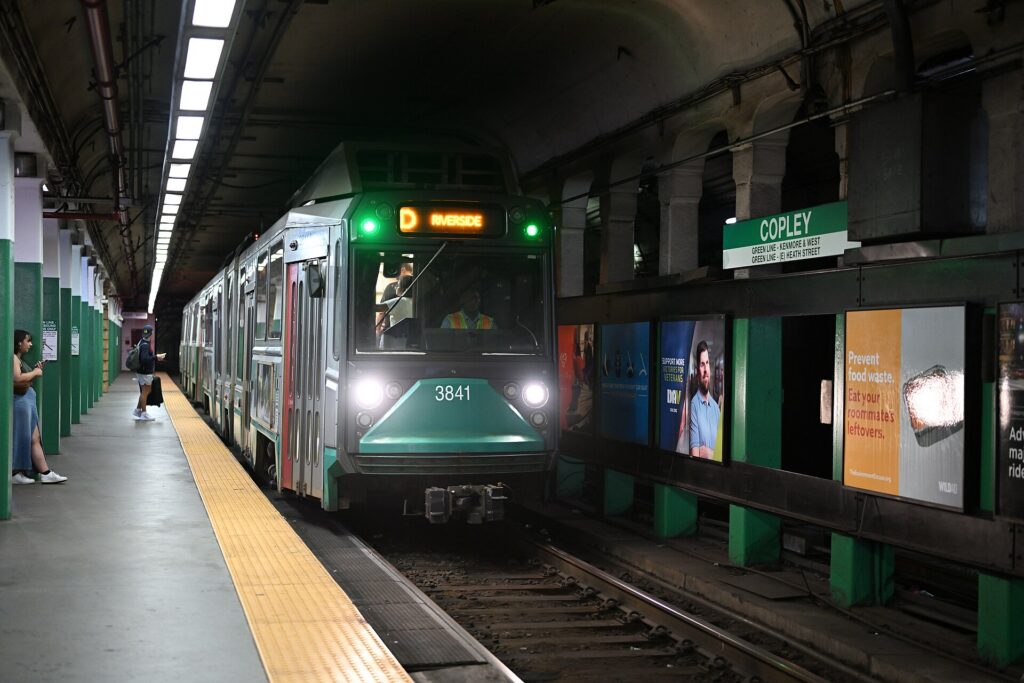
    An MBTA Green Line train at Copley station in Back Bay
    The Green Line, the oldest subway line in America and the route to Back Bay and Fenway (Photo: 4300streetcar via Wikimedia Commons, CC BY 4.0)

    Boston’s transit, explained

    The Massachusetts Bay Transportation Authority, the MBTA or simply the T, runs the subway, the buses, the commuter rail and several ferries. It has had well-publicized reliability problems in recent years, but for a visitor it remains by far the easiest way around the city.

    The subway

    Four color-coded lines meet in the center. The Red Line runs from Alewife through Harvard, Central and Kendall/MIT in Cambridge, across the Longfellow Bridge to Park Street, Downtown Crossing and South Station, then south to Ashmont and Braintree. The Green Line, a light-rail line that opened in 1897 as the first subway in America, runs under Boylston Street through Park Street, Copley and Kenmore before splitting into four branches, B, C, D and E, which run on the surface; it is the line for Back Bay, Fenway Park, the Museum of Fine Arts and, since its extension in 2022, Somerville and Medford. The Orange Line runs north to south through North Station, Downtown Crossing, Back Bay and the South End to Jamaica Plain. The Blue Line runs from Government Center under the harbor to the airport and Revere Beach. Park Street, Downtown Crossing, Government Center and State are the transfer hubs. Trains run from around 5 a.m. until shortly after midnight, with no overnight service; check the last train times if you are out late.

    Buses and the Silver Line

    Buses cover the neighborhoods between subway lines and are the way to places such as the JFK Library and Castle Island. The Silver Line is a bus rapid transit service with its own lanes and tunnels in places: the SL1 runs to the airport, and the SL2 serves the Seaport, both from South Station.

    Commuter rail and ferries

    The commuter rail runs from South Station, Back Bay and North Station to the suburbs and beyond, and it is the way to day trips: Salem and Rockport on the Newburyport/Rockport Line, Concord on the Fitchburg Line, Providence on the Providence Line, and Worcester, Lowell and Plymouth. In summer, the CapeFLYER weekend train runs from South Station to Hyannis on Cape Cod. The T’s ferries link Long Wharf with Charlestown, Hingham and Hull, and private operators run seasonal fast ferries to Salem and Provincetown and the Harbor Islands ferry.

    Fares and tickets

    You can now pay on the subway, the buses and the Silver Line by tapping a contactless credit or debit card, a phone or a watch at the fare gate or the bus reader, which is the simplest option for most visitors. Plastic CharlieCards, which you can load at station machines, and paper CharlieTickets also work. The subway charges a flat fare for any trip, with a cheaper fare on local buses and discounted transfers when you tap the same card or phone; day and week passes are sold for heavier use. Children 11 and under ride free with a paying adult. Commuter rail fares depend on the zone and ferries have their own fares; buy them in the mTicket app or on board. Check the MBTA’s site for current fares before you go.

    Accessibility

    Every bus is accessible, and most subway stations have elevators, but some Green Line surface stops and a few older stations are not step-free, and elevator outages do happen. The MBTA’s website shows accessible stations and current elevator status; if you are traveling with a wheelchair, a stroller or heavy luggage, check before you set out.

    Beyond the T

    • Walking. Boston is one of the most walkable cities in North America. Boston Common to the North End is fifteen minutes, the Public Garden to Copley Square ten, and the Freedom Trail is designed to be walked.
    • Bluebikes. The bike-share network has hundreds of stations across Boston, Cambridge, Somerville, Brookline and neighboring towns, with single rides, day passes and electric bikes. The paths along the Charles are the best rides.
    • Water taxis and ferries. Water taxis connect the airport, the waterfront, the Seaport and Charlestown, and the T’s ferry from Long Wharf to the Charlestown Navy Yard costs little and doubles as a harbor tour.
    • Taxis and ride-hail. Licensed taxis and the ride-hail apps operate across the city; they are the way home after the trains stop.
    • Intercity trains and buses. Amtrak runs the Acela and Northeast Regional from South Station and Back Bay to Providence, New York, Philadelphia and Washington, and the Downeaster from North Station to Portland, Maine. Intercity buses run from the South Station bus terminal to New York and across New England.
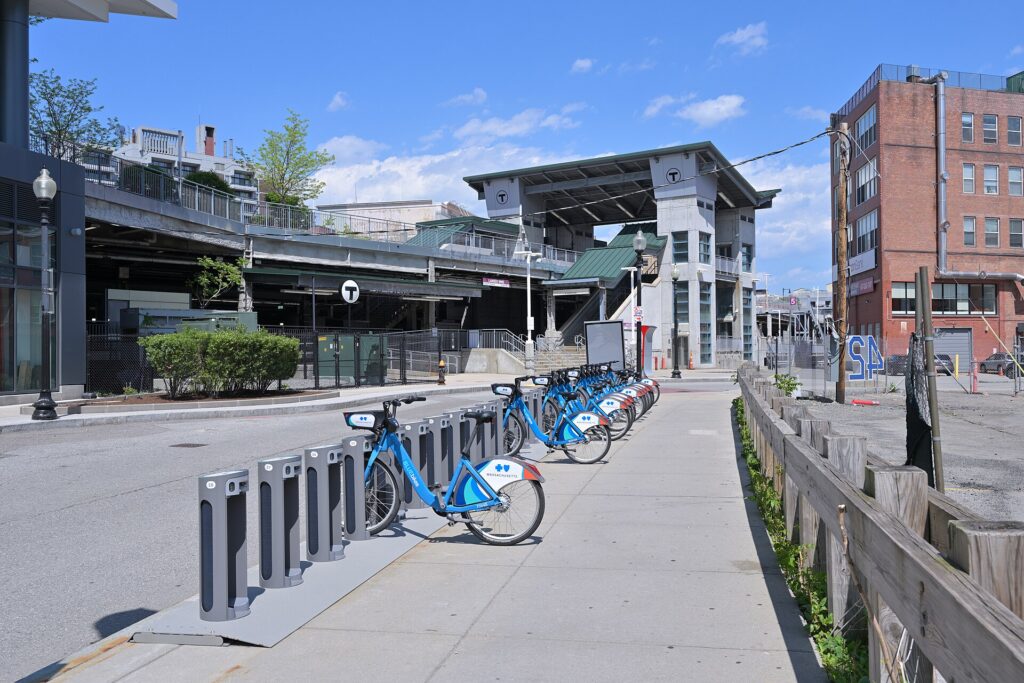
    A Bluebikes bike-share station beside Lansdowne station near Fenway Park
    Bluebikes, the bike-share network across Boston, Cambridge and neighboring towns (Photo: 4300streetcar via Wikimedia Commons, CC BY 4.0)

    Driving in Boston: what it is really like

    Boston drivers have a national reputation, and the streets explain much of it. Downtown and the North End are a knot of narrow one-way streets that follow the lines of the seventeenth-century town; lane markings fade or vanish; streets change names at intersections; and GPS directions struggle in the tunnels, where the signal drops just as you need to choose an exit. The Big Dig, the vast project that buried the elevated Central Artery in tunnels under downtown in the 2000s, made the city far more pleasant, but it created a maze of ramps and tunnels that challenges newcomers. Traffic is heavy at rush hour on I-93, the Massachusetts Turnpike (I-90) and the Southeast Expressway, around Fenway on game days, and on the routes to Cape Cod on summer weekends. Local drivers are quick and assertive.

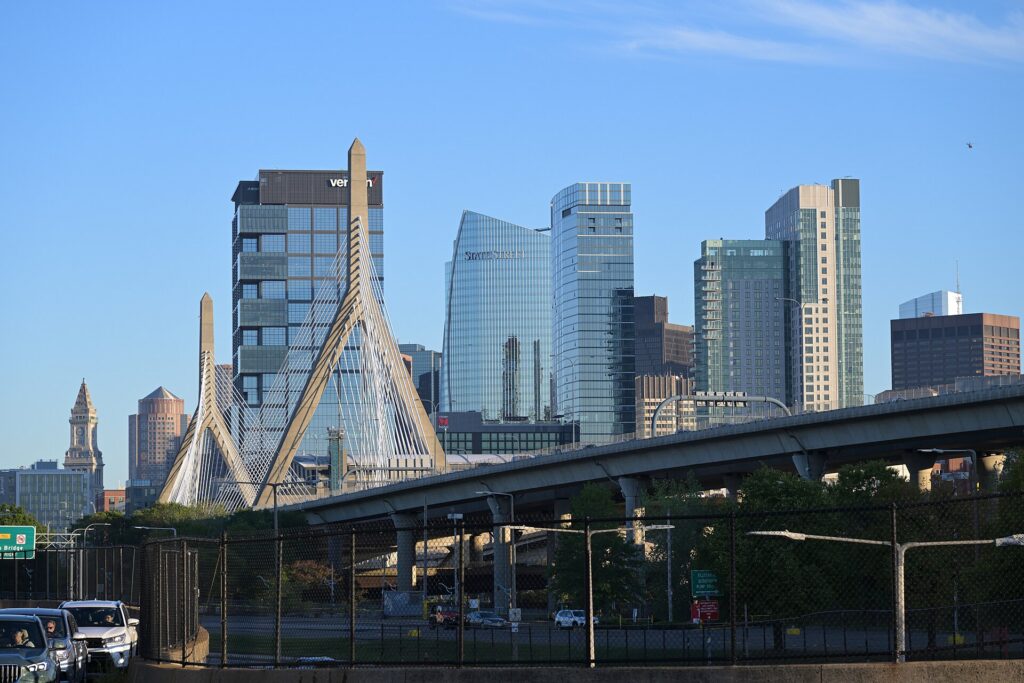
    The Leonard P. Zakim Bunker Hill Memorial Bridge carrying I-93 into Boston
    The Zakim Bridge, where I-93 emerges from the Big Dig tunnels north of downtown (Photo: 4300streetcar via Wikimedia Commons, CC BY 4.0)

    Parking

    Parking is the biggest reason not to drive. Hotels charge a steep nightly fee for valet or self-parking, and downtown and Back Bay garages are among the most expensive in the country. Much of the street parking in the residential neighborhoods, including all of Beacon Hill and much of the North End and the South End, is reserved for residents with permits. Metered spaces in Back Bay and downtown have time limits and are paid by machine or through the ParkBoston app. Street cleaning on posted days in the warmer months and snow emergency parking bans on main roads in winter both mean towing, and recovering a towed rental is expensive and time-consuming.

    Rules and conditions worth knowing

    • Tolls are all-electronic. The Massachusetts Turnpike, the harbor tunnels and the Tobin Bridge have no toll booths; cameras read an E-ZPass transponder or the license plate. Rental companies pass the tolls on with a service fee, so ask how their toll program works when you pick up.
    • Storrow Drive and Memorial Drive, the riverside parkways, have low bridges and ban trucks and commercial vehicles. Rental moving trucks that ignore the signs regularly get stuck, especially around the September move-in.
    • Rotaries. Traffic already in the circle generally has priority; enter carefully and signal your exit.
    • Hands-free law. Massachusetts bans holding a phone while driving; use a mount and voice commands.
    • Pedestrians. Drivers must stop for pedestrians in crosswalks, and in Boston there are a lot of them.
    • Right turns on red are legal in Massachusetts after a full stop unless signed otherwise, but many downtown intersections prohibit them; read the signs.
    • Winter. Snow and ice are routine from December to March, and a nor’easter can make roads dangerous for a day. Mass511 publishes traffic and road conditions.
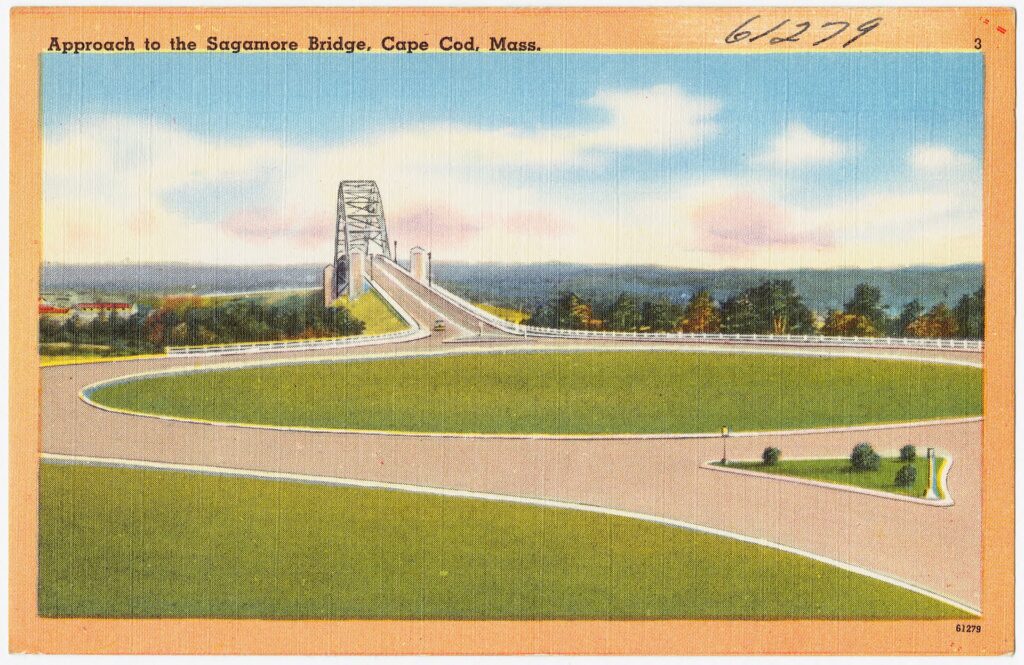
    The Sagamore Bridge over the Cape Cod Canal
    The Sagamore Bridge onto Cape Cod, the summer bottleneck on Friday afternoons (Photo: Tichnor Bros. Inc., Boston, Mass. via Wikimedia Commons, Public domain)

    When renting a car makes sense

    • Cape Cod. The ferries and the CapeFLYER reach Provincetown and Hyannis, but the beaches, lighthouses and towns of the Outer Cape and the Cape Cod National Seashore are best explored by car.
    • Fall foliage. The White Mountains, Vermont and the Berkshires are two to three hours away, and the back roads are the point.
    • The coast. Newport, the North Shore beyond Salem and Rockport, and the coast of Maine are easier with a car, even where a train reaches the first town.
    • Family in the suburbs. Greater Boston’s suburbs are spread out, and a car earns its keep daily.
    • A Northeast road trip. Boston is the natural start or finish of a trip through New England or down the coast; our Philadelphia to Boston route guide covers the drive between the two cities, about 480 km (300 miles) and five to six hours without traffic.

    If any of those apply, our rental car booking tips cover insurance, deposits and the questions to ask at the counter, and our family car rental guide looks at vehicle choice.

    When it does not

    • You are staying in Boston or Cambridge and your plans are the city.
    • You are here for a game at Fenway or the Garden, the Marathon, the Fourth of July or a conference, when parking is at its worst and the T stops at the door.
    • Your day trips are Salem, Concord, Rockport, Providence or Plymouth, all reachable by commuter rail.
    • You are traveling solo or as a couple and the rental, insurance, tolls and hotel parking add up to more than the fares.

    The hybrid plan for a city-plus-New England trip

    Spend the city days car-free and rent only for the days you leave town, and think about where you pick up. The airport’s Rental Car Center has the widest selection and makes sense if you are heading straight out of the city on arrival, since the tunnels lead directly to I-93 and the Turnpike without crossing downtown. For a trip that starts in the city, the rental offices in Back Bay and downtown let you pick up the morning you leave, so you never pay hotel parking on nights the car would sit unused. A common pattern: take the Silver Line or Blue Line into the city, spend two or three days on foot and on the T, pick up a car in Back Bay, head to Cape Cod or the mountains, and return it at the airport on the way to your flight, which most companies allow for little or no extra charge. Compare day rates on our Boston car rental page against a full-trip rental and the difference is usually obvious.

    A worked cost comparison

    Numbers change with the season and the booking window, so treat this as a method rather than a quote, and check current rates before deciding. For a four-night city break for two people, the car-free version costs the airport transfer, which can be free on the Silver Line, a handful of subway rides or two week passes, and perhaps a couple of taxis late at night; the rental version adds four days of a compact car, four nights of hotel parking at Boston rates, fuel, tolls and the airport fees. Transit wins by a wide margin. For the same four nights with two days on Cape Cod, the car-free version adds round-trip fast ferry tickets to Provincetown or the CapeFLYER to Hyannis; the hybrid version adds a two-day rental picked up in Back Bay, fuel, and parking at the beaches. For two people staying in Provincetown, the ferry is often cheaper; for several towns and beaches, or a family of four, the car usually wins. For a week-long New England road trip, a rental is the only practical answer, and an airport pickup is still simpler than getting into the city and back out again. Run the rental rates for your dates on our Boston car rental page and put them beside the ferry and train fares before you choose.

    Driving out of Boston in each season

    The roads out of Boston are good, but timing makes a large difference. In summer, the challenge is Cape Cod traffic: every Friday afternoon, all of Greater Boston seems to head south on Route 3 toward the Sagamore Bridge, and every Sunday afternoon it all comes back, turning a drive of just over an hour into three or more. Leave before noon on Friday or after dark, return early on Sunday or on Monday, and the drive is easy. In fall, foliage weekends fill the roads north into New Hampshire and Vermont, especially the Indigenous Peoples’ Day weekend in October; a weekday trip is far more pleasant. In winter, the highways are plowed quickly and generally open, but a nor’easter can make any road treacherous for a day, and the mountain roads call for care and a car with good tires; ski traffic heads north on Friday evenings and back on Sunday afternoons. In spring, the roads are clear and the crowds thin, though potholes follow the thaw. In every season, avoid I-93 and the Turnpike near the city during the weekday rush.

    Decision table

    Your tripRecommendationWhy
    City break in Boston or CambridgeNo carThe T and your feet cover everything; parking is expensive and scarce
    Game, Marathon, Fourth of July or conferenceNo carRoads close, parking vanishes, and the T stops at the venue
    Day trips to Salem, Concord or ProvidenceNo carCommuter rail reaches each in under 90 minutes
    City plus a few days on Cape CodHybrid: rent in Back Bay for the Cape days, or take the ferryCar-free city days, car or ferry for the Cape
    Fall foliage in the mountainsRent for those daysThe back roads of New Hampshire and Vermont need a car
    Family visit to the suburbsRent for the whole staySuburban distances make the car worthwhile daily
    New England road tripRent at the airportThe tunnels lead straight to the highways; no downtown driving
    Driving up from Philadelphia or New YorkDrive in, park and leave the carUse the T in the city; choose a hotel with parking you have priced

    Money-saving tips for both options

    • On transit: take the Silver Line from the airport, tap the same card or phone each time, buy a day or week pass for heavy sightseeing days, and let children 11 and under ride free.
    • On a rental: compare airport and Back Bay pickup, book early for summer and October, understand the toll program before you drive off, decline extras you already have through a credit card or home policy (check first), and never leave the car on a street-cleaning or snow-emergency route.
    • On the hotel: if you are renting, price the parking fee into the room rate, or look at hotels in Cambridge or near suburban T stations with cheaper or free parking.
    • On timing: avoid the Friday afternoon exodus to Cape Cod and the Sunday return, the weekday rush on I-93, and the move-in days at the end of August; the best time to fly to Boston guide lists the busiest weekends.
    • On the day trips: for Salem, Concord, Rockport and Providence, a commuter rail ticket costs far less than a day’s rental plus parking, and the Boston first-timer’s guide lists which trips work without a car.

    Frequently asked questions

    Is it worth renting a car in Boston?

    Not for the city. For Cape Cod, the mountains, the coast beyond the train lines or a family visit in the suburbs, yes; rent for those days only.

    Is Boston public transit good for tourists?

    Yes. Four subway lines, the Silver Line and the ferries reach nearly every sight, and the core is so compact that you will walk much of it anyway. Service stops shortly after midnight.

    How do I get from Logan Airport to downtown Boston?

    The Silver Line SL1 bus to South Station, the free shuttle to the Blue Line at Airport station, a water taxi to the waterfront, or a taxi or ride-hail through the tunnels in 15 to 30 minutes outside rush hour.

    Can I get to Cape Cod without a car?

    Yes. Fast ferries run from Boston to Provincetown in season, the CapeFLYER train runs to Hyannis on summer weekends, and buses serve the Cape year-round. A car is still better for exploring several towns and beaches.

    Is driving in Boston really that bad?

    It is challenging: confusing streets, tunnels, assertive drivers and scarce, expensive parking. It is manageable outside rush hour, but few visitors find it worth the trouble inside the city.

    How do tolls work in a rental car in Massachusetts?

    All tolls are electronic. The rental company’s transponder or plate-billing program charges you the tolls plus a service fee, so ask about the terms at pickup.

    Where should I park if I drive into Boston?

    At your hotel, after pricing its parking fee, or at a suburban T station with a garage, and take the train into the city. Avoid residents-only streets and posted street-cleaning days.

    Whichever way you go, start with the flight. Compare cheap flights to Boston, choose a neighborhood with our Boston hotel search, and if Cape Cod or the mountains are on the list, price the rental for those dates on our Boston car rental page.

  • Things to Do in Boston: A First-Timer’s Guide

    Things to Do in Boston: A First-Timer’s Guide

    Boston is the easiest big city in America to fall for on a first visit. It is compact enough to cross on foot in an afternoon, old enough that the story of the American Revolution is written into its street plan, and young enough, with a quarter of a million students in the metro area every fall, that it never feels like a museum. In a single day you can follow a red-brick line past the meeting houses of the 1770s, eat cannoli in the North End and watch a game in the oldest ballpark in the major leagues. This guide covers the sights that earn a day, the neighborhoods worth a half-day, the museums, the sports and the food, the day trips that make Boston the natural base for New England, and the practical details that turn a checklist into a trip.

    If you are still comparing cheap flights to Boston, read this alongside our guides to the best time to fly to Boston and whether you need a car (for the city itself, you do not). Between the three you can plan the whole trip.

    The Boston skyline across the Charles River
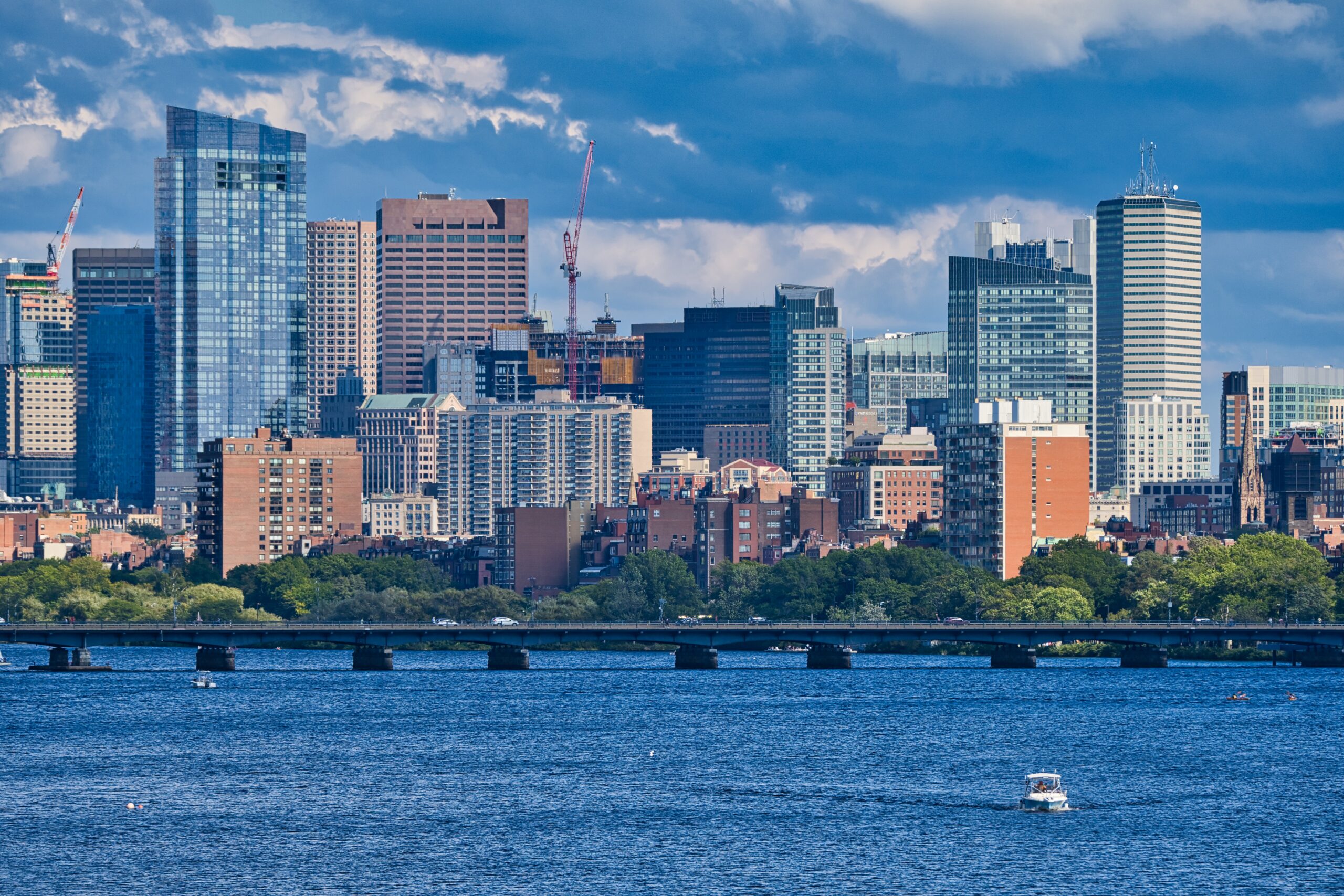
    Boston from across the Charles River, with Back Bay and downtown behind the Esplanade (Photo: Ethan Dyson via Wikimedia Commons, CC BY-SA 4.0)

    Boston at a glance for first-timers

    • Airport: Boston Logan International (BOS), in East Boston across the harbor, only about 5 km (3 miles) from downtown, one of the closest big-city airports in the country. The Silver Line bus, the Blue Line subway, a water taxi or a cab gets you in. See our Logan airport guide.
    • Getting around: the MBTA, known to everyone as the T, runs the oldest subway in the country, and its Red, Orange, Blue and Green lines reach nearly every sight. The historic core is small and walkable, and most visitors never need a car; our car-versus-transit guide explains why.
    • Money: US dollars. Massachusetts adds a 6.25 percent sales tax at the register, restaurant meals in Boston carry a slightly higher meals tax, and most clothing under a set price per item is exempt. Tipping 18 to 20 percent in restaurants is expected.
    • Weather: four real seasons: cold, snowy winters with the occasional nor’easter, a late and changeable spring, warm and humid summers cooled by the harbor breeze, and a fall that is the best in the country. Our month-by-month guide has the detail.
    • Where to stay: Back Bay for Newbury Street, Copley Square and the easiest all-round base; downtown and the Financial District for the Freedom Trail; the Seaport for new hotels and harbor views; Cambridge for Harvard, MIT and slightly lower weekend rates. Our Boston hotel search covers them all.

    The Freedom Trail: Boston Common to Bunker Hill

    The Freedom Trail is where nearly every first visit starts, and for good reason. It is a line of red brick and paint, about 4 km (2.5 miles) long, that links sixteen sites of the Revolutionary era, and you can walk it on your own for free or join one of the guided walks led by costumed guides. It begins on Boston Common, laid out in 1634 and the oldest public park in the country, and climbs past the gold-domed Massachusetts State House to Park Street Church and the Granary Burying Ground, where Paul Revere, Samuel Adams and John Hancock are buried. From there it runs past King’s Chapel and the Old South Meeting House, where the mass meeting that set off the Boston Tea Party began, to the Old State House, the oldest surviving public building in the city, with the Boston Massacre site marked outside. Faneuil Hall and the Quincy Market food hall behind it are the halfway point and the obvious lunch stop. The second half crosses into the North End for the Paul Revere House, the oldest house in downtown Boston, and the Old North Church, where two lanterns were hung in the steeple on the night of April 18, 1775, then crosses the bridge to Charlestown for the USS Constitution, the oldest commissioned warship afloat in the world, and the granite obelisk of the Bunker Hill Monument, whose 294 steps repay the climb with a view back over the city. Allow a full day. Several of the sites are part of Boston National Historical Park, whose rangers run free talks and whose visitor center at Faneuil Hall is a useful first stop.

    The Old State House on the Freedom Trail in downtown Boston
    The Old State House, one of sixteen stops on the Freedom Trail (Photo: James E. Buttersworth via Wikimedia Commons, Public domain)

    Beacon Hill, the Public Garden and the Charles River

    Next to the Common, the Public Garden is the country’s first public botanical garden and the prettiest few acres in the city: a lagoon crossed by a miniature suspension bridge, weeping willows, formal flower beds and, from spring until the end of summer, the pedal-powered Swan Boats that have been gliding around the pond since 1877. Children head straight for the bronze Make Way for Ducklings statues. North of the Common, Beacon Hill is the Boston of postcards: steep, narrow streets of red-brick row houses with black shutters and gas lamps, cobbled Acorn Street, the private green of Louisburg Square, and Charles Street at the foot of the hill with its antique shops, cafés and restaurants. Walk down from the hill to the Charles River Esplanade, the riverside park that runs west along the Boston bank, with boathouses, lawns and the Hatch Shell, where the Boston Pops play their free Fourth of July concert.

    Back Bay and Copley Square

    Back Bay was tidal marsh until the nineteenth century, when the city filled it in and laid it out as a grid of French-style boulevards, and it is now the most elegant neighborhood in Boston. Commonwealth Avenue runs through it with a tree-lined mall down the middle, and the brownstone mansions on either side are among the best-preserved Victorian streetscapes in the country. Newbury Street, one block south, is eight blocks of boutiques, galleries and café terraces. At Copley Square, H. H. Richardson’s Trinity Church faces the Boston Public Library, whose McKim Building is open to everyone: climb the marble staircase to Bates Hall, the grand reading room with its barrel-vaulted ceiling and green lamps, and find the courtyard with its fountain and café. The finish line of the Boston Marathon is painted across Boylston Street just outside. For a view from above, the observation floors at the top of the Prudential Tower look straight down over the whole city, the river and the harbor.

    The North End, the waterfront and the Seaport

    The North End is Boston’s oldest neighborhood and its Little Italy: narrow streets, laundry lines, espresso bars, bakeries and red-sauce restaurants along Hanover and Salem Streets, and, in July and August, the religious feasts where statues of the saints are carried through the streets. Come for dinner and stay for a cannoli. Below it, the Rose Kennedy Greenway is the ribbon of parks, fountains, a carousel and food trucks laid over the path of the elevated highway that was buried in the Big Dig, and it leads to the harbor. The Harborwalk follows the waterfront past Long Wharf, where ferries leave for the Harbor Islands and Provincetown, to the New England Aquarium and its giant ocean tank. Across the Fort Point Channel, the Seaport has grown in twenty years from parking lots into a district of glass towers, restaurants and the Institute of Contemporary Art, whose cantilevered building hangs over the water. On the channel itself, the Boston Tea Party Ships and Museum lets you board replica ships and throw a crate of tea into the harbor.

    Neighborhoods worth a half-day

    Cambridge: Harvard and MIT

    Across the river and a few stops on the Red Line, Harvard Square is a crossroads of bookshops, cafés and street musicians at the gates of Harvard Yard, where you can walk among the red-brick buildings, rub the foot of the John Harvard statue and visit the Harvard Art Museums and the Harvard Museum of Natural History. MIT, two stops closer to Boston, has the Great Dome, Frank Gehry’s Stata Center, a campus full of public sculpture and the MIT Museum in Kendall Square.

    The South End

    The largest Victorian row-house district in the country, with bow-fronted brownstones on leafy squares, many of the city’s best restaurants along Tremont Street and Washington Street, and the SoWa Open Market of artists, food trucks and vintage stalls on Sundays from spring to fall.

    Fenway and the Kenmore area

    Beyond the ballpark, the Fenway neighborhood holds the Back Bay Fens, the first link of Frederick Law Olmsted’s Emerald Necklace of parks, the Fenway Victory Gardens, and two of the city’s great museums, all within a short walk of Kenmore Square.

    Charlestown

    Across the harbor from the North End, Charlestown has the Navy Yard, the USS Constitution and quiet colonial-era streets climbing to Bunker Hill; the small MBTA ferry from Long Wharf is the cheapest harbor cruise in town.

    Chinatown and Jamaica Plain

    Chinatown, between downtown and the South End, is small, dense and the place for dim sum and late-night noodles. Jamaica Plain, on the Orange Line, is leafy and relaxed, with Jamaica Pond and the Arnold Arboretum, Harvard’s living collection of trees, famous for its lilacs in May.

    Museums, culture and family attractions

    The Museum of Fine Arts is one of the great encyclopedic museums of the country, with outstanding Egyptian and Japanese collections, a wing of American art that includes John Singleton Copley and John Singer Sargent, and one of the best collections of Impressionist painting outside Paris; plan half a day. Around the corner, the Isabella Stewart Gardner Museum is a Venetian-style palace built around a flowering courtyard and left exactly as its founder arranged it, which is why empty frames still hang where the paintings stolen in the unsolved 1990 heist once were; anyone named Isabella gets in free. The Institute of Contemporary Art in the Seaport is the place for modern work, and the Harvard Art Museums reward a detour to Cambridge. The Museum of Science, on the Charles River Dam, has a planetarium and a famous indoor lightning show. The John F. Kennedy Presidential Library and Museum, in a striking I. M. Pei building on Columbia Point overlooking the harbor, tells the story of the Kennedy presidency. Symphony Hall is home to the Boston Symphony Orchestra and the Boston Pops, and the theater district hosts touring Broadway shows and the Boston Ballet. Our Boston events page lists what is on stage and in the arenas during your dates.

    Sports

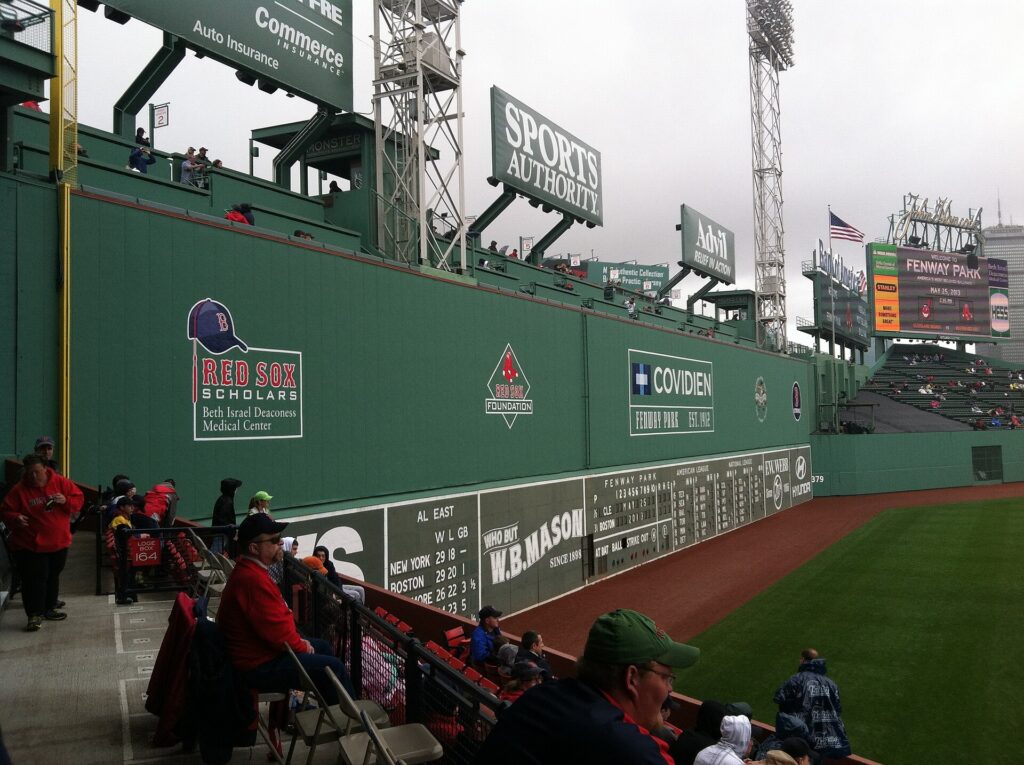
    Fenway Park, home of the Red Sox since 1912, is the oldest ballpark in the major leagues, with the 37-foot left-field wall known as the Green Monster, a manual scoreboard; the season runs from early April to late September, and the ballpark offers guided tours year-round. The Celtics (basketball) and the Bruins (hockey) share TD Garden, built above North Station, from October into spring. The Patriots and the New England Revolution play at Gillette Stadium in Foxborough, about 40 km (25 miles) southwest, reached by special commuter trains on game days. The Boston Marathon, the world’s oldest annual marathon, runs on Patriots’ Day, the third Monday of April, and the whole city turns out along the route. In October, the Head of the Charles Regatta fills the river with rowing crews from around the world over a weekend. Check what is on sale in Boston for your dates before you book flights.

    Fenway Park, home of the Boston Red Sox, with the Green Monster in left field
    Fenway Park, the oldest ballpark in the major leagues, home of the Red Sox since 1912 (Photo: Zoke via Wikimedia Commons, CC BY-SA 4.0)

    What to eat, and where

    Boston’s food starts with the sea. Clam chowder, thick, creamy and made with quahogs, is on every menu, and the version at the oyster bars is the one to try. The lobster roll comes two ways, cold with mayonnaise or warm with butter, and everyone has an opinion. Raw bars serve local oysters from Wellfleet, Duxbury and the rest of the Massachusetts coast, and fried clams, scallops and cod are summer staples. The North End is the place for Italian, from pizza and pasta to the cannoli and sfogliatelle in the bakeries. Chinatown has the dim sum, the South End and the Seaport the ambitious new restaurants, and Cambridge and Somerville the best neighborhood spots. For something quick, Quincy Market behind Faneuil Hall is a busy food hall, the Boston Public Market near Haymarket is an indoor market of New England producers, and the open-air Haymarket produce stalls beside it run on Fridays and Saturdays. Boston cream pie was invented at the Omni Parker House hotel, which still serves it.

    Boston through the seasons

    Boston changes completely with the calendar, and what you do depends on when you come. Winter (December to March) is cold, often snowy, and cozy: skating on the Frog Pond on Boston Common, the holiday lights on the Common and along Commonwealth Avenue, the Celtics and Bruins at the Garden, long afternoons in the museums, and First Night celebrations on New Year’s Eve. Spring (April to May) arrives late but with a rush: the Marathon, Opening Day at Fenway, magnolias on Commonwealth Avenue, the Swan Boats back on the lagoon, lilacs at the Arnold Arboretum and, in late May, college commencements that fill every hotel. Summer (June to August) is harbor season: ferries to the Harbor Islands, the Fourth of July concert and fireworks on the Esplanade, outdoor movies and concerts, the North End feasts, and day trips to Cape Cod and the North Shore beaches. Fall (September to November) is the reason many people come: crisp days, the foliage in New England from late September to late October, the Head of the Charles, Salem’s Halloween month, pennant races at Fenway and the students back in town. Our month-by-month guide has the fare patterns that go with each season.

    Boston with kids

    Boston is one of the best cities in the country for children. The New England Aquarium, with its four-story ocean tank, penguins and harbor seals, and the Museum of Science are full days on their own. The Boston Children’s Museum, on the Fort Point Channel under its giant milk-bottle landmark, is excellent for under-tens. The Swan Boats and the duckling statues in the Public Garden, the Frog Pond spray pool in summer and skating rink in winter, the carousel on the Greenway and the Boston Tea Party Ships fill the rest. Older children enjoy the USS Constitution, climbing Bunker Hill and the amphibious duck tours that splash into the Charles. In summer, the ferry to the Boston Harbor Islands, where Georges Island has a Civil War fort to explore and Spectacle Island has a beach and trails, is the best day out. For families adding a road trip to Cape Cod or the mountains, our family car rental guide covers the vehicle question.

    Boston on a budget

    Boston hotels are among the most expensive in the country, especially in the fall, but a surprising amount of the city costs nothing. The Freedom Trail, Boston Common, the Public Garden, Beacon Hill, the Esplanade, the Greenway and the Harborwalk are all free; so are Harvard Yard, the MIT campus, the Boston Public Library, the USS Constitution and the Bunker Hill Monument. Several museums offer free or reduced-price evenings or days, and the Institute of Contemporary Art has long offered free admission on Thursday evenings; check each museum’s site before you go. Eat well for less in Chinatown, at the food trucks on the Greenway, at the Boston Public Market and in the North End’s pizza places. Stay in Cambridge, Brookline or near a T station outside the core for lower rates, and visit in January, February or early March, when rooms can cost half their October price. Compare rates by neighborhood on our Boston hotel search.

    Day trips from Boston

    Lexington and Concord, 30 to 40 minutes west by car, are where the Revolution’s first shots were fired on April 19, 1775: Minute Man National Historical Park links the battle road, the North Bridge and the visitor centers, and Walden Pond, Henry David Thoreau’s retreat, is a few minutes further. Salem, half an hour north by commuter rail or, in summer, by ferry, has the witch trial history, the excellent Peabody Essex Museum and a month-long Halloween festival every October. Cape Cod is the classic summer escape: beaches, lighthouses, dunes, clam shacks and, at its tip, Provincetown, reachable by fast ferry from Boston in season. Plymouth, an hour south, has Plymouth Rock, the Mayflower II and the living-history museum of Plimoth Patuxet. Newport, Rhode Island, with its Gilded Age mansions, is about an hour and a half by car, and Portland, Maine, about two and a half hours by the Amtrak Downeaster. The White Mountains of New Hampshire, two to three hours north, are the heart of leaf-peeping country in early October. Salem, Concord, Rockport and Providence are easy by train; Cape Cod, Newport and the mountains are best by car, so see our Boston car rental page. Visit Massachusetts, the state tourism office, covers the whole region, and our guides to New York and Philadelphia cover the next cities down the Northeast Corridor.

    Boston Harbor and the downtown waterfront
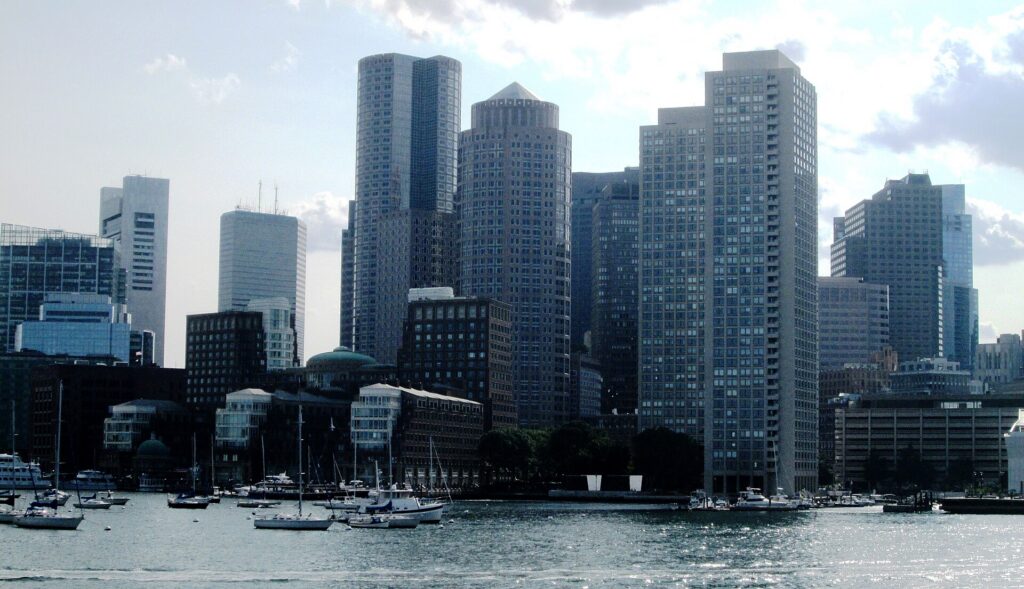
    Boston Harbor, where ferries leave Long Wharf for the Harbor Islands, Salem and Provincetown (Photo: Beyond My Ken via Wikimedia Commons, CC BY-SA 4.0)

    Two sample itineraries

    Three days, first visit

    Day one: the Freedom Trail from Boston Common to Faneuil Hall in the morning, lunch at Quincy Market, the Paul Revere House and the Old North Church in the afternoon, and dinner in the North End with a cannoli to finish. Day two: Charlestown for the USS Constitution and Bunker Hill in the morning, the Public Garden and Beacon Hill at midday, Newbury Street, Copley Square and the Boston Public Library in the afternoon, and a Red Sox game or a concert at Symphony Hall at night. Day three: the Museum of Fine Arts or the Gardner in the morning, the Red Line to Harvard Square for the afternoon, and a seafood dinner in the Seaport.

    Five days, with New England

    Add a day on the harbor, with the Aquarium, the Harbor Islands ferry and the Tea Party Ships, and a day trip: Lexington and Concord or Salem by train, or pick up a car for Cape Cod or Newport and return it before you head to the airport.

    Practical details

    • Transit: tap a contactless card or phone at subway fare gates and on buses, or use a reloadable CharlieCard; subway fares are flat and buses are cheaper. The MBTA has maps, fares and service alerts; our transit-versus-car guide goes into detail.
    • From Logan: the Silver Line SL1 bus to South Station, a free Massport shuttle to the Blue Line at Airport station, a water taxi across the harbor, or a taxi through the tunnels. The Massport site covers ground transport.
    • Weather: layers in spring and fall, a real coat, hat and waterproof boots from December to March, light clothing and an umbrella in summer. The National Weather Service’s Boston office has the forecast.
    • Time zone: Eastern, the same as New York, Washington and Toronto.
    • Entry requirements: visitors from Visa Waiver Program countries need an approved ESTA before boarding; most others need a visa. The State Department’s travel site is the authoritative source.
    • Safety: one of the safest large cities in the country; the usual awareness applies around the busiest stations late at night.

    Frequently asked questions

    How many days do you need in Boston?

    Three full days covers the Freedom Trail, Beacon Hill, Back Bay, one museum, Cambridge and a game or a show; add a fourth or fifth for the harbor and a day trip to Salem, Concord or Cape Cod.

    What is the number one thing to do in Boston?

    Walk the Freedom Trail, at least from Boston Common to the Old North Church. If you have one evening, make it a game at Fenway Park between April and September.

    Is Boston walkable?

    Extremely. The historic core, Beacon Hill, Back Bay, the North End and the waterfront are all within a half-hour walk of each other, and the T covers Cambridge, Fenway and the Seaport.

    Do I need a car in Boston?

    No. Parking is expensive, the streets are notoriously confusing, and the T and your feet are faster for nearly everything. Rent one only for Cape Cod, Newport or the mountains.

    Is Boston expensive?

    Hotels are, particularly from September to November and during graduation season in May. Many of the best sights are free, and winter rates are dramatically lower.

    What is Boston known for?

    The American Revolution, Harvard and MIT, Fenway Park and passionate sports fans, the Marathon, clam chowder and lobster rolls, and the most beautiful fall in the country.

    Ready to go? Compare flights to Boston, find a place to stay with our Boston hotel search, and see what is on at Fenway, the Garden and Symphony Hall for your dates on our Boston events page.