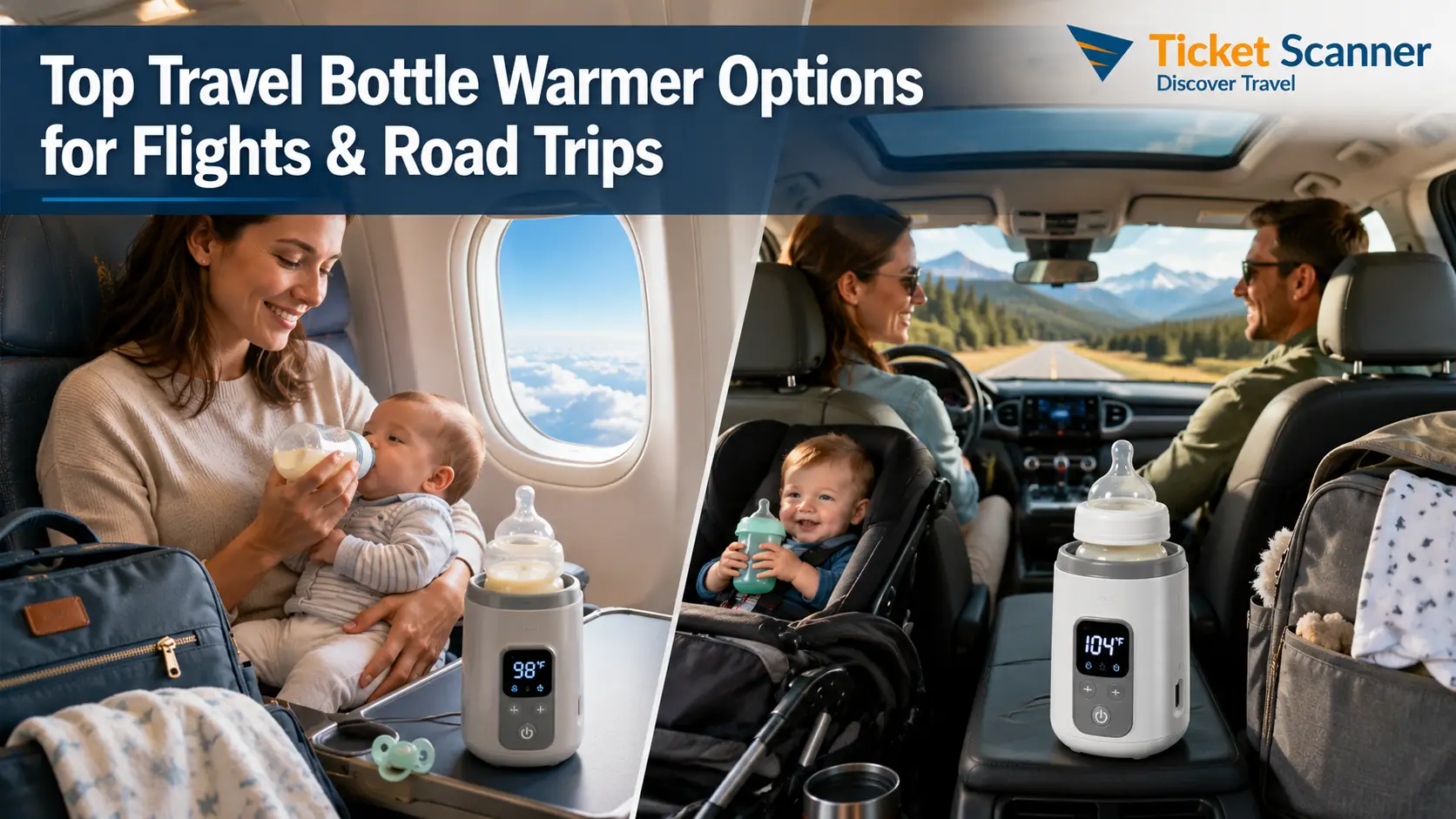
Feeding a baby at home is a routine. Feeding a baby at 30,000 feet, in the back seat on a highway, or in a hotel room with no kitchen is a puzzle, and the piece that most often goes missing is warm milk. A travel bottle warmer solves that puzzle for many families: a portable, usually rechargeable device that brings breast milk, formula or water to a comfortable temperature wherever you are. But not every baby needs warm milk, not every warmer suits every trip, and there are real rules about carrying milk, formula and batteries on a plane. This guide explains whether you need a travel warmer at all, the different types and how to choose, what to know about flying and driving with one, safe preparation and cleaning on the road, and a packing checklist that makes feeding on the go feel routine again.
The short answer
If your baby will take room-temperature or cool milk, you may not need a warmer at all; the CDC notes that breast milk does not need to be warmed. If your baby insists on warm feeds, a rechargeable portable warmer is the most flexible choice for flights and road trips, a car-powered warmer suits long drives, and an insulated flask of hot water is the simple, no-battery backup. Look for temperature control, enough capacity for your bottles, a leak-proof lid, easy cleaning and a battery you can carry in the cabin. Never use a microwave to warm milk or formula, and always test the temperature before feeding.
Do you actually need a travel bottle warmer?
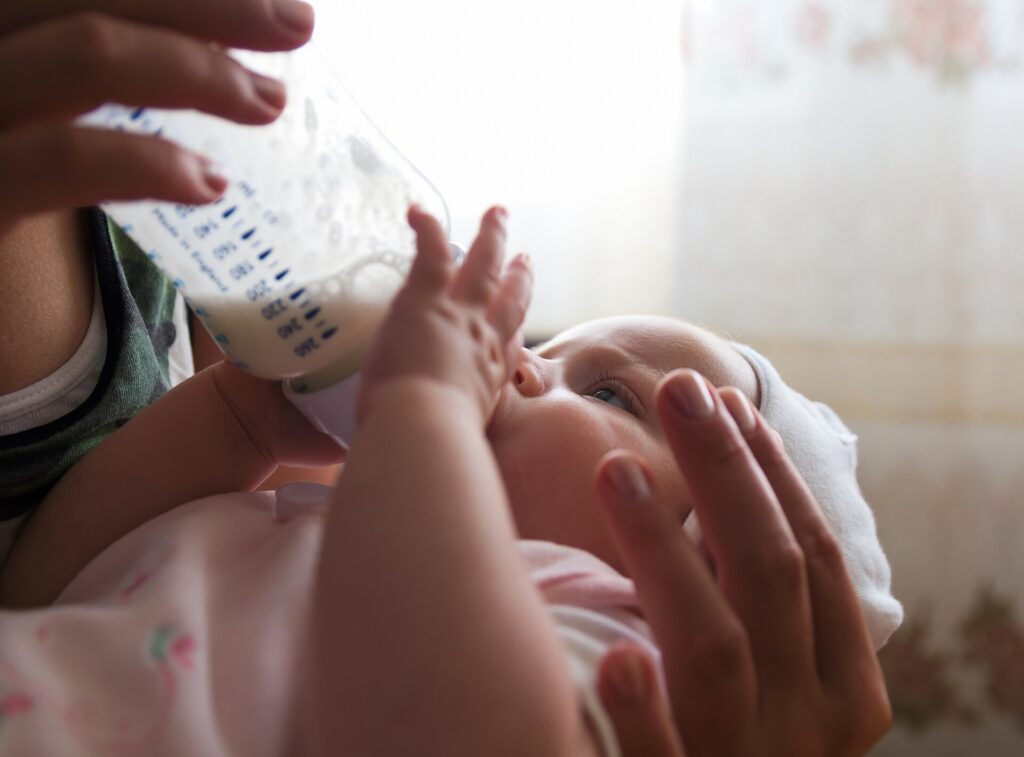
Start with your baby. Some babies drink milk cold from the fridge or at room temperature without complaint, and for those families a warmer is optional. Others refuse anything but body-warm milk, and a hungry, crying baby on a plane is exactly the situation a warmer is designed for. The best way to find out is to experiment at home a few weeks before the trip: offer a room-temperature bottle and see what happens. If your baby accepts it, travel just got simpler.
Think too about the trip itself. A short flight between feeds needs less equipment than a long-haul flight. A road trip with frequent stops at places with hot water may need nothing more than a flask. A week in a hotel room with a kettle is different from a week in a rental with a full kitchen. Match the gear to the trip, and remember that everything you bring has to be carried, charged and cleaned.
Types of travel bottle warmers
| Type | How it works | Best for | Watch out for |
|---|---|---|---|
| Rechargeable portable warmer | Battery-powered cup or bottle that heats water or milk to a set temperature | Flights, day trips, anywhere without power | Battery life, charging before travel, lithium battery rules |
| Car-powered warmer | Plugs into a car’s USB port or 12-volt outlet; some wrap around the bottle | Long road trips | Slow on weak ports; useless away from the car |
| Insulated flask with water bath | Hot water from a flask poured into a cup or container; the sealed bottle stands in it | Backup for any trip; no power needed | Water cools over hours; spill risk |
| Plug-in electric warmer | A compact version of a home warmer that runs on wall power | Hotel stays and rentals | Voltage and plug type abroad; needs an outlet |
Rechargeable portable warmers
These are the most popular travel choice and what most people mean by a “travel bottle warmer.” Most look like an insulated bottle or cup with a heating element and battery in the base and a simple control on the side. Some heat water that you then mix with premeasured formula powder; others are designed to warm milk directly or to hold a bottle in a warm water bath. Many offer several temperature settings and a keep-warm function. They are ideal on planes and in places without an outlet, but they depend on the battery, so charging becomes part of your routine.
Car-powered warmers
For long drives, a warmer that runs from the car’s power removes the battery worry. Some are wrap-around sleeves that heat a bottle directly, others are cups that sit in a cup holder. They tend to be slower than battery units on a weak USB port, and they only work in the car, so they are best paired with another option for the hotel.
The flask method
The simplest travel warmer is a good insulated flask of hot water. At feeding time, pour hot water into a cup or a small container, stand the sealed bottle or milk bag in it for a few minutes, and test the temperature. This is similar to the CDC’s own advice for warming breast milk, which is to place the sealed container in warm water or hold it under warm running water. A flask needs no charging and has nothing to break, which makes it a good backup even if you bring an electric warmer.
Plug-in warmers for the hotel
If you are staying put for a week, a compact plug-in warmer, or even your home warmer if it is small, may be simpler than a battery unit. Check the voltage and plug type if you are traveling abroad, since many home appliances do not work on a different voltage without a converter.
What to look for
- Power source and battery. For flights, a built-in rechargeable battery is the main need. Check how many warms a full charge gives you and how the unit charges; a common charging cable you already carry for your phone means one less cable to pack.
- Heating time. Faster is better when a baby is hungry, but manufacturers’ claims vary with the starting temperature and amount. Test it at home so you know how long it really takes.
- Temperature control. Adjustable settings, including one around body temperature, let you warm milk gently rather than making it hot. A display that shows the temperature is helpful.
- Capacity and bottle fit. Make sure the warmer holds enough for a full feed and, if it holds a bottle, that your brand of bottle fits. Wide-neck and narrow-neck bottles fit differently.
- Leak-proof design. A warmer that leaks in the diaper bag is worse than no warmer. Look for a secure, sealed lid.
- Easy cleaning. Wide openings and few crevices matter when you are washing it in a hotel bathroom sink.
- Size and weight. It needs to fit in the diaper bag and, ideally, a car cup holder.
- Safety features. Automatic shutoff and overheat protection are worth having.
Popular portable options
Portable bottle warmers are sold by many brands, and models change often. A few names that parents frequently come across are below. Check the current product listing for capacity, settings, charging and battery details before you buy, and choose on the features above rather than the brand.
Papablic Portable Bottle Warmer
Papablic makes portable, rechargeable warmers designed for travel and home, with multiple temperature settings and a design intended to fit in a car cup holder. The brand also sells a Pro version marketed as heating faster with more temperature settings. They suit parents who want one warmer for the car, the hotel and the flight.
BOLOLO Portable Bottle Warmer
BOLOLO sells a compact rechargeable warmer for breast milk, formula and water, aimed at parents who want something small and light for short flights and day trips.
Large-capacity rechargeable cups
Several brands sell larger insulated warmers that hold enough water for more than one feed, useful for long travel days or twins. The trade-off is size and weight in the bag.
Flying with a bottle warmer, milk and formula
Security screening
Baby feeding supplies are treated differently from other liquids at airport security. In the United States, the TSA allows formula, breast milk, toddler drinks and baby food in quantities greater than 3.4 ounces (100 milliliters) in carry-on bags, and they do not have to fit in the quart-sized bag. Tell the officer at the start of screening that you have them, and take them out to be screened separately; they may be tested. Ice packs and gel packs used to keep milk cold are allowed too. The TSA’s traveling with children page covers strollers, car seats and screening. In Canada, CATSA’s guidance on baby food and milk sets out the rules. Other countries have similar exemptions but the details vary, so check before you fly, especially on the return trip.
An empty bottle warmer goes through the X-ray like any other electronic device. If it is full of water at the checkpoint, you may be asked to empty it, so fill it airside, after security.
Batteries
Most portable warmers have a built-in lithium battery. In general, devices with lithium batteries are best kept in carry-on bags, and spare lithium batteries and power banks must be in carry-on, not checked bags, according to the FAA’s PackSafe guidance. Airlines can have their own rules, so check with yours, and switch the warmer off or lock it so it cannot turn on in the bag.
Using a warmer on board
Airlines vary on whether they allow heating devices to be used in the cabin, and flight attendants may also be able to provide hot water to stand a bottle in. Ask your airline before you fly, and ask the crew when you board. Air Canada, for example, publishes a page on travelling with children that covers infant travel. Plan as if you cannot rely on either: a warmer charged and ready and a flask of hot water from an airport café make a good combination.
Timing feeds
Many parents like to offer a bottle during takeoff and landing, because sucking and swallowing can help with ear pressure. That means having milk ready as boarding finishes and again when the descent begins, often about half an hour before landing. Keep the warmer and bottle in the bag under the seat in front, not the overhead bin, since you cannot stand up during takeoff and landing. Leave plenty of time at the airport so you are not rushing; our guide to airport arrival times helps.
Road trips
- Stop to feed. Never take a baby out of the car seat while the car is moving. Plan stops every couple of hours; it is better for everyone anyway.
- Keep milk cold, then warm it. Carry expressed milk in an insulated cooler with ice packs and warm only what you need for each feed.
- Do not store formula in a hot car. The CDC advises storing unopened formula in a cool, dry, indoor place rather than in vehicles; on a road trip, keep it in the cabin with you, out of direct sun.
- Use car power for warming. A car-powered warmer, or charging your battery warmer as you drive, means it is ready at the next stop.
- Plan for traffic. A delay can push a feed into the middle of a highway with nowhere to stop. Having a warm bottle ready before you set off on the next leg helps.
If you are renting a car for the trip, reserve an infant seat or bring your own, and check that the vehicle has a working USB port or 12-volt outlet. Our guide to family car rentals covers seats and vehicle choice.
Preparing feeds safely on the road
Breast milk
Follow the CDC’s breast milk storage and preparation guidance. Key points: breast milk can be served cold, at room temperature or warm; to warm it, keep the container sealed and place it in warm (not hot) water; once warmed, use it within two hours; and never thaw or heat breast milk in a microwave, which can create hot spots. Thawed milk should not be refrozen.
Formula
The CDC’s infant formula preparation guidance covers the essentials: wash your hands, use clean bottles, measure water before adding powder according to the container’s instructions, use prepared formula within two hours of preparation and within an hour of starting a feed, and discard leftovers. It also notes extra precautions for babies younger than two months, premature babies and those with weakened immune systems. Premeasured powder in a divided dispenser, plus warm water from the warmer or flask, is the easiest approach on the go. Ready-to-feed formula needs no mixing and is convenient for travel days.
Water
Where tap water is not safe to drink, use bottled or boiled water for mixing formula and cleaning bottles, and follow local health advice and your pediatrician’s guidance.
Always test the temperature
Before feeding, shake or swirl the bottle and test a few drops on the inside of your wrist. It should feel warm, not hot. Portable warmers can vary, and a setting that is perfect at home may behave differently when the device is cold or the battery is low.
Cleaning on the road
Cleaning is the part of travel feeding that people forget to plan. Pack a small bottle brush, a travel-size bottle of dish soap and a clean towel or drying rack. Rinse bottles and the warmer as soon as possible after each feed, since dried milk is harder to clean, then wash properly at the hotel. Many hotels will provide a mini-fridge on request, which is useful for storing milk, and a kettle for boiling water; clean the kettle before use if you are using it for baby feeds. Our guide on the best time to book hotels for family vacations covers the room features that make travel with a baby easier, like a fridge, a kitchenette or a separate sleeping area.
Traveling abroad with a warmer
International trips add a few wrinkles. Wall voltage and plug shapes differ between countries, and a plug-in warmer designed for North American outlets may need a converter, not just an adapter, to work safely elsewhere; check the label on the charger or device, which usually lists the input voltage range. Battery warmers that charge from a standard phone charger are the easiest option, since most modern phone chargers accept a wide voltage range. Formula brands differ between countries too, so bring enough of your baby’s usual formula for the whole trip rather than hoping to find it on arrival, and keep it in your carry-on in case a checked bag is delayed. On long-haul flights across time zones, feed on your baby’s schedule rather than the clock, and adjust gradually once you arrive. Finally, check the security rules for your return flight as well as the outbound one, since the exemptions for milk and formula are similar in many countries but not identical.
A feeding packing checklist
- Bottle warmer, fully charged, and its charging cable
- Insulated flask for hot water as a backup
- Enough bottles and nipples for the travel day, plus spares
- Formula (premeasured in a dispenser) or ready-to-feed cartons
- Expressed breast milk in an insulated cooler with ice packs
- Bottle brush, small dish soap and a towel
- Bibs, burp cloths and a change of clothes for baby and a parent
- A basic travel first aid kit; our travel first aid kit guide covers what to include
- Plug adapter or voltage converter for international trips
Pack all of it in the bag under the seat or within reach in the car. Once your baby becomes a toddler, the bag gets a little lighter, and the challenge shifts to entertainment; our guides to travel books for kids and kids’ suitcases cover the next stage.
Common mistakes
- Not testing the warmer at home. Learn how long it takes and which setting your baby likes before the trip.
- Forgetting to charge it. A dead warmer at the gate is worse than none. Charge it the night before and top it up during layovers.
- Packing it in checked luggage. Keep it, and any lithium battery, in the cabin with you.
- Overheating milk. Warm, not hot. Test every time.
- Using the microwave. Hot spots can burn a baby’s mouth. The CDC advises against it for both breast milk and formula.
- Keeping leftovers. Once a baby has fed from a bottle of formula, discard what is left after the feed.
- Relying on the airline. Hot water on board is not guaranteed. Bring your own solution.
Frequently asked questions
Can I bring a bottle warmer on a plane?
Generally yes, in your carry-on. Devices with lithium batteries belong in the cabin, and spare batteries must be carried on. Whether you may use a heating device during the flight depends on the airline, so ask before you fly.
Can I bring breast milk and formula through security?
Yes. In the United States, breast milk, formula and baby food in quantities over 3.4 ounces are allowed in carry-on bags; declare them at the start of screening. Canada has similar rules. Check the rules for every country on your itinerary.
Does breast milk need to be warmed?
No. The CDC notes that breast milk can be served cold, at room temperature or warm. Warming is a matter of what your baby prefers.
How do I warm a bottle without a warmer?
Stand the sealed bottle or milk bag in a cup or container of warm water for a few minutes, using hot water from a flask, a café or the crew, then test the temperature on your wrist. Never use a microwave.
How long does warmed milk last?
Per CDC guidance, use warmed breast milk within two hours. Use prepared formula within two hours of preparation and within one hour after the feed begins, then discard leftovers.
Will a travel bottle warmer work in the car?
Battery warmers work anywhere, and car-powered models run from the USB port or 12-volt outlet. Always stop the car to feed rather than taking the baby out of the car seat while driving.
Should I buy a warmer that heats water or one that heats milk?
Water-heating models suit formula, where you mix powder with warm water. Models that hold a bottle in a warm water bath or warm milk directly suit breast milk. Some do both; choose based on how you feed.
Once feeding is sorted, the trip is much easier to plan. Compare fares on flexible dates on our flight search, where a nonstop is often worth a little extra with a baby, find a room with a fridge and space for a crib on our hotel search, and if you are driving, price a car with room for the stroller on our car rental search. For the bigger picture, read our guide on why a family vacation is worth making time for.
Keep planning with TicketScanner
- Why a family vacation matters for work-life balance — the family travel guide
- Best traveling books for kids
- Kids' suitcases: a buyer's guide
- Best time to book hotels for family vacations
- Car rentals for family vacations
- Travel first aid kit guide
- How early to get to the airport
- Search flights — nonstops are worth it with a baby
- Cheap flights to Orlando