Category: Family Travel

  • Affordable Kids Suitcases for Boys Every Parent Will Love

    Affordable Kids Suitcases for Boys Every Parent Will Love

    A suitcase of their own changes how a child experiences a trip. Rolling it through the terminal, choosing what goes in it and being responsible for it at the hotel makes a boy feel like a real traveler instead of cargo, and it takes a little weight off the adults at the same time. The catch is that most children’s luggage is sold on looks: a favorite color, a truck, a rocket, a cartoon. Looks matter to a six-year-old, but the things that decide whether a kids’ suitcase actually works are size, weight, wheels, handle height and how it fits the airline’s rules. This guide explains what to look for at each age, how carry-on allowances work for children, hardside versus softside, spinner versus two-wheel, ride-on cases and backpacks, a few affordable sets worth considering, and how to get your son packing and pulling his own bag without a meltdown at the gate.

    The short answer

    For most boys between about four and ten, the right choice is a light carry-on size case, roughly 16 to 18 inches tall, with smooth wheels and a telescoping handle that adjusts low enough for his height, in a design he picked himself. Toddlers do better with a small backpack or a ride-on case that a parent can tow. Pre-teens can usually handle a standard adult carry-on. Keep the empty weight low, since your child can only pull what he can lift, and check your airline’s carry-on and personal-item rules before you buy, because a child with his own seat usually gets the same allowance as an adult. Affordable sets from brands like Rosamo, GYMAX and Travelers Club bundle a small spinner with matching bags, which is good value if you want a backpack and case together.

    Why a child’s own suitcase is worth it

    • Responsibility. A child who packs and pulls his own bag learns to keep track of his things, and he is more likely to notice when something is missing.
    • Excitement. A suitcase he chose turns the trip into something he owns. Many parents find that the bag comes out of the closet days before departure and gets packed and unpacked several times.
    • Fewer hands full. Families already juggle car seats, strollers, documents and snacks. One less bag for an adult to carry matters.
    • Organization. Each child’s clothes in their own case means less digging through a shared bag at the hotel, and a clear answer to “where are my pajamas?”

    It is also one of the small decisions that make a family trip smoother, which is the point of our broader guide on why a family vacation matters for work-life balance.

    Sizing by age

    Children grow fast, and the suitcase that is perfect at five will look tiny at nine. The table below is a practical starting point. Heights are the overall height of the case including wheels, which is how most retailers list them.

    AgeBest optionTypical sizeWhy
    2 to 3Small backpack or ride-on caseBackpack or about 18 in ride-onToddlers cannot steer a case for long; a parent tows the ride-on when they tire
    4 to 6Small spinner or two-wheel caseAbout 14 to 16 inLight enough to pull, low handle, fits under a seat on many aircraft
    7 to 10Kids’ carry-onAbout 16 to 18 inHolds a week of kids’ clothes; still manageable through a terminal
    11 and upStandard adult carry-onWithin the airline’s carry-on limitWill not be outgrown; handle height suits taller kids

    Two things matter more than the headline size. First, handle height: many small cases have a telescoping handle that is too long even at its lowest setting, which forces a small child to pull at an awkward angle. If you can, have your son try the handle before you buy. Second, empty weight: a heavy case filled with clothes becomes a bag the parent carries. Look for the lightest case in the size you need.

    How airline rules apply to children

    Airline baggage rules are the same for children as for adults in most cases, which surprises many parents. The principles:

    • A child with a paid seat usually gets the full cabin allowance of their fare: typically one carry-on for the overhead bin and one personal item under the seat. Basic economy fares on some airlines restrict the full-size carry-on, so check the fare rules.
    • Lap infants (usually under two, sitting on a parent’s lap) generally do not get their own carry-on, though many airlines allow a diaper bag and let you check or gate-check a stroller and car seat. Policies vary.
    • Size limits apply to the child’s bag too. A kids’ case that is within the airline’s carry-on dimensions can go in the overhead bin; a very small one may fit under the seat in front as the personal item, which keeps it within reach for snacks and toys.
    • Measure with the wheels and handle. Airline limits include wheels and handles, and a case that is fine on paper can be too deep once the pockets are full.

    Rules change and differ between airlines, so check the official pages before you fly: Air Canada, WestJet, Delta and American Airlines all publish their current limits. Air Canada also has a page on travelling with children that covers infant allowances. Our guide to Delta carry-on sizes goes into one airline in detail.

    Hardside or softside?

    Both work for children. The choice comes down to how the bag will be used.

    Hardside

    Hardside cases, made from ABS or polycarbonate plastics, protect contents from crushing, wipe clean easily and usually carry the bold printed designs that kids love. Most kids’ spinner sets are hardside. The downsides are that the shell scuffs, a cheap shell can crack if it is dropped hard or overpacked, and there is no give when you are trying to squeeze one more sweater in. Hardside cases also typically open like a clamshell into two halves, which needs floor space in a small hotel room.

    Softside

    Fabric cases are lighter for their size in many cases, have outside pockets for a book or a jacket, and flex to fit a tight overhead bin. They hide scuffs and are less likely to crack. They are harder to clean after a spilled juice box, and the designs tend to be less flashy, which matters to some children more than others.

    For a young child who will drag the case along the ground, bump it down stairs and sit on it at the gate, a sturdy hardside shell or a well-made softside case both last. Avoid the thinnest, cheapest shells if your son is rough on his things.

    Spinner wheels or two wheels?

    Most kids’ suitcases now come with four spinner wheels, and in a smooth airport terminal that is easiest for a child: the case glides beside him and he can push or pull it in any direction. Spinners are less happy on cobblestones, cracked sidewalks, carpet and gravel, where small wheels catch and the case tips. Two-wheel, or inline, cases are pulled behind at an angle; they roll better on rough surfaces and are less likely to roll away on a sloping floor or a moving train, but they take a little more coordination.

    For trips that are mostly airport, hotel and car, spinners are fine. For cities with old streets or a lot of walking between transit and the hotel, a two-wheel case, or a backpack, is often less frustrating. Whichever you choose, check that the wheels turn freely and quietly, and that the handle locks firmly at each height without wobbling.
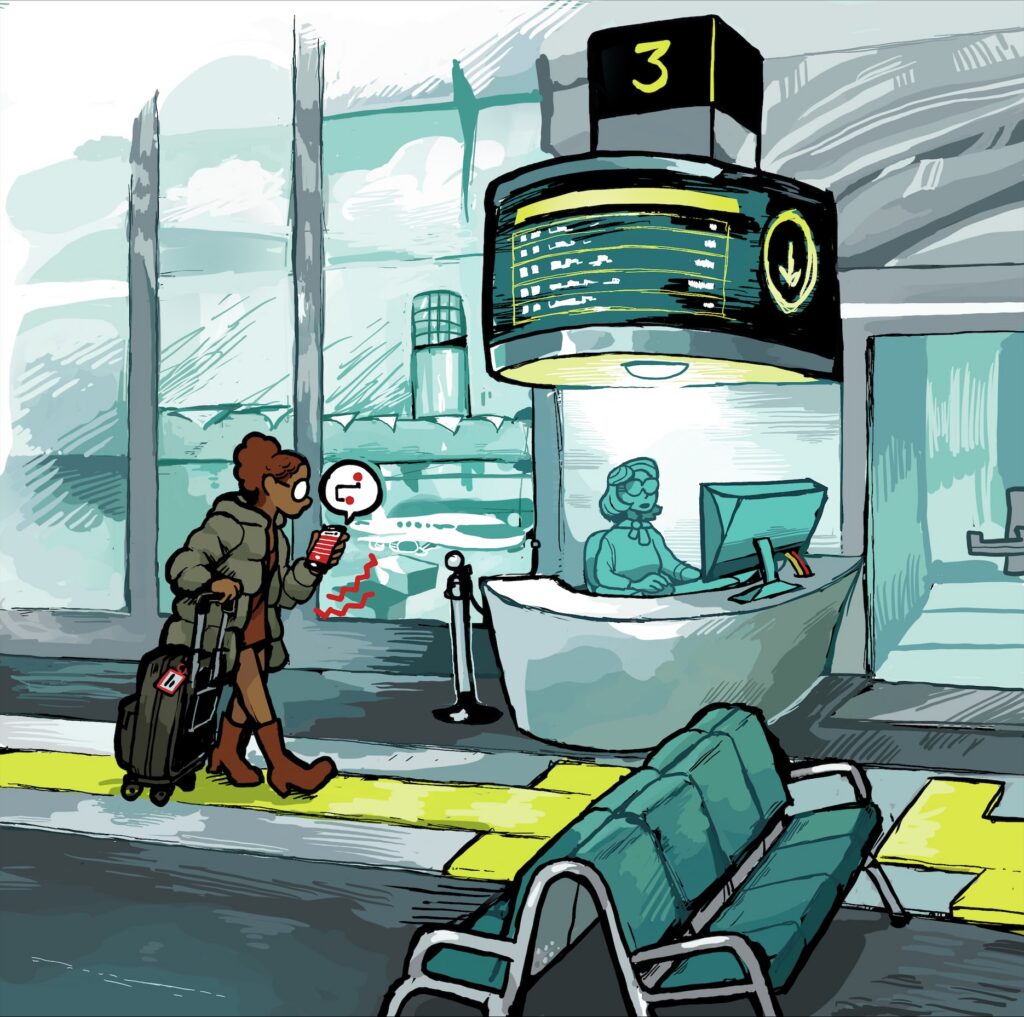
    A traveler pulling a small rolling suitcase through an airport terminal
    Smooth terminal floors are where spinner wheels shine; cobblestones and gravel are another story (Photo: Sherm for Disabled And Here via Wikimedia Commons, CC BY 4.0)

    Ride-on suitcases

    Ride-on cases, which a small child can sit on while a parent tows them by a strap, are a popular answer to the tired-toddler problem. Trunki is the best-known brand. They are fun, they give a three-year-old a place to sit at the gate, and they solve the problem of little legs that give out halfway down a long concourse. The trade-offs: capacity is small, the shape does not pack efficiently, and they are awkward for an adult to carry once the child outgrows riding. Use common sense on where to ride: never on escalators or moving walkways, and not in crowded security lines. They suit children roughly from two to five; beyond that, a normal small case is more practical.

    Backpacks as an alternative (or addition)

    Many families find that a good kids’ backpack is the most useful single bag for a young child. It keeps hands free for holding a parent’s hand, it goes up stairs and onto trains easily, and it can be the personal item under the seat with snacks, a book and headphones. For short trips, a backpack alone may be enough. For longer trips, a small case for clothes plus a backpack for the flight is the ideal combination, which is why so many kids’ luggage sets include one.

    Keep a child’s backpack light: a few kilograms at most for a young child, and adjust the straps so it sits high and close to the back.

    Affordable sets worth considering

    Kids’ luggage sets offer good value if you want coordinated pieces. The sets below are affordable options that suit boys who want a fun design without paying adult-luggage prices. Specifications, colors and designs change often, so check the current listing for dimensions and weight before you buy.

    Rosamo 16-inch Kid’s Luggage Set (6 pieces)

    Rosamo sells a 16-inch hardside spinner case bundled with several smaller matching pieces, such as a backpack and accessory bags, in a range of kid-friendly designs. It suits families who want everything in one purchase: the case for clothes, a backpack for the flight and extras for toiletries or toys. Check that the 16-inch case suits your son’s height and that the backpack is sized for his back.

    GYMAX Kids Carry-On Luggage Set (12-inch and 16-inch)

    This set pairs a 12-inch and a 16-inch rolling case. That makes it flexible: a younger sibling can take the small one while an older child takes the larger, or the same child can use the 12-inch for weekends and the 16-inch for longer trips. It is a practical buy for families with two young children close in age.

    Travelers Club 5-Piece Kids’ Luggage Set (First Responders theme)

    Travelers Club makes kids’ sets with themed graphics, including a first responders design with fire trucks, police cars and ambulances that appeals to many young boys. The multi-piece set gives a child a matching collection, and a theme he loves is a strong motivation to pack and pull his own bag.

    A plain case he will not outgrow

    For boys around ten and up, consider skipping kids’ designs altogether and buying a lightweight adult carry-on in a color he likes. It costs a little more, but it will last into the teenage years. Our guide to top travel luggage covers what to look for in an adult case.

    Design, themes and letting him choose

    A suitcase that a child loves is a suitcase he will actually pull. Let him choose the design from a shortlist you have already checked for size and weight. Dinosaurs, space, vehicles, sports and superheroes are perennially popular, but plenty of boys prefer a plain bold color, and interests change fast; a strong color or a simple pattern may last longer than a character he will be embarrassed by in two years. Bright or distinctive cases have a practical upside too: they are easy to spot on a baggage carousel and harder for another family to grab by mistake.

    Teaching kids to pack their own bag

    Packing is a skill, and a trip is a good time to teach it. For children around five and up:

    • Give a picture or written list. Number of shirts, shorts or pants, underwear and socks, pajamas, a sweater, a swimsuit, toothbrush. Younger children do well with pictures.
    • Lay it out first. Have your son put everything on the bed, then check it together before it goes in the case.
    • Roll clothes. Rolled clothes take less space and are easier for small hands to fit in.
    • One comfort item, chosen by him. A stuffed animal or small blanket goes in the backpack, not the checked bag.
    • Limit the toys. Two or three small toys and a couple of books are plenty. Our list of the best traveling books for kids has ideas that pack flat.
    • Leave room for souvenirs. A case packed to bursting on the way out has no room for the trip home.
    • The parent does the final check. Chargers, medications and anything that cannot be replaced should be packed or checked by an adult.

    Getting through security with a child’s suitcase

    A child’s carry-on goes through the X-ray just like an adult’s, and the same liquid limits apply to anything inside it. Toy guns, realistic replica weapons and some toys with sharp parts can be refused, and water bottles need to be empty at the checkpoint. Snacks are generally fine. Formula, breast milk and baby food are treated differently from other liquids; our travel bottle warmer guide explains those rules for families with babies.

    In the United States, the TSA’s traveling with children page explains screening for children, strollers and car seats, and the TSA “What Can I Bring?” list covers specific items. In Canada, Transport Canada publishes what not to bring on a plane. Pack the child’s bag so that anything the officers may want to check, like a tablet or a snack pouch, is easy to reach, and allow extra time at the airport when traveling as a family; our guide to airport arrival times has the details.
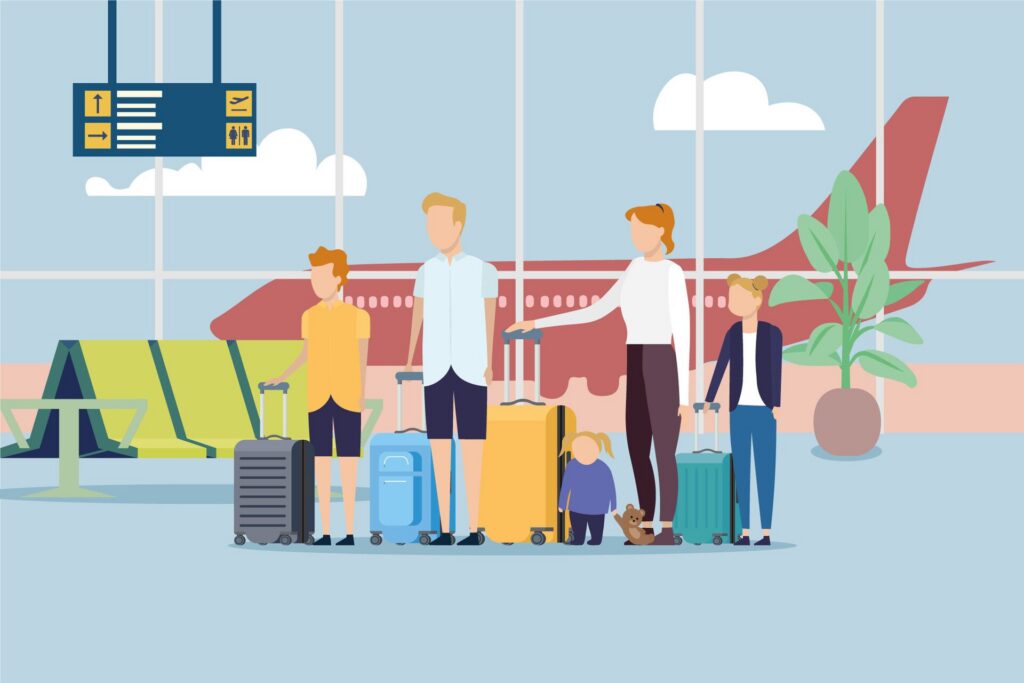
    Illustration of a family with rolling suitcases waiting at an airport gate
    A case for each child who can manage one, and a backpack each for the flight (Photo: Familydestinationsguide.com Images via Wikimedia Commons, CC BY 2.0)

    Siblings, longer trips and checked bags

    With two or three children, the question is whether everyone gets a case or whether the family shares. A workable pattern for many families: every child carries a backpack with their own flight essentials, children old enough to manage it pull a small case, and one larger checked bag holds the bulky items, such as jackets, extra shoes and beach gear, for everyone. That keeps each child’s load light while avoiding a line of five overhead-bin cases that all need lifting at boarding.

    For trips of more than a week, or trips that need winter clothes, a small child’s case will not hold everything, and that is fine. Pack the child’s case with the clothes he will need for the first couple of days plus his favorite things, and put the rest in the shared checked bag. If the checked bag is delayed, he still has what matters to him. On road trips, soft bags squash into a car trunk more easily than several hardside cases; our family car rental guide covers choosing a vehicle with enough room.
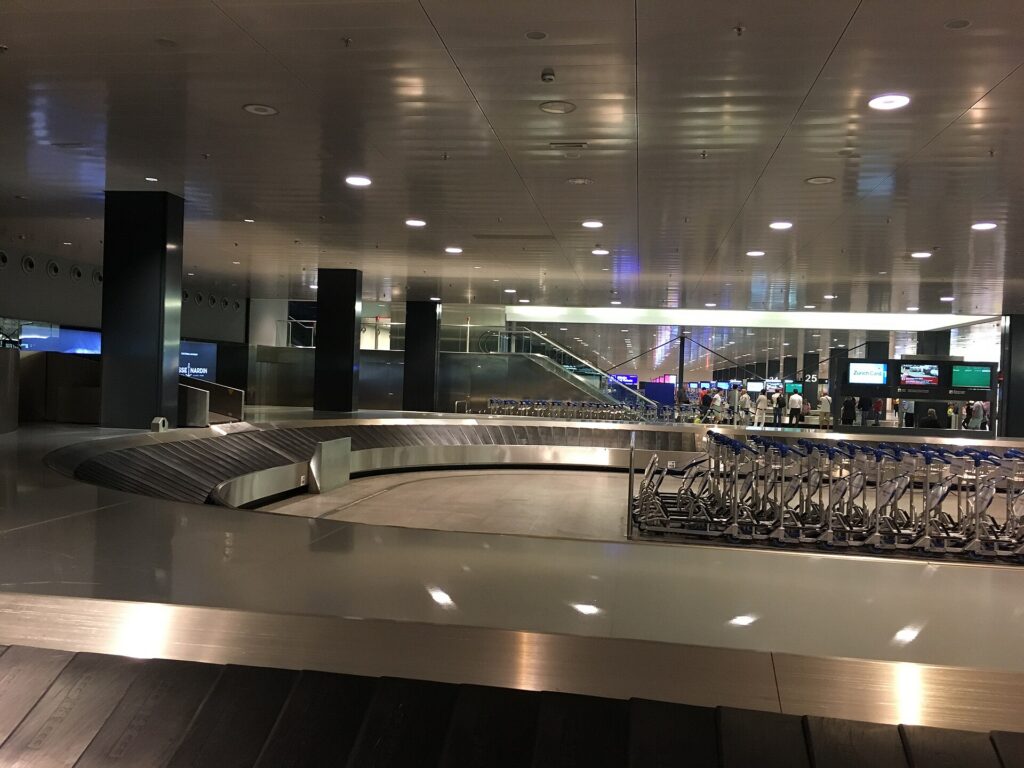
    An empty baggage claim carousel in an airport arrivals hall
    A bright, distinctive case is easier to spot on the carousel and harder for another family to take by mistake (Photo: Jo-Jo Eumerus via Wikimedia Commons, CC BY-SA 4.0)

    Labels, tracking and not losing it

    • Label inside and out. A luggage tag with a parent’s phone number outside, and a card with the same details inside, in case the tag is torn off. Do not put the child’s name on the outside.
    • Add a small tracker if you like. A Bluetooth tracker tucked in a pocket can help locate a case left at a gate or delayed by the airline.
    • Photograph it. A quick photo of the case, and of what is inside, makes a lost-baggage claim much easier.
    • Do a count. At every transition, gate, taxi, hotel lobby, count the bags. Give each child the job of counting his own.

    Making it last

    Children are hard on luggage. A few habits help a case survive several trips:

    • Push the handle all the way down before lifting the case by the side or top handle.
    • Do not let children stand on the case or sit on a spinner, which is not built for it. Ride-on cases are the exception.
    • Wipe hardside shells after the trip, and empty and air softside cases before storing them.
    • Check the wheels and zippers before each trip, not the night before departure.
    • Store the case somewhere dry; a damp garage is hard on zippers and fabric.

    Common mistakes

    • Buying too big. A case sized “to grow into” is too heavy and awkward for the child now, so an adult ends up carrying it.
    • Ignoring handle height. A handle that is too tall is the most common reason kids give up pulling their bag.
    • Assuming any kids’ case fits under the seat. Under-seat space varies by aircraft and seat. Measure against the airline’s personal-item limit if that is the plan.
    • Checking the child’s only bag. Keep a change of clothes and the comfort item in the cabin in case checked bags are delayed.
    • Buying on design alone. A great print on a flimsy shell with sticky wheels will not last one trip.

    Frequently asked questions

    What size suitcase does a child need?

    For about four to six, a case around 14 to 16 inches; for about seven to ten, 16 to 18 inches; from around eleven, a standard adult carry-on within the airline’s limit. Handle height and weight matter as much as size.

    Do kids get a free carry-on on flights?

    A child with their own paid seat usually gets the same cabin allowance as an adult on that fare. Lap infants usually do not get a separate carry-on, though many airlines allow a diaper bag. Check your airline’s rules.

    Are kids’ suitcases allowed as carry-on?

    Yes, as long as they are within the airline’s carry-on or personal-item dimensions, including wheels and handles. Many kids’ cases are well inside the limits, but measure before you fly.

    Is a hardside or softside suitcase better for kids?

    Both work. Hardside protects contents and wipes clean; softside is lighter, flexible and has outside pockets. Choose on weight, wheels and handle before material.

    What age can a child pull their own suitcase?

    Many children can manage a small, light case from about four, with help on stairs and escalators. Younger children do better with a backpack or a ride-on case a parent can tow.

    Are ride-on suitcases worth it?

    For children roughly two to five on trips with long walks through airports, many parents find them very useful. They hold less and are outgrown quickly, so older children are better served by a normal case.

    Should my child’s suitcase be a set with a backpack?

    If you do not already have a kids’ backpack, a set is good value: the case holds clothes and the backpack holds the flight essentials under the seat.

    With the bags sorted, the rest is the trip itself. Compare family fares across flexible dates on our flight search, find a room with space for everyone on our hotel search, and if you are driving from the airport, add a car with room for the luggage on our car rental search. Our guide to booking hotels for family vacations covers timing and room types, and a first family trip to Orlando or San Diego is a great first outing for a new suitcase.

  • Top Travel Bottle Warmer Options for Flights and Road Trips

    Top Travel Bottle Warmer Options for Flights and Road Trips

    Feeding a baby at home is a routine. Feeding a baby at 30,000 feet, in the back seat on a highway, or in a hotel room with no kitchen is a puzzle, and the piece that most often goes missing is warm milk. A travel bottle warmer solves that puzzle for many families: a portable, usually rechargeable device that brings breast milk, formula or water to a comfortable temperature wherever you are. But not every baby needs warm milk, not every warmer suits every trip, and there are real rules about carrying milk, formula and batteries on a plane. This guide explains whether you need a travel warmer at all, the different types and how to choose, what to know about flying and driving with one, safe preparation and cleaning on the road, and a packing checklist that makes feeding on the go feel routine again.

    The short answer

    If your baby will take room-temperature or cool milk, you may not need a warmer at all; the CDC notes that breast milk does not need to be warmed. If your baby insists on warm feeds, a rechargeable portable warmer is the most flexible choice for flights and road trips, a car-powered warmer suits long drives, and an insulated flask of hot water is the simple, no-battery backup. Look for temperature control, enough capacity for your bottles, a leak-proof lid, easy cleaning and a battery you can carry in the cabin. Never use a microwave to warm milk or formula, and always test the temperature before feeding.

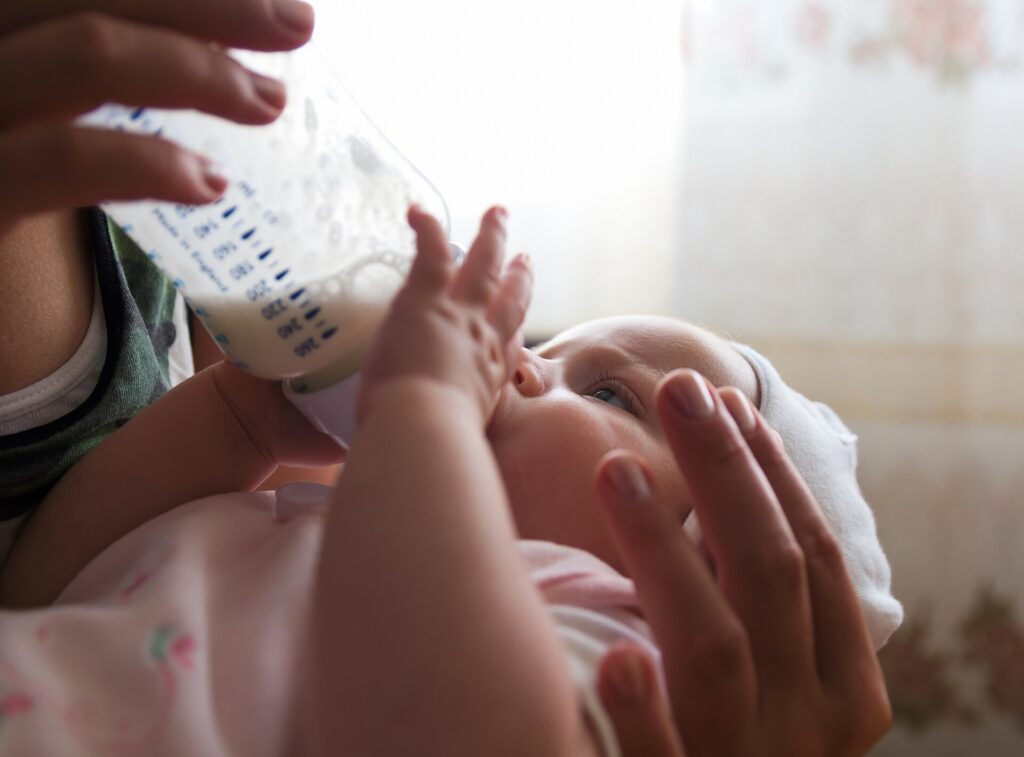
    A baby drinking milk from a bottle held by a parent
    Some babies take milk cool or at room temperature; test at home before you buy a warmer (Photo: Vyacheslav Argenberg via Wikimedia Commons, CC BY 4.0)

    Do you actually need a travel bottle warmer?

    Start with your baby. Some babies drink milk cold from the fridge or at room temperature without complaint, and for those families a warmer is optional. Others refuse anything but body-warm milk, and a hungry, crying baby on a plane is exactly the situation a warmer is designed for. The best way to find out is to experiment at home a few weeks before the trip: offer a room-temperature bottle and see what happens. If your baby accepts it, travel just got simpler.

    Think too about the trip itself. A short flight between feeds needs less equipment than a long-haul flight. A road trip with frequent stops at places with hot water may need nothing more than a flask. A week in a hotel room with a kettle is different from a week in a rental with a full kitchen. Match the gear to the trip, and remember that everything you bring has to be carried, charged and cleaned.

    Types of travel bottle warmers

    TypeHow it worksBest forWatch out for
    Rechargeable portable warmerBattery-powered cup or bottle that heats water or milk to a set temperatureFlights, day trips, anywhere without powerBattery life, charging before travel, lithium battery rules
    Car-powered warmerPlugs into a car’s USB port or 12-volt outlet; some wrap around the bottleLong road tripsSlow on weak ports; useless away from the car
    Insulated flask with water bathHot water from a flask poured into a cup or container; the sealed bottle stands in itBackup for any trip; no power neededWater cools over hours; spill risk
    Plug-in electric warmerA compact version of a home warmer that runs on wall powerHotel stays and rentalsVoltage and plug type abroad; needs an outlet

    Rechargeable portable warmers

    These are the most popular travel choice and what most people mean by a “travel bottle warmer.” Most look like an insulated bottle or cup with a heating element and battery in the base and a simple control on the side. Some heat water that you then mix with premeasured formula powder; others are designed to warm milk directly or to hold a bottle in a warm water bath. Many offer several temperature settings and a keep-warm function. They are ideal on planes and in places without an outlet, but they depend on the battery, so charging becomes part of your routine.

    Car-powered warmers

    For long drives, a warmer that runs from the car’s power removes the battery worry. Some are wrap-around sleeves that heat a bottle directly, others are cups that sit in a cup holder. They tend to be slower than battery units on a weak USB port, and they only work in the car, so they are best paired with another option for the hotel.

    The flask method

    The simplest travel warmer is a good insulated flask of hot water. At feeding time, pour hot water into a cup or a small container, stand the sealed bottle or milk bag in it for a few minutes, and test the temperature. This is similar to the CDC’s own advice for warming breast milk, which is to place the sealed container in warm water or hold it under warm running water. A flask needs no charging and has nothing to break, which makes it a good backup even if you bring an electric warmer.

    Plug-in warmers for the hotel

    If you are staying put for a week, a compact plug-in warmer, or even your home warmer if it is small, may be simpler than a battery unit. Check the voltage and plug type if you are traveling abroad, since many home appliances do not work on a different voltage without a converter.

    What to look for

    • Power source and battery. For flights, a built-in rechargeable battery is the main need. Check how many warms a full charge gives you and how the unit charges; a common charging cable you already carry for your phone means one less cable to pack.
    • Heating time. Faster is better when a baby is hungry, but manufacturers’ claims vary with the starting temperature and amount. Test it at home so you know how long it really takes.
    • Temperature control. Adjustable settings, including one around body temperature, let you warm milk gently rather than making it hot. A display that shows the temperature is helpful.
    • Capacity and bottle fit. Make sure the warmer holds enough for a full feed and, if it holds a bottle, that your brand of bottle fits. Wide-neck and narrow-neck bottles fit differently.
    • Leak-proof design. A warmer that leaks in the diaper bag is worse than no warmer. Look for a secure, sealed lid.
    • Easy cleaning. Wide openings and few crevices matter when you are washing it in a hotel bathroom sink.
    • Size and weight. It needs to fit in the diaper bag and, ideally, a car cup holder.
    • Safety features. Automatic shutoff and overheat protection are worth having.

    Popular portable options

    Portable bottle warmers are sold by many brands, and models change often. A few names that parents frequently come across are below. Check the current product listing for capacity, settings, charging and battery details before you buy, and choose on the features above rather than the brand.

    Papablic Portable Bottle Warmer

    Papablic makes portable, rechargeable warmers designed for travel and home, with multiple temperature settings and a design intended to fit in a car cup holder. The brand also sells a Pro version marketed as heating faster with more temperature settings. They suit parents who want one warmer for the car, the hotel and the flight.

    BOLOLO Portable Bottle Warmer

    BOLOLO sells a compact rechargeable warmer for breast milk, formula and water, aimed at parents who want something small and light for short flights and day trips.

    Large-capacity rechargeable cups

    Several brands sell larger insulated warmers that hold enough water for more than one feed, useful for long travel days or twins. The trade-off is size and weight in the bag.

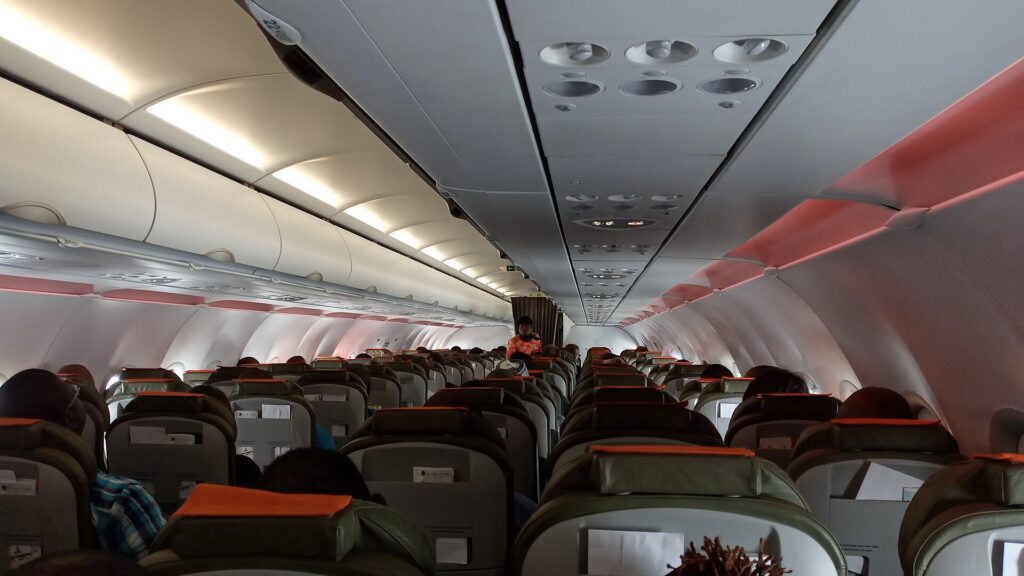
    Passengers seated in the economy cabin of an airliner
    Keep the warmer and bottle in the bag under the seat, ready for takeoff and landing (Photo: Minette Lontsie via Wikimedia Commons, CC BY-SA 4.0)

    Flying with a bottle warmer, milk and formula

    Security screening

    Baby feeding supplies are treated differently from other liquids at airport security. In the United States, the TSA allows formula, breast milk, toddler drinks and baby food in quantities greater than 3.4 ounces (100 milliliters) in carry-on bags, and they do not have to fit in the quart-sized bag. Tell the officer at the start of screening that you have them, and take them out to be screened separately; they may be tested. Ice packs and gel packs used to keep milk cold are allowed too. The TSA’s traveling with children page covers strollers, car seats and screening. In Canada, CATSA’s guidance on baby food and milk sets out the rules. Other countries have similar exemptions but the details vary, so check before you fly, especially on the return trip.

    An empty bottle warmer goes through the X-ray like any other electronic device. If it is full of water at the checkpoint, you may be asked to empty it, so fill it airside, after security.

    Batteries

    Most portable warmers have a built-in lithium battery. In general, devices with lithium batteries are best kept in carry-on bags, and spare lithium batteries and power banks must be in carry-on, not checked bags, according to the FAA’s PackSafe guidance. Airlines can have their own rules, so check with yours, and switch the warmer off or lock it so it cannot turn on in the bag.

    Using a warmer on board

    Airlines vary on whether they allow heating devices to be used in the cabin, and flight attendants may also be able to provide hot water to stand a bottle in. Ask your airline before you fly, and ask the crew when you board. Air Canada, for example, publishes a page on travelling with children that covers infant travel. Plan as if you cannot rely on either: a warmer charged and ready and a flask of hot water from an airport café make a good combination.

    Timing feeds

    Many parents like to offer a bottle during takeoff and landing, because sucking and swallowing can help with ear pressure. That means having milk ready as boarding finishes and again when the descent begins, often about half an hour before landing. Keep the warmer and bottle in the bag under the seat in front, not the overhead bin, since you cannot stand up during takeoff and landing. Leave plenty of time at the airport so you are not rushing; our guide to airport arrival times helps.

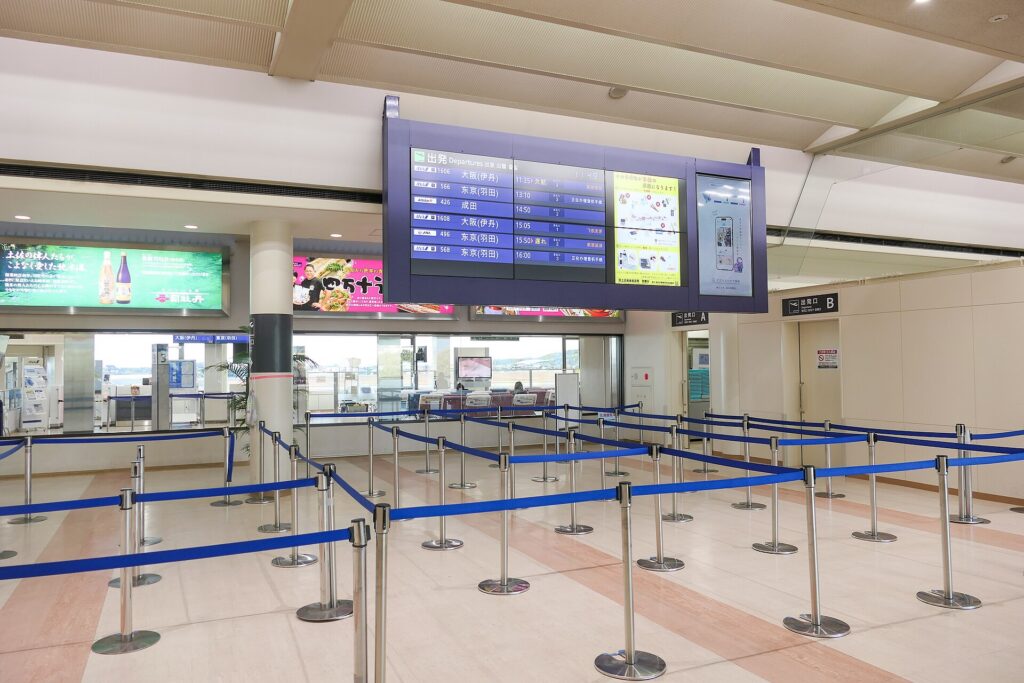
    An airport security checkpoint with queue barriers and screening lanes
    Declare breast milk, formula and baby food at the start of screening; they are screened separately (Photo: MaedaAkihiko via Wikimedia Commons, CC0)

    Road trips

    • Stop to feed. Never take a baby out of the car seat while the car is moving. Plan stops every couple of hours; it is better for everyone anyway.
    • Keep milk cold, then warm it. Carry expressed milk in an insulated cooler with ice packs and warm only what you need for each feed.
    • Do not store formula in a hot car. The CDC advises storing unopened formula in a cool, dry, indoor place rather than in vehicles; on a road trip, keep it in the cabin with you, out of direct sun.
    • Use car power for warming. A car-powered warmer, or charging your battery warmer as you drive, means it is ready at the next stop.
    • Plan for traffic. A delay can push a feed into the middle of a highway with nowhere to stop. Having a warm bottle ready before you set off on the next leg helps.

    If you are renting a car for the trip, reserve an infant seat or bring your own, and check that the vehicle has a working USB port or 12-volt outlet. Our guide to family car rentals covers seats and vehicle choice.

    Preparing feeds safely on the road

    Breast milk

    Follow the CDC’s breast milk storage and preparation guidance. Key points: breast milk can be served cold, at room temperature or warm; to warm it, keep the container sealed and place it in warm (not hot) water; once warmed, use it within two hours; and never thaw or heat breast milk in a microwave, which can create hot spots. Thawed milk should not be refrozen.

    Formula

    The CDC’s infant formula preparation guidance covers the essentials: wash your hands, use clean bottles, measure water before adding powder according to the container’s instructions, use prepared formula within two hours of preparation and within an hour of starting a feed, and discard leftovers. It also notes extra precautions for babies younger than two months, premature babies and those with weakened immune systems. Premeasured powder in a divided dispenser, plus warm water from the warmer or flask, is the easiest approach on the go. Ready-to-feed formula needs no mixing and is convenient for travel days.

    Water

    Where tap water is not safe to drink, use bottled or boiled water for mixing formula and cleaning bottles, and follow local health advice and your pediatrician’s guidance.

    Always test the temperature

    Before feeding, shake or swirl the bottle and test a few drops on the inside of your wrist. It should feel warm, not hot. Portable warmers can vary, and a setting that is perfect at home may behave differently when the device is cold or the battery is low.

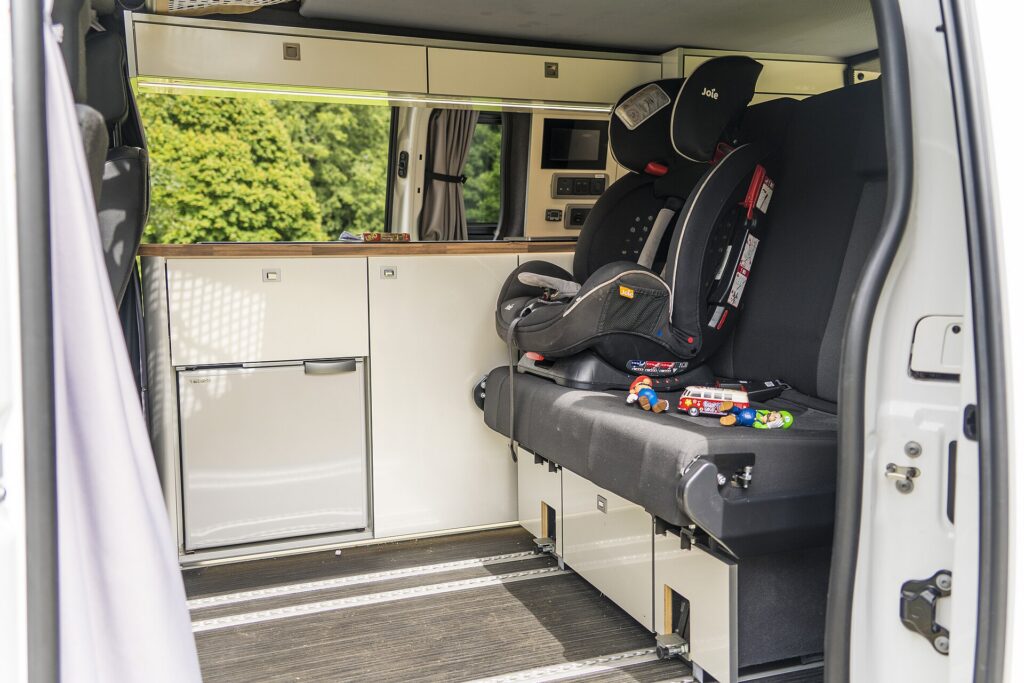
    A child's car seat installed in the back of a camper van
    On road trips, stop to feed: never take a baby out of the car seat while the vehicle is moving (Photo: CruiseAmerica via Wikimedia Commons, CC BY-SA 4.0)

    Cleaning on the road

    Cleaning is the part of travel feeding that people forget to plan. Pack a small bottle brush, a travel-size bottle of dish soap and a clean towel or drying rack. Rinse bottles and the warmer as soon as possible after each feed, since dried milk is harder to clean, then wash properly at the hotel. Many hotels will provide a mini-fridge on request, which is useful for storing milk, and a kettle for boiling water; clean the kettle before use if you are using it for baby feeds. Our guide on the best time to book hotels for family vacations covers the room features that make travel with a baby easier, like a fridge, a kitchenette or a separate sleeping area.

    Traveling abroad with a warmer

    International trips add a few wrinkles. Wall voltage and plug shapes differ between countries, and a plug-in warmer designed for North American outlets may need a converter, not just an adapter, to work safely elsewhere; check the label on the charger or device, which usually lists the input voltage range. Battery warmers that charge from a standard phone charger are the easiest option, since most modern phone chargers accept a wide voltage range. Formula brands differ between countries too, so bring enough of your baby’s usual formula for the whole trip rather than hoping to find it on arrival, and keep it in your carry-on in case a checked bag is delayed. On long-haul flights across time zones, feed on your baby’s schedule rather than the clock, and adjust gradually once you arrive. Finally, check the security rules for your return flight as well as the outbound one, since the exemptions for milk and formula are similar in many countries but not identical.

    A feeding packing checklist

    • Bottle warmer, fully charged, and its charging cable
    • Insulated flask for hot water as a backup
    • Enough bottles and nipples for the travel day, plus spares
    • Formula (premeasured in a dispenser) or ready-to-feed cartons
    • Expressed breast milk in an insulated cooler with ice packs
    • Bottle brush, small dish soap and a towel
    • Bibs, burp cloths and a change of clothes for baby and a parent
    • A basic travel first aid kit; our travel first aid kit guide covers what to include
    • Plug adapter or voltage converter for international trips

    Pack all of it in the bag under the seat or within reach in the car. Once your baby becomes a toddler, the bag gets a little lighter, and the challenge shifts to entertainment; our guides to travel books for kids and kids’ suitcases cover the next stage.

    Common mistakes

    • Not testing the warmer at home. Learn how long it takes and which setting your baby likes before the trip.
    • Forgetting to charge it. A dead warmer at the gate is worse than none. Charge it the night before and top it up during layovers.
    • Packing it in checked luggage. Keep it, and any lithium battery, in the cabin with you.
    • Overheating milk. Warm, not hot. Test every time.
    • Using the microwave. Hot spots can burn a baby’s mouth. The CDC advises against it for both breast milk and formula.
    • Keeping leftovers. Once a baby has fed from a bottle of formula, discard what is left after the feed.
    • Relying on the airline. Hot water on board is not guaranteed. Bring your own solution.

    Frequently asked questions

    Can I bring a bottle warmer on a plane?

    Generally yes, in your carry-on. Devices with lithium batteries belong in the cabin, and spare batteries must be carried on. Whether you may use a heating device during the flight depends on the airline, so ask before you fly.

    Can I bring breast milk and formula through security?

    Yes. In the United States, breast milk, formula and baby food in quantities over 3.4 ounces are allowed in carry-on bags; declare them at the start of screening. Canada has similar rules. Check the rules for every country on your itinerary.

    Does breast milk need to be warmed?

    No. The CDC notes that breast milk can be served cold, at room temperature or warm. Warming is a matter of what your baby prefers.

    How do I warm a bottle without a warmer?

    Stand the sealed bottle or milk bag in a cup or container of warm water for a few minutes, using hot water from a flask, a café or the crew, then test the temperature on your wrist. Never use a microwave.

    How long does warmed milk last?

    Per CDC guidance, use warmed breast milk within two hours. Use prepared formula within two hours of preparation and within one hour after the feed begins, then discard leftovers.

    Will a travel bottle warmer work in the car?

    Battery warmers work anywhere, and car-powered models run from the USB port or 12-volt outlet. Always stop the car to feed rather than taking the baby out of the car seat while driving.

    Should I buy a warmer that heats water or one that heats milk?

    Water-heating models suit formula, where you mix powder with warm water. Models that hold a bottle in a warm water bath or warm milk directly suit breast milk. Some do both; choose based on how you feed.

    Once feeding is sorted, the trip is much easier to plan. Compare fares on flexible dates on our flight search, where a nonstop is often worth a little extra with a baby, find a room with a fridge and space for a crib on our hotel search, and if you are driving, price a car with room for the stroller on our car rental search. For the bigger picture, read our guide on why a family vacation is worth making time for.

  • Travel Smarter: 10 Best Traveling Books for Kids

    Travel Smarter: 10 Best Traveling Books for Kids

    Every parent who has spent three hours in a car or a plane seat with a restless child knows how quickly the good mood runs out. Tablets help, until the battery dies or the downloads fail. Books are the quiet workhorse of family travel: no charging, no Wi-Fi, no volume to argue about, and the right one can hold a child’s attention for far longer than you would expect. The trick is choosing books that suit travel specifically, which is not the same as choosing good books. A beautiful hardcover with delicate pages, a stack of heavy picture books, or a sticker book that sheds pieces into the seat gap will make the trip harder, not easier. This guide covers what makes a book travel well, the best types by age, specific titles that are long-standing favorites, books that connect to where you are going, audiobooks, how to pack and ration them, and the mistakes that turn a reading plan into a mess.

    The short answer

    Pack light, durable books that reward repeat looking, and mix types. For toddlers, sturdy board books and lift-the-flap books about planes, trains and vehicles. For ages three to seven, search-and-find books like I Spy and Where’s Waldo?, picture books about airports and travel, and sticker and activity books. For confident readers, a chapter-book series they already love, plus an atlas or fact book about the world. Add a book about your destination, load a few library audiobooks for the car, and hold one new book back as a surprise for the hardest stretch of the trip.

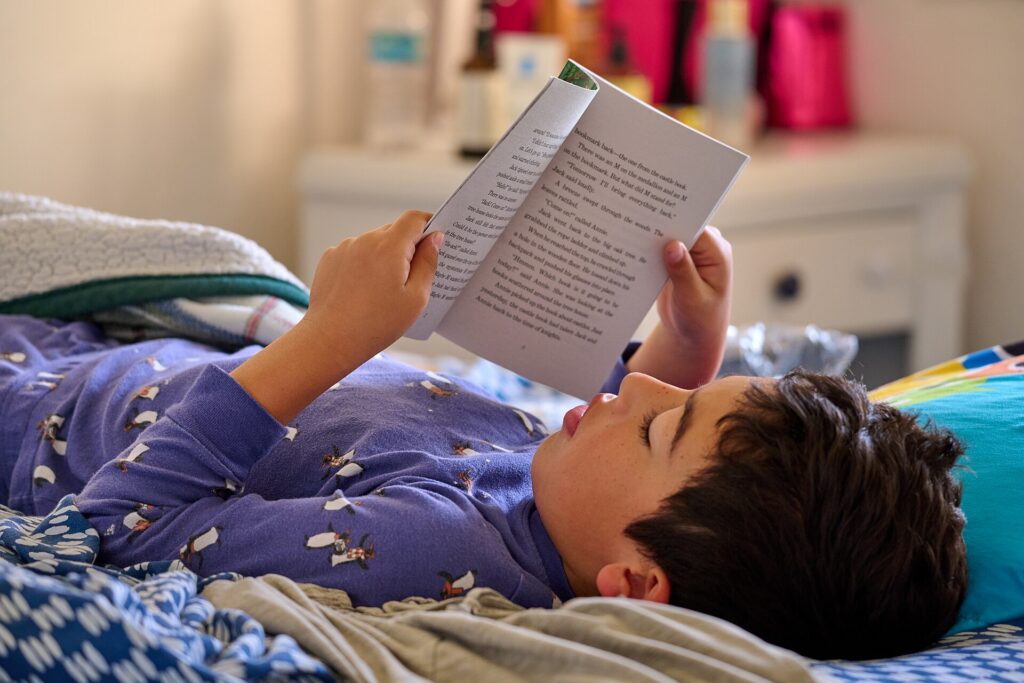
    A boy lying down and reading a chapter book
    A chapter-book series a child already loves is the safest bet for a long flight (Photo: Wilfredor via Wikimedia Commons, CC0)

    What makes a book good for travel

    A good travel book passes a few practical tests on top of being a good read.

    • Durability. Board books, thick pages and wipe-clean covers survive juice, crumbs and being dropped in an airport. Save the heirloom hardcover for home.
    • Weight and size. Every book goes in someone’s bag. Paperbacks, slim activity books and compact formats win. A large-format atlas may be worth it for an older child on a long flight, but one is enough.
    • Replay value. Books children can look at again and again, like search-and-find books, detailed illustrated books and fact books, last far longer than a short story read once.
    • Few loose parts. Stickers and flaps are great; pop-up pieces, loose cards and books that come with small toys are easy to lose under a seat.
    • Low mess. Crayons roll, markers stain upholstery, and glitter is forever. Choose stickers, pencils or water-reveal pads for activity books.
    • Right level of independence. On a plane, a book the child can enjoy alone gives parents a break; a book that needs reading aloud is better for the car, where everyone can listen.

    Best types of travel books by age

    AgeBest typesWhy they travel well
    1 to 2Board books, touch-and-feel, lift-the-flapIndestructible, short, and good for pointing and naming
    3 to 5Picture books about travel and vehicles, search-and-find, sticker booksRepeatable, independent looking, and they explain what is happening at the airport
    5 to 7Activity books, early readers, flap books with factsMix of doing and reading; builds confidence on a long trip
    7 to 10Chapter-book series, puzzle books, illustrated atlasesLong enough to fill a flight; series mean the next book is always wanted
    10 to 12Longer novels, fact books, destination guides for kidsIndependent reading for hours; a way to prepare for the destination

    Toddlers: board books and flap books

    For children under three, the best travel books are sturdy, simple and about the things they will see. Board books about planes, trains, cars and trucks give a toddler words for the noisy, confusing world of an airport, and naming things on the page is an activity in itself.

    • My Big Train Book, a sturdy board book with big, bright photographs of trains, is ideal for pointing and naming and is durable enough for a bumpy ride.
    • Byron Barton’s Airport walks through a trip from arrival at the terminal to takeoff in bold, simple pictures, which can make a first flight feel less strange.
    • Lift-the-flap and touch-and-feel books keep small hands busy. Choose board-book flaps over paper ones, which tear.

    At this age, familiar favorites from home often work better than new books, because a toddler in an unfamiliar place finds comfort in the known. Bring one or two of those, plus one new travel-themed book.

    Ages three to seven: picture books, search-and-find, stickers

    This is the age where books do the most work on a trip, because children can look independently for long stretches but still love being read to.

    Picture books about travel

    • Usborne Look Inside an Airport is a flap book that shows what happens behind the scenes: check-in, baggage, security, the control tower and the plane. It answers a lot of questions before they are asked, and the flaps keep children busy at the gate.
    • Richard Scarry’s Cars and Trucks and Things That Go is a classic for road trips. The pages are packed with detail and running jokes, and children can pore over it for a long time, hunting for Goldbug on every spread.
    • National Geographic Little Kids First Big Book of the World introduces continents, animals, landmarks and people with big photographs and short, readable facts, roughly suited to ages four to eight. It is a good way to spark curiosity about where you are going. National Geographic Kids has more from the same family of books and games.

    Search-and-find books

    Search-and-find books may be the single best category for travel, because each page can take many minutes and children happily revisit them.

    • The I Spy books by Jean Marzollo and Walter Wick, with their photographed scenes and rhyming riddles, work for a wide age range, and siblings can compete to find objects first.
    • Where’s Waldo? by Martin Handford (published as Where’s Wally? in some countries) needs no reading at all, which makes it perfect for mixed ages.

    Sticker and activity books

    Sticker books are mess-free and absorbing. The Usborne Sticker Dolly Dressing series, with its many themed titles, is a long-running favorite, and there are sticker books on vehicles, dinosaurs, space and maps for every taste. Maze books, dot-to-dot books and simple puzzle books sized for travel are good for children around five to ten. Reusable water-reveal pads, where a water-filled pen reveals colors that fade as they dry, are a clever option for younger children, with nothing to spill beyond a few drops.

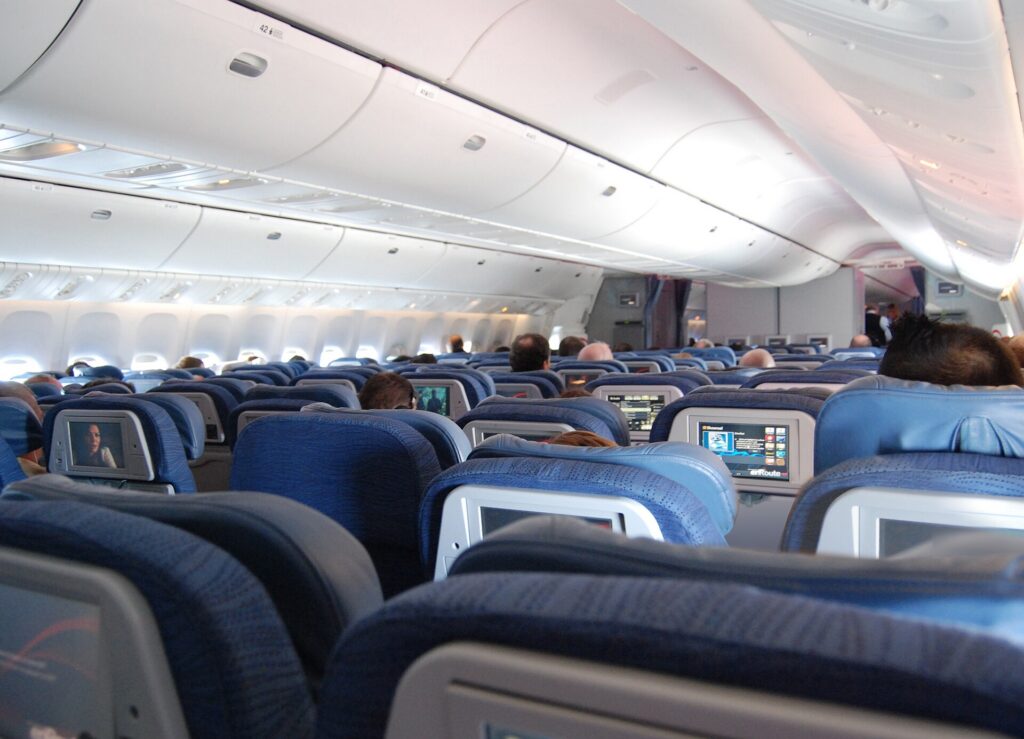
    Rows of economy seats in the cabin of an Air Canada Boeing 777
    On a plane, compact books a child can enjoy alone, kept in the bag under the seat, work best (Photo: jo3hug via Wikimedia Commons, CC BY 2.0)

    Ages seven to twelve: series, puzzles and atlases

    Older children who read independently are the easiest to entertain with books, as long as the book is one they actually want to read.

    Chapter-book series

    A series they already love is the safest bet: they know the characters, and finishing one book on the flight makes them want the next. Travel-themed series add to the excitement.

    • Mary Pope Osborne’s Magic Tree House series sends two siblings to a different place and time in each book, from ancient Rome to the rainforest. The books are short enough to finish on a flight, and there are many of them. The official Magic Tree House site lists the titles.
    • Jeff Brown’s Flat Stanley, about a boy flattened by a bulletin board who travels by mail, has inspired school projects around the world and is a natural travel read for early chapter-book readers.

    Atlases and fact books

    • Atlas of Adventures, illustrated by Lucy Letherland, is a large, beautifully illustrated atlas full of activities and adventures around the world, best for roughly seven to twelve. It is heavy, so bring it for a long flight rather than a day trip.
    • Maps by Aleksandra Mizielińska and Daniel Mizieliński is an oversized illustrated atlas of countries, packed with drawings of food, people, animals and landmarks. It is a book to linger over, ideal for a long-haul flight or a rainy afternoon at the hotel.
    • Fact books in the “weird but true” style from National Geographic Kids offer short, surprising facts that children love to read aloud to the rest of the car.

    Puzzle books

    Word searches, crosswords, logic puzzles and travel activity books with games and quizzes are ideal for children who find reading for long stretches tiring. Pack a pencil with a cap; pens leak in the cabin.

    Books about where you are going

    One of the most rewarding things you can pack is a book set in your destination. Reading about a place before and during the trip gives children something to look for, and seeing the real thing is thrilling.

    • Paris: Ludwig Bemelmans’s Madeline, about the little girl in the old house covered with vines, shows off Paris landmarks on every page. Planning the trip? Start with flights to Paris and our Paris guide.
    • London: Michael Bond’s A Bear Called Paddington begins at Paddington Station, which you can visit. See flights to London.
    • New York: Kay Thompson’s Eloise, the girl who lives at the Plaza Hotel, is a perfect before-the-trip read. See flights to New York and our New York guide.
    • Boston: Robert McCloskey’s Make Way for Ducklings is set in the Public Garden, where bronze statues of the duck family stand today. See flights to Boston.
    • Many cities: Miroslav Sasek’s classic This Is series, with titles including This Is Paris, This Is London, This Is New York and This Is Rome, offers illustrated tours of the great cities that older children and adults both enjoy.

    Your local librarian can suggest books for almost any destination, including picture books set in national parks and nonfiction about the history and animals of the place you are visiting.

    Books for first-time or nervous flyers

    For a child who has never flown, or one who is anxious about it, the unknown is often the hardest part. Books that walk through the whole journey, from packing and arriving at the airport to security, boarding, takeoff and landing, turn the unknown into a sequence they can picture. Read one several times in the week before the trip, and talk through each step: “This is where we give them our bags.” “This is the part where the plane goes fast and then lifts up.” On travel day, point out the things you saw in the book as you pass them. Many children find it reassuring to recognize the check-in desk, the X-ray belt and the jet bridge from the pages.

    It helps to be honest about the less pleasant parts, like waiting in lines, ears popping and the seat belt sign, so nothing comes as a shock. Pair the book with a plan for those moments: a snack or a drink during takeoff and landing, a favorite book for the wait at the gate, and a small reward when you land. Our guide on how early to get to the airport helps you build in enough time that travel day does not feel rushed, which keeps everyone calmer.

    Matching books to the kind of travel

    On a plane

    Planes suit independent reading and quiet activities: search-and-find books, sticker books, puzzle books and chapter books. Keep the books in the bag under the seat, not in the overhead bin, so you can reach them during taxi and turbulence when you cannot stand up. Choose compact formats that fit on a tray table.

    In a car

    Reading in a moving car makes many children feel sick. Children between about two and twelve are especially prone to motion sickness, according to the CDC’s guidance on motion sickness, which recommends looking at the horizon. If your child gets carsick, save books for stops and use audiobooks while driving, or choose picture books that need only a glance rather than long reading. Read-aloud from the front seat, where a parent reads to the whole car, works well for families who do not get sick.

    On a train

    Trains are the best of both: a table, space to spread out, and a smooth ride. Bring the big atlas, the activity book and the chapter book for a train journey.

    At the hotel

    A bedtime book from home helps children settle in an unfamiliar room. It is a small ritual that tells them the day is over, wherever you are. Our guide to booking hotels for family vacations covers choosing rooms where children can sleep while adults stay up.

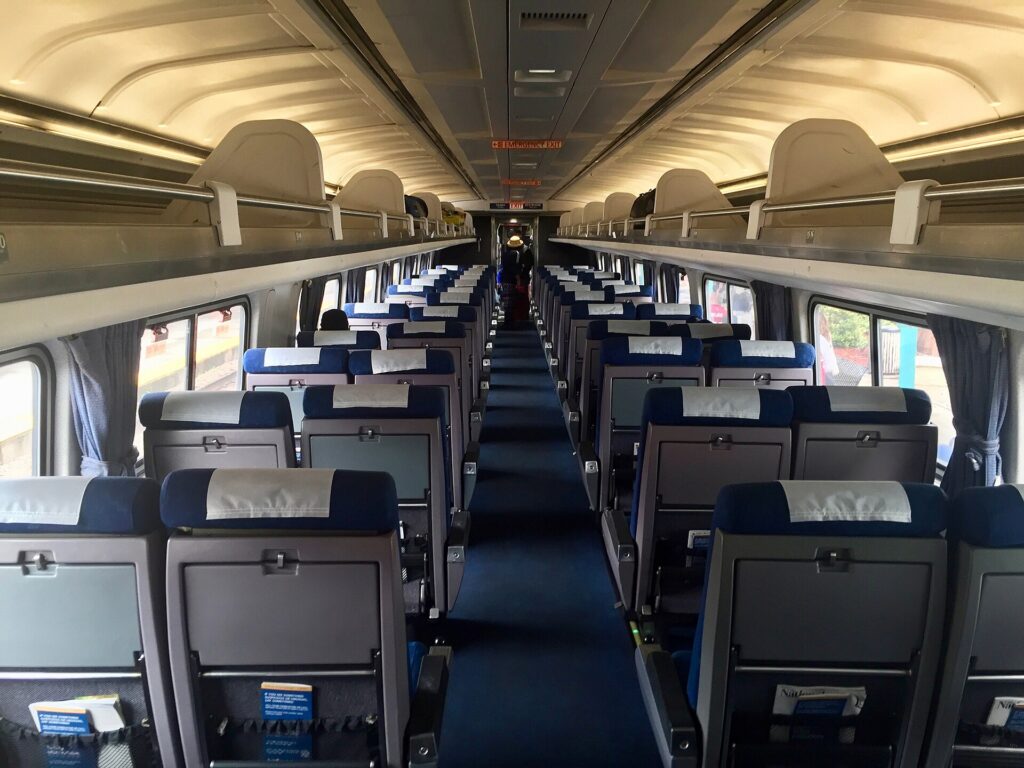
    The interior of an Amtrak passenger car with rows of seats
    Trains are the best of both worlds for reading: space, a smooth ride and a view (Photo: CZmarlin — Christopher Ziemnowicz — photo credit is required if this image is used anywhere other than Wikipedia. via Wikimedia Commons, CC BY-SA 4.0)

    Audiobooks and e-readers

    Audiobooks are the best answer to the reading-in-the-car problem and a great way for a whole family to share a story. Many public libraries lend audiobooks and e-books free through apps like Libby and Hoopla; all you need is a library card. Borrow and download titles before you leave, because loans expire and you may not have a good signal on the road. A long series read aloud by a good narrator can carry a family across hundreds of miles.

    For older children, an e-reader holds dozens of books in the space of one paperback, with a long battery life. It is a good investment for a child who reads fast. For younger children, physical books are usually more engaging and easier to manage.

    How to pack and ration books

    • Give each child a pouch. A zippered pouch or small bag of their own books and activities keeps things organized and easy to grab.
    • Keep a surprise in reserve. One new book, wrapped or hidden, brought out at the hardest point of the journey, often at the end of a long flight, buys an hour of calm.
    • Rotate. Do not hand over everything at once. Offer one book, then an activity, then a snack, then a different book.
    • Mix ages for siblings. A book the younger child can look at while the older one reads it aloud keeps two children busy at once.
    • Weigh the bag. Books are heavy. Limit the number per child, and choose paperbacks and slim activity books.
    • Plan for the return. Pack one or two books that have not been seen yet for the trip home, when everyone is tired.

    Books go in the child’s own backpack or case; our guide to kids’ suitcases covers bags that children can manage themselves.

    Shelves of children's books in the children's section of a public library
    Your public library is the best place to stock up on travel and destination books before a trip (Photo: Micheal Kaluba via Wikimedia Commons, CC BY-SA 4.0)

    Making reading part of the trip

    • Ask questions as you read. “What would you pack if you went there?” “Which of these animals do you think we will see?” Books become a way to talk about the trip.
    • Start a travel journal. A small notebook where children draw what they saw, stick a ticket stub and write a sentence or two turns the trip into their own book to reread later.
    • Visit a bookstore or library on the trip. Choosing a book in a new city is a souvenir that lasts, and many city libraries have wonderful children’s rooms.
    • Use small rewards if they help. A sticker after a chapter, or choosing the next snack, can keep reluctant readers going. Keep it light.
    • Read yourself. Children notice when parents put down their phones and pick up a book.

    Where to find good books before you go

    You do not need to buy everything. Your public library is the best starting point, with children’s librarians who can recommend books for every age and destination. The Association for Library Service to Children publishes an annual list of notable children’s books, a reliable source of well-reviewed titles. Borrowing a stack of travel and destination books a couple of weeks before the trip builds anticipation, and the ones that are a hit can be bought for the journey itself.

    Common mistakes

    • Packing too many. Five books per child is plenty for most trips; the rest is weight.
    • Bringing only new books. Familiar favorites are comforting, especially for young children in an unfamiliar place.
    • Loose-piece books on planes. Pop-ups, puzzle pieces and card sets end up under the seats.
    • Markers and glitter. Crayons and markers stain upholstery and tray tables. Stick to stickers and pencils.
    • Forcing reading in the car. If a child feels sick, stop. Switch to an audiobook and look out of the window.
    • Not downloading audiobooks ahead. No signal in the mountains means no audiobook, unless you downloaded it at home.

    Frequently asked questions

    What are the best books for kids to take traveling?

    Durable, light books with high replay value: board books for toddlers, search-and-find and sticker books for preschoolers, activity books and a favorite chapter-book series for older children, and one atlas or fact book about the world.

    At what age should I start bringing books on trips?

    From the very first trip. Babies enjoy simple board books with high-contrast pictures, and a familiar book from home is a comfort at any age. The type of book changes as children grow.

    Are books better than tablets for long journeys?

    They complement each other. Books need no battery or signal, encourage imagination and give eyes a break from screens. Many families use both: books and activities first, a screen as a reward or for the final stretch.

    How do I choose the right travel book for a plane or train?

    Choose compact books a child can enjoy alone, like search-and-find, sticker and puzzle books, for planes. On a train, with more space and a smooth ride, larger books like atlases work well.

    How can kids read in the car without getting sick?

    Many cannot, and that is normal. Encourage looking at the horizon, try picture books that need only brief glances, and use audiobooks for long stretches. Stop if a child feels unwell.

    How many books should I pack for a child?

    Three to five for most trips: a favorite, a new travel-themed book, an activity or sticker book, and a surprise for the hardest part of the journey. Add a library audiobook or two.

    Can travel books also be educational?

    Yes. Atlases, fact books and books set in your destination teach geography, history and culture, and a book about airports helps children understand what is happening on travel day.

    With the reading sorted, the rest is the trip. Compare fares on flexible dates on our flight search, choose a family-friendly base on our hotel search, and if there is a road trip in the plan, price a car with room for everyone on our car rental search. For the bigger picture, read our guide on why a family vacation is worth the time off, and if you are traveling with a baby, our travel bottle warmer guide and family car rental guide cover the essentials.