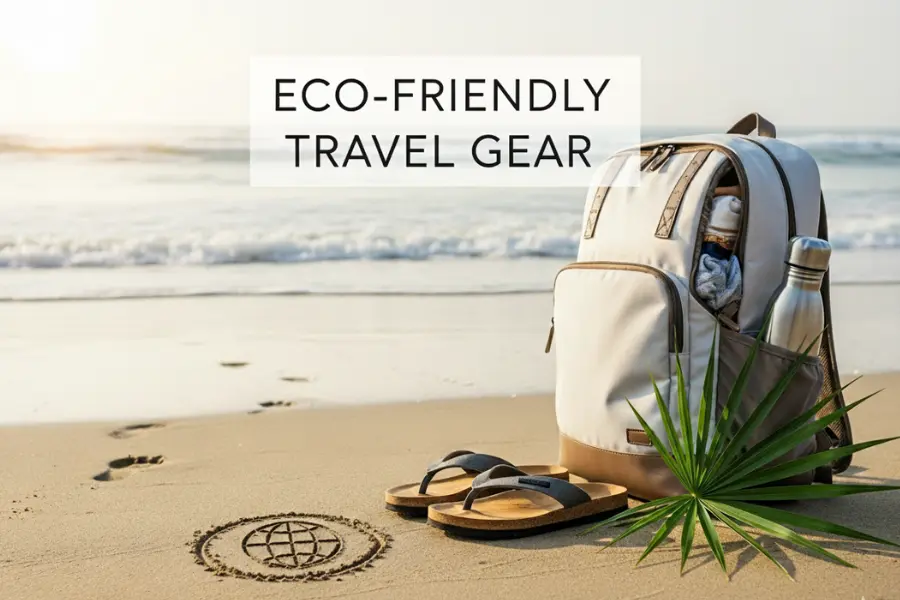
Flip-flops are the most traveled shoe in the world. They go to the beach and the pool, into hostel showers and hotel bathrooms, along boardwalks and onto boat decks, and they fold into the corner of almost any bag. They are also, for the most part, made of foam and plastic, worn hard for a season or two and thrown away. If you care about the footprint of your travel, a better pair of flip-flops is one of the easiest places to start, but it is also a category full of vague “eco” labels. This guide explains what actually makes a travel flip-flop more sustainable, how to read green claims without being fooled, which materials are which, how to choose a pair that is comfortable and safe on wet surfaces, when flip-flops are the right travel shoe and when they are not, and several options from our original list, with the materials details their makers publish. It also covers packing, care and how to make any pair last longer, which is the most sustainable choice of all.
The short answer
The most sustainable flip-flop is one well-made pair that you wear for years, not a new cheap pair every summer. When you shop, look for specific, checkable materials claims on the maker’s own site, such as a named natural fiber, a stated recycled percentage or a stated material the product avoids, rather than words like “eco” or “green” on their own. Choose a pair with a grippy sole for wet tiles and decks, a toe post and straps that do not rub, and some arch shape if you will wear them for more than short walks. Pack them flat, rinse off salt and sand, dry them out of strong sun, and keep a supportive walking shoe for long days on foot, because flip-flops are for beaches and showers, not ten-hour city days.
What makes a flip-flop more sustainable
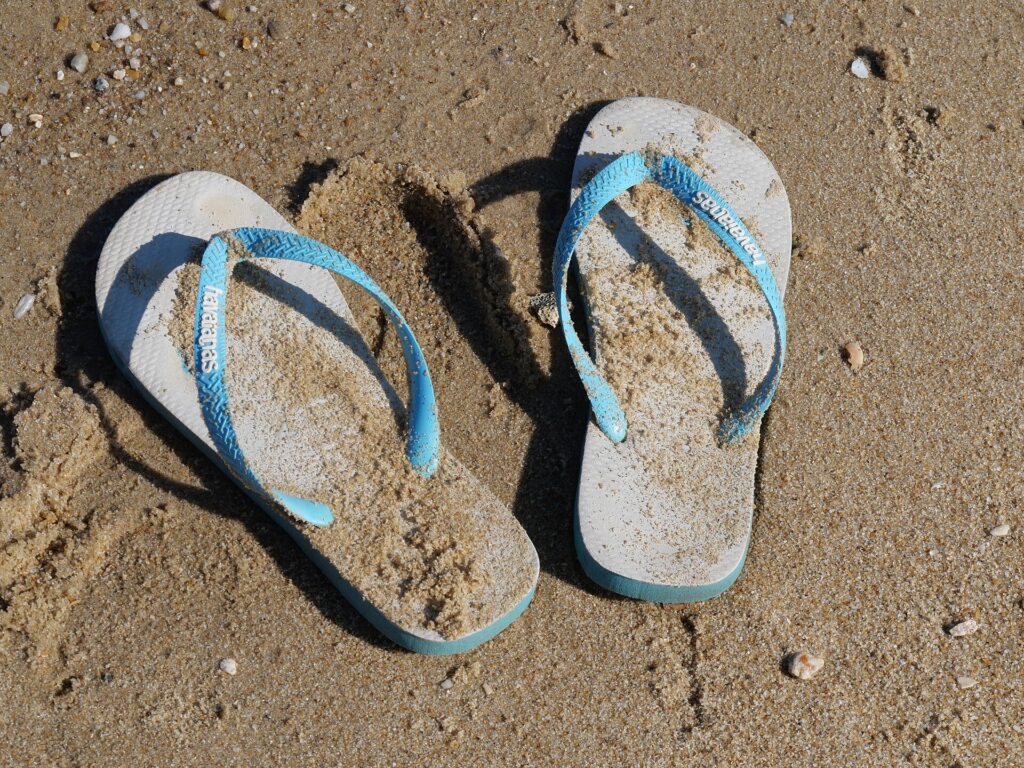
There is no single eco-friendly material. The environmental impact of a pair of flip-flops depends on several things together:
- How long it lasts. A pair that lasts five summers generally beats a pair made from a “greener” material that splits after one. Durability is the part of sustainability you control directly, through what you buy and how you care for it.
- What it is made of. Plant-based and natural materials, such as natural rubber, cork and hemp, come from renewable sources. Recycled synthetics reuse material that already exists. Conventional foams and plastics are made from fossil fuels. Each has trade-offs in durability, comfort and end-of-life options.
- What it avoids. Some makers state that their products are made without PVC or without animal-derived materials. Those are specific, checkable claims.
- How it is made and shipped. Manufacturing energy, glues, dyes and transport all add to the footprint, though these are hard for shoppers to compare.
- What happens at the end. Most flip-flops end up in landfill. A few brands run repair services, take-back or recycling programs; if that matters to you, check the brand’s site for what is actually offered in your country.
Keep that list in mind as you read product pages. A shoe that scores well on one point and poorly on another may still be a good choice for you, as long as the claims are real.
How to read green claims without being fooled
Environmental marketing is regulated, but vague claims still slip through, and footwear is no exception. A few rules of thumb help:
- Specific beats general. “Hemp strap and top sole” or “recycled PET webbing lining” tells you something. “Eco-friendly,” “earth-conscious” or “green” on their own tell you almost nothing.
- Check which part the claim covers. A recycled-content claim may apply to the strap, the lining or the outsole, not the whole shoe. Read the materials section, not just the headline.
- Look for numbers. “Made with recycled material” could mean a tiny share. A stated percentage is more useful.
- Look for the source. Trust claims on the maker’s own product page more than seller listings, which often repeat or exaggerate them.
- Be wary of “biodegradable” and “compostable.” Unless a product clearly states how, where and in what conditions it breaks down, treat such claims with caution. Most shoes do not break down in a home compost bin or in landfill in any useful time.
Regulators publish guidance on this. In the United States, the Federal Trade Commission’s Green Guides explain how environmental marketing claims should be qualified and substantiated. In Canada, the Competition Bureau’s advice on greenwashing for consumers lists warning signs to look out for. Both are useful reading before any “sustainable” purchase, not just flip-flops.
Flip-flop materials compared
This table sums up the materials you will see most often and the trade-offs of each. It describes materials in general, not any specific product.
| Material | Where it is used | Strengths | Watch out for |
|---|---|---|---|
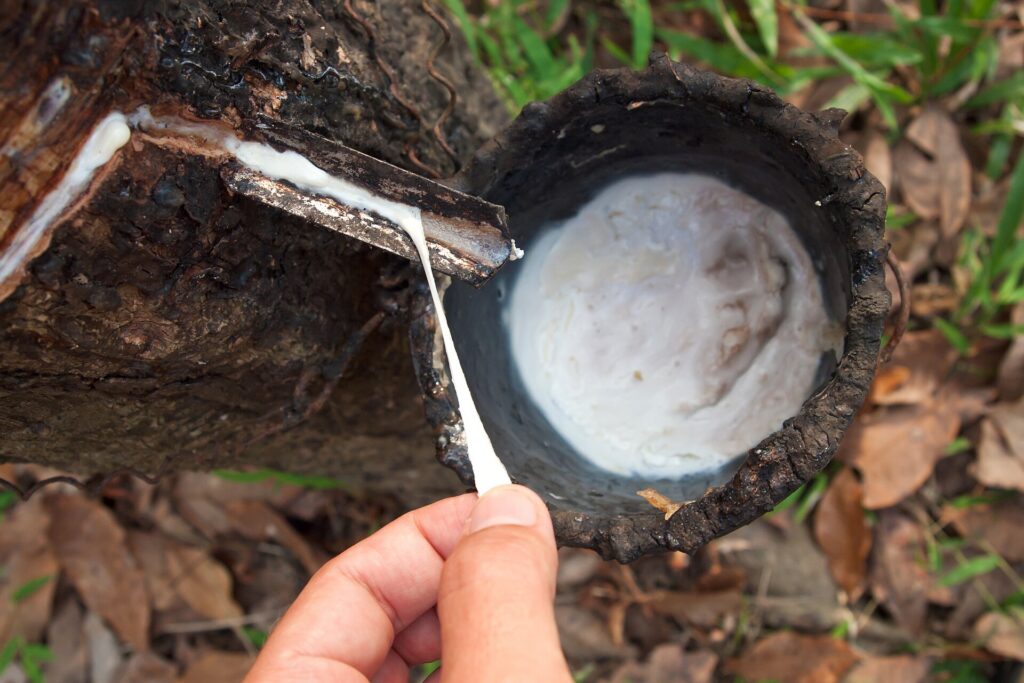
| Natural rubber | Soles, footbeds, one-piece flip-flops | Renewable source, grippy, durable and flexible | Heavier than foam; rubber production has its own land-use impacts |
| Synthetic rubber | Outsoles | Durable, good grip | Made from fossil fuels |
| EVA foam | Footbeds and soles | Very light, soft, cheap, quick-drying | Usually fossil-based; soft foam compresses and wears faster |
| Cork | Footbeds | Harvested from bark, which regrows; molds to your foot | Can dry out or crack if soaked and baked in the sun; not ideal for constant water |
| Hemp and other natural fibers | Straps, top soles | Plant-based, strong, breathable | Can take longer to dry; may stain |
| Recycled polyester (PET) | Straps, webbing, linings | Reuses existing plastic, strong, quick-drying | Still a plastic; check what share of the shoe it covers |
| Leather | Straps, top soles | Durable, molds to the foot, repairable | Not vegan; dislikes repeated soaking and salt water |
| PVC | Straps and cheap one-piece flip-flops | Cheap and waterproof | Many brands now advertise avoiding it; it is hard to recycle |

When flip-flops are the right travel shoe
Flip-flops earn their place in a bag because they are light, cheap to replace, quick to dry and easy to slip on and off. They are the right choice for:
- Beaches, pools and boat decks, where you want something that can get wet and sandy.
- Shared showers and bathrooms in hostels, campsites, gyms and some guesthouses, where a barrier between your feet and wet floors is a simple hygiene habit.
- Hotel rooms and apartments, as a light alternative to slippers.
- Short strolls in hot weather, such as a walk to dinner in a beach town.
They are the wrong choice for long walking days, hiking, steep or uneven ground, and anywhere you need to move quickly. They offer little support, the toe post makes your toes grip with every step, and a thin sole gives little protection from hot pavement, sharp shells or broken glass. For sightseeing, pack a proper walking shoe; our guide to comfortable walking shoes for traveling covers how to choose one.
Flip-flops, slides, sandals or water shoes?
If you are only packing one warm-weather shoe besides your walking shoes, it is worth thinking about which open shoe does the most for your trip:
- Flip-flops are the lightest and pack flattest. Best for beach, pool and shower use.
- Slides have a single strap across the top of the foot and no toe post. Many people find them more comfortable for short periods, and they are easy to slip on in a hotel room, but they tend to be bulkier and less secure when you walk.
- Strapped sandals with a heel strap stay on your foot, so you can walk further in them, climb on and off boats and wade through shallow water. They are a better choice if your warm-weather trip involves real walking.
- Water shoes protect your feet on rocky beaches, coral rubble and river crossings. If your destination has stony shores, they are safer than flip-flops in the water.
Comfort and fit
The toe post and straps
The toe post is where most flip-flop discomfort starts. Soft, rounded posts and smooth, wider straps are kinder to skin. If a new pair rubs, wear it around the house for short periods before the trip, just as you would break in any shoe.
Arch shape and cushioning
A completely flat, thin flip-flop gives your feet very little support. A contoured footbed with some arch shape and a bit of cushioning is more comfortable if you will spend hours in them, such as a full beach day with walks to lunch. Very soft foam feels lovely in the store but compresses over time.
Grip on wet surfaces
Wet tiles around pools, bathroom floors and boat decks are slippery. A textured rubber outsole grips better than smooth foam. Check the sole before you buy, and replace a pair when the tread wears smooth.
Size and length
Your heel should sit on the footbed, not hang off the back, and your toes should not reach the front edge. Sizes vary between brands, and many flip-flops come in whole sizes only, so check the maker’s size chart.
Options from our original list
The flip-flops and sandals below were featured in the original version of this guide. The original product descriptions could not be verified, so we have rewritten each entry around what the maker’s own site says or, where we could not confirm materials, around who the style suits. We make no environmental claim for a product unless its maker’s page states it. Designs and materials change between versions and colors, so check the current product page for the pair you are buying.
Reef Women’s Cushion Breeze
Reef lists the Cushion Breeze as an EVA sandal with a soft cushioned footbed, arch support, wide padded synthetic straps and a rubber sponge outsole. Its product page describes the materials as PVC-free and vegan friendly and states a recycled PET webbing lining. It suits travelers who want plenty of cushioning for beach days and warm-weather strolls. Remember that the recycled claim refers to the lining, not the whole shoe.
Rainbow Sandals Single Layer Hemp
Rainbow Sandals makes a Single Layer Hemp flip-flop whose product page lists a natural hemp top sole and hemp strap, a single-layer arch midsole, double stitching with bonded nylon thread and a non-slip rubber bottom sole. The brand is known for flip-flops built to last, and a plant-based fiber top and strap is a good fit for travelers who want natural materials where their skin touches the shoe. Hemp takes a little longer to dry than foam, so it is better for the beach and boardwalk than for daily shower use.
Sanuk Women’s Yoga Mat
Sanuk describes its Yoga Mat collection as sandals made from real yoga mat foam, which gives them a soft, squishy footbed. They suit travelers who put comfort first for short walks, beach days and lounging. Sanuk publishes more about materials and its sustainability work on its own site; check the specific product page for what applies to the version you buy.
Teva Women’s Olowahu
Teva’s Olowahu is a lightweight women’s flip-flop from a brand best known for outdoor sandals. A light foam flip-flop like this suits the beach and pool and packs easily. Teva publishes materials details on its product pages; check the current listing if recycled content or vegan construction matters to you, since we have not been able to confirm those details for every version.
Havaianas Top
Havaianas is the Brazilian brand behind some of the world’s best-known rubber flip-flops, and the Top is its plain, classic design. A simple, durable flip-flop that you wear for several seasons is a reasonable choice on its own terms; the brand does not need to make a green claim for a long-lasting pair to be better than a disposable one. The Top is a good all-rounder for beaches, pools and shared showers.
Skechers Foamies
Skechers‘ Foamies are lightweight molded foam footwear, including flip-flop styles. Molded foam is very light and quick-drying and easy to rinse, which makes it practical for pools and showers. We have not confirmed materials claims for Foamies, so treat them as a comfort and convenience choice rather than an eco pick.
Quick-drying travel slippers
The original list also included generic lightweight, non-slip, quick-drying travel slippers. Shoes of this kind are handy for hotel rooms, overnight trains and shared bathrooms. Quality varies widely between unbranded products, so look for a textured sole and check that the seller names the materials. If a listing makes environmental claims without detail, apply the checks above.
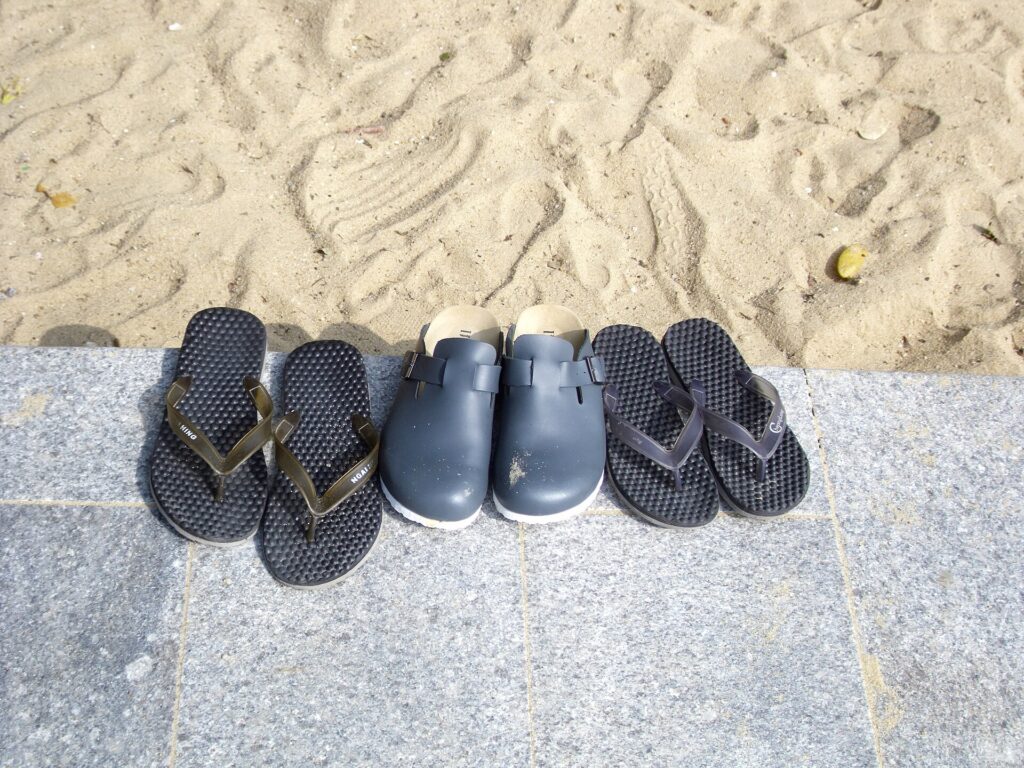
How to choose: a quick checklist
- Durability first. Stitched or well-bonded straps and a thick, grippy sole usually outlast thin one-piece designs.
- Specific materials claims. Look for named materials and percentages on the maker’s page.
- The right material for how you will use them. Rubber and foam for showers and pools; natural fibers, cork or leather for dry beach days and strolls.
- Grip. A textured outsole for wet tiles and decks.
- Comfort. A soft toe post, smooth straps and some arch shape.
- Weight and packability. Flat, light pairs fit anywhere in a bag.
- A brand you can reach. A company with clear warranty and care information is easier to deal with if a strap fails.
Packing flip-flops
Flip-flops are among the easiest things to pack. Slide them flat along the back panel or side of a suitcase or backpack, sole to sole, inside a thin bag to keep sand and shower water off your clothes. A mesh or breathable bag lets damp pairs dry. If you travel carry-on only, a pair of flip-flops is one of the few second pairs of shoes that barely takes up any room; our main guide to choosing travel luggage covers how to build a light carry-on kit around them. A travel backpack such as the one in our Peak Design Travel Backpack 45L guide often has a separate shoe or wet compartment that suits them well.
Flip-flops at the airport and on the plane
Flip-flops are easy at security, and in the United States the Department of Homeland Security announced in 2025 that travelers at domestic checkpoints would generally no longer need to remove their shoes; officers can still ask. Other countries set their own screening rules, so check CATSA or your departure airport’s security agency before you fly. On the plane itself, many travelers prefer closed shoes: cabins get cold, aisles and lavatory floors are not always clean, and closed shoes protect your feet if you have to move quickly. A practical approach is to wear walking shoes on travel days and keep flip-flops in your bag for arrival.
Care: make them last
- Rinse after salt water and sand. Salt and grit wear down straps, stitching and glues. A quick rinse in fresh water after the beach helps any pair last longer.
- Dry in the shade. Leaving flip-flops in strong sun for hours, or on a hot car dashboard, can warp foam, fade colors and dry out cork and leather.
- Clean gently. Mild soap and water is enough for rubber and foam. Natural fibers and leather need gentler care and a full dry before packing.
- Keep natural materials out of constant water. Cork, leather and fabric straps last longer if you save a rubber pair for showers.
- Rotate pairs at home. If you already own an older pair, keep it for garden and pool use and save the better pair for travel.
- Fix before you replace. Some brands sell replacement straps or offer repairs, and a cobbler can often fix stitched sandals. Check the maker’s warranty and care pages before throwing a pair away.
Sustainable travel beyond your feet
Flip-flops are a small part of a trip’s footprint. If you care about traveling more lightly, a few other choices often matter more:
- Pack less and buy less. A light bag with versatile pieces, such as the options in our guide to travel pants for men, means fewer purchases and less to carry.
- Buy gear once. A durable backpack or suitcase that lasts a decade has a far smaller footprint than several cheap ones.
- Choose direct routes where you can. A nonstop flight usually covers a shorter total distance than a connection, and it saves you time and a missed-connection risk as well.
- Refill rather than buy. A reusable bottle and a small refillable toiletry kit reduce single-use plastic on every trip.
- Leave beaches as you found them. Take your litter home, stay on marked paths through dunes and follow local rules on protected areas.
Keep your valuables safe at the beach
Beaches and pool decks are where many travelers leave phones and wallets unattended while they swim. Take only what you need, use the hotel safe for passports and spare cards, and consider a waterproof pouch or a slim money belt for a card and some cash. On the walk there and back through busy streets, a bag like the ones in our guide to anti-theft backpacks keeps your things harder to reach. A few plasters from a travel first aid kit are handy if a new toe post rubs or you cut your foot on a shell.
Common mistakes
- Buying a cheap pair every summer. A durable pair worn for years is usually the more sustainable choice.
- Trusting “eco” on its own. Look for specific materials and numbers on the maker’s own page.
- Walking a city in flip-flops. Save them for beaches and showers and pack a supportive walking shoe.
- Using natural-fiber pairs as shower shoes. Keep a rubber or foam pair for constant water.
- Baking them in the sun. Heat warps foam and dries out cork and leather.
- Ignoring worn-out tread. Smooth soles on wet tiles are a slip waiting to happen.
Frequently asked questions
What are eco-friendly flip-flops made of?
Common choices include natural rubber, cork, hemp and other natural fibers, and recycled synthetics such as recycled polyester. Many products mix materials, so check which parts of the shoe a claim covers.
Are rubber flip-flops sustainable?
Natural rubber comes from a renewable source and is durable, which helps. Synthetic rubber and many foams are fossil-based. A long-lasting rubber pair is generally better than a short-lived one of any material.
How can I tell if a green claim is real?
Look for specific, measurable claims on the maker’s own site, such as a named material or a stated recycled percentage, and check which part of the shoe it applies to. Government guidance from the FTC and Canada’s Competition Bureau explains common warning signs.
Are flip-flops good for walking all day?
No. They offer little support or protection and make your toes grip with every step. Use them for beaches, pools and short strolls, and wear proper walking shoes for sightseeing.
Should I wear flip-flops in hostel or campsite showers?
Many travelers do, as a simple hygiene habit and for grip on wet floors. A rubber or foam pair that dries quickly is best for this.
Can I wear flip-flops on a plane?
You can, and they are easy at security, but closed shoes are warmer, cleaner and safer if you need to move quickly. Many travelers wear walking shoes to fly and keep flip-flops in their bag.
How long should a good pair of flip-flops last?
It depends on how often you wear them, where and how you care for them. Rinsing off salt and sand, drying them out of strong sun and saving natural-material pairs for dry use all extend their life.
Are cork footbeds good for the beach?
Cork is comfortable and molds to your foot, but repeated soaking and strong sun can dry it out. It suits dry beach days and strolls better than swimming and showers.
With a good pair packed, the beach is waiting. Compare fares to warm-weather favorites on our flight search, and find a hotel near the sand on our hotel search. If you are dreaming of turquoise water, start with flights to Cancun and our guide to things to do in Cancun, or head to Miami with our things to do in Miami guide. For the rest of your kit, see our main guide to travel luggage.
Keep planning with TicketScanner
- Top travel luggage bags: the buying guide — the travel gear guide
- Comfortable walking shoes for traveling
- Travel pants for men
- Best money belts for travel
- Peak Design Travel Backpack 45L and carry-on travel packs
- Anti-theft backpacks for travel and commuting
- Travel first aid kits
- Search hotels — find a room near the beach
- Things to do in Cancun
- Things to do in Miami